


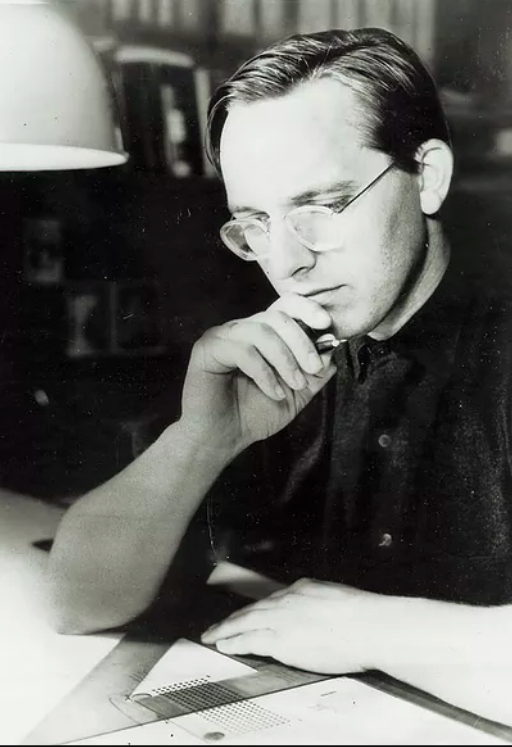
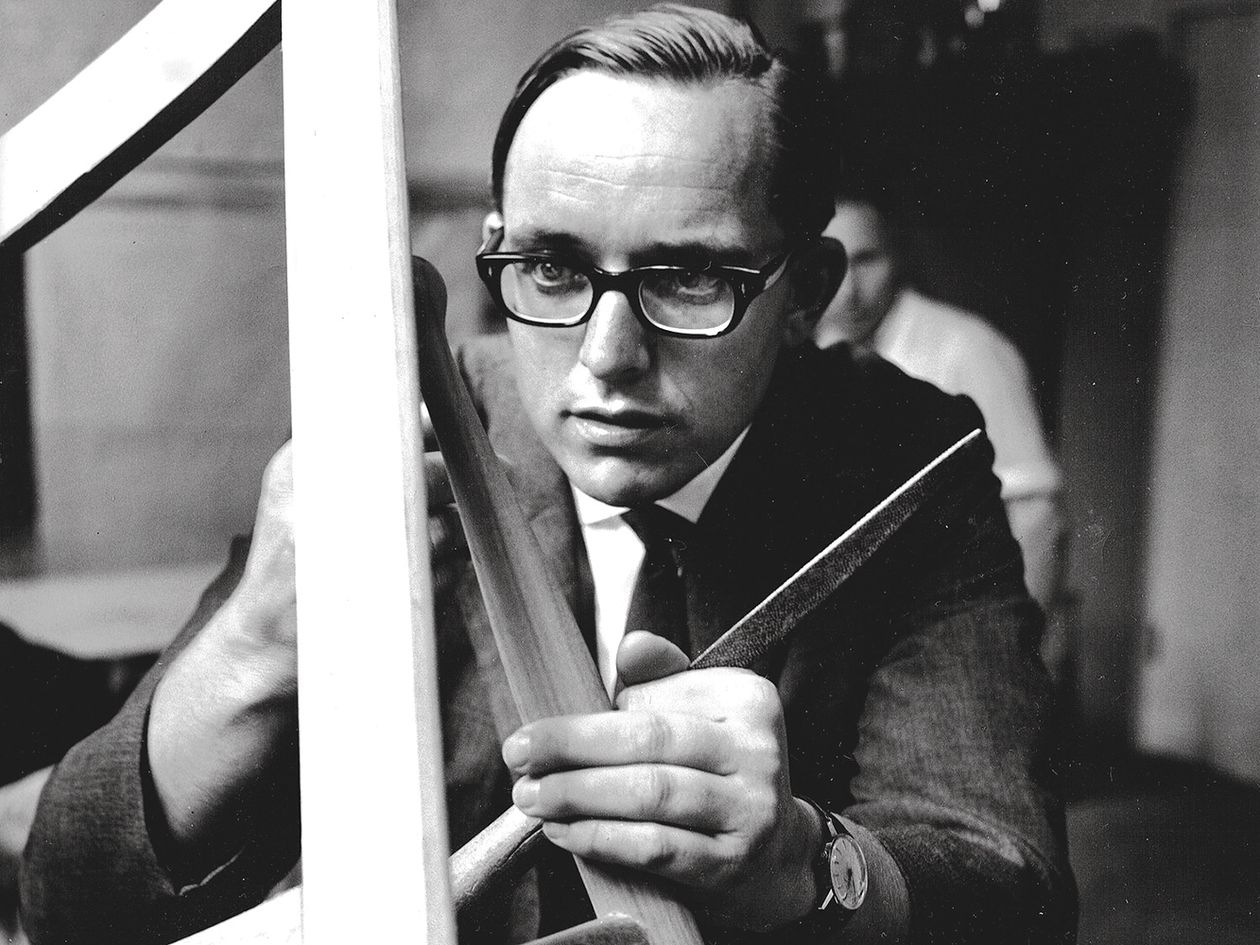


Ib Kofod-Larsen
The great mind behind “The Seal” and “The Penguin”, architect and designer, Ib Kofod-Larsen was born in 1921 in Denmark. Kofod-Larsen was trained as a cabinetmaker with the highest honours in 1944, and later completed his education at the Royal Danish Academy of Fine Arts in 1948. The same year he opened his own studio in the Danish capital, embarking on a long and successful career.
Throughout his career, Ib Kofod-Larsen worked with seating positions, construction, upholstery and bentwood shells. Due to his experimental approach to furniture, Dansk Glasfiber Industri hired him in 1953 to cooperate in developing heat-hardened polyester as part of the design of new furniture types. He focused mainly on furniture, but also designed radio and television cabinets, silver, glass, fabrics, textiles, curtains, wallpaper, and industrial design.
Kofod-Larsen viewed Scandinavian design not as a regional phenomenon but as part of international modernism. He designed for several leading mid-century manufacturers, both in Denmark and abroad. His great international success placed him as the best-selling Danish architect in the US in the 1950s, working with furniture manufacturers in Germany, Sweden, Japan, the US, and the UK, and exhibiting throughout Europe and the US. Kofod-Larsen frequently worked with resplendent woods such as teak and rosewood, also including rich leathers.
His first recognition as a designer came when he won the Holmegaard Glass Competition and received the Danish Cabinetmakers Guild’s annual award. These awards attracted the attention of the Danish furniture manufacturer Faarup Møbelfabrik. During his time at Faarup, he created some of his most beautiful works, like the rosewood ‘Model 66’ sideboard, and established himself as a furniture designer. Ib Kofod-Larsen belongs to the same period of Danish furniture design as several of the country's most notable designers. His works are clearly inspired by Scandinavian Modernism, and his pieces follow the basic outsets of Danish mid-century design, creating versatile, practical pieces with a graceful, minimalist aesthetic. Kofod-Larsen used natural grains and patterns in raw materials making these elements the focus of his designs. His works have the constant use of elegant woods, such as teak and rosewood, together with leather which results in a clean layout with sculptural lines.
Even though he realized his first success as a designer in his home country, Kofod-Larsen didn’t receive as much recognition there as his contemporaries, therefore he decided to move away from Denmark early in his career. This turned out to be a life-changing decision for his career, and won great recognition outside of Denmark. His overseas recognition led to a partnership with British furniture manufacturer High Wycombe in 1962. He also designed furniture for several other leading mid-century manufacturers, both at home and abroad, including Christensen & Larsen, Carlo Gahrn, Bovenkamp, Petersens, and Fredericia Furniture. Amidst the most singular examples of Ib Kofod-Larsen's furniture designs are the beautiful and elegant ‘Seal’ chair and the versatile and classic ‘Penguin’ chair manufactured by Brdr. Petersen.
Ib Kofod-Larsen passed away in 2003, and the designer's pieces have become frequented collector items, due to his undeniable talent for honouring the innate qualities of his carefully chosen materials. Today, he is known as one of the pioneers of Danish modern design of the 1950s. ~H.
REQUEST PRICE HERE
Price category: 30,000 - 40,000 usd / eur
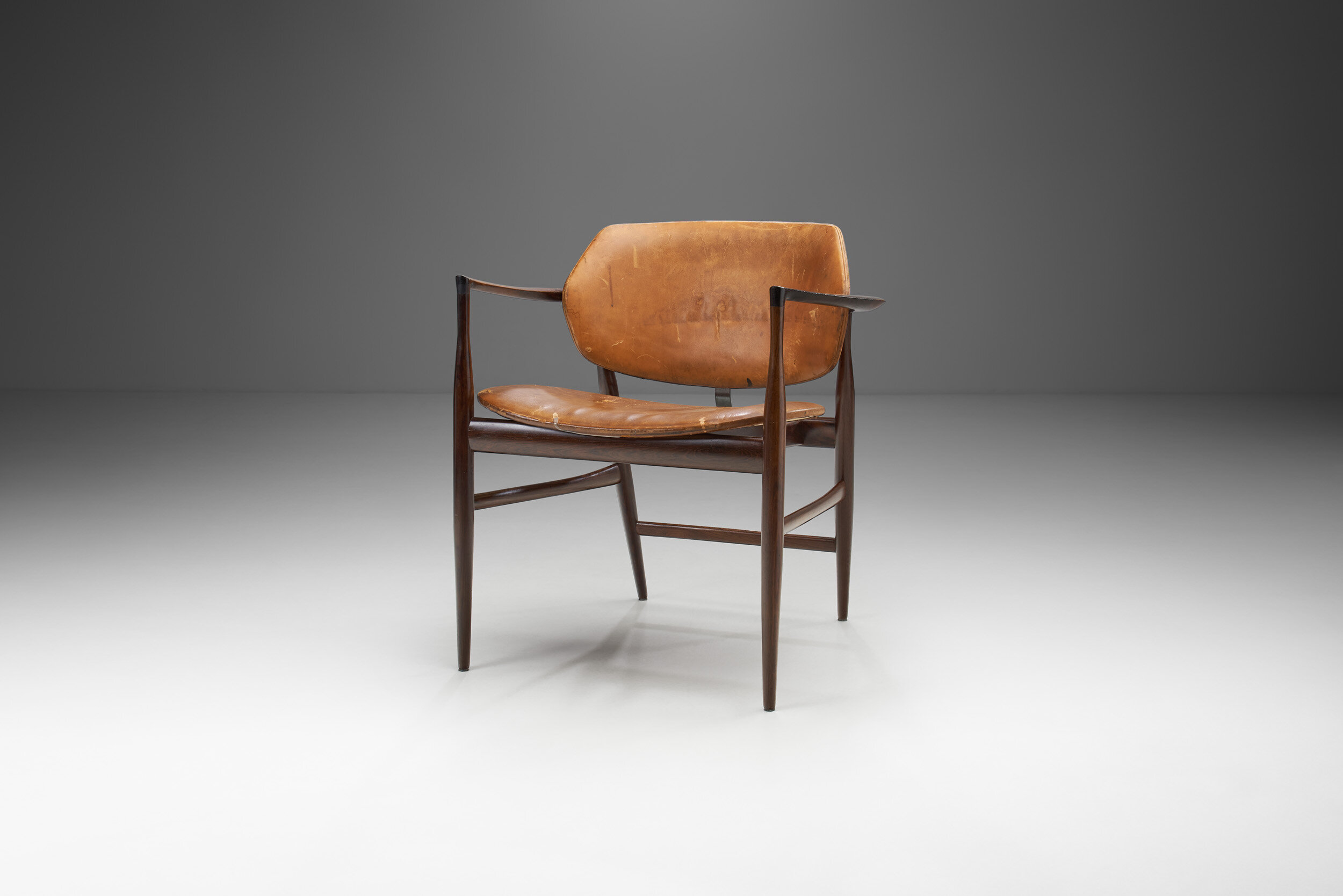
Ib Kofod-Larsen was one of the pioneers of the Danish modern in the 1950s. Rather than a regional phenomenon, Kofod-Larsen saw Scandinavian design as part of international modernism, and he became one of the best-selling Danish architects in the United States in the 1950s. This rare palisander sideboard was produced by Swedish manufacturer Säffle Möbelfabrik in cooperation with the Danish designer in 1958.
This very sought after model features distinctive V-shaped legs that complement the otherwise strict lines. The veneer has a grain that has come out beautifully over time, and gives the sideboard a striking look. This means that each model is different and unique, the pattern always varying. It praises the designer that the body is in an understated, rectangular shape that lets the wood and the legs stand out. Functionality also plays an important role in this model; with its sheer size and four doors, this piece offers a lot of shelving space. The first three doors cover space for height adjustable shelves, while the fourth covers four white, unevenly sized drawers. Each door has a small oval notch on the top, enabling easy opening while maintaining a clean and uncluttered front. Presumably only 40 or 50 of these models have been made when the Säffle factory bought a leftover stack of veneer from another factory. This sideboard is made with outstanding production quality and attention to detail.
Ib Kofod-Larsen's work became increasingly sought-after during the 1950s and 1960s, typically featuring organic and minimal pieces made specifically for the Scandinavian market. This “Trol” sideboard is a beautiful and elegant evidence of Kofod-Larsen’s graphic purity and artistic expression. He was a purist. A man of detail. At first glance, his furniture may seem simple, but at closer inspection it is full of detail.
Condition:
In good condition. Wear consistent with age and use. The veneer has some minor marks.
Dimensions:
95.86 in W x 18.51 in D x 28.3 in H
243.5 cm W x 47 cm D x 72 cm H
Literature:
Mobilia Magazine n°106, May 1964
About the designer:
Ib Kofod-Larsen was born in 1921 in Denmark. Kofod-Larsen was trained as a cabinetmaker with the highest honours in 1944, and later completed his education as an architect from the Royal Danish Academy of Fine Arts in 1948.
His first recognition as a designer came when he won the Holmegaard Glass Competition and received the Danish Cabinetmakers Guild’s annual award. These awards attracted the attention of the Danish furniture manufacturer Faarup Møbelfabrik.
During his time at Faarup, he created some of his most beautiful works, like the rosewood Model 66 sideboard, and established himself as a furniture designer. Learn more about Ib Kofod-Larsen. ~H.