
New ARRIVALS
browse our latest additions
REQUEST PRICE HERE
Price category: 2,500 - 5,000 usd / eur
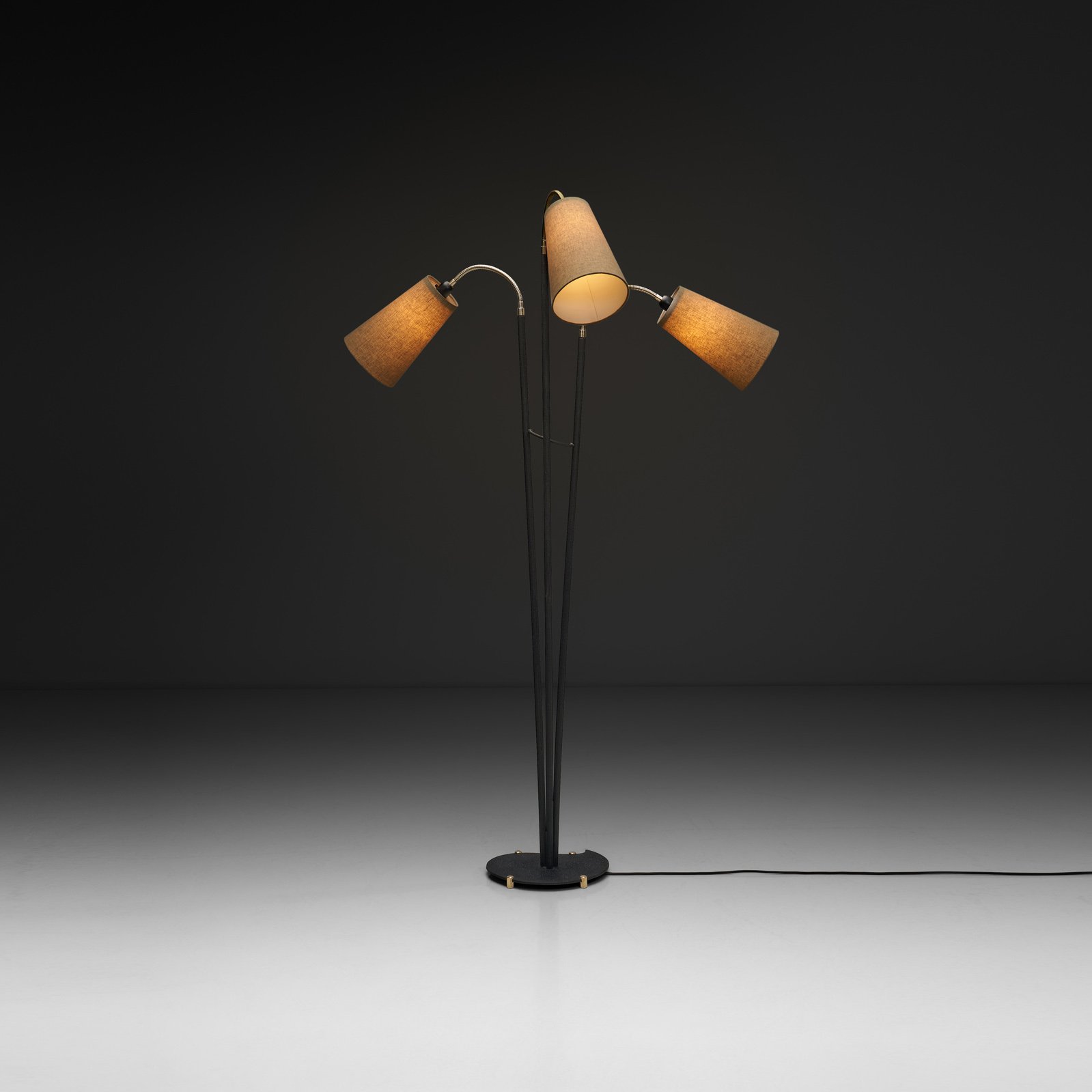
In the design landscape of Europe, the mid-20th century emerged as a golden era, where form seamlessly intertwined with function, giving rise to timeless pieces that continue to captivate contemporary sensibilities. One such enchanting piece from this era is this graceful floor lamp, a testament to the region's commitment to craftsmanship and new ideas and forms.
Rather than seeking attention through ornament, designers often worked to achieve a quiet refinement through high-quality materials and precision. This floor lamp materialises these ideals both in terms of visual and technical quality. The lamp features three slender stems that rise from a dynamic base. The brass necks allow the shades to be adjusted independently, so their openings can face outward. The tapered fabric shades widen slightly, continuing the movement of the brass arms. Their soft textile surfaces contrast with the polished metal and dark body, while their relatively small scale leaves the structure in focus. The piece is fundamentally functional, at the same time having enough character to stand on its own, making it a distinctive example of European lighting from the 1950s.
Its unique construction gives the lamp a far stronger presence than its slender proportions might suggest. Even when switched off, its profile makes it an expressive object in the room; illuminated, the opposing shades become the focus of the composition, adding charm to any interior.
Condition:
In good vintage condition. Wear consistent with age and use. The lamp has recently been rewired and reconditioned. The shade is a later replacement. Due to the nature and age of the brass, the item has some marks and scratches, and discolouration. This lamp is compatible with an E26 / E27 (standard) fitting. All lighting can be converted for US usage.
Dimensions:
42.12 in W x 27.16 in D x 62.2 in H
107 cm W x 69 cm D x 158 cm H
REQUEST PRICE HERE
Price category: 5,000 - 7,500 usd / eur
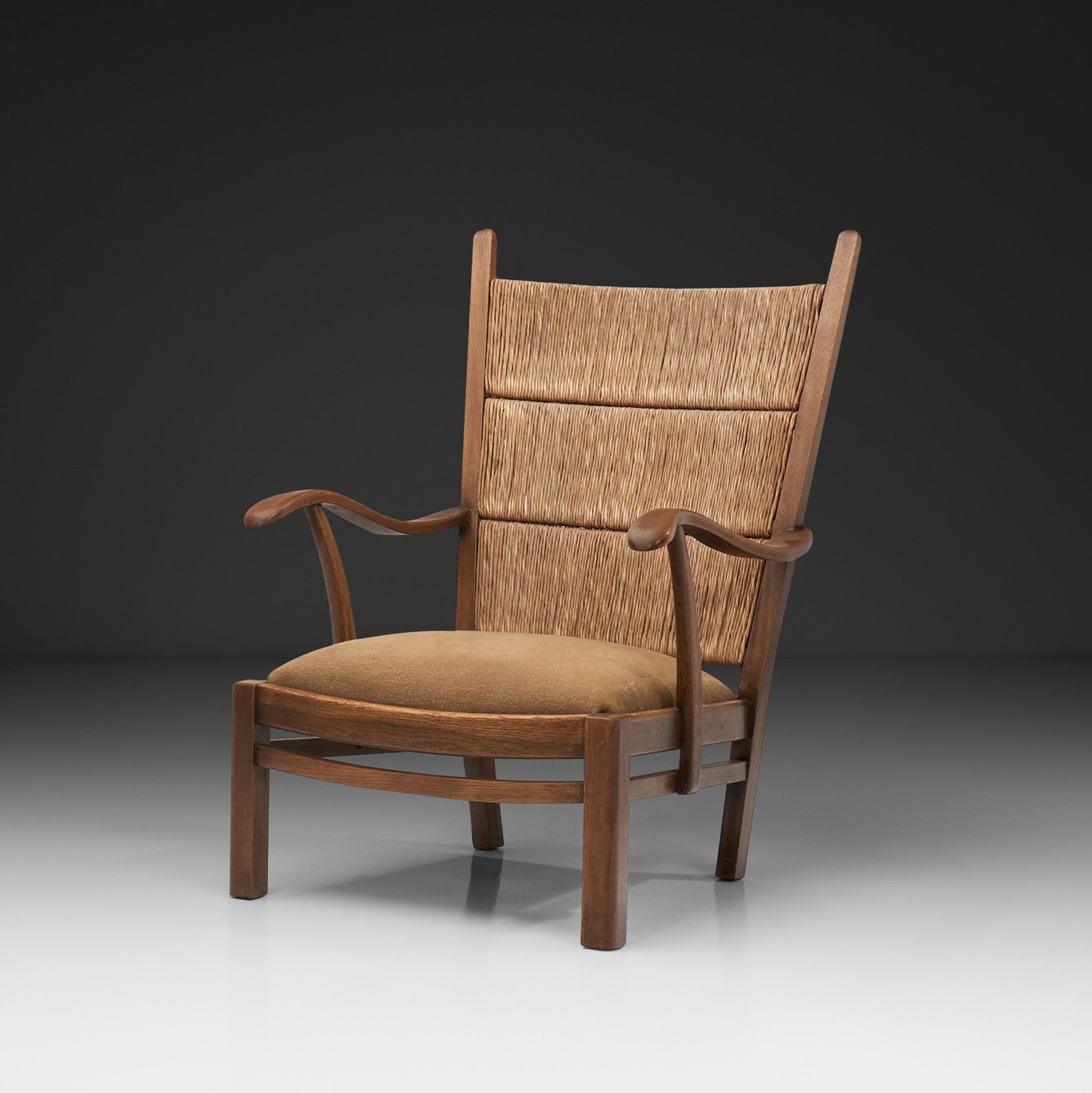
Bas van Pelt (1900–1945) was a Dutch furniture and interior designer whose work combined traditional craftsmanship with the principles of early modernism. While Van Pelt's creative work was primarily dominated by the Hague School, this armchair is the result of his more mature design period, characterised by natural materials, in order to create a friendly and inviting appearance that combines the warmth of solid oak with the distinctive texture of woven rush.
The construction of this model is simple at its core, but thanks to certain details, it is a playful representation of early Dutch modernism. While made of solid oak, this armchair has an open feel to it thanks to the horizontal spaces on the back that divide the three rush panels. The tall, slightly inclined backrest is framed by two straight wooden uprights, creating a strong vertical outline that contrasts with the more fluid shape of the armrests. The curved lines of the arms contrast nicely with the straight lines of the frame and clearly show wonderful craftsmanship. Each armrest extends outward in a gentle wave, giving the chair a particularly individual character. The rush weaving on the back adds textural interest, bringing the appealing roughness of nature to the design. Its closely arranged vertical strands create a warm, sandy surface, beautifully complemented by the oak's rich brown colour and the similar tone of the upholstery. The legs and stretchers are simple in their design, serving a primarily structural role and allowing the rush weaving and the wooden construction to stand out. The legs are connected by a gently curved wooden rail beneath the seat, while the rear supports continue naturally from the backrest. Thanks to the well-chosen proportions and the combination of natural materials, this armchair provides great comfort while maintaining a remarkable appearance.
Bas van Pelt's progressive designs were, in many ways, ahead of his time. The Dordrecht-born designer's furniture models are quite rare, with examples preserved in the collection of the Stedelijk Museum Amsterdam. Furniture pieces like this easy chair stand out through their unique textures and materials, as well as their classic charm. Its generous backrest and comfortable seat make it particularly suitable for a living room, library or reading area, where the craftsmanship can be appreciated from every angle.
Condition:
In good vintage condition. Wear consistent with age and use. The chair has recently been reconditioned. Due to the nature and age of the wood, the item has minor marks, scratches, dents and discolouration. The seat cushion has recently been reupholstered in a premium fabric. Each of our items can be reupholstered by our in-house atelier in a fabric of choice. Please reach out for more information.
Dimensions:
24.8 in W x 29.13 in D x 38.18 in H; Seat height 14.96 in; Seat depth 22.44 in; Arm height 22.83 in
63 cm W x 74 cm D x 97 cm H; Seat height 38 cm; Seat depth 57 cm; Arm height 58 cm

REQUEST PRICE HERE
Price category: 9,000 - 12,500 usd / eur
The Italian architect, painter and furniture designer, Guglielmo Ulrich, descended from a noble family with Danish origins. He quickly became a very influential figure in modern Italian design and his models are real delicacies today.
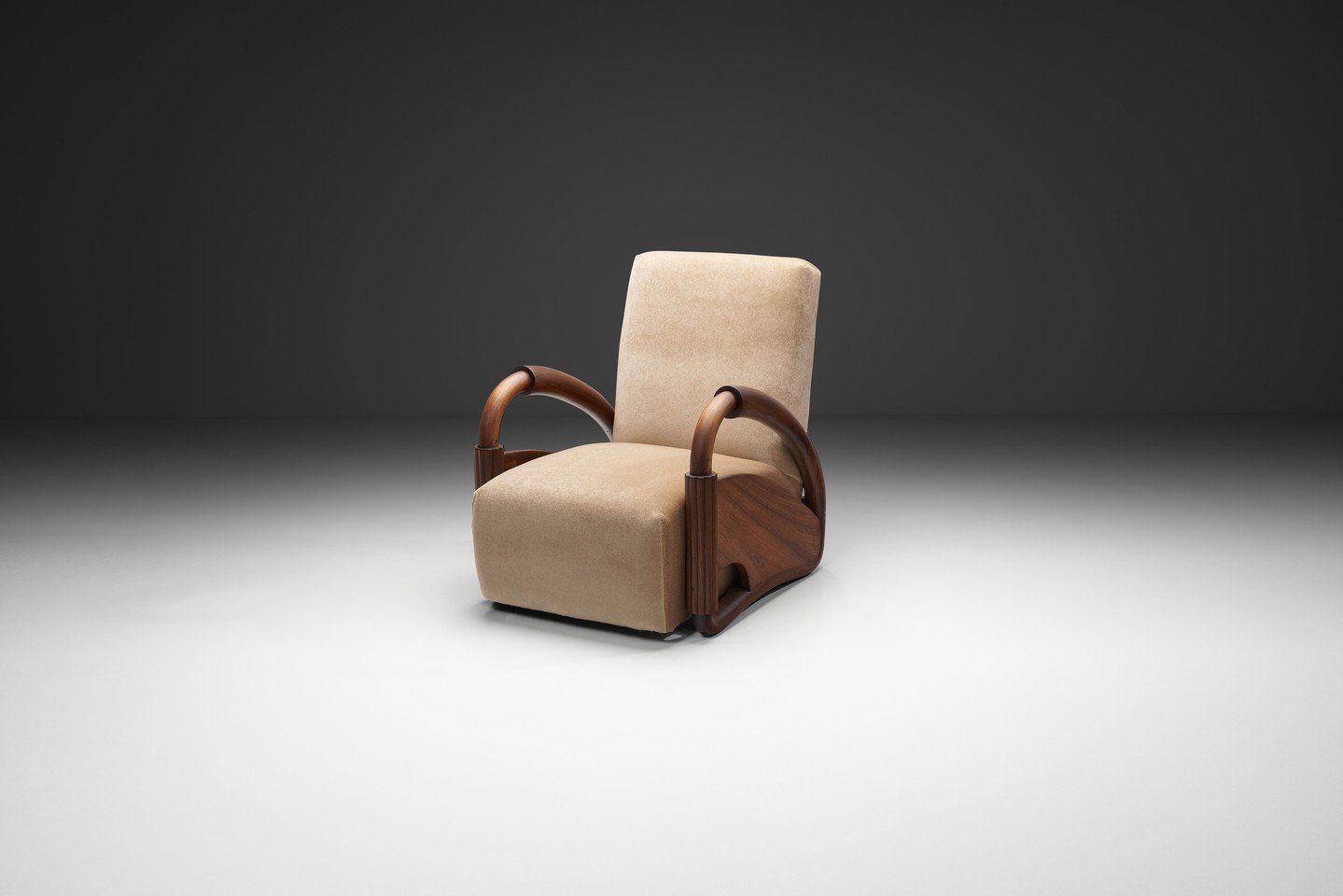
As this pair of 1950s lounge chairs show, Ulrich’s work is elegant and rich in detail. Although his work does not quite conform with the strict norms of simplicity of the time, it fits the prevalent aesthetics of Modernism. In the case of these chairs, the fully upholstered bodies show the general mid-century modern characteristics with an ergonomic and functional design. The seats are slightly raised, and the backs tilted, creating an angle that supports the sitter and the lounging experience. The wooden arms transcending to form the back legs however, truly stand out. The sharp curvature of the armrests and front legs define the look and create an interesting effect, as if the upholstered seats and backs were connected to them without joinery. The carved, dark wood and soft upholstery make them even more pronounced. There are more, subtler features to these chairs, including the wider armrests and the curved backrests, both in service of comfortable lounging. Thanks to the quality of his furnishings, that Ulrich designed and made personally, he became the trusted architects of many upper-class Milanese families. He participates in the furnishing of the most prestigious Italian ships: Cristoforo Colombo, Raffaello, etc.
“A nobleman of yesteryear, with sudden jokes and twists, such as a pipe with an egg in his mouth and a very concrete sense of doing” is how he was often described. This pair of chairs is much like this description with a playful, elegant design completed by quality materials and craftsmanship.
Condition:
In good vintage condition. Wear consistent with age and use. The chair has been reupholstered recently in a premium fabric. Each of our items can be re-upholstered by our in-house atelier in a fabric of choice. Please reach out for more information.
Dimensions:
24.4 in W x 31.69 in D x 31.49 in H; Seat height 14.17 in; Arm height 23.42 in
62 cm W x 80.5 cm D x 80 cm H; Seat height 36 cm; Arm height 59.5 cm
About the designer:
Guglielmo Ulrich (born 1904, Milan–died 1977) was an Italian architect, furniture designer, and painter. He was born to a notable family of Danish origin. In 1924, Ulrich enrolled in the Scuola Speciale di Architettura at the Accademia di Belle Arti di Brera. He finished his studies at Politecnico di Milano in 1927 and soon became a very influential figure in modern Italian design.
In 1930, along with Scaglia and Wild, Guglielmo Ulrich founded and became head designer of home furnishing company Arca (Arredamento casa, or Home Furnishing), a company engaged in the creation of high-quality furnishing accessories characterized by craftsmanship and the use of premium materials. In the 1950s, he participated in several editions of the Triennale di Milano and concentrated on designing buildings, offices, and retail shops throughout Italy.
Most of Ulrich’s furniture designs from this era, and especially his chairs and chaise lounges, resemble simplified and streamlined design versions of late 19th century pieces and do not necessarily conform to modern designs prevalent in Northern Europe and the U.S. in the 1950s. In the 1960s, Ulrich focused his work toward industrial design and was able to create original and impactful objects. His talent was rewarded on many occasions. In 1961, he won the Fiera di Trieste award for his Trieste chair, produced by furniture maker Saffa.
REQUEST PRICE HERE
Price category: 5,000 - 7,500 usd / eur
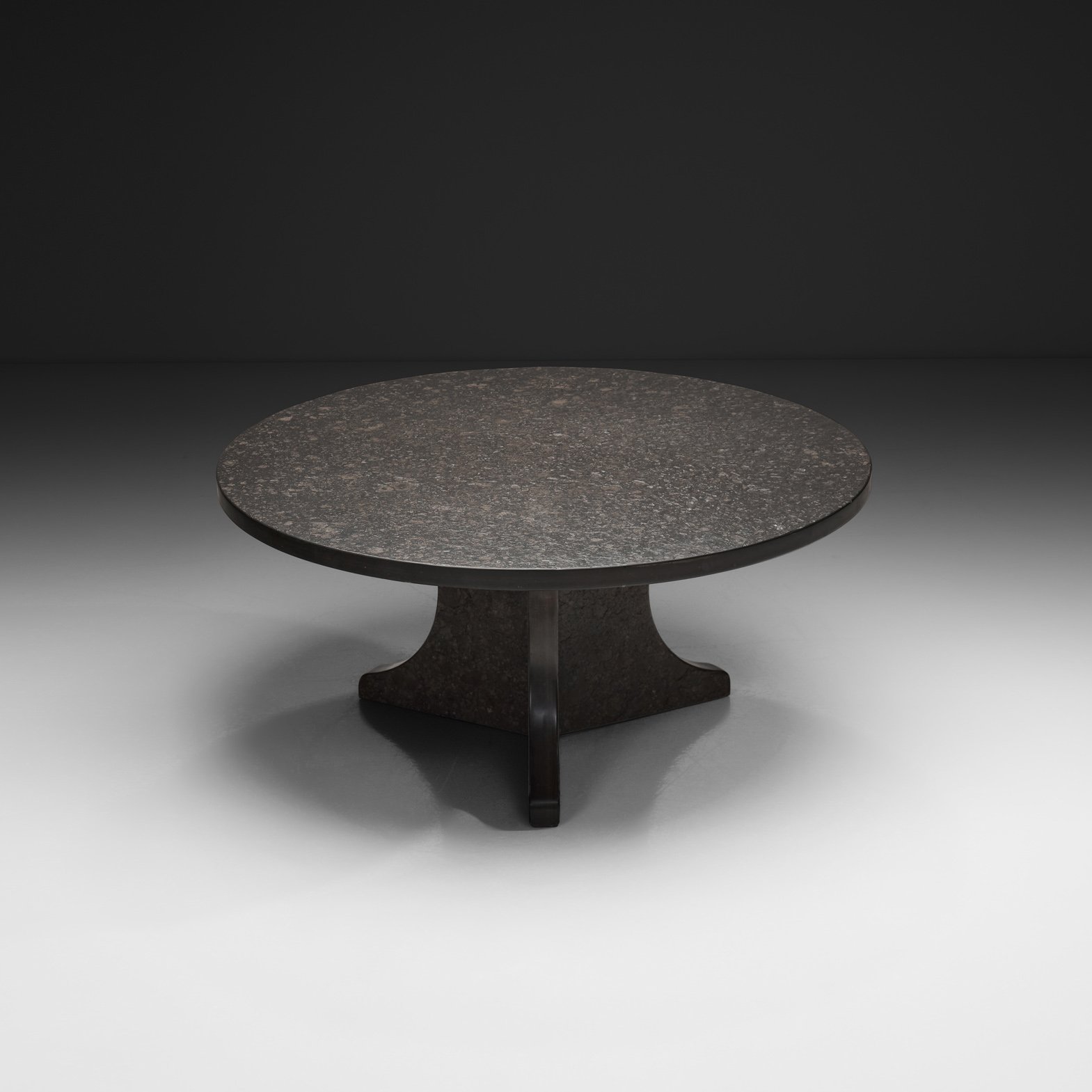
The Brutalist movement of the mid-20th century was known for its use of bold forms and imperfect organic materials, and gave rise to balanced, straightforward designs both in architecture and interiors. The skilled craftsmanship behind the construction of Brutalist furniture resulted in beautiful statement pieces, which celebrated and showcased the striking features of raw materials like stone.
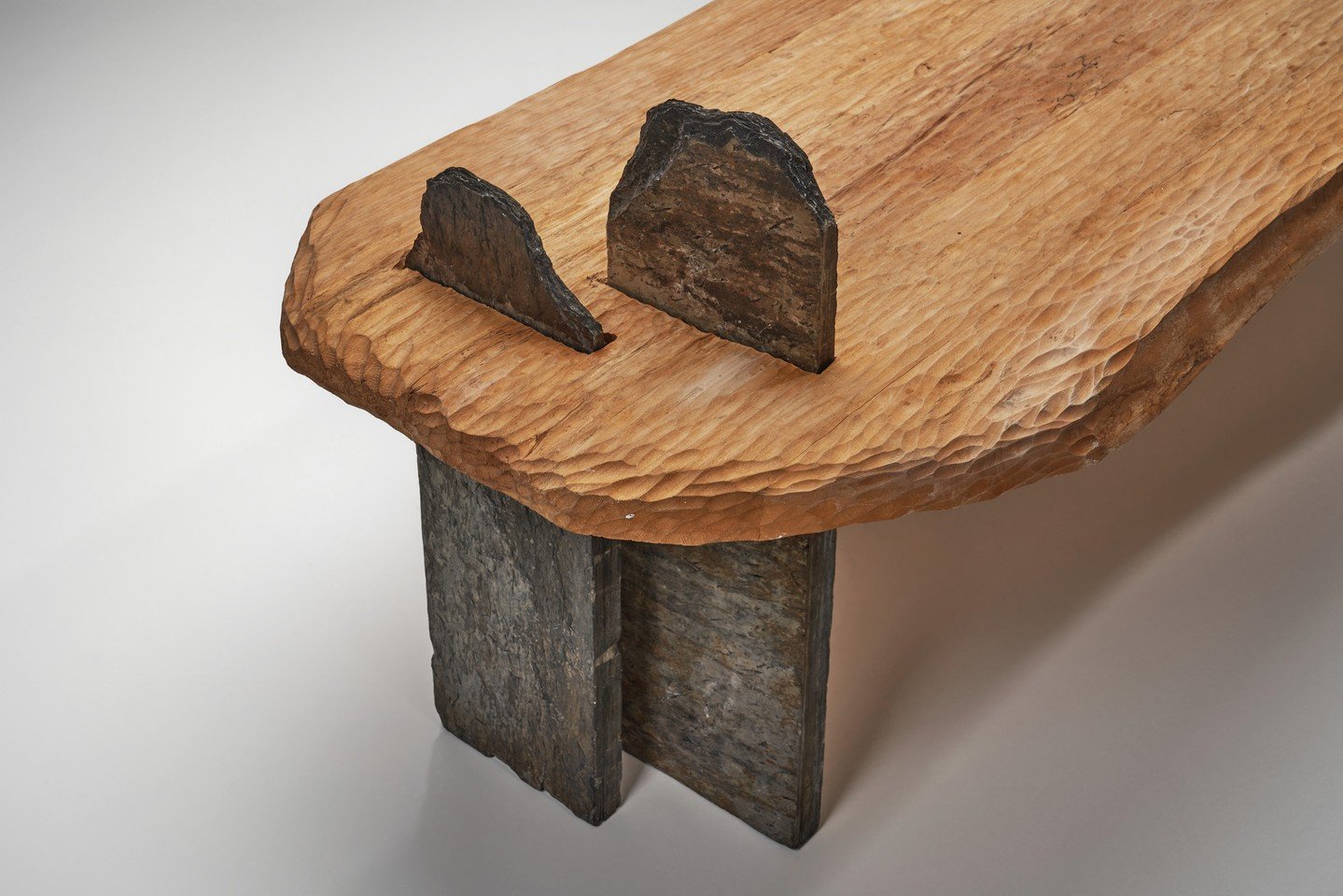
The main design element of this model is the table's base, forming a stable and visually intriguing triangle. The choice of stone as the primary material for this coffee table adds a layer of sophistication and timelessness. The grain of the stone is not merely a surface detail; it becomes an integral part of the design, contributing to the overall aesthetic of the piece, making it entirely unique. While it is elemental thanks to the stone and interesting construction, the roundness of its top and its sculpted base still provide a sense of gentleness. It is this well measured tension between the shapes that make the design eye-catching and infinitely interesting. With its strong and distinctive details, this table model is a perfect accent table, while also being capable to complement its surroundings. This piece could fit well in a modern interior, as well as in a minimalist space.
Coffee tables, in general, serve as design staples in living spaces for a multitude of reasons: beyond their utilitarian function of providing a surface for drinks and books, they anchor a room, creating a focal point around which furniture and conversation revolve. This coffee table, with its distinctive design and robust material, becomes more than just a functional piece; it becomes a statement, a conversation starter, and a timeless addition that will elevate the aesthetics of any space it occupies.
Condition:
In good vintage condition. Wear consistent with age and use. The table has recently been reconditioned. Due to the nature and age of the materials, the item has have some marks, scratches, and dents.
Dimensions:
39.37 in ø × 18.3 in H
100 cm ø x 46.5 cm H
REQUEST PRICE HERE
Price category: 5,000 - 7,500 usd / eur
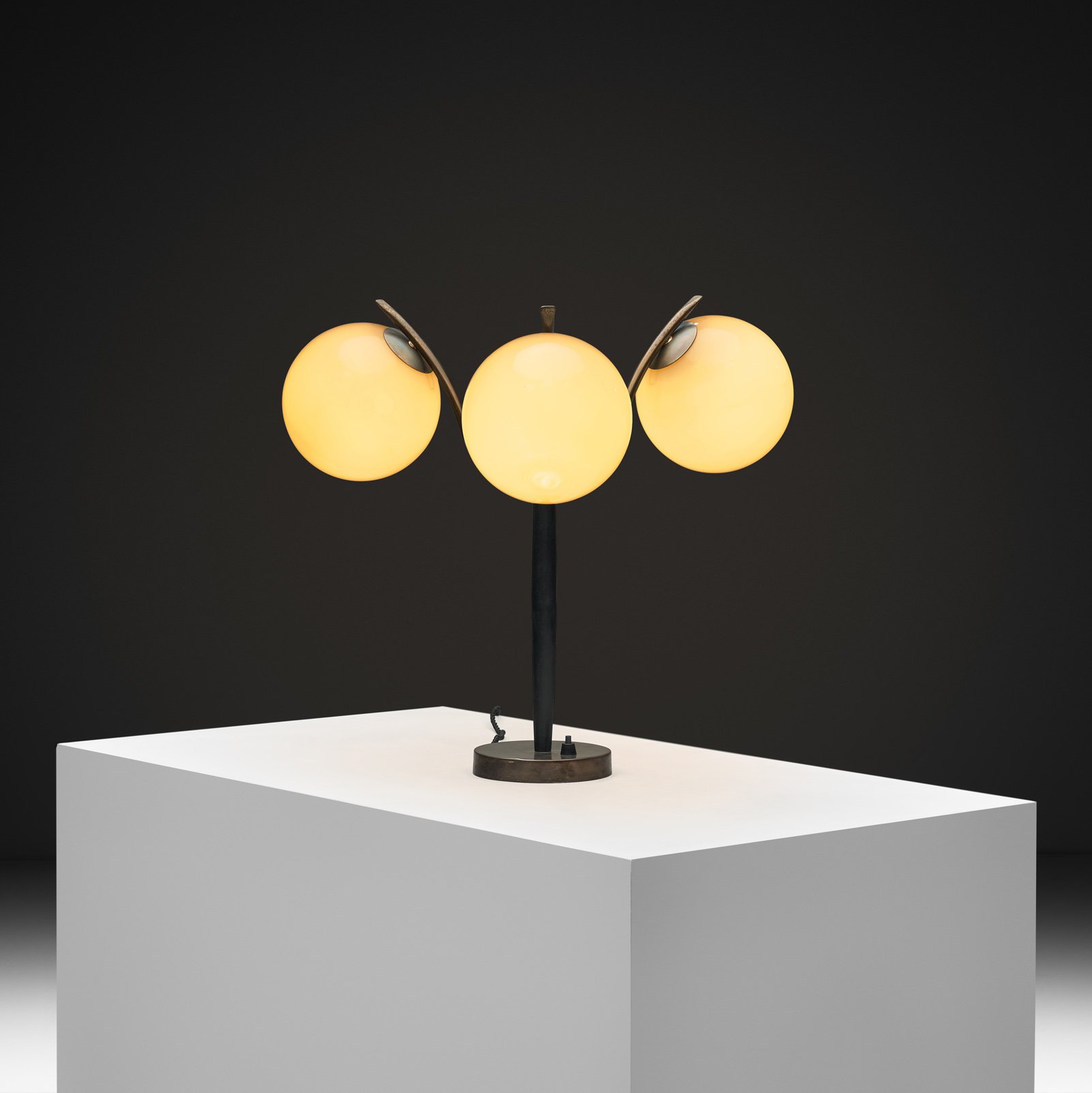
Swedish Grace was an important movement in Swedish design during the 1920s and early 1930s, combining the elegance of classical forms with the simplicity and geometric clarity of early modernism. In furniture and lighting, the style was characterised by carefully considered proportions, decorative metalwork and a restrained approach to ornamentation. This three-armed table lamp from the first half of the 20th century reflects these qualities through its symmetrical construction, contrasting materials, and distinctive arrangement of spherical glass shades.
The lamp features a unique three-armed structure built around a slender central stem, supported by a low circular metal base. The dark vertical column provides a strong central line, while two gracefully curved brass arms extend outward and upward to hold the outer glass shades. Their gentle curves contrast beautifully with the straight stem, creating a balanced and dynamic composition. Each arm terminates in a small metal holder supporting a spherical opal glass shaded. The opaque glass conceals the light sources and diffuses the illumination evenly, producing a warm, atmospheric glow. The contrast between the smooth, rounded glass and the fine metal framework is particularly effective, giving the lamp a light and open appearance despite its substantial elements. When illuminated, the three globes create a striking visual rhythm, while the warm light highlights the golden tones of the brass and the darker finish of the central stem.
The combination of classical symmetry, graceful curves and carefully selected materials makes this table lamp a particularly appealing example of Swedish Grace design. Its three illuminated globes give it a strong decorative presence, making it well suited to a sideboard, console or larger side table where the arrangement can be appreciated from different angles.
Condition:
In good vintage condition. Wear consistent with age and use. The lamp has recently been rewired and reconditioned. Due to the nature and age of the materials, the item has some marks, scratches, and discolouration on the brass. This lamp is compatible with an E26 / E27 standard fitting. All lighting can be converted for US usage.
Dimensions:
16.53 in W x 16.53 in D x 17.71 in H
42 cm W x 42 cm D x 45 cm H
REQUEST PRICE HERE
Price category: 9,000 - 12,500 usd / eur
The 20th century saw the rise of brilliant designers, like Steen Østergaard, working to create furniture of the highest quality that explored truly modern shapes and forms. Østergaard sought to combine comfort and elegance to achieve timeless designs that remain iconic examples of style and skill to this day.
Immediately, these chairs captivate with their cosy and stylish silhouette. The shell bodies cradle the occupant, providing a sense of intimacy and comfort that transcends mere functionality. The mid-century modern aesthetic is elegantly expressed through clean lines and organic curves, creating a harmonious balance between form and function. The designer managed to create pieces that seamlessly integrate into contemporary living spaces while preserving the warmth and character of natural materials, ideals deeply rooted in the Danish tradition. The wooden frames of these chairs showcase the skillful artistry of Steen Østergaard. The tripod legs, with beautiful joinery, not only add a touch of sophistication but also exemplify the meticulous attention to detail and aesthetic balance. The upholstery of the pair further enhances the allure. Meticulously chosen fabrics not only contribute to the overall aesthetic appeal but also emphasise the commitment to creating pieces that age gracefully.
Danish modern chairs have not only stood the test of time but continue to inspire contemporary designers and homeowners worldwide. Their enduring popularity is a testament to the genius of Danish modern design, based on both form and function, resulting in pieces that are as comfortable as they are stylish.
Condition:
In good vintage condition. Wear consistent with age and use. The chairs have recently been reconditioned. Due to the age and nature of the materials, the chairs have minor scratches, dents, and discolouration. The chairs have recently been reupholstered in a premium fabric. Each of our items can be reupholstered by our in-house atelier in a fabric of choice. Please reach out for more information.
Dimensions:
27.2 in W x 22.8 in D x 25.8 in H; Seat height 14.4 in
69 cm W x 58 cm D x 65.5 cm H; Seat height 36.5 cm