

CARL MALMSTEN
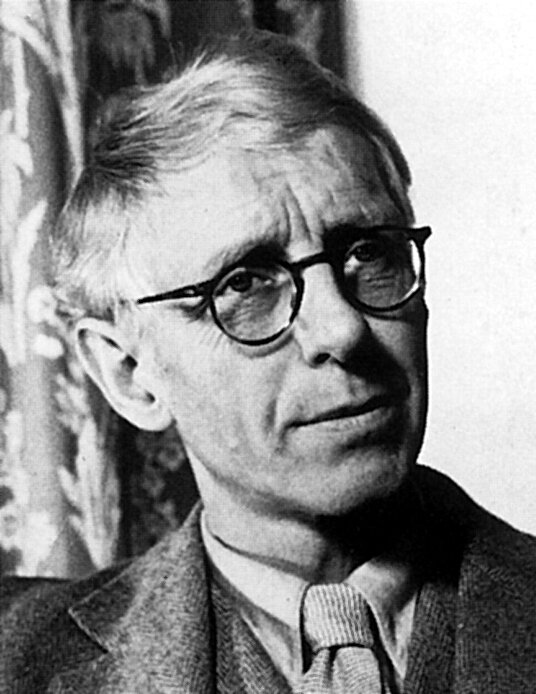
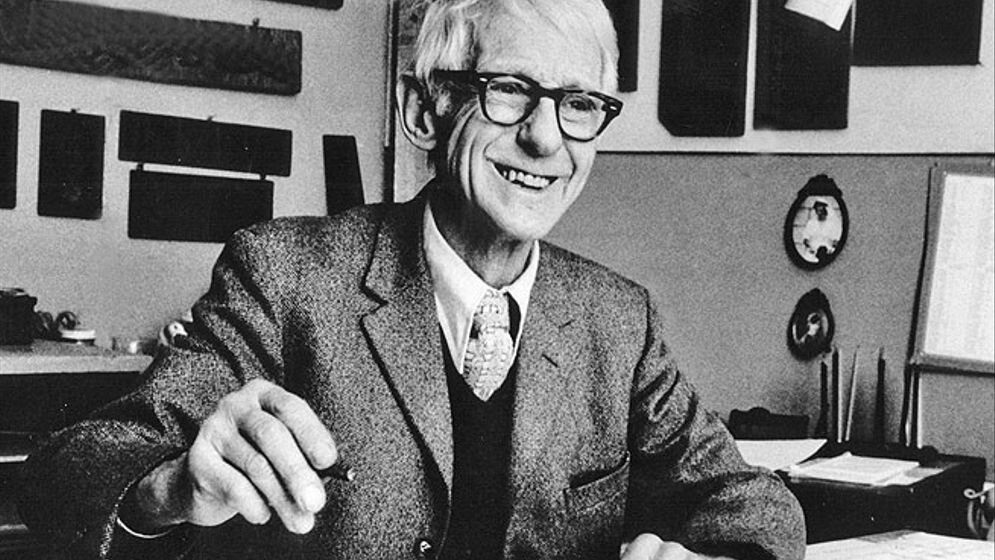
Carl Malmsten was born on December 7, 1888 in Stockholm, Sweden as the son of Karl Malmsten and Inez Cadier. He was a Swedish furniture designer, architect, and educator, who was known for his devotion to traditional Swedish craftmanship (slöjd) and his opposition to functionalism.
Malmsten’s career started in 1915, when the results of a furniture competition for the massive new building project, the Stockholm City Hall, were announced. The surprised jury realised that they had awarded both first and second prize to a hitherto unknown designer. This was to change very soon. The interior of the Council Chamber and other meeting rooms in the City Call became a great break-through for Carl Malmsten, and the furniture is still used by the City Council. Oddly enough, the beautiful writing chair with which he won the competition, never found a place in the building. Shortly after in 1917, he already exhibited alongside well-known Swedish architects such as Gunnar Asplund and Uno Åhrén.
By the 1920s, Carl Malmsten became one of the most sought-after interior and furniture designers in all of Sweden. Prestigious commissions were rolling in. Most famously, he was invited to furnish a room for the crown prince, Gustaf VI Adolf, and his wife Lady Louise Mountbatten in Ulriksdal Palace as a wedding gift. The architect Ivar Tengbom engaged him for the Stockholm Concert Hall, Ivar Kreuger’s Matchstick Palace and the Swedish Institute in Rome. Waldorf Astoria in New York phoned and asked Carl Malmsten to make the furnishings and furniture for their bedrooms, salons and dining rooms. In banks, insurance companies, the Riksdag – as soon as luxurious board rooms were required, Malmsten’s name was quickly mentioned.
Already as a young designer in the early 20th century, Carl Malmsten advocated an artisanal way of furniture design based on local materials and traditions, available to a wide audience at a reasonable price. In connection with the Stockholm Exhibition in 1930, Malmsten took a stand against the sterile varieties of functionalism. In return, he was accused of being a narrow-minded apostle of handicrafts, disregarding the great production factor of the time: industry. It was not until after the war that Malmsten started combining handicraft and industry in his work. Up until then, the furniture had been made at the school he started in 1930 and at a number of joinery workshops suited to artisanal production. He established contact with a group of high-quality small industries, the so-called Key Workshops. Some of these original Key Workshops still make classic Malmsten designs, for example, Stolab in Smålandsstenar, where Lilla Åland and Vardags are made, and O. H. Sjögren in Tranås, where upholstered armchairs such as Rundrygg, Farmor, Hemmakväll and Samsas are created. Just like Josef Frank and Svenskt Tenn, Carl Malmsten represents a distinct style of interior design that lives on long after its creator has passed away.
The breakthrough came in 1956, with an exhibition at the Röhsska Museum of Design and Craft in Gothenburg, where for the first time, Malmsten showed furniture designed for serial production, which soon found their way into the Swedish “People’s Homes”. Nature was Carl Malmsten's foremost teacher and source of inspiration. He conveyed his love of craftsmanship as a teacher in his own schools, at Olofskolan in Stockholm, Capellagården on Öland and the Carl Malmsten school on Lidingö, today a branch of Linköping University and one of the country's leading design colleges, simply referred to as “Malmstens“, where the basic philosophy is still that hand and mind must engage in creative collaboration. He had a tremendous sense of proportion and designed furniture that people would feel very much at home with – and comfortable in. “Neither light, nor eyes or people like bumping into sharp corners”, he explained. Therefore, all edges had to be smoothed so that they were kinder to the eye and to the touch.
Malmsten has had a lasting influence on Swedish furniture design through the two schools he founded. His furniture was in many ways a product of the thoughts and ideals of the time, possessing a timeless quality that makes them just as relevant and loved today. Malmsten never stopped creating, never stopped working. Until his death in 1972, he was the head of his company and schools, still planning exhibitions and was busy designing new pieces of furniture carrying a strong tradition into the future.
Carl Malmsten devoted his life to the renewal of traditional Swedish craftsmanship, inspired by the cultural examples of the Swedish country manor and rustic styles – furniture endowed with a creative simplicity, with a feeling for the wood itself, with function in mind and a high technical quality. Malmsten’s light wooden furniture, with their blonde range of colours, have in themselves become an allegory for that which is typically Swedish, with strong references to Swedish nature and cultural traditions. As a furniture maker he expressed the old, inherited forms as well as the new, bold ideas with his language of design. The result will forever be the same - beautiful, eternal individual pieces of furniture which together create a unified and harmonious feeling.
Interesting literature:
Inspiration och Förnyelse: Carl Malmsten 100 År (Swedish and English Edition) by Elisabet Stavenow-Hidemark (Author), Nordiska Museet (Author), Ord Bildarna (Author), Carl Malmstens verkstadsskola (Author), Carl Malmsten (Illustrator), Wiken 1988


REQUEST PRICE HERE
Price category: 5,000 - 7,500 usd / eur
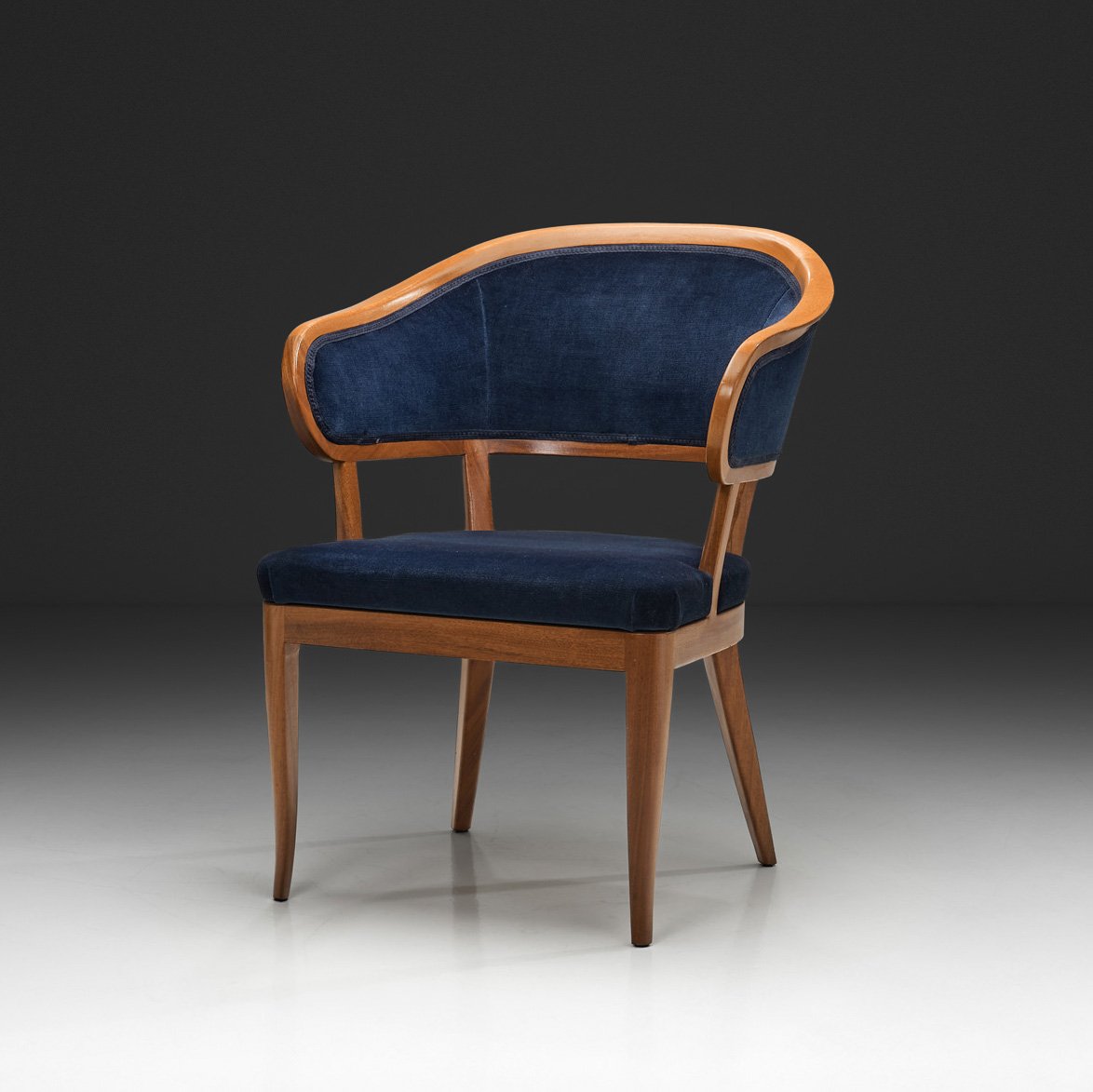
The ‘Oskar’ armchair was designed in 1939, the same year that Carl Malmsten participated in the New York World’s Fair. It was there that the expression “Swedish Modern” was coined, but Malmsten remained a traditionalist, mainly concerned with comfort in the home.
As with so many of Malmsten’s pieces of furniture, “Oskar” was modelled on an earlier design – his own or from previous generations. This armchair belongs to Carl Malmsten's earlier works, and the structure is traditionally made of solid pine from Swedish forests. As can be expected from the “Master of Wood”, the frame is expertly designed, with ergonomic and aesthetic principles at its core. While this armchair may seem less “Malmstenesque”, it already has the gentle curves that defined Malmsten’s later designs. This is especially visible in the flowing armrests that descend from the top, curling outwards to create a welcoming look. The gently bent backrest is tufted with dark yellow stitches that contrast with the light bouclé upholstery, both in colour and texture to create a stylish, visually interesting look. The structure is supported by the tapered, solid pine legs that add an organic touch to the design.
The design is reminiscent of the furnishings of the sitting room of Ulriksdal Palace, which was given to the crown prince and princess, Gustav and Louise, by the Swedish people in 1923. Malmsten was commissioned to create the decor for the room, and the ‘Oskar’ armchair may have been a template for this period, and perhaps that is why Carl Malmsten gave the chair a royal-sounding name. The company known today as O.H. Sjögren was established as early as the 1870s. Carl Malmsten, who had hitherto only produced the most exclusive and unique furniture for a limited and affluent clientele, sought manufacturers who were able to produce his furniture in larger volumes without compromising the high demands he placed on craftsmanship and quality. He chose O.H. Sjögren, and together they developed and marketed the many items of upholstered furniture that have become classics today.
Condition:
In good vintage condition. Wear consistent with age and use. The chair has been reupholstered recently in a premium bouclé fabric. Each of our items can be re-upholstered by our in-house atelier in a fabric of choice. Please reach out for more information.
Dimensions:
28.74 in W x 29.92 in D x 37.4 in H; Seat height 16.33 in
73 cm W x 76 cm D x 95 cm H; Seat height 41.5 cm
About the Designer:
Carl Malmsten (December 7, 1888 – August 13, 1972) was a Swedish furniture designer, architect, and educator. Malmsten was born in Stockholm, Sweden. Malmsten's career took off when he won a competition in 1916 to design furniture for the Stockholm City Hall and shortly after in 1917, he exhibited alongside well-known Swedish architects such as Gunnar Asplund and Uno Åhrén.
In the 1920s he was invited to furnish a room for the crown prince, Gustaf VI Adolf, and his wife Louise in Ulriksdal Palace. He was honoured with an inaugural Prince Eugen Medal for design in 1945. Already as a young designer in the early 20th century, Carl Malmsten advocated an artisanal furniture design based on local materials and traditions, available to a wide audience at a reasonable price.
Nature was Carl Malmsten's foremost teacher and source of inspiration. He conveyed his love of craftsmanship as a teacher in his own schools, at Olofskolan in Stockholm, Capellagården on Öland and the Carl Malmsten school on Lidingö, today a branch of Linköping University and one of the country's leading design colleges. As a debater, Malmsten stormed against functionalism, but in retrospect it can be seen that his ideas often coincided with the rational and frugal style ideals of function.
Malmsten has had a lasting influence on Swedish furniture design through the two schools he founded—the Carl Malmsten Furniture Studies (Carl Malmstensskolan), which has been a part of Linköping University since 2000, is situated on the island of Lidingö on the outskirts of Stockholm. Carl Malmsten spoke about the importance of tradition, craftsmanship and the nation. His furniture was in many ways a product of the thoughts and ideals of the time, they have a timeless quality that makes them just as relevant and loved today.