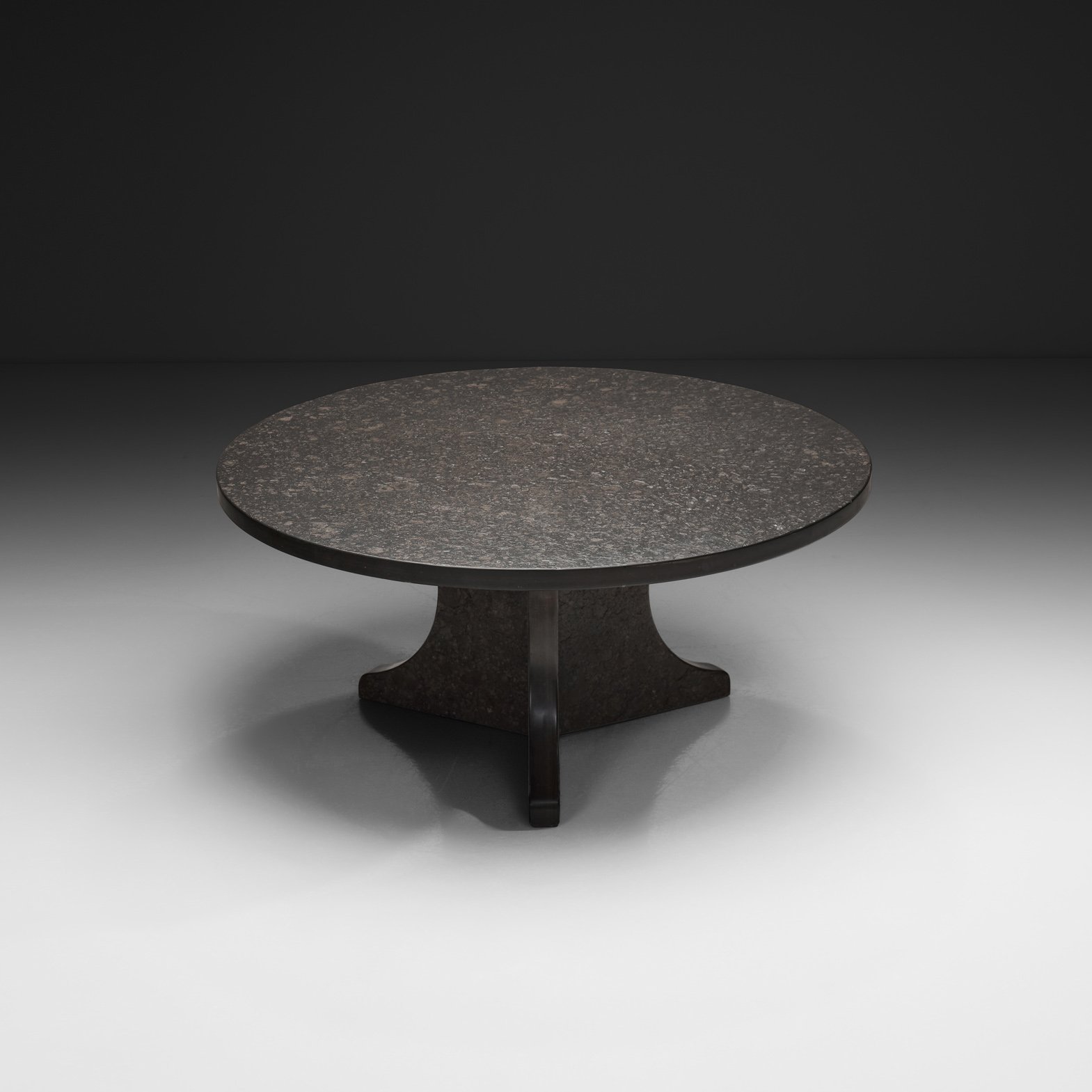
Maison Regain Coffee Table in Elm, France 1980s (sold)


Maison Regain Coffee Table in Elm, France 1980s (sold)
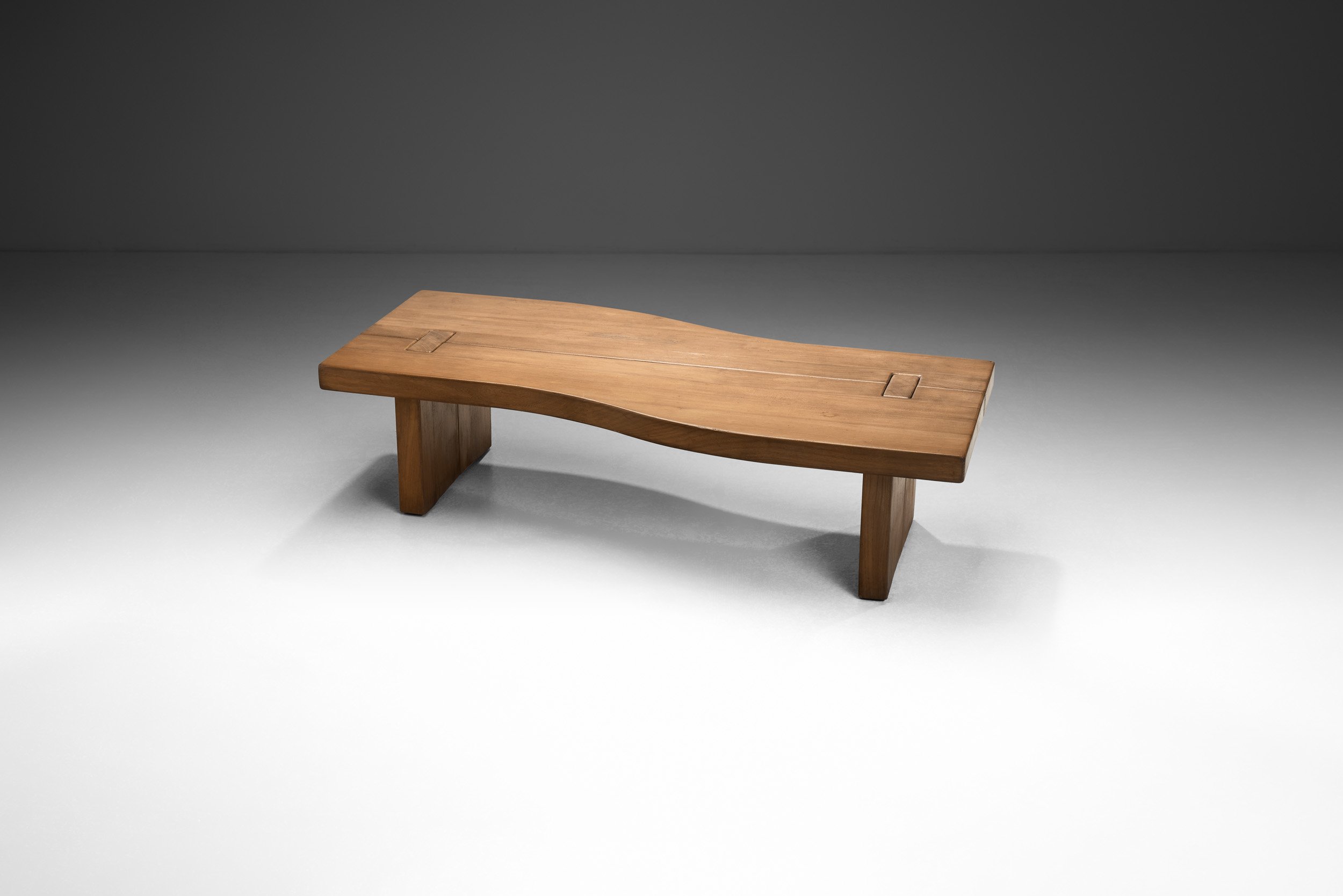
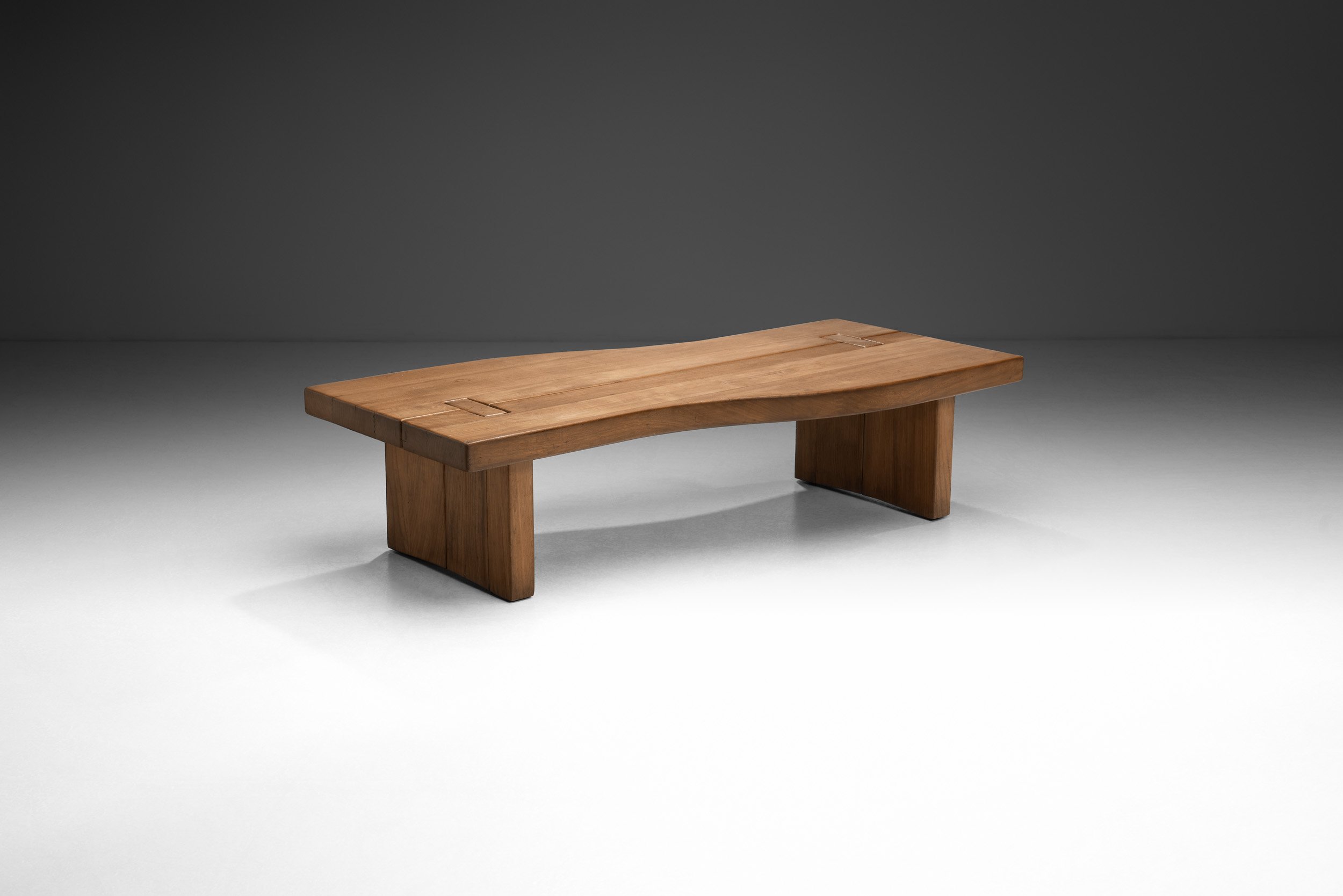
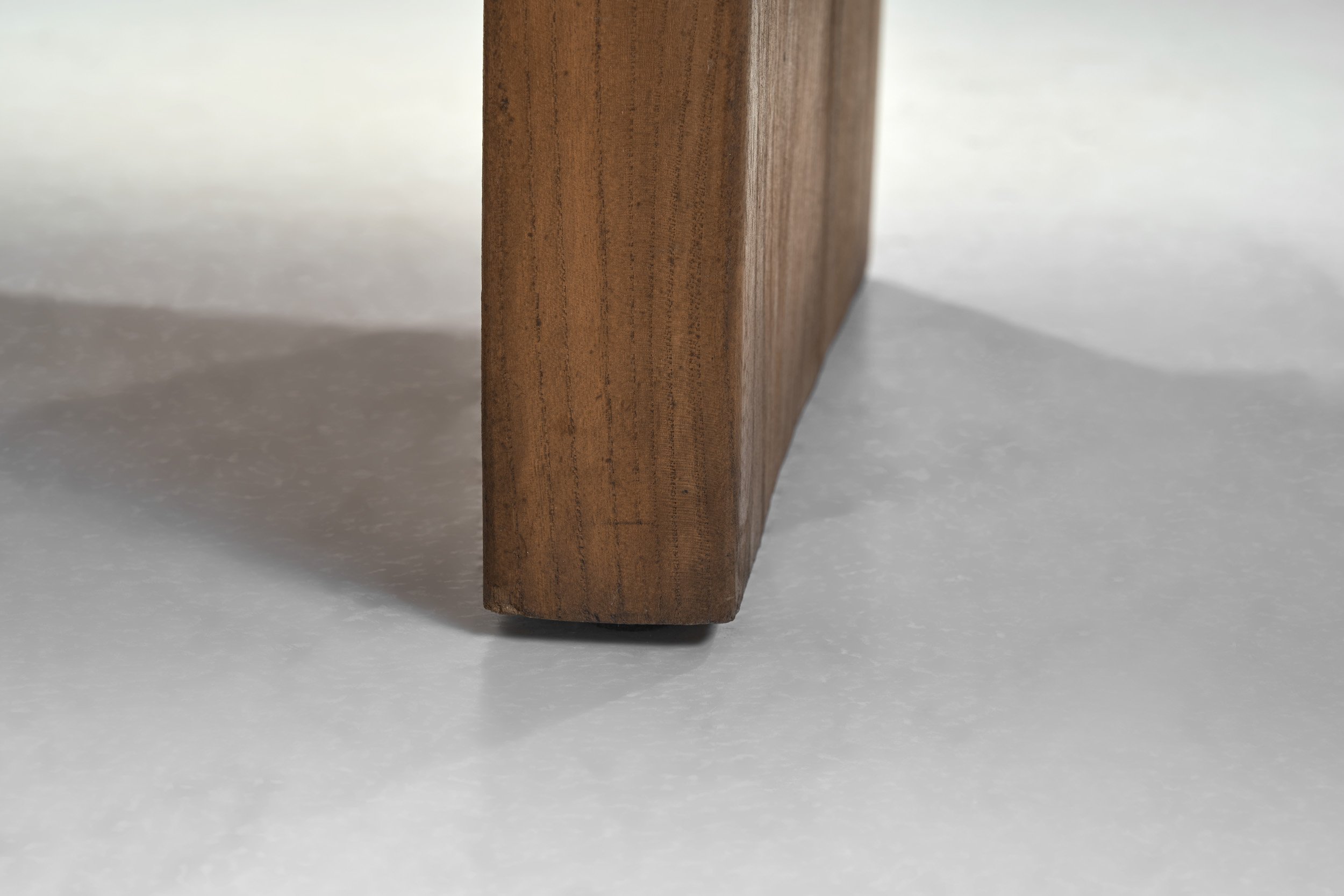
In mid-century modern design there was an emphasis on the use of wood, as it connected everyday objects - such as furniture - to nature. This solid elm coffee table is a perfect example of this practice, and of the visual benefits of an understated, organic design.
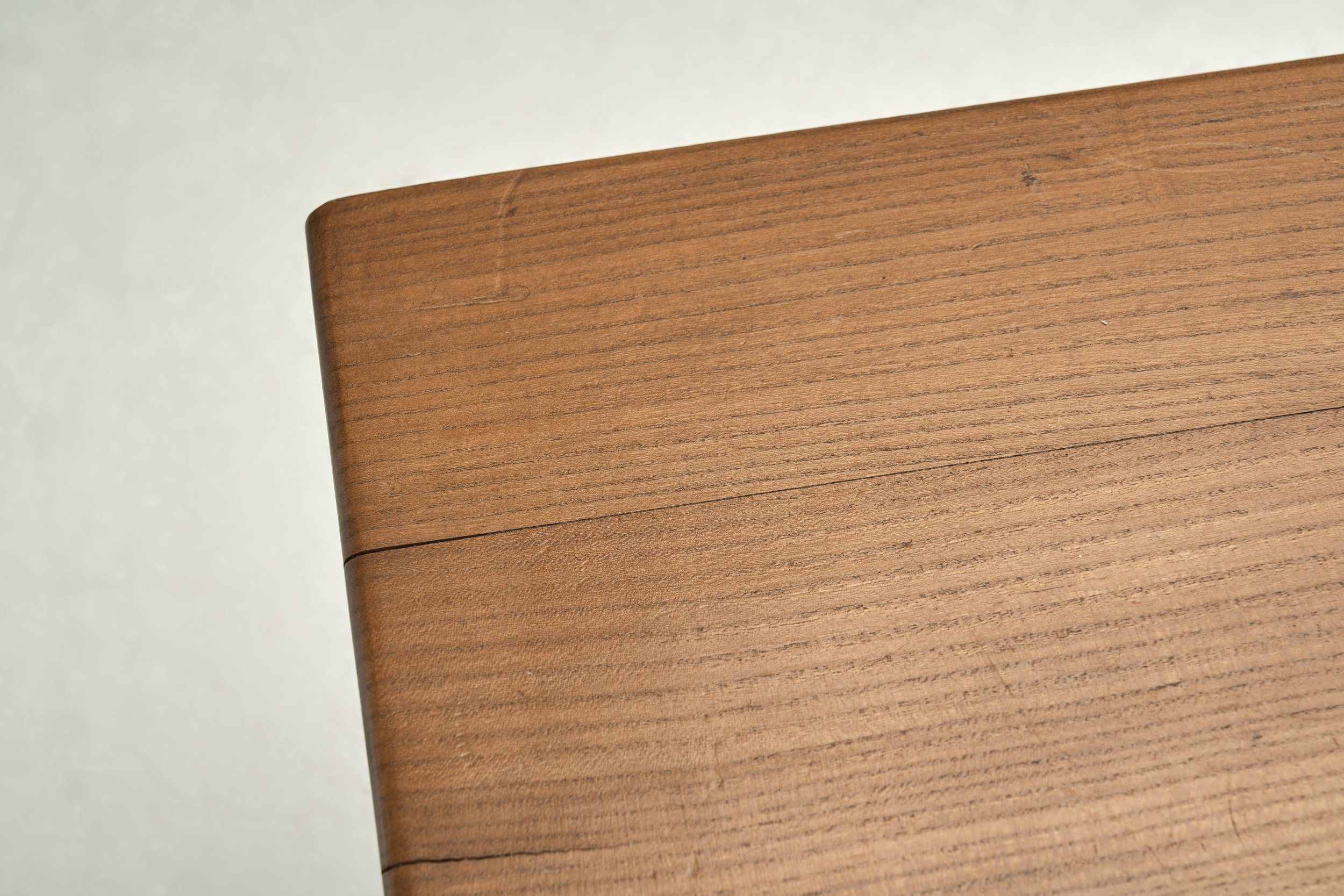
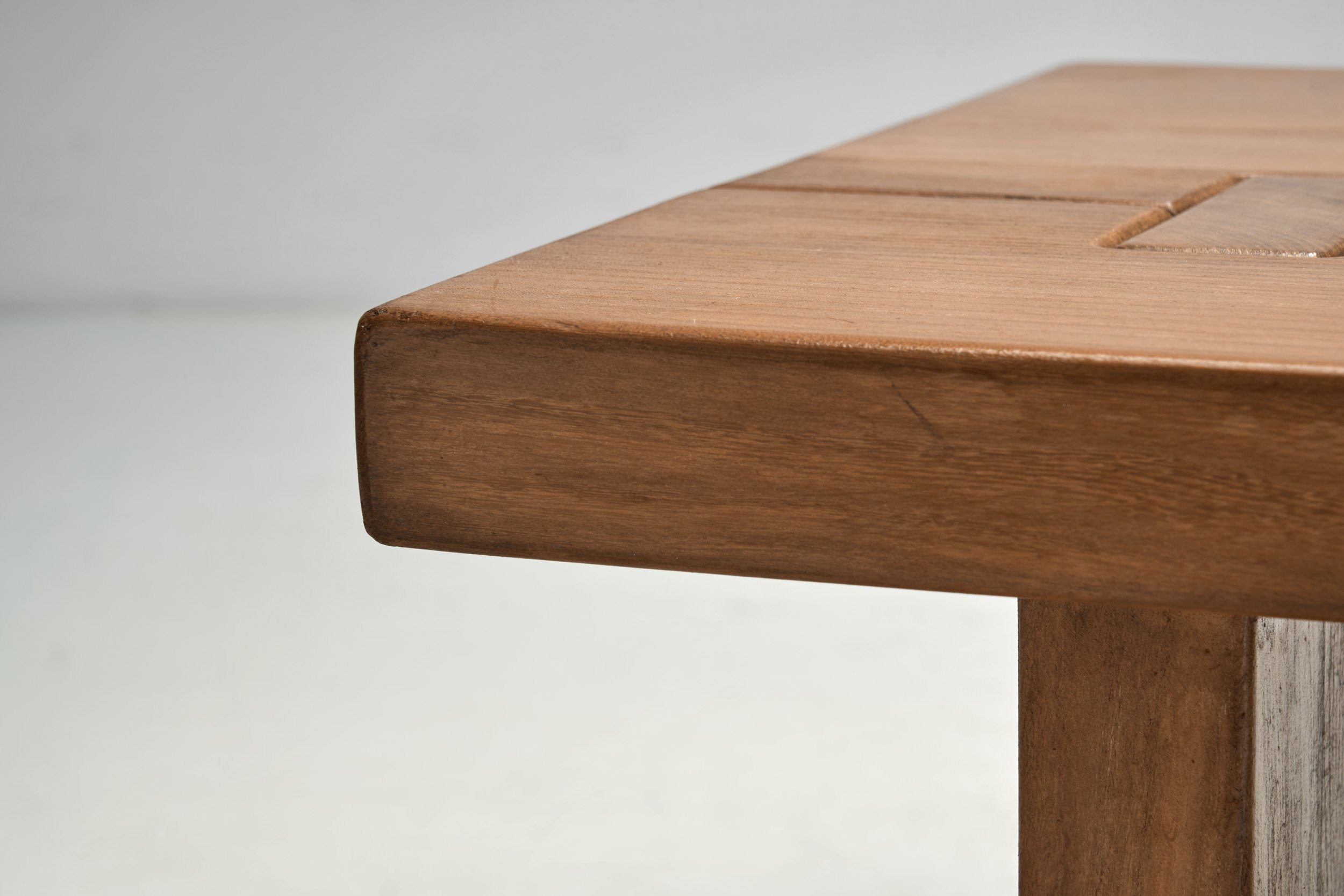
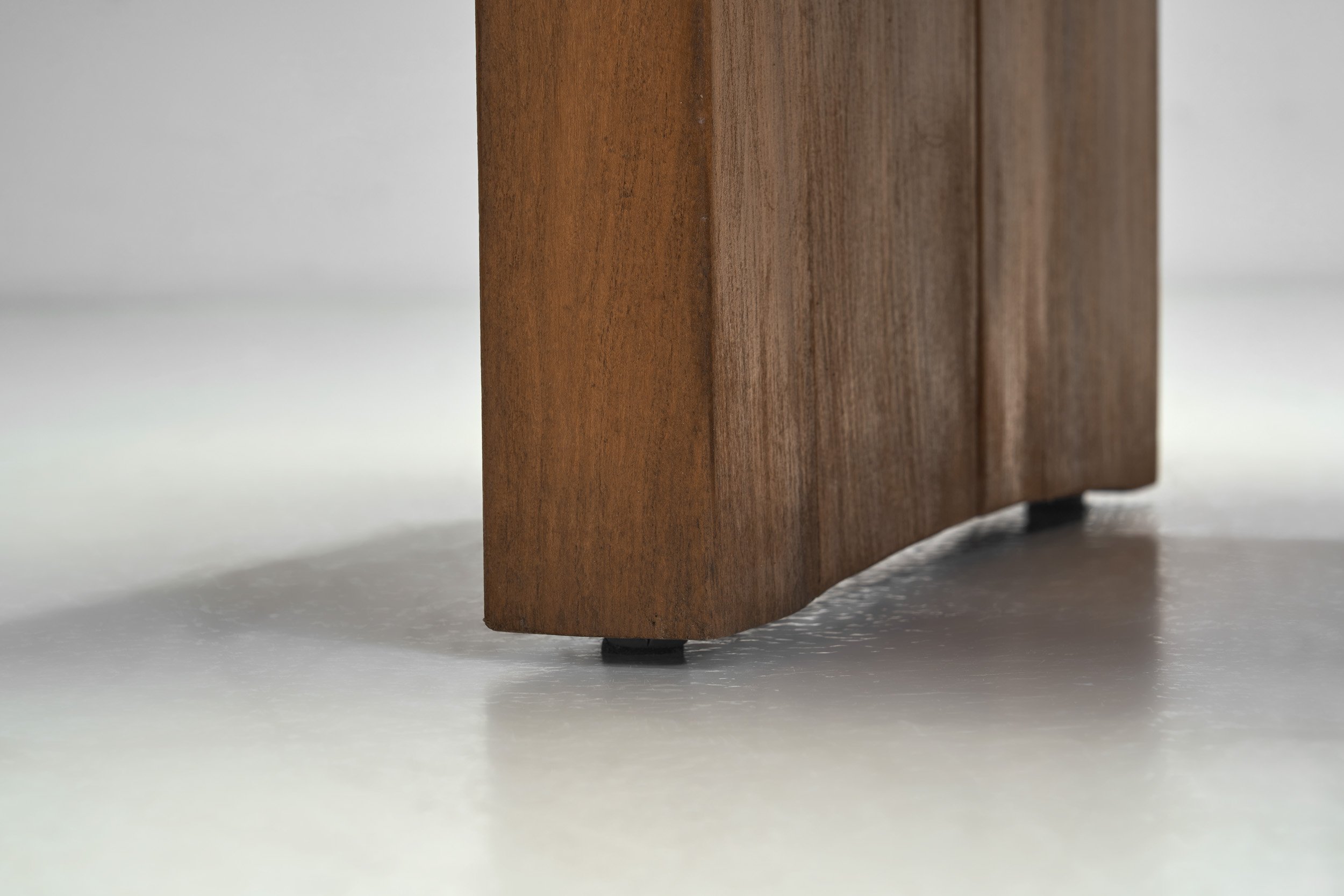
Organicity went hand-in-hand with the often minimalist principles of interior decor in most of the European countries during the 20th century. The structure of this table is honest, giving importance to the robust shape and earthy tones. The design favours simple lines, yet well-thought-out proportions and details. The definite stand-out feature of this table is the curving tabletop. This immediately creates a unique look, breaking the otherwise sturdy profile. The maker of this model sought to project a sense of strength through the solid form, while also celebrating the appeal of the imperfections in the wood. The no-frills design serves the purpose of showing the understated beauty of natural materials, and their endless possibilities under the hands of an expert craftsman. The elm is not overworked, showing off the beautiful grain and texture.
The craftsman’s handiwork is visible throughout the table, adding to its natural charm. This model would make a perfect accent table, and is sure to complement its surroundings in a variety of interiors.
SOLD
Condition:
In good vintage condition. Wear consistent with age and use. Minor scratches and marks on the wood.
Dimensions:
55.91 in W x 23.62 in D x 14.57 in H
142 cm W x 60 cm D x 37 cm H
REQUEST PRICE HERE
Price category: 2,500 - 5,000 usd / eur
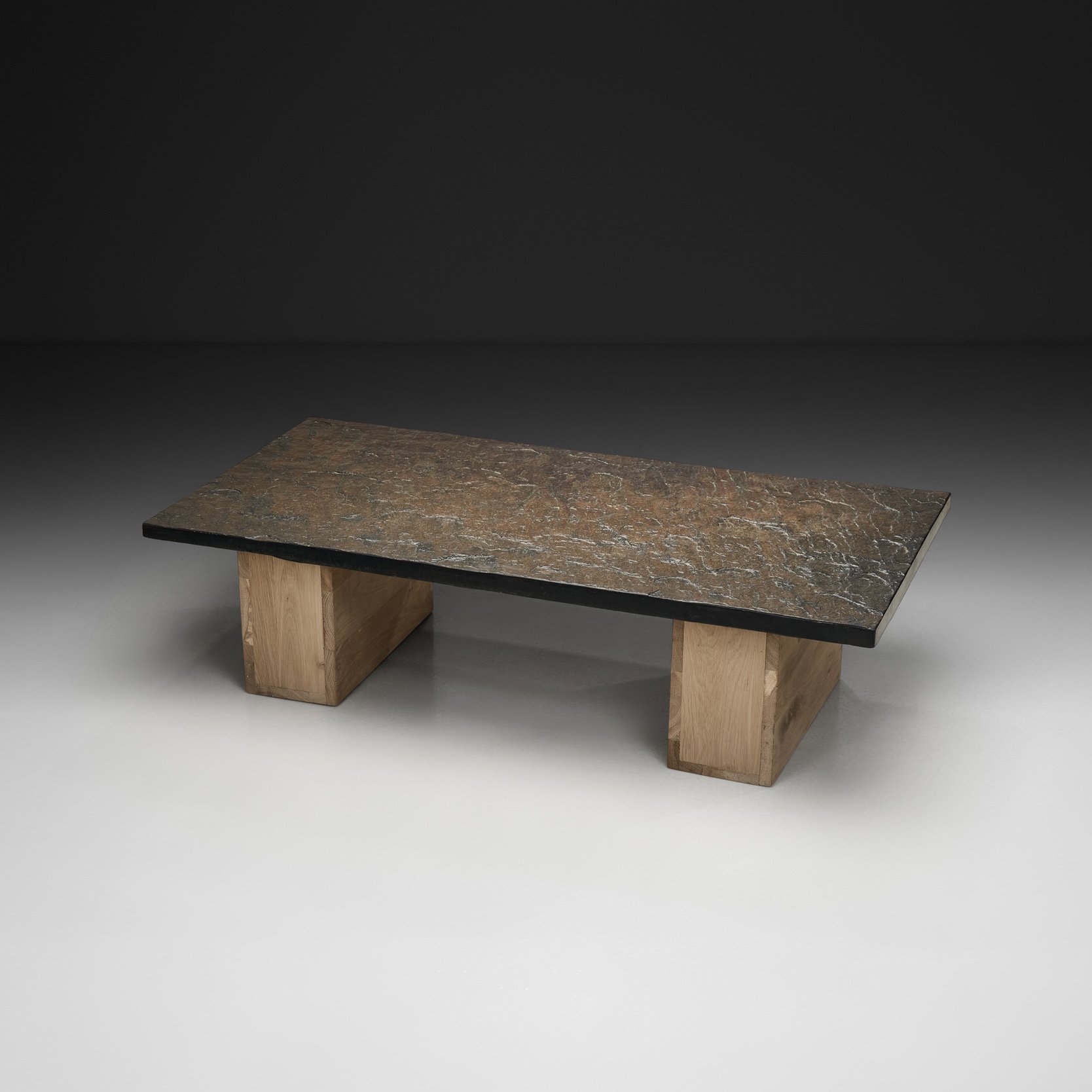
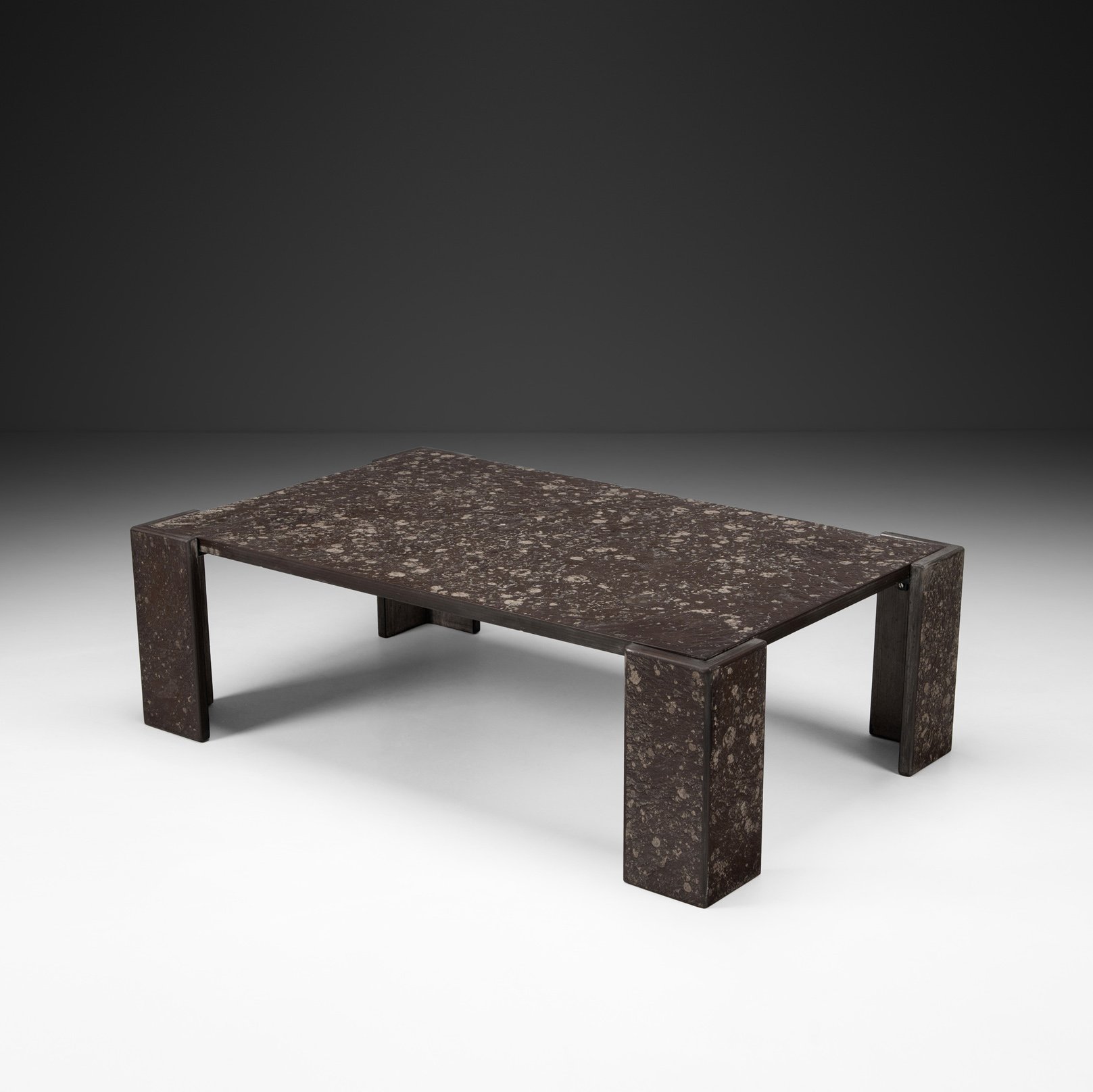
Brutalist furniture of the second half of the 20th century often gave materials a dominant role, using simple, bold forms to emphasise their natural colour and texture. Stone was particularly effective within this approach, as its irregular surface could provide visual richness without additional decoration. This Posidonia slate coffee table follows that principle closely, with a low architectural form built almost entirely around the distinctive character of the stone.
The coffee table has a broad rectangular top supported by four rectangular legs positioned at its corners. Its construction is extremely clear, with the horizontal tabletop and vertical supports creating a simple geometric structure. Posidonia slate makes up the entire surface, giving the table a consistent material character. The stone has a deep dark tone with lighter areas scattered irregularly across the surface. These natural variations break up the large flat plane and ensures that no area of the table appears completely uniform. The top is particularly effective in constituting a focal point, as its generous uninterrupted surface provides a clear view of the slate's complex pattern. The low height further emphasises the horizontal shape, allowing the long stone top to remain the main focus from every angle. Coffee tables, in general, serve as design staples in living spaces for a multitude of reasons: beyond their utilitarian function of providing a surface for drinks and books, they anchor a room, creating a point around which furniture and conversation revolve.
The strength of this coffee table comes from the direct relationship between its simple construction and expressive stone. This piece represents a particularly striking example of the material-focused furniture associated with the era.
Condition:
In good vintage condition. Wear consistent with age and use. The table has recently been reconditioned. Due to the nature of material, the item has some marks, scratches, and discolouration.
Dimensions:
53.35 in W x 33.66 in D x 16.14 in H
135.5 cm W x 85.5 cm D x 41 cm H
REQUEST PRICE HERE
Price category: 2,500 - 5,000 usd / eur
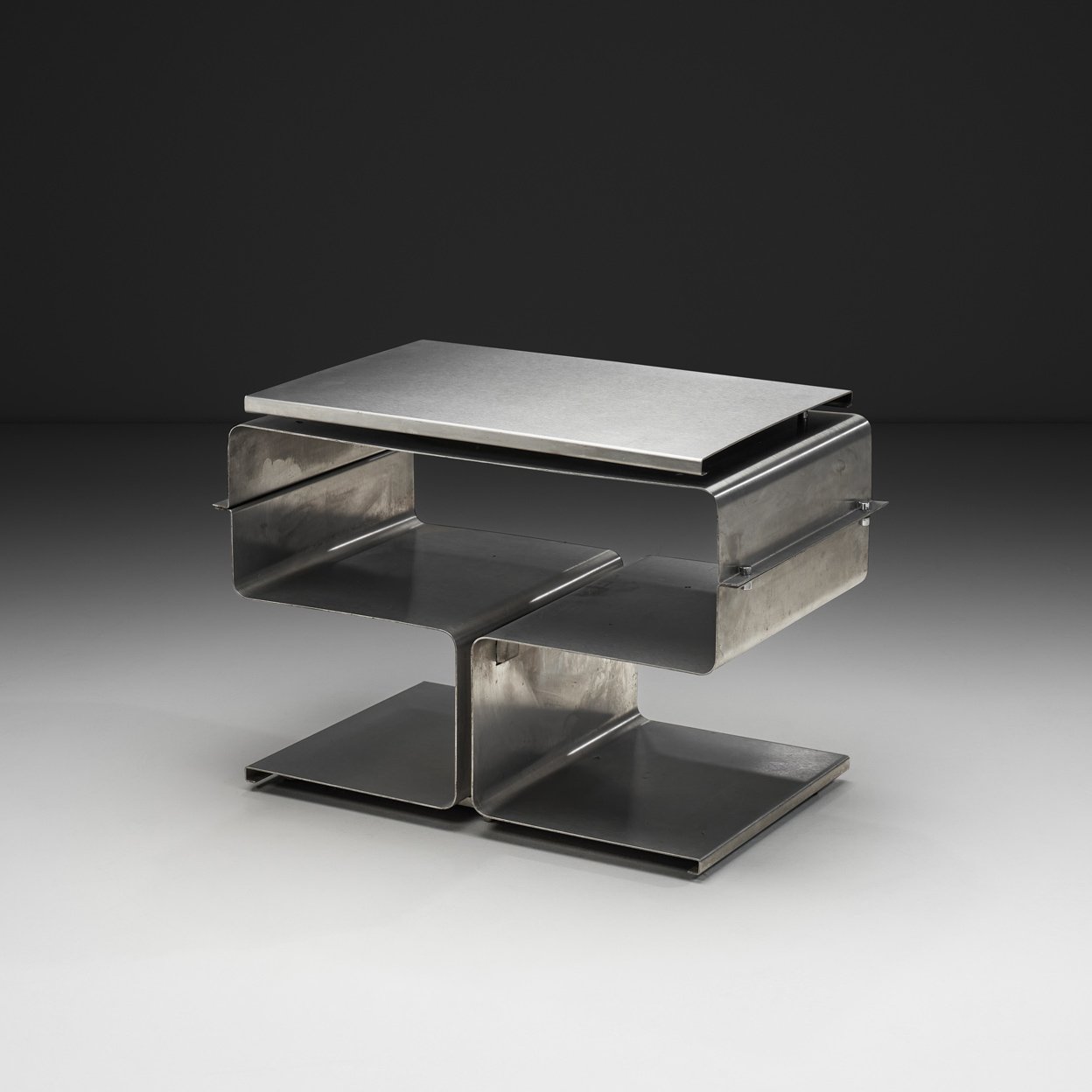
The 1970s witnessed the emergence of eccentric furniture pieces that seamlessly blended the avant-garde with practicality. Crafted in France, this distinctive "Sequenza" table by François Monnet bears the mark of French ingenuity and artistry, reflecting an era where experimentation in design was the norm.
The modern look of this table carries an industrial quality, yet retains the refined edge of late 20th century design. Each component of this table was designed with functionality and elegance in mind, culminating in a piece that transcends simple utility. It is a striking blend of form and function - the swivel top offers not just practicality, but also a touch of modern charm that can enhance the decor and warmth of an interior. The material choice of stainless steel also makes the piece look lightweight while maintaining its durability. Simplicity meets sophistication in this design, where craftsmanship and finish take center stage. The piece exudes a sense of artistic whimsy and individuality, embodying the best of its era. Objects like this make striking focal points in any modern home and this table is no exception.
Coffee and side tables, in general, serve as design staples in living spaces for a multitude of reasons: beyond their utilitarian function of providing a surface for drinks and books, they anchor a room, creating a focal point around which furniture and conversation revolve. Overall, the table equally emphasizes function and visual interest, creating an instantly arresting aesthetic.
Condition:
In good vintage condition. Wear consistent with age and use. The table has recently been reconditioned. There are minor dents and scratches in the metal. Due to the age and nature of the metal, the table may have marks, and discolouration.
Dimensions:
29.92 in W x 17.72 in D x 21.26 in H
76 cm W x 45 cm D x 54 cm H
REQUEST PRICE HERE
Price category: 2,500 - 5,000 usd / eur
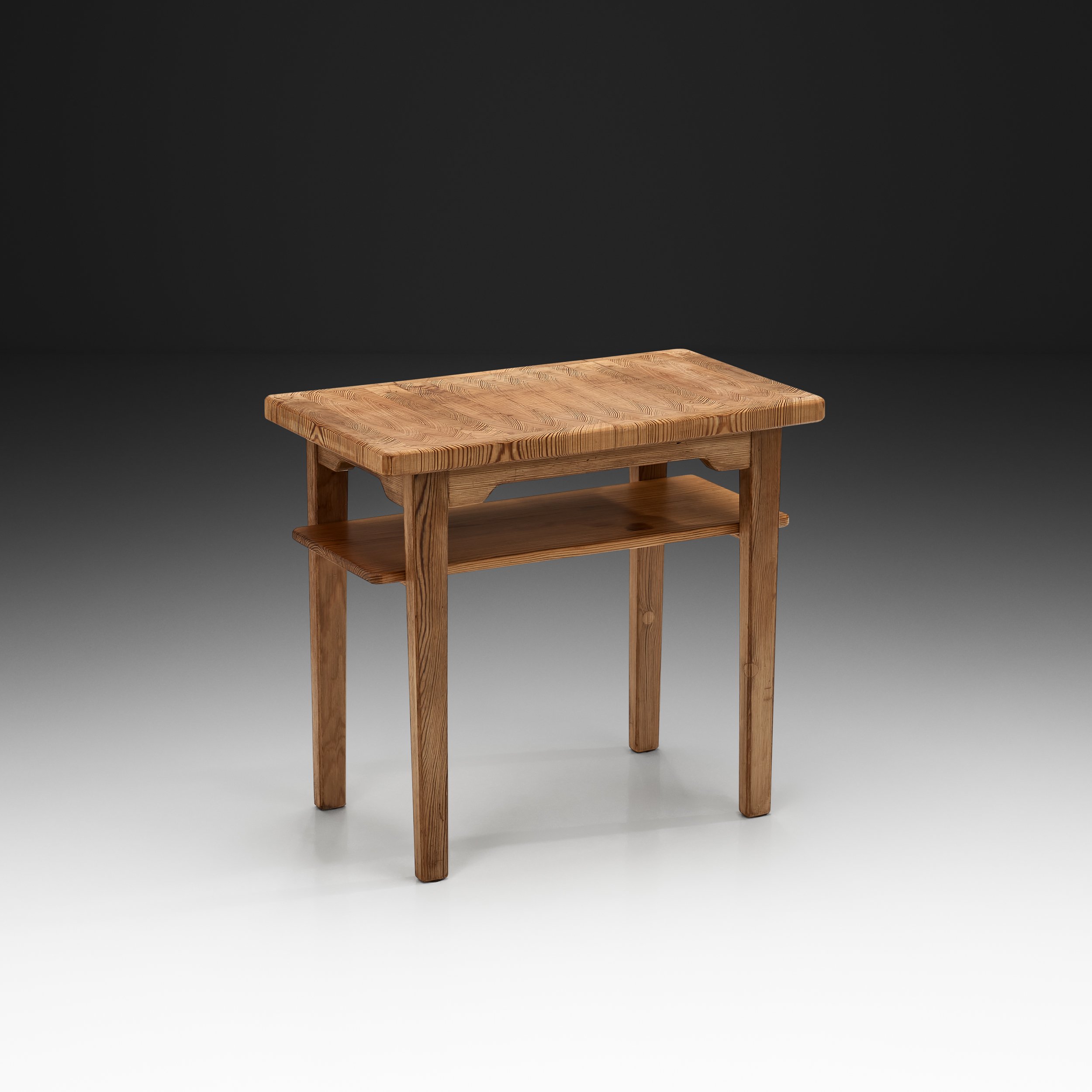
The 1960s in Sweden were defined by a quiet but deliberate design philosophy rooted in function, clarity, and craftsmanship. Designers and cabinetmakers turned toward a more humanist modernism that emphasised warmth over severity. This approach is exemplified by Swedish Modern design movement, which focused on creating durable, accessible, and elegant furniture for the masses.
Rather than treating tables as purely functional objects, designers like Hilding Nilsson created furniture that integrated beauty into day-to-day life. Thanks in great part to an early emphasis on wood Swedish furniture design from the mid-20th century era avoided associations with cold industrialisation and machine aesthetics. This table is crafted from pine and because of its universally appealing form and impeccable craftsmanship, it fits almost any design style. It is apparent that equal attention was paid to the aesthetic quality, which is visible in the carefully crafted construction. The minimalist design allows the beautiful grain of the wood to stand out throughout the table. Moreover, the geometric grain pattern and warm patina of the pine speak to decades of gentle use, enhancing the appeal with a sense of history and authenticity.
Like most mid-century pieces, this side table is sure to enhance the daily lives of its users through its visually pleasing and functional design that is timeless in every sense of the word.
Condition:
In good vintage condition. Wear consistent with age and use. The side table has recently been reconditioned. Due to the nature and age of the material, the item has marks, scratches, and discolouration.
Dimensions:
22.64 in W x 12.60 in D x 20.08 in H
57.5 cm W x 32 cm D x 51 cm H
REQUEST PRICE HERE
Price category: 2,500 - 5,000 usd / eur
During the 1950s, Danish Modern furniture placed equal emphasis on structural clarity and refined craftsmanship. Rather than treating tables as purely functional objects, designers created furniture that integrated beauty into day-to-day life. Thanks in great part to an early emphasis on wood and a resistance to certain modernist currents by influential designers, Danish Modern has avoided associations with cold industrialisation and machine aesthetics.
The movement's preference for fine cabinetmaking and expressive timber is evident in this coffee table, whose elegant silhouette is achieved through a restrained combination of curves and expressive wood. The long, rectangular top displays a dramatic grain pattern, with tonal variations across the surface. Supporting it is an elegant, trestle-like base. The designer strayed away from the bulky, robust versions of this iconic base style, opting instead for two sweeping curved side supports connected by a single stretcher, creating an open architectural framework beneath the tabletop. The contrast between the crisp horizontal plane of the top and the flowing curves of the base creates a dynamic, yet balanced, composition. Danish modern designs are, at their core, utilitarian objects; as a result, this table’s form follows function, offering both a generous surface area and great stability. The absence of unnecessary detailing directs attention to the quality of the timber, the precision of the joinery, and the graceful geometry of the structure.
Elegant from every angle, the table demonstrates why Danish Cabinetmakers and their designs are some of the most thoughtful pieces of furniture. Its understated design and versatile character allow it to complement a wide range of interiors while showcasing the enduring appeal of the Danish modern period.
Condition:
In good vintage condition. Wear consistent with age and use. The table has recently been reconditioned. Due to the nature and age of the material, the item has some marks and scratches on the tabletop.
Dimensions:
59.25 in W x 25.59 in D x 21.65 in H
150.5 cm W x 65 cm D x 55 cm H
REQUEST PRICE HERE
Price category: 20,000 - 30,000 usd / eur
Adrien Audoux and Frida Minet were a French design duo who worked together during the 20th century. They were known for their innovative use of natural, sustainable materials, including rope, wicker, and bamboo. The duo’s work was heavily influenced by the Modernist movement, which sought to create functional and streamlined designs that were accessible to a wider audience.
Audoux & Minet’s pieces are characterised by a strong sense of craftsmanship, with each piece being handmade by the designers themselves or by skilled artisans. This dining table showcases a long rectangular top finished in warm wood veneer, its broad uninterrupted surface displays the grain. The top sits above thick base covered in a tightly woven natural fibre that introduces an immediate depth of tone and texture. The fibre flows across the supports in beautiful braided patterns, emphasising the bold and solid look. The rope is made into a geometric pattern which breaks up the woven surface to create a beautiful rhythm within the structure. The contrast of materials is central to the table’s character: the smooth, richly grained wooden top stands out against the coarse, rough and natural fibre below, allowing two very different surfaces to define the piece.
Today, Audoux and Minet's designs are highly sought after by collectors and are considered important examples of mid-century modern design. Furniture pieces like this table stand out through their unique textures, and their materials, as well as their classic charm.
Condition:
In good vintage condition. Wear consistent with age and use. The table has recently been reconditioned. Due to the nature and age of the material, the item has some marks and scratches on the tabletop. Additional imperfections like chips, dents or discolouration may be present.
Dimensions:
67.12 in W x 33.46 in D x 29.13 in H
170.5 cm W x 85 cm D x 74 cm H