"Model T118" Coffee Table by Illum Wikkelsø for Niels Eilersen, Denmark 1960s (sold)


"Model T118" Coffee Table by Illum Wikkelsø for Niels Eilersen, Denmark 1960s (sold)
This immediately recognizable model, the “T118” is a Danish modern classic with a glass top and a solid, sculptural wood base. Designed by Illum Wikkelsø, this table always makes a lasting impression in any interior.
The form has an inherently organic impression, which comes naturally for most mid-century modern Danish pieces, where drawing inspiration from natural, organic form is quintessential. Wikkelsø worked with clean lines, but he also had a strong sense of organic expression and was deeply inspired by nature – especially the Danish landscape. He aimed to capture the beauty he saw in the environment around him in his furniture designs. In the case of this coffee table, the base - traditionally made of teak - consists of two ‘X’ shaped pieces joined together in the middle. Both the top and bottom parts are made from separate wood pieces resulting in a diverse pattern and grain. The circular glass top was designed to showcase the base even from the top view, which shows that it was always meant to be the focus of the design. This table’s design is entirely based on Wikkelsø’s artisanship, which hails from a generation of cabinetmakers, upholsterers and furniture producers established before the 1950s. This heritage shines through this coffee table with a creative design that doesn’t compromise on quality.
Translating it into furniture that closely embraces the human figure while remaining steadfast and durable. With his clear design aesthetic and deep understanding of materials, Illum Wikkelsø was one of the key protagonists to make Danish design style an international phenomenon.
SOLD
Condition:
In good vintage condition. Wear consistent with age and use. Some scratches and marks on the glass.
Dimensions:
41.33 in ⌀ x 17.71 in H
105 cm ⌀ x 45 cm H
About the designer:
Kristian Illum Wikkelsø (1919-1999), by his full name, is best known for his seating designs. Like most Danish designers at the time, Wikkelsø trained as a carpenter until 1938 and then followed in the footsteps of many of his later colleagues and continued his studies at the Copenhagen School of Arts and Crafts, graduating on 1941.
In 1944, Wikkelsø moved to Århus to work as an interior designer He was then employed at the carpentry master and architect Jacob Kjær's drawing room and then at Peter Hvidt & Orla Mølgaard Nielsen’s architectural firm, where he worked until 1954. The same year, Illum Wikkelsø began designing his own furniture and a few years later, he established his own workshop. A number of Danish manufacturers produced Wikkelsø’s designs, such as C.F. Christensen, Holger Christiansen and Søren Willadsen.
Like many of his Danish contemporaries, including Arne Jacobsen, Finn Juhl, and Hans Wegner, Wikkelsø’s designs emphasize formal simplicity and biomorphic silhouettes. Wikkelsø’s background in cabinetry engendered in him a profound understanding of materials and an excellent attention to detail. Working with teak and rosewood, he captured delicately sculptural forms. Wikkelsø believed that furniture should be built to last while cradling the body and pleasing the eye.
Though little biographical information survives, the quality of Illum Wikkelsø’s designs affirms his status as an active proponent of Scandinavian modernism in the post-war era. ~H.
REQUEST PRICE HERE
Price category: 5,000 - 7,500 usd / eur
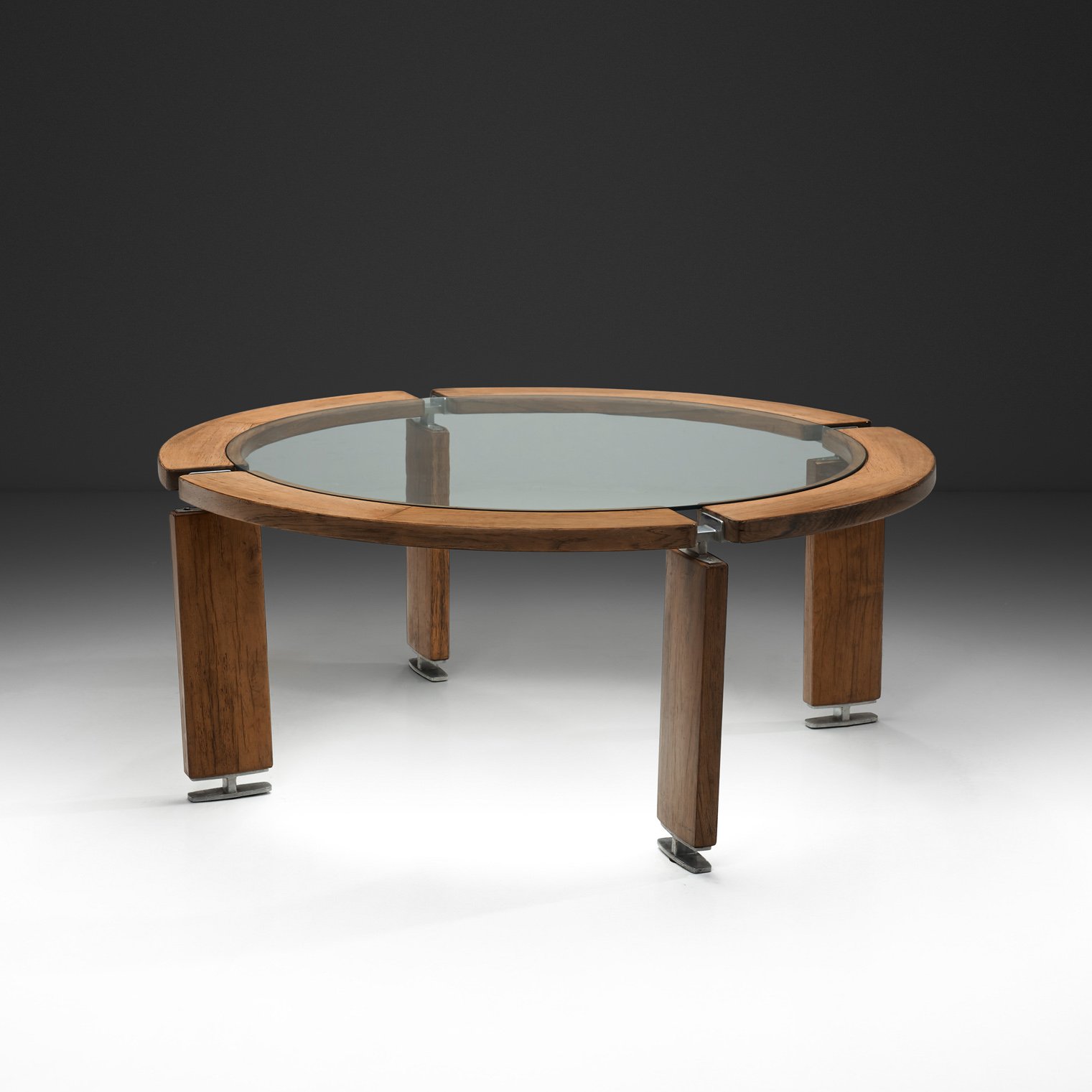
In European mid-century furniture design, there was an early emphasis on wood because it connected everyday objects to nature. This solid oak coffee table is a perfect example of this sentiment, and features the visual qualities of an understated, organic design.
Within the thriving Dutch design landscape of 1970s, Brutalist furniture left an indelible mark and this coffee table shows why as it epitomises the era's aesthetic medley. Crafted from solid oak, the wood’s hues exude warmth amidst the starkness that defines the Brutalist design. This piece has a strong elemental feel to it, which is a result of its thick round tabletop and sturdy yet sleek legs. The Netherlands embraced Brutalism as a rejection of ornate embellishments, opting for raw, utilitarian forms. Oak became the material of choice for many pieces during this time due to its durability and malleability, enabling intricate yet robust constructions. This coffee table exemplifies this, with its neat woodworking and sharp angles connecting the legs with the round top. The table top is layered, with its edge showing the beauty or organically carved wood. The contrast of sleek lines against the natural grain of oak echoes the broader Brutalist ethos: blending the industrial with the natural in a bold, unapologetic way.
The craftsman’s handiwork is visible throughout the table, adding to its character. The piece, with its natural finish, exemplifies the enduring charm that 20th century design continues to bring to contemporary interiors, underscoring the timeless appeal of this iconic design era.
Condition:
In good vintage condition. Wear consistent with age and use. The table has recently been reconditioned. Minor scratches and dents are present. Due to the nature and age of the material, the item may have some marks and discolouration.
Dimensions:
47.63 in ø x 19.88 in H
121 cm ø x 50.5 cm H
REQUEST PRICE HERE
Price category: 40,000 - 50,000 usd / eur
This peculiar “T22” table model is also referred to as the “Eye”. While the name needs no further explanation, the ingenious design certainly does. Pierre Chapo always paired his creative and elegant designs with impeccable craftsmanship that gained him worldwide fame and love.
The “T22” is formed by two arcs, each resting on three cylindrical leg and a central oval module attached to one of the arcs by a sliding system. Placed together, the design forms an “eye”. Not a lot of designs receive a nickname by which they are immediately recognised, but this table is one of those. With its distinctive structure, it epitomises Chapo's research for new systems of joinery, in which the material and the design would be the lead factors in achieving stability, durability, and of course, an aesthetically pleasing outcome. Here, the smaller middle module can be adjusted or removed freely, allowing the table’s modules to be arranged in a variety of ways, for example, it can also be arranged to form a long undulating console. The immense functionality is accompanied by Chapo’s precise joinery techniques and woodworking. Pierre Chapo worked largely in elm wood and has a couple of signature design elements like the visible spline joint and the cylindrical legs as seen here as well. The solid elm has a stunning grain and various patterns that especially stand out on the curvatures of the table.
Chapo’s organic approach to arts and crafts and both designers resisted the stark industrial look that was dominant in the post-war period under the influence of socialism. This coffee table is undoubtedly an emblematic model of post-war French decorative arts and design.
Condition:
In good vintage condition. Wear consistent with age and use. Some small marks. The elm wood has a beautiful patina. Due to the nature and age of the material, the item may have some additional scratches, and discolouration.
Dimensions:
69.48 in W x 51.18 in D x 12.99 in H
176.5 cm W x 130 cm D x 33 cm H
About the designer:
Pierre Chapo, born in Paris in July 1927, was initially interested in becoming a professional painter. However, after a chance meeting with a shipbuilder who introduced him to wood and wood crafts, Chapo changed his focus and decided to study architectural studies at the prestigious École Nationale Supérieure des Beaux-Arts in Paris.
After graduation, Chapo and his wife, the sculptor, and painter Nicole Lormier, started to travel extensively through Scandinavia and Central America. Among the many places the couple visited was the home and studio of Frank Lloyd Wright in Taliesin West. A visit that had a lasting influence on Chapo’s future work and designs. Read more about Pierre Chapo. ~H.
REQUEST PRICE HERE
Price category: 1,000 - 2,500 usd / eur
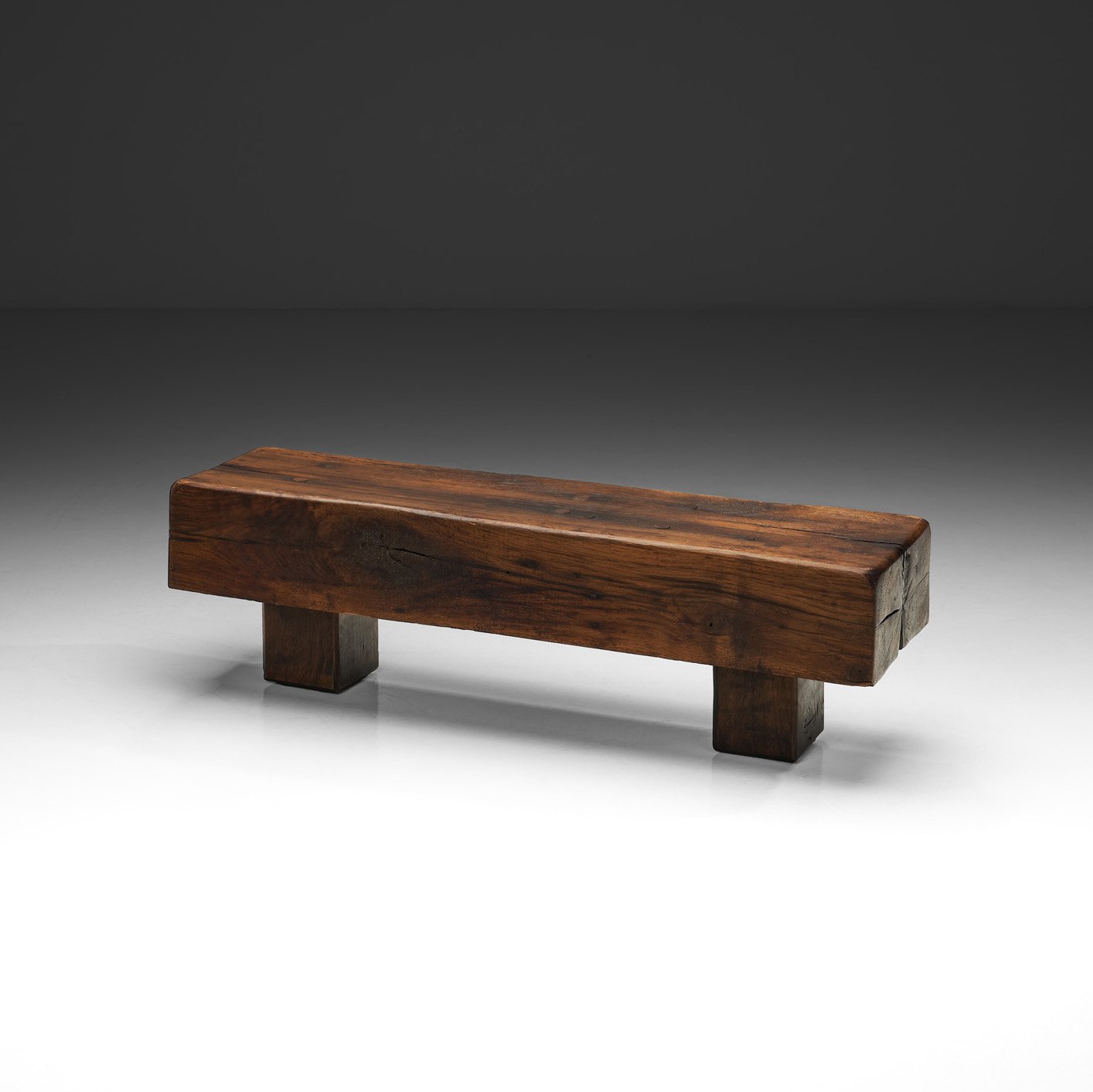
Brutalist furniture emerged in the post-war decades as a direct response to both architectural developments and shifting social ideals. Rooted in the principles of Brutalist architecture, this coffee table emphasizes raw materials, structural honesty, and an absence of ornamentation.
Many Dutch Brutalist furniture pieces function not only as practical objects but also as sculptural elements within a space. This coffee table is exemplary of this thanks to its solid oak construction and striking form. The design is composed of a thick, rectangular top supported by two block legs, creating a low, elongated silhouette that emphasizes weight. The proportions are deliberately heavy, reinforcing a sense of stability and permanence which defines Brutalist design. Oak was a preferred material, valued for its strength and expressive grain, allowing makers to highlight the natural character of the wood rather than conceal it. The surface of the wood is left largely untreated to showcase the material’s inherent texture and tonal variation. Rather than relying on decorative features, the table derives its character from this raw materiality and its geometry. Despite its apparent simplicity, the table carries a strong visual presence and sense of intention.
The emphasis on material and form allows this table to age gracefully, developing character over time, while anchoring every space it finds itself in. The piece reflects the enduring appeal of Brutalist furniture: objects that prioritise substance over decoration, offering both functional utility and a lasting architectural presence.
Condition:
In good vintage condition. Wear consistent with age and use. The table has recently been reconditioned. Due to the nature and age of the wood, the item has some marks, scratches, and discolouration.
Dimensions:
35.24 in W x 9.45 in D x 11.23 in H
89.5 cm W x 24 cm D x 28.5 cm H
REQUEST PRICE HERE
Price category: 2,500 - 5,000 usd / eur
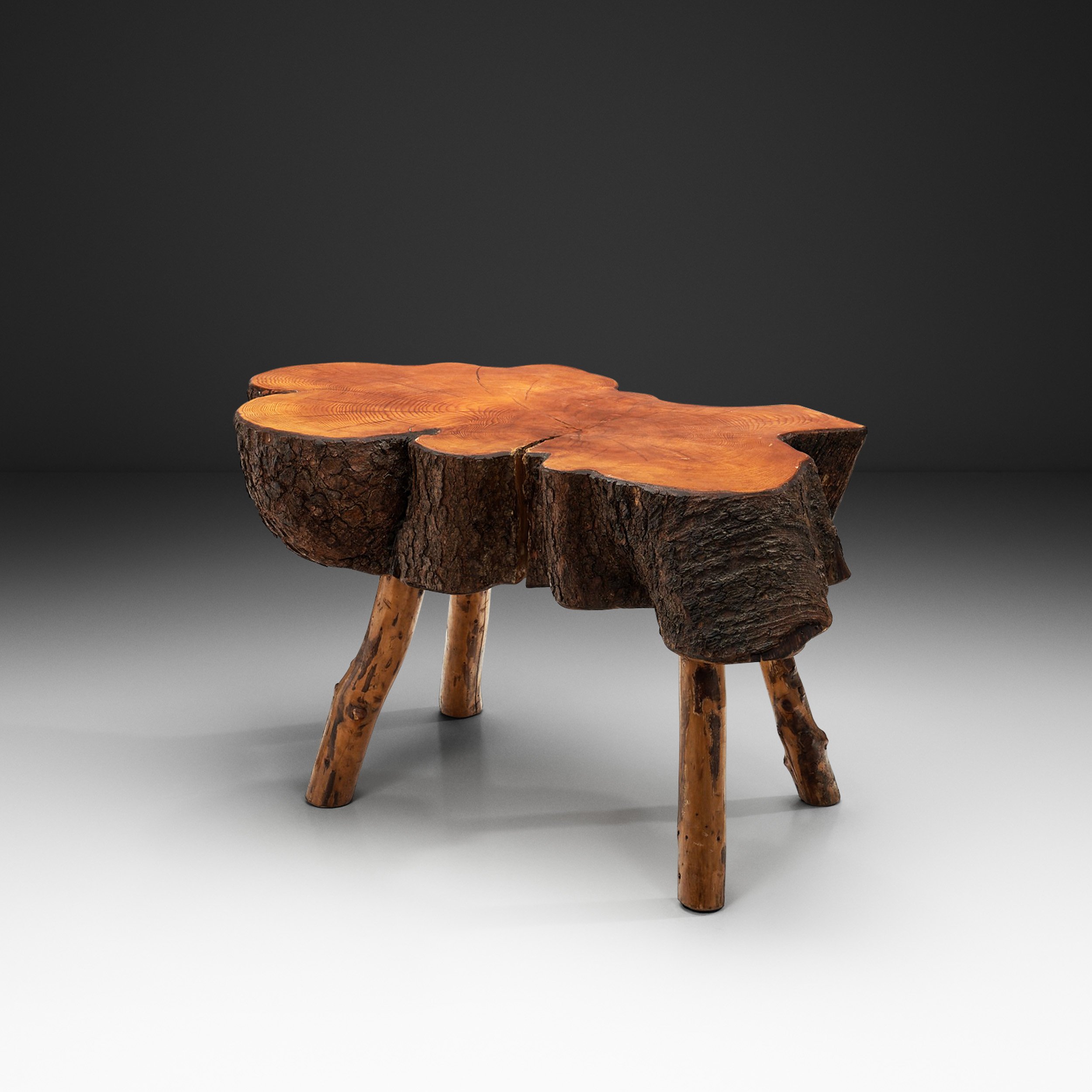
In most European mid-century designs, there was an early emphasis on wood as it connected everyday objects, such as furniture to nature. This spectacular solid wood coffee table is a perfect example of this sentiment, and the visual benefits of an understated, organic design.
This coffee table reflects a Brutalist ethos through its bold presence and sculptural look. The piece features a free-form top made from solid wood, its organic shape and swirling grain patterns showcase the wood’s natural drama. The grain is not merely a surface detail; it becomes an integral part of the design, contributing to the overall aesthetic of the table, making it entirely unique. The interplay of the asymmetrical and sculptural top with the grounding presence of the legs result in a piece that is both rugged and refined. As there are strong and distinctive details, this model is a perfect accent table, while also being capable to complement its surroundings. It could fit well in a modern interior, as well as in a minimalist space.
This solid wood table, with its natural finish, exemplifies the enduring charm and warmth that 20th century design continues to bring to contemporary interiors, underscoring the timeless appeal of this iconic design era.
Condition:
In good vintage condition. Wear consistent with age and use. The table has recently been reconditioned. Some minor chips in the wood. Due to the nature and age of the wood, the item may have some marks, scratches, and discolouration.
Dimensions:
24.41 in W x 44.48 in D x 23.62 in H
62 cm W x 113 cm D x 60 cm H
REQUEST PRICE HERE
Price category: 5,000 - 7,500 usd / eur
This impressive Norwegian table is defined by its materials, seamless joinery and distinctive, but soft ornamentation of the tabletop. Designed by Erling Viksjø, one of Norway’s most influential architects from the mid-20th century, this table is characteristic of the postwar exploration with both natural and man-made materials.
Utilising and highlighting the qualities of the materials used, combined with the expertise of Erling Viksjø, this coffee table is a beautiful piece that can both dominate and complement a modern space. The table's rectangular top showcases an appealing textural and colourful look. As a result, the impression is quite elemental and striking. Viksjø often worked with concrete that had interesting rock patterns, which soon became his trademark. He also created new materials and ways of building, resulting in concrete types he named Naturbetong (natural concrete), conglo concrete, and metal concrete. This type of material creates a stunning contrast which is what makes this table stand out. The warm tone of the wooden base also creates a sense of elegance and sophistication, while the modern stone top is smooth to the touch, adding a sense of solidity and durability to the overall design. Norwegian designers of this era aimed to create furniture and home decor that was both aesthetically pleasing and practical. This style has become synonymous with Scandinavian and Nordic design and is still sought after today for its timeless appeal and quality.
This coffee table follows the fundamental Scandinavian design principles both aesthetically and technically. The simple design serves the purpose of showing the understated beauty of the materials and their endless possibilities under the hands of an expert craftsman.
Condition:
In good vintage condition. Wear consistent with age and use. The table has recently been reconditioned. Due to the nature of the materials, the item may have some marks, scratches, and discolouration.
Dimensions:
59.05 in W x 29.72 in D x 19.88 in H
150 cm W x 75.5 cm D x 50.5 cm H
REQUEST PRICE HERE
Price category: 2,500 - 5,000 usd / eur
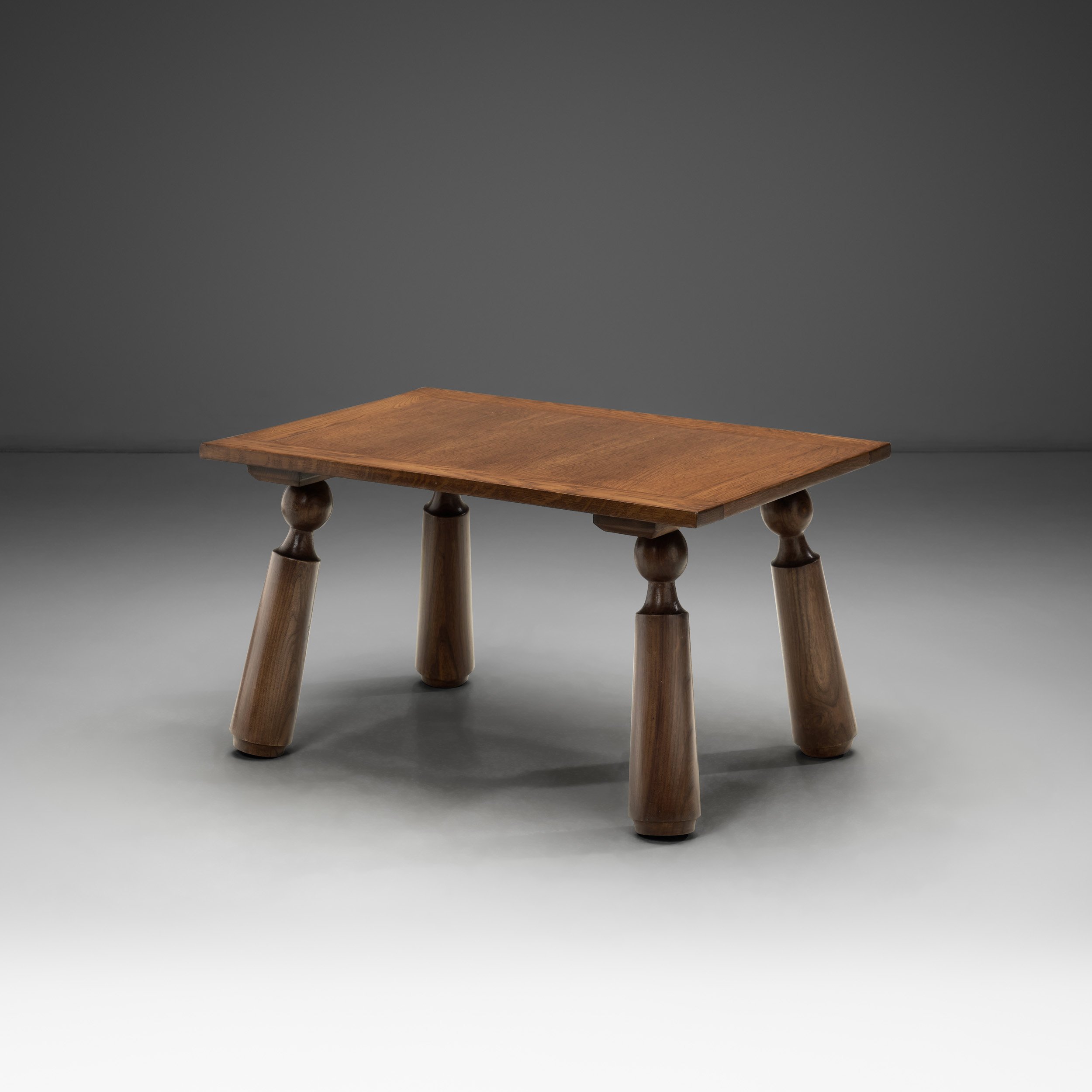
This wooden coffee table, crafted in France in the first half of the 20th century, is designed in the manner of Charles Dudouyt, one of the most distinctive figures in French decorative arts of the interwar period. Dudouyt’s work is often celebrated for its rustic charm, and masterful handling of wood, bridging tradition with the evolving aesthetics of Art Deco and modern design.
This table embodies those qualities through its sculptural presence and confident use of material. The piece is defined by its sturdy rectangular top and striking turned legs, which taper outward with bold, geometric proportions. Each leg features carved and rounded detailing, lending rhythm and visual weight to the structure. This play between solidity and ornamentation is characteristic of French designs of the era, where pieces were not only functional but also a statement of craftsmanship and artistic individuality. The warm stain of the wood enhances the visual richness of the table, highlighting its grain and natural imperfections. Its compact scale makes it ideal for daily use, while not overpowering a room. At the same time, the architectural quality of the legs gives it a charmingly unique character that anchors a space.
The essence of early 20th century French design is beautifully captured by this table. Functional yet sculptural, rustic yet refined, this piece stands as an enduring testament of the striking balance only master woodworkers are able to create.
Condition:
In good vintage condition. Wear consistent with age and use. The surface of the wood has been refurbished. Item may have some marks, scratches, and discolouration.
Dimensions:
31.29 in W x 21.45 in D x 17.71 in H
79.5 cm W x 54.5 cm D x 45 cm H
REQUEST PRICE HERE
Price category: 7,500 - 10,000 usd / eur
By the mid-1980s, the modern and urban aesthetic was the epitome of cool. Tubular furniture, glass-topped tables, chrome finishes and glass bricks all became ‘must have’ items. Lother Klute created pieces in line with the trend, designing a plethora of glass-topped tables, and this one is a perfect example of the era’s style.
Utilising and highlighting the qualities of the materials used, combined with the expertise of Lother Klute, this coffee table is a beautiful piece that can both dominate and complement a modern space. The coffee table's round glass top showcases an appealing textural look. As a result, the impression is quite elemental and striking. The dark colour of the patinated solid brass that forms the structure of the table contrast beautifully with the top, as its robustness grounds the design. The combination of materials make this table a stylish example of the period’s design versatility. From the thick bubble glass, to the durable and resistant brass, this piece is made to last. Coffee tables, in general, serve as design staples in living spaces for a multitude of reasons: beyond their utilitarian function of providing a surface for drinks and books, they anchor a room, creating a focal point around which furniture and conversation revolve. Overall, the table equally emphasizes function and visual interest, creating an instantly arresting aesthetic.
This piece is a representation of German Post-Modernist design from the 1980s, an interesting phase of cultural and social impacts with creatives trying to figure out a way towards leaving their mark on the design world.
Condition:
In good vintage condition. Wear consistent with age and use.
Dimensions:
42.52 in ⌀ x 20.08 in H
108 cm ⌀ x 51 cm H
REQUEST PRICE HERE
Price category: 12,500 - 15,000 usd / eur
Made upon order. Lead time ca 8-10 weeks
This Água table by contemporary artist Domingos Tótora, is an exceptional piece. The name, meaning water in Portuguese speaks for itself as the sight of this table’s design is akin to the process of sediment settling into a riverbed. There may be no artist who demonstrates sustainability as wholly as Tótora. His masterworks have journeyed full circle, narrating the story of sustainable earth without uttering a single word.
Designed by Domingos Tótora, the Água Table demonstrates lightness through heavy elements. With his special but traditional technique, this table was created with recycled cardboard with added graphite pigment. A smooth, matte surface and the organic shape characterize the designer’s work and are witness to his extensive experience in object design. During the creation process Tótora reduces the cardboard to a semi-liquid pulp, hand moulds it into the desired shape and dries the almost finished product in the Brazilian sun. With a smooth finish, the three large “stones” and the glass top evoke the image of a river with crystal clear waters. Sustainability is essential for the Brazilian artist and accordingly, this table was made in a certified sustainable way. In this beautiful and labour-intensive process, the cardboard that originated as wood is essentially brought back a full cycle by taking on a wood-like quality again. For Tótora “sustainability happens through actions and not words”.
In 2008, this table-sculpture won first place and an honourable mention in Craft + Design and second place in the Brazilian Object. A year later, it was ranked first in the Sustainable Design category at Top XXI and won the Brazil Design Awards, in the furniture category. In 2010, recognition came at the Ibero-American Design Biennial in Spain.
Condition:
New.
Dimensions:
61.02 in ⌀ x 12.99 in H
155 cm ⌀ x 33 cm H
About the designer:
Domingos Tótora (1960-) is a contemporary Brazilian designer whose work falls between art and design. Born and raised in the mountainous region of Maria da Fé, nature is an essential part of Tótora’s aesthetic. Being true to nature means that imperfections are a welcome part of Tótora’s designs, embracing asymmetry and unevenness in the spirit of wabi-sabi.
Following his studies in São Paulo, Tótora found inspiration on the streets in the form of discarded cardboards. He created a process in which cardboard can be recycled by breaking it down to small pieces, transforming it to cellulose plaster. With the addition of water, glue and natural pigments, the cardboard can be shaped into new forms. Through this sustainable process, waste cardboards are turned into a wood-like material. Tótora and his small team believe sustainability happens through actions and not words.
His studio, Domingos Tótora Estúdio de Artes Design, was founded in 2005 in his hometown, Maria da Fé. The beauty of his work manifests itself in its philosophy of creation and respect for the environment. The production process of Tótora’s designs is 100% manual and the cardboard he uses is fully recycled. Domingos Tótora is a true mixture of artist, designer, and craftsman. In recent years, the originality and elegance of his creations have been recognized in several exhibitions. ~H.
REQUEST PRICE HERE
Price category: 2,500 - 5,000 usd / eur
In Finland, the second half of the 20th century saw the use of new materials like plastic, synthetics, and fibreglass being combined with advances in manufacturing technologies, allowing designers in Finland to expand their range of colours and forms in mass production. However, this coffee table model still gives preference to natural materials, primarily to its wooden frame.
Utilising and highlighting the qualities of the materials used, combined with the expertise of Esko Pajamies, this coffee table is a beautiful piece that can both define and complement a modern space. The coffee table's round glass top showcases an appealing look. The dark colour of the solid wood that forms the structure of the table contrasts beautifully with the top, as its robustness grounds the design. The combination of materials make this table a stylish example of the period’s design versatility. Coffee tables, in general, serve as design staples in living spaces for a multitude of reasons: beyond their utilitarian function of providing a surface for drinks and books, they anchor a room, creating a focal point around which furniture and conversation revolve. Overall, this table equally emphasises function and visual interest, creating an instantly arresting aesthetic.
The overall form of the table has a light and airy feel, enhancing the 20th century aesthetic which it represents. With its elegant shape and careful design, this piece rises above the endless passing of trends, establishing itself as a modern classic in the realm of interior design.
Condition:
In good vintage condition. Wear consistent with age and use. The item has recently been reconditioned. Due to the age and nature of the wood, the coffee table may have minor marks, scratches, and discolouration.
Dimensions:
47.24 in ø x 19.68 in H
120 cm ø x 50 cm H