
Brutalist Carved Oak Stool, Belgium 1950s (sold)





Brutalist Carved Oak Stool, Belgium 1950s (sold)
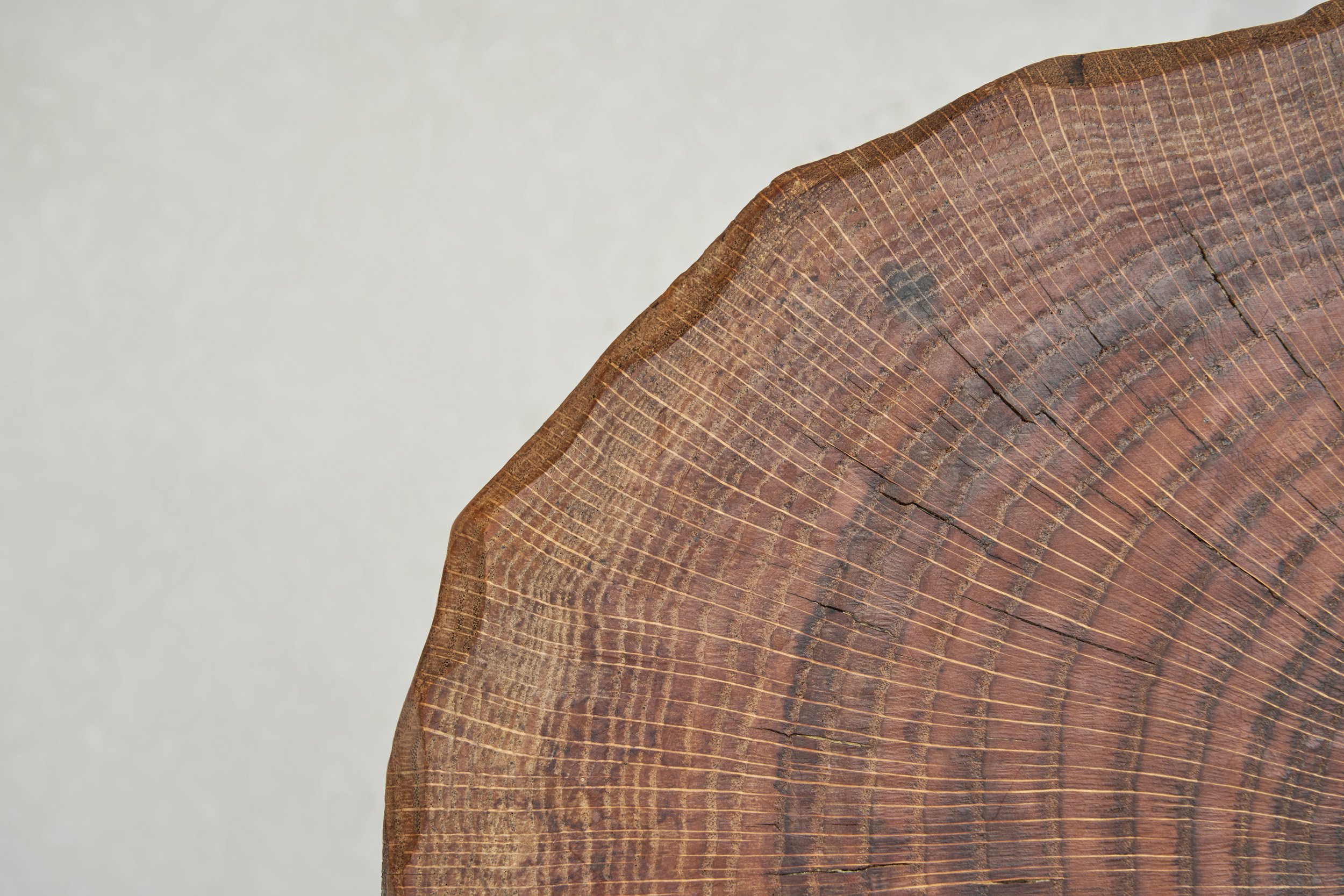
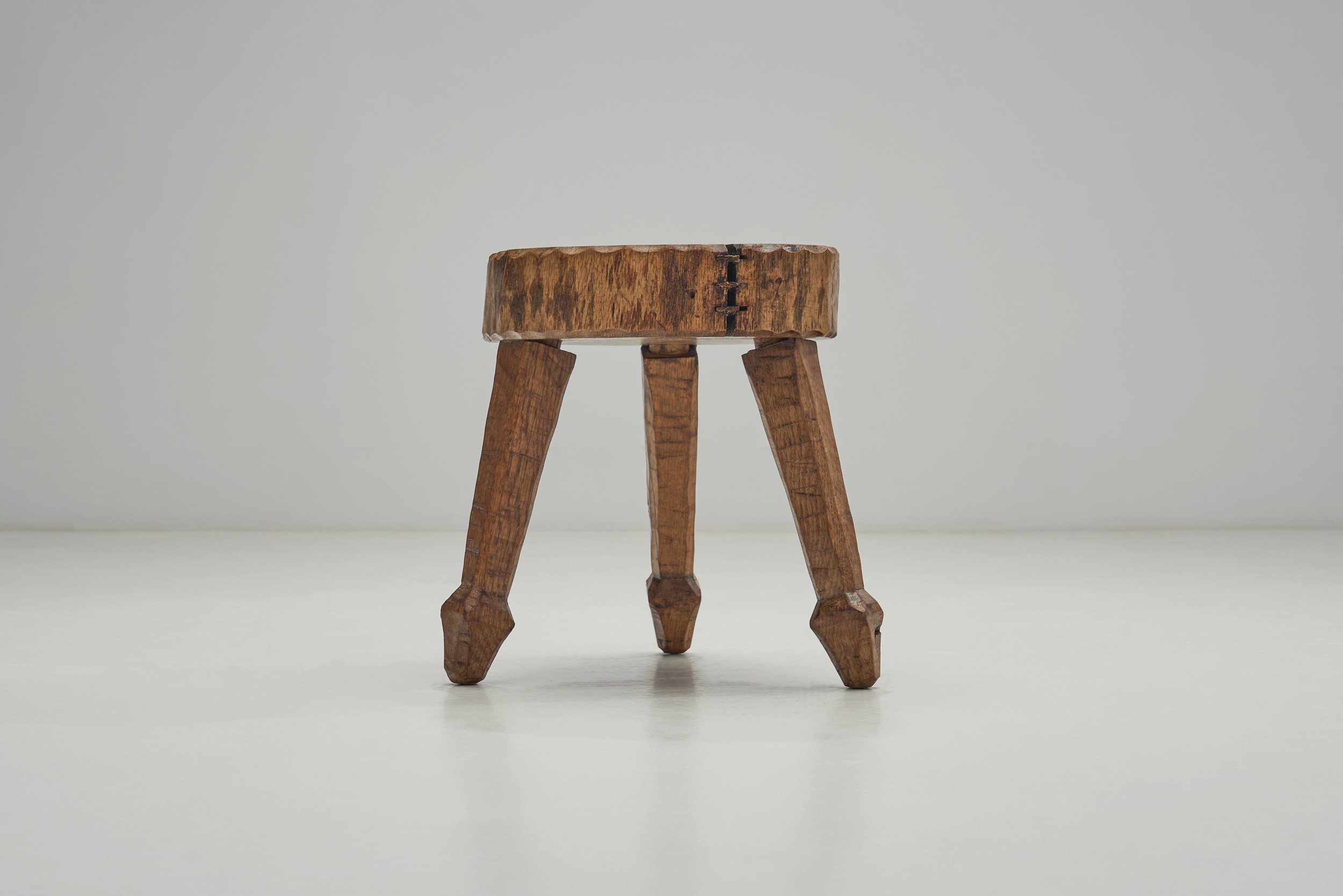
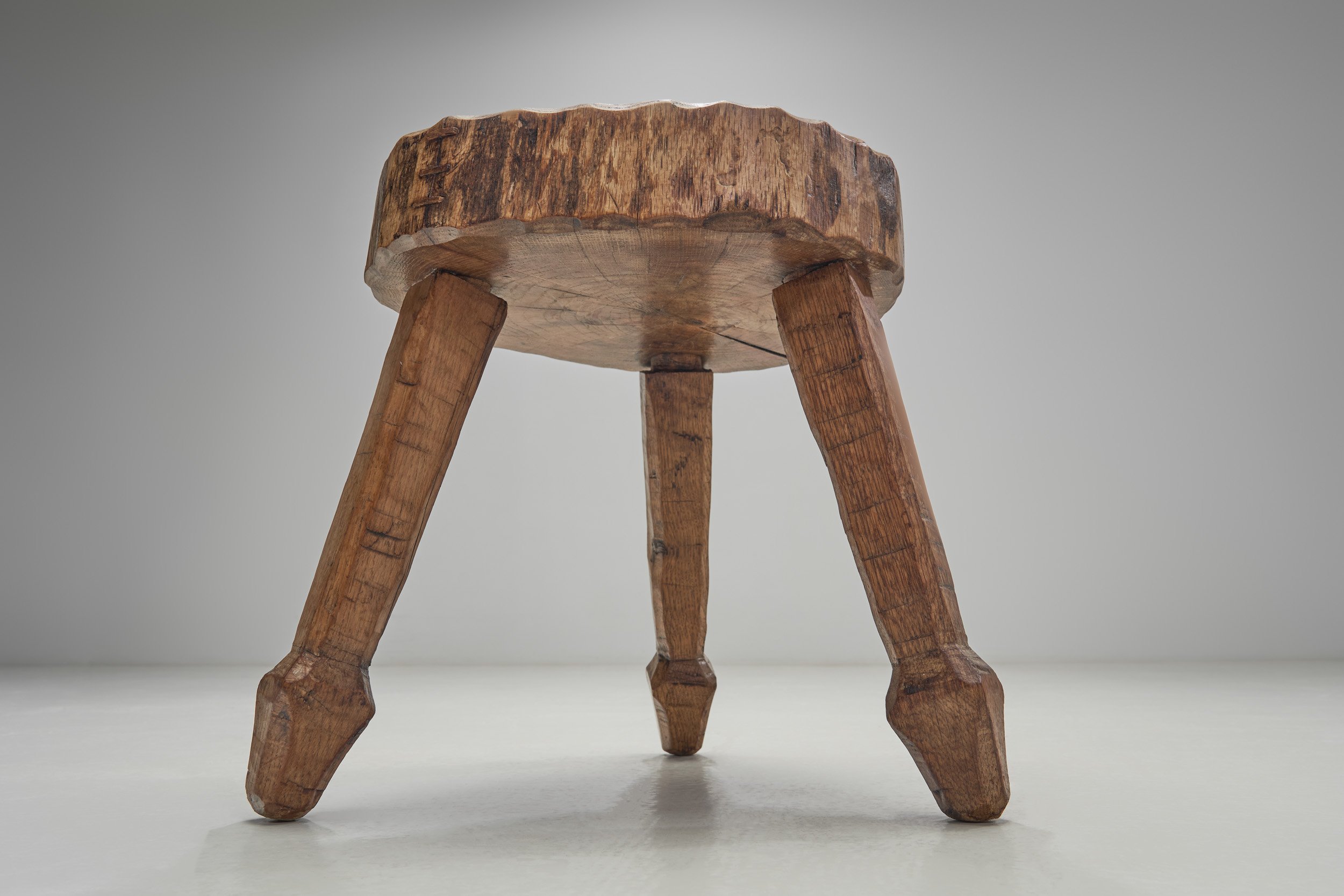
In the dimly lit corners of mid-20th-century Belgian craftsmanship emerged the brutalist movement. This solid oak wood stool, crafted during the 1950s, stands as a tangible embodiment of the brutalist architectural tenets that swept through the design world during the post-war era.
The essence of brutalism lies in the celebration of raw materials and uncompromising forms. This Belgian stool, with its robust silhouette hewn from solid oak, exemplifies the movement's rejection of ornamentation in favour of the inherent beauty of unadulterated materials. The natural grain and texture of the wood becomes a central element, telling a story of time, growth, and resilience. What sets this stool apart is the traditional joinery employed in its construction. Crafted with an unwavering commitment to using nothing but wood, the stool exemplifies the artisanal skill of Belgian woodworkers. Each joint, meticulously handcrafted, speaks to a bygone era where craftsmanship was synonymous with pride and dedication. Similar to finger joints, this stool’s exposed joinery adds to its Brutalist aesthetic greatly. Another element that enhances this are the tripod legs of the stool that further elevate its uniqueness. Carved by hand, the legs assume an unusual shape that defies the norm by ending in an arrow shape. Both the intentional and the mostly natural irregularities and the tactile nature of the carved surfaces showcase the hand of the maker, capturing the essence of human connection in a mass-produced world. Belgian design, characterized by its pragmatic approach and attention to detail, has consistently left an indelible mark on the global design landscape. The stoic beauty of this brutalist stool reflects the broader Belgian design ethos—an embrace of functionality and a celebration of materials in their purest form.
Today, as the design world rekindles its romance with brutalism, these mid-century pieces have become coveted treasures. The resurgence of interest in brutalist furniture can be attributed to a longing for authenticity in an era dominated by mass production. Collectors and enthusiasts appreciate the honesty of design that eschews unnecessary embellishments, revealing the intrinsic qualities of the materials themselves. This stool showcases all these qualities, being a symbol of resilience, craftsmanship, and the enduring allure of simplicity.
SOLD
Condition:
In good vintage condition. Wear consistent with age and use. Some naturally occurring marks and patina on the wood.
Dimensions:
13.77 in W x 12.59 in D x 13.58 in H
35 cm W x 32 cm D x 34.5 cm H

REQUEST PRICE HERE
Price category: 2,500 - 5,000 usd / eur
This “kubbstol” or “kubbestol” is a traditional Scandinavian chair made from a log. The kubbestol was quite common in some districts of Norway from about 1750 to 1960, where it was usually made from logs with significant girth and three to four feet in length.
The tree trunk was hollowed out so that the base (from the seat down) would be cylindrical while the back of the chair continues upward from the seat in a curved shield that makes the chair both snug and comfortable. Most, but not all, kubbestols were decorated with carving, painting, or some combination of the two. This chair has beautiful folk patterns hand carved into it, with visible, raw craftsmanship. Carved and painted decorations would differ from district to district and styles changed over time. While the log is seemingly roughly shaped, this chair is surprisingly comfortable, as functionality has been historically important for Scandinavian furniture makers. The kubbestol was often placed next to the open-hearth fireplace or next to the bed, and it was reserved for the head of the household. Large, impressive farmhouses might have had several richly carved and painted kubbestols as a display of wealth and status.
These days the log chair has become a symbol of Scandinavian roots for many families with ties to Norway, Sweden, or Denmark. The kubbestol is a reminder of our rural heritage and a time when most things in and around the home were made by hand from materials found in nature. Essentially a chair hewn from a tree trunk, this chair is as closely associated with Norway as Peer Gynt, and may have led just as many lives and have just as many tales to tell.
Condition:
In good vintage condition. Wear consistent with age and use. The chair has cracks and marks and discolouration. The hand carved patterns remain in good condition.
Dimensions:
17.32 in W x 21.06 in D x 25 in H; Seat height 14.17 in
44 cm W x 53.5 cm D x 63.5 cm H; Seat height 36 cm
About the Design:
The earliest records of the kubbestol/kubbstol in Scandinavia are in the form of small silver amulets: one from a burial site on the island of Björkö to the west of Stockholm, which dates to the 9th century, and two found amongst a collection of money and jewellery unearthed at Fölhagen on the Swedish island of Gotland and dated to the 10th century.
The three small silver amulets which bear an uncanny similarity, and alongside several other amulets depict the so-called kubbstolar. They are kept today by the Statens Historiska Museum (The Swedish History Museum) in Stockholm. In addition to silver amulets the Statens Historiska Museum also has two amulets in amber, one each from Björkö and Gotland.
Whereby it is important to remember that a representation of a kubbstol created in 9th and/or 10th century Sweden shouldn’t be confused with the physical existence of the kubbstol in 9th and/or 10th century Sweden. That while it strongly implies, they almost certainly were physically in existence in Sweden; they alone confirm that kubbstolar were known in Sweden, and presumably had an importance and significance. Why else use them as amulets, and as amulets crafted from precious, valuable, materials? In 1916 Bernhard Salin noted that “due to lack of time and space, I have to refrain from considering the interesting question of why the kubbstol during the Viking Age was made in the form of a pendant.”
The kubbstol can also be found on a carving originating from the Sanda churchyard according to Hugo Junger, who argues that the enclosed space in which the three figures in the top part of the carving find themselves, is Valhalla, that famed residence where slain, and favoured, Nordic warriors enjoyed the afterlife. While Odin’s chair is only decipherable with an excellent and biased imagination, Frigg’s chair is very clearly a kubbstol. And if Frigg and Odin furnished Valhalla, or perhaps just their private rooms and/or the public reception rooms, with kubbstolar, then that not only makes the kubbstol one of the original seats of power, but bequeaths the kubbstol an importance and significance that justifies amulets crafted from precious, valuable, materials.
Exactly what that significance is and was, other than, potentially, a simple symbol of the power of Odin and/or Frigg, we know not. As with all items of vernacular furniture the search for origins invariably leads one to supposition and fantasy, rather than your actual facts. However, the kubbstol became a symbol of Scandinavian history and culture, with a unique appearance and craftsmanship that contains history just like a book. ~H.

REQUEST PRICE HERE
Price category: 1,000 - 2,500 usd / eur
This stool is aesthetically, a tempered Modernism in design: clean forms without exaggeration with the high-quality work of Danish cabinetmakers. Humble in its material and size, this pine stool still draws attention thanks to its distinctive look and personality.
In the absence of heavy ornamentation, this stool takes pride in its material’s natural qualities. Pine wood became the bamboo of the north in the sense that it lasts at least a hundred years — that’s how long it takes for a pine tree to grow into the lengths when it’s ready to harvest. With its restrained, light colour palette peppered with gnarly knots, pine furniture have been favoured in Scandinavia for centuries and there is a contemporary renewal of interest and appreciation as well. This tripod stool shows why: standing on tapered legs, the seat displays the beautiful patterns of the wood and the simple, elemental joinery technique. The distinguishing feature however, is the shape of the seat. The front side is scalloped with gently rounded edges, creating a modern, stylish look. The construction strips back the unnecessary, showcasing only the essential elements of it. The wood is left in its natural form as much as possible, while also prioritizing functionality and longevity.
Alongside the touchstones of simplicity, functionality, and comfort, Danish design utilizes light, creates use of natural materials, and integrates with nature. This sort of northern minimalism allows people to invite peace into their home without creating a space that is uninviting or cold. Similarly, this stool is full of vitality without being chaotic or overworked.
Condition:
In good vintage condition. Wear consistent with age and use. Some small scratches and marks on the wood.
Dimensions:
16.73 in W x 13.18 in D x 14.17 in H
42.5 cm W x 33.5 cm D x 36 cm H
REQUEST PRICE HERE
Price category: 2,500 - 5,000 usd / eur
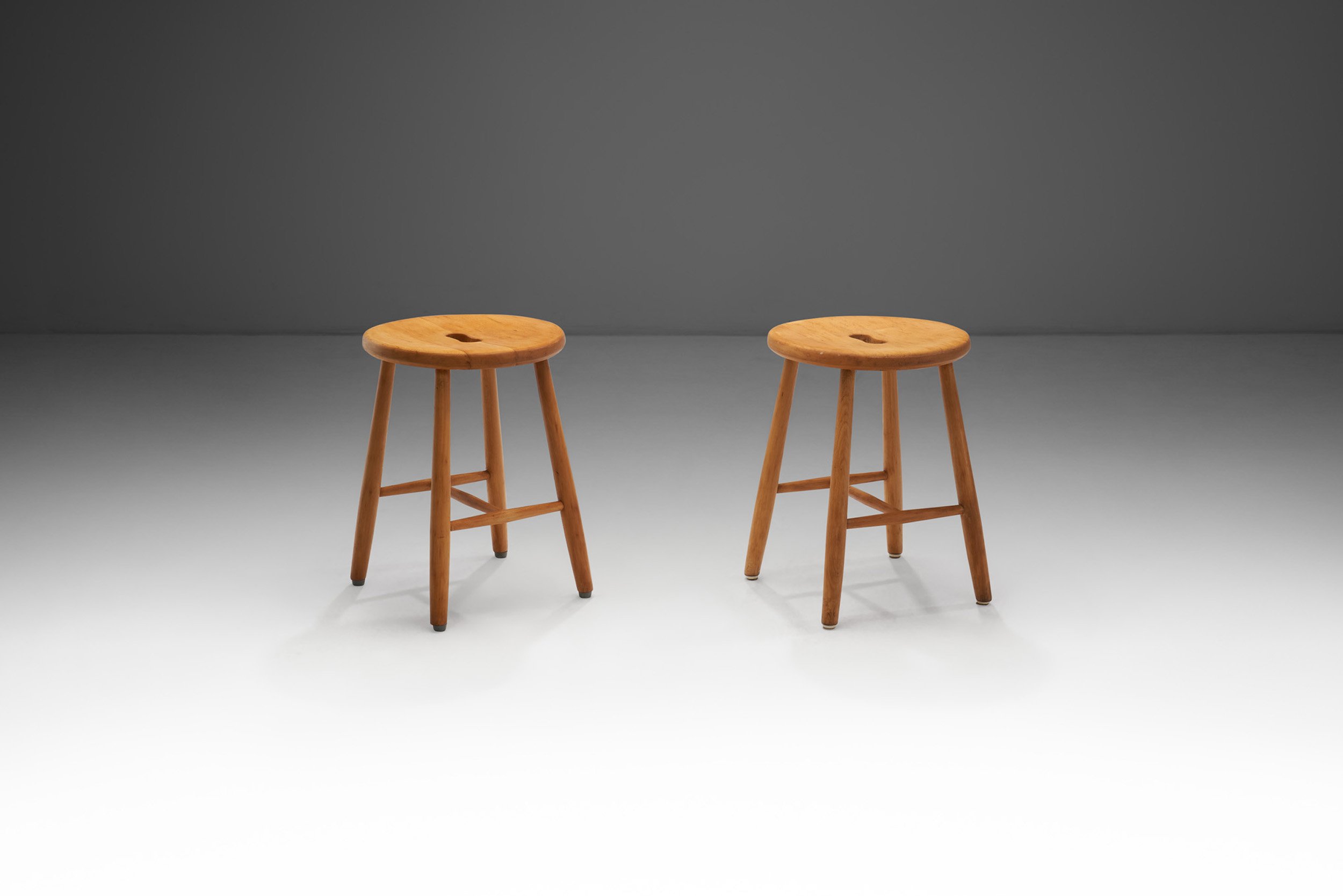
Designed by Børge Mogensen in 1955, the “J27” stool remains a solid and practical piece. With a multitude of purposes, form and function remain at the forefront of this design. Almost everyone in Denmark has experienced Børge Mogensen’s designs – from the well-known, modern FDB furniture - like these stools - to countless classics that have furnished both homes and public spaces in Denmark.
This pair of solid beech stools by Danish master, Børge Mogensen, has an outstanding balance with a classic, timeless design. These “J27” models mirror Mogensen’s ideal, which was to create furniture with a restrained aesthetic that serve people. With a clear statement of simplicity, quality and respect for materials, this pair of stools is a great example of Danish Modern design. The functional elements converted into decorative features is characteristic of Mogensen’s design aesthetic. As such, the holes on the seats and stretchers are not only important utilitarian and structural features, they are also visually appealing details that give plenty of character to these stools. Mogensen’s present design was executed by FDB Møbler, the Danish manufactory established in 1942, with a heritage of unfaltering dedication to the perfection and progression of the design craft.
Børge Mogensen believed that furniture should fit the human being, rather than the other way around and that functional quality furniture is paramount. For the book by the bed or when an extra guest needs to be squeezed in at the dining table, this pair of stools is perfect as it is both practical, decorative and thoroughly well-designed.
Condition:
In good vintage condition. Wear consistent with age and use. Some scratches and marks on the wood.
Dimensions:
13.77 in W x 13.38 in D x 18.11 in H
35 cm W x 34 cm D x 46 cm H

REQUEST PRICE HERE
Price category: 1,000 - 2,500 usd / eur
Minimalism may be currently in fashion, but there is one iteration of clean design that will never go out of style which is Scandinavian Modernism. It is no small achievement to be able to exercise restraint in décor choices, while still managing to make a space feel cosy.
The Swedish Modern style is so popular because it speaks to both our tidy tendencies and our desire to live in inviting and comfortable settings. Warm wood tones and sepia hues are popular in Scandinavian interior design because they make a room feel sunny and bright without using overwhelmingly bright colours. Pinewood is perhaps the most defining natural material of traditional Swedish cabinetmaking. “Furu” (pine) is a wood that creates healthy and sustainable interiors with modern expressions, which contributes to the wood's strong progress even nowadays. When world-class designers choose to work with pine, it is a sign that it is a type of wood that has an obvious place in modern interiors. This stool has a perfectly understated design that lets the material stand out. While the structure evidently serves functionality at its core, there is a feature that serves a purely aesthetic role. The carved parts connecting the seat and the legs are - in a way - the most Swedish feature of the design, showing that there needs to be balance, not just structural, but also visual.
Pinewood is comfortable and tactile. Wood interiors not only smell good, they also have a calming effect on us humans. That wood contributes to healthier indoor environments is an added bonus. This has been well-known for centuries in Scandinavia, and luckily, the rest of the world has been catching on.
Condition:
In good vintage condition. Wear consistent with age and use.
Dimensions:
18.11 in W x 10.23 in D x 17.32 in H
46 cm W x 26 cm D x 44 cm H

REQUEST PRICE HERE
Price category: 500 - 1,000 usd / eur
Functional design is the evident guiding principle of many Scandinavian pieces from the early mid-century, and there is hardly a better example than this oak stool. In earlier days, similar “shoemaker” stools were often used in the home for informal seating, and this tradition is making a comeback.
The design is principally simple and functional, letting the natural beauty of the oak wood and simple artistry be in the focus. From Mogens Lassen to Arne Hovmand-Olsen, multiple Danish designers created tripod stools during the mid-20th century. Nonetheless, the stool as a piece of furniture is often still underestimated, even though it can be a statement piece in any interior. Form and function collide in this model, and it resembles the beloved ‘Shoemaker Chair’ by Form & Refine, the genuine Danish design classic that was released in 1936. Just like in that model’s case, the three-legged design is inspired by the traditional cobbler’s stool. The most important was the seat’s ergonomic design, as the user spent a considerable amount of time sitting on it, therefore this stool has an ergonomic so-called tractor seat. The legs are tapered and connected by stretchers to provide a firm base for the seat and the sitter. Each separated element of this stool is rendered out of one large, solid piece of wood, showcasing the maker’s skills in woodworking, which is also very apparent in the smoothness of the surfaces and the joinery.
This early mid-century piece has the main characteristics Danish design is famous for. From the sculptural shape to the functional design and the great craftsmanship, this stool is a great accent to any space, and could become an heirloom piece thanks to its visual and material qualities.
Condition:
In good vintage condition. Wear consistent with age and use. The wood has a nice patina.
Dimensions:
19.29 in W x 11.61 in D x 18.89 in H
49 cm W x 29.5 cm D x 48 cm H
REQUEST PRICE HERE
Price category: 1,000 - 2,500 usd / eur
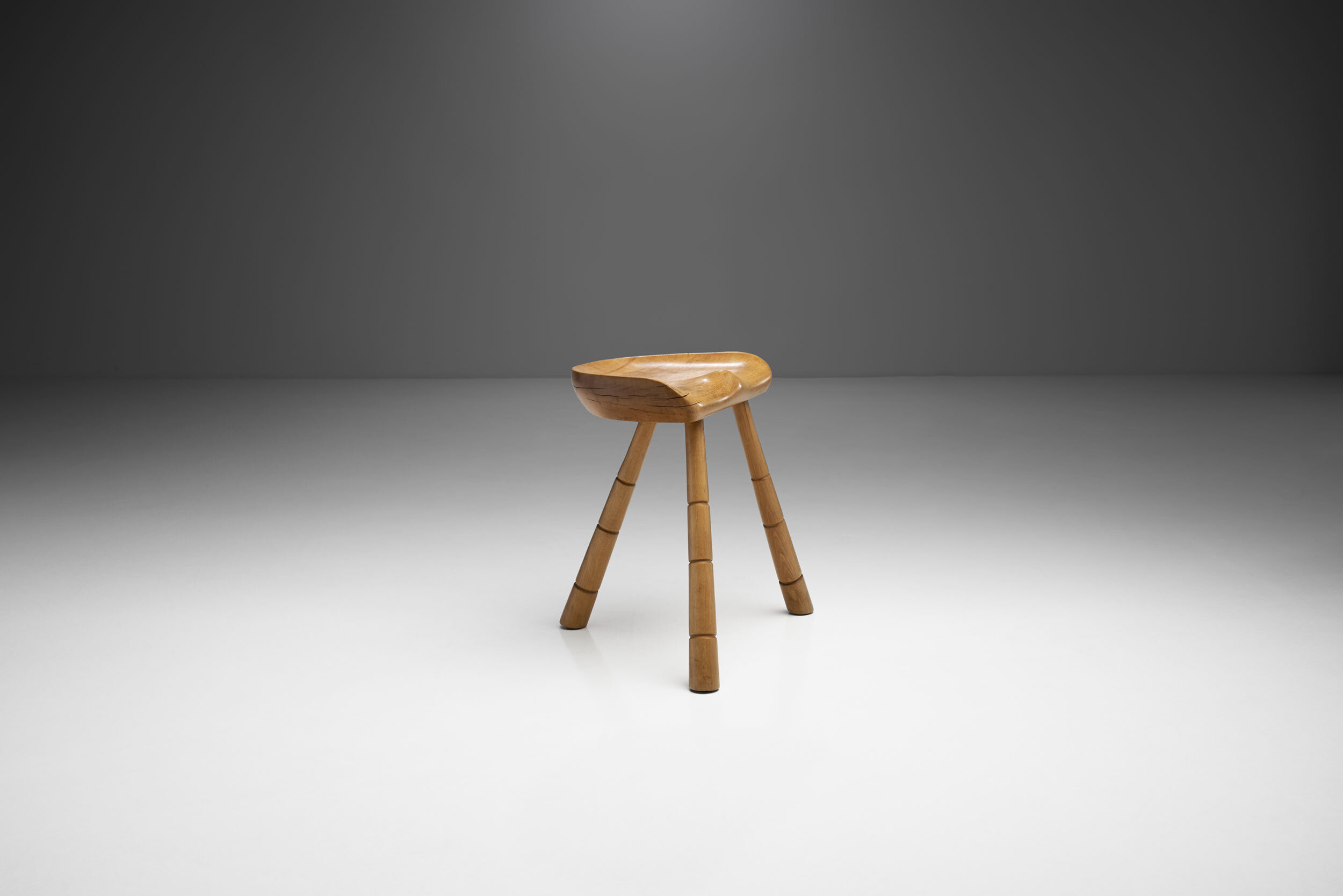
Functional design is the evident guiding principle of many Scandinavian pieces from the early mid-century, and there is hardly a better example than this milking stool. In earlier days, similar stools were often used in the home for informal seating, and this tradition is making a comeback.
The design is simple, yet stylish, letting the natural beauty of beech wood and simple artistry be in the focus. From Mogens Lassen to Arne Hovmand-Olsen, multiple Danish designers created tripod stools in the mid-20th century. Despite this, the stool is often still underestimated as a piece of furniture, while it can be a statement piece in an interior. Form and function collide in this stool, as the three-legged design was inspired by a traditional cobbler’s stool. The most important was the seat’s ergonomic design, as the user spent a considerable amount of time sitting on it. The legs are tapered, providing a firm base for the seat and the sitter. The visual element that makes this particular stool distinct is the carving on the legs. Each leg has three “rings” carved into them, which is an elementary form of decoration, yet very effective in this case. Furthermore, it showcases the maker’s skills in woodworking, which is also very apparent in the smoothness of the seat.
This mid-century piece has the main characteristics Danish design is famous for. From the sculptural shape to the functional design and the great craftsmanship, this stool is a great accent to any space.
Condition:
In good vintage condition. Wear consistent with age and use. The wood has some cracks and marks.
Dimensions:
19.68 in W x 13.77 in D x 15.74 in H
50 cm W x 35 cm D x 40 cm H
REQUEST PRICE HERE
Price category: 1,000 - 2,500 usd / eur
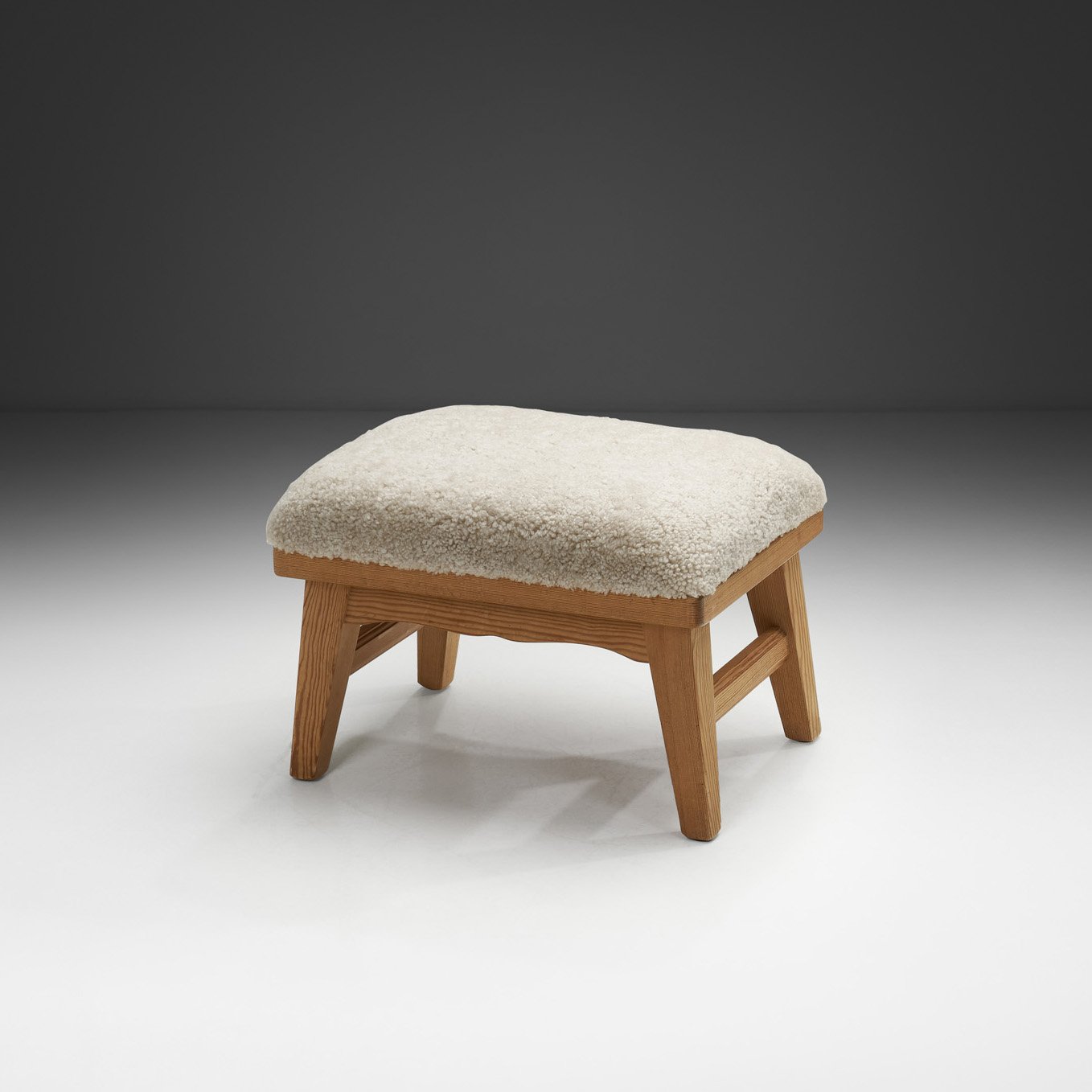
Throughout the 20th century, Scandinavian designers developed a reputation for their devotion to honest materials, functional forms, and a deep respect for traditional craftsmanship. Norwegian furniture makers in particular often took cues from rural design, interpreting it through a modern lens to create pieces that balanced simplicity and comfort. Krogenæs, a Norwegian workshop, embraced these high-quality, yet utilitarian values in their design language and material choices. This low wooden stool reflects this commitment with clarity and character.
This piece features a sturdy, solid oak base with gently tapered legs and stretcher that reinforce its stability while also adding a subtle rhythm to the silhouette. The wood has been left with a natural finish that highlights its warm tone and visible grain. Resting atop the wooden base is a generously padded seat upholstered in soft off-white sheepskin, giving the stool an inviting texture and a tactile contrast to the structured frame beneath. The sheepskin not only softens the profile but also offers comfort and warmth, both physically and aesthetically. Stools have long been versatile furnishings, used across cultures and eras in functional and decorative ways. In the Scandinavian context, they often served as multi-purpose pieces: footrests, extra seating, or even small tables. The low height of this stool, paired with its plush top, make it ideal as an ottoman or casual seating option that adds organic softness to an interior. Its modest scale allows it to be moved easily, fitting neatly into both small and open-plan spaces.
This piece captures the essence of Norwegian design in its purest form: practical, beautifully made, and inherently charming. Whether used on its own or paired with a lounge chair, this stool brings a grounded, natural quality to any space.
Condition:
In good vintage condition. Wear consistent with age and use. The seat has recently been reupholstered in premium sheepskin. Each of our items can be reupholstered by our in house atelier in a fabric of your choice. Please reach out for more information.
Dimensions:
21.65 in W x 16.14 in D x 15.74 in H; Seat height 15.74 in
55 cm W x 41 cm D x 40 cm H; Seat height 40 cm
REQUEST PRICE HERE
Price category: 500 - 1,000 usd / eur
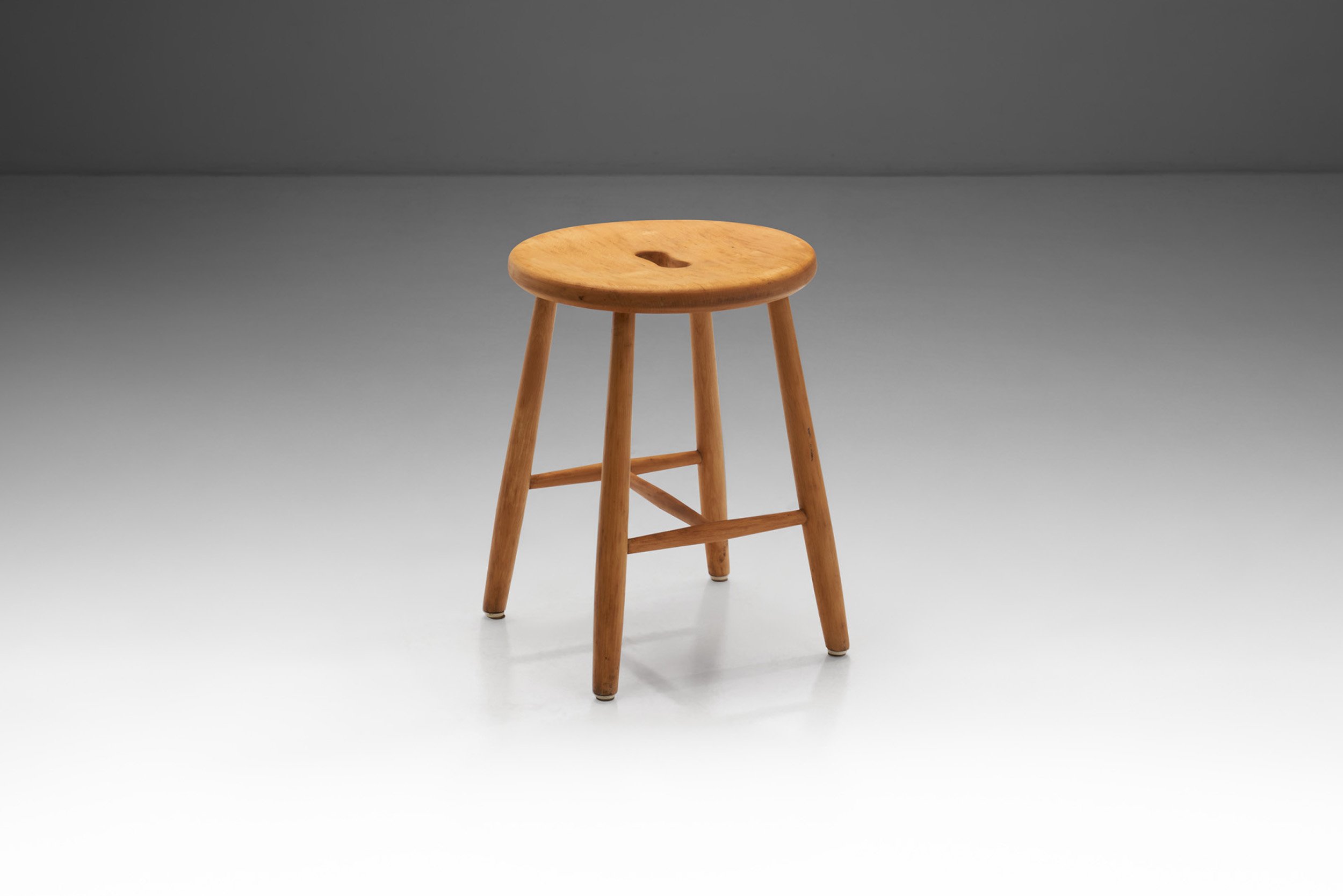
Designed by Børge Mogensen in 1955, the “J27” stool remains a solid and practical piece. With a multitude of purposes, form and function remain at the forefront of this design. Almost everyone in Denmark has experienced Børge Mogensen’s designs – from the well-known, modern FDB furniture - like this stool - to countless classics that have furnished both homes and public spaces in Denmark.
This solid beech stool by Danish master, Børge Mogensen, has an outstanding balance with a classic, timeless design. This “J27” model mirrors Mogensen’s ideal, which was to create furniture with a restrained aesthetic that serve people. With a clear statement of simplicity, quality and respect for materials, this stool is a great example of Danish Modern design. The functional elements converted into decorative features is characteristic of Mogensen’s design aesthetic. As such, the hole on the seat - for easy lifting - and stretchers are not only important utilitarian and structural features, they are also visually appealing details that give plenty of character to the design. Mogensen’s present design was executed by FDB Møbler, the Danish manufactory established in 1942, with a heritage of unfaltering dedication to the perfection and progression of the design craft.
Børge Mogensen believed that furniture should fit the human being, rather than the other way around and that functional quality furniture is paramount. For the book by the bed or when an extra guest needs to be squeezed in at the dining table, this stool is perfect as it is both practical, decorative and thoroughly well-designed.
Condition:
In good vintage condition. Wear consistent with age and use. Some scratches and marks on the wood.
Dimensions:
13.77 in W x 13.38 in D x 18.11 in H
35 cm W x 34 cm D x 46 cm H
REQUEST PRICE HERE
Price category: 5,000 - 7,500 usd / eur
What makes wood so appealing besides its natural beauty is the ease in which it can be cut and the array of beautiful shapes that can be sculpted from it. These mid-century stools, reminiscent of ones created by Krogenæs Møbler in Norway, exude craftsmanship and refined style.
Crafted from solid wood, these tripod stools bear the main design hallmarks of mid-century Scandinavian furniture: simplicity and functionality. There are a couple of design elements that set these stools apart, including their ergonomically carved seats, the splayed legs and the arched stretchers, which all add a touch of intrigue to their otherwise minimalist aesthetic. The masterfully crafted mortise and tenon joints further highlight the arches in the front. The subtle curvature and rounded edges that characterize this pair create a gentle and stylish mid-century modern look that is still based on the organic beauty and qualities of the wood itself. In the world of contemporary interior design, sculptural stools like these have surged in popularity as they can blend seamlessly into modern homes, offering not only practicality but also a sense of nostalgia and authenticity. This pair’s clean lines and cosy wood tones complement various decor styles. Additionally, their enduring appeal lies in their ability to bridge the gap between the past and present, paying homage to mid-century design principles while adapting to the needs of today's interiors. Stools are truly one of the most practical and stylish additions one can make to any room.
Characterized by functionality, simplicity and clean lines, Scandinavian design is all about harmony. As such, these stools are more than just functional furniture pieces; they are also conversation pieces, inviting guests to admire their design and appreciate the craftsmanship that went into creating them.
Condition:
In good vintage condition. Wear consistent with age and use. The pine wood has some scratches and marks.
Dimensions:
18.89 in W x 15.74 in D x 15.55 in H
48 cm W x 40 cm D x 39.5 cm H