
Carl-Axel Acking Model "5029" Wall Lamp for Bröderna Malmströms, Sweden 1940s (sold)

Carl-Axel Acking Model "5029" Wall Lamp for Bröderna Malmströms, Sweden 1940s (sold)
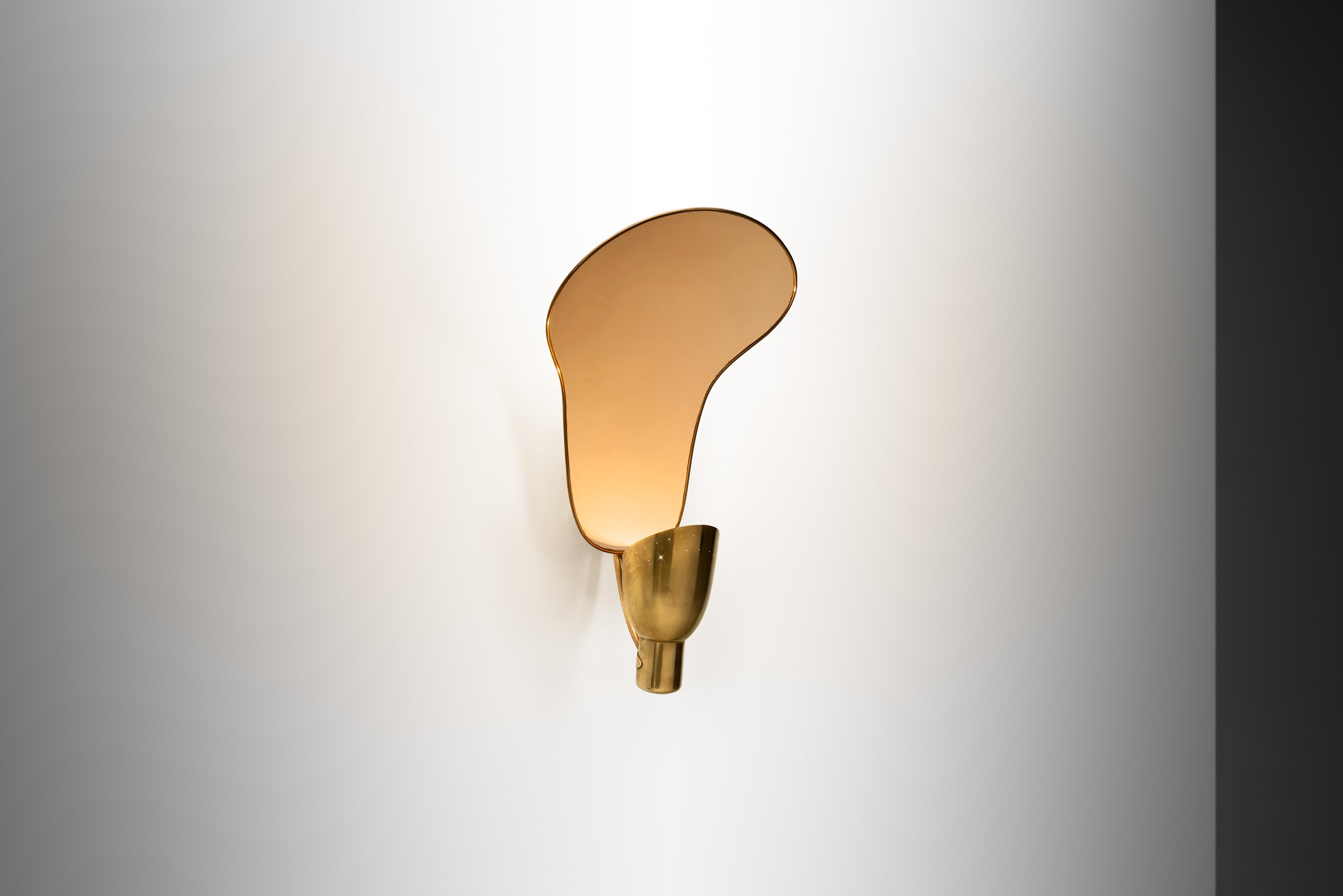
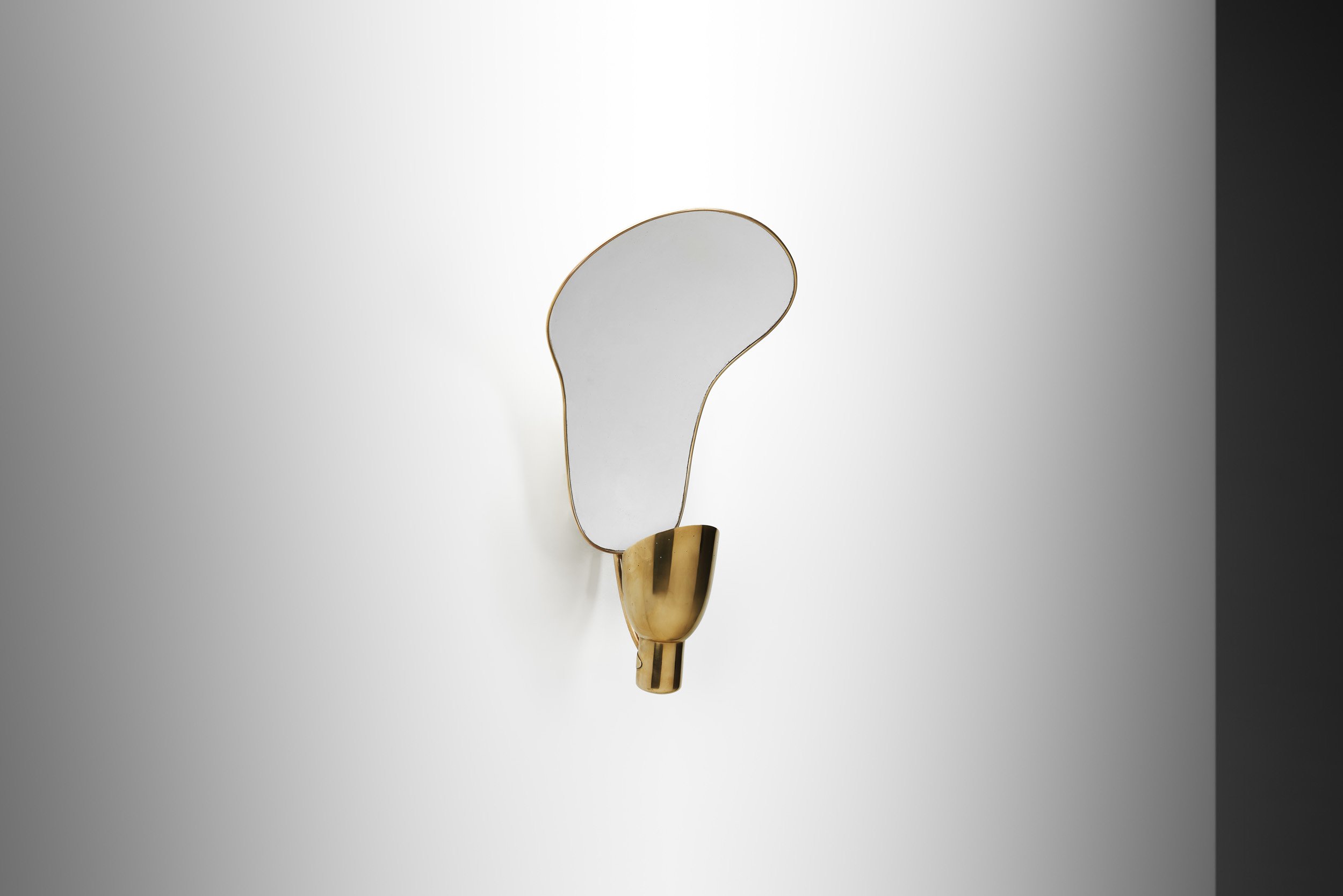
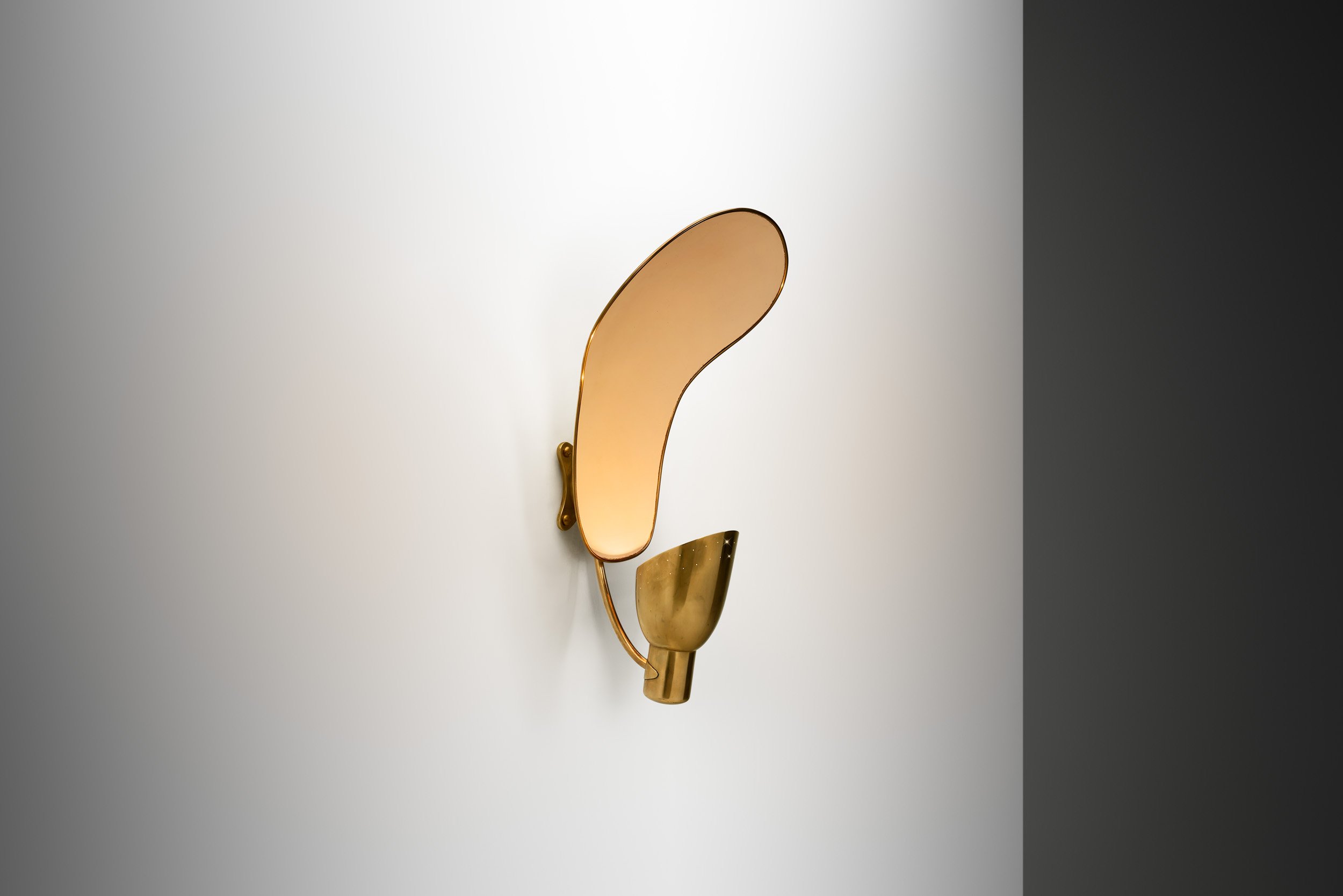
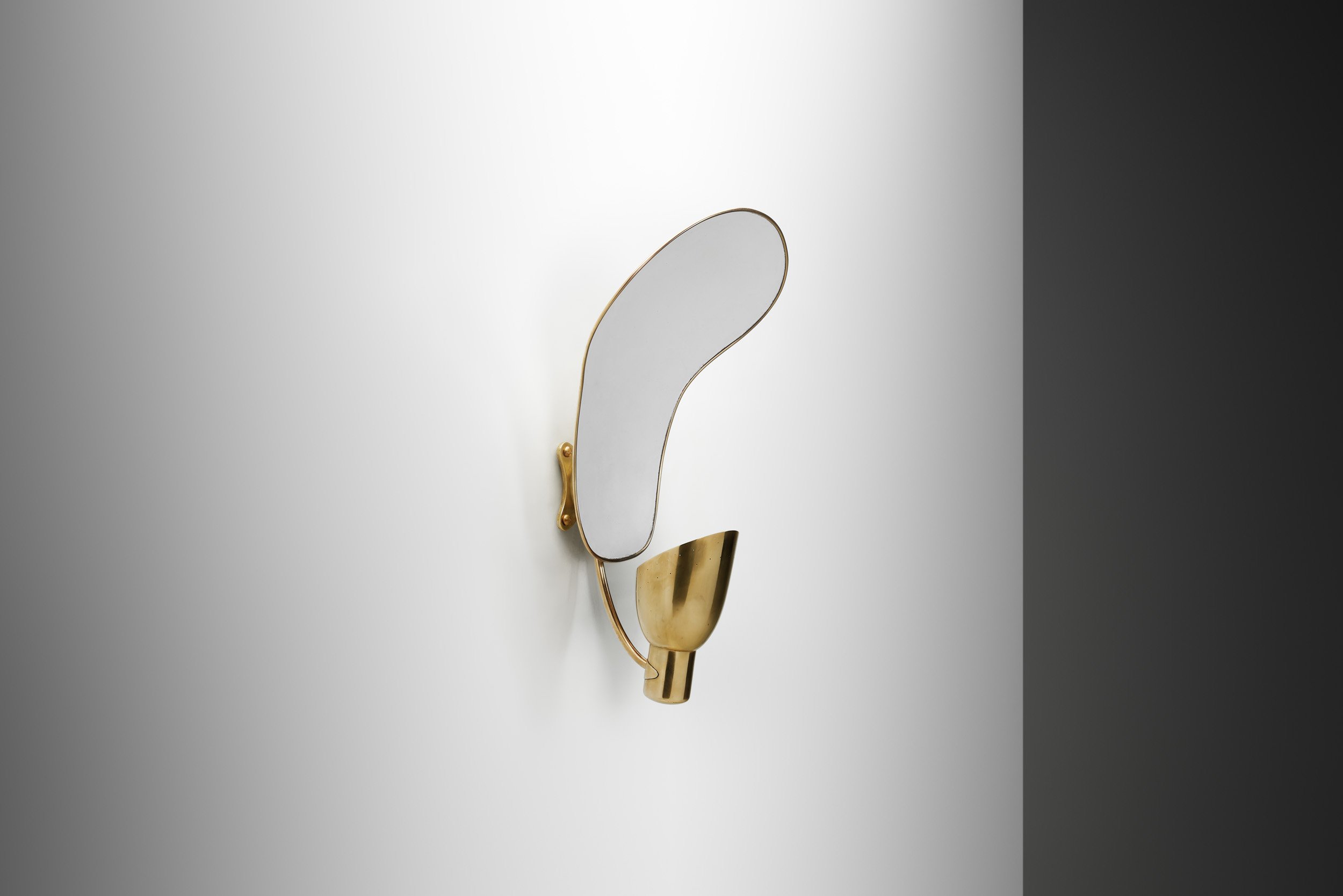
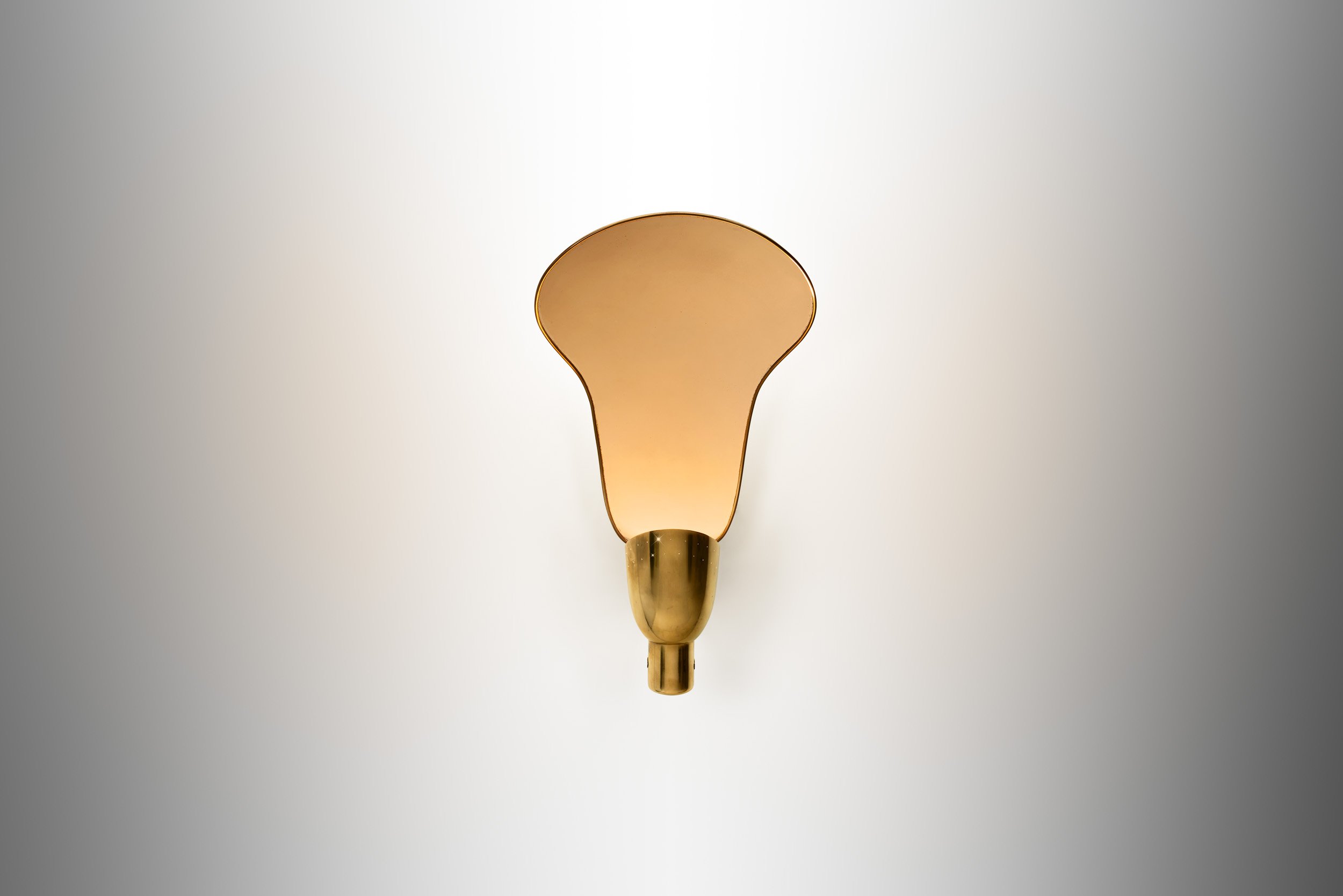
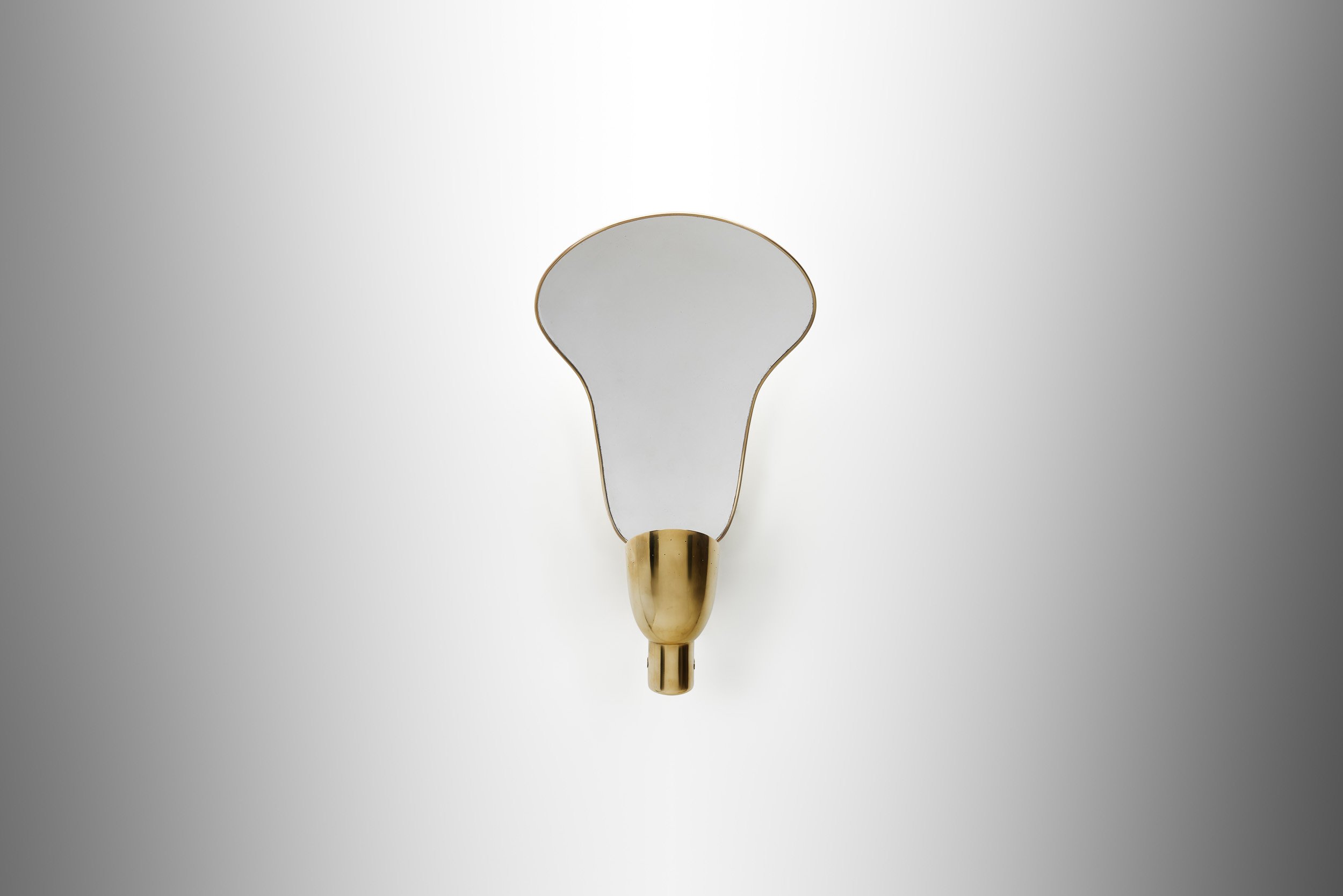
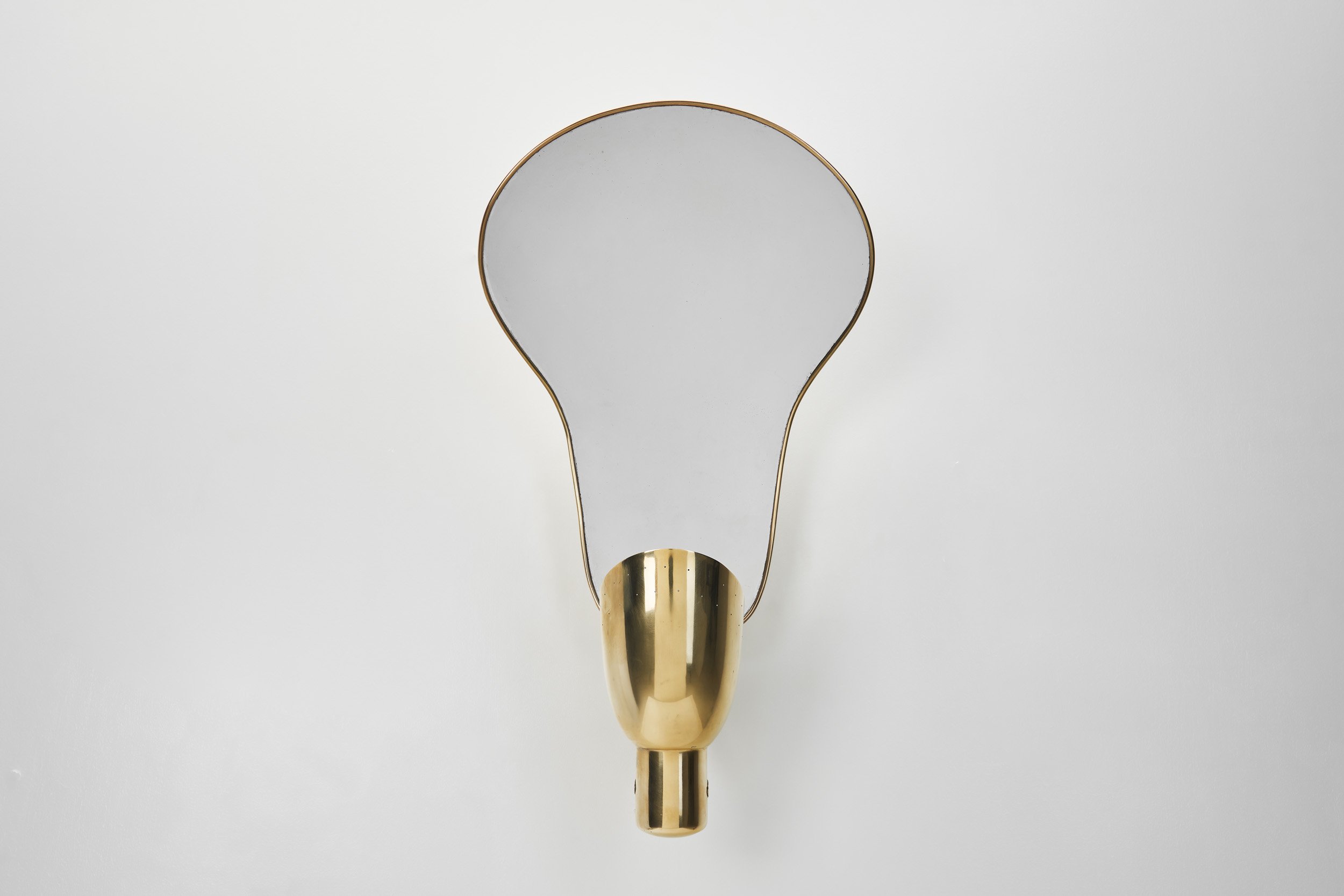
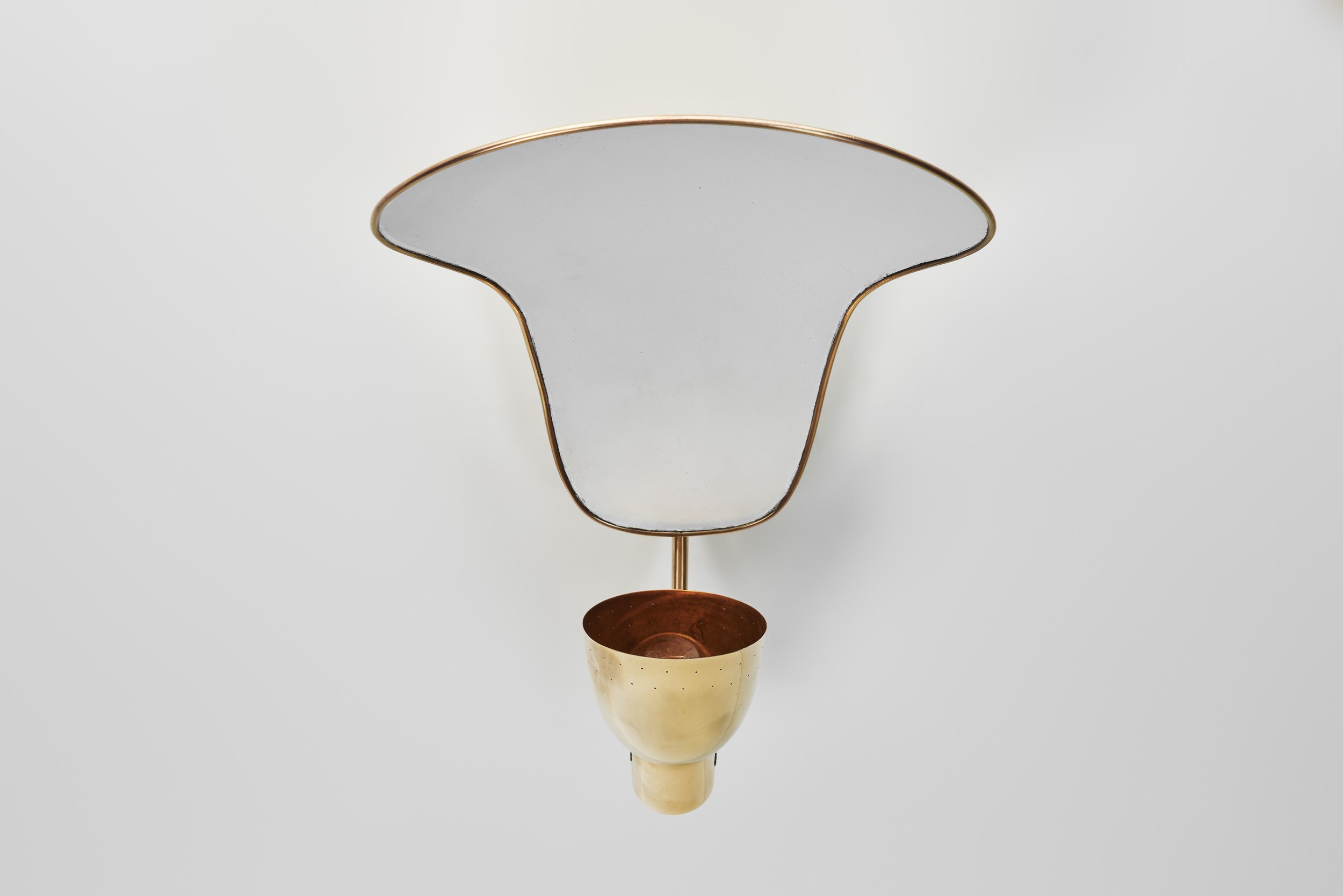
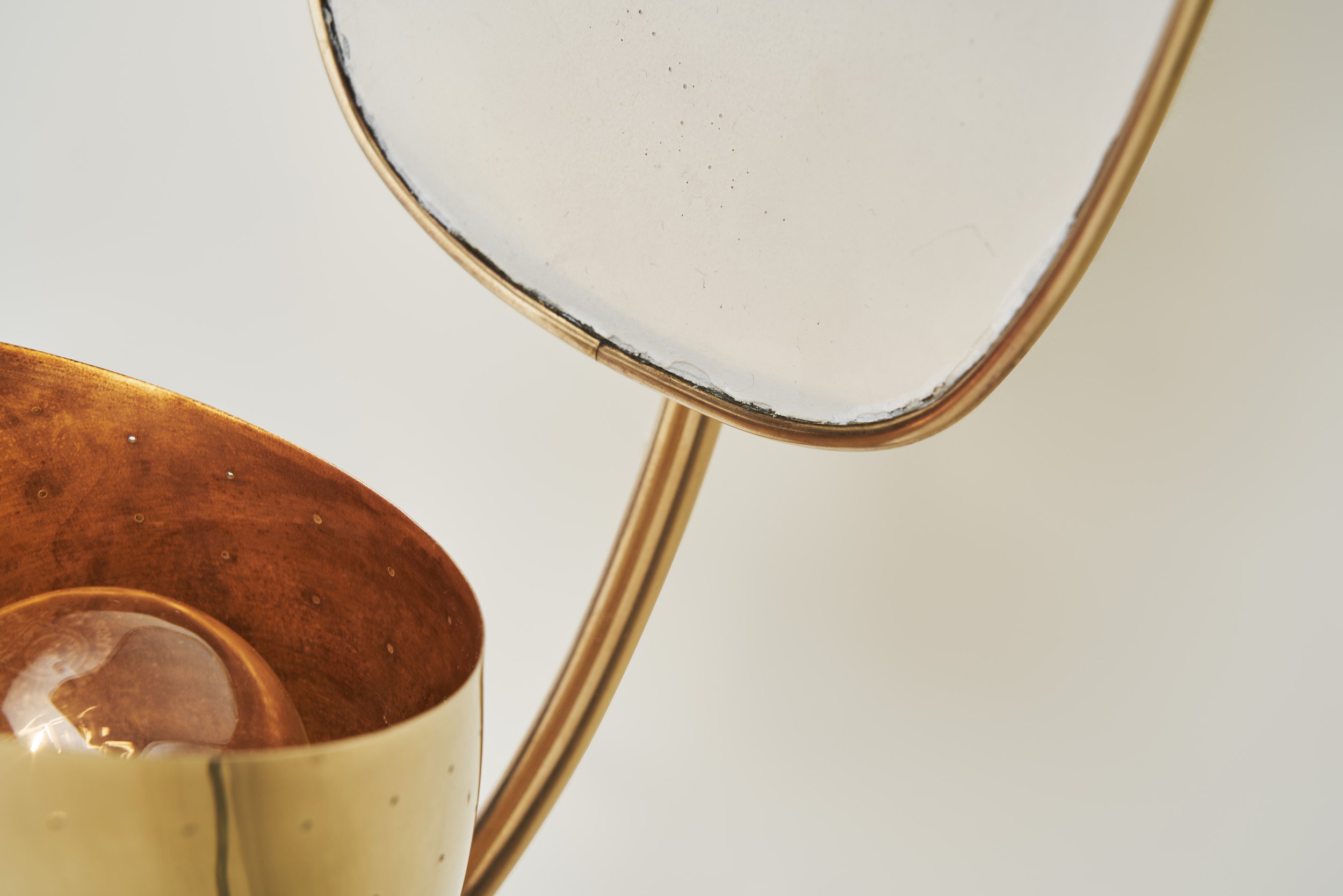
Carl-Axel Acking was a Swedish architect, author and furniture designer, winner of the Lunning Prize in 1952. Designed by Acking in the 1940s for Bröderna Malmströms Metallvarufabrik, the model “5029” wall lamp is a striking example of Swedish modernist lighting design. Known for his refined sense of proportion and functional elegance, Carl-Axel Acking created this piece to blur the line between lighting fixtures and sculptural art. Its unconventional silhouette and masterful use of brass make it even as visually captivating unlit.
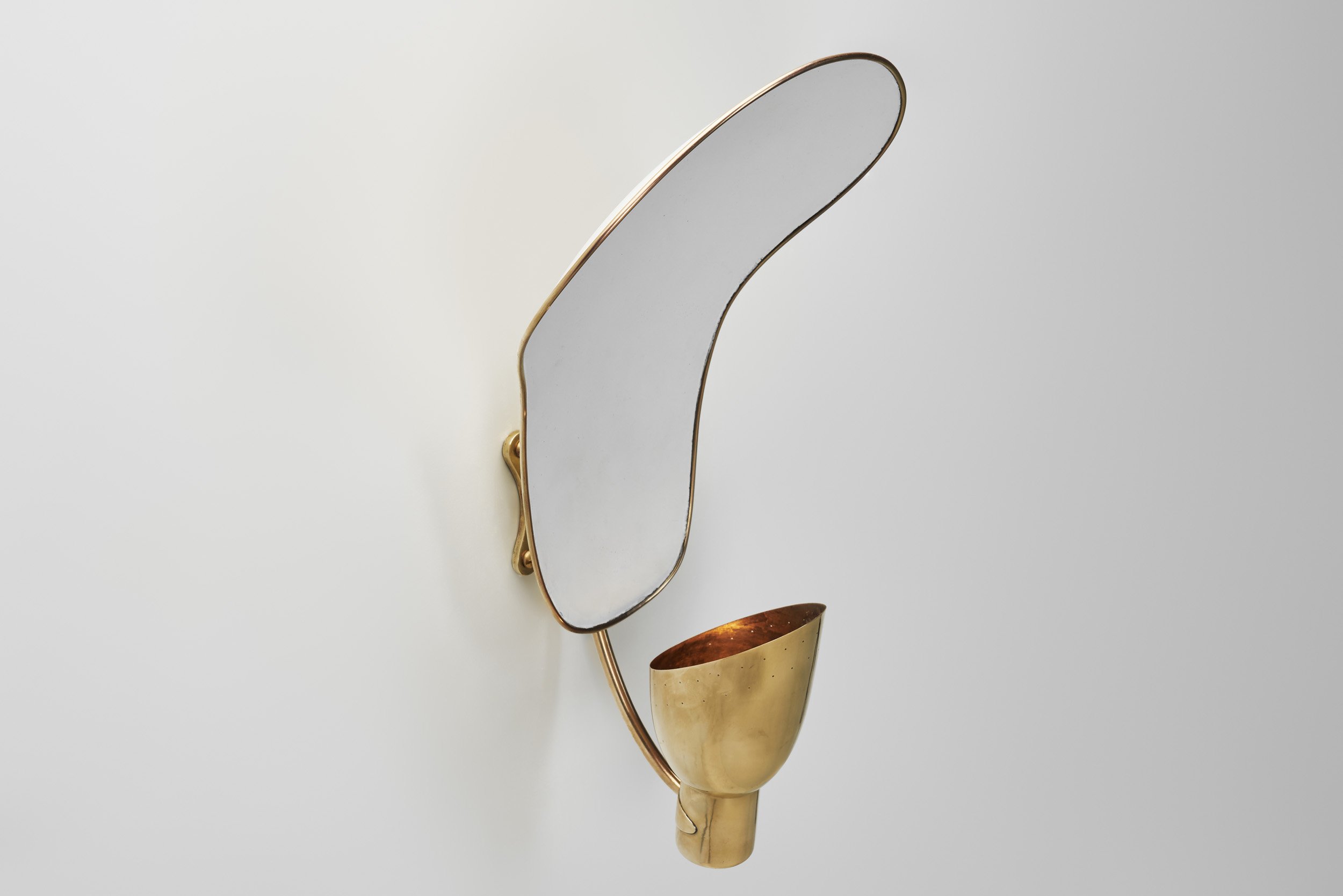
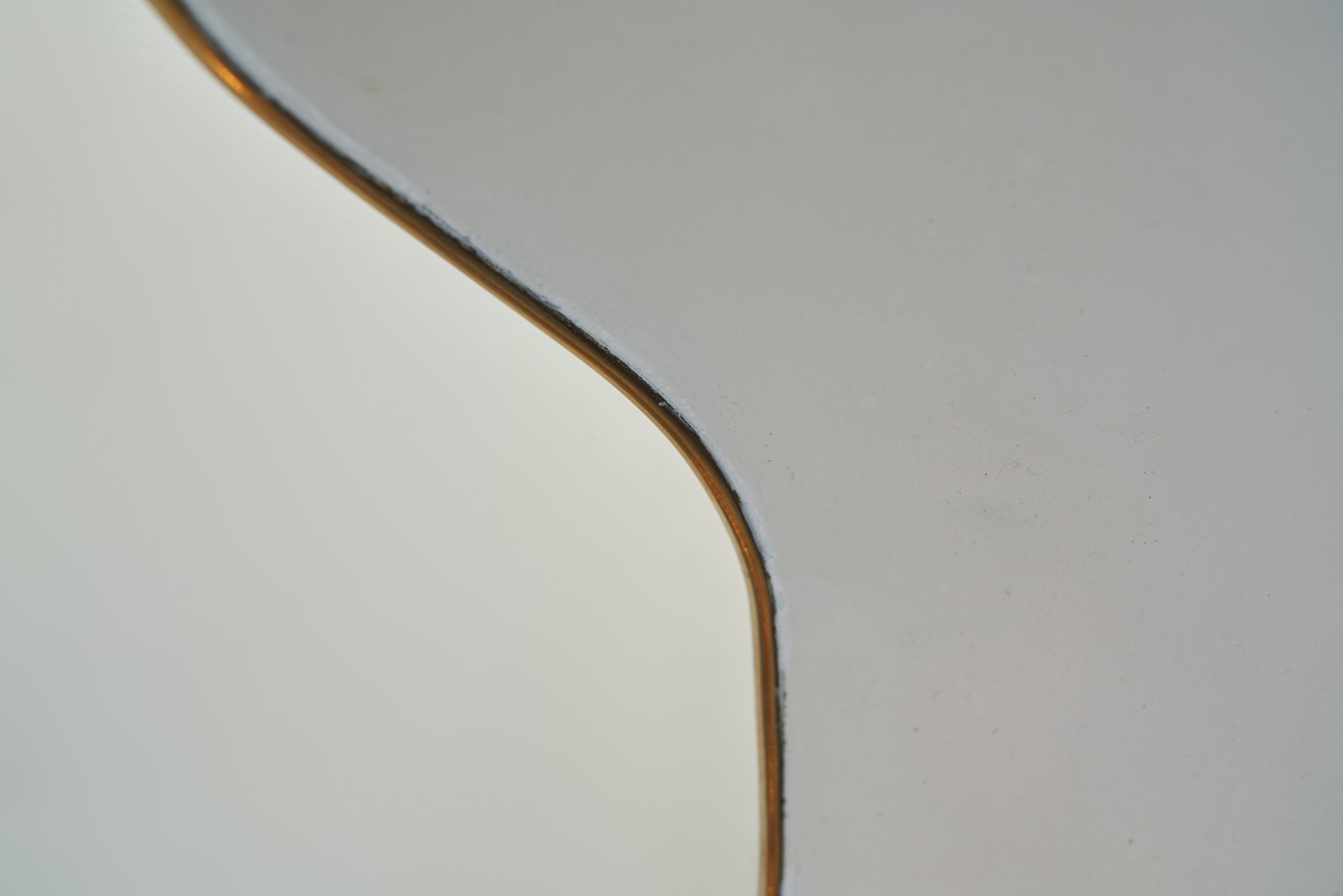
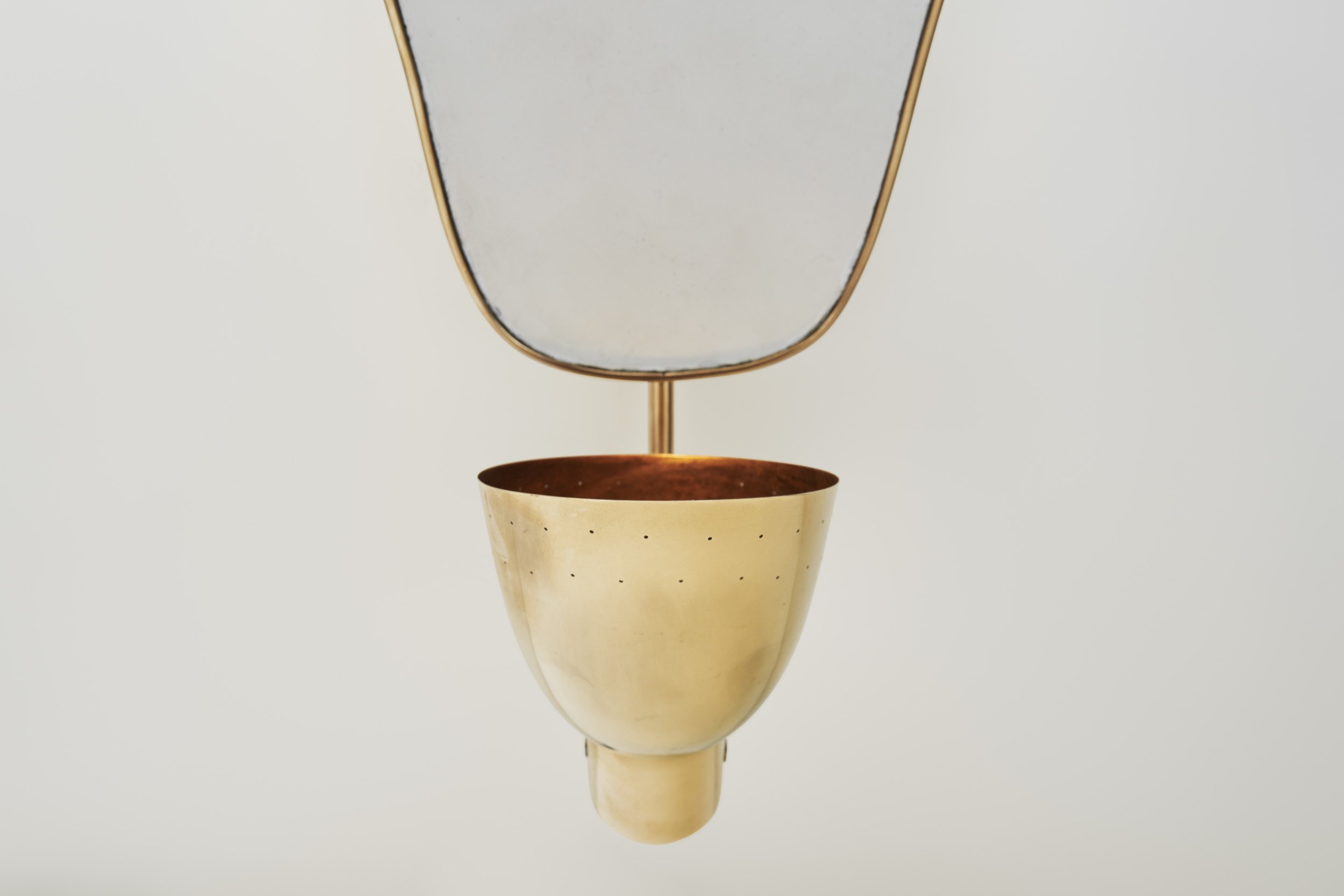
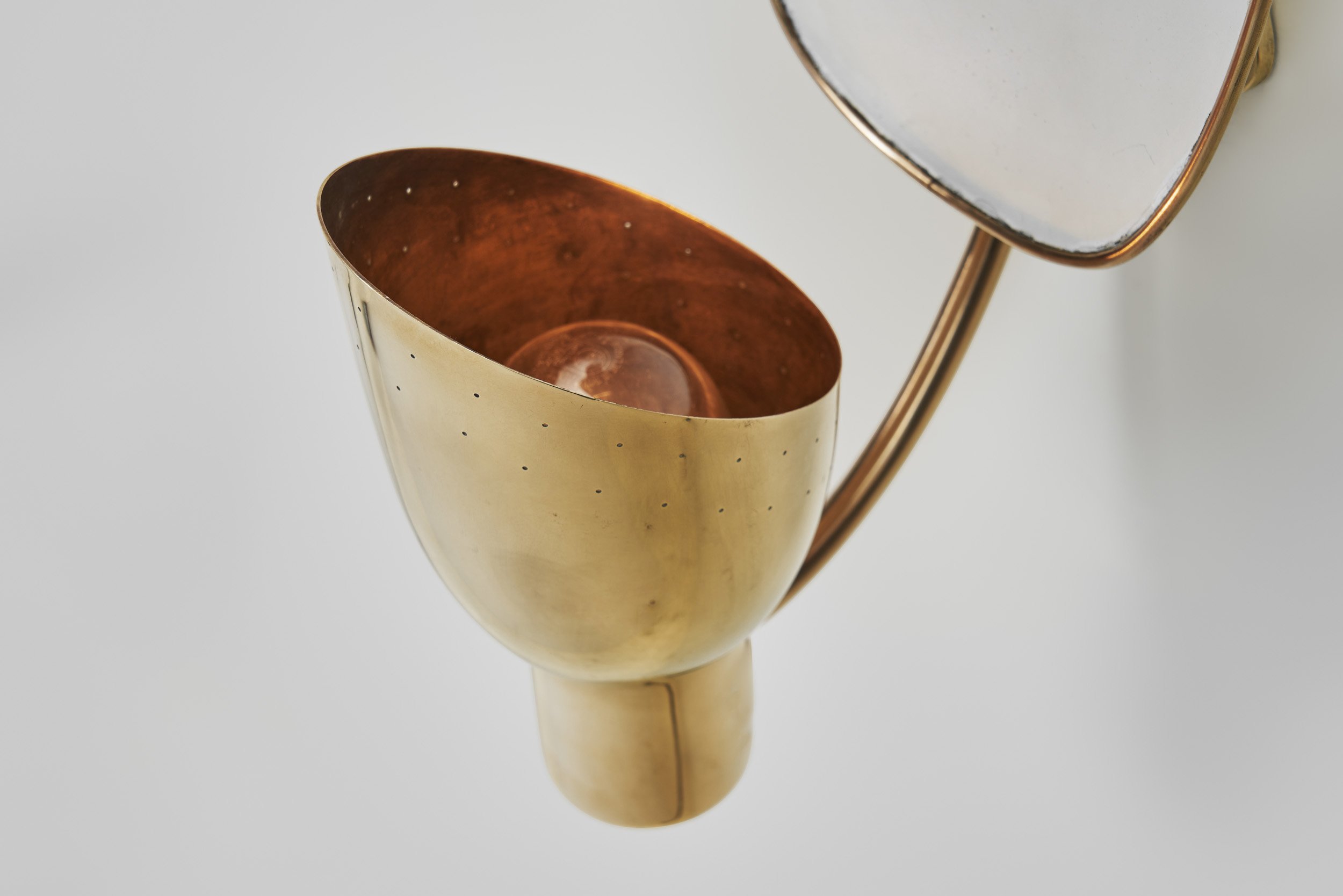
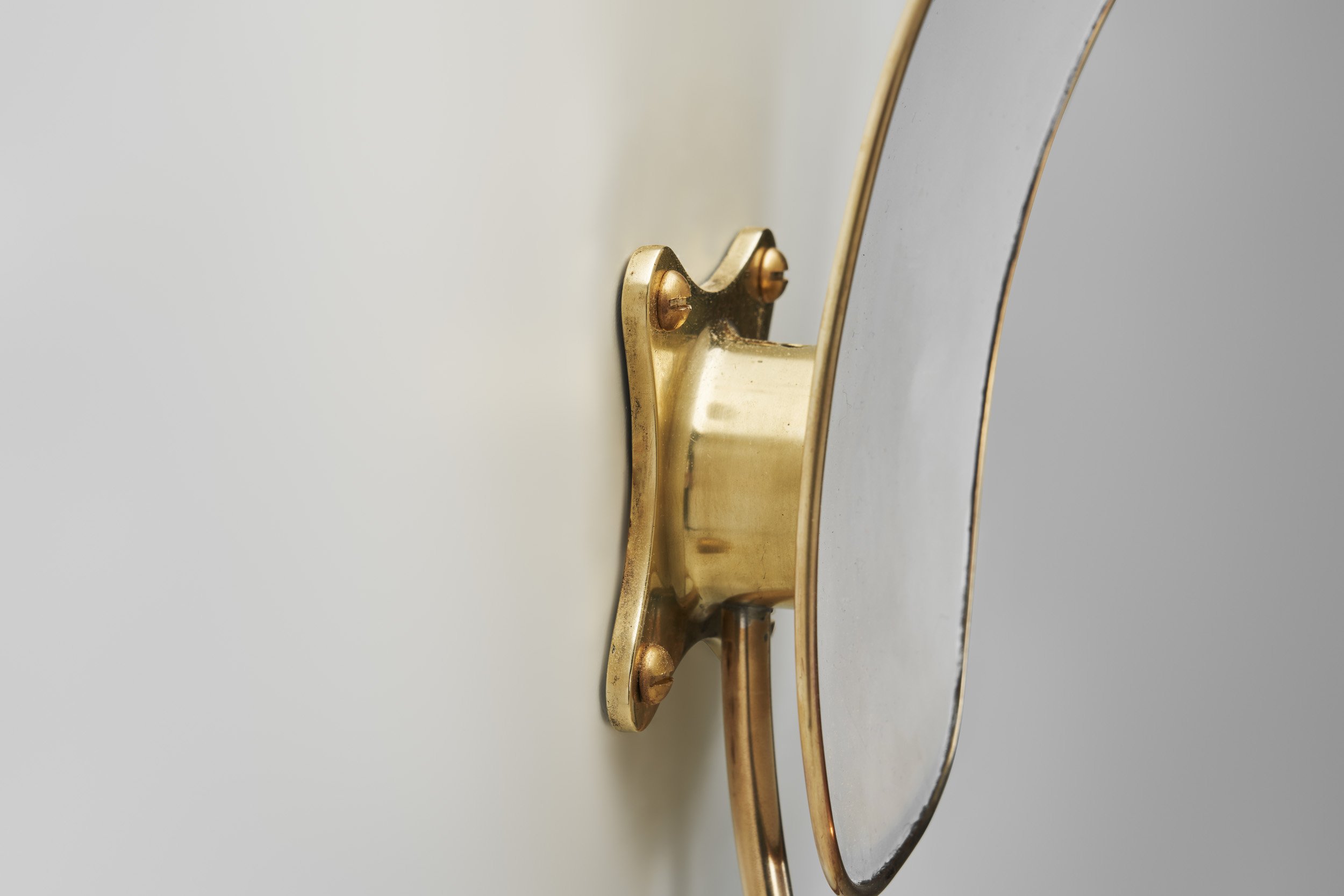
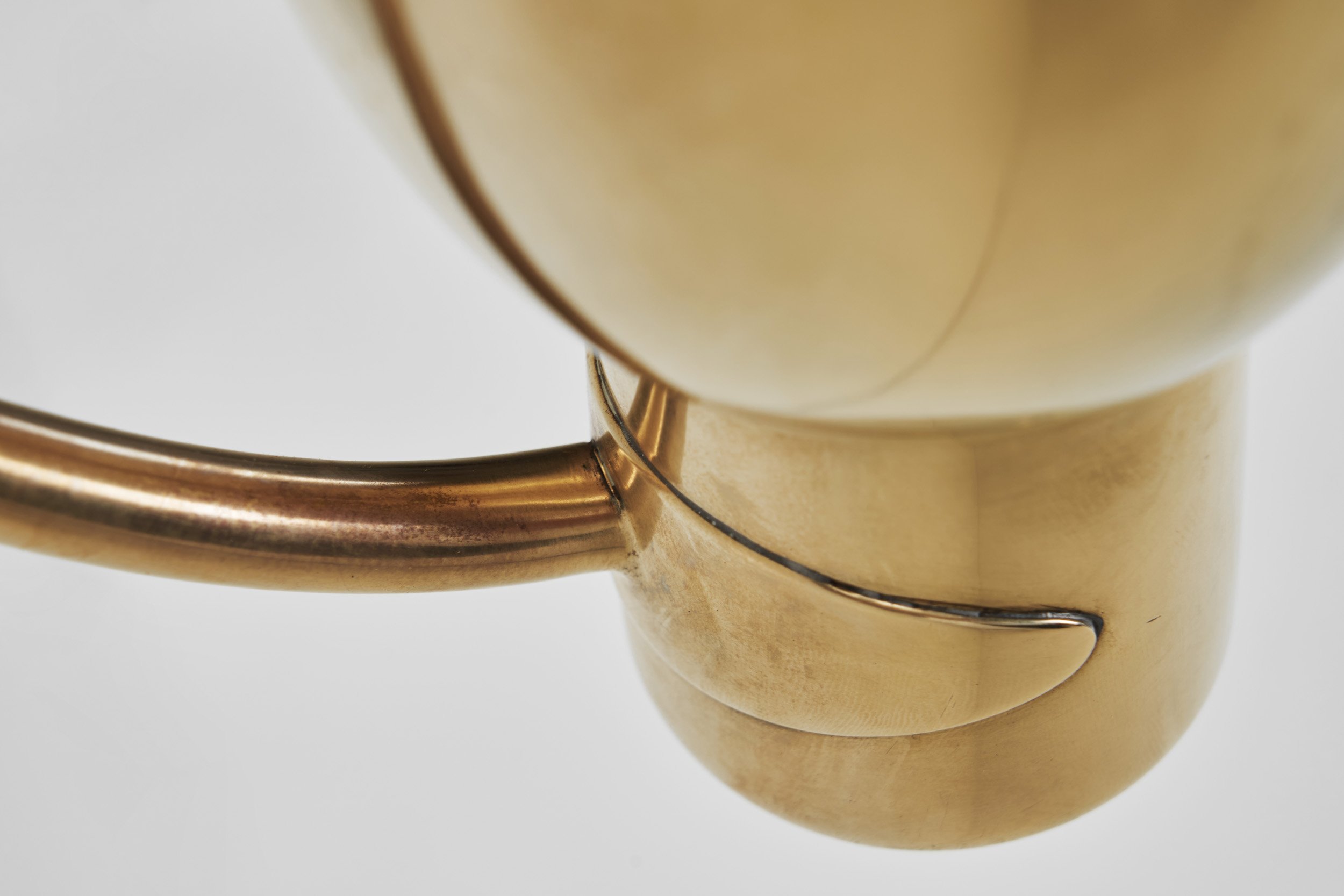
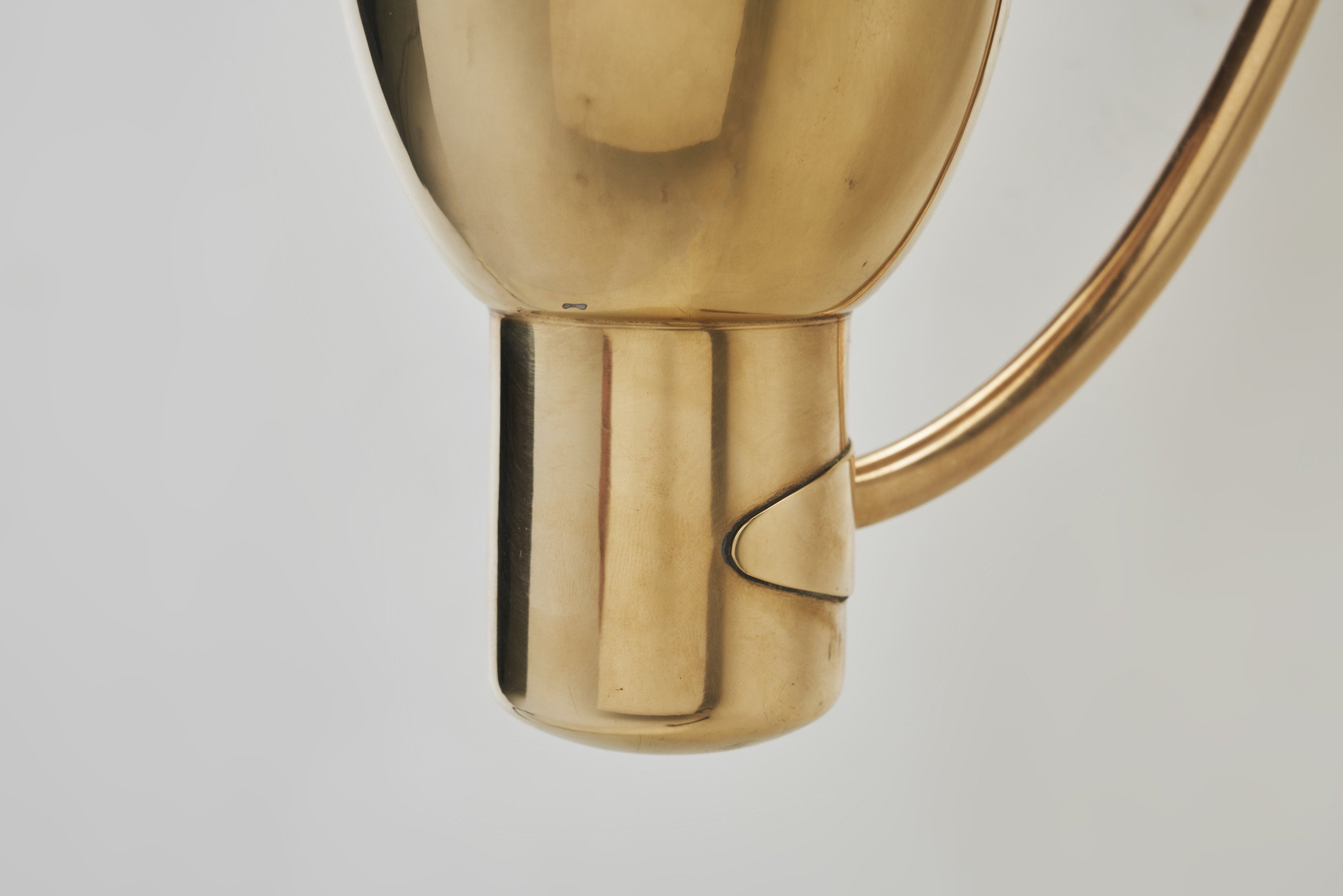
Having a rich history, this model “5029” wall lamp was commissioned for a church interior in Skåne, 1940s. The lamp’s most distinctive element is its reflector, shaped like an elongated, curved leaf and framed in fine brass. This sculptural form diffuses and bounces the light, producing a soft, ambient illumination while also functioning as a decorative focal point. Below, the brass shade is formed in a cup-like shape, angled to direct light toward the reflector for an interplay of brightness and shadow. The curved brass arm connecting these elements adds both visual balance and a sense of lightness to the composition, while the wall mount is discreet yet solid, characteristic of the precise craftsmanship of Swedish mid-century metalwork. Whether used as a statement piece in a living room, or as a functional addition to an interior, the "5029" wall lamp is a true representation of the best of Scandinavian design.
As with much of Carl-Axel Acking’s work, the model “5029” combines utility with artistic ambition, offering more than just a source of light. Today, it stands as both a design collectible and a testament to the iconic collaboration between Acking and Bröderna Malmströms Metallvarufabrik, a Swedish manufacturer of electric lighting fixtures between 1904 and 1974, known for their high quality brass lighting models.
SOLD
Condition:
In good vintage condition. Wear consistent with age and use.
Dimensions:
11.61 in W x 7.48 in D x 20.07 in H
29.5 cm W x 19 cm D x 51 cm H
REQUEST PRICE HERE
Price category: 2,500 - 5,000 usd / eur
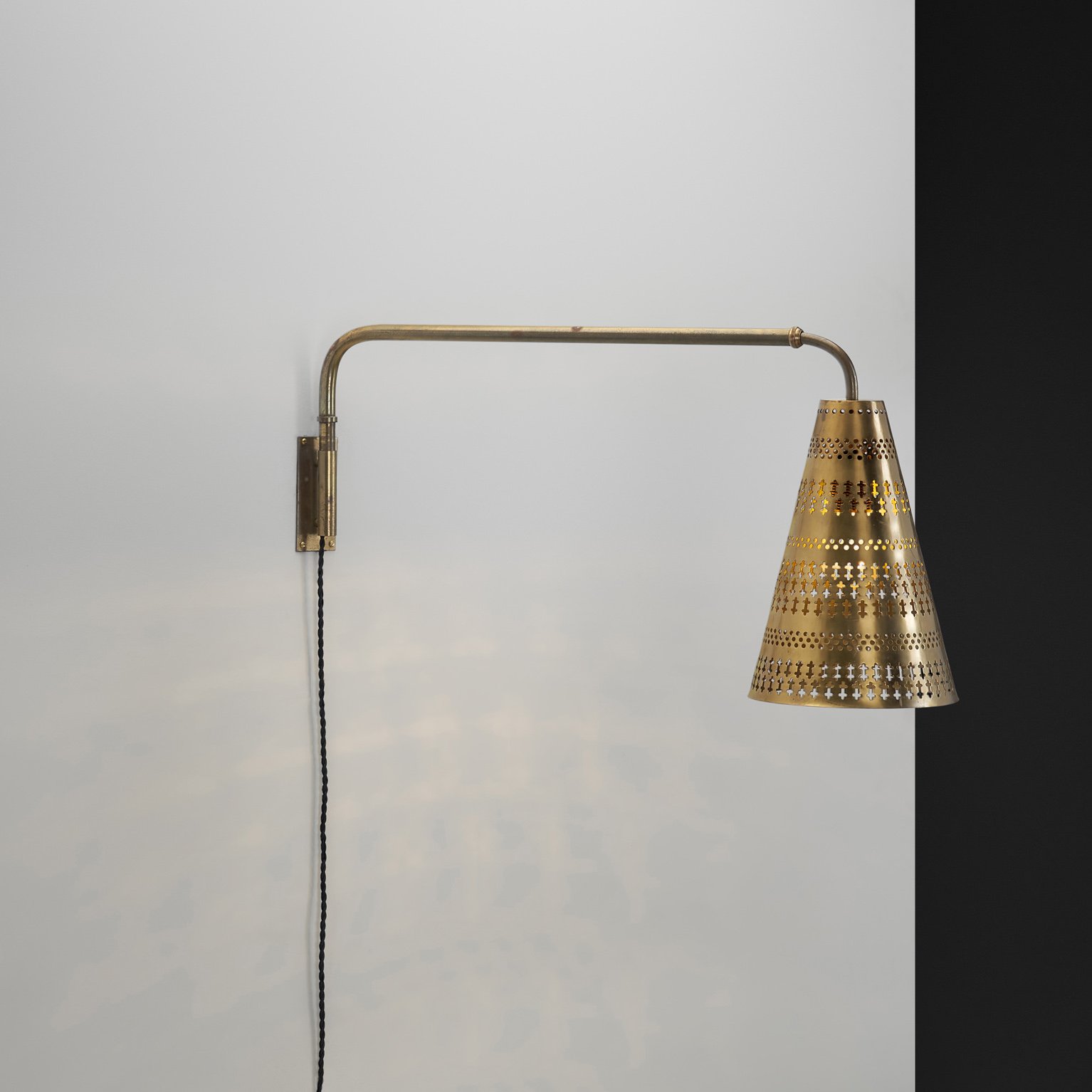
Hans Bergström’s designs are just as scarce today as the information available on the Swedish designer despite their undeniable visual and material quality. Guided by the mantra, “Light must be white and shine freely,” he designed and produced functional yet modern fixtures that were intended to brighten up entire spaces.
Bergström was the founder and creative director of the lighting firm Ateljé Lyktan, which he founded in Åhus in 1934. There he created amazing lighting in various shapes and forms. This unique wall mounted lamp is attributed to the iconic designer. The most distinctive design element of this model is the perforated brass shade. The multitude of small perforations in the metal not only serves an aesthetic function, adding texture and visual interest, but also plays a key role in the diffusion of light; these openings allow for a soft, dappled light to escape, creating a serene star-like pattern on the surrounding wall, further enhancing the lamp's charm. additionally, the slender metal arm is adjustable, allowing the piece to be customised depending on the user’s need. Each component of this brass wall lamp was designed with functionality and elegance in mind, culminating in a piece that transcends simple utility. It is a striking blend of form and function, a luminary that offers not just light, but also a touch of artisanal charm that can enhance the decor and warmth of any contemporary interior.
The 1950s was a period of renewal, prosperity, and optimism following the world wars. This resulted in lighting designers seeking to create pieces that embodied the spirit of the age, reflecting the fast-paced and industrialised world, like this gorgeous model.
Condition:
In good vintage condition. Wear consistent with age and use. The lamp has recently been rewired and reconditioned. Due to the nature and age of the materials, the item may have minor dents, marks, scratches, and discolouration. The lamp is compatible with an E26 / E27 (standard) fitting. All lighting can be converted for US usage.
Dimensions:
7.28 in W x 25.19 in D x 13.58 in H
18.5 cm W x 64 cm D x 34.5 cm H
REQUEST PRICE HERE
Price category: 15,000 - 20,000 usd / eur
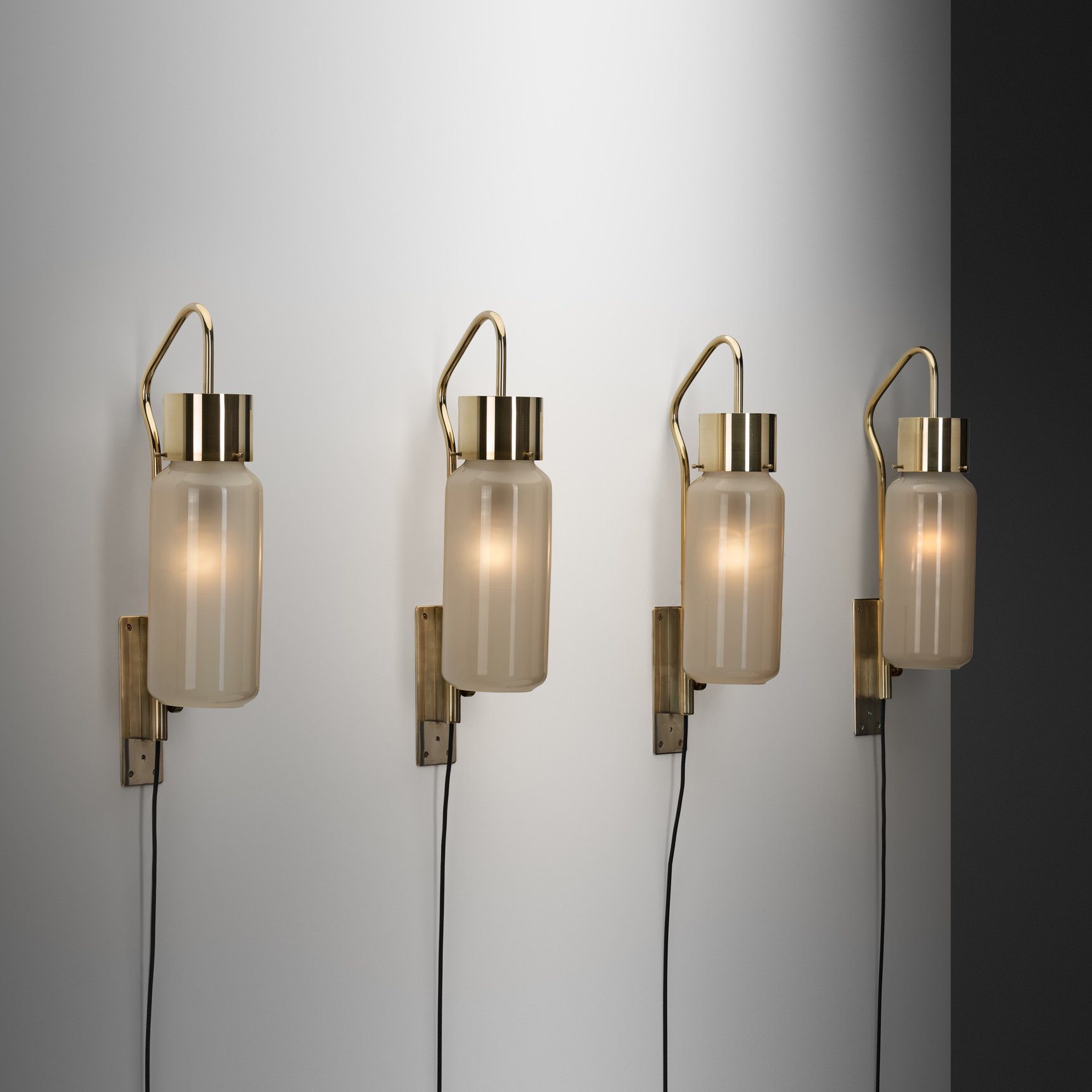
Italy is revered for many things: Food, wine, coffee, fashion - and in the world of design; lighting. For decades, Italy has set the bar in contemporary lighting, thanks to forward-thinking pioneers like Luigi Caccia Dominioni and brands like Azucena, and time-honoured techniques.
Designed around 1958, the "LP 10" model exemplifies Dominioni’s architectural approach to lighting, combining sculptural form with understated elegance. Produced by Azucena, one of Italy’s most influential post-war design manufacturers, the “LP-10” remains celebrated for its timeless proportions and refined material palette. Crafted in solid brass with opaline glass shades, the lamps emit a soft, ambient glow while showcasing the exceptional quality of their construction. The gently curved metal arms create a beautiful visual balance between structure and lightness, allowing the frosted glass shade to appear almost suspended. The warm patina that develops on the brass over time enhances the set’s character, while the minimalist silhouette reflects Dominioni’s enduring commitment to functional beauty and sophisticated restraint.
This set of wall lights bridges architectural precision with decorative warmth. Whether installed individually or as four, they serve as both an elegant source of illumination and sculptural design objects. As one of Luigi Caccia Dominioni’s most recognisable designs for Azucena, the “LP-10” stands as an enduring icon of post-war Italian craftsmanship and modernist design.
Condition:
In good vintage condition. Wear consistent with age and use. The lamps have recently been rewired and reconditioned. Due to the nature and age of the materials, the items may have marks, scratches, and discolouration. Minor imperfections on the glass may be present due to manufacturing inconsistencies. All lighting can be converted for US usage.
Dimensions:
5.11 in W × 7.08 in D × 21.25 in H
13 cm W x 18 cm D x 54 cm H
REQUEST PRICE HERE
Price category: 2,500 - 5,000 usd / eur
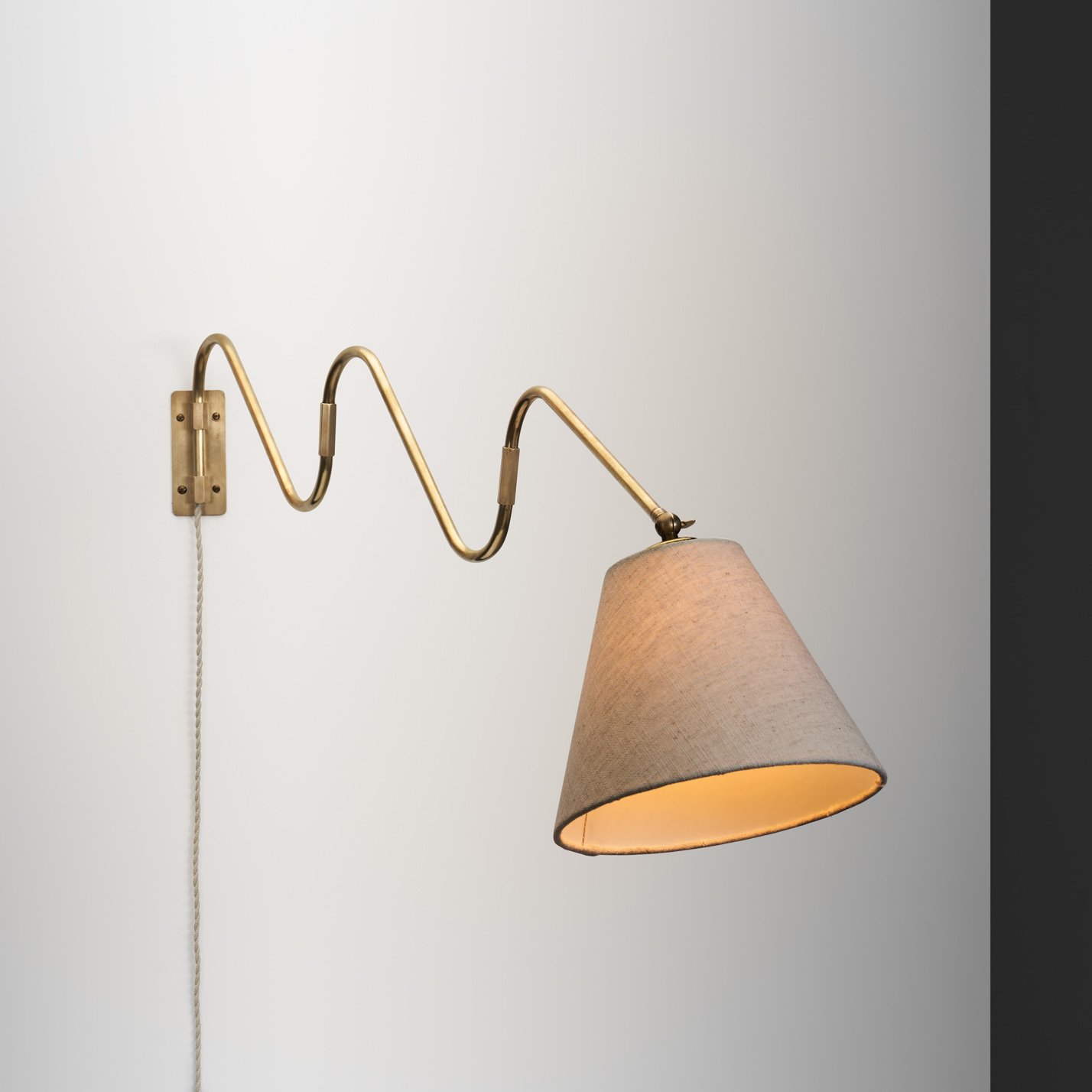
Functional lighting became increasingly popular during the mid-twentieth century, reflecting a growing emphasis on pieces that could adapt to everyday life. Rather than fixing the light in a single direction, designers introduced articulated and flexible arms that allowed the user to position the shade exactly where it was needed, like in the case of this wall lamp. These practical innovations were paired with carefully chosen materials and simple forms to produce fixtures that were both useful and visually refined.
The defining feature of this lamp is its sinuous metal arm. Formed from a brass tubing, the arm bends in a series of soft curves that provide flexibility without relying on evident joinery. The hinges are subtle, effortlessly integrating into the design. The result is both practical and visually engaging, giving the lamp a clear rhythm against the wall. At the end of the arm, a gently tapered fabric shade directs light downward while diffusing it through the woven textile, producing a warm and comfortable illumination well suited to reading or ambient lighting. The contrast between the polished brass and the textured fabric prevents the design from feeling overly technical, and the restrained wall mount keeps the attention on the gracious sweep of the arm. The lamp changes character depending on how it is positioned, making movement an integral part of the design rather than simply an added function.
This lamp is a timeless example of how simplicity, combined with thoughtful craftsmanship, can result in lighting fixtures that manage to solve practical problems. The flexible arm provides a generous reach without occupying floor or table space, while the soft light and restrained palette allow it to fit comfortably into a variety of interiors. It is a thoughtful example of Danish mid-century design, where careful engineering and everyday usability were given equal importance.
Condition:
In good vintage condition. Wear consistent with age and use. The lamp has recently been reconditioned and rewired. The shade is a later replacement. Due to the age and nature of the materials, the item may have marks, scratches, and discolouration. All lighting can be converted for US usage.
Dimensions:
9.65 in W x 43.31 in D x 11.02 in H
24.5 cm W x 110 cm D x 28 cm H
REQUEST PRICE HERE
Price category: 5,000 - 7,500 usd / eur
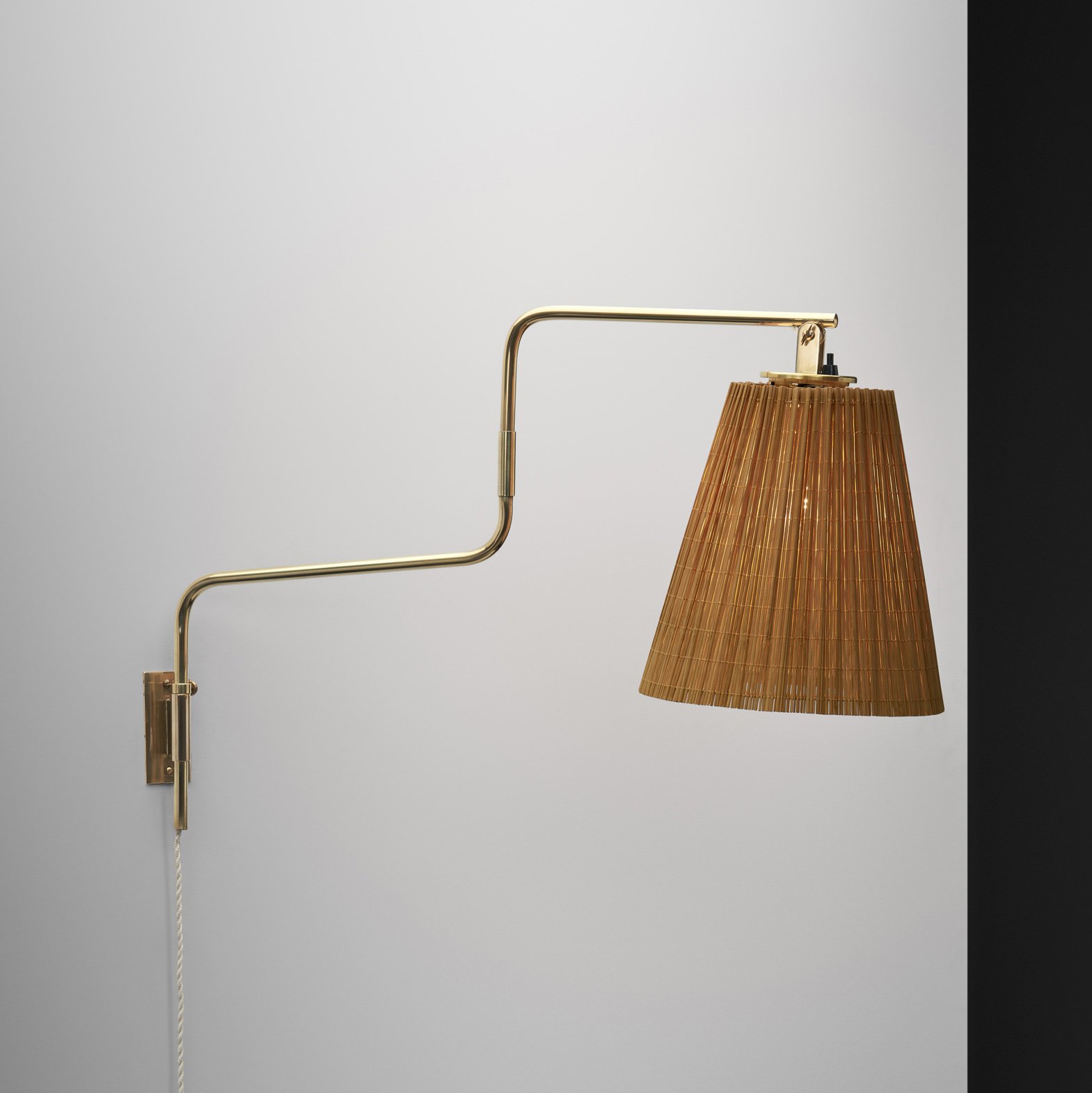
Paavo Tynell is widely regarded as one of the pioneers of Finnish lighting design. As a co-founder and chief designer of Taito Oy, he helped establish a distinctly Finnish approach to lighting that combined masterful metalwork with an organic sense of form. Throughout the 1940s and 1950s, his designs drew inspiration from nature while remaining deeply rooted in functionality.
Tynell’s model “9414” wall lamp reflects this philosophy through its graceful lines, adjustable construction, and thoughtful use of natural materials. Rather than relying on symmetry, the lamp unfolds through a series of elegant bends that give the brass arm a distinct visual quality. Extending confidently from the wall, the articulated arm allows the light to be positioned with flexibility while creating a striking linear composition. Suspended from the brass arm is a tapered rattan shade, the warm texture contrasts beautifully with the polished brass structure. The small wooden slats gently filter the light, producing a soft, atmospheric glow that enhances the comforting character of the design. Every transition between horizontal and vertical lines feels effortless, revealing Tynell's remarkable ability to transform a functional mechanism into something sculptural.
The best qualities of Tynell's lamp designs are their atmospheric light and disciplined, functionalist design. At the same time, the subtle ornamentation and clever use of materials are always present. Model “9414” functions equally well as a reading lamp, bedside light, or decorative wall fixture, adapting easily to a variety of interiors through its adjustable construction.
Condition:
In good vintage condition. Wear consistent with age and use. The lamp has recently been rewired and reconditioned. The shade was custom-made by our in-house atelier. Due to the nature and age of the materials, the item may have marks, scratches, and discolouration. The lamp is compatible with an E26 / E27 (standard) fitting. All lighting can be converted for US usage.
Dimensions:
15.35 in W × 18.70 in D × 12.40 in H
39 cm W x 47.5 cm D x 31.5 cm H
REQUEST PRICE HERE
Price category: 2,500 - 5,000 usd / eur
Lighting is a huge part of Danish and Scandinavian design, ranging from the warm, low light of a candle to the bright overhead glow of a ceiling light. This wall lamp is a unique piece of functionalist design with unmistakable touches of Modernism.
This lamp stands firmly in Danish design lineage, balancing a sculptural presence with practical light diffusion, and embodying the craftsmanship and material honesty that became hallmarks of modern Scandinavian design. Made out of brass and glass, the lamp carries a beautiful warm hue lingering through its body. The brass frame provides a tonal contrast to the light shade, as well as safely securing the model to the wall. The proportions are meticulously balanced, allowing the dome shade to appear weightless when looked at straight on. Though understated, every element demonstrates the Danish mastery of form and proportion, where technical precision and visual grace coexist seamlessly.
A model like this can create an intimate and cosy experience in a dining room or enhance the ambience of a living room with a warm glow, without creating harsh shadows. This lamp is sure to be a lovely addition to any interior space.
Condition:
In good vintage condition. Wear consistent with age and use. The lamp has recently been rewired and reconditioned. Matte glass shade. Due to the nature and age of the materials, the item has minor marks, scratches, and discolouration. Imperfections on the glass may be present due to manufacturing inconsistencies and age. This lamp is compatible with an E26 / E27 (standard) fitting. All lighting can be converted for US usage.
Dimensions:
6.30 in W x 9.05 in D x 12.99 in H
16 cm W x 23 cm D x 33 cm H
REQUEST PRICE HERE
Price category: 5,000 - 7,500 usd / eur
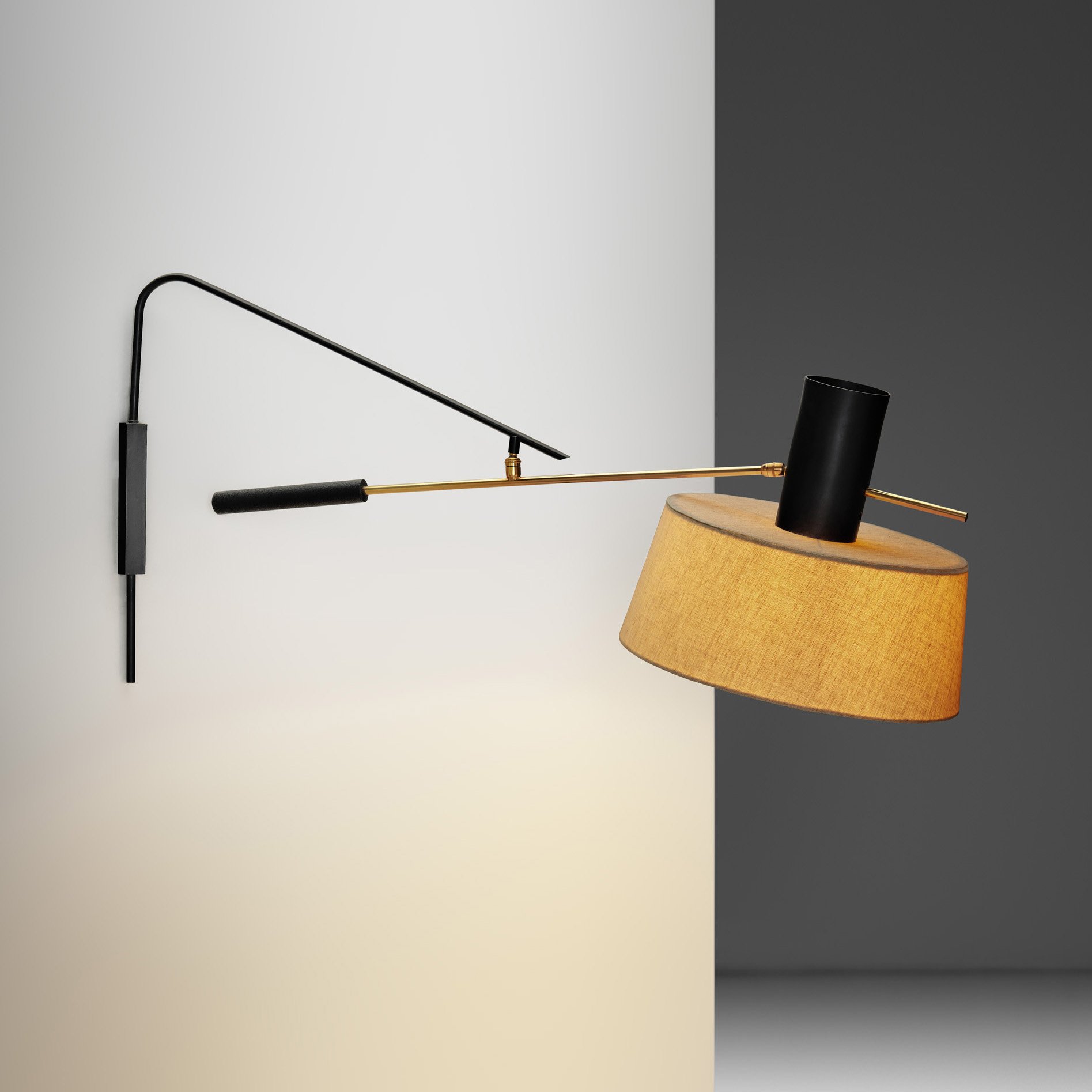
Crafted in the manner of Maison Lunel, this wall lamp has a striking sculptural silhouette and exemplifies the era’s marriage of function and form. With a combination of brass and black laquered metal, it carries a distinct mid-century French modernist character. The design is sophisticated yet restrained, with clean lines and geometric angles that reflect the elegance and innovation associated with Lunel’s atelier during its most prolific period.
The design of this wall lamp invites appreciation from multiple angles, engaging both the eye and the space it inhabits. Instead of a traditional back-plate, the lamp connects to the wall through a thin pole with a sleek, modern look. Projecting gracefully from the wall, the lamp shade extends on two joined arms that offer both presence and practicality. Its sculptural profile balances geometric precision with an organic flow, creating a visual rhythm between the materials. The contrast between the dark lacquered metal and the shiny golden brass creates a harmonious balance and adds another sculptural dimension to the piece. The shade's simple, clean lines align perfectly with the lamp's overall aesthetic, reinforcing the artistic manner of the mid-century period. Furthermore, the light, when diffused through the fabric shade, casts a warm and inviting glow, creating an ambiance that is both cosy and comforting, which is enhanced by the hue of the brass. This piece exudes timeless beauty, making it a perfect choice to complement an array of interior styles.
Without a doubt this lamp channels the spirit of post-war French design; an era defined by a bold yet refined exploration of materials, proportion, and silhouette. It is said that a well-chosen lighting piece can change the overall look of a room and how it feels to inhabit the space. This model is the perfect addition to bring a touch of elegance to any space without it being overwhelming.
Condition:
In good vintage condition. Wear consistent with age and use.
Dimensions:
37.59 in W x 26.77 in D x 20.07 in H
95.5 cm W x 68 cm D x 51 cm H
Shade:
40 cm ø x 17 cm H
REQUEST PRICE HERE
Price category: 2,500 - 5,000 usd / eur
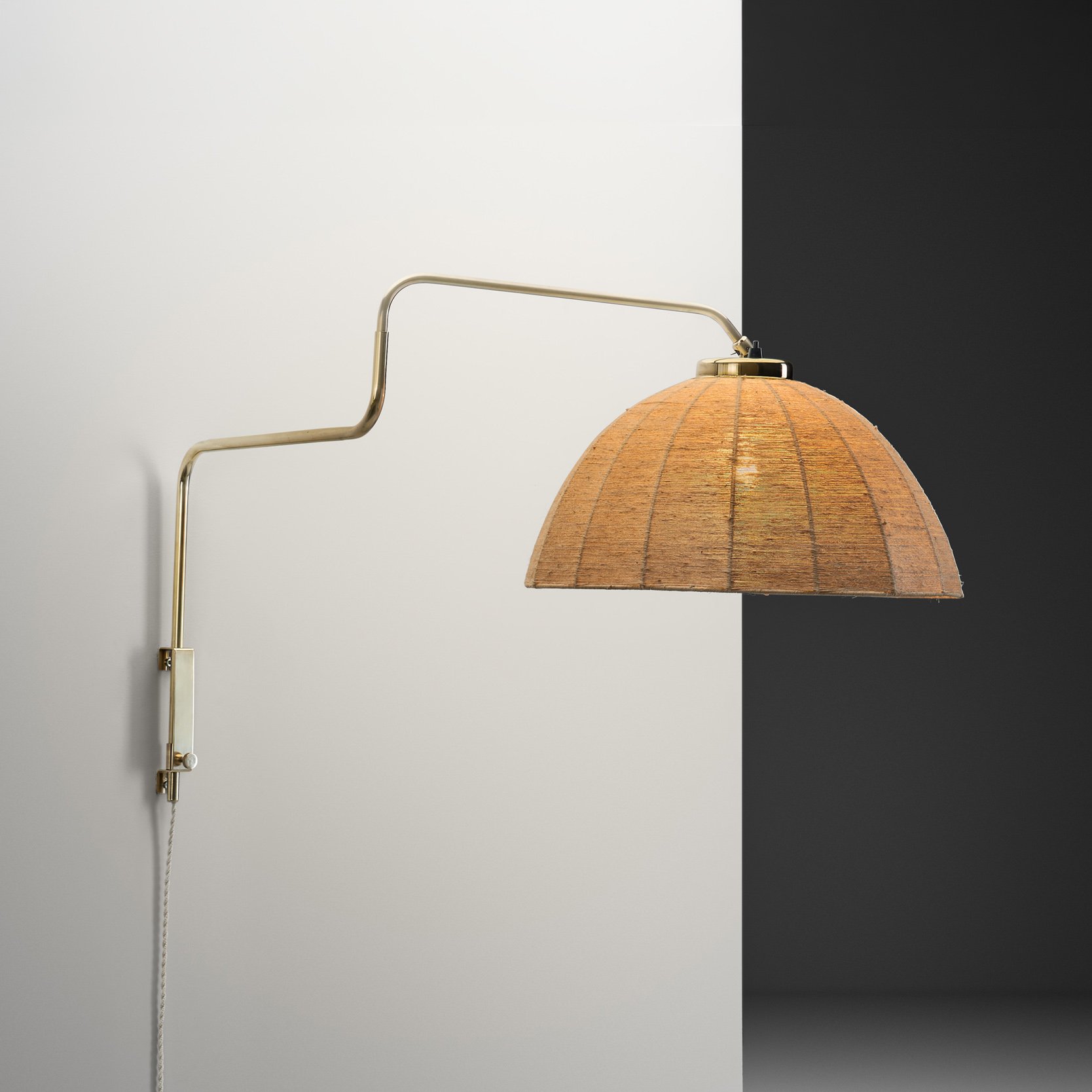
Finnish mid-century lighting design is world-famous for numerous reasons. The country’s designers managed to make strictly functional design look beautiful in addition to their practicality and high-quality. This Valinte Oy model “2322” wall lamp is a commendable example of the Finnish design sensibilities.
Valinte Oy, established in Finland during a time of great design exploration, was known for its commitment to crafting distinctive lighting solutions. The company was celebrated for its attention to detail and ability to merge form and function seamlessly. Valinte Oy's designs have always embodied the spirit of Finnish craftsmanship and have often incorporated elements of nature, evoking a sense of purity and simplicity. This wall lamp features a dynamic brass body that extends outward to hold a stunning woven dome shade. The shape of the brass stem is reminiscent of Paavo Tynell’s model “9414” wall lamp, thus highlighting the Finnish design trends of the period. The shape of the shade and pairing of materials create the overall aesthetic impression of this lamp. Since the two materials - brass and woven fabric - dictate the look, much attention was paid to the quality and to the craftsmanship that united the lamp into its particular shape. The prowess of the producer becomes evident as this wall lamp represents a statement piece despite its minimalism. Furthermore, the design has great proportions, and when lit, the lamp creates an exceptionally atmospheric light, giving the brass a warm colour as well.
This lamp is a timeless example of how simplicity, combined with thoughtful craftsmanship, can result in lighting fixtures that transcend their utilitarian purpose, becoming works of art in their own right. Today we consider the mid-century era a golden age for Finnish design and craftsmanship. During these decades, some of the country's most significant luminaires were made, including this exceptional wall sconce.
Condition:
In good vintage condition. Wear consistent with age and use. The lamp has recently been rewired and reconditioned. Due to the nature and age of the materials, the item may have marks, scratches, and discolouration. The lamp comes with its original shade or has been replaced by a previous owner. The lamp is compatible with an E26 / E27 (standard) fitting. All lighting can be converted for US usage.
Dimensions:
15.75 in W x 38.58 in D x 20.08 in H
40 cm W x 98 cm D x 51 cm H
Shade
15.75 in ∅
40 cm ∅
REQUEST PRICE HERE
Price category: 5,000 - 7,500 usd / eur
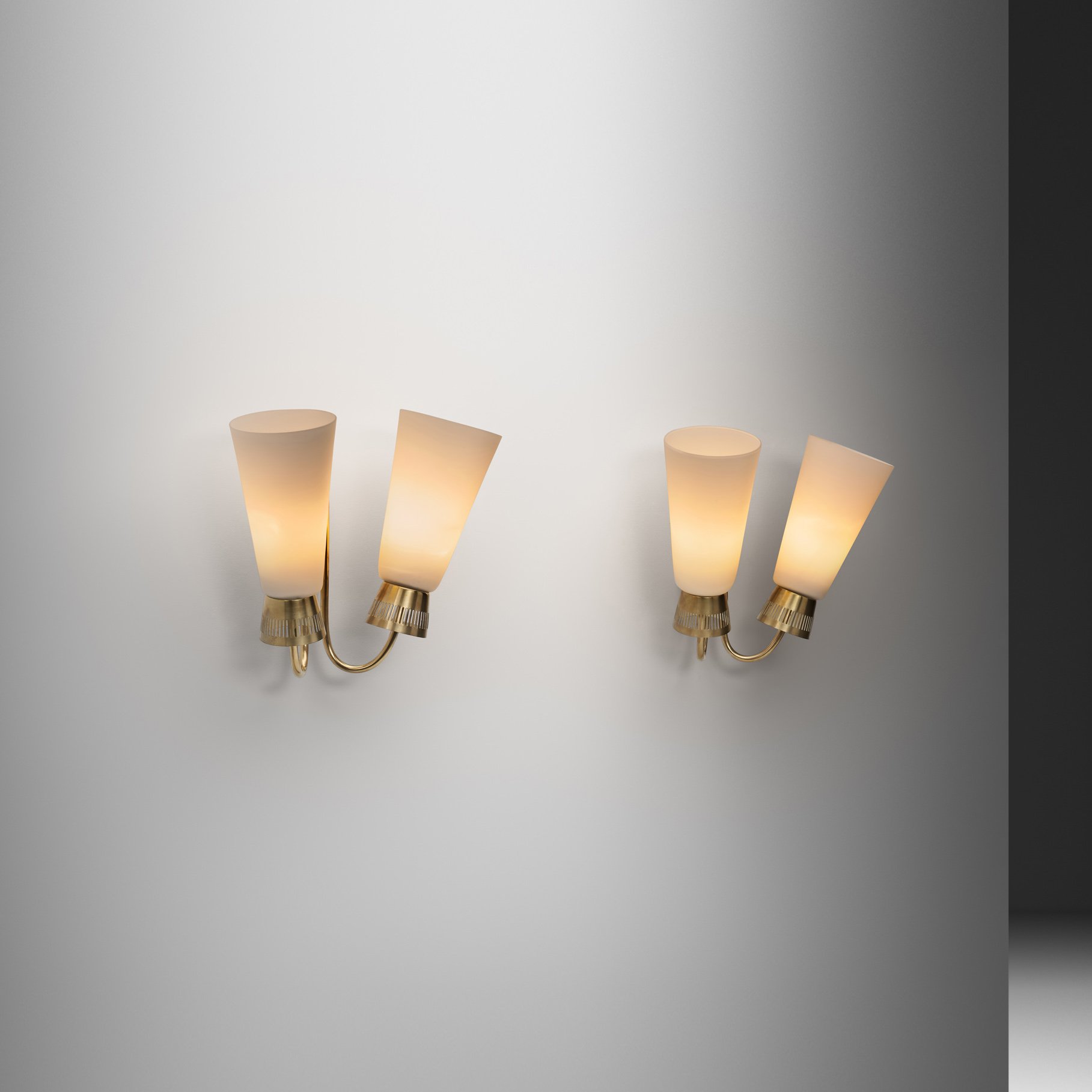
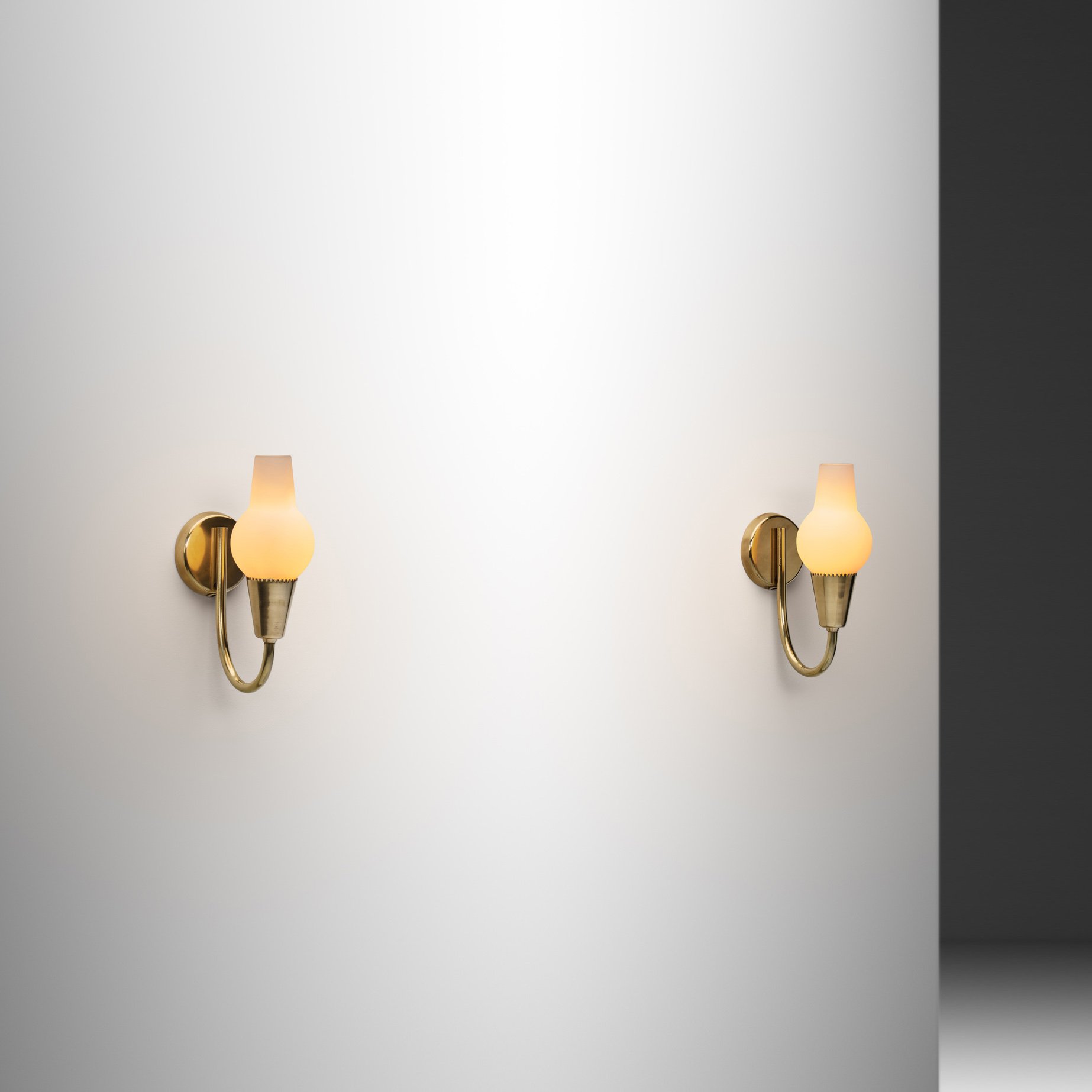
Itsu, short for Itä-Suomen Sähkö (eng. Eastern Finland Electricity), was a small, lesser-known manufacturer that produced characteristic models in small quantities. Itsu stands as a beacon of innovation in mid-century modern design. This pair of model "EY60" lamps represent an era in which Finland saw the birth of many of its most iconic lighting models.
By the 1950s Finland had established itself as a force for innovation in design. The best qualities of Finnish light fixtures’ are their atmospheric light and disciplined, functionalist design that is not shorn of subtle decorative elements. This wall lamp model shares the characteristic perforated brass shade holders as the brass chandelier models designed by Mauri Almari for Itsu. The model utilises the mid-century era’s popular combination of brass and glass; the elongated bell shape of the shades shows off the frosted glass and the play of shadows it creates when the light is lit. Accentuating these shapes is the polished brass that features a nice patina. Overall, the composition of the shapes and clever decorative elements give this pair a personality that isn’t loud but still stands out, which is an essentially Finnish design virtue. The refined work and unique work of Finnish lighting designers has made their creations increasingly valued by collectors in the know.
Finnish mid-century design is celebrated for its minimalist sophistication, organic feel, and impeccable attention to detail. These characteristics are perfectly captured in this pair, making a wonderful addition to an array of interiors.
Condition:
In good vintage condition. Wear consistent with age and use. The lamps have recently been rewired and reconditioned. Due to the nature and age of the materials, the items may have marks, scratches, and discolouration. Minor imperfections on the glass may be present due to manufacturing inconsistencies. The lamps are compatible with an E26 / E27 (standard) fitting. All lighting can be converted for US usage.
Dimensions:
14.57 in W × 8.07 in D × 12.99 in H
37 cm W x 20.5 cm D x 33 cm H
REQUEST PRICE HERE
Price category: 1,000 - 2,500 usd / eur
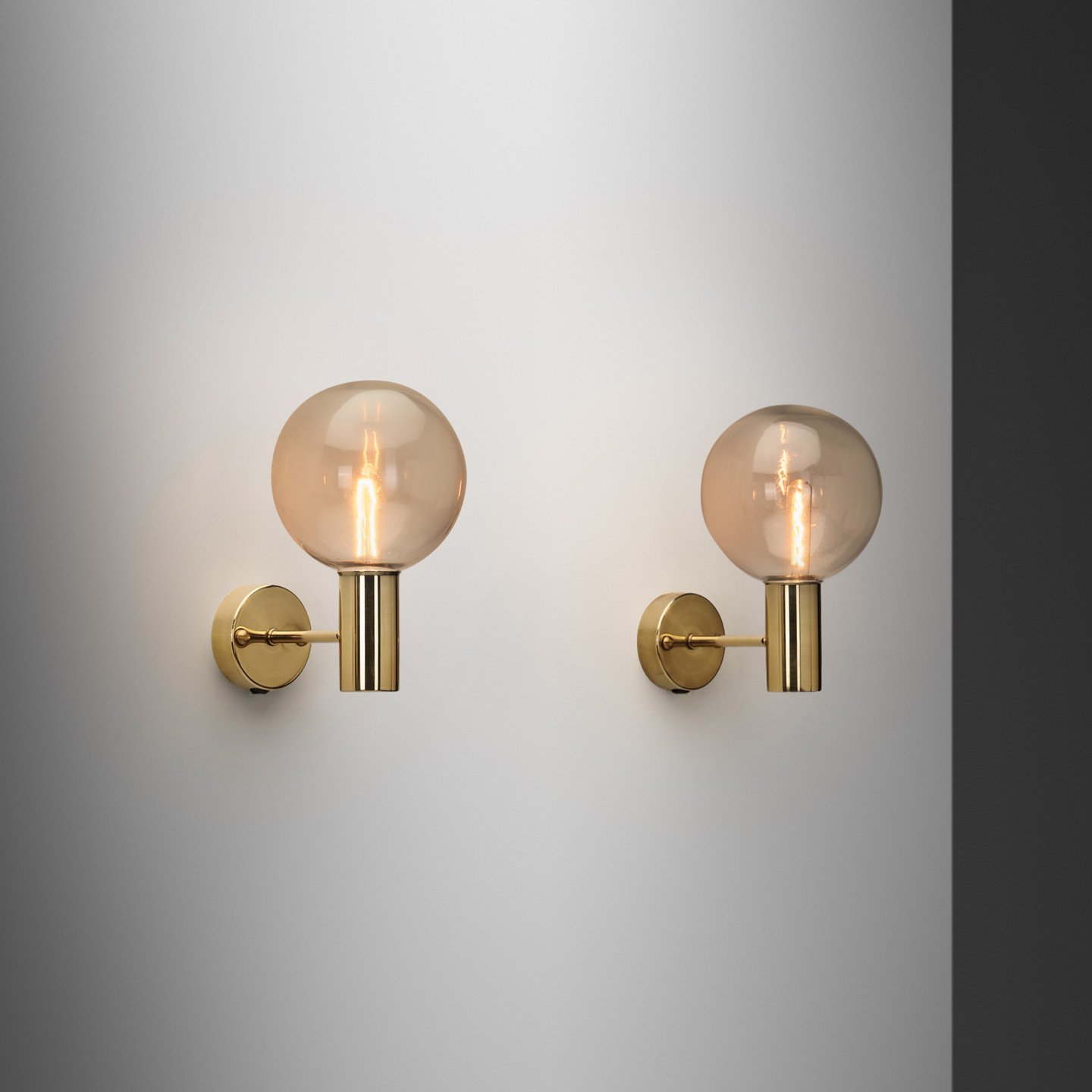
While Hans-Agne Jakobsson designed and produced various types of furniture, his lighting received greater international attention, and not without good reason. As these “V-149” wall sconces showcase, the Swedish designer mastered both the direction and colour of his lighting designs.
With the brass frames holding the glass shades, these lamps clearly show the Swedish designer’s studies in architecture, with beautiful geometric forms and symmetry dominating the structures. The popularity of brass in Swedish mid-century modern lighting design can be attributed to its golden hue, which adds warmth to the style's streamlined aesthetic. This wall sconce pair further exemplify the mid-century modern movement's guiding principles through their clean lines and geometric shapes. The structure is composed of a back-plate and single stem holding an elongated brass socket. The translucent glass shades stand out not only through the pairing of materials, but also by their generous size compared to the delicate appearance of the fixtures. These wall sconces divide the light evenly and brighten the yellow brass beautifully, creating a cosy and warm visual effect. This model was produced by Hans-Agne Jakobsson’s own company in Markaryd, Sweden.
Sconces are a timeless type of lighting fixture that easily elevate their surroundings. These fixtures never go out of style, and this is especially true for mid-century brass models like these lamps. While already stunning individually, these light models are even more effective when placed in close proximity to each other.
Condition:
In good vintage condition. Wear consistent with age and use. Some scratches and marks on the patinated brass structure. All lighting can be converted for US usage.
Dimensions:
7.87 in W x 5.9 in D x 9.05 in H
20 cm W x 15 cm D x 23 cm H
About the Designer:
Born in 1919 in Gotland, Sweden, Hans Agne Jakobsson is one of the most well-known Swedish lighting designers. He did his carpenter apprenticeship before studying architecture in Gothenburg.
First working as an industrial designer for General Motors, he later founded his own company after being an assistant to the designers Carl Malmsten and Werner West. In 1950, due to Christmas, he added a model of hanging lamps in small strips of pine in one of his stores to soften the lively lighting of the shop window. The people who were passing by were immediately seduced by this hanging lamp, which started it all. He established his own company in 1951: Hans Agne Jakobsson AB and began producing this model in his factories and achieved success abroad as well. In 50 years, he designed more than 2000 lamps with unique designs.
He used materials and experimented with multiple techniques, for example using fabrics with fringes, blown glass of colour and smoked glass. His great diversity resulted in a wide range of timeless lighting models. These pieces continue to seduce design lovers, as they adapt themselves to any interior, without blending into the background.
Today, Jakobsson’s works can be found in private homes as well as public institutions throughout Sweden. The designer passed away in 2009 in Sweden, leaving behind a great legacy. ~H.
REQUEST PRICE HERE
Price category: 2,500 - 5,000 usd / eur
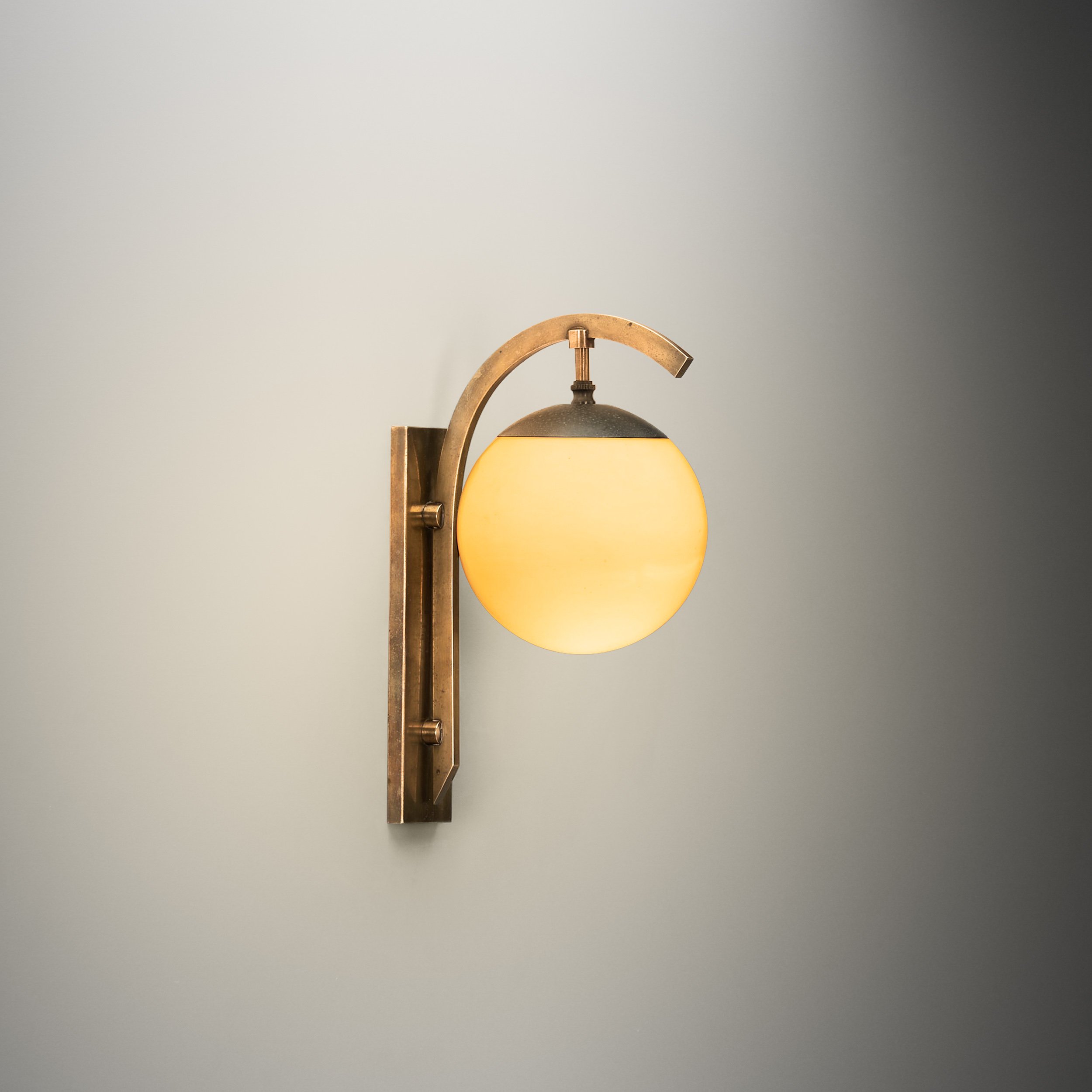
Lighting is a huge part of Danish and Scandinavian design, ranging from the warm, low light of a candle to the bright overhead glow of a ceiling lamp. This pair of wall lamps is a unique piece of functionalist design with unmistakable touches of Modernism.
Manufacturers such as Lyfa reflect the iconic movement of Danish lighting design. Founded in 1924, Lyfa produced lighting that combined craftsmanship with a growing interest in functional clarity. This pair of wall lamps is defined by its compact yet expressive composition, where each element contributes to a clear visual message. The softly rounded opaline glass shades forms the focal point, its shape diffusing light evenly in all directions. Supporting the glass is a curved brass arm that extends outward from the wall mount in a smooth, controlled arc which introduces a sense of movement. The brass structures carry a subtle patina, emphasising the material’s age and adding depth to the surface. As these sconces showcase, the glass and shape are always in focus, combined with elegance, simplicity, and confidence. The artistic design is very honest in a purely Scandinavian manner, exposing the joinery and the materials’ natural qualities as well.
Sconces are a timeless type of lighting fixture that can easily elevate their surroundings. These pieces never go out of style, and have been in use for centuries. This is especially true for mid-century brass models like these. While already stunning individually, these light models are even more effective when placed in close proximity to each other.
Condition:
In good vintage condition. Wear consistent with age and use. The lamps have recently been rewired and reconditioned. Due to the nature and age of the materials, the items may have marks, scratches, and discolouration. The lamps are compatible with an E26 / E27 (standard) fitting.
Dimensions:
3.15 in W x 5.51 in D x 8.46 in H
8 cm W x 14 cm D x 21.5 cm H
REQUEST PRICE HERE
Price category: 2,500 - 5,000 usd / eur
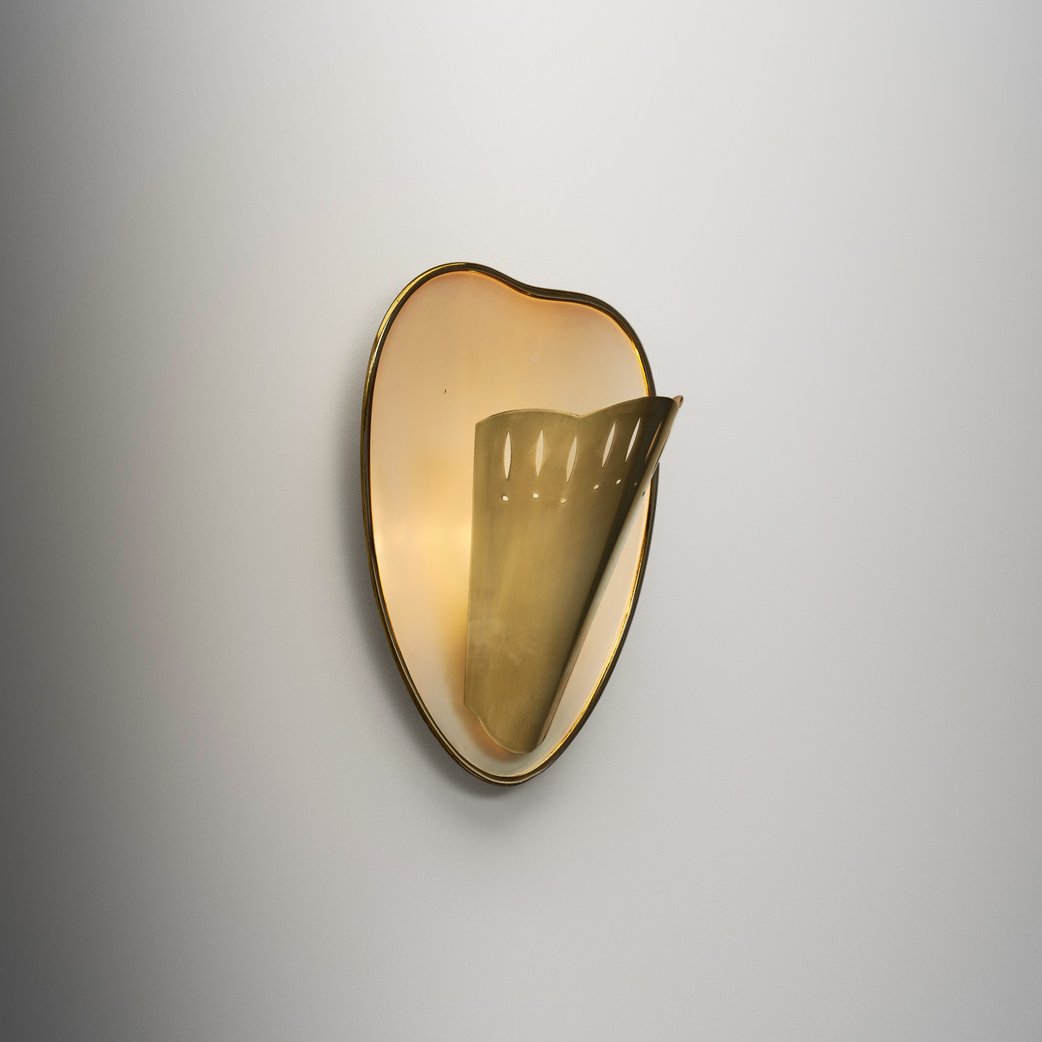
Mid 20th century lighting design endures in popularity for numerous reasons. The era’s designers managed to make practical design look beautiful, while maintaining the highest quality. The mid-20th century brought about a design revolution throughout Europe, where function and form merged in the most intriguing ways. One such example of this era’s creativity is this exceptional wall lamp.
This beautiful piece is characterised by its distinctive marriage of materials combines brass and lacquered metal in a way that is emblematic of the era's fascination with contrast. When looking at the materials’ finish, the glossy sheen of the warm brass stands out against the matte lacquered metal. Similarly, the chromatic juxtaposition of the back and front plate catches the eye, creating visual interest. The backplate has an irregular, organic outline that softens the minimal construction. Mounted in front is a rounded brass element that projects outward from the wall almost like a petal with subtle perforations. The asymmetry of the composition prevents the fixture from feeling static, while the composition of the shapes and clever decorative elements give this light a personality that isn’t loud but still stands out.
The timeless appeal of this wall lamp is a reminder of an era when designers were free to explore new horizons in crafting distinctive and captivating lighting fixtures that continue to inspire and illuminate our lives today. Its compact scale and sculptural silhouette allow it to function both as lighting and as a small wall-mounted object within an interior.
Condition:
In good vintage condition. Wear consistent with age and use. The lamp has recently been rewired and reconditioned. Due to the nature and age of the materials, the item may have marks, scratches, and discolouration. The lamp is compatible with an E26 / E27 (standard) fitting. All lighting can be converted for US usage.
Dimensions:
8.66 in W x 5.52 in D x 11.02 in H
22 cm W x 14 cm D x 28 cm H
REQUEST PRICE HERE
Price category: 5,000 - 7,500 usd / eur
During the mid-20th century, Scandinavian lighting designers frequently turned to organic forms as a way to soften the harsher industrial modernism. Rather than relying on strict geometry alone, many fixtures incorporated flowing silhouettes inspired by nature, balancing functional lighting with a more decorative and atmospheric presence. Brass was the material of choice during this period, being able to be shaped into sculptural forms that retain their sense of craftsmanship.
This pair of wall lights captures the essence of the era through its branch-like composition and asymmetrical structure. Each fixture is formed from curving brass arms that extend upward in a fluid, botanical arrangement, supporting four individual light sockets positioned throughout the length of the pieces. The lines blow naturally from the wall mount, creating a silhouette that resembles growing stems, and not a mechanical construction. Despite the decorative quality of the composition, the design remains balanced and elegant. The polished brass surface reflects the warm glow of the bulbs, emphasizing the rhythm of the curved forms while adding depth and variation to the surface. The exposed bulbs become part of the design, reinforcing the sculptural appearance and contributing to the soft ambient light produced by the fixtures.
Wall lighting from this period was designed not only to illuminate a room, but also to complement their surroundings through movement and ambiance. These wall lamps fulfill their role through their utilitarian, as well as clear decorative effect. Their combination of fluid brass lines and warm light gives the fixtures a distinct presence without becoming excessive.
Condition:
In good vintage condition. Wear consistent with age and use. The wall lamps have recently been rewired and reconditioned. There may be minor dents and scratches in the metal. Due to the age and nature of the brass, the wall lamps may have marks, and discolouration. These lamps are compatible with an E26 / E27 standard fitting. All lighting can be converted for US usage.
Dimensions:
10.63 in W x 4.33 in D x 31.10 in H
27 cm W x 11 cm D x 79 cm H