
Model "50-090" Brass and Opal Glass Wall Lamp by Lisa Johansson-Pape, Finland 1950s (sold)
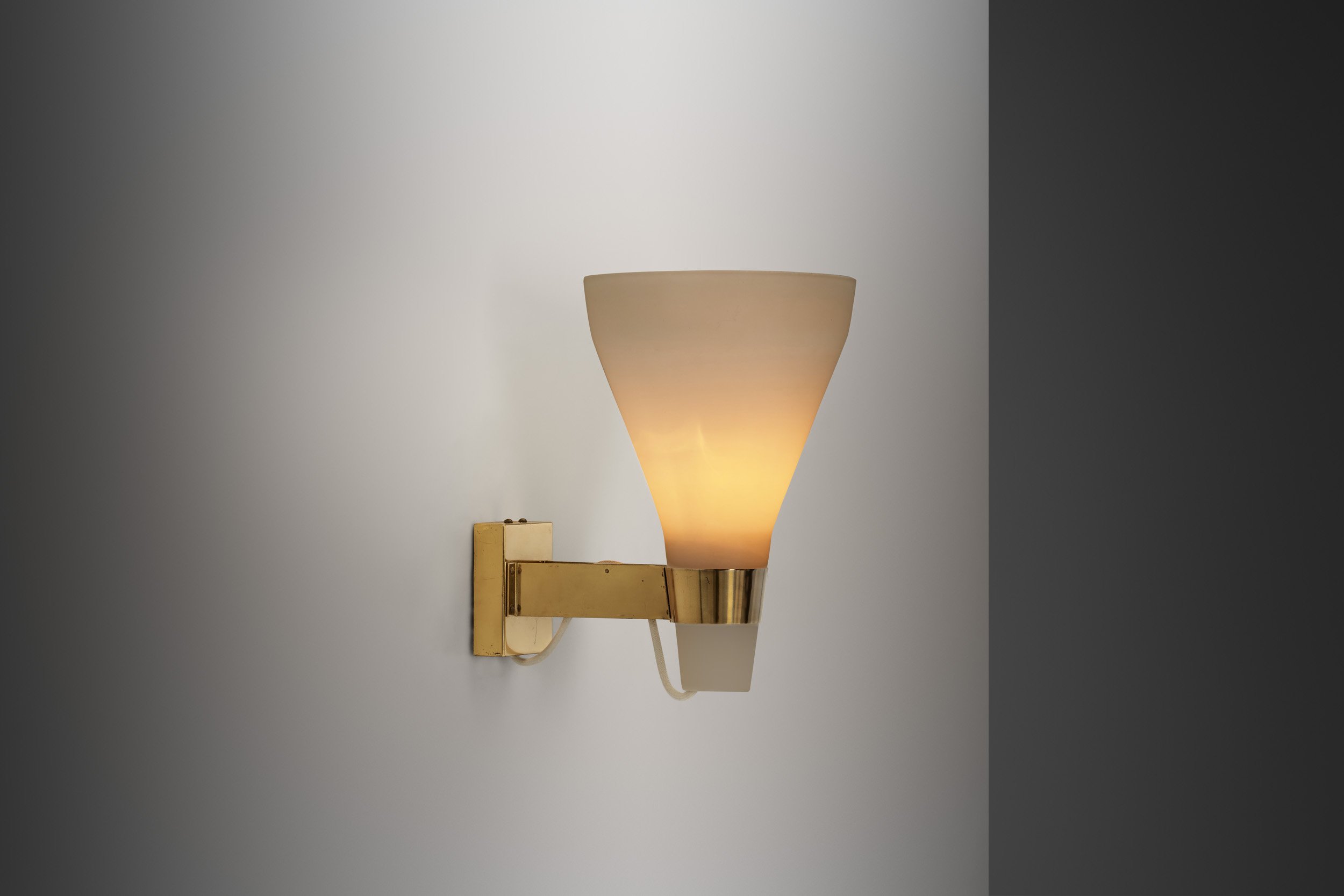
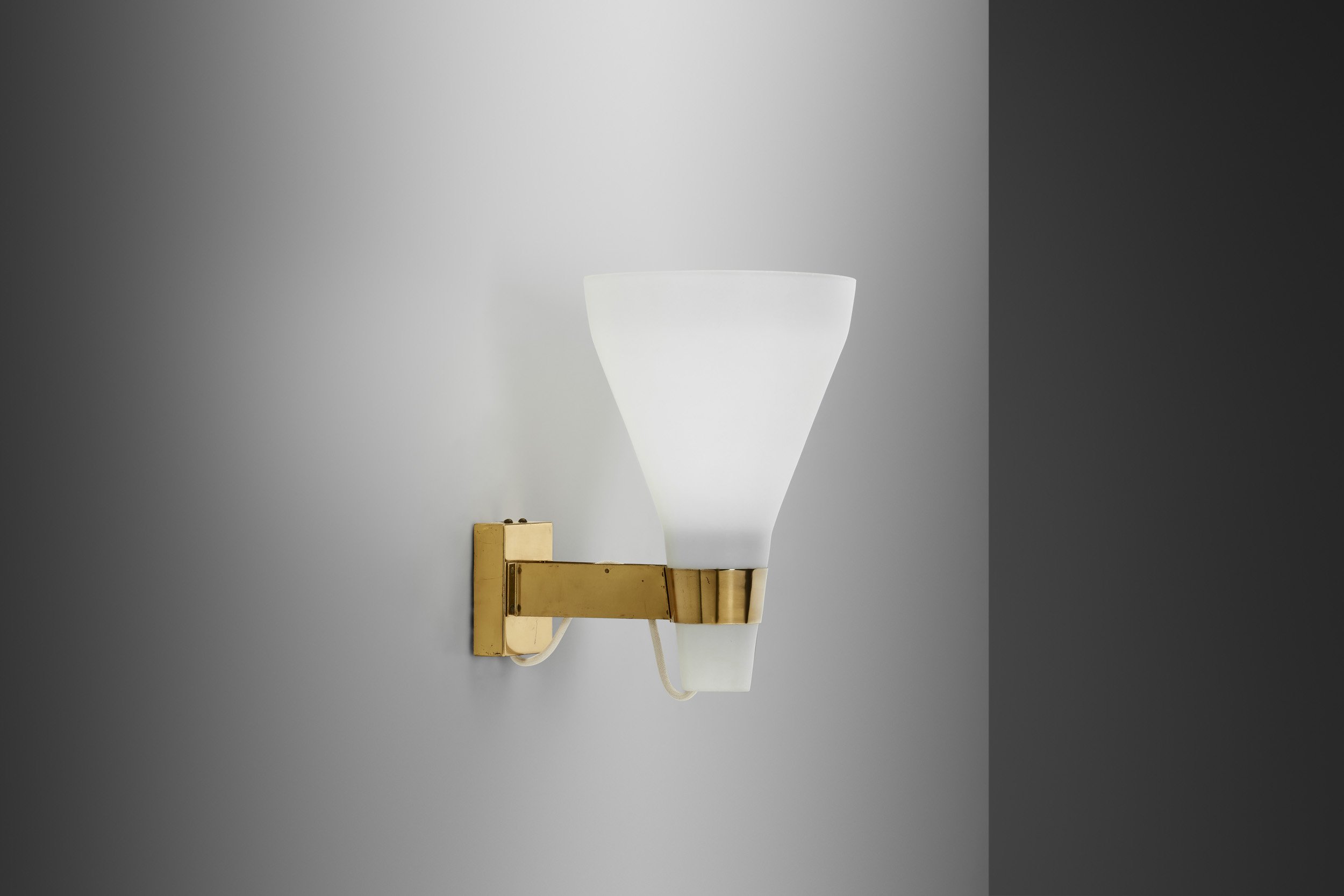
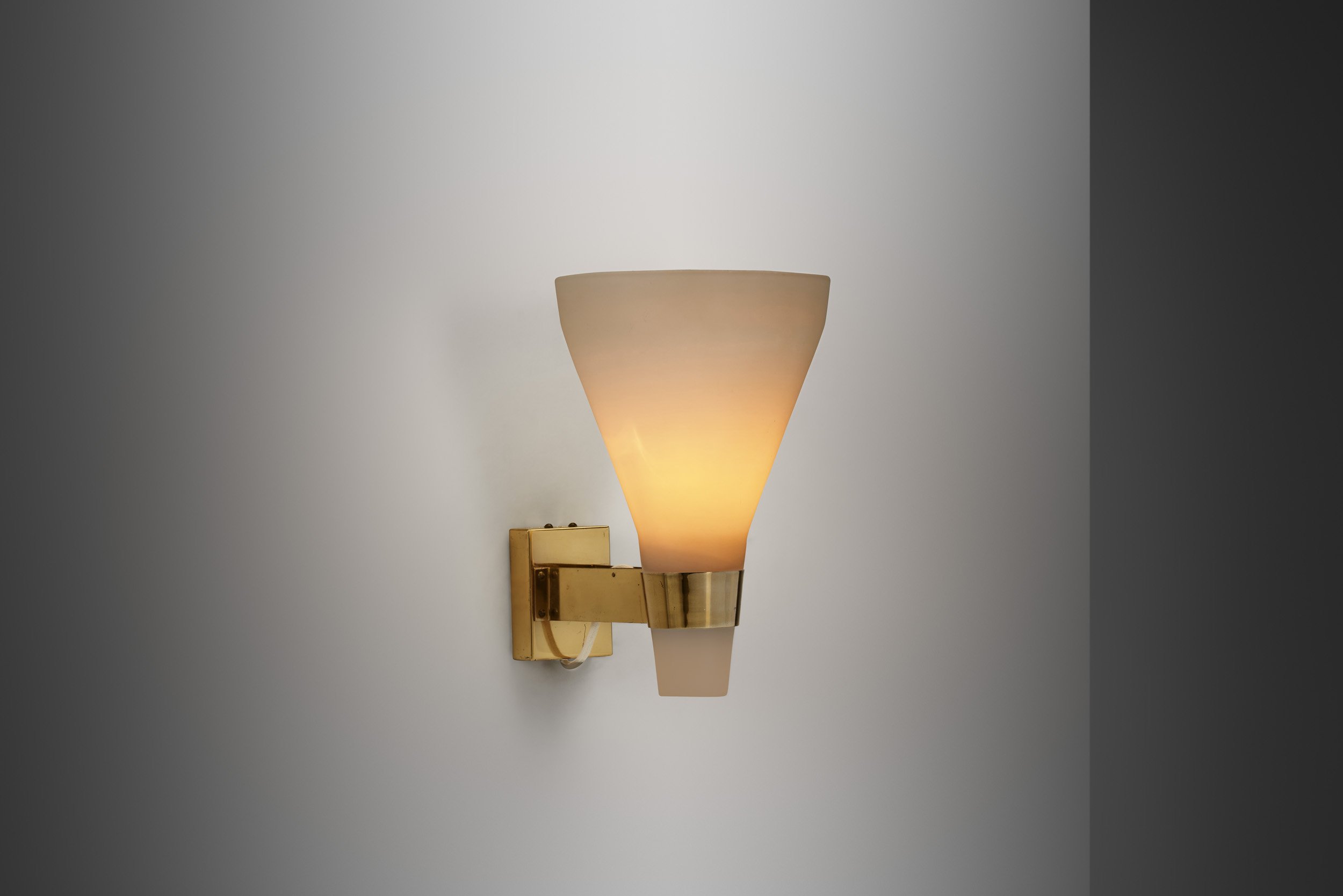
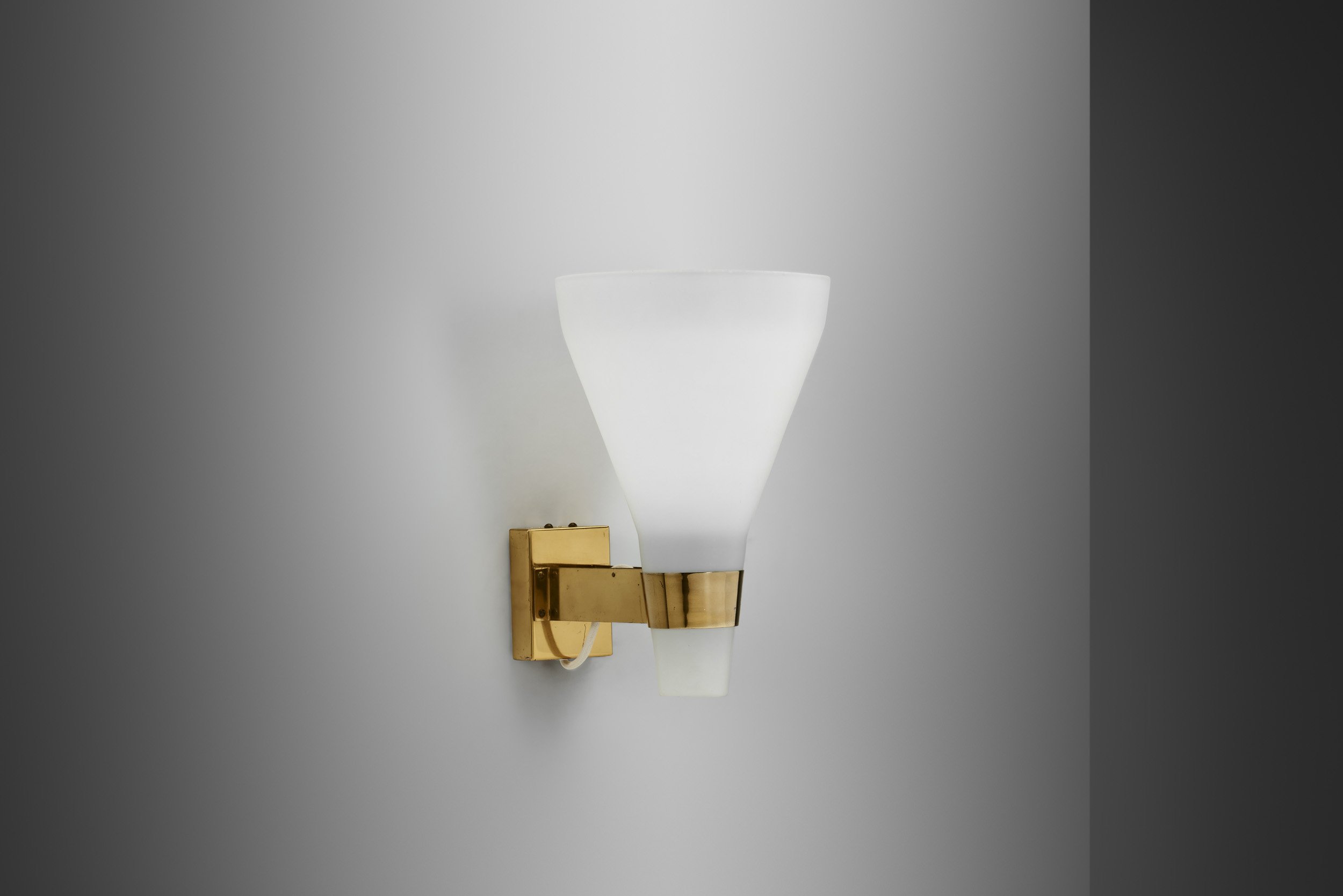
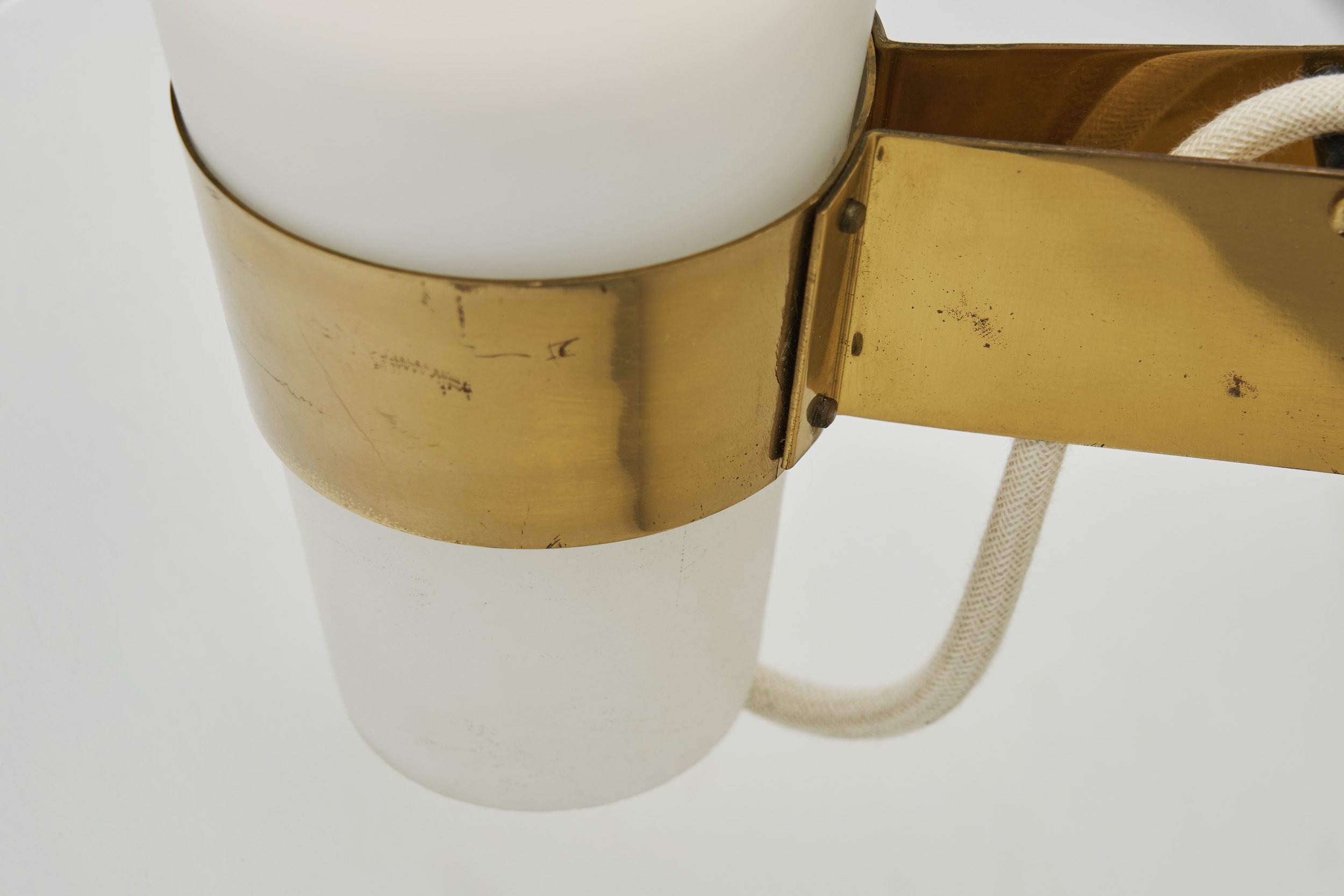
Model "50-090" Brass and Opal Glass Wall Lamp by Lisa Johansson-Pape, Finland 1950s (sold)
The post-war design landscape in Finland gave rise to a generation of architects and designers who approached lighting while keeping in mind both functionality and artistry. Carin Lisa Johansson-Pape was among the most significant Finnish lighting designers in the second half of the 1900s. She stood out for her unique ability to blend technical precision with atmospheric sensitivity through her work for some of Finland’s most iconic manufacturers.
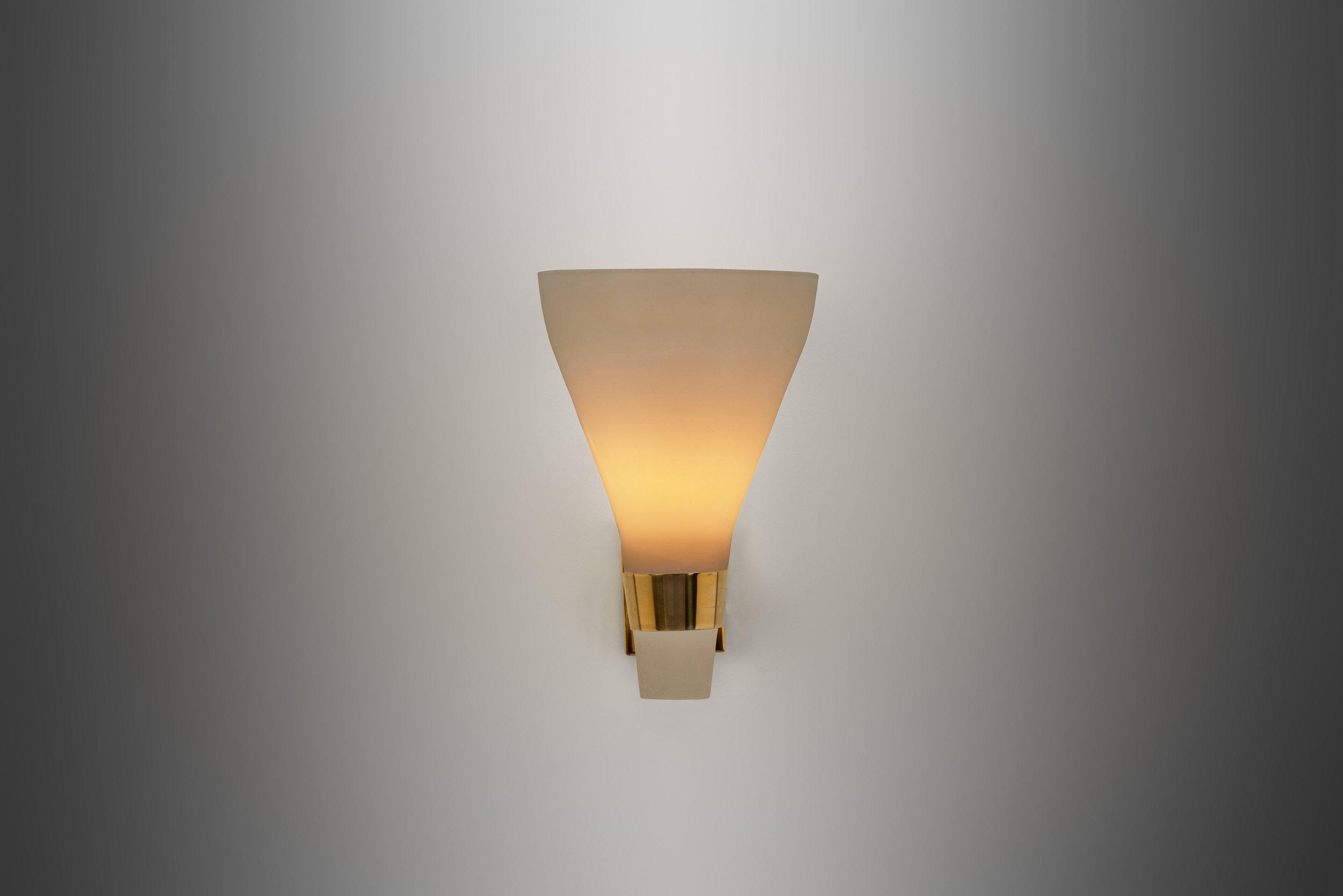
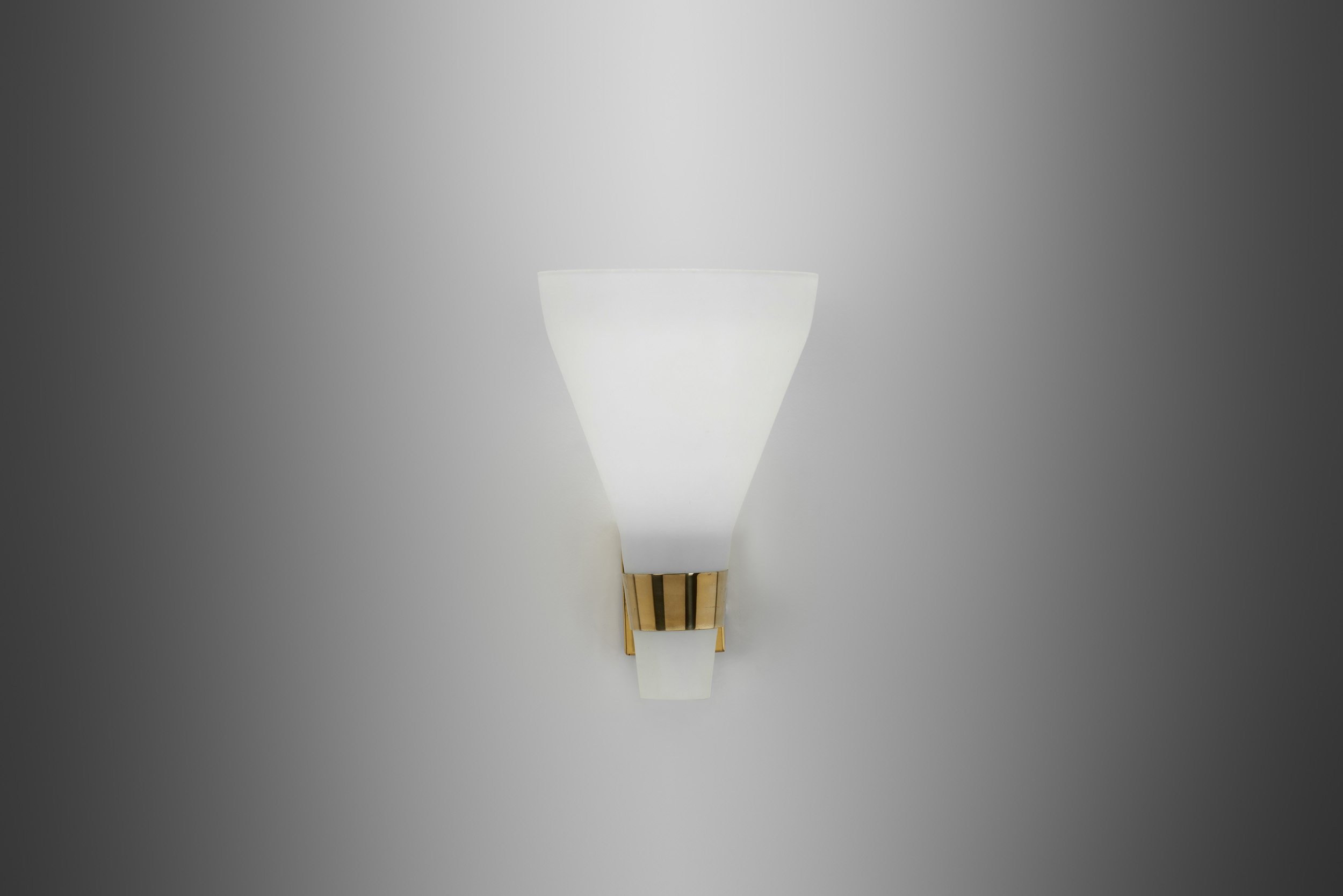
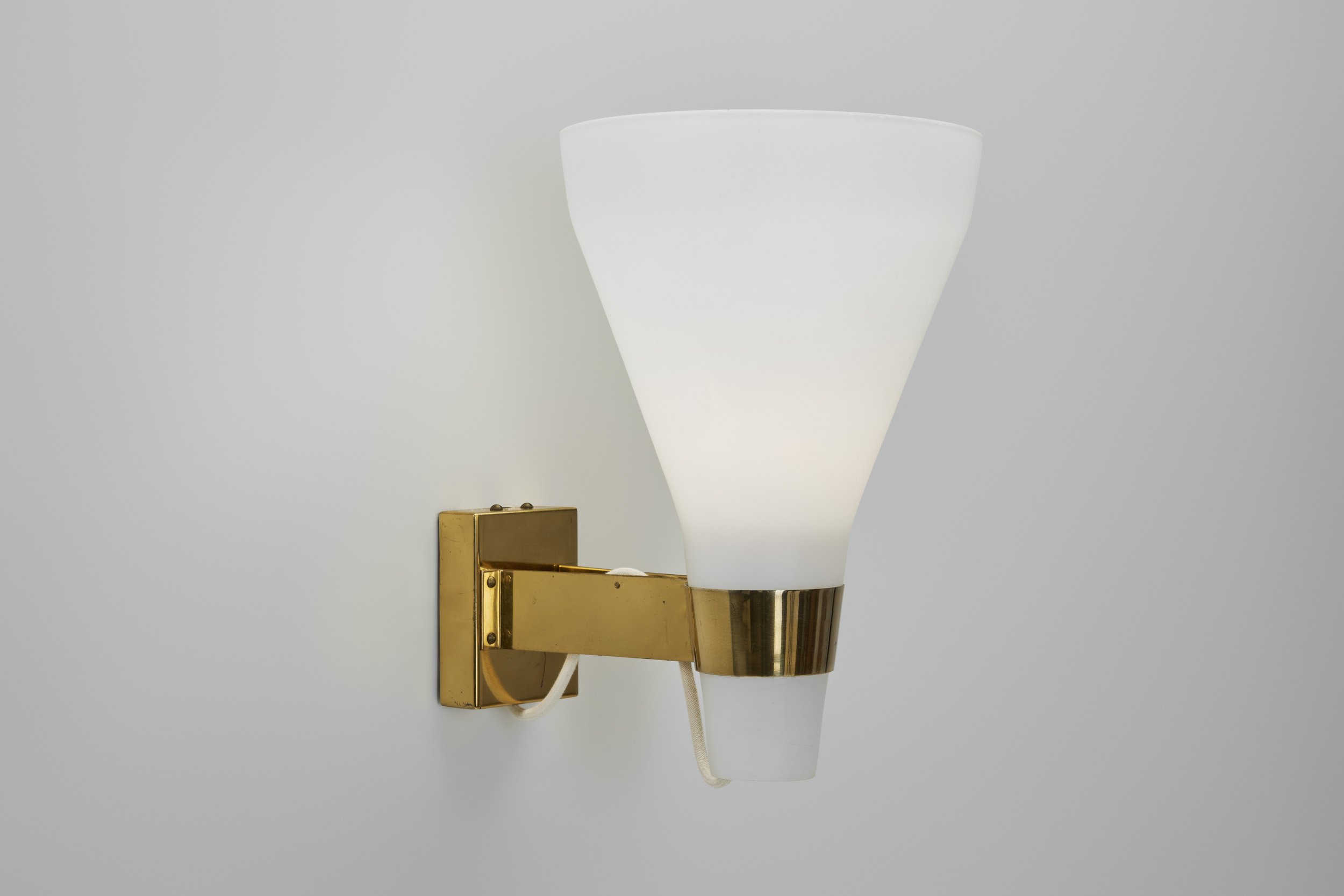
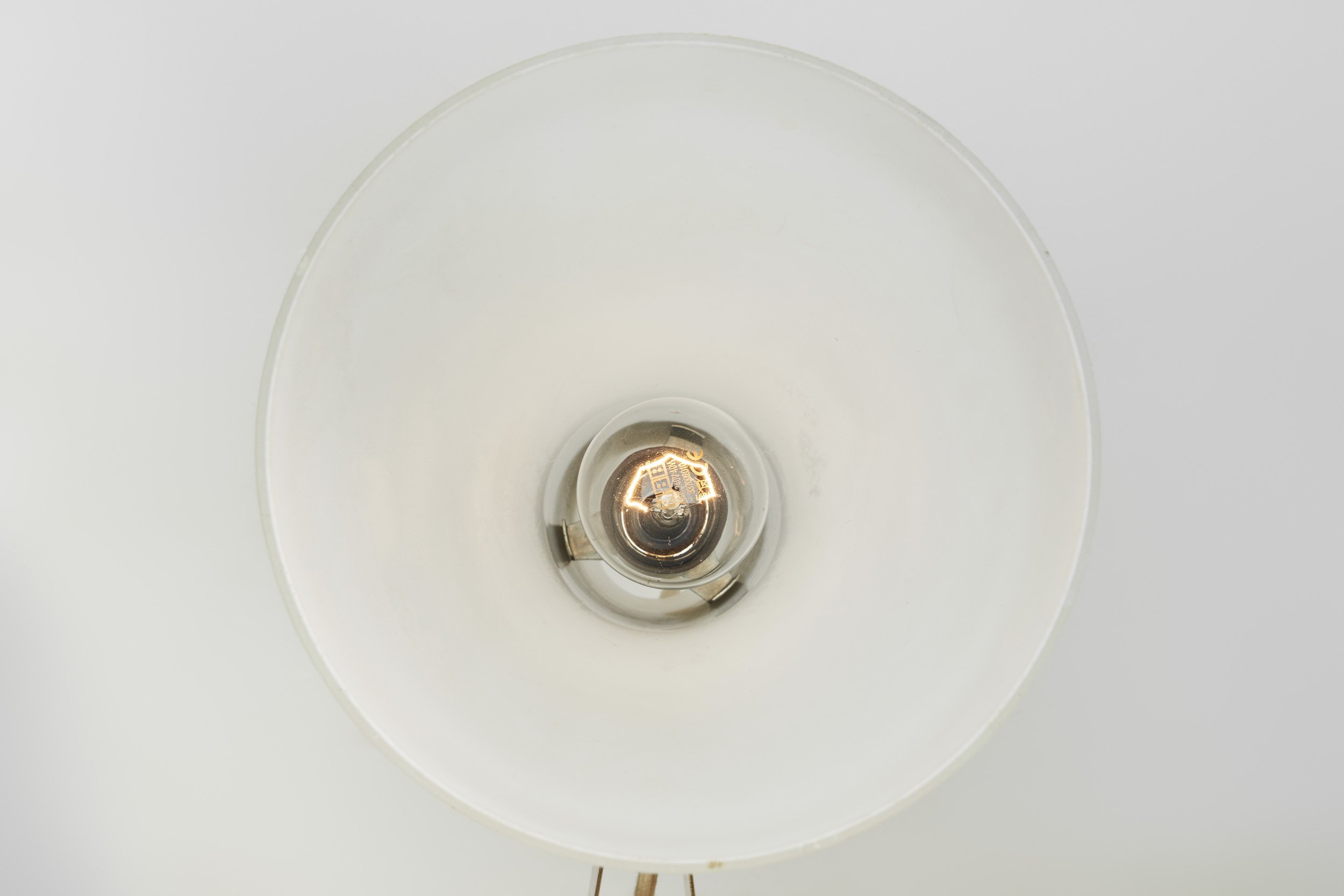
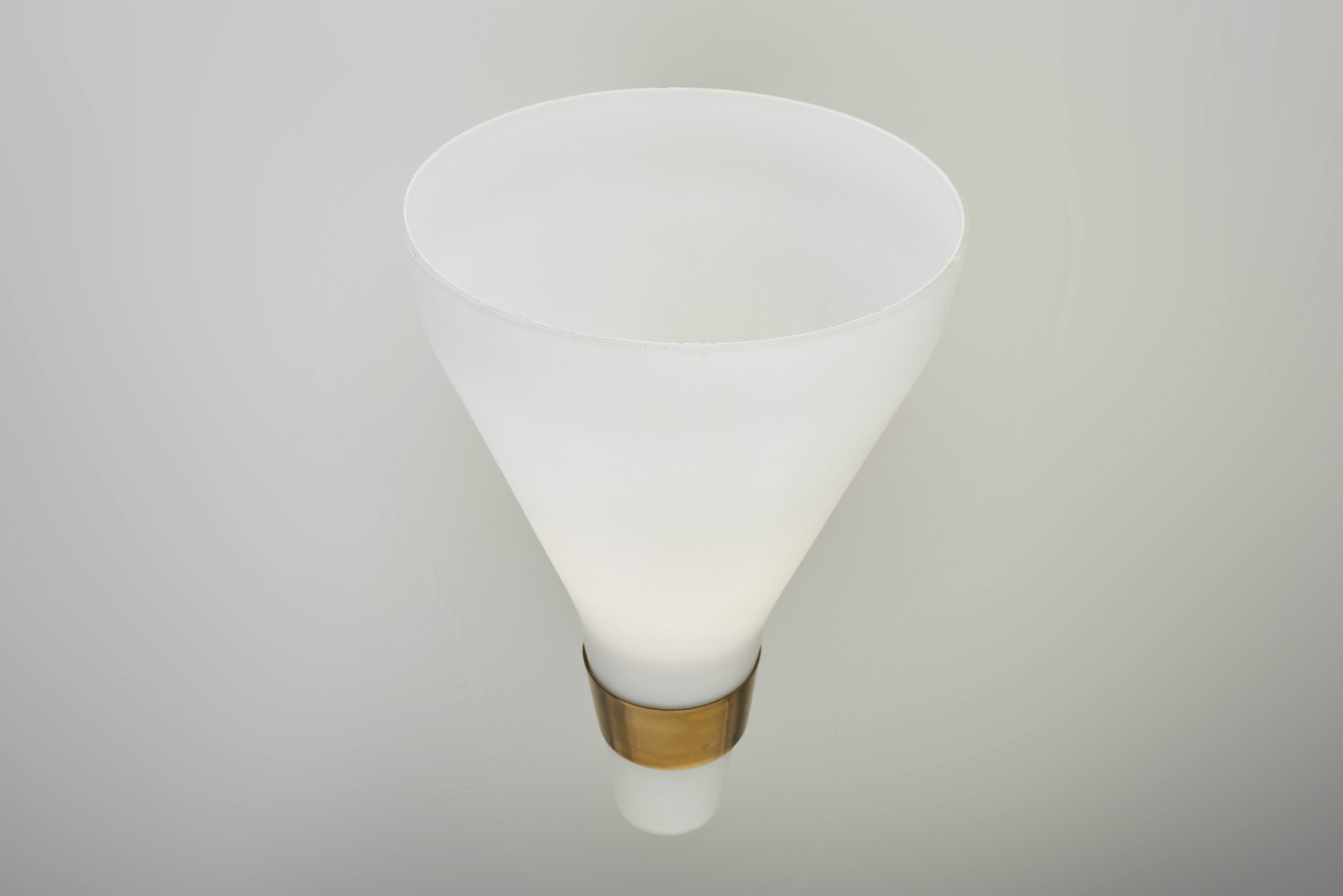
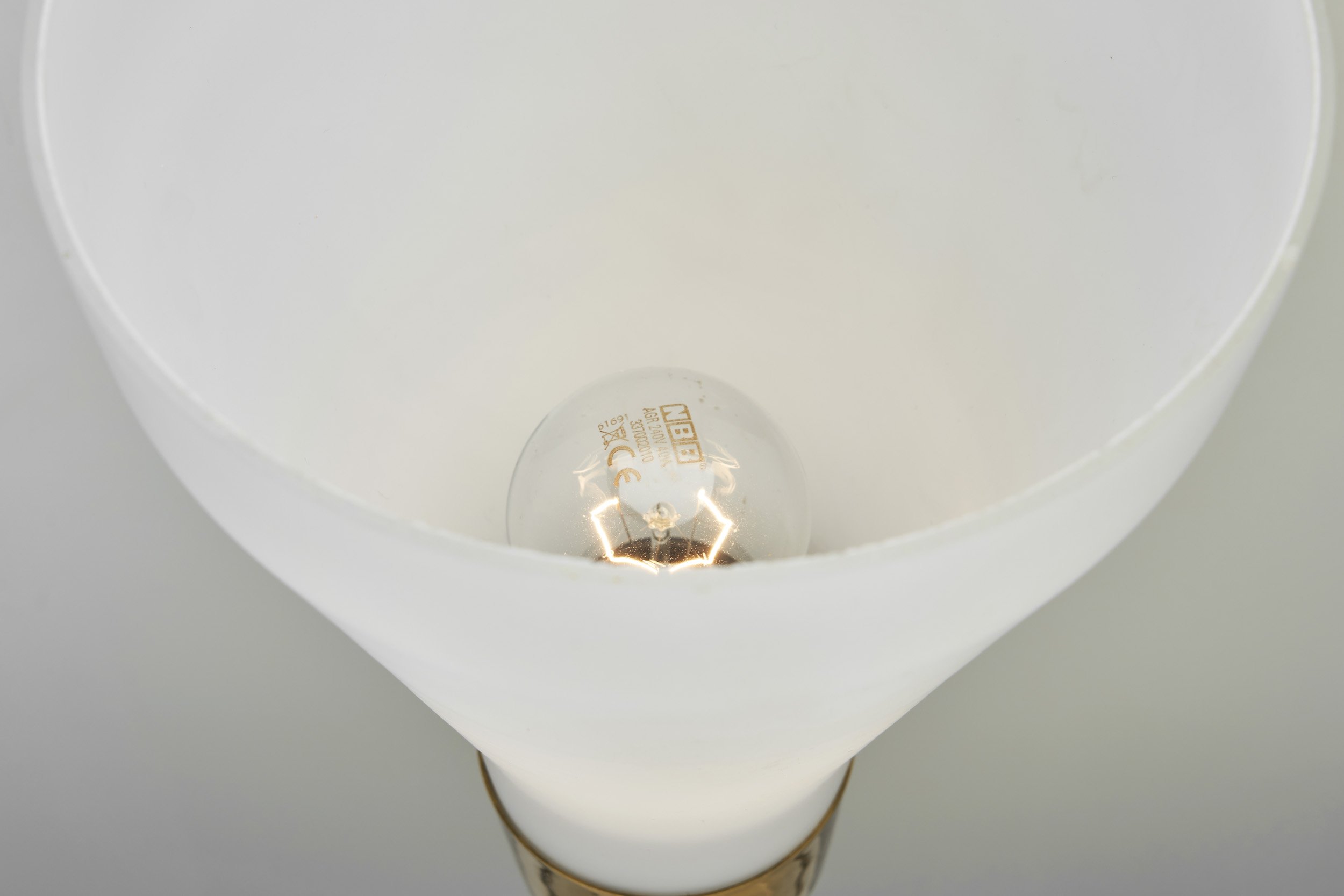
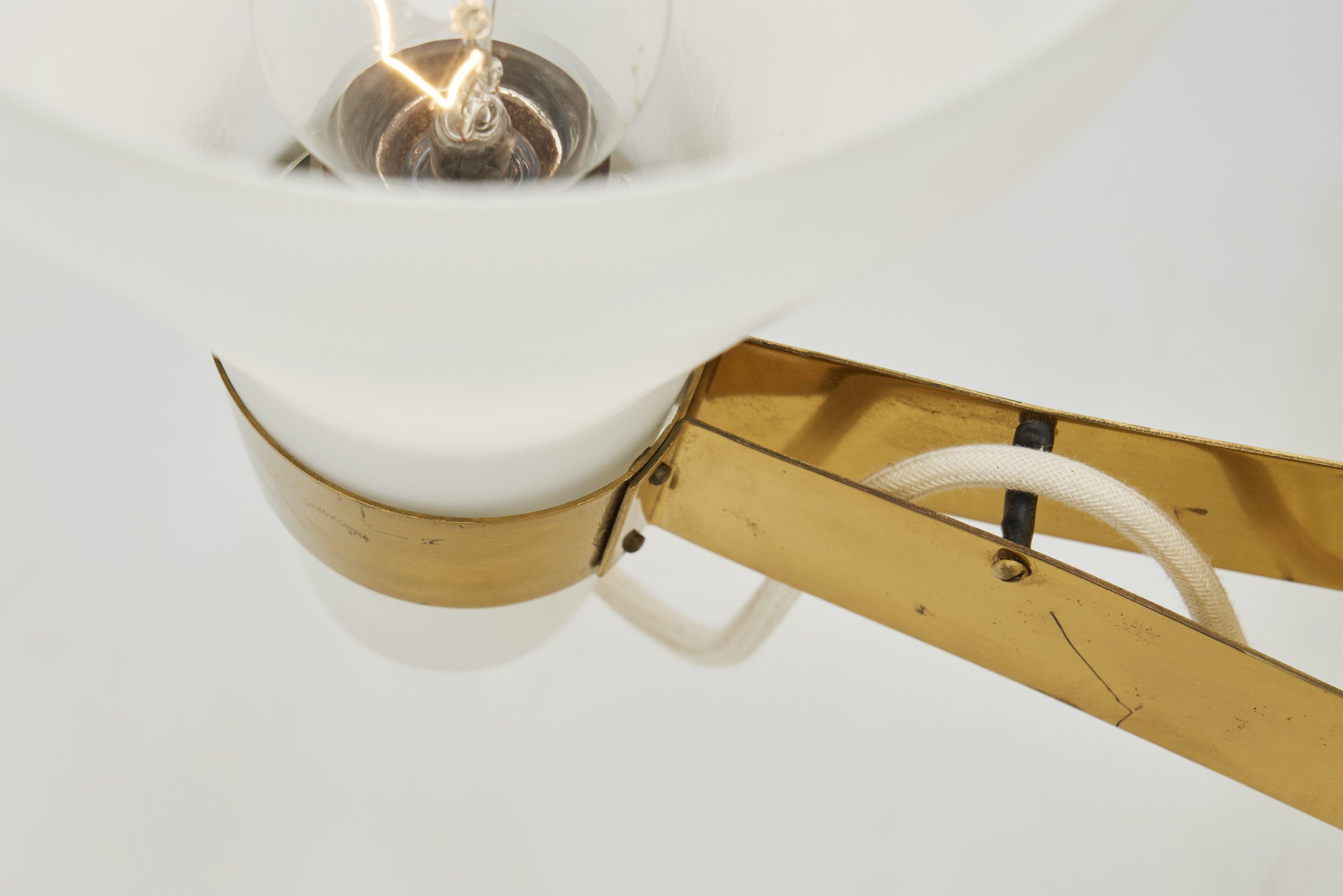
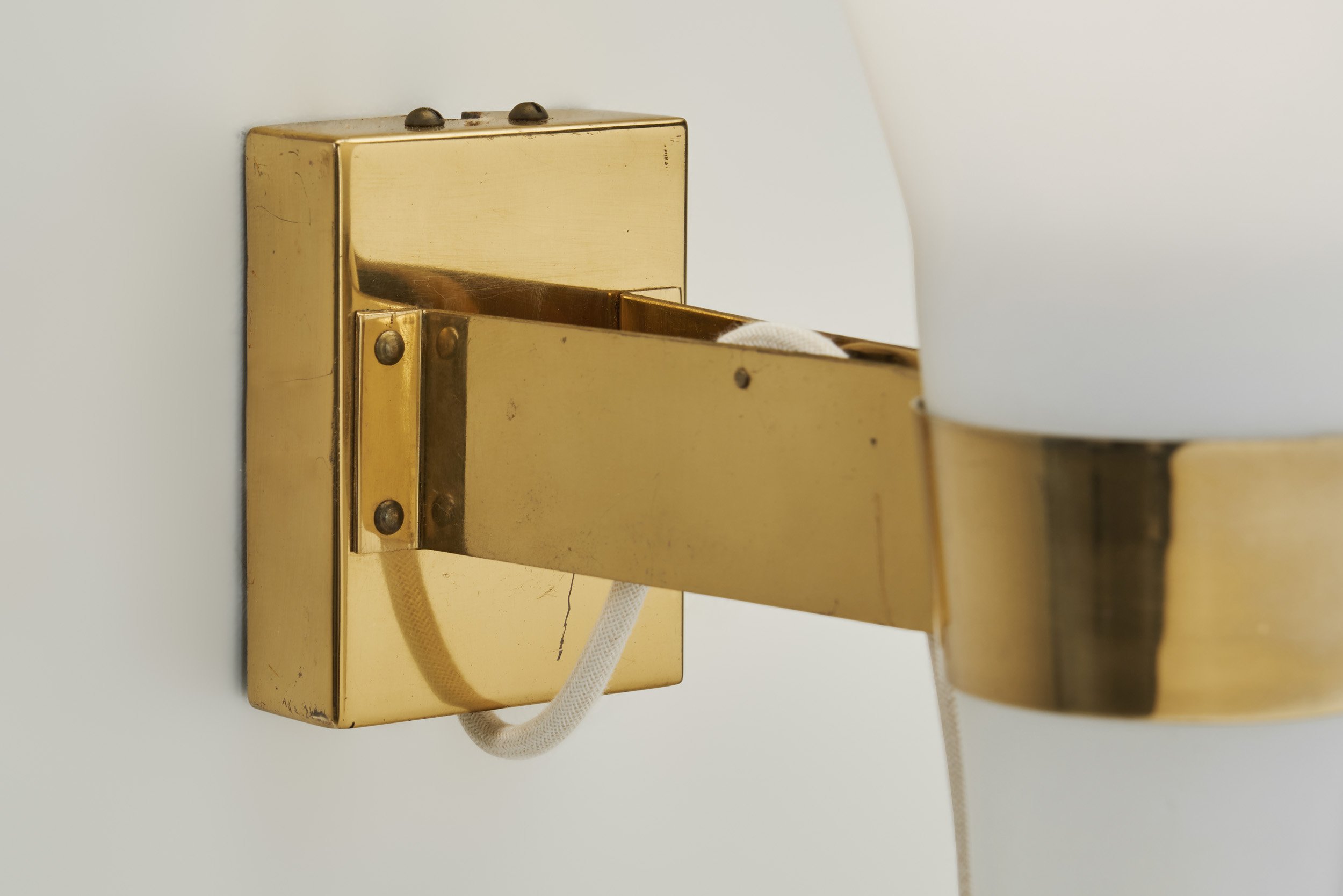
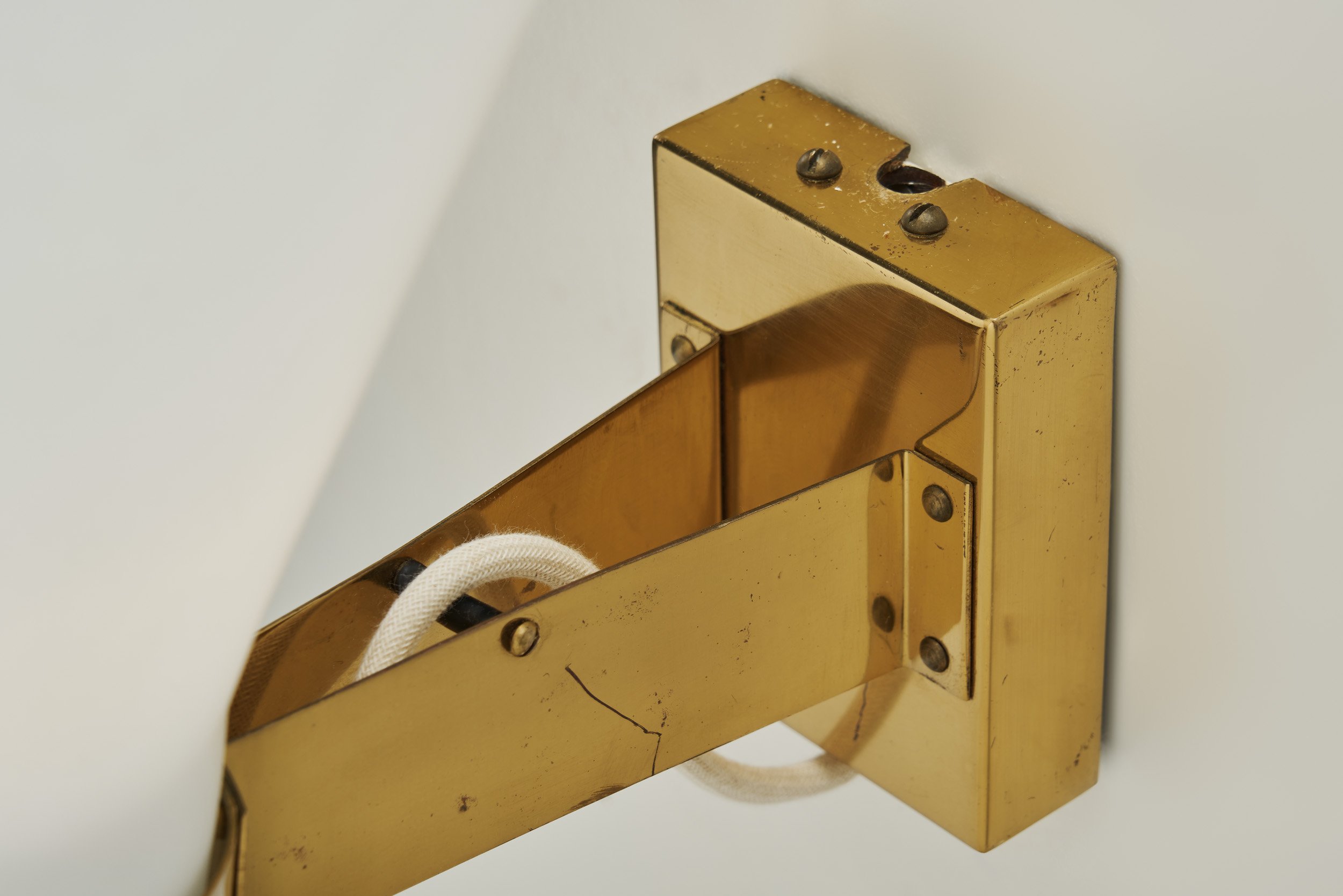
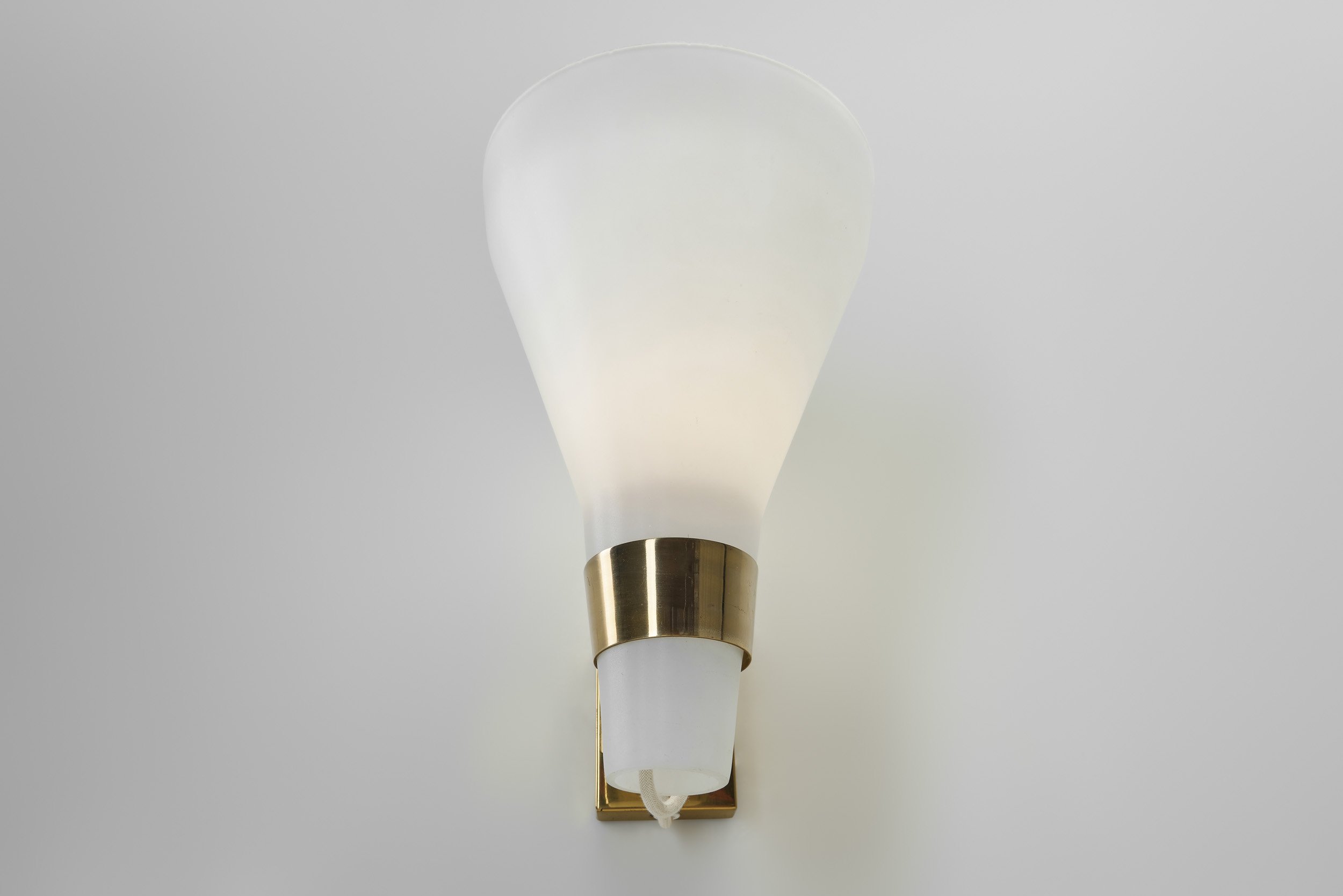
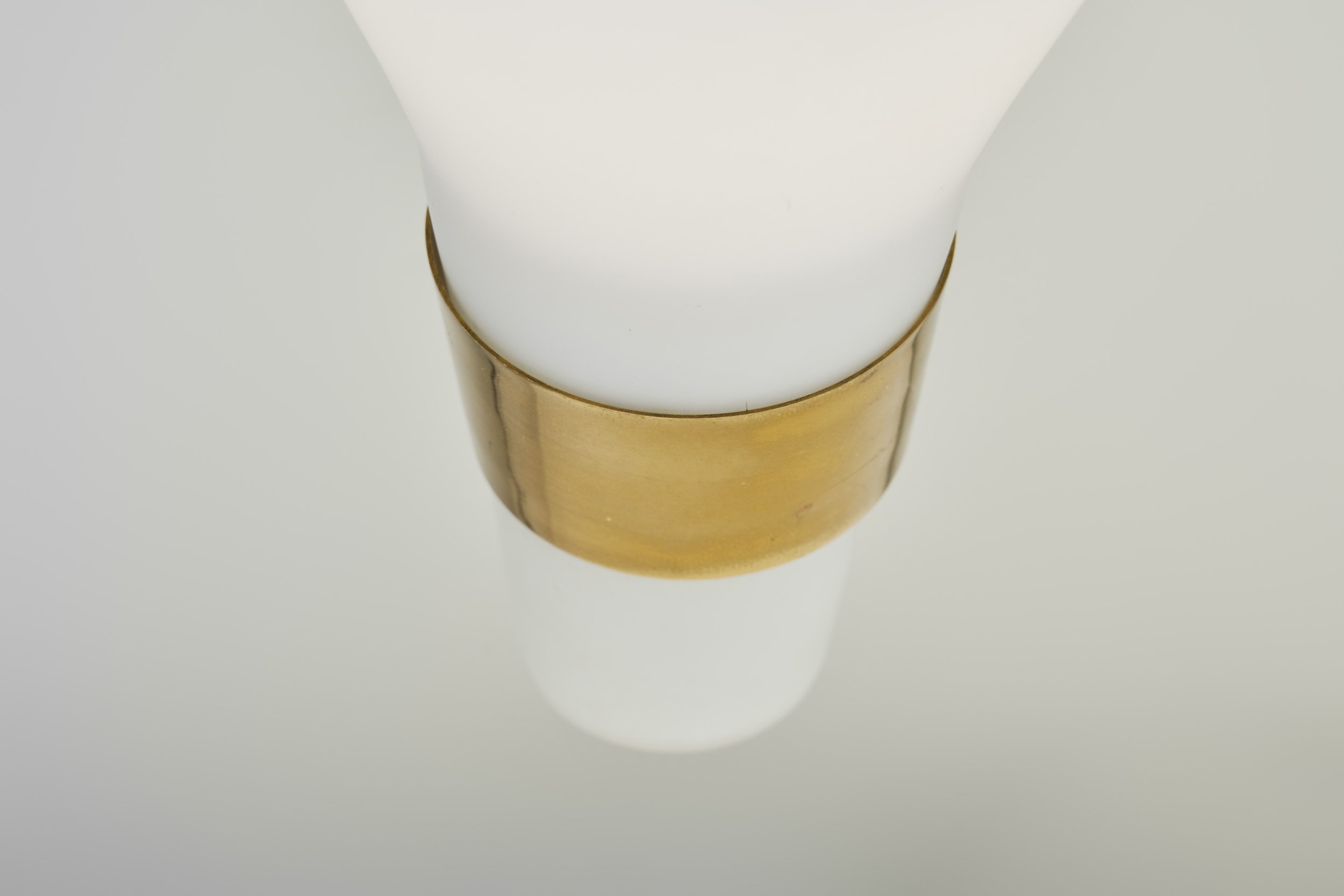
This model “50-090” exemplifies the approach Johansson-Pape cultivated during the 1950s and the reason she became synonymous with elegant minimalism and soft, diffused lighting. The lamp features a flared conical shade in frosted opal glass, designed to provide even illumination while concealing the bulb and avoiding harsh lighting. Its tapering form is both sculptural and efficient, channeling the light upward while gently dispersing a warm glow throughout the room. The shade is secured by a golden brass arm, which adds a touch of refinement without overpowering the simplicity of the overall silhouette. The fixture’s wall-mounted support is also made from brass, providing a subtle contrast to the white glass and highlighting the careful balance between material and form. The simplicity of its geometry and the muted palette make it particularly versatile for a range of settings.
Finnish designers believed that light should enhance comfort and define space rather than simply serve a technical function. Johansson-Pape’s commitment to mastering this principle is evident in this wall lamp model, a perfect example of Finnish lighting design from the mid-20th century.
SOLD
Condition:
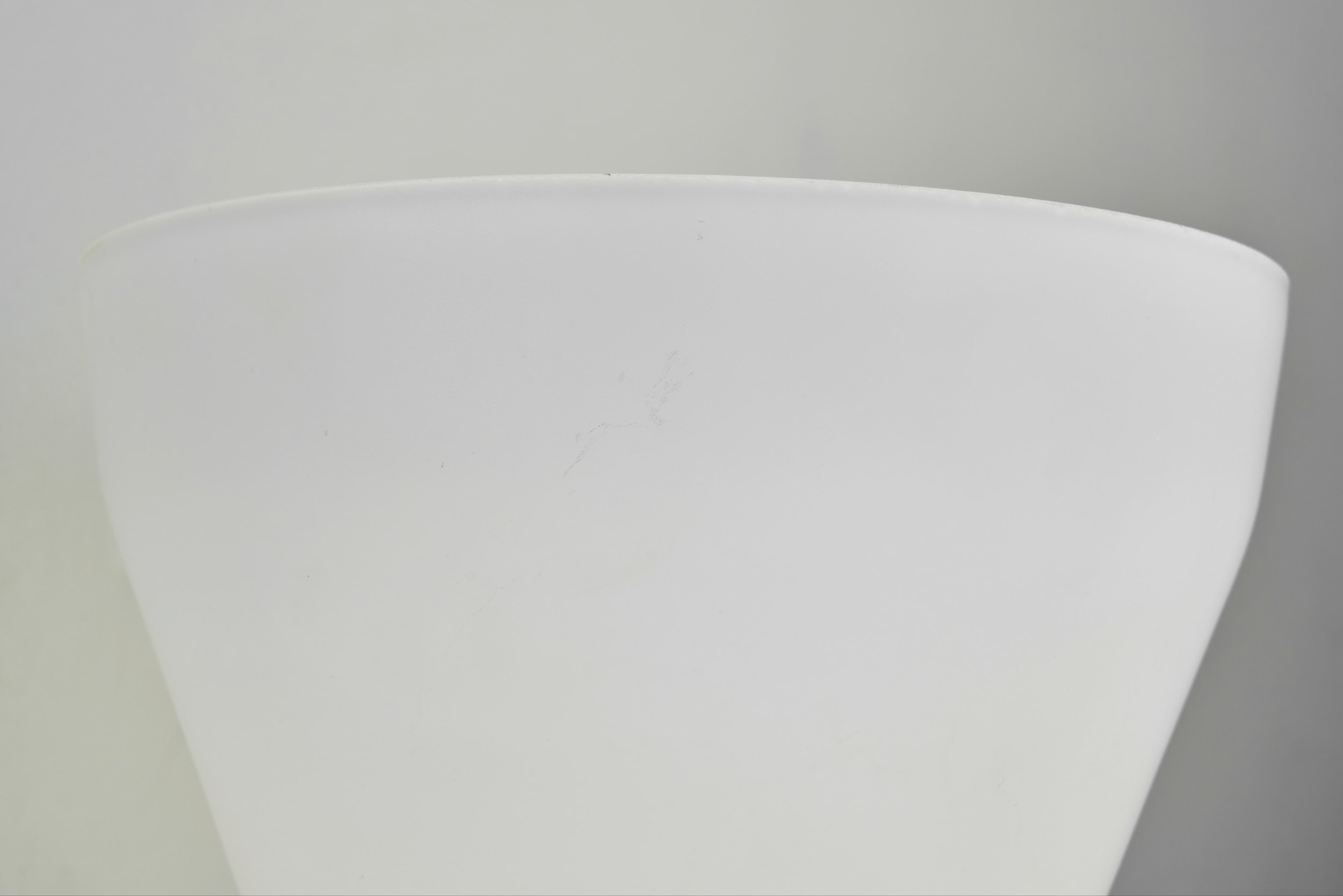
In good vintage condition. Wear consistent with age and use.
Dimensions:
7.87 in W x 10.62 in D x 11.81 in H
20 cm W x 27 cm D x 30 cm H
About the designer:
Lisa Johansson-Pape graduated as a furniture designer in 1927. Her career as a designer was long and wide-ranged. Johansson-Pape's furniture was very functional. After graduating in 1927 from the Central School of Arts and Crafts she went on to work for Kylmäkoski designing furniture. In 1933, she joined the Friends of Finnish Handicraft. She designed furniture for Stockmann in 1937 and in 1942 she designed for the Stockmann owned lighting factory Orno. The materials of the luminaires were enamelled metal, acrylic and glass. The technical functionality and practicality of the luminaire was a priority in Johansson-Pape's design.
Her attention turned towards lighting, and she co-founded the Illuminating Engineering Society of Finland, and she became the artistic director of the Friends of Finnish Handicraft from 1951 to 1985. She designed the lumieres and lighting solutions for several large spaces in Finland, such as hospitals, churches and ships. Johansson-Pape served as the artistic director of ‘Friends of Finnish Handicrafts’. She was also known as a designer of textiles, rugs and carpets. Johansson-Pape also created installations for 150 churches, including Eckerö Church, Helsinki Children’s Hospital, a rheumatic clinic, and for the ships Ilmatar, Aallotar, Finnpartner, Finnhansa and the icebreaker Karhu.
Lisa Johansson-Pape's works have represented Finland in several international exhibitions since the 1930s. At the Milan Triennial in 1951, her lamps received a silver medal and at the 1954 Triennial a gold medal. Johansson-Pape was awarded the ProFinlandia Medal in 1957.


REQUEST PRICE HERE
Price category: 1,000 - 2,500 usd / eur
In 1918, Paavo Tynell, “the man who illuminated Finland” co-founded the metalwork and lighting company Taito Oy, the first industrial producer of lighting fixtures in Finland. He worked as the company’s CEO and chief designer until 1953, during which time his creativity brought the world numerous iconic designs. Tynell created lighting models for various public spaces, such as Helsinki’s Parliament House and the office of the Secretary-General of the United Nations.
In the early to mid-20th century, he designed a number of iconic lamps that are still sought after today, including this 1937 model “2016” milk glass ceiling lamp. This piece embodies the sleek and simple aesthetic that characterised early modern Finnish design. Still, even in the absence of ornamentation or elaborate shapes and forms, there was always an emphasis on interesting materials. Milk glass, appropriately named for its opaque or transparent pure ivory white tone, was first created in Venice in the 16th century, known as Lattimo. At that time, it was widely used for decorative purposes and continued to be popular during the 20th century when the material was used to decorate households as home accents. To complement the glass, a nickel-plated base connects the shade to the ceiling, offering the lamp a cool sheen even when unlit. This lamp has a gentle, round shape that is just as soft as the light it diffuses. Milk glass was popular in the 1950s, due in part to its ability to soften and diffuse light, as this model demonstrates.
The 20th century was a time of great innovation in Finnish design, as designers pushed the boundaries of what was possible with new materials and manufacturing techniques. Model “2016” is a modernist design to its core with a look that can integrate and complement any space.
Condition:
In good vintage condition. Wear consistent with age and use. The lamp has recently been rewired and reconditioned. The metal structure has some marks and scratches. Due to the nature and age of the materials, the item may have discolouration and imperfections. All lighting can be converted for US usage.
Dimensions:
6.49 in W x 6.49 in D x 4.33 in H
16.5 cm W x 16.5 cm D x 11 cm H