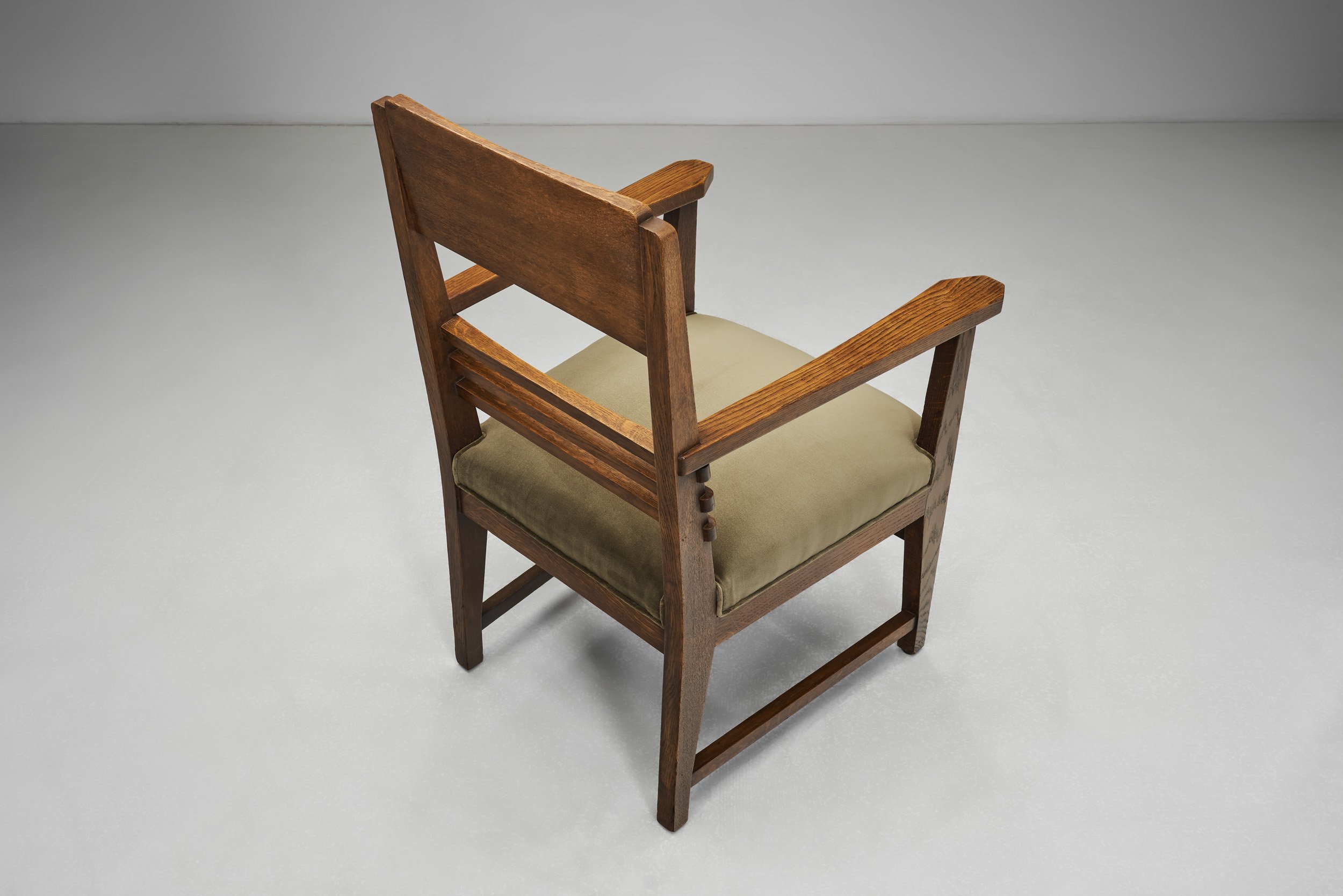
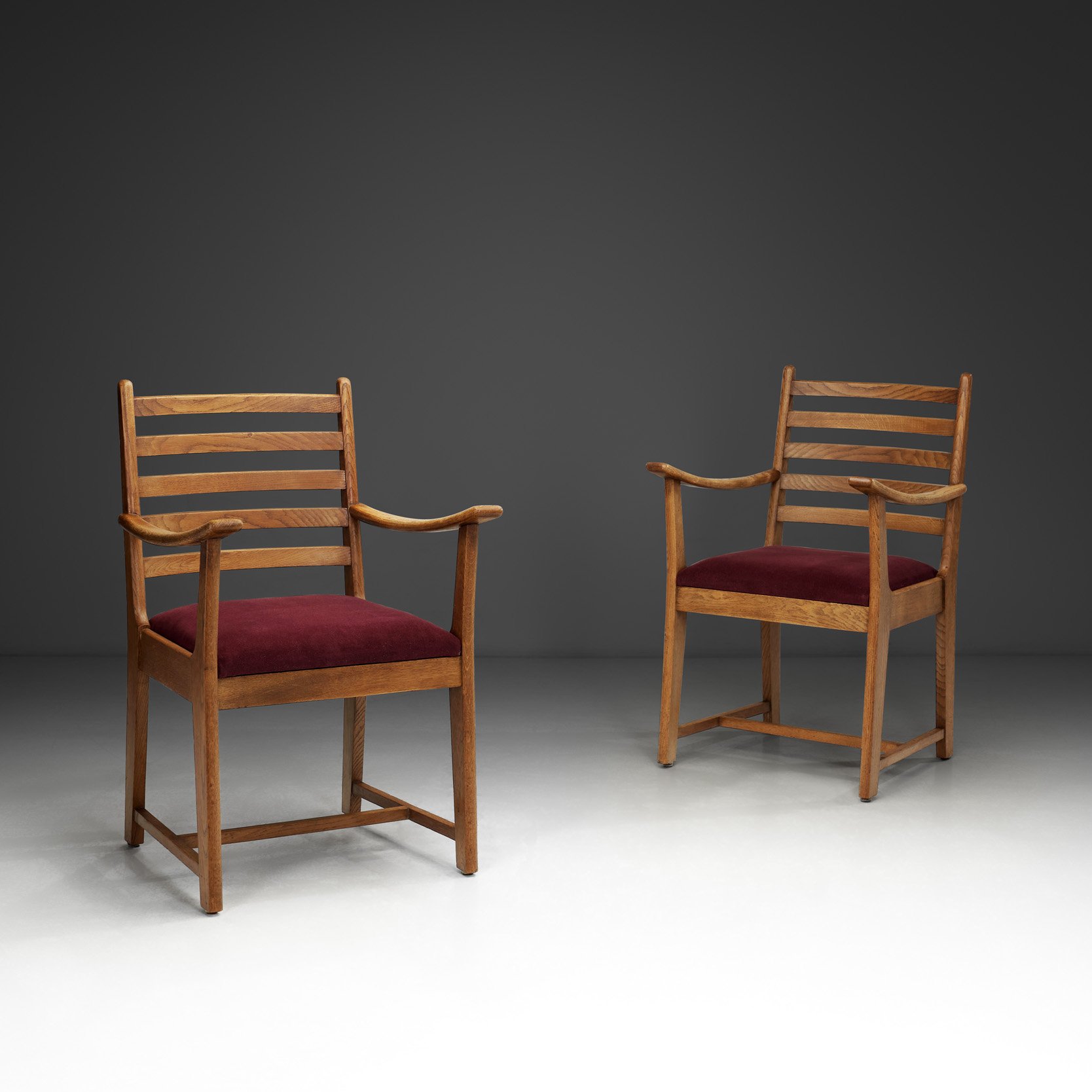
Pair of Amsterdamse School Armchairs, The Netherlands ca 1920s (sold)


Pair of Amsterdamse School Armchairs, The Netherlands ca 1920s (sold)
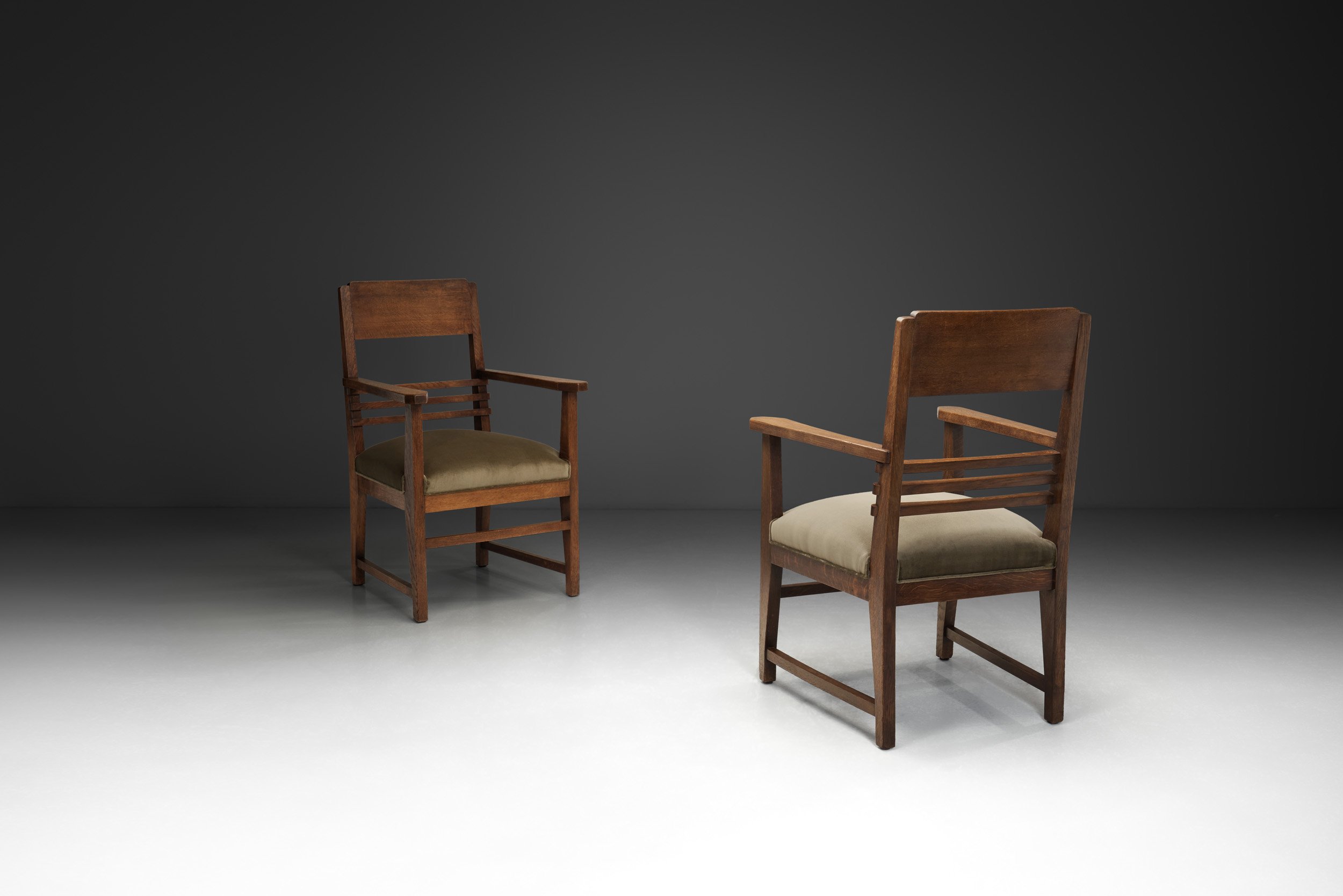
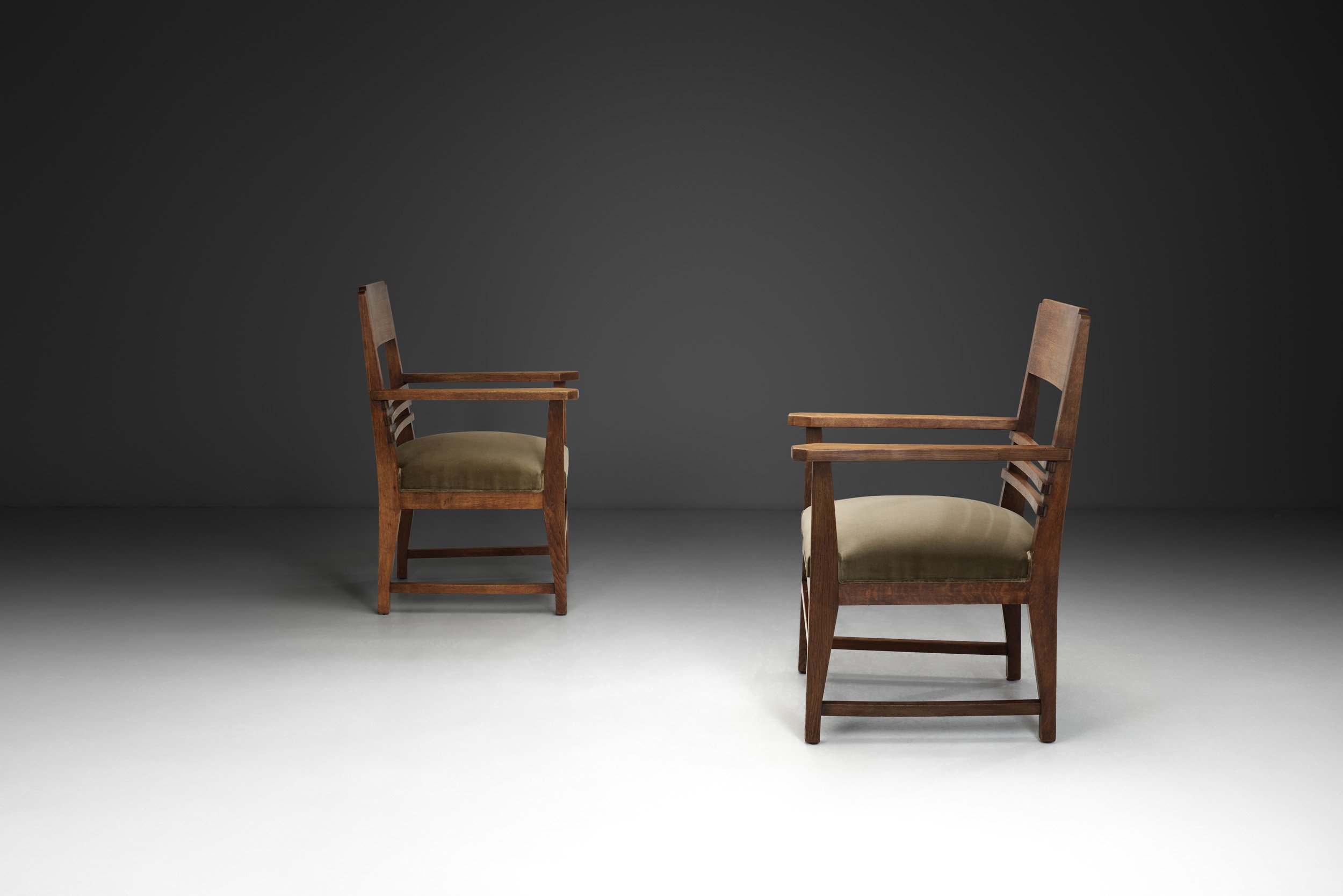
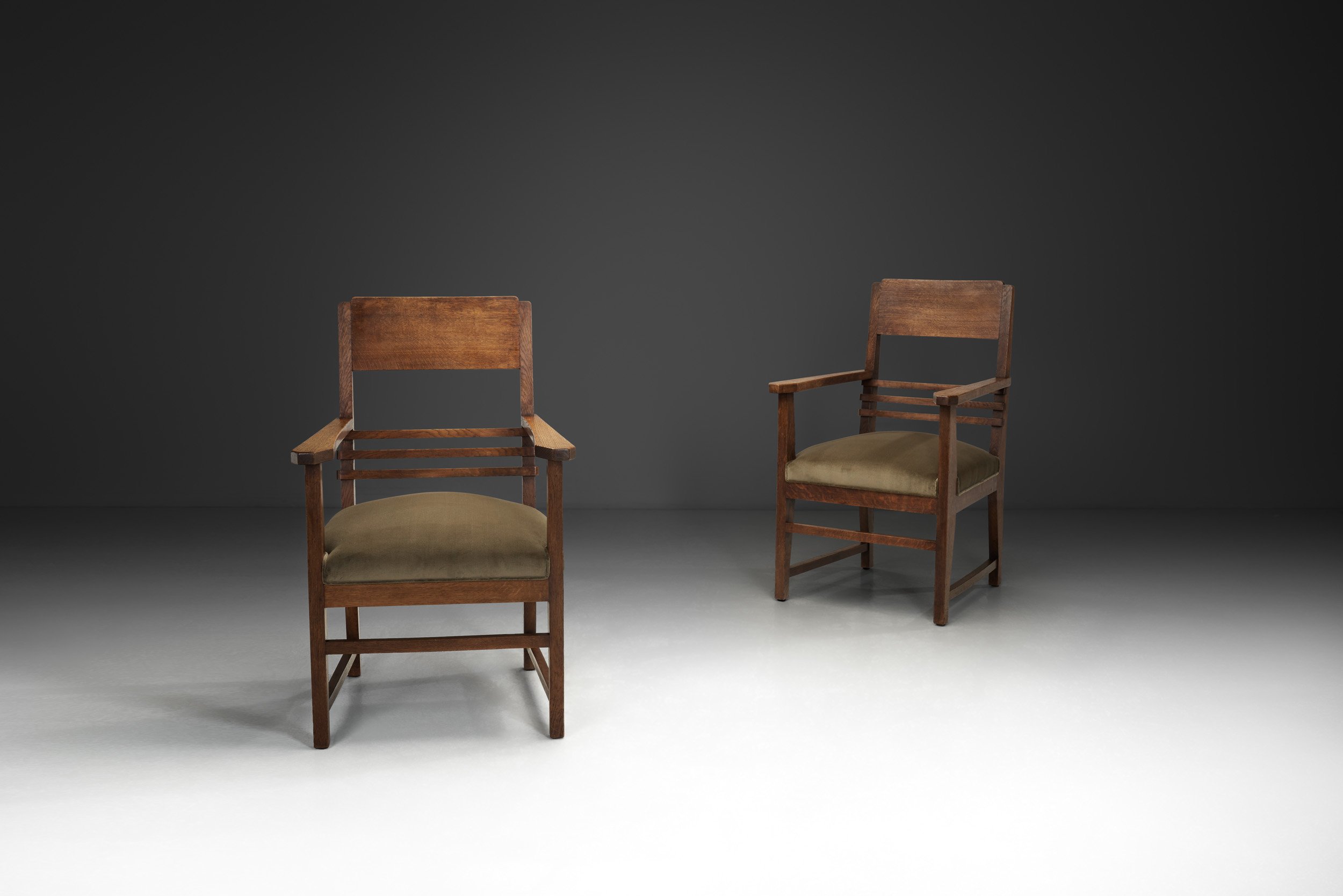
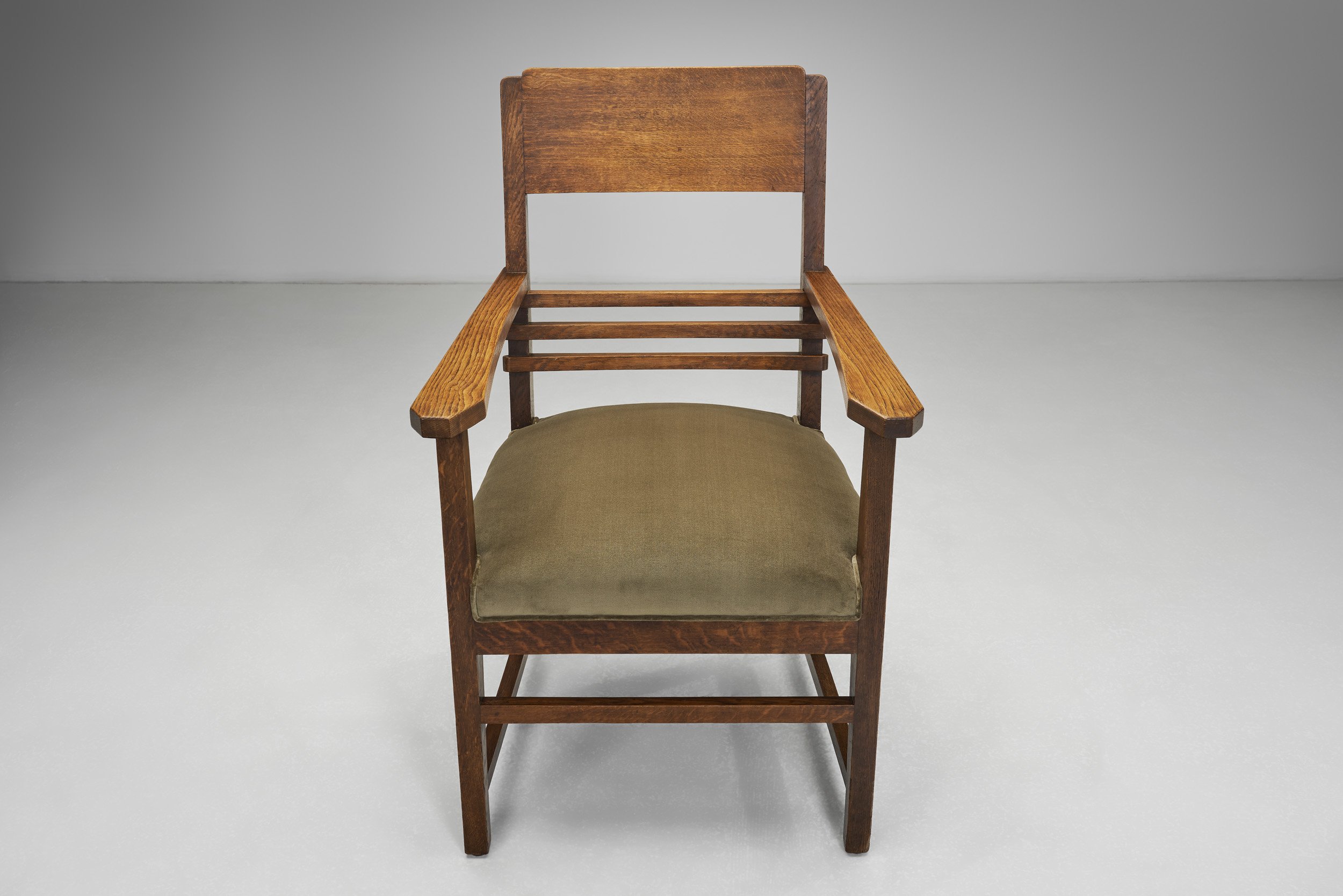
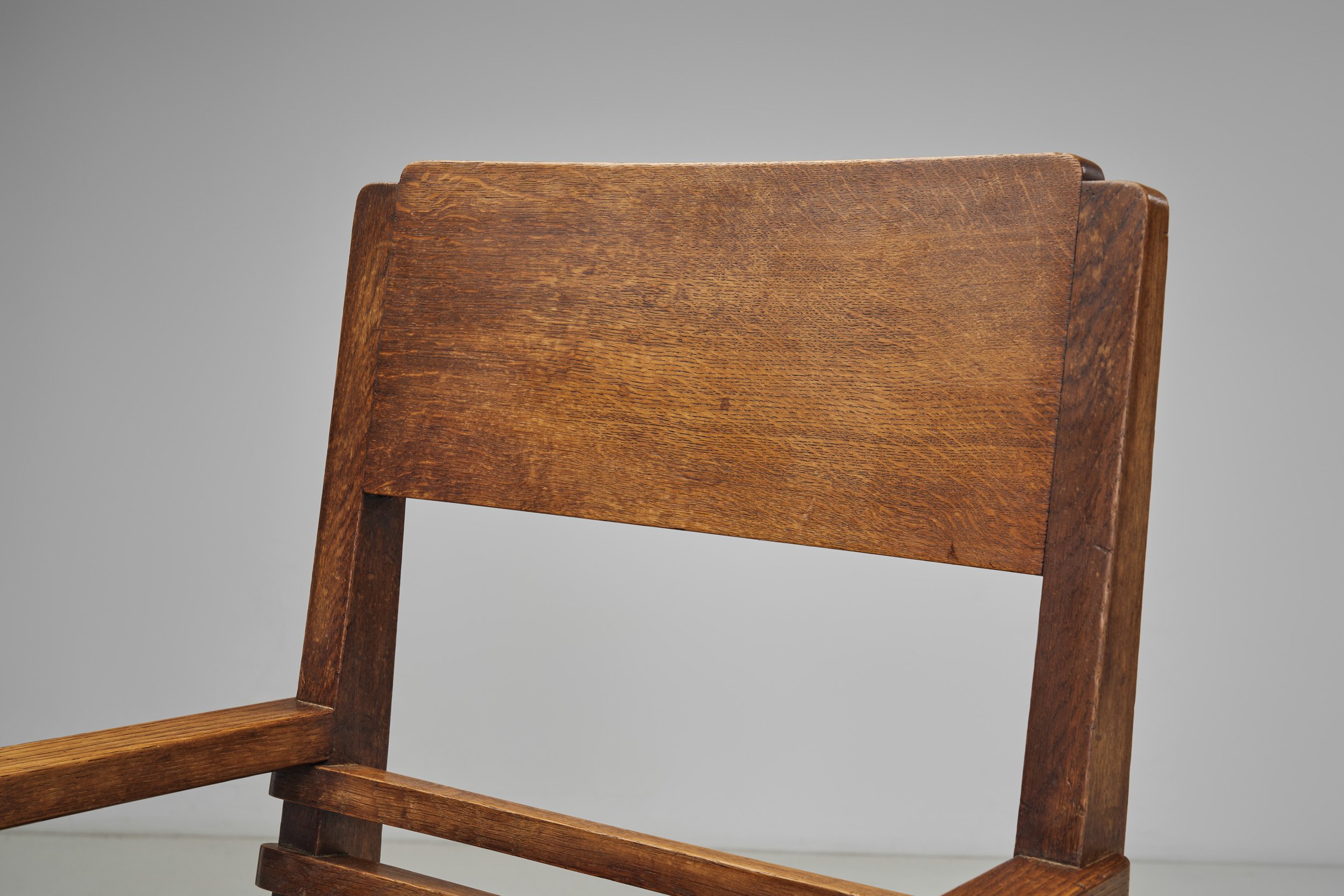
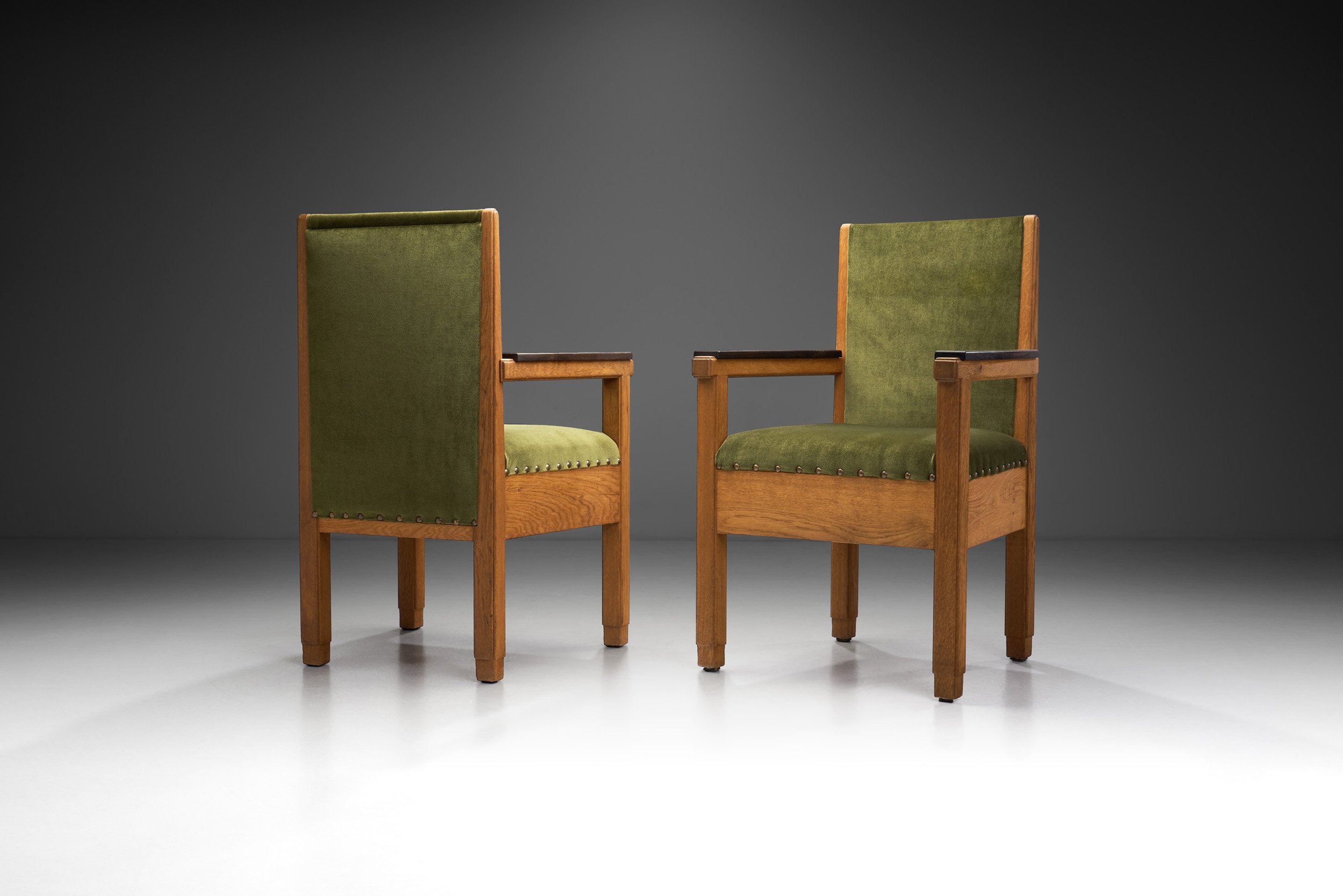
Rooted in the Amsterdamse School movement of the early 20th century, these armchairs reflect a design language that prioritized expressive form, solid craftsmanship, and a strong architectural presence. Emerging in the Netherlands during the 1910s and 1920s, the Amsterdamse School stood apart from more restrained modernist currents, favouring rich materials, and furniture that felt integral to the space it occupied. Designers working within this movement often blurred the line between architecture and furniture, creating pieces that were meant to anchor an interior rather than disappear into it. These armchairs are a clear expression of that philosophy.
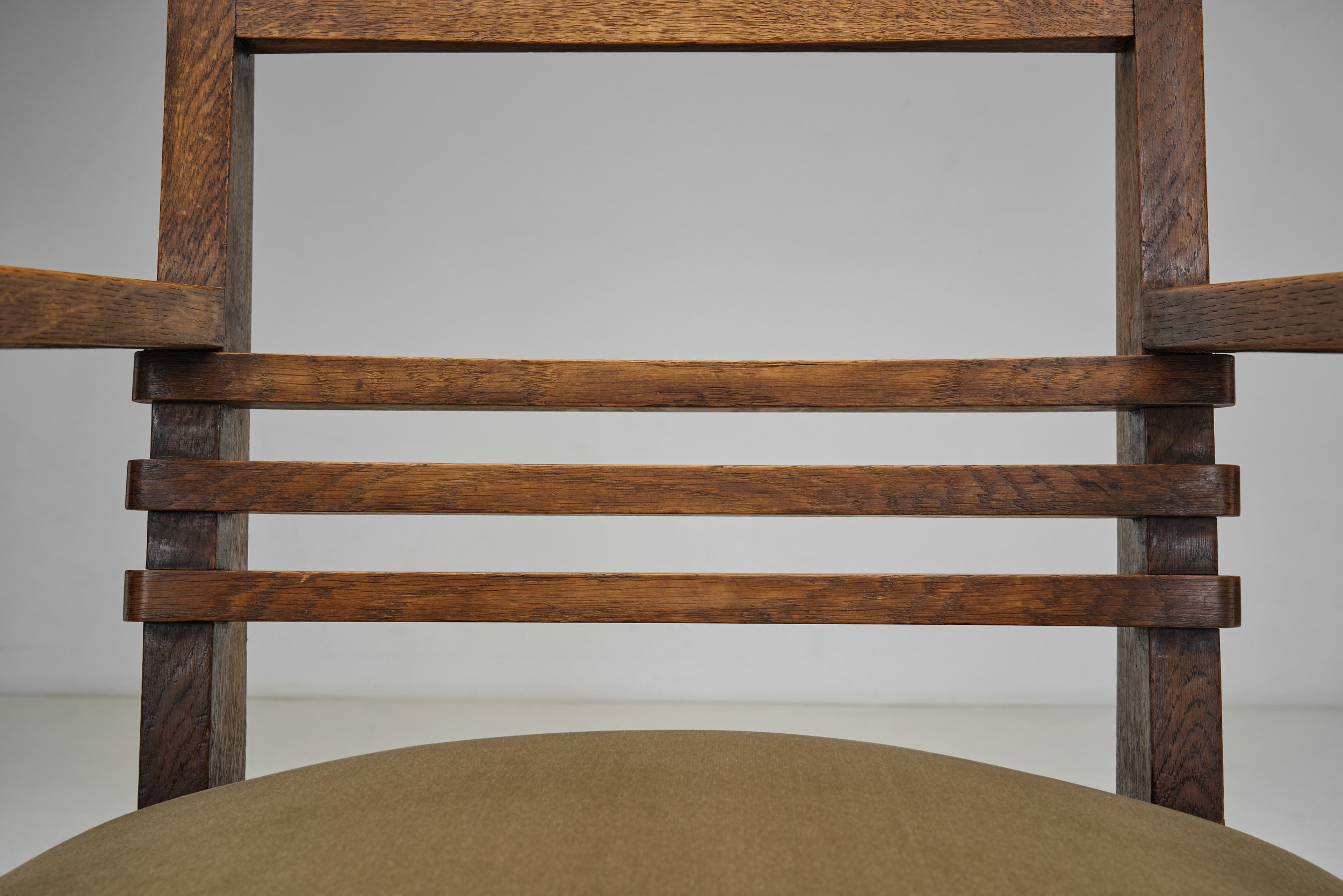
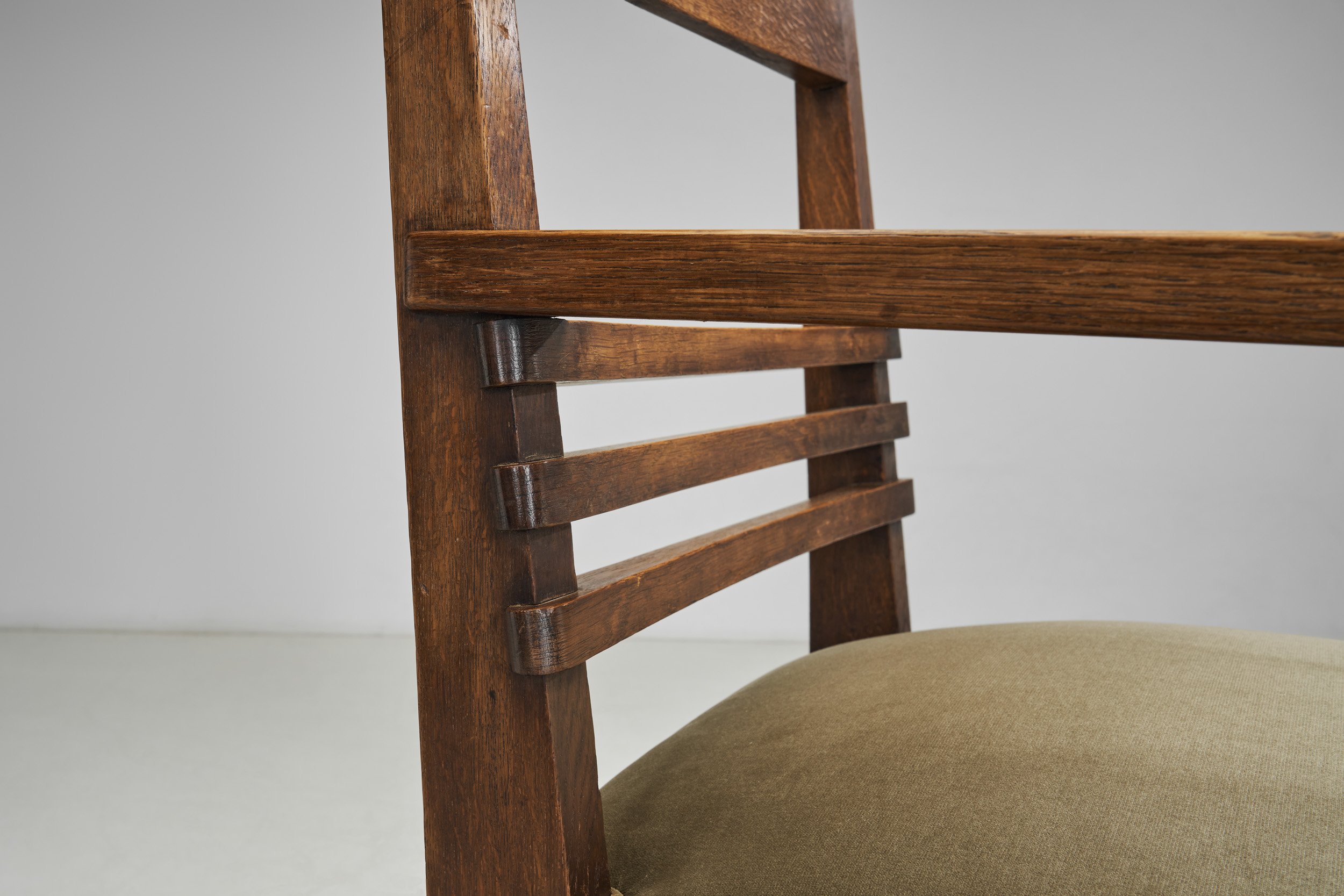
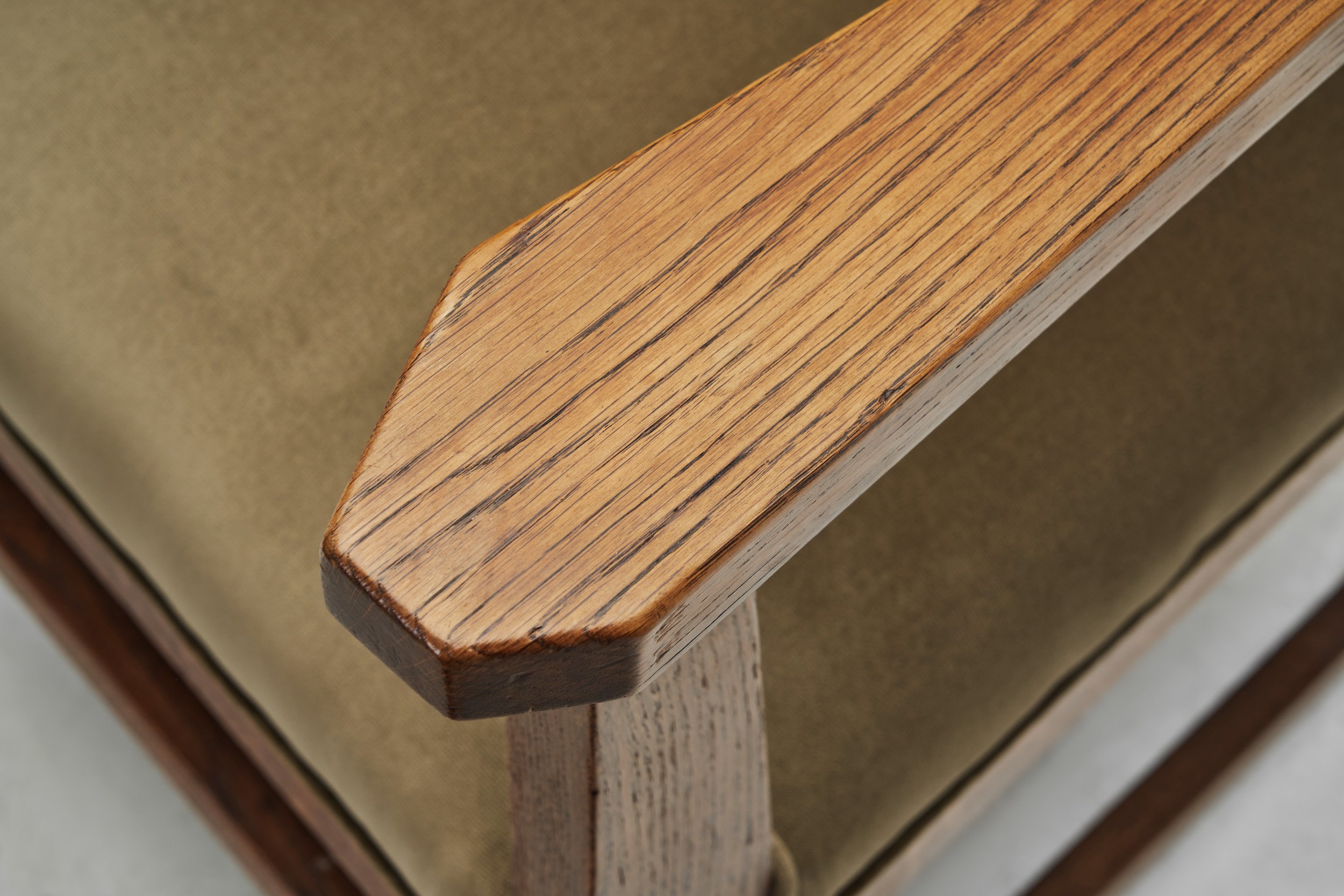
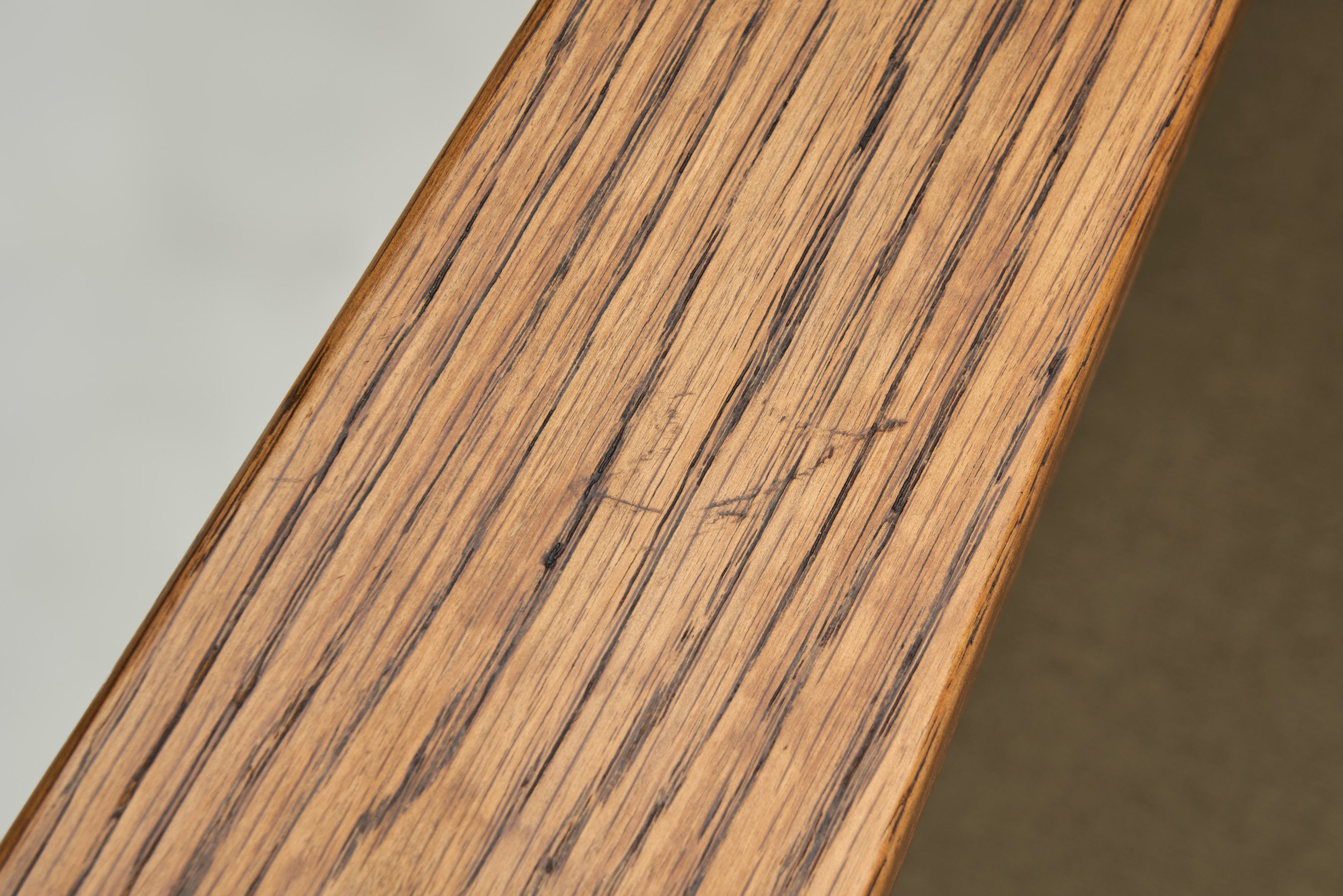
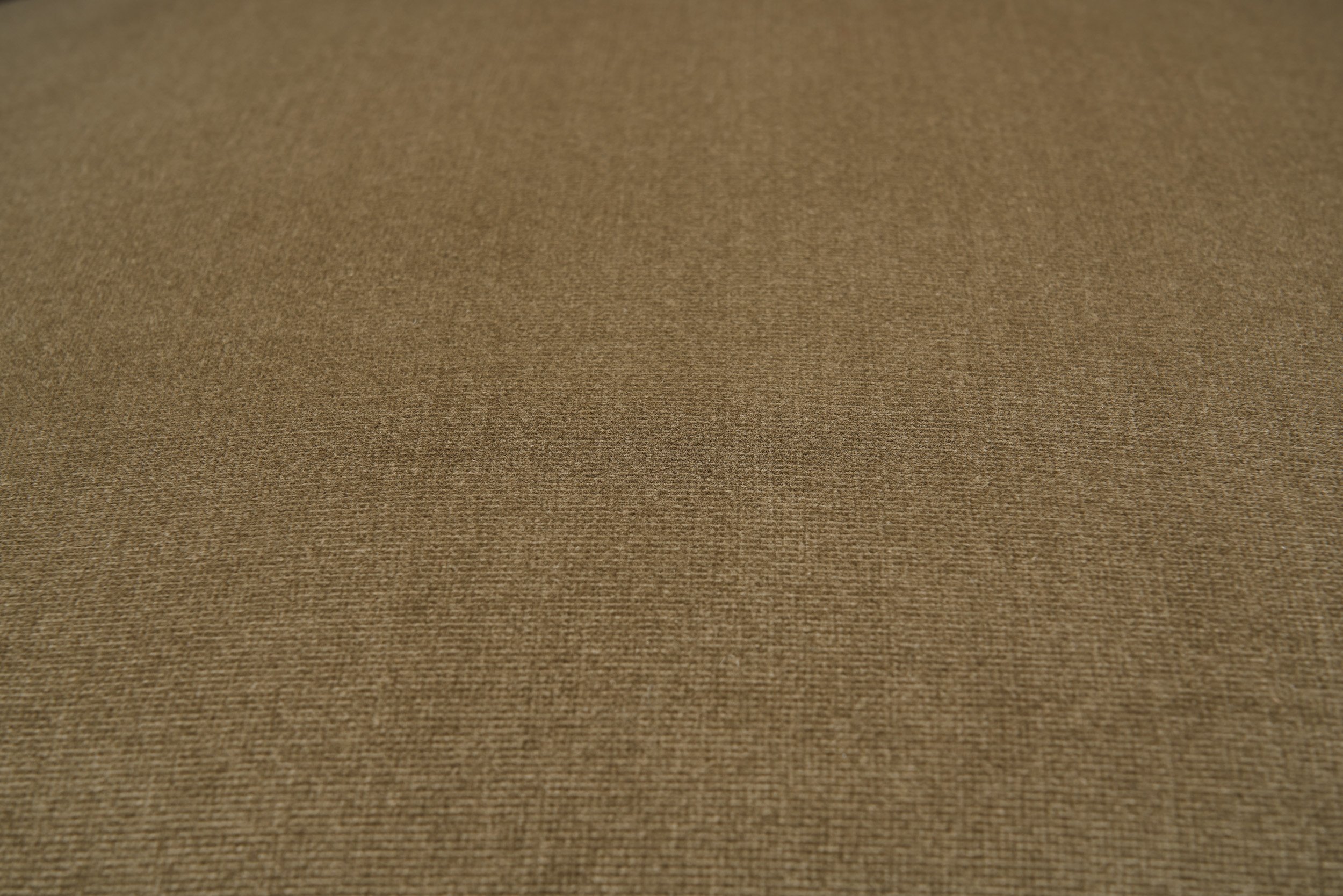
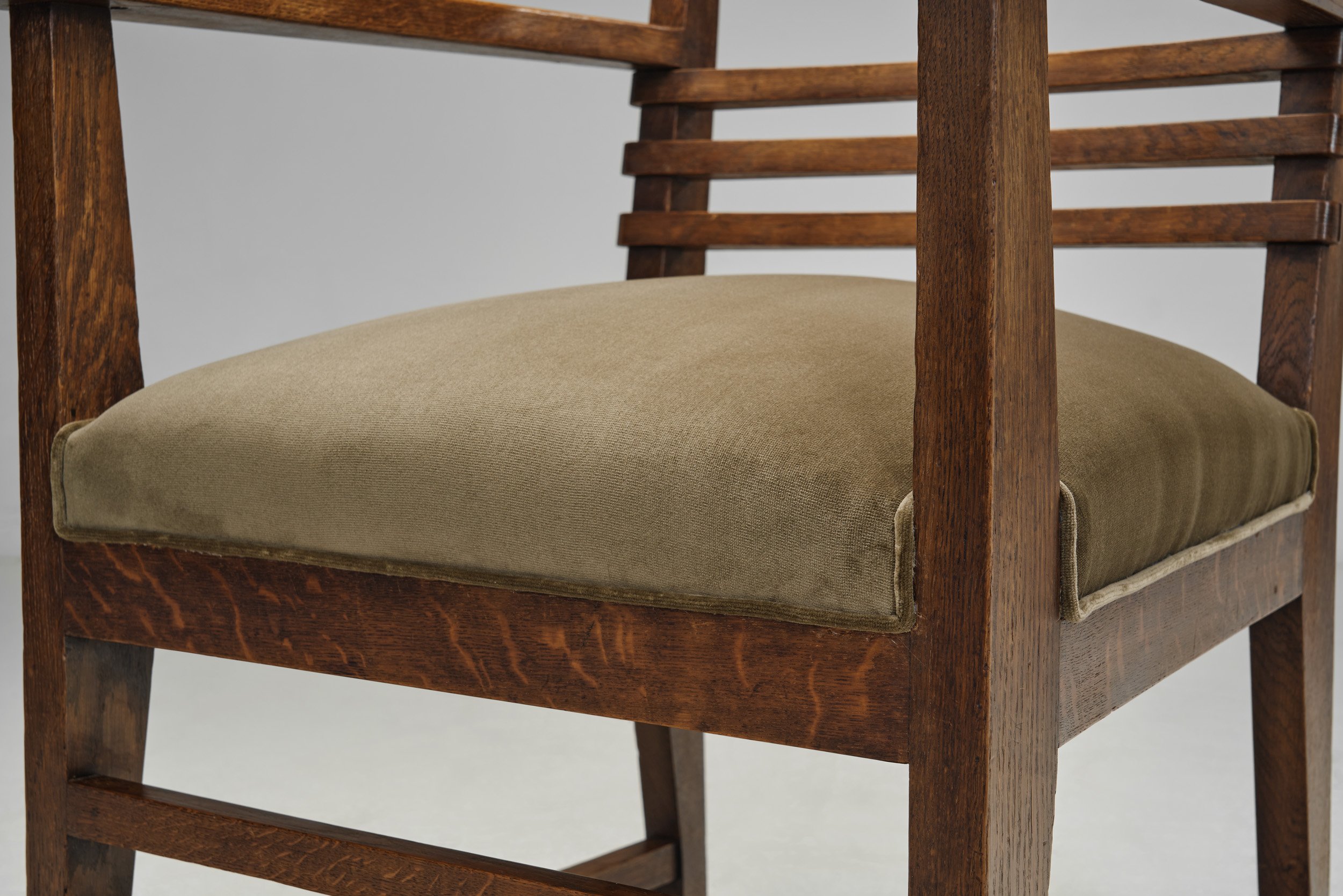
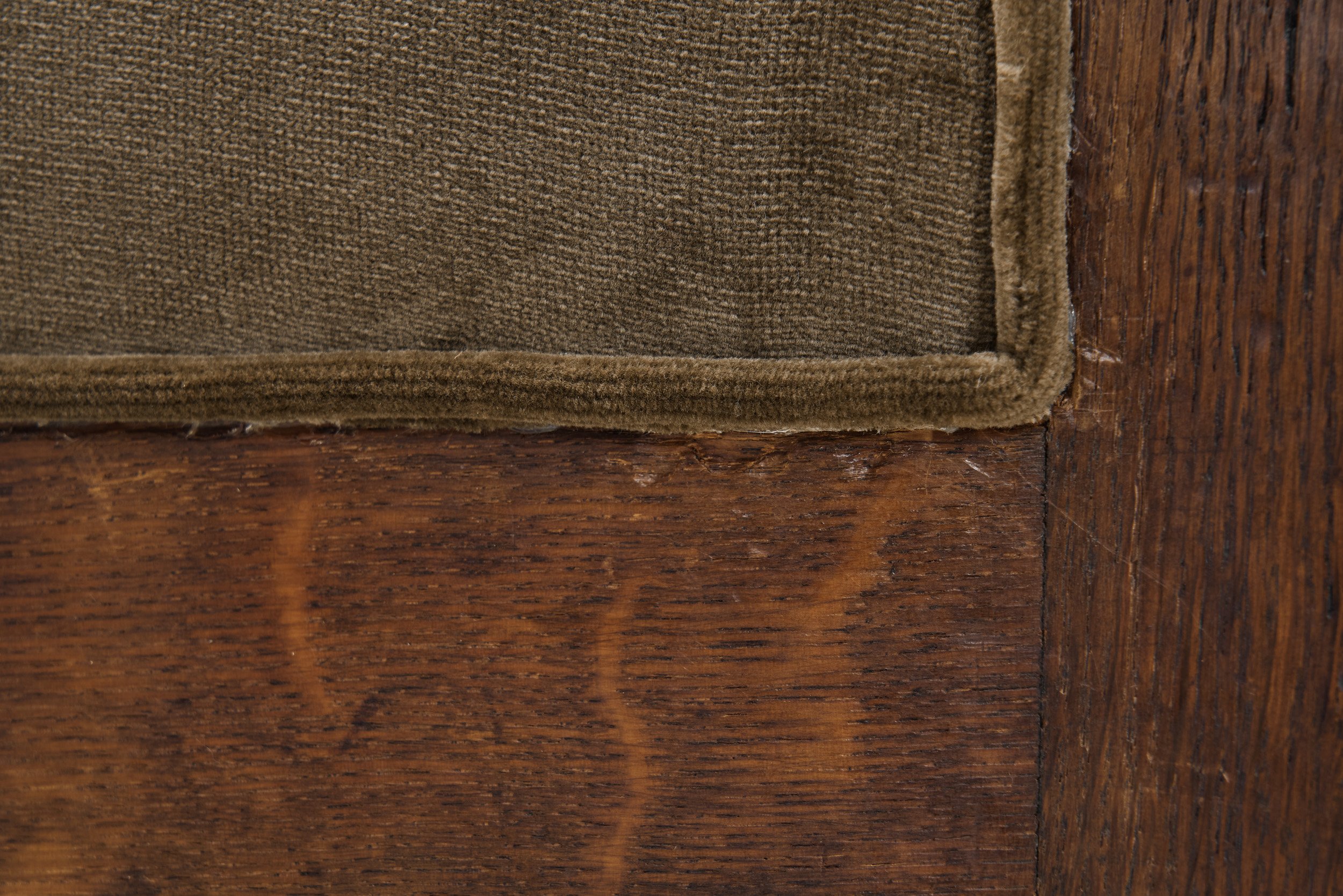
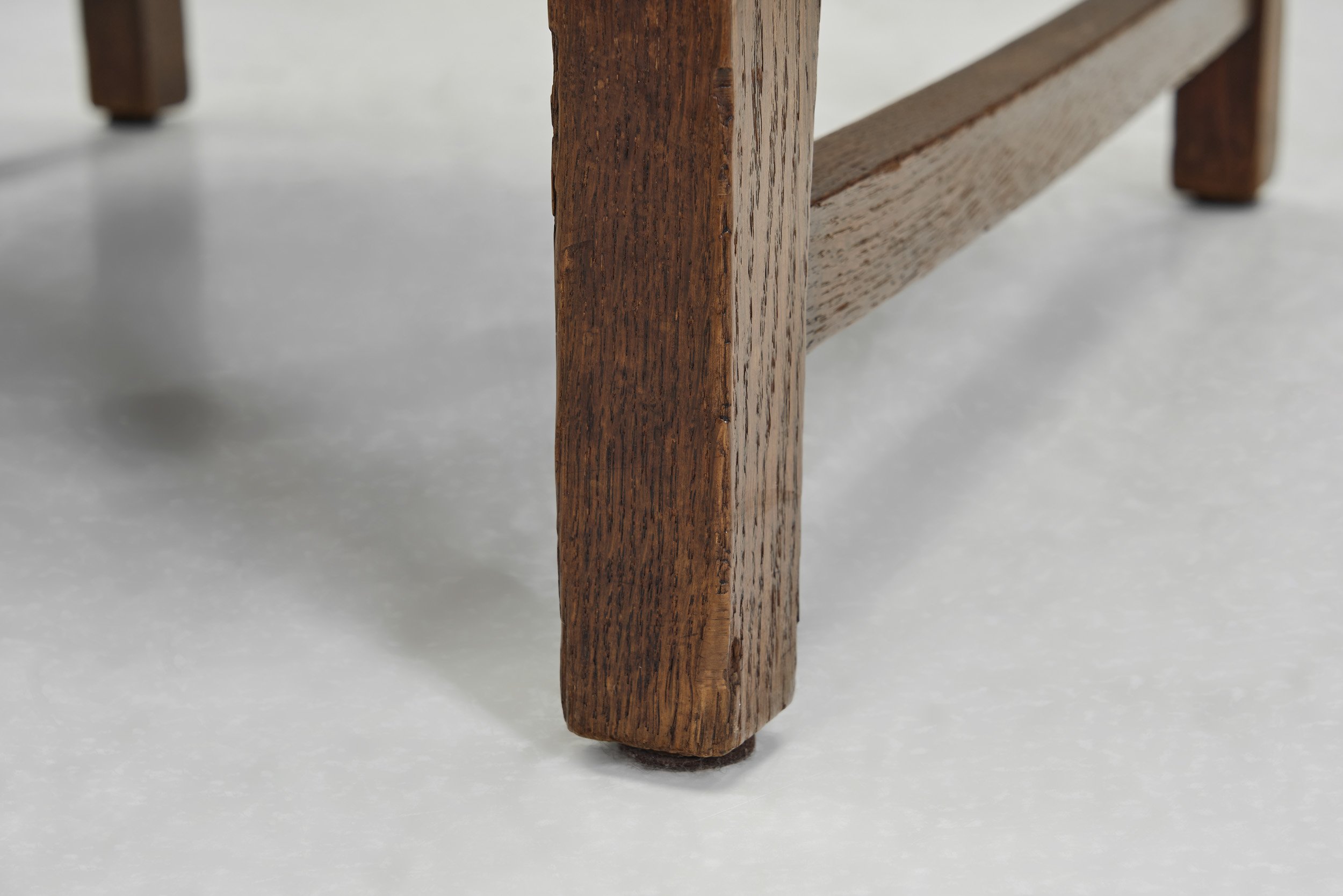
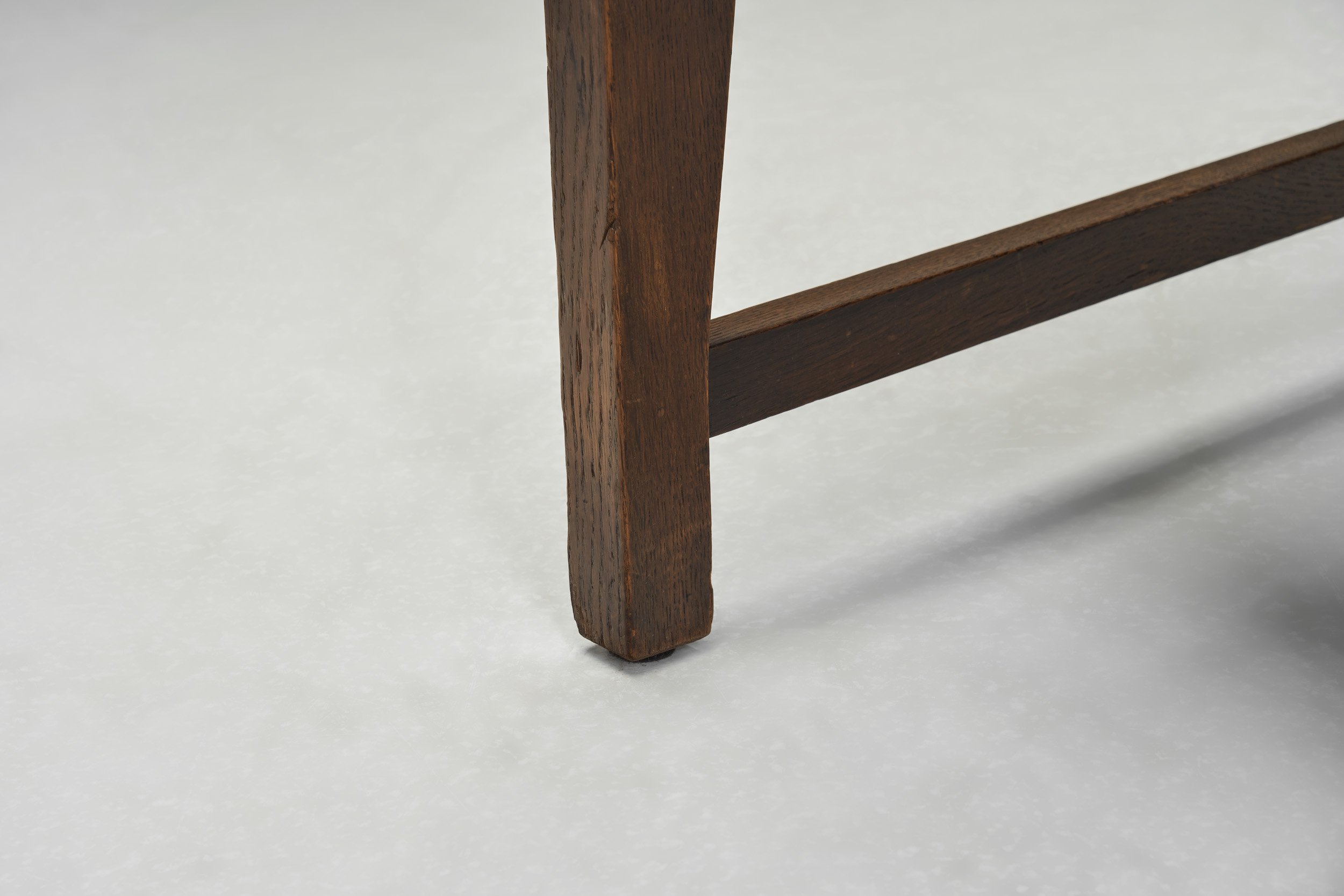
This pair showcases a robust solid wood construction, with a warm, slightly patinated surface that highlights the natural grain and depth of the material. The frames are deliberately straightforward yet bold, giving the chairs a grounded presence that feels both honest and enduring. Each chair features squared legs connected by stretchers that reinforce the structure while maintaining a clean visual rhythm. The armrests extend confidently from the frame, flat and broad, offering both physical comfort and a strong horizontal line that balances the vertical backrests. The backs are defined by a subtle architectural quality achieved through wooden slats and panels, characteristic of Amsterdamse School seating. The seats are generously proportioned and upholstered in a muted green fabric that complements the wood, adding softness and comfort to the otherwise solid construction. This upholstery provides a tactile contrast to the geometry of the frames, making the chairs inviting without losing their disciplined form. From every angle, the chairs reveal thoughtful joinery and a careful balance, with no unnecessary embellishment, only purposeful design choices that emphasize durability, comfort, and visual cohesion.
These armchairs are ideal for appreciators of timeless design. Their form allows them to sit comfortably alongside both period interiors and more contemporary settings, where their architectural presence can serve as a focal point. More than just functional seating, they represent a moment in design history where furniture was built to last, to be used daily, and to shape the atmosphere of a room.
SOLD
Condition:
In good vintage condition. Wear consistent with age and use. The chairs have been reconditioned. Due to the nature and age of the wood, the chairs may have some marks, scratches, and discolouration. The seats have recently been reupholstered in a premium fabric. Each of our items can be reupholstered by our in-house atelier in a fabric of choice. Please reach out for more information.
Dimensions:
25 in W x 25.98 in D x 39.76 in H; Seat height 20.47 in; Seat depth 22.44 in; Arm height 27.55 in
63.5 cm W x 66 cm D x 101 cm H; Seat height 52 cm; Seat depth 57 cm; Arm height 70 cm
REQUEST PRICE HERE
Price category: 5,000 - 7,500 usd / eur
Brutalist design - deriving from the French word brut, meaning “raw” – is characterised by a deliberate plainness and crudity. It emerged in the mid-20th century and gained popularity in the late 1950s and 1960s. In furniture and décor, the Brutalist movement was somber, giving importance to eerie organic and rugged shapes in dark, earthy tones. The defining characteristics of Brutalist furniture design can be observed in these chairs.
This pair is inherently simplistic, both in visual and technical terms. Yet, the design is balanced with well-thought-out proportions. The solid dark wood defines the look with a natural pattern and texture. The chairs are a nod to modernist design with traditional craftsmanship and boast a robust, almost industrial aesthetic, marrying form and function. Furthermore, the solid wooden slats are seamlessly connected through traditional joints, showcasing the commitment to meticulous craftsmanship. The design of these chairs projects an air of strength and solidity. The curved backrests and seats provide comfort, while the sturdy frames and legs guarantee a solid base. This pair is truly expressive and attention-grabbing. The overall form of the chairs evokes the architectural roots of Brutalism, while the solid wood keeps the pair from feeling industrial. It is at its core, frank craftsmanship.
Today, Brutalism is seen as a reaction against artificiality and lightness, reevoking the appreciation for raw, yet vigilant design. The brutalist pieces, exemplified by this beautiful set of chairs, lend a unique eccentricity to any interior or collection.
Condition:
In good vintage condition. Wear consistent with age and use. The chairs have been reconditioned. Due to the nature and age of the wood, the chairs may have some marks, scratches, and discolouration.
Dimensions:
19.48 in W x 27.75 in D x 30.31 in H; Seat height 15.94 in; Seat depth 20.27 in
49.5 cm W x 70.5 cm D x 77 cm H; Seat height 40.5 cm; Seat depth 51.5 cm
REQUEST PRICE HERE
Price category: 5,000 - 7,500 usd / eur
Bas van Pelt’s progressive designs were, in many ways, ahead of their era. The Dordrecht-born designer’s furniture models are quite rare, a few are preserved in the Stedelijk Museum Amsterdam for modern art, contemporary art, and design. This pair of rare chairs are testimonies to the less talked about, but brilliant era of early Dutch modernism.
This elegant pair of chairs embody the distinctive design principles of the Haagse School (The Hague School) movement, which emerged in the Netherlands during the early 20th century. Renowned for its blend of modernist and traditional influences, this style emphasizes clean lines, functional form, and quality craftsmanship. One thing that connects Haagse School furniture is the appreciation of beautiful, quality wood and artisanal woodworking. These armchairs have stunning solid wood frames with geometric and symmetrical angles, most apparent in the square backs and legs. While chairs like these are generally more utilitarian, this pair still manages to look cosy and warm thanks to the upholstered seats. The fabric not only boasts an eye-catching colour but also offers a tactile experience, thus the pair is as comfortable as it is stylish.Additionally, the woodwork, with its smooth finish and natural grain, contrasts beautifully with the plush red upholstery, creating a balanced, yet visually striking appearance.
This pair of armchairs is a rare find that speaks to the elegance and artistry of the early 20th century. Whether used to enhance a modern space with a nod to the past or as a statement piece in a period room, these chairs promise to bring warmth and beauty into your home.
Condition:
In good vintage condition. Wear consistent with age and use. The chairs have recently been reconditioned and reupholstered in a premium fabric. Each of our items can be reupholstered by our in-house atelier in a fabric of choice. Due to the nature and age of the wood, the chairs may have some marks, scratches, and discolouration. Please reach out for more information.
Dimensions:
22.83 in W x 24.40 in D x 35.82 in H; Seat height 20.86 in; Seat depth 18.89 in; Arm height 28.74 in
58 cm W x 62 cm D x 91 cm H; Seat height 53 cm; Seat depth 48 cm; Arm height 73 cm
REQUEST PRICE HERE
Price category: 5,000 - 7,500 usd / eur
In the mid-century design era, often a piece of furniture would combine only two materials or colours – creating tension and harmony without fuss or superfluous ornaments, and these armchairs are perfect examples of this sentiment.
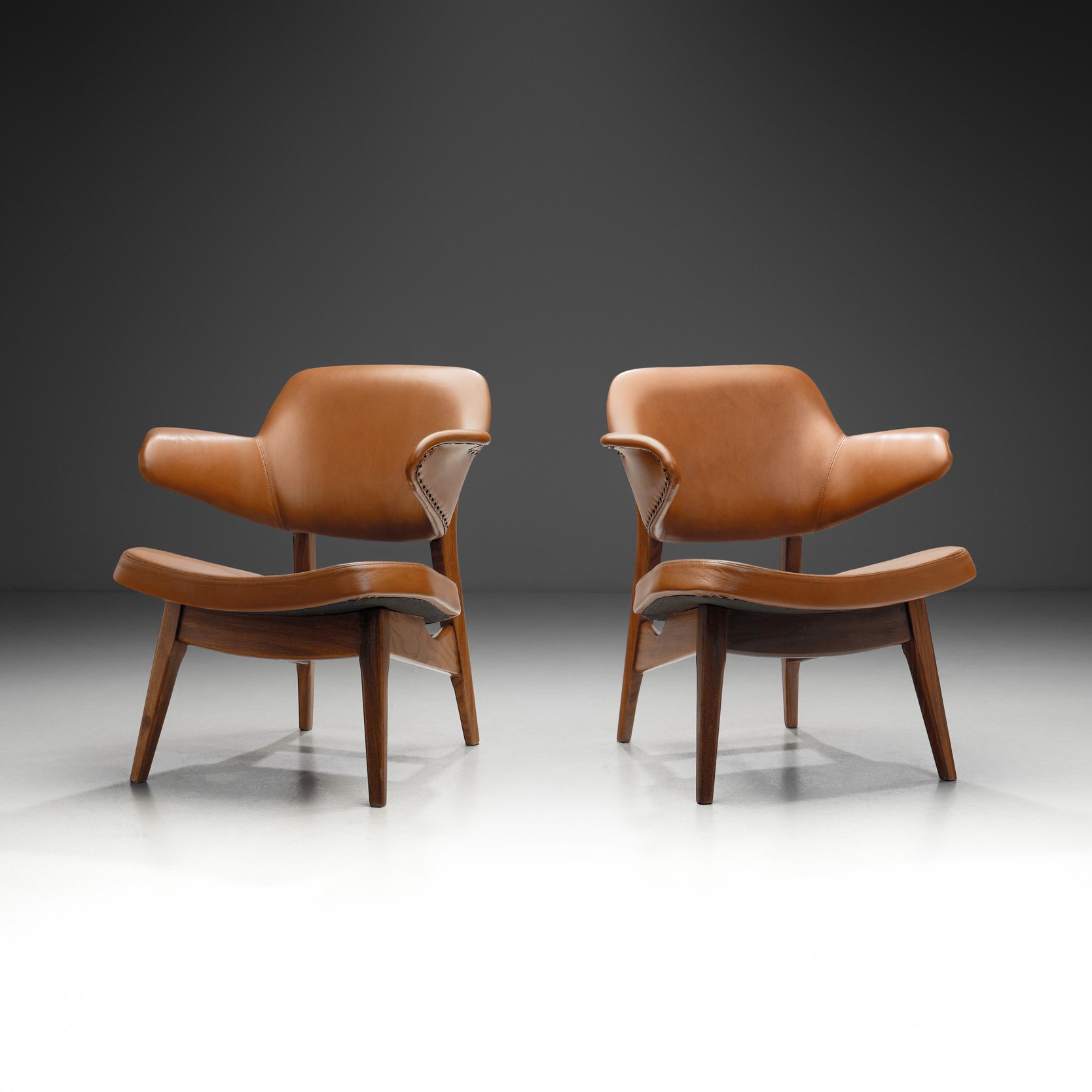
This exceptional pair, created by the renowned Dutch designer Louis van Teeffelen for WéBé, embody the essence of the mid-century modern movement with a distinct, sculptural flair. Familiarly referred to as the "Penguin" armchairs, the design is inspired by the organic and fluid shapes of nature, with a backrest that resembles the graceful curve of a penguin's wings. The chairs are expertly crafted from warm, rich wood, a hallmark of mid-century furniture, and feature finely executed curves and smooth transitions between the arms, seat, and back. The design emphasizes comfort and functionality, with wide cushioned seats and a slightly reclined backrest that provides excellent support. The wooden frame, which has been skillfully shaped to create an almost seamless look, adds an elegant and natural touch to any room. The faux leather upholstery enhances the striking visual appeal, ensuring the chairs not only serve as functional seating but as statement pieces within a living room or lounge space. With their signature fluid lines and sculptural presence, these "Penguin" armchairs combine the refined simplicity of mid-century modernism with an inviting, human-centric design.
The overall design is a piece of art that exudes both sophistication and comfort, offering a timeless blend of aesthetics and craftsmanship that remains highly sought after by collectors and design enthusiasts alike. Their enduring popularity underscores their status as iconic examples of mid-20th century Dutch furniture design.
Condition:
In good vintage condition. Wear consistent with age and use. Minor scratches and marks. These chairs come with their original artificial leather or have been reupholstered by a previous owner. Each of our items can be re-upholstered by our in-house atelier in a fabric of choice. Please reach out for more information.
Dimensions:
28.74 in W x 26.37 in D x 29.92 in H; Seat height 17.51 in; Seat depth 19.29 in; Arm height 25.98 in
73 cm W x 67 cm D x 76 cm H; Seat height 44.5 cm; Seat depth 49 cm; Arm height 66 cm
REQUEST PRICE HERE
Price category: 9,000 - 12,500 usd / eur
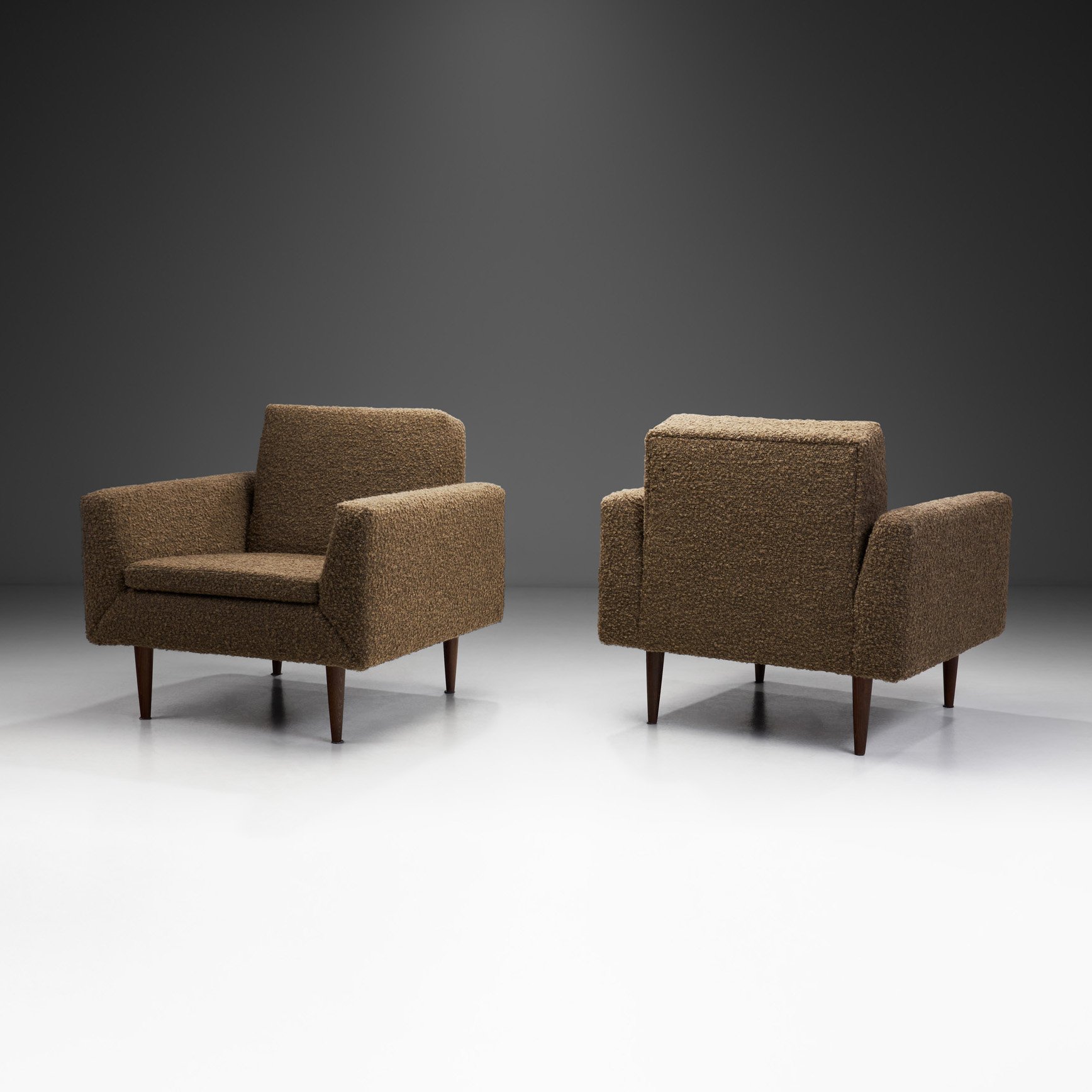
Among the pantheon of talented individuals who have worked for Artifort, Theo Ruth was the acclaimed Dutch furniture manufacturer’s first permanent designer. Ruth’s work significantly advanced Artifort’s laudable reputation, specifically through his designs for chairs.
The design of this set incorporates beauty, functionality, and simplicity in a way that is characteristic of the mid 20th century. This angular style is comprised of elegant lines that are not shorn of functionality; the seats are generous in size, while the backs are softly fitted, creating a cosy look that provides great comfort. Quality craftsmanship was evidently of optimum importance for Theo Ruth, who created this pair. The element that truly elevates the modern outline of these chairs is the upholstery. The luxuriously textured fabric is exquisite, and pairs with the design’s straight lines very well.
From every single angle these chairs offer stunning lines and rich texture, and are a representative example of Ruth’s craftsmanship and talent
Condition:
In good vintage condition. Wear consistent with age and use. The chairs have been reupholstered recently in a premium fabric. Each of our items can be re-upholstered by our in-house atelier in a fabric of choice. Please reach out for more information.
Dimensions:
31.50 in W x 31.10 in D x 30.32 in H; Seat height 16.14 in; Seat depth 20.08 in; Arm height 22.83 in
80 cm W x 79 cm D x 77 cm H; Seat height 41 cm; Seat depth 51 cm; Arm height 58 cm
About the Designer:
Dutch designer Theo Ruth was born in 1915 in Maastricht. He trained as a furniture designer and interior designer at the Middelbare Kunstnijverheidsschool in Maastricht (which later became the Maastricht Academy of Arts). In 1936, he joined Artifort in Maastricht, where he specialized in designing living room furniture. Just three years later, in 1939, he became head of design and development, a position he maintained until his death in 1971.
Ruth was Artifort’s first permanent designer, and had a major impact on its design legacy. His most famous pieces include the 1952 Congo Chair and the 1953 Penguin Chair, both of which were constructed from two interlocking pieces that fit together without locks or screws (the latter’s original version featured a black back and a white cushion to mimic its namesake). Theo Ruth’s designs are famous around the world as highlights of Dutch design. ~H.
REQUEST PRICE HERE
Price category: 2,500 - 5,000 usd / eur
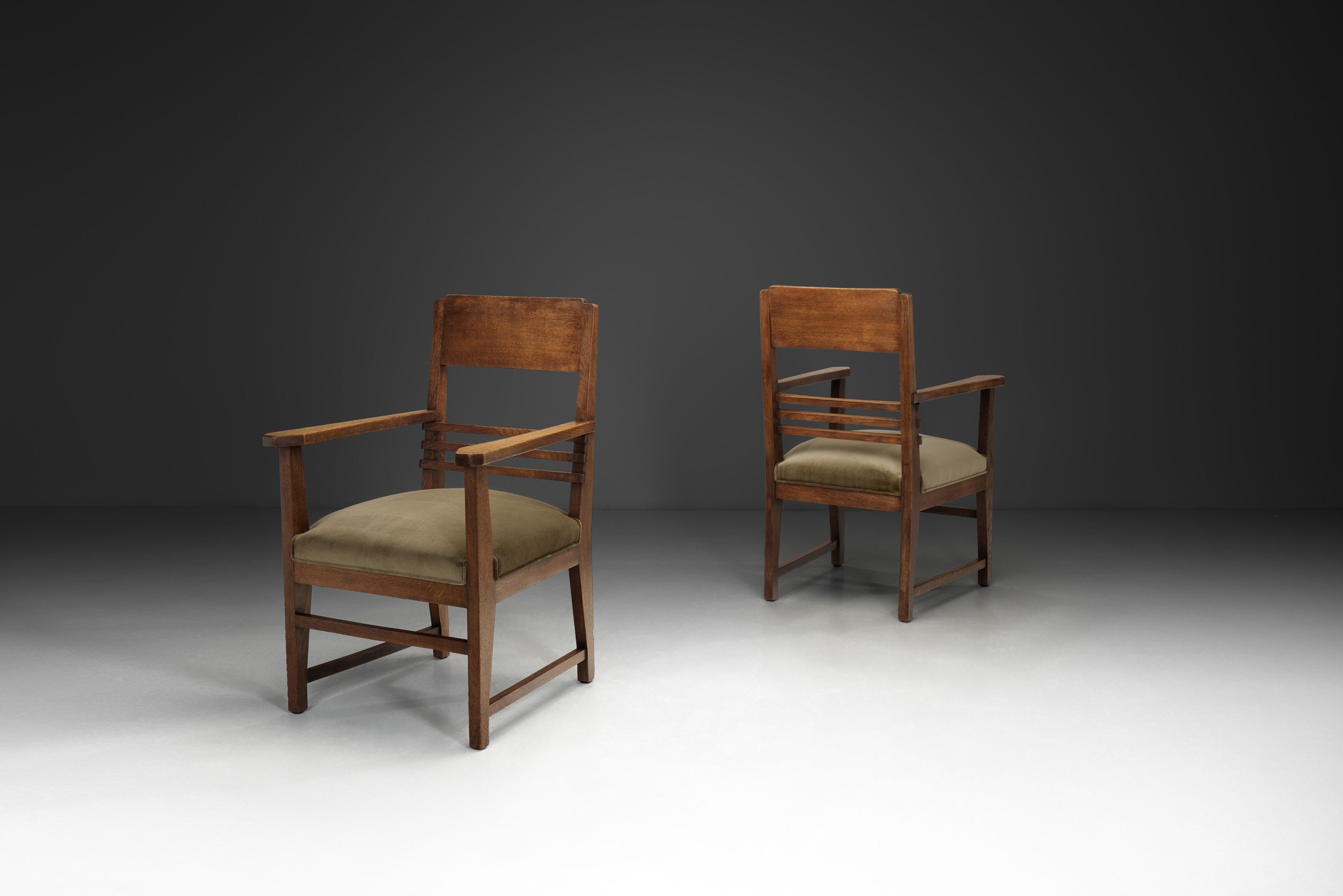
In the unique design style, “Amsterdamse School”, was an influential Dutch architectural and design movement that emerged in the early 20th century, and left an indelible mark on the cultural landscape of the Netherlands and on Europe on a larger scale. Beyond its architectural achievements, the Amsterdamse School also extended its influence to interior design and furniture, giving rise to a distinctive style that reflects a harmonious blend of craftsmanship, artistic expression, and social ideals exemplified by this pair of chairs with an enduring appeal, quality, and style.
The Amsterdamse School movement arose in response to the predominant influence of Art Nouveau and Jugendstil in the late 19th and early 20th centuries. This movement, which took root in Amsterdam, sought to create a uniquely Dutch style that embraced traditional craftsmanship and celebrated the spirit of the current times. The Amsterdamse School extended its influence across various artistic disciplines, including architecture, decorative arts, and furniture design.
The styles’ main characteristics are reflected in the design of this pair beautifully : expressive, art deco-reminiscent shapes and forms aided by functionality. Amsterdamse School furniture is renowned for its expressive and sculptural qualities. Designers sought to integrate form and functionality seamlessly, resulting in furniture pieces that were not only visually striking but also practical. Subtle, intricate detailing can be observed in this pair as well, from the tightly fit, riveted upholstery to the carved wooden arms and legs, and, before all else, a strong emphasis on craftsmanship.Further reflecting a commitment to renowned Dutch craftsmanship, Amsterdamse School furniture frequently utilized locally sourced materials such as quality woods. The choice of materials not only highlighted the movement's dedication to authenticity but also contributed to the desired durability and longevity of the pieces. The craftsmanship of Amsterdamse School furniture is exemplified by its intricate woodwork and joinery. Pieces often showcased decorative detailing through carvings, inlays, and geometric patterns. These elements added a touch of individuality and artistry to each piece, setting them apart from the mass-produced furniture of the time. Finally, The Amsterdamse School was not merely a design movement; it also embraced social ideals. Furniture designed during this period typically featured elements that conveyed a sense of solidarity and unity. Decorative motifs, such as were often incorporated to symbolize the interconnectedness of nature and society.
Despite the passing of decades, the Amsterdamse School furniture style continues to captivate enthusiasts and collectors worldwide. The enduring appeal lies in its unique combination of artistic innovation, craftsmanship, and a commitment to cultural identity. The pieces from this era are not merely functional items but also works of art that convey the spirit of a transformative period in Dutch history.
In conclusion, the Amsterdamse School furniture style remains a testament to the creative vision and social consciousness of its designers. As we continue to appreciate and preserve these timeless pieces, we celebrate a chapter in design history that has left an indelible mark on the world of furniture aesthetics.
Condition:
In good vintage condition. Wear consistent with age and use. These chairs come with their original upholstery or have been reupholstered by a previous owner. Each of our items can be re-upholstered by our in-house atelier in a fabric of choice. Please reach out for more information.
Dimensions:
24.6 in W x 23.42 in D x 39.37 in H; Seat height 21.06 in; Arm height 7.75 in
62.5 cm W x 59.5 cm D x 100 cm H; Seat height 53.5 cm; Arm height 70.5 cm
REQUEST PRICE HERE
Price category: 9,000 - 12,500 usd / eur
This set of chairs was originally designed by the Dutch Benedictine monk and architect, Dom Hans van der Laan for the Abbey Church of St. Benedictusberg located near the Dutch town of Vaals.
These easy chairs are in an untouched condition. They are made of pine wood and feature copper nails, giving these pieces an understated, rustic look. The pair is entirely painted grey, including the nails. This specific colour was carefully selected by Whim van Hoof to resemble the original shade as closely as possible. The main focus of van der Laan’s design was functionality and rationality, which is reflected in the openings on the sides and on the backs serve the purpose of joining multiple pieces together, and lifting them.
Van der Laan was a leading figure in the traditionalist movement, the Bossche School, that held these values as well. These characteristics make these chairs charming, while also being beautiful pieces of Dutch design history. Although Dom Hans van der Laan left a small body of work behind, his legacy is highly regarded in the world of architecture. The St. Benedictusberg Abbey in Vaals and its interior quickly became his masterpiece at the age of 53. This model is still found in the Dutch church named Sint Willibrorduskerk in Almelo, for which it was possibly designed for in 1964.
Condition:
In good vintage condition. Wear consistent with age and use. Some small marks and scratches.
Dimensions:
Chairs:
25.59 in W, 26.77 in D, 35.43 in H; Seat Height 15.94 in
65 cm W, 68 cm D, 90 cm H; Seat Height 40.5 cm
About the designer:
Dom Hans van der Laan (1904-1991) was the ninth of the eleven recorded children of Leiden architect Leo van der Laan (1864–1942). Thanks to Brother Lambertus Moonen and Hans van der Laan jr. the full biography is now known.
Dom van der Laan began his studies in architecture at the ‘Technische Hogeschool’ of Delft in 1923, two years after he finished his secondary school. Architectural education in those days was generally confined to nineteenth-century neoclassicism and all teachers originated from before the first world-war. Students in their third year of study had to make their own designs, but those of Hans van der Laan were all rejected. In the same autumn he founded, together with some fellow-students, a study-group, the ‘Bouwkundige Studiekring’ BSK (‘Architectural Study Circle’), aiming to discover themselves the very basics of architecture, which they missed in regular teaching.
On 26 May 1929 Hans van der Laan and his fellow-novice Herman Diepen made their profession in the abbey. In 1936 father Hans was charged with the guidance in the sacristy, which he would retain till his departure to Vaals in 1968. After the war father van der Laan was invited by the bishop of Breda to take guidance of a working party, charged with the rebuilding of the destroyed churches in the diocese.
In 1951 the abbey of Sint-Benedictusberg in Vaals had been founded a second time by a group of monks of the Saint-Pauls abbey of Oosterhout and father Van der Laan was asked by them to design the still missing crypt and church. On 18 October 1968 father Van der Laan changed his domicile from Oosterhout to Vaals, where in 1970 he became official member of the community of Sint-Benedictusberg. In his new home he also was appointed as sacristan, so that he could continue his familiar daily work and in 1973 he was elected as a member of the Council, the board under the guidance of the abbot.
Prior to his death, Van der Laan garnered worldwide acclaim for his comprehensive architectural theory, which has been translated into several languages and presents a doctrine of connections in the design of architectonic space, notably the “plastic number”. ~H.
REQUEST PRICE HERE
Price category: 12,500 - 15,000 usd / eur
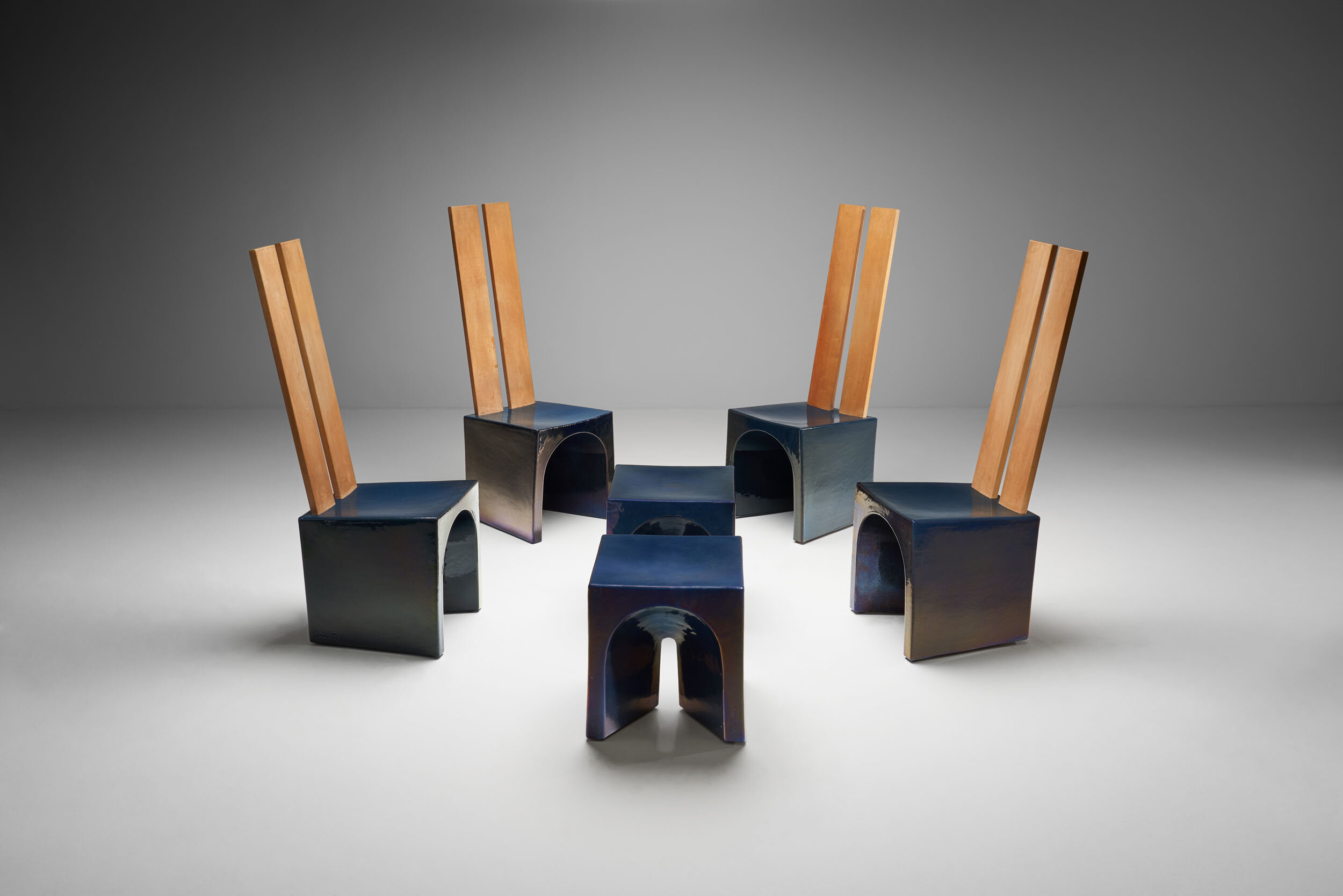
This set of four elemental chairs and two tables is a beautiful example of the collaboration between Dutch designer Tom Bruinsma and Mobach Ceramics. These fully glazed ceramic pieces appear in a variety of colours depending on the angle and light. The wooden backs add an organic and modern touch to the chairs. Dutch designer, Tom Bruinsma is primarily known for his ceramic designs featuring sharp edges and angles.
As all Mobach ceramics, the lower body of each chair is handmade in small batches. The glazing and the firing processes ensure that each ceramic piece is unique. All ceramics bear the Mobach stamp.
Condition:
In good vintage condition. Wear consistent with age and use.
Dimensions:
14.96 in W x 15.75 in D x 45.28 in H; Seat Height 14.96 in
38 cm W x 40 cm D x 115 cm H; Seat Height: 38 cm
About the manufacturer:
The Mobach Ceramics factory was established in Utrecht in 1895 by Klaas Mobach (1855-1928). Since the establishment, five generations of Mobachs have been working with a team of staff in an historic building on Kanaalweg, Utrecht. Through the century, the method hardly changed. All ceramics are thrown on the wheel or shaped by hand from coils or sheets of clay. The ceramic pieces, such as the bodies of this set, owe their distinctive look to the exclusive glazes, which are composed according to the company’s own recipe. Due to the high firing temperature, Mobach ceramics are suitable for both indoor and outdoor use. ~H.
REQUEST PRICE HERE
Price category: 9,000 - 12,500 usd / eur
Wim den Boon was a Dutch designer and architect associated with the post-war modernist movement in the Netherlands. After studying interior design at the Academy of Fine Arts in The Hague, he worked alongside artists like Hein Stolle and Pierre Kleykamp to contribute to a number of important post-war interiors, including projects for Schiphol Airport. Den Boon later established himself independently in The Hague, where he designed furniture characterised by restrained compositions, careful spatial treatment, and a preference for unadorned everyday materials.
Influences from De Stijl and Scandinavian modernism remained visible throughout his work, particularly in the balance between strict structure and warmth. This pair of armchairs reflects that sensibility in the simple oak construction and tactile ponyskin upholstery. The frames are composed of cylindrical supports and straight horizontal rails, creating clear geometric outlines around the upholstered bodies. The proportions are low and generous, giving the pieces a relaxed, grounded posture. The functionality of this pair is further increased by the wooden armrests. The seats and backrests are wide for lounging and are upholstered entirely in champagne-coloured ponyskin. The material introduces a texture, giving the otherwise minimal forms a sense of movement and depth. Still, the oak remains visible throughout the designs, outlining the silhouettes and, through its slim slats, preventing the chairs from appearing overly heavy. The tilt of the backrests softens the strict geometry and contributes to the lounge-like comfort of the pair.
Den Boon was part of the generation of Dutch designers who helped shape post-war modernism in the Netherlands using a restrained and architectural approach to furniture. These armchairs reflect that vision clearly. They feel architectural in structure, yet tactile and warm in appearance, balancing clarity of form with the softness of the upholstery and the richness of the natural materials.
Condition:
In good vintage condition. Wear consistent with age and use. The chairs have recently been reconditioned. Due to the age and nature of the materials, the items may have marks, scratches, and discolouration. The chairs have recently been reupholstered in premium ponyskin. Each of our items can be reupholstered by our in-house atelier in a fabric of choice. Please reach out for more information.
Dimensions:
28.93 in W x 34.45 in D x 27.56 in H; Seat height 14.97 in; Seat depth 20.67 in; Arm height 21.66 in
73.5 cm W x 87.5 cm D x 70 cm H; Seat height 38 cm; Seat depth 52.5 cm; Arm height 55 cm
REQUEST PRICE HERE
Price category: 7,500 - 10,000 usd / eur
Among the pantheon of talented individuals who have worked for Artifort, Theo Ruth was the acclaimed Dutch furniture manufacturer’s first permanent designer. Ruth’s work significantly advanced Artifort’s laudable reputation, specifically through his designs for chairs. Thus, these 'Model 105' hairpin chairs are a representative example of Ruth’s craftsmanship and talent.
This pair is full of exceptional features and details that make it a unique example of the creative overflow that defined mid-century modernism in The Netherlands and Europe. The flowing structures display beautifully curved lines and rounded edges, ensuring extreme comfort and emphasizing its ergonomic design. The round edges of the upholstered bodies create a nice balance with the hairpin legs. As with most armchairs, this model is also built in a permanently reclined position, another lovely feature.
The armrests are formed atop the wooden legs of the chair effortlessly, without any visible joinery as if just emerging from the wood naturally. The light colour of the textured upholstery in combination with the richly coloured, stained wood frames create a warm elegance, perfect to bring a modern touch to any space. The duality of the two materials creates a flowing, self-supporting and enticingly functional design. The combination of solid wood and high-quality upholstery is traditional in mid-century design for a good reason, showcased with the simple elegance of these chairs.
Condition:
In good vintage condition. Wear consistent with age and use. Some minor scratches and marks on the wood. These chairs have been reupholstered recently in a premium fabric. Each of our items can be re-upholstered by our in-house atelier in a fabric of choice. Please reach out for more information.
Dimensions:
31.10 in W x 35.43 in D x 35.83 in H; Seat height 16.14 in; Seat depth 19.69 in; Arm height 19.69 in
79 cm W x 90 cm D x 91 cm H; Seat height 41 cm; Seat depth 50 cm; Arm height 50 cm