
“Clam Chair" in Light Sheepskin by Arnold Madsen for Madsen & Schubell, Denmark 1944 (sold)


“Clam Chair" in Light Sheepskin by Arnold Madsen for Madsen & Schubell, Denmark 1944 (sold)
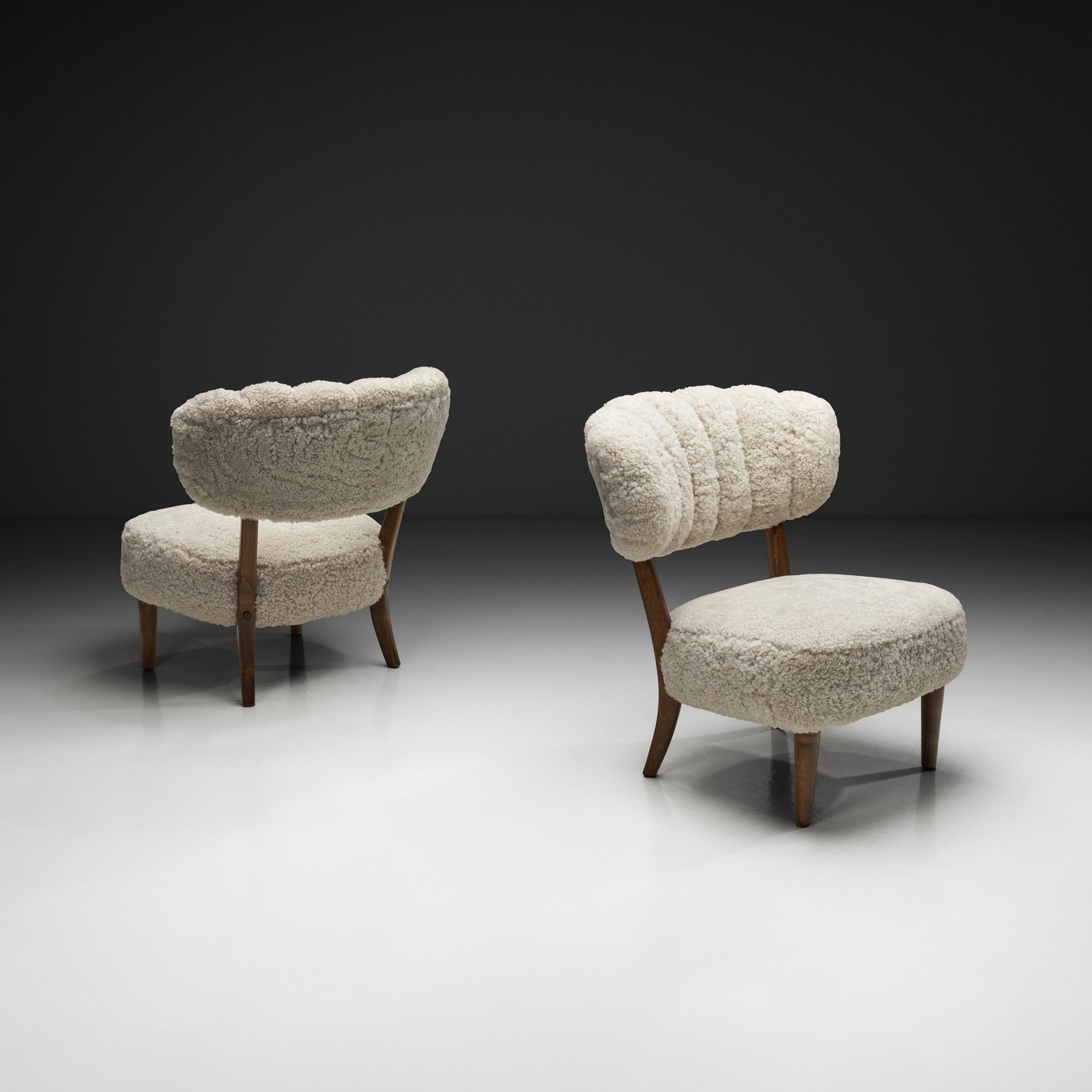
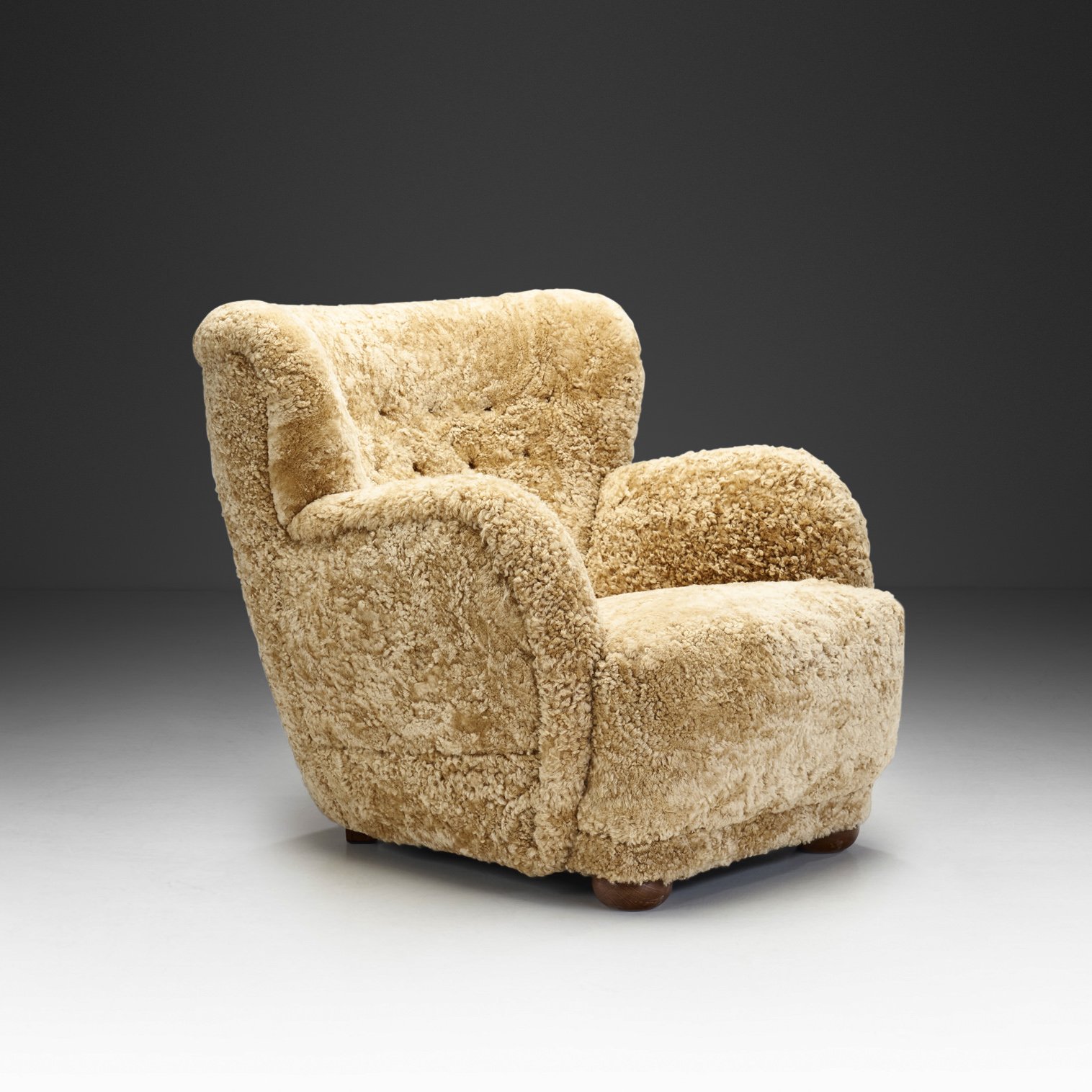
This “Clam” chair has a beloved design thanks to which it is considered by many as one of the most attractive chairs of Nordic Design. At the same time, this chair is arguably also the most mysterious piece on the Danish furniture market.
The model has a rather perplexing history, and has been attributed to several designers before, the latest being the Danish architect Phillip Arctander. However, recent research revealed that the “Clam” is the model that in fact started the story of Madsen & Schubell. Arnold Madsen designed this model in 1944 in his small basement workshop in Gothersgade, Copenhagen.
This chair has a characteristic organic shape with soft curves, perched on club-shaped beech legs. The name comes from the shape of the seat and back that together form the silhouette of an open clam. The round armrests compliment the overall round feel of the chair. The seat is slightly raised towards the front, while the back is tilted to provide great sitting comfort. The seat and back are covered in light sheepskin, adding to the soft and cosy feel of this “Clam”. Interestingly, Hans Schubell invented the special connecting piece of this chair, formed from only one piece of wood. The rest of the seat and backrest were glued to this single piece.
In 1944, the chair was already exhibited in conjunction with the presentation of the newly opened furniture store NY FORM A/S in Copenhagen, which sold the leading design of the day. In 1945, the Clam went into serial production as the first model of the new furniture company Madsen & Schubell and many well-known stores soon included Madsen & Schubell in their product range. Illums Bolighus was one of them, as were the Messen department store and the Copenhagen furniture store Nordisk Staal-og-Møbel Central. In 1953, Madsen & Schubell sold the licence of the chair to the Norwegian company Vik and Blindheim.
SOLD
Condition:
In good vintage condition. Wear consistent with age and use. The chair has been reupholstered recently in light sheepskin. Each of our items can be re-upholstered by our in-house atelier in a fabric of choice. Please reach out for more information.
Dimensions:
26.38 in W x 33.27 in D x 32.28 in H; Seat height 14.96 in; Arm height 22.64 in
67 cm W x 84.5 cm D x 82 cm H; Seat height 38 cm; Arm height 57.5 cm
About the designer:
Henry Hans Schubell was born on February 23. 1906 in Elsinore, Denmark. After completing school, he became an apprentice cabinetmaker in Elsinore. After 5 years he finished his apprenticeship, and was awarded a medal for his work. When he turned 20, he moved to Copenhagen, where he worked for various cabinetmakers. In 1929, at the age of 23, he was employed as a foreman at the cabinetmakers Winter & Winding, where he supervised the production of furniture until 1945.
In 1944, the firm received a request from an upholsterer named Arnold Madsen, who had an idea for a chair. Madsen was having difficulties finding a cabinetmaker with the required skills to do the woodwork based on Madsen’s little plaster model. Henry Schubell succeeded in producing the wooden frame, making it possible for the chair to be put into production. Arnold Madsen was so impressed by his work that he suggested forming a partnership where Henry Schubell would design the furniture and produce the wooden frames, which Arnold Madsen would then upholster and market. The workshop was realized in the inner city of Copenhagen, and their joint venture was named “Madsen & Schubell”.
The cooperation between Henry Schubell and Arnold Madsen was so successful that they purchased a factory building on the outskirts of Copenhagen. Over the next 20 years, the company produced several successful models, most of which were designed by Henry Schubell. Some of these chairs were licensed to the Norwegian company Vik & Blindheim and to the Dutch company Bovenkamp.
The cooperation between the two ended in 1963, and by mutual agreement, Arnold Madsen established his new upholstery firm under the name “Madsen og Schubell”, in cooperation with his son, Ib Madsen. In the 1970s, Ib took over the company which still ran under the name Madsen & Schubell causing some confusion about the attribution of Madsen & Schubell models. ~H.
REQUEST PRICE HERE
Price category: 5,000 - 7,500 usd / eur
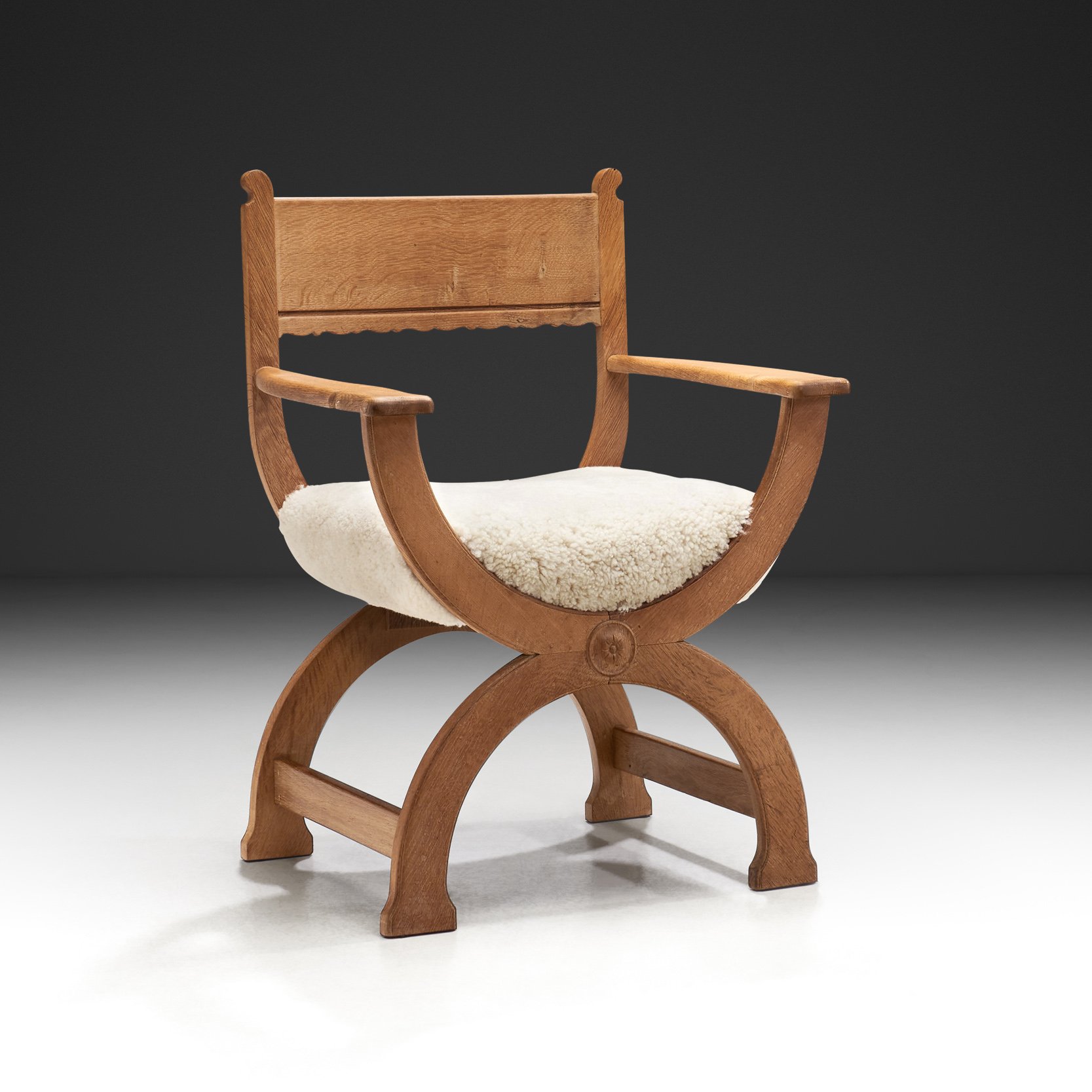
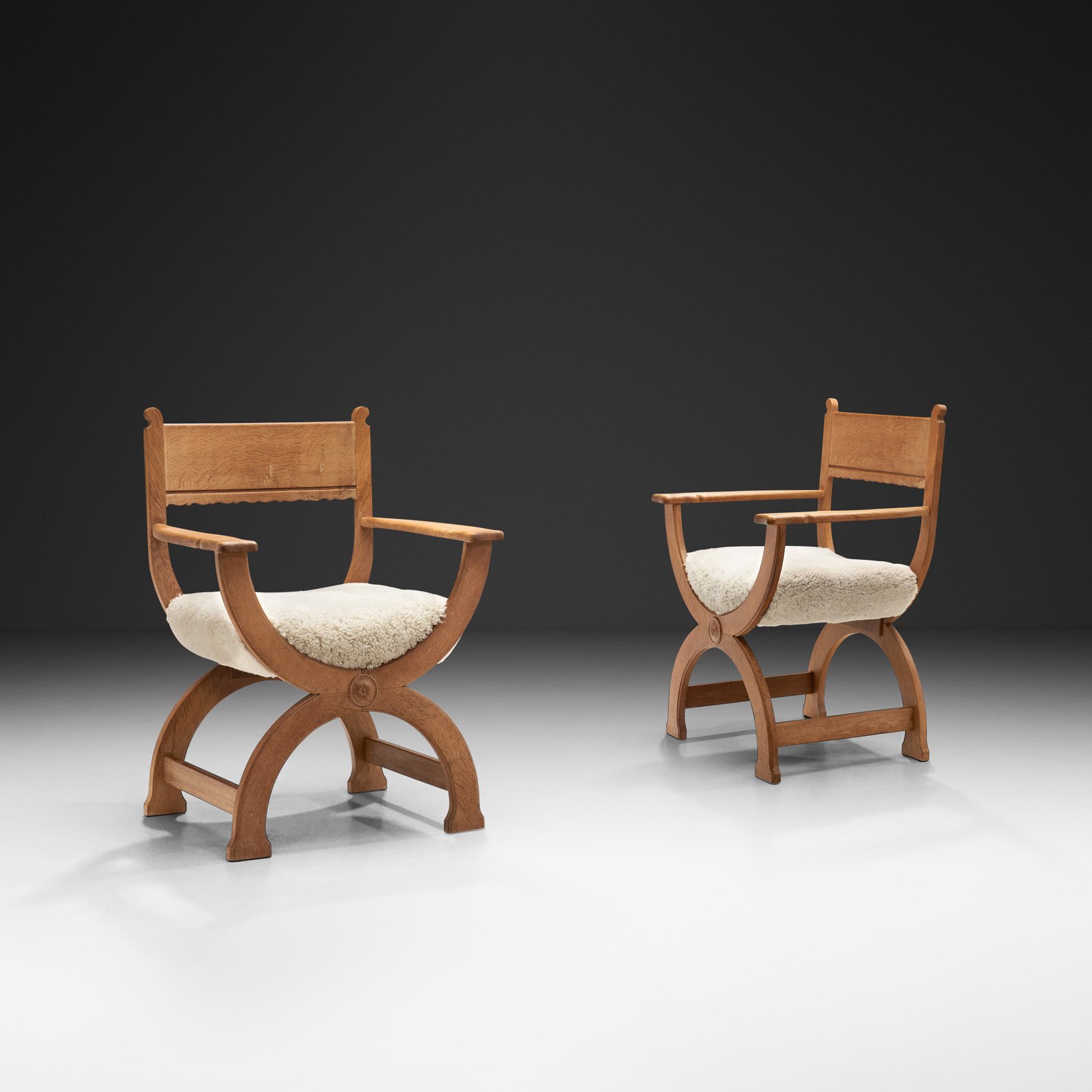
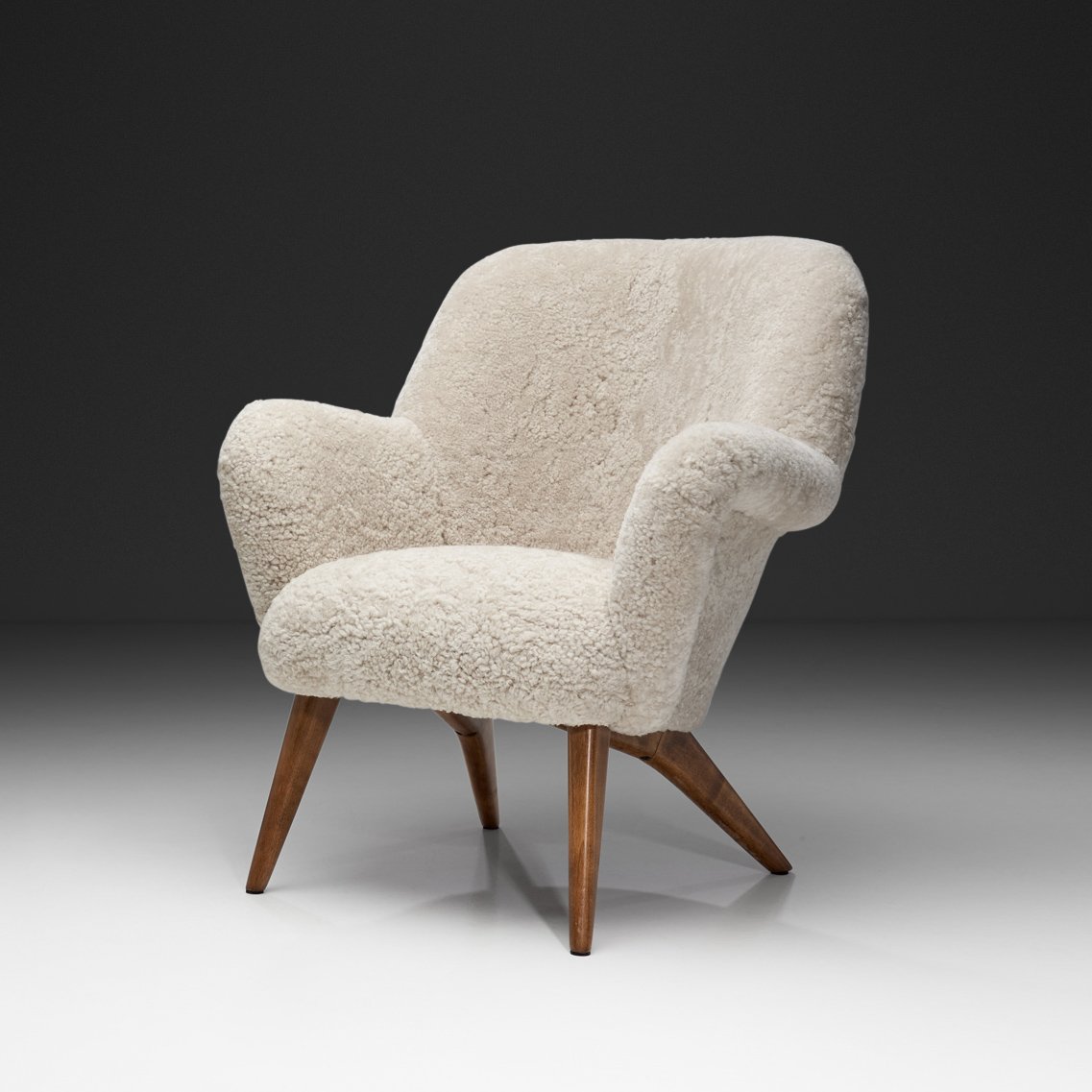
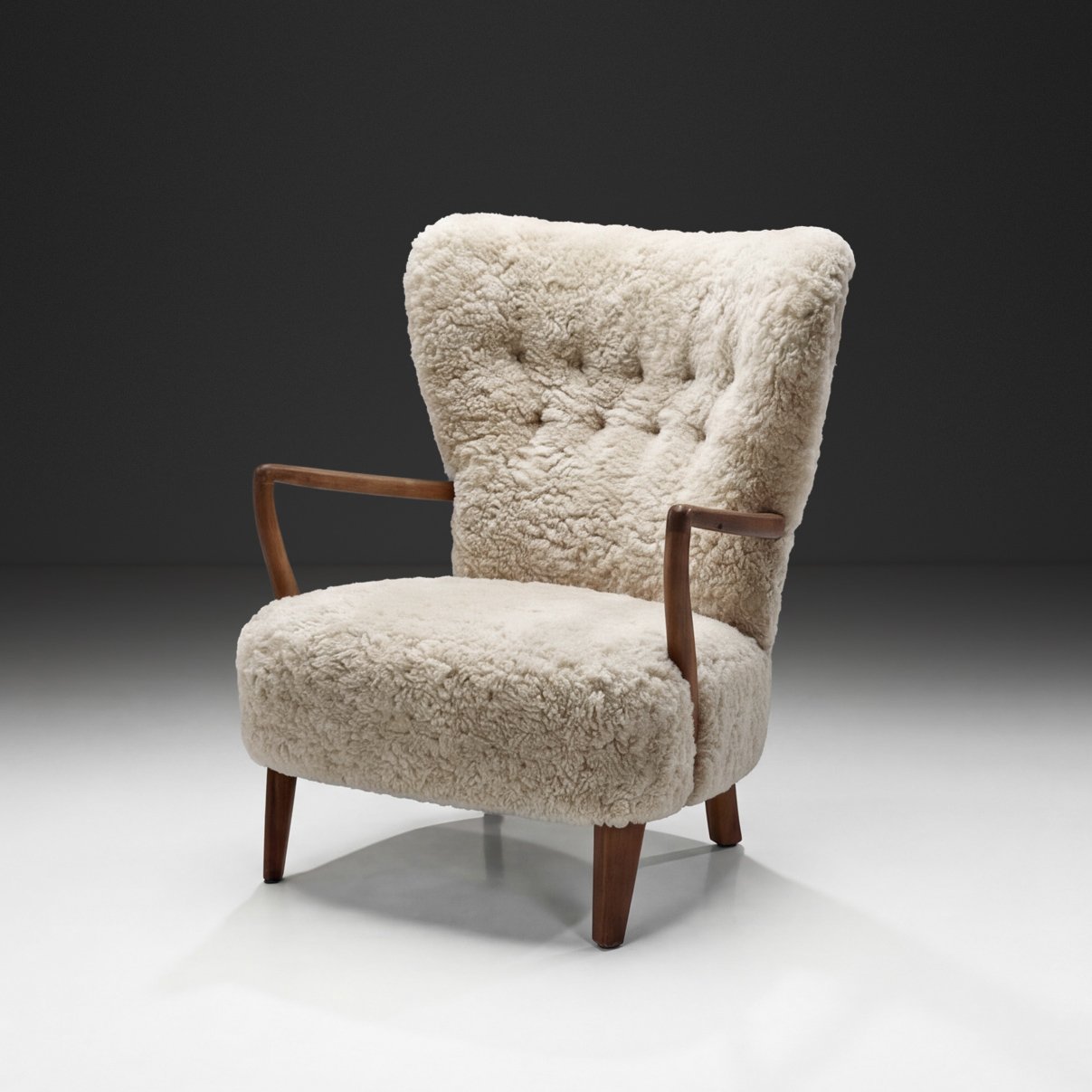
This peculiar mid-century easy chair features multiple distinctive characteristics, from its floating back to the curvaceous armrests. This model is, without a doubt, the work of a master cabinetmaker. The period from roughly the 1940s through the 1960s was a high point for Scandinavian furniture makers, and this chair shows why.
The elegant organic lines of the design create a striking silhouette. Its generous proportions and luxurious upholstery provide great sitting comfort. The chair’s seat and backrest are separated in a style that is typical of Swedish designer, Otto Schulz. This stylish feature highlights the beautiful oaken frame. The armrests are in a peculiar shape, wider in the middle, and along with the generous proportions and upholstery, are perfectly sculpted to accommodate the sitter. Schulz was known for his floating back designs as seen here, preventing the chair from looking heavy. As with most lounge chairs, this chair is also built in a slightly reclined position which provides ultimate comfort. Thanks to the open profile and luxurious, organic style, it is an ideal way to draw attention while complementing any space.
Swedish furniture reflected traditional Scandinavian craftsmanship and mixed it with a modern style. This is reflected in the beautiful sheepskin upholstery, which give this easy chair a soft, modern edge. The sturdy frame and armrests are all carved from solid oak and have acquired a beautiful patina over the decades.
Condition:
In good vintage condition. Wear consistent with age and use. Due to the nature and age of the wood, the chair may have marks, scratches, and discolouration. The chair has been recently reupholstered in premium sheepskin. Each of our items can be reupholstered by our in-house atelier in a fabric of choice. Please reach out for more information.
Dimensions:
27.95 in W x 30.90 in D x 31.29 in H; Seat height 16.92 in
71 cm W x 78,5 cm D x 79,5 cm H; Seat height 43 cm
About the (attributed) designer:
Otto Schulz (1882-1970) was Swedish interior designer, furniture designer, publisher and founder of the furniture company BOET in Gothenburg.
Schulz was born in Germany and moved to Sweden in 1907. He mainly produced opulent upholstered furniture, as well as lavishly inlaid, decorative box furniture style-wise between functionalism and traditionalism. He has some of his own invented techniques patented, including the use of decorative nails as part of the design, called Bopoint. After establishing his own furniture company, BOET, he used it as a showroom to exhibit his designs as well.
In the 1920s he started publishing the eponymous magazine BOET, which was also a platform for his own collection. The magazine was at the time the most influential, appearing in regular editions in Sweden and often included interviews with well-known designers and architects. ~H.