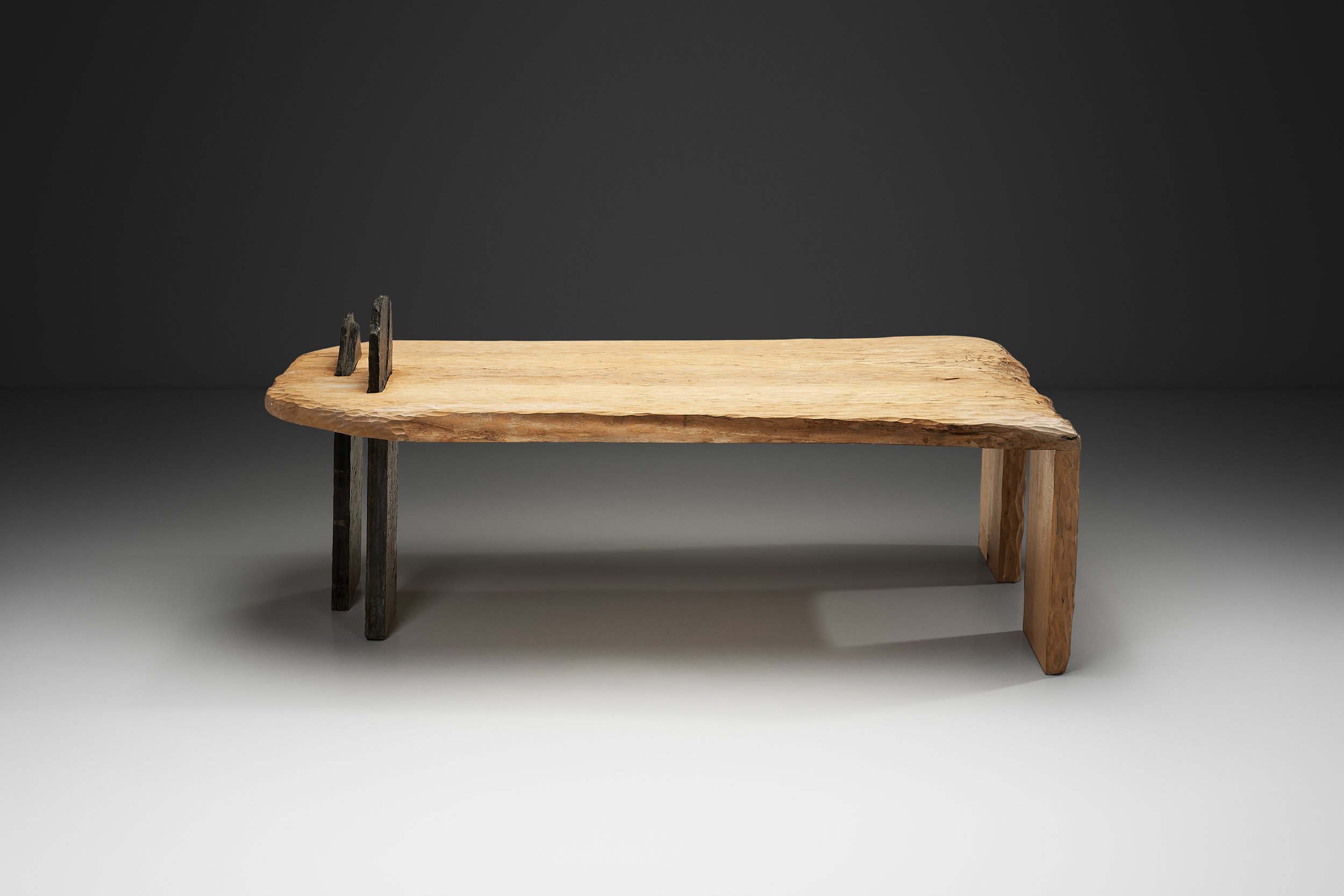
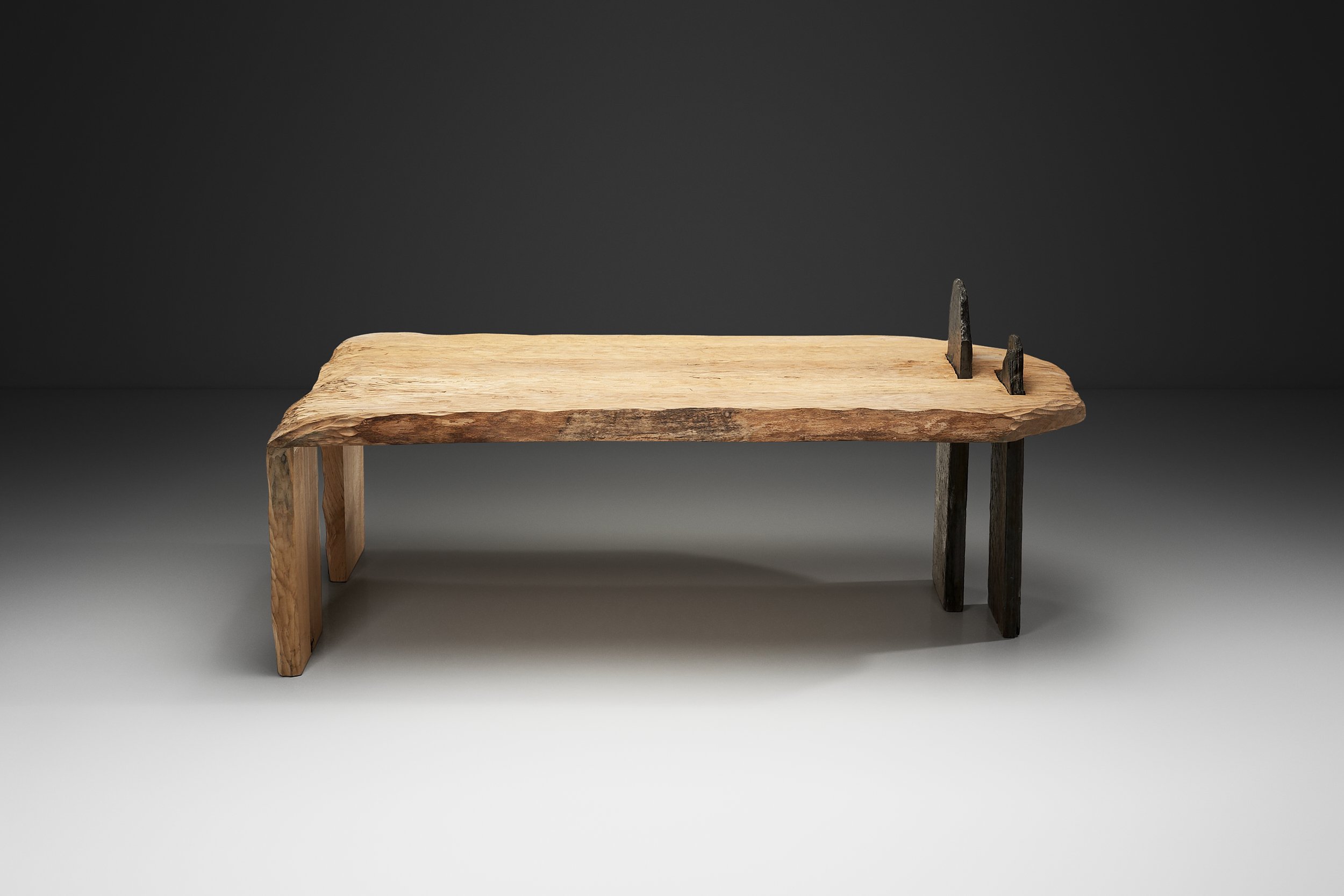
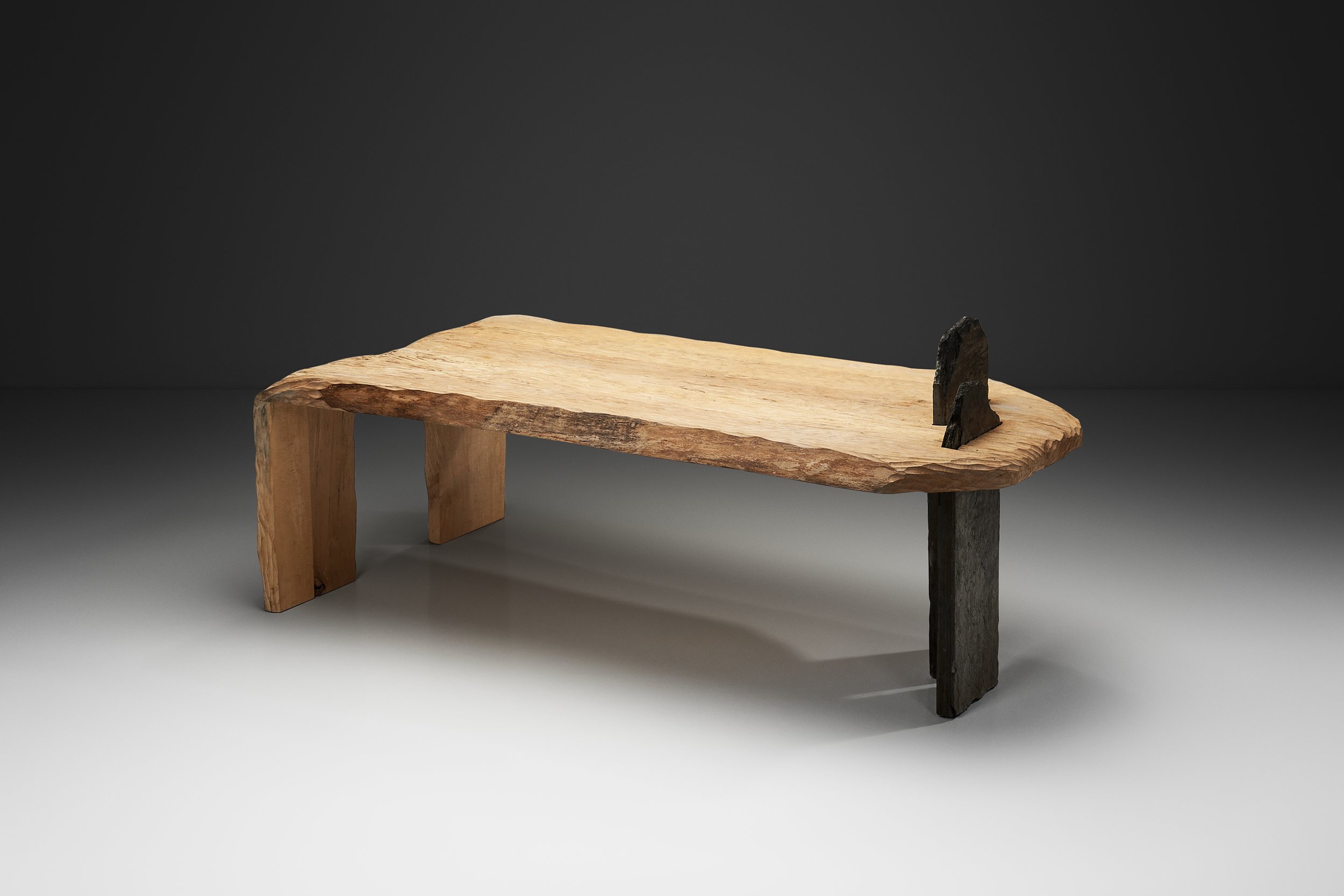
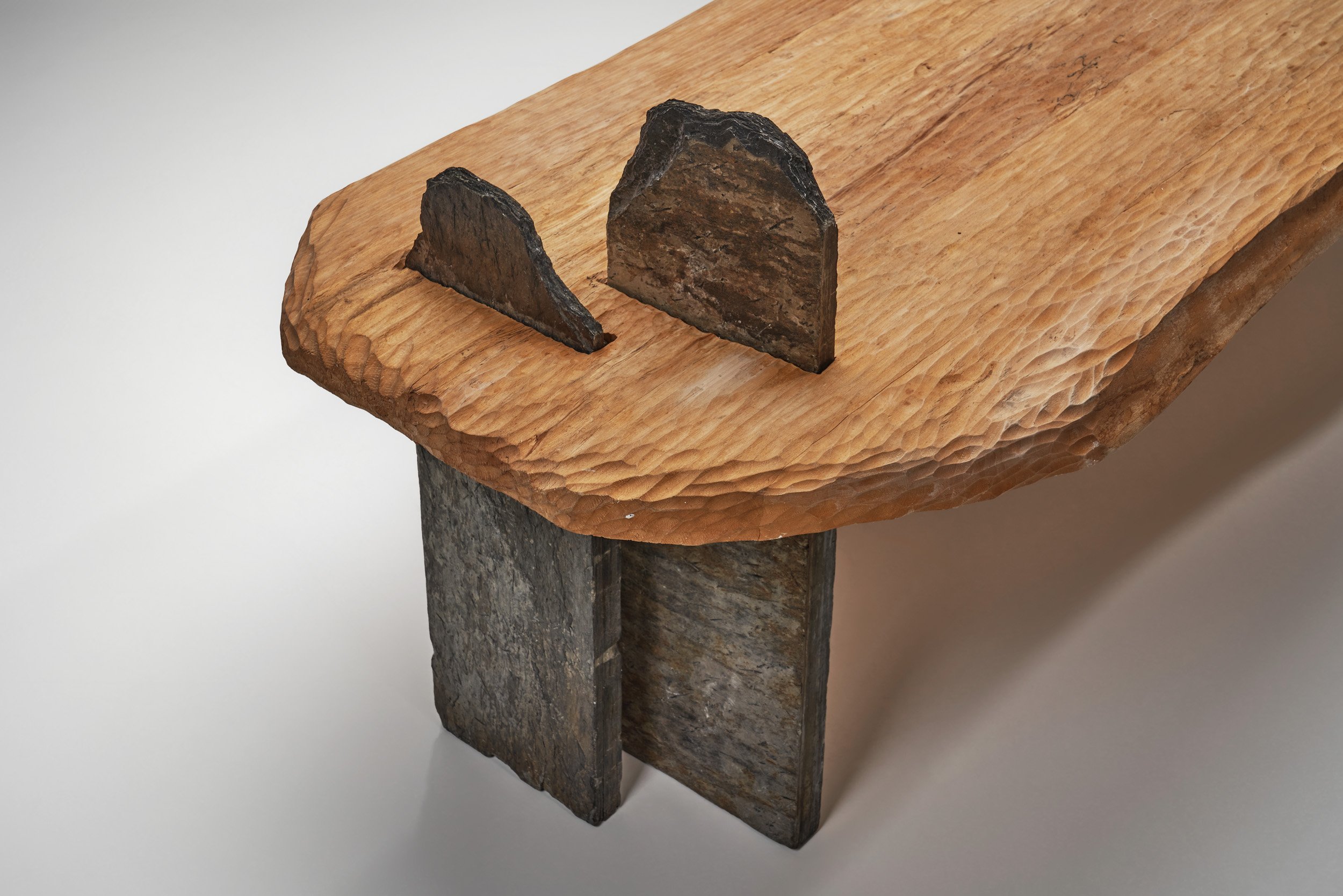
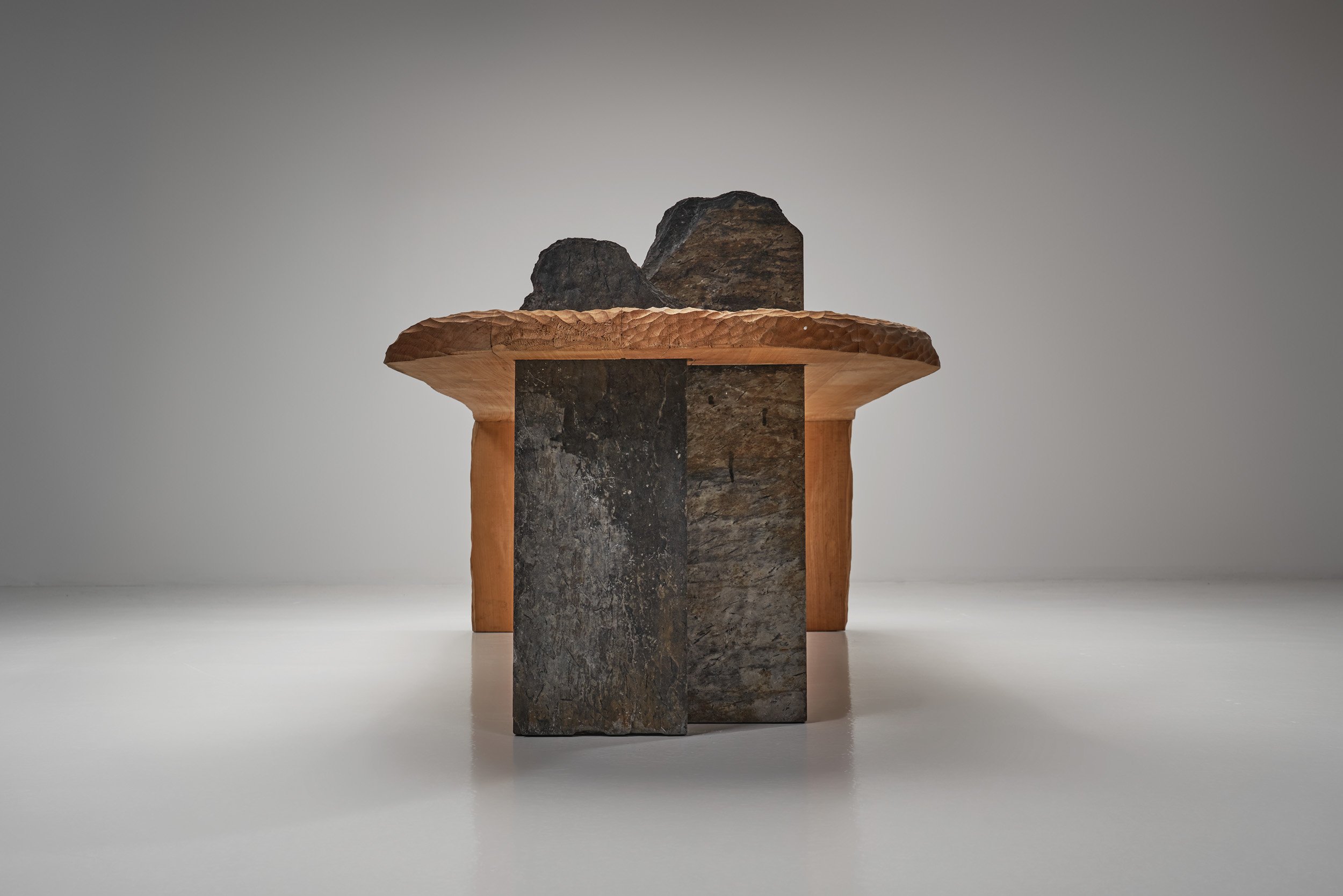
Sculptural Coffee Table with Artisan Wood Etching and Slate Legs, Europe ca 1990s (sold)


Sculptural Coffee Table with Artisan Wood Etching and Slate Legs, Europe ca 1990s (sold)
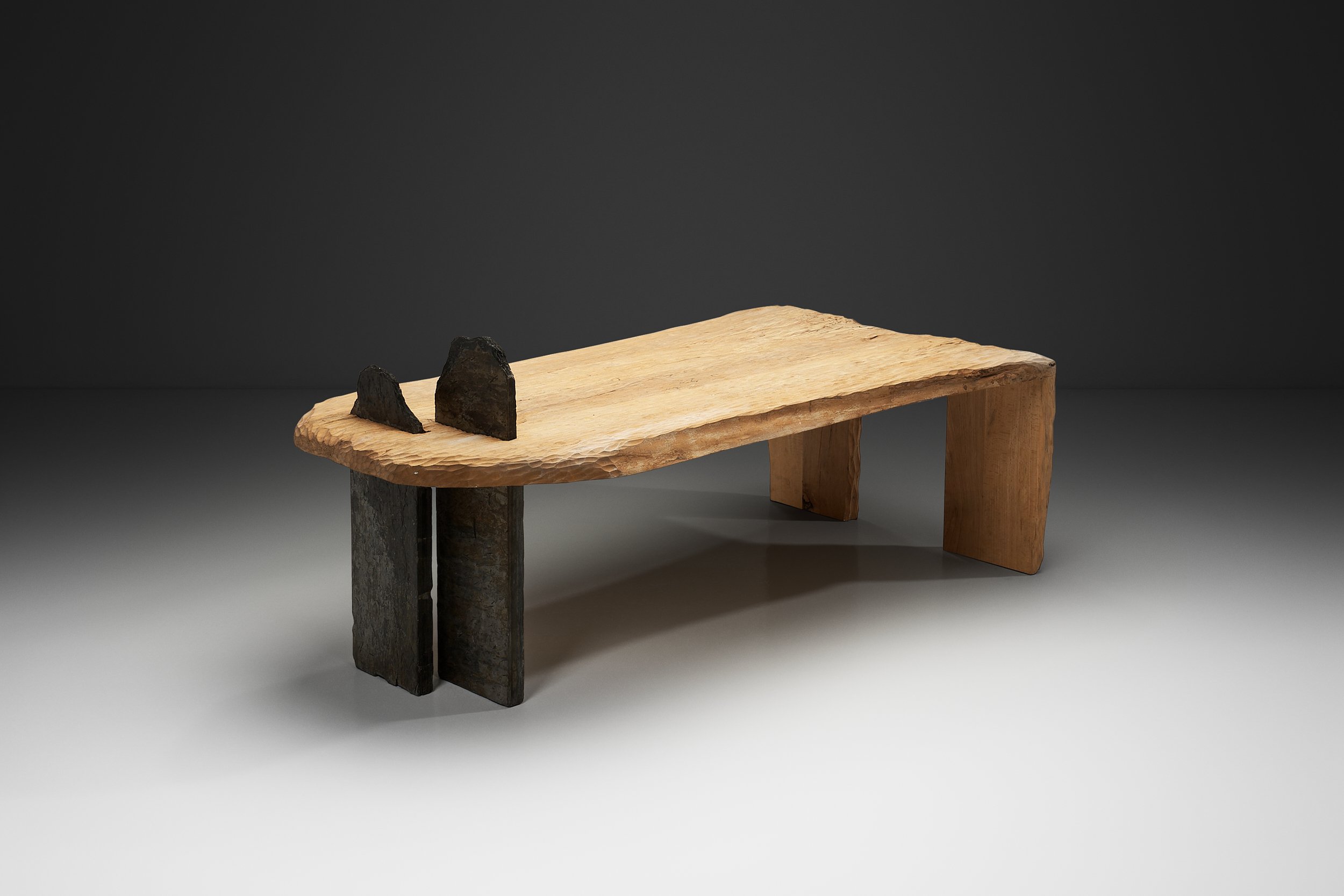
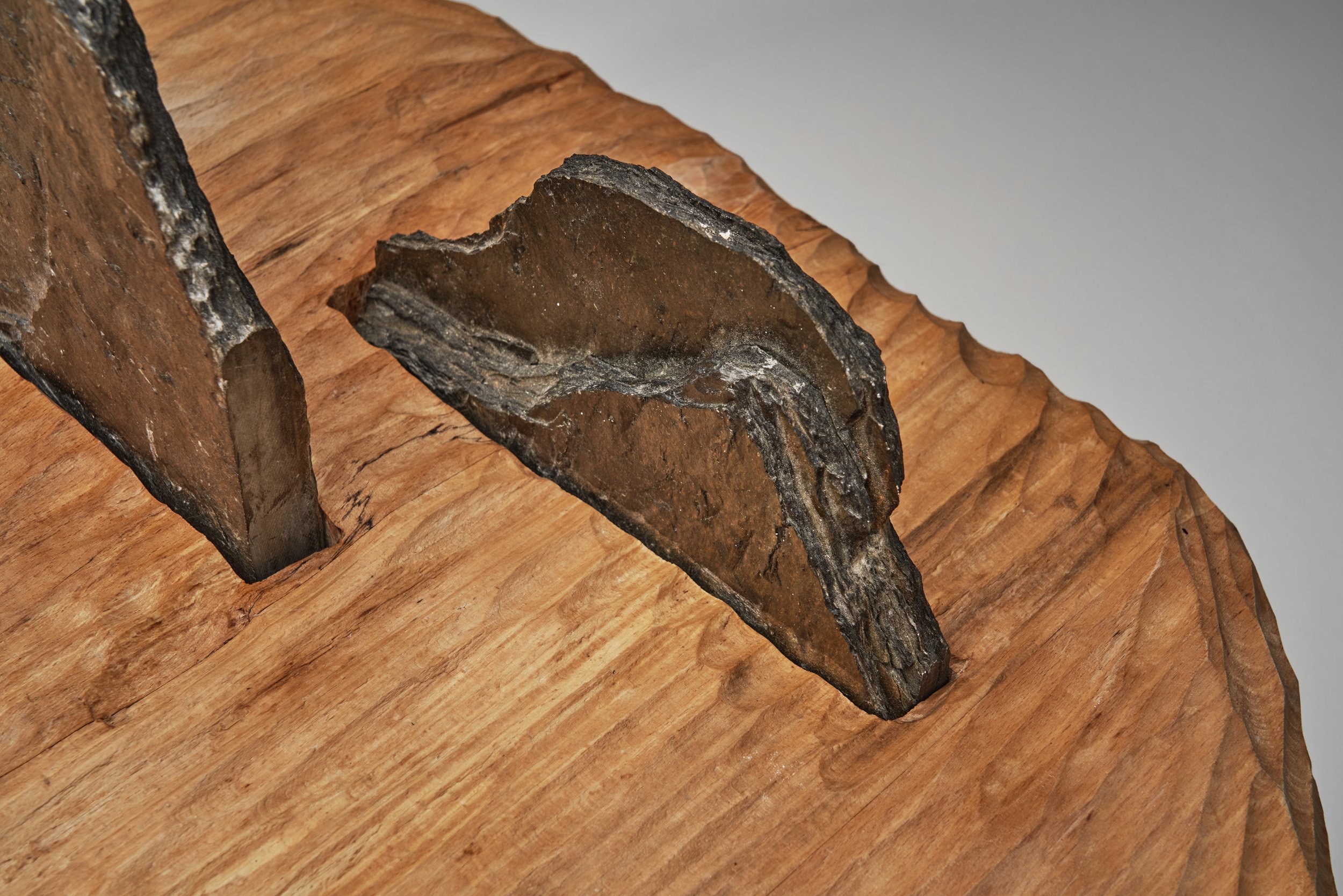
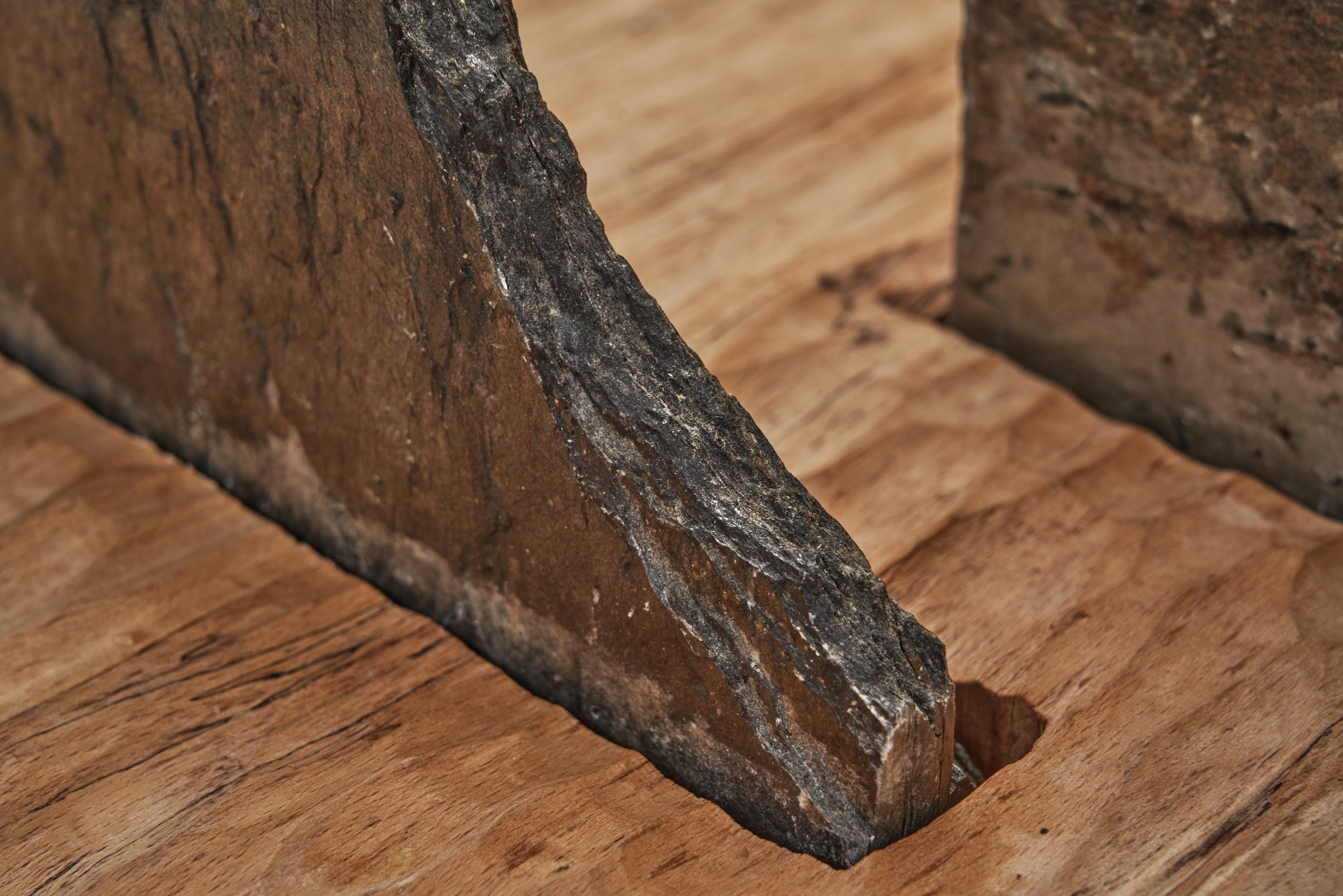
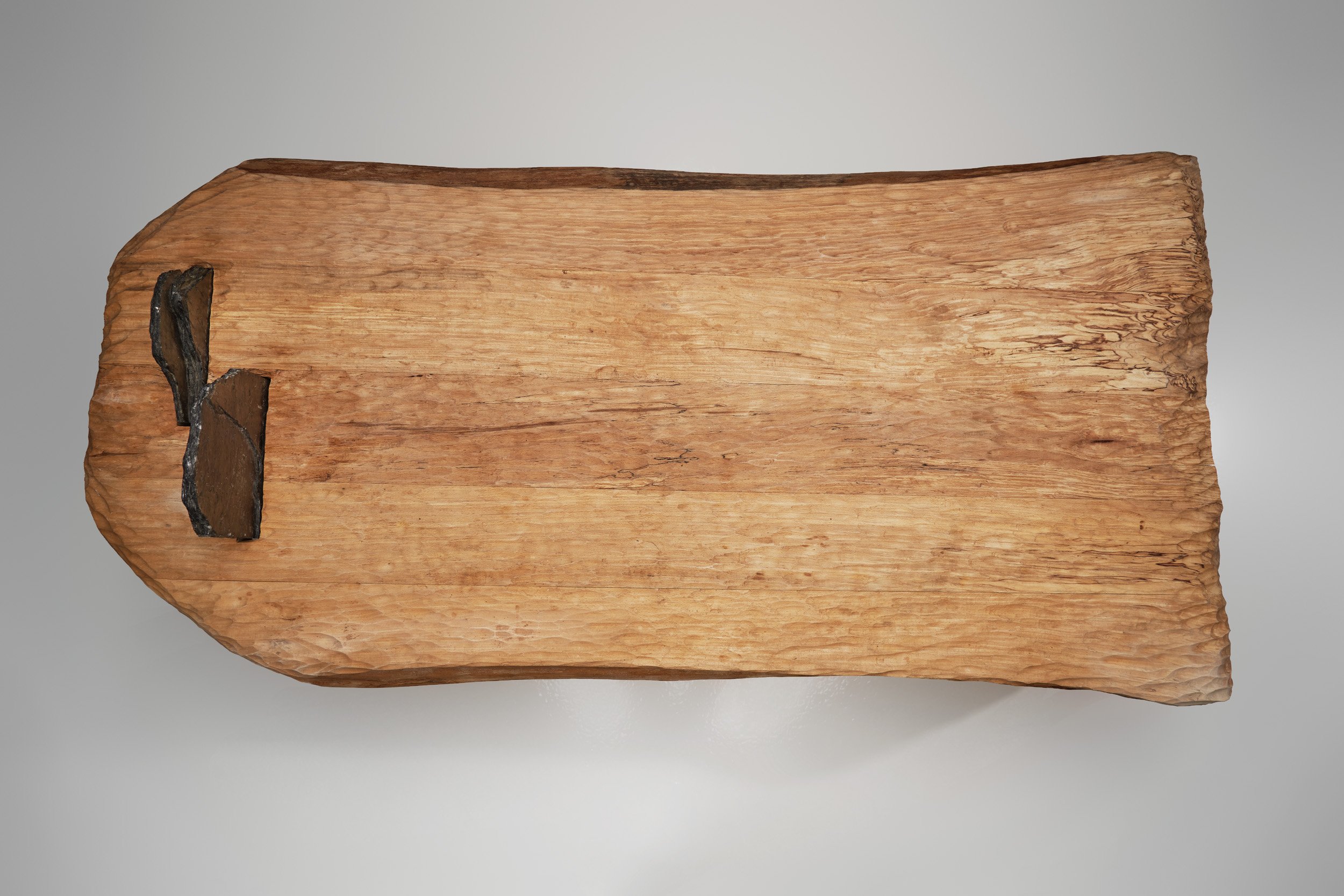
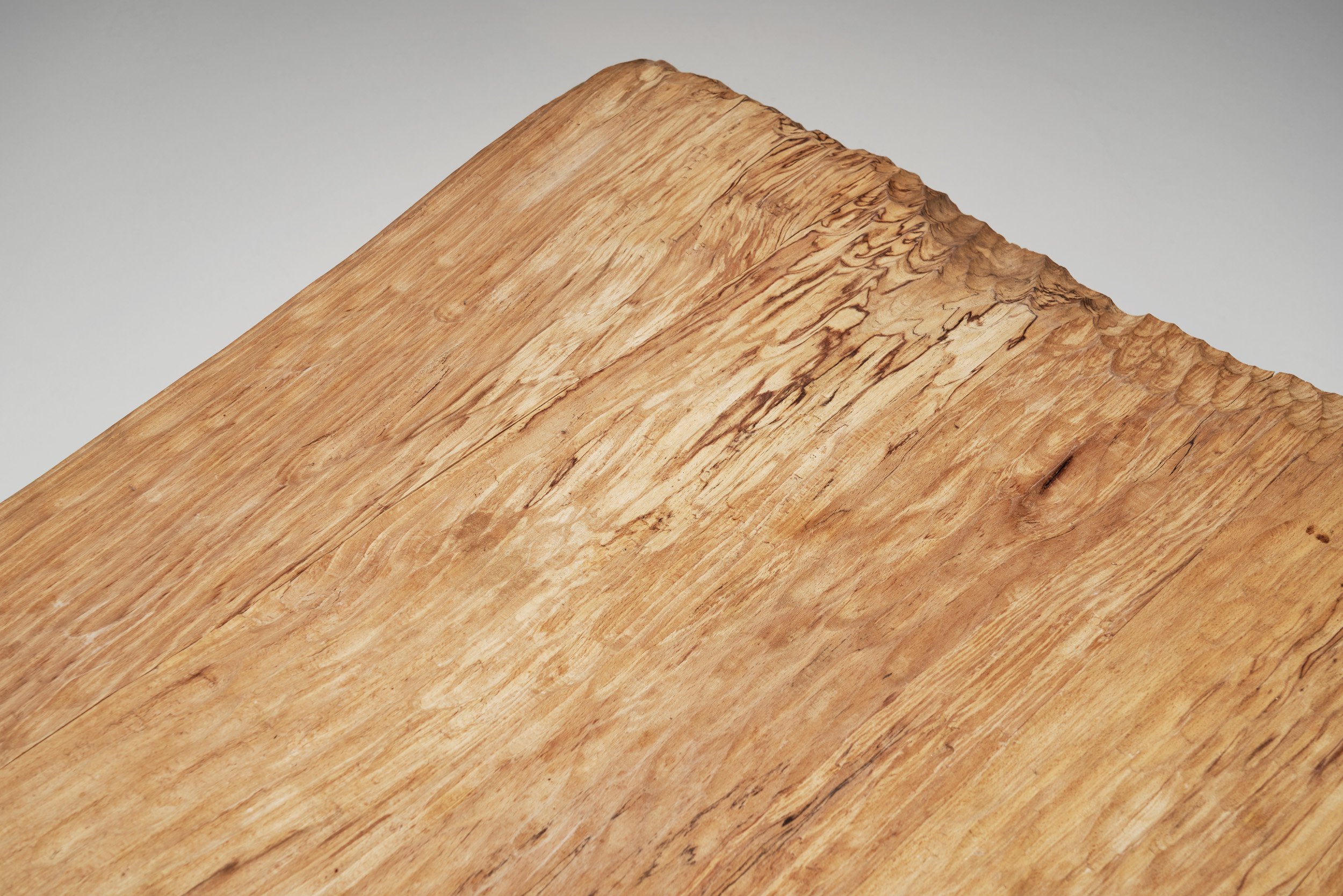
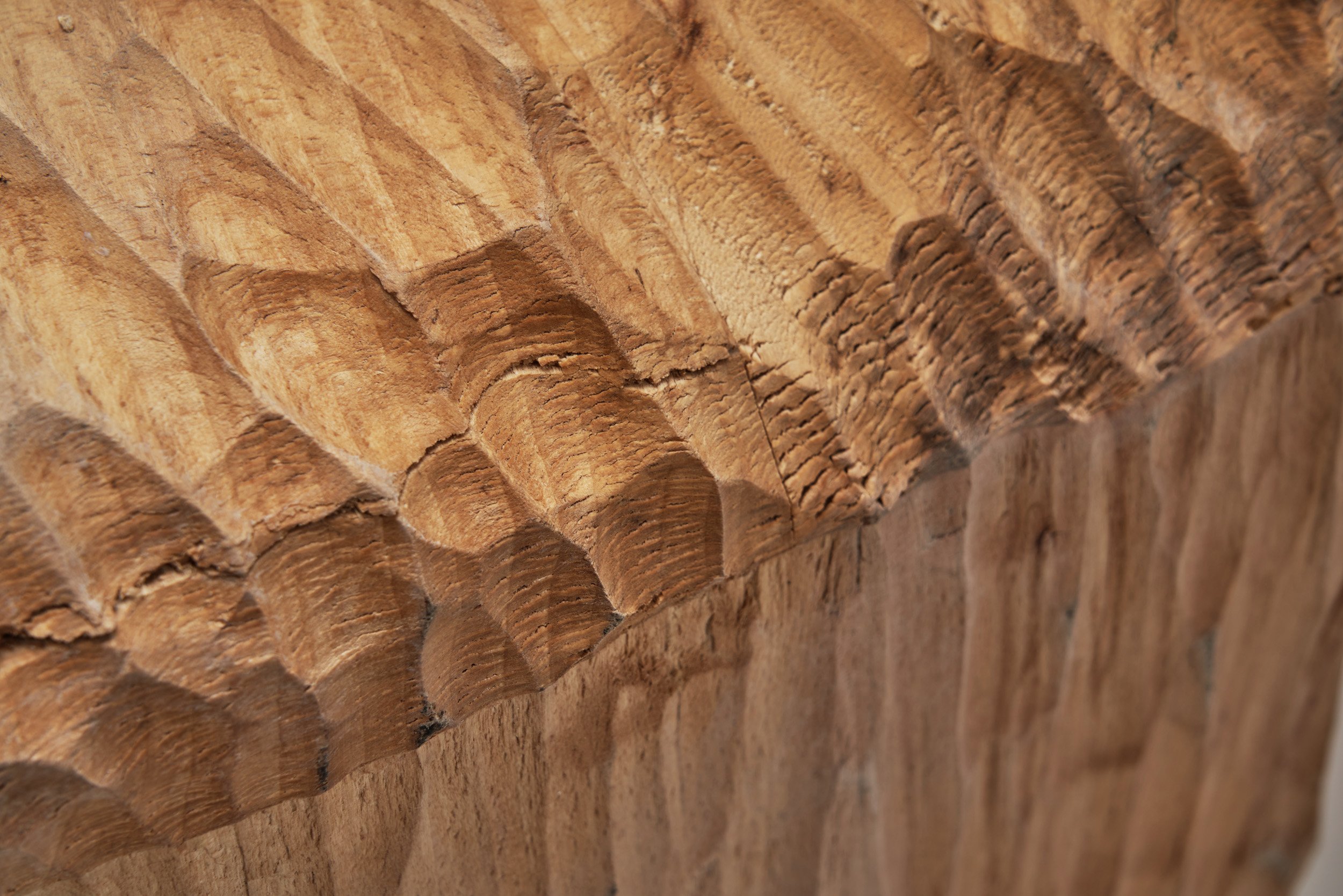
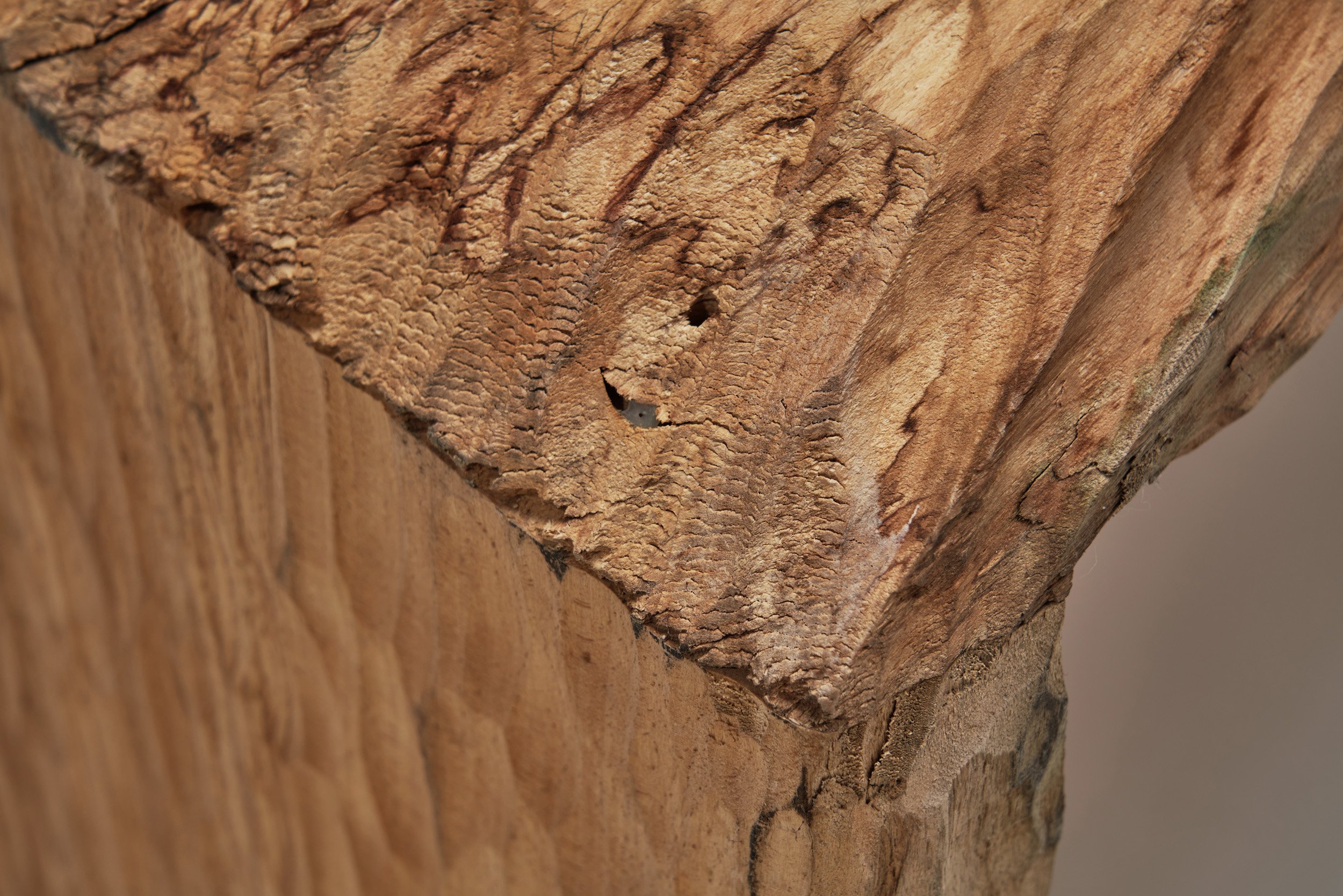
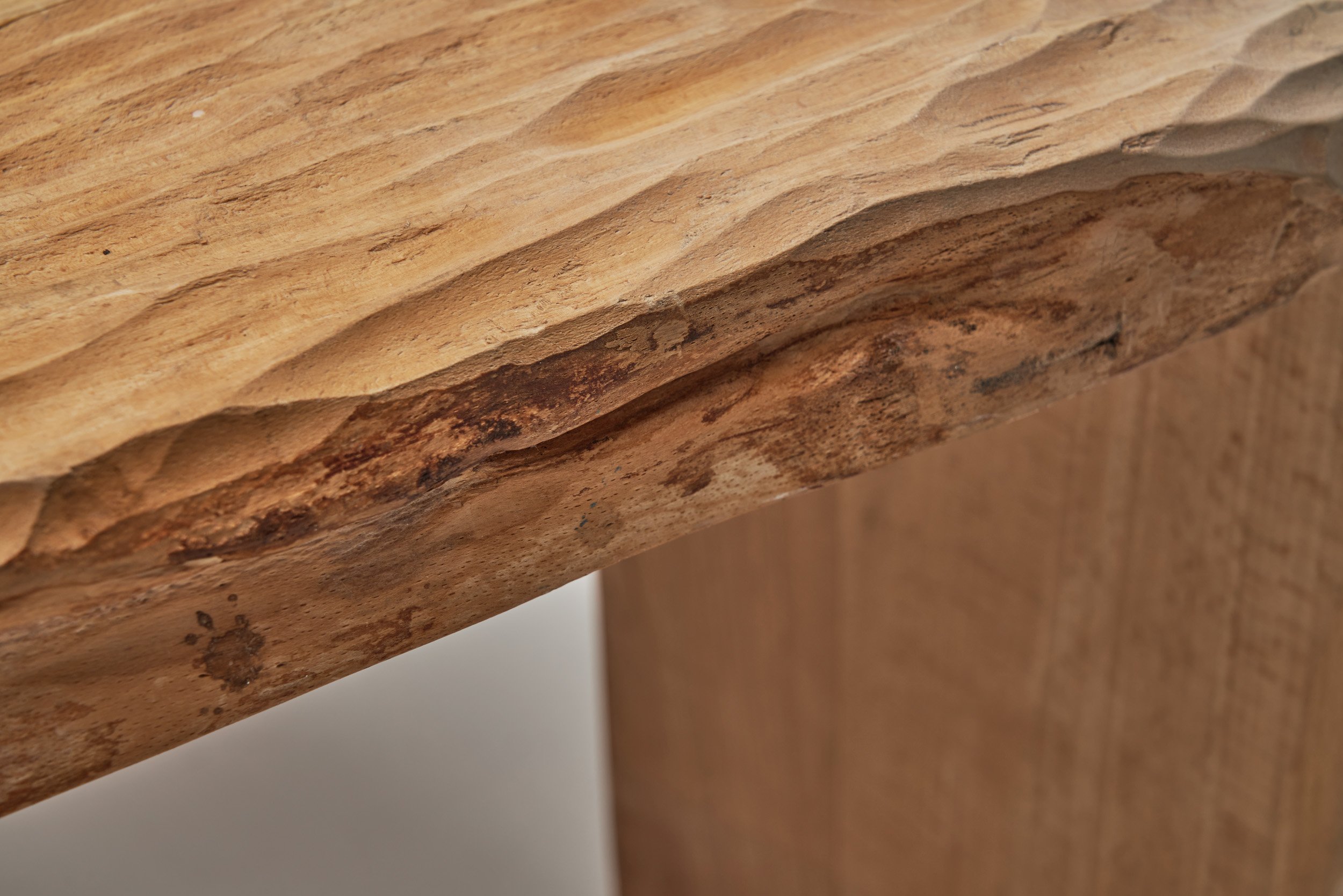
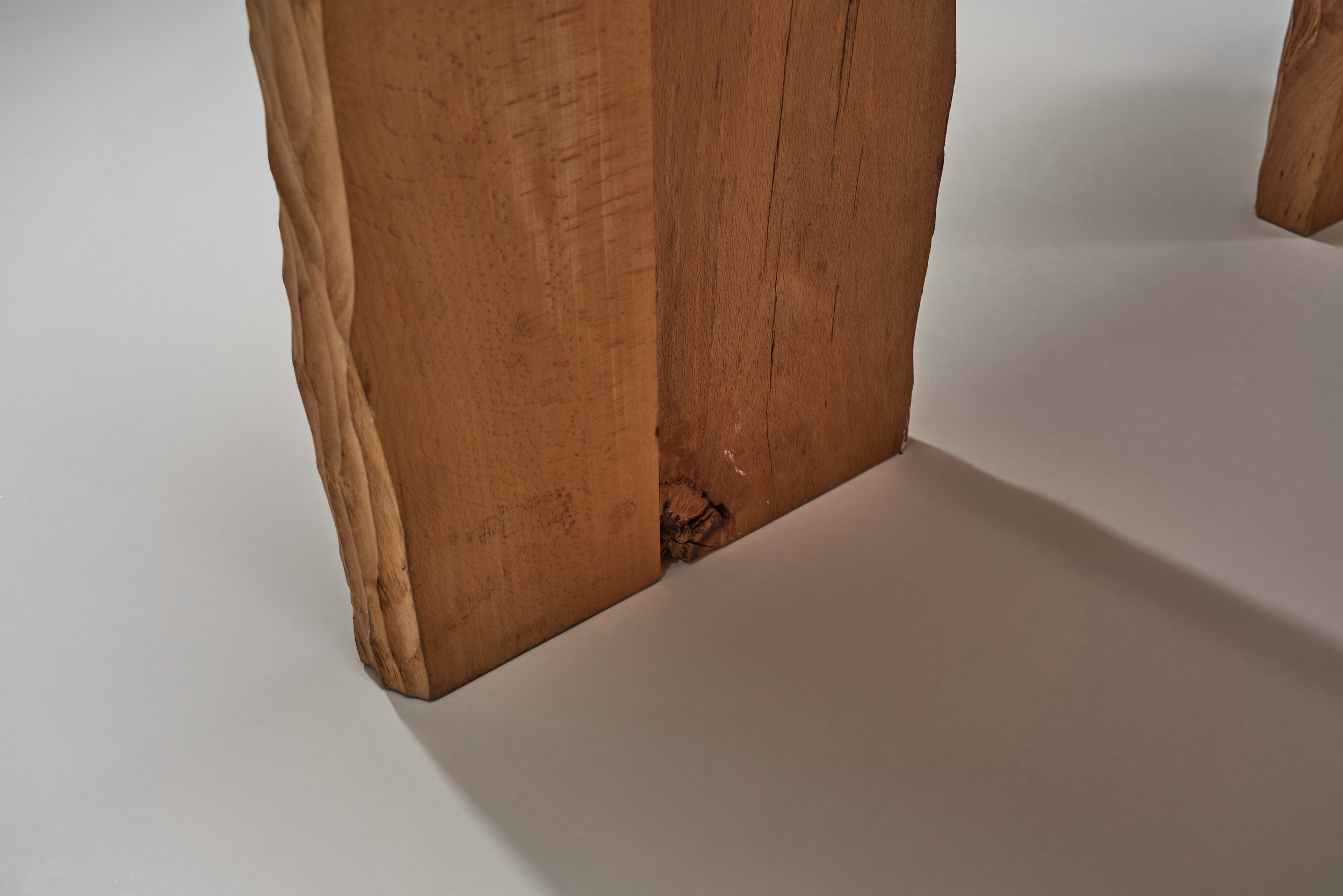
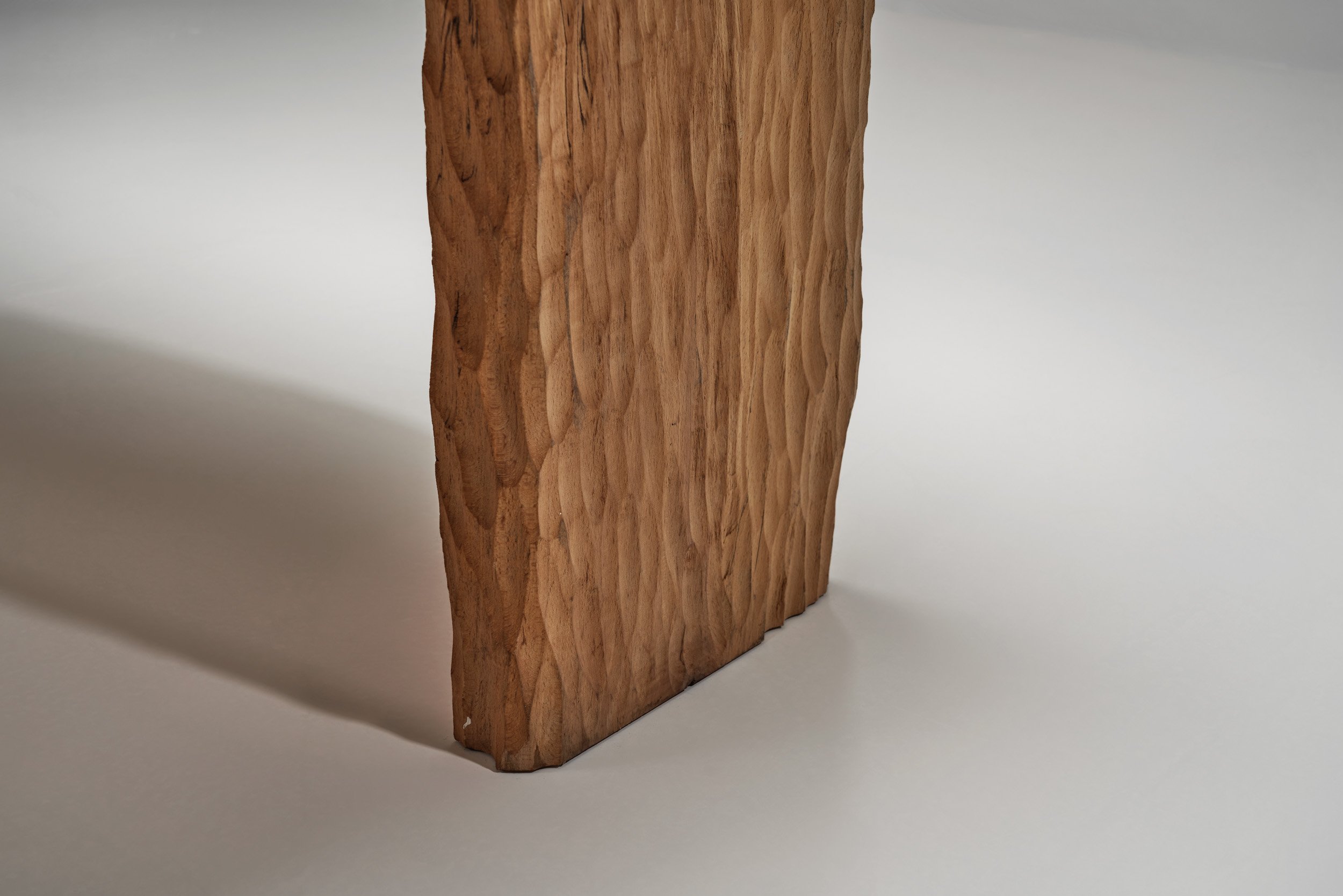
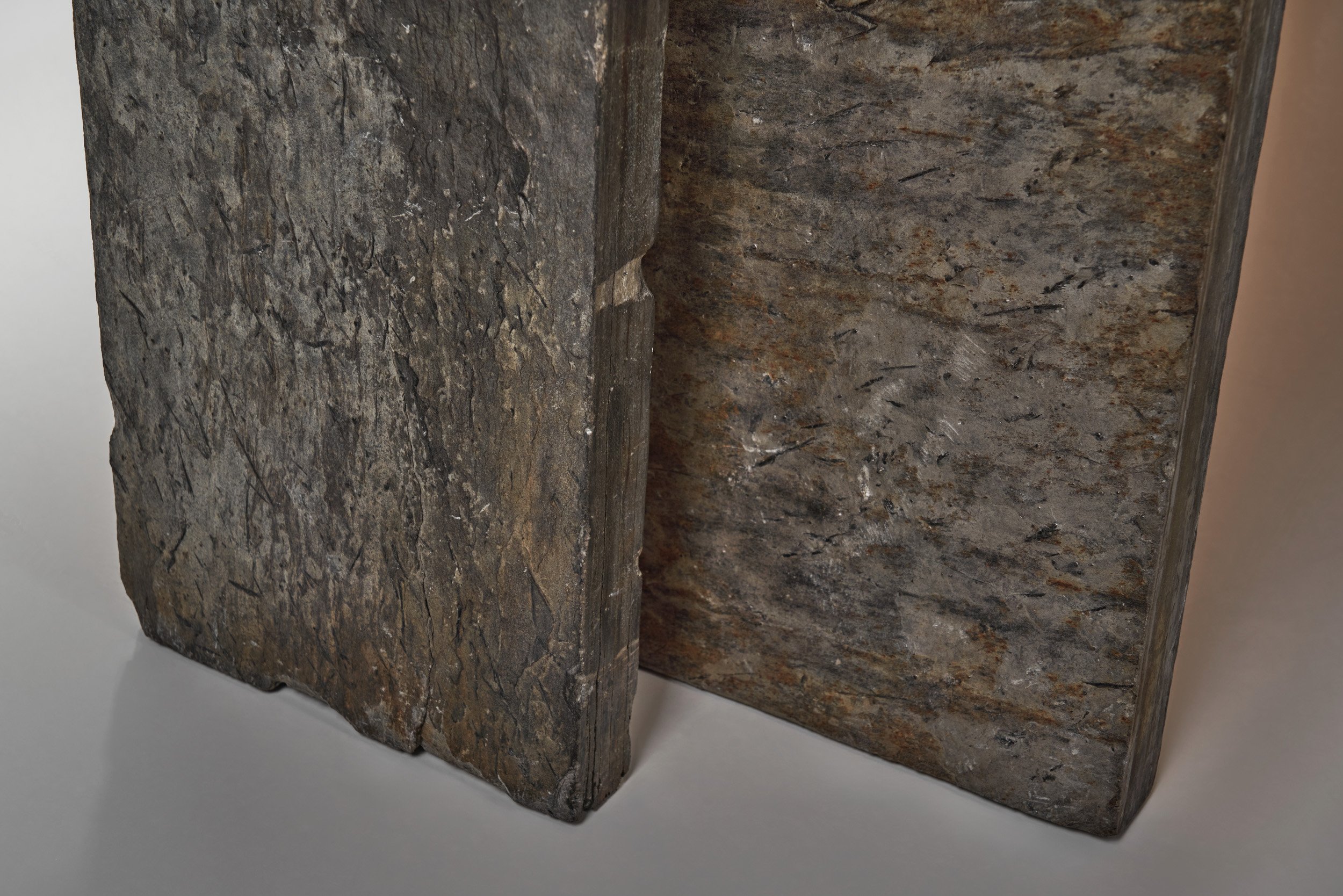
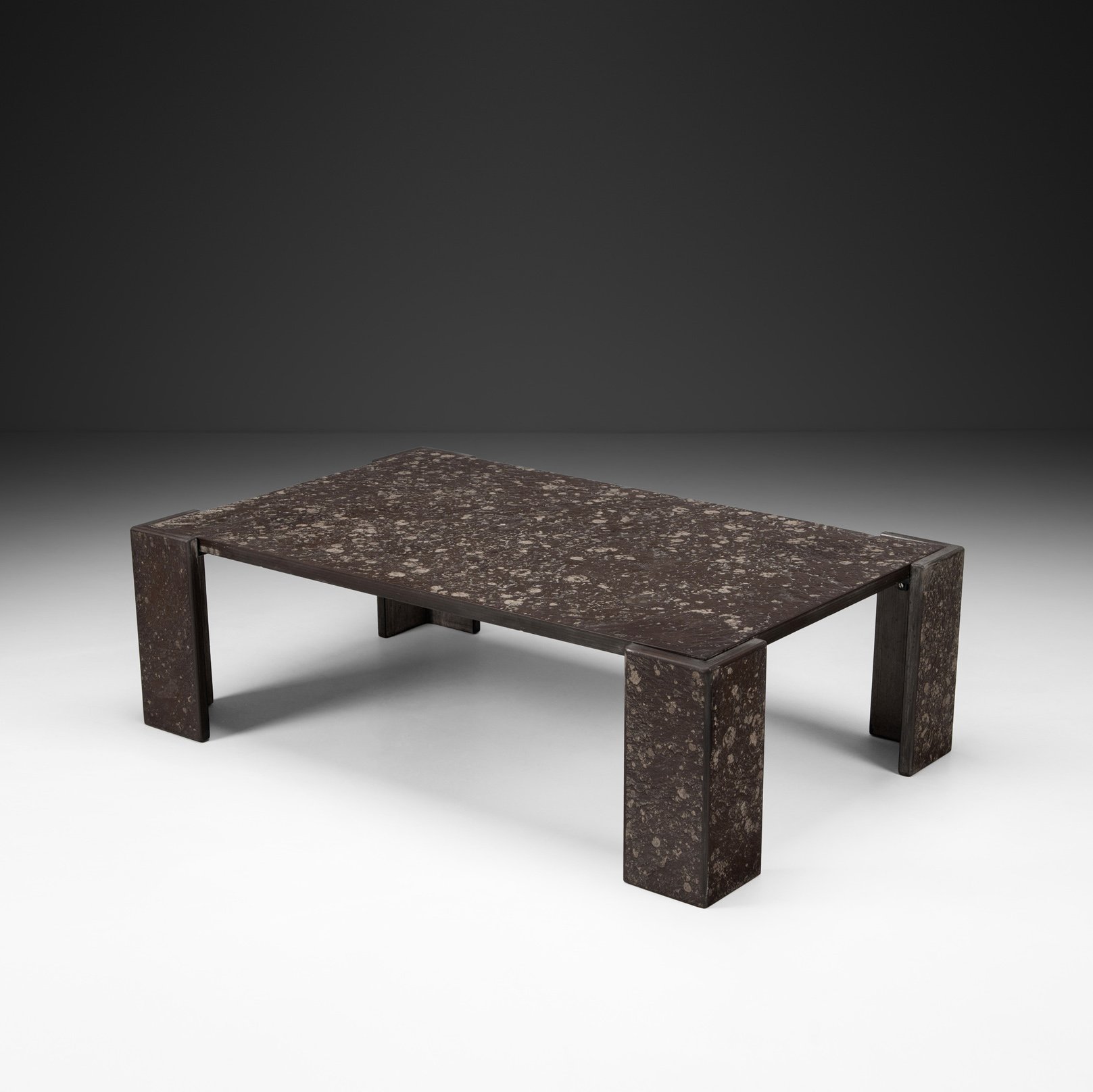
This sculptural coffee table cleverly combines natural materials and strong forms that challenge the boundaries of furniture design. The bold combination of materials, contrasting textures, and sculptural form make this table an exceptional piece that stands as both art and furniture.
Utilising and highlighting the qualities of the materials used, combined with the expertise of the maker, this coffee table is a beautiful piece that can both dominate and complement a modern space. The table's wooden top showcases an appealing textural look. As a result, the impression is quite elemental and striking. The dark colour of the slate legs on one side contrast beautifully with the top, as the robustness grounds the design. The combination of materials makes this table a stylish example of the period’s design versatility. Coffee tables, in general, serve as design staples in living spaces for a multitude of reasons: beyond their utilitarian function of providing a surface for drinks and books, they anchor a room, creating a focal point around which furniture and conversation revolve. Overall, the table equally emphasizes function and visual interest, creating an instantly arresting aesthetic.
This piece is an interesting representation of furniture design from the 1990s, a phase of cultural and social impacts with creatives trying to figure out a way towards leaving their mark on the design world.
SOLD
Condition:
In good vintage condition. Wear consistent with age and use. The item has recently been reconditioned. Due to the nature of the materials, this item may have some marks, scratches, and discolouration.
Dimensions:
61.41 in W x 30.70 in D x 27.16 in H
156 cm W x 78 cm D x 69 cm H
REQUEST PRICE HERE
Price category: 7,500 - 10,000 usd / eur
The 1960s saw furniture makers apply the principles of modern design to increasingly versatile pieces. As homes became increasingly modern, desks were no longer treated as purely utilitarian objects but as pieces of furniture expected to integrate naturally within a living space. Designers responded by refining forms, adding sleek storage, and placing greater emphasis on the visual lightness of their creations. The result was furniture that remained highly functional while maintaining a distinctly architectural character.
At first glance, this 1960s desk appears simple. The rectangular top rests within a clean, open framework, creating a silhouette that feels balanced and remarkably precise. Closer inspection reveals its most distinctive feature: three integrated drawers concealed behind a series of horizontal fronts. This detail looks like a simple aesthetic detail, while it showcases the designer’s concern with practicality. The stacked drawer fronts create a subtle rhythm across the front without disturbing the calm geometry of the piece. When opened this detail creates a layered effect that captivates the eye and emphasizes the horizontal construction. The warm tone of the wood further enhances the design. The open sides prevent the desk from appearing heavy, while the strong stretcher below reinforces the structure and contributes to its clear architectural presence.
What makes this desk particularly successful is the way storage is incorporated into the overall composition. Rather than reading as separate functional elements, the drawers become part of the design itself. The piece carries the quiet confidence associated with the best Italian modern furniture, where proportion, practicality, and visual clarity work together effortlessly.
Condition:
In good vintage condition. Wear consistent with age and use. The desk has recently been reconditioned. Due to the age and nature of the material, the item has minor scratches and dents, and may have additional marks or discolouration.
Dimensions:
59 in W x 30.3 in D x 31.6 in H
150 cm W x 77 cm D x 80.5 cm H
REQUEST PRICE HERE
Price category: 20,000 - 30,000 usd / eur
Generally, Czech mid-century modern designs tend to be more sober than their French, German, American, and even Scandinavian counterparts. However, works by Pavel Novak are an exception - as evidenced by this large desk. While his genius is evident in his work, the Czech designer’s repertoire is finally starting to surface, and as this piece shows, we are lucky to witness it.
Novak often worked with a gouge, that originally never had any other vocation than to furnish his farm. Part of this table is made of hand gouged oak, which is in itself a time-consuming and rare woodcarving technique. While most woodworkers offer help with fixing gouges in wood, Novak used the technique to create this rustic looking body that can be considered to be a functional sculpture. Thanks to the unique, hand-carved texture, the table is one of a kind, with an inimitable pattern .
This solid wood table, with its natural finish, exemplifies the enduring charm and warmth that mid-century design continues to bring to contemporary interiors, underscoring the timeless appeal of this iconic design era.
Condition:
In good vintage condition. Wear consistent with age and use. The desk has recently been reconditioned. Due to the nature and age of the wood, the item may have some marks, scratches, and discolouration.
Dimensions:
88.98 in W x 26.78 in D x 39.97 in H
226 cm W x 68 cm D x 101.5 cm H
REQUEST PRICE HERE
Price category: 5,000 - 7,500 usd / eur
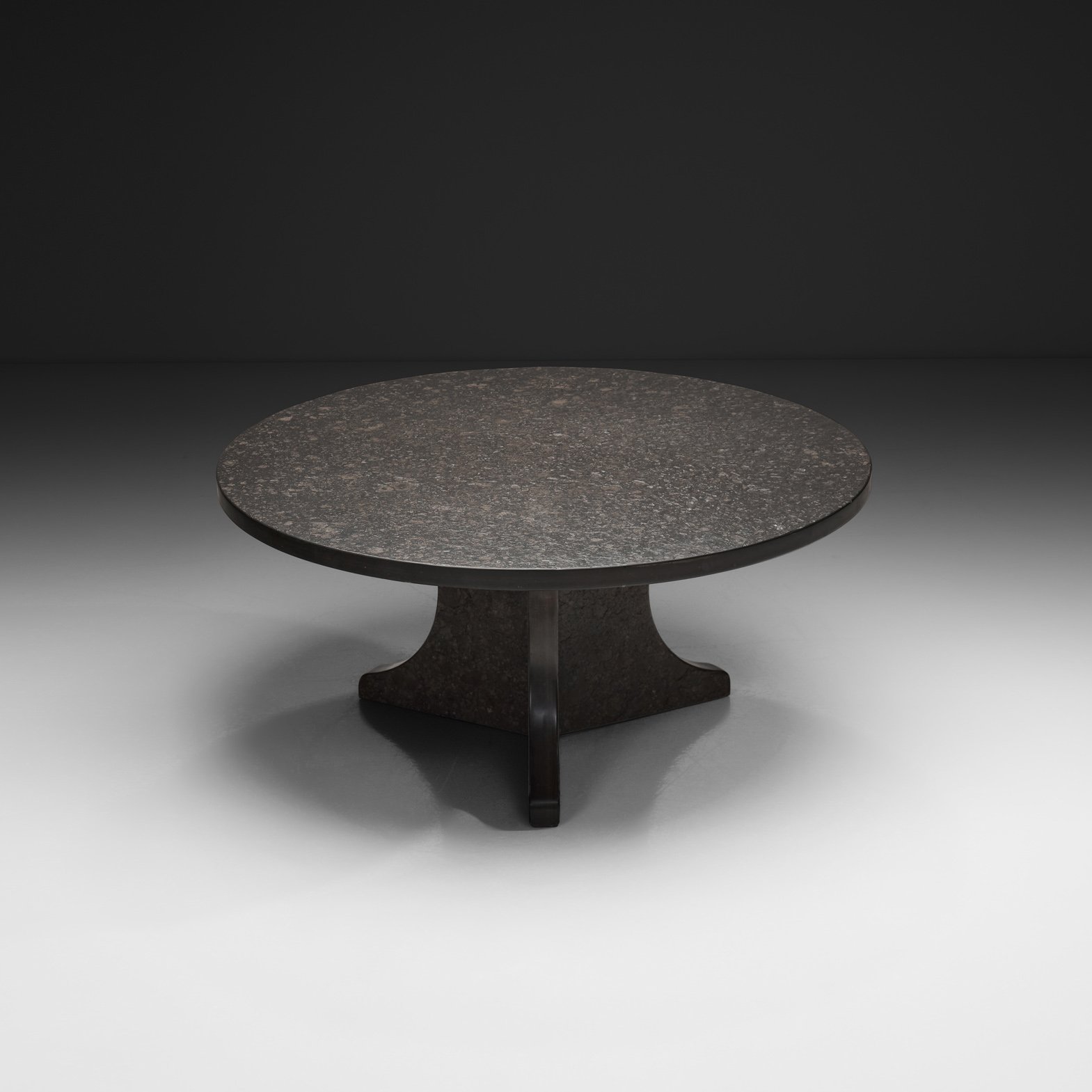
This coffee table embodies the essence of European mid-century design, with its distinctive features that recall a time when form and function were equally paramount. Crafted from solid wood, this table exudes a rustic charm and robust aesthetic that is characteristic of the era in which it was made.
In mid-century modern design, the use of wood held a special significance: it was not merely a material choice, but a philosophy that emphasized the natural and organic over the ornate and extravagant. The design is inspired by the mid-century penchant for elemental shapes, featuring a simple circular tabletop, supported by four straight legs. The tabletop has a brutalist feel to it. The warm tone of the oak wood creates a sense of lightness, while also projecting an air of strength and solidity. Oak has been the defining material for European brutalist pieces partly due to its durability and malleability, enabling intricate yet robust constructions. The large tabletop showcases the unique qualities of the wood, while also providing functional space. Mid-century modern design represented a break with the traditional past; design-wise, furnishings were often a rejection of Victorian, Colonial, and other historical influences.
This solid wood table, with its natural finish, exemplifies the enduring charm and warmth that mid-century design continues to bring to contemporary interiors, underscoring the timeless appeal of this iconic design era. The maker of this table clearly focused on the material, letting the beautiful qualities of the oak wood stand out. This model will make a perfect addition to a range of interior styles.
Condition:
In good vintage condition. Wear consistent with age and use. Due to the age and nature of the wood, the item may have some marks, scratches, and discolouration.
Dimensions:
47.24 Ø in x 11.18 in H
120 Ø cm x 46 cm H
REQUEST PRICE HERE
Price category: 5,000 - 7,500 usd / eur
Among furniture design ideas, the 1950s and 60s were pivotal for the emergence of the Brutalist movement. embraced raw, rugged aesthetics and celebrated the inherent qualities of materials, especially wood, concrete and metal materials. Irregular edges, visible joinery, and expressive grain patterns were embraced, creating pieces that balanced traditional craftsmanship with a sculptural modern sensibility.
Crafted from solid elm, this dining table is defined by its broad top, whose softly undulating edges preserve an organic, rhythmic character. The richly figured grain flows uninterrupted across the surface, becoming the focal point of the piece and highlighting the natural beauty of the timber. Elm was a favoured material during this period thanks to its strengthened ability to communicate a sense of warmth and timelessness. The table's base showcases three connected stretchers providing balance and visual harmony. Functional wedge joints, a hallmark of Brutalist design, contributes to the table's stability and serves as aesthetic elements, blending in with the overall organic appeal. Specifically, this piece features tusked mortise and tenon type joints. This is a highly robust, traditional woodworking feature, consisting of a long, extending through-tenon that is locked in place by a tapered wooden wedge (the "tusk") driven through a slot in the protruding element, locking the joint without screws, nails, or glue, thus only utilising the natural qualities of the material. This table embodies Brutalist ideals, emphasizing functionality, honesty in materials, and the rejection of unnecessary embellishments. In a world of fleeting trends, the enduring appeal of Brutalist furniture continues to resonate with those who appreciate the beauty of simplicity and authentic, raw design.
The design generation active during the mid-20th century created some of the most iconic wooden furniture designs of the whole century. This Aranjou edition table is a beautiful example of how successfully they managed to merge traditional craftsmanship and materials with an essentially modern approach to design.
Condition:
In good vintage condition. Wear consistent with age and use. The item has recently been reconditioned. Due to the age and nature of the wood, the item may have some marks, scratches, and discolouration.
Dimensions:
78.74 in W x 35.03 in D x 29.92 in H
200 cm W x 89 cm D x 76 cm H
REQUEST PRICE HERE
Price category: 2,500 - 5,000 usd / eur
In the thriving design landscape of the 20th century, the emergence of Brutalist furniture left an indelible mark on design. Brutalist furniture design in the post-war decades came as a direct response to both architectural developments and shifting social ideals. This 1970s side table emphasizes raw materials, structural honesty, and an absence of ornamentation.
The Netherlands embraced Brutalism as a rejection of ornate embellishments, opting for raw, utilitarian forms. Oak became the material of choice for many Brutalist pieces due to its durability and malleability, enabling intricate yet robust constructions. Crafted from solid oak, the deep hues of this table exude warmth amidst the starkness that generally characterised style. The straightforward shape of this table highlights the understated beauty of the material, allowing the grain of the wood to stand out. The table top is set on four splayed block legs, stained in the same dark, rich colour lending a more dramatic presence to the piece. The base is ideal for ensuring the sturdiness needed for a classic piece of furniture made to withstand the passage of time. The surface of the wood is left largely untreated to showcase the material’s inherent texture and tonal variation. Rather than relying on decorative features, the table derives its character from this raw materiality and its geometry. Although relatively simple, the table carries a strong visual presence and sense of intention - it showcases versatility, while maintaining character.
The emphasis on material and function allows this table to age gracefully, developing character over time, while anchoring every space it finds itself in. The piece reflects the enduring appeal of Brutalist furniture: objects that prioritise substance over decoration, offering both utility and a lasting architectural presence.
Condition:
In good vintage condition. Wear consistent with age and use. The item has recently been reconditioned. Due to the age and nature of the wood, the item may have some marks, scratches, and discolouration.
Dimensions:
46.86 in W x 27.96 in D x 29.53 in H
119 cm W x 71 cm D x 75 cm H
REQUEST PRICE HERE
Price category: 2,500 - 5,000 usd / eur
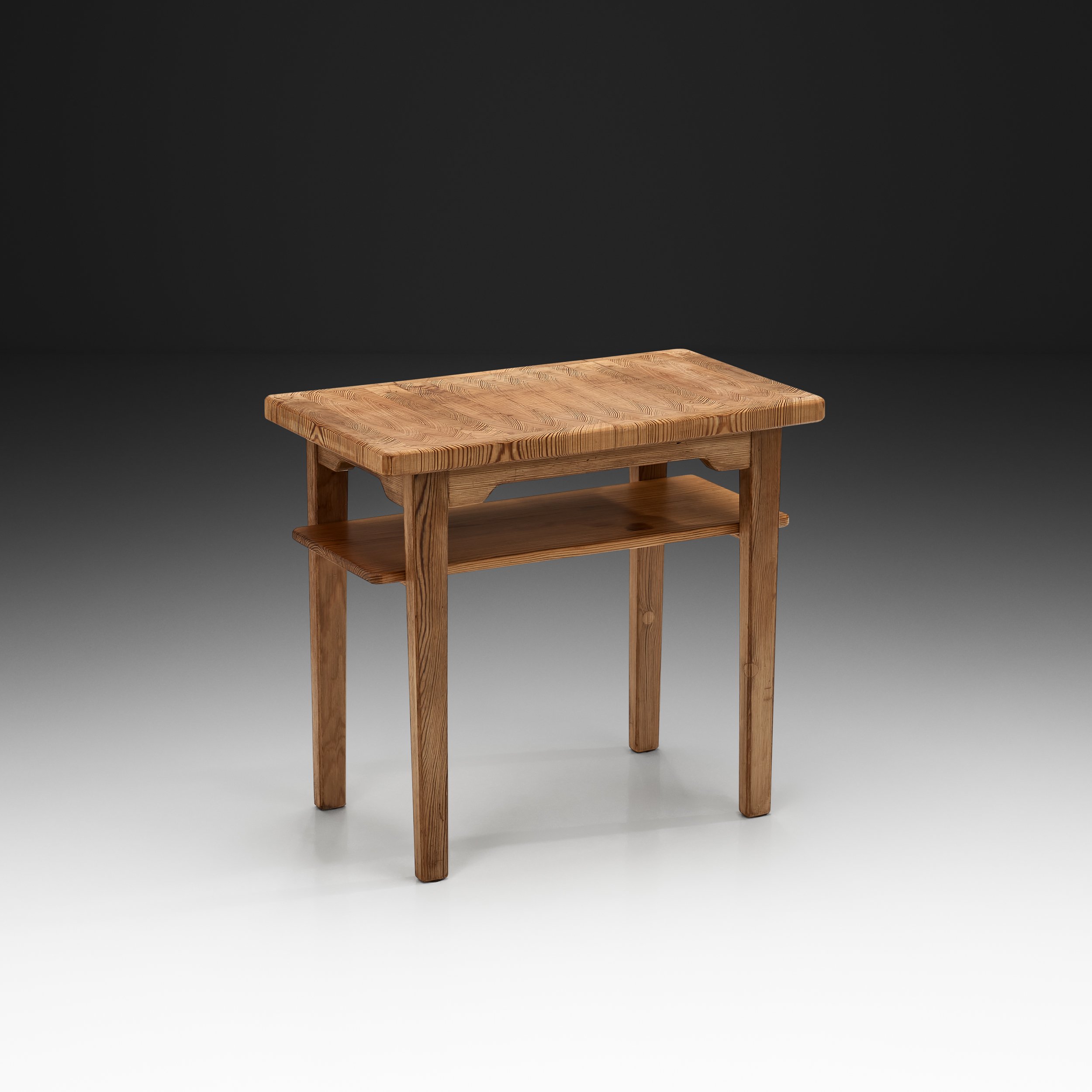
During the early 20th century, Europe was experiencing a dramatic shift in design sensibilities. Art Deco emerged as a response to the austerity of the previous era, blending modernist ideals with a love for luxury and ornamentation. It was an era that celebrated geometric forms, rich materials, and innovative craftsmanship. Even after the height of the Art Deco period had passed, many of its defining motifs continued to influence furniture production throughout Europe.
Geometric forms occupied a central role in Art Deco design, where they were used to introduce structure and visual rhythm to everyday objects. The octagonal top immediately establishes the character of this table. It is made from triangular wooden elements that seem to radiate from the middle, adding great visual detail. Its faceted outline is echoed by the lower shelf, creating a layered composition that feels both balanced and architectural. Supported by four slender legs, the structure remains visually open, allowing the empty space to emphasize the relationship between the upper and lower surfaces. The rich grain of the wood complements the precision of the form, introducing warmth and natural variation across the surface.
The table reveals a constant interplay between geometry and proportion. The repeated octagonal elements create a sense of structure truly representative of Art Deco. Compact in scale yet distinctive in appearance, it functions as a side table and decorative accent, bringing a touch of Art Deco elegance to a wide variety of interiors.
Condition:
In good vintage condition. Wear consistent with age and use. The table has recently been reconditioned. Due to the age and nature of the wood, the item may have marks, scratches, and discolouration.
Dimensions:
21.06 in W x 19.48 in D x 25.19 in H
53.5 cm W x 49.5 cm D x 64 cm H
REQUEST PRICE HERE
Price category: 5,000 - 7,500 usd / eur
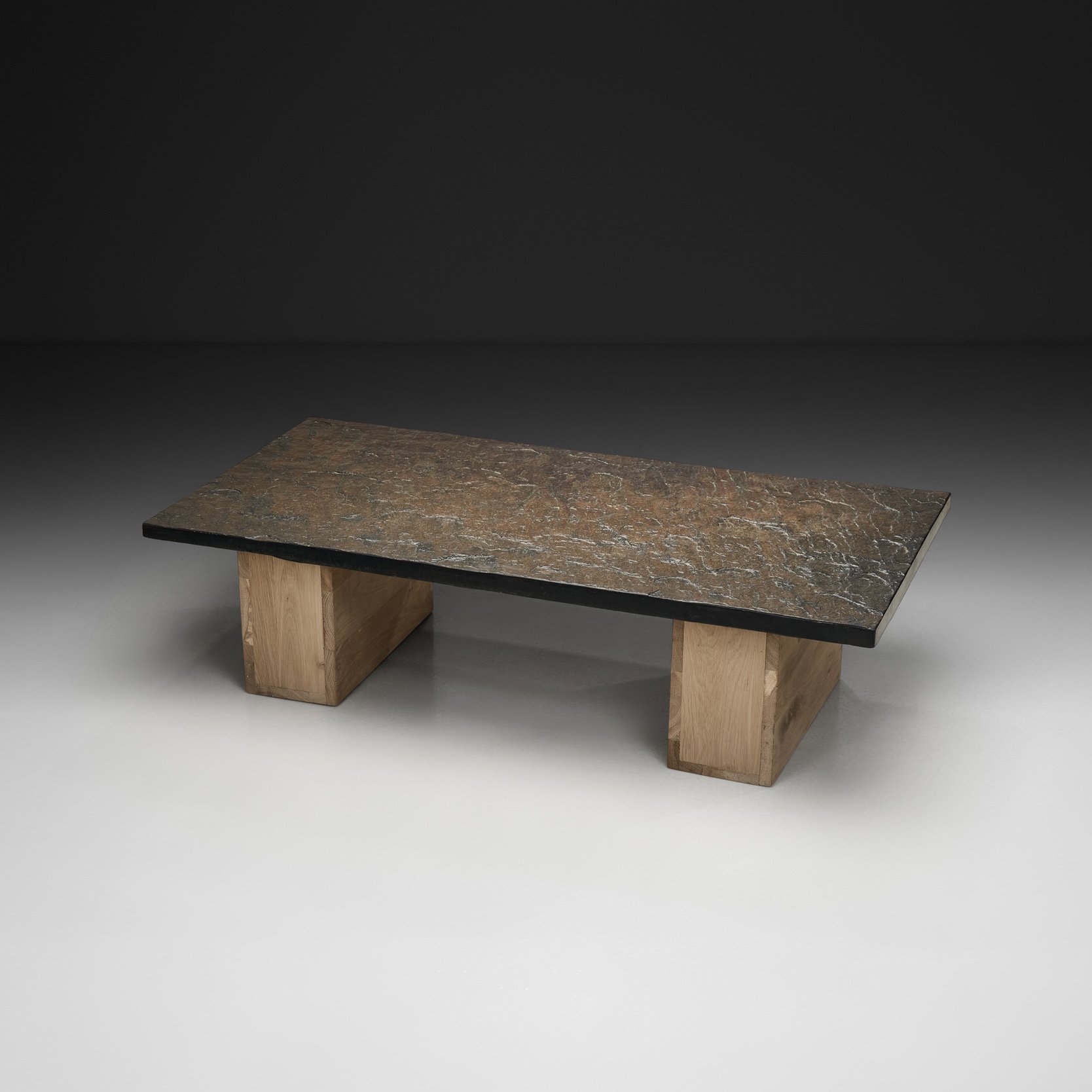
This impressive Norwegian coffee table is defined by its materials, seamless joinery, and distinctive tabletop. This table is characteristic of the postwar exploration with both natural and man-made materials.
Utilising and highlighting the qualities of the materials used, combined with the expertise of its maker, this coffee table is a beautiful piece that can both dominate and complement a modern space. The table's square top showcases an appealing textural and colourful look. As a result, the impression is quite elemental and striking. The sleek metal base also creates a sense of elegance and sophistication, while the modern stone top is smooth to the touch, adding a sense of solidity and durability to the overall design. Norwegian designers of this era aimed to create furniture and home decor that was both aesthetically pleasing and practical. This style has become synonymous with Scandinavian and Nordic design and is still sought after today for its timeless appeal and quality.
This coffee table follows the fundamental Scandinavian design principles both aesthetically and technically. The simple design serves the purpose of showing the understated beauty of the materials and their endless possibilities in the hands of an expert craftsman.
Condition:
In good vintage condition. Wear consistent with age and use. The table has recently been reconditioned. Due to the age and nature of the materials, the item may have some marks, scratches, and discolouration. The base of the coffee table is a later replacement.
Dimensions:
41.14 in W x 41.14 in D x 15.74 in H
104.5 cm W x 104.5 cm D x 40 cm H