
Woven Rattan Stool, Europe Early 20th Century (sold)


Woven Rattan Stool, Europe Early 20th Century (sold)
In the professional field of interior design, certain pieces and types of furniture hold a timeless allure, effortlessly weaving together functionality, aesthetic appeal, and a rich history. Among these treasures is the simple, way too often overlooked, but extremely versatile stool,
This lovely piece from the early 20th century is entirely Crafted from the organic material rattan, and embodies a harmonious blend of natural beauty, craftsmanship, and functional elegance, making it a perfect accent piece for both modern and classic interior settings.
Rattan, derived from the climbing palms native to tropical regions of Africa, Asia, and Australasia, boasts a unique combination of flexibility, durability, and lightweight properties. As such, its pliable nature allows skilled artisans to deftly manipulate and weave it into intricate patterns, resulting in furniture pieces like this stool that exude both sophistication and an artisan, rustic charm. Similarly to traditional wooden furniture, rattan possesses a warmth and tactile quality that invites touch and appreciation of its natural texture.
The resurgence of stools in contemporary interior design can be attributed to several factors; Firstly, their compact size and versatility make them ideal for maximizing space in smaller living areas or apartments. Stools can easily be tucked away when not in use, serving as convenient additional seating when guests arrive or as a practical surface for holding books, plants, or decorative items. Moreover, their understated elegance, individuality, and timeless appeal complement a wide range of interior styles, from minimalist and Scandinavian to Bohemian and eclectic.
At the heart of this rattan stool's charm lies its exquisite weaving patterns and impeccable quality. Each strand of rattan is skilfully interlaced to form intricate circular motifs and geometric designs, showcasing the craftsmanship and attention to detail of its maker. The weaving technique employed in crafting this stool results in a sturdy yet lightweight structure, capable of withstanding the test of time while retaining its graceful silhouette.
The stool's slightly splayed, bent legs add a touch of visual interest and stability, while the metal caps on its feet provide both protection and a subtle hint of industrial flair. This thoughtful combination of materials and design elements enhances the stool's durability and aesthetic appeal, ensuring that it remains a cherished heirloom for generations to come.
Versatile in its functionality, the rattan stool can serve as a humble pallet for showcasing curated collections or as an elegant flower pedestal, bringing a touch of natural beauty indoors. Its timeless allure and understated sophistication make it a beloved accent piece in modern interiors, where it serves as a testament to the enduring appeal of organic materials and masterful craftsmanship.
In conclusion, the intricately woven rattan stool from the first half of the 20th century is more than just a piece of furniture; it is a symbol of timeless elegance, artisanal skill, and the enduring allure of natural materials. As interior design continues to evolve, this unique and exquisite stool remains a cherished staple, seamlessly blending form and function to enrich any living space with its timeless charm.
SOLD
Condition:
In good vintage condition. Wear consistent with age and use. Some scratches and marks on the rattan.
Dimensions:
17.91 in W x 16.14 in D x 16.33 in H
45.5 cm W x 41 cm D x 41.5 cm H
REQUEST PRICE HERE
Price category: 2,500 - 5,000 usd / eur
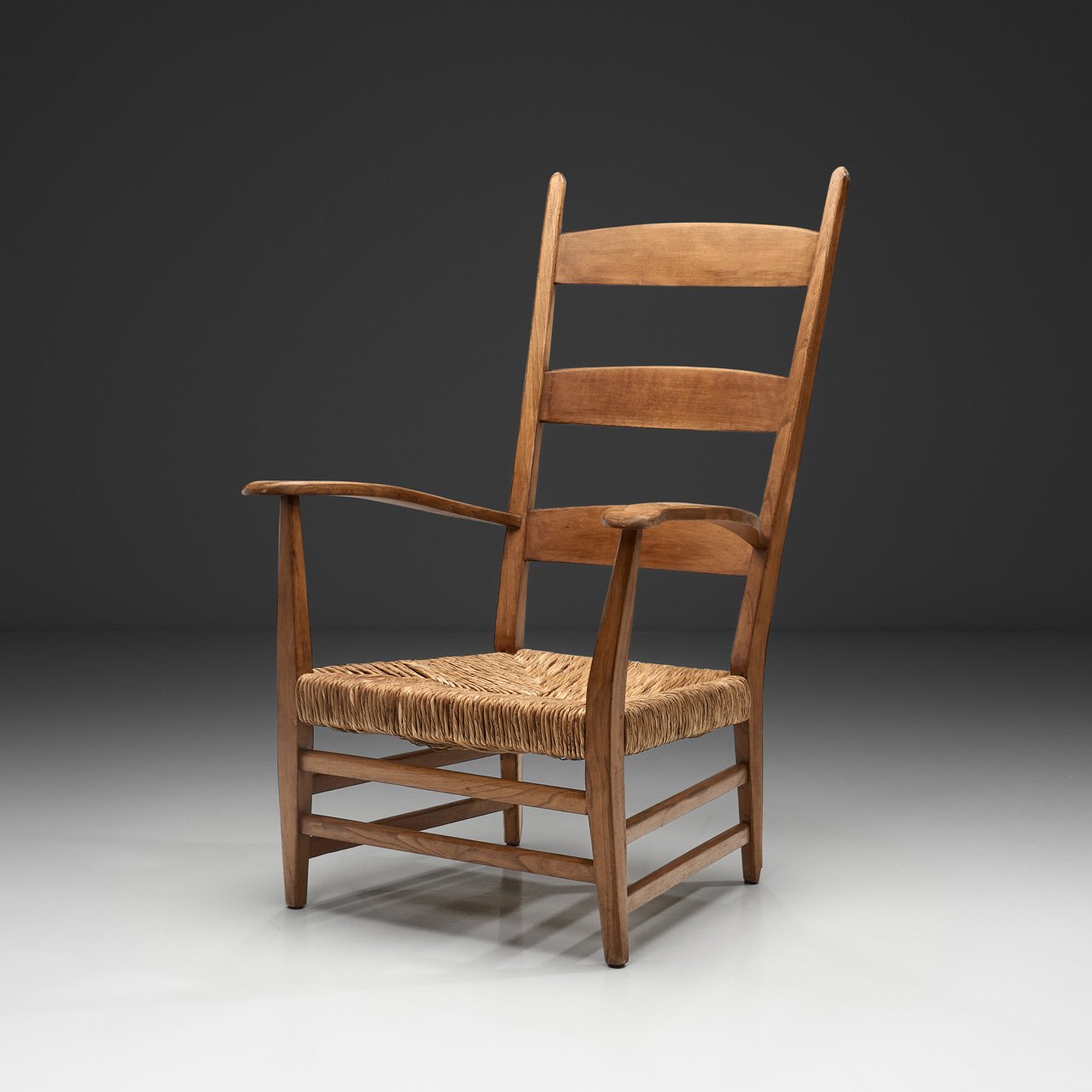
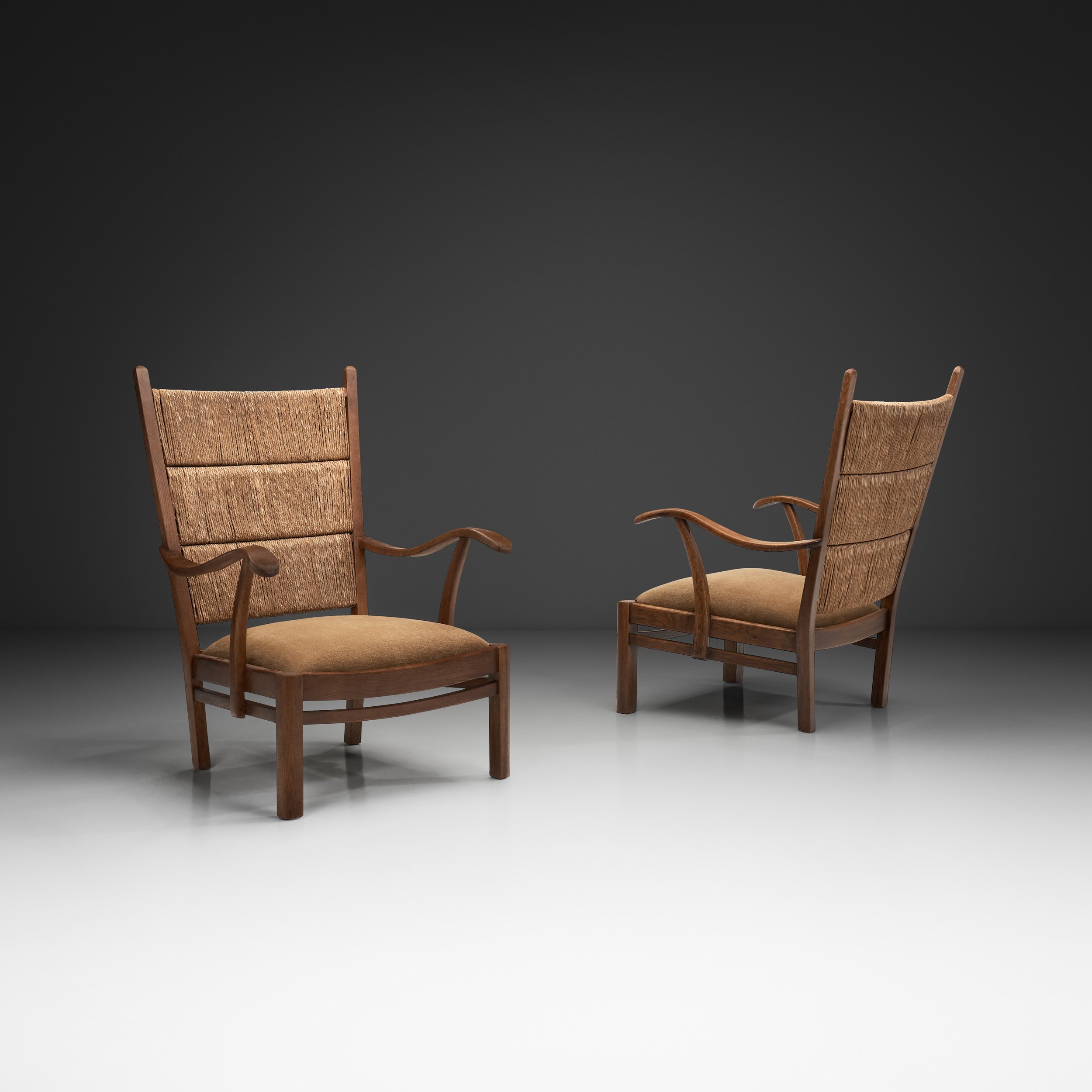
This remarkable armchair was designed by German artist, Willi Ohler. The so-called “Worpsweder” either denote chairs made at the Worpsweder Kunsthütten (Worpsweder arts huts) in Germany, or a specific style of German chairs with solid wood frames, broad armrests, often from tall wood, with woven seats and backs. This piece features all of those characteristics.
Crafted during a time when movements like Modernism were reshaping design worldwide, this early 20th-century armchair reflect a transitional style rooted in both simplicity and elegance. This era emphasises clean lines, unique shapes, and high-quality craftsmanship to achieve timeless pieces like this one. The honey-toned wood highlights the warm patina that has developed over decades. The softly sculpted armrests framing the chair bring both elegance and ergonomic comfort to the overall form. Woven wicker is the main highlight of the piece. The material is used to construct the seat and tall backrest. The beautifully symmetrical pattern showcases the timeless artistry of artisanal furniture. The rectangular, slim legs create a sleek structure while not abandoning sturdiness. This chair preserves the value and beauty of master craftsmanship and exquisite materials.
Worpswede in Lower Saxony is famous nationwide for its long tradition as an artists' colony. Nowadays, about 130 artists and craftsmen and women live there permanently. The artists who created the so called "Worpsweder Kuentlerkolonie" were looking for the simple and original in art and life. The traditional reed and rush woven chairs of this region were greatly appreciated by the artists of the colony, and some of them were still produced around 1900-1920. They have become collectors’ pieces thanks to the craftsmanship that went into each chair’s creation.
Condition:
In good vintage condition. Wear consistent with age and use. The chair has recently been reconditioned. Due to the nature and age of the materials the item has minor scratches and discolouration.
Dimensions:
34.64 in W x 33.07 in D x 46.45 in H; Seat height 16.53 in; Seat depth 19.68 in; Arm height 24.80 in
88 cm W x 84 cm D x 118 cm H; Seat height 42 cm; Seat depth 50 cm; Arm height 63 cm