
Model "GA9" Wall Lamp by Erik Gunnar Asplund for ASEA, Sweden 1940s


Model "GA9" Wall Lamp by Erik Gunnar Asplund for ASEA, Sweden 1940s
REQUEST PRICE HERE
Price category: 1,000 - 2,500 usd / eur
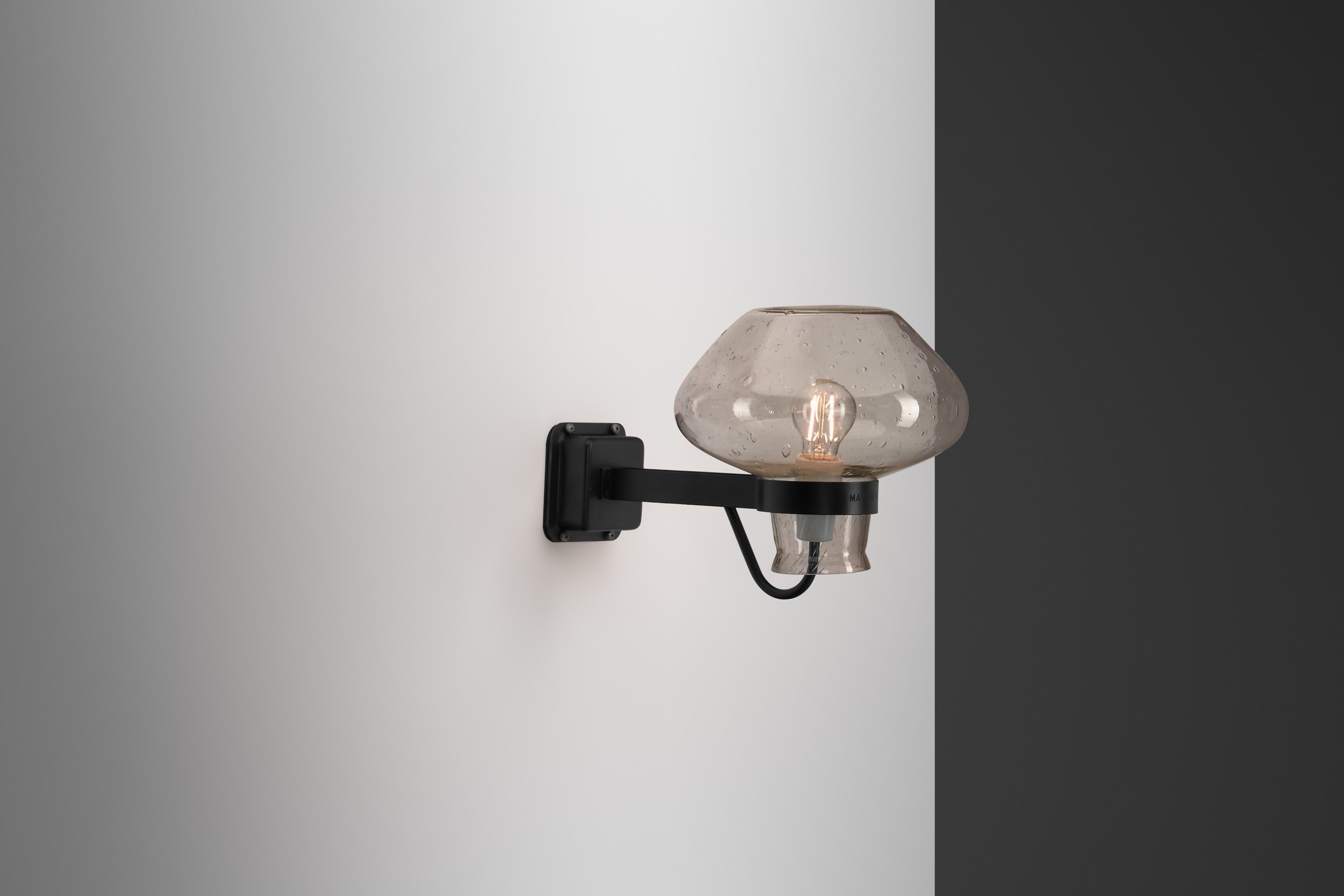
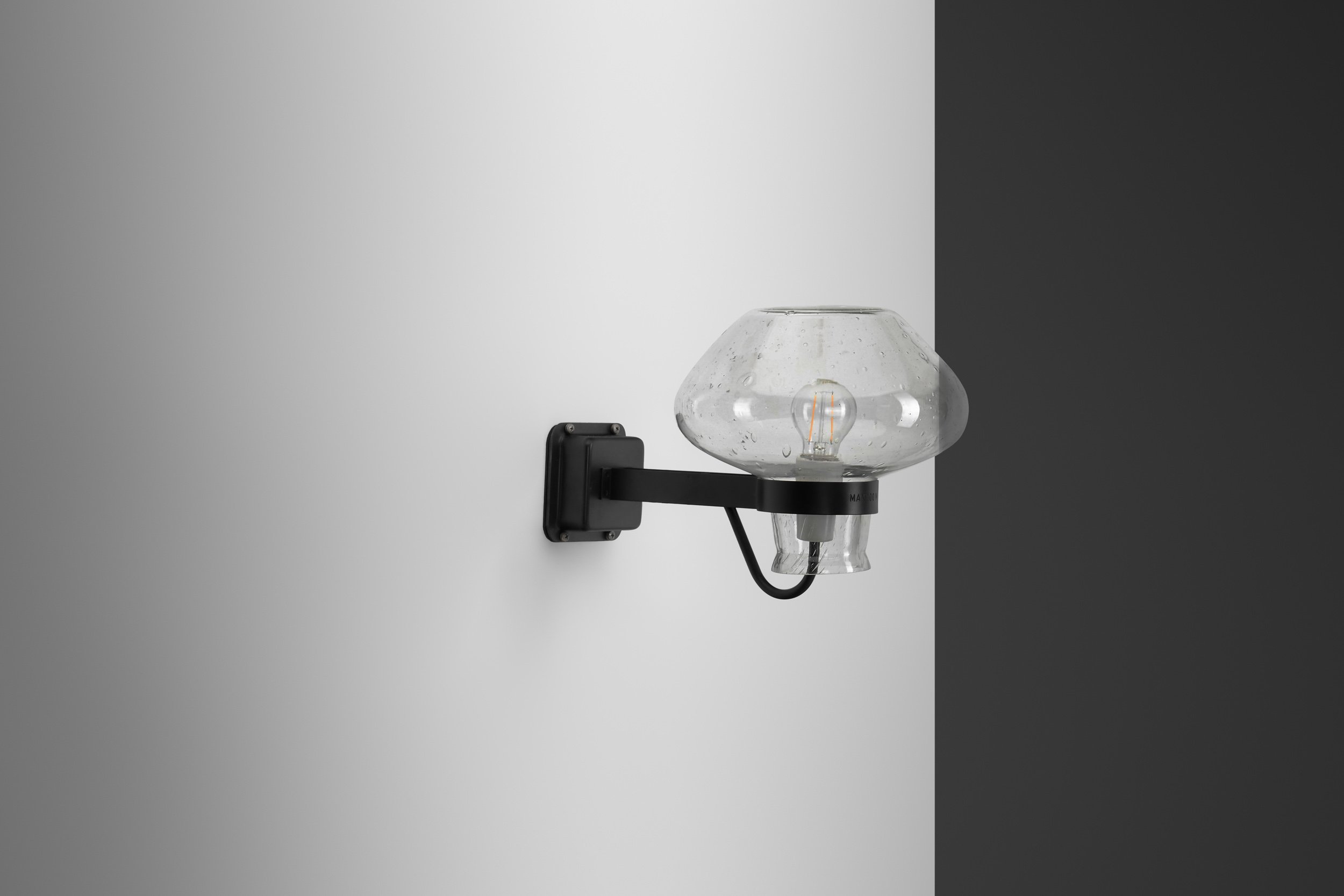
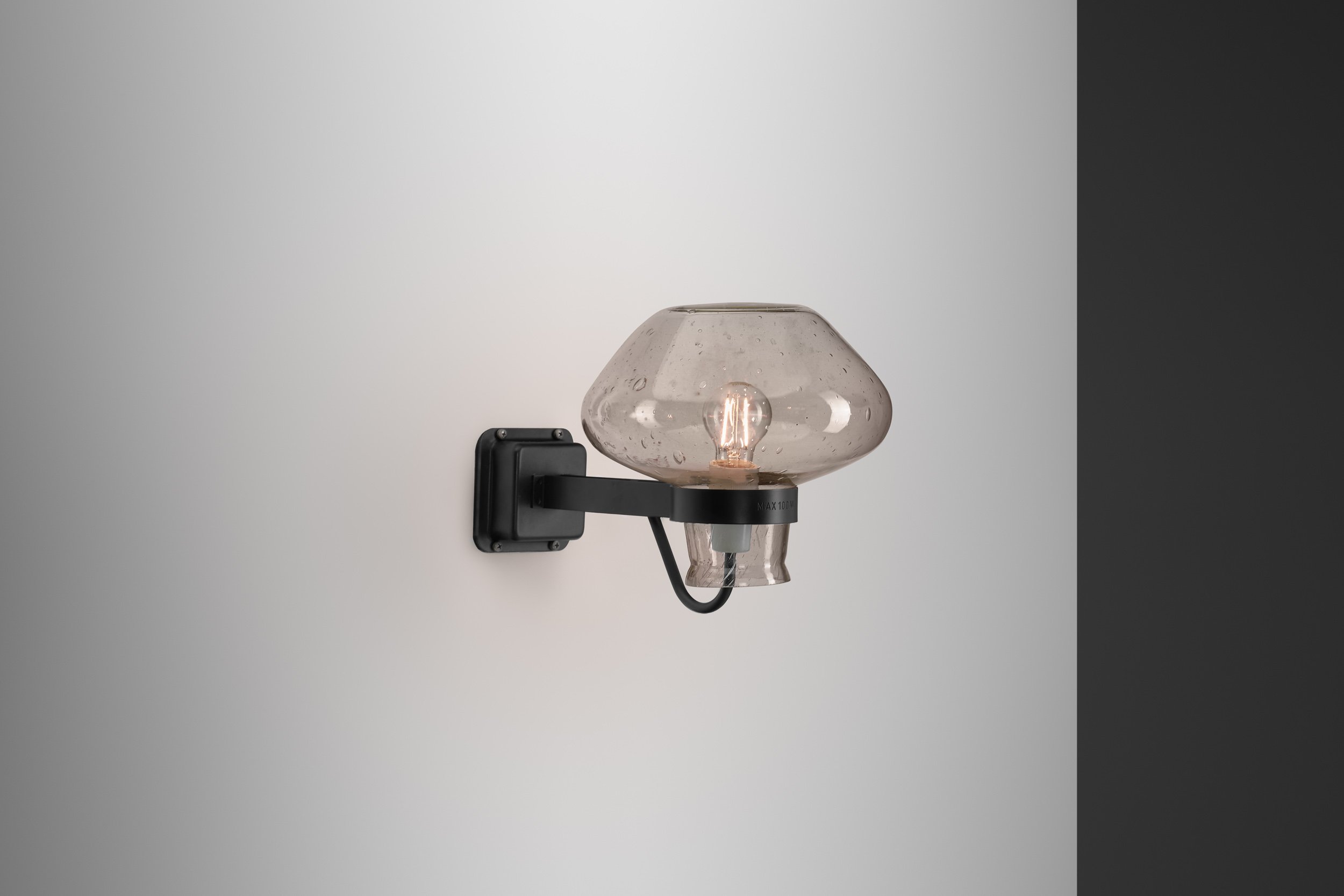
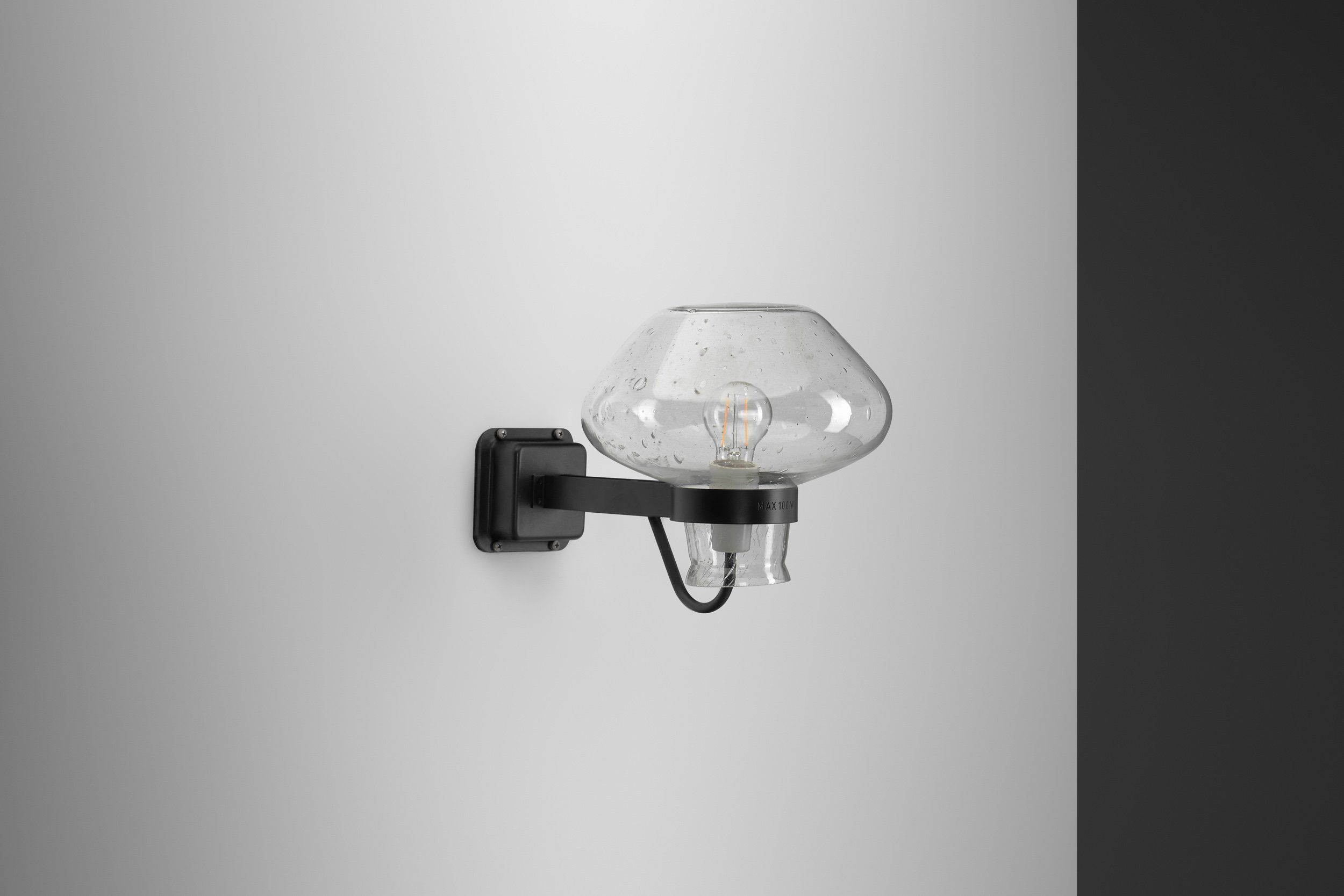
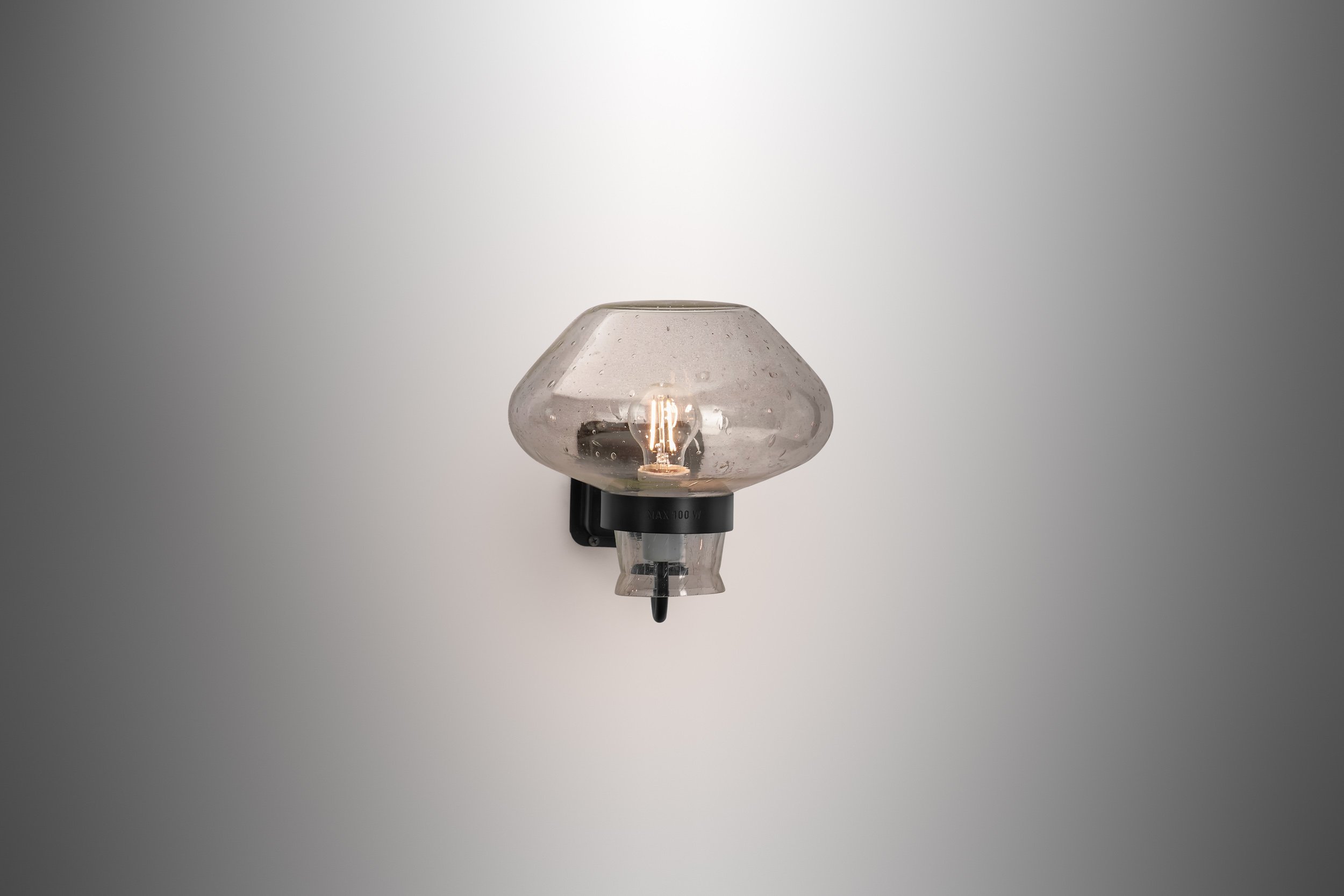
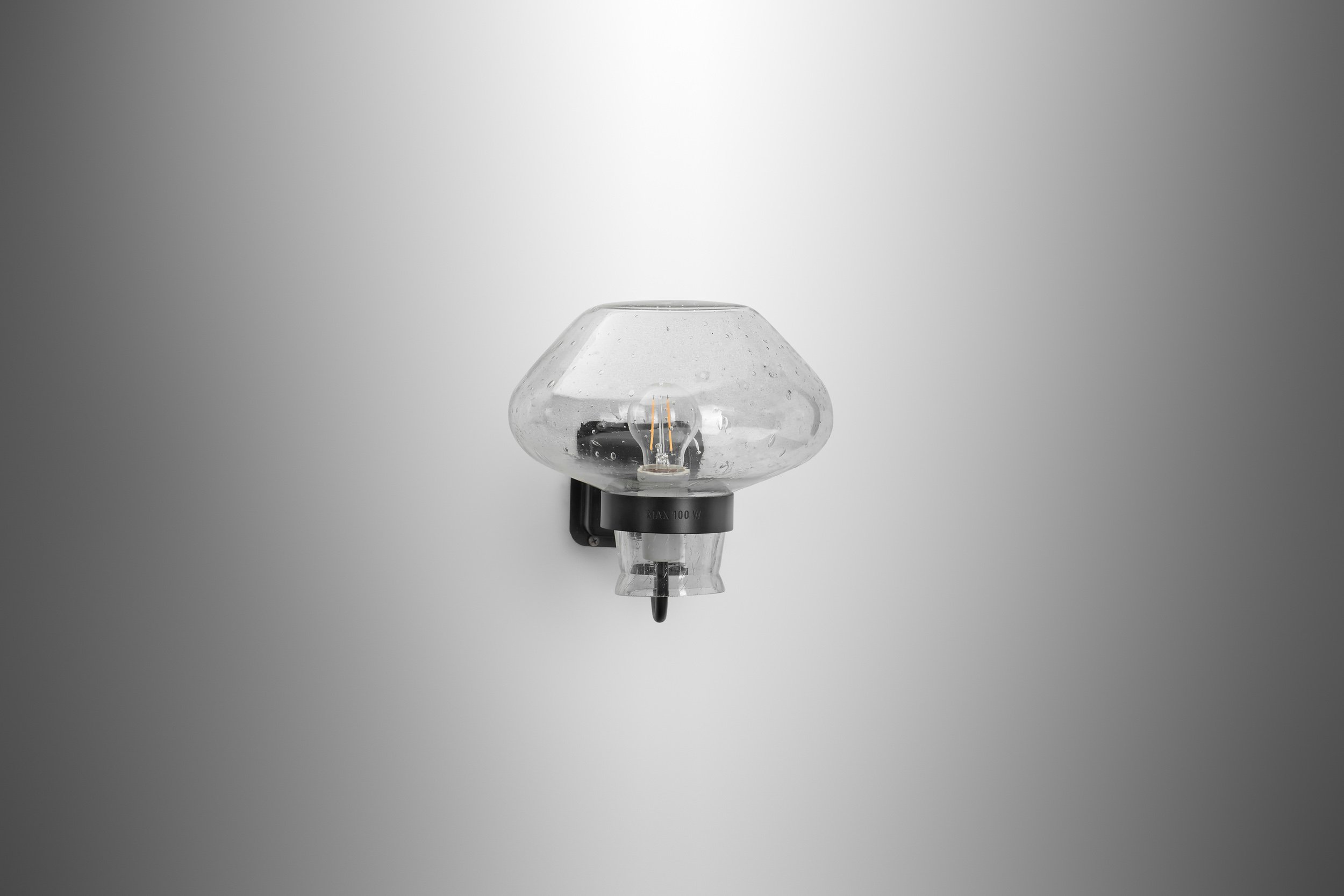
“GA9” appears to be inspired by a droplet, floating upward the wall. The mouth blown glass with bubbles creates an intricate play between light and shadow, giving the appearance of light travelling through water.
Swedish architect and designer, Erik Gunnar Asplund, is celebrated as the godfather of functionalist design in Sweden. Like his celebrated Stockholm City Library, this wall lamp emphasizes geometric simplicity and clarity of form. The construction of this model is ingenious, with a bent arm holding the glass in place, with yet another arm holding the light source in the centre of the luminaire. The black lacquered metal bends organically into a sinuous form, while the back-plate has a polygon shape. Pairing the geometric elements with the more organic ones shows Asplund’s great eye for design that was well ahead of his time. The large, mushroom-like mouth blown glass shade has a distinctive “drop” on its surface, creating a beautiful effect that becomes even more apparent when the light is on. The atmospheric light it creates is not measurable, nor is it functional in the traditional sense. It is easily forgotten, but nevertheless important when creating a space of well being. It is the most basic and fundamental of all lighting principles, one that has been with us since the dawn of time. Asplund’s life and work served as inspiration to a number of Scandinavian design luminaries, such as lifelong friend and mentee Alvar Aalto, as well as Erik Bryggman and Arne Jacobsen.
An acronym for Allmänna Svenska Elektriska Aktiebolaget (“General Swedish Electrical Limited Company”), ASEA was a Swedish manufacturer of electrical products and industrial infrastructure. The company endures in the hearts of design lovers for their mid-century interior lighting collections produced in collaboration with venerated designers like Gunnar Asplund.
Condition:
In good vintage condition. Wear consistent with age and use. The lamp has recently been rewired and reconditioned. The metal structure has some marks and scratches. Due to the nature and age of the materials, the item may have discolouration and imperfections. All lighting can be converted for US usage.
Dimensions:
11.02 in W x 16.14 in D x 10.04 in H
28 cm W x 41 cm D x 25.5 cm H
About the designer:
Erik Gunnar Asplund, born in Stockholm in 1885, was a Swedish architect, mostly known as a key representative of the Nordic classicism of the 1920s.
He studied architecture at the Royal Institute of Technology in Stockholm. After completing his studies, he worked for Asplund Tengrom architects, Westman and Ostberg. He completed his architectural training, with long journeys through Sweden and other parts of Europe. Asplund worked alone and obtained a large amount of his work through contests.
Asplund was a professor of architecture at the Royal Institute of Technology from 1931. His appointment was marked by a conference, later published under the title "Our architectural concept of space. Gunnar Asplund is considered perhaps the most important Swedish modernist architect and has had a great influence on successive generations of Swedish and Nordic architects. Among the most significant works of Asplund is the Stockholm public library, built between 1924 and 1928, which represents the prototype example of Nordic classicism and the so-called Swedish grace movement.
During the period from 1931 until his death, Asplund moved away from Modernism and began to show sympathy towards a stripped Nordic classicism. Asplund continued to draw until his death in Stockholm in 1940.
REQUEST PRICE HERE
Price category: 7,500 - 10,000 usd / eur
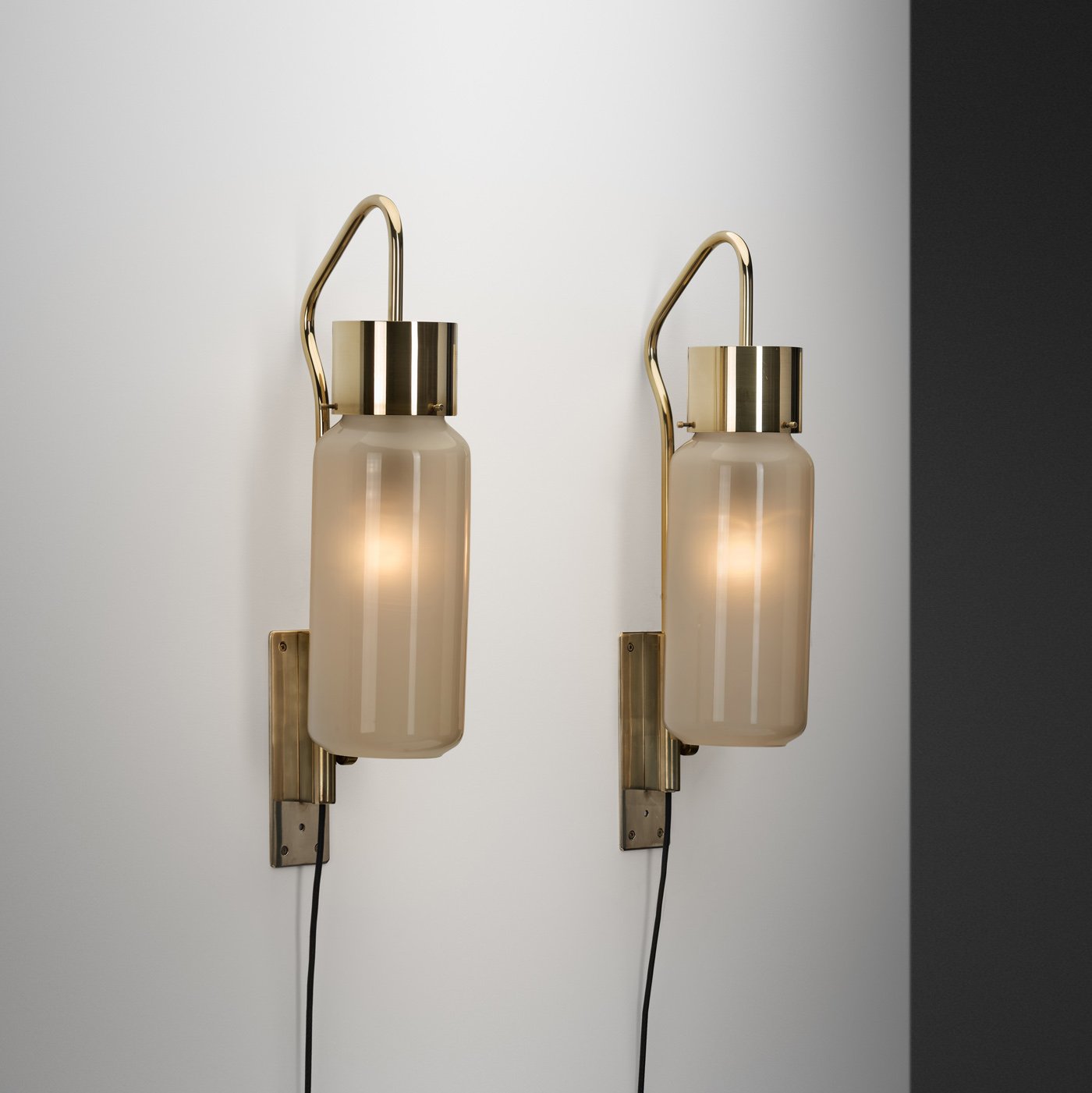
Italy is revered for many things: Food, wine, coffee, fashion - and in the world of design; lighting. For decades, Italy has set the bar in contemporary lighting, thanks to forward-thinking pioneers like Luigi Caccia Dominioni and brands like Azucena, and time-honoured techniques.
Designed around 1958, the "LP 10" model exemplifies Dominioni’s architectural approach to lighting, combining sculptural form with understated elegance. Produced by Azucena, one of Italy’s most influential post-war design manufacturers, the “LP-10” remains celebrated for its timeless proportions and refined material palette. Crafted in solid brass with opaline glass shades, the lamps emit a soft, ambient glow while showcasing the exceptional quality of their construction. The gently curved metal arms create a beautiful visual balance between structure and lightness, allowing the frosted glass shades to appear almost suspended. The warm patina that develops on the brass over time enhances the set’s character, while the minimalist silhouette reflects Dominioni’s enduring commitment to functional beauty and sophisticated restraint.
This pair of wall lights bridges architectural precision with decorative warmth. Whether installed individually or as a pair, they serve as both an elegant source of illumination and sculptural design objects. As one of Luigi Caccia Dominioni’s most recognisable designs for Azucena, the “LP-10” stands as an enduring icon of post-war Italian craftsmanship and modernist design.
Condition:
In good vintage condition. Wear consistent with age and use. The lamps have recently been rewired and reconditioned. Due to the nature and age of the materials, the item may have marks, scratches, and discolouration. Minor imperfections on the glass may be present due to manufacturing inconsistencies. The lamps are compatible with an E26 / E27 standard fitting.
Dimensions:
5.11 in W × 7.08 in D × 21.25 in H
13 cm W x 18 cm D x 54 cm H

REQUEST PRICE HERE
Price category: 2,500 - 5,000 usd / eur
Danish Modern is an era that defined an essential chapter in design history. Denmark was placed on the world map for its groundbreaking craftsmanship and mid-century modern furniture. This wall lamp displays some of the essential ideals of the style: streamlined modernism accompanied by a functional, timeless design with decorative elements.
This wall lamp features a dynamic brass body that extends outward to hold a stunning glass shade. This wall lamp reflects the danish modern philosophy through its graceful lines, adjustable construction, and thoughtful use of natural materials. The model unfolds through a series of elegant bends that give the brass arm a distinct visual quality. Extending confidently from the wall, the articulated arm allows the light to be positioned with flexibility while creating a striking linear composition. Rather than opting for a classic fabric shade, the designer chose glass as a material. The milky glass contrasts beautifully with the polished brass structure. The shade filters the light, producing a soft, atmospheric glow that enhances the comforting character of the design. Every transition between horizontal and vertical lines feels effortless, revealing the Danish remarkable ability to transform a functional mechanism into something sculptural.
Today we consider the mid-century era a golden age for Scandinavian design and craftsmanship. During these decades, some of the country's most significant luminaires were made, including this exceptional wall sconce.
Condition:
In good vintage condition. Wear consistent with age and use. The lamp has recently been rewired and reconditioned. Due to the nature and age of the materials, the item has some marks, scratches, and discolouration. Additional imperfections on the glass may be present due to manufacturing inconsistencies and age. All lighting can be converted for US usage.
Dimensions:
9.05 in W x 31.1 in D x 9.44 in H
23 cm W x 79 cm D x 24 cm H
REQUEST PRICE HERE
Price category: 1,000 - 2,500 usd / eur
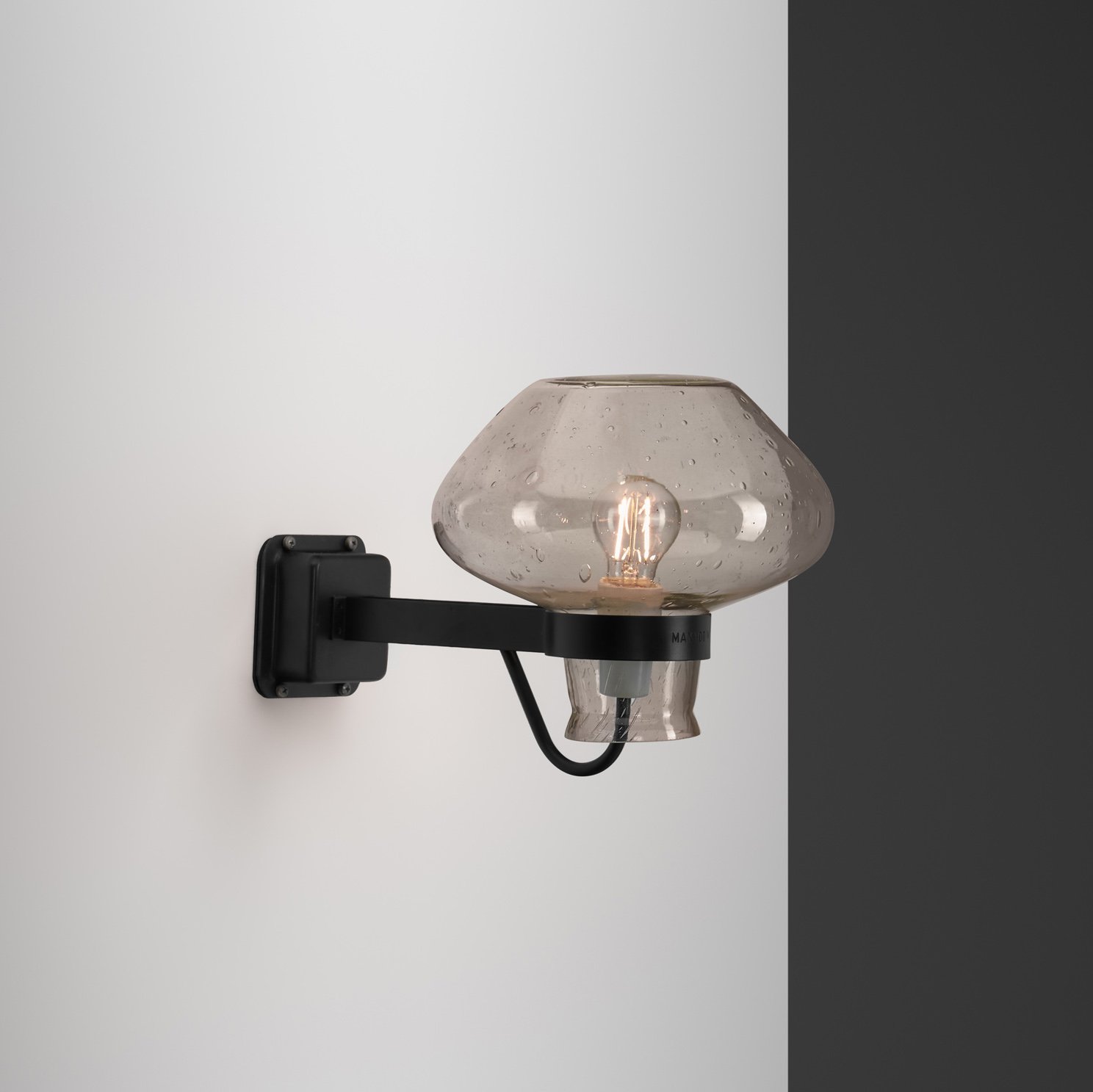
“GA9” appears to be inspired by a droplet, floating upward the wall. The mouth blown glass with bubbles creates an intricate play between light and shadow, giving the appearance of light travelling through water.
Swedish architect and designer, Erik Gunnar Asplund, is celebrated as the godfather of functionalist design in Sweden. Like his celebrated Stockholm City Library, this wall lamp emphasizes geometric simplicity and clarity of form. The construction of this model is ingenious, with a bent arm holding the glass in place, with yet another arm holding the light source in the centre of the luminaire. The black lacquered metal bends organically into a sinuous form, while the back-plate has a polygon shape. Pairing the geometric elements with the more organic ones shows Asplund’s great eye for design that was well ahead of his time. The large, mushroom-like mouth blown glass shade has a distinctive “drop” on its surface, creating a beautiful effect that becomes even more apparent when the light is on. The atmospheric light it creates is not measurable, nor is it functional in the traditional sense. It is easily forgotten, but nevertheless important when creating a space of well being. It is the most basic and fundamental of all lighting principles, one that has been with us since the dawn of time. Asplund’s life and work served as inspiration to a number of Scandinavian design luminaries, such as lifelong friend and mentee Alvar Aalto, as well as Erik Bryggman and Arne Jacobsen.
An acronym for Allmänna Svenska Elektriska Aktiebolaget (“General Swedish Electrical Limited Company”), ASEA was a Swedish manufacturer of electrical products and industrial infrastructure. The company endures in the hearts of design lovers for their mid-century interior lighting collections produced in collaboration with venerated designers like Gunnar Asplund.
Condition:
In good vintage condition. Wear consistent with age and use. The lamp has recently been rewired and reconditioned. The metal structure has some marks and scratches. Due to the nature and age of the materials, the item may have discolouration and imperfections. All lighting can be converted for US usage.
Dimensions:
11.02 in W x 16.14 in D x 10.04 in H
28 cm W x 41 cm D x 25.5 cm H
About the designer:
Erik Gunnar Asplund, born in Stockholm in 1885, was a Swedish architect, mostly known as a key representative of the Nordic classicism of the 1920s.
He studied architecture at the Royal Institute of Technology in Stockholm. After completing his studies, he worked for Asplund Tengrom architects, Westman and Ostberg. He completed his architectural training, with long journeys through Sweden and other parts of Europe. Asplund worked alone and obtained a large amount of his work through contests.
Asplund was a professor of architecture at the Royal Institute of Technology from 1931. His appointment was marked by a conference, later published under the title "Our architectural concept of space. Gunnar Asplund is considered perhaps the most important Swedish modernist architect and has had a great influence on successive generations of Swedish and Nordic architects. Among the most significant works of Asplund is the Stockholm public library, built between 1924 and 1928, which represents the prototype example of Nordic classicism and the so-called Swedish grace movement.
During the period from 1931 until his death, Asplund moved away from Modernism and began to show sympathy towards a stripped Nordic classicism. Asplund continued to draw until his death in Stockholm in 1940.
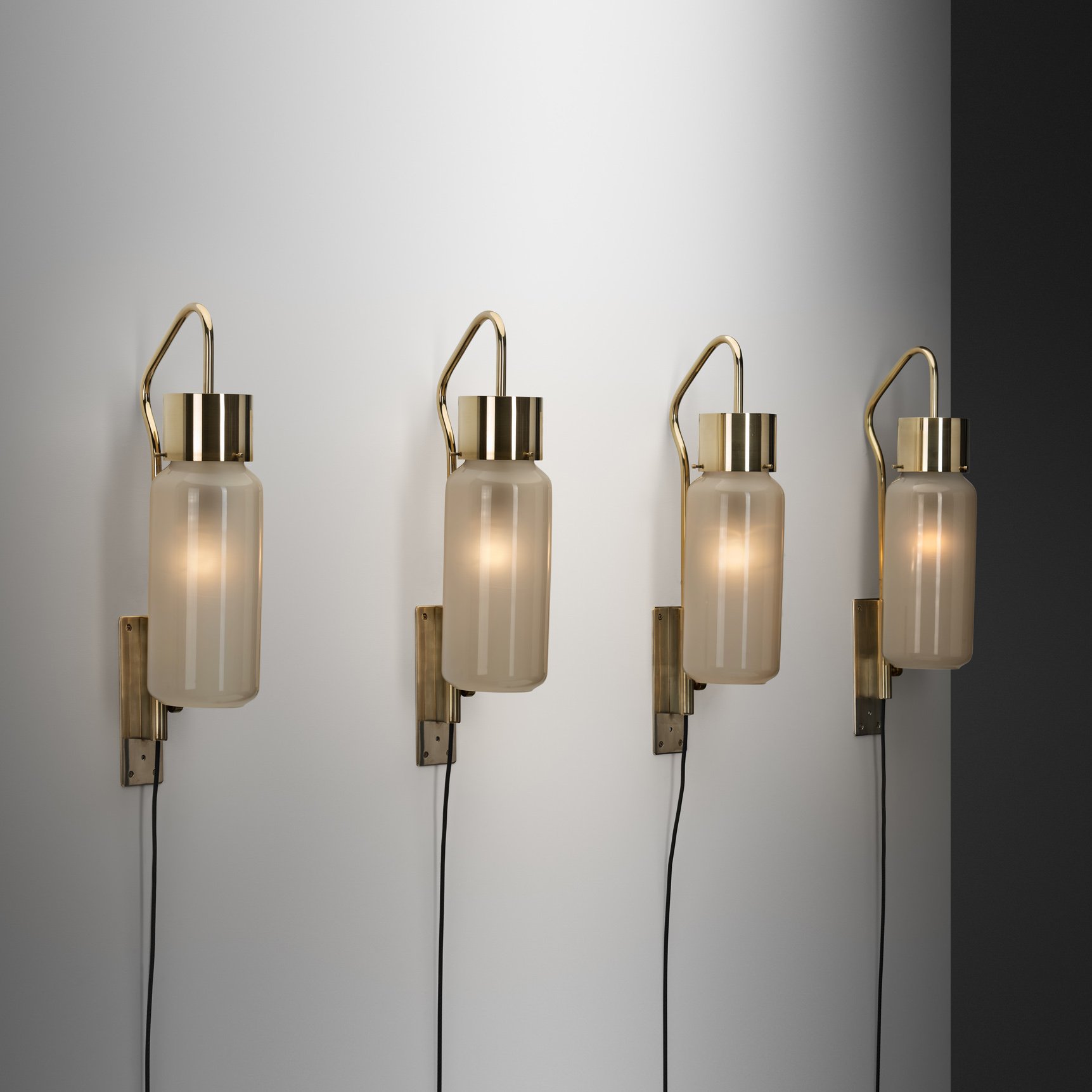
REQUEST PRICE HERE
Price category: 15,000 - 20,000 usd / eur
Italy is revered for many things: Food, wine, coffee, fashion - and in the world of design; lighting. For decades, Italy has set the bar in contemporary lighting, thanks to forward-thinking pioneers like Luigi Caccia Dominioni and brands like Azucena, and time-honoured techniques.
Designed around 1958, the "LP 10" model exemplifies Dominioni’s architectural approach to lighting, combining sculptural form with understated elegance. Produced by Azucena, one of Italy’s most influential post-war design manufacturers, the “LP-10” remains celebrated for its timeless proportions and refined material palette. Crafted in solid brass with opaline glass shades, the lamps emit a soft, ambient glow while showcasing the exceptional quality of their construction. The gently curved metal arms create a beautiful visual balance between structure and lightness, allowing the frosted glass shade to appear almost suspended. The warm patina that develops on the brass over time enhances the set’s character, while the minimalist silhouette reflects Dominioni’s enduring commitment to functional beauty and sophisticated restraint.
This set of wall lights bridges architectural precision with decorative warmth. Whether installed individually or as four, they serve as both an elegant source of illumination and sculptural design objects. As one of Luigi Caccia Dominioni’s most recognisable designs for Azucena, the “LP-10” stands as an enduring icon of post-war Italian craftsmanship and modernist design.
Condition:
In good vintage condition. Wear consistent with age and use. The lamps have recently been rewired and reconditioned. Due to the nature and age of the materials, the items may have marks, scratches, and discolouration. Minor imperfections on the glass may be present due to manufacturing inconsistencies. All lighting can be converted for US usage.
Dimensions:
5.11 in W × 7.08 in D × 21.25 in H
13 cm W x 18 cm D x 54 cm H
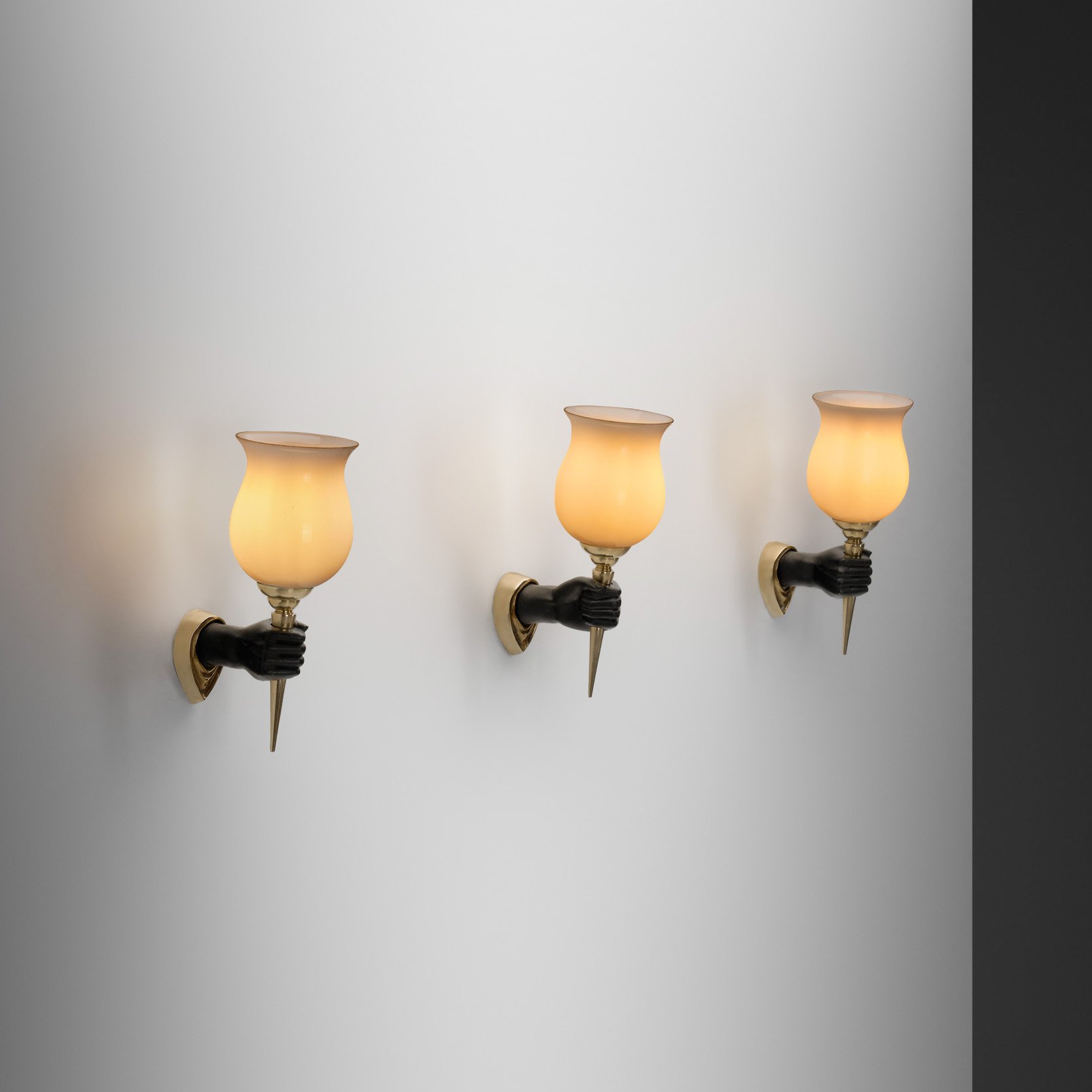
REQUEST PRICE HERE
Price category: 5,000 - 7,500 usd / eur
Art Deco emerged from the 1925 Paris Exposition, celebrating craftsmanship, modern materials, and stylised forms - balancing decorative flair with functional clarity. European designers became known during this period for combining bold forms with the durability of fine materials to create sophisticated lighting models like this set of three wall lamps.
These lamps perfectly marry strong edges with rounded curves to obtain the ideal balance of form. The set is constructed from patinated brass, and the material’s tones elegantly highlight both its age and craftsmanship. The interplay between the rich patina of the brass and the milk-white shades create a harmonious contrast, while the symmetrical arrangement reinforces the balance and rhythm central to Art Deco design. The visual interest of this set is accentuated by the form of the hands that suspend from the wall mounting to the body of the lamps - reminiscent of a hand holding a torch or even a wine glass. When lit, the lamps create an exceptionally atmospheric light, giving the brass a warm colour. Wall lamps such as this are a timeless example of how thoughtful craftsmanship can result in lighting fixtures that transcend their utilitarian purpose, becoming works of art in their own right. Today, we consider Art Deco and the early 20th century era a golden age for lighting design. During these decades, some of the most significant luminaries were created, and remain highly sought-after today.
This wall lamp set bridges sculptural presence and domestic functionality. It embodies the enduring qualities of the Art Deco movement in Europe: geometric refinement, tonal richness, and atmospheric light. The qualities of this set transform it into a bold design statement, while still able to complement a modern space.
Condition:
In good vintage condition. Wear consistent with age and use. The lamps have recently been rewired and reconditioned. The glass has some imperfections. Due to the nature and age of the materials, the item may have some marks, scratches, and discolouration. The lamps are compatible with E26 / E27 (standard) fittings. All lighting can be converted for US usage.
Dimensions:
4.33 in W x 6.69 in D x 11.49 in H
11 cm W x 17 cm D x 29 cm H
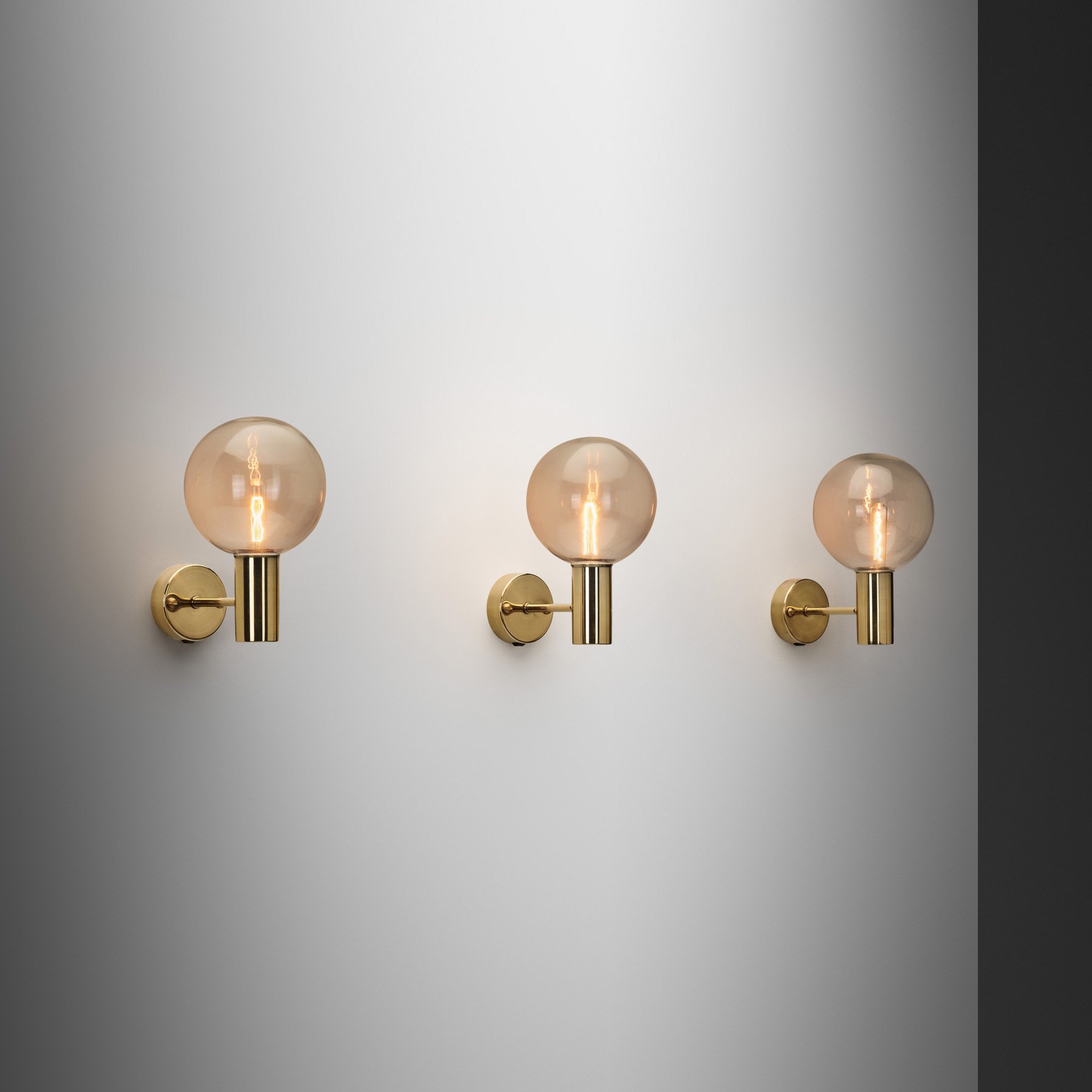
REQUEST PRICE HERE
Price category: 7,500 - 10,000 usd / eur
While Hans-Agne Jakobsson designed and produced various types of furniture, his lighting received greater international attention, and not without good reason. As this set of “V-149” wall sconces showcases, the Swedish designer mastered both the direction and colour of his lighting designs.
With the brass frame holding a translucent glass shade, these lamps clearly shows the Swedish designer’s studies in architecture, with beautiful geometric forms and symmetry dominating the structure. Like most mid-century Swedish lighting designs, this model is also dominated by its brass structure. The popularity of brass can be attributed to its golden hue, which adds warmth to the style's modern aesthetic. This model further emulates the mid-century modern movement's guiding principles through its clean lines and geometric shapes. The structure is composed of a back-plate and pole holding a large, elongated brass socket. Next to the brass, the translucent glass shade stands out with a shape that resembles a pressed sphere and has a generous size. Furthermore, thanks to the arrangement of the brass pole and the shade, this wall sconce divides the light evenly and brightens the yellow brass beautifully, creating a cosy, warm visual effect. This model was produced by Hans-Agne Jakobsson’s own company in Markaryd, Sweden.
Sconces are a timeless type of lighting fixture that can easily elevate their surroundings. These fixtures never go out of style, and have been in use for centuries. This is especially true for mid-century brass models like the "V-149". While already stunning individually, these light models are even more effective when placed in close proximity to each other.
Condition:
In good vintage condition. Wear consistent with age and use. The lamps have recently been rewired and reconditioned. Slight crack on one of the shades, but is not visible when mounted. Due to the nature and age of the materials, the items may have some marks, scratches, and discolouration. Minor imperfections on the glass may be present due to manufacturing inconsistencies and age. These lamps are compatible with an E26 / E27 (standard) fitting. All lighting can be converted for US usage.
Dimensions:
5.51 in W x 8.07 in D x 9.05 in H
14 cm W x 20.5 cm D x 23 cm H
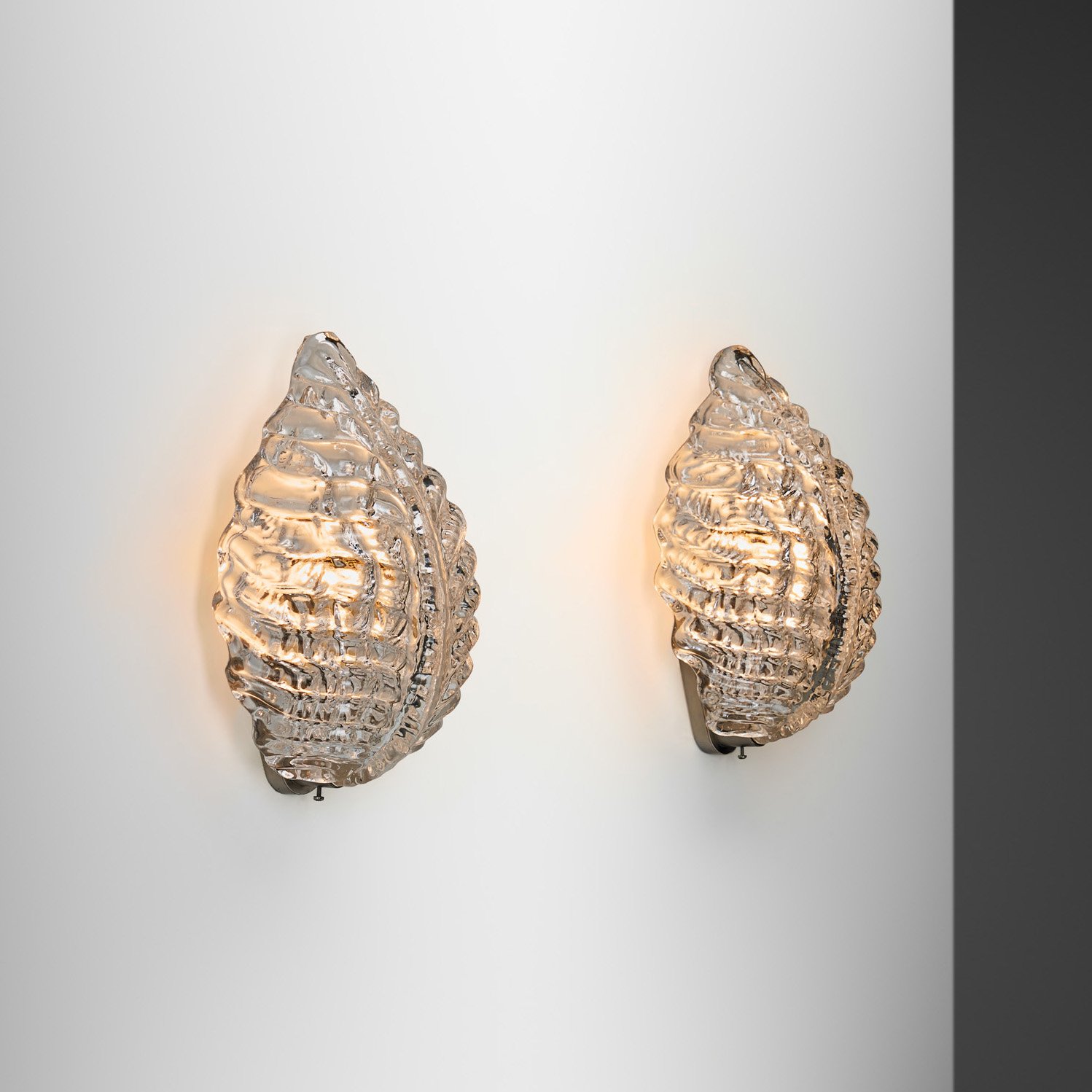
REQUEST PRICE HERE
Price category: 2,500 - 5,000 usd / eur
This pair of Swedish wall lamps attributed to Fritz Kurz is a playful example of the eccentric side of Scandinavian mid-century modern design. These crystal glass lamps’ organicity is quite literally expressed, representing the rare, more decorative models of Swedish modernism.
The lamps are made of a block of cast leaf-shaped glass on a metal base. These delicate leaf-shaped lamps showcase the unique qualities of the glass. The resulting effect is stunning, with shadows resulting from the play of light when the lamps are lit, creating an ambient mood while also highlighting the organic form. As flush mounts, the lamps are very close to the wall, connected to it by metal back-plates. At its most basic level, these lamps combine sleek lines with organic shapes, using new materials and methods to re-imagine traditional pieces. This model is mounted so that the body of the fixture is hidden, leaving only the shades on top of the surface. The glass’s shape truly stands out thanks to this, especially when illuminated. This pair exemplifies the expressive possibilities of glass design in the mid-20th century. More than functional objects, they serve as luminous reliefs, sculptures that animate the wall with texture and reflection.
The history of Orrefors is the story of how the simplest ingredients – lime, sand, and soda – can become magnificent glass objects. While glass has its limits, Orrefors craftsmen got as close to them as possible. Thanks to this effort, the full effect of this pair is of a real room jewel.
Condition:
In good vintage condition. Wear consistent with age and use. The items have recently been rewired and reconditioned. Minor marks, scratches and imperfections may be present on the glass due to manufacturing inconsistencies and age of the items.
Dimensions:
7.87 in W x 6.69 in D x 11.81 in H
20 cm W x 17 cm D x 30 cm H
REQUEST PRICE HERE
Price category: 2,500 - 5,000 usd / eur
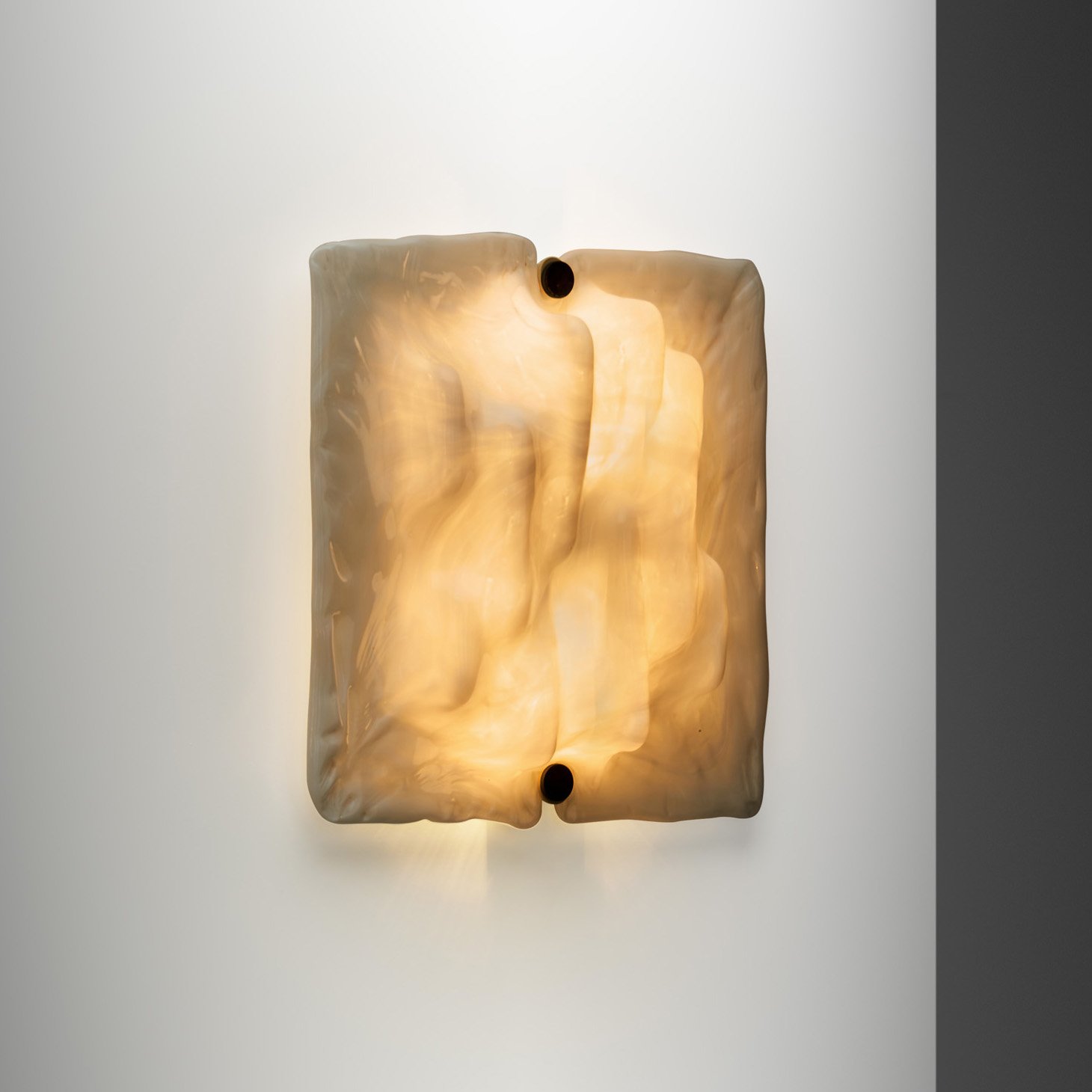
Toni Zuccheri was an Italian architect, painter and designer, whose work sits at the intersection of craftsmanship and experimentation. He developed a deep sensitivity to glass as both a functional and expressive medium. Throughout the 1960s, in his early twenties, Zuccheri collaborated with some of Italy’s leading manufacturers, including Venini, as well as with other iconic designers of the period, such as Geo Ponti. He pushed the limits of glass-making techniques to create objects that integrated sculptural form with atmospheric light.
This wall light reflects Zuccheri’s signature approach of texture and form. The piece is made of thick, moulded glass that appears almost fluid, its surface rippling with irregular folds and undulations. The glass diffuses light in a way that is both gentle and practical, creating a glow that shifts across the surface. When turned on, the lamp reveals subtle variations in tone and depth, recalling the organic qualities of ice or flowing water. This sculptural piece is secured by small metal screws that add an understated industrial contrast to the glass’s organic look. Despite the rather simple materials, the fixture commands presence through its tactile complexity and the play of light and shadow it produces. Zuccheri’s ability to manipulate glass beyond its rigid form gives the lamp an individual, hand-made character.
This wall light exemplifies the expressive possibilities of Italian glass design in the mid-20th century. More than a functional object, it serves as a sculpture that animates the wall with texture and reflection. It embodies Zuccheri’s belief that light could be both a material and an emotion, revealing the artistic depth that defines his contribution to postwar Italian design.
Condition:
In good vintage condition. Wear consistent with age and use. The lamp has recently been rewired and reconditioned. Minor marks, scratches, and imperfections may be present due to manufacturing inconsistencies and age of the item.
Dimensions:
14.37 in W x 4.33 in D x 14.56 in H
36.5 cm W x 11 cm D x 37 cm H
REQUEST PRICE HERE
Price category: 2,500 - 5,000 usd / eur
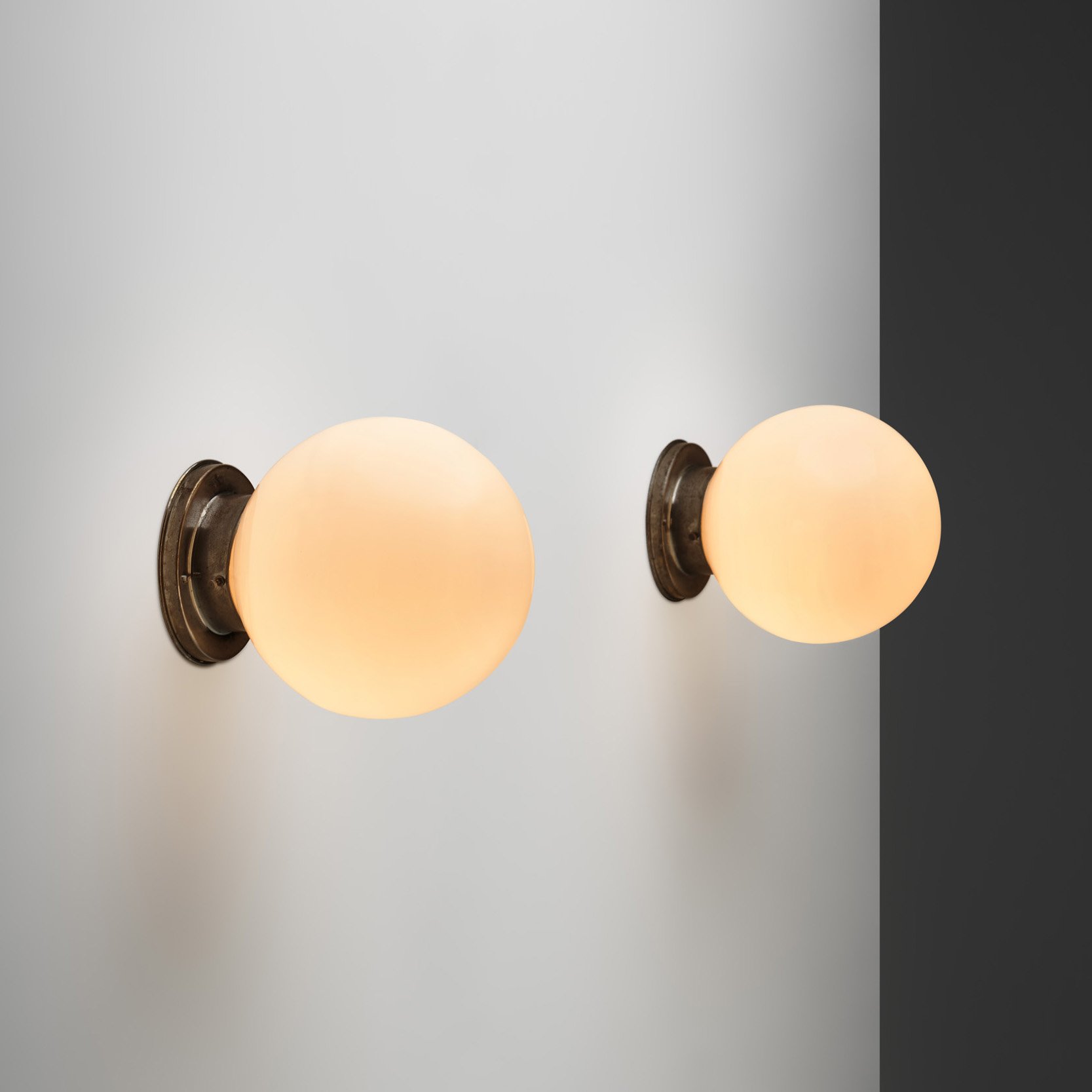
“The man who illuminated Finland”, Paavo Tynell is one of the best-known Finnish lighting designers, and his work has had a great influence on modern lighting design in Finland, but also internationally.
The best qualities of Tynell's light fixtures are their atmospheric light and disciplined, functionalist design, exemplified by these model “2009” wall lamps. The design of this pair is dominated by the opal glass shades supported by the brass mounts. Tynell’s design merges together a simple and decorative shape with sculptural elements. This pair of lamps has great proportions, the shades are balanced by the back-plates to create the attention-grabbing look. When lit, these lamps create an exceptionally atmospheric light, giving the brass a warm colour as well. Quality control at Tynell’s Oy Taito Ab was perfectly thorough, therefore these lamps are durable and high-quality. This model already appeared in Taito’s #10 catalogue in 1935.
In 1918, Tynell co-founded the metalwork and lighting company Oy Taito Ab, and worked as the company’s CEO and chief designer until 1953. During the 1930s, he designed lighting for various public spaces, such as Helsinki’s Parliament House and the office of the Secretary-General of the United Nations. In his day, Paavo Tynell’s atmospheric light fixtures attracted attention as far away as the United States.
Condition:
In good vintage condition. Wear consistent with age and use. Due to the nature and age of the brass, the items may have marks, scratches, and discolouration. Additional imperfections may be present on the glass due to age and manufacturing inconsistencies.
Dimensions:
7.08 in W x 8.66 in D x 7.08 in
18 cm W x 22 cm D x 18 cm H
REQUEST PRICE HERE
Price category: 2,500 - 5,000 usd / eur
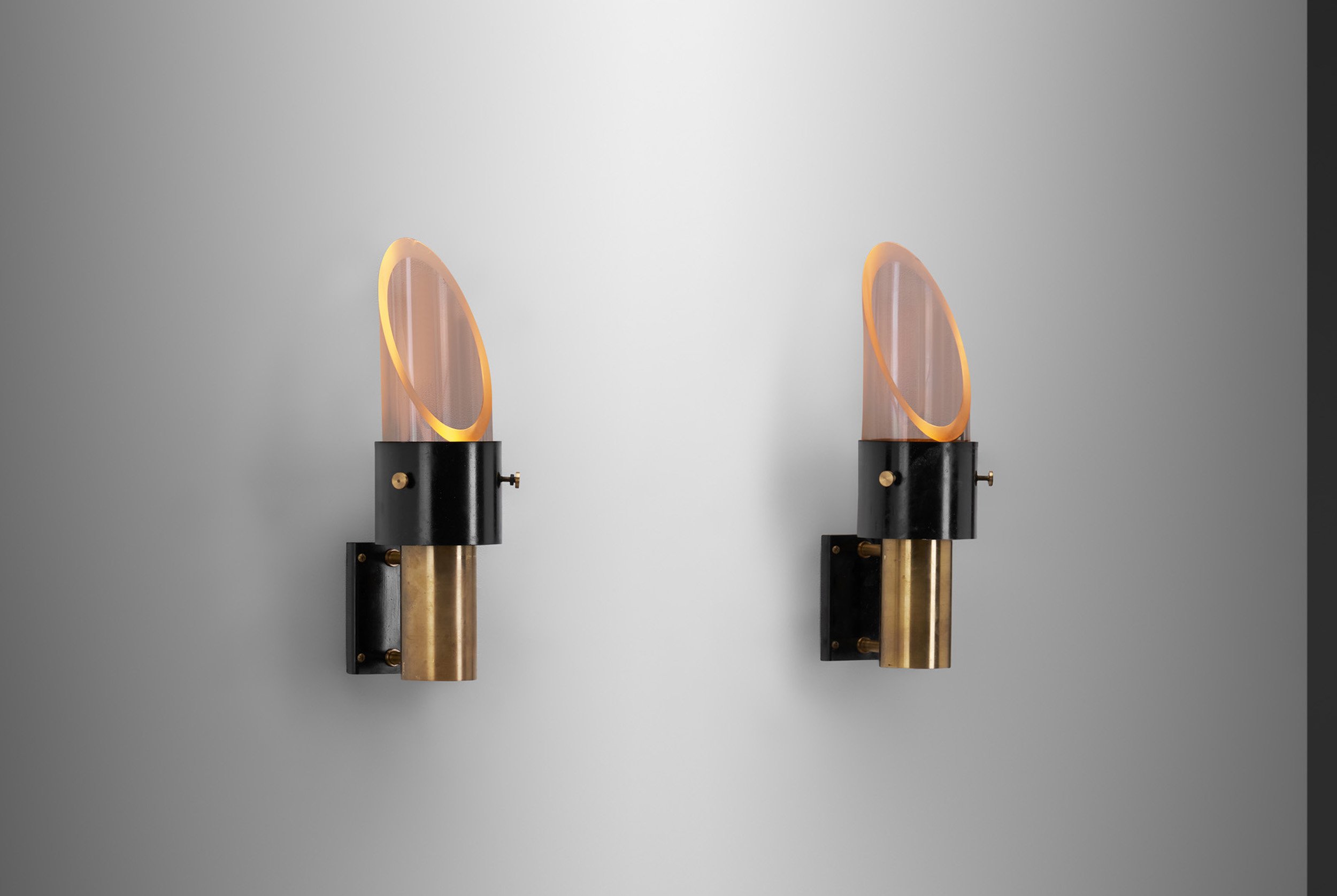
These Lyfa-edition “Saga” wall sconces by Danish architect and designer, Kay Kørbing are true collectors’ pieces. By the 1950s, Lyfa had built an international reputation for original, high-quality, modernist lamps. In the postwar era, the company collaborated with esteemed architects and designers to produce minimalist, sculptural pieces including these lamps.
Made of brass, metal, and crystal, the design of this model is entirely in the vein of modernism, while also sticking to the main ideals of Danish design, such as functionality. This can be observed in the lamps’ build that allows them to be faced either up- or downwards. The proportions are carefully thought out, with three main sections comprising the design. The three elements - the brass base, black metal shade holder, and the crystal glass shade - are clearly separated both by their shape, material, and colour. Most eye-catching are the Orrefors crystal glass shades in a peculiar shape that appear to be roll cut. Orrefors has been established in Swedish design tradition since 1898. Glass from the forests of Småland was incomparable: “Il n’y a que ça!” (There is nothing like it!) exclaimed the 1925 Paris World Fair. As these sconces showcase, the glass and shape are always in focus, combined with elegance, simplicity, and confidence. The predominantly round shapes are balanced by the square backplate. The artistic design is very honest in a purely Scandinavian manner, exposing the joinery and the materials’ natural qualities as well.
This pair of “Saga” wall sconces is a stunning example of how the 1960s are still able to deliver modern "art" to any interior. The producer, Lyfa, produced some cabin lamps and in its heyday - from the 1950s to mid-1970s - was considered a pioneer in innovative, architectural lighting. It is believed that Kay Kørbing designed this model for two school ships: M/S Princesse Margrethe and M/S Winston Churchill.
Condition:
In good vintage condition. Wear consistent with age and use. The brass body has a beautiful patina with some marks and discolouration. The glass has some marks and chips.
Dimensions:
4.72 in W x 5.51 in D x 13.77 in H
12 cm W x 14 cm D x 35 cm H

REQUEST PRICE HERE
Price category: 1,000 - 2,500 usd / eur
“The man who illuminated Finland”, Paavo Tynell is one of the best-known Finnish lighting designers, and his work has had a great influence on modern lighting design in Finland, and internationally.
The best qualities of Tynell's light fixtures are their atmospheric light and disciplined, functionalist design, exemplified by these two model “2008” ceiling lamps. The design of this model is dominated by the opal glass shades supported by the nickel plated brass stems. Tynell’s design merges together a simple and decorative shape with sculptural elements. These lamps have great proportions, the large shades are balanced by the backplates to create the attention-grabbing look. When lit, these lamps create an exceptionally atmospheric light, giving the nickel plated brass a vivid colour as well. Tynell’s designs are marked by a delicacy and softness that reveals his background in fine jewellery, and his most famous forms in lighting echo the structures of nature. Model “2008” is a modernist design to its core with a look that is timeless and can stand out and complement any space.
Idman Oy was established as early as 1897 by Karl Hjalmar Idman. In 1953, Idman Oy, acquired the majority of shares in Taito Oy, the company of Paavo Tynell. Paavo Tynell continued to work for the company on a freelance basis, through his own design firm. In his day, Tynell’s atmospheric light fixtures attracted attention as far away as the United States.
Condition:
In good vintage condition. Wear consistent with age and use. The metal base has some marks and staining. The mounting bases of the lamps differ slightly.
Dimensions:
7.08 in ⌀ x 7.87 in H
18 cm ⌀ x 20 cm H
Literature:
Idman Lighting Catalogue 140 – 1950s – Around 1956. p. 26.
About the Designer:
Paavo Tynell (1890-1973) was an industrial designer, known as the great pioneer of Finnish lighting design and fondly dubbed as “the man who illuminated Finland”. Tynell was one of the founders and chief designers of Taito Oy – the first industrial producer of lighting fixtures in Finland.
With the innovation of electricity in the beginning of the 20th century, Taito Oy and Tynell expanded the thinking and manufacturing of modern lighting solutions in Europe and abroad. Paavo Tynell rose to prominence in the 1930s and 1940s, during which period he collaborated with some of the most renowned Finnish architects, including Alvar Aalto. Working to incorporate artificial lighting into modern environments, Tynell’s company, Taito Oy produced fixtures for all of Alvar Aalto’s major projects including the Paimio Sanatorium and the Viipuri Library.
Tynell was especially appraised through his involvement with the Finland House, a design atelier in New York that showcased the work of Finnish designers and craftspeople. His elegant brass designs became an instant success in North America, and he began creating lighting designs for the prestigious American company Lightolier.
A master craftsman himself, Tynell’s designs were derivative of a traditional aesthetic with a modern sensibility, mixed with an extensive use of perforated and polished brass as material. Marked by delicacy and softness, his most famous forms in lightning echo the structures of nature; he adroitly created sculptural shapes reminiscent of the branches of trees, swirling snowflakes and seashells.
REQUEST PRICE HERE
Price category: 2,500 - 5,000 usd / eur
The Art Deco movement, which emerged in the early 20th century, is known for its bold geometric shapes, luxurious materials, and an emphasis on streamlined forms. Art Deco came as a reaction against the flowing, organic lines of Art Nouveau, thus opting for symmetry, order, and elegance. Influenced by modernity and industrialisation, Art Deco pieces often features polished finishes, and an overall sense of opulence, designed to elevate everyday spaces.
This lamp exemplifies the refined geometry and material richness characteristic of the movement. The piece is constructed from patinated bronze and frosted glass, and the materials’ tones elegantly highlight both the age and craftsmanship. The interplay between the rich patina of the bronze and the milk-white shade creates a harmonious contrast. The visual interest of this lamp is accentuated by the form of the female figurine that is suspended from the wall, mounting to the shade. Wall lamps such as this are a timeless example of how thoughtful craftsmanship can result in lighting fixtures that transcend their utilitarian purpose, becoming works of art in their own right. Today, we consider Art Deco and the early 20th century era a golden age for lighting design. During these decades, some of the most significant luminaries were created, and remain highly sought-after today.
This wall lamp bridges sculptural presence and domestic functionality. It embodies the enduring qualities of the Art Deco movement in Europe: geometric refinement, tonal richness, and atmospheric light. The qualities transform it into a bold design statement, while still able to complement a modern space.
Condition:
In good vintage condition. Wear consistent with age and use. The lamp has recently been reconditioned and rewired. Due to the age and nature of the materials, the item may have marks, scratches, and discolouration. Imperfections on the glass may also be present due to age and manufacturing inconsistencies. This lamp is compatible with an E26 / E27 (standard) fitting.
Dimensions:
3.94 in W × 4.33 in D × 19.88 in H
10 cm W x 11 cm D x 50.5 cm H