
Domingos Tótora "Leiras" Chair, Brazil 2017 (sold)


Domingos Tótora "Leiras" Chair, Brazil 2017 (sold)
This “Leiras” chair was designed and produced by contemporary Brazilian artist Domingos Tótora and is in line with the artist’s environmental creed.
This model reflects Tótora’s closeness to nature from its shape to its materials and name, for as ‘leiras’ means windrow, which is a row of cut hay or small grain crop in Portuguese. The welcoming seat is evidently inspired by the fields of windrows, and just like the fields each Leiras chair has a unique pattern and shape. The body is supported by the stylish steel frame, which adds a modern touch. This chair’s aesthetic can be best described as “environmental modernism” a notion that is central to Tótora’s works.
Sustainability is a crucial part of Tótora’s works, which is the reason behind the materials of this unique chair. The chair is handcrafted with great attention to detail and quality. Conception and execution go hand in hand in Tótora’s works, which is reflected in the Leiras chair’s rustic finish. It recalls cultivated lands and hills cut by rivers.
The steel legs give a nice contrast to the natural materials of the seat. The horizontal lines of the Leiras create a sense of tranquility, while the overlapping seat evokes a feeling of simple abundance. The sculptural seat is shaped to accommodate the human body, keeping functionality at the core of the design.
SOLD
Condition:
New.
Dimensions:
38.19 in W x 33.47 in D x 32.68 in H
97 cm W x 85 cm D x 83 cm H
Literature:
Domingos Tótora - Maria Sonia Madureira de Pinho, Brazil 2013, unpaginated.
About the designer:
Domingos Tótora (1960-) is a contemporary Brazilian designer whose work falls between art and design. Born and raised in the mountainous region of Maria da Fé, nature is an essential part of Tótora’s aesthetic. Being true to nature means that imperfections are a welcome part of Tótora’s designs, embracing asymmetry and unevenness in the spirit of wabi-sabi.
Following his studies in Sao Paulo, Tótora found inspiration on the streets in the form of discarded cardboards. He created a process in which cardboard can be recycled by breaking it down to small pieces, transforming it to cellulose plaster. With the addition of water, glue and natural pigments, the cardboard can be shaped into new forms. Through this sustainable process, waste cardboards are turned into a wood-like material. Tótora and his small team believe sustainability happens through actions and not words.
His studio, Domingos Totora Estúdio de Artes Design, was founded in 2005 in his hometown, Maria da Fé. The beauty of his work manifests itself in its philosophy of creation and respect for the environment. The production process of Tótora’s designs is 100% manual and the cardboard he uses is fully recycled. Domingos Tótora is a true mixture of artist, designer, and craftsman. In recent years, the originality and elegance of his creations have been recognized in several exhibitions. ~H.
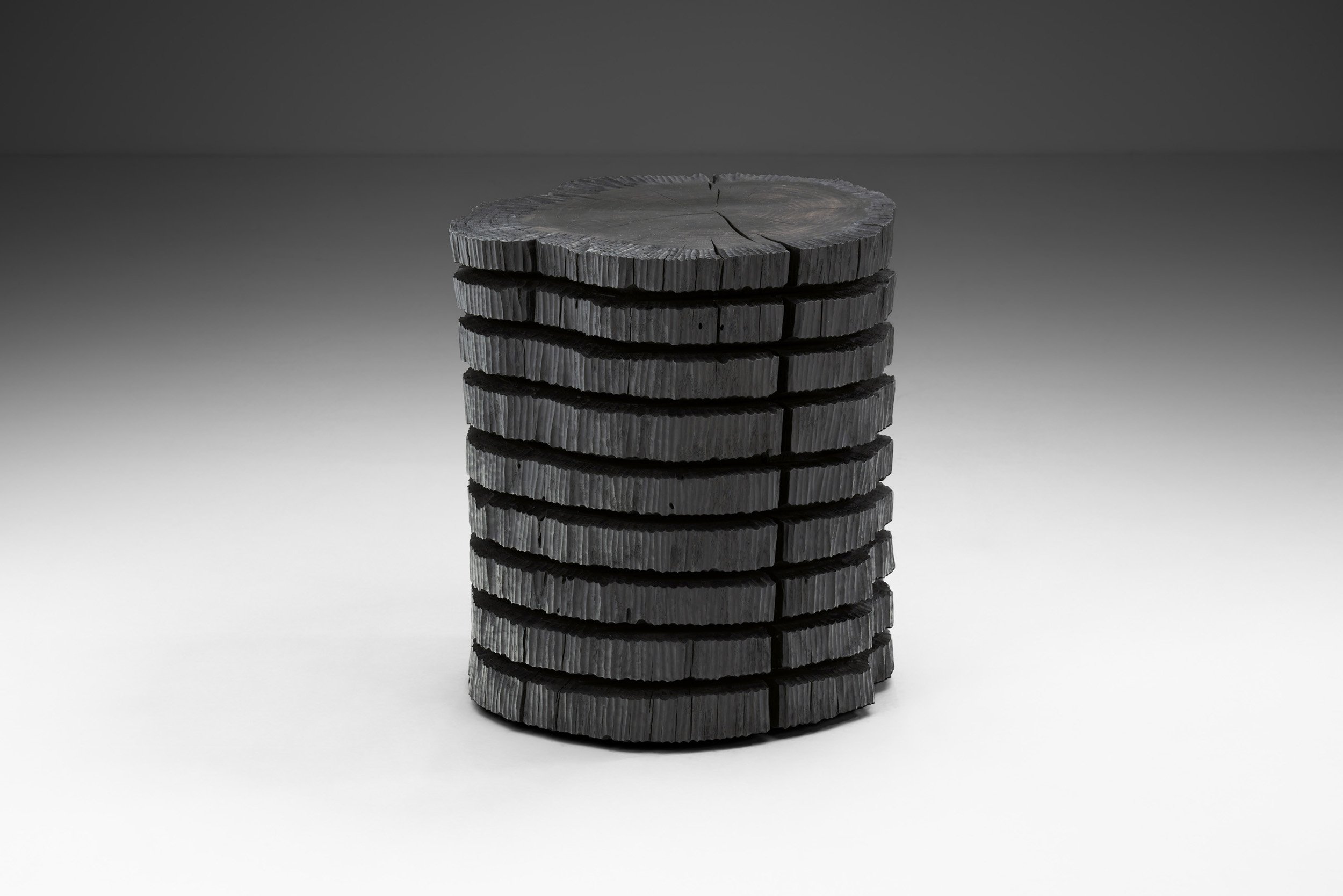
REQUEST PRICE HERE
Price category: 2,500 - 5,000 usd / eur
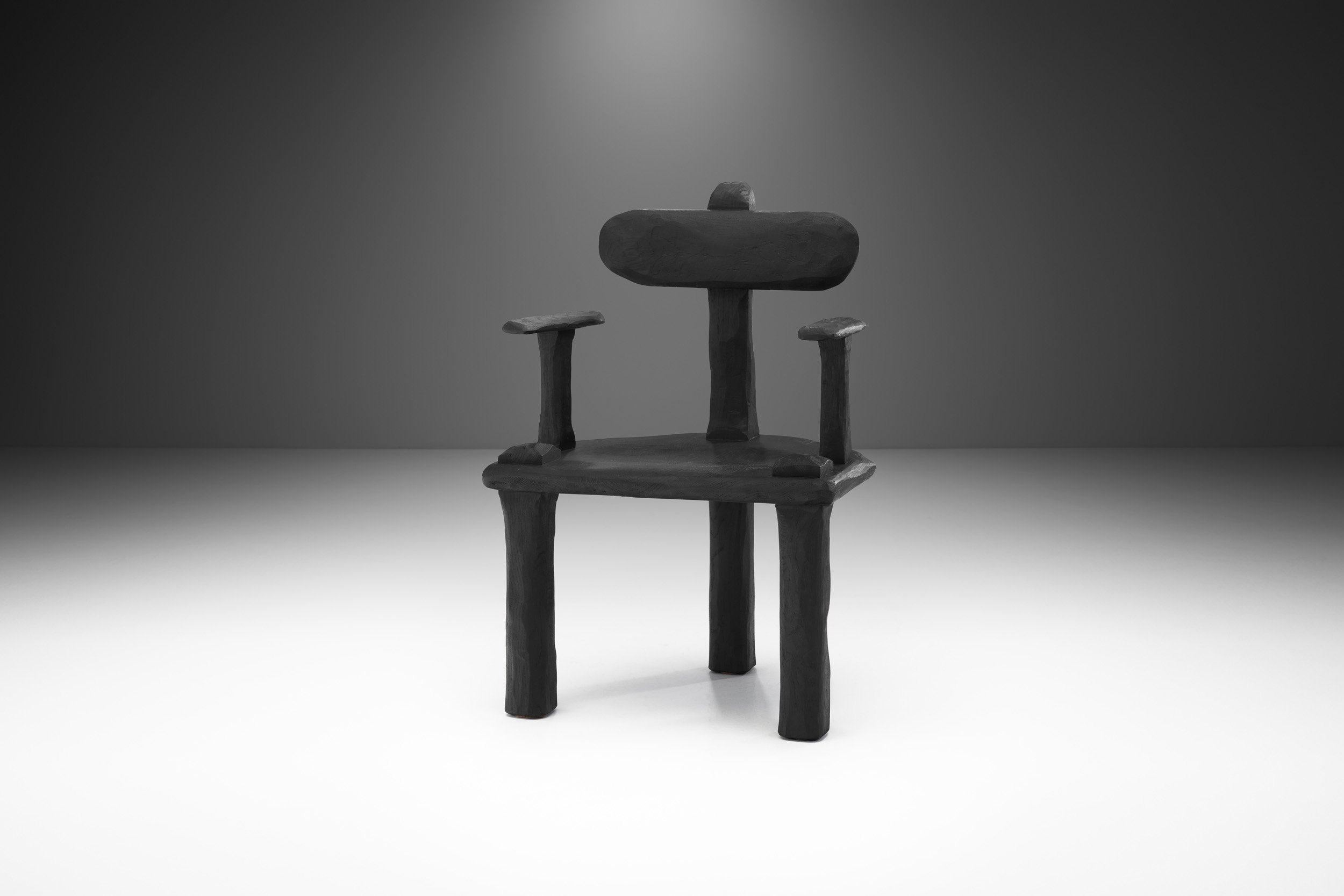
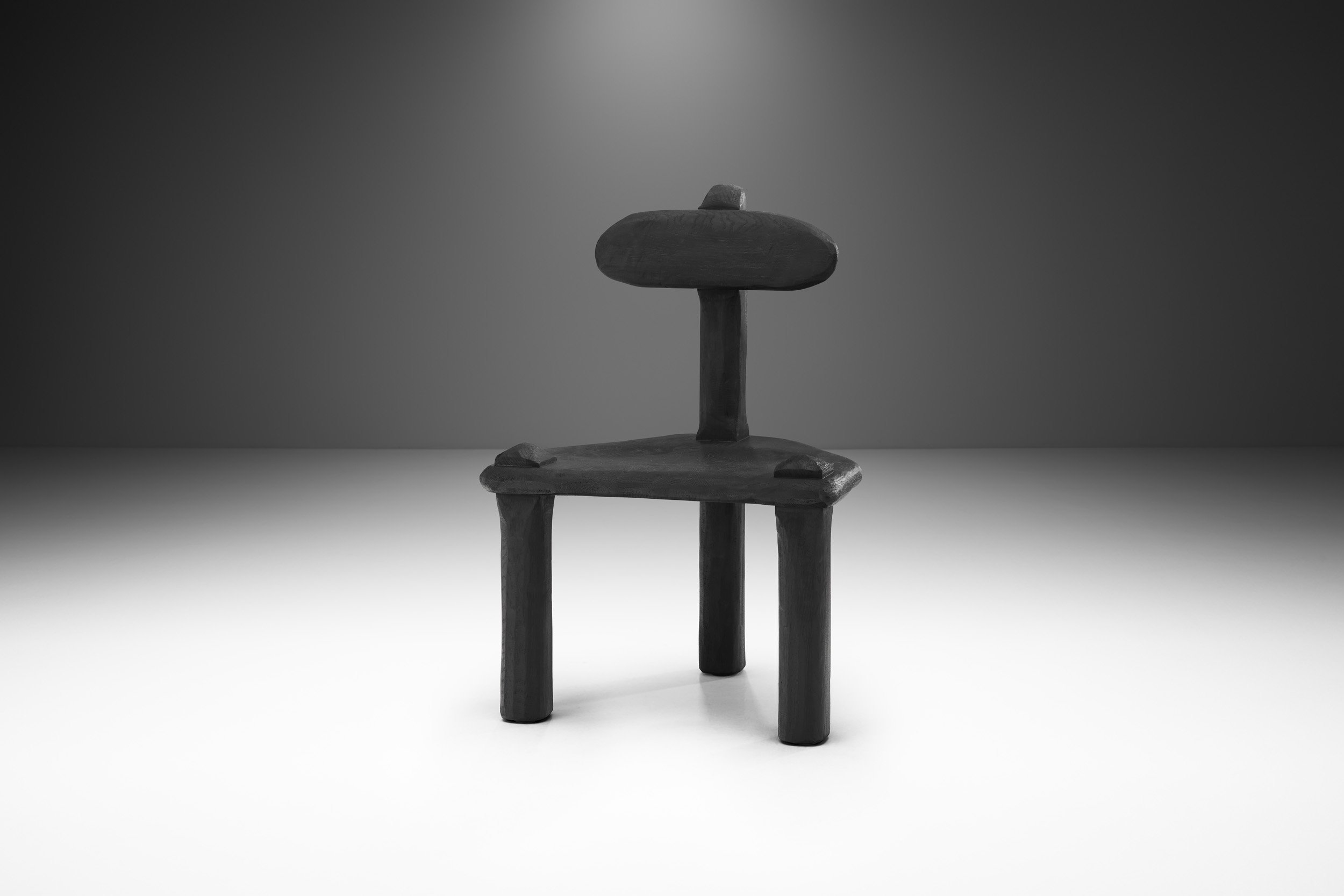
Three legs, a seating and a backrest are the basic principles to form the base for each chair of the “P60” series. During the creation process, each piece gets its own, unique characteristics with different textures, shapes and details. Essentially, each piece is carrying the same DNA with different personalities.
This “P60 L” low chair model is made of ebonized oak with an oil finish. Ebonized wood can be created with a chemically reactive process or other means to colour the wood black, like ebony, while still allowing the wood grain to show through. As a result, the wood’s grain stands out even more, giving the design a striking appearance. In his own words: “The experience of a black surface is of a physical type, the absorption of light drawn away from the eye, the pupil opens and there is a sense of being pulled into the surface.” Berrewaerts’s work is situated between furniture and sculpture with a strong emphasis on materiality and craftsmanship, which is very evident in this “P60” series, especially in this chair. Yet, the forms are not overworked, these organic lines possess an elemental quality, balancing the design between furniture and sculpture. The brutalist simplicity of this chair and its material are what make it one-of-a-kind in all senses of the expression.
For Robin Berrewaerts wood is not just a material or decorative element, instead, it is much more about the transformation from a tree to an object. This process resembles a conversation, a journey, looking for the right way to use time and tools. This attitude results in unique, artistic objects that have grown into something that arouses curiosity.
Condition:
New. Made to order.
Dimensions:
27.95 in W x 27.76 in D x 27.17 in H; Seat Height 11.02 in
71 cm W x 70.5 cm D x 69 cm H; Seat Height 28 cm
About the designer:
Robin Berrewaerts was born in 1991, he works and lives in Brussels, Belgium. He graduated as an interior designer at the LUCA School of Arts in Brussels followed by a postgraduate degree in furniture design at the Thomas More School in Mechelen.
He shares his time between his own atelier and guiding students at the LUCA School of Arts where he is managing the wood and metal workshop. His work is situated between furniture and sculpture with a strong emphasis on materiality and craftsmanship. Ranging from private commissions to exhibitions, products and sculptures, creating objects with or without any typological or functional constraint.
Whether straight from a tree or industrially processed, wood manifests itself in a large variety. For Robin, this creates a huge interest in using it as a material. He sees working with wood as a physical interaction between material and artist. It comes with its own processes, techniques and peculiarities of language and vocabulary. The transformation from a tree to an object resembles a conversation, a journey, looking for the right way to use time and tools. The identity of the wood acts as a guideline from branch, stem or sawn lumber. Each type needs different approaches which results in unique objects that have grown into something that arouses curiosity.
Many of Robin’s works make use of black. The act of making the piece black, whether oxidizing, burning or painting finalizes the work he has put into the material. It marks the end of the journey. The experience of a black surface is of a physical type, the absorption of light drawn away from the eye, the pupil opens and there is a sense of being pulled into the surface. Experiencing form and details before recognizing the material so the wood itself is not becoming a decorative element.