
Sobreiro Armchair by the Campana Brothers, Brazil 2018


Sobreiro Armchair by the Campana Brothers, Brazil 2018
REQUEST PRICE HERE
Price category: 15,000 - 20,000 usd / eur
Made upon order. Lead time ca 20-24 weeks
Made in limited edition of only 150, the “Sobreiro” (Portuguese for cork oak tree) armchair is part of the small exclusive Sobreiro Collection of cork furniture designed by the Campana Brothers.
This armchair – the only chair in the collection – is made from natural cork alone. The rectangular shape is appealing in its rawness, the understated design lets the unique material stand out. Such a creative, culturally inspired and sustainable piece like this armchair is a great addition to any contemporary space. In this armchair’s case, using the expression “one of a kind” is warranted.
The pieces in the collection were created to show the potential of cork as a design material that can be versatile, attractive and sustainable. This collection marks the first time the Campana Brothers have worked with cork, a material that is not only ecological, but also light. Thanks to the texture, variety of applications and its insulation properties, cork is like “marble that can be sculpted” as Humberto Campana explained. The original pieces were developed with the support of Corticeira Amorim, who played an advisory role and supplied the different types of cork used in the collection.
Condition:
New. Because this is a handmade artistic work made of a natural product, each item is one-of-a-kind and minor variations in colour, texture, shape, grain, and sizing can occur.
Dimensions:
22.63 in W x 29.14 in D x 29.53 in H; Seat height 17.72 in
75 cm W x 60 cm D x 75 cm H; Seat height 45 cm
About the designer:
The Campana Brothers, Humberto and Fernando, are among the icons of contemporary furniture design. Since 1983, the Brazilian siblings have achieved both national and international recognition and popularity.
Their studio, Estudio Campana, is based in São Paulo, and often collaborates with local communities, factories, and industries. There is a huge emphasis on handcrafted and artisanal work. Via their pieces, the Campana Brothers institute conversation around ethical production, sustainability and social awareness into some of the world’s most alluring interiors.
Their unique designs have earned them numerous awards, including the Ordre des Arts et Lettre from the Ministry of Culture in France and the Order of Cultural Merit in Brazil. Their work has been the subject of several exhibitions, including the 2008 exhibition at the Cooper Hewitt Smithsonian Design Museum in New York. ~H.
REQUEST PRICE HERE
Price category: 2,500 - 5,000 usd / eur
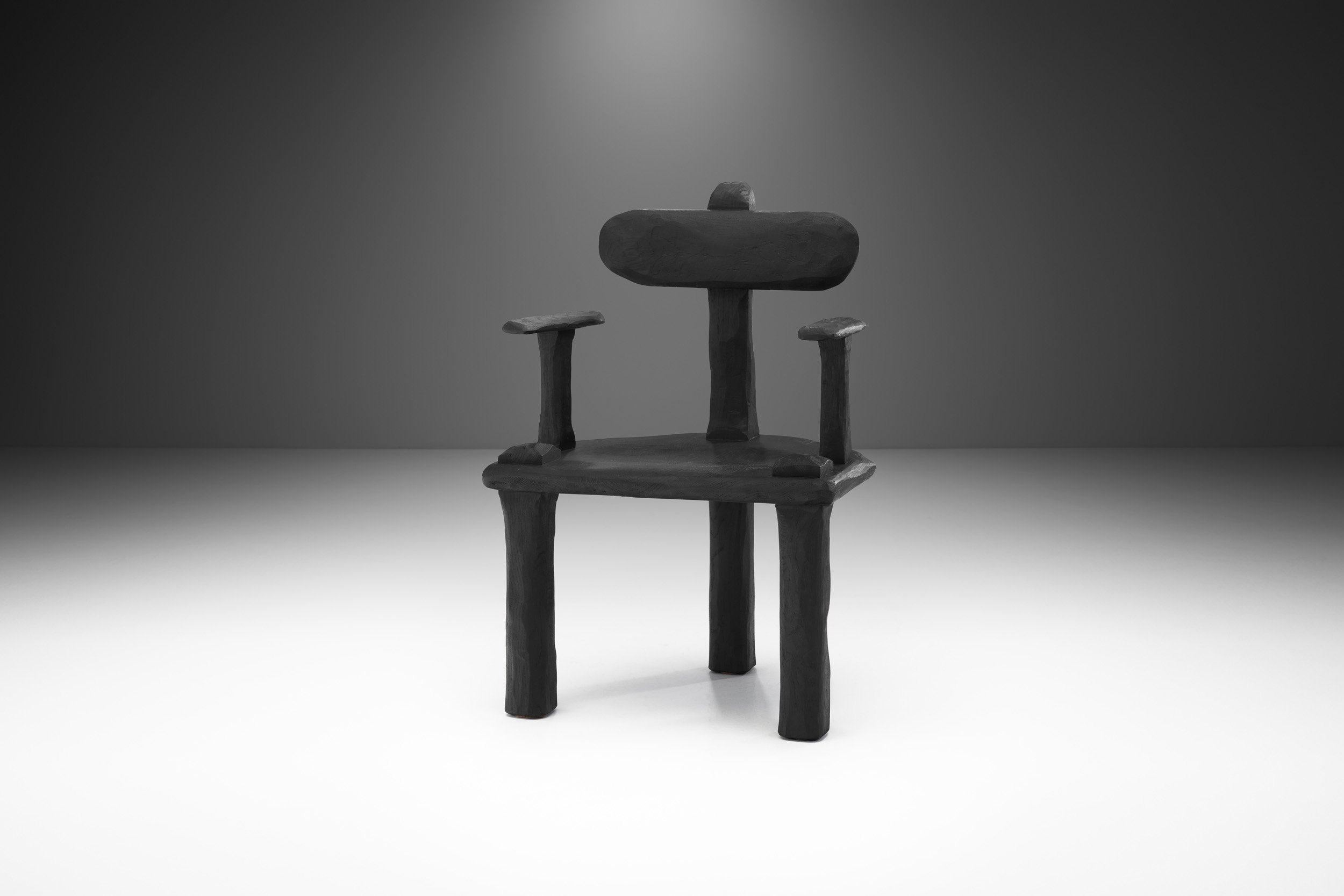
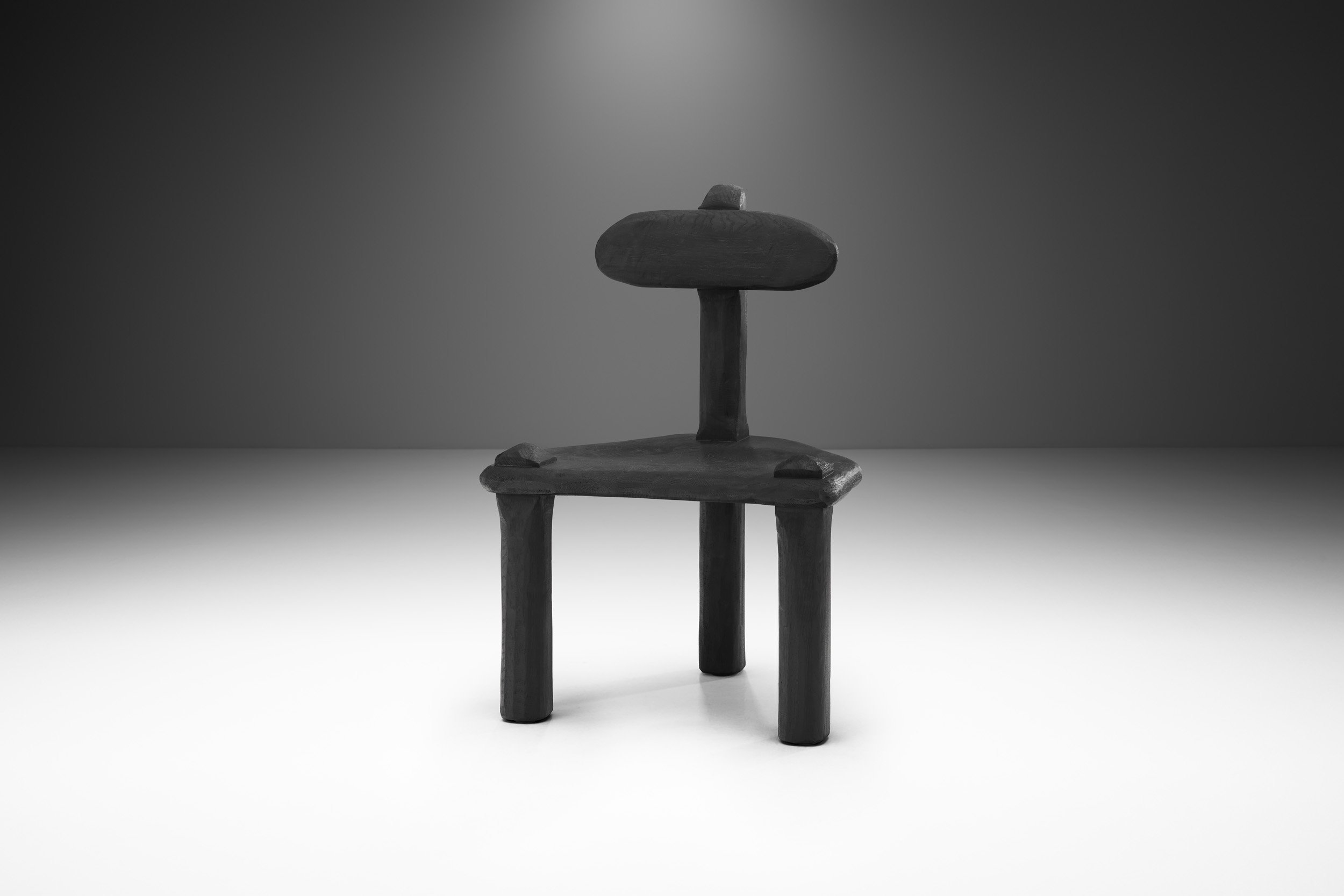
Three legs, a seating and a backrest are the basic principles to form the base for each chair of the “P60” series. During the creation process, each piece gets its own, unique characteristics with different textures, shapes and details. Essentially, each piece is carrying the same DNA with different personalities.
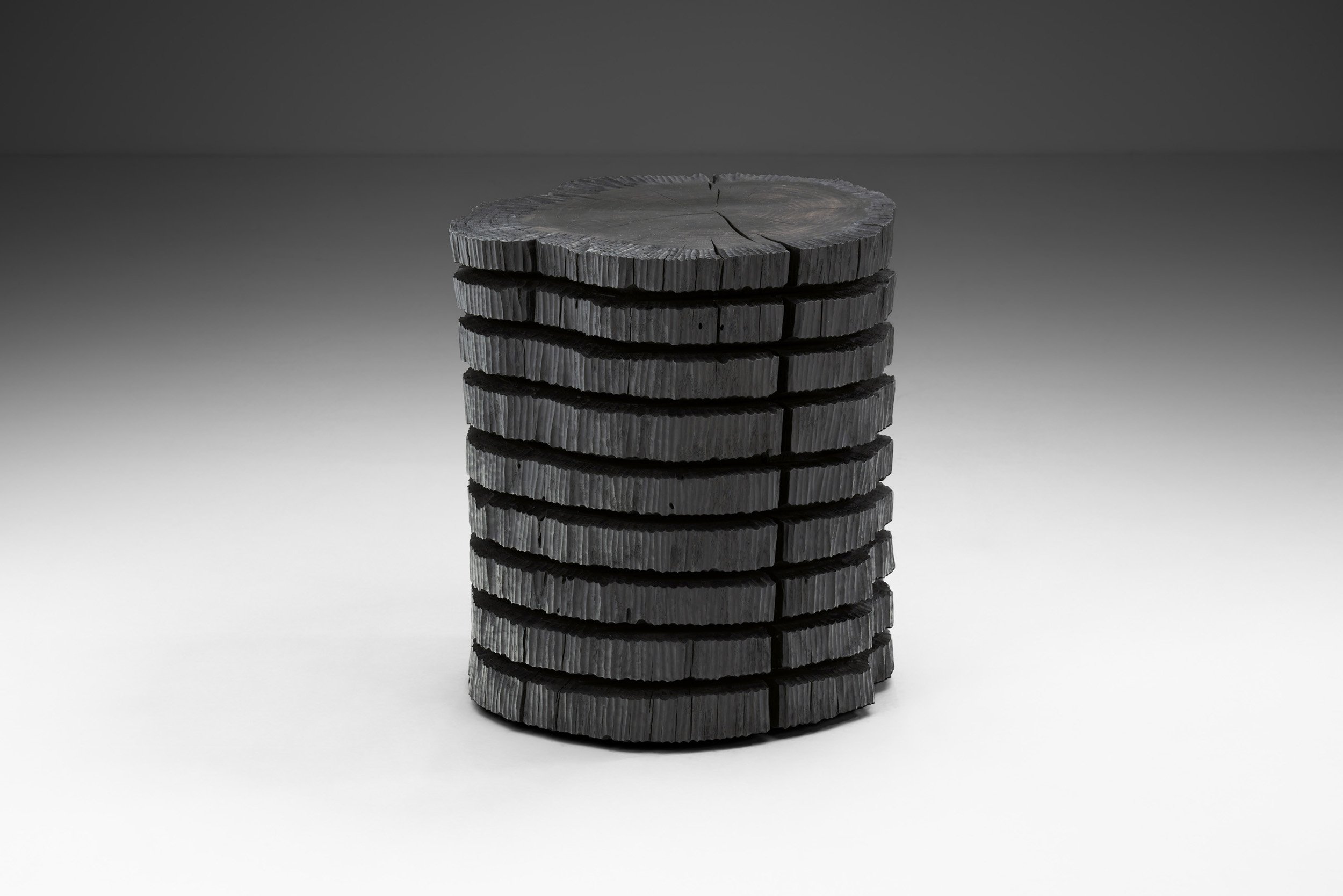
This “P60 L” low chair model is made of ebonized oak with an oil finish. Ebonized wood can be created with a chemically reactive process or other means to colour the wood black, like ebony, while still allowing the wood grain to show through. As a result, the wood’s grain stands out even more, giving the design a striking appearance. In his own words: “The experience of a black surface is of a physical type, the absorption of light drawn away from the eye, the pupil opens and there is a sense of being pulled into the surface.” Berrewaerts’s work is situated between furniture and sculpture with a strong emphasis on materiality and craftsmanship, which is very evident in this “P60” series, especially in this chair. Yet, the forms are not overworked, these organic lines possess an elemental quality, balancing the design between furniture and sculpture. The brutalist simplicity of this chair and its material are what make it one-of-a-kind in all senses of the expression.
For Robin Berrewaerts wood is not just a material or decorative element, instead, it is much more about the transformation from a tree to an object. This process resembles a conversation, a journey, looking for the right way to use time and tools. This attitude results in unique, artistic objects that have grown into something that arouses curiosity.
Condition:
New. Made to order.
Dimensions:
27.95 in W x 27.76 in D x 27.17 in H; Seat Height 11.02 in
71 cm W x 70.5 cm D x 69 cm H; Seat Height 28 cm
About the designer:
Robin Berrewaerts was born in 1991, he works and lives in Brussels, Belgium. He graduated as an interior designer at the LUCA School of Arts in Brussels followed by a postgraduate degree in furniture design at the Thomas More School in Mechelen.
He shares his time between his own atelier and guiding students at the LUCA School of Arts where he is managing the wood and metal workshop. His work is situated between furniture and sculpture with a strong emphasis on materiality and craftsmanship. Ranging from private commissions to exhibitions, products and sculptures, creating objects with or without any typological or functional constraint.
Whether straight from a tree or industrially processed, wood manifests itself in a large variety. For Robin, this creates a huge interest in using it as a material. He sees working with wood as a physical interaction between material and artist. It comes with its own processes, techniques and peculiarities of language and vocabulary. The transformation from a tree to an object resembles a conversation, a journey, looking for the right way to use time and tools. The identity of the wood acts as a guideline from branch, stem or sawn lumber. Each type needs different approaches which results in unique objects that have grown into something that arouses curiosity.
Many of Robin’s works make use of black. The act of making the piece black, whether oxidizing, burning or painting finalizes the work he has put into the material. It marks the end of the journey. The experience of a black surface is of a physical type, the absorption of light drawn away from the eye, the pupil opens and there is a sense of being pulled into the surface. Experiencing form and details before recognizing the material so the wood itself is not becoming a decorative element.