
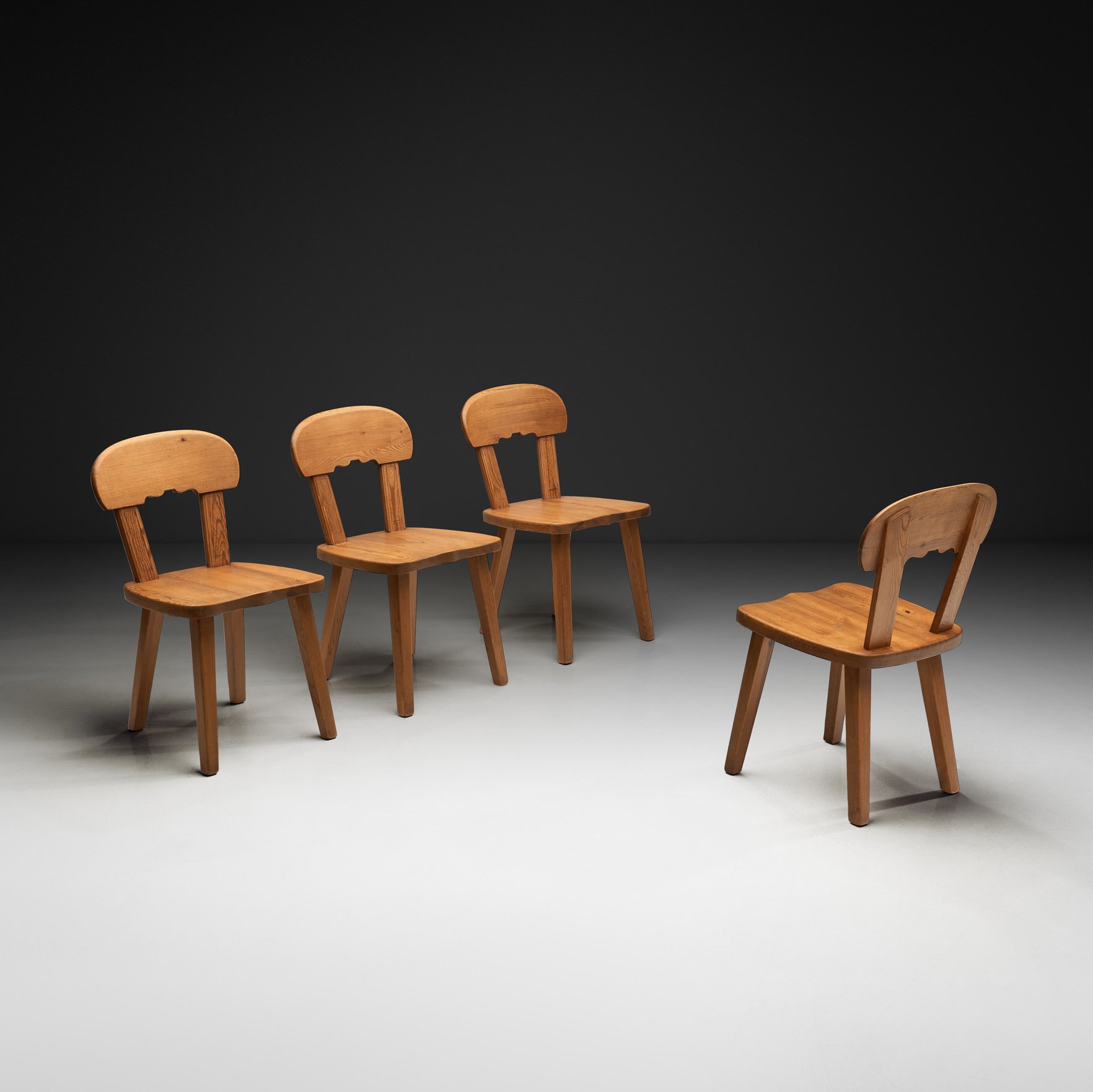
Axel Einar Hjorth "Utö" Chair for Nordiska Kompaniet, Sweden 1930s


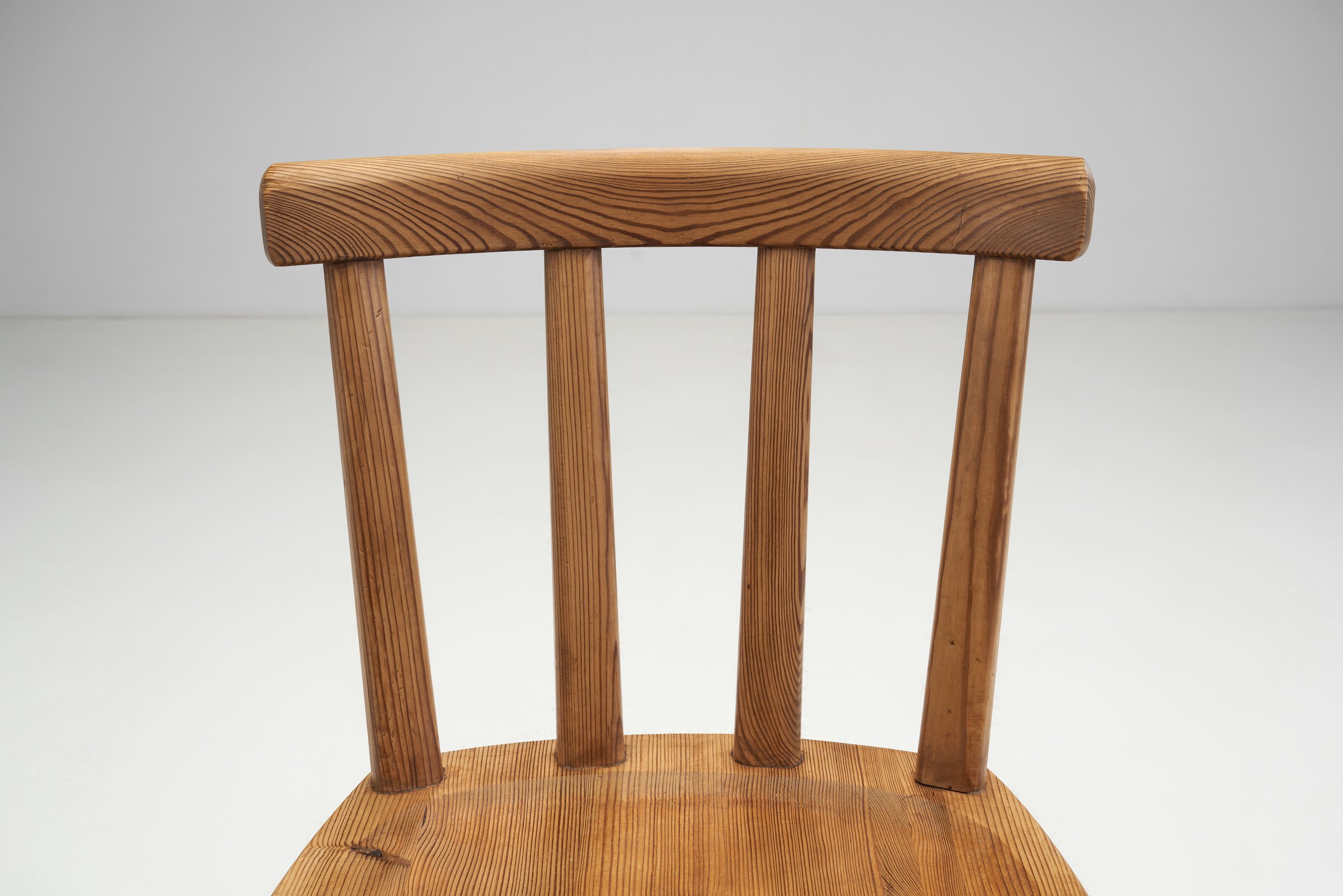


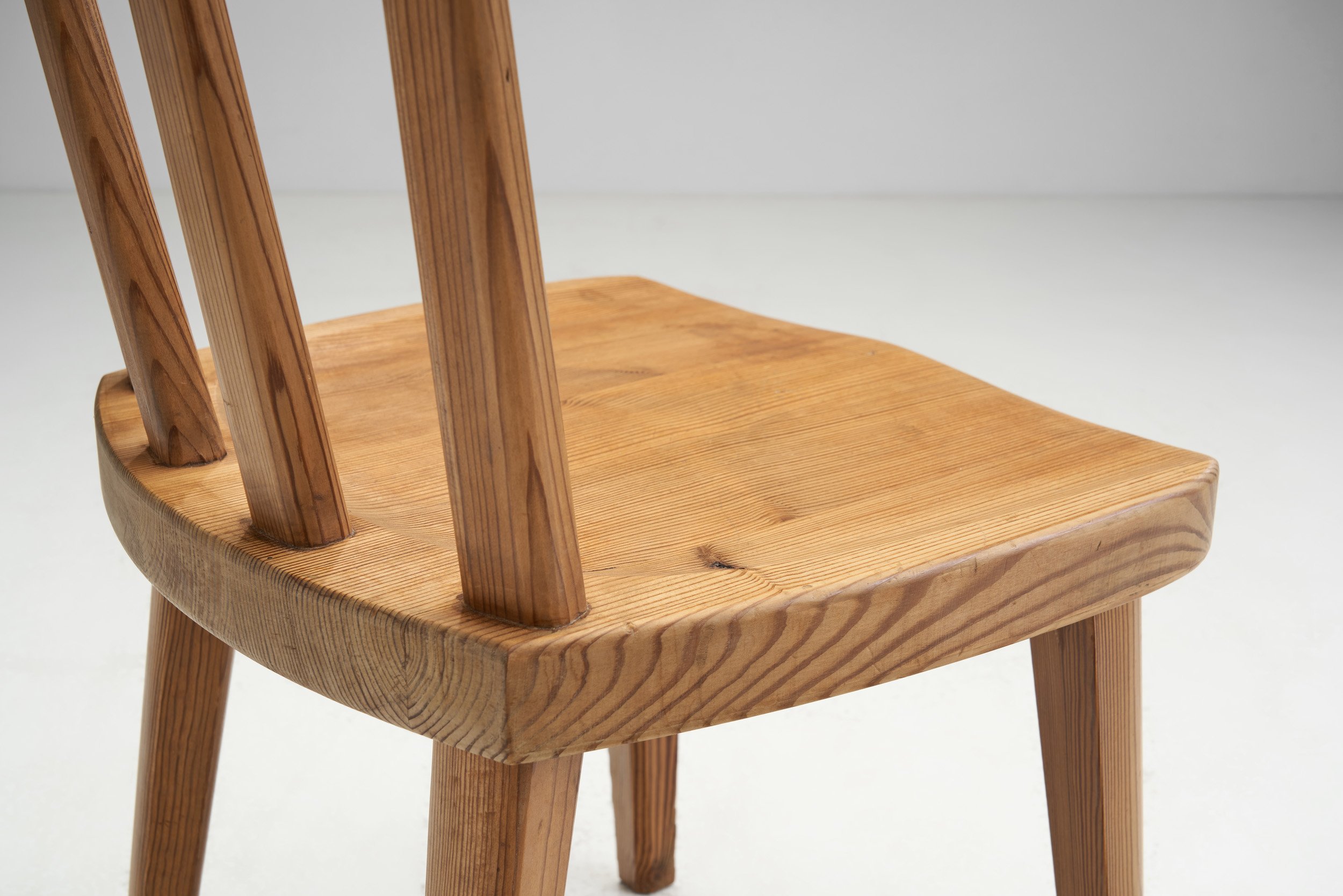


Axel Einar Hjorth "Utö" Chair for Nordiska Kompaniet, Sweden 1930s
REQUEST PRICE HERE
Price category: 2,500 - 5,000 usd / eur
Swedish architect and furniture designer Axel Einar Hjorth served as the lead designer for Sweden’s Nordiska Kompaniet department store from 1926 to 1938. During this time, Hjorth designed the “Sportstugemöbler” series (which translates to “sports cabin furnishings”), a collection of wooden furniture designed for country homes. The various models in the sportstugemöbler series took their names from the Stockholm archipelago – including Blidö, Lovö, and famously, Utö.
The ‘Utö’ chair was designed in 1932 as part of the collection. Unlike the department store's interiors for floors and villas in the cities, the ‘Utö’ design had a simple character with robust and minimalist basic shapes in solid pine. Accordingly, the design of this chair focuses on clean lines and the material itself. Made of pine wood, the chair is strong, reflecting Hjorth’s principles according to which he mixed the ideals of the modernist movement with provincial Swedish traditions, producing a unique and primitive modernism. It demonstrates a conscious construction aesthetic, where the joinery and fittings related to traditional craftsmanship are emphasized. Dominated by rounded, yet defined lines, the chair has a spindle backrest and ergonomically carved seat. The design eludes harmony and stability, fitting the summer cabin concept perfectly.
Hjorth's aesthetic alludes to both the traditional simplicity of the common people and the radical aesthetics of international modernism. The ‘sports cottage furniture’ that this dining chair is part of also had an influence on the designer’s contemporaries and inspired Carl Malmsten, among others. In an international perspective, Hjorth's “sportstugemöbler” series was the forerunner of later pioneering designers such as Charlotte Perriand. It is therefore no surprise that the ‘Utö’ chari became part of Swedish and international modernist design history. In their time, the pieces of the Utö collection may have appeared as pioneering and radical, but today they are viewed as status symbols in interiors of international character.
Condition:
In good vintage condition. Wear consistent with age and use. Some marks and stains on the wood.
Dimensions:
18.89 in W x 18.3 in D x 31.49 in H; Seat height 16.92 in
48 cm W x 46.5 cm D x 80 cm H; Seat height 43 cm
Literature:
Christian Bjork, Thomas Ekstrom and Eric Ericson, 'Axel Einar Hjorth: Mobelarkitekt', Stockholm, 2009, p.130
About the designer:
Axel Einar Hjorthwas born in a small Swedish village named Krokek, just outside Norrköping, on March 7, 1888. At the age of 20, he moved to Stockholm to study architecture and design at the Högre Konstindustriella Skolan.
Although he never graduated, in the 1920s Hjorth started working as a furniture designer for various manufacturers, such as H. Joop & Co., Myrestedt & Stern, Jonssons, and Nordiska Kompaniet. Hjorth’s designs from this period had neoclassical features combined with Swedish Grace. This romantic national style of Sweden was elegant and refined, yet simple. The anniversary exhibition of 1923 in Gothenburg marked the breakthrough of Swedish decorative arts, and made Axel Einar Hjorth a well-respected artist. From October 1926, Hjorth became the chief designer and architect of Nordiska Kompaniet department store in Stockholm. In the 1930s, Hjorth designed a furniture collection out of pine meant for serial production known as Sportstugemöbler (furniture for holiday houses).
Hjorth’s designs, from the luxury of neoclassicism to the severity of functionalism, are sharply distinctive in style, materials, and character. Unlike many of his contemporaries, Hjorth did not conform to the socially oriented ideas produced by Svensk Form (the Swedish Society of Crafts and Design). He played a significant role in the development of Swedish society as a whole, and particularly in Swedish industrial art
Today Hjorth is often viewed as a precursor to the modern designs popularized by Charlotte Perriand, Jean Royére, Pierre Chapo, or Josef Frank. Recently, there has been a revival of appreciation for his work, showing his genius in a new light.
REQUEST PRICE HERE
Price category: 7,500 - 10,000 usd / eur
Carl Malmsten (1888–1972) was one of Sweden's most influential furniture designers, architects and educators, known for his devotion to traditional Swedish craftsmanship and his belief in creating furniture that brought warmth and comfort to everyday life. His career took off in 1916 when he won a competition to design furniture for Stockholm City Hall; he went on to establish a distinctive approach characterised by natural materials, gentle curves and carefully considered proportions.
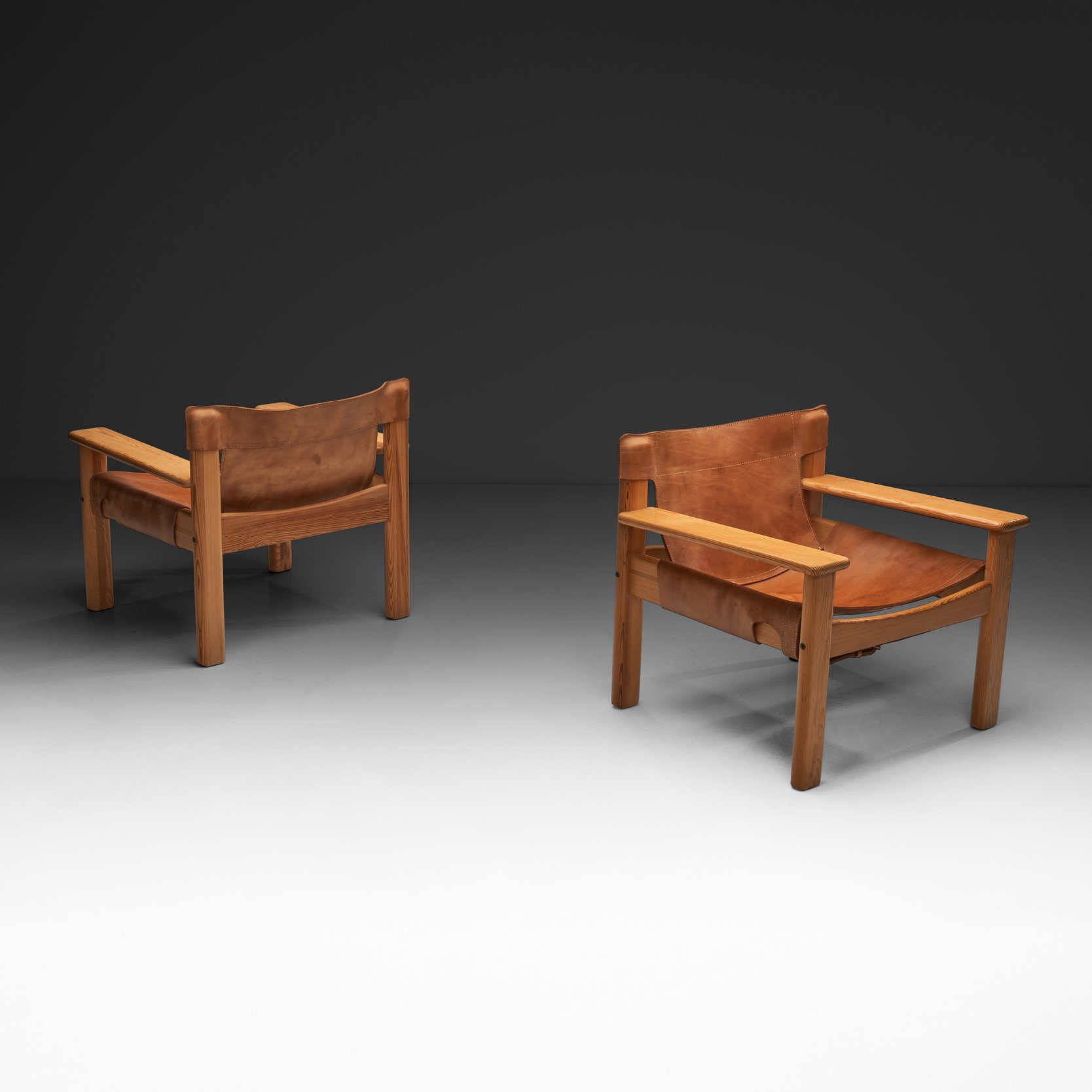
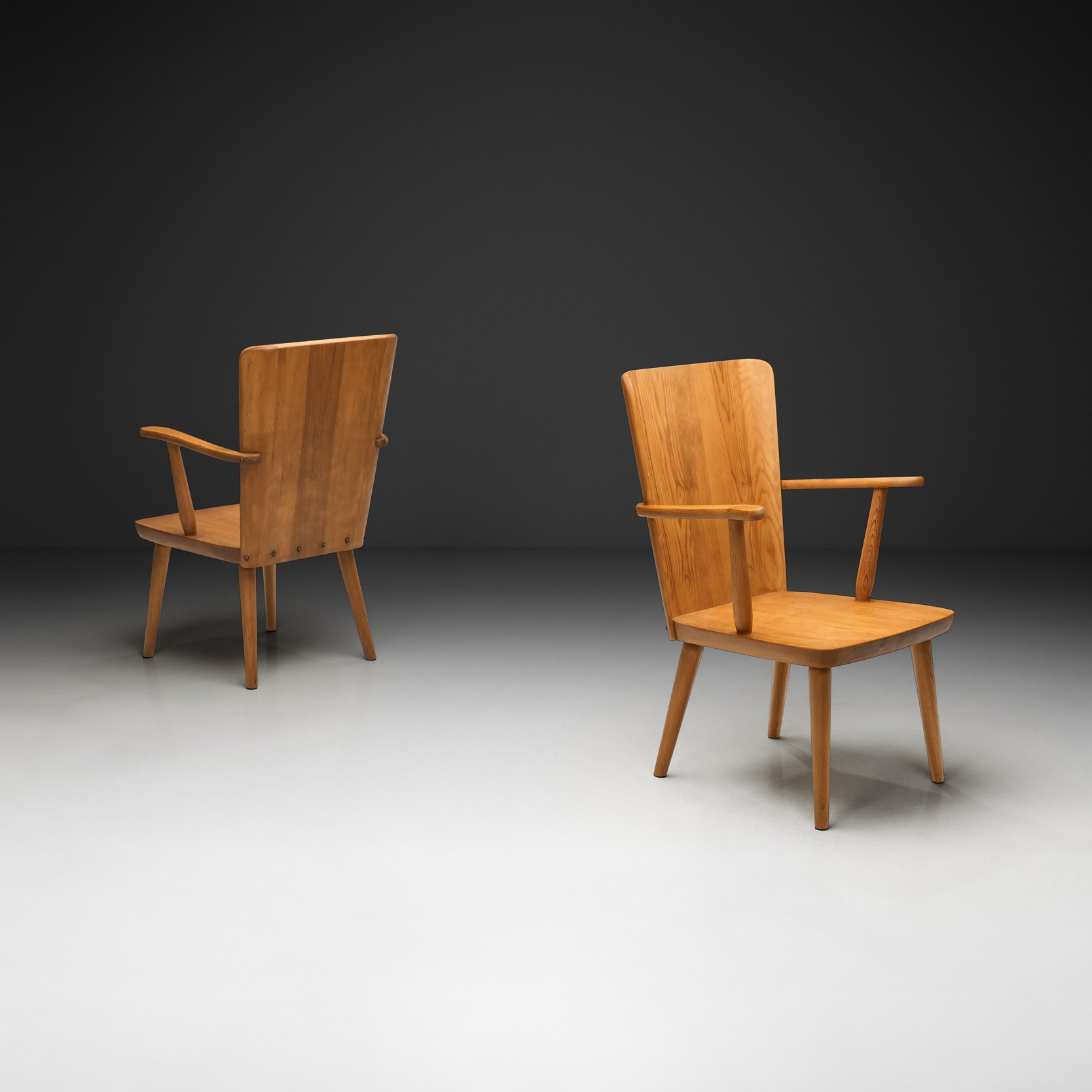
The Sörgården chair was designed in 1962 for the Sörgården student residence at Capellagården, reflecting his emphasis on practical furniture and the beauty of traditional woodworking. The design of this model is simple, but thanks to its details, it is a playful representation of Scandinavian modernism. Crafted from solid Swedish pine, each chair has a warm, natural look. The most distinctive feature is the tall, rounded backrest, which widens towards the upper middle before narrowing gently at the top. Its softly curved outline gives the chairs an organic appearance, while the small cut-out opening near the top serves as a handle, making the chairs easy to move around. The backrests have a slightly reclined profile that follows the natural position of the sitter, while their smooth surfaces highlight the grain and golden tones of the pine. Four slender wooden legs support each chair, with their tapered forms and lightly splayed arrangement creating an open and dynamic appearance. The craftsmanship is evident in the smooth transitions between the different wooden elements and the carefully considered proportions.
The work of Scandinavian designers and cabinetmakers from this period remains remarkably fresh, and Malmsten's furniture is particularly admired for its ability to combine traditional techniques with an inviting, homely character. These six Sörgården chairs are equally striking when arranged around a dining table or incorporated into an interior with a medley of styles.
Condition:
In good vintage condition. Wear consistent with age and use. The chairs have recently been reconditioned. Due to the age and nature of the materials, the items have scratches and dents, and may have additional marks or discolouration.
Dimensions:
17.71 in W x 20.86 in D x 29.33 in H; Seat height 13.77 in; Seat Depth 14.76 in
45 cm W x 53 cm D x 74.5 cm H; Seat height 35 cm; Seat Depth 37.5 cm