
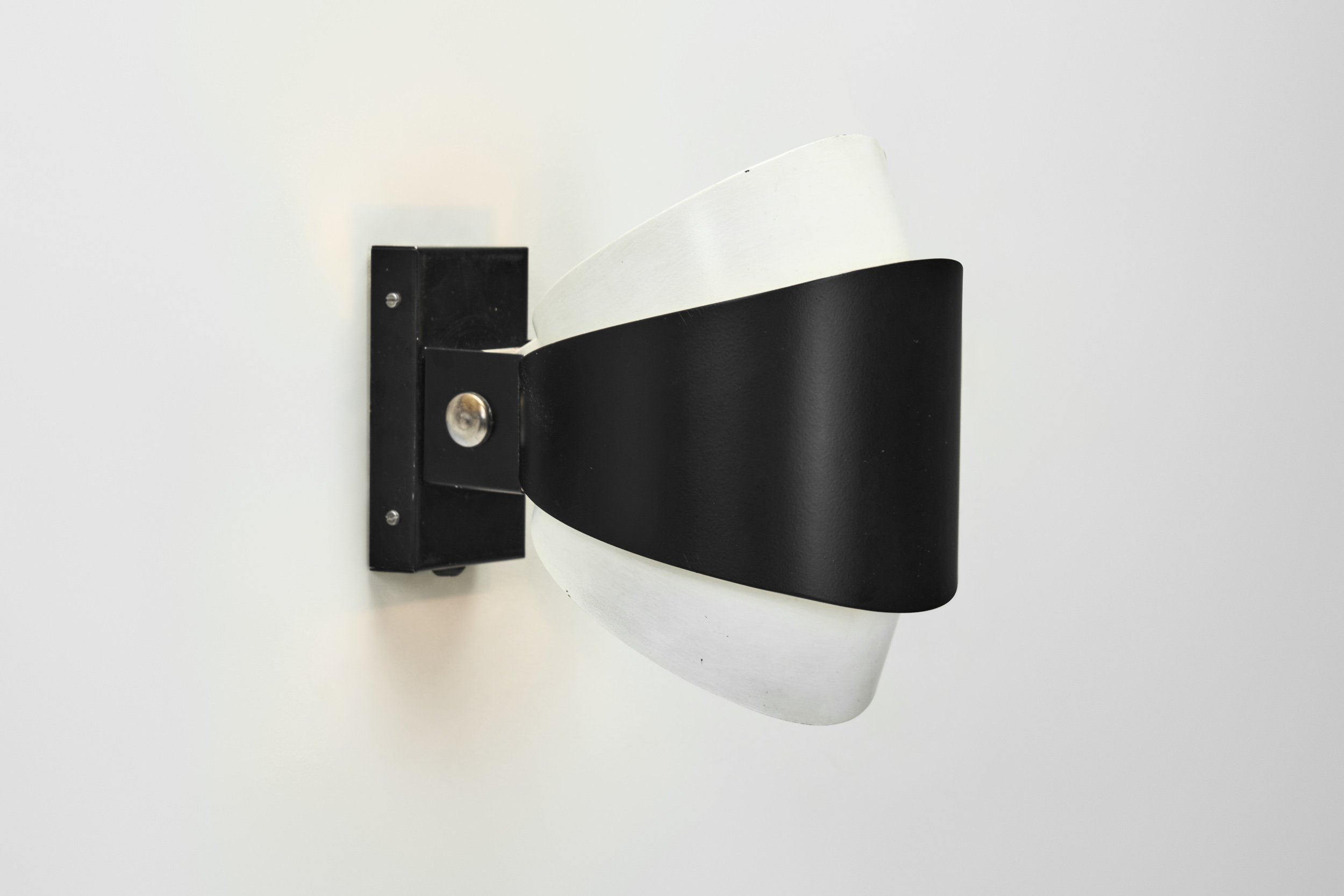
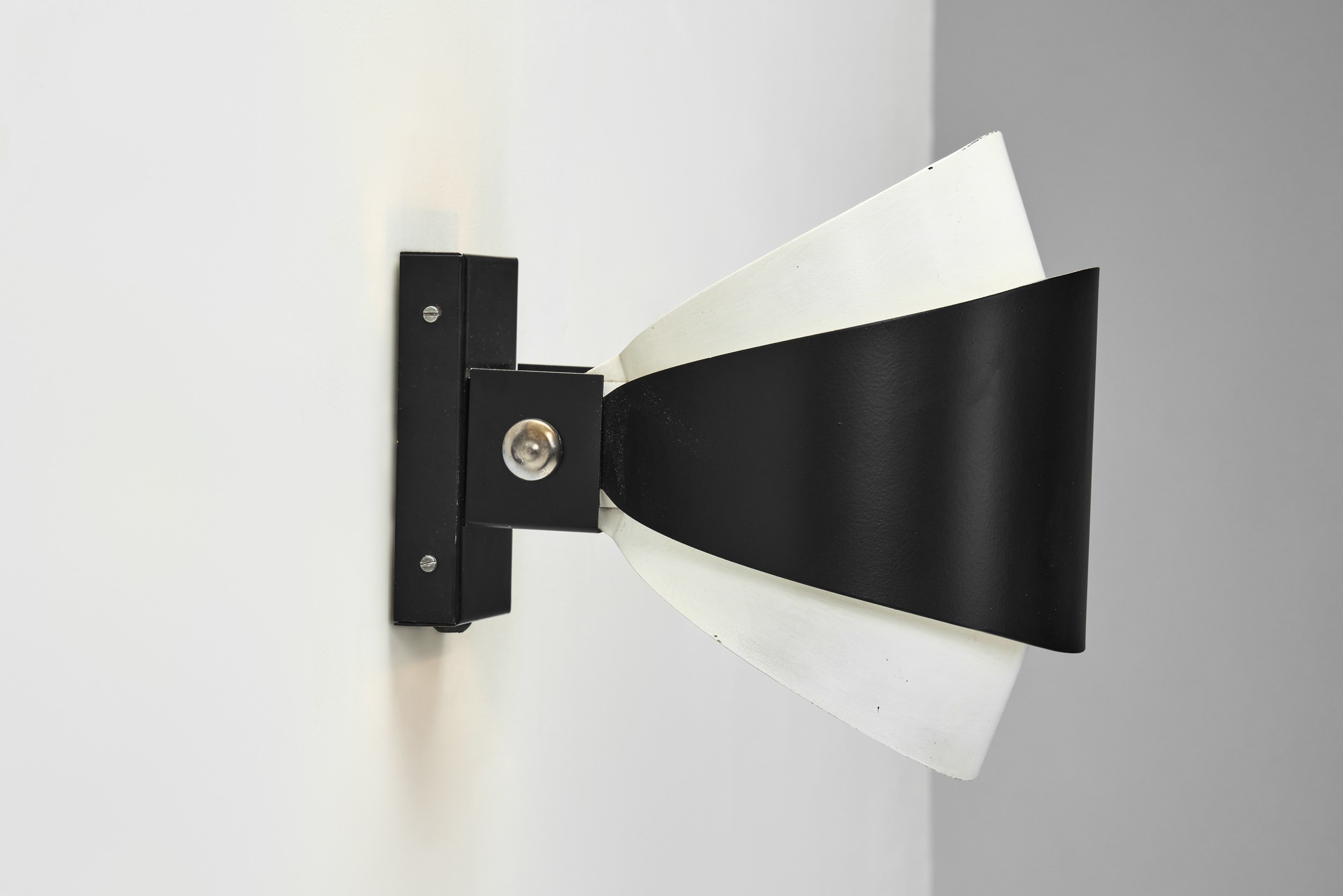
Louis Kalff Model "NX46" Steel and Iron Wall Lamp for Philips, The Netherlands 1950s
Louis Kalff Model "NX46" Steel and Iron Wall Lamp for Philips, The Netherlands 1950s
REQUEST PRICE HERE
Price category: 2,500 - 5,000 usd / eur
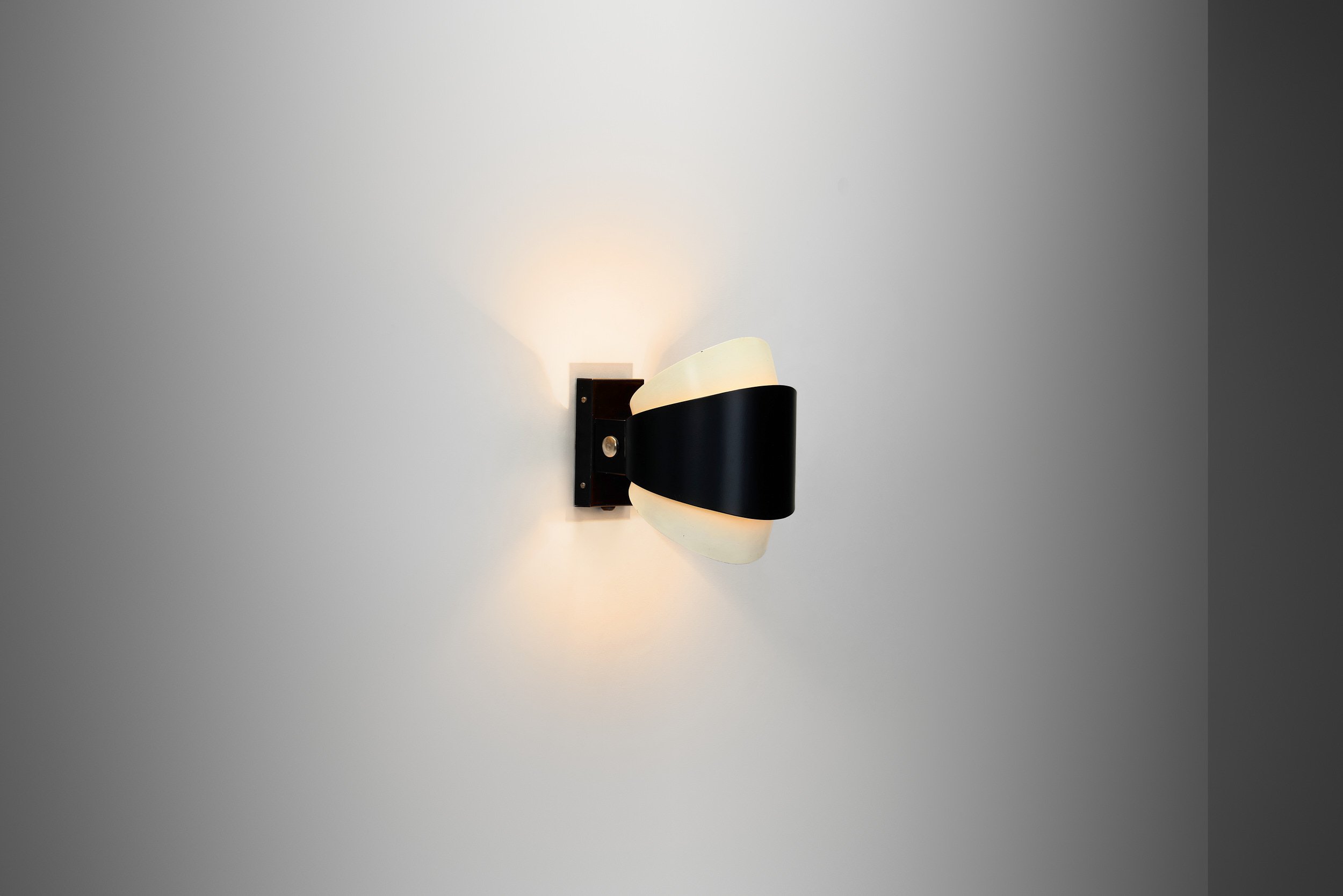
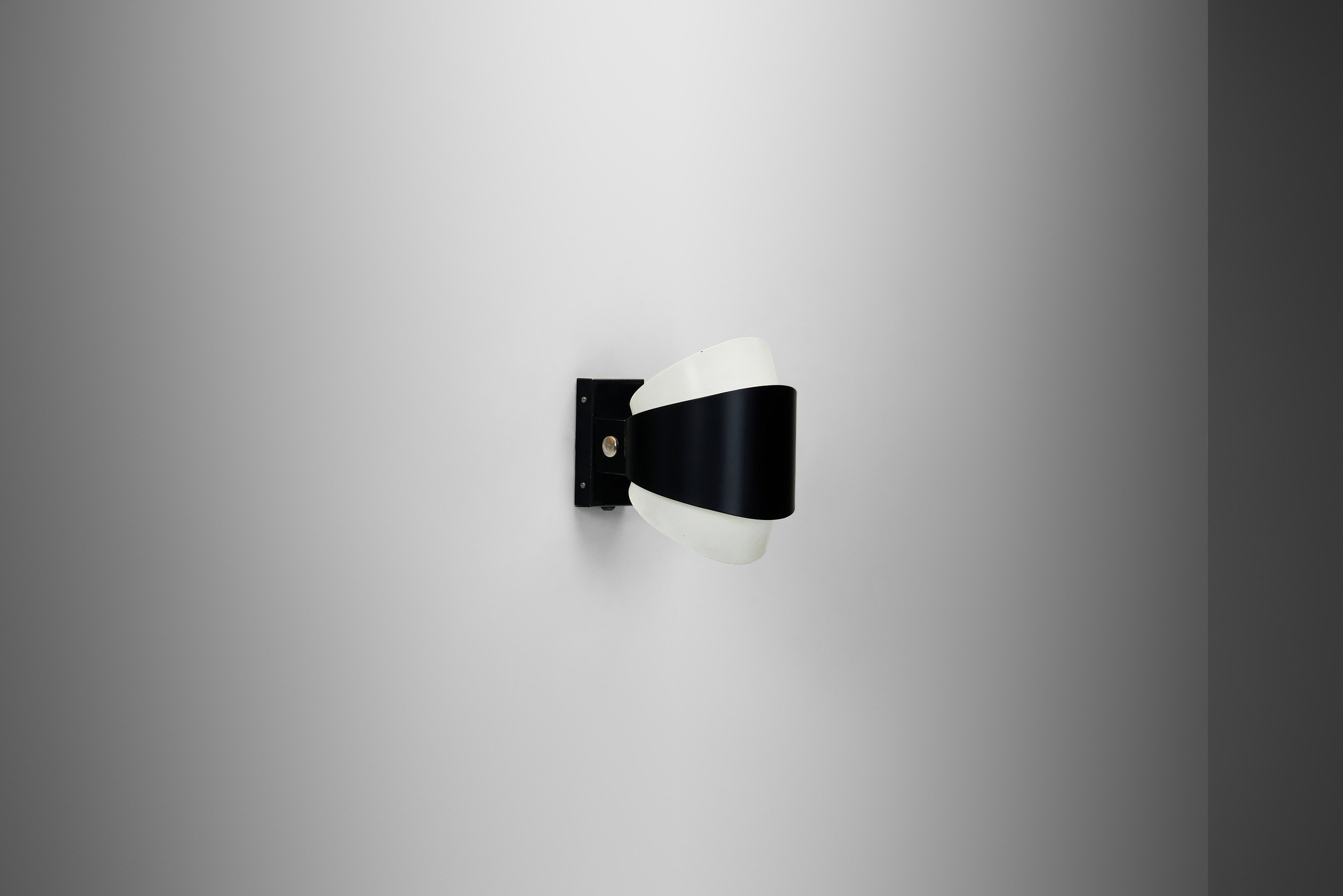
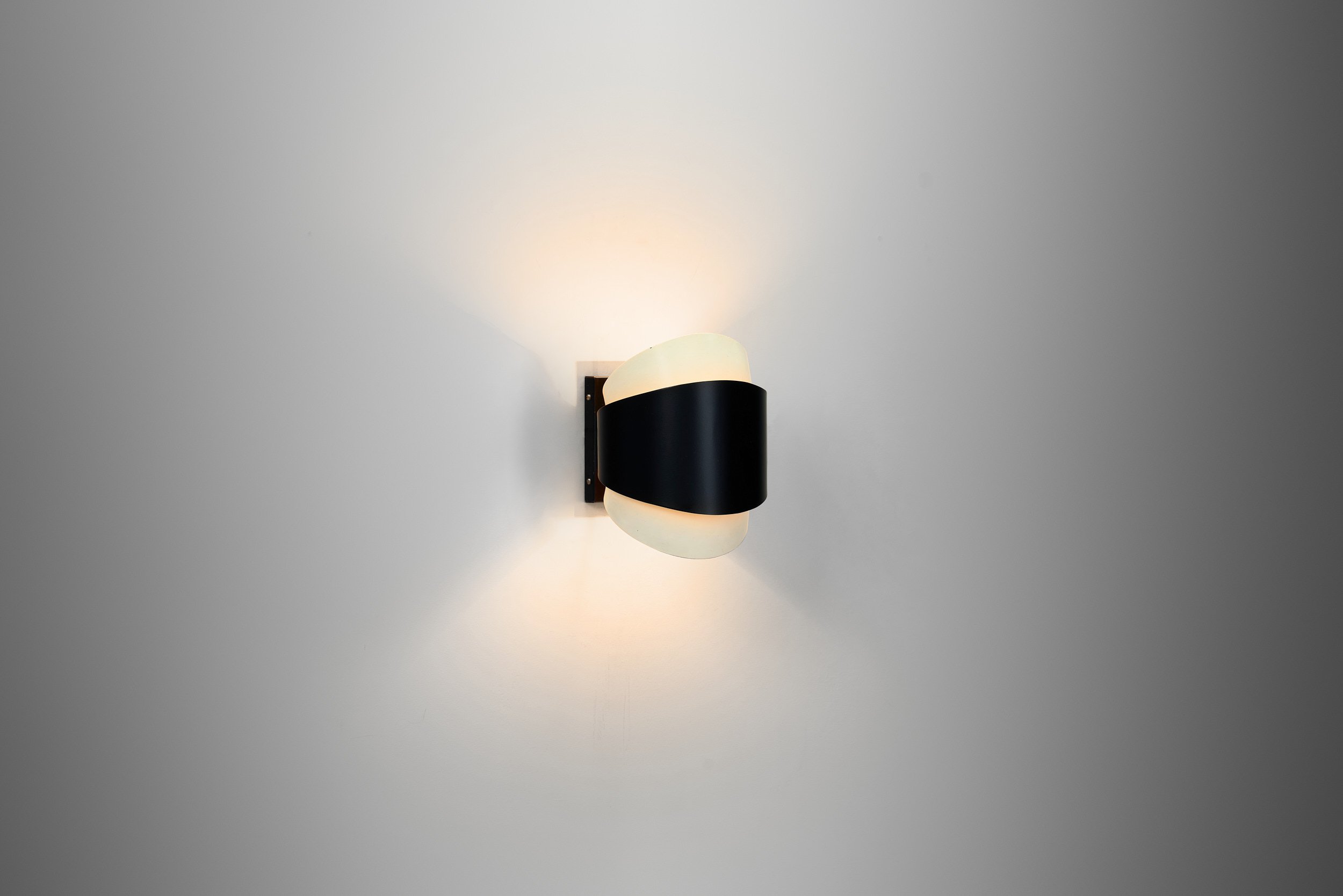
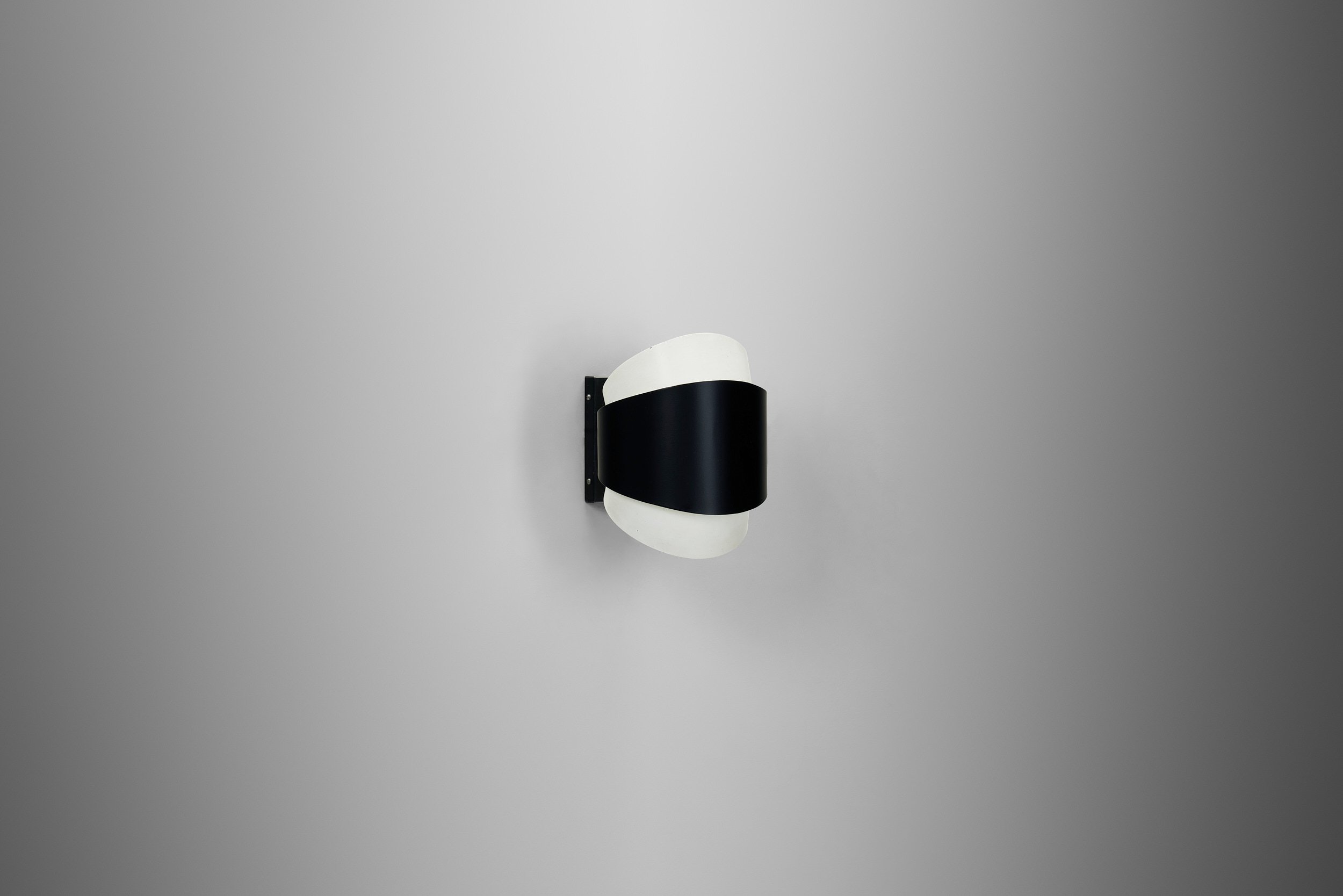
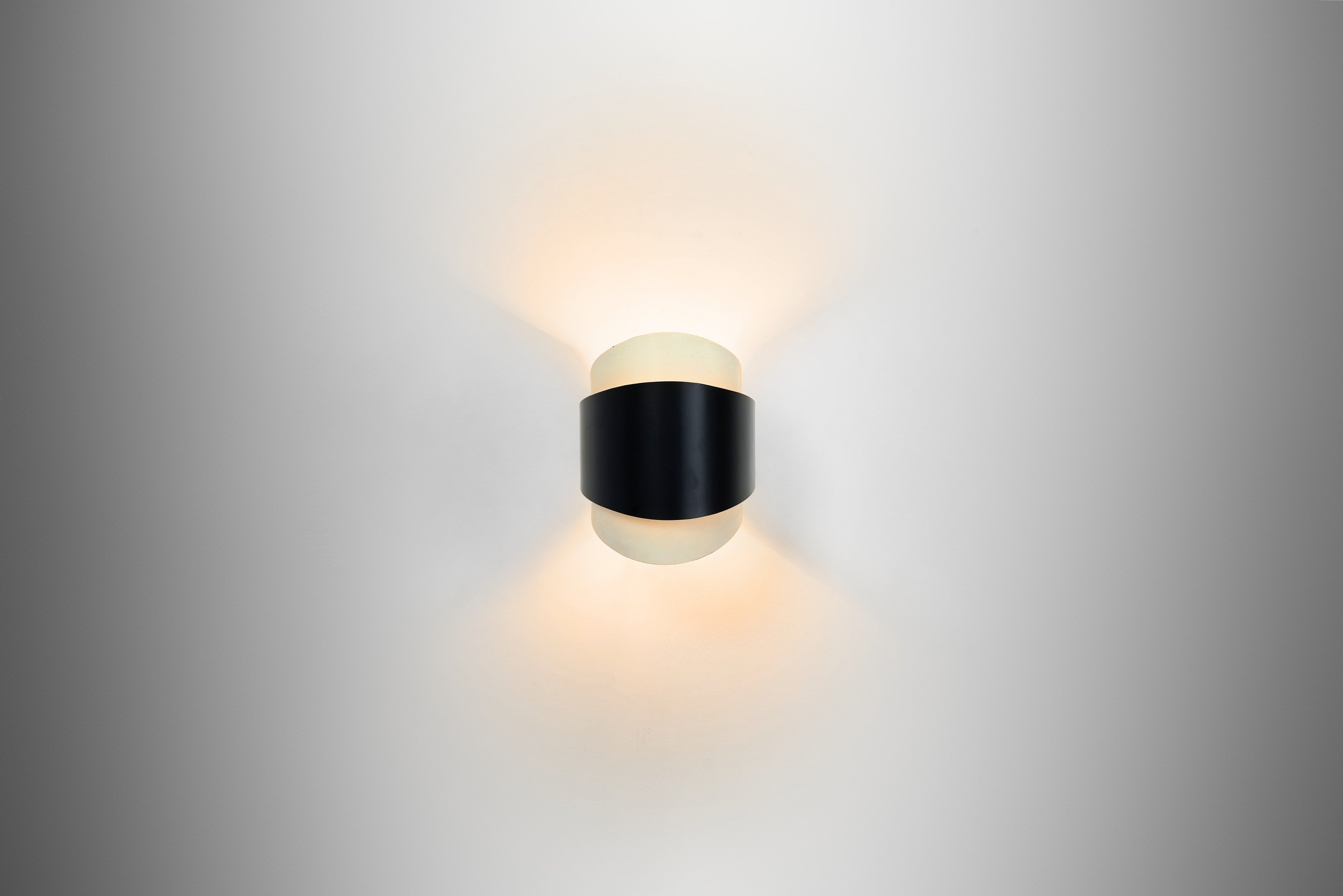
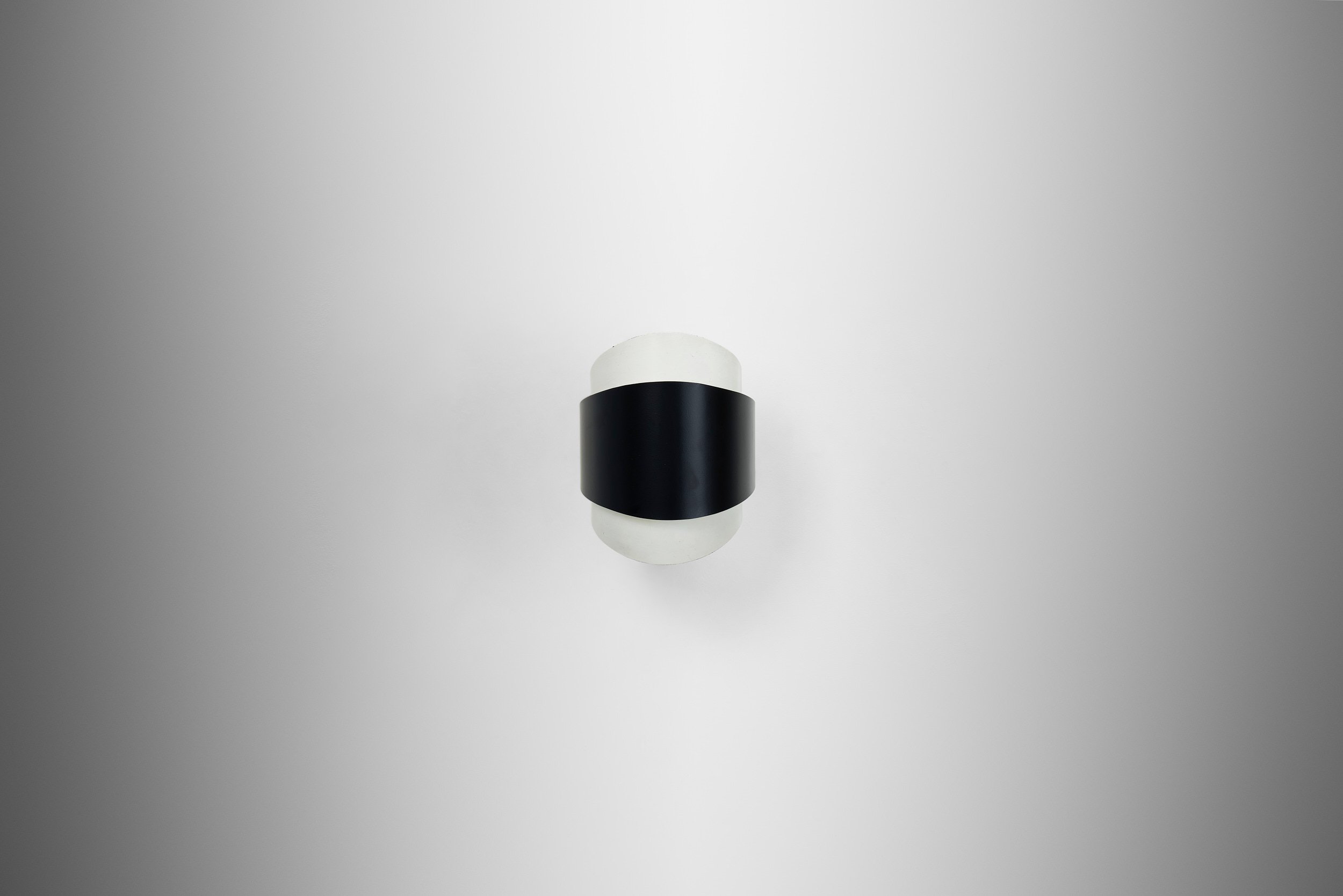
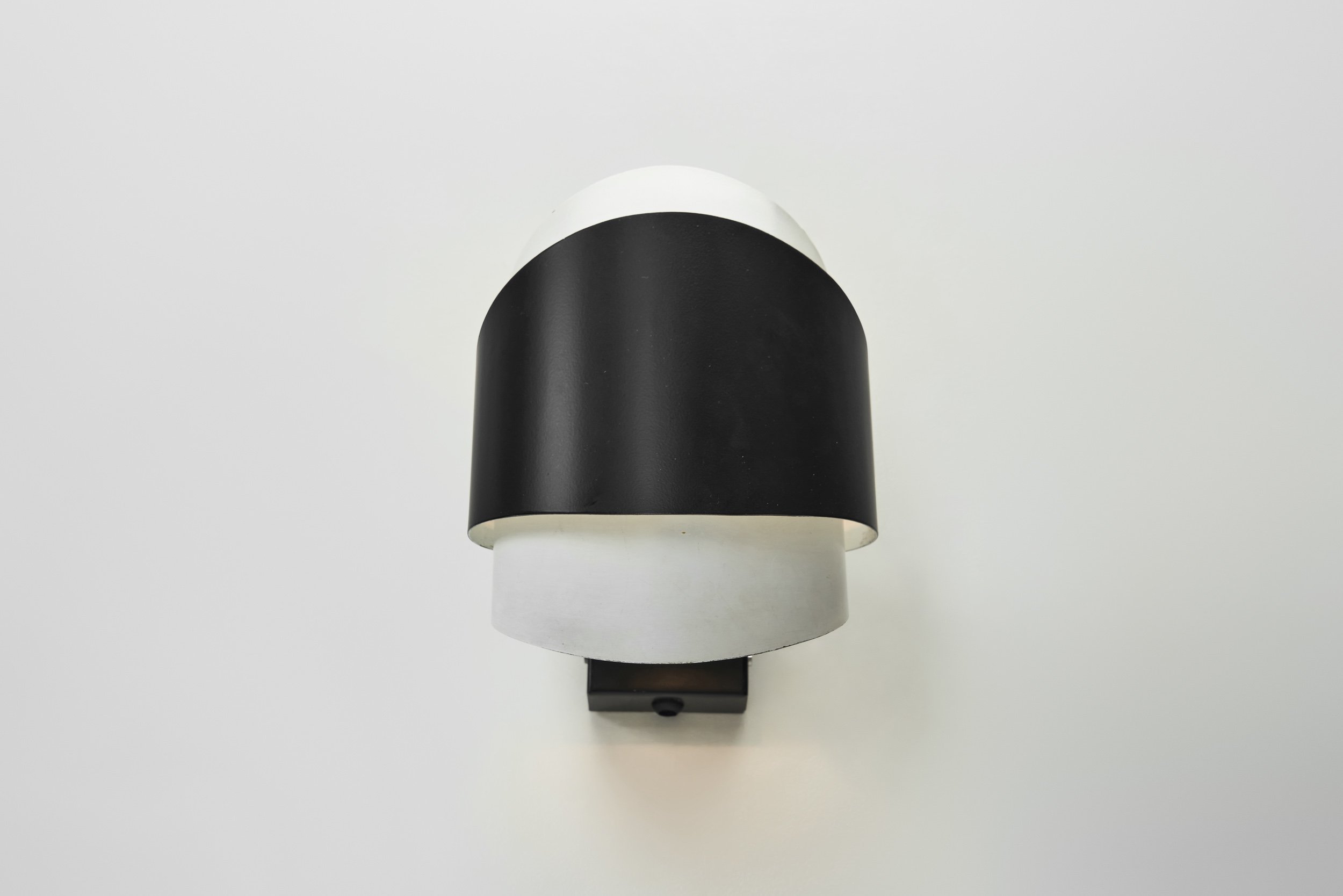
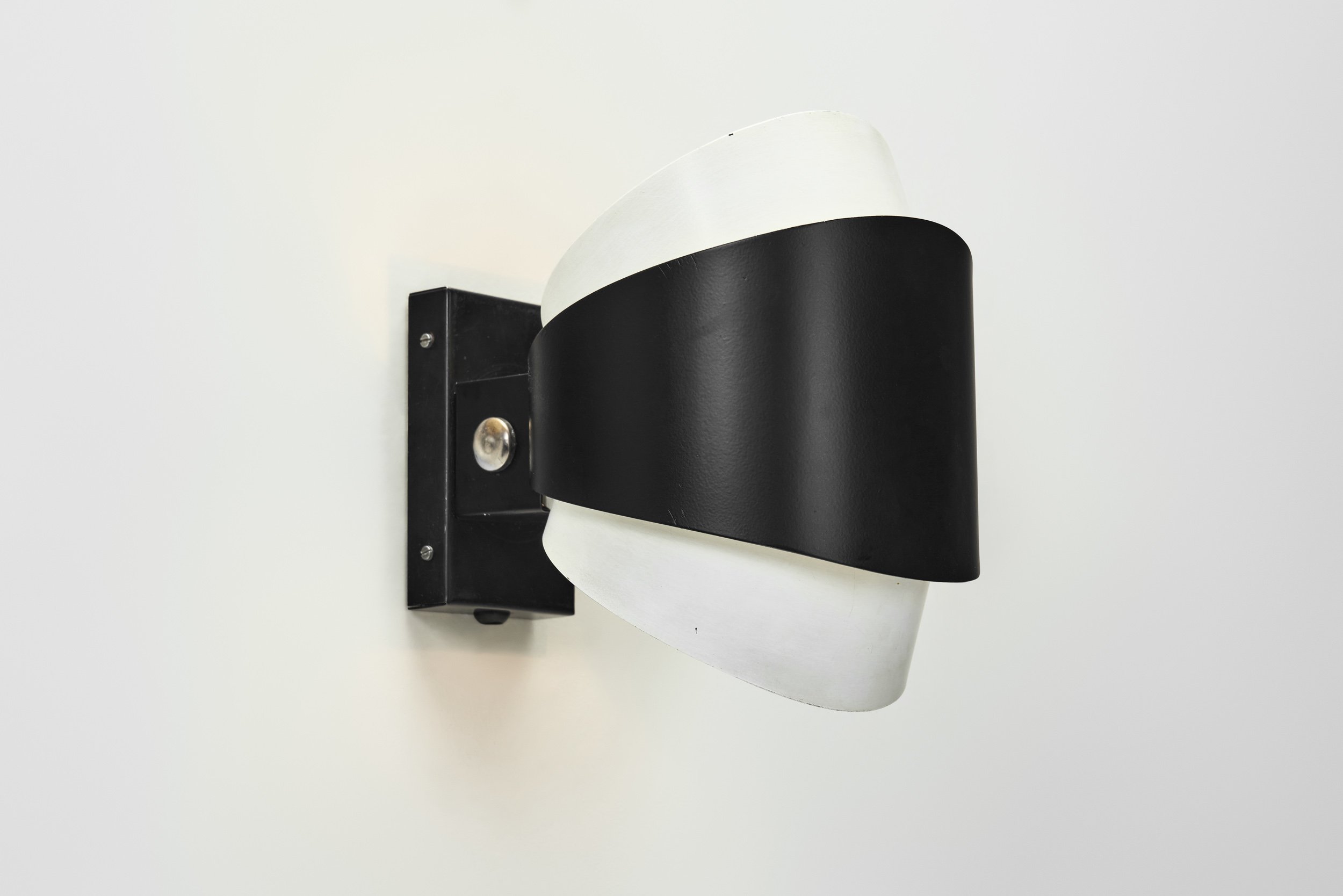
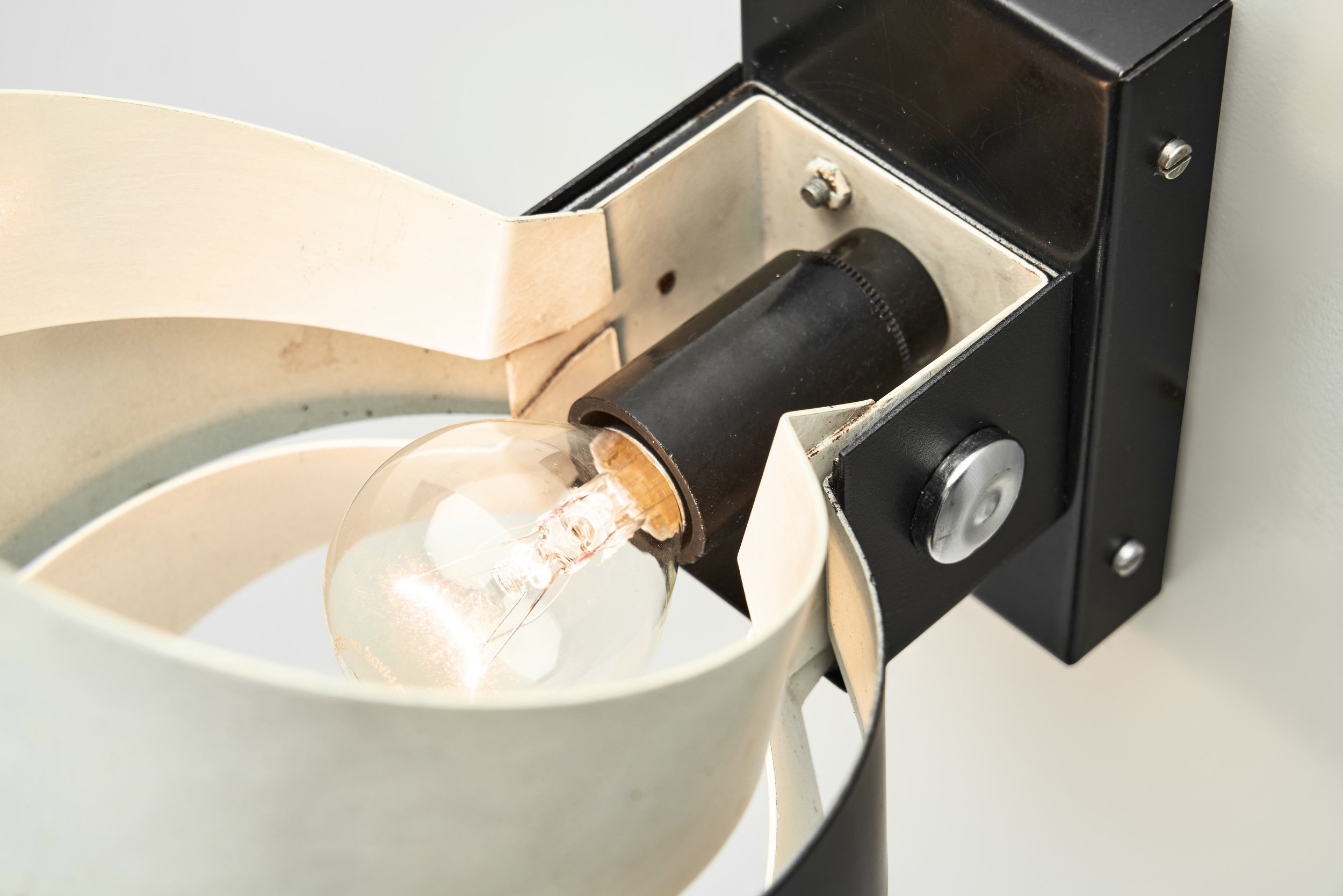
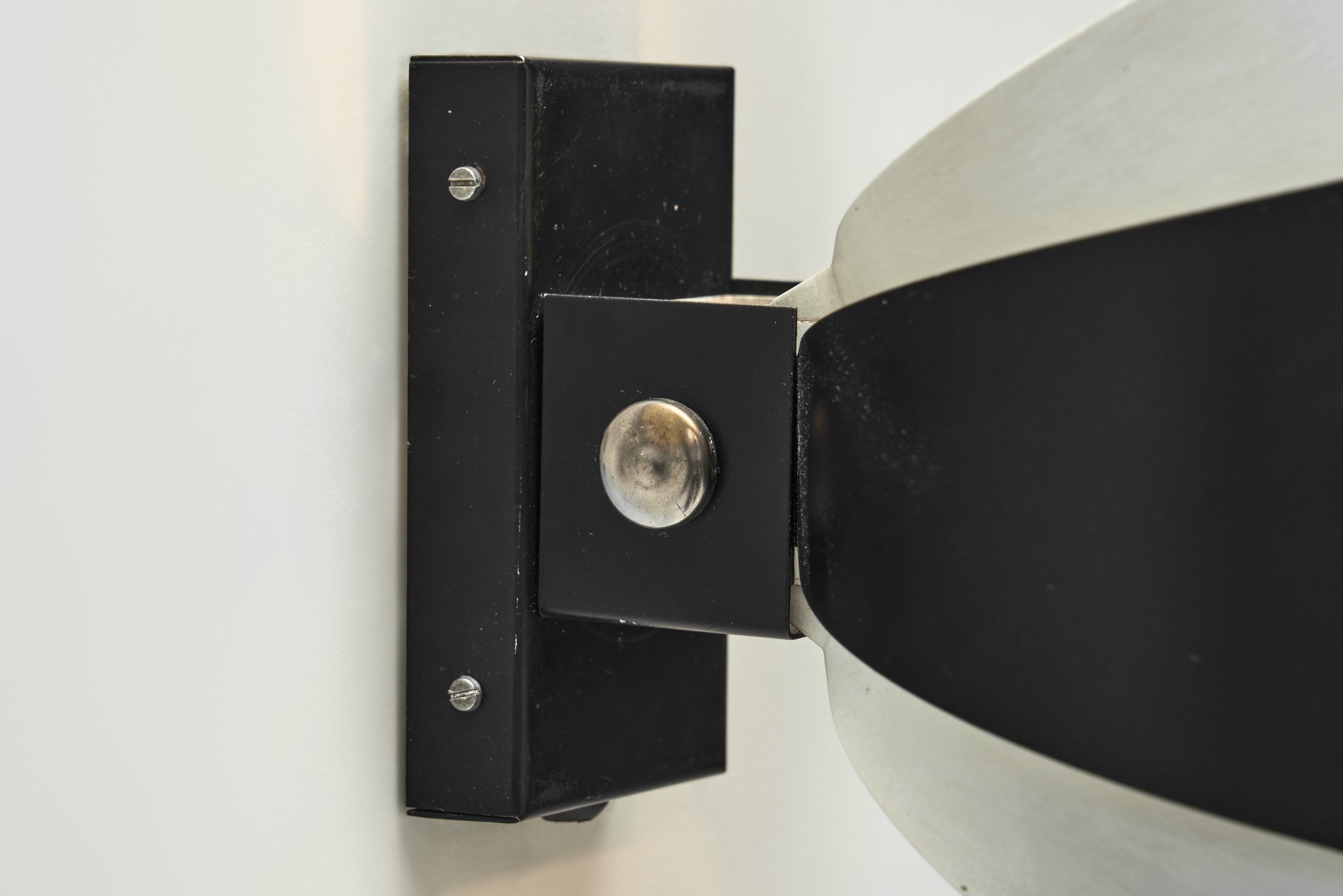
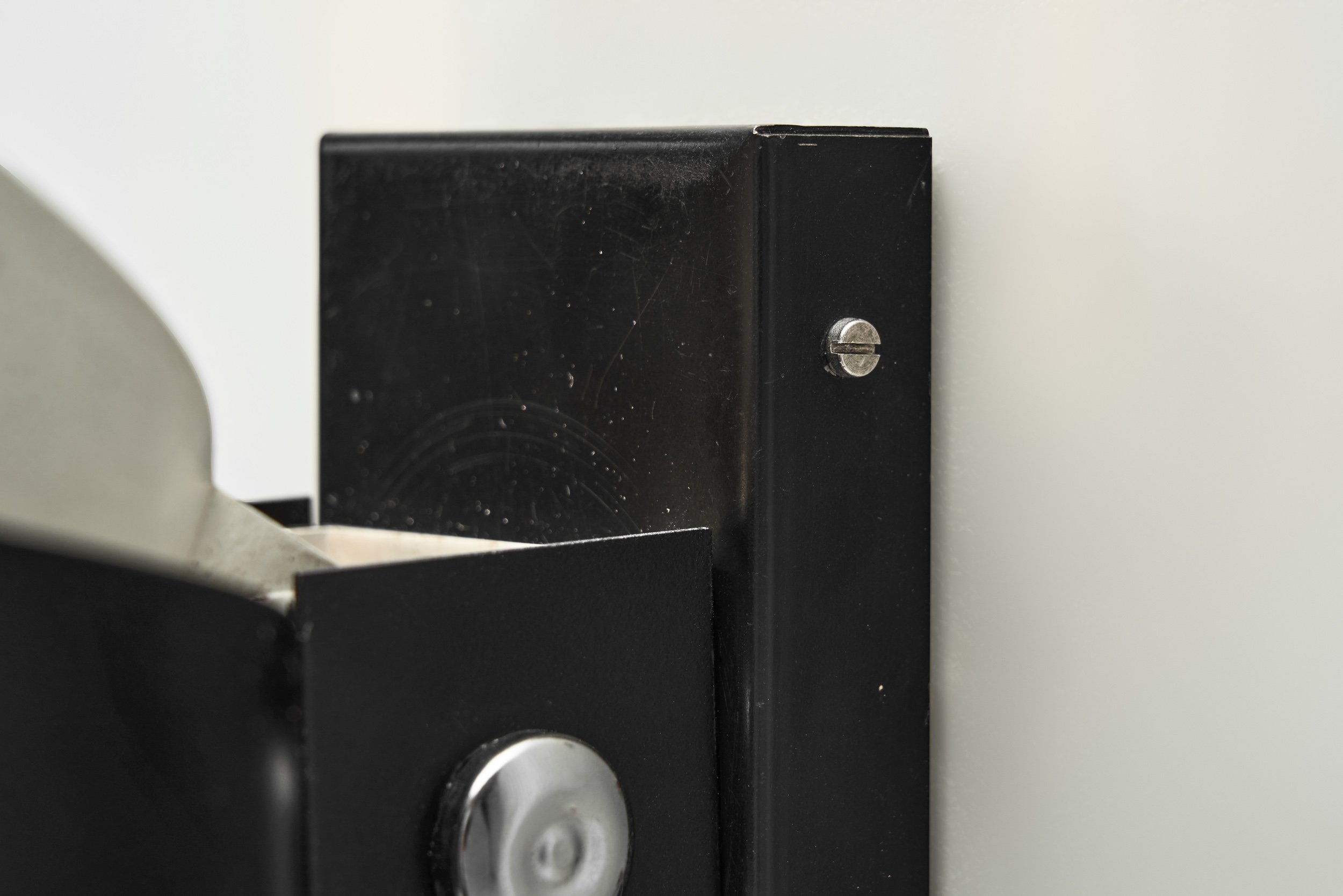
This Louis Kalff wall lamp is a striking example of mid-century modern design that blends industrial materials with sculptural elegance. Kalff was a pivotal figure in Dutch design, best known for his influential work at Philips, where he was the head of the company’s lighting division. Under his guidance, Philips lighting fixtures became more than utilitarian objects - they were thoughtfully designed elements of interior architecture. This “NX46” wall lamp is a stunning example that exemplifies Kalff’s design prowess.
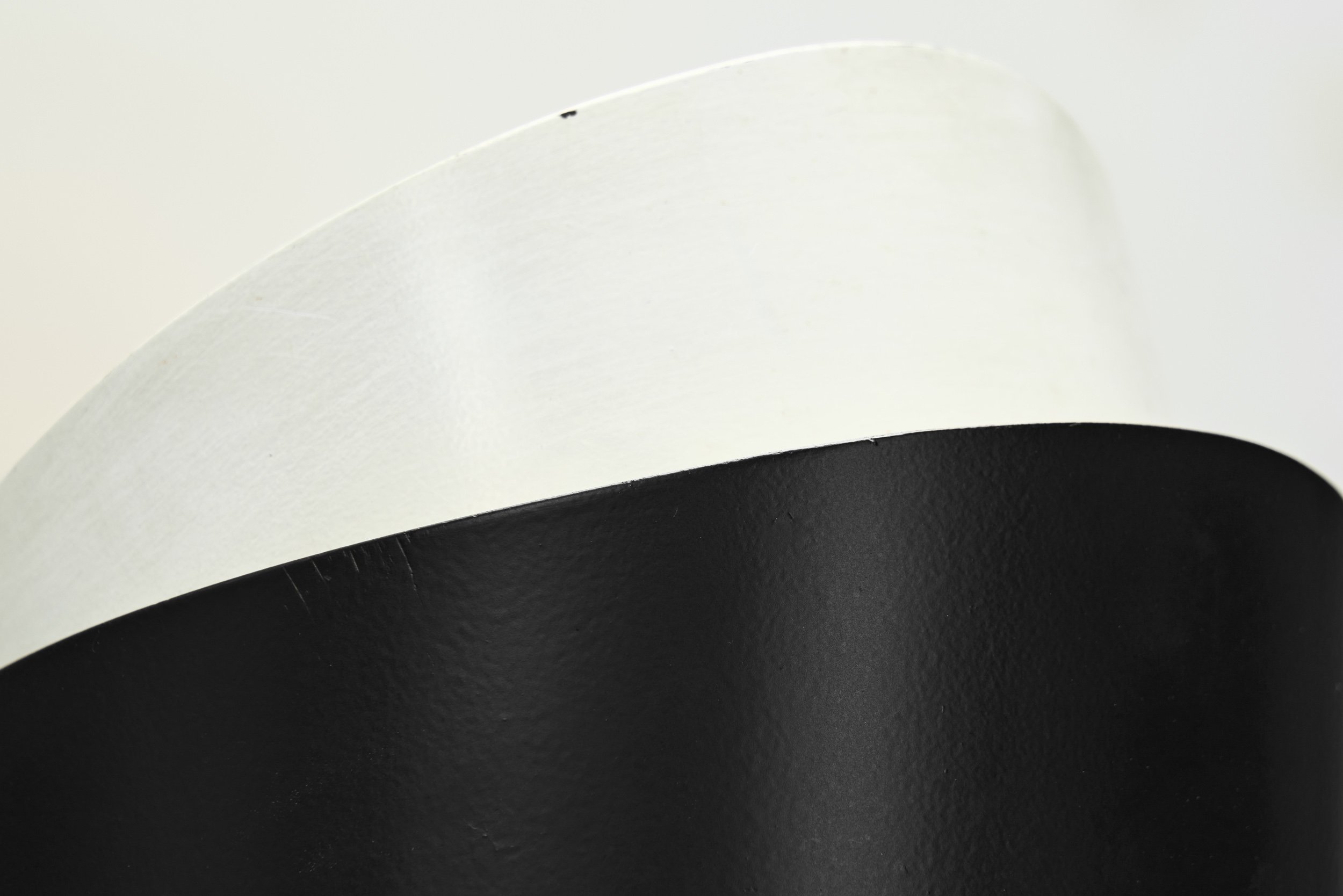
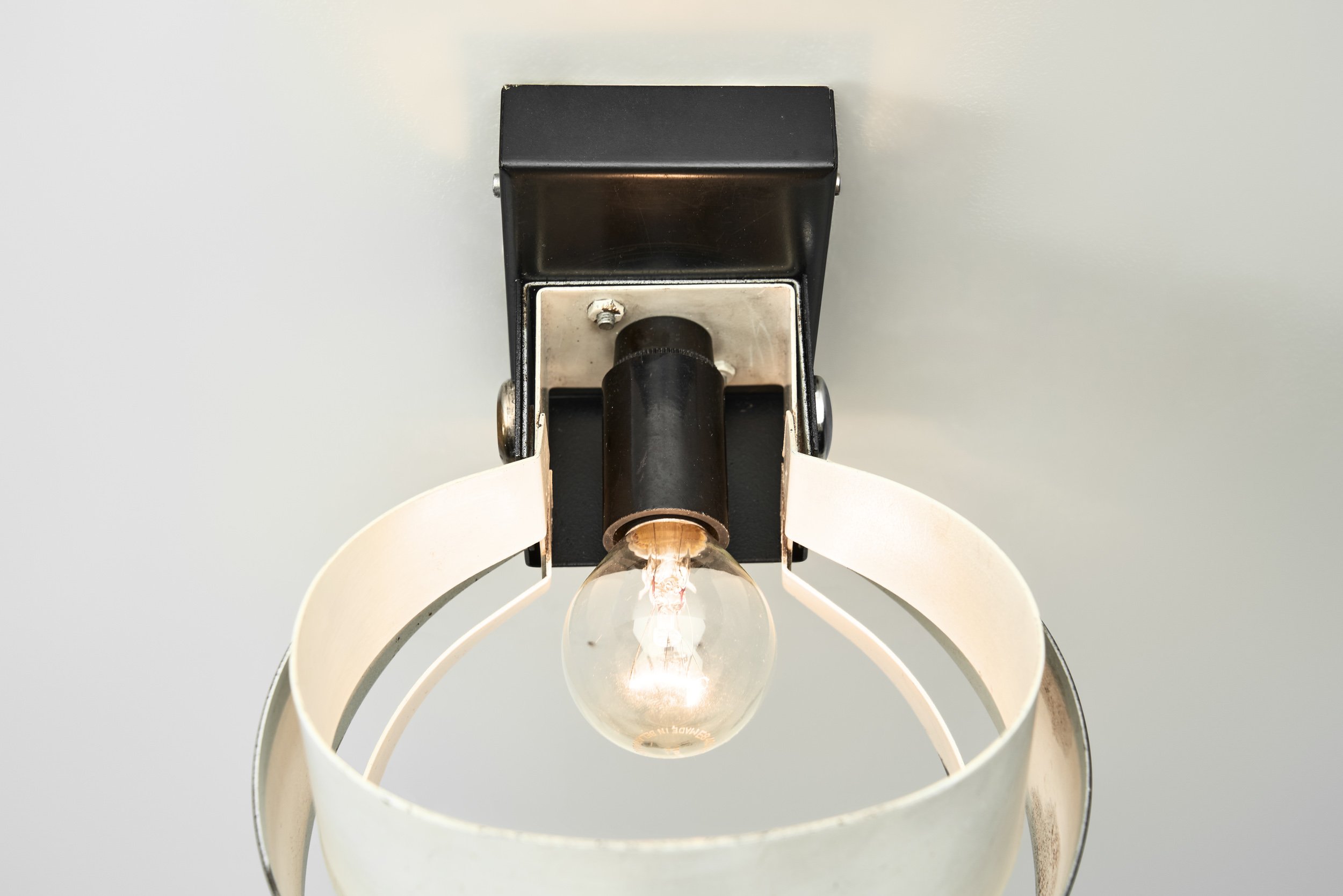
The modernistic look of the “NX46” lamp is achieved through the simple yet smart design of the silhouette. Crafted from steel and iron, the look is almost industrial, yet has the edge of early mid-century modernism. The geometric shape is very effective in showcasing the juxtaposition between the black and white of the materials, a classic example of the contrast and harmony that designers of the era often sought to achieve. Despite being made of iron and steel, this wall lamp has a lightness to its form, which further highlights Louis Kalff’s understanding of both engineering and artistic composition. As the lamp is open at both ends, it provides a warm glow when switched on, enhancing the ambience of any space it occupies. The 1950s was a period of renewal, prosperity, and optimism following the world wars. This resulted in lighting designers seeking to create pieces that embodied the spirit of the age, reflecting the fast-paced and industrialised world. Today, mid-century lighting fixtures have become more than sources of illumination - they have emerged as functional art pieces that engage with the viewer on a visceral level.
The masterful combination of materials, aesthetic and functional design, plus expert craftsmanship is indisputable in this model. The impression of this piece is fresh with a retro touch, and completely alluring with its dedication to quality and practicality.
Condition:
In good vintage condition. Wear consistent with age and use.
Dimensions:
6.69 in W x 8.66 in D x 7.87 in H
17 cm W x 22 cm D x 20 cm H
REQUEST PRICE HERE
Price category: 5,000 - 7,500 usd / eur
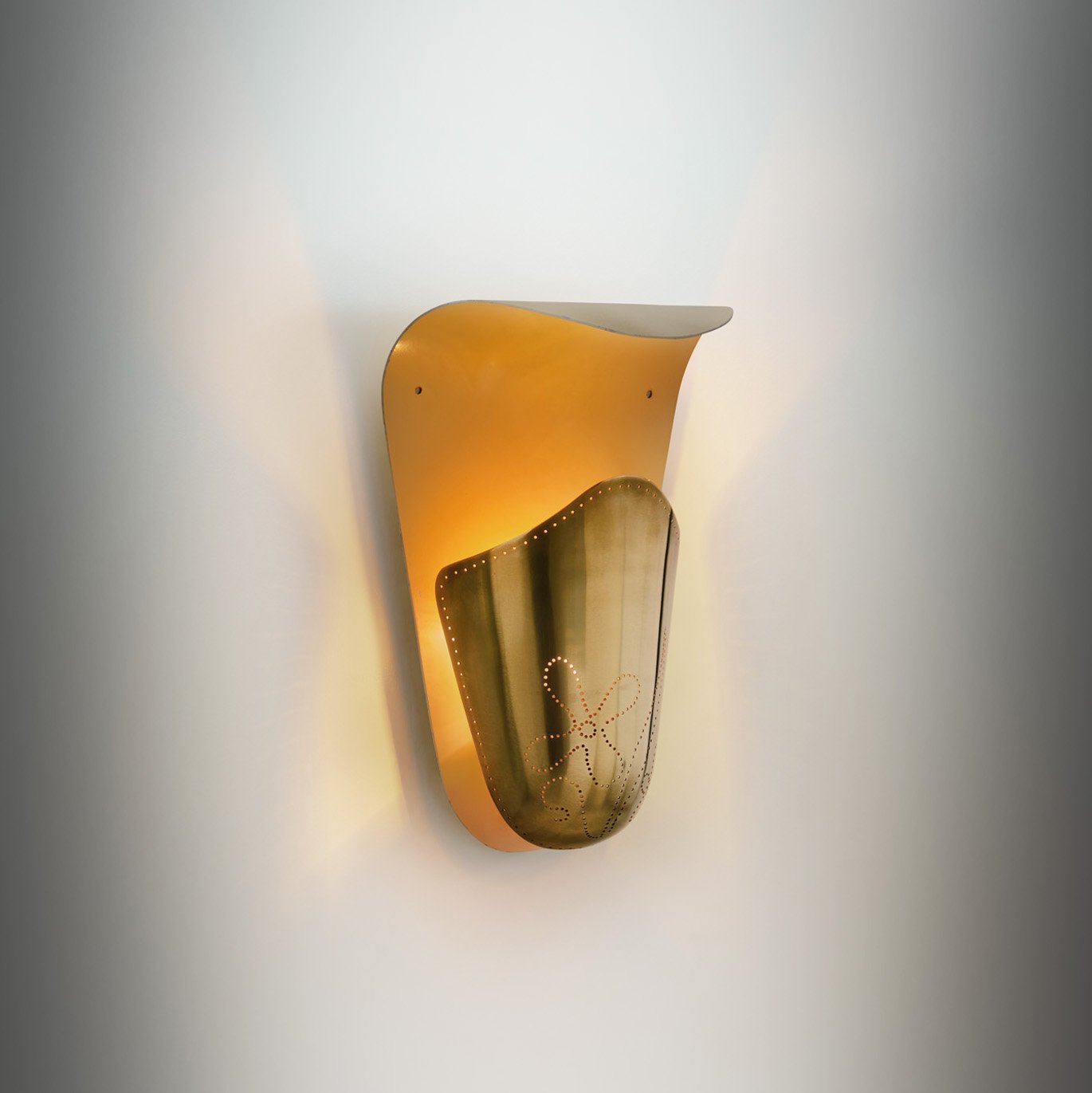
Between the 1920s and 1950s, Böhlmarks was a significant player in the Swedish design movement. Harald Notini, after becoming creative director in 1916, drove the company forward, producing what were considered pioneering and distinctive luminaires for the time. With an unmistakeable design, this model ‘8596’ wall sconce belongs to a historic collection of luminaires from a golden era.
At Arvid Böhlmarks Lampfabrik, the 1940s and 50s represented a period marked by undulating forms and organic material choices in a fundamental Swedish Modern manner. Consequently, the shape and material of the shade determines the overall aesthetic of this lamp. The design encapsulates a harmonious interplay of light and shadow, casting a gentle glow that will be sure to enhance the ambiance of any space. The 1950s was a period of renewal, prosperity, and optimism following the world wars. This resulted in lighting designers seeking to create pieces that embodied the spirit of the age, reflecting the fast-paced and industrialised world. The most distinctive design element of this model is the large white lacquered metal reflector that is in a folded shape. This ingenious addition not only provides a clean backdrop against which the front brass structure stands out, but also reflects the light to create a cosy effect. It also serves as a back-plate, therefore the lamp appears as if it were not fixed to the wall. The front brass plate also features a subtle decorative element; a perforated floral design. The brass exudes warmth and elegance, contrasting beautifully with the off-white metal.
The composition of the piece with its soft shapes and clever decorative elements give this wall lamp a stylish look that is guaranteed to set the tone of its interior. The sleek lines create a perfect balance between the ornamented features of the early 20th century, and the later phase of mid-century modernism with its more minimal, simplified lines.
Condition:
In good vintage condition. Wear consistent with age and use.
Dimensions:
8.26 in W x 4.92 in D x 11.81 in H
21 cm W x 12.5 cm D x 30 cm H

REQUEST PRICE HERE
Price category: 5,000 - 7,500 usd / eur
Tynell's lamps have developed in style over time; his early lamps had a chandelier inspired design, during the 1920s, the use of glass became an increasingly important part of his lamps. During the interwar period, Tynell designed both art deco-style lamps and more functionalistic, simpler lamps. In his functionalist inspired lamps, Tynell took into account how the lamp was to be used, which is clearly traceable in the design of these “A2” lamps.
The modernistic look is achieved by the simple, yet smart design of the black lacquered cylindrical silhouette. The look is almost industrial, yet has the edge is Finnish mid-century design. By the 1950s, Finland had established itself as a force for innovation in design, and the versatility of Tynell explains why. As seen in this model, the masterful combination of materials, blend of aesthetic and functional design features, and expert craftsmanship was indispensable. Despite being made of metal, the bodies appear light mainly thanks to the structures connecting to the backplates that allow the lamps to be adjusted in almost any direction and angle. Furthermore, since the cylinders are open at both ends, providing two sources of light, making this pair both ideal task and ambient light sources. The two main structural elements - the white shade holders, and backplates and the black shades are clearly separated both by their colours and shapes. This results in a greatly balanced look that Tynell was a master of. The most significant clientele of the luminaires designed by Tynell were architects, which made Paavo Tynell the leading lighting designer for public spaces, and that likely goes for these “A2” wall lights as well.
The lamps still have Idman Oy’s manufacturer’s mark. The firm, Taito Oy, was established by Tynell in 1918, and it would become his life work. In 1953, Idman Oy acquired the majority of shares in Taito Oy, nonetheless, Paavo Tynell continued to work for the company on a freelance basis, through his own design firm. This model was designed and produced during this time.
Condition:
In good vintage condition. Wear consistent with age and use.
Dimensions:
5.9 in W x 7.28 in H x 8.85 in H
15 cm W x 18.5 cm D x 22.5 cm H
About the designer:
Paavo Tynell (1890-1973) was an industrial designer, known as the great pioneer of Finnish lighting design and fondly dubbed as “the man who illuminated Finland”.
Tynell was one of the founders and chief designers of Taito Oy – the first industrial producer of lighting fixtures in Finland. With the innovation of electricity in the beginning of the 20th century, Taito Oy and Tynell expanded the thinking and manufacturing of modern lighting solutions in Europe and abroad.
Paavo Tynell rose to prominence in the 1930s and 40s where he collaborated with some of the most renowned Finnish architects, Alvar Aalto being the most notable one. Working to incorporate artificial lighting into modern environments, Tynell’s company Taito Oy produced fixtures for all of Alvar Aalto’s major projects including the Paimio Sanatorium and the Viipuri Library.
Tynell was especially appraised through his involvement with the Finland House, a design atelier in New York that showcased the work of Finnish designers and craftspeople. His elegant brass designs became an instant success in North America, and he began creating lighting designs for the prestigious American company Lightolier.
A master craftsman himself, Tynell’s designs were derivative of a traditional aesthetic with a modern sensibility, mixed with an extensive use of perforated and polished brass as material. Marked by delicacy and softness, his most famous forms in lightning echo the structures of nature; he adroitly created sculptural shapes reminiscent of the branches of trees, swirling snowflakes and seashells. ~H.
REQUEST PRICE HERE
Price category: 5,000 - 7,500 usd / eur
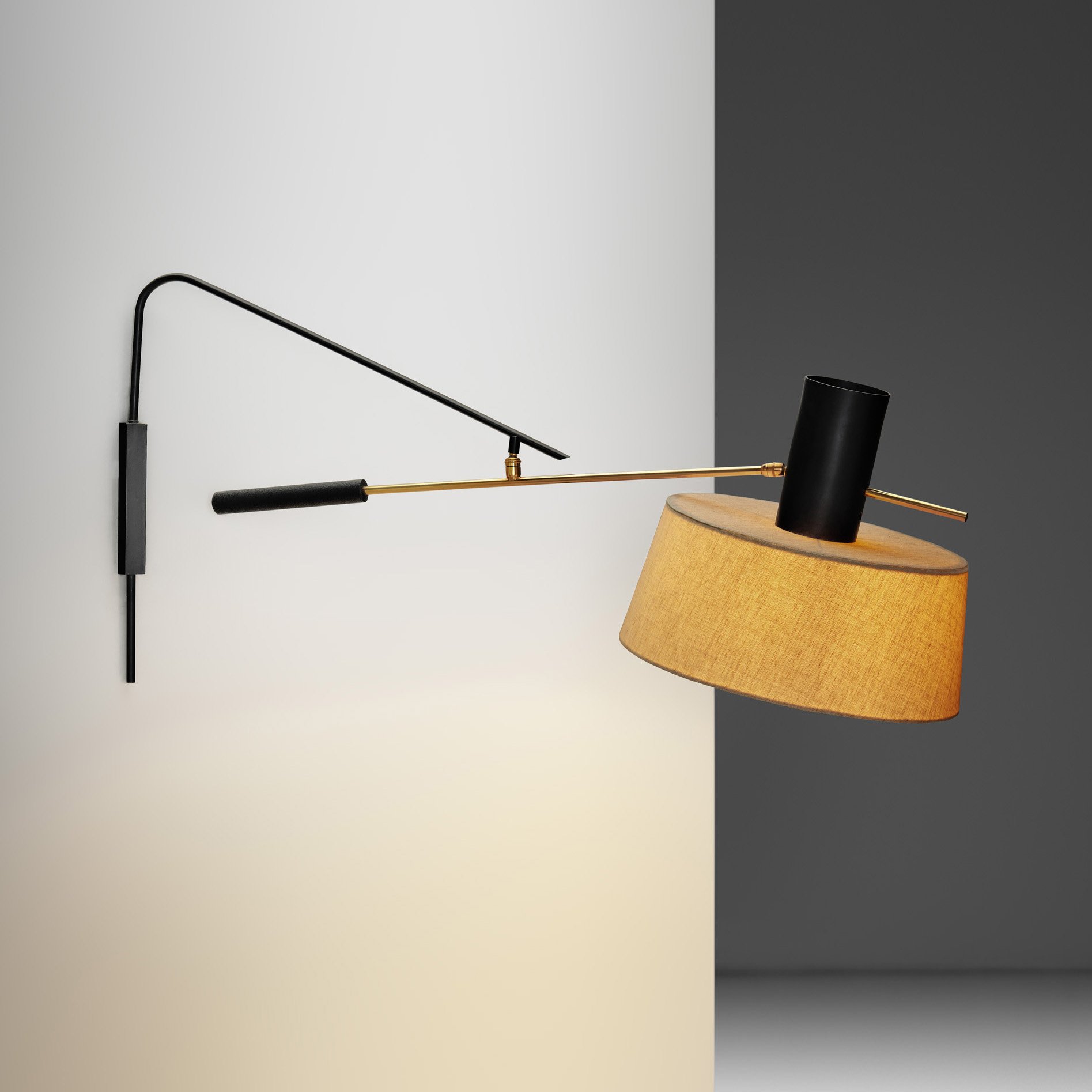
Crafted in the manner of Maison Lunel, this wall lamp has a striking sculptural silhouette and exemplifies the era’s marriage of function and form. With a combination of brass and black laquered metal, it carries a distinct mid-century French modernist character. The design is sophisticated yet restrained, with clean lines and geometric angles that reflect the elegance and innovation associated with Lunel’s atelier during its most prolific period.
The design of this wall lamp invites appreciation from multiple angles, engaging both the eye and the space it inhabits. Instead of a traditional back-plate, the lamp connects to the wall through a thin pole with a sleek, modern look. Projecting gracefully from the wall, the lamp shade extends on two joined arms that offer both presence and practicality. Its sculptural profile balances geometric precision with an organic flow, creating a visual rhythm between the materials. The contrast between the dark lacquered metal and the shiny golden brass creates a harmonious balance and adds another sculptural dimension to the piece. The shade's simple, clean lines align perfectly with the lamp's overall aesthetic, reinforcing the artistic manner of the mid-century period. Furthermore, the light, when diffused through the fabric shade, casts a warm and inviting glow, creating an ambiance that is both cosy and comforting, which is enhanced by the hue of the brass. This piece exudes timeless beauty, making it a perfect choice to complement an array of interior styles.
Without a doubt this lamp channels the spirit of post-war French design; an era defined by a bold yet refined exploration of materials, proportion, and silhouette. It is said that a well-chosen lighting piece can change the overall look of a room and how it feels to inhabit the space. This model is the perfect addition to bring a touch of elegance to any space without it being overwhelming.
Condition:
In good vintage condition. Wear consistent with age and use.
Dimensions:
37.59 in W x 26.77 in D x 20.07 in H
95.5 cm W x 68 cm D x 51 cm H
Shade:
40 cm ø x 17 cm H
REQUEST PRICE HERE
Price category: 2,500 - 5,000 usd / eur
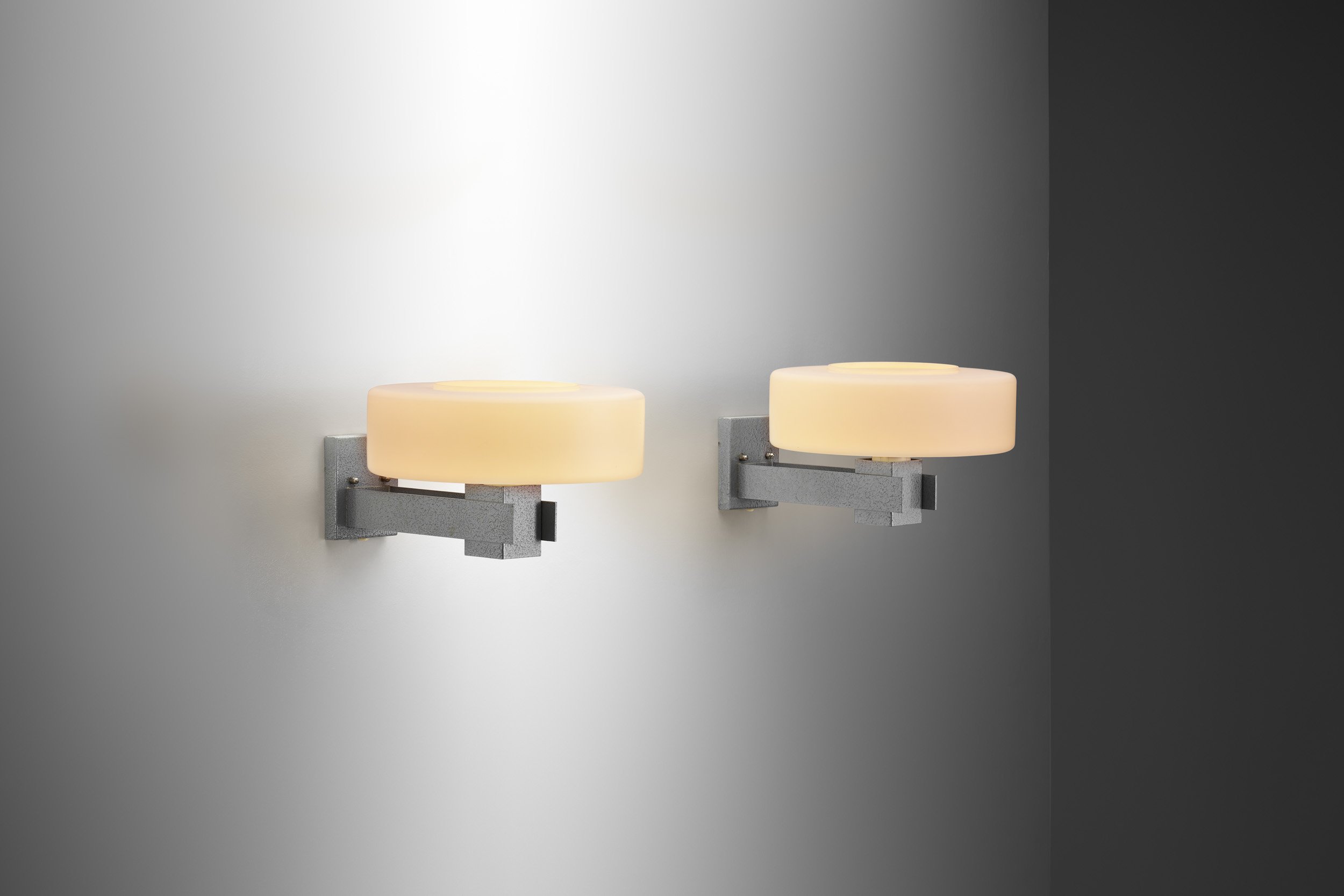
In the realm of mid-20th century Dutch design, these model "C-1626" wall lamps remain fascinating examples defined by the contrast of the smooth, round satin-matte glass and the angular-straight grey metal. Produced by RAAK Amsterdam and envisioned during the 1960s, this pair stands as evidence to the era's minimalist aesthetic. These wall lamps are not only embodiments of simplicity and elegance, showcasing a design ethos that continues to captivate admirers today, but also illustrate how minimalist design can be so ingenious and expressive at the same time.
RAAK’s design philosophy, epitomized in these “C-1626” models, embraces clean lines and uncluttered aesthetics. Functionally, Counterpoint wall lamps are marvels of balance. The design encapsulates a harmonious interplay of light and shadow, casting a gentle glow that enhances the ambiance of any space. The adaptability of the lamps is underscored by their capacity to blend seamlessly with diverse decor styles, a testament to the enduring legacy of Raak's commitment to versatility.
RAAK Amsterdam, a true vanguard in Dutch lighting design, played a pivotal role in shaping the visual landscape of the 1960s. Their meticulous craftsmanship and dedication to minimalist elegance laid the foundation for a design language that continues to resonate today. For collectors and connoisseurs alike, these counterpoint wall lamps stand as both a nod to history and a beacon of timeless style for contemporary interiors.
Condition:
In good vintage condition. Wear consistent with age and use. Some small marks on the metal bodies.
Dimensions:
11.02 in W 14.37 in D x 68.89 in H
28 cm W x 36.5 cm D x 17.5 cm H
Literature: Raak catalogue 6, page 11.
About the manufacturer:
RAAK Amsterdam was started in the year 1954 by Carel O. Lockhorn, who before was employed by Philips in the south of the Netherlands. RAAK had its main sales outlets in both Eindhoven and Amsterdam.
The name “RAAK” can be loosely translated as “bulls eye” in Dutch, i.e. the company hits the target with respect to its design and function:
The aim of the RAAK company was to advise for correct usage of lighting devices, in a way that these are adapted to the surrounding architecture. The designs produced by the company were aimed at being modest, elegant, and effective.
During its existence, RAAK collaborated with several famous designers such as Betrand Balas (Springfontein Lamp), Frank Ligtelijn (Globe Lamp) or Maija-Liisa Komulainen (Fuga lamp). Many of the designs produced by RAAK have turned into sought-after vintage pieces.
The RAAK Company has ceased to exist in 2011.

REQUEST PRICE HERE
Price category: 1,000 - 2,500 usd / eur
From 1920 to 1939, Art Deco revolutionized 20th century architecture and design. The period also gave birth to the Jean Perzel company, which would also make its mark on the world of lighting and design. Jean Perzel’s light fixtures and furniture in both glass and bronze later adorned the world’s most prestigious addresses… from the King’s Court in Belgium to the home of Henry Ford as well as the Rothschild’s family residence. He also conceived the lighting for the League of Nations in Geneva, the Luxembourg Cathedral, the Embassy of Canada at Lahaye, and even the French cruise ship Normandie.
Like all wall lights from the Atelier, this wall light was designed and handcrafted in their workshop located in the heart of Paris. Since each model highlighted the architecture of the place that inspired its creation, the pure lines of Jean Perzel’s fixtures made them timeless works of art. The understated design and materials speak of refined elegance. The pairing of gilded brass and opaline glass creates a luxurious impression, where the materials’ qualities enhance each other greatly. The design utilizes classic forms and shapes, seen in the frosted glass cylinder and in the classical mounting. The round cylinder and shade holder contrast cleverly with the square backplate and arm, creating a dynamic, balanced impression. The stylized structure’s well-thought-out simplicity is brilliant, with perfect symmetry that gets even more pronounced when the light is lit. Thanks to the frosted glass, the light is distributed evenly in all directions when switched on. Besides its atmospheric light and disciplined, functionalist design, this wall lamp is a statement piece that draws the eye despite its simplicity. Since the two materials dictate the look, much attention was paid to quality and to the craftsmanship that united them into the cylindrical shape. While frosted glass has been around since the 16th century, mid-century designers in Europe often used the material in combination with brass to create a timelessly modern look. In 1925 motivated by a desire to intensify light, Jean Perzel made all of his pieces from glass. He designed his creations himself in a permanent search for elegance and purity in all forms.
Recognized by the French government for its history and traditional techniques, in 2008, the French ministry of culture awarded Jean Perzel with the label of “Company of Living Heritage”. These lamps are sure to warm their interiors through their light and to add that timeless sophistication that has marked Jean Perzel style since 1923.
Condition:
In good vintage condition. Wear consistent with age and use. The brass has a beautiful patina with some marks.
Dimensions:
5.51 in W x 7.67 in D x 10.82 in H
14 cm W x 19.5 cm D x 27.5 cm H
About the designer:
Jean Perzel was born in Bruck, in Bavaria (Germany), on May 2nd, 1892. He learned glasswork in Munich and later toured much of Europe: Austria, Czechoslovakia, Switzerland, Upper Italy, then France. Along the way, he was hired in studios (workshops) to make his living and to learn the various techniques. He arrived in Paris in 1910, and after the warm he became a French citizen. He still worked as a painter and glassworker, in particular at Gruber.
From 1920 to 1939, Art Deco revolutionized 20th century architecture and design. The period also gave birth to the Jean Perzel company, which would also make its mark on the world of lighting and design. Jean Perzel’s light fixtures and furniture in both glass and bronze later adorned the world’s most prestigious addresses: from the King’s Court in Belgium to the home of Henry Ford as well as the Rothschild’s family residence. He also conceived the lighting for the League of Nations in Geneva, the Luxembourg Cathedral, the Embassy of Canada at Lahaye, and even the French cruise ship Normandie.
Jean Perzel took home numerous awards in international exhibitions and contests This earned him popularity with a host of celebrities and politicians. He brought new life and light to the interiors of the King of Morocco, Bangkok’s King of Siam in Bangkok, the Maharaja of Indore, and French presidents General De Gaulle and Georges Pompidou.
In 1923, at the age of just 31, Jean Perzel specialized in the study of modern interior lighting and established his own company. He would locate both his showroom and workshop in the rue de la cité universitaire in the 14th arrondissement of Paris… In an Art Déco building designed by the architect Michel Roux-Spitz, winner of the Grand Prix de Rome. The company’s offices are still here today.
Recognized by the French government for its history and traditional techniques, in 2008, the French ministry of culture awarded Jean Perzel with the label of “ Company of Living Heritage”.
REQUEST PRICE HERE
Price category: 2,500 - 5,000 usd / eur
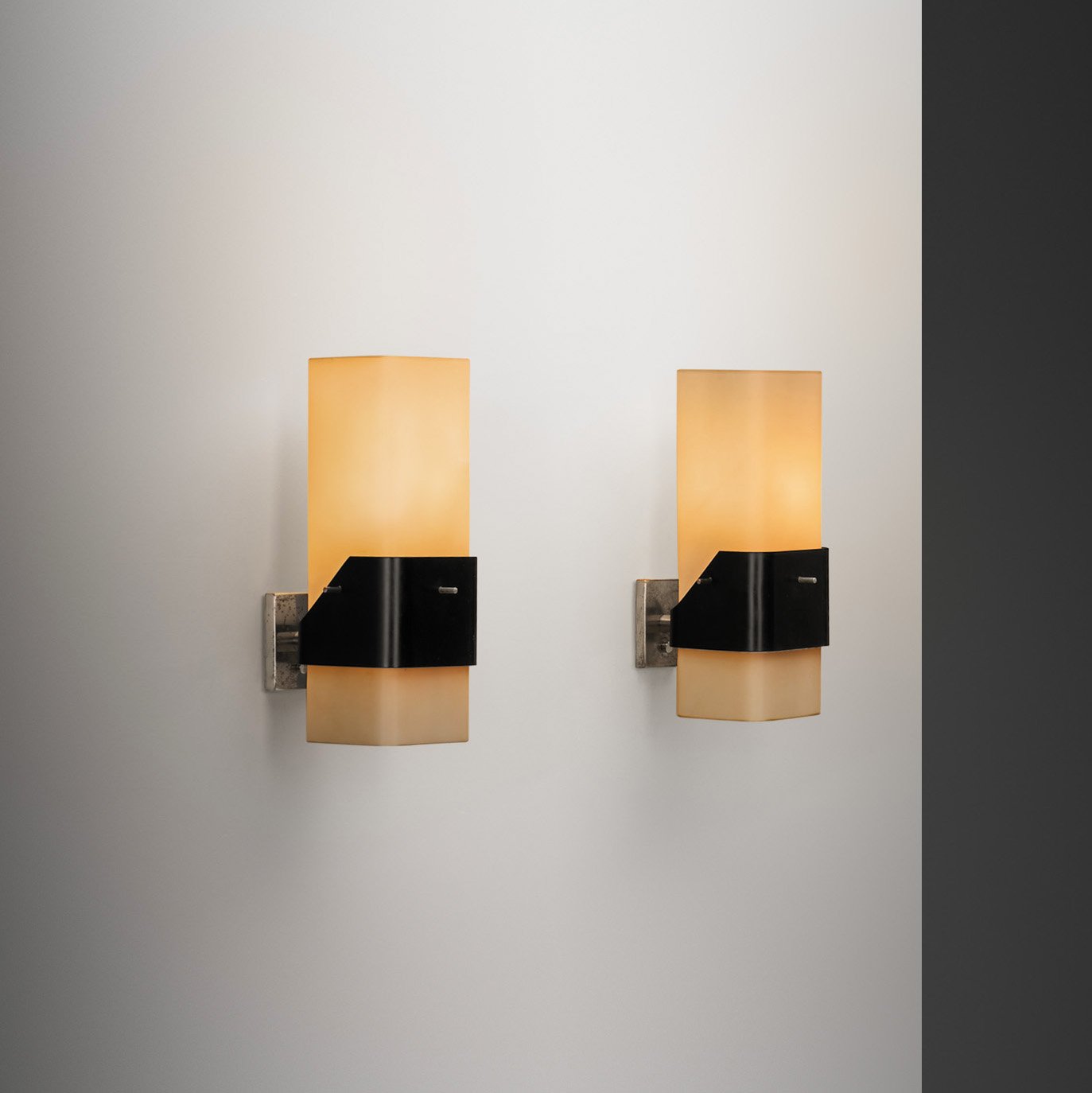
Italian lighting in the 1950s was marked by experimentation, where designers and manufacturers explored new relationships between materials, light, and architectural space. Among the key figures of this movement was Angelo Lelii, founder of Arredoluce, a company with a long tradition for innovation and refined craftsmanship. Lelii’s work is characterised by a balance between technical ingenuity and visual restraint.
Model “12670” reflects this approach, embodying the clarity and precision that defined Italian mid-century lighting while maintaining a distinctly sculptural presence. This pair of wall lamps is defined by the contrast between geometric composition and softness of light. Each fixture is composed of a vertical, rectangular shade that diffuses a warm, ambient glow. To support the glass, a horizontal element in black lacquered metal anchors the composition visually, attaching the shade to the arm fixed on the wall. This interplay between axes introduces a strong architectural quality, giving the lamps a sense of order and rhythm. The wall supports allow the illuminated forms to appear almost detached from the surface when looked at from the right angle. The design relies on contrast not only in form but also in colour: the matte, dark metal adding depth to the overall pieces. The designer’s focus on clarity and balance is evident throughout the model. Rather than relying on ornament, the visual impact is achieved through proportion, juxtaposition, and the controlled diffusion of light.
These lamps function equally well as sources of illumination and as architectural accents. Today, Angelo Lelii’s designs remain highly regarded for their ability to merge engineering with artistry, and model “12670” stands as a strong example of how mid-century Italian lighting continues to resonate in contemporary interiors.
Condition:
In good vintage condition. Wear consistent with age and use. The items have recently been reconditioned and rewired. Minor discolouration on the glass. Some marks and scratches on the metal. These lamps are compatible with an E26 / E27 (standard) fittings. All lighting can be converted for US usage.
Dimensions:
5.52 in W x 6.30 in D x 11.81 in H
14 cm W x 16 cm D x 30 cm H
REQUEST PRICE HERE
Price category: 2,500 - 5,000 usd / eur
Mid 20th century lighting design endures in popularity for numerous reasons. The era’s designers managed to make practical design look beautiful, while maintaining the highest quality. The mid-20th century brought about a design revolution throughout Europe, where function and form merged in the most intriguing ways. One such example of this era’s creativity is this exceptional wall lamp.
This beautiful piece is characterised by its distinctive marriage of materials combines brass and lacquered metal in a way that is emblematic of the era's fascination with contrast. When looking at the materials’ finish, the glossy sheen of the warm brass stands out against the matte lacquered metal. Similarly, the chromatic juxtaposition of the back and front plate catches the eye, creating visual interest. The backplate has an irregular, organic outline that softens the minimal construction. Mounted in front is a rounded brass element that projects outward from the wall almost like a petal with subtle perforations. The asymmetry of the composition prevents the fixture from feeling static, while the composition of the shapes and clever decorative elements give this light a personality that isn’t loud but still stands out.
The timeless appeal of this wall lamp is a reminder of an era when designers were free to explore new horizons in crafting distinctive and captivating lighting fixtures that continue to inspire and illuminate our lives today. Its compact scale and sculptural silhouette allow it to function both as lighting and as a small wall-mounted object within an interior.
Condition:
In good vintage condition. Wear consistent with age and use. The lamp has recently been rewired and reconditioned. Due to the nature and age of the materials, the item may have marks, scratches, and discolouration. The lamp is compatible with an E26 / E27 (standard) fitting. All lighting can be converted for US usage.
Dimensions:
8.66 in W x 5.52 in D x 11.02 in H
22 cm W x 14 cm D x 28 cm H