
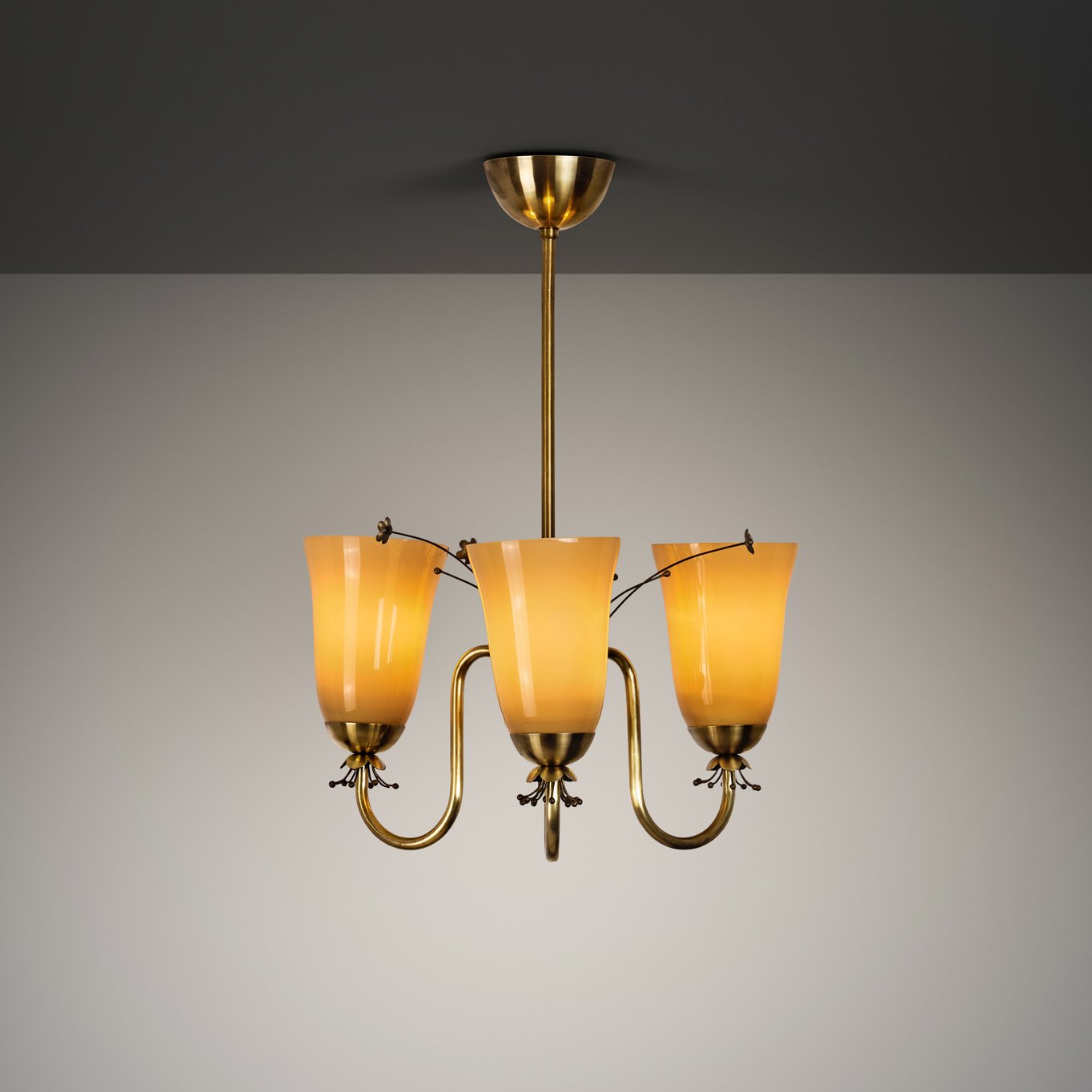
Model "1004" Brass Chandelier with Glass Shade by Paavo Tynell for Taito, Finland 1930s
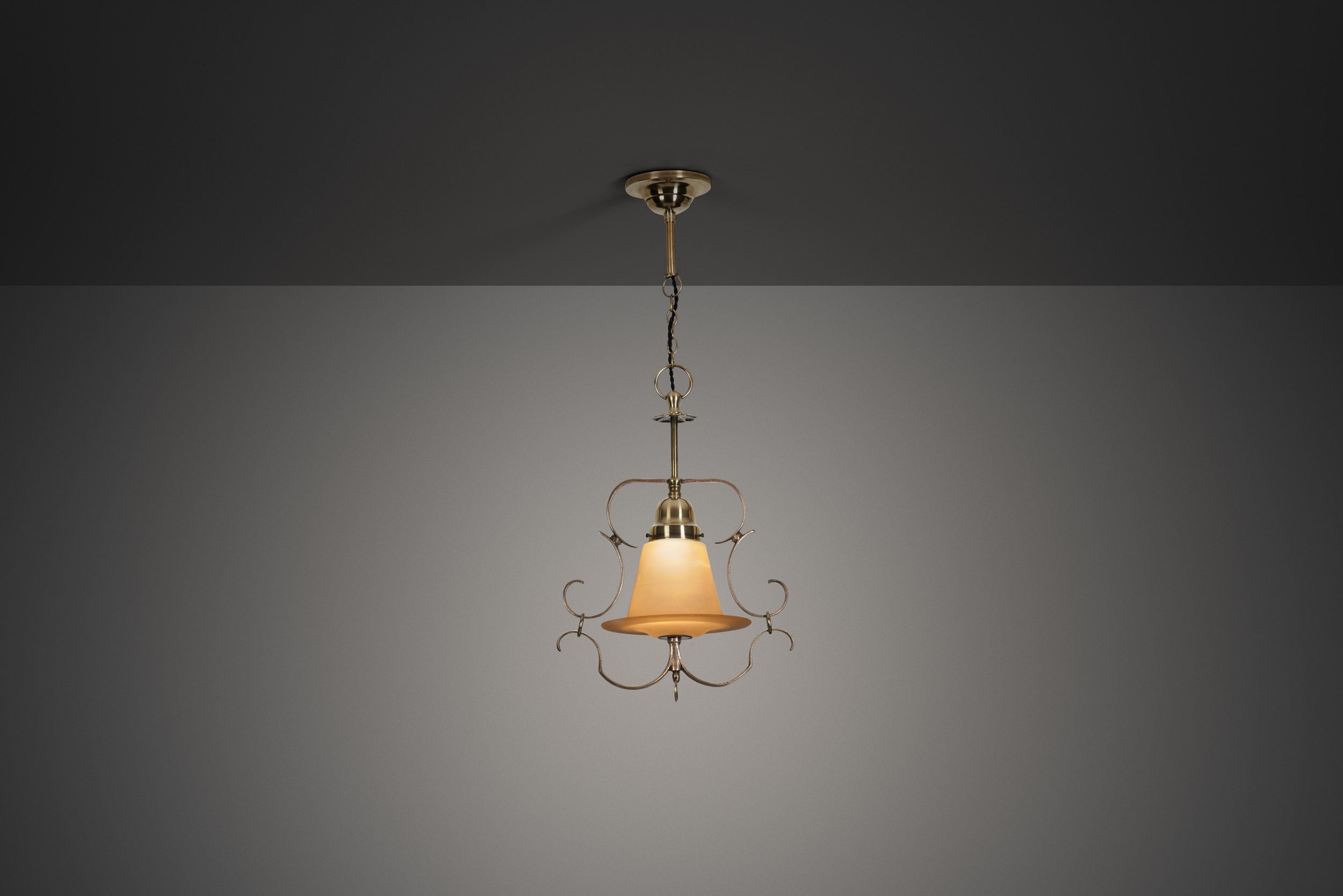
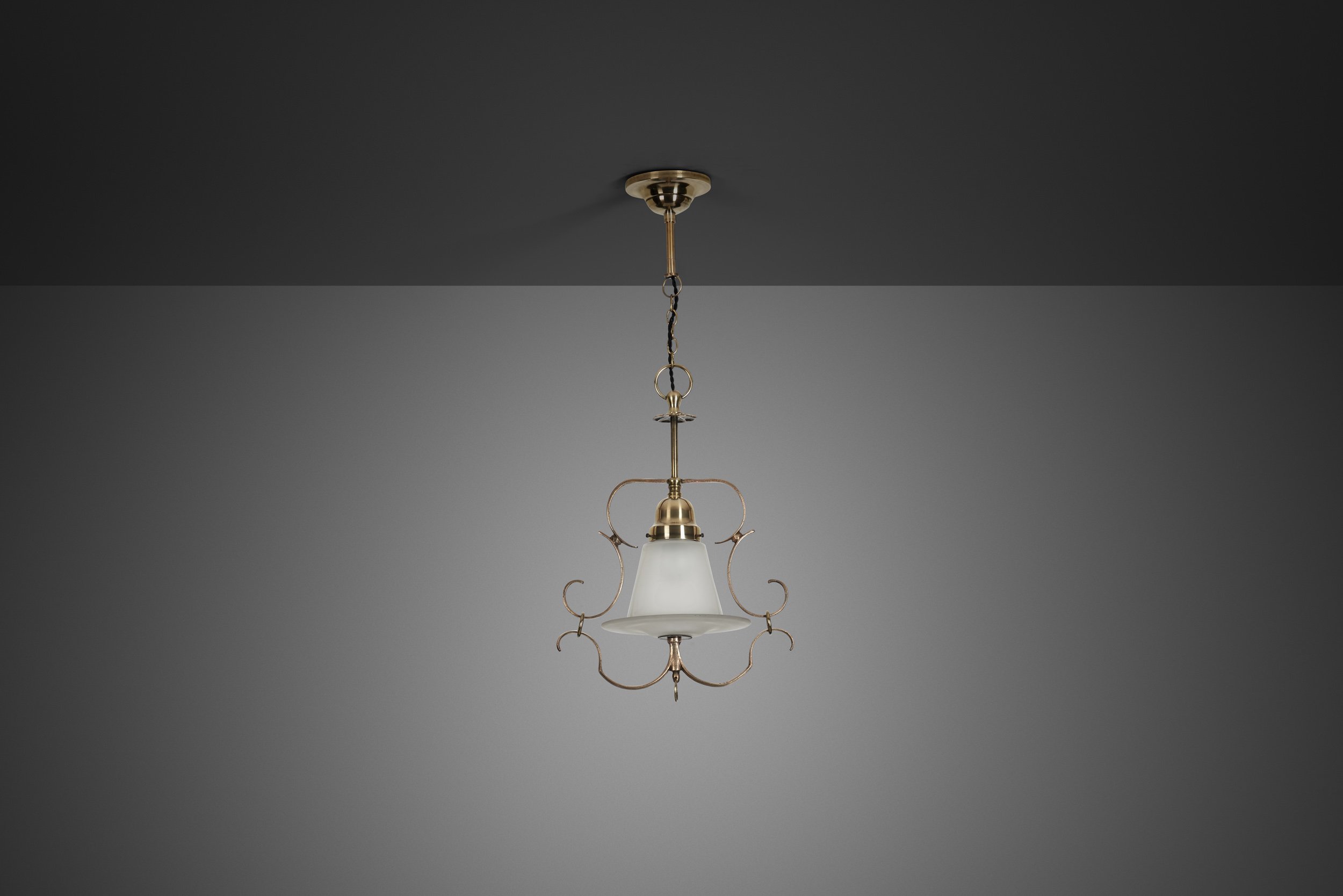
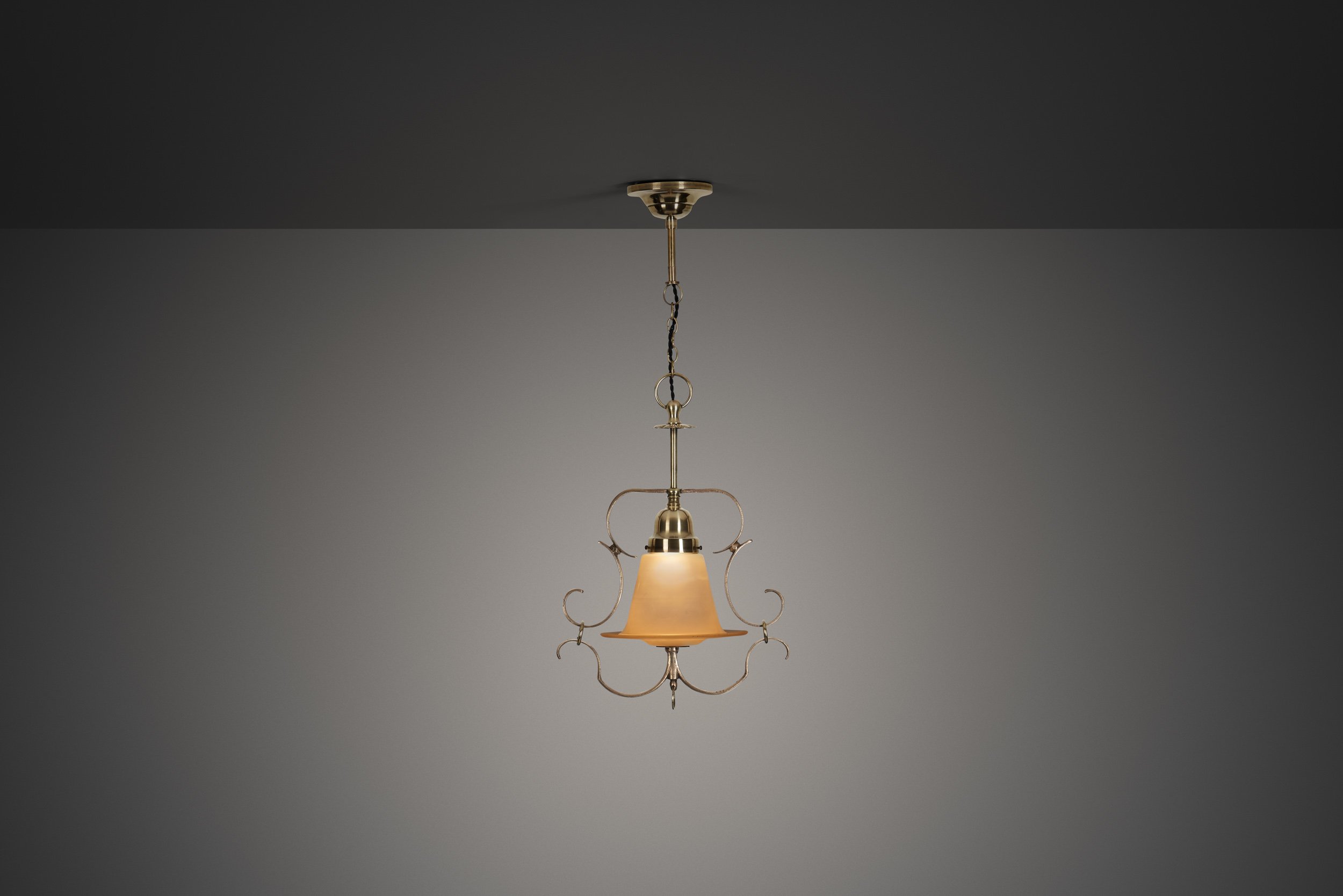
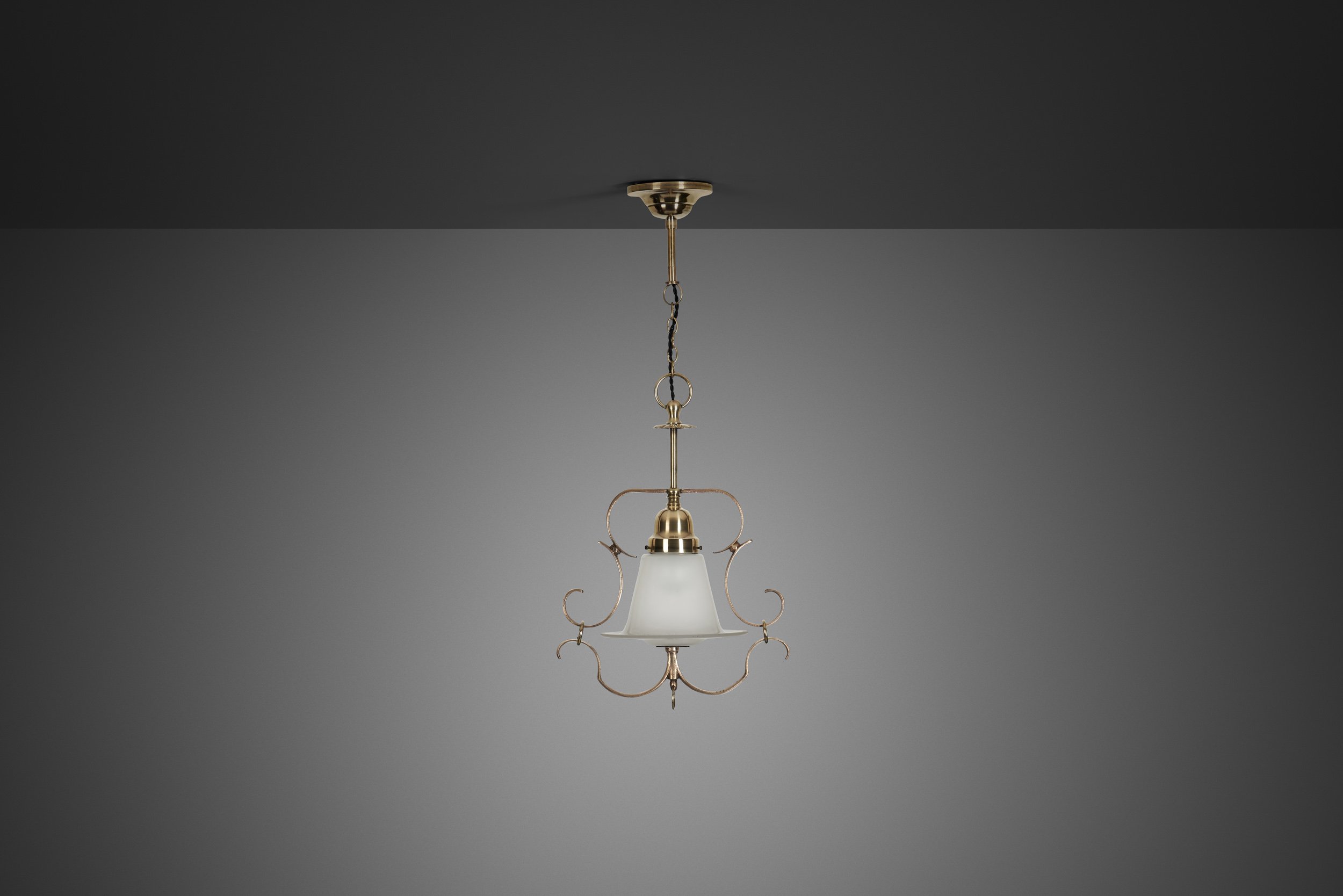
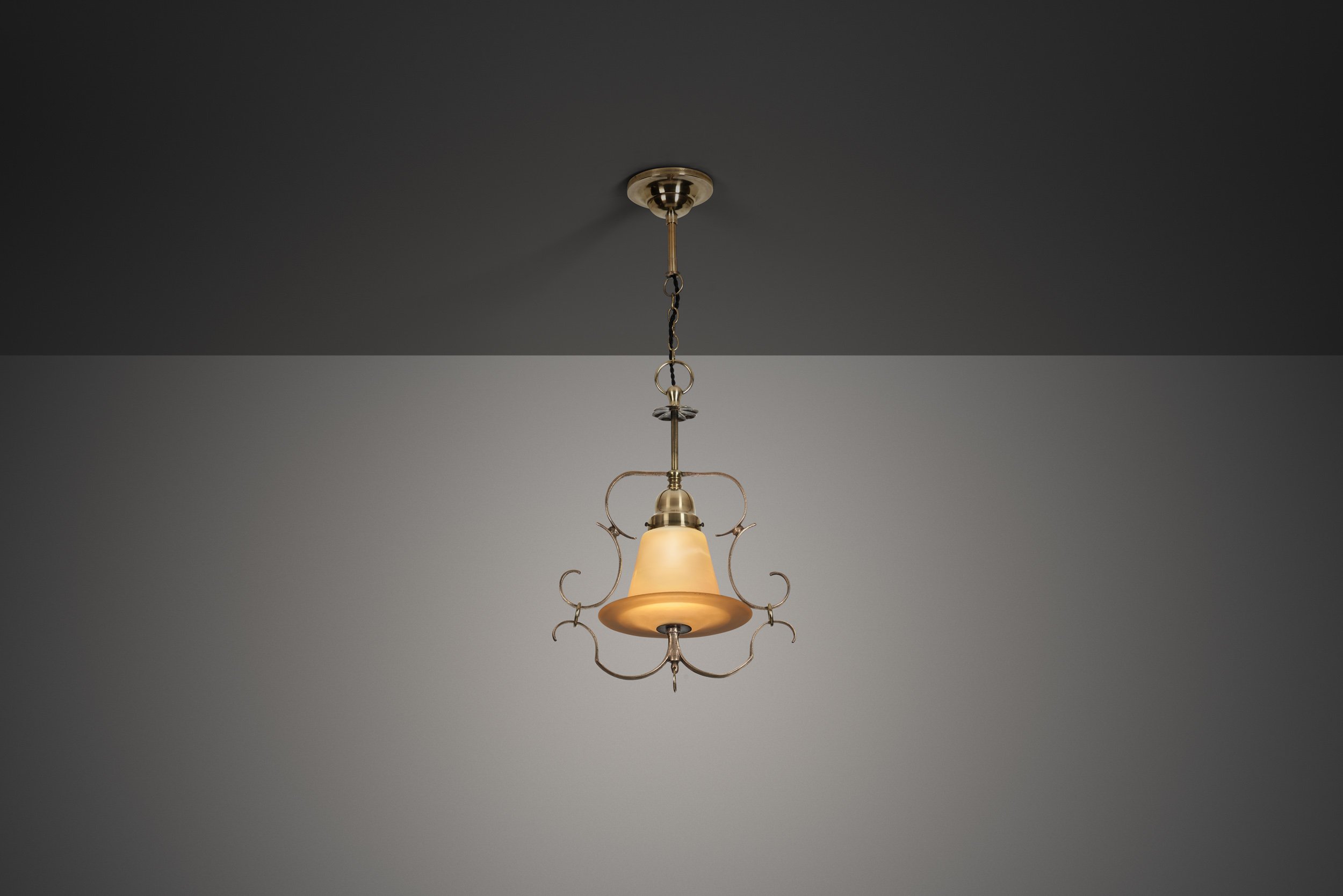
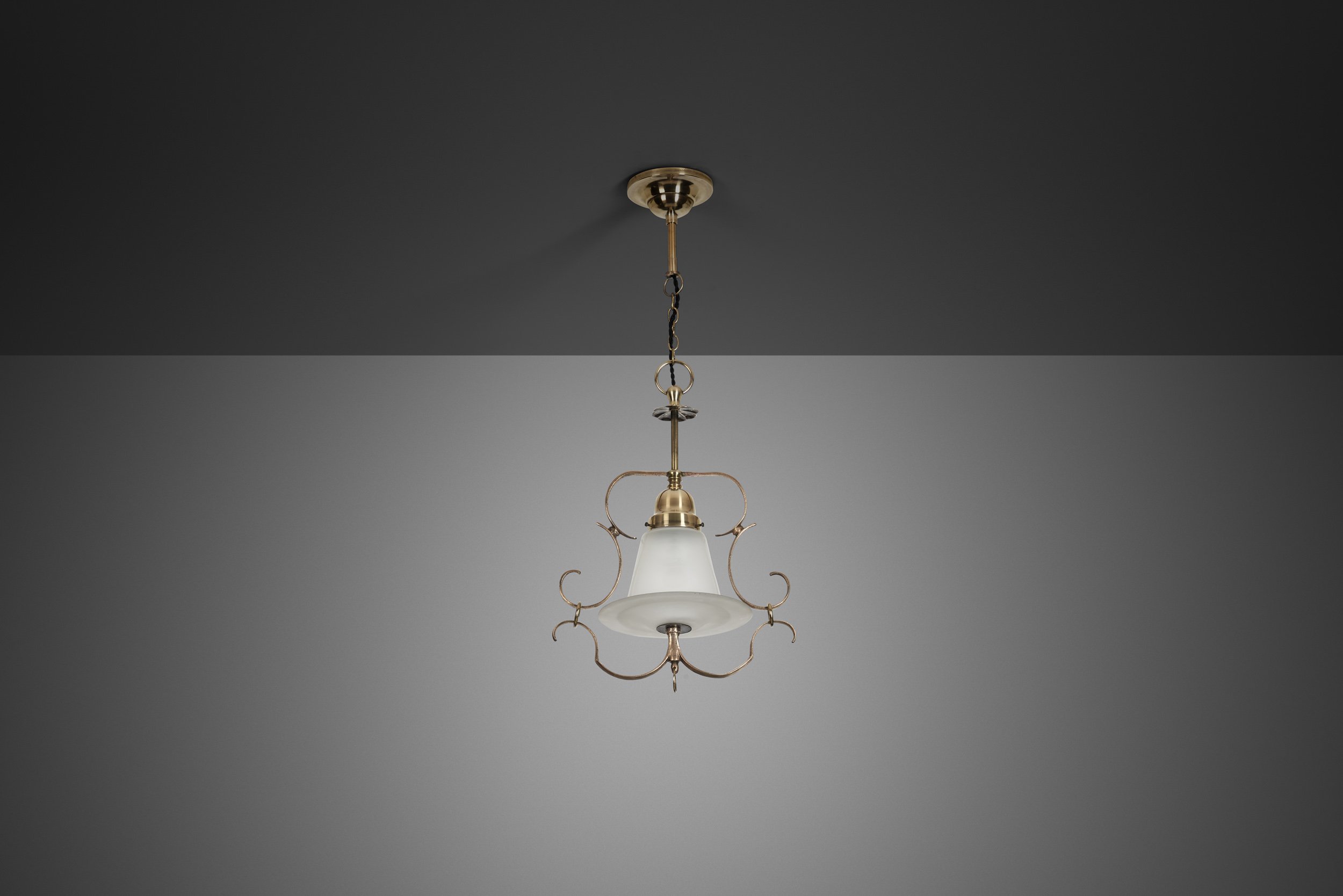
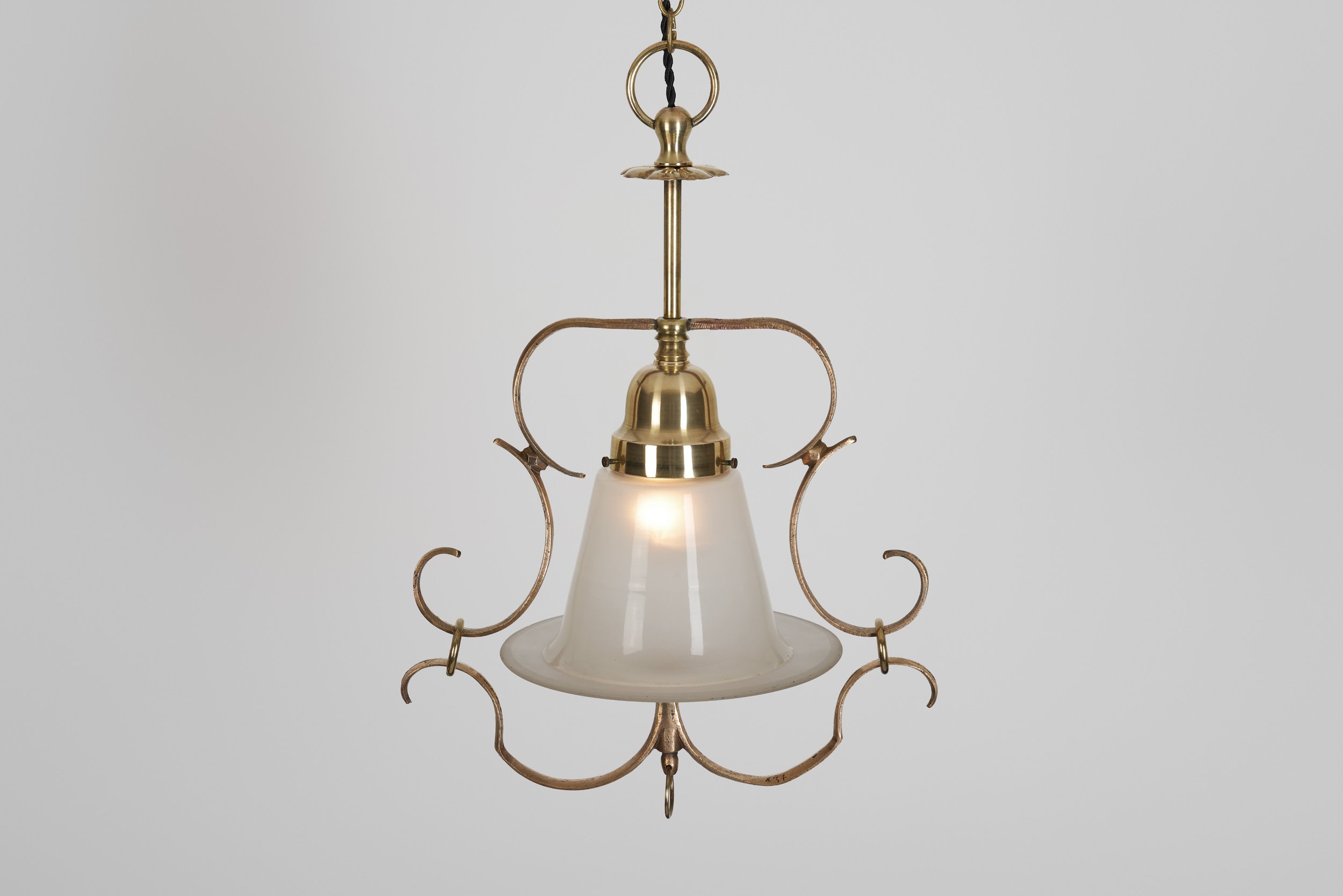
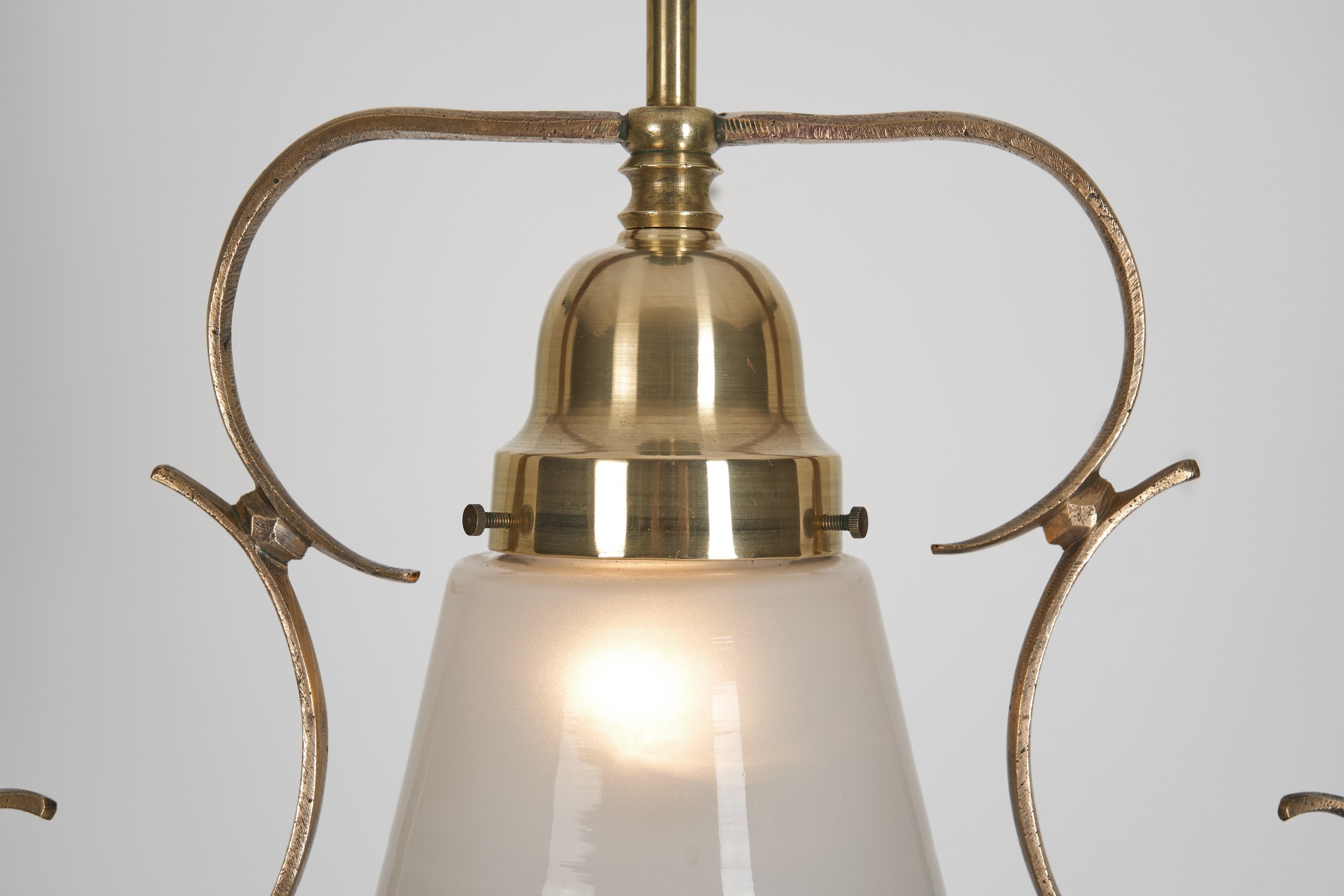
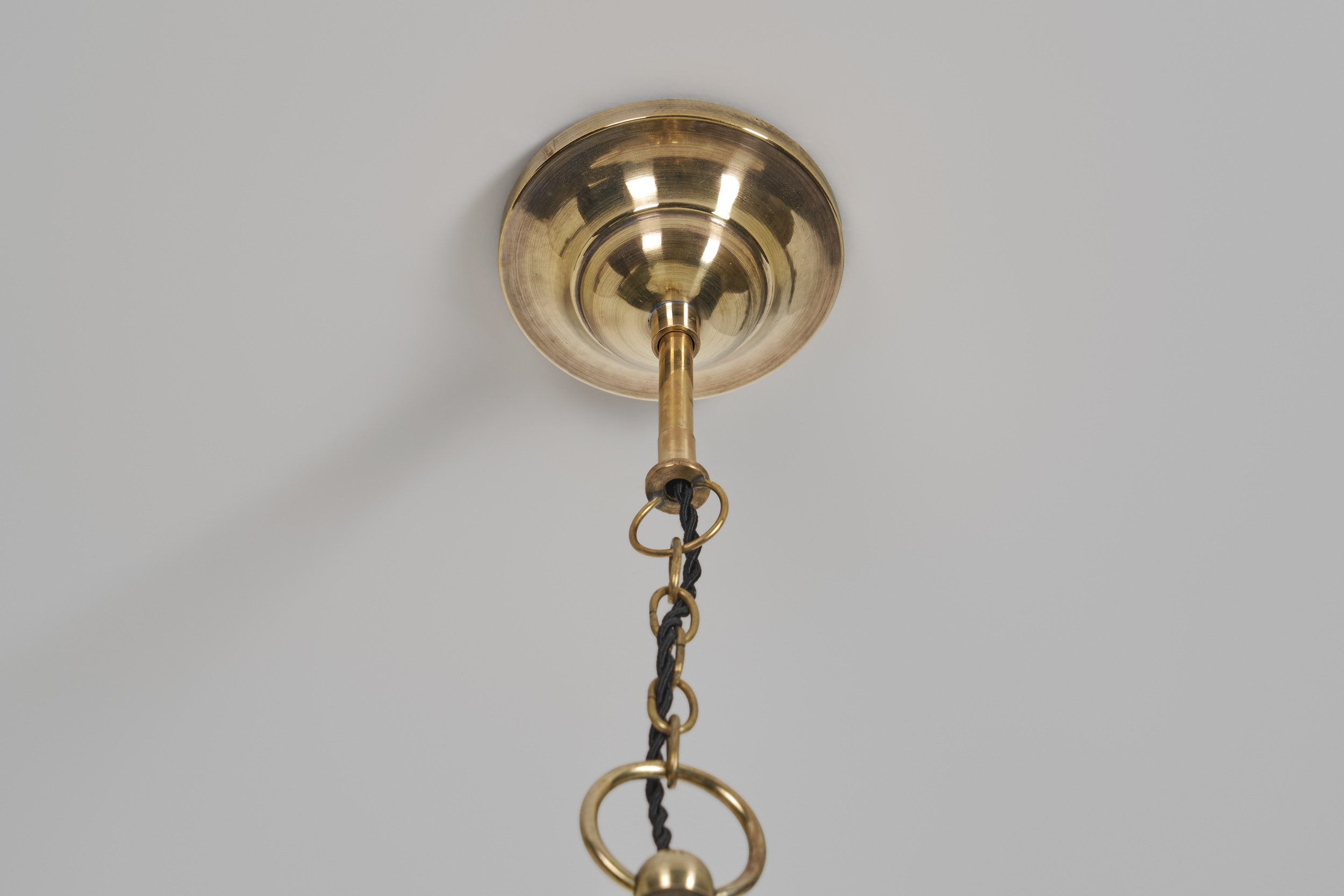
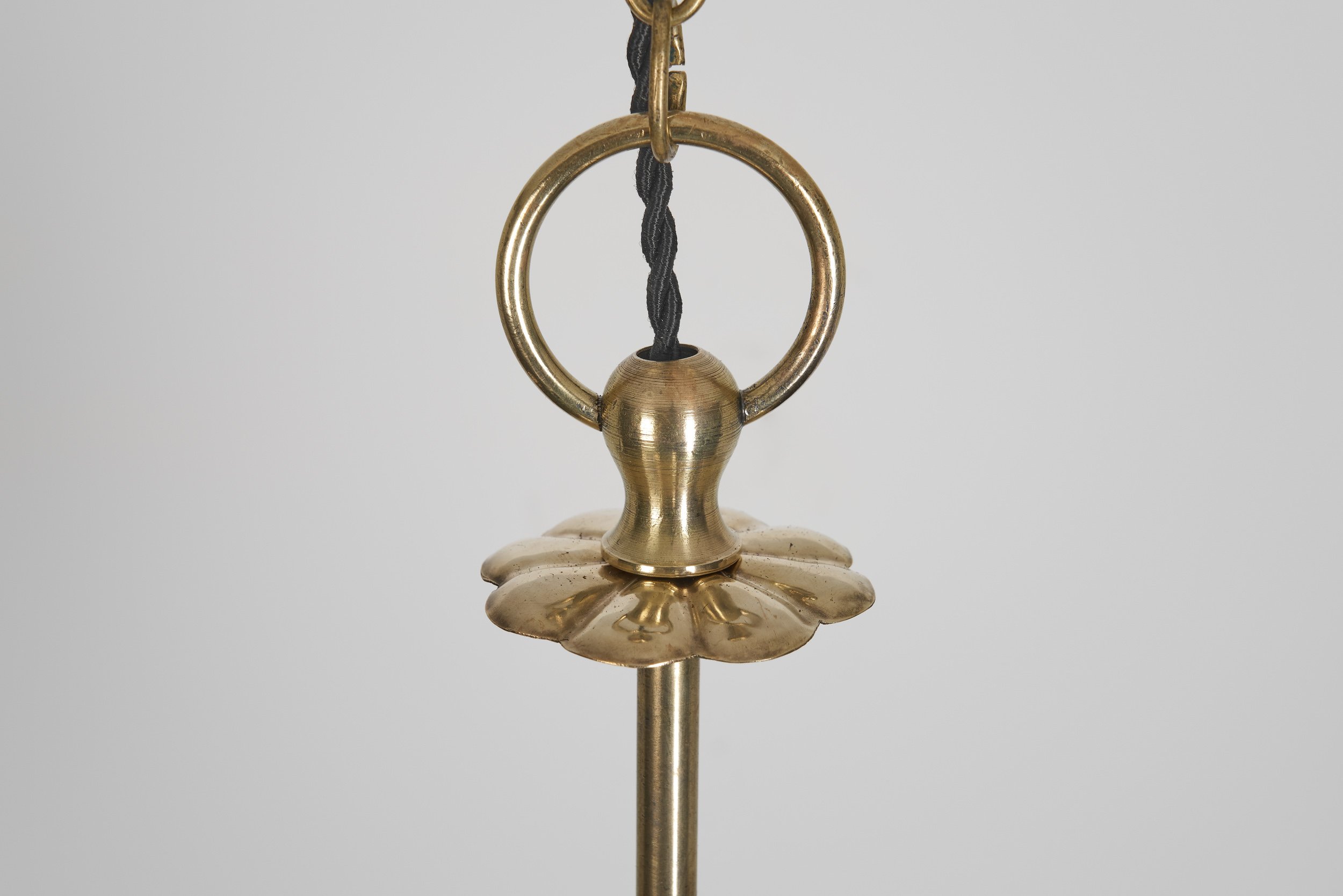
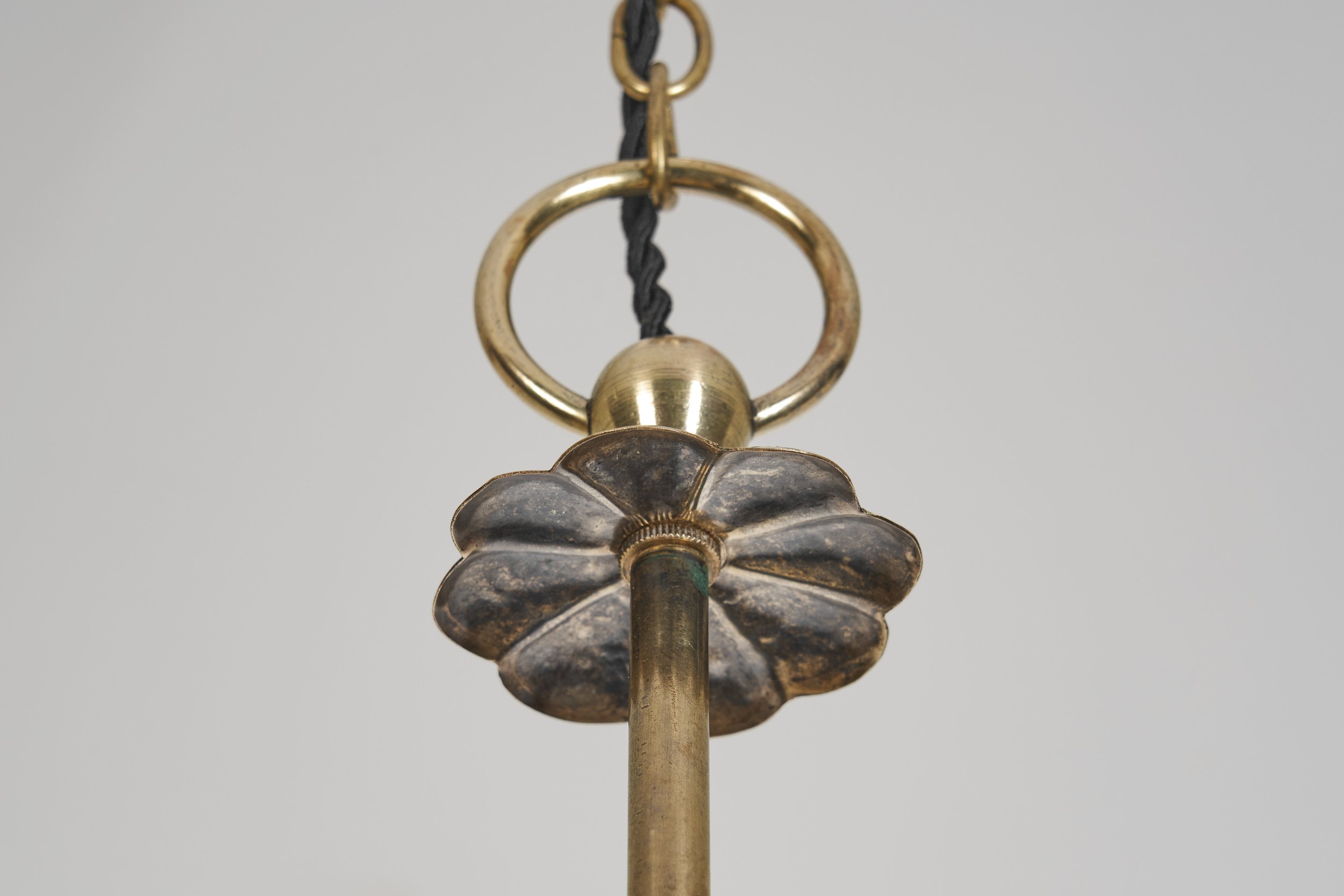
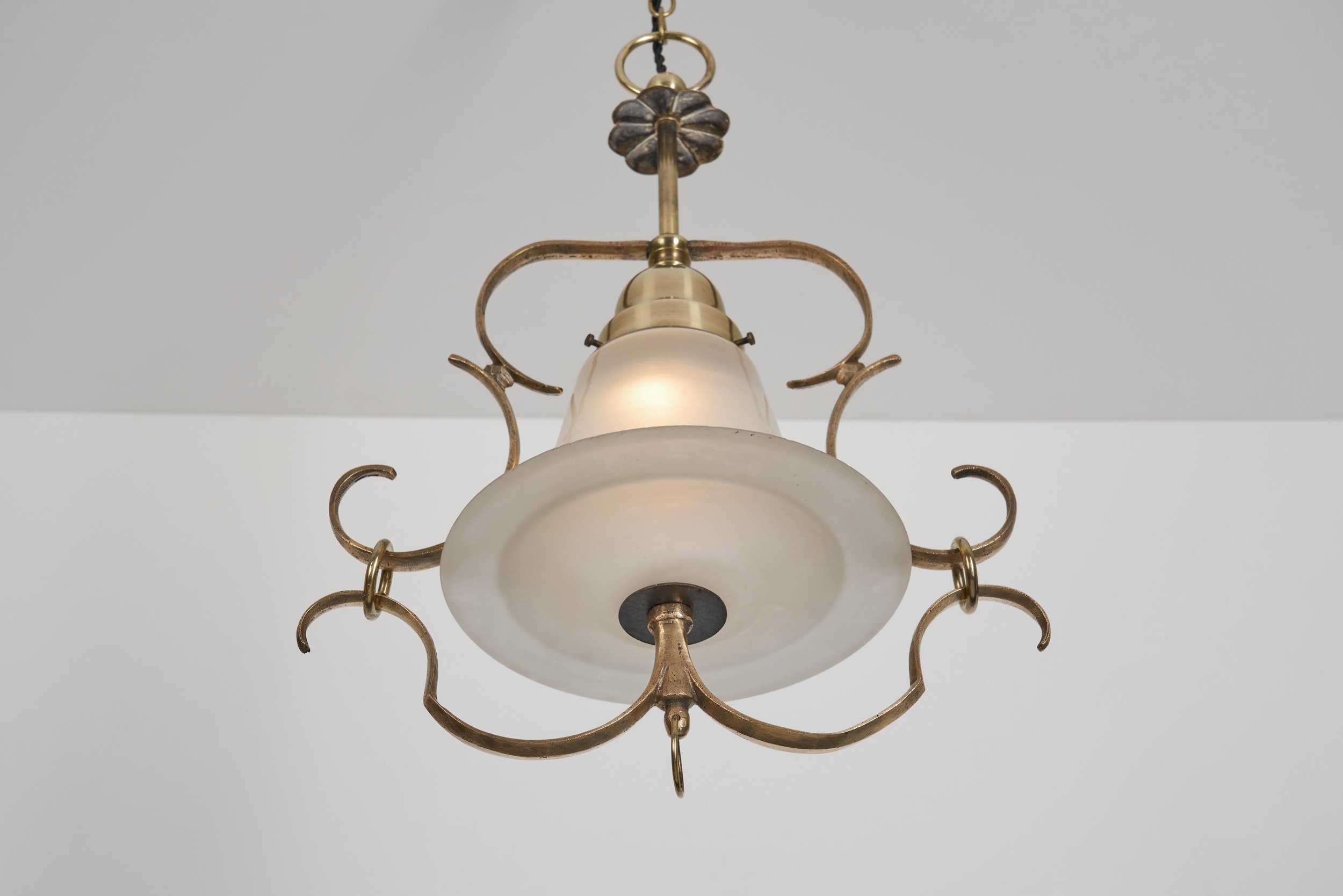
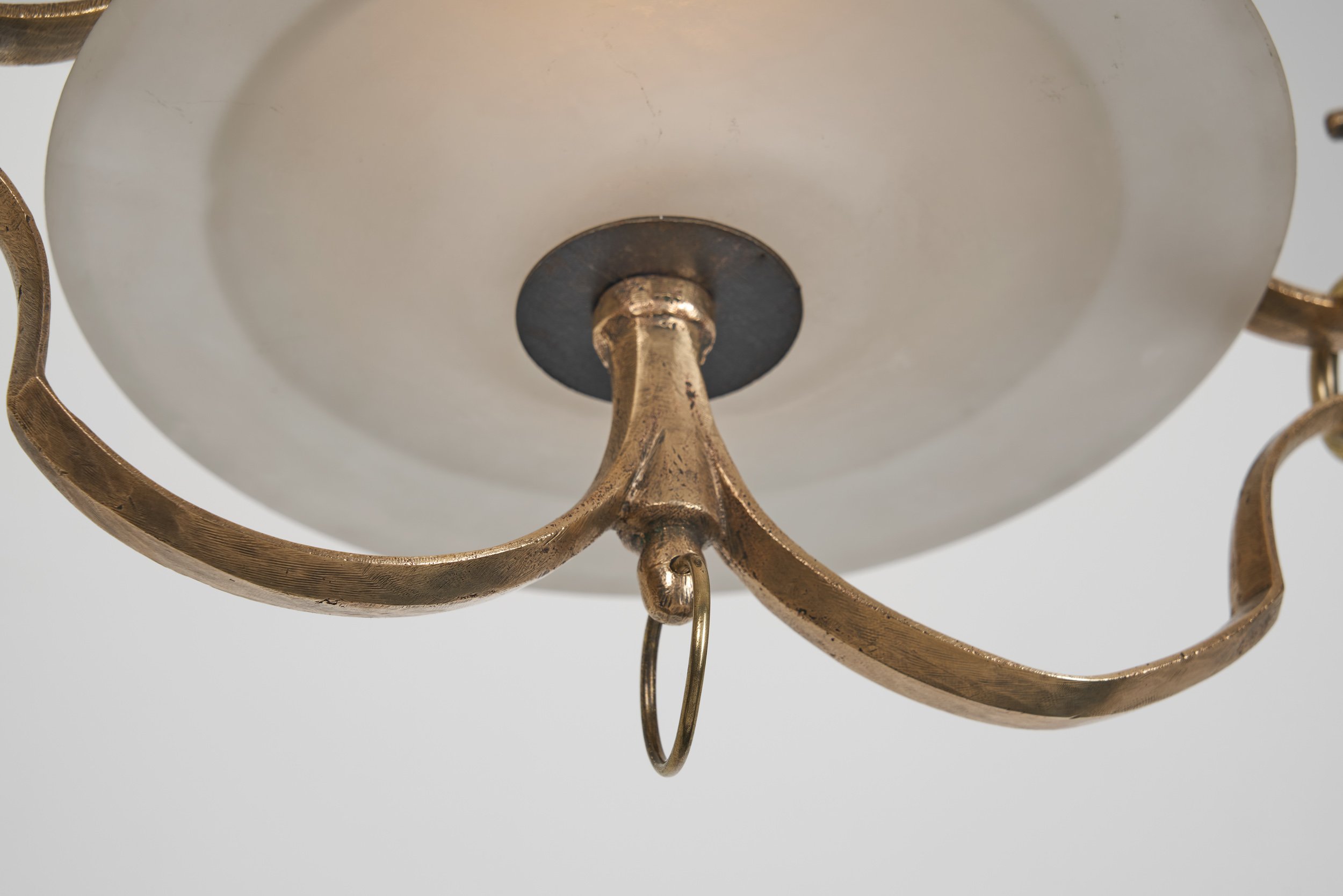
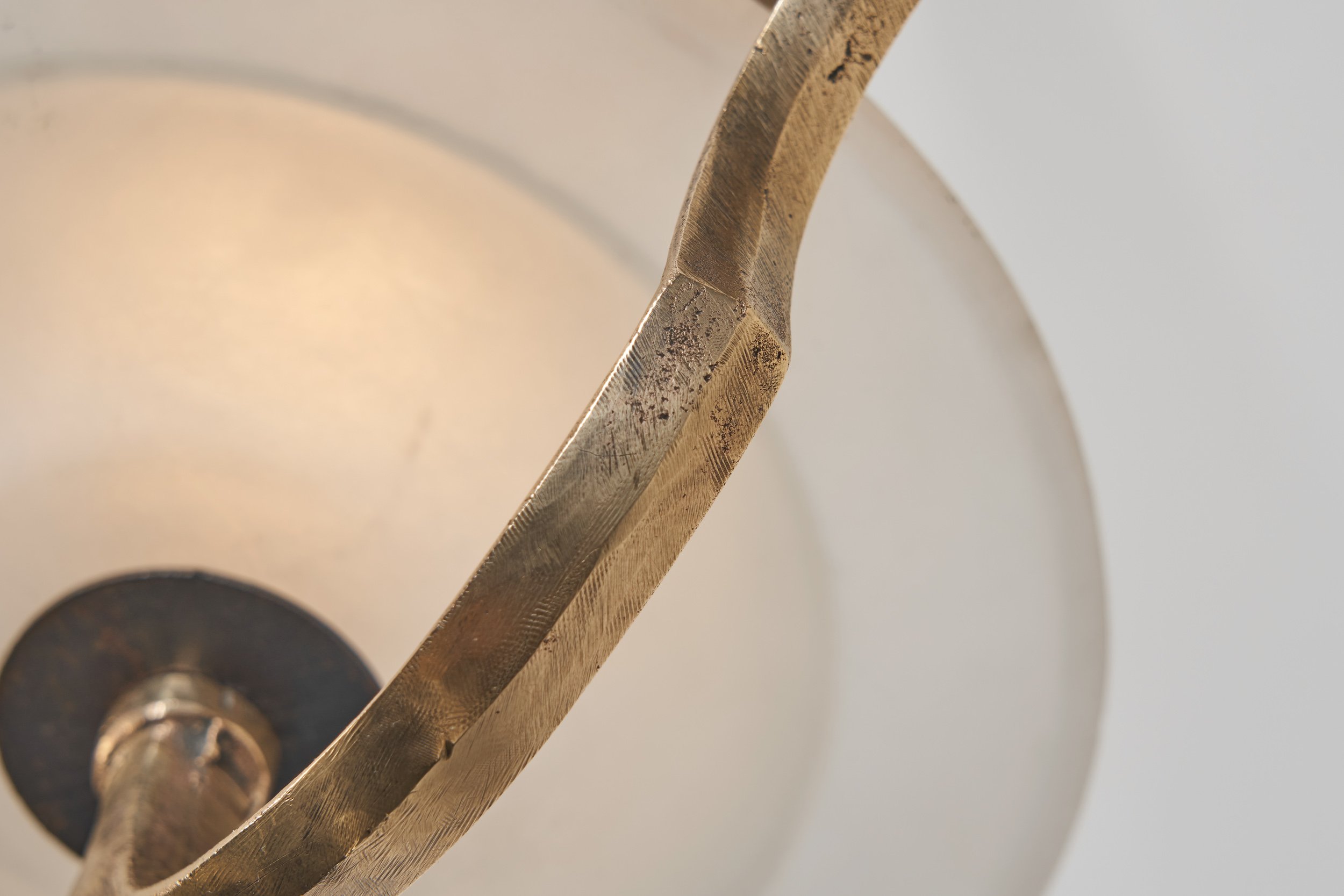
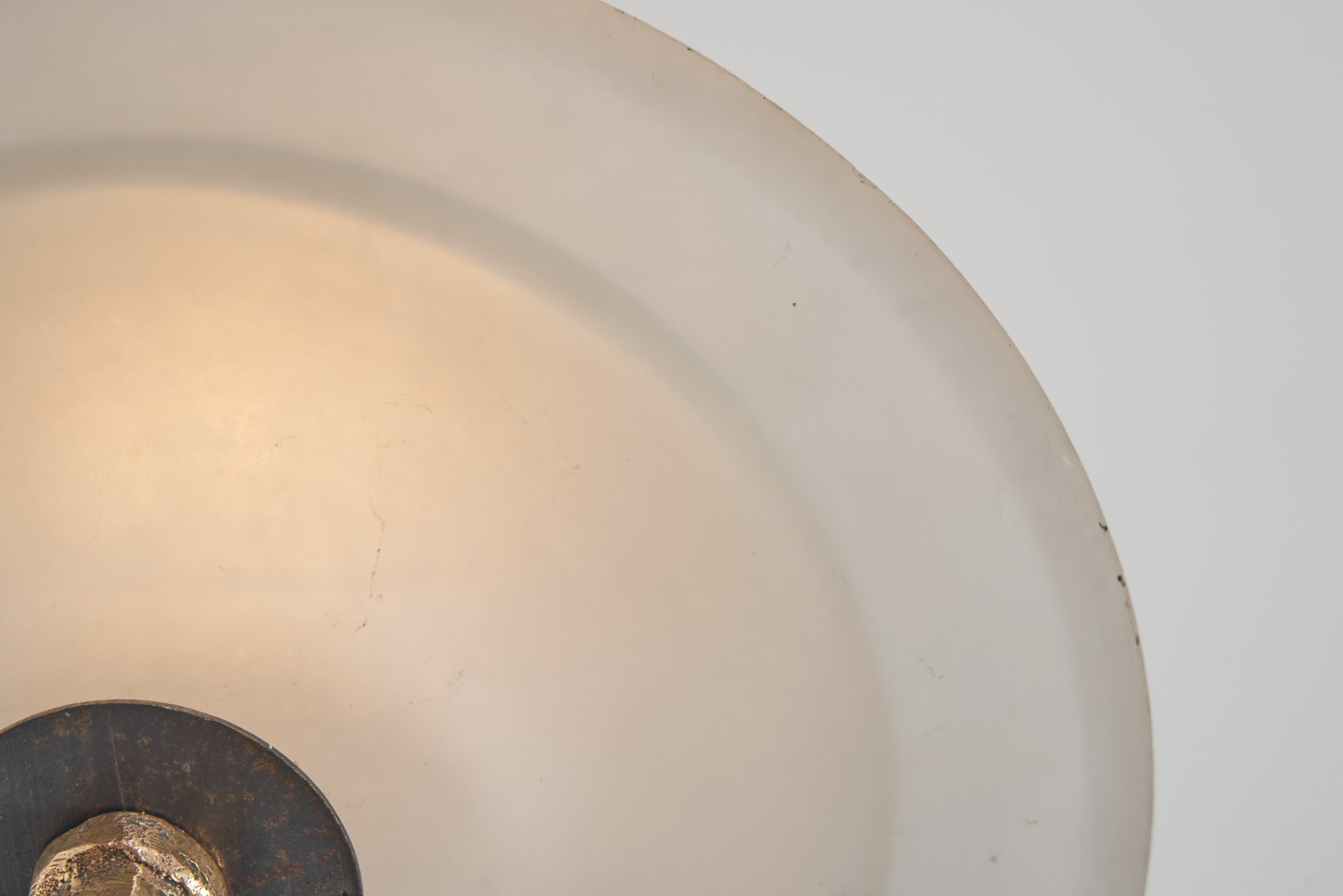
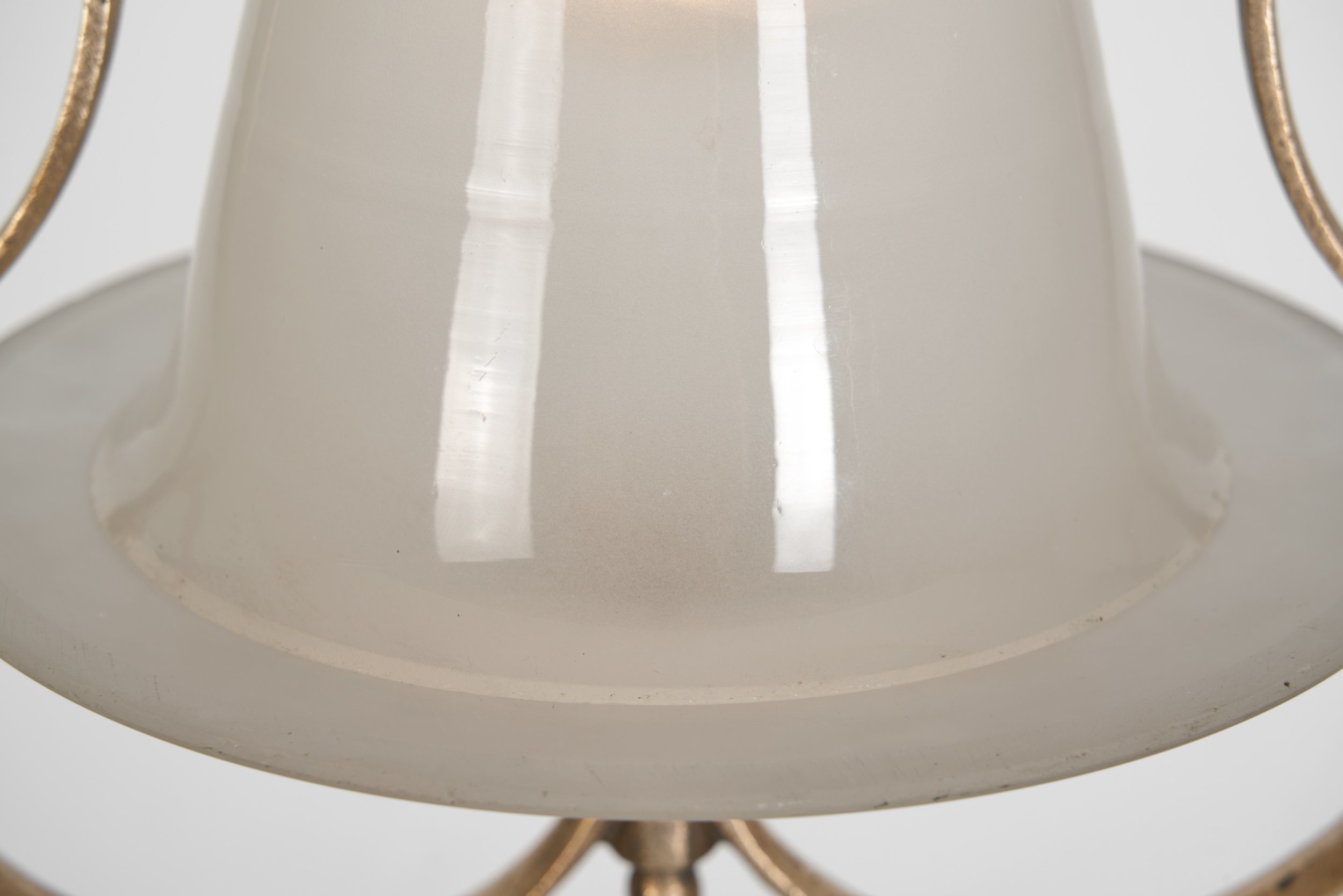
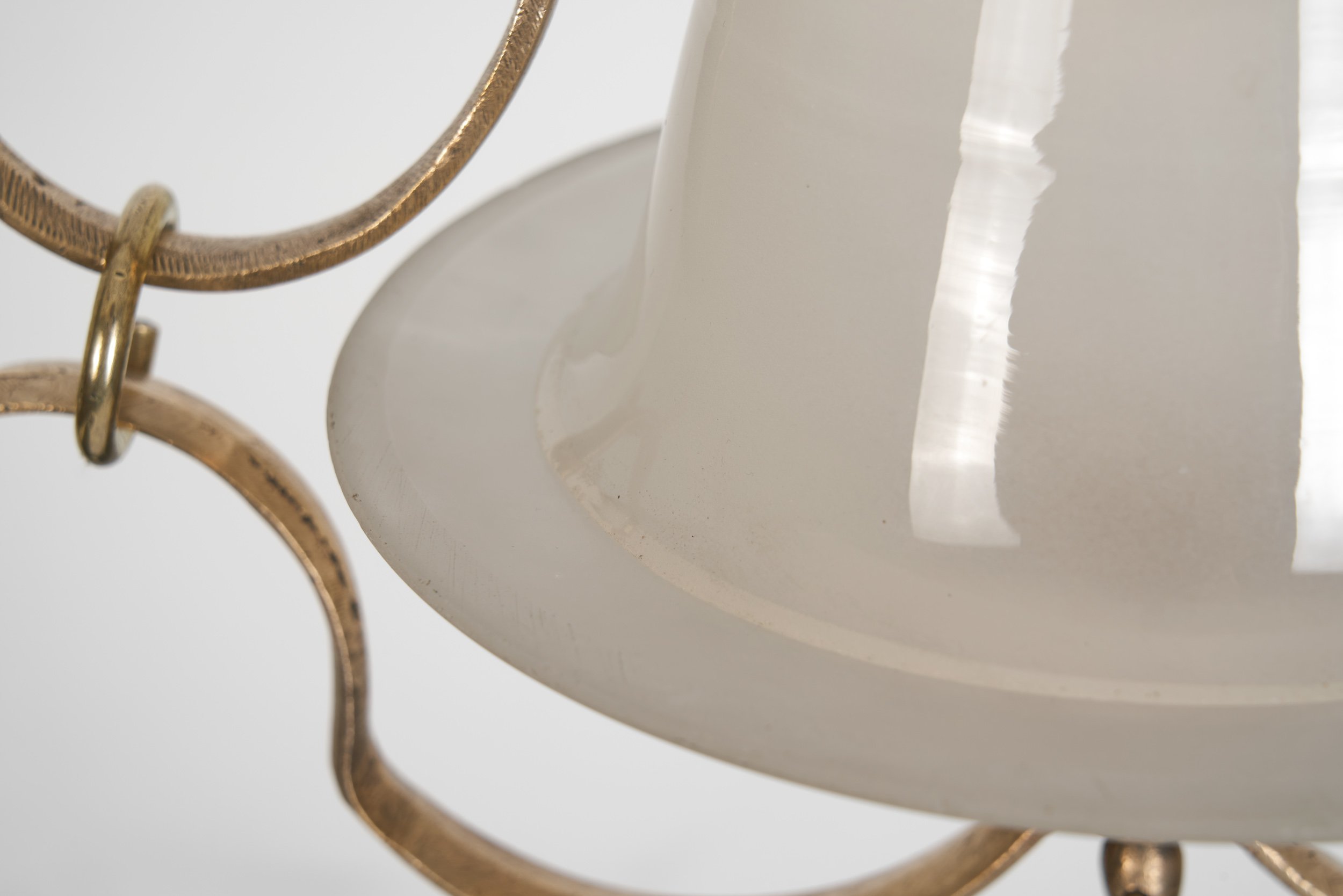
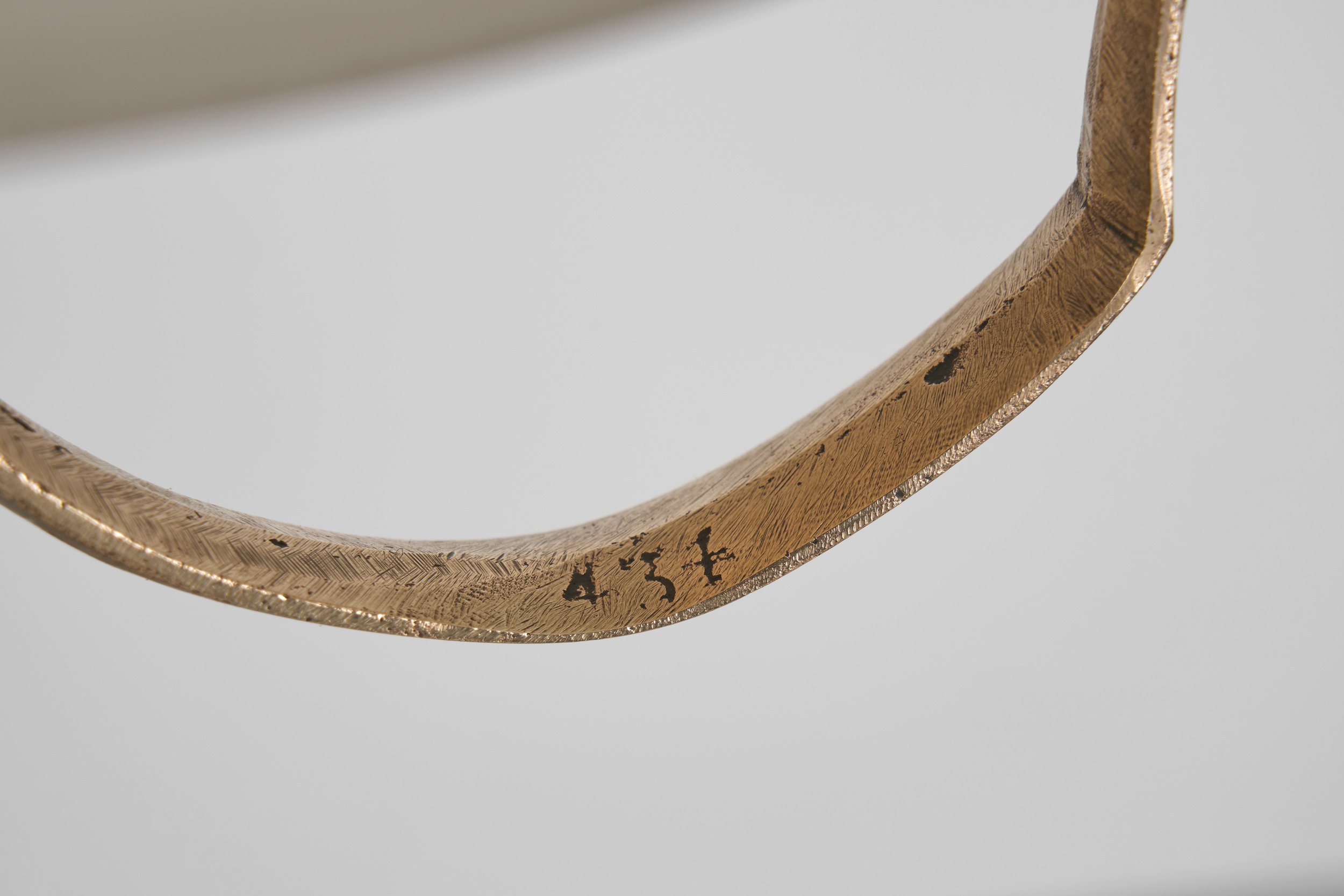
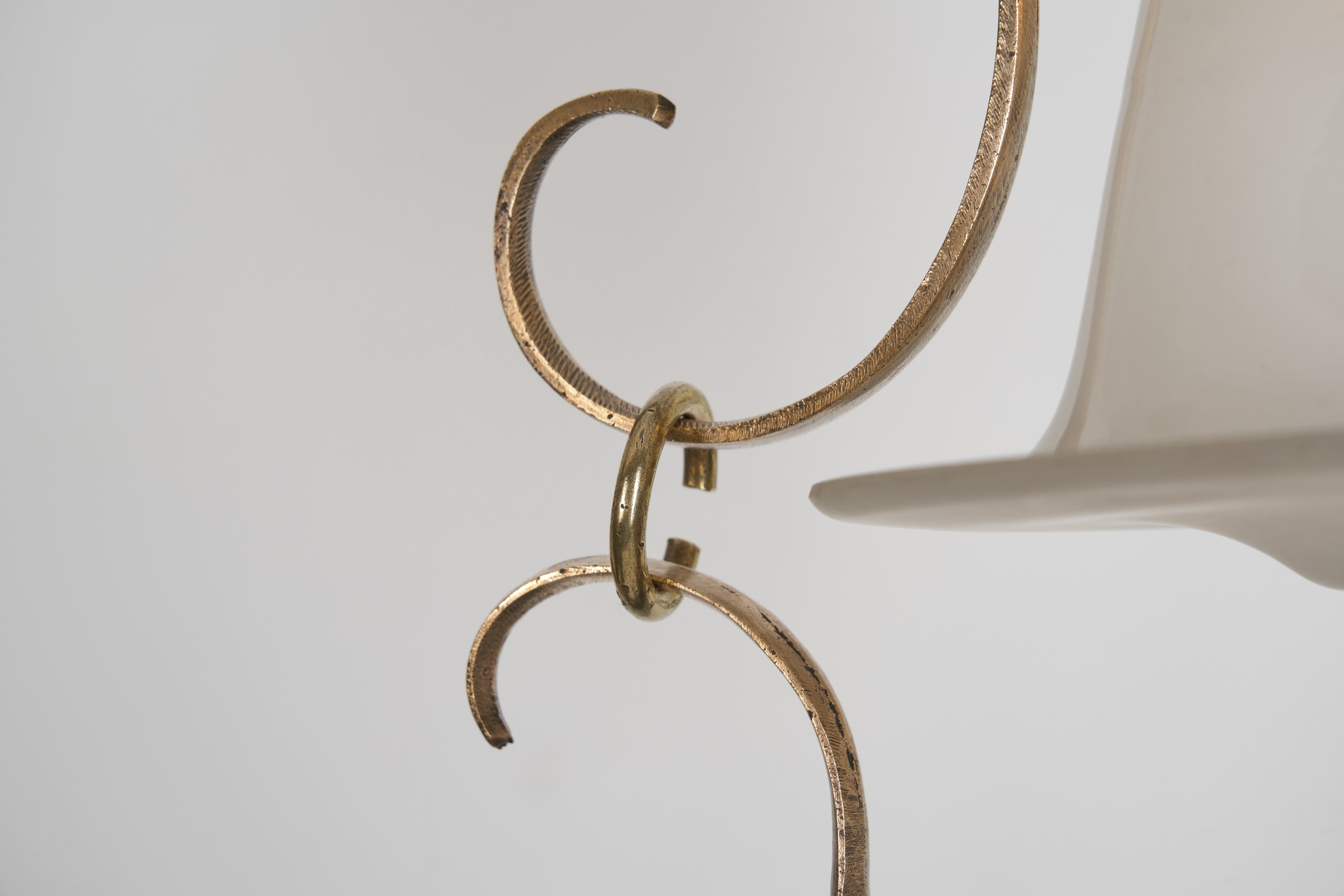
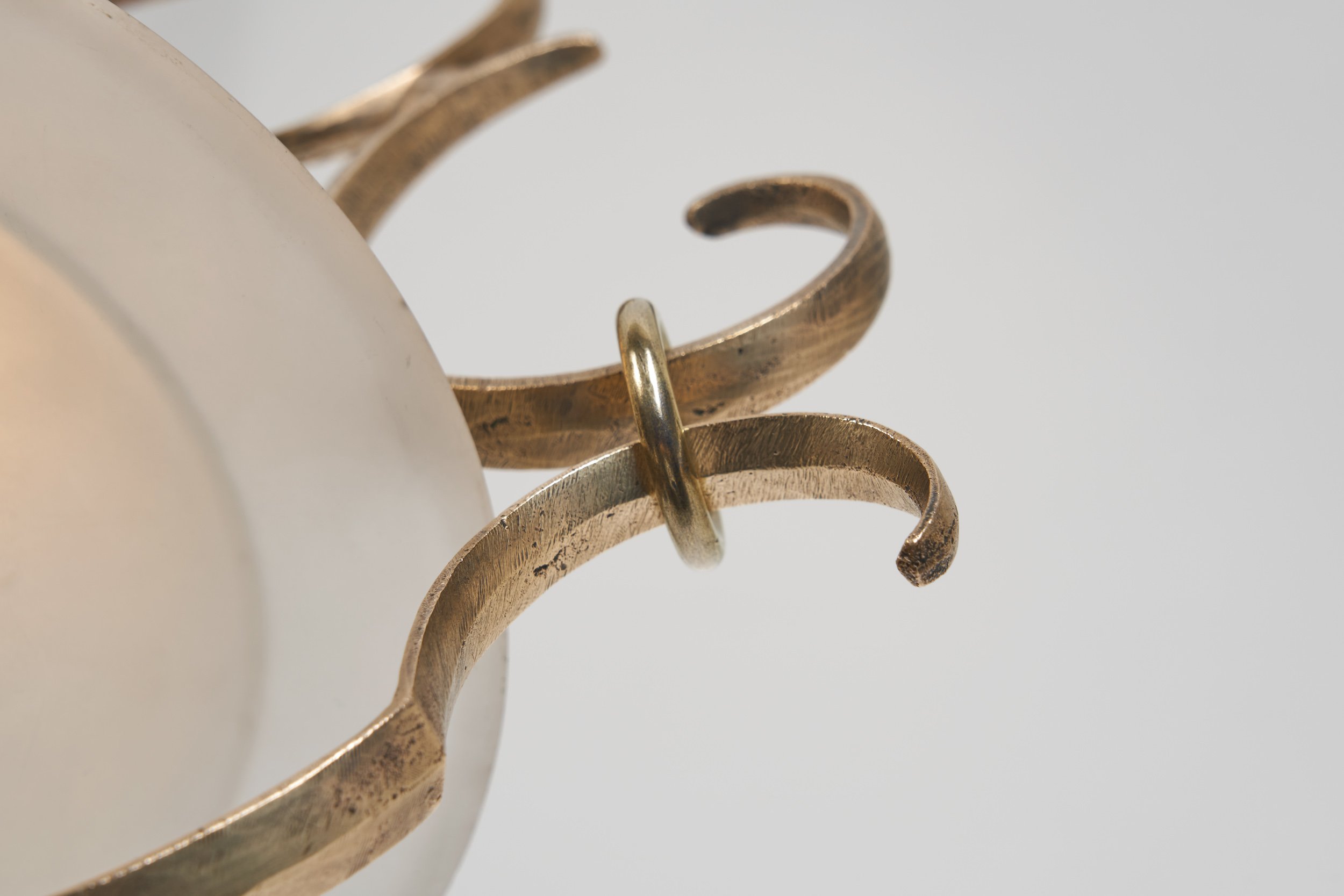
Model "1004" Brass Chandelier with Glass Shade by Paavo Tynell for Taito, Finland 1930s
REQUEST PRICE HERE
Price category: usd / eur
Condition:
In good vintage condition. Wear consistent with age and use. The chandelier has recently been reconditioned. Brass may have some marks, scratches, and discolouration. Additional imperfections on the glass may be present due to manufacturing inconsistencies and age. The brass is patinated. This lamp is compatible with an E27 standard fitting. All lighting can be converted for US usage.
Dimensions:
12.2 in W × 8.1 in D × 27.2 in H
31 cm W x 20.5 cm D x 69 cm H
REQUEST PRICE HERE
Price category: 2,500 - 5,000 usd / eur
By the 1950s, Finland had established itself as a force for innovation in design. The best qualities of Finnish light fixtures are their atmospheric light and disciplined, functionalist form that is not short of unique decorative elements.
This elegant, sculptural lamp is a distinctive piece exemplifying Finland’s artistic design language. In addition to the aesthetic dimension, the quality of the lamp is also true to it's Finnish heritage; it is a testament to the era's emphasis on proportionality and aesthetic balance. This chandelier features a delicate frame that has been expertly designed to showcase the five glass shades and the curved arms in a multilayered cluster. The upward-facing glass shades are placed at the end of the three arms and have a milky appearance that diffuses the light beautifully, creating a warm and inviting atmosphere in any room. One of the defining features of mid-century lighting is its marriage of functionality and aesthetics; the era's designers believed that a well-designed lighting fixture could serve a practical purpose while also acting as a piece of art, and this chandelier is a testament to this sentiment. Moreover, brass was very much one of the most popular materials of the mid-century era, and when combined with glass, a sleek shiny look can be created, like this model exemplifies. This material duo makes sense from both a functional and visual standpoint. Not only is brass corrosion-resistant and durable, but it withstands the test of time, developing a beautiful patina as the years go by.
This stunning mid-20th century chandelier was made at the esteemed company, Idman Oy. Established in 1936 in Turku, Finland, Idman Oy was renowned for its exceptional metalwork and craftsmanship. This chandelier’s expert craftsmanship and unique character make it a timeless evidence of the golden age of mid-century Finnish lighting design.
Condition:
In good vintage condition. Wear consistent with age and use. The chandelier has recently been reconditioned and rewired. Due to the nature and age of the materials, the item may have marks, scratches, and discolouration. This lamp is compatible with an E26 / E27 (standard) fitting. All lighting can be converted for US usage.
Dimensions:
13 in W x 13 in D x 19.30 in H
33 cm W x 33 cm D x 49 cm H
REQUEST PRICE HERE
Price category: 2,500 - 5,000 usd / eur
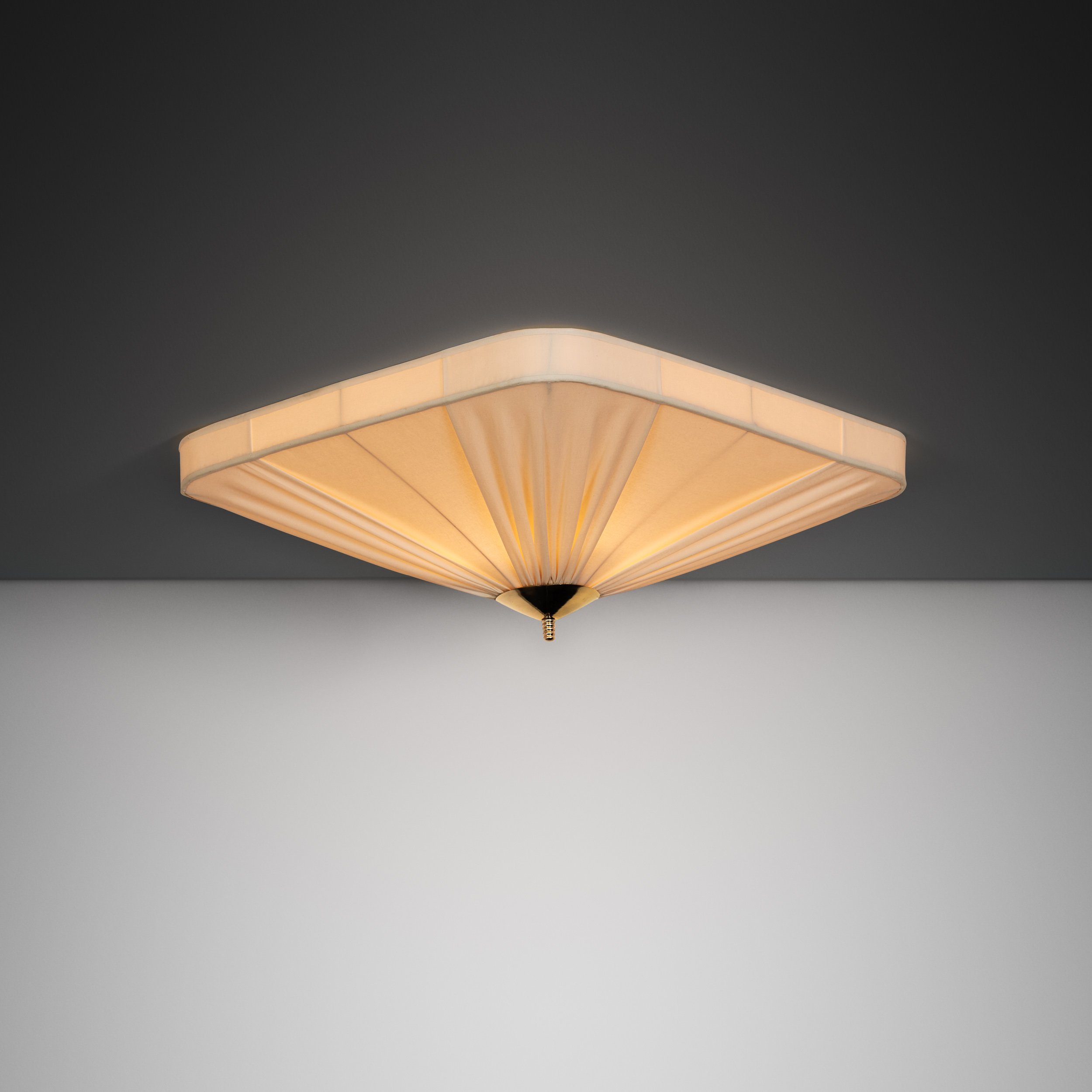
Mid-century Finnish lighting managed to balance decorative softness with the restrained practicality. Rather than relying on heavy ornamentation, designers focused on atmosphere, proportion, and the subtle interaction between materials and light. Fixtures from this period often combined clean geometric forms with textile or opaline surfaces that softened the light and created a warmer domestic atmosphere.
This ceiling lamp sets itself apart through its elegant pleated form and restrained use of brass. The shade expands outward into a broad, rectangular silhouette with softly tapered sides, creating a geometry that feels both architectural and delicate. The pleated fabric introduces rhythm across the surface, drawing the eye toward the small brass finial beneath the centre of the fixture. When illuminated, the textile diffuses the light warmly, allowing the folds to become more pronounced and giving the lamp a gentle glow. The material feels organic, yet elegant with its flowing contours. The brass detail acts as a visual anchor within the composition, offering a subtle contrast against the softness of the fabric shade, and drawing the eye in. Despite the relatively simple construction, the interplay between the structured shape and the textile surface gives the lamp a distinctive presence.
Mounted close to the ceiling, the lamp provides a calm and balanced source of light. It represents a strong decorative detail without taking up a lot of space, thus being appropriate for interiors of various sizes. Although regardless of where it is placed, this piece is sure to bring warmth and subtle sculptural to a room.
Condition:
In good vintage condition. Wear consistent with age and use. The lamp has recently been rewired and reconditioned. Due to the nature and age of the materials, the item may have marks, scratches, and discolouration. The shade was custom made by our in-house atelier. The lamp is compatible with an E26 / E27 (standard) fitting. All lighting can be converted for US usage.
Dimensions:
24.21 in W x 24.21 in D x 8.28 in H
61.5 cm W x 61.5 cm D x 21 cm H
REQUEST PRICE HERE
Price category: 2,500 - 5,000 usd / eur
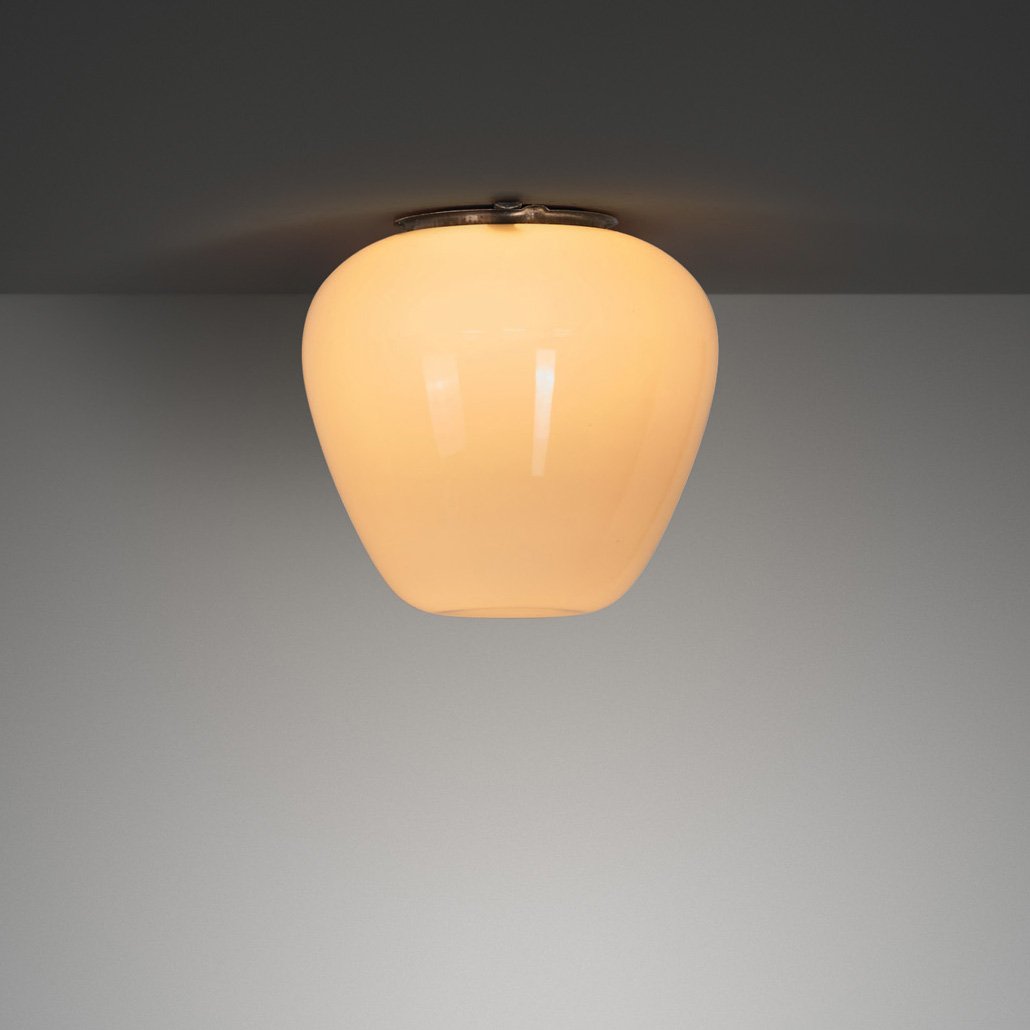
Gunnel Nyman (19 September 1909 – 7 October 1948) was a Finnish glass and metal artist, and one of the leading figures of modern Finnish glass design. During the post-war era she transitioned to glassware and collaborated or worked on commission with various glassworks including Riihimäki, Karhula-Iittala and Nuutajärvi. She was also an advocate of early mass-produced glassware, with her work featuring organic lines and focusing on the characteristics of glass itself.
This ceiling lamp embodies the sleek and simple aesthetic that characterised Finnish design in the 1950s. Even in the absence of ornamentation, there was always an emphasis on interesting materials. Milk glass, appropriately named for its opaque or transparent ivory white tone, was first created in Venice in the 16th century, and was known as Lattimo. At that time, it was widely used for decorative purposes and continued to be popular during the 20th century, when the material was used for home accents to decorate households. This lamp has an eye-catching rounded cone shape, with a blunted end and soft edges. Thanks to the concealed ceiling holder, the piece is flush mounted, staying close to the ceiling and allowing the glass shade to remain the focal point of the design. Nyman was a master of working with milk glass, and her lamps of this material are some of her most sought-after designs. She considered material an essential factor in design. Form, proportion and decoration were only there to enhance the properties inherent in the material. The Finnish design blueprint that was set during the first few decades of the 1900s is based on characteristics that can be traced in this lamp model: functionality, an understated, unornamented design created from high quality materials - and most importantly, by a skilled craftsperson.
Although Gunnel Nyman’s career was cut short by an untimely death, she had enough time to give a new direction to Finnish glass design. At the Milan Triennial in 1951, Nyman was awarded the gold medal for glass posthumously.
Condition:
In good vintage condition. Wear consistent with age and use. The lamp has recently been reconditioned and rewired. Minor marks, scratches and imperfections on the glass may be present due to manufacturing inconsistencies and the age of the item. This lamp is compatible with an E(27) fitting. Due to the age of the lamp we recommend using LED bulbs.
Dimensions:
11.82 in ⌀ x 10.83 in H
30 cm ⌀ x 27.5 cm H
REQUEST PRICE HERE
Price category: 5,000 - 7,500 usd / eur
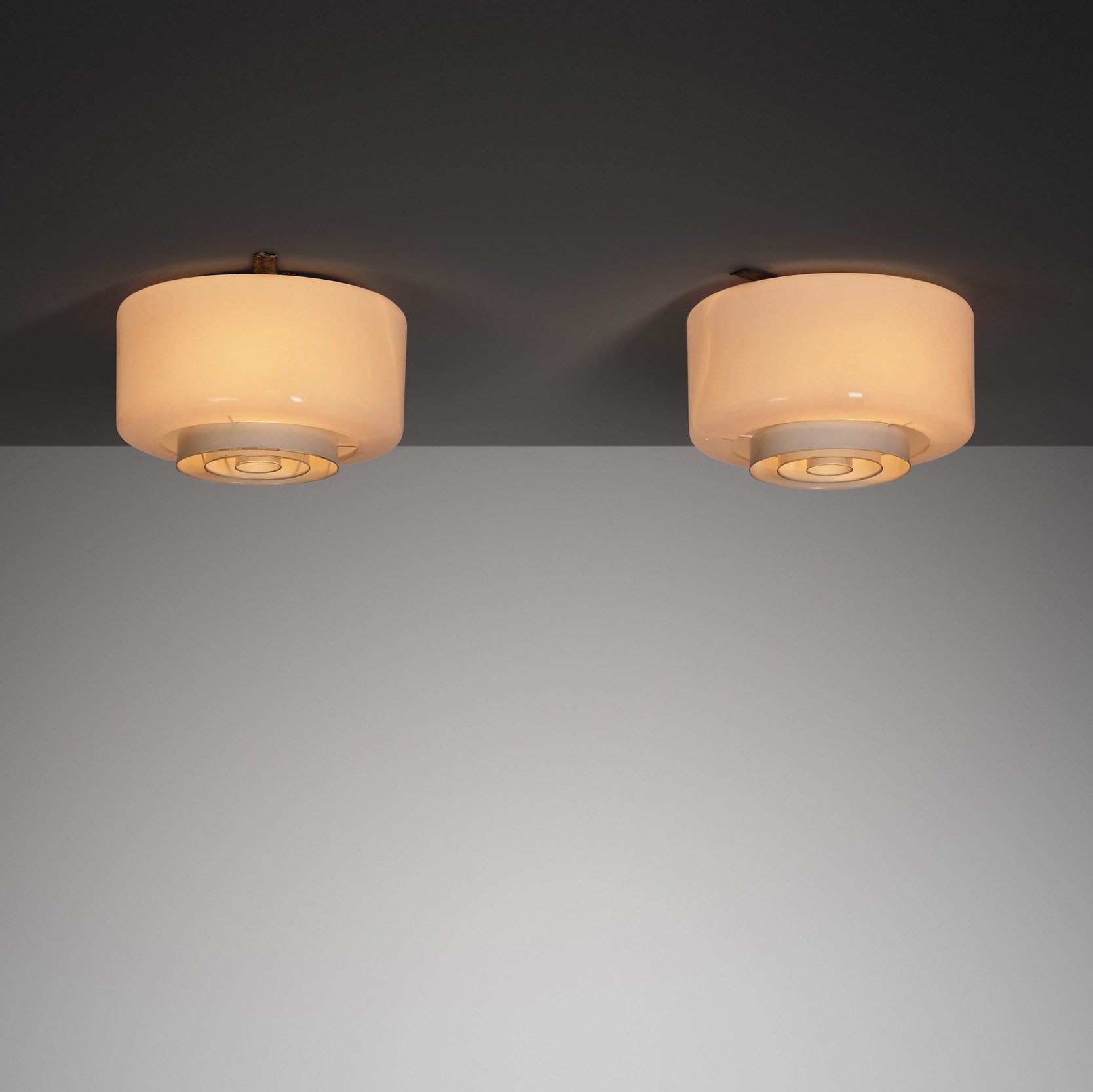
Finnish mid-century design is characterised by simple, elegant forms - which Paavo Tynell was a master of. Reflective of Finnish culture, he embraced timeless beauty, sustainability and a deep connection to the natural world. Tynell is one of Finland’s best known and most collected mid-century designers. He was a pioneer of European lighting design and a founder of the first lighting manufacturing company in Finland, Taito Oy.
Functionality and a pared down style are key principles for the Finnish icon. In the 1960s, he designed a number of iconic lamps that are still sought after today, including this opal glass ceiling lamp with the model number “A2-7”. With its sleek and simple aesthetic, and in the absence of heavy ornamentation, the emphasis falls on materials. Opal glass, appropriately named for its opaque or white tone, was first created by glass blowing houses in Venice in the 16th century. At that time, it was widely used for decorative purposes but continued to be popular during the 20th century. Milk glass was an extremely popular material for lighting fixtures in the mid-20th century, due in part to its ability to soften and diffuse light, as this pair demonstrates. To complement the model, three metal rings come together to create a distinctive element placed at the opening of the shade. Through its white colour, this detail provides an interesting visual point without overwhelming the design.
The 1960s was a decade of great innovation in Finnish design, as designers like Tynell pushed the boundaries of what was possible with new materials and manufacturing techniques. Tynell was a master of working with opal glass, and his lamps of this material are some of his most sought-after designs.
Condition:
In good vintage condition. Wear consistent with age and use. The lights have recently been rewired and reconditioned. Due to the nature and age of the materials, the items may have marks, scratches, and discolouration. Imperfections on the outer glass may be present due to the age of the material and manufacturing inconsistencies. The lamps are compatible with an E26 / E27 (standard) fittings. All lighting can be converted for US usage.
Dimensions:
9.64 in ⌀ x 5.31 in H
24.5 cm ⌀ x 13.5 cm H
About the designer:
Paavo Tynell (1890-1973) was an industrial designer, known as the great pioneer of Finnish lighting design and fondly dubbed as “the man who illuminated Finland”.
Tynell was one of the founders and chief designers of Taito Oy – the first industrial producer of lighting fixtures in Finland. With the innovation of electricity in the beginning of the 20th century, Taito Oy and Tynell expanded the thinking and manufacturing of modern lighting solutions in Europe and abroad.
Paavo Tynell rose to prominence in the 1930s and 40s where he collaborated with some of the most renowned Finnish architects, Alvar Aalto being the most notable one. Working to incorporate artificial lighting into modern environments, Tynell’s company Taito Oy produced fixtures for all of Alvar Aalto’s major projects including the Paimio Sanatorium and the Viipuri Library.
Tynell was especially appraised through his involvement with the Finland House, a design atelier in New York that showcased the work of Finnish designers and craftspeople. His elegant brass designs became an instant success in North America, and he began creating lighting designs for the prestigious American company Lightolier.
A master craftsman himself, Tynell’s designs were derivative of a traditional aesthetic with a modern sensibility, mixed with an extensive use of perforated and polished brass as material. Marked by delicacy and softness, his most famous forms in lightning echo the structures of nature; he adroitly created sculptural shapes reminiscent of the branches of trees, swirling snowflakes and seashells.
REQUEST PRICE HERE
Price category: 2,500 - 5,000 usd / eur
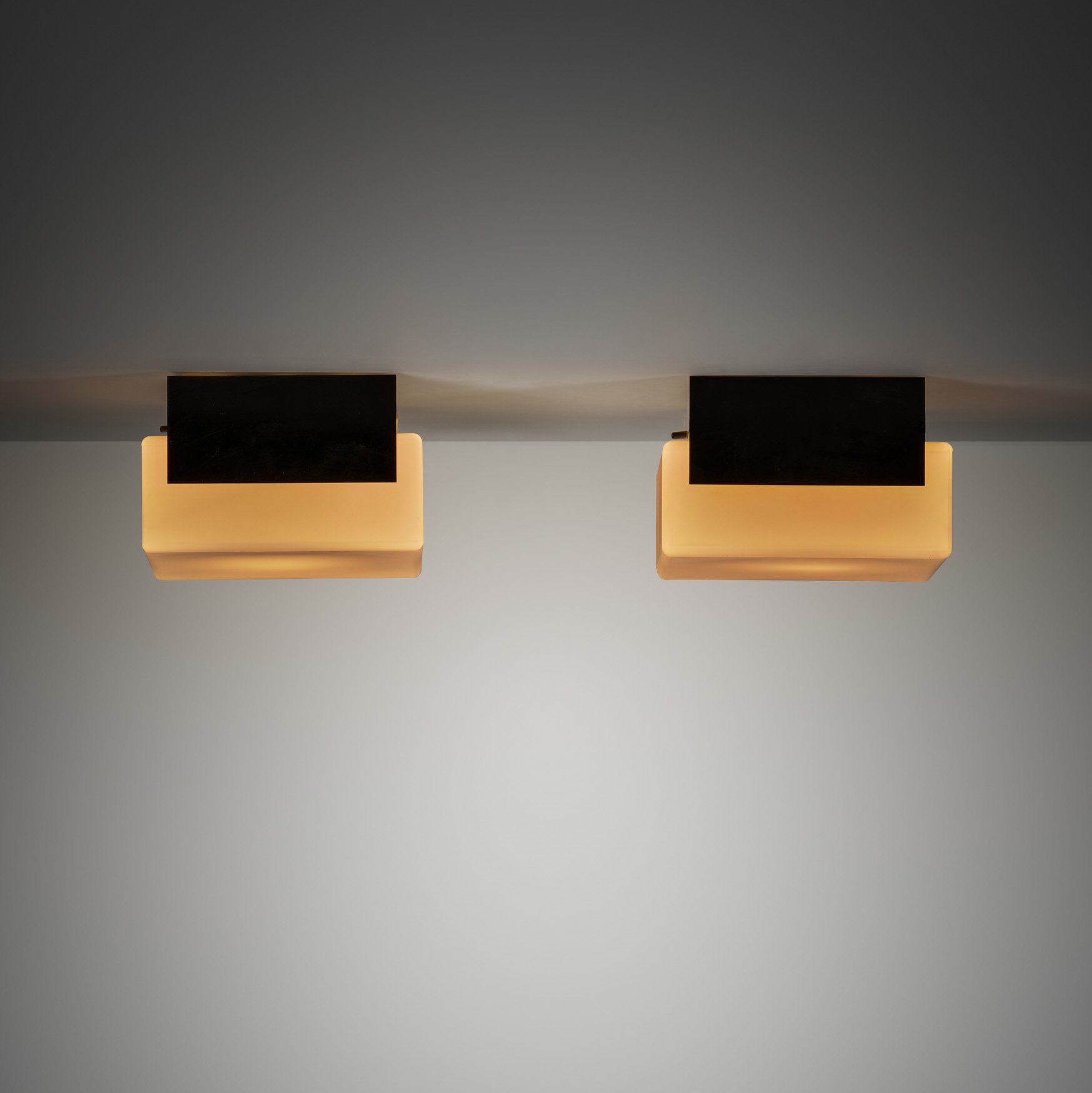
It is easy to dismiss the 1970s as "the decade that taste forgot" yet to overlook its contributions in architecture, furniture design and interior decorating is also a shortcoming. It was the period of transition from Mid-century modernism into Post-modernism, a bridge that these ceiling lamps visually exemplify.
During the 1970s, European lighting design in particular embraced industrial and geometric influences, using materials such as metal and glass to create minimalist yet visually engaging fixtures. These lights exemplify the movement's emphasis on modern materials and streamlined forms. The lights feature square milk glass shades, which provide soft, ambient illumination. This type of glass ensures the light is diffused gently, creating a warm, inviting atmosphere, while the sleek look of the black metal adds a touch of chromatic and textural contrast. The square, boxy shape of the lamps speak to the geometric influence of mid-century modern design, and highlights the uniqueness of the pair. The combination of milk glass and metal ensures that these lights not only serve as striking visual accents, but they maintain their functionality and appeal over time through the durability and timelessness of the materials. Thanks to the compact flush mount design, these lamps can integrate into a variety of interior settings.
These ceiling lights continue to embody the qualities of mid-century modernism that has made it one of the most sought after design movements to this day. The clean lines and understated look further ensure that the pair maintains its relevance and beauty for decades to come.
Condition:
In good vintage condition. Wear consistent with age and use.
Dimensions:
9.64 in W x 9.84 in D x 6.29 in H
24.5 cm W x 25 cm D x 16 cm H
REQUEST PRICE HERE
Price category: 2,500 - 5,000 usd / eur
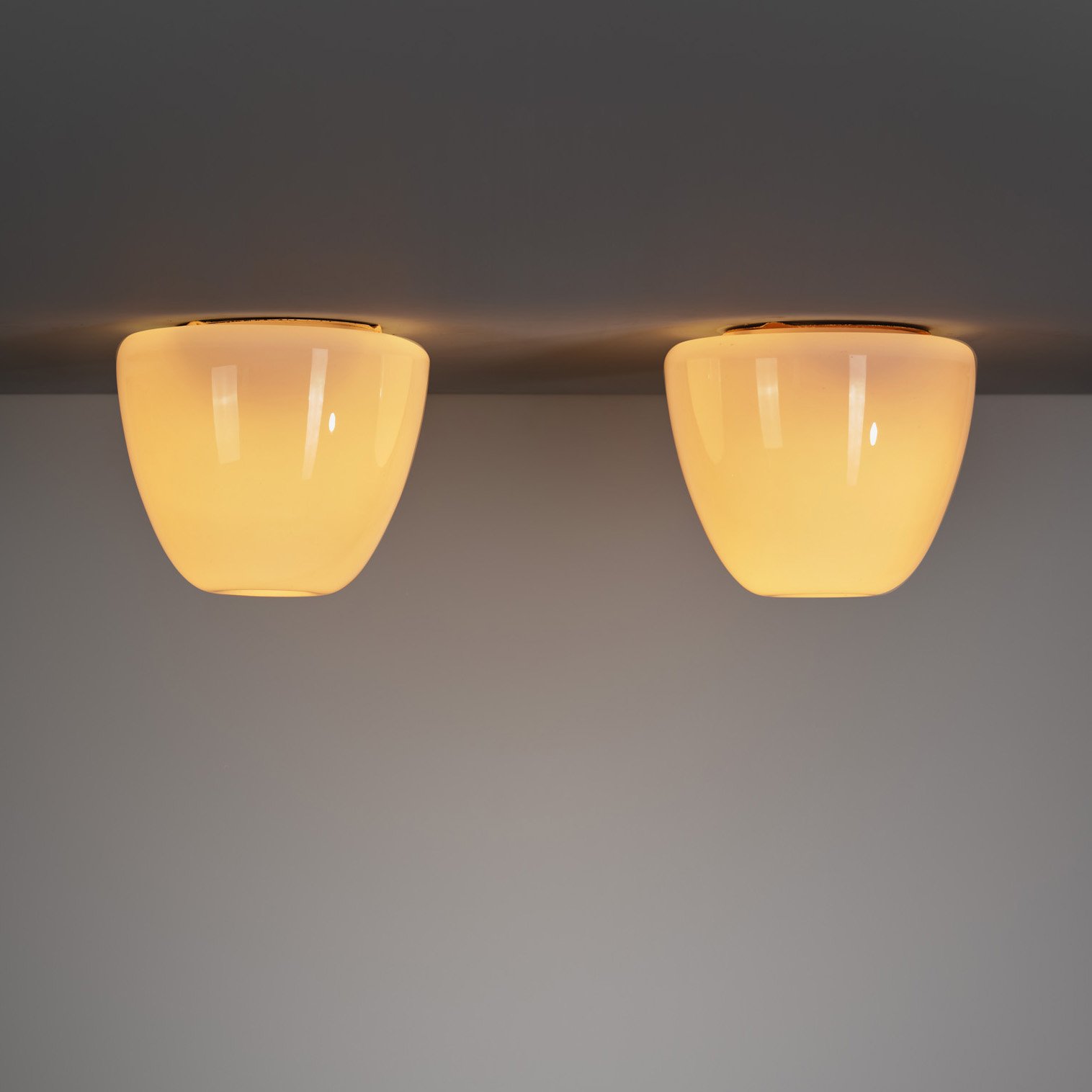
Gunnel Nyman (19 September 1909 – 7 October 1948) was a Finnish glass and metal artist, and one of the founders of modern Finnish glass design. She was also an advocate of early mass-produced glassware. Nyman's glassware is exhibited internationally in museums.
These ‘80115’ ceiling lamps embody the sleek and simple aesthetic that characterized Finnish design in the 1950s. Even in the absence of ornamentation, there was always an emphasis on interesting materials. Milk glass, appropriately named for its opaque or transparent pure ivory white tone, was first created in Venice in the 16th century, known as Lattimo. At that time, it was widely used for decorative purposes and continued to be popular during the 20th century, when the material was used for home accents to decorate households. These lamps have an eye-catching blunted cone shape, with the edges just as soft as the light they diffuse. Thanks to the concealed ceiling holder, the lamps are flush mounted without any exposed parts other than the glass shades. Nyman was a master of working with milk glass, and her lamps of this material are some of her most sought-after designs. She considered material an essential factor in design, to the point that - in her opinion - each object had only one material that it could be made from. Form, proportion and decoration were only there to enhance the properties inherent in the material. The Finnish design blueprint that was set during the first few decades of the 1900s is based on characteristics that can be traced in this lamp model: functionality, an understated, unornamented design created from high quality materials - and most importantly, by a skilled craftsperson.
Although Gunnel Nyman’s career was cut short by an untimely death, she had time enough to give a new direction to Finnish glass design. Her work foreshadowed the work of the 1950s and 1960s Finnish glass designers. At the Milan Triennial in 1951, Nyman was awarded gold medal for glass posthumously.
Condition:
In good vintage condition. Wear consistent with age and use. Marks due to the manufacturing process on the inner edges of the shades.
Dimensions:
9.85 in ⌀ x 8.66 in H
25 cm ⌀ x 22 cm H
REQUEST PRICE HERE
Price category: 7,500 - 10,000 usd / eur
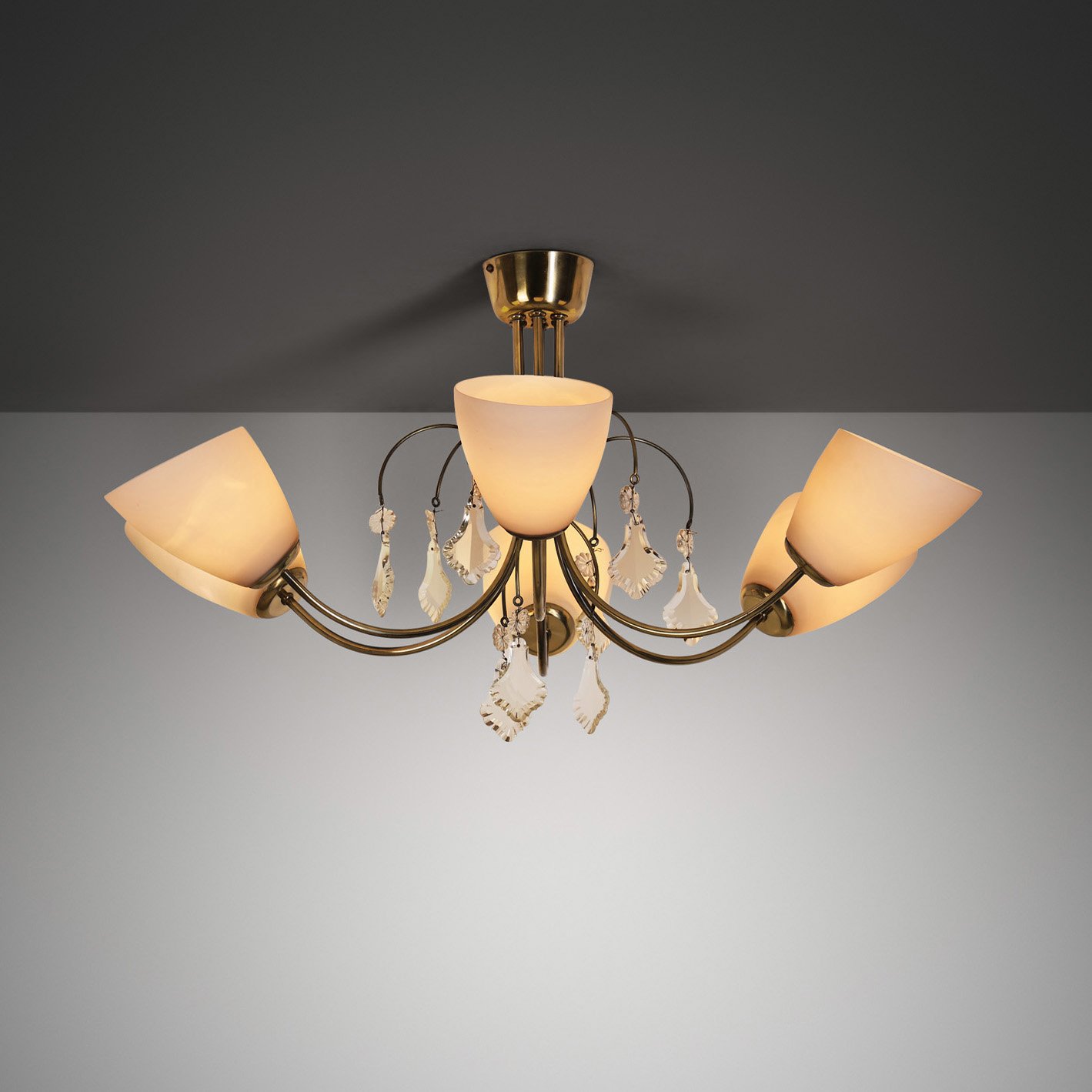
Paavo Tynell is widely regarded as one of the defining figures of Finnish lighting design in the twentieth century, known for his ability to merge metal craftsmanship with a refined, sense of form. As the founder and leading designer of Taito Oy, and later through his collaboration with Idman, Tynell developed lighting fixtures that combined technical precision with decorative lightness.
Model “K1-12” reflects the designer’s characteristic approach of pairing elegant materials with a carefully balanced composition. This chandelier combines brass and glass, and is defined by its graceful, radial structure and the interplay between solidity and delicacy. The central brass body extends outward with gently curving arms, each supporting an opaline glass shade. The shades diffuse the light evenly, creating a warm and inviting glow. The brass frame provides both structure and visual rhythm, with each arm contributing to a balanced, symmetrical composition. Suspended from the stem are small decorative crystal elements, which introduce a subtle sense of movement and catch the light in a delicate manner. This detail adds a layer of ornamentation without disrupting the overall clarity of the design. The combination of polished brass and matte glass is central to the chandelier’s character: the metal reflects and amplifies light, while the glass softens it. The proportions are carefully thought-out, allowing the chandelier to function as both a source of illumination and a focal point.
What distinguishes this model is the way it incorporates decorative elements within a timeless look. This balance gives the piece a distinctive presence without making it overly ornate. As such, it stands as a strong example of Tynell’s ability to elevate functional lighting into a carefully composed object.
Condition:
In good vintage condition. Wear consistent with age and use. The item has recently been rewired and reconditioned. Due to the nature and age of the materials, the item may have marks, scratches, and discolouration.
Dimensions:
37.79 in ⌀ x 15.75 in H
96 cm ⌀ x 40 cm H
REQUEST PRICE HERE
Price category: 2,500 - 5,000 usd / eur
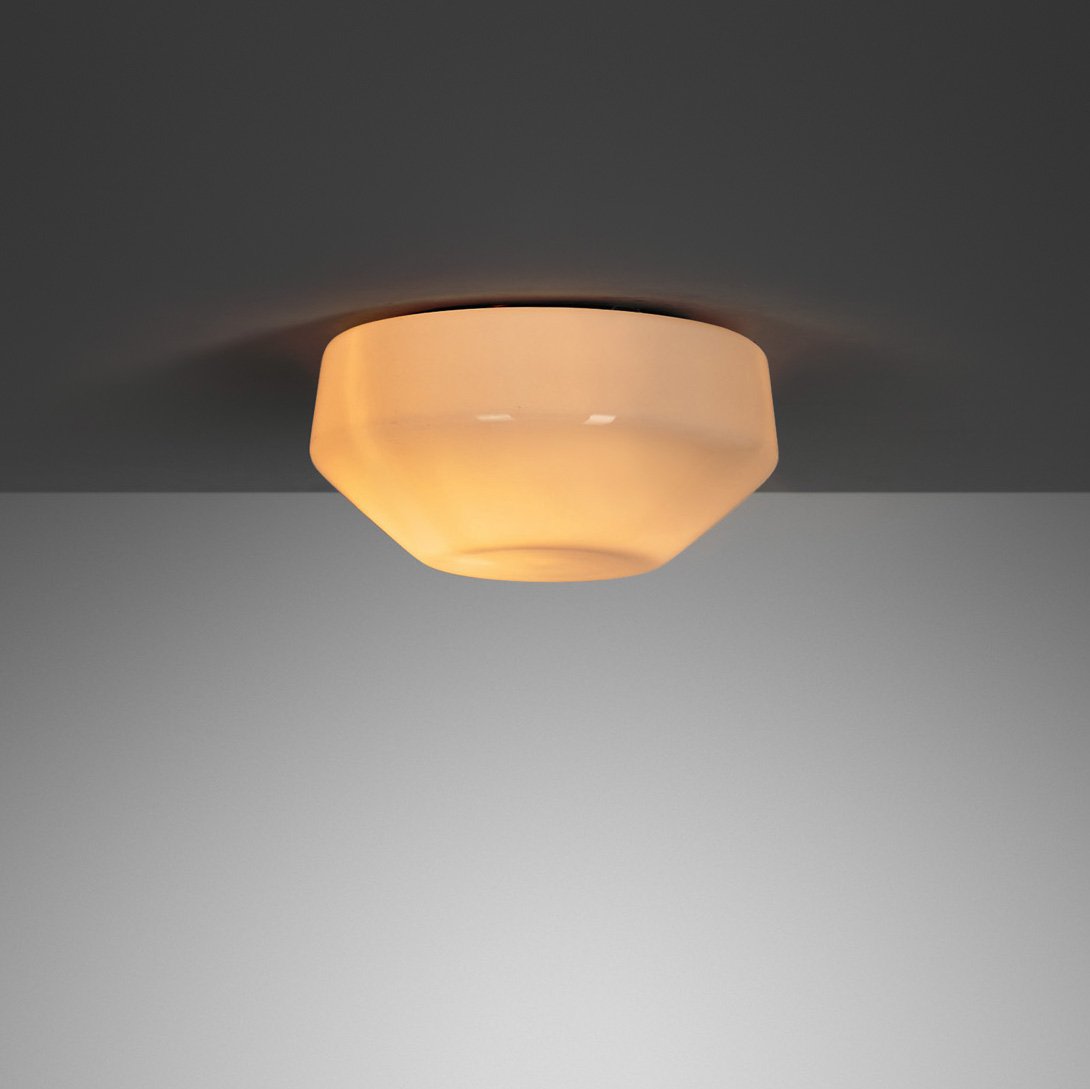
Sähköliikkeiden Oy was a Finnish lighting manufacturer founded in the mid-1940s, and produced practical domestic lighting during a period when design in Finland was becoming increasingly focused on clarity and function rather than ornament. Their work sits alongside the broader mid-century Scandinavian approach, where lighting was treated as part of everyday architecture rather than exclusively decoration.
This model “1010” ceiling lamp follows that logic thanks to its compact, flush-mounted structure that sits close to the ceiling. The form is built around an opal glass diffuser that has a slightly conical and rounded profile that gives it subtle depth without becoming visually heavy. The glass conceals the bulb while spreading light evenly across the surrounding area. The mounting system remains discreet, allowing the focus to stay on the glass form itself rather than on visible hardware or detailing. The use of opal glass is central to the piece. The diffuser softens the glow and disperses it, creating a more ambient and balanced illumination. The relatively small diameter and shallow projection also mean it can be used in tighter spaces without disrupting the proportions of the room.
Visually, the "1010" is defined by its simplicity and sleek look. The rounded geometry of the glass gives it a calm, almost architectural presence, while the lack of ornament keeps it from feeling dated or overwhelming. The connection to mid-century Finnish design is clear in its restraint and practicality, making it a great versatile choice.
Condition:
In good vintage condition. Wear consistent with age and use. The lamp has recently been rewired and reconditioned. Minor marks. Due to the nature and age of the materials, the item may have scratches, and discolouration. Additionally, the glass may have imperfections due to manufacturing inconsistencies. This lamp is compatible with an E26 / E27 (standard) fitting. All lighting can be converted for US usage.
Dimensions:
9.84 in Ø x 5.32 in H
25 cm Ø x 13.5 cm H
REQUEST PRICE HERE
Price category: 2,500 - 5,000 usd / eur
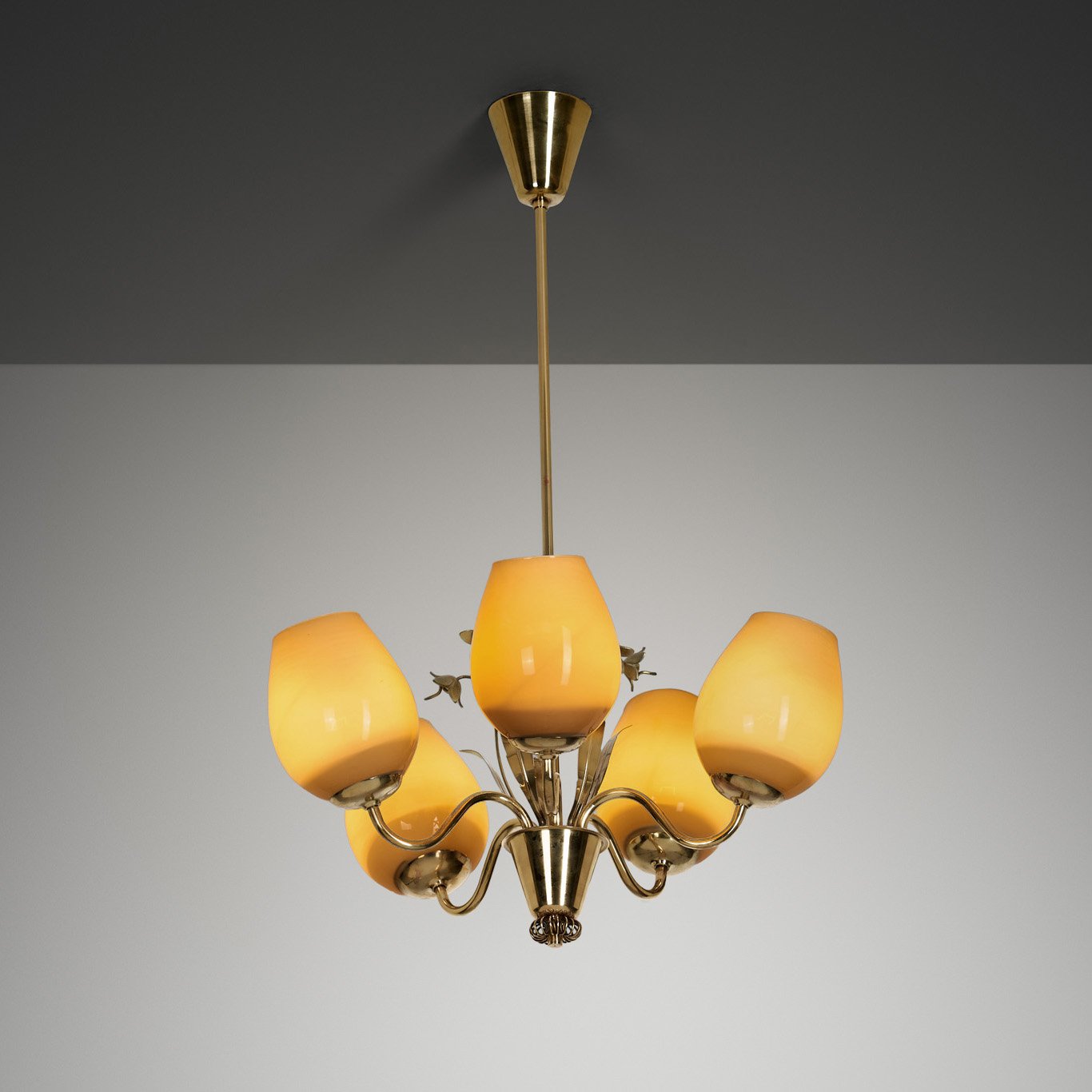
Scandinavian lighting design in the 1950s was shaped by a careful balance between functional clarity and decoration. In Finland especially, manufacturers such as Sievä Oy contributed to this development by producing luminaires that combined traditional craftsmanship with emerging modernist elements. Based in Helsinki, Sievä Oy created lighting for both domestic interiors and public spaces, often working with materials like brass and opaline glass to achieve a warm, atmospheric quality of light.
While Finnish modernism is often associated with restraint, pieces like this chandelier demonstrate how designers also embraced subtle ornamentation, integrating expressive details within the composition. This ornamental model is defined by its elegant five-arm construction and the harmonious relationship between its materials. The polished brass frame forms the structure of the piece, with a central stem extending downward into the arms. These arms branch outward in a balanced, curved form, each supporting a rounded opaline glass shade. The glass shades emit a warm glow, while their form introduces a sense of softness that contrasts with the sleek metalwork. Small decorative floral details adorn the stem, offering the construction a unique charm. Brass, the material of choice for many mid-century lighting pieces, catches the light, creating a layered illumination that is both functional and atmospheric. The proportions are carefully considered, with the compact cluster of shades balanced by the slender stem above.
Rather than relying on excess ornament, this chandelier merges decorative elements with a clear structure. This approach reflects a broader tendency in Finnish mid-century design, where elaborate pieces maintain a sense of restraint and cohesion. Today, ceiling lamps by Sievä Oy are appreciated for this balance, offering both sculptural presence and practical illumination.
Condition:
In good vintage condition. Wear consistent with age and use. The lamp has recently been rewired and reconditioned. Minor marks on the decorative elements. Due to the nature and age of the materials, the item may have scratches, and discolouration. Minor imperfections on the glass may be present due to manufacturing inconsistencies and age. This lamp is compatible with an E26 / E27 (standard) fitting. All lighting can be converted for US usage.
Dimensions:
18.50 in ø x 27.17 in H
47 cm ø x 69 cm H

REQUEST PRICE HERE
Price category: 30,000 - 40,000 usd / eur
These marvellous chandeliers are a rarity from Swedish designer, Holger Johansson, who created them for his own company, Westal. With a brass frame holding 12 translucent bubble glass shades, grandiose and stylish are the words to describe these models by.
Each chandelier has a brass frame consisting of a long, straight brass pole holding 12 shades arranged on three levels; three on the top and bottom, and six on the middle level. This airy arrangement allows the glass spheres to stand out without making the design look cluttered. The shades each sit at the end of a curved brass pole and face upwards unlike most other models from Johansson, making this particular model stand out in the designer’s impressive repertoire. Thanks to the arrangement of the brass poles and bulbs, the chandeliers divide the light over three levels, illuminating their surroundings in golden light. When switched on, the light coming from the shades brighten the yellow brass and highlight the glass bubbles beautifully. Commonly associated with old glass, the modern bubble glass techniques consist of intentionally creating bubbles for artistic effect. Controlled bubble glass as seen here, also known as “Bolle” or “Bullicante”, is glass that’s embedded with bubbles. The chandeliers’ manufacturer, the Swedish company Westal, is a historic company founded by Holger Johansson in 1947, the same year the first TV test broadcast happened in Sweden. These chandeliers have all the characteristics Johansson was famous for: they are elegant and stylish and while the design allows them to be big and shiny, they never become tacky.
The best qualities of Swedish mid-century designers’ light fixtures are most often their atmospheric light, disciplined, functionalist design completed by unique solutions and design elements. Exemplified by these chandeliers, these qualities are not only timeless, but also ever so eye-catching.
Condition:
In good vintage condition. Wear consistent with age and use.The brass has some minor marks and scratches.
Dimensions:
29.13 in W x 27.95 in D x 56.1 in H
74 cm W x 71 cm D x 142.5 cm H
REQUEST PRICE HERE
Price category: 7,500 - 10,000 usd / eur
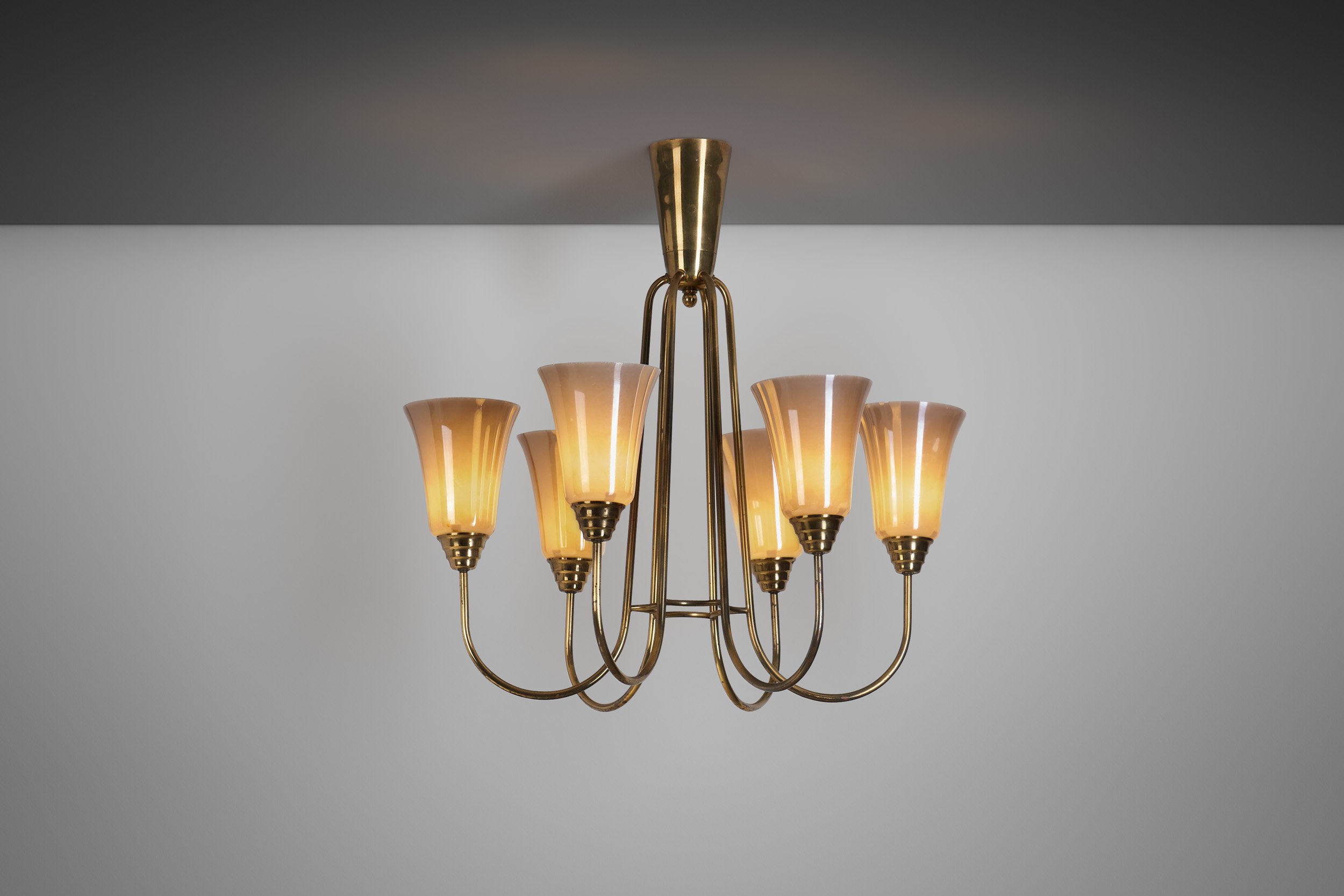
By the 1950s, Finland had firmly established itself as a force for innovation in design. The most distinctive qualities of Finnish light fixtures are their functionalist form that is not short of subtle decorative elements, adding a cozy, atmospheric glow.
Not only were Finnish models beautifully decorated, the ornamental elements were also quite distinctive compared to other European models. With its iconic mid-century design, this 'ER 68/6' chandelier effortlessly captures the essence of the era's aesthetic, marrying form and function in a timeless piece that complements both modern and vintage interiors alike. Crafted with meticulous attention to detail, the 'ER 68/6' chandelier boasts a sleek brass frame that exudes understated elegance. Its graceful silhouette features six opal glass shades delicately nestled within the brass frame, casting a soft, inviting glow that transforms any room into a sanctuary of style and ambiance.
The chandelier's design is a testament to the mid-century aesthetic, characterized by clean lines and a harmonious balance of materials. Its timeless appeal makes it a versatile addition to a variety of interior styles.
Condition:
In good vintage condition. Wear consistent with age and use. The brass has a beautiful patina. Shades are a later replacement.
Dimensions:
24.8 in ⌀ x 24.61 in H
63 cm ⌀ x 62.5 cm H
REQUEST PRICE HERE
Price category: 5,000 - 7,500 usd / eur
It is simply impossible to talk about 20th century Finnish lighting design without mentioning Paavo Tynell. Widely referred to as “The Man who Illuminated Finland”, Tynell not only founded Oy Taito AB, he also founded an unmistakeable aesthetic and created hundreds of individual lighting models.
His world-renowned and often extremely rare works are mostly formed from perforated and polished brass, however, his early lamps had a chandelier inspired design and during the 1920s, the use of glass became an increasingly important part of his lamps. This model is special for a number of reasons besides its rarity. Firstly, the material: Tynell mostly only used wrought iron in the earlier phase of his career, designing richly decorated chandeliers that preceded the modernist movement’s widespread influence. Secondly, like many of his creations, this “1709” model might have been a one-off, designed for a specific place. Thirdly, very few of his iron models were paired with glass shades. Here, the upward facing glass shades are placed at the end of the four arms. Their gently rounded shape and colour stand out beautifully against the black iron and the richly decorated body. On the list of decorative elements are the ring on the finial, the rod adorned with floral elements, the curves of the arms, and finally, the way the rod connects to the canopy. These features make this chandelier an early example of Tynell’s expressiveness that drew inspiration from previous design movements and eras.
Tynell was a master of peculiar decorative elements that never feel tacky or excessive and this is mainly thanks to his great sense of balance. In 1918 Tynell founded Oy Taito AB, which eventually became the Finnish lighting industry trendsetter during the interwar period. This rare chandelier model from the 1930s can easily draw all the attention while not compromising on quality and functionality.
Condition:
In good vintage condition. Wear consistent with age and use.
Dimensions:
23.23 in Ø x 29.13 in H
59 cm Ø x 74 cm H
About the designer:
Paavo Tynell (1890-1973) was an industrial designer, known as the great pioneer of Finnish lighting design and fondly dubbed as “the man who illuminated Finland”.
Tyne was one of the founders and chief designers of Taito Oy – the first industrial producer of lighting fixtures in Finland. With the innovation of electricity in the beginning of the 20th century, Taito Oy and Tynell expanded the thinking and manufacturing of modern lighting solutions in Europe and abroad.
Paavo Tynell rose to prominence in the 1930s and 40s where he collaborated with some of the most renowned Finnish architects, Alvar Aalto being the most notable one. Working to incorporate artificial lighting into modern environments, Tynell’s company Taito Oy produced fixtures for all of Alvar Aalto’s major projects including the Paimio Sanatorium and the Viipuri Library.
Tynell was especially appraised through his involvement with the Finland House, a design atelier in New York that showcased the work of Finnish designers and craftspeople. His elegant brass designs became an instant success in North America, and he began creating lighting designs for the prestigious American company Lightolier.
A master craftsman himself, Tynell’s designs were derivative of a traditional aesthetic with a modern sensibility, mixed with an extensive use of perforated and polished brass as material. Marked by delicacy and softness, his most famous forms in lightning echo the structures of nature; he adroitly created sculptural shapes reminiscent of the branches of trees, swirling snowflakes and seashells. ~H.