
Danish Cabinetmaker Oak Armchairs with Upholstered Cushions, Denmark 1940s


Danish Cabinetmaker Oak Armchairs with Upholstered Cushions, Denmark 1940s
REQUEST PRICE HERE
Price category: 5,000 - 7,500 usd / eur
Most of the stunning minimalist designs from the turn of the century to the 1960s, termed "mid-century", captured the imagination of the world, especially Danish architect-designers’ whose creations of the era set the high bars for design.
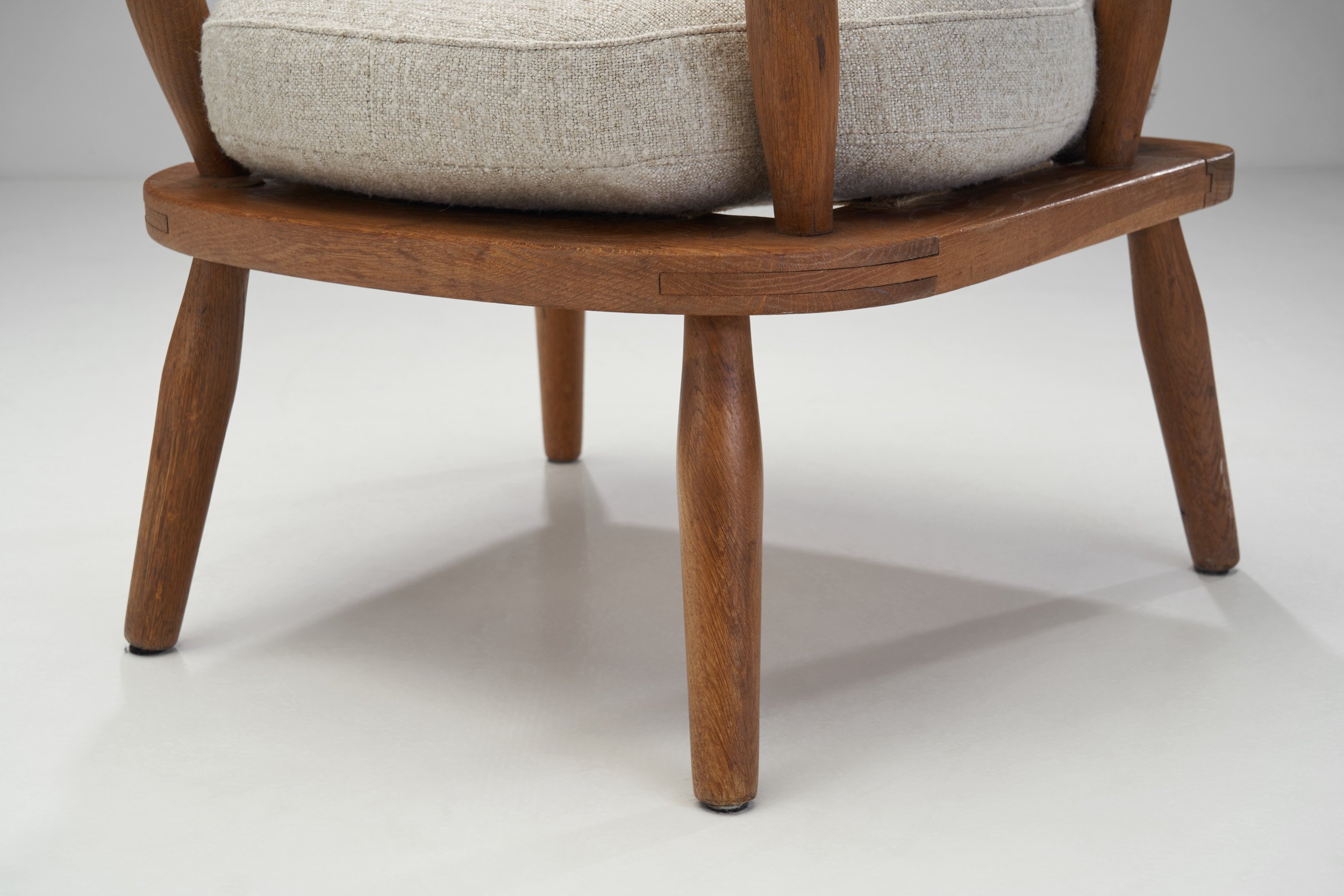
The solid oak frames clearly indicate the designer’s knowledge of the human body. Massive and airy at the same time, the frames feature subtle design elements, such as the curved armrests, and the tilted backrests with parallel stretchers. While many Swedish designers stormed against functionalism in the 1940s, their ideas often coincided with the rational and frugal style ideals nonetheless. This can be perfectly observed in these armchairs. The design element that stands out the most is the minimalistic, straight seat that serves as a base for the plump, upholstered seat cushion in a wool blend fabric. Thanks to this, the chairs appear light despite the solid wooden bodies. This visual element creates an air of stylish calmness that is often associated with Scandinavian design.
The Danish design idiom was centred on warm woods, buttery fabrics, and gentle yet robust support for the spine - qualities that engender contentment and well-being, a defining characteristic of Danish culture. These chairs are therefore perfect examples of the early phase of the mid-century modern movement with a timeless design.
Condition:
In good vintage condition. Wear consistent with age and use. The seat cushions have been reupholstered recently in a premium wool blend fabric. Each of our items can be re-upholstered by our in-house atelier in a fabric of choice. Please reach out for more information.
Dimensions:
24.01 in W x 26.37 in D x 31.1 in H; Seat height 16.53 in
61 cm W x 67 cm D x 79 cm H; Seat height 42 cm
About the Designer:
This Danish-made sofa reflects the core traditions and ideals of Danish design. Mid-century pieces such as this sofa were of great design, using fantastic wood like teak or beech. The era was the heyday of the production by master craftsmen.
Mid-century Danish design is world-famous for the partnership between designer and manufacturer, resulting in ground-breaking creations. A master cabinetmaker is not a carpenter, as this was a rare breed of craftsman who had to be recognized by the Danish government after several years of toiling at his craft, as well as having to ace gruelling design competitions before becoming a master cabinetmaker. Since Denmark was a special instance of tempered industrialization, it managed to preserve sound traditions and continue to safeguard values of craftsmanship, materiality and usability.
Today, Danish furniture is sought after by collectors for its classic looks, storied designs and solid quality, works that are truly soulful and timeless. ~H.


REQUEST PRICE HERE
Price category: 12,500 - 15,000 usd / eur
The “Laila” model by the Finnish designer, Ilmari Lappalainen, originates from 1948, with the earliest original drawings kept in the Lahti City Museum in their Lappalainen Collection.
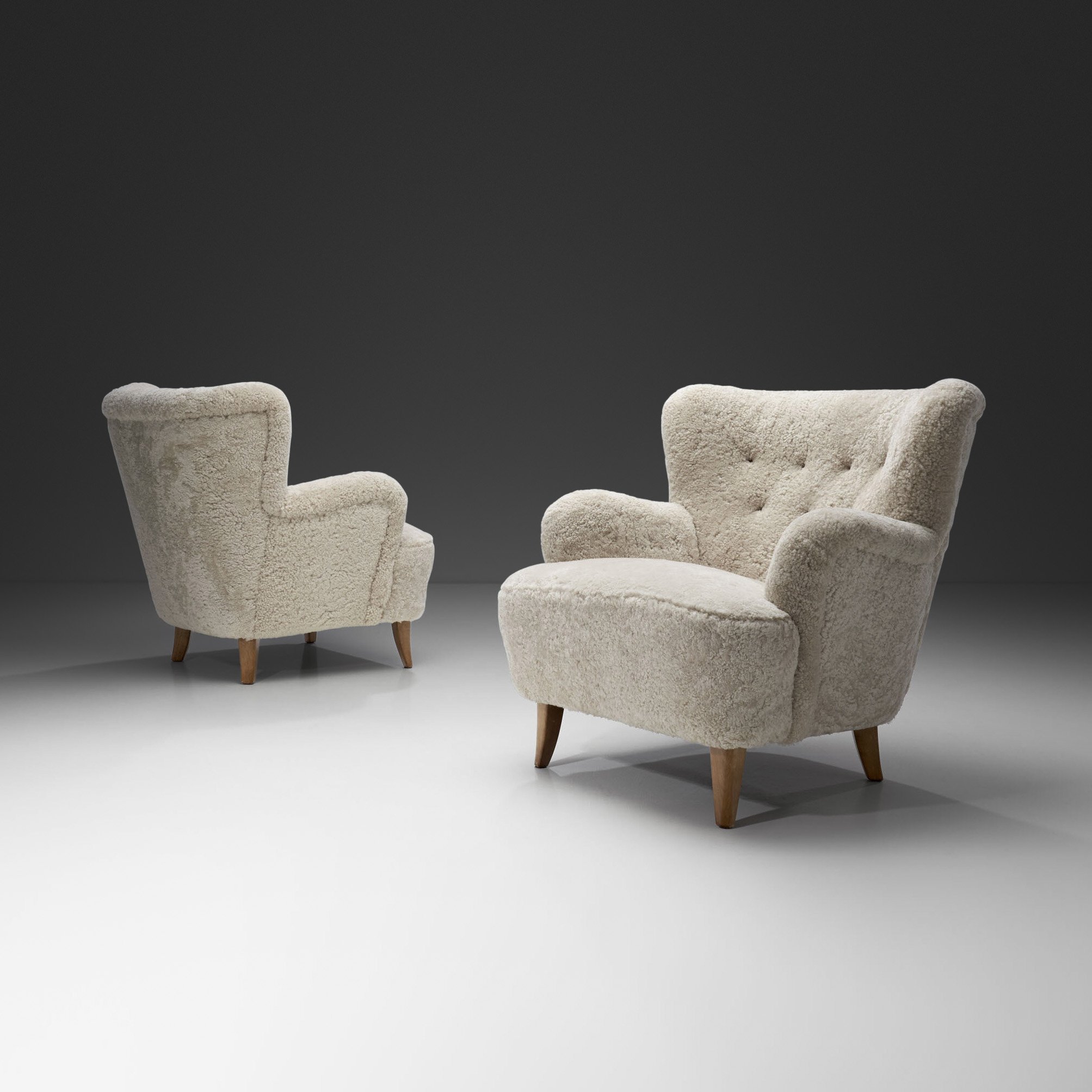
This pair of armchairs are from the Finnish designer’s most famous series called “Laila”. The design became sought after by collectors even in its production time, which is quite rare in the case of Nordic mid-century modern furniture. Lappalainen was a renowned designer, famous for his designs’ comfort. Some of his designs even received medical approval because they had such a good seating, that it prevented back problems. These armchairs have a cosy modern style, modelled on the Swedish and Danish furniture of the time, including the round edges and generous seat cushions and back with five tufted buttons. The bodies have the classic Nordic look, which explains the contemporary popularity of these armchairs both among the public and museums. The modern aesthetic is further elevated by the soft sheepskin upholstery that complements the shape and the wooden, tapered legs as well.
Wood is omnipresent in the Nordics, and Finnish woodworking is world-famous for its traditions. These chairs were created for Asko, the Finnish furniture manufacturing company founded in 1918 by Aukusti Asko Avonius, known for the production of high-quality furniture. By 1930, the company had developed into the largest furniture chain in Finland and the largest supplier of furniture in the Scandinavian countries. Favourites of this time included Ilmari Lappalainen’s present Laila armchairs.
Condition:
In good condition. Wear consistent with age and use. Due to the nature and age of the material, the chairs may have some marks, scratches, and discolouration. The chairs have been reupholstered recently in premium sheepskin. Each of our items can be reupholstered by our in-house atelier in a fabric of choice. Please reach out for more information.
Dimensions:
32.67 in W x 34.64 in D x 34.44 in H; Seat height 17.71 in
83 cm W x 88 cm D x 87.5 cm H; Seat height 45 cm