
“Laila” Armchairs in Sheepskin by Ilmari Lappalainen for Asko, Finland 1950s


“Laila” Armchairs in Sheepskin by Ilmari Lappalainen for Asko, Finland 1950s
REQUEST PRICE HERE
Price category: 12,500 - 15,000 usd / eur
The “Laila” model by the Finnish designer Ilmari Lappalainen originates from 1948, with the earliest original drawings kept in the Lahti City Museum in their Lappalainen Collection. This model is without a doubt, the designer’s most celebrated seating model thanks to its classic, yet distinctive shape and upholstered body.
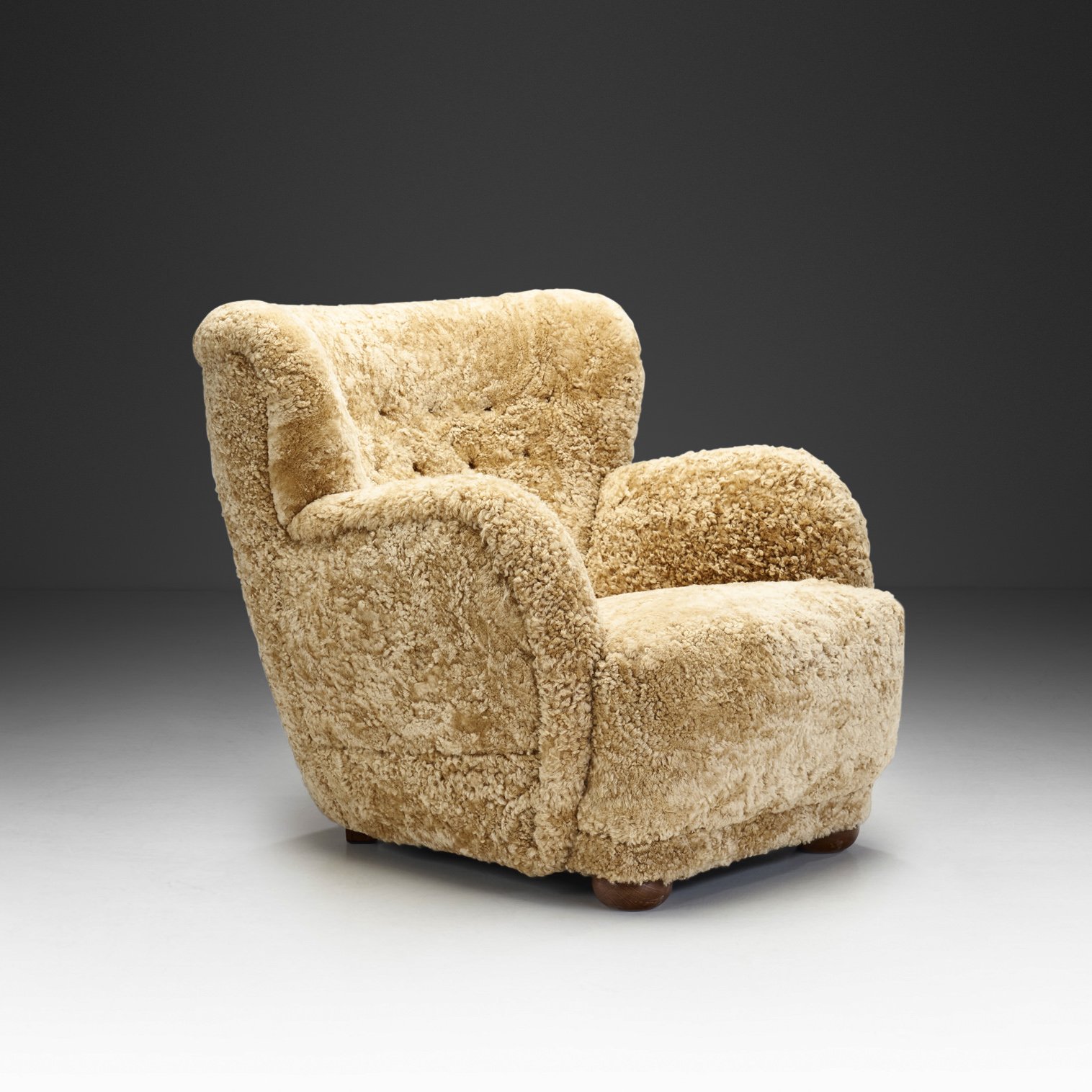
This pair of “nr. 238” armchairs are from the Finnish designer’s most famous series called “Laila”. The design became sought after by collectors even in its production time, which is quite rare in the case of Nordic mid-century modern furniture. Lappalainen was a renowned designer, famous for his designs’ comfort. Some of his designs even received medical approval because they had such a good seating that it prevented back problems. These armchairs have a cosy modern style, modelled on the Swedish and Danish furniture of the time, including the round edges and generous seat cushion and back with tufted buttons. The bodies have the classic Nordic look, which explains the contemporary popularity of these armchairs both among the public and museums. The modern aesthetic is further elevated by the textured, premium upholstery that complements the shape and the wooden, tapered legs as well. Sheepskin is the ultimate material for comfort, warm in the winter and cool in the summer. It elevates the sheer size and shape of the chair, especially its back.
Wood is omnipresent in the Nordics, and Finnish woodworking is world-famous for its traditions. These chairs were created for Asko, the Finnish furniture manufacturing company founded in 1918 by Aukusti Asko Avonius, known for the production of high-quality furniture. By 1930 the company had developed into the largest furniture chain in Finland and the largest supplier of furniture in the Scandinavian countries. Favourites of this time included Ilmari Lappalainen’s Laila series.
Condition:
In good vintage condition. Wear consistent with age and use. The pair has been reupholstered recently in honey coloured sheepskin. Each of our items can be re-upholstered by our in-house atelier in a fabric of choice. Please reach out for more information.
Dimensions:
32.68 in W x 32.68 in D x 32.28 in H; Seat Height 17.72 in
83 cm W x 83 cm D x 82 cm H; Seat height 45 cm
Literature:
Riitta Miestamo "The Form and Substance of Finnish Furniture", Askon Säätiö, Esan Kirjapaino oy, Lahti 1981.p 65.
About the Designer:
Ilmari Lappalainen (1918 - 2006) was a great Finnish designer whose most active working years were from the end of the 1940s until the end of the 1970s.
Lappalainen first graduated as a teacher of woodworking in 1939, followed by a degree in interior design in 1947. By the end of the school of interior design, he was already working as an intern in Asko and after graduating he got a permanent design position at the company. Lappalainen worked as a teacher and as an interior designer for Asko's department stores, public spaces and hotels.
Lappalainen's most popular products / series are the Laila sofa set, the Seija rocking chair, the lazy castle Rex and the Pulkka armchair. Interestingly, the chairs from the Columna series were sold as health chairs for a long time, because they had such a good ergonomic design, that it prevented back problems. The chairs eventually received medical approval as well. ~H.
REQUEST PRICE HERE
Price category: 5,000 - 7,500 usd / eur
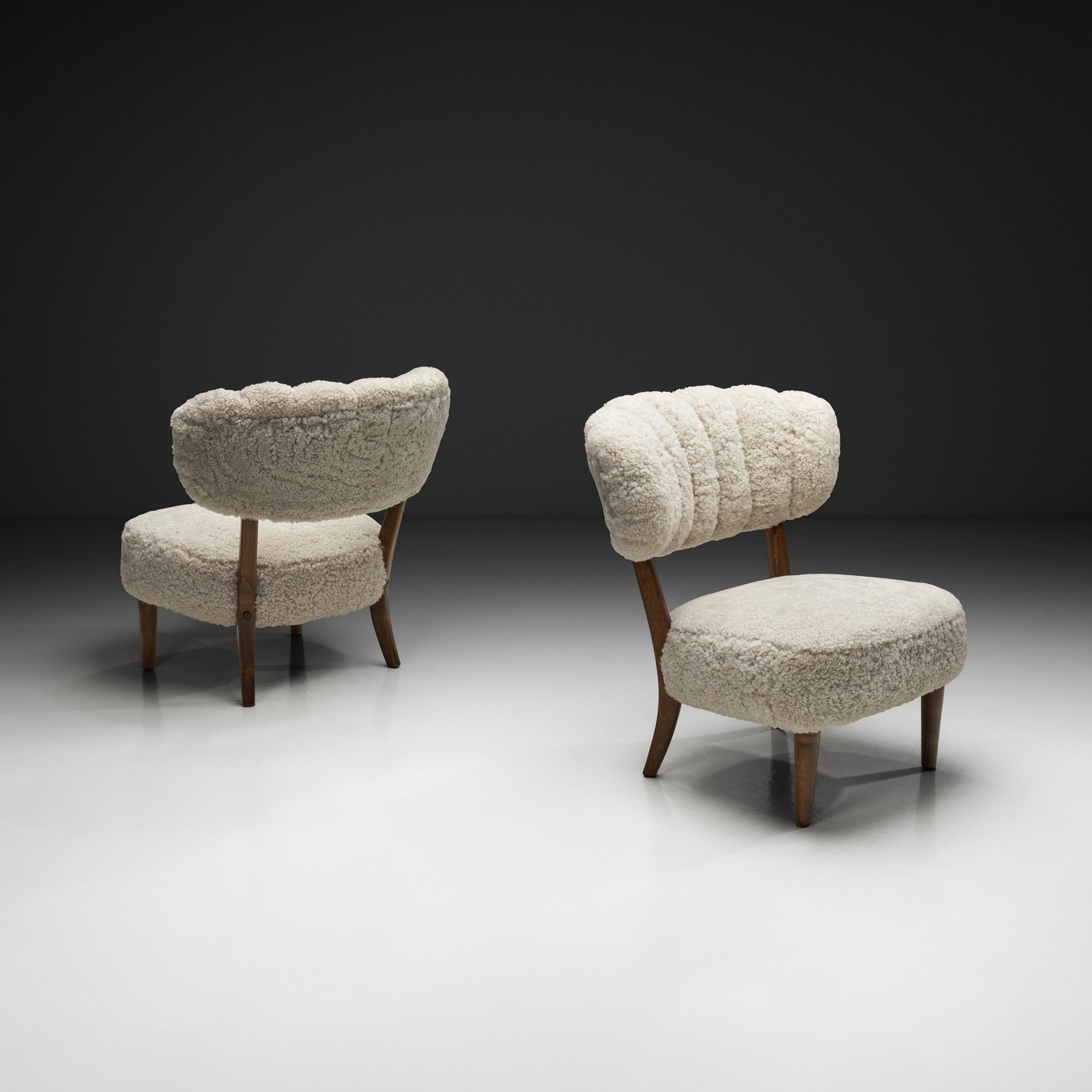
This peculiar mid-century easy chair features multiple distinctive characteristics, from its floating back to the curvaceous armrests. This model is, without a doubt, the work of a master cabinetmaker. The period from roughly the 1940s through the 1960s was a high point for Scandinavian furniture makers, and this chair shows why.
The elegant organic lines of the design create a striking silhouette. Its generous proportions and luxurious upholstery provide great sitting comfort. The chair’s seat and backrest are separated in a style that is typical of Swedish designer, Otto Schulz. This stylish feature highlights the beautiful oaken frame. The armrests are in a peculiar shape, wider in the middle, and along with the generous proportions and upholstery, are perfectly sculpted to accommodate the sitter. Schulz was known for his floating back designs as seen here, preventing the chair from looking heavy. As with most lounge chairs, this chair is also built in a slightly reclined position which provides ultimate comfort. Thanks to the open profile and luxurious, organic style, it is an ideal way to draw attention while complementing any space.
Swedish furniture reflected traditional Scandinavian craftsmanship and mixed it with a modern style. This is reflected in the beautiful sheepskin upholstery, which give this easy chair a soft, modern edge. The sturdy frame and armrests are all carved from solid oak and have acquired a beautiful patina over the decades.
Condition:
In good vintage condition. Wear consistent with age and use. Due to the nature and age of the wood, the chair may have marks, scratches, and discolouration. The chair has been recently reupholstered in premium sheepskin. Each of our items can be reupholstered by our in-house atelier in a fabric of choice. Please reach out for more information.
Dimensions:
27.95 in W x 30.90 in D x 31.29 in H; Seat height 16.92 in
71 cm W x 78,5 cm D x 79,5 cm H; Seat height 43 cm
About the (attributed) designer:
Otto Schulz (1882-1970) was Swedish interior designer, furniture designer, publisher and founder of the furniture company BOET in Gothenburg.
Schulz was born in Germany and moved to Sweden in 1907. He mainly produced opulent upholstered furniture, as well as lavishly inlaid, decorative box furniture style-wise between functionalism and traditionalism. He has some of his own invented techniques patented, including the use of decorative nails as part of the design, called Bopoint. After establishing his own furniture company, BOET, he used it as a showroom to exhibit his designs as well.
In the 1920s he started publishing the eponymous magazine BOET, which was also a platform for his own collection. The magazine was at the time the most influential, appearing in regular editions in Sweden and often included interviews with well-known designers and architects. ~H.