
Amsterdamse School Oak Chair by Jac Levee, The Netherlands 1930s
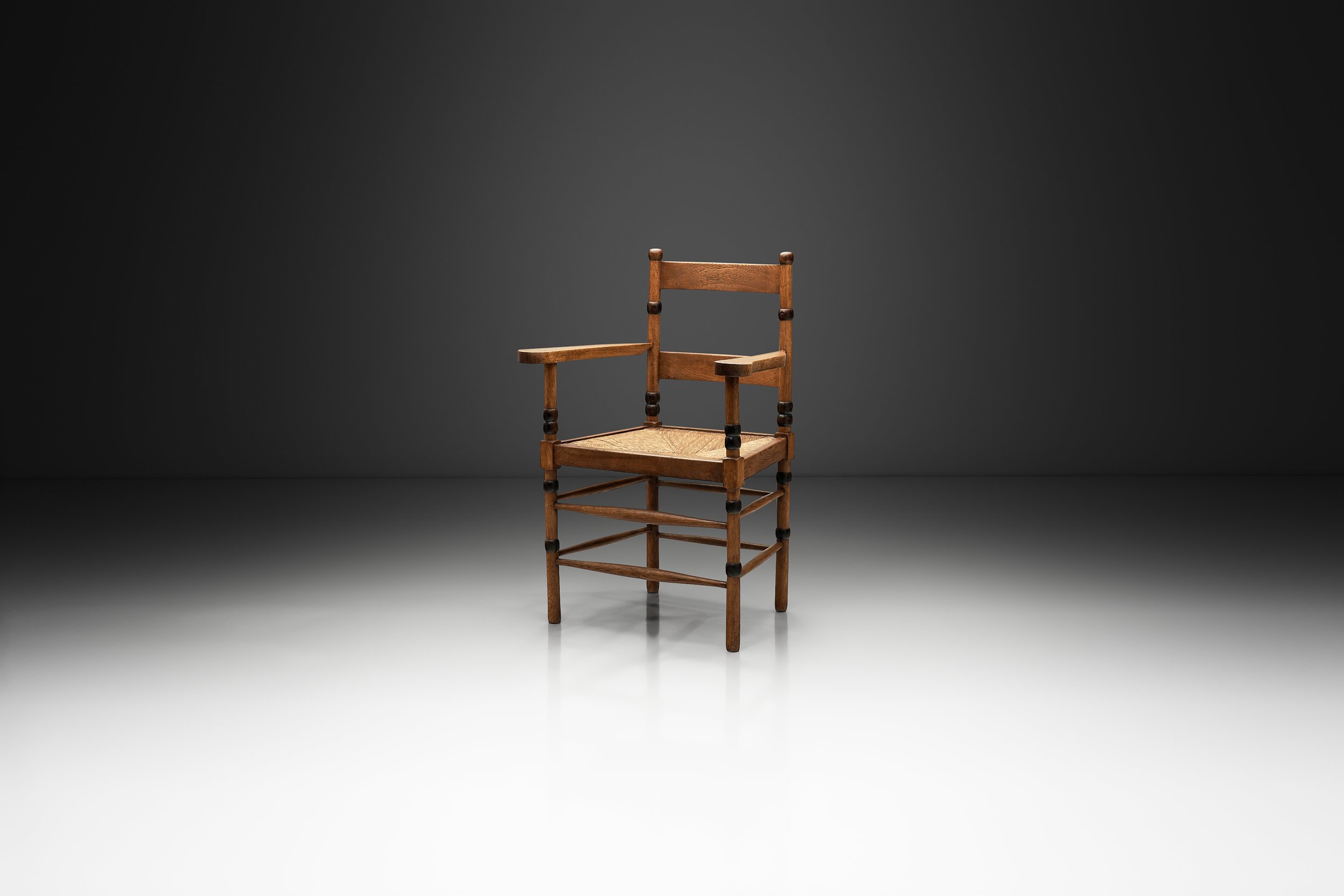



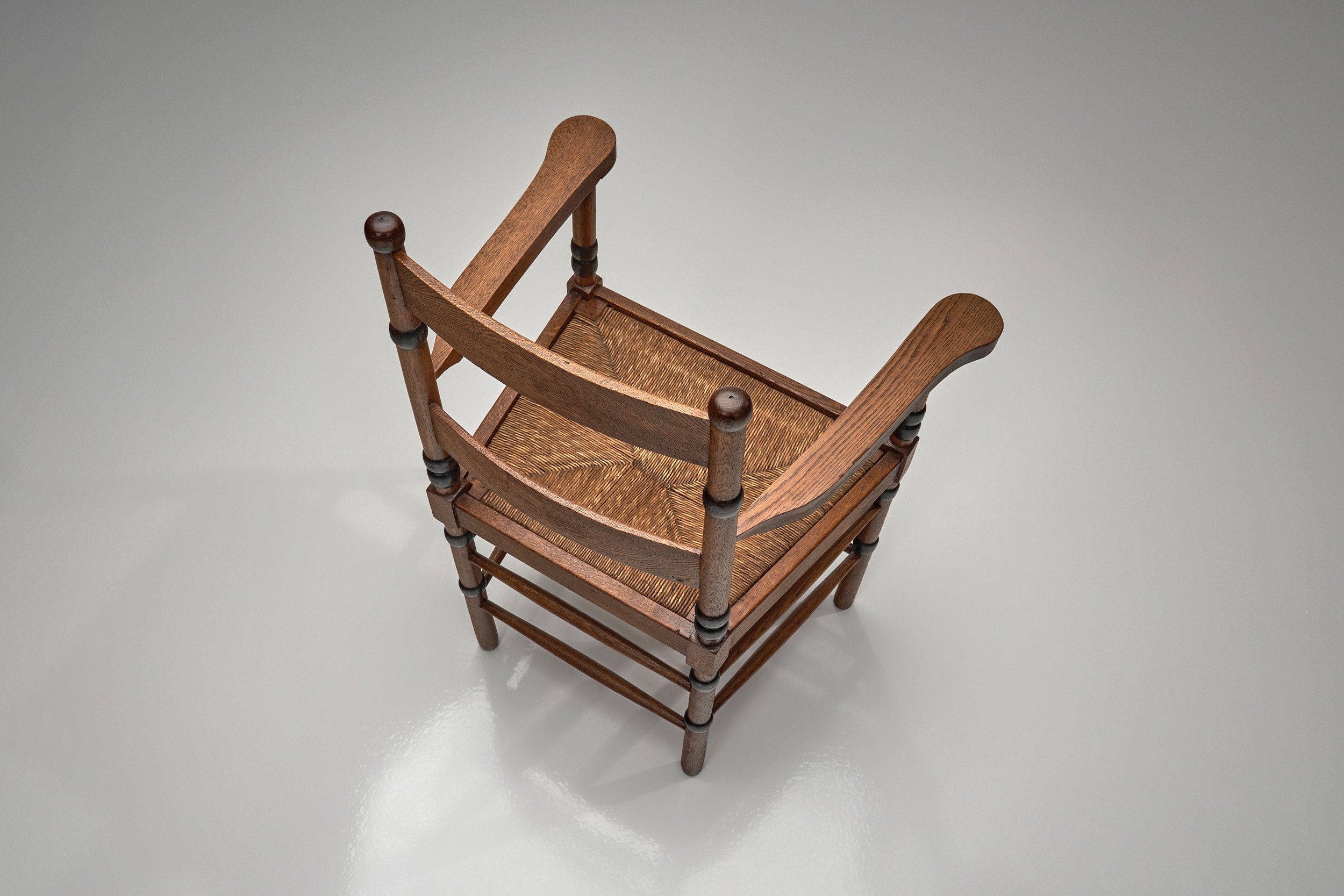
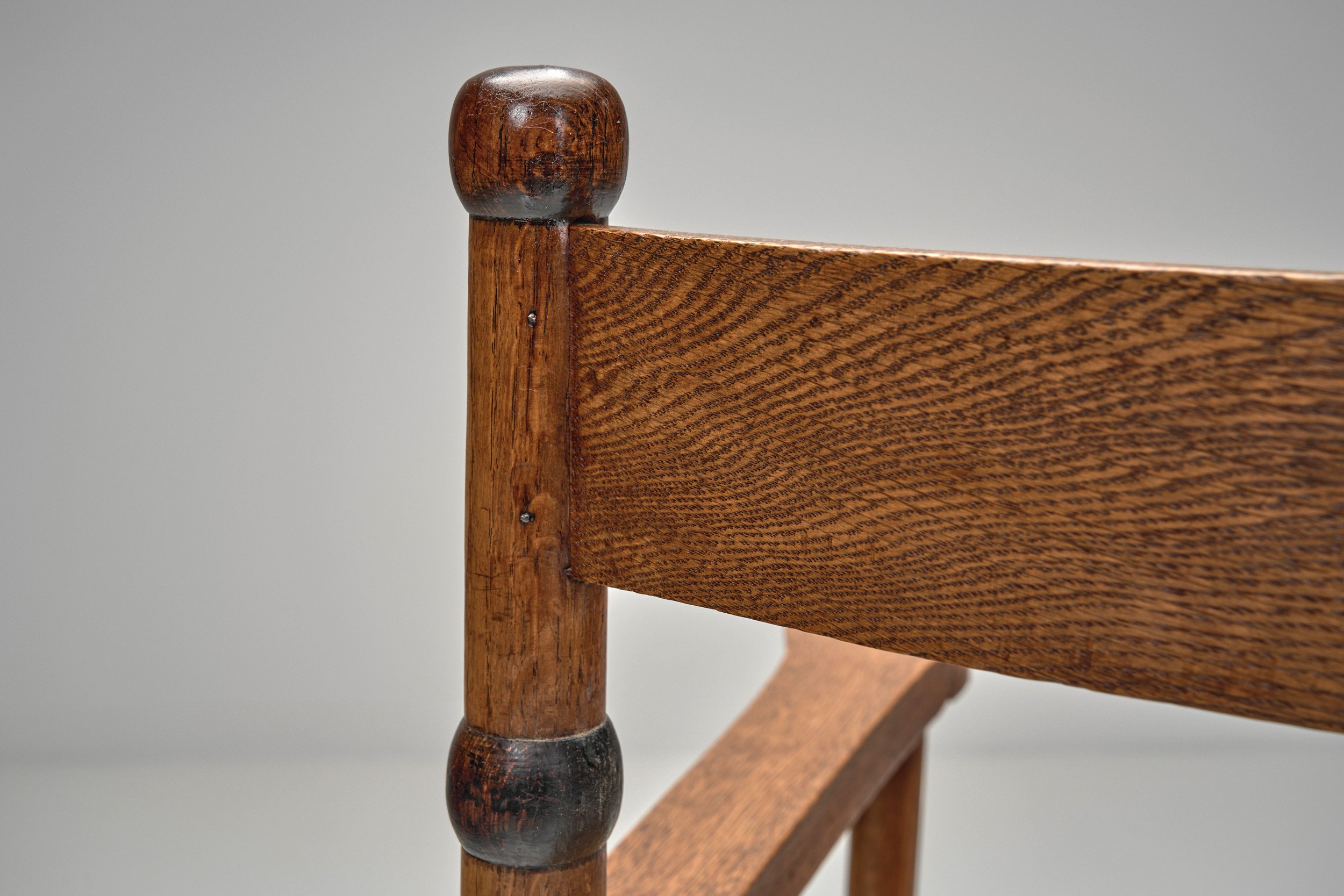
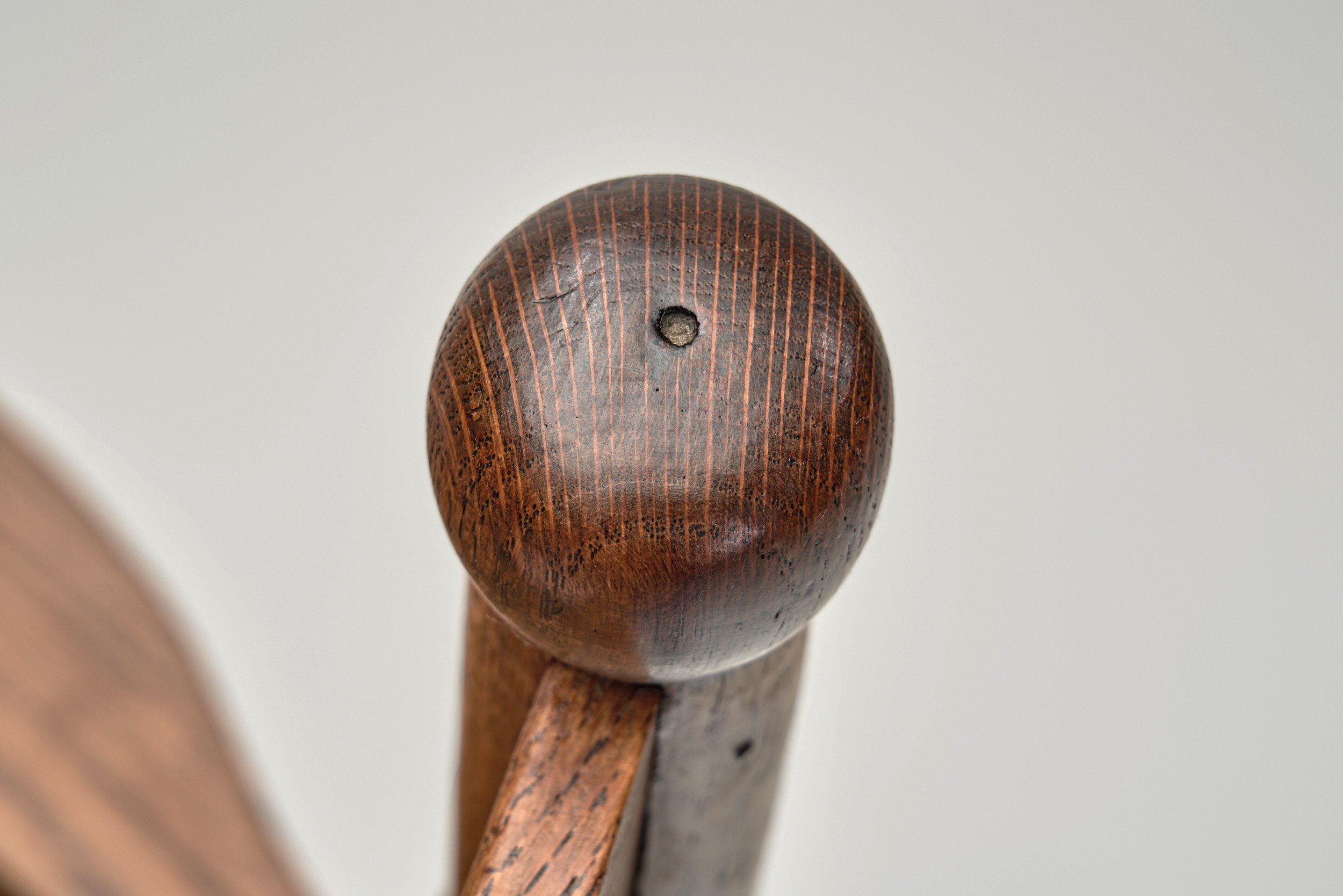
Amsterdamse School Oak Chair by Jac Levee, The Netherlands 1930s
REQUEST PRICE HERE
Price category: 2,500 - 5,000 usd / eur
The Amsterdamse School movement arose in response to the influence of Art Nouveau and Jugendstil in the late 19th and early 20th centuries. This movement, which took root in Amsterdam, sought to create a uniquely Dutch style that embraced traditional craftsmanship and celebrated the spirit of the current times. The Amsterdamse School extended its influence across various artistic disciplines, including architecture, decorative arts, and furniture design.
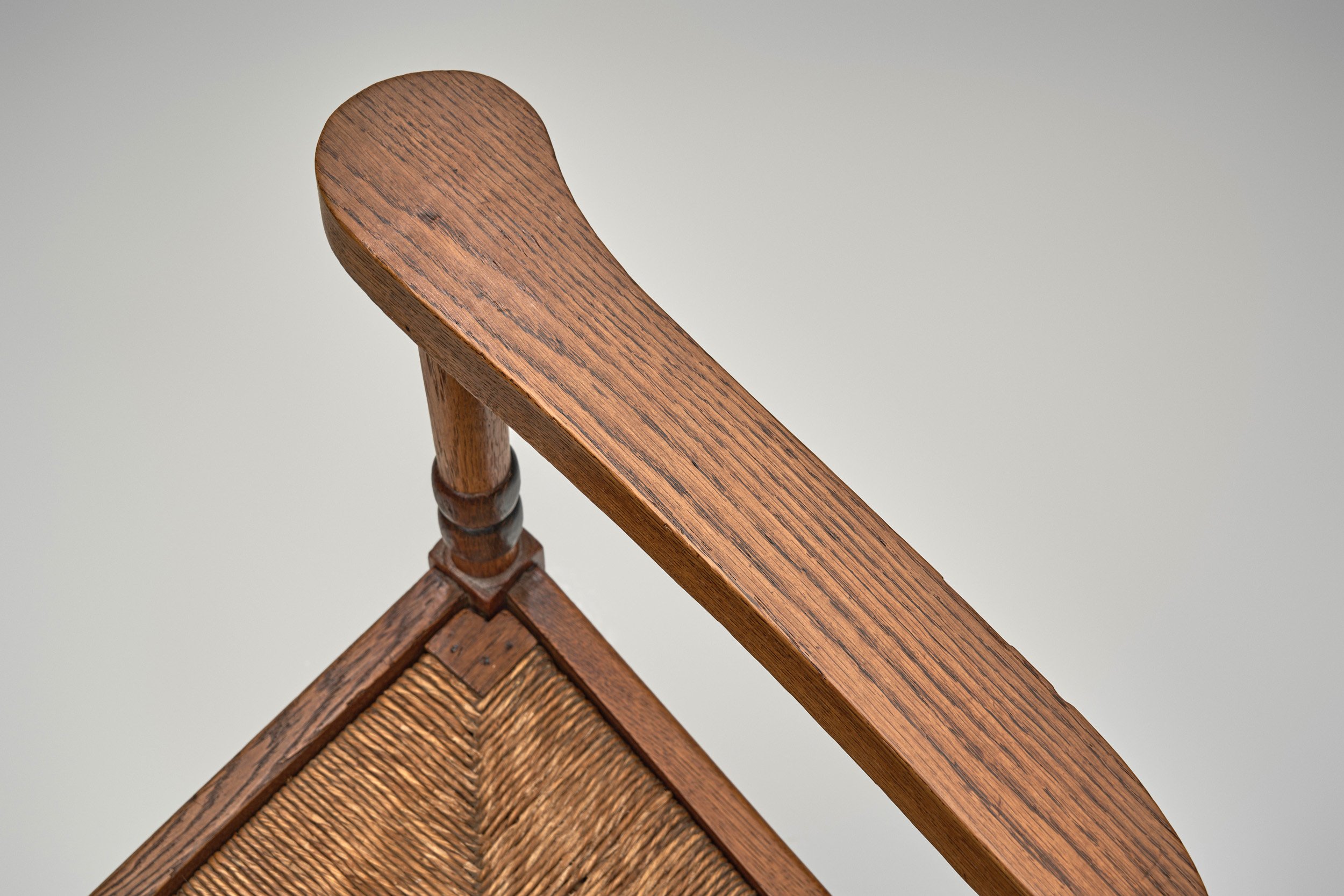
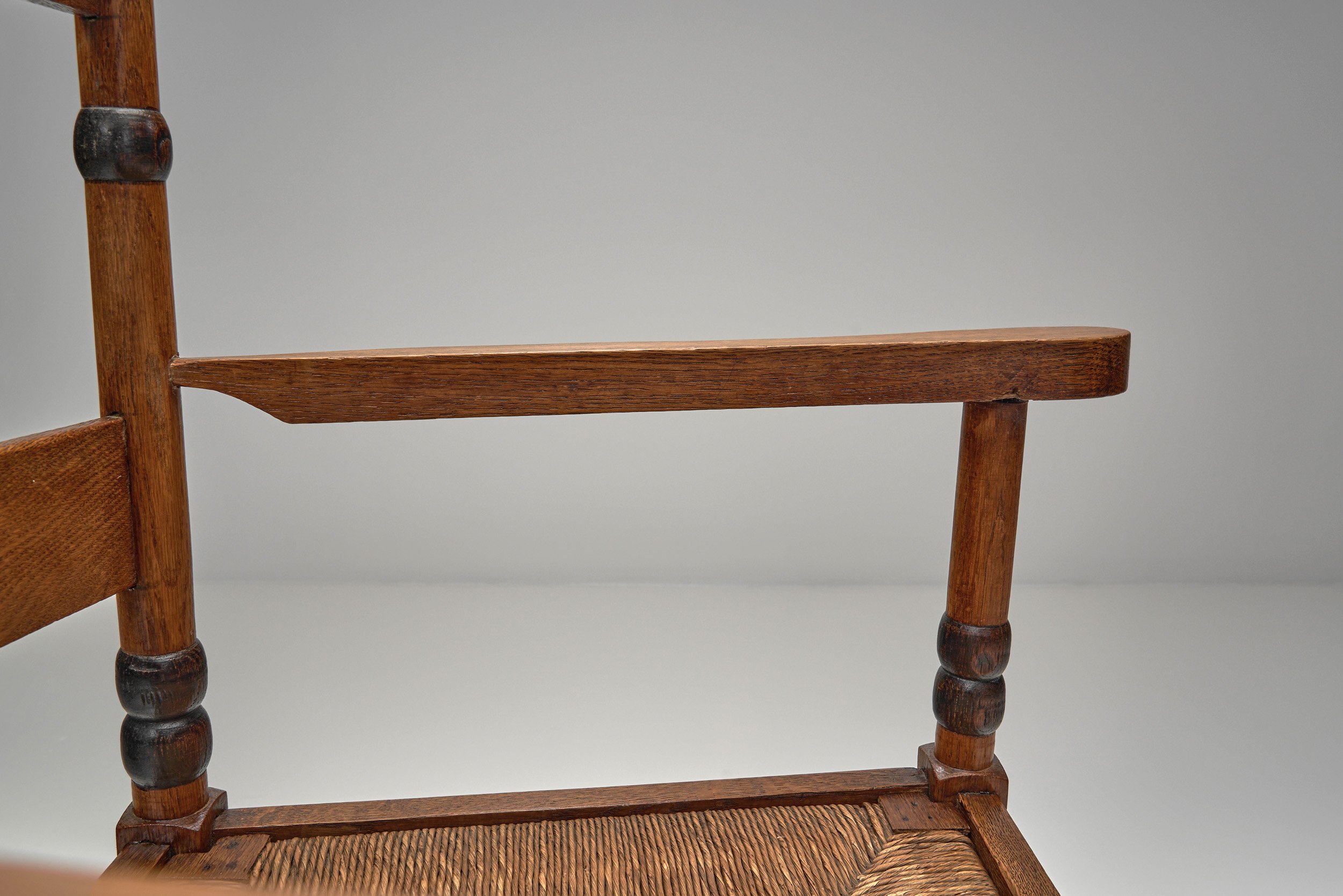
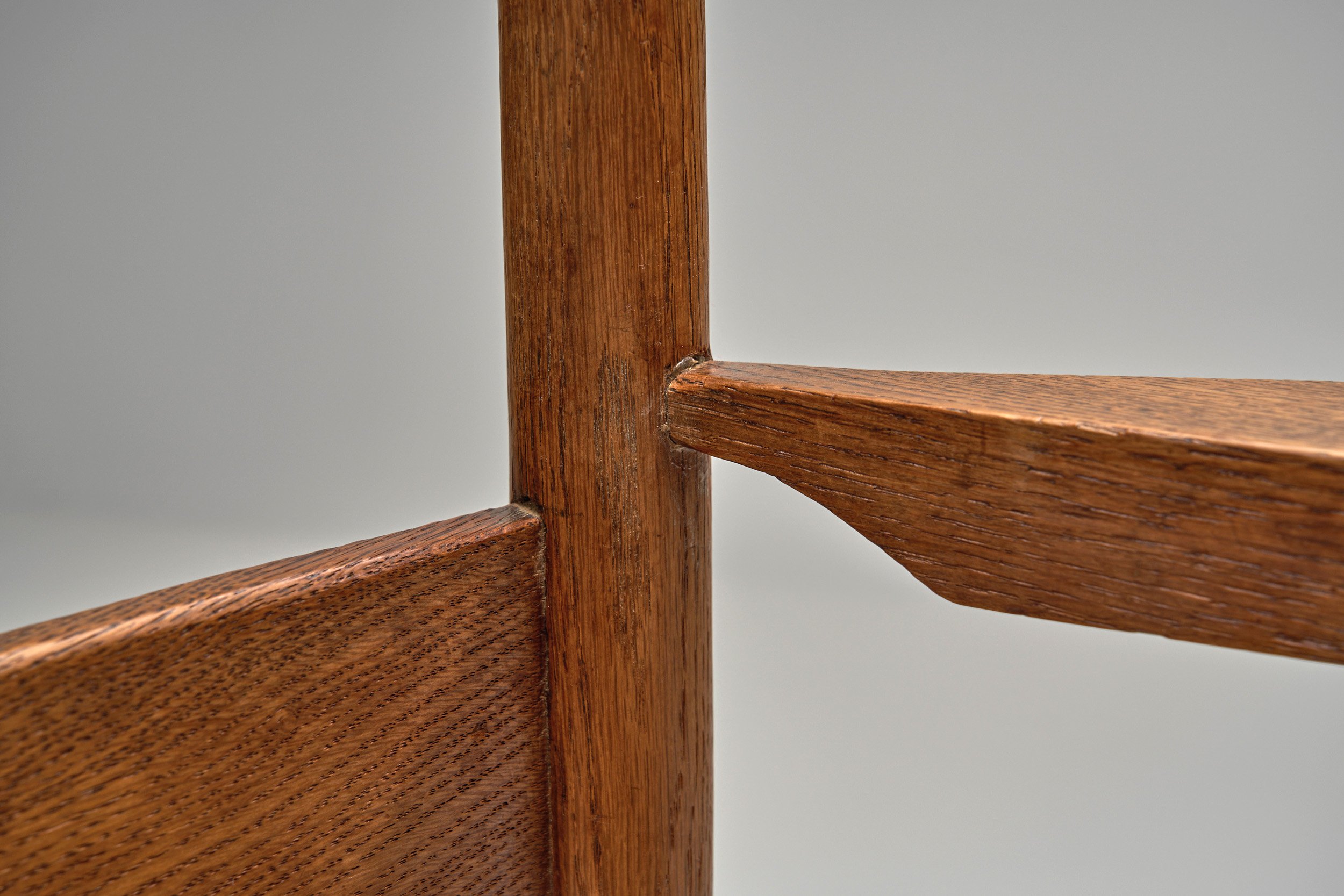
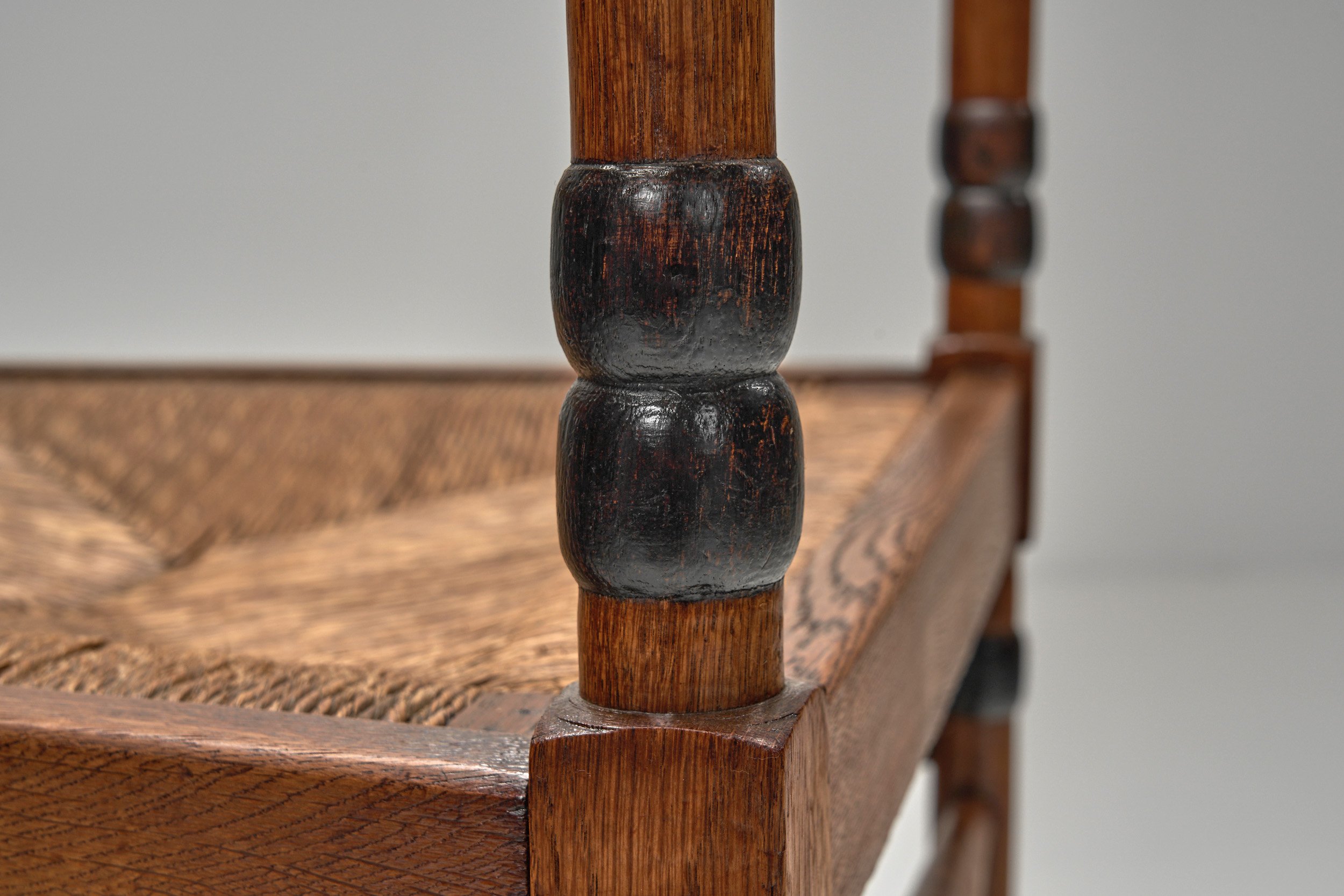
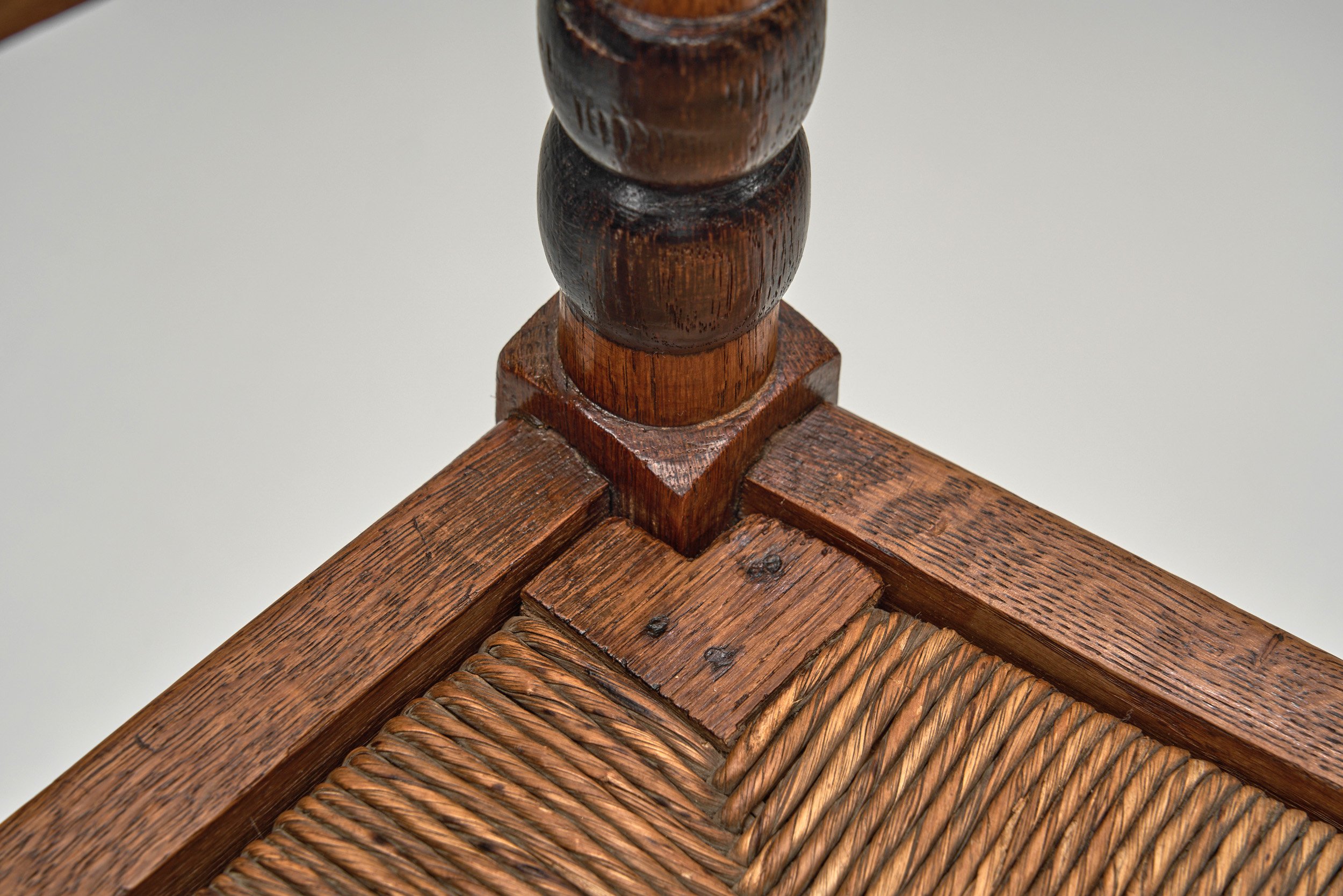
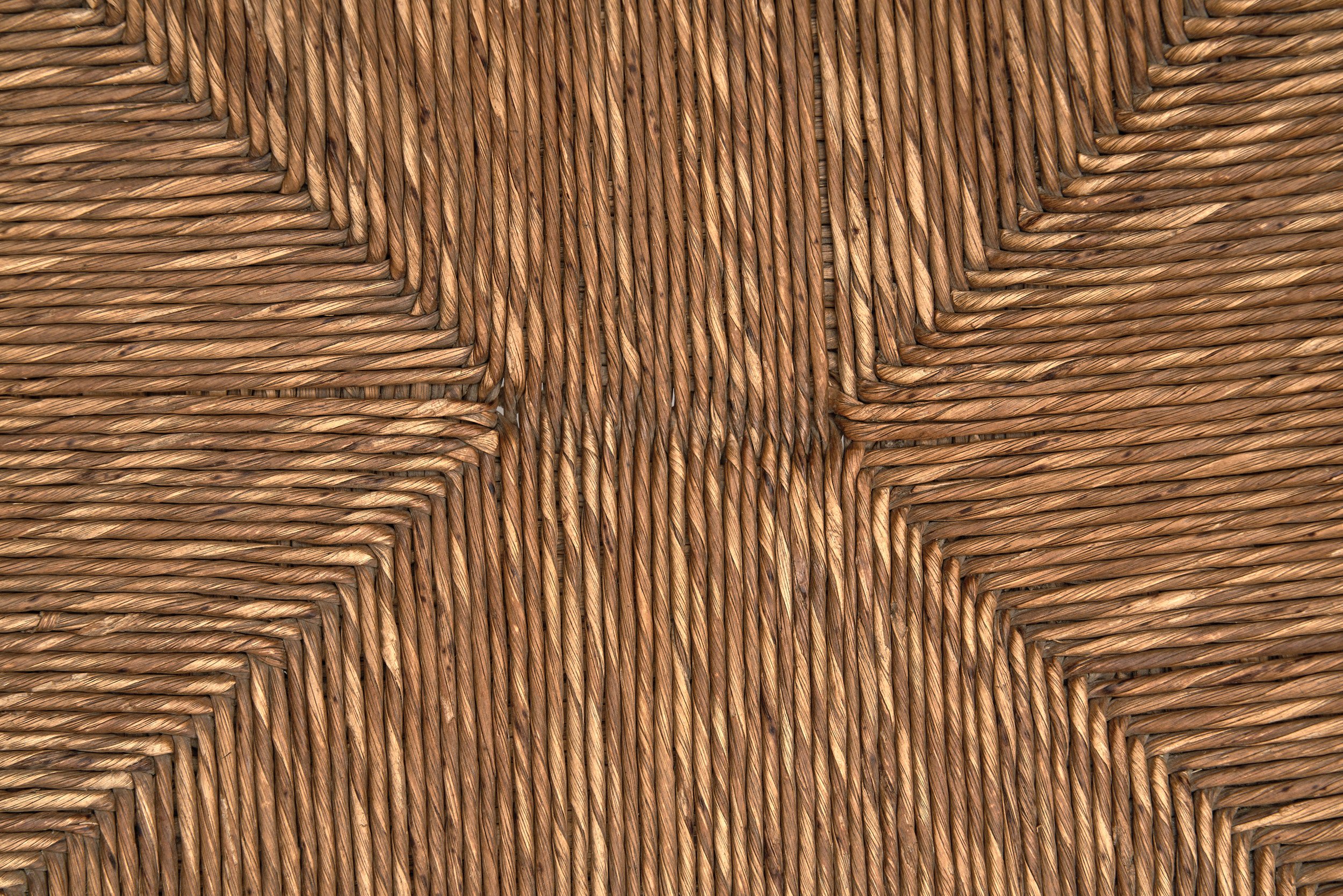
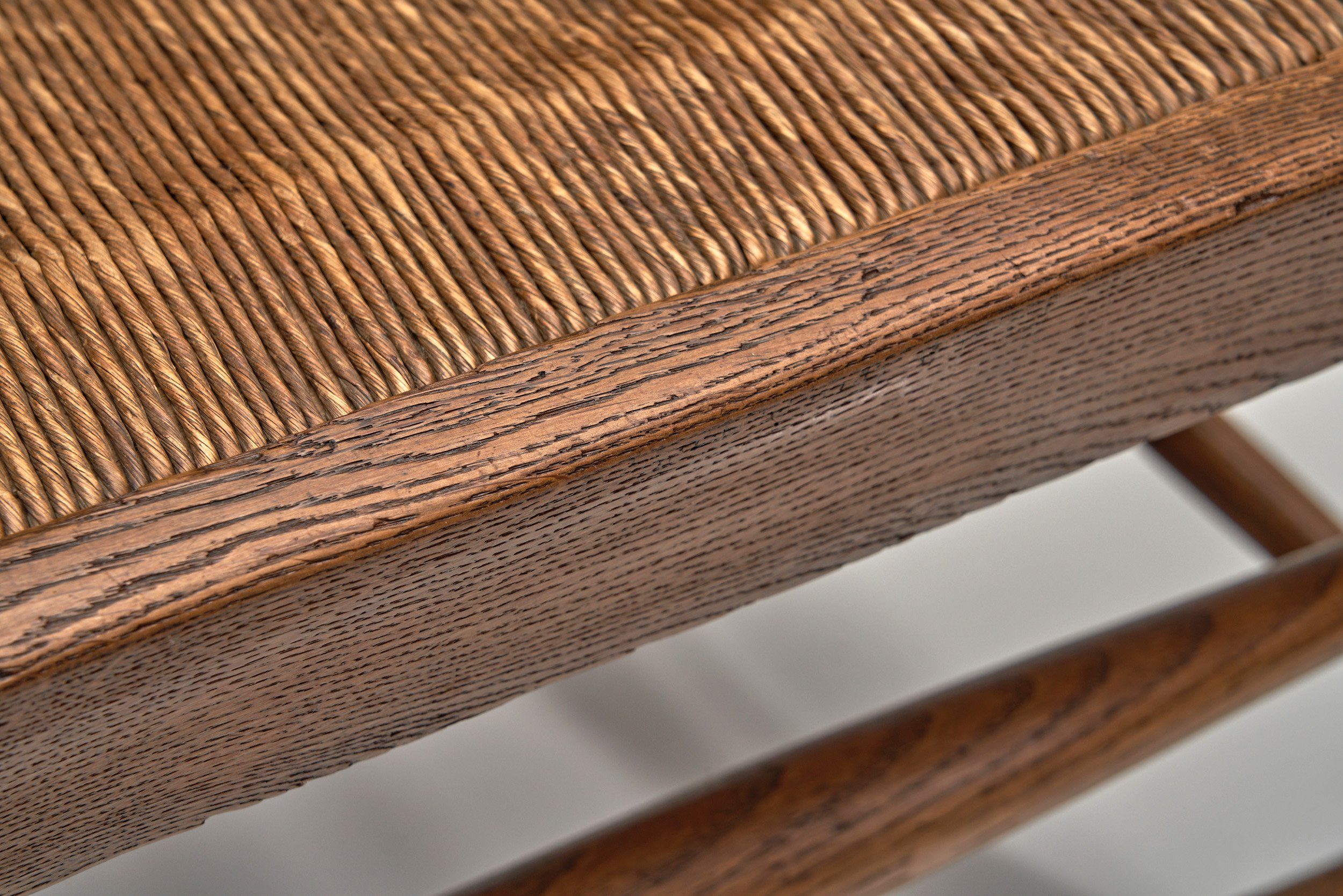
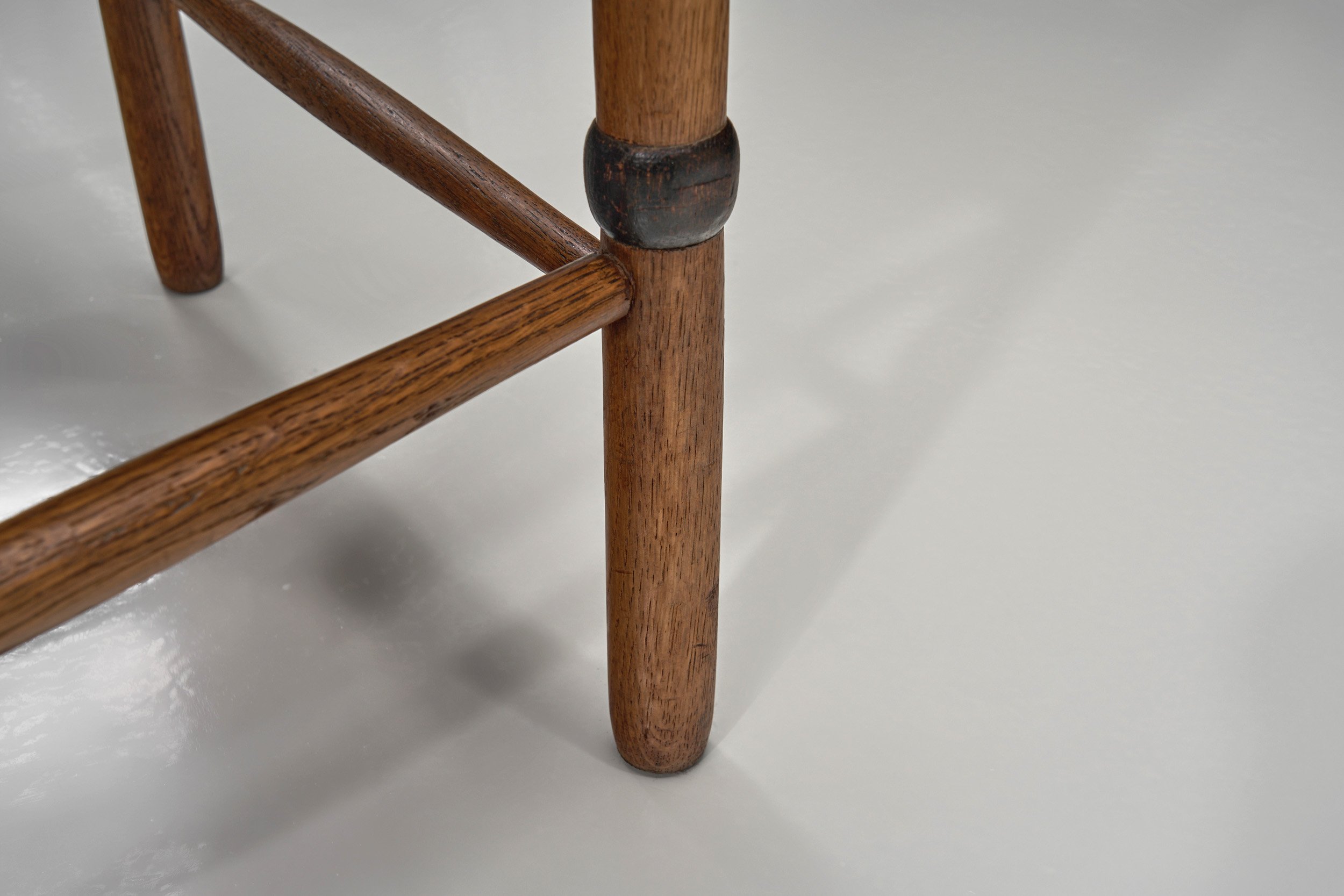
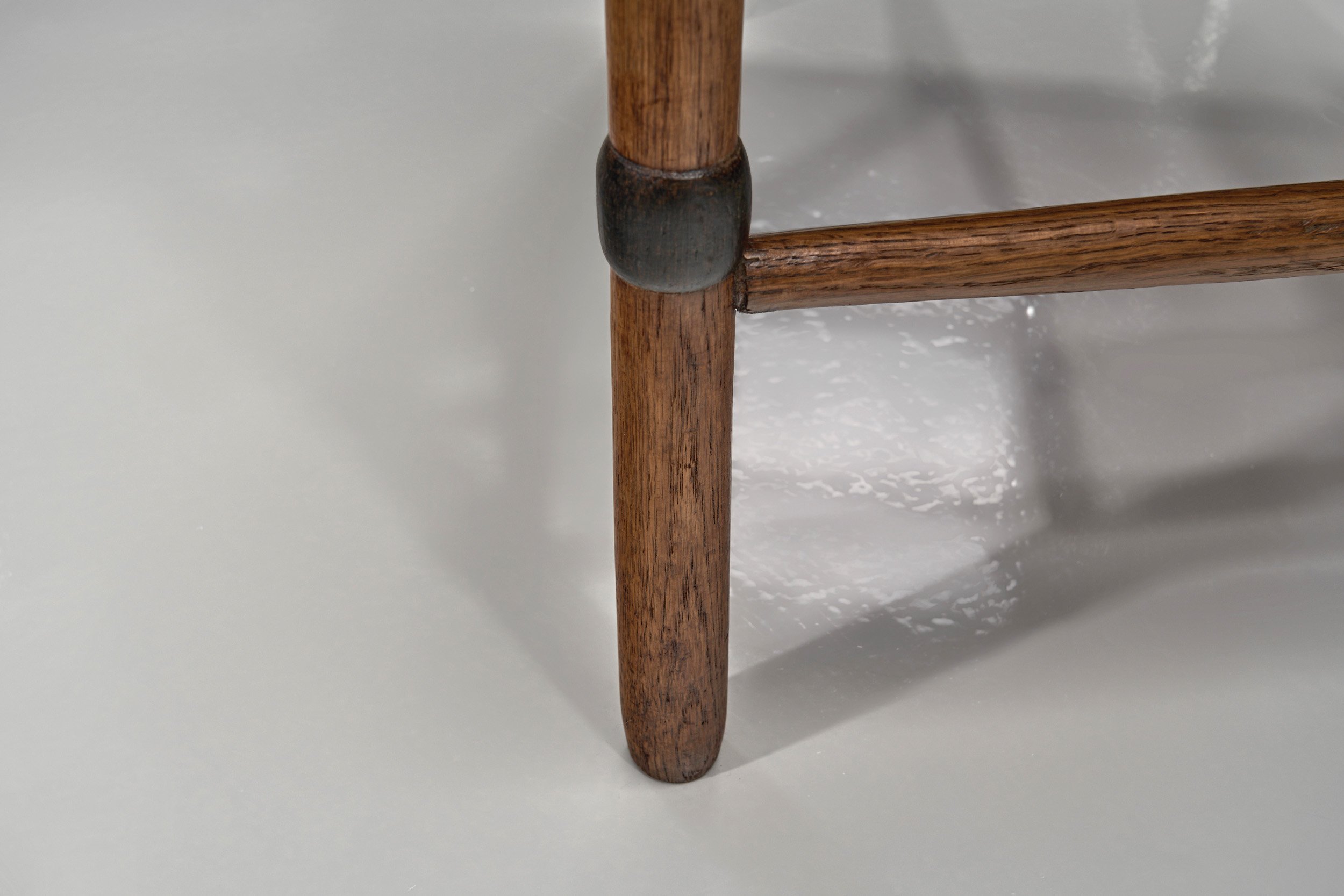
The styles’ main characteristics are reflected in the design of this chair beautifully: expressive, art deco-reminiscent, and functional. Amsterdamse School furniture is renowned for its sculptural qualities. Designers like Jac Levee sought to integrate form and functionality seamlessly, resulting in furniture pieces that were not only visually striking but also practical. The craftsmanship of Amsterdamse School furniture is exemplified by its intricate woodwork and joinery. Pieces often showcased decorative detailing through carvings, inlays, and geometric patterns. These elements add a touch of individuality and artistry to a piece, setting them apart from the mass-produced furniture of the time. In this chair, the backrest’s clean, symmetrical lines reflect the simple, yet sophisticated aesthetics of the era. The use of black round accents not only adds an element of visual interest to the design, but also serve to reinforce the structure and enhance the overall strength. To further add to the charm of the piece, the woven seat, made from durable natural fibres, highlights the attention to both function and form, by creating visual and textural interest. The beautifully symmetrical pattern showcases the timeless artistry of artisanal furniture.
Whether placed in a farmhouse or used to add an organic element to a modern interior, this chair provides both history and utility. More than just functional seating, this chair represents a moment in design history where furniture was built to last, to be used daily, and to shape the atmosphere of a room.
Condition:
In good vintage condition. Wear consistent with age and use. The chair has recently been reconditioned. Minor scratches and discolouration. Due to the nature of the wood, the item may have some additional marks.
Dimensions:
25.59 in W x 20.86 in D x 37.40 in H; Seat height 18.50 in; Seat depth 16.92 in; Arm height 28.14 in
65 cm W x 53 cm D x 95 cm H; Seat height 47 cm; Seat depth 43 cm; Arm height 71.5 cm
REQUEST PRICE HERE
Price category: 2,500 - 5,000 usd / eur
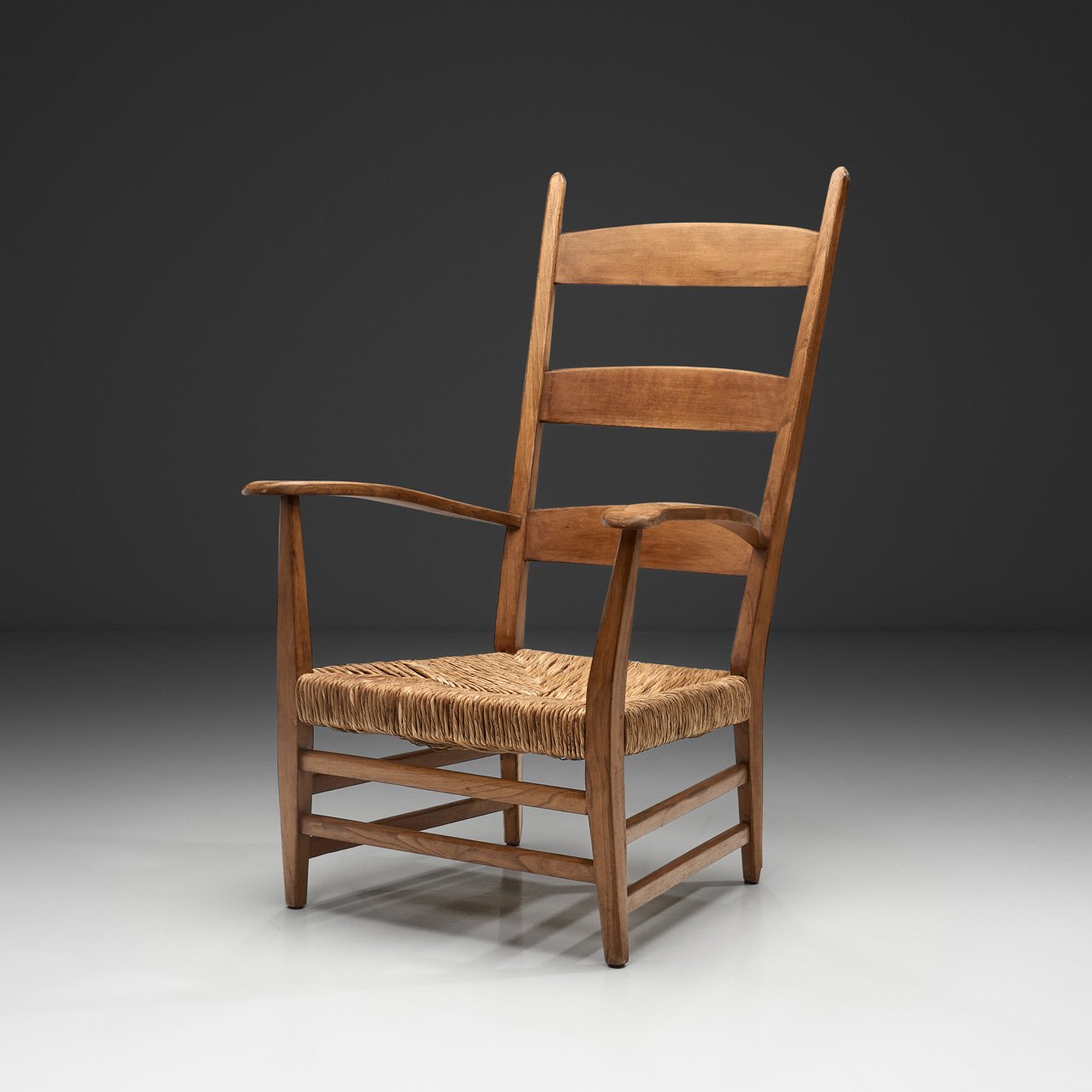
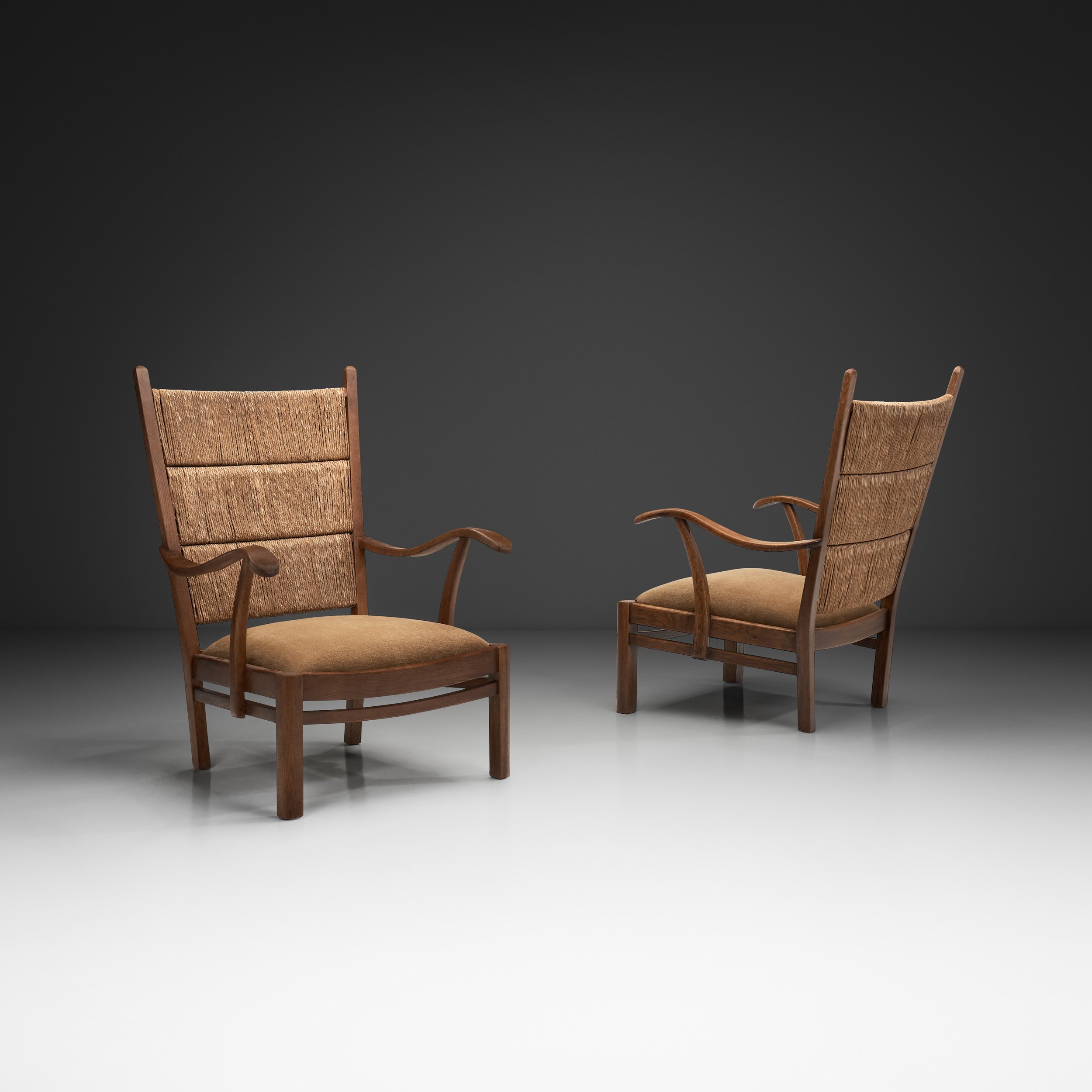
This remarkable armchair was designed by German artist, Willi Ohler. The so-called “Worpsweder” either denote chairs made at the Worpsweder Kunsthütten (Worpsweder arts huts) in Germany, or a specific style of German chairs with solid wood frames, broad armrests, often from tall wood, with woven seats and backs. This piece features all of those characteristics.
Crafted during a time when movements like Modernism were reshaping design worldwide, this early 20th-century armchair reflect a transitional style rooted in both simplicity and elegance. This era emphasises clean lines, unique shapes, and high-quality craftsmanship to achieve timeless pieces like this one. The honey-toned wood highlights the warm patina that has developed over decades. The softly sculpted armrests framing the chair bring both elegance and ergonomic comfort to the overall form. Woven wicker is the main highlight of the piece. The material is used to construct the seat and tall backrest. The beautifully symmetrical pattern showcases the timeless artistry of artisanal furniture. The rectangular, slim legs create a sleek structure while not abandoning sturdiness. This chair preserves the value and beauty of master craftsmanship and exquisite materials.
Worpswede in Lower Saxony is famous nationwide for its long tradition as an artists' colony. Nowadays, about 130 artists and craftsmen and women live there permanently. The artists who created the so called "Worpsweder Kuentlerkolonie" were looking for the simple and original in art and life. The traditional reed and rush woven chairs of this region were greatly appreciated by the artists of the colony, and some of them were still produced around 1900-1920. They have become collectors’ pieces thanks to the craftsmanship that went into each chair’s creation.
Condition:
In good vintage condition. Wear consistent with age and use. The chair has recently been reconditioned. Due to the nature and age of the materials the item has minor scratches and discolouration.
Dimensions:
34.64 in W x 33.07 in D x 46.45 in H; Seat height 16.53 in; Seat depth 19.68 in; Arm height 24.80 in
88 cm W x 84 cm D x 118 cm H; Seat height 42 cm; Seat depth 50 cm; Arm height 63 cm