
Kerstin Hörlin-Holmquist “Adam” Easy Chair for Nordiska Kompaniet, Sweden 1950s


Kerstin Hörlin-Holmquist “Adam” Easy Chair for Nordiska Kompaniet, Sweden 1950s
REQUEST PRICE HERE
Price category: 5,000 - 7,500 usd / eur
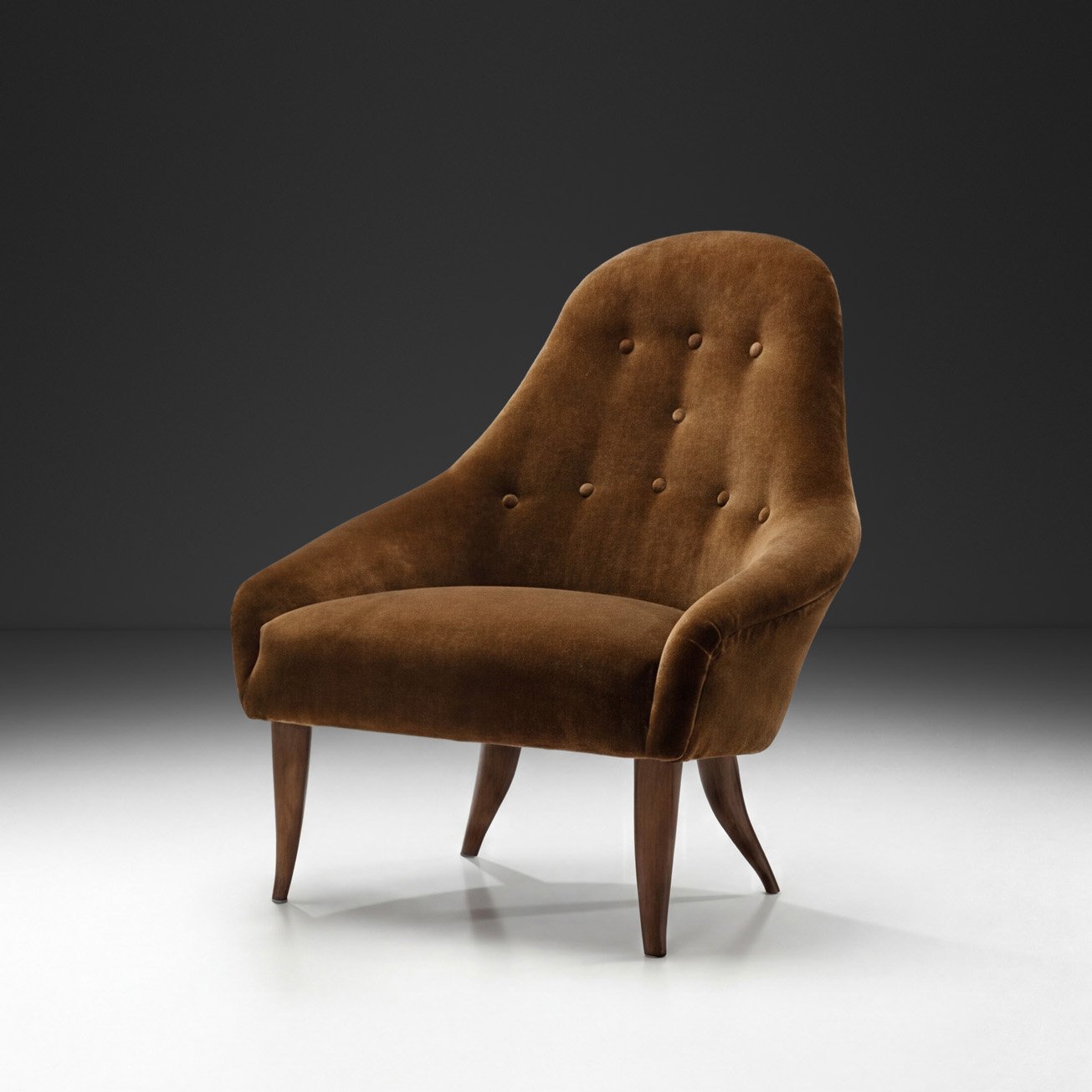
This “Adam” model is from the timeless and iconic Paradise Collection from the Triva Series, which was created in 1958 by Kerstin Hörlin-Holmquist during her time as a designer at Nordiska Kompaniet. The name is inspired by “Paradiset” – the Swedish name for Eden.
This chair holds a soft simplicity and a uniqueness in its appearance - light, clean lines with an air of romance. Without worrying about short-lived trends and what other people thought, Hörlin-Holmquist created the peculiar shape of these chairs that is only increasing in popularity. Thanks to her unique vision, “Adam” chairs have an unmistakeable backrest that flows down to form the armrests. While the armrests sit low, therefore opening the seat, the chair still gives the impression of hugging the sitter. The upholstered body elevates the visual comfort, with a stitch tufted backrest that is festooned with orange, symmetrically arranged cross stitches.
The upholstery is a premium, light Italian fabric with a soft touch that complements the aesthetic of Hörlin-Holmquist’s design. Similarly, the stained and tapered beech legs pair perfectly with the sculptural and organic form of the body. Kerstin Hörlin-Holmquist had a unique and humanistic design vision, and thanks to her uncompromising attitude, “Adam” easy chairs have become iconic.
Condition:
In good vintage condition. Wear consistent with age and use. The chair has been reupholstered recently in premium Italian fabric. Each of our items can be reupholstered by our in-house atelier in a fabric of choice. Please reach out for more information.
Dimensions:
30.71 in W x 33.46 in D x 36.61 in H; Seat Height 16.14 in
78 cm W x 85 cm D x 93 cm H; Seat Height 41 cm
About the Designer:
Kerstin Hörlin-Holmquist was born on May 30, 1925 in Arvika, Sweden. She was a Swedish modernist architect and designer. Hörlin-Holmquist graduated from Stockholm’s Konstfack in 1952, and before that she studied and worked in England. She often worked with her husband Erik Holmquist, and together they modelled and created the pieces together. A key aspect for the couple was always to test their designs in their own home before completing a project.
"I think both furniture and textiles, wherever they end up, must be kind, gentle and courteous, but without losing their character. They should have human qualities, not be pompous and only stand alone, but be able to adapt to the environment they end up in..."
Hörlin-Holmquist worked and studied in England from 1946-1947 immediately after the war, where she also studied art history and became fascinated with the classic English upholstered furniture and style. Something that without a doubt inspired her own creations later in life while she still developed her own expression. She returned to Sweden where she attended Konstfack from 1948 and graduated from the school in 1952. She started working with Nordiska Kompaniet shortly after her graduation and became a lead designer. Her timeless and iconic ‘Paradiset Collection’ was created during her employment with Nordiska Kompaniet in 1956-1957 and holds a soft simplicity and a uniqueness in its appearance - light, clean lines and yet gracious with an air of romance.
Today, her designs are highly treasured collectibles. She is primarily remembered, for her ability to create designs for the modern home in the 1950s without worrying about short-lived trends and what other people thought - to stay true to her own unique and humanistic design vision. ~H.
REQUEST PRICE HERE
Price category: 2,500 - 5,000 usd / eur
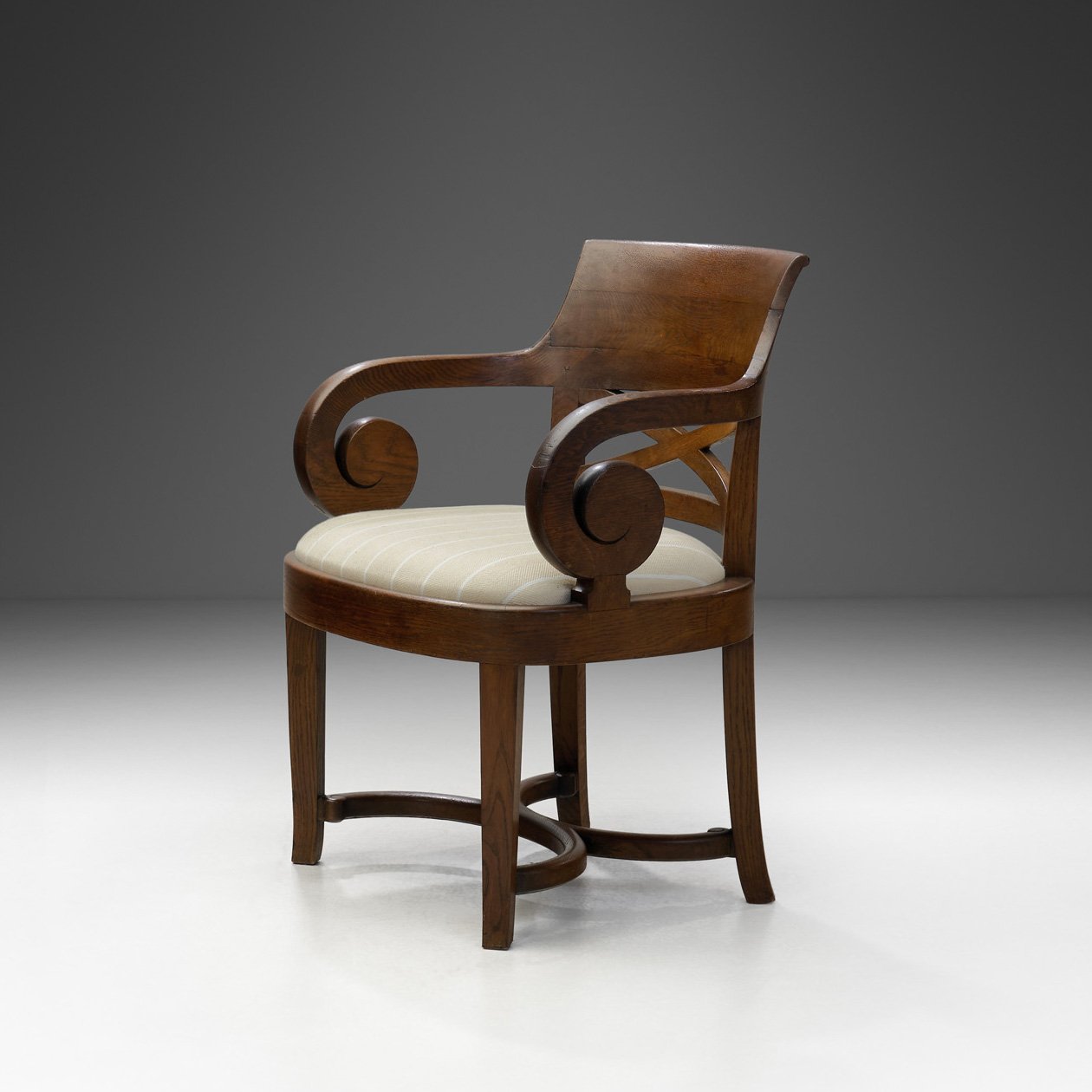
Axel Einar Hjorth’s designs are sharply distinctive in style, materials, and character. Unlike many of his contemporaries, Hjorth did not conform to the socially oriented ideas produced by Svensk Form (the Swedish Society of Crafts and Design). He often incorporated playful ornamentation from different historical periods by which he was inspired, such as the French Art Déco, using mixed exotic woods, bright colours, and textiles, as this “Radio” chair showcases.
Designed in the first half of the 20th century, this armchair possesses a refined and slender appearance with distinctive details. The chair displays a clearly defined wooden frame with a neatly upholstered seat. The sleek wooden frame offers a beautiful contrast to the upholstery, creating a visually captivating aesthetic. With these characteristics, the chair makes for a harmonious balance between contemporary elegance and traditional style. Even though Swedish design is generally democratic and meant for the masses, pieces were not stripped of their beauty for the sake of functionality. The importance of this balance can be identified in the design and execution of this armchair as well. The craftsmanship displayed in this armchair model is a testament to the high standards of Swedish design in the early 20th century, reflecting both the technical skill and artistic vision of Hjorth and Nordiska Kompaniet. This chair not only serves as functional furniture but as a timeless work of art, showcasing the elegance and innovation of the era.
The Swedish company Nordiska Kompaniet manufactured this armchair with utmost care for its quality and design. Axel Einar Hjorth worked as the lead designer for the department store from 1926 to 1938. The company was among the most renowned Swedish manufacturers during the mid-century era, working with some of the most well-known Scandinavian designers - and this "Radio" model is a prime example of the great success these collaborations resulted in.
Condition:
In good vintage condition. Wear consistent with age and use. The armchair has recently been reconditioned. The wood has some scratches and stains. Due to the age and nature of the wood, the chair may have marks and discolouration. The chair comes with its original upholstery or has been reupholstered by a previous owner. We recommend reupholstery due to some signs of wear. Each of our items can be reupholstered by our in-house atelier in a fabric of choice. Please reach out for more information.
Dimensions:
22.44 in W x 23.23 in D x 37.99 in H; Seat height 18.11 in; Seat depth 17.52 in; Arm height 26.77 in
57 cm W x 59 cm D x 96.5 cm H; Seat height 46 cm; Seat depth 44.5 cm; Arm height 68 cm