
Jens Quistgaard Teak Tray Table, Denmark 1960s


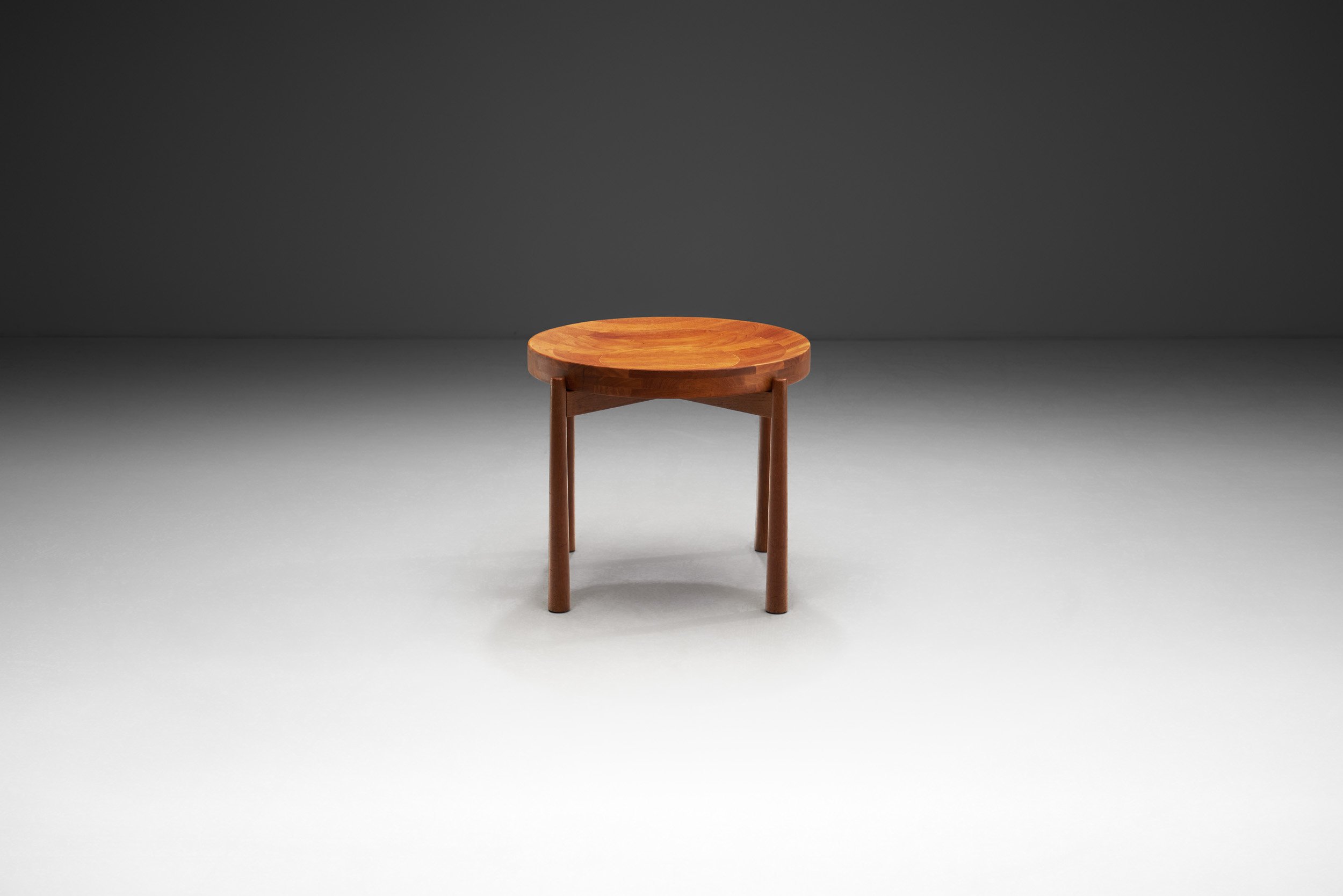


Jens Quistgaard Teak Tray Table, Denmark 1960s
REQUEST PRICE HERE
Price category: 2,500 - 5,000 usd / eur
Danish sculptor and industrial designer Jens Quistgaard (1919–2008) had a distinguished career in Denmark and the United States, and was especially active during the 1950s and '60s. Initially trained as a sculptor by his father, Jens Quistgaard expanded his skills by learning from carpenters and metal smiths, all contributing to his versatility as a master craftsman with the expertise to combine materials and techniques in novel ways. Quistgaard quickly became known for his fluid lines and for using unusual materials, often in combination. His most renowned and commercially successful works were created for the American company Dansk Designs. The company introduced Quistgaard and his minimalist Nordic design aesthetic to the United States, significantly contributing to the American appreciation of Danish Modern design. By the late 1950s, Quistgaard's work was synonymous with modern living. This teak side table is a clear example of his philosophy and clear aesthetic choices.
Intriguing and fantastical, the variety of forms Jens Quistgaard created expanded the vocabulary of functional design, calling on an array of familiar references, including natural shapes. This side table has precise forms without ornamentation, showcasing Jens Quistgaard's high-quality craftsmanship skills. Humble in its material and size, this table draws attention thanks to its distinctive look and personality. It has a round reversible top, which is characterised by the wood's grain and warm colours. The circular pattern has a constant rhythm and visually creates a beautiful alternation between darker and lighter tones. The pattern does not overwhelm the table - instead, it is an understated but clever addition to the design. The four legs are joined together by cross stretchers, which also serve the purpose of holding the top in place, gently letting it rest with no need for additional joinery or screws. This manner of combining the two separate parts is a detail that certainly derives from Quistgaard's sculptural training. The legs are slightly larger at the bottom, providing stability and visual interest. As can be expected from Danish design and craftsmanship, visually appealing elements usually also serve a functional role. In this case, the wooden elements under the table reinforce the stability of the structure in this ingenious manner, with the table top being supported gently by the legs.
Throughout his career, Quistgaard received numerous awards, including the Lunning Prize in 1954, the Neiman Marcus Award for Distinguished Service in the Field of Fashion in 1958, and Munch's Der Goldene Löffel in 1962. His work has been exhibited in museums worldwide, such as the Danish Museum of Art and Design in Copenhagen, the Victoria & Albert Museum in London, and the National Museum in Stockholm. This teak side table showcases Quistgaard's skills and adds an elegant touch to any living space.
Condition:
In good vintage condition. Wear consistent with age and use.
Dimensions:
22.24 in ⌀ x 17.12 in H
56.5 cm ⌀ x 43.5 cm H
REQUEST PRICE HERE
Price category: 5,000 - 7,500 usd / eur
The 1950s in France was a very versatile decade, the era’s design projects had a wide range both aesthetically and material wise. The modernist solid wood models were mostly created by hand, including this table, showing the organic and modern approach to design.
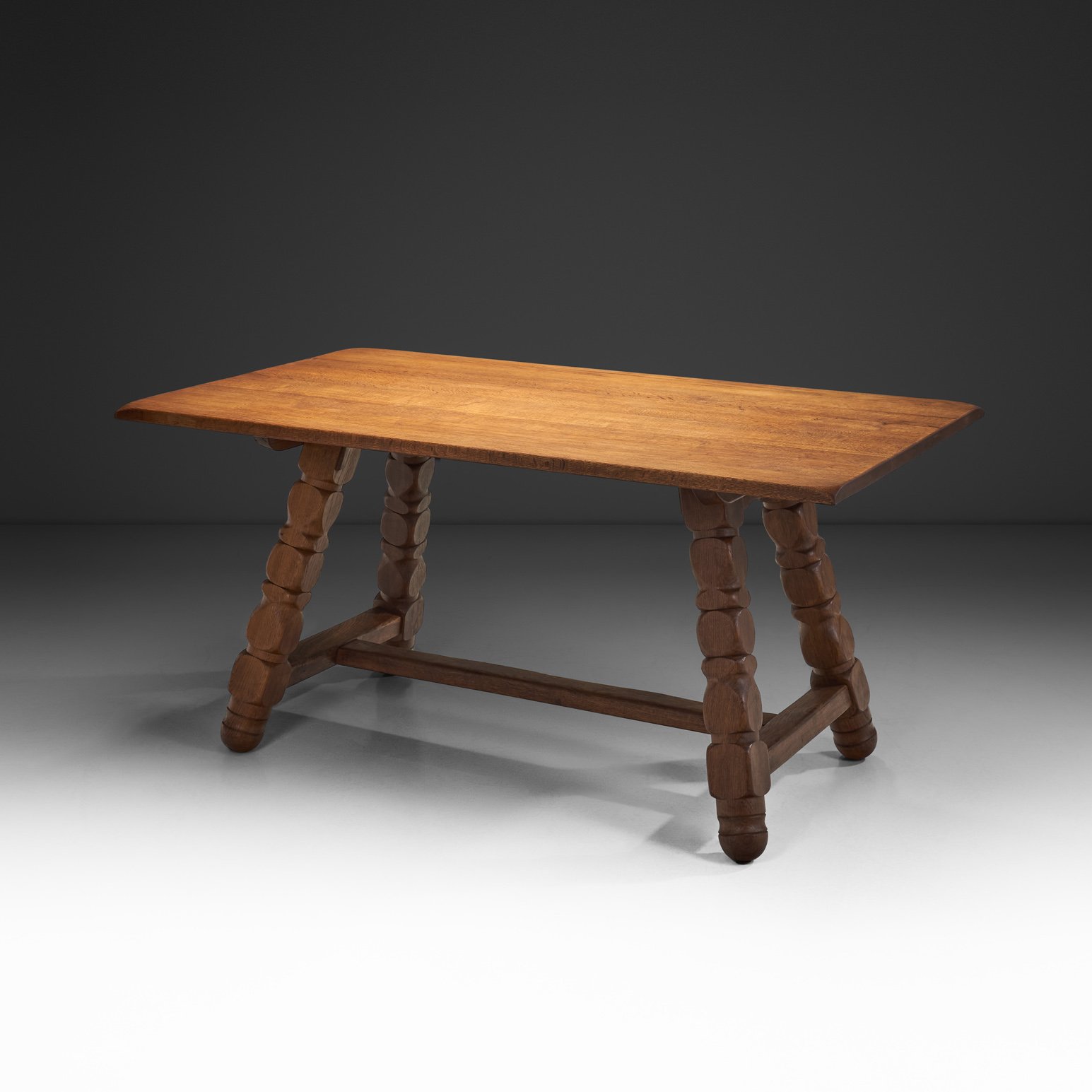
This dining table has an almost brutalist look that allows the distinctive back and the stained elm wood to guide the design. This piece was created with considerable technical expertise and holds a natural expression with its airy and organic design, which is dominated by the natural beauty of the material and the creative use of the tenon and mortise joinery. The hand carved rectangular tabletop showcases the elm wood’s pattern and grain. The uneven sides of the top are enhanced, reinforcing the rustic and elemental feel. The base with its long stretchers showcases the beautiful mortise and tenon joinery connecting the three stretchers to the legs and to each other. The cabinetmaker’s expertise can be easily traced in this traditional joinery technique. This shall come as no surprise as French furniture manufacturers are still regarded as some of the best of the mid-century era and are especially known for impeccable joinery and woodwork (think Guillerme et Chambron or Pierre Chapo for example).
The designer generation active during the mid-20th century created some of the most iconic wooden furniture of the entire century. This Aranjou edition table is a beautiful example of how successfully they managed to merge traditional craftsmanship and materials with an essentially modern approach to design.
Condition:
In good vintage condition. Wear consistent with age and use. Some small marks on the wood. Due to the nature and age of the material, the item may have scratches and discolouration.
Dimensions:
78.54 in W x 35.03 in D x 29.92 in H
199.5 cm W x 89 cm D x 76 cm H