
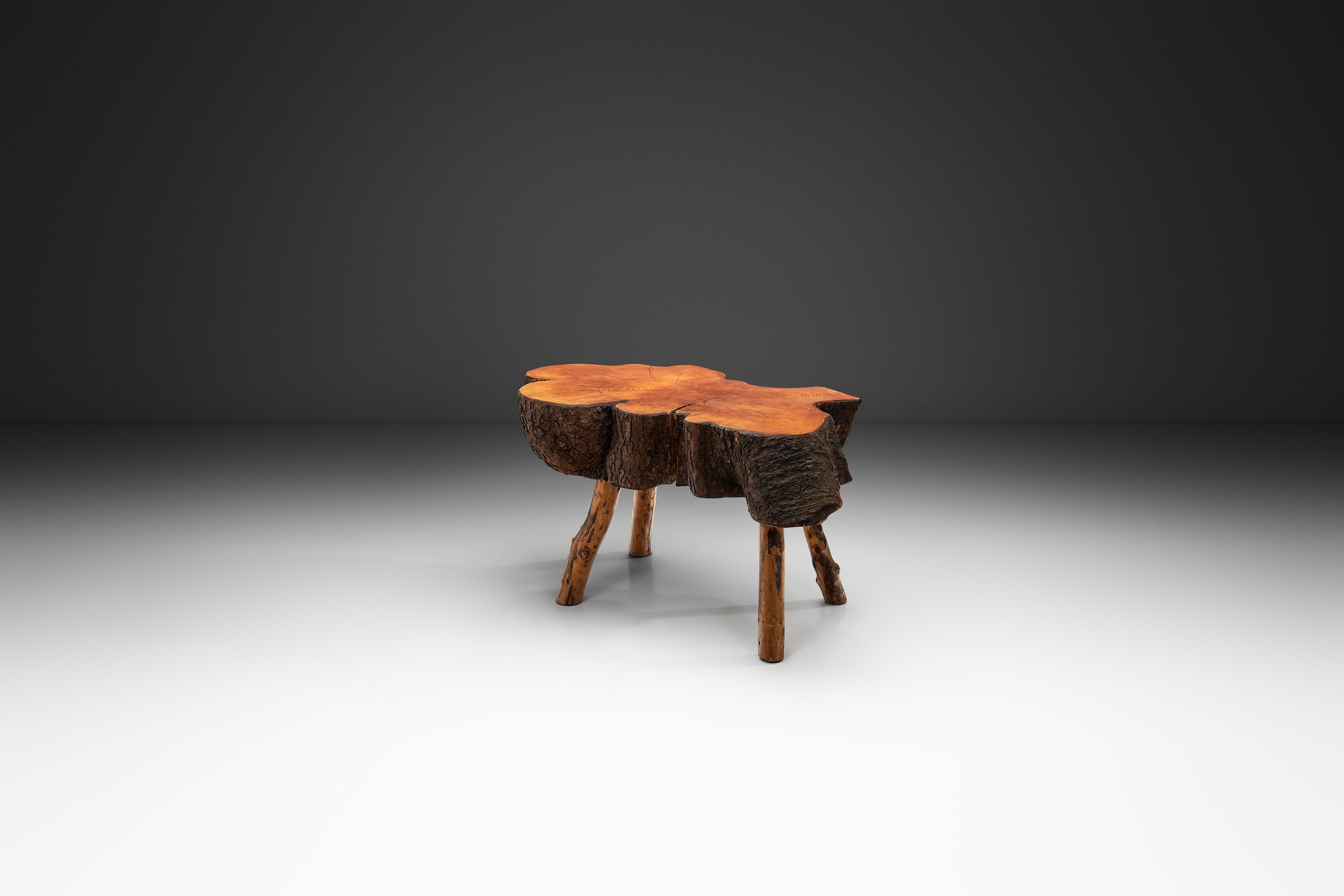
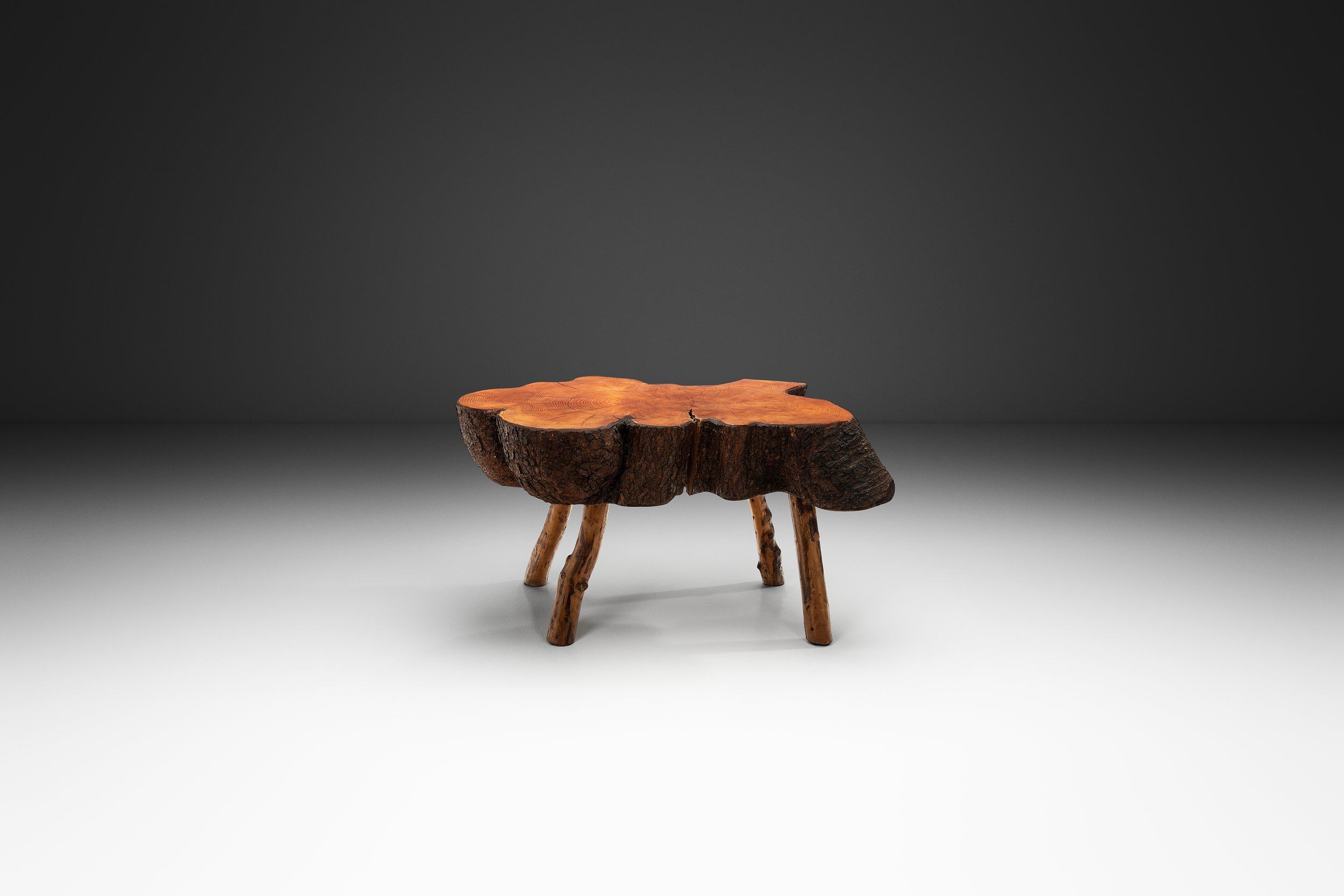
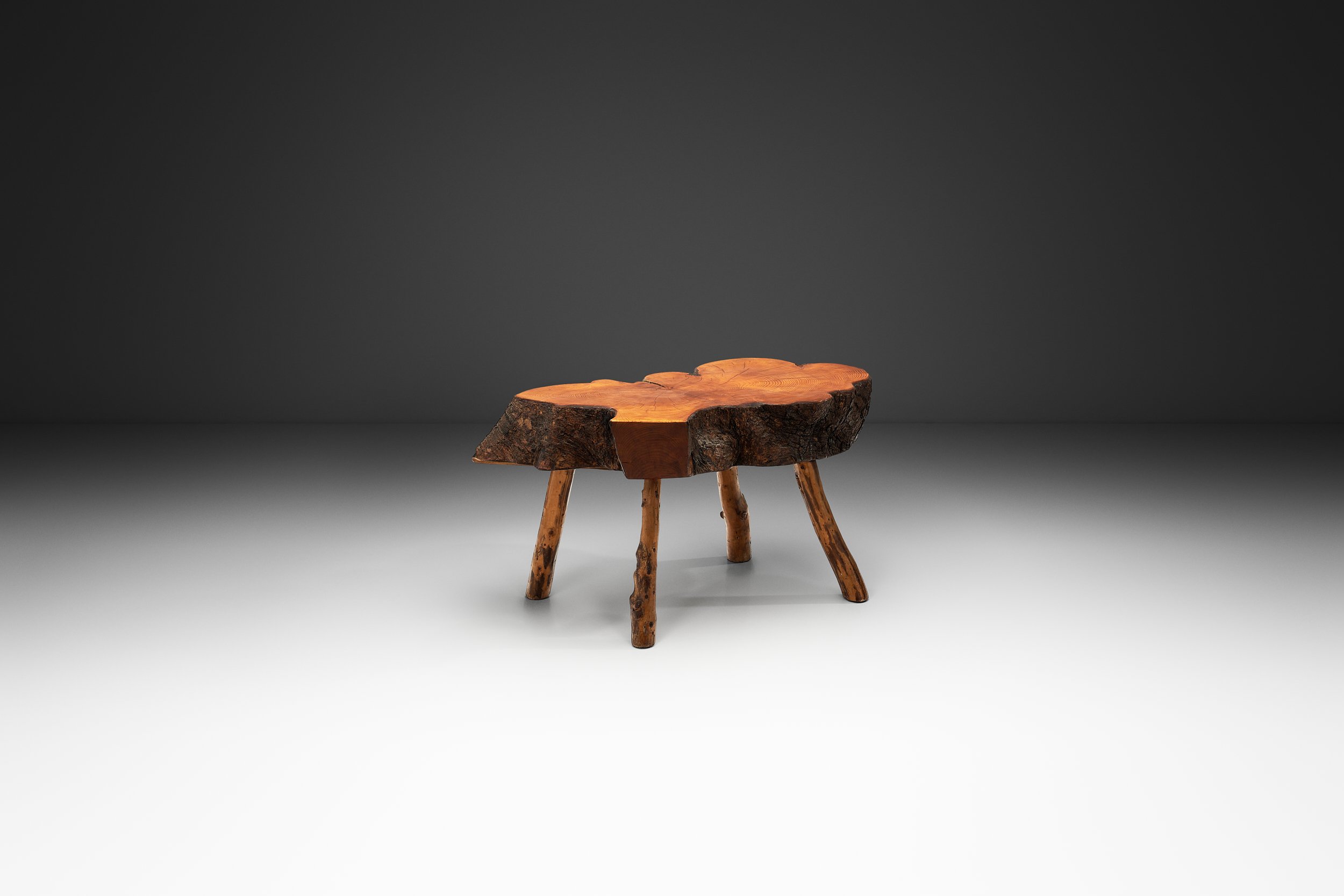
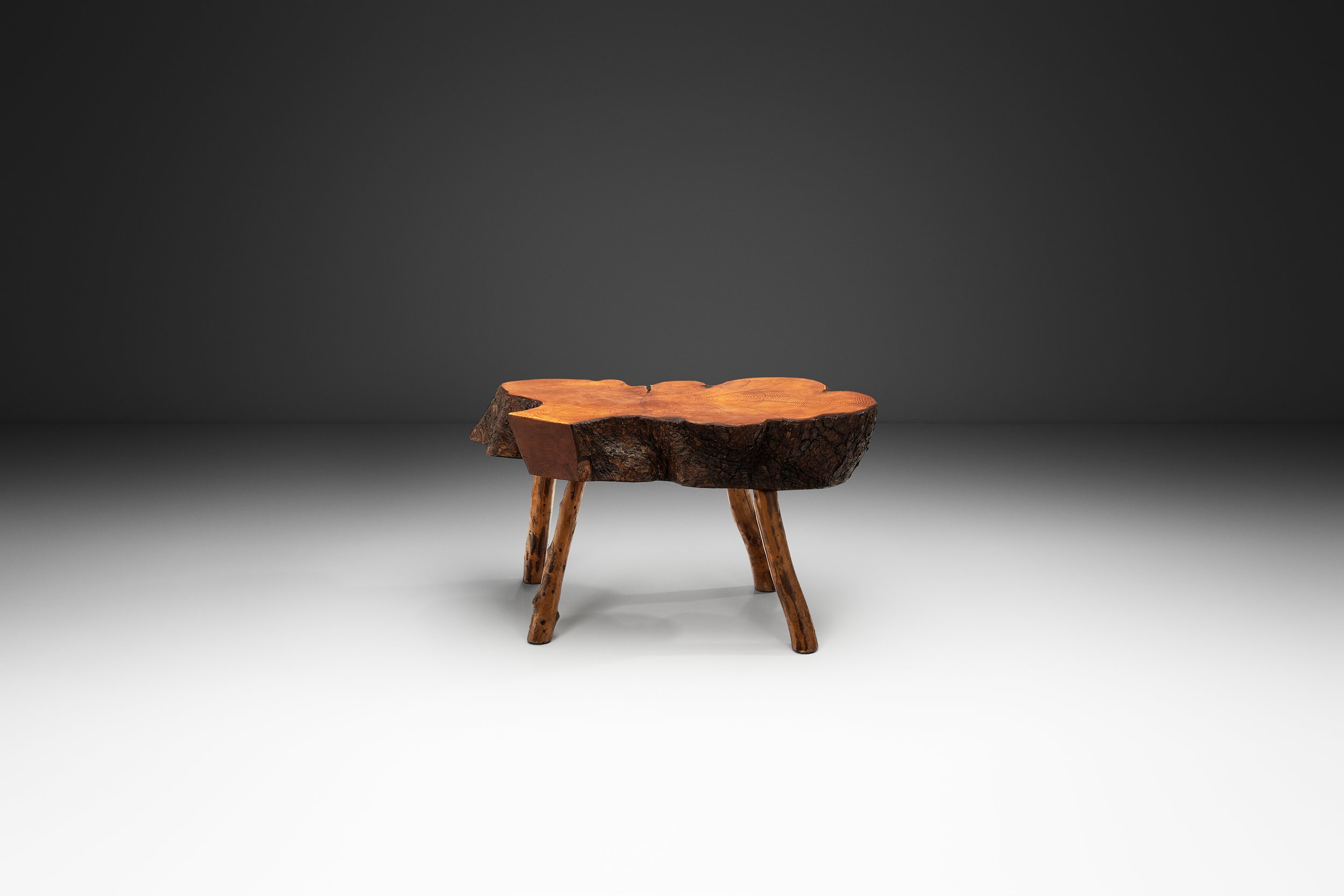
Tree Trunk Coffee Table with Branch Legs, Europe ca 1970s


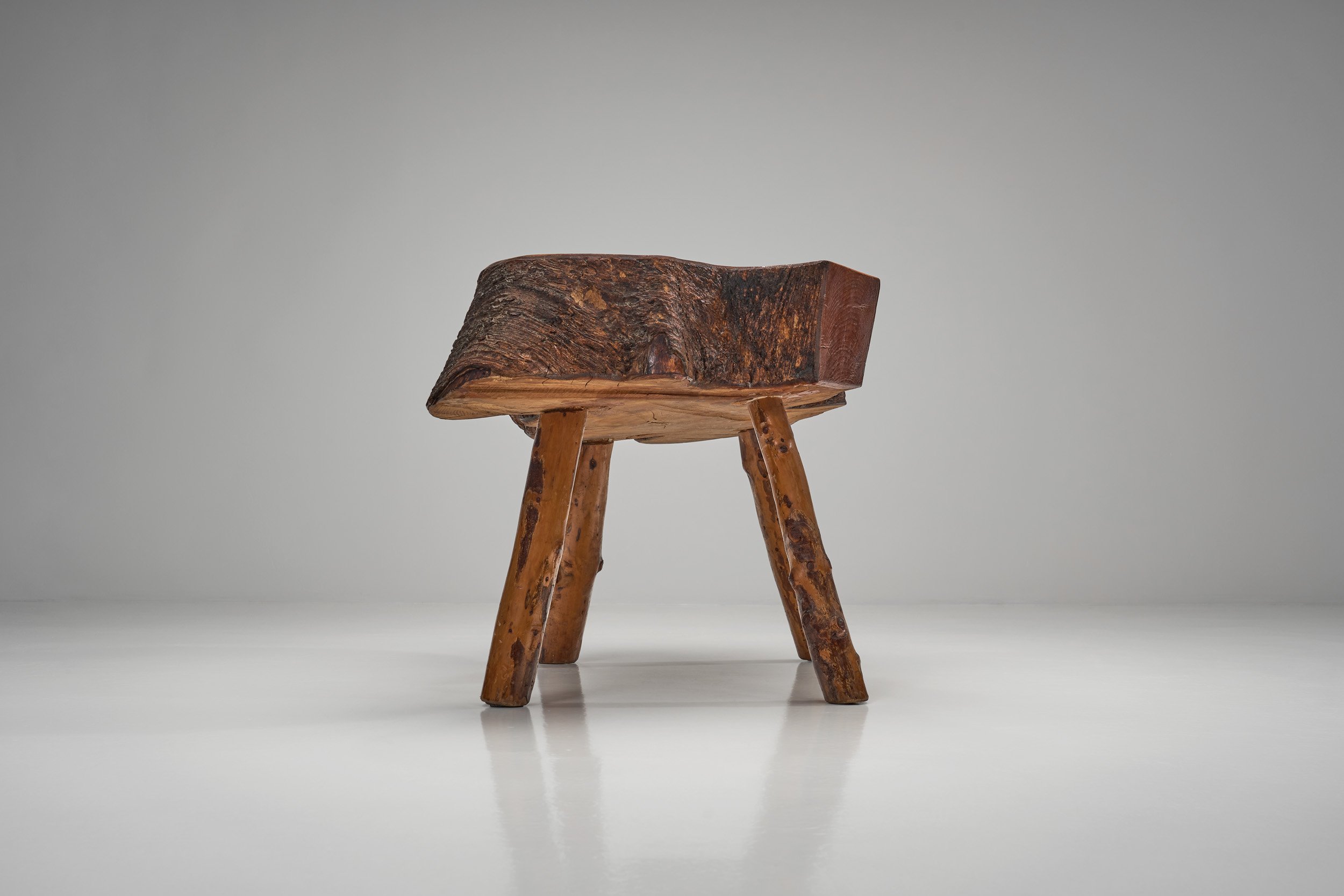

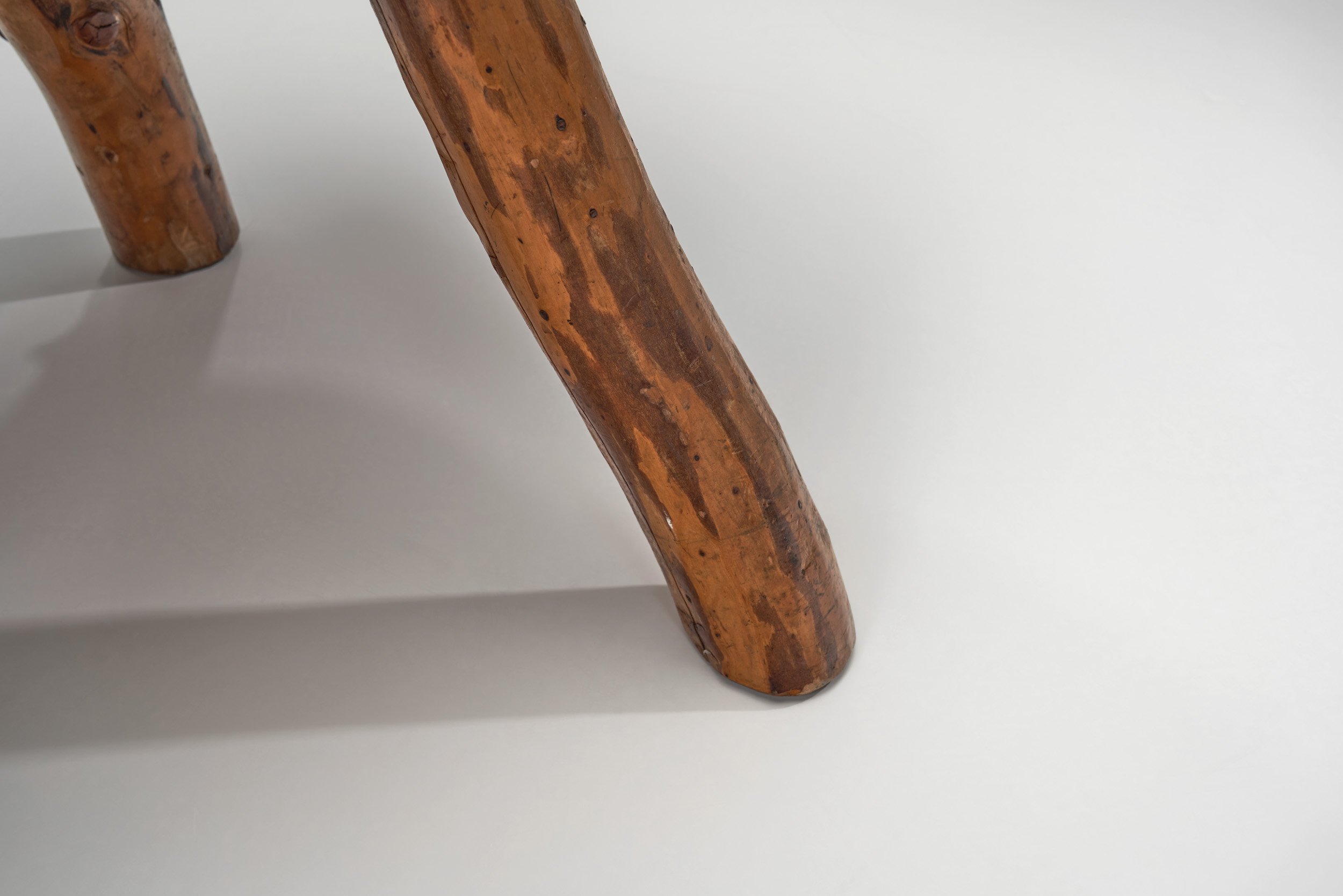
Tree Trunk Coffee Table with Branch Legs, Europe ca 1970s
REQUEST PRICE HERE
Price category: 2,500 - 5,000 usd / eur
In most European mid-century designs, there was an early emphasis on wood as it connected everyday objects, such as furniture to nature. This spectacular solid wood coffee table is a perfect example of this sentiment, and the visual benefits of an understated, organic design.
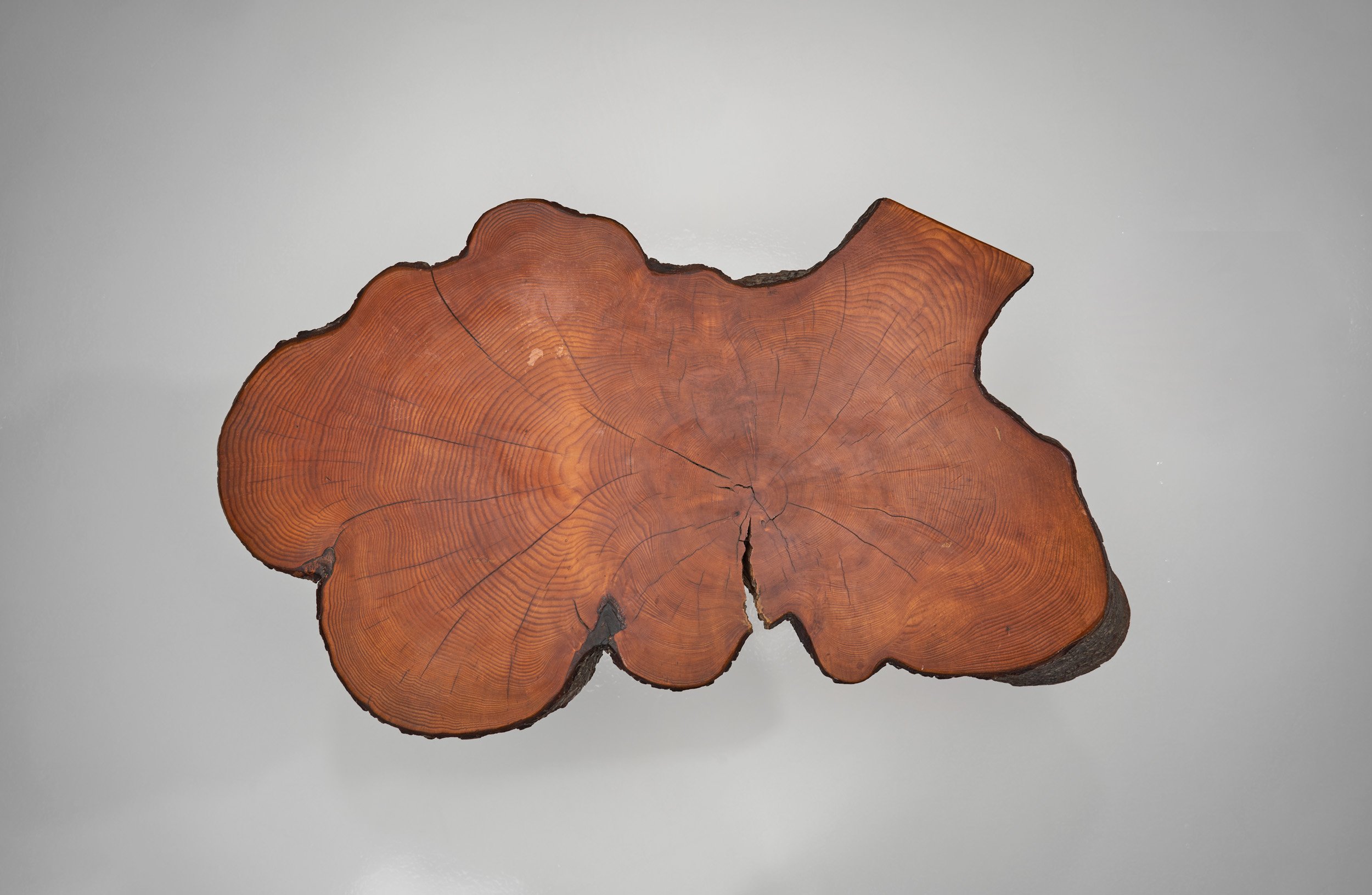
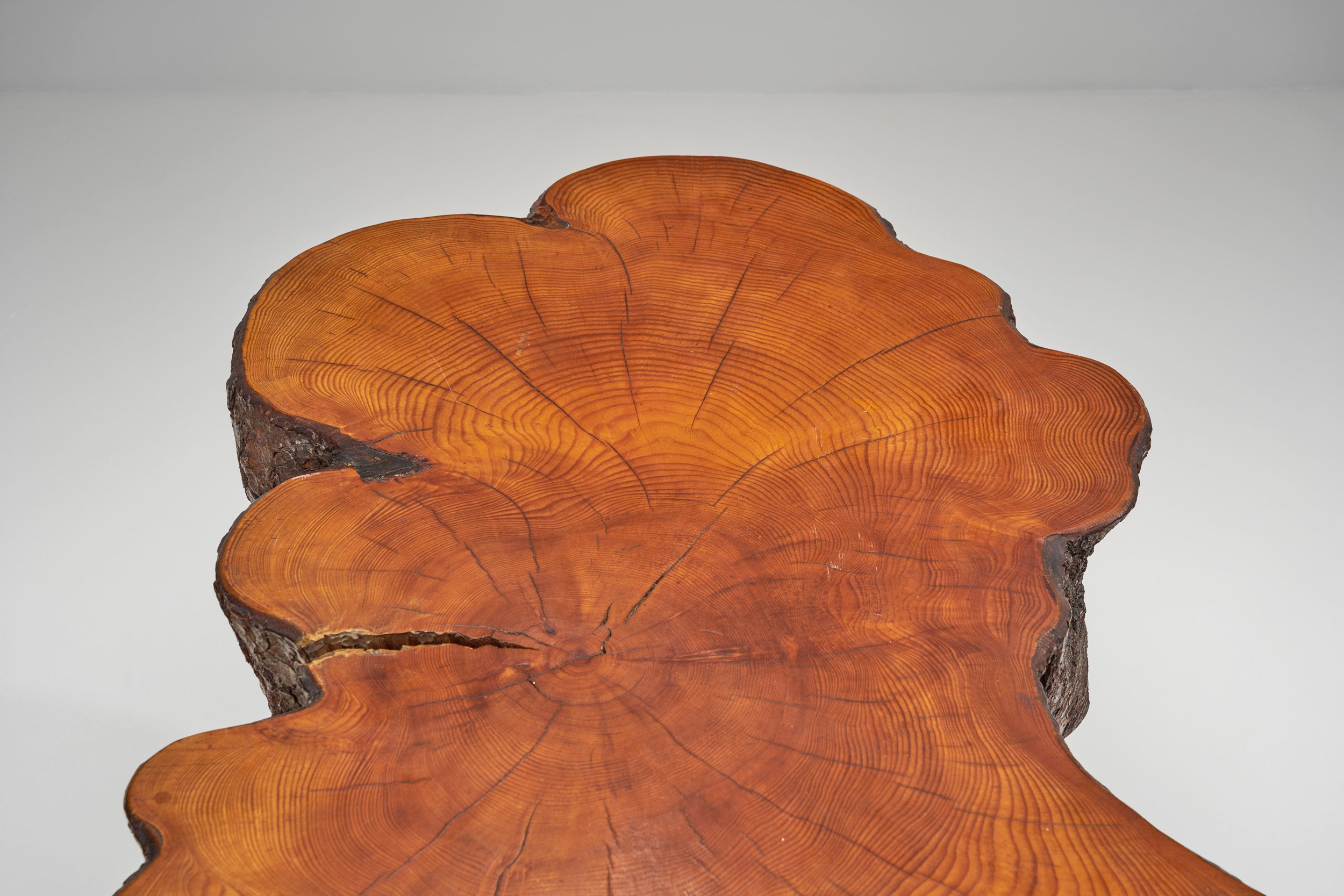
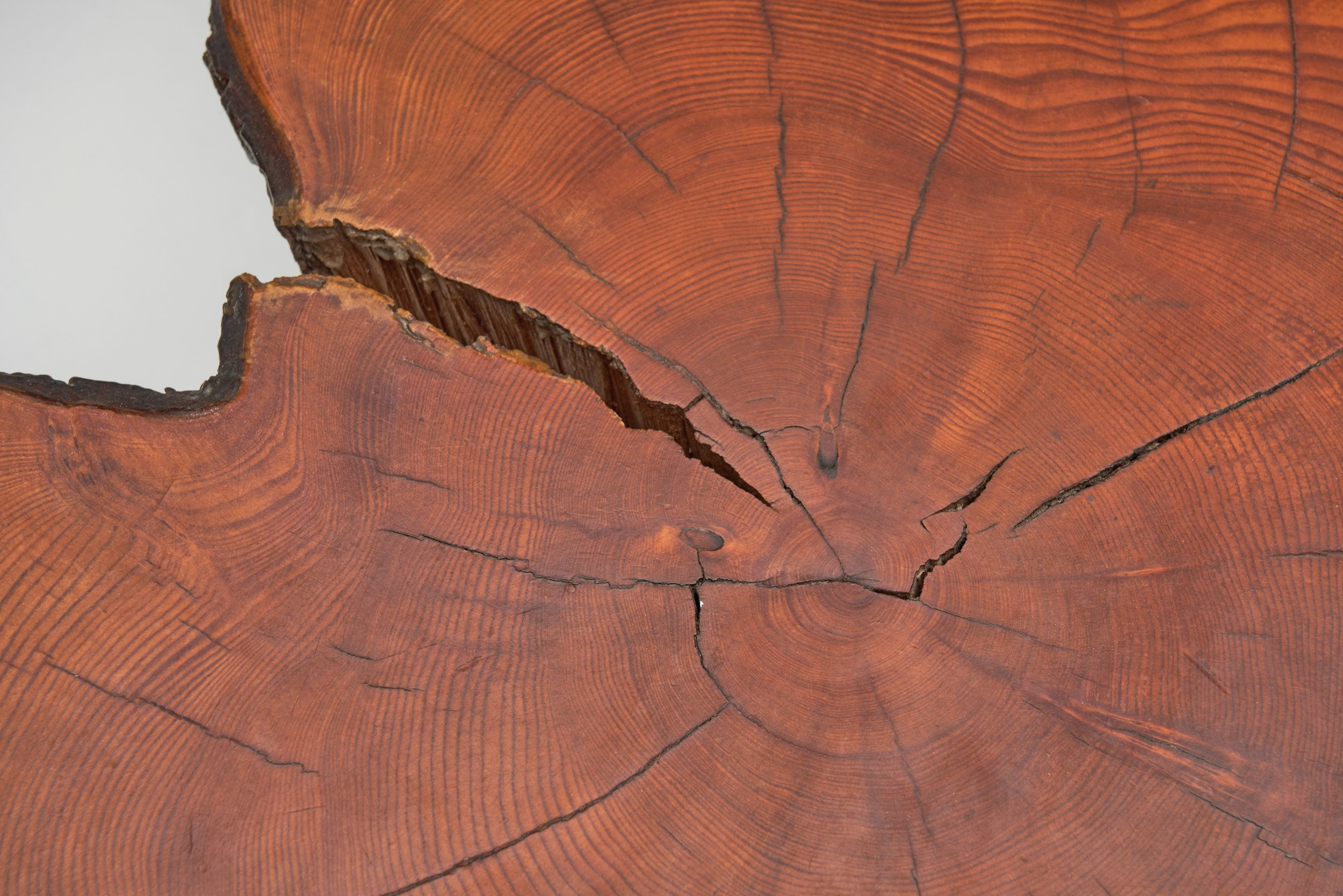
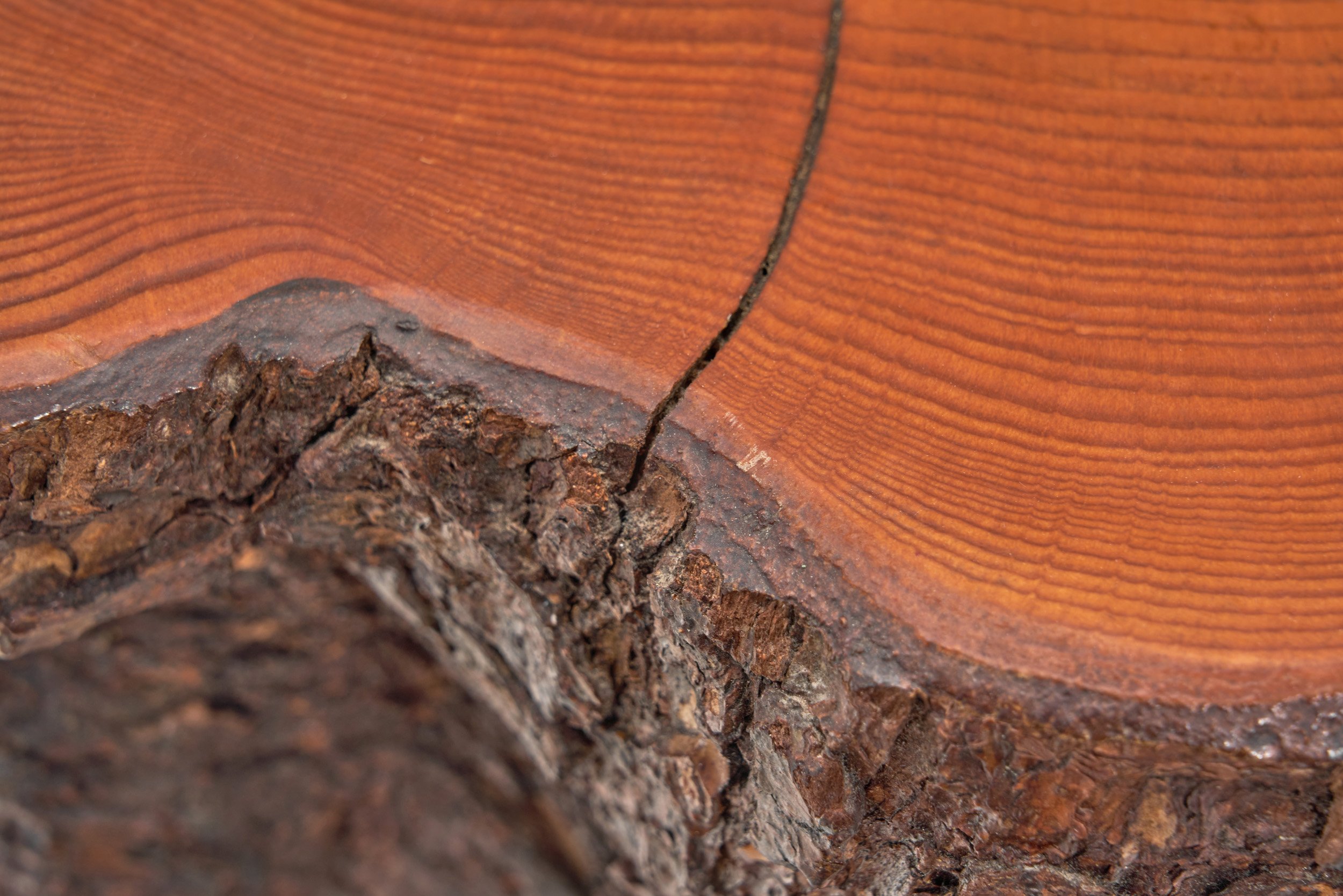
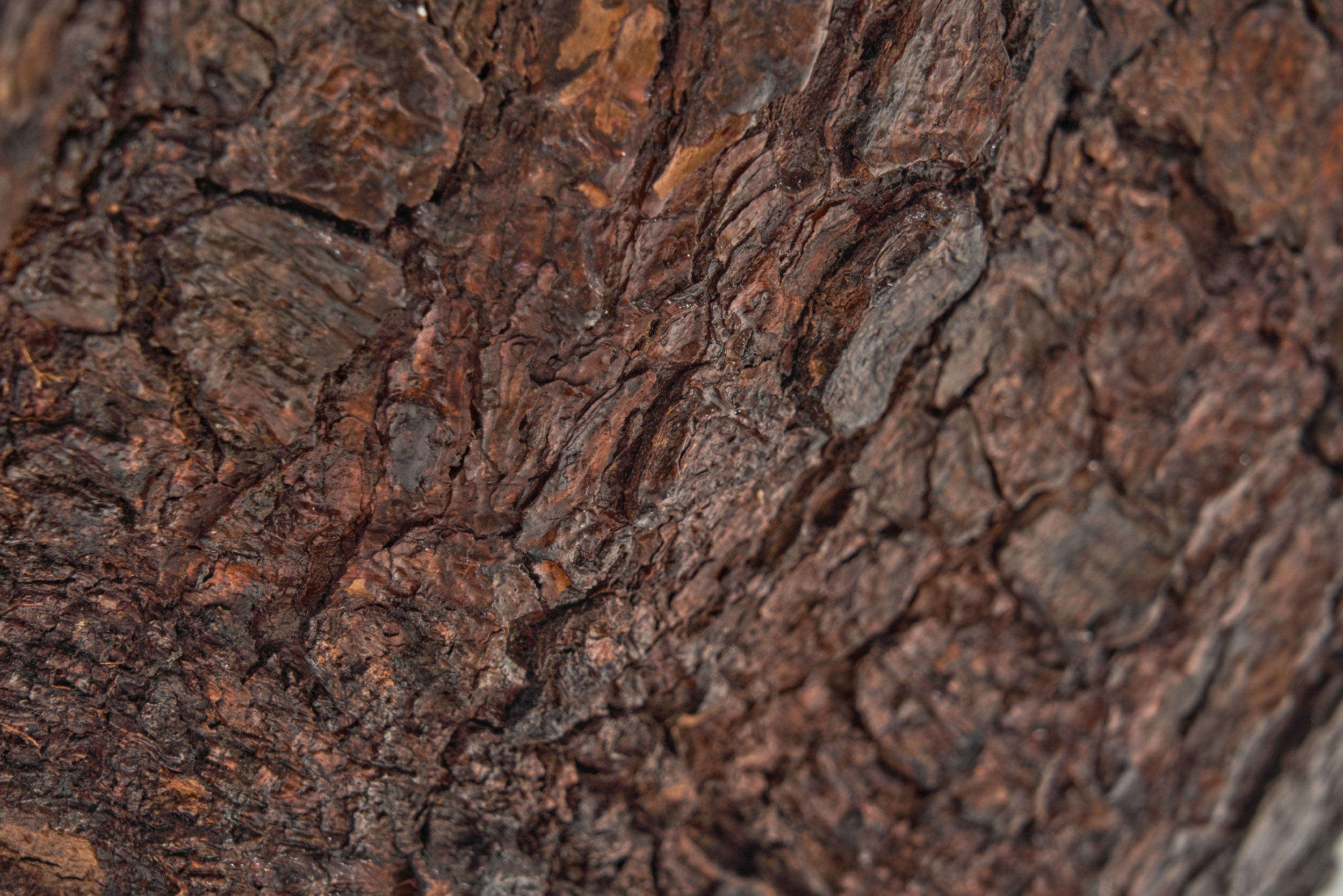
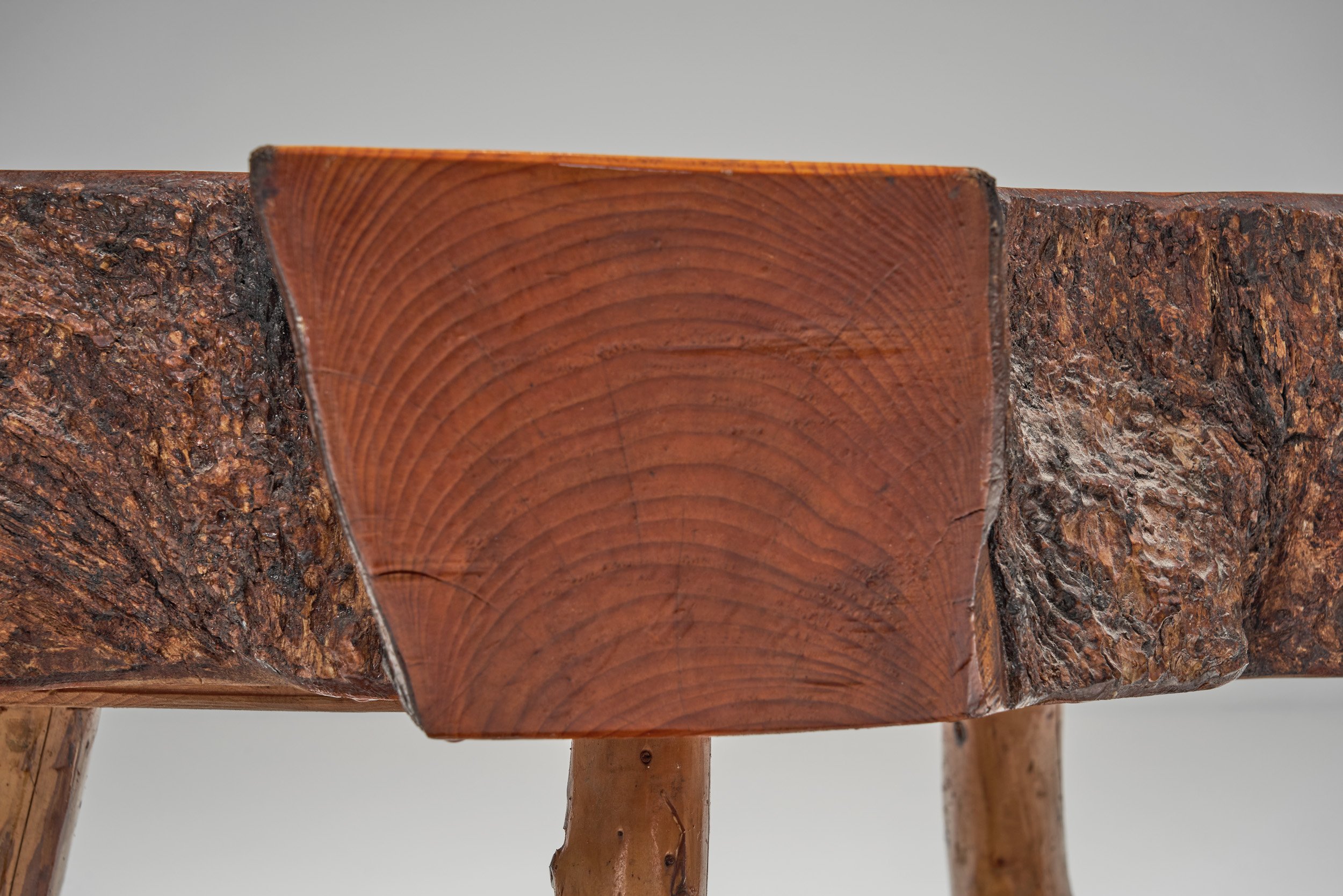
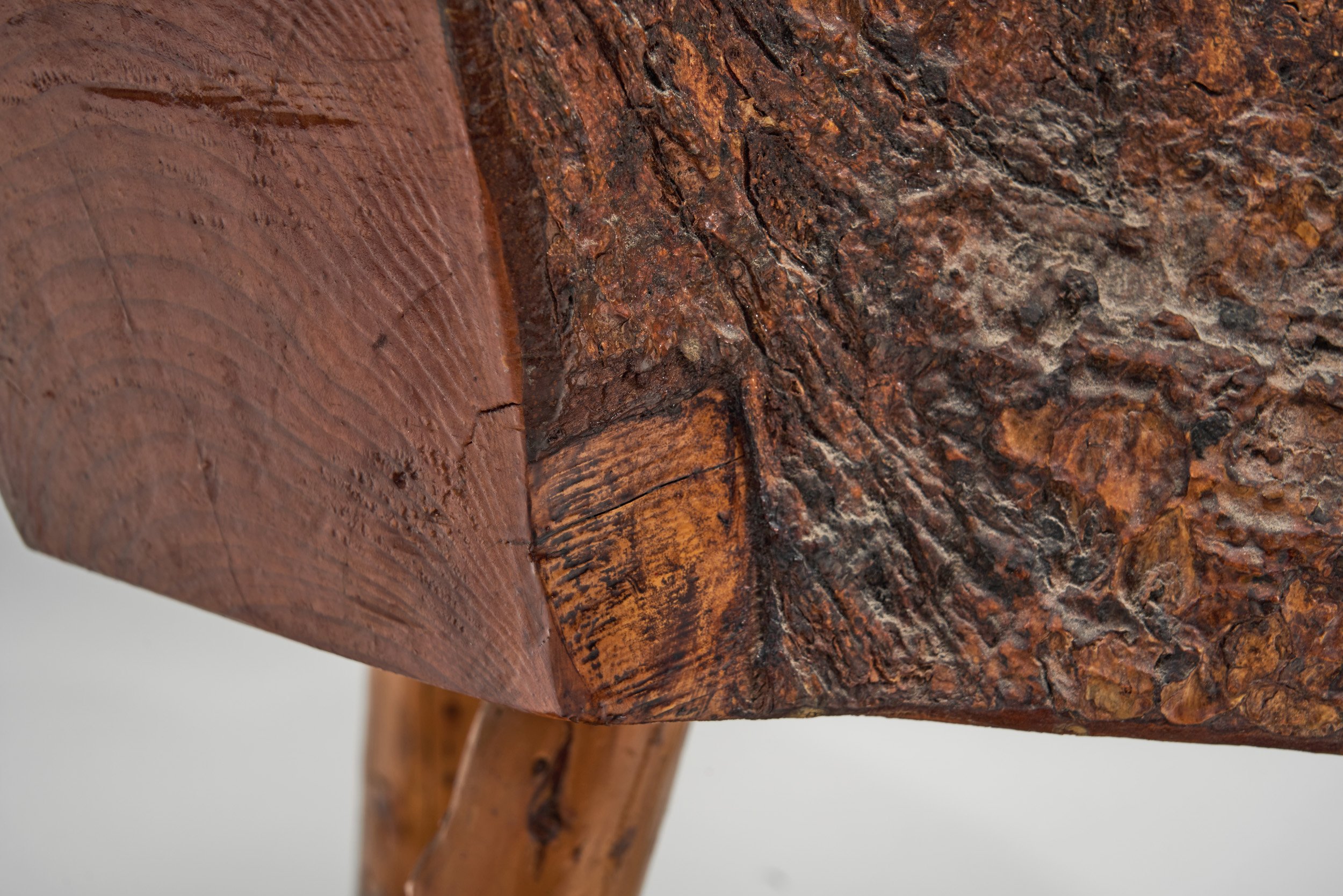
This coffee table reflects a Brutalist ethos through its bold presence and sculptural look. The piece features a free-form top made from solid wood, its organic shape and swirling grain patterns showcase the wood’s natural drama. The grain is not merely a surface detail; it becomes an integral part of the design, contributing to the overall aesthetic of the table, making it entirely unique. The interplay of the asymmetrical and sculptural top with the grounding presence of the legs result in a piece that is both rugged and refined. As there are strong and distinctive details, this model is a perfect accent table, while also being capable to complement its surroundings. It could fit well in a modern interior, as well as in a minimalist space.
This solid wood table, with its natural finish, exemplifies the enduring charm and warmth that 20th century design continues to bring to contemporary interiors, underscoring the timeless appeal of this iconic design era.
Condition:
In good vintage condition. Wear consistent with age and use. The table has recently been reconditioned. Some minor chips in the wood. Due to the nature and age of the wood, the item may have some marks, scratches, and discolouration.
Dimensions:
24.41 in W x 44.48 in D x 23.62 in H
62 cm W x 113 cm D x 60 cm H
REQUEST PRICE HERE
Price category: 5,000 - 7,500 usd / eur
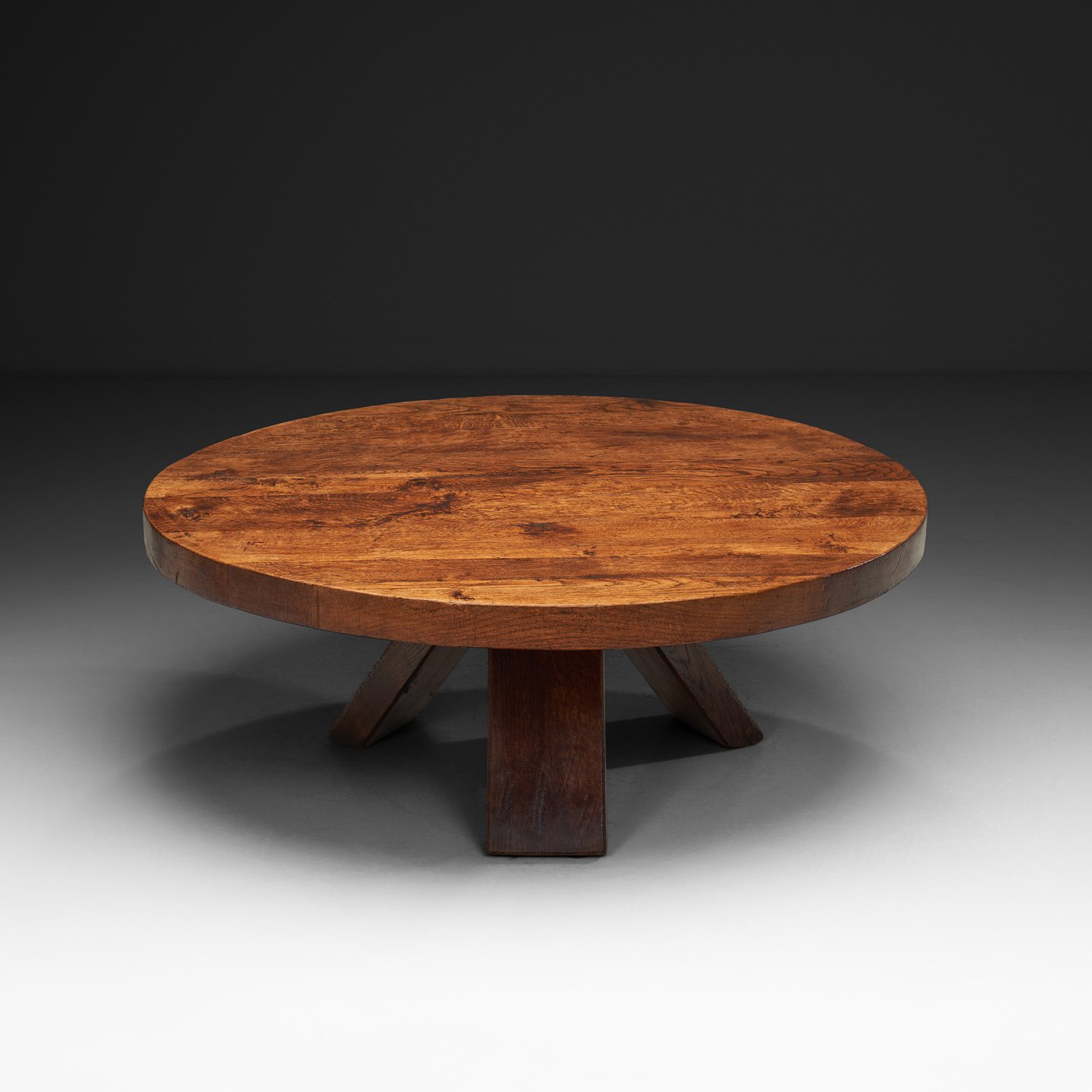
In European design during the mid-20th century, there was an emphasis on wood because it connected everyday objects to nature. This solid oak coffee table is a perfect example of this sentiment, and features the visual qualities of an understated, raw brutalist design. Humble in its material and size, this table still draws attention thanks to its distinctive look and personality.
In the thriving design landscape of 1970s Netherlands, the emergence of Brutalist furniture left an indelible mark on design, and this round oak coffee table epitomises that era's aesthetic medley. Crafted from solid oak, the light hue exudes warmth amidst the traditional stark Brutalist design. The movement was embraced as a rejection of ornate embellishments, through honest, utilitarian forms. Oak became the material of choice for many Brutalist pieces due to its durability and malleability, enabling intricate yet robust constructions. This round coffee table’s neat woodworking and splayed legs add a modern flair to the otherwise organic form, embodying the movement's desire to merge functionality with aesthetics. The contrast of sleek lines against the natural grain of oak echoes the broader Brutalist ethos: blending the industrial with the organic.
This coffee table has a strong elemental feel to it, which is a result of its thick round tabletop and sturdy but also sleek legs. The focus is on the material, letting the beautiful qualities of the oak wood stand out. This model is a perfect accent table, visually stimulating, while also complementing its surroundings.
Condition:
In good vintage condition. Wear consistent with age and use. The item has recently been reconditioned. Due to the nature and age of the wood, the item has some marks, scratches and discolouration.
Dimensions:
43.11 in ø x 16.53 in H
109.5 cm ø x 42 cm H
REQUEST PRICE HERE
Price category: 5,000 - 7,500 usd / eur
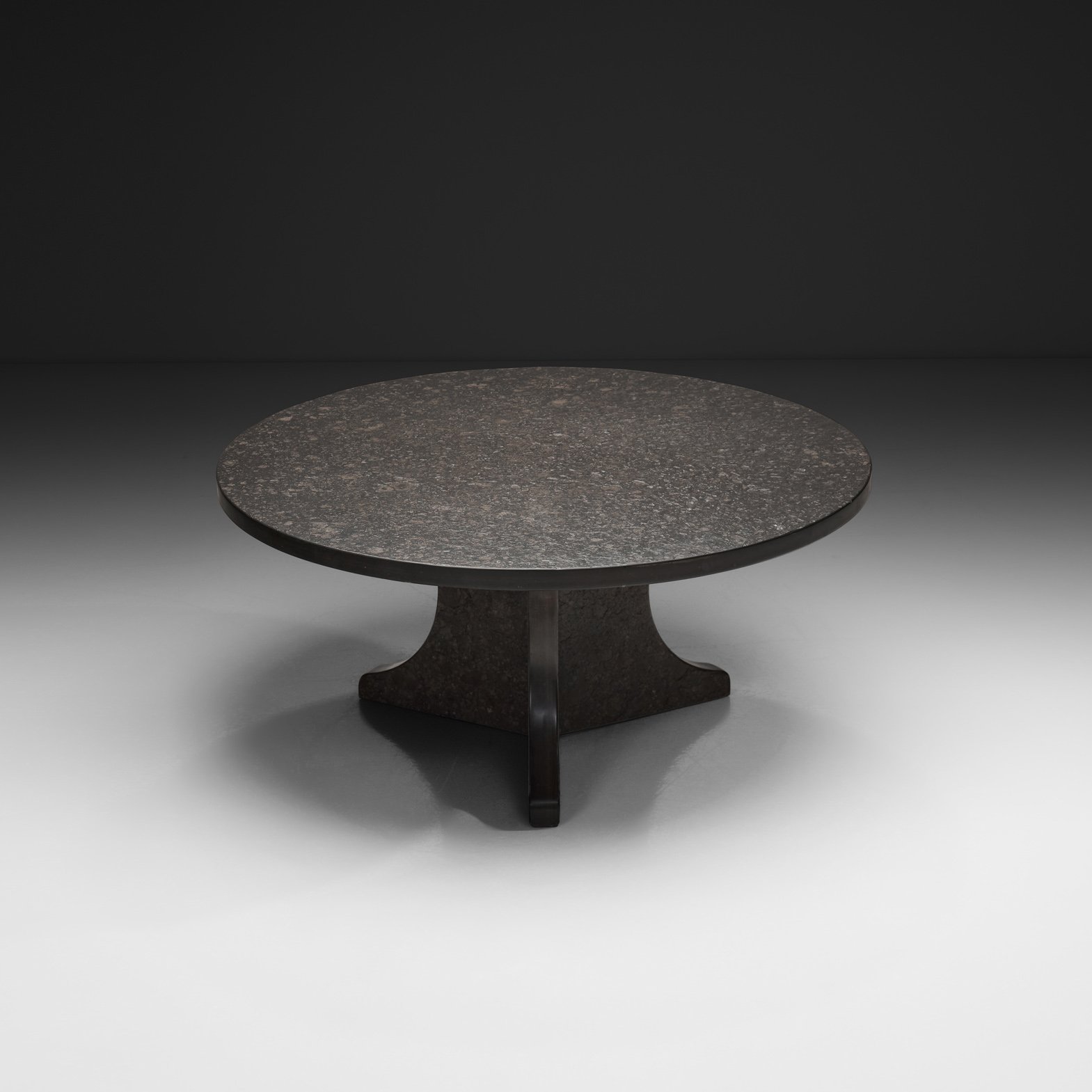
The Brutalist movement of the mid-20th century was known for its use of bold forms and imperfect organic materials, and gave rise to balanced, straightforward designs both in architecture and interiors. The skilled craftsmanship behind the construction of Brutalist furniture resulted in beautiful statement pieces, which celebrated and showcased the striking features of raw materials like stone.
The main design element of this model is the table's base, forming a stable and visually intriguing triangle. The choice of stone as the primary material for this coffee table adds a layer of sophistication and timelessness. The grain of the stone is not merely a surface detail; it becomes an integral part of the design, contributing to the overall aesthetic of the piece, making it entirely unique. While it is elemental thanks to the stone and interesting construction, the roundness of its top and its sculpted base still provide a sense of gentleness. It is this well measured tension between the shapes that make the design eye-catching and infinitely interesting. With its strong and distinctive details, this table model is a perfect accent table, while also being capable to complement its surroundings. This piece could fit well in a modern interior, as well as in a minimalist space.
Coffee tables, in general, serve as design staples in living spaces for a multitude of reasons: beyond their utilitarian function of providing a surface for drinks and books, they anchor a room, creating a focal point around which furniture and conversation revolve. This coffee table, with its distinctive design and robust material, becomes more than just a functional piece; it becomes a statement, a conversation starter, and a timeless addition that will elevate the aesthetics of any space it occupies.
Condition:
In good vintage condition. Wear consistent with age and use. The table has recently been reconditioned. Due to the nature and age of the materials, the item has have some marks, scratches, and dents.
Dimensions:
39.37 in ø × 18.3 in H
100 cm ø x 46.5 cm H
REQUEST PRICE HERE
Price category: 2,500 - 5,000 usd / eur
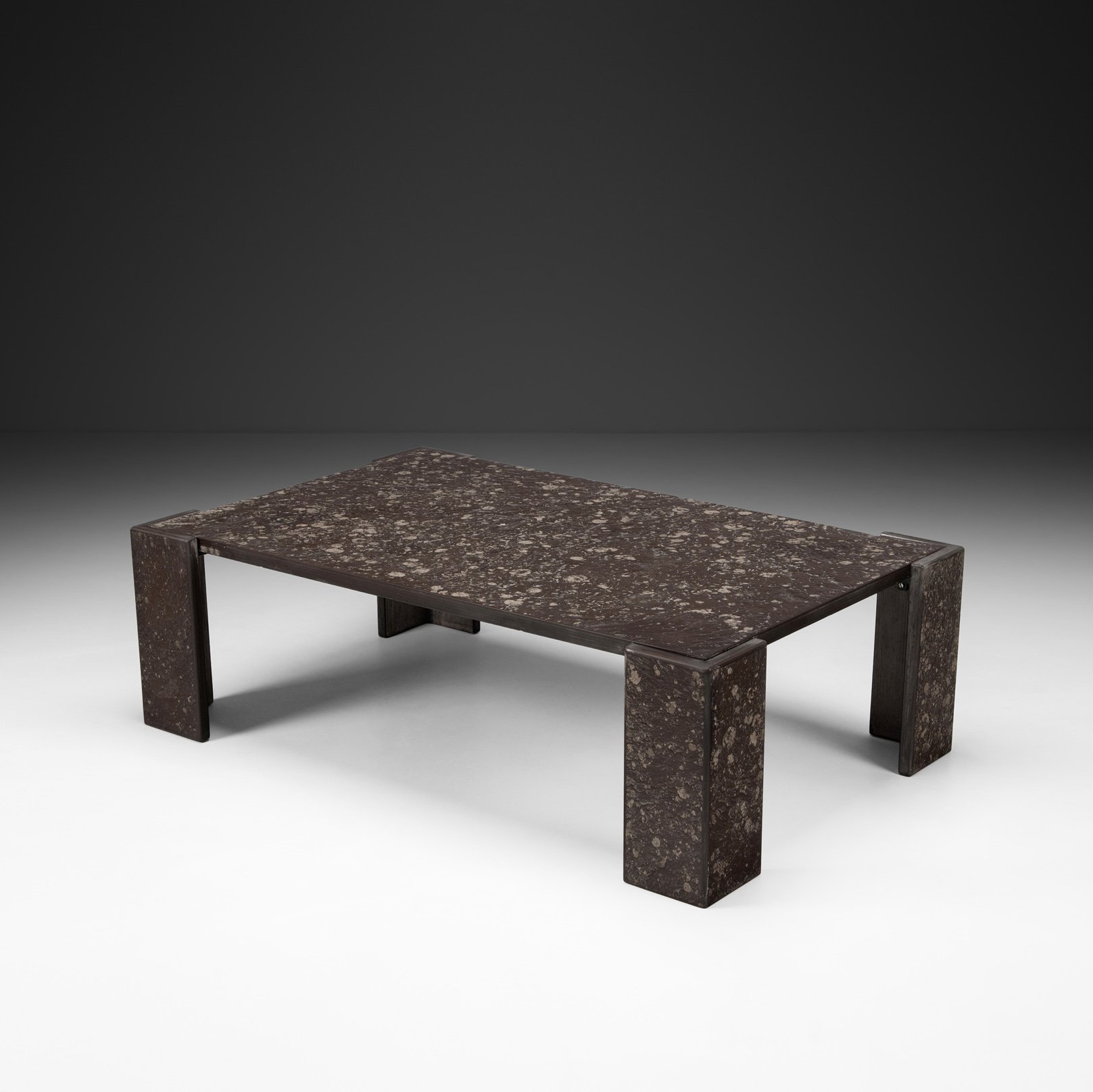
Brutalist furniture of the second half of the 20th century often gave materials a dominant role, using simple, bold forms to emphasise their natural colour and texture. Stone was particularly effective within this approach, as its irregular surface could provide visual richness without additional decoration. This Posidonia slate coffee table follows that principle closely, with a low architectural form built almost entirely around the distinctive character of the stone.
The coffee table has a broad rectangular top supported by four rectangular legs positioned at its corners. Its construction is extremely clear, with the horizontal tabletop and vertical supports creating a simple geometric structure. Posidonia slate makes up the entire surface, giving the table a consistent material character. The stone has a deep dark tone with lighter areas scattered irregularly across the surface. These natural variations break up the large flat plane and ensures that no area of the table appears completely uniform. The top is particularly effective in constituting a focal point, as its generous uninterrupted surface provides a clear view of the slate's complex pattern. The low height further emphasises the horizontal shape, allowing the long stone top to remain the main focus from every angle. Coffee tables, in general, serve as design staples in living spaces for a multitude of reasons: beyond their utilitarian function of providing a surface for drinks and books, they anchor a room, creating a point around which furniture and conversation revolve.
The strength of this coffee table comes from the direct relationship between its simple construction and expressive stone. This piece represents a particularly striking example of the material-focused furniture associated with the era.
Condition:
In good vintage condition. Wear consistent with age and use. The table has recently been reconditioned. Due to the nature of material, the item has some marks, scratches, and discolouration.
Dimensions:
53.35 in W x 33.66 in D x 16.14 in H
135.5 cm W x 85.5 cm D x 41 cm H
REQUEST PRICE HERE
Price category: 5,000 - 7,500 usd / eur
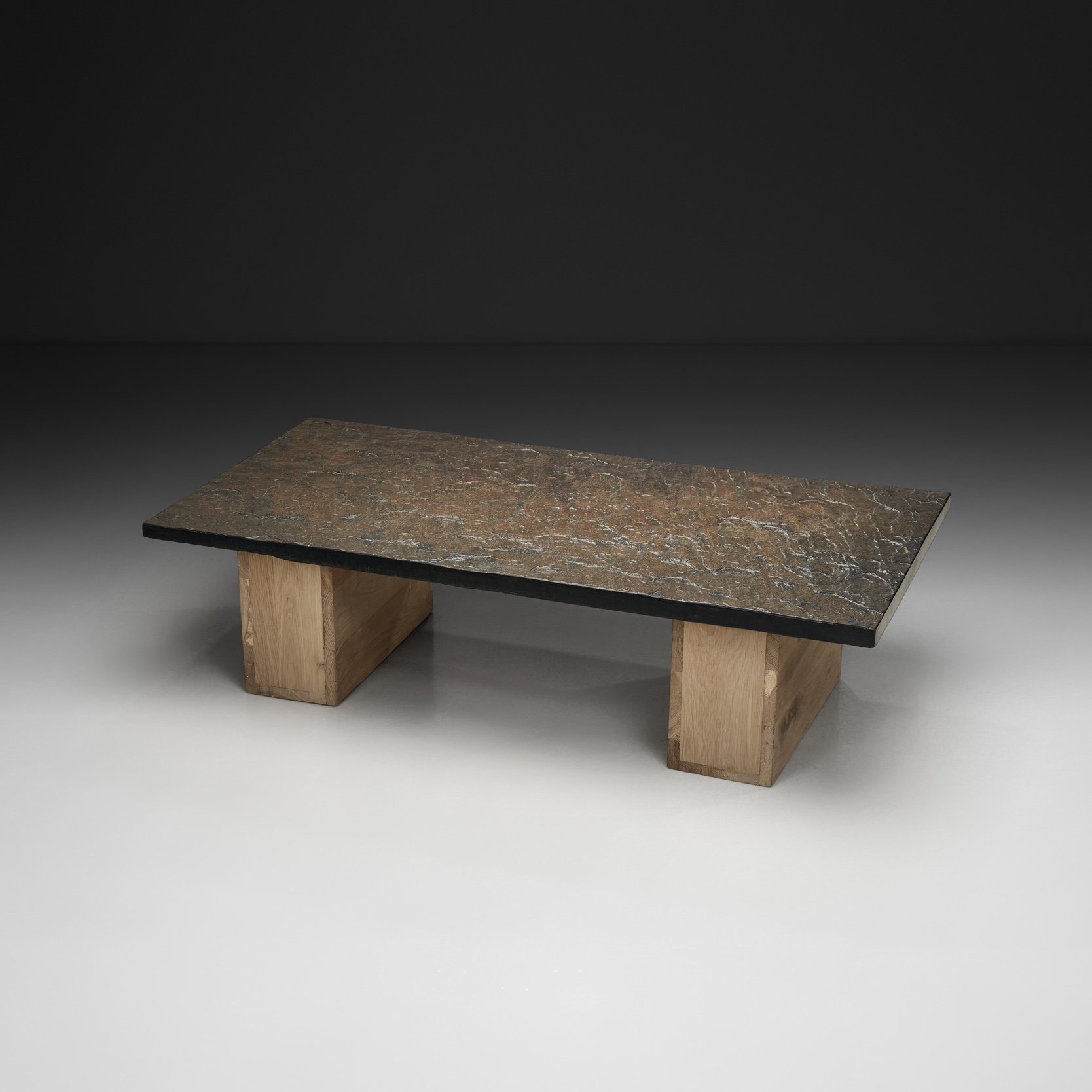
In the European design landscape of the mid-20th century, Brutalism emerged as a distinct architectural and artistic movement, influencing not only buildings but also furniture design. The 1950s and 1960s witnessed the rise of Brutalist furniture pieces, often showcasing the marriage of raw, unfinished materials and sculptural forms. Today, this style has made a remarkable comeback, capturing the essence of a bygone era while still resonating with contemporary sensibilities.
This table boasts a robust, almost industrial aesthetic, marrying form and function with an unapologetic rawness. Its bold, unapologetic aesthetic resonates with those seeking a departure from the sleek minimalism of recent years. Its design showcases a rectangular stone top and wooden block base. This combination of materials makes it a stylish example of the period’s design versatility. The unique colour variation of the stone top greatly adds to the visual interest of this piece. Stone nowadays is an indispensable element of interior design. Not only is it durable, but it has the power to arrest visual interest through its versatility. Brutalist furniture from Europe in many ways transcends the word ‘modern’, and so does this coffee table.
Coffee tables, in general, serve as design staples in living spaces for a multitude of reasons: beyond their utilitarian function of providing a surface for drinks or books, they anchor a room, creating a focal point around which furniture and conversation revolve. Overall, this table equally emphasises function and visual interest, creating an instantly arresting aesthetic.
Condition:
In good vintage condition. Wear consistent with age and use. The table has recently been reconditioned. Due to the nature and age of the materials, the item has some marks, scratches, and discolouration.
Dimensions:
55.11 in W x 27.55 in D x 14.37 in H
140 cm W x 70 cm D x 36.5 cm H
REQUEST PRICE HERE
Price category: 2,500 - 5,000 usd / eur
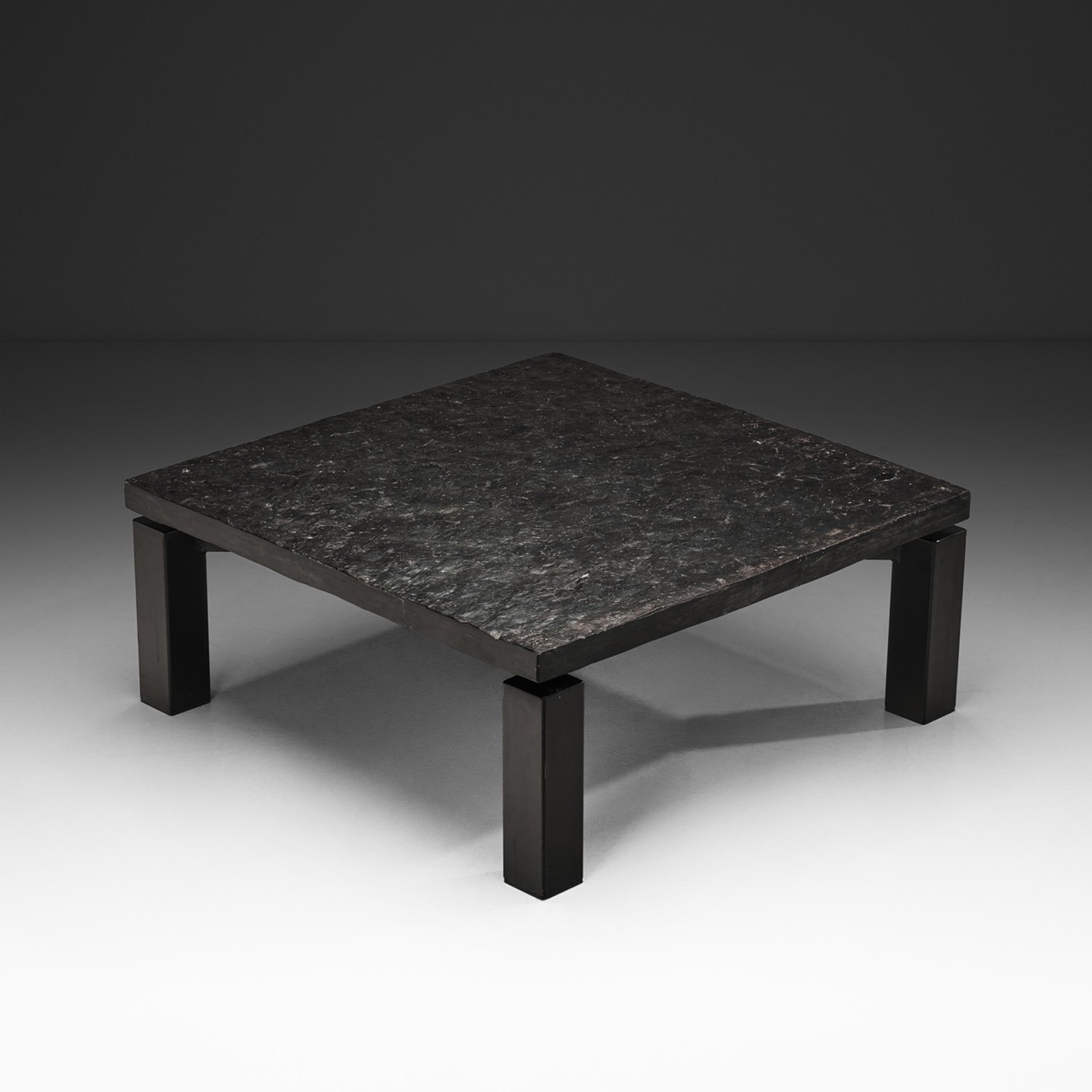
Crafted during a time of Brutalism and architectural innovation, this table boasts a robust, almost industrial aesthetic, marrying form and function with an unapologetic rawness. Its design showcases a Norwegian slate table top and a metal base. The skilled craftsmanship behind the construction resulted in a beautiful statement piece, which celebrates and showcases the striking features of raw materials like slate and stone.
Brutalist furniture from Europe in many ways transcends the word ‘modern’, and so does this coffee table. Like the style, this piece can be incorporated successfully into contemporary and traditional interiors alike, lending itself to a timeless and universal appeal. The coffee table's bold top features an appealing pattern and highly textural surface. As a result, the impression is quite elemental and striking. The surface of this coffee table shows the handwork that shaped it, making it one-of-a-kind. While slightly uneven, the top still remains functional as it can hold glasses, plates, or decorative pieces. Overall, this coffee table is striking in balancing its large volume with a clean geometrical shape. Stone nowadays is an indispensable element of interior design. Not only is it durable, but it has the power to arrest visual interest through its versatility.
The strength of this coffee table comes from the direct relationship between its simple construction and expressive stone. This piece represents a particularly striking example of the material-focused furniture associated with the era.
Condition:
In good vintage condition. Wear consistent with age and use. The table has recently been reconditioned. Due to the nature and age of the materials, the item has some chips, dents, and discolouration. Scratches are visible on the metal base of the table.
Dimensions:
35.43 in W x 35.43 in D x 13.77 in H
90 cm W x 90 cm D x 36.5 cm H
REQUEST PRICE HERE
Price category: 5,000 - 7,500 usd / eur
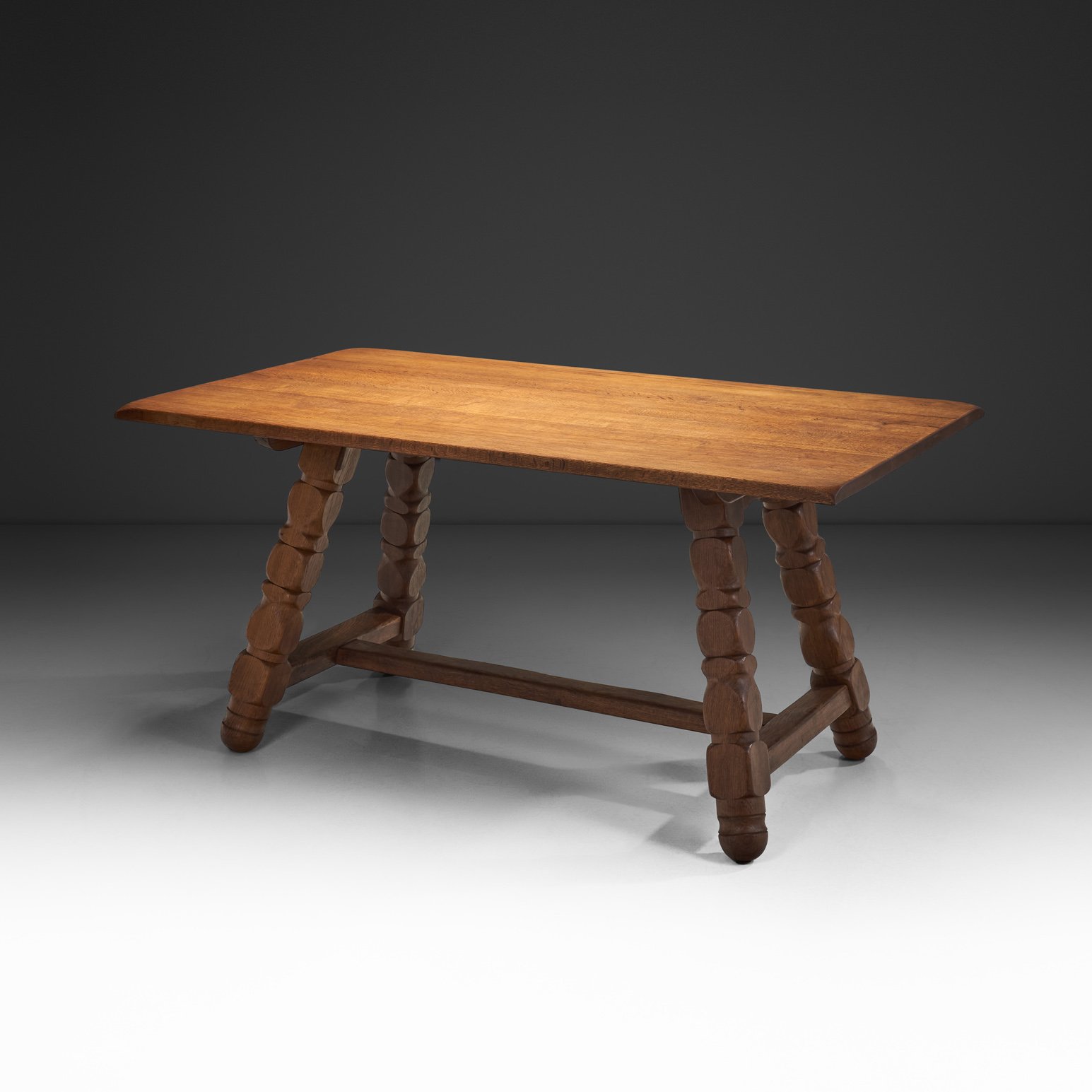
Firm believers in Functionalism, Danish designers and cabinetmakers avoided short-lived aesthetic trends, instead they concentrated on crafting with quality materials. This dining table is characterised by its functionalist design combined with a modern expression – the epitome of the Danish mid-century modern design philosophy.
Danish cabinetmakers were just as thorough and artistic about the proportions, the construction, the function, and about the style. With a clear statement of simplicity, quality and respect for materials, this table is a great example. The rectangular tabletop is made of solid oak, the surface shows off the beautiful grain including a colour variety ranging from light to dark brown. The warm tone of the oak wood creates a sense of lightness, while also projecting an air of strength and solidity. Oak has been the defining material in 20th century pieces partly due to its durability and malleability, enabling intricate yet robust constructions. The legs showcase the unique qualities of the wood, while also providing visual interest. The discreet joinery and seamless construction further reflect the emphasis on detail and quality, elevating the piece beyond just functional to an object of aesthetic value.
This solid wood table, with its natural finish, exemplifies the enduring charm and warmth that 20th century design continues to bring to contemporary interiors, underscoring the timeless appeal of this iconic design era. The maker of this table clearly focused on the material, letting the beautiful qualities of the oak wood stand out. This model will make a perfect addition to a range of interior styles.
Condition:
In good vintage condition. Wear consistent with age and use. The table has recently been reconditioned. Due to the nature and age of the material, the item may have some dents, scratches, and discolouration.
Dimensions:
62.99 in W x 35.63 in D x 29.13 in H
160 cm W x 90.5 cm D x 74 cm H
REQUEST PRICE HERE
Price category: 5,000 - 7,500 usd / eur
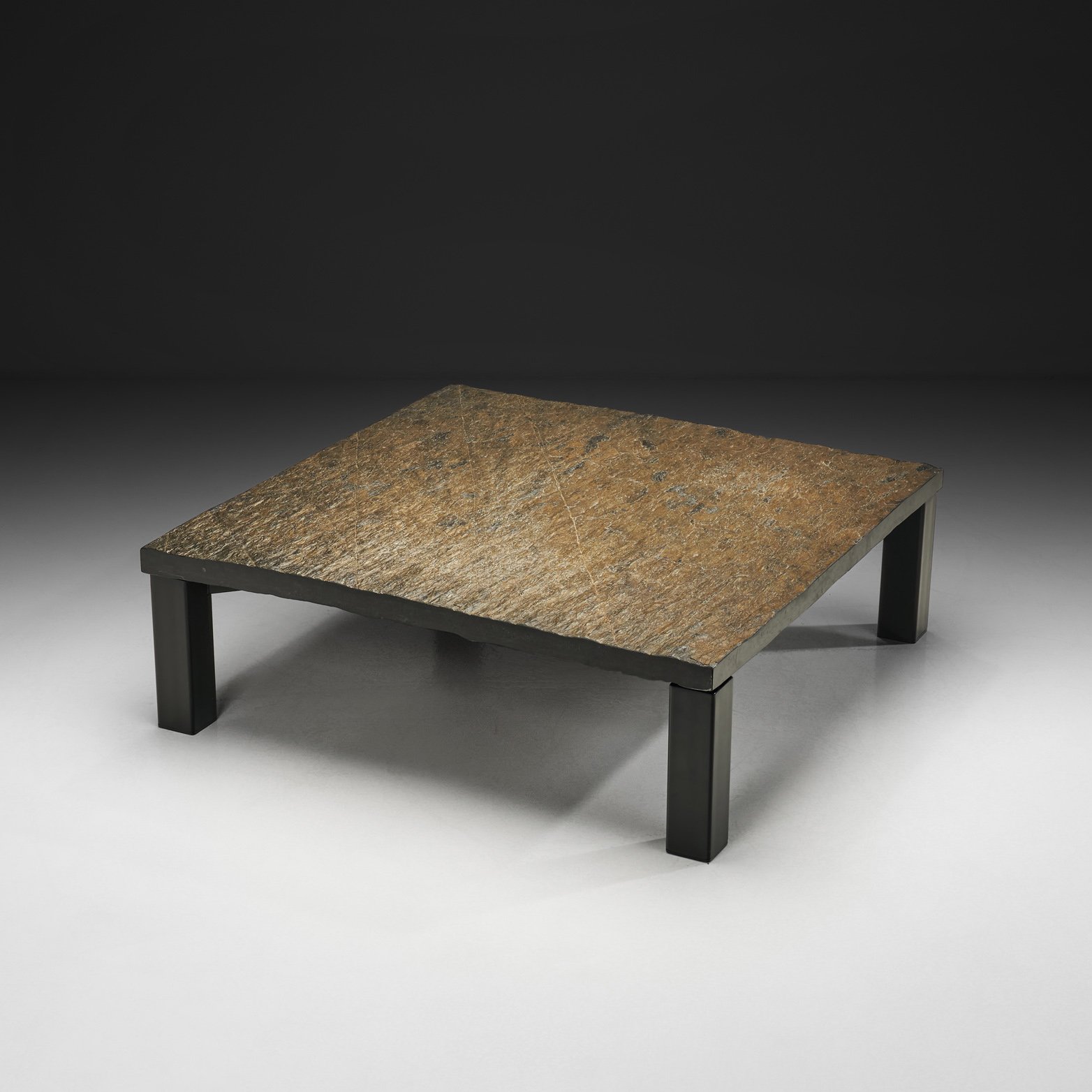
In general, Brutalist furniture, such as this brilliant stone and metal coffee table, stands as a testament to the visual benefits of the marriage of raw aesthetics and functionality. This table shows how bold forms and the organic character of imperfect materials can beautifully transform into standout pieces through the creativity of skilled craftsmen.
Crafted from robust and durable stone, this coffee table is a striking embodiment of the Brutalist movement's principles – simplicity, honesty, and an unapologetic celebration of materials. Utilising the unique qualities of the mediums and combining them with the expertise of its master craftsman, this coffee table is a beautiful piece that can both define and complement a modern space. The table's bold square top is made from a stone slab, with an appealing pattern and textural surface that perfectly reflects Brutalism’s connections with the raw character of materials. As a result, the impression is quite elemental and striking, particularly the stone’s natural earthy tones. In comparison, the metal base has a simple shape and dark finish, to not avert attention from the tabletop.
Coffee tables, in general, serve as design staples in living spaces for a multitude of reasons: beyond their utilitarian function of providing a surface for drinks and books, they anchor a room, creating a focal point around which furniture and conversation revolve. This coffee table, with its distinctive design and robust materials, becomes more than just a functional piece; it becomes a statement, a conversation starter, and a timeless addition that will elevate the aesthetics of any space it occupies.
Condition:
In good vintage condition. Wear consistent with age and use. The table has recently been reconditioned. Due to the nature and age of the materials, the item has some scratches, dents, and discolouration.
Dimensions:
43.3 in W x 43.3 in D x 13.77 in H
110 cm W x 110 cm D x 35 cm H
REQUEST PRICE HERE
Price category: 5,000 - 7,500 usd / eur
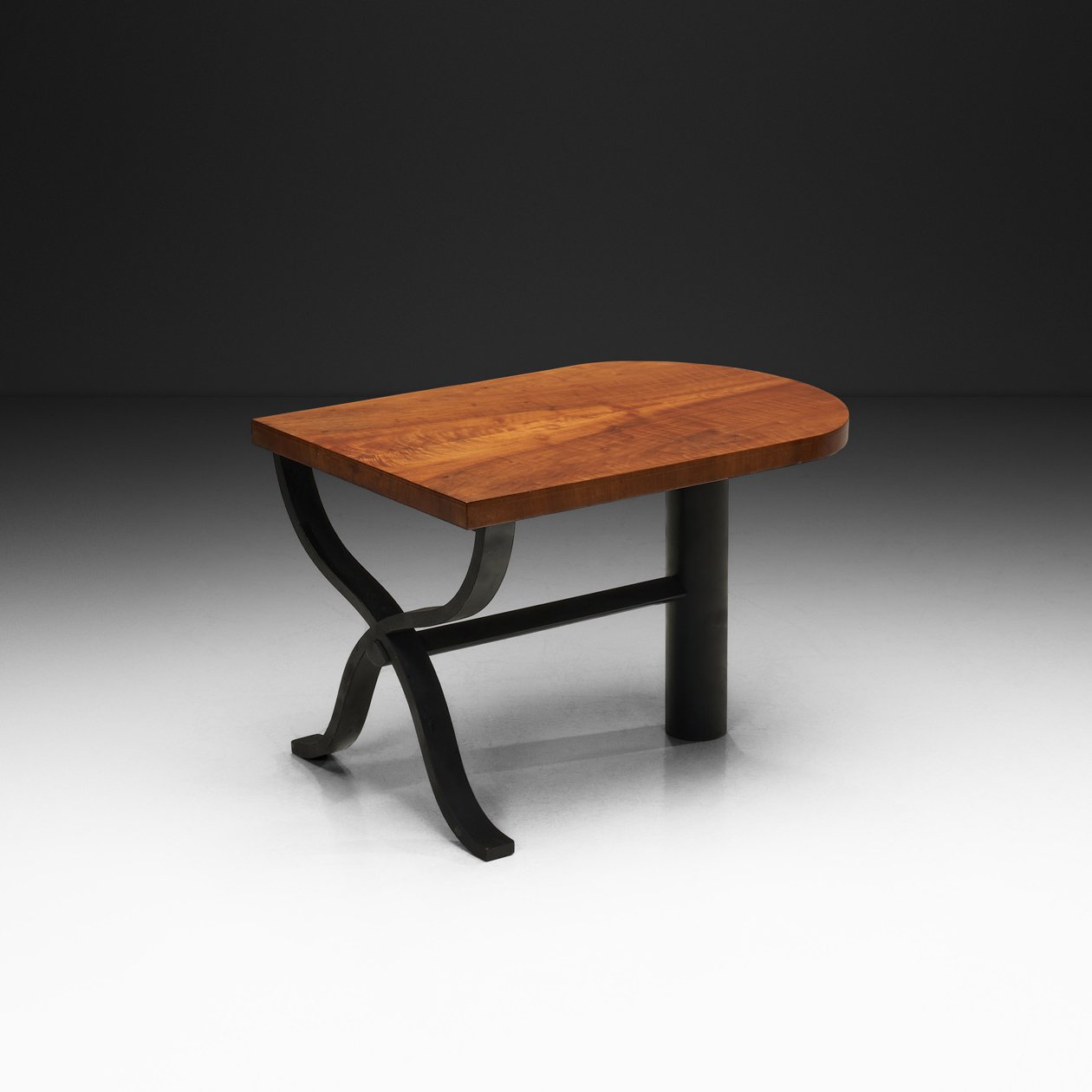
During the early 20th century, Europe was experiencing a dramatic shift in design sensibilities. Art Deco emerged as a response to the austerity of the previous era, blending modernist ideals with a love for luxury and ornamentation. It was a period that celebrated geometric forms, rich materials, and innovative craftsmanship. Even after the height of Art Deco had passed, many of its defining motifs continued to influence furniture production throughout Europe.
This Art Deco side table combines modern elegance with design tradition through the Savonarola style. The Savonarola originates from a chair found in the convent of San Marco in Florence which was used by the 15th century Italian Dominican priest Girolamo Savonarola. Savonarola-style pieces feature a lower structure built from intersecting or flowing supports. In Italian design, it was often constructed from wrought iron, where curved elements replace rigid straight lines and create a sense of movement within the structure. The base of this piece is painted wood yet it is strong and bold, and its curved lines prevent it from appearing rigid. On the other hand, the veneered top introduces warmth and brings the piece closer to nature. The rich grain of the wood complements the precision of the form, introducing organic variation across the surface. The crescent shape softens the piece even further, turning it into a homely addition to an interior.
The table reveals a constant interplay between material, shapes, and design choices that reveal its maker’s ability to integrate seeming oppositions. Compact in scale yet distinctive in appearance, it functions as a side table and decorative accent, bringing a touch of Art Deco elegance to a wide variety of interiors.
Condition:
In good vintage condition. Wear consistent with age and use. The table has recently been reconditioned. Due to the nature and age of the materials, the item has some marks, scratches, and discolouration.
Dimensions:
29.13 in W x 21.45 in D x 19.48 in H
74 cm W x 54.5 cm D x 49.5 cm H
REQUEST PRICE HERE
Price category: 5,000 - 7,500 usd / eur
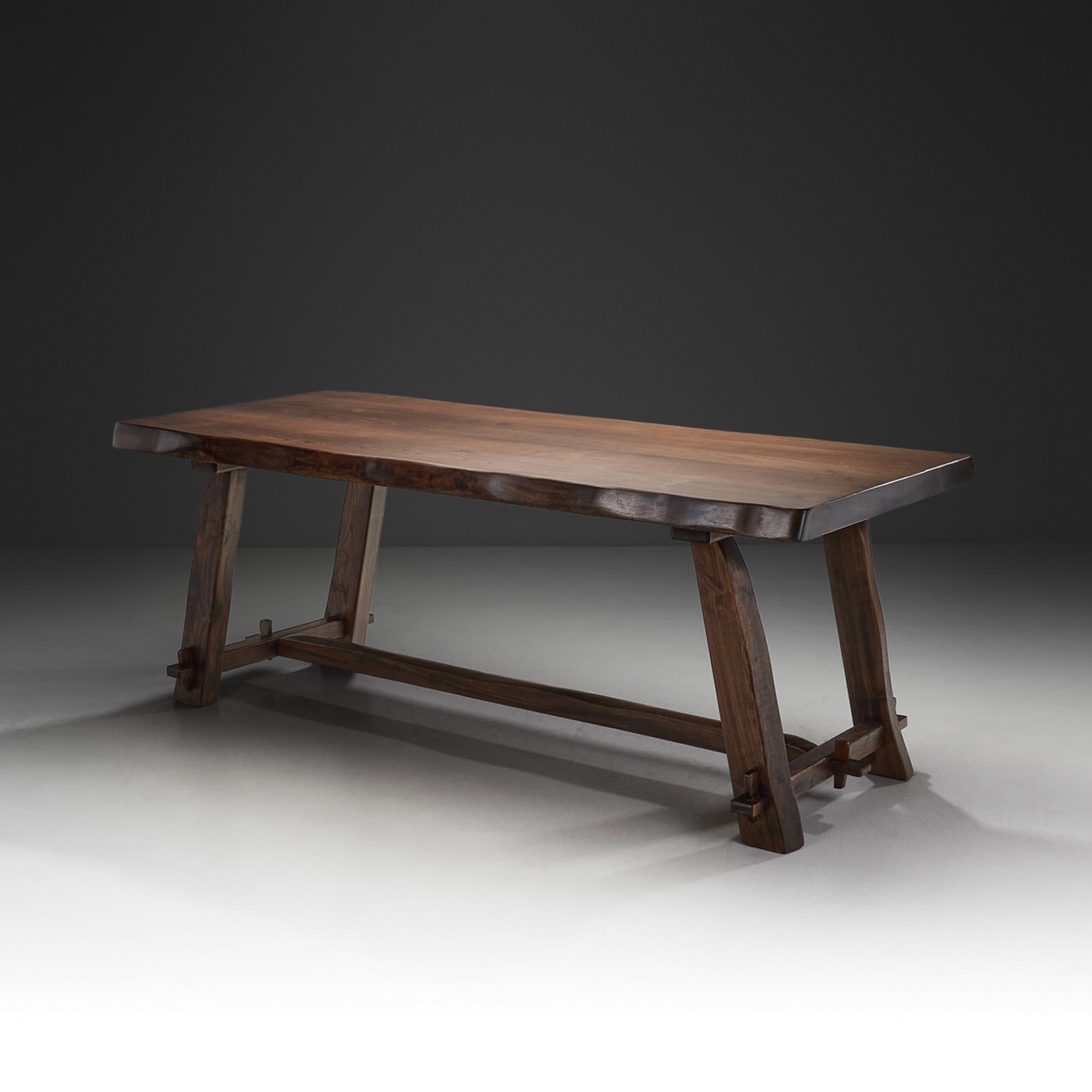
The 1950s in France was a very versatile decade, the era’s design projects had a wide range both aesthetically and material wise. The modernist solid wood models were mostly created by hand, including this table, showing the organic and modern approach to design.
This dining table has an almost brutalist look that allows the distinctive back and the stained elm wood to guide the design. This piece was created with considerable technical expertise and holds a natural expression with its airy and organic design, which is dominated by the natural beauty of the material and the creative use of the tenon and mortise joinery. The hand carved rectangular tabletop showcases the elm wood’s pattern and grain. The uneven sides of the top are enhanced, reinforcing the rustic and elemental feel. The base with its long stretchers showcases the beautiful mortise and tenon joinery connecting the three stretchers to the legs and to each other. The cabinetmaker’s expertise can be easily traced in this traditional joinery technique. This shall come as no surprise as French furniture manufacturers are still regarded as some of the best of the mid-century era and are especially known for impeccable joinery and woodwork (think Guillerme et Chambron or Pierre Chapo for example).
The designer generation active during the mid-20th century created some of the most iconic wooden furniture of the entire century. This Aranjou edition table is a beautiful example of how successfully they managed to merge traditional craftsmanship and materials with an essentially modern approach to design.
Condition:
In good vintage condition. Wear consistent with age and use. Some small marks on the wood. Due to the nature and age of the material, the item may have scratches and discolouration.
Dimensions:
78.54 in W x 35.03 in D x 29.92 in H
199.5 cm W x 89 cm D x 76 cm H
REQUEST PRICE HERE
Price category: 2,500 - 5,000 usd / eur
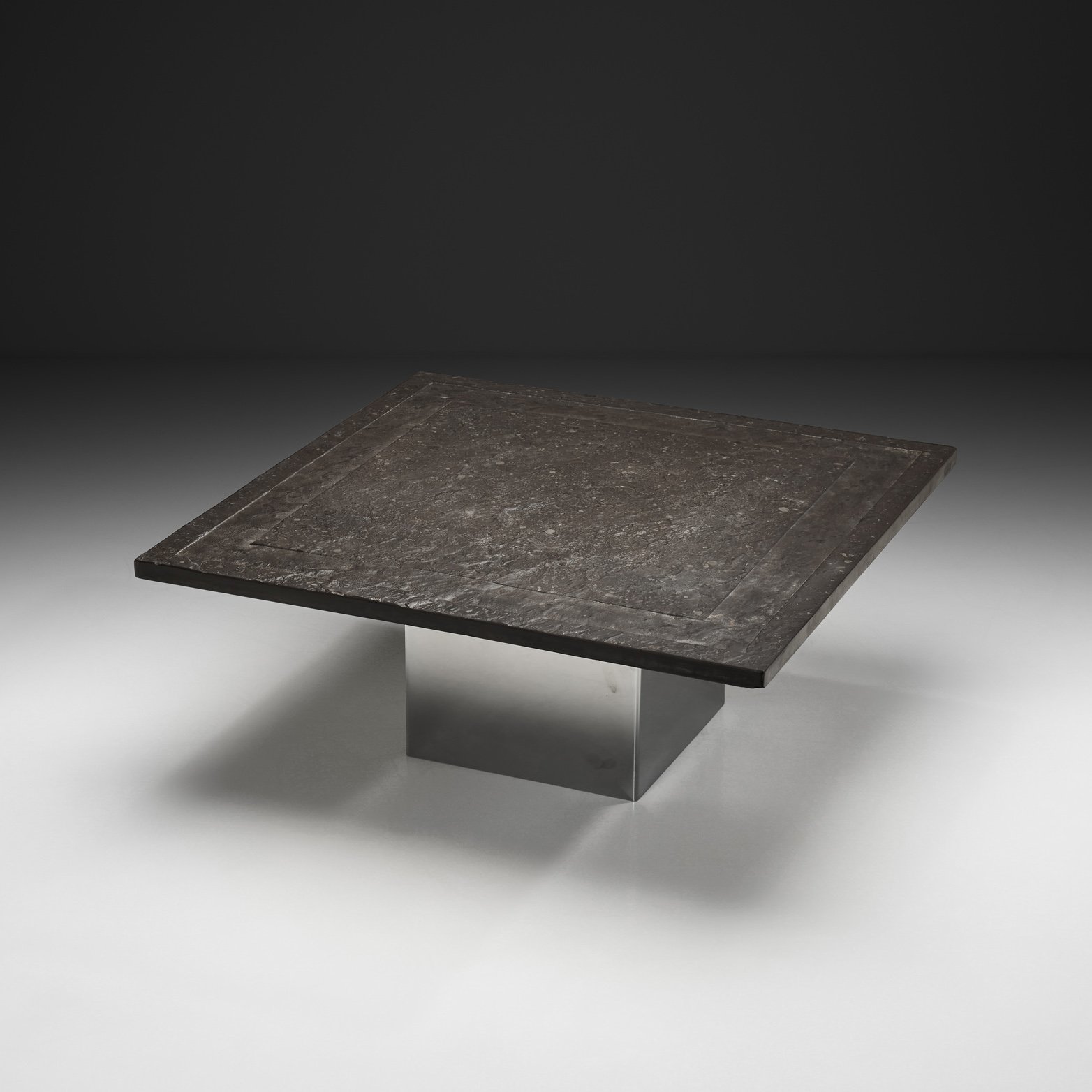
The 1970s witnessed the emergence of eccentric furniture pieces that seamlessly blended the avant-garde with practicality. Crafted in France, this distinctive coffee table by Peter Draenert bears the mark of ingenuity and artistry, reflecting an era where experimentation in design was the norm.
The combination of materials make this table a stylish example of the period’s design versatility. Coffee tables, in general, serve as design staples in living spaces for a multitude of reasons: beyond their utilitarian function of providing a surface for drinks and books, they anchor a room, creating a focal point around which furniture and conversation revolve. Utilising and highlighting the qualities of the stone and steel, combined with the expertise of Peter Draenert, this coffee table is a beautiful piece that can both define and complement a modern space. The table's square top showcases an appealing look. The dark colour of the solid stone that forms the structure of the table contrasts beautifully with the sleek steel base, as its robustness grounds the design.
Stone nowadays is an indispensable element of interior design. Not only is it durable, but it has the power to arrest visual interest through its versatility. This piece in many ways transcends the word “modern”, and can be incorporated successfully into contemporary and traditional interiors alike, lending itself to a timeless and universal appeal.
Condition:
In good vintage condition. Wear consistent with age and use. The table has recently been reconditioned. One of the corners has a chip. Due to the nature and age of the material, the item has some marks, scratches, and discolouration.
Dimensions:
39.37 in W x 39.37 in D x 13.77 in H
100 cm W x 100 cm D x 35 cm H
REQUEST PRICE HERE
Price category: 5,000 - 7,500 usd / eur
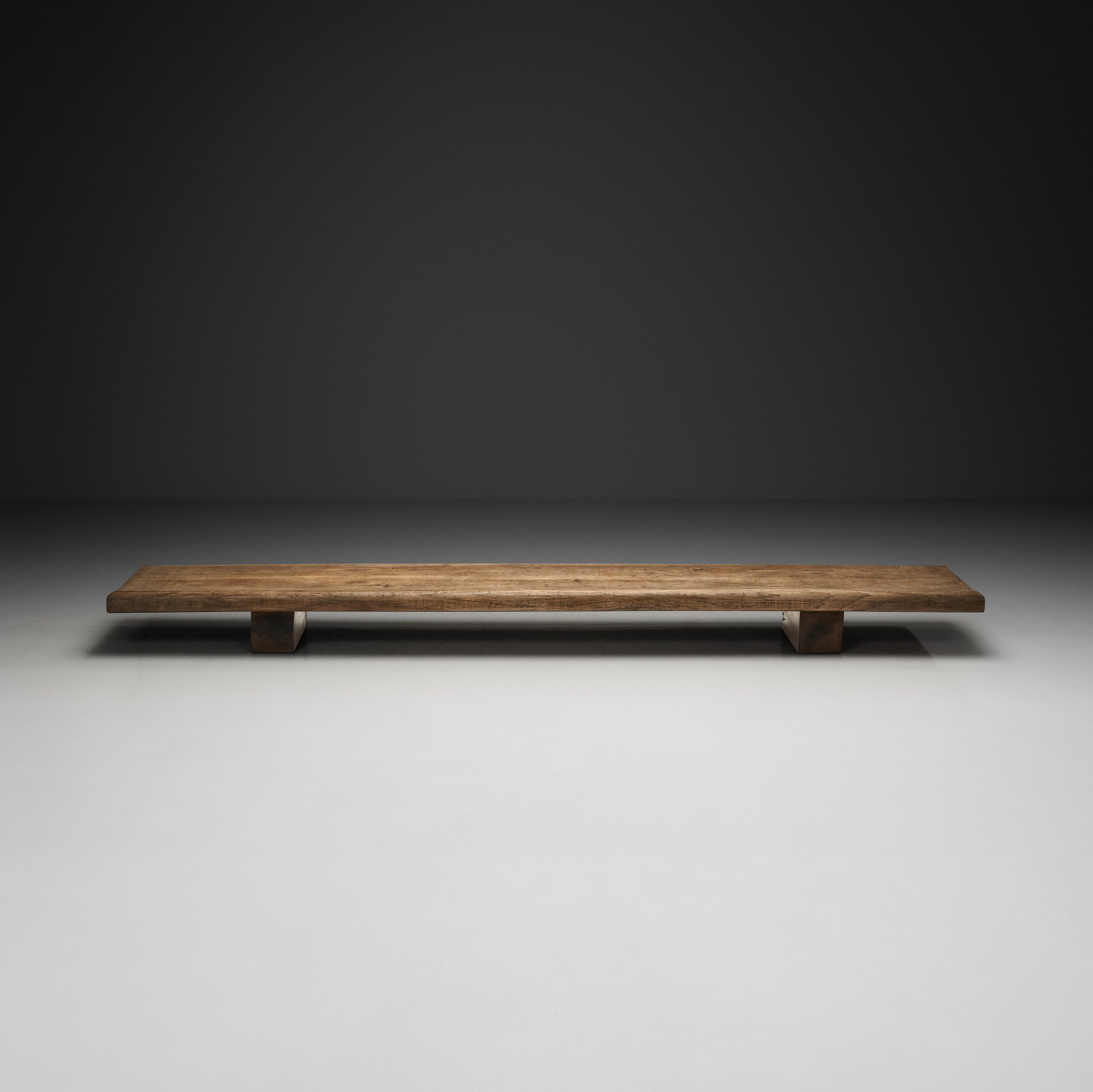
In the thriving design landscape of the 20th century, the emergence of Brutalist furniture left an indelible mark on design. Brutalist furniture design in the post-war decades came as a direct response to both architectural developments and shifting social ideals. This 1970s side table emphasises raw materials, structural honesty, and an absence of ornamentation.
Many Dutch Brutalist furniture pieces, like this table, function not only as practical objects but also as sculptural elements within a space. The design of this table is simple at its core, but its distinctive proportions give it a particularly striking appearance. Crafted from oak, the table features an exceptionally long, narrow rectangular top supported by two short, wooden blocks. Oak was a preferred material, valued for its strength and expressive grain, allowing makers to highlight the natural character of the wood rather than conceal it. The surface of the wood is left largely untreated to showcase the material’s inherent texture and tonal variation. Its edges are carefully shaped, with gently angled ends and softened corners that introduce subtle details into the geometric construction. Measuring just over two metres in length, it has a pronounced horizontal silhouette that immediately sets it apart from conventional side tables. The top is a long, uninterrupted surface and gives the piece an almost floating appearance. The two supports are positioned towards either end, leaving a generous open space beneath the central section. The dark tones of the wood and the substantial thickness of the tabletop give the table a grounded, architectural character, while its low profile allows it to maintain a discreet, elegant presence.
This Dutch table offers an attractive example of the more experimental approach to furniture design associated with the 1970s. The architectural character of this table makes it particularly appealing within an interior. The emphasis on material and form allows this table to age gracefully, developing character over time, while anchoring every space it finds itself in.
Condition:
In good vintage condition. Wear consistent with age and use. The table has recently been reconditioned. Due to the nature and age of the material, the item has some marks, scratches, and discolouration.
Dimensions:
83.85 in W x 14.56 in D x 6.29 in H
213 cm W x 37 cm D x 16 cm H
REQUEST PRICE HERE
Price category: 5,000 - 7,500 usd / eur
This solid stone top coffee table is a perfect example of the European mid-century design emphasis on the connection of everyday objects to nature, and the visual benefits of an understated, organic design.
This coffee table follows the fundamental mid-century design principles both aesthetically and technically. The simple design serves the purpose of showing the understated beauty of natural materials and their endless possibilities under the hands of an expert craftsman. Uncluttered with unnecessary ornamentation, this coffee table has a strong elemental feel to it, with a clear focus on the materials. The surface shows each movement the maker made, creating the raw, rustic look. The wooden frame holds the top, adding a contrasting material and natural warmth, as well as a beautiful design form, injecting the piece with the sleekness of Modernism. Organic design can successfully blur the lines between the “man-made” and the natural environment. As this low coffee table shows, this is achieved by leaving the focus on the material without altering it too much.
The elemental rusticity is the design’s main charm and also why it is certain to stand out with its hand carved surface. At the same time, this coffee table is also a functional piece that is sure to fit any style of interior.
Condition:
In good vintage condition. Wear consistent with age and use. The table has recently been reconditioned. Due to the nature and age of the materials, some marks and scratches are present.
Dimensions:
43.3 in ø x 20.07 in H
110 cm ø x 51 cm H