
Axel Einar Hjorth Utö Coffee Table, Sweden ca 1935 (sold)

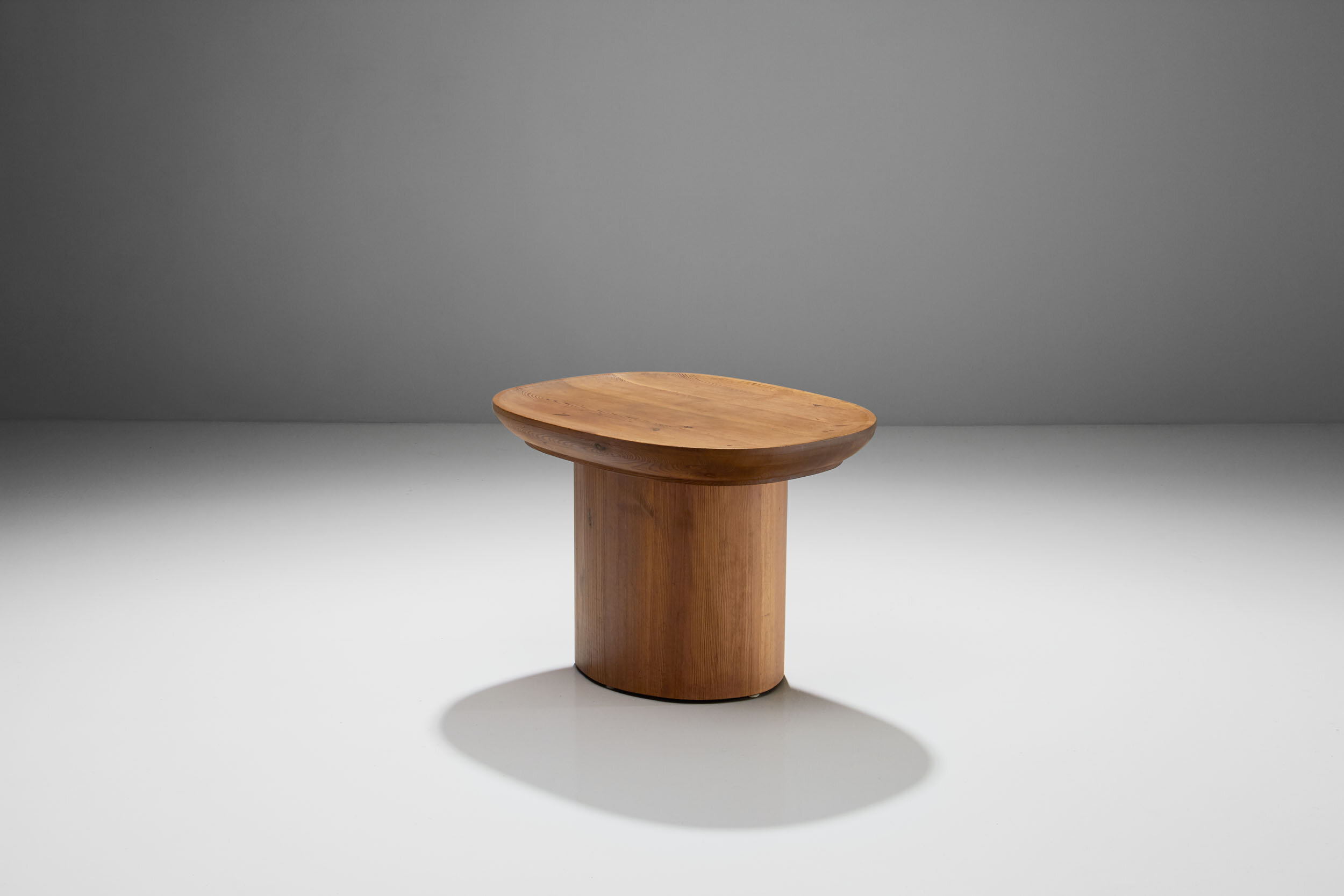


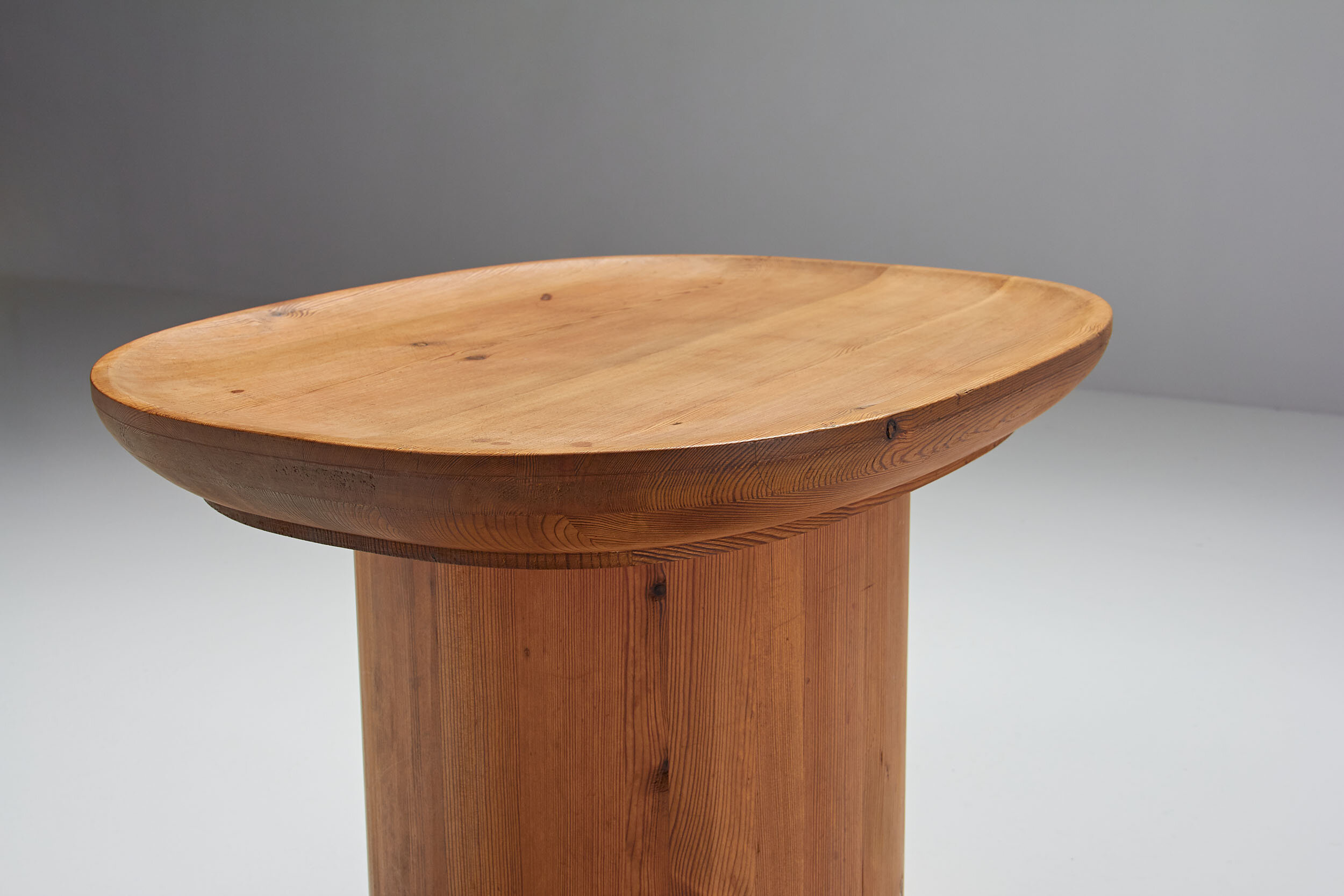


Axel Einar Hjorth Utö Coffee Table, Sweden ca 1935 (sold)
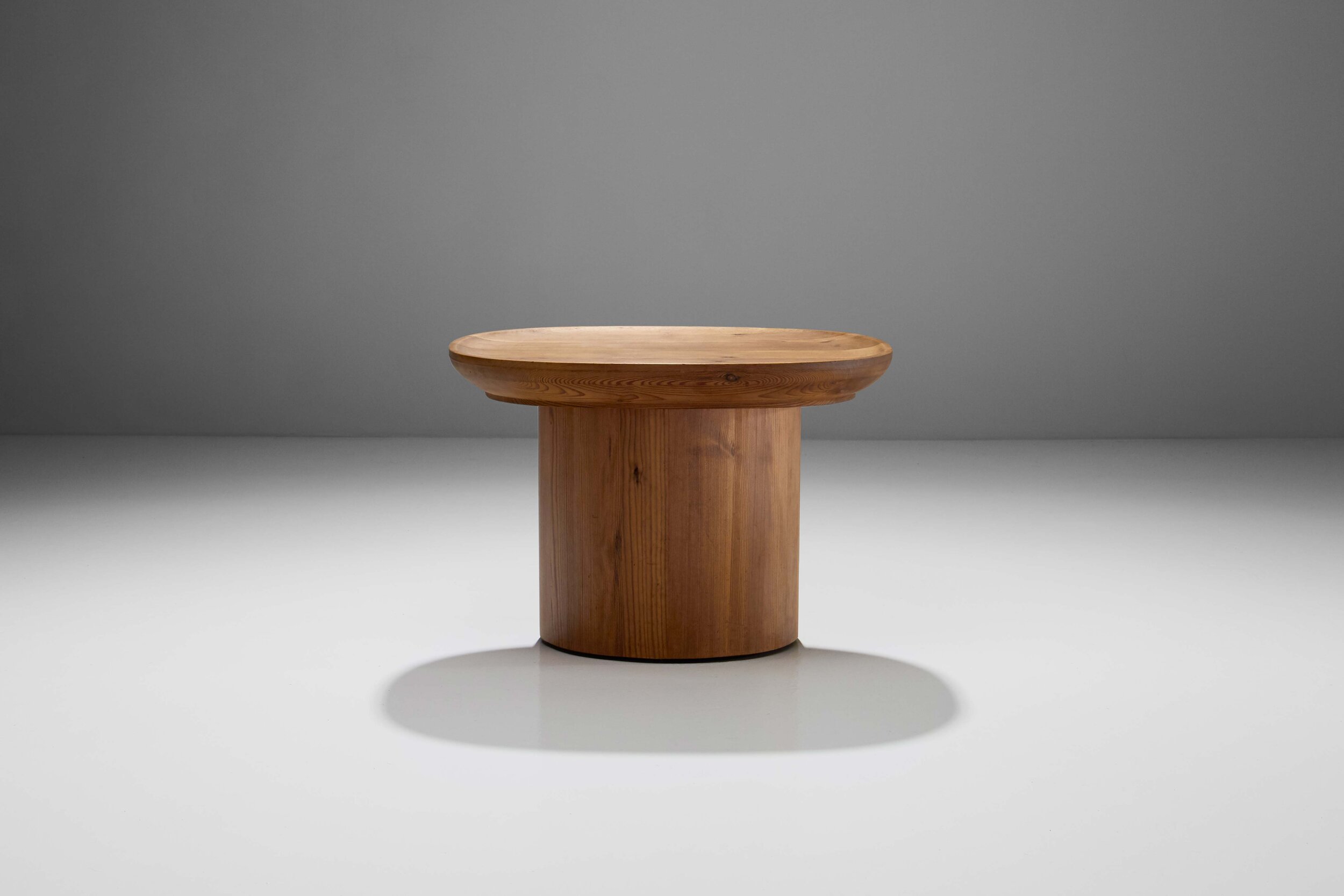
The ‘Utö’ coffee table designed by Axel Einar Hjorth is striking in balancing large volumes with clean geometrical lines. The tabletop has a thick and oval shaped shallow bowl with a well-defined rim on the top and bottom. The pine wood has aged beautifully and displays a strong patina. The wide and robust foot follows the shape of the tabletop and encompasses a beautiful grain within the wood. The coffee table was also known as the Brancusi table, a name found on a drawing in the Nordiska Kompaniet archive and refers to Hjorth’s admiration of the modernist sculptor. Produced by Nordiska Kompaniet, Sweden 1930s ~ H.
About the designer:
The work of Swedish architect and designer Axel Einar Hjorth was an early example of contemporary Swedish design, with its emphasis on minimalism and functionality. The sculptural quality of his work is easy to be seen in the Utö coffee table which originated from the Sportstugemöbler line, or weekend house furniture. The designs consisted of simple lines and construction rendered in pine that mixed aesthetics from rural handicraft with international modernism. Hjorth named these furniture lines after islands in the archipelago near Stockholm: ‘Utö’, ‘Blidö’, and ‘Torö’. ~ H.
Condition:
In good vintage condition. Wear consistent with age and use.
Dimensions:
27.72 in. W x 21.46 in. D x 19.1 in. H
70,4 cm W x 54,5 cm D x 48,5 cm H
Literature:
Axel Einar Hjorth (Svenska arkitekter och formgivare), Eric Ericson, Christian Björk, Thomas Ekström, 2011, p. 123.


Four Axel Einar Hjorth Utö Chairs , Sweden 1930s
The ‘Utö’ chairs from Axel Hjorth Sportstugemöble furniture line consists of a simple composition made of pine that mixes the aesthetics of rural handicraft with international modernism. Produced by AB Nordiska Kompaniet, the chairs belongs to Hjorth's line of modernistic cabin furniture from the 1930's.
About the designer:
Hjorth’s designs, from the luxuriousness of neo-classicism to the severity of functionalism, are sharply distinctive in style, materials, and character. Unlike many of his contemporaries, however, Hjorth did not conform to the socially oriented ideas produced by Svensk Form (the Swedish Society of Crafts and Design). He often incorporated playful ornamentation from different historical periods from which he was inspired, such as French Art Déco, using mixed exotic woods, bright colors, and textiles.
In the 1930s, Hjorth designed a furniture collection out of pine meant for serial production known as Sportstugemöbler: ‘furniture for holiday houses’. The collection is based on Swedish rural traditions mixed with international modernism, and had its pieces named after Stockholm's archipelago islands including Blidö, Sandhamn, Toro and Lovö. The pieces are well renowned for being very modern and displaying strong proportions, simplicity in construction, and a brilliant union between tradition and modernism.
Condition:
In good vintage condition. Wear consistent with age and use. Item have marks and scratches and a beautiful patina.
Dimensions:
19.6 in. W x 18.5 in. D x 32.2 in. H ; Seat height 17.3 in.
50 cm W x 47 cm D x 82 cm H ; Seat height 44 cm