
Mid-Century Italian Woven Bamboo and Wicker Stools in the manner of Tito Agnoli, Italy 1960s (sold)

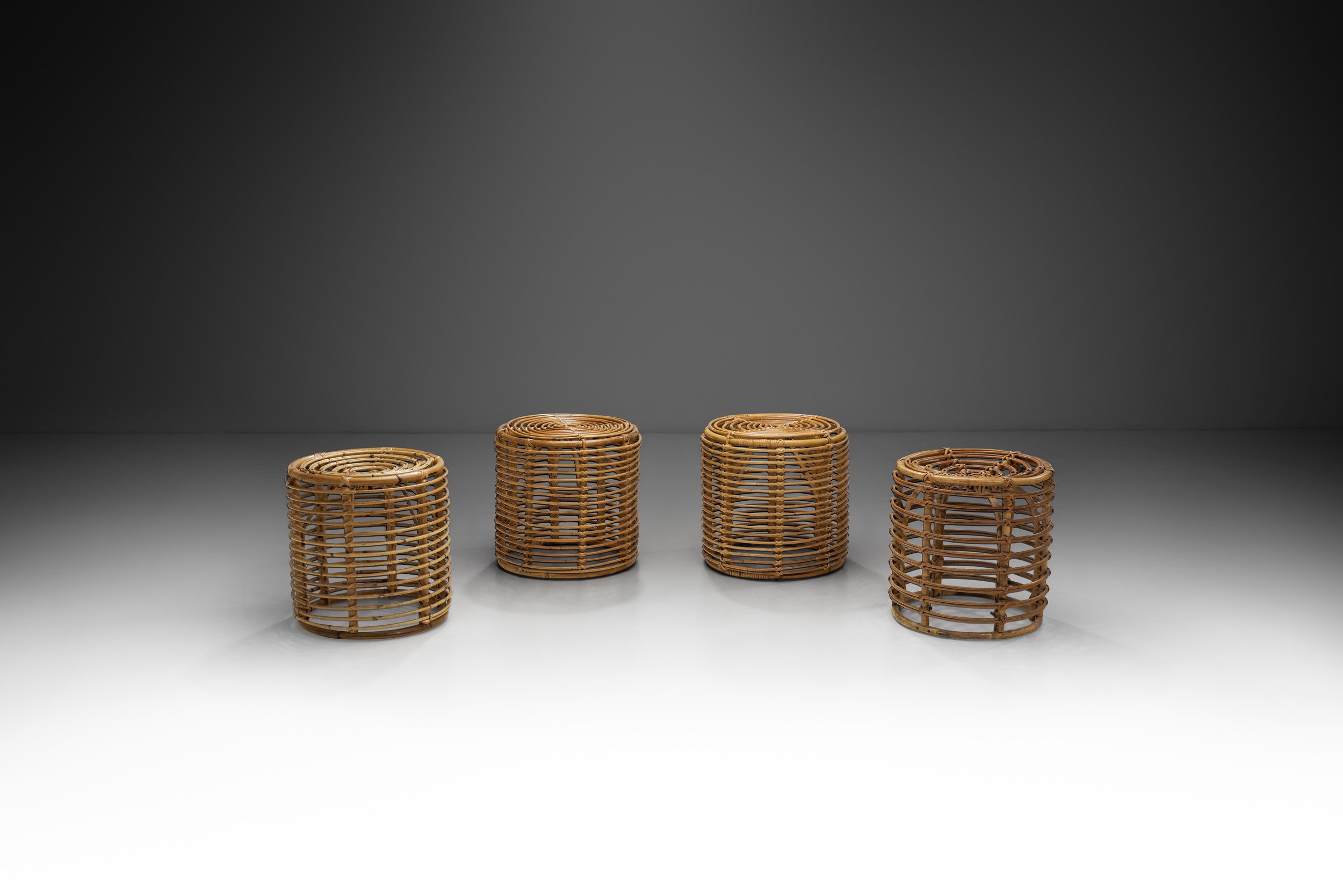


Mid-Century Italian Woven Bamboo and Wicker Stools in the manner of Tito Agnoli, Italy 1960s (sold)
Form and function collide in this set of four stools, a piece of furniture that is often underestimated. Designers define stools as jewels and statements in a space, and taking practicality into account, these bamboo and wicker stools are perfect to add visual interest to any space.
Stools have been staples in European design history, Italy being no exception. The country developed its own, distinctive style, where traditional Italian artisanship was met with a luxurious look and quality. These organic stools are very versatile, serving double duty as movable stools or as small tables. The design of each stool is slightly different, but all of them are governed by the materials, namely bamboo and wicker. Because of their ease and durability, these materials are typically associated with mundane outdoor furniture, however, for the past few years they have been having a revival. Not to be confused with rattan, bamboo is a lot stiffer and does not bend easily. For this reason, the skeleton of these stools is composed of bamboo with wicker used as joinery. Wicker is in fact a style of weaving, and here, it is made from bamboo strips. Thanks to this, the impression is uniform and has great strength and a unique aesthetic. It features a classic round shape with a spiralling top and airy look. The structures are just as well-thought-out as the visual appearance, with bamboo parts supporting the stools from the inside. The design is a blend of old and new: a classic furniture silhouette paired with an organic material and the highest quality of craftsmanship. The round silhouettes lend themselves to a playful, artful, and frivolous spirit. Tito Agnoli designed prolifically in the fields of furniture, creating designs for luxury Italian brands such as Arflex, Bonacina and Matteo Grassii among others. His most famous models all date to the 1960s, including his beautiful wicker models.
Being functional as well as aesthetically pleasing, this set of stools is a great addition to set the tone of a space. The design stands out despite its light feel achieved by the expert wickerwork thanks to which it can add depth as well as functionality to a space.
SOLD
Condition:
In good vintage condition. Wear consistent with age and use. The bamboo has some marks.
Dimensions:
17.12 in ⌀ x 16.14 in H
43.5 cm ⌀ x 41 cm H
REQUEST PRICE HERE
Price category: 5,000 - 7,500 usd / eur
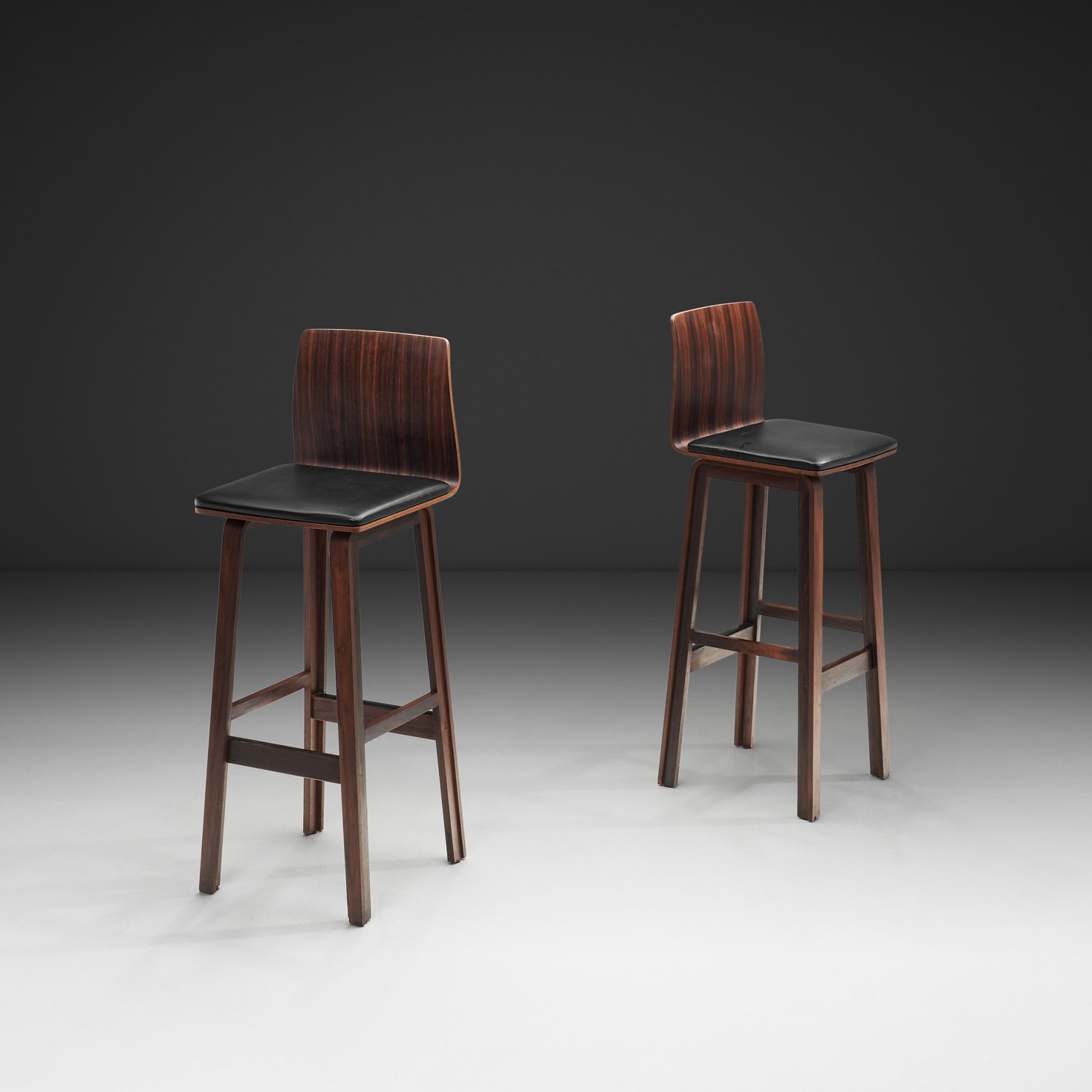
This pair of barstools showcase the Danish principles of interior design: careful proportions, high-quality materials, and an emphasis on functionality. The result was seating models that felt refined enough for domestic settings while retaining the simplicity and durability required for everyday use.
Designers in the post-war period focused on simple, well-made pieces of home-grown and exotic woods alike. Made from richly grained wood, these stools embody the perfect balance of detail and minimalist design. A striking contrast between materials defines the character of this pair. The warm-toned wooden frames and veneered backrests are paired with black leather seats, creating a composition that feels both elegant and inviting. The bent base provides visual softness and ergonomic support, while the slim legs and stretchers maintain an elegant, lightweight profile. Particularly appealing is the way the grain of the wood flows across the backs, introducing movement and depth to an otherwise restrained silhouette. The leather seats add another layer of texture, their dark surfaces grounding the composition and emphasizing the richness of the wood. Defined by clean, smooth lines, and excellent joinery, each of these stools was evidently created by skilled craftsmen.
Placed at a kitchen counter, bar, or high dining table, the pair brings a distinctly Scandinavian sense of ease to an interior. More than simply elevated seating, they reflect the Danish talent for creating furniture that is practical, comfortable, and quietly sophisticated, sure to appeal to generations.
Condition:
In good vintage condition. Wear consistent with age and use. The stools have recently been reconditioned. Due to the nature and age of the materials, some marks and scratches are present. The seats come with their original leather or have been reupholstered by a previous owner, and show some signs of use and minor scratches. Each of our items can be reupholstered by our in-house atelier in a fabric of choice. Please reach out for more information.
Dimensions:
14.37 in W x 13.58 in D x 39.57 in H; Seat Height 29.92 in; Seat Depth 12.20 in
36.5 cm W x 34.5 cm D x 100.5 cm H; Seat Height 76 cm; Seat Depth 31 cm
REQUEST PRICE HERE
Price category: 5,000 - 7,500 usd / eur
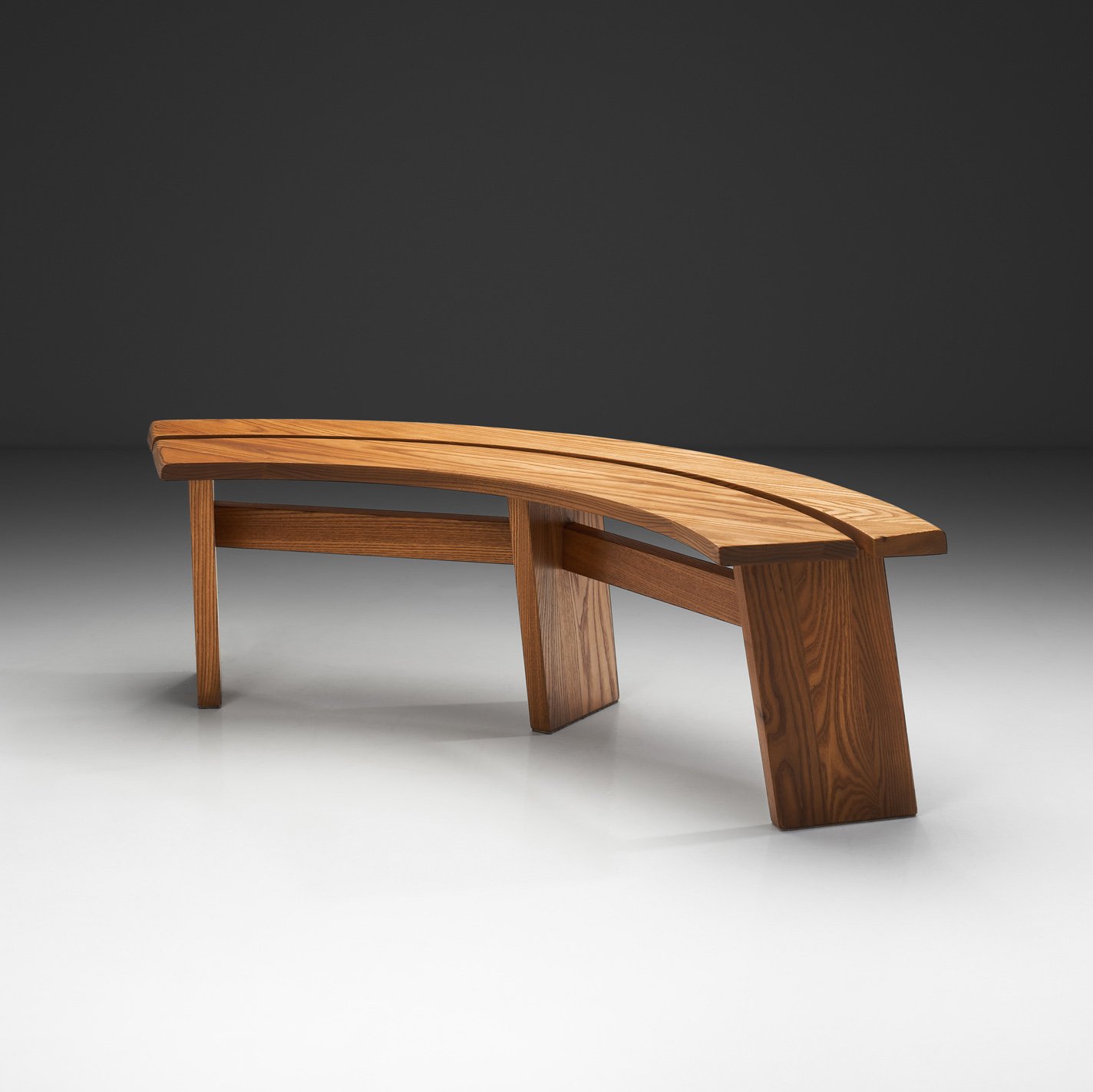
Born in Paris into a family of craftsmen, Pierre Chapo was heavily influenced by the modernist movements of the 20th century, and more specifically, the Bauhaus. While also inspired by designers like Charlotte Perriand and Le Corbusier, his work was primarily focused on craftsmanship. Chapo’s passion for wood can be seen in all of his creations, from stools to dining tables, including this "S38A" bench.
Pierre Chapo designed the model in 1973. The piece is constructed out of French Elm, and it is a classic in the true sense of the word. The natural grain of the elm shines through, its authenticity being celebrated, rather than disguised or embellished. The curve of the bench offers fluidity and highlights the organic character of the piece. Not only does the elm ensure the longevity of the model but it also contributes to the durability. The three legs placed at the base of the bench make sure the two wooden elements that form the seat are stabilised. Not only this, but two stretchers are placed between the legs, securing each part of the model. This bench showcases incredible craftsmanship while presenting a unique charm; grounded, yet light, through the smart use of curves and the gap in the seat.
The three principles that motivated Pierre Chapo were material, form, and function. He measured his furniture by means of this golden ratio and used elm wood as his preferred material. This bench is a beautiful example of his ideals. The “S38A” model fits perfectly with other Chapo designs such as tables, but could also work very well on its own.
Condition:
In good vintage condition. Wear consistent with age and use. The bench has recently been reconditioned. Minor scratches are present. Due to the age and nature of the material, the item may have marks and discolouration.
Dimensions:
57.87 in W x 23.62 in D x 17.72 in H
147 cm W x 60 cm D x 45 cm H
REQUEST PRICE HERE
Price category: 2,500 - 5,000 usd / eur
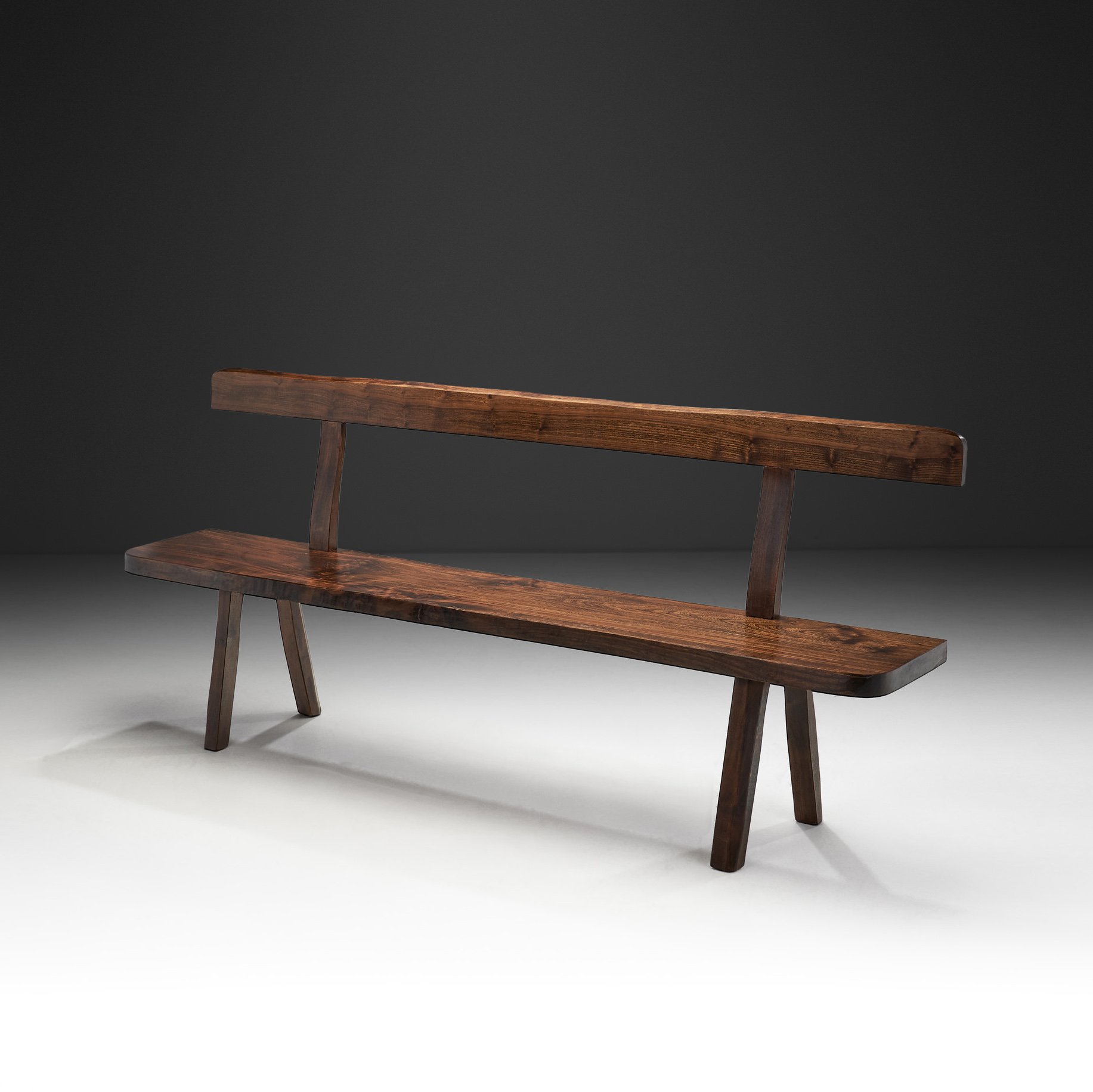
The 1950s in France was a very versatile decade, the era’s design projects had a wide range both aesthetically and material wise. The modernist solid wood models were mostly created by hand, including this bench, showing the organic and modern approach to design.
This bench has an almost brutalist look that allows the distinctive back and the stained elm wood to guide the design. The design is defined by the long horizontal lines, the impeccable joinery, and the natural, raw beauty of the material. It can be incorporated into any space thanks to its classic look, not to mention its functionality; benches in general can be placed in any space, including the living room, bedroom, hallway or even outside. The design has a startling rawness and has a preference for the material to set the tone of the overall aesthetic, which is somber, giving importance to the craftsmanship that formed it into its eerie organic shape. French furniture manufacturers are still regarded as some of the best of the mid-century era and are especially known for impeccable joinery and woodwork (think Guillerme et Chambron or Pierre Chapo for example).
The designer generation active during the mid-20th century created some of the most iconic wooden furniture designs of the whole century. This Aranjou edition table is a beautiful example of how successfully they managed to merge traditional craftsmanship and materials with an essentially modern approach to design.
Condition:
In good vintage condition. Wear consistent with age and use. Some small marks on the wood.
Dimensions:
78.74 in W x 16.53 in D x 33.85 in H; Seat height 17.32 in
200 cm W x 42 cm D x 86 cm H; Seat height 44 cm
REQUEST PRICE HERE
Price category: 1,000 - 2,500 usd / eur
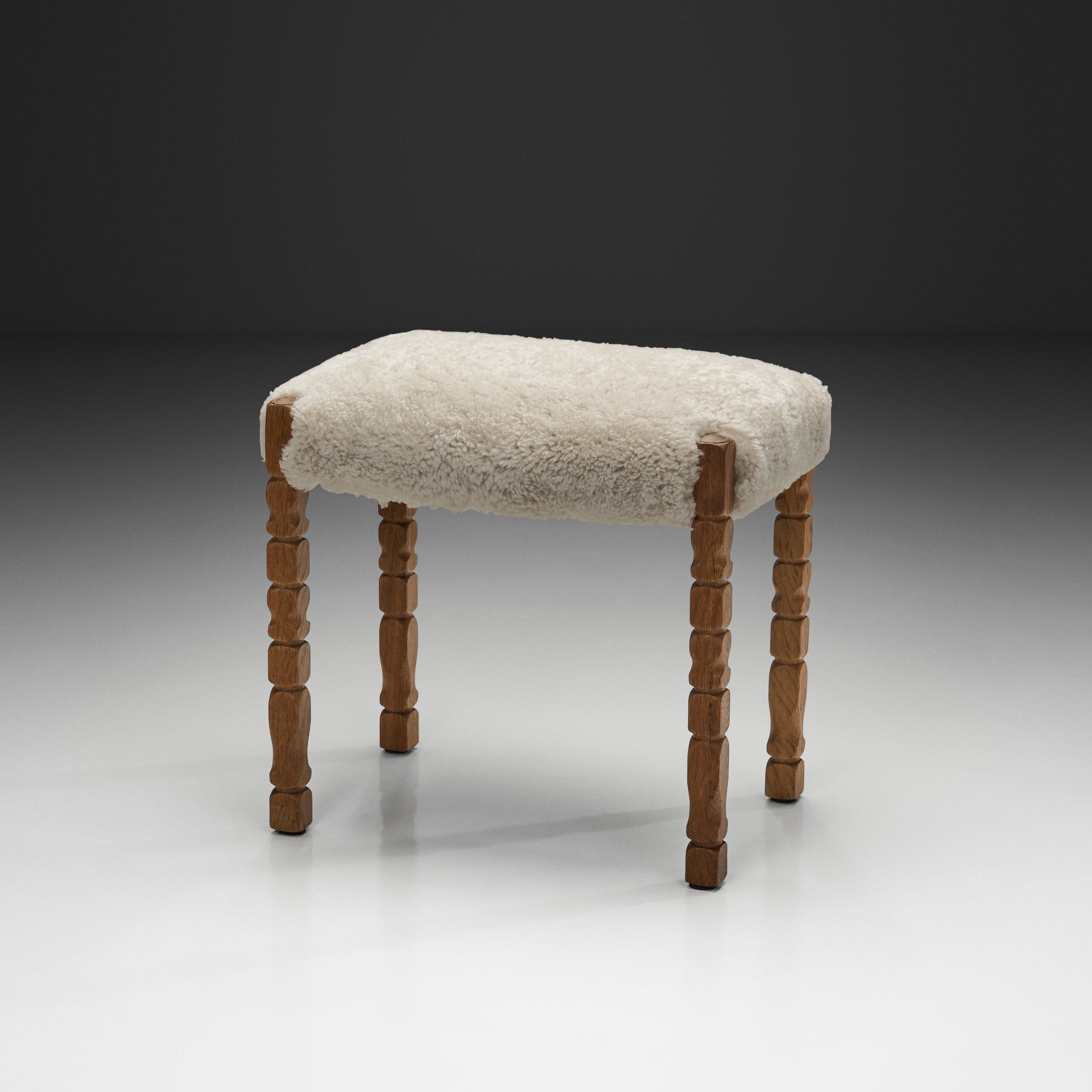
Danish furniture from the 1970s saw an interest in craftsmanship and natural materials, moving away from strict industrial modernism toward pieces with a more tactile and handmade character. This oak stool reflects the cabinetmakers’ interest in highlighting the texture of wood through carving, turning, and exposed grain, while materials such as sheepskin and wool were introduced to soften otherwise simple constructions.
Rather than concealing elements of the construction process, pieces from this period embraced it, allowing hand-worked details to become part of the final expression. This stool showcases the contrast between its heavily carved legs and soft sheepskin seat. The frame is constructed through essential elements: four turned legs supporting a thick upholstered top. Each leg is individually worked with rounded carvings that create a rhythmic appearance, giving the otherwise compact stool a strong sculptural quality. The oak retains a warm natural tone that highlights the carving and the variation in the grain. Above, the padded seat is upholstered in cream sheepskin, introducing a different texture to the composition. The wool surface softens the geometry of the wooden structure and gives the piece a tactile warmth. Thanks to the upholstery, the stool gains a fuller and more relaxed silhouette despite its minimal construction.
The balance between rough carved wood and soft sheepskin gives the piece its timeless appeal. This piece functions as extra seating, a footstool, or as a small accent, while still carrying the material richness and presence of Scandinavian furniture of the period.
Condition:
In good vintage condition. Wear consistent with age and use. The stool has recently been reconditioned. Due to the age and nature of the wood, the item may have some marks, scratches, and discolouration. The piece has recently been reupholstered in premium sheepskin. Each of our items can be reupholstered by our in-house atelier in a fabric of choice. Please reach out for more information.
Dimensions:
19.69 in W x 13.78 in D x 18.51 in H
50 cm W x 35 cm D x 47 cm H
REQUEST PRICE HERE
Price category: 9,000 - 12,500 usd / eur
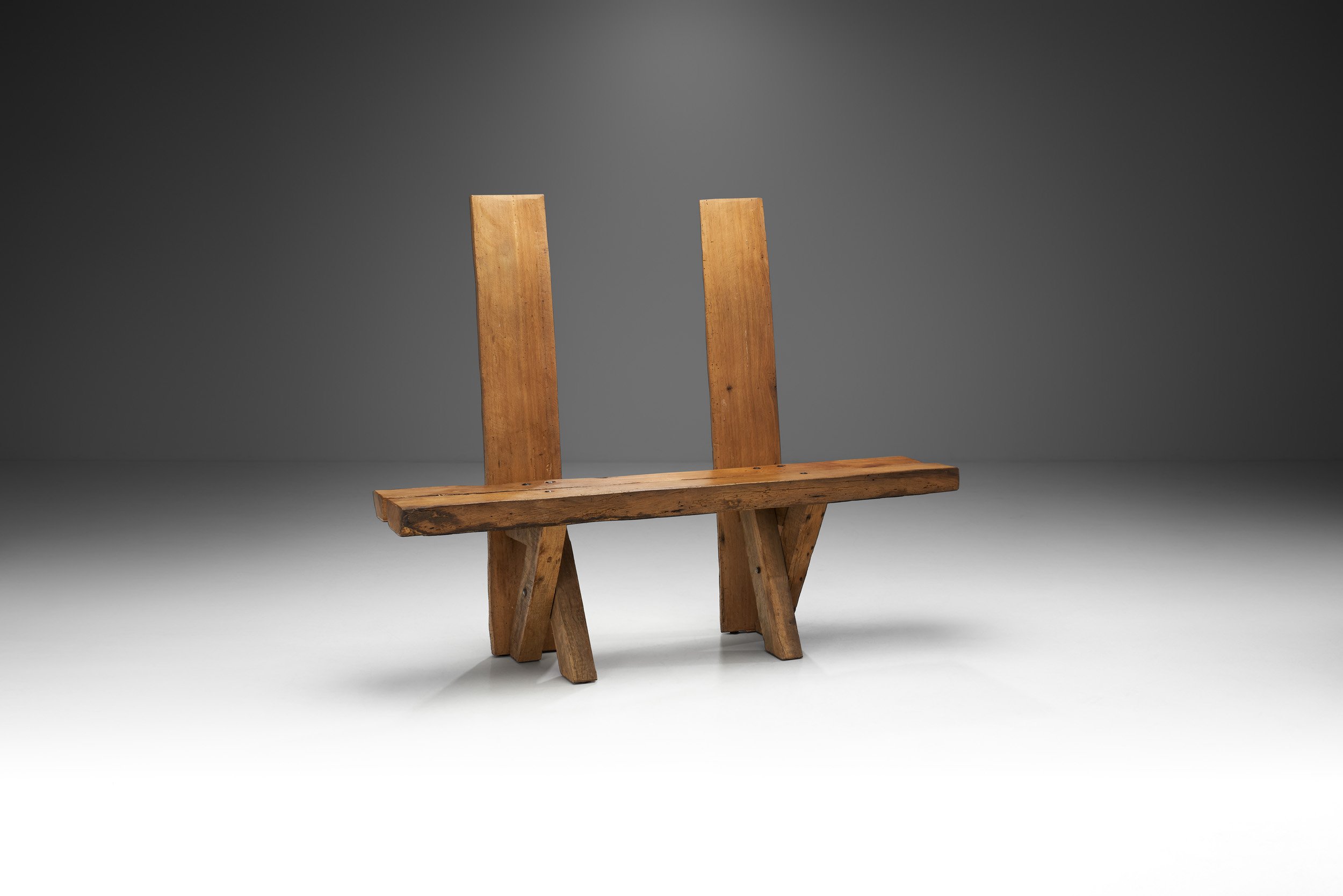
The term brutalism — which derives from the French word brut, meaning “raw” — was originally coined to describe an architectural style that emerged in the 1950s featuring monumental buildings, usually made of unornamented concrete, whose design was meant to project an air of strength and solidity. Similarly, in furniture design Brutalism inspired designers to create models with the same look of strength and style.
This rare Jean & Sébastien Touret oak bench is a beautiful example of this design movement, with a clear emphasis on the material’s natural qualities. This bench was created for a religious community of Loir et Cher -a department in the Centre-Val de Loire region of France - from oak of the property.
The duo’s design has a strong architectural approach, and while it is very sturdy on first sight, the outstanding execution of the legs and the natural appeal of oak make this bench the embodiment of creative, elegant design. Much like in architecture, brutalist furniture has organic, unpolished shapes. The seat and back planks of this bench exemplify this characteristic, with uneven edges, letting the natural qualities of the oak shine. The use of the sizeable pieces of oak wood with a beautiful grain, and the visible joints and bolts give this bench a natural, elemental feeling. The body was created employing the “bois arraché technique”, a finishing method by which lacquer is rubbed onto wood.
It might go unnoticed, but nowadays, brutalist furniture is part of any modern interior design project. In the same fashion, glimpses of brutalist interior design are found in top interior design projects. Think about Kelly Wearstler‘s interior design projects, where both on residential and commercial interior design projects, the popular interior designer integrates brutalist furniture. Nevertheless, like Wearstler, most designers prefer brutalist furniture with organic shapes, just like this oak bench.
Condition:
In good vintage condition. Wear consistent with age and use. Some scratches on the wood and old woodworm marks.
Dimensions:
55.11 in W x 18.11 in D x 44.68 in H; Seat height 16.92 in
140 cm W x 46 cm D x 113.5 cm H; Seat height 43 cm
REQUEST PRICE HERE
Price category: 5,000 - 7,500 usd / eur
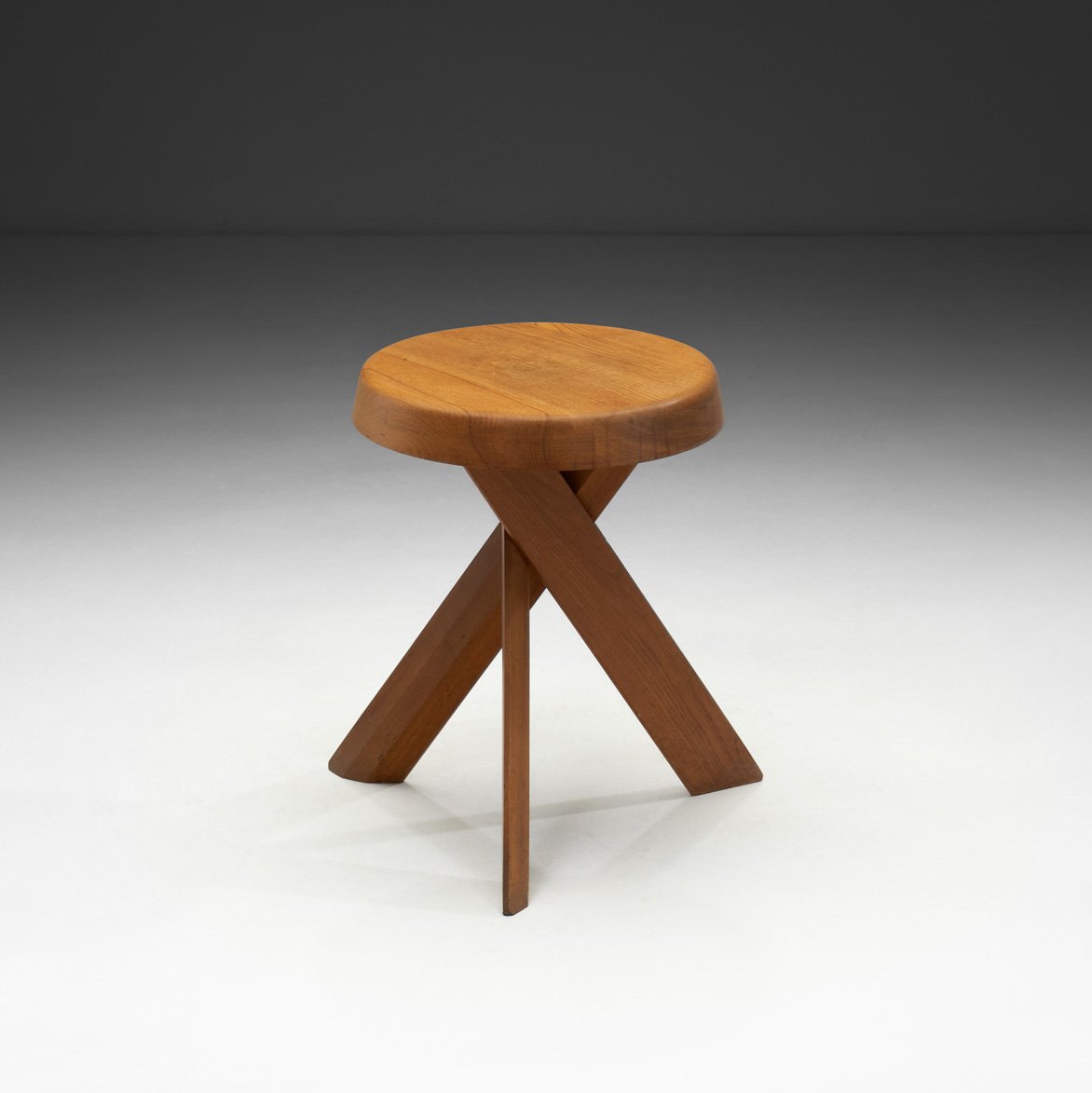
Pierre Chapo was inspired by Frank Lloyd Wright's balanced lines, Corbusier's research on proportions and the Bauhaus. The three principles that motivated him were material, form, and function. Despite his love for the imperfect, he measured his furniture by means of the golden ratio and used elm wood as his preferred material, and this model is a beautiful example of his ideals in a material form.
This “S31 A” stool has the playful and majestic characteristics typical of Pierre Chapo's emblematic creations. Asymmetrical, yet perfectly balanced. Made from elm, this stool has a rustic style with architectural precision. This comes as no surprise, as Pierre Chapo trained as an architect in Paris and this knowledge becomes evident in his elaborate structural solutions. The joinery technique is unique yet simple, enhancing the honest design. Just as with art styles, culture and fashion, each region of the world had their own joinery styles. While each region’s techniques are vastly different from one another, they still followed the same principles, in that they would join the timbers in such a way that they couldn’t be pulled apart. This is also true for this stool, making it a durable and timeless piece. The smooth circular seat shows off the beautiful grain of the elm which not only highlights Chapo’s preference for the material but also his deep respect for it. Furthermore, the rounded shape is a lovely contrast to the sharpness of the legs.
Being functional as well as aesthetically pleasing, this stool is a great addition to set the tone of a space. Its design is archtectural yet simple in its material choice, there is nothing superfluous about it. It strips back the unnecessary, showcasing the essential beauty of the wood and its capabilities.
Condition:
In good vintage condition. Wear consistent with age and use.
Dimensions:
15.94 in W x 15.94 in D x 17.32 in H
40.5 cm W x 40.5 cm D x 44 cm H
REQUEST PRICE HERE
Price category: 2,500 - 5,000 usd / eur
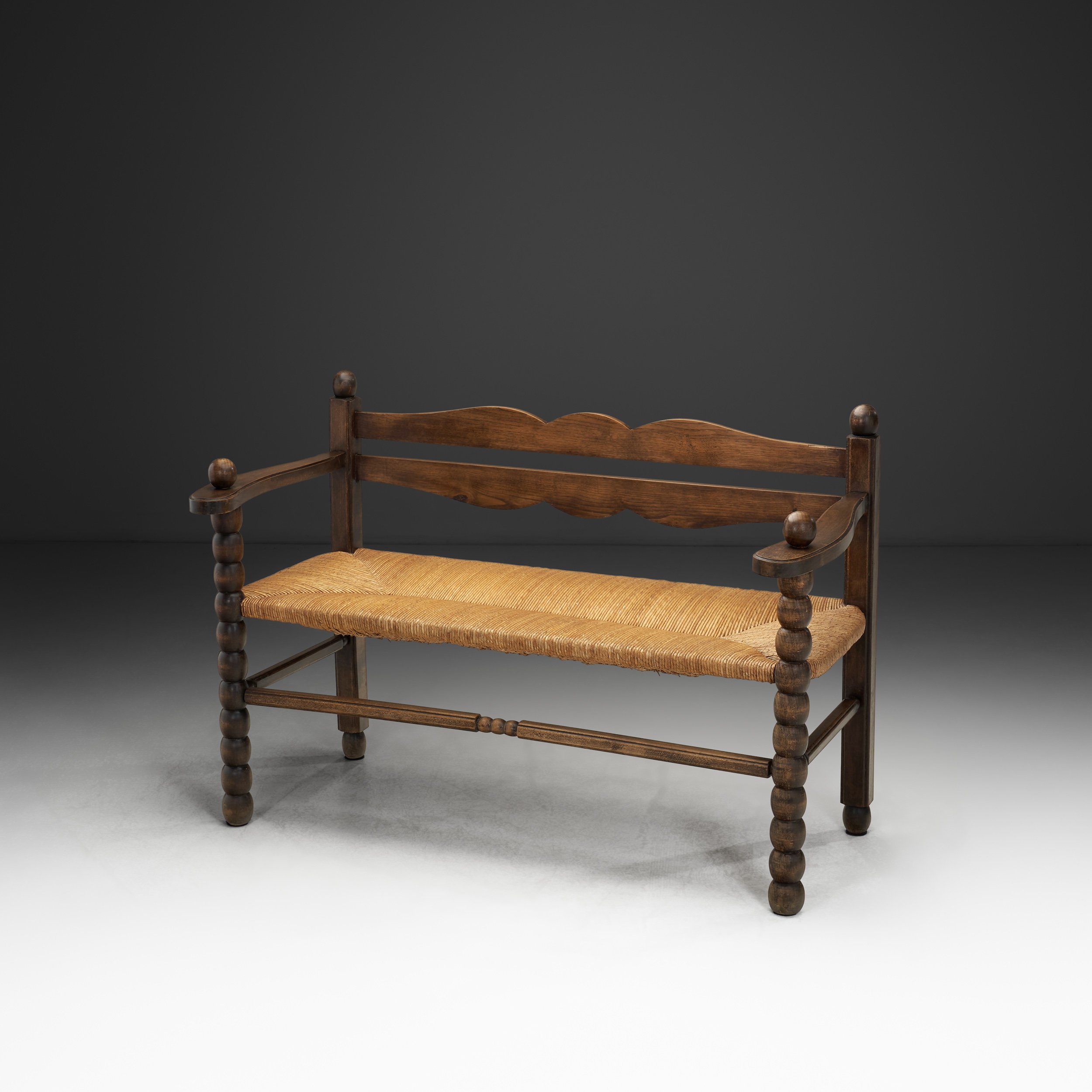
This bench originates from 20th century France, and reflects the enduring influence of regional craftsmanship and traditional furniture-making techniques. French rural and provincial furniture from this period often emphasized durability, natural materials, and honest construction. Rooted in craftsmanship traditions, benches such as this one were commonly found in farmhouse interiors, kitchens, and entry halls, where practicality and warmth were valued. The design speaks to a timeless aesthetic influenced by handcraft, local materials, and generational woodworking knowledge.
The bench is constructed from solid oak, featuring beautifully turned legs that lend rhythm and visual movement to the silhouette. These elements introduce a subtle decorative quality while maintaining the piece’s honest, utilitarian character. The gently curved backrest adds both warmth and structural cohesion, echoing traditional seating forms found throughout the French countryside. Not only this, but the woven straw seat provides a striking textural contrast to the oak frame, offering lightness and warmth while remaining highly functional. The natural fibres introduce an organic softness that balances the strength of the wood, adding to the bench’s tactile appeal. The straw weaving shows careful craftsmanship, creating a surface that is both flexible and sturdy. Together, the solid frame and woven seat form a harmonious dialogue between robustness and delicacy. The proportions are compact yet inviting, allowing the bench to function comfortably as hallway seating, a kitchen accent, or an accent piece in an interior.
With its authentic materials and traditional construction, this oak bench embodies the rustic charm of French furniture. It offers both aesthetics and practical use, the bench stands as a timeless example of design shaped by craftsmanship and heritage.
Condition:
In good vintage condition. Wear consistent with age and use. The bench has recently been reconditioned. Minor dents and scratches. Due to the nature of the materials, the item may have some additional marks, and discolouration.
Dimensions:
46.65 in W x 22.05 in D x 31.69 in H
118.5 cm W x 56 cm D x 80.5 cm H
REQUEST PRICE HERE
Price category: 1,000 - 2,500 usd / eur
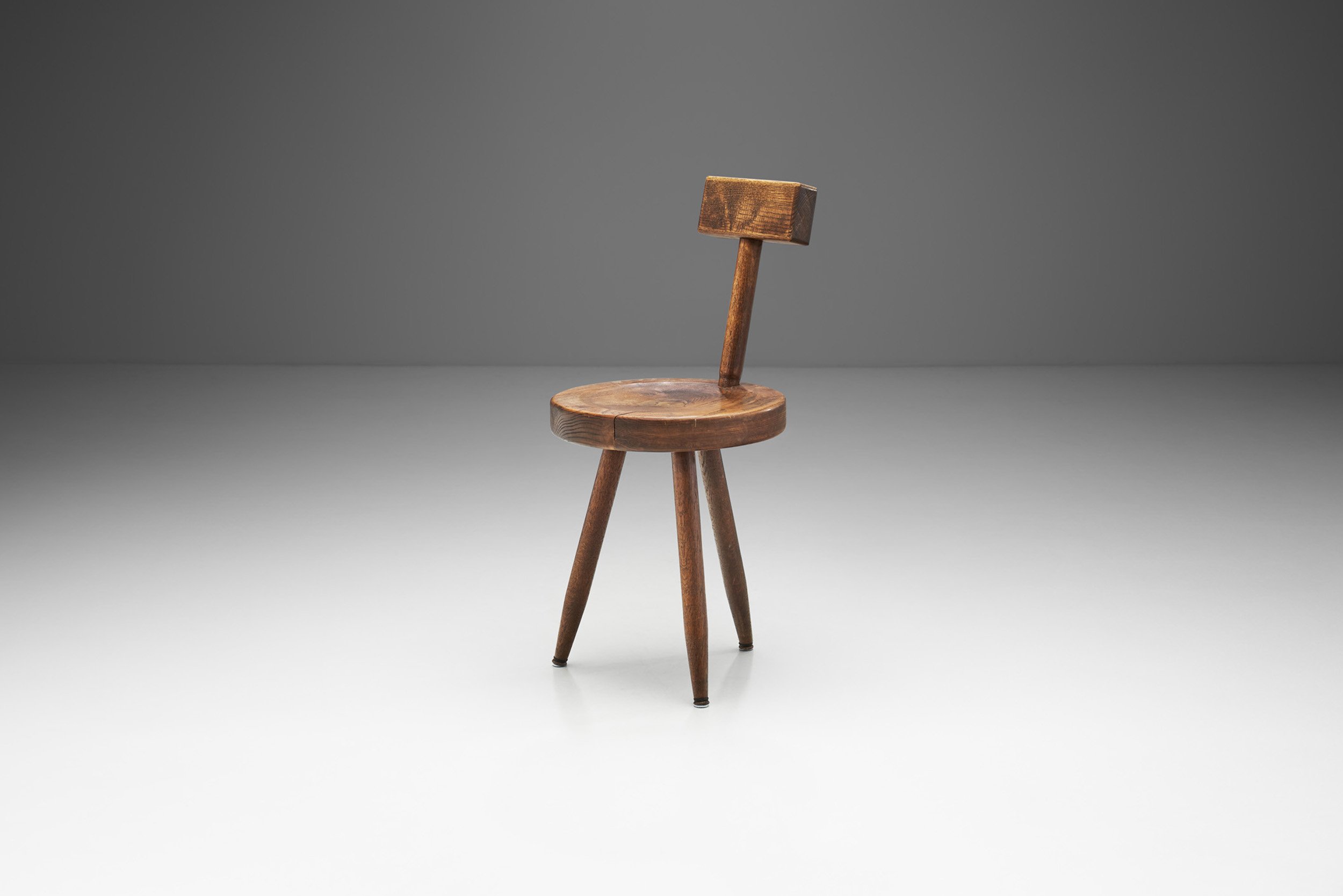
This tripod chair has a simple composition that mixes the aesthetics of rural handicraft with international modernism.
While many postwar French designers were embracing new industrial techniques and mass production, some, like Alexandre Noll, personally selected his materials and handmade each unique piece. Like Noll, this chair’s designer paid little attention to trends, preferring to let the material guide the design, letting the shape of the wood be the main source of inspiration. Thanks to this, the chair has an organic form and a focuses on the solid wood as a material. Even at first glance, this chair has a startling rawness, but with its warm-toned and slightly asymmetrical body, it is a greatly-balanced piece. Sensitive touches enliven the design, visible in the careful craftsmanship, especially in the carved seat and tripod legs.
The aesthetic of this tripod chair is somber, giving importance to eerie organic and rugged shapes. Through its eccentric geometries and expressive forms, this chair is the perfect piece to add visual and elemental interest to any interior.
Condition:
In good vintage condition. Wear consistent with age and use.
Dimensions:
14.76 in W x 17.51 in D x 31.49 in; Seat height 18.3 in
37.5 cm W x 44.5 cm D x 80 cm H; Seat height 46.5 cm

REQUEST PRICE HERE
Price category: 5,000 - 7,500 usd / eur
This Art Deco bench, crafted circa 1930s, is a refined example of the movement’s ability to merge architectural strength with functional elegance. Emerging after the landmark 1925 Exposition Internationale des Arts Décoratifs in Paris, Art Deco celebrated modern craftsmanship, bold geometry, and a sense of luxury rooted in proportion and materiality. This bench reflects those ideals through its sculptural simplicity and precise construction, offering both visual presence and everyday utility.
The design is defined by its rectilinear form and robust wooden frame, emphasizing clarity of line and honesty of material. The wide backrest and the seat highlight the natural grain of the wood, allowing the richness of its surface to become the main decorative element. The legs are structured, offering stability, while their squared impression staying true to the visual rhythm of the bench, aided by the vertical ridges alongside the front side of the legs. Subtle carved detailing at the joint points introduces a touch of ornament, with the geometric forms being reminiscent of rosebuds, restrained yet expressive. The proportions are carefully considered, providing function while maintaining the strong architectural outline that makes the piece so visually striking.
This bench exemplifies the Art Deco commitment to balancing utility with elegance. Its sculptural form and enduring materiality allow it to serve as both practical furniture and a statement of design history. Nearly a century after its creation, it remains a timeless expression of French craftsmanship and the enduring modernity of the Art Deco movement.
Condition:
In good vintage condition. Wear consistent with age and use.
Dimensions:
78.74 in W x 20.07 in D x 33.46 in H; Seat height 17.51 in; Seat depth 17.519 in
200 cm W x 51 cm D x 85 cm H; Seat height 44.5 cm; Seat depth 44.5 cm

REQUEST PRICE HERE
Price category: 2,500 - 5,000 usd / eur
Derived from the French "brut", meaning raw, Brutalism describes the architectural style that emerged in the mid-20th century, featuring minimalist constructions that showcase bare materials and structural elements over decorative design. It originated post–World War II, when low-cost housing and government buildings were composed of mainly raw, unrefined materials. Similarly, in furniture design, Brutalism inspired creators to follow the same look of deliberate simplicity, rawness and strength.
Brutalism’s departure from the ornate and intricate styles of the past is visibly embraced in this pair’s choice of materials. The pair of benches convey honesty through the crudity of the typical rustic French mountain style of mid-century Alpine States. The natural grain of the wood shines through - its authenticity being celebrated, rather than disguised or embellished. The benches' curve, reminiscent of Pierre Chapo’s work, offers fluidity and highlight the organic character of the pieces. The materials and design contribute to the benches’ durability, ensuring longevity in form and function through their six sturdy legs and wooden reinforcements. The mix of deep wood tones and visible metal hardware provide a beautiful artisanal character, while fulfilling the benches’ primary purpose of offering a convenient and comfortable place to sit.
These benches feature the core marks of Brutalism: unornamented, exposed joints and raw wooden surfaces. They intertwine logical functionality with aesthetic boldness, resulting in both a striking and practical bench pair as well as a decorative piece, complementing any modern space.
Condition:
In good vintage condition. Wear consistent with age and use. Some minor marks and scratches on the wood.
Dimensions:
50.78 in W x 19.09 in D x 17.71 in H
129 cm W x 48.5 cm D x 45 cm H
REQUEST PRICE HERE
Price category: 1,000 - 2,500 usd / eur
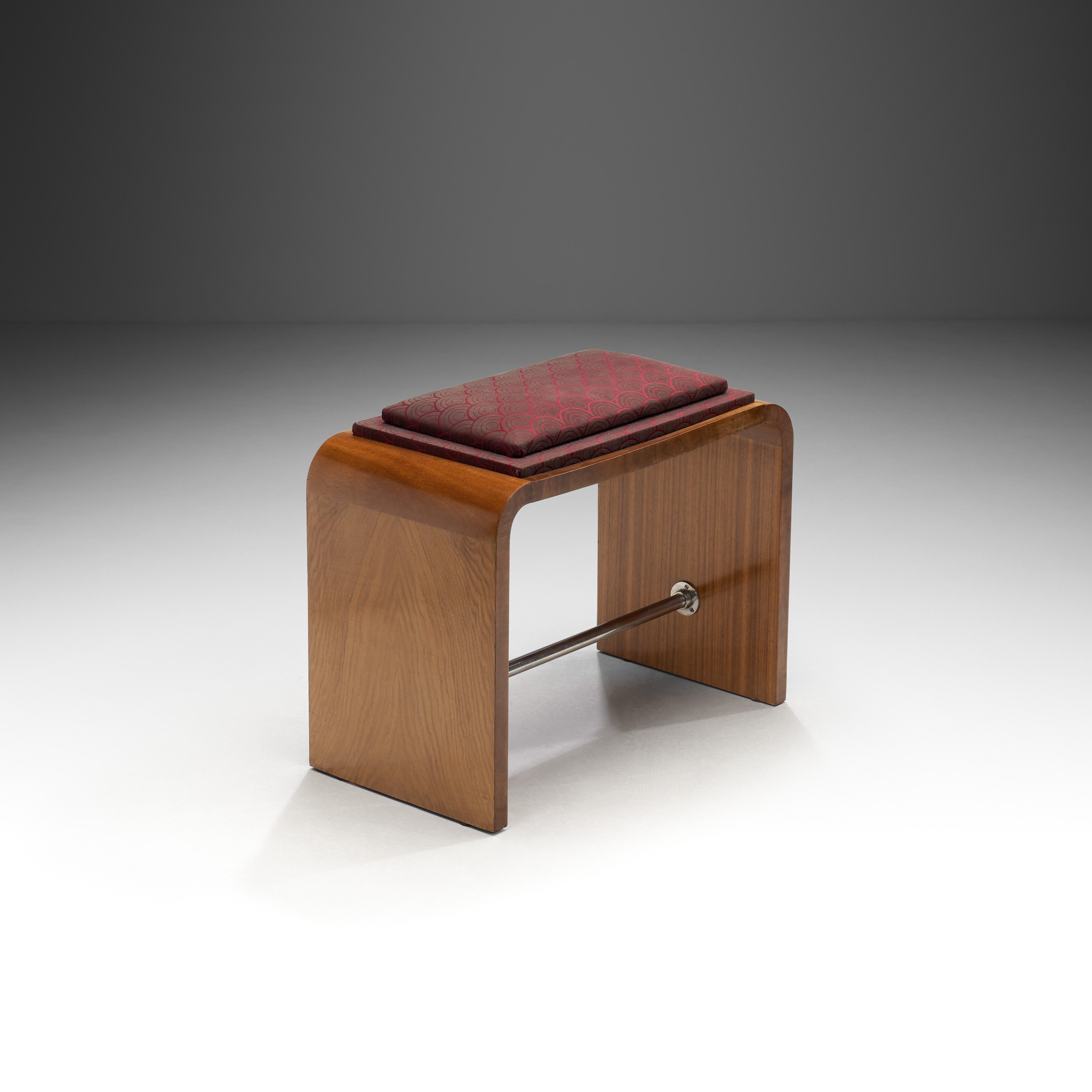
Art Deco furniture is a great way to add drama and sophistication to any room. It’s a style often used to add a modern yet timeless touch to living rooms and bedrooms. Whether you love the glamour of bold colours and patterns, or prefer the elegance of muted tones and sleek lines, Art Deco furniture can bring your vision to life.
In an era marked by unprecedented cultural dynamism and bold artistic expression, the Art Deco movement emerged as a testament to modernity and sophistication. This period witnessed the creation of exquisite furniture pieces that epitomized the union of form and function, with this Art Deco stool standing out as a prime example. This stool has a classic look that relies on the beauty of the materials. The wood's warm tones and distinct grain add a touch of natural beauty to the otherwise modern impression.
Stools, typically overlooked in comparison to larger furniture pieces, played a crucial role in the Art Deco interior. Their compact size and versatility made them ideal for multi-functional spaces, embodying the modern ethos of efficiency and adaptability. Today, stools are experiencing a resurgence in popularity as contemporary design embraces the concept of versatile and space-saving furniture.
Condition:
In good vintage condition. Wear consistent with age and use. This stool comes with its original upholstery or has been reupholstered by a previous owner. Each of our items can be re-upholstered by our in-house atelier in a fabric of choice. Please reach out for more information.
Dimensions:
25.20 in W x 13.58 in D x 20.87 in H
64 cm W x 34.5 cm D x 53 cm H
REQUEST PRICE HERE
Price category: 15,000 - 20,000 usd / eur
This beautiful set of six stools are crafted in the manner of French design duo Audoux-Minet. Adrien Audoux and Frida Minet worked together during the mid-20th century. The duo are known for their innovative use of natural, sustainable materials, including rope, wicker, and bamboo. Their work was heavily influenced by the Modernist movement, which sought to create functional and streamlined designs that were accessible to a wider audience.
Like in Scandinavia, there was an early emphasis on wood in most European mid-century design as it connected everyday objects to nature. This set of six is a perfect example of this sentiment, and the visual benefits of an understated, organic design. The high quality wicker makes these pieces outstanding examples of woven furniture. They feature a fairly traditional shape with rounded edges and an airy feel. The straightforward shape highlights the understated beauty of the materials, allowing the beautiful woven pattern and the grain of the wood to stand out. The seats are set on three splayed club feet, stained in a rich colour lending a more dramatic presence to the set. The tripod base is ideal for ensuring the sturdiness needed for a classic piece of furniture, even more so when paired with the T stretcher placed between the legs. Being functional as well as aesthetically pleasing, these stools are a great addition to set the tone of a space. The design is strong but subtle, with expert wickerwork thanks to which it can add depth as well as functionality to a space.
The interplay of a simple structure and refined detailing evokes a sense of harmony, aligning with the era’s focus on blending beauty with utility. The organic design makes this set stand out with an elemental edge. The colour palette further allows them to easily adapt to almost any interior to either complement a space, or to pop as accent pieces.
Condition:
In good vintage condition. Wear consistent with age and use. The stools have recently been reconditioned. Due to the age and nature of the materials, the items have minor scratches and dents, and may have additional marks or discolouration.
Dimensions:
15.35 in W × 13.39 in D × 17.72 in H
39 cm W x 34 cm D x 45 cm H