
Mario Bellini "Le Mura" Lounge Chair for Cassina, Italy 1970s (sold)


Mario Bellini "Le Mura" Lounge Chair for Cassina, Italy 1970s (sold)
Italian architect Mario Bellini is well known for creating monumental and conceptual pieces of design, such as the Camaleonda sofa (1971) and Il Colonnato table (1977). His architecture and design work have won him many career accolades, working with Italy’s most renowned manufacturers Cassina and B&B Italia.
This lounge chair model named “Le Mura” is part of the eponymous sofa range, which includes a modular sofa, a daybed and the present lounge chair. Like the sofa, this lounge chair was in production for a limited time and much less produced, therefore very rare. Le Mura stands for ‘the walls’ and it is said that this name and the design was inspired by the large stones that were used to build the ancient Roman walls and roads. Like the Camaleonda, “Le Mura” is defined by its voluptuous profile. Besides the pure size of the design, the chrome metal buckles are the main distinctive features of this range, serving the purpose of hooking the modules together. The original brown leather upholstery covering the square frame makes this chair resemble a classic club chair. As the back is the same height as the armrests, the design calls for comfortable lounging. Bellini is highly regarded for designing modular pieces that not only look good but are also ergonomically considered. Furthermore, the pieces of his ranges can stand individually as well, evidenced by this lounge chair. It is classic and modern at the same time, carrying with it the timeless Italian charm of Bellini and Cassina.
Le Mura was manufactured with the innovative system of hooks created by Bellini in 1970, which defines the characteristic look and modularity. Established in 1927 by Cesare and Umberto Cassina in Meda, Italy. The opening of the Milan showroom designed my Bellini, Cassina became the made in Italy furniture benchmark. With a mindset focused on research and innovation, Cassina has been combining technology and long-standing artisan craftsmanship ever since its establishment.
SOLD
Condition:
In vintage condition. Wear consistent with age and use. The armchair has its original leather upholstery with patina and discolouration in the back. Each of our items can be re-upholstered by our in-house atelier in a fabric of choice. Please reach out for more information.
Dimensions:
47.63 in W x 37.79 in D x 30.9 in H; Seat height 20.47 in; Arm height 30.11 in
121 cm W x 96 cm D x 78.5 cm H; Seat height 52 cm; Arm height 76.5 cm
About the designer:
Mario Bellini (born February 1, 1935, Milan) is an internationally renowned Italian architect and designer. He received the Golden Compass Award eight times and the Medaglia d’Oro, that was conferred on him by the President of the Italian Republic. The MoMA in New York already dedicated a personal retrospective exhibition to him in 1987. At the time the museum already included 25 of his works in its permanent collection, including a remarkable set of Olivetti machines as well as the furniture for B&B and Cassina.
He graduated from the Milan Polytechnic - Faculty of Architecture in 1959 and began working as an architect himself in the early 1960s. Like many other Italian architects, his activities range from architecture and urban planning to product and furniture design.
His career as a product and furniture designer began in 1963, and from 1963 to 1991 he was chief design consultant for Olivetti. For many years he designed furnishing products and systems for B&B Italia and Cassina, TV sets for Brionvega, and hi-fi systems, headphones and electric organs for Yamaha. Bellini was also the editor of Domus magazine between 1985 and 1991.
Since the 1980s, Bellini has been dedicating himself to architecture almost exclusively, designing a wide range of buildings all around the world, including the Portello Trade Fair district in Milan, the Tokyo Design Centre in Japan, the National Gallery of Victoria in Melbourne, the Deutsche Bank Headquarters in Frankfurt, and the Department of Islamic Art at the Louvre in Paris to just name a few. In 2015 the Milan Triennale awarded him the Gold Medal for his career in architecture and in 2017 dedicated a retrospective exhibition to him. Contemporary Italian design has been synonymous with Mario Bellini’s name ever since the 1960s. ~H.
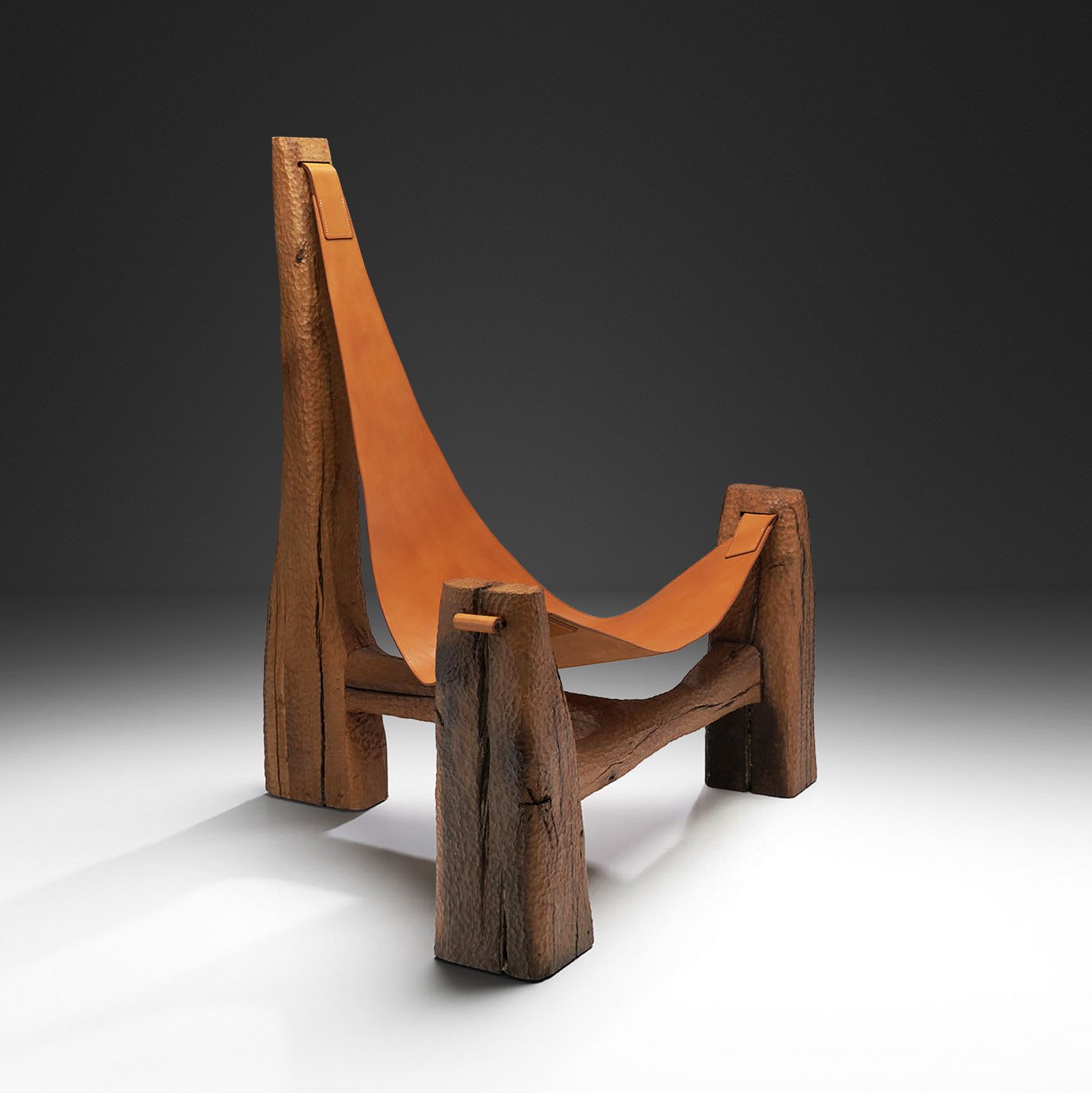
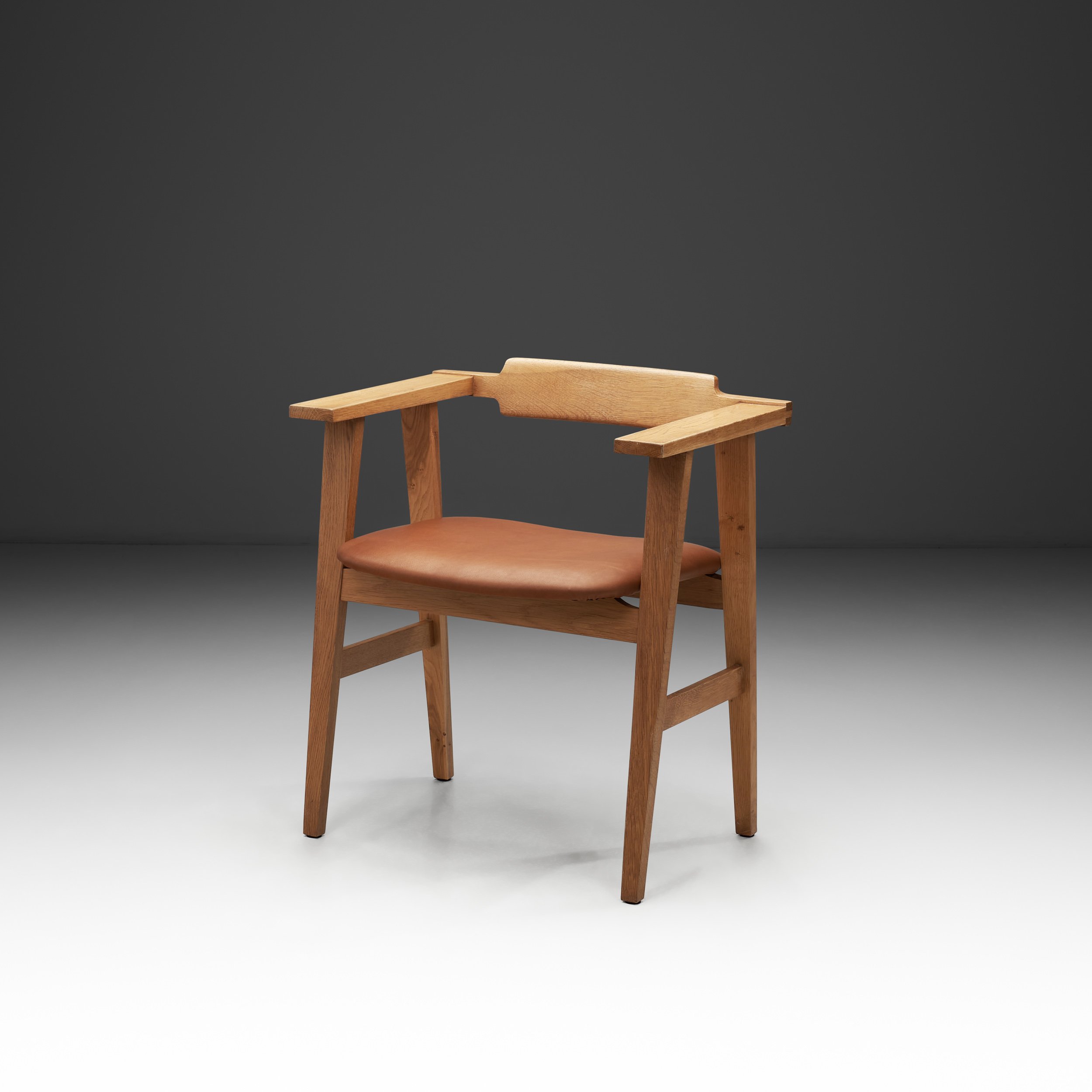
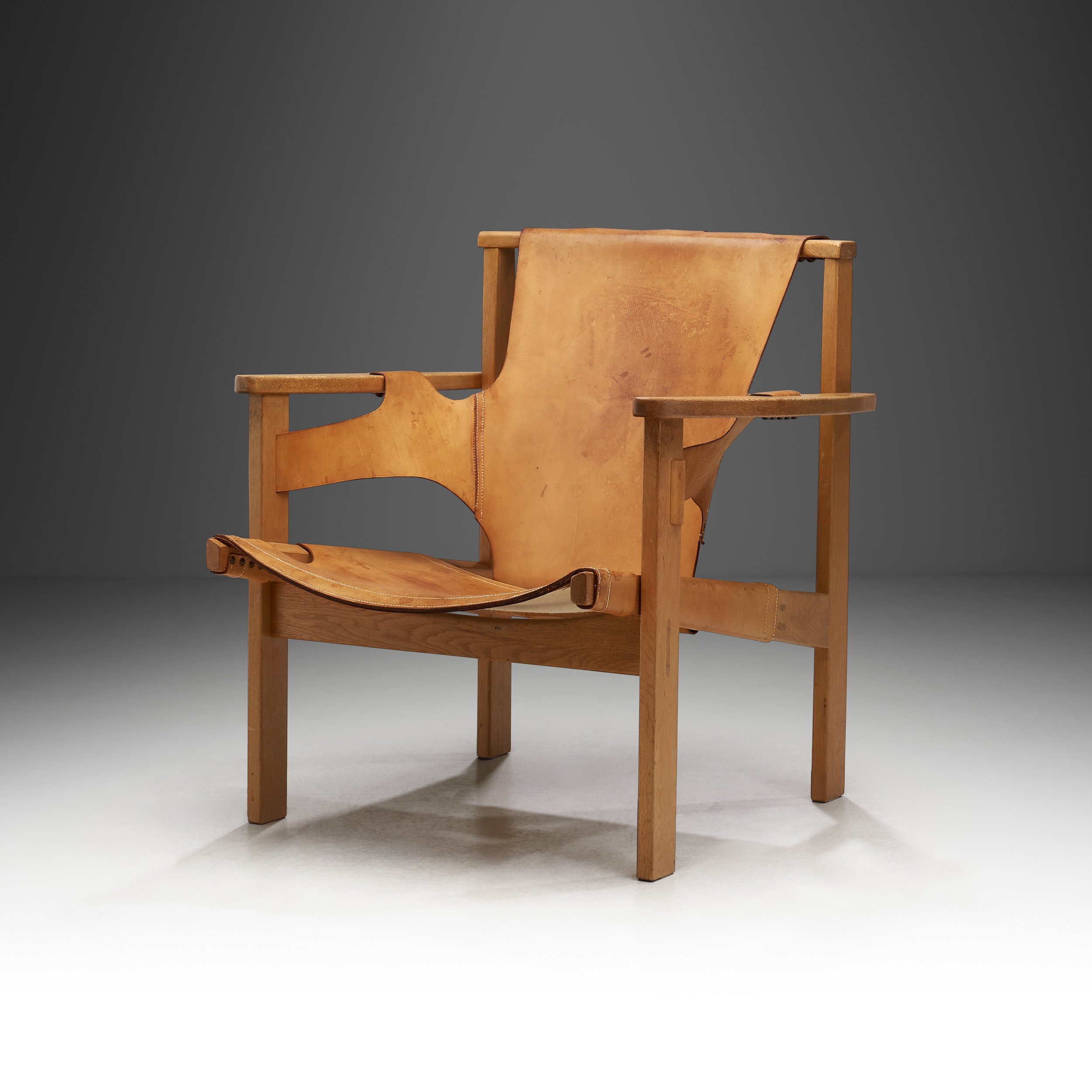

REQUEST PRICE HERE
Price category: 15,000 - 20,000 usd / eur
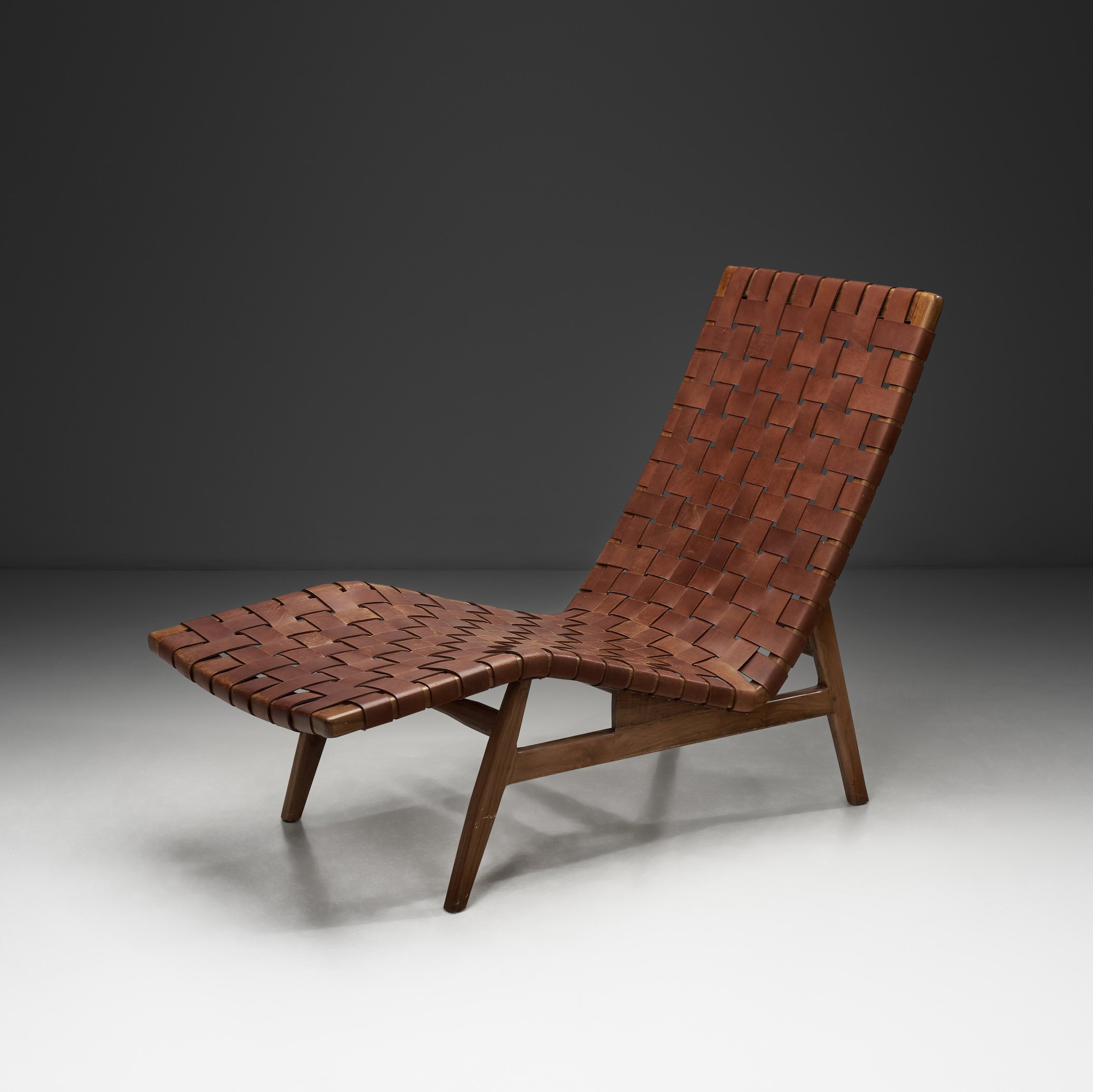
This beloved José Zanine Caldas lounge chair from the “Linha Z” or “Z Line” is an exceptional example of Brazilian design of the 1950s. The design dates to 1949, The woven leather straps and the organic shape is unmatched.
This chair model is made of plywood and features a distinctive shape, distinguished by its legs. The legs and arms are connected and form one unit and their shape inspired the name of the line, “Linea Z”. The edges are softly rounded, which matches the versatile curvature of the body, which enhances the organic feel of the chair. Besides the plywood frame, the original leather upholstery is the stand-out element of this chair both in terms of visual and technical terms. The leather strap seat and back are tightly secured to the plywood, completing the great graphic expression this is widely known for. The bolts of the joinery are left visible, a detail that adds to the rawness of the design. The bent seat is perfectly angled for lounging, supporting the sitter’s whole body.
The pioneering Brazilian designer, José Zanine Caldas’s present design was created by Mòveis Artisticos Z, the factory Zanine Caldas founded in São José dos Campos in 1948. Most of Zanine Caldas’s designs - especially this armchair - tap into the modernist aesthetic while bearing exceptionally unique shapes: form and function revisited with a twist.
Condition:
In good vintage condition. Wear consistent with age and use. Some scratches and discoloration on the wood. This chair comes with its original leather or has been reupholstered by a previous owner.
Dimensions:
24.21 in W x 40.94 in D x 32.48 in H; Seat height 12.4 in
61.5 cm W x 104 cm D x 82.5 cm H; Seat height 31.5 cm
Literature:
Movel Moderno Brasileiro, published by Olhares editores, São Paulo 2017 by Alberto Vicente and Marcelo Vasconcellos
Aric Chen, Brazil Modern, Monaclli Press, New York City 2016
Ruy Teixeira e Jayme Vargas, Desenho da Utopia, Olhares, São Paulo 2016
About the designer:
José Zanine Caldas was born in Belmonte, at the southern coast of Bahia, in 1919. Son of a doctor, Zanine was an autodidact who, from a young age, was fascinated with his environment, especially with trees.
While most architects of his generation studied extensively, Zanine developed his own style through doing and making, and at the age of 20 decided to exchange Bahia for Rio de Janeiro. There he opened up a workshop for architectural scale-models and had the chance to work with pioneering modern architects like Lucio Costa and Oscar Niemeyer.
Large scale furniture with modern design and affordable prices. This was the great advantage of the joinery Móveis Artístico Z founded in 1948 by the architect Zanine Caldas, in partnership with Sebastião Pontes and Paulo Mello, was a great success at the time. Headquartered in São José dos Campos (SP), it maintained its production for almost two decades. The form of creation, idealized by Zanine, was opposed to the market of the time, which was either based on the production of handmade furniture, in solid wood, or in pieces produced in series with an unattractive design. Breaking these paradigms, Móveis Artísticas Z revolutionized manufacturing pieces with improved design and great popular appeal.
Inspired by the local craftsmen who carved boats and furniture from fallen trees, Zanine began experimenting with chiselling and carving large, sculptural works, which became the focus of his later career. Zanine became a big advocate for preservation and in the 1980s, he established the Foundation Center for the Development of the Application of Brazilian Woods (DAM), in an effort to educate and attempt to reverse the rampant destruction of Brazilian rainforests.
Up until his death in 2001, Zanine kept his natural visions alive, and would plant a new tree in place of any tree that was taken down for one of his projects. ~H.