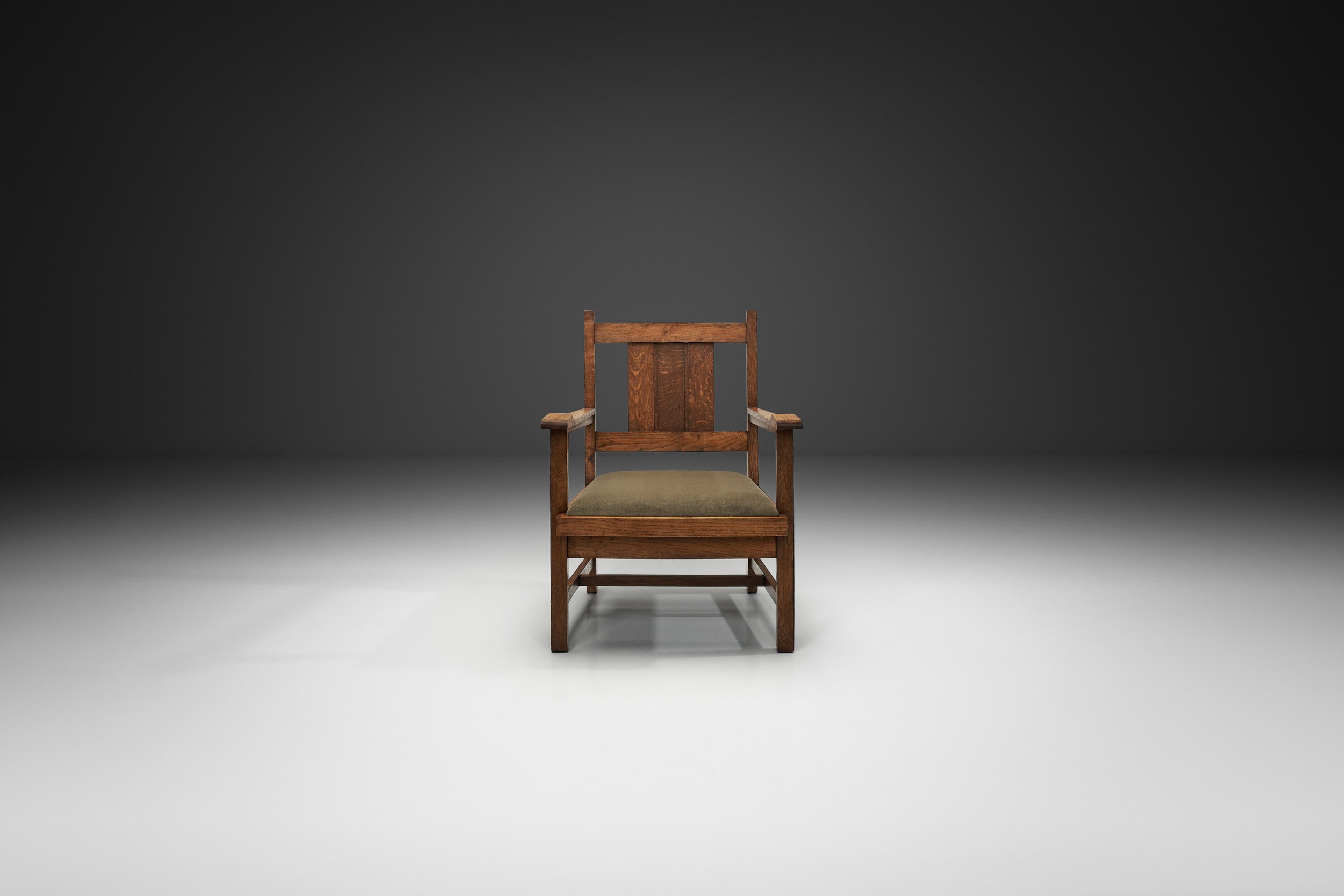
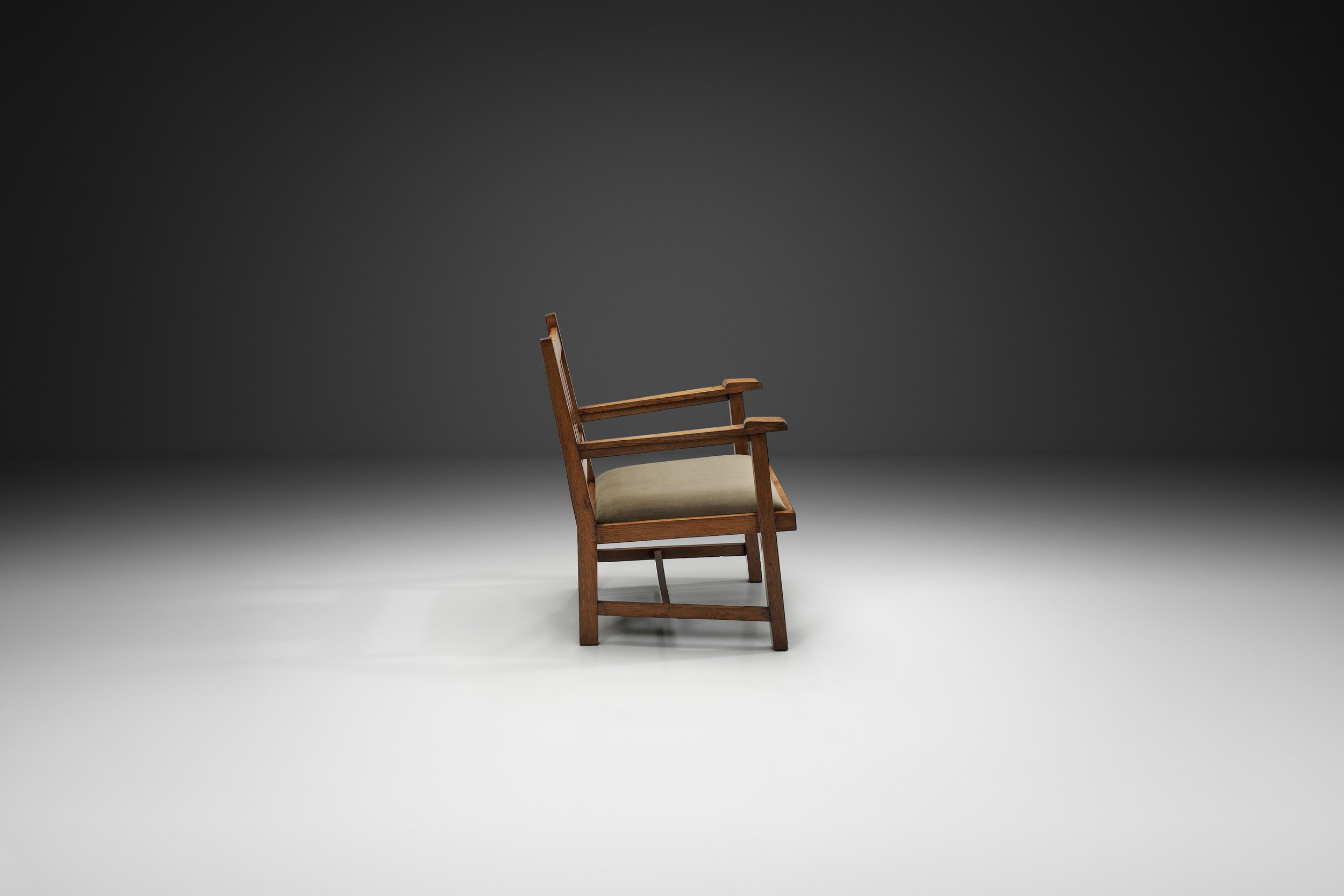
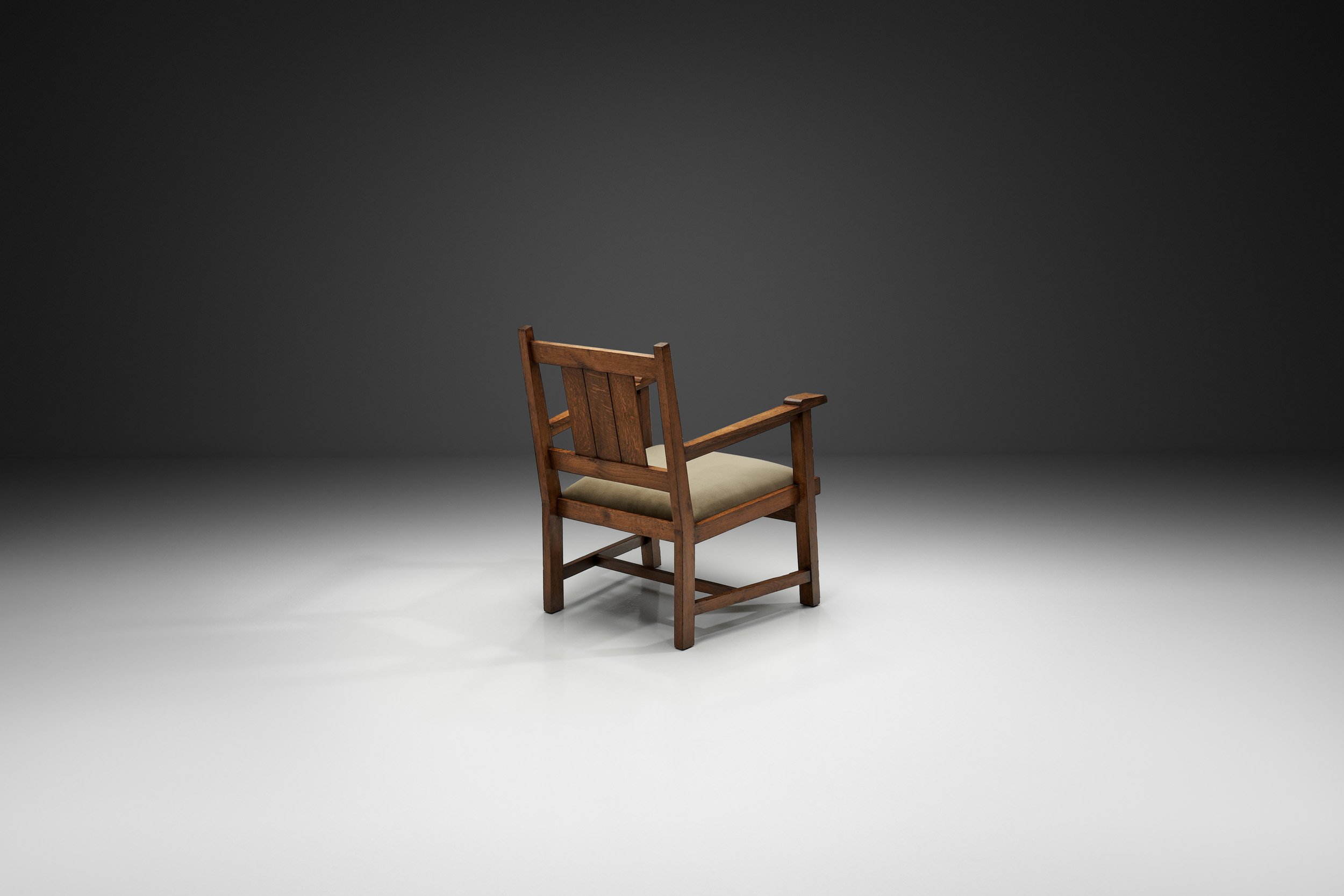
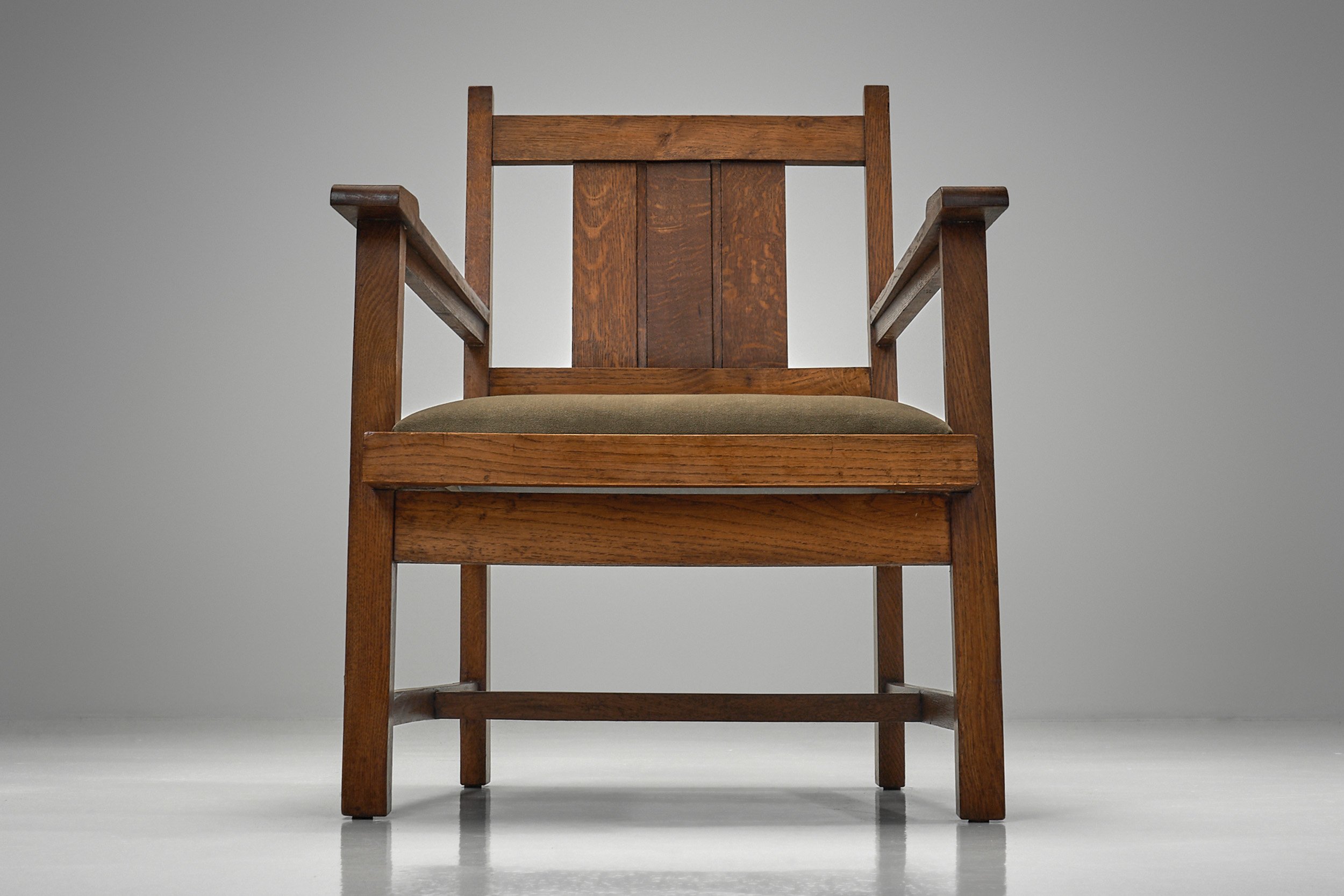
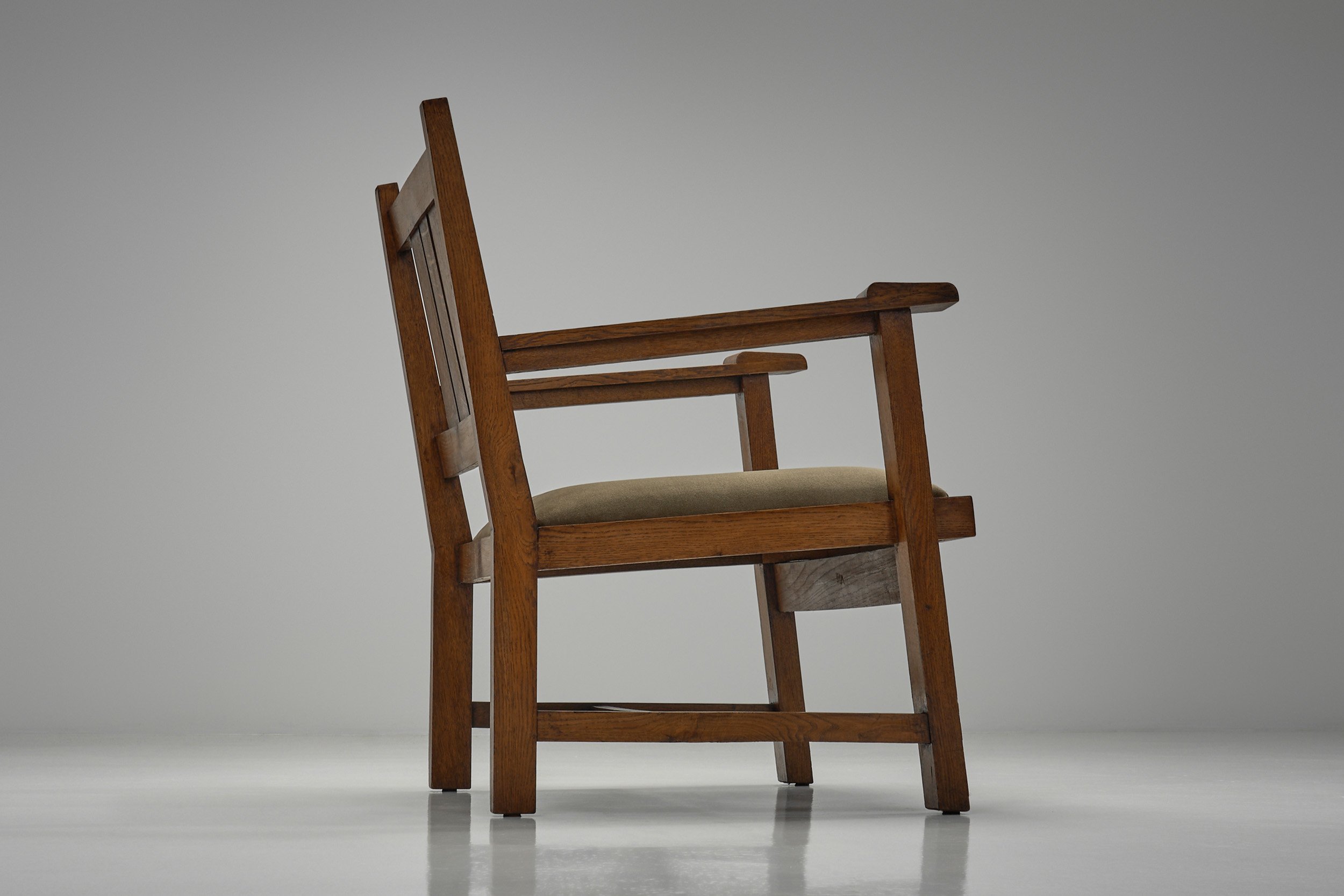
Amsterdamse School Armchair by Cornelis van der Sluys, The Netherlands ca 1920s (sold)


Amsterdamse School Armchair by Cornelis van der Sluys, The Netherlands ca 1920s (sold)
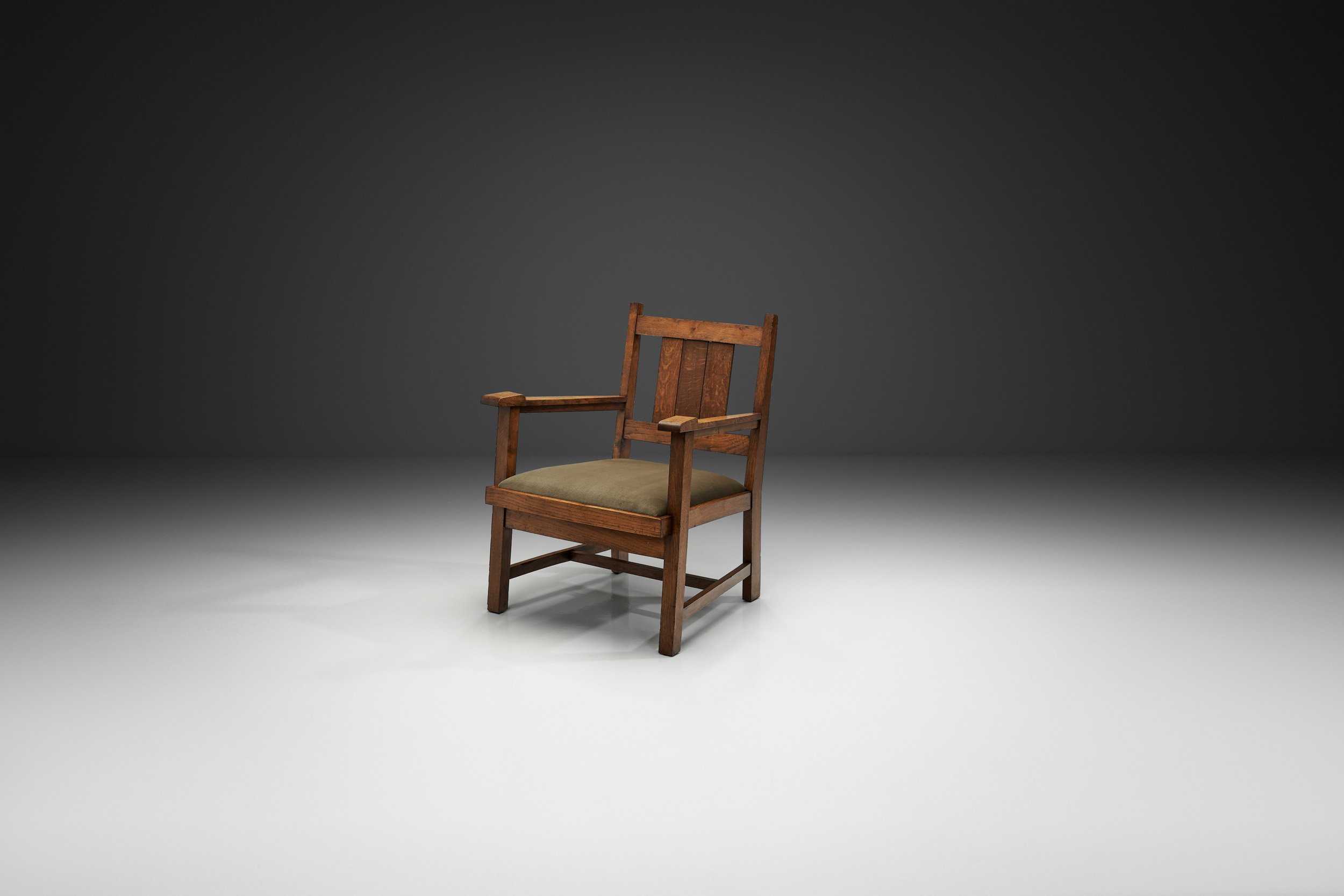
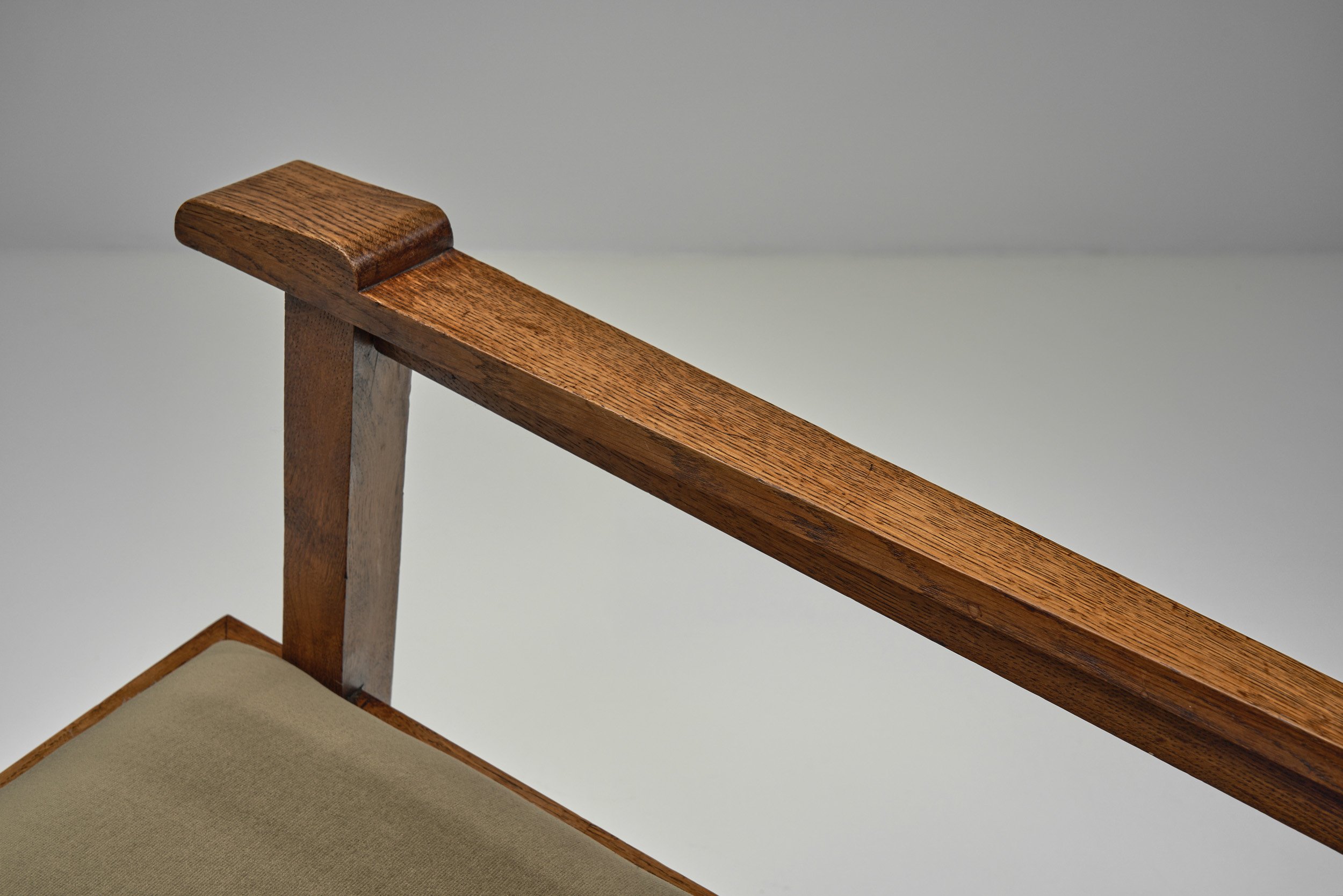
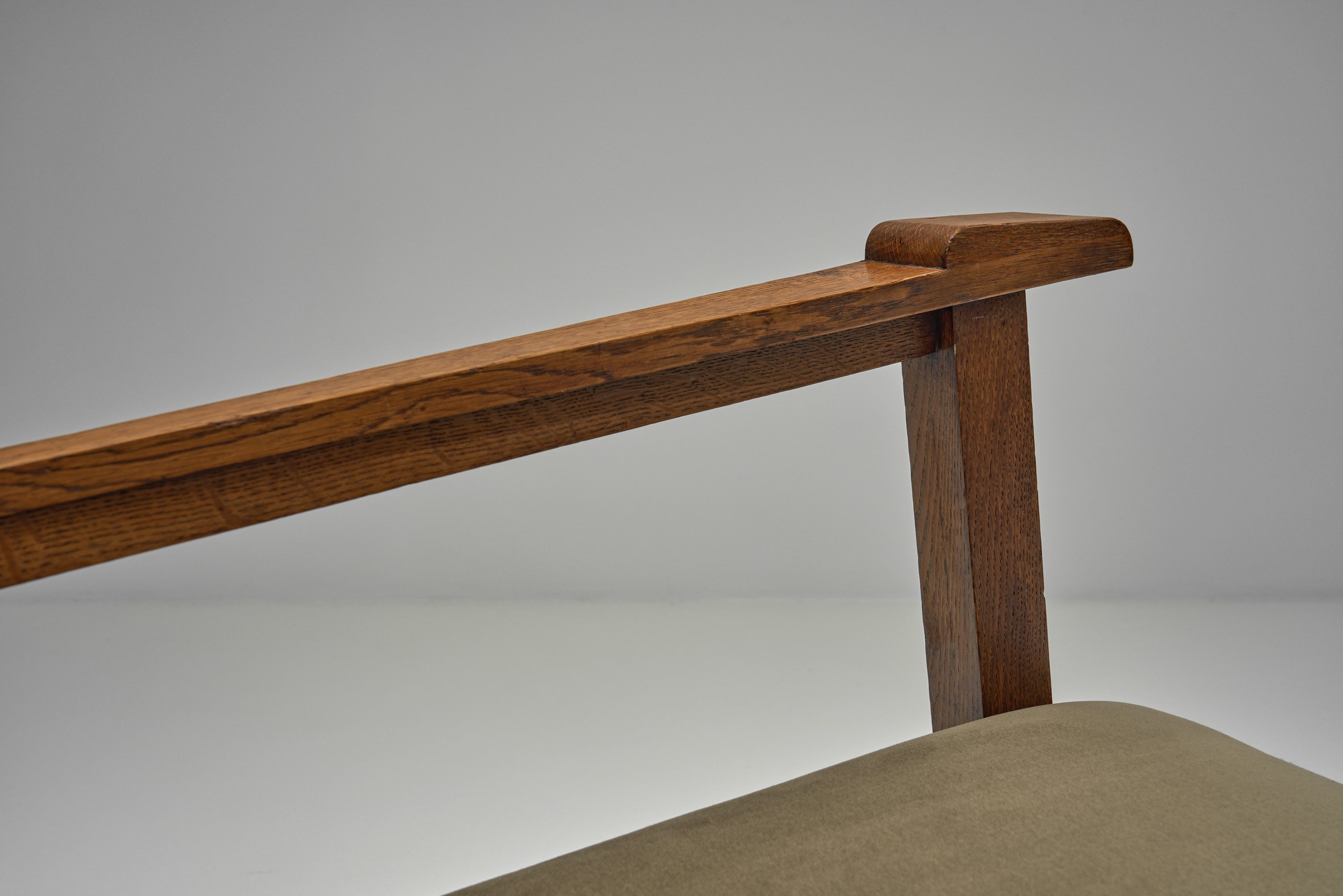
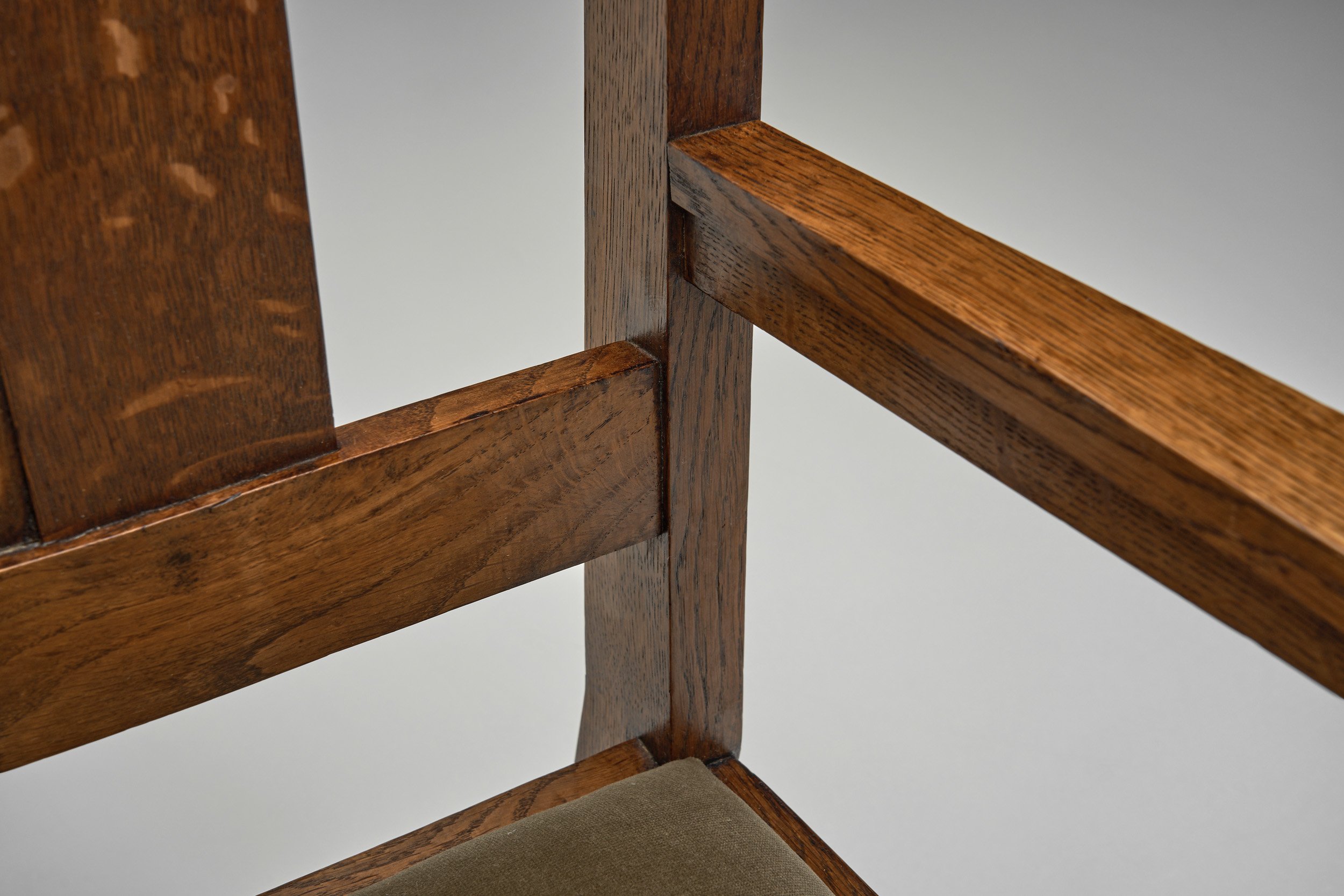
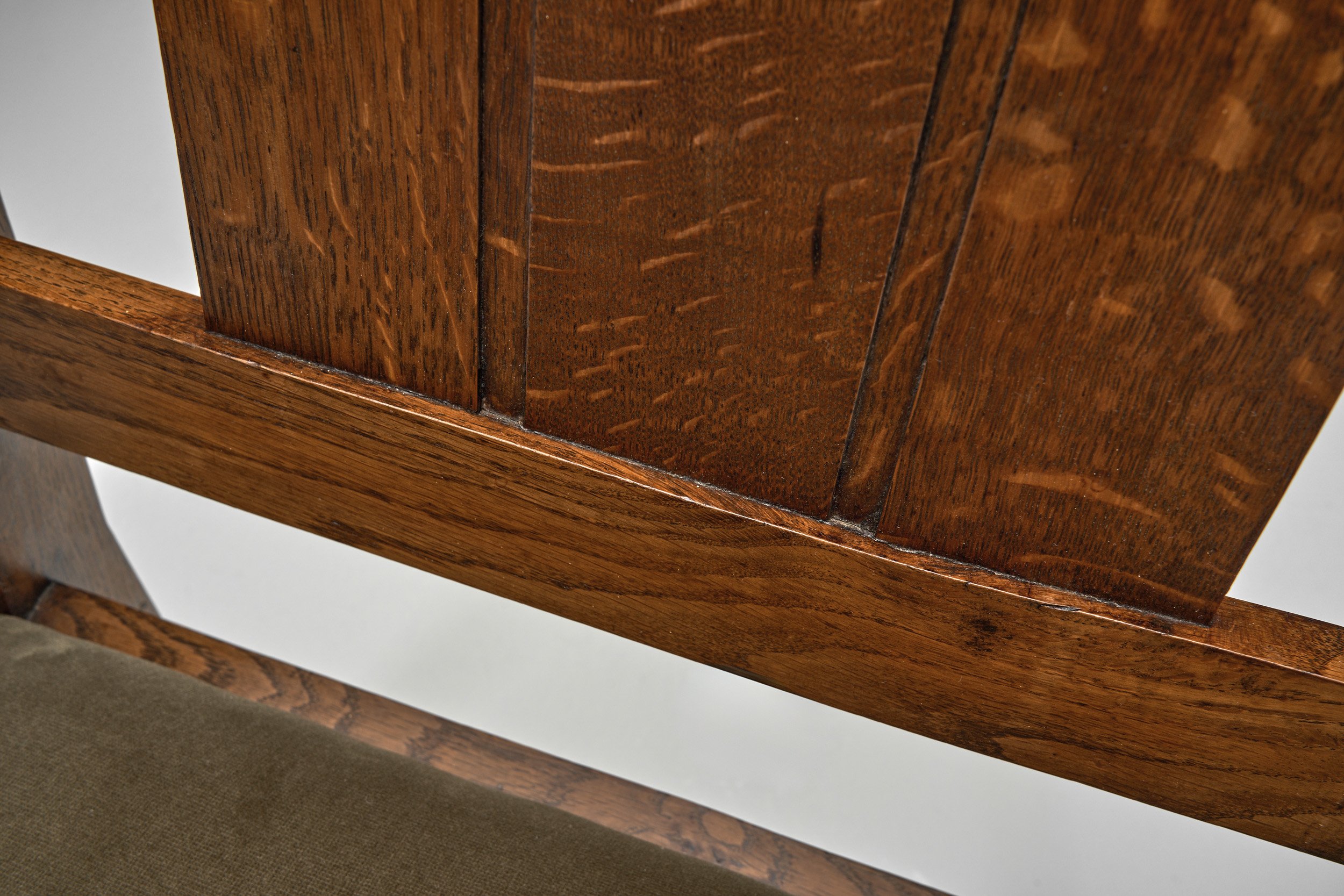
The Amsterdamse School defined Dutch architecture and design from as early as the 1910s. The style has roots in Expressionist architecture, borrowing elements from the Jugendstil (Art Nouveau) and Art Deco aesthetic. Designers working within this movement, like Cornelis van der Sluys, often blurred the line between architecture and furniture, creating pieces that were meant to anchor an interior rather than disappear into it. This armchair is a clear expression of that philosophy.
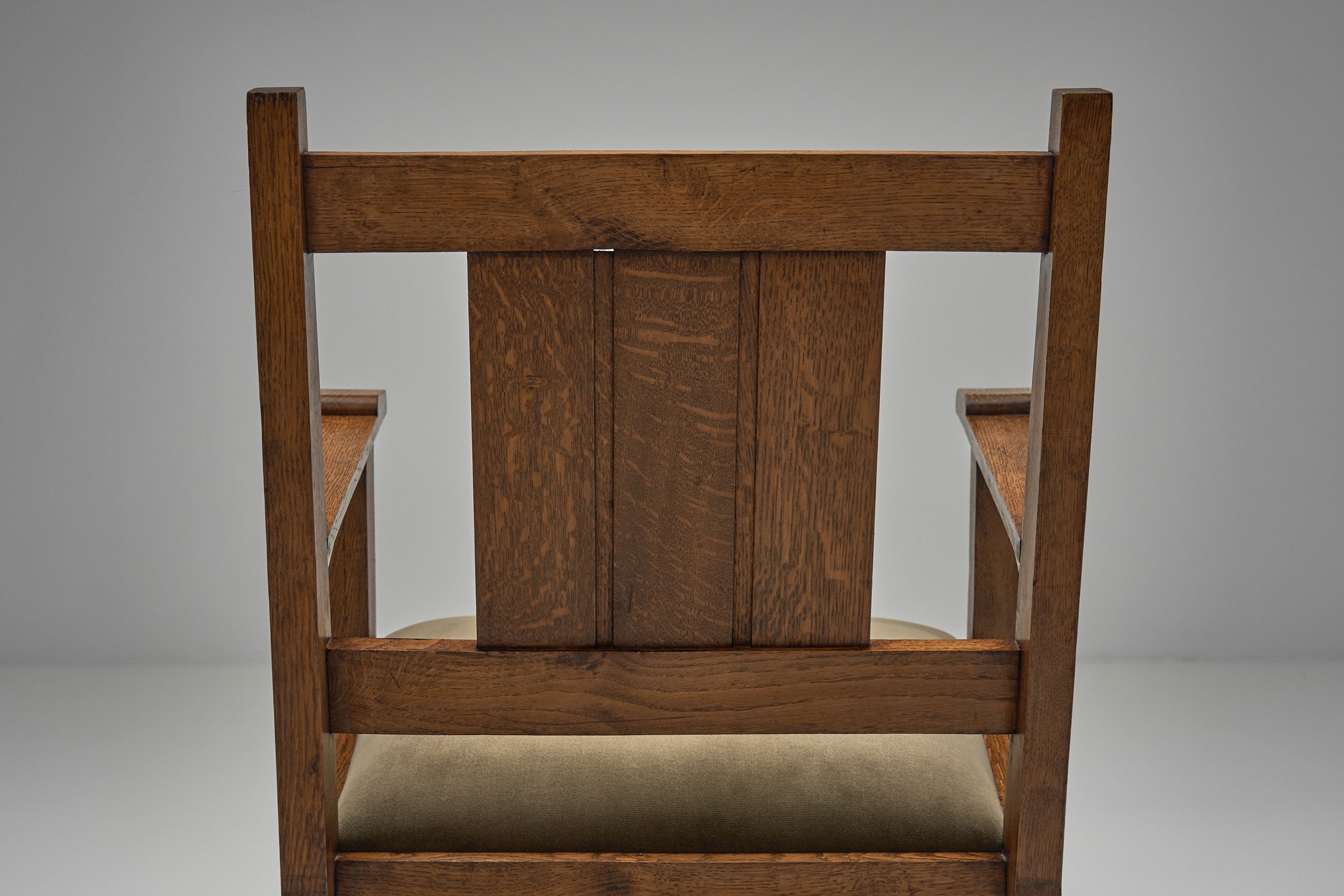
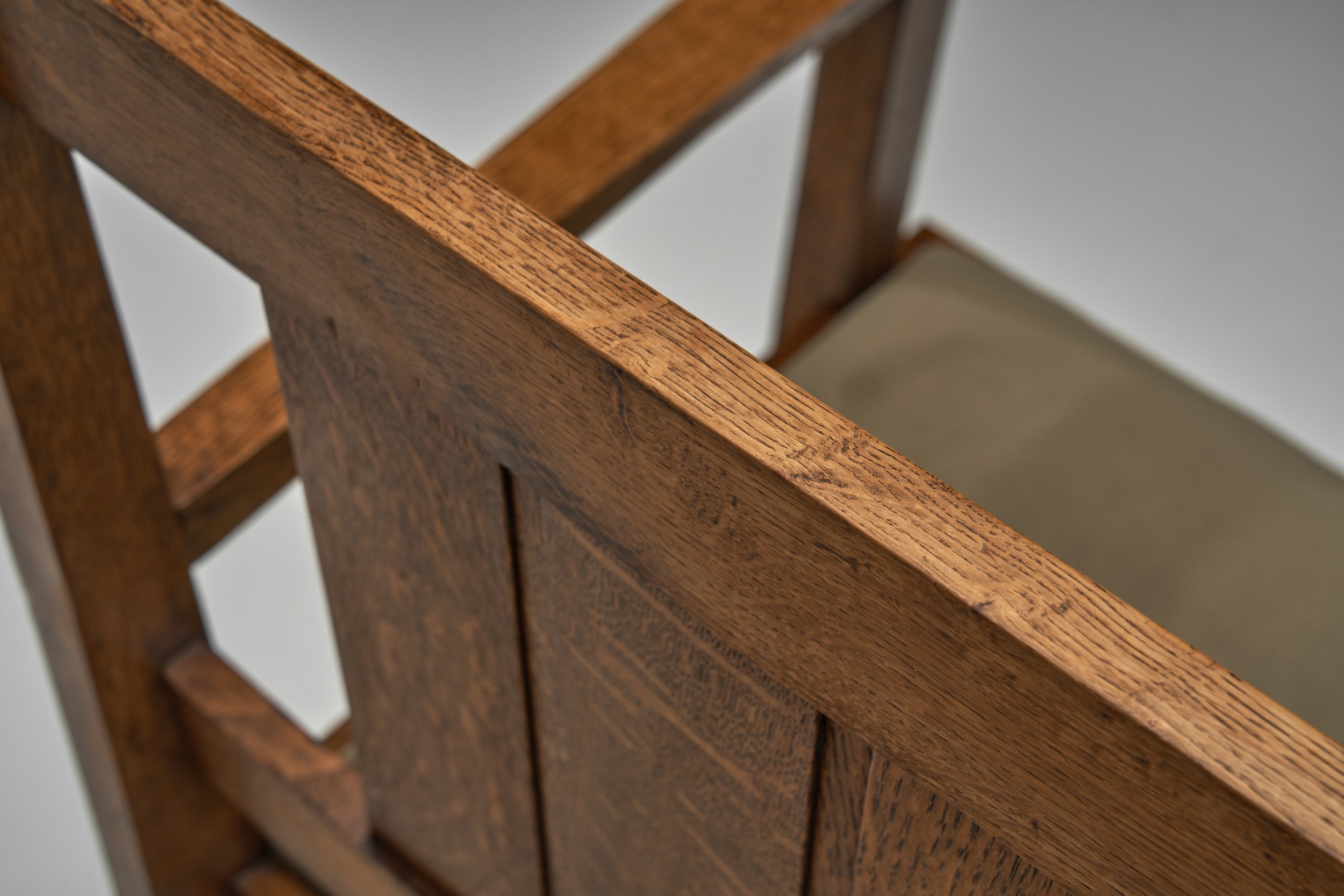
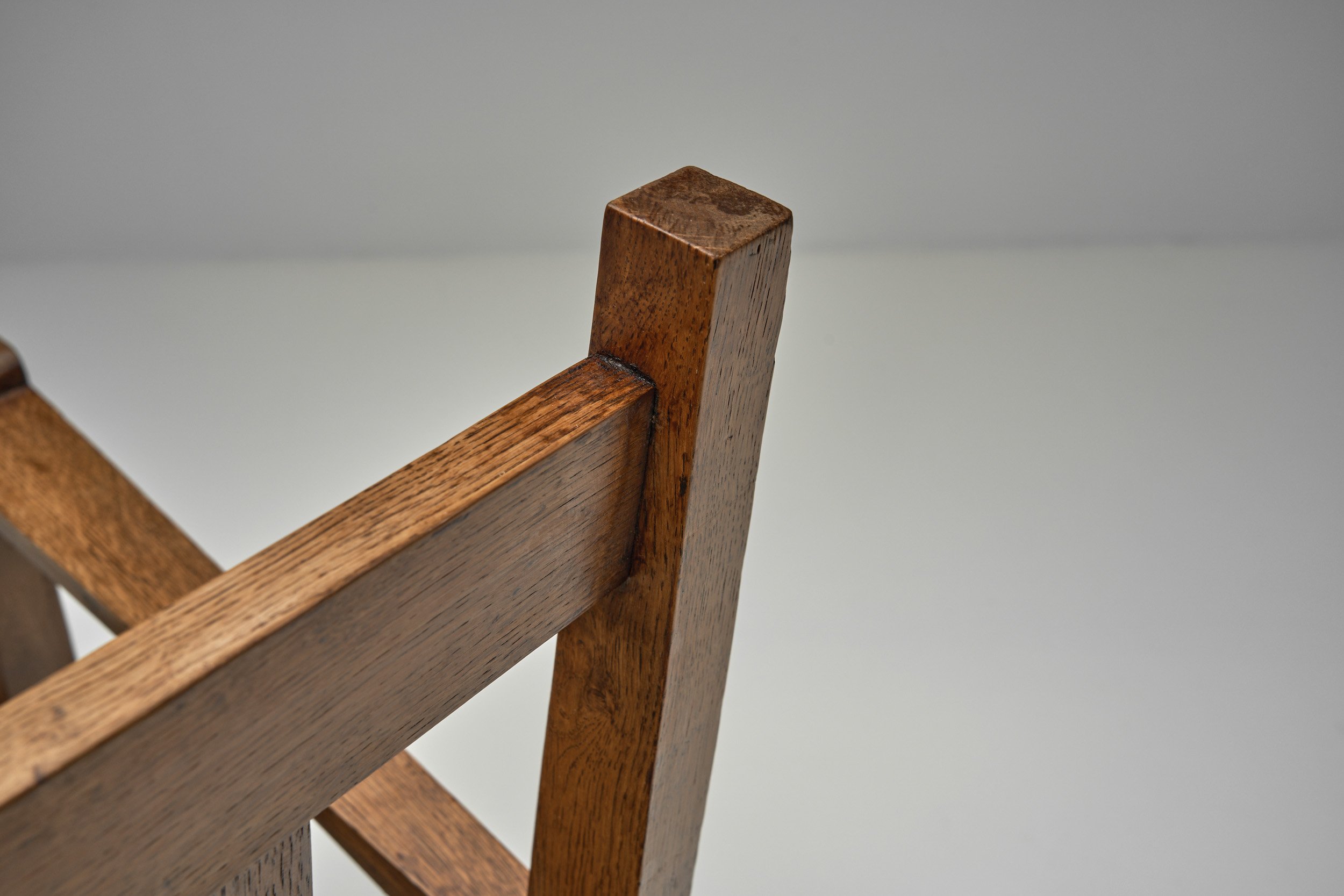
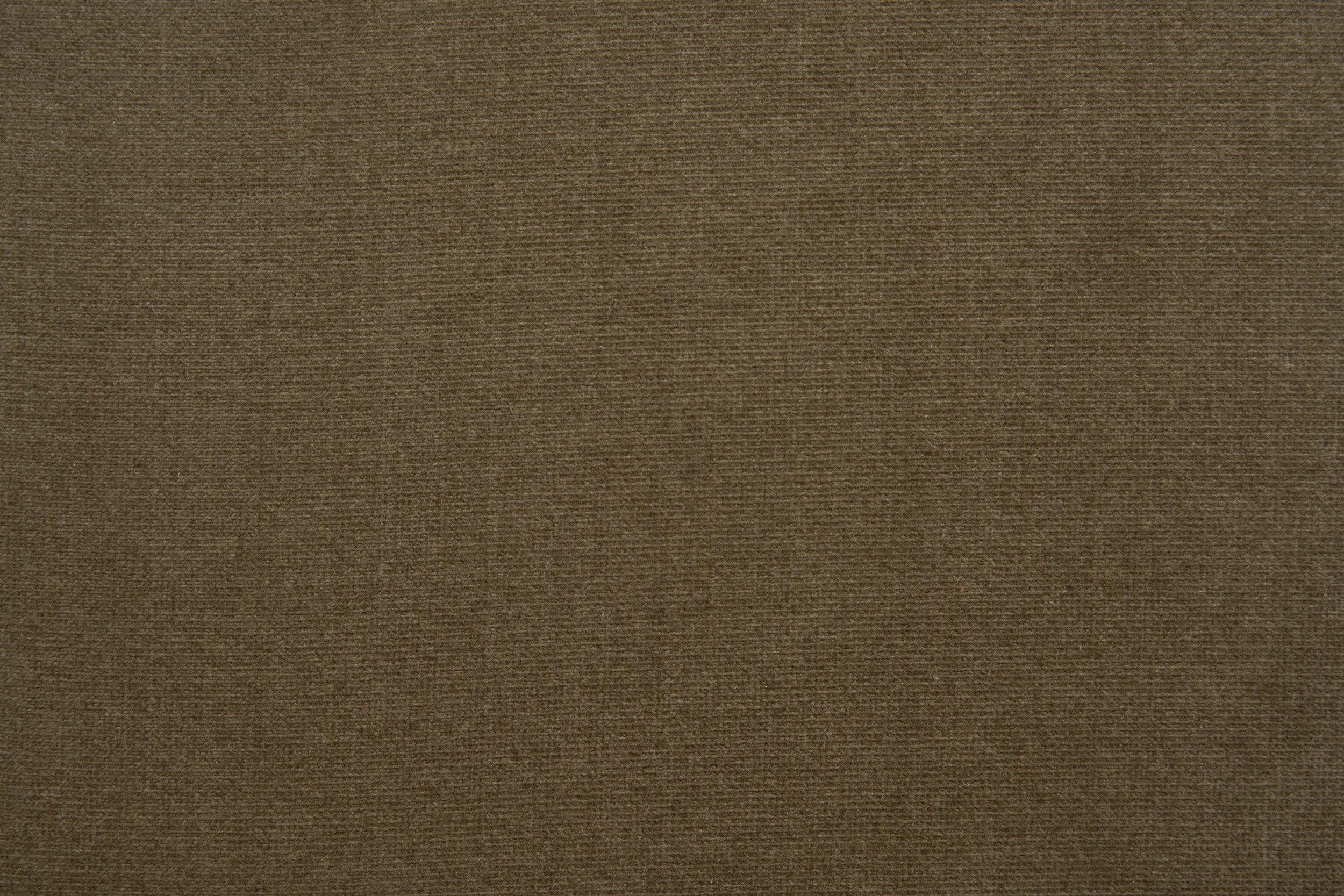
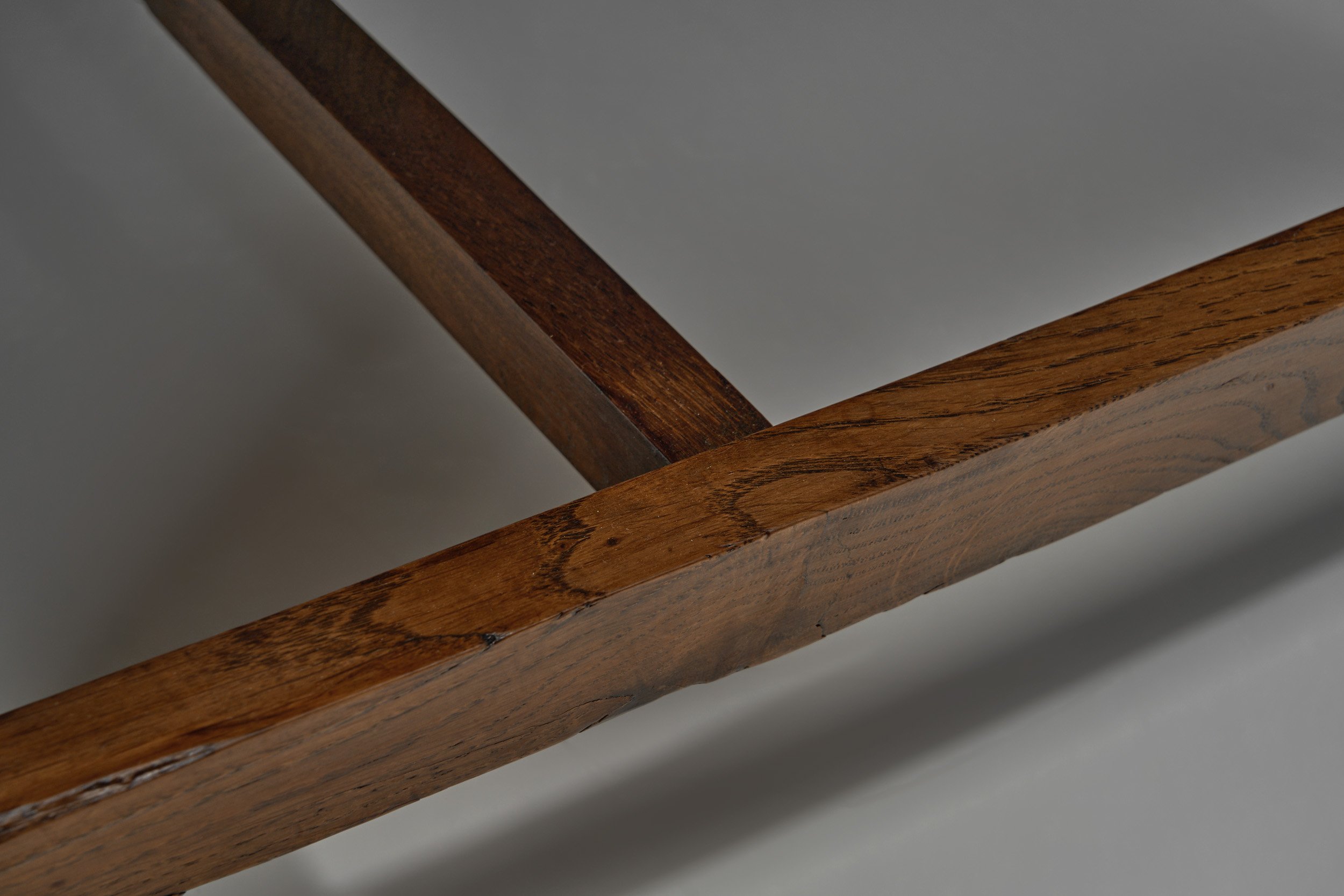
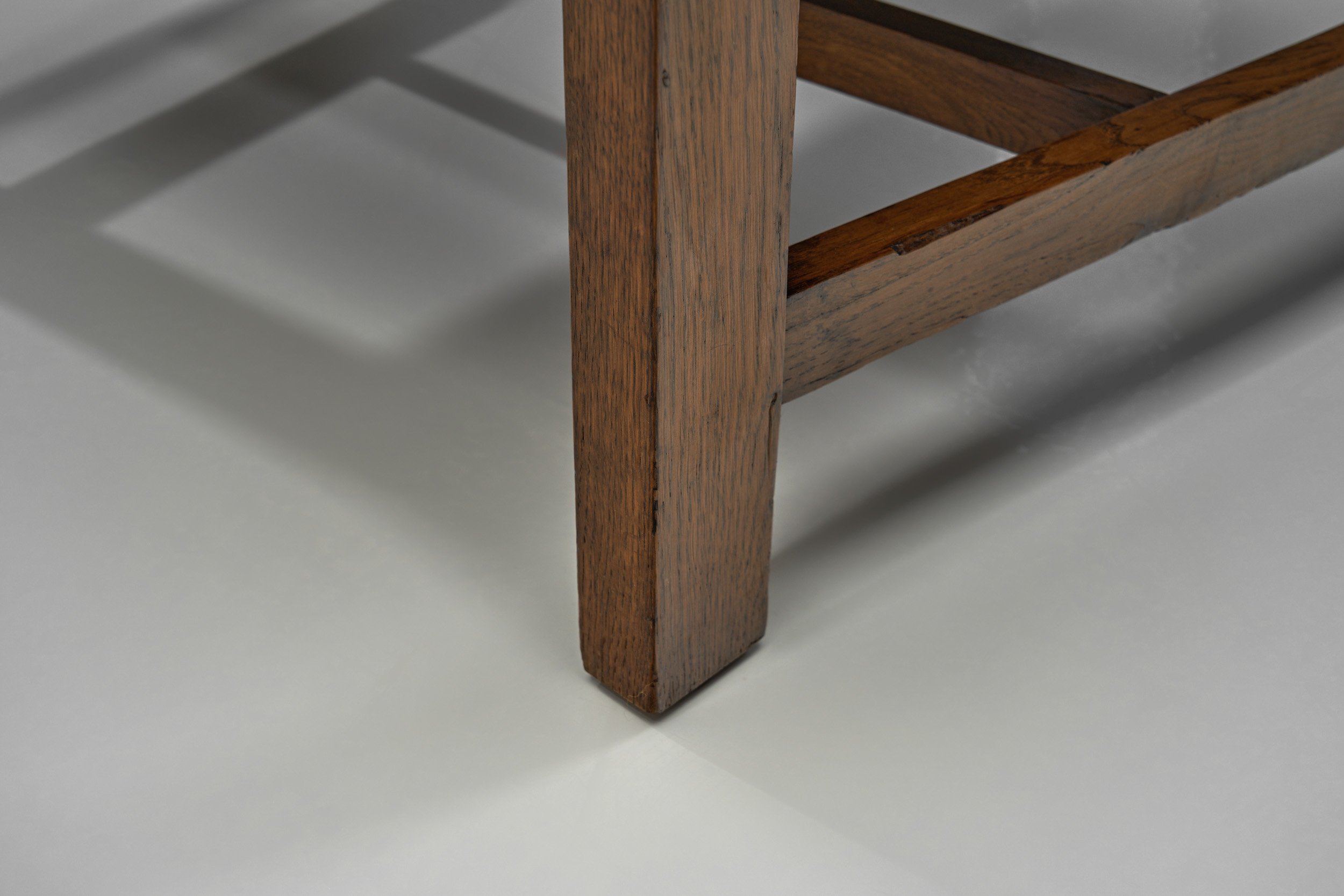
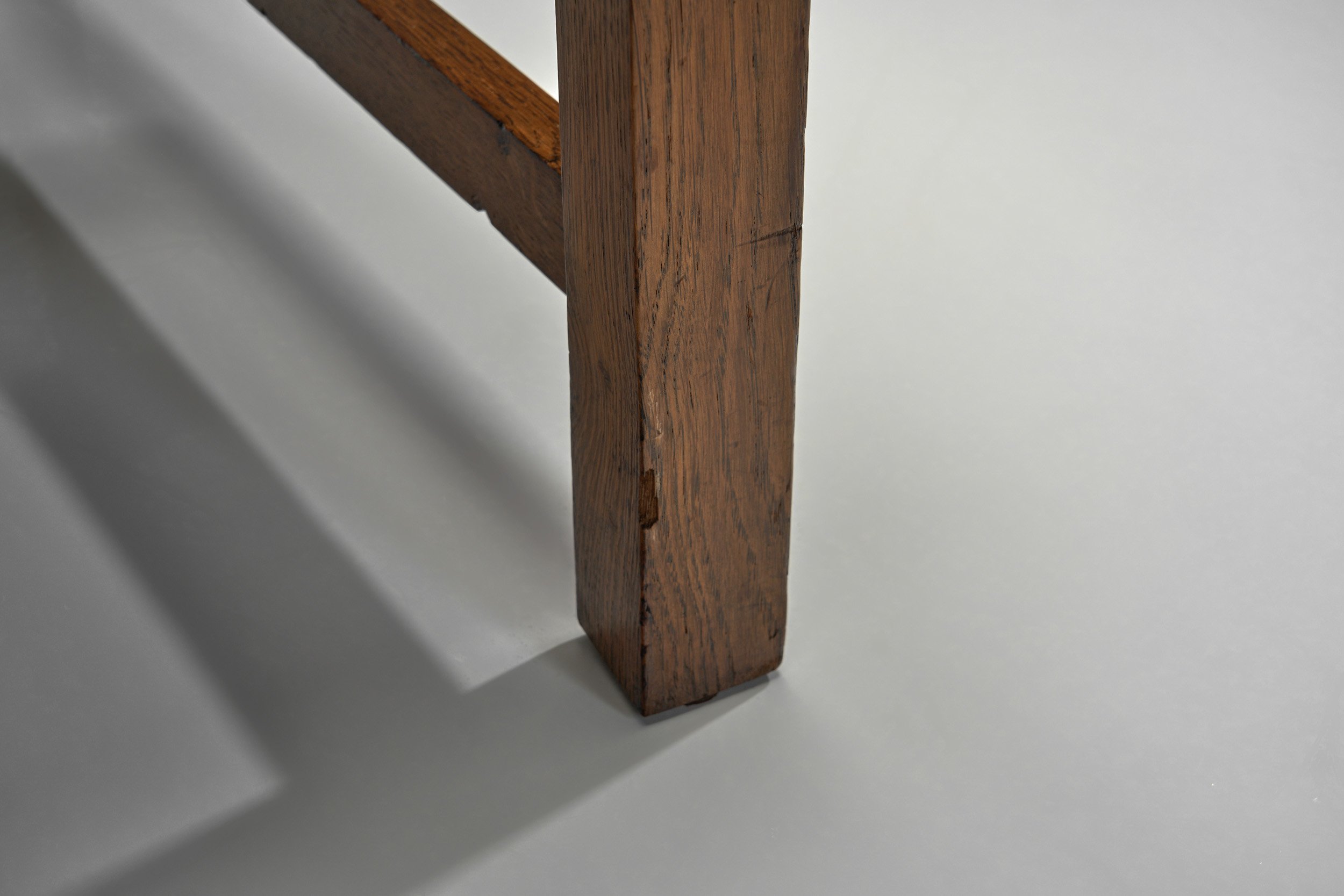
This chair showcases a robust solid wood construction, with a warm, slightly patinated surface that highlights the natural grain and depth of the material. The frame is deliberately straightforward yet bold, giving the chair a grounded presence that feels both honest and enduring. The design is defined by a subtle architectural quality achieved through wooden slats and panels, characteristic of Amsterdamse School seating. From every angle, the chair reveals thoughtful joinery and a careful balance, with no unnecessary embellishment, only purposeful design choices that emphasise durability, comfort, and visual cohesion. The seat is upholstered in a muted fabric, which allows the focus to remain on the wooden frame. The squared legs are connected by stretchers that reinforce the structure while maintaining a clean visual rhythm.
This armchair stands as evidence of the reason many Dutch architects succeeded at the craft of furniture design. Driven by function, Cornelis van der Sluys’s focus was evidently on practicality, structural stability, and a design in favour of these principles. This piece is the perfect way to bring organic charm to a minimalist space.
SOLD
Condition:
In good vintage condition. Wear consistent with age and use. The item has recently been reconditioned. The item has minor chips. Due to the nature and age of the materials, the item may have some marks, scratches, and discolouration. The seat has recently been reupholstered in a premium fabric. Each of our items can be reupholstered by our in-house atelier in a fabric of choice. Please reach out for more information.
Dimensions:
25.39 in W x 22.83 in D x 31.89 in H; Seat height 16.54 in; Seat depth 20.27 in; Arm height 24.41 in
64.5 cm W x 58 cm D x 81 cm H; Seat height 42 cm; Seat depth 51.5 cm; Arm height 62 cm
REQUEST PRICE HERE
Price category: 5,000 - 7,500 usd / eur
Bas Van Pelt (1900-1945) was a well-known Dutch interior and furniture designer, known for the clarity and quality of his designs. His works created in the 1930s are regarded for their progressive design and quality.
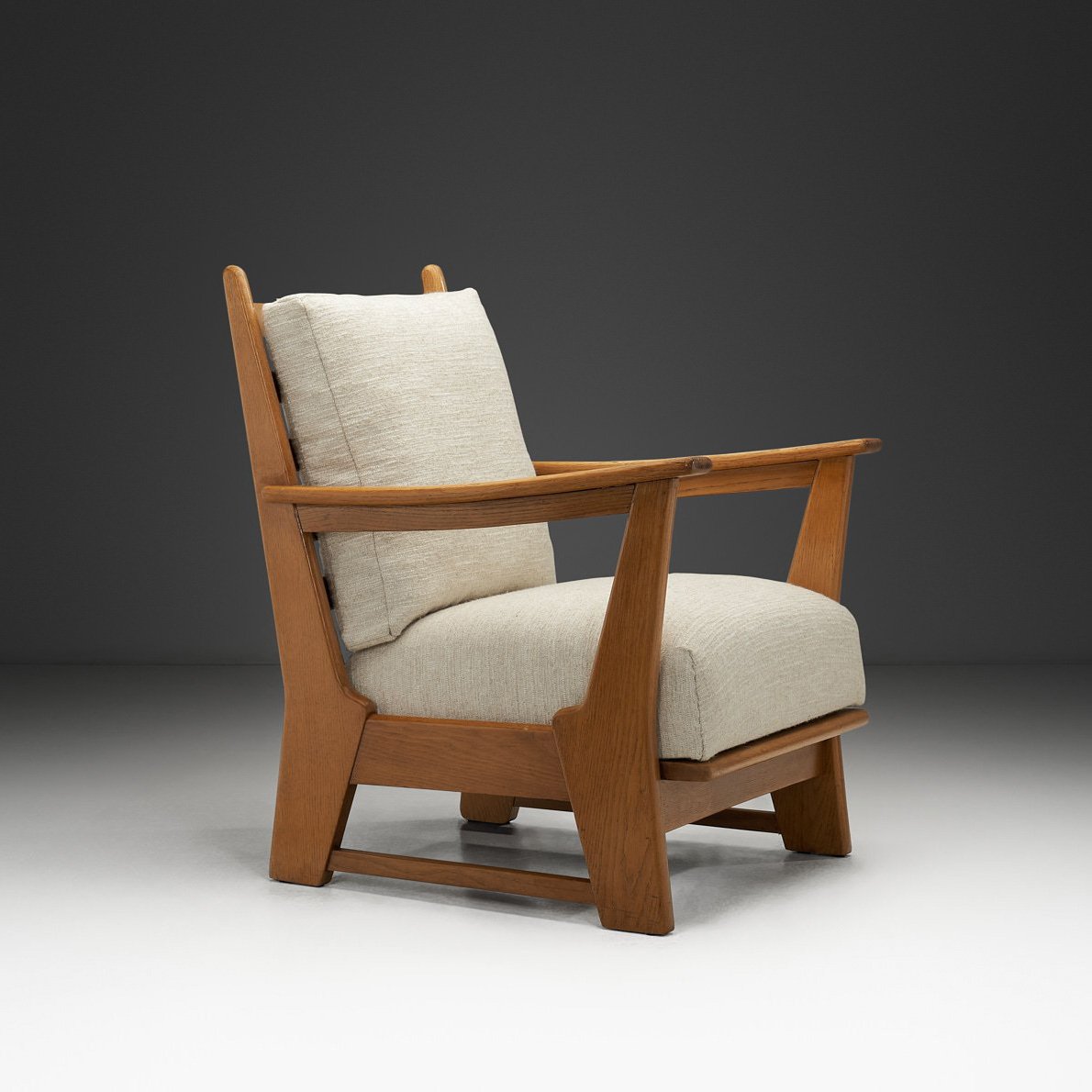
While Bas Van Pelt's creative work was primarily influenced by the 1920s’ straight lines dominated by The Hague School, this armchair is the result of his more mature design era, which was primarily dominated by natural materials and more curvature. While made of solid oak, this armchair has an open feel to it. The arms and backrests showcase a sense of airiness, highlighted by the slats on the back. This neat detail accentuates the high level of woodworking and creates an effortless look. The arms’ angles are slightly inclined, resulting in a harmonious look while also being ergonomic, with solid support for the spine. The sitting comfort is pleasant, aided by the upholstered cushions. The textured upholstery of the seat and back cushion beautifully complements the frame. The chair embodies comfort and cosiness through the mix of proportions and expertly selected materials. The rich shade of the wood pairs perfectly with the cream upholstery.
Haagse School furniture wasn’t flashy but instead focused on being well-made and to fit a warm, comfortable and welcoming home. As this chair exemplifies, blending functionality, good quality natural materials and organic colours with excellent craftsmanship is the key to the success of this design period.
Condition:
In good vintage condition. Wear consistent with age and use. Due to the nature and age of the wood, the chair may have minor marks, scratches, and discolouration. The chair has been reupholstered recently in a premium fabric. Each of our items can be reupholstered by our in-house atelier in a fabric of choice. Please reach out for more information.
Dimensions:
25.59 in W x 29.92 in D x 34.25 in H; Seat height 17.32 in; Seat depth 17.71 in; Arm height 24.40 in
65 cm W x 76 cm D x 87 cm H; Seat height 44 cm; Seat depth 45 cm; Arm height 62 cm
REQUEST PRICE HERE
Price category: 5,000 - 7,500 usd / eur
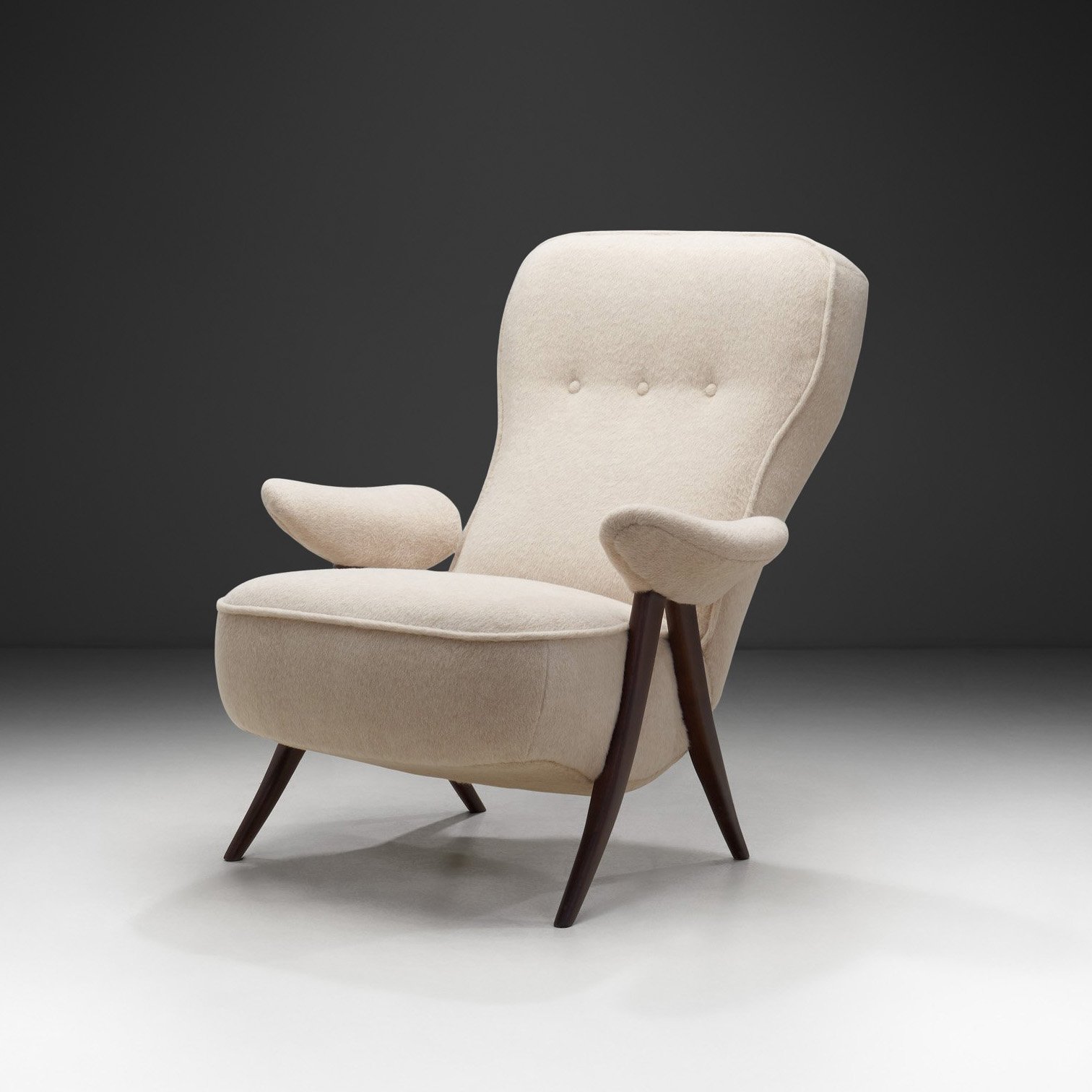
Among the pantheon of talented individuals who have worked for Artifort, Theo Ruth was the acclaimed Dutch furniture manufacturer’s first permanent designer. Ruth’s work significantly advanced Artifort’s laudable reputation, specifically through his designs for chairs. Thus, this 'Model 105' hairpin chair is a representative example of Ruth’s craftsmanship and talent.
This chair is full of exceptional features and details that make it a unique example of the creative overflow that defined mid-century modernism in The Netherlands and the rest of Europe. The flowing structure displays beautifully curved lines and rounded edges, ensuring extreme comfort and emphasizing its ergonomic design. The round edges of the upholstered body create a nice balance with the hairpin legs. As with most armchairs, this model is also built in a permanently reclined position, another lovely feature. The armrests are formed atop the wooden legs of the chair effortlessly, without any visible joinery as if just emerging from the wood naturally. The light colour of the textured upholstery in combination with the richly coloured, stained wood frame create warm elegance, perfect to bring a modern touch to any space. The duality of the two materials creates a flowing, self-supporting and enticingly functional design. The combination of solid wood and high-quality upholstery is traditional in mid-century design for a good reason, showcased with the simple elegance of this chair.
From every single angle this chair offers stunning lines and rich texture, and is a representative example of Ruth’s craftsmanship and talent
Condition:
In good vintage condition. Wear consistent with age and use. Some minor scratches and marks on the wood. The chair has been reupholstered recently in a premium fabric. Each of our items can be re-upholstered by our in-house atelier in a fabric of choice. Please reach out for more information.
Dimensions:
31.10 in W x 35.43 in D x 35.83 in H; Seat height 16.14 in; Seat depth 19.69 in; Arm height 19.69 in
79 cm W x 90 cm D x 91 cm H; Seat height 41 cm; Seat depth 50 cm; Arm height 50 cm
REQUEST PRICE HERE
Price category: 2,500 - 5,000 usd / eur
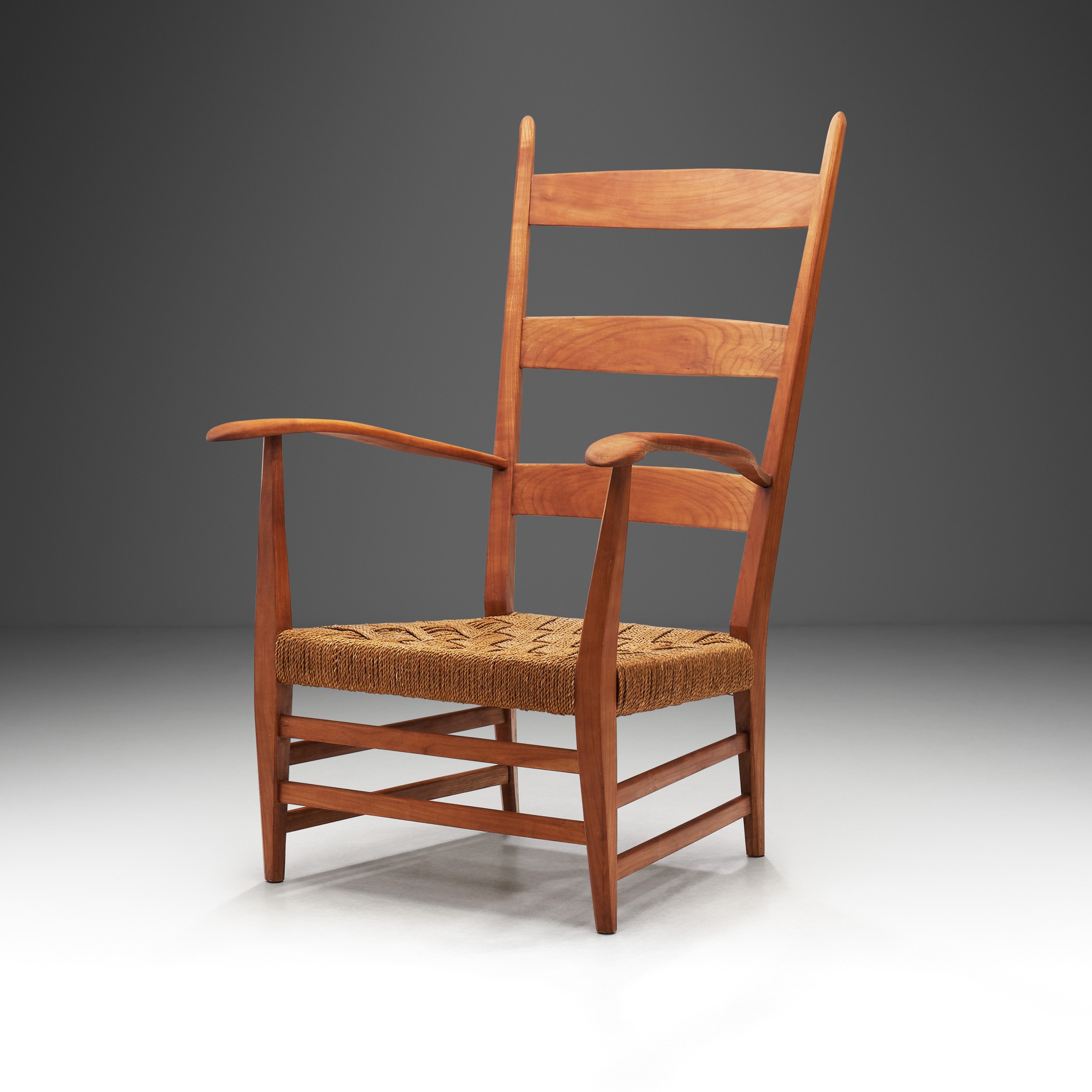
This organic armchair attributed to Dutch designer Bas Van Pelt is an elegant model with an exceptionally high level of craftsmanship. The construction of this rare 1940s design is simple at its core, but thanks to the details, it is a unique representation of early Dutch modernism.
While Bas Van Pelt's creative work was primarily influenced by the 1920s straight lines dominated by The Hague School, this armchair is the result of his more mature design era, which was dominated by natural materials and more curvature. While made of solid wood, this armchair has an open feel to it thanks to the three horizontal slats that compose and divide the back. The curved lines of the armrests are beautifully crafted and follow the raised seat’s angle. The curves nicely contrast with the straight lines of the frame, keeping it from appearing too strict. Apart from the expert woodwork, the paper cord seat stands out as well. The so-called “planflet” (flat-weave) pattern requires considerable expertise, as the warp is wrapped around the frame, and then the weave follows a checkerboard pattern. The seat adds textural interest and also serves a decorative role, not to mention how durable paper cord is. The tapered legs blend seamlessly into the back and arms, and are connected by double stretchers on all sides except the back where the back’s slats dominate. Thanks to the well-chosen proportions and the expert weaving technique on the seat, this armchair provides great comfort.
Bas van Pelt’s progressive designs were, in many ways, ahead of his era. The Dordrecht-born designer’s furniture models are quite rare, a few are preserved in the Stedelijk Museum Amsterdam for modern art, contemporary art, and design.
Condition:
In good vintage condition. Wear consistent with age and use. Some minor marks and scratches on the wood.
Dimensions:
25.59 in W x 28.74 in D x 40.16 in H; Seat height 13.39 in; Seat depth 20.28 in; Arm height 24.21 in
65 cm W x 73 cm D x 102 cm H; Seat height 34 cm; Seat depth 51.5 cm; Arm height 61.5 cm
REQUEST PRICE HERE
Price category: 2,500 - 5,000 usd / eur
In 1920, the term "Nieuwe Haagse School" was first mentioned by the architect C.J. Blaauw. And not in a positive way. Blaauw thought nothing of the latest developments in modern architecture. "Typical of The Hague" - that was how the designer spoke of the style. The movement blossomed between 1925 and 1940 and brought uniformity to the cityscape. The Hague School style is closely related to the Amsterdam School and the Bauhaus movement, but has more-so been influenced by Art Deco, and it drew a great deal of inspiration from Berlage's rationalism, the Arts and Crafts movement, and De Stijl.
Standing as evidence of the reason many Dutch architects succeeded at the craft of furniture design; the precision of the structure is evident at first glance, showing great geometric order. Driven by function, the maker’s focus was evidently on practicality, structural stability, and a design in favour of these principles. The construction of this chair is traditional and robust - it features a solid yet graceful frame, crafted from a warm, rich wood, which highlights the natural grain of the material. The arms and backrests showcase a sense of airiness. This neat detail accentuates the high level of woodworking and creates an effortless look. The arms’ angles are aligned with the seats and backs’ angles, resulting in a harmonious look while also being ergonomic, with solid support for the spine. The sitting comfort is pleasant, further aided by the stability the sturdy wooden legs provide. The frame is complemented by the elegant rope seat woven tightly in the wood, with the material of the seat giving the piece a warm and cosy feel all while staying very functional. The chair’s simplicity and honest elegance makes it an exceptional piece of furniture.
Haagse School furniture wasn’t flashy but instead focused on being well-made and to fit a warm, comfortable and welcoming home. As this chair exemplifies, blending functionality, good quality natural materials and organic colours with excellent craftsmanship is the key to the success of this design period.
Condition:
In good vintage condition. Wear consistent with age and use. Item may have some marks, scratches, and discolouration.
Dimensions:
22.04 in W x 21.85 in D x 33.66 in H; Seat height 17.12 in; Seat depth 19.48 in; Arm height 26.57 in
56 cm W x 55.5 cm D x 85.5 cm H; Seat height 43.5 cm; Seat depth 49.5 cm; Arm height 67.5 cm
REQUEST PRICE HERE
Price category: 1,000 - 2,500 usd / eur
This chair is a striking example of the Brutalist design movement, which found expression in various creative fields, including architecture and furniture design. Brutalism, characterised by its raw, unrefined forms and the use of industrial materials, emerged in Europe in the mid-20th century as a response to the austerity and the need for functional design in post-war societies.
In the Netherlands, the Brutalist movement took on a distinctive local flavour, blending stark, geometric lines with a strong focus on craftsmanship and the warmth of natural materials. This chair, with its solid wood construction and angular structure embodies the boldness and utilitarian ethos of the time, offering a sturdy, sculptural presence that can be incorporated in any space. In the post-war period, the Netherlands, like many other European nations, underwent a transformation in both its architectural and furniture design landscapes. Wood became an essential material for this rebuilding period, as it was both readily available and symbolic of a return to nature and tradition. The use of wood was seen as a way to create functional, sustainable, and aesthetically pleasing pieces, often combining traditional craftsmanship with modernist principles. This chair specifically demonstrates the dual appeal of Brutalism and the post-war Dutch penchant for functional beauty. The look of the natural grain and texture is an integral part of the design, creating an organic contrast to the clean, angular lines. This fusion of nature and geometry reveals a sophisticated approach that balances modernity with a deep respect for the material's inherent qualities.
This chair stands as both a testament to the era's artistic and cultural spirit and as an enduring piece of mid-century Dutch design.
Condition:
In good vintage condition. Wear consistent with age and use.
Dimensions:
20.47 in W x 18.50 in D x 28.35 in H; Seat height 17.72 in; Sear depth 13.18 in
52 cm W x 47 cm D x 72 cm H; Seat height 45 cm; Seat depth 33.5 cm
REQUEST PRICE HERE
Price category: 2,500 - 5,000 usd / eur
Early 20th century designers were eager to break free from the aesthetics of the past and experiment with new forms and techniques. At the same time, especially in Europe, the modernist design movement was often based on traditional styles and approaches, such as wood turning. This armchair exudes vintage charm and craftsmanship, blending intricate design with timeless elegance.
This chair model boasts a functional, well-thought-out structure, crafted from quality oak. The openness of the piece is highlighted by its horizontal slats, from the stretchers placed between the feet to the the backrest. Still, at the heart of this chair lays its materials; the durable oak and the traditional woven wicker. The wicker seat, a hallmark of practicality and comfort, adds a layer of tactile warmth to this chair. The intertwining fibres create a resilient and breathable surface that showcases the diagonal cross pattern commonly referred to as “rush weave” or wicker. Additionally, the textured surface of the woven rush contrasts nicely with the wood. The attention to craftsmanship is further evidenced by the lower structure, featuring two bobbin turned legs. This is a type of ornament which consists of a series of small knobs resembling spools, or bobbins. The detailed wood carving creates a sophisticated, almost sculptural quality, giving the chair a unique sense of texture and depth.
With its organic feel and natural elements, this chair stands out with its timeless appeal. The piece’s simple yet refined structure allows them to integrate into various interior styles, from vintage-inspired rooms to more contemporary settings where they add a touch of old-world charm.
Condition:
In good vintage condition. Wear consistent with age and use. Some minor marks and scratches on the wood.
Dimensions:
24.21 in W x 21.65 in D x 34.05 in H; Seat height 18.89 in; Seat depth 17.12 in; Arm height 27.55 in
61.5 cm W x 55 cm D x 86.5 cm H; Seat height 48 cm; Seat depth 43.5 cm; Arm height 70 cm
REQUEST PRICE HERE
Price category: 5,000 - 7,500 usd / eur
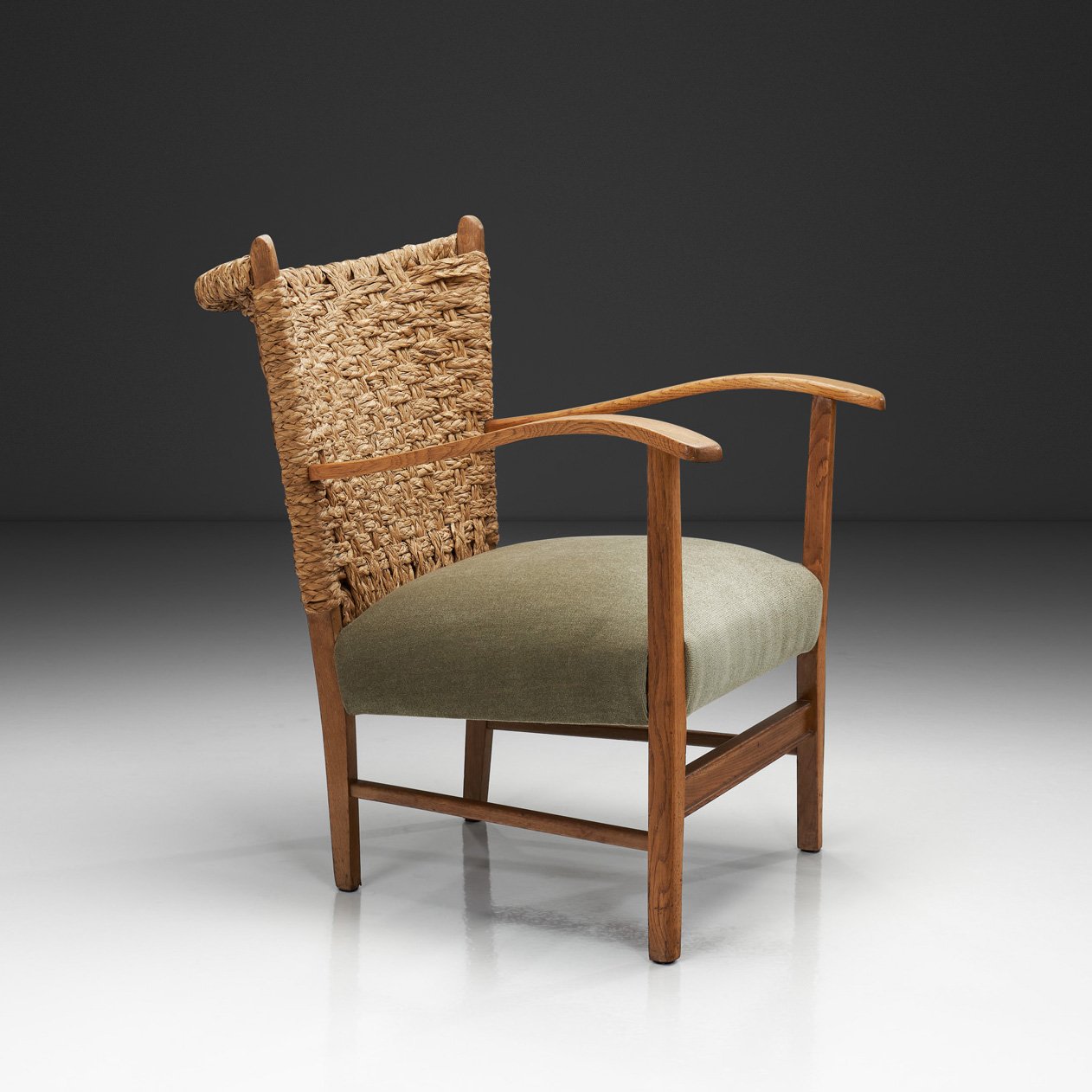
Bas van Pelt holds a distinctive place in Dutch design history; he is celebrated primarily for his furniture, yet was equally active as an interior designer whose broader spatial vision informed his work. Although his early designs reflected the straight lines associated with The Hague School of the 1920s, this armchair reflects a more assured phase of his career that coincides with the broader development of Dutch modernism. Here, geometric lines soften into gentle curves with a rich use of materials.
The weaved backrest pairs beautifully with the smooth wooden frame, curving to embrace the sitter. It is coupled with a sage green upholstered seat, creating an interplay of line and texture. The seat emphasises an added layer of comfort while still complementing the natural materials used for its construction. The armrests, with their subtle and flowing curves, are carefully shaped to give the chair a sense of movement - juxtaposed with the straight lines and right angles that make up the frame. The overall impression is that of a visually interesting piece full of contrasts, while simultaneously enhancing the comfort of the user at the crucial points of the back, arms, and seat. The legs remain simple in design, serving a primarily structural role, letting the back and seat stand out.
Bas van Pelt’s furniture models are quite rare, with a few preserved in the Stedelijk Museum in Amsterdam for modern art, contemporary art, and design. His progressive designs were, in many ways, ahead of his time. What makes this armchair especially compelling is the combination of materials and techniques that come together harmoniously to make a visually striking piece.
Condition:
In good vintage condition. Wear consistent with age and use. The chair has recently been reconditioned. Due to the nature of the wood, the item may have some marks, scratches, and discolouration. The chair comes with its original upholstery or has been reupholstered by a previous owner. Each of our items can be reupholstered by our in-house atelier in a fabric of choice. Please reach out for more information.
Dimensions:
29.52 in W x 24.01 in D x 31.29 in H; Seat height 17.12 in; Seat depth 18.11 in; Arm height 24.21 in
75 cm W x 61 cm D x 79.5 cm H; Seat height 43.5 cm; Seat depth 46 cm; Arm height 61.5 cm