
PJ 149 “Colonial” Armchair by Ole Wanscher for Poul Jeppesen Møbelfabrik, Denmark 1949 (sold)


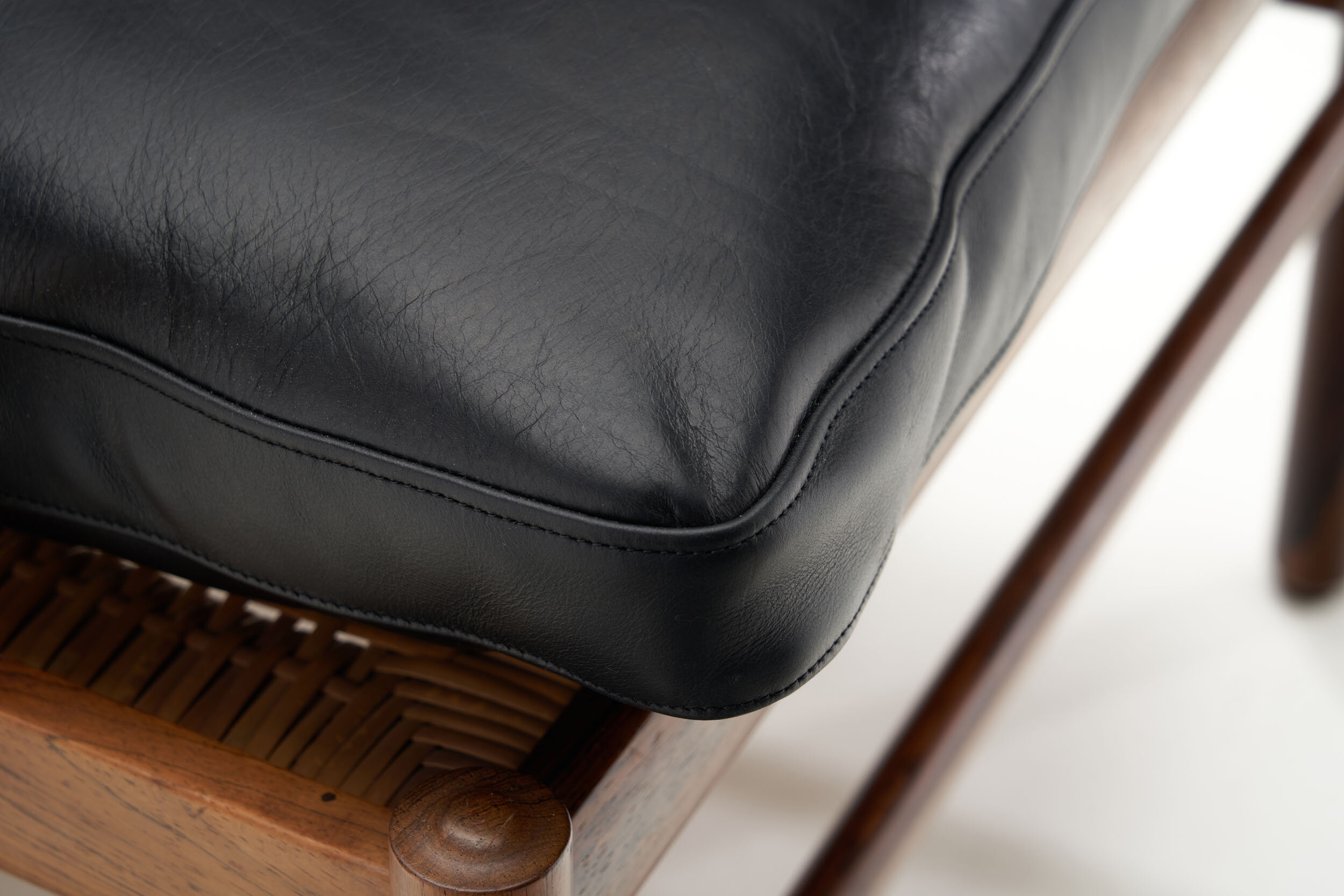
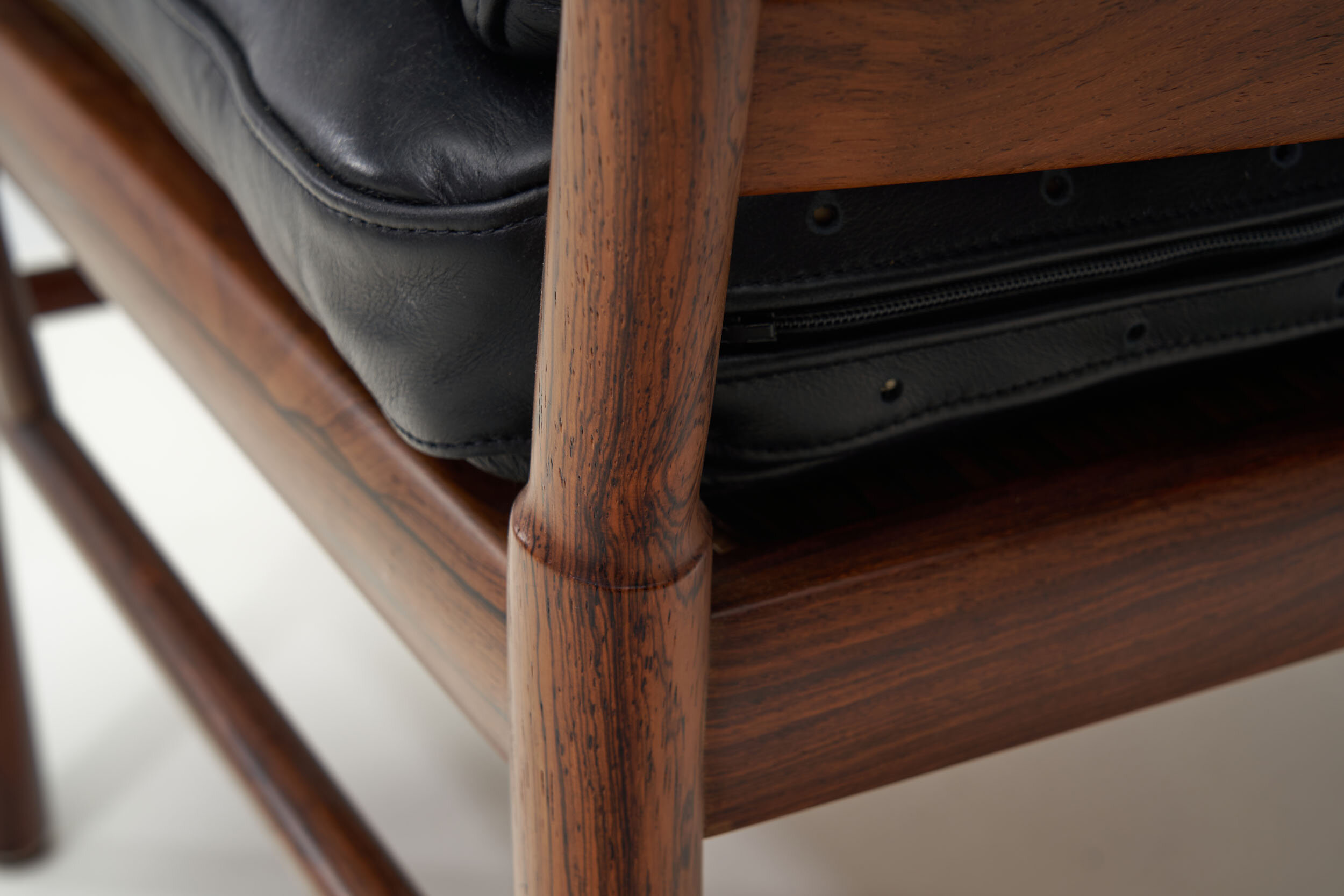


PJ 149 “Colonial” Armchair by Ole Wanscher for Poul Jeppesen Møbelfabrik, Denmark 1949 (sold)
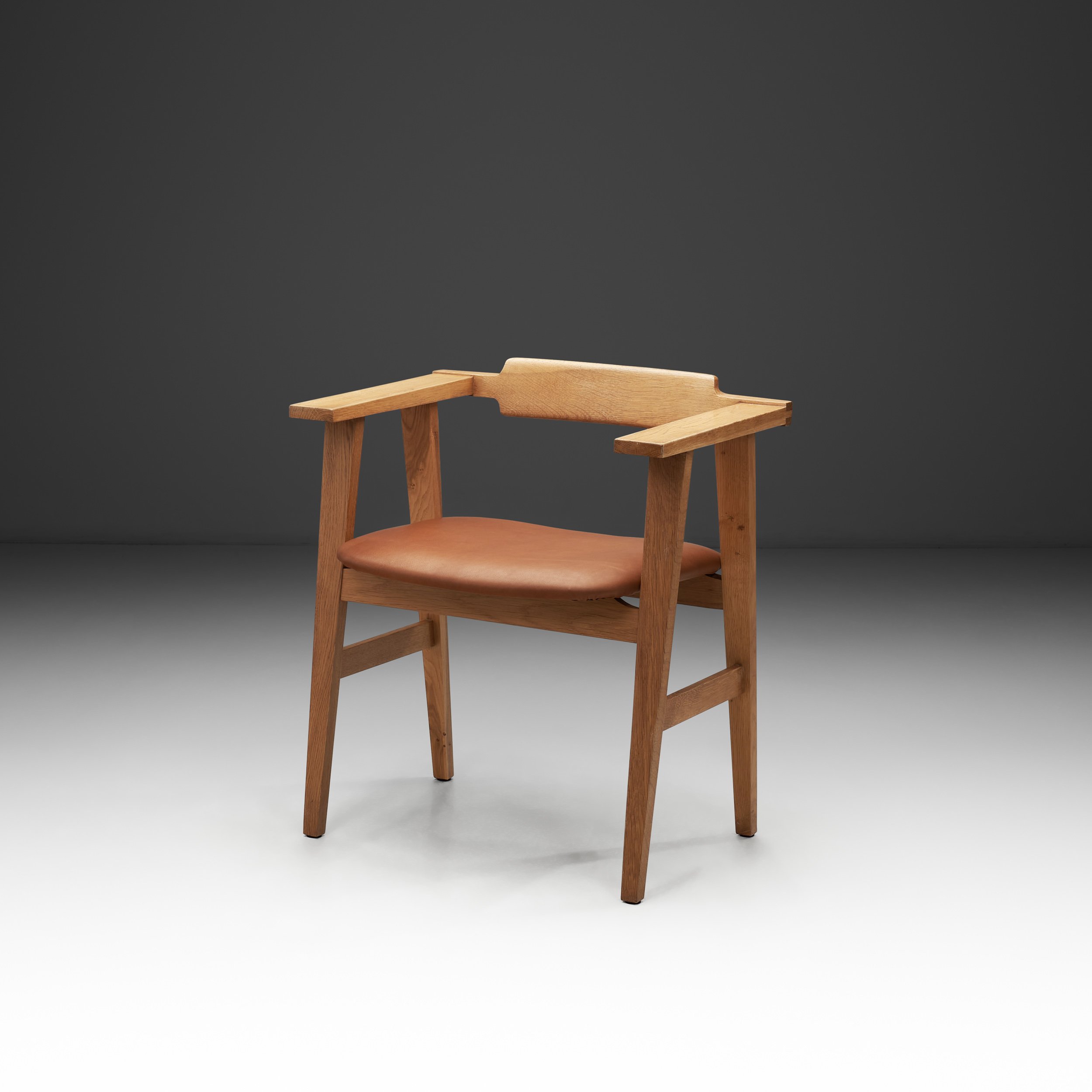
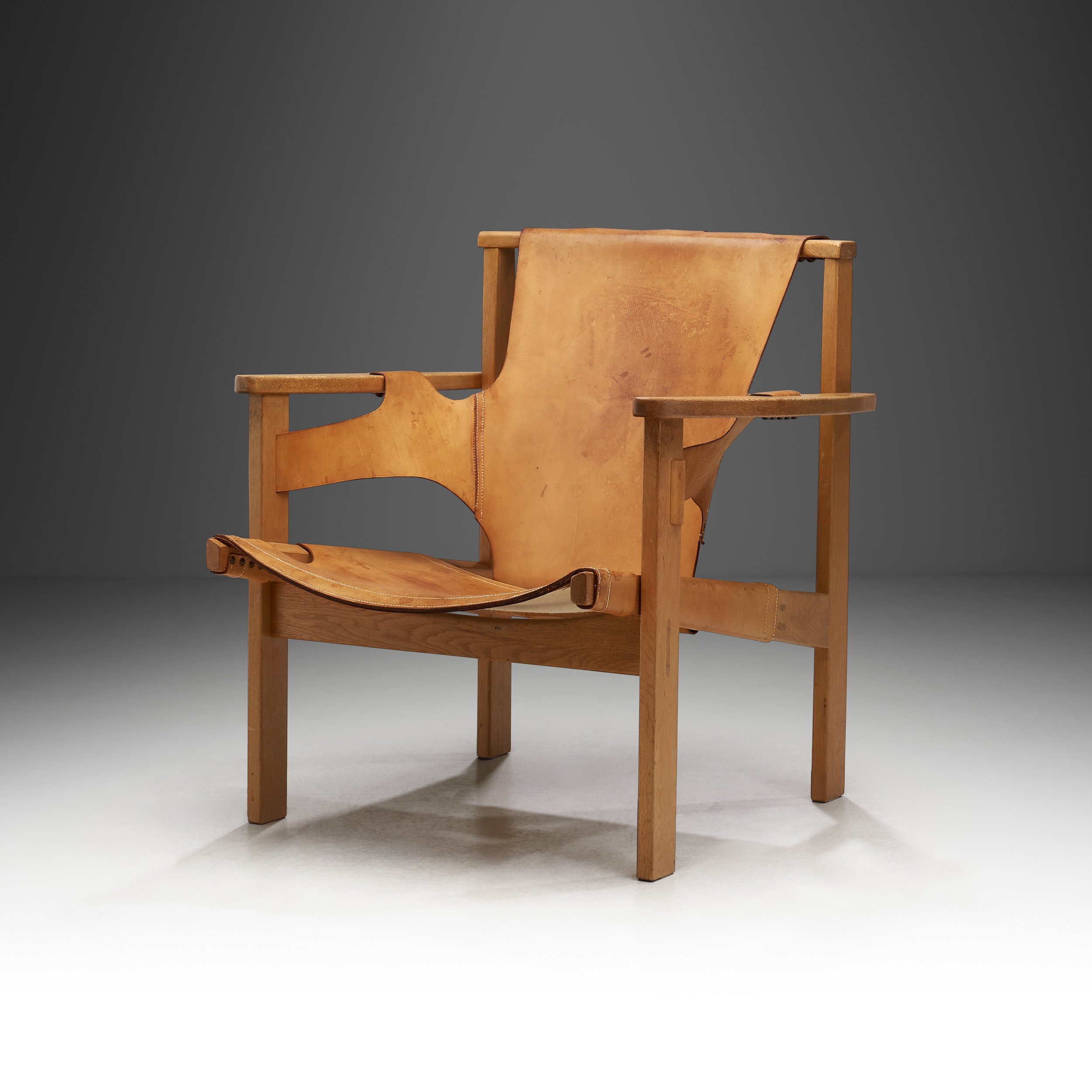
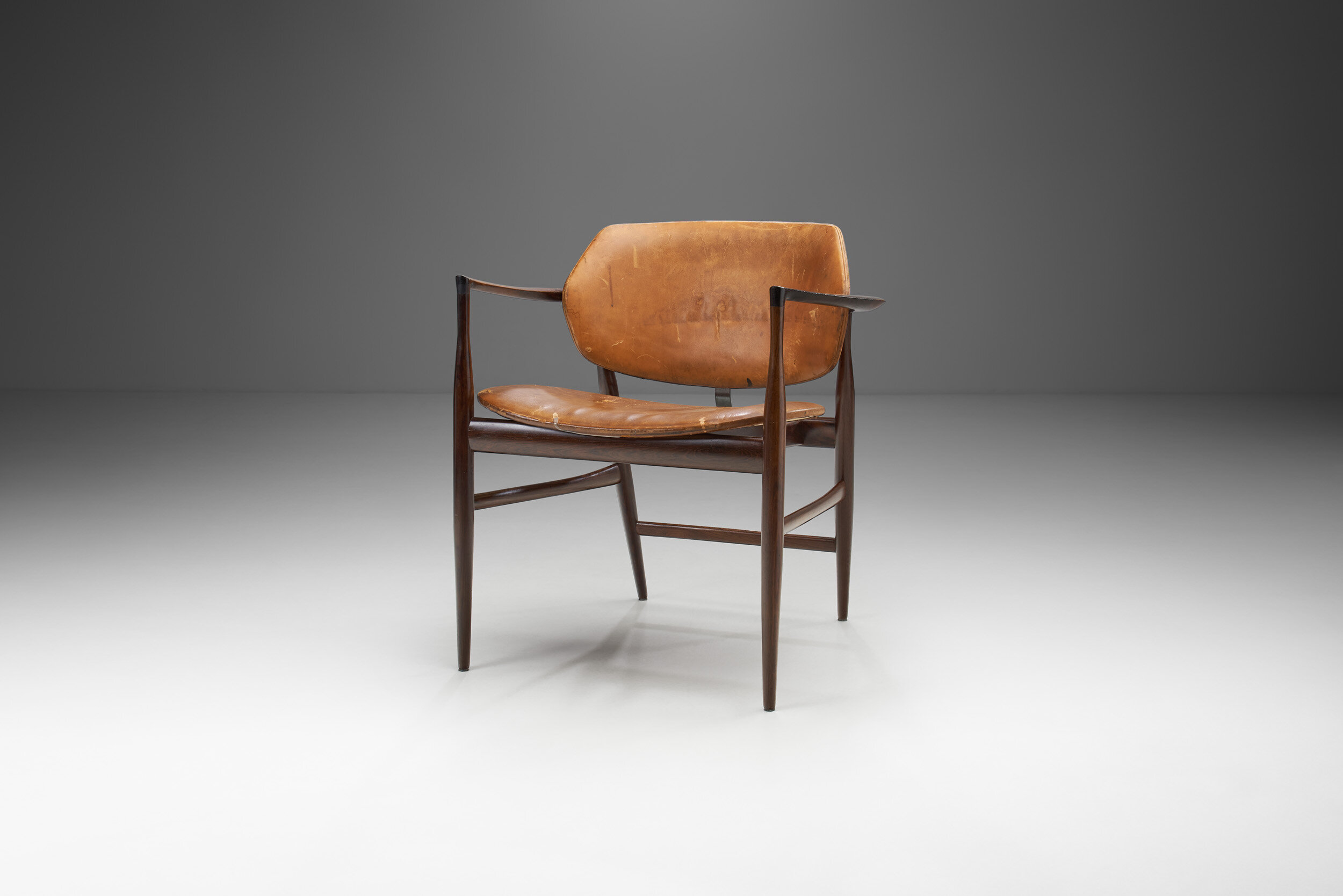
The Colonial chair is one of Danish designer, Ole Wanscher’s key designs, drawing influence from British and French colonial furniture from the 18th & 19th centuries. Wanscher disagreed with the modernist full-sail rejection of the past and preferred to explore classic yet minimal aesthetics.
As a minimalist, Wanscher had a preference for the slim and refined, but was also influenced by many different styles of design as his present work shows. Wanscher created this model as the perfect balance between paying tribute to classic conservative trends and standing the test of time, which is why this model remains his most famous design to this day. This elegantly constructed chair combines comfort with style. The frame features a woven cane seat that wraps around the inside of the seat. Despite its slender dimensions, this Colonial chair is very stable, with its strength lying in the carefully designed bracing. The design’s sophisticated, slightly curved armrests rise to a point before taking a turn downward – a trademark Wanscher feature. The front and back legs are made of roundwood timber, taking advantage of the tree's constructive possibilities, with the back legs curving gently outward for added stability and a more refined result.
The original design from 1949, like this one, featured black leather seat and back cushions to add an elegant and timeless touch. Unlike the reissued Colonials, the originals bear the maker’s mark, with this chair being no exception. The tag is affixed with metal plaques that reads “Danish Furniture makers Control” and “Made in Denmark PJ Design Ole Wanscher”.
SOLD
Condition:
In good vintage condition. Wear consistent with age and use. The chair has been reupholstered recently in premium leather. Each of our items can be re-upholstered by our in-house atelier in a fabric of choice. Please reach out for more information.
Dimensions:
25.39 in W x 27.36 in D x 33.26 in H; Seat height 18.7 in
64.5 cm W X 69.5 D X 84.5 cm H; Seat height 47.5 cm
Literature:
Noritsugu Oda, 'Danish Chairs', Korinsha Press, Kyoto 1996, p 67.
Andrew Hollingsworth, ‘Danish Modern’, Gibbs Smith, 2009, p. 92.
Chairs: 20-Century Classics, Fox Chapel Publishing, Sep 1, 2012, unpaginated
About the Designer:
Ole Wanscher (1903-1985) was an architect and professor, and is known today as one of the leading figures in the Scandinavian Design movement and many of his pieces became staples in Scandinavian homes.
Wanscher studied at the Danish School of Art and Design, and was highly influenced by his professor, Kaare Klint. After graduation, Wanscher worked with Klint between 1924 and 1927, then set up his first own office, specialising in furniture design. By the end of the 1940s, Wanscher made a name for himself for his quality designs. As the Danish newspaper Politiken put it: “'Owning a Wanscher-chair is an adventure every day, and will be so even several hundred years from now, for this is how long it lasts”.
Like Klint, Wanscher disagreed with the modernist full-sail rejection of the past and preferred to explore classic yet minimal aesthetics informed by precise study of the human body. Wanscher was also heavily influenced by Greek, Chinese, and Egyptian designs—which he encountered during his many travels abroad—as well as proto-modernist movements, like the Viennese Secession, Biedermeier, and Shaker styles.
In the 1950s, Wanscher left his private firm to begin an association with P. Jeppesens Mobelfabrik A/S that would last for the rest of his professional life. Ole Wanscher's work has remained sought after by furniture collectors. His designs are described as "delicate", "elegant", and "orderly". Today, Wanscher’s pieces are considered to be modern classics and are still adored for their detail and the designer’s deep respect for materials. ~H.

REQUEST PRICE HERE
Price category: 15,000 - 20,000 usd / eur
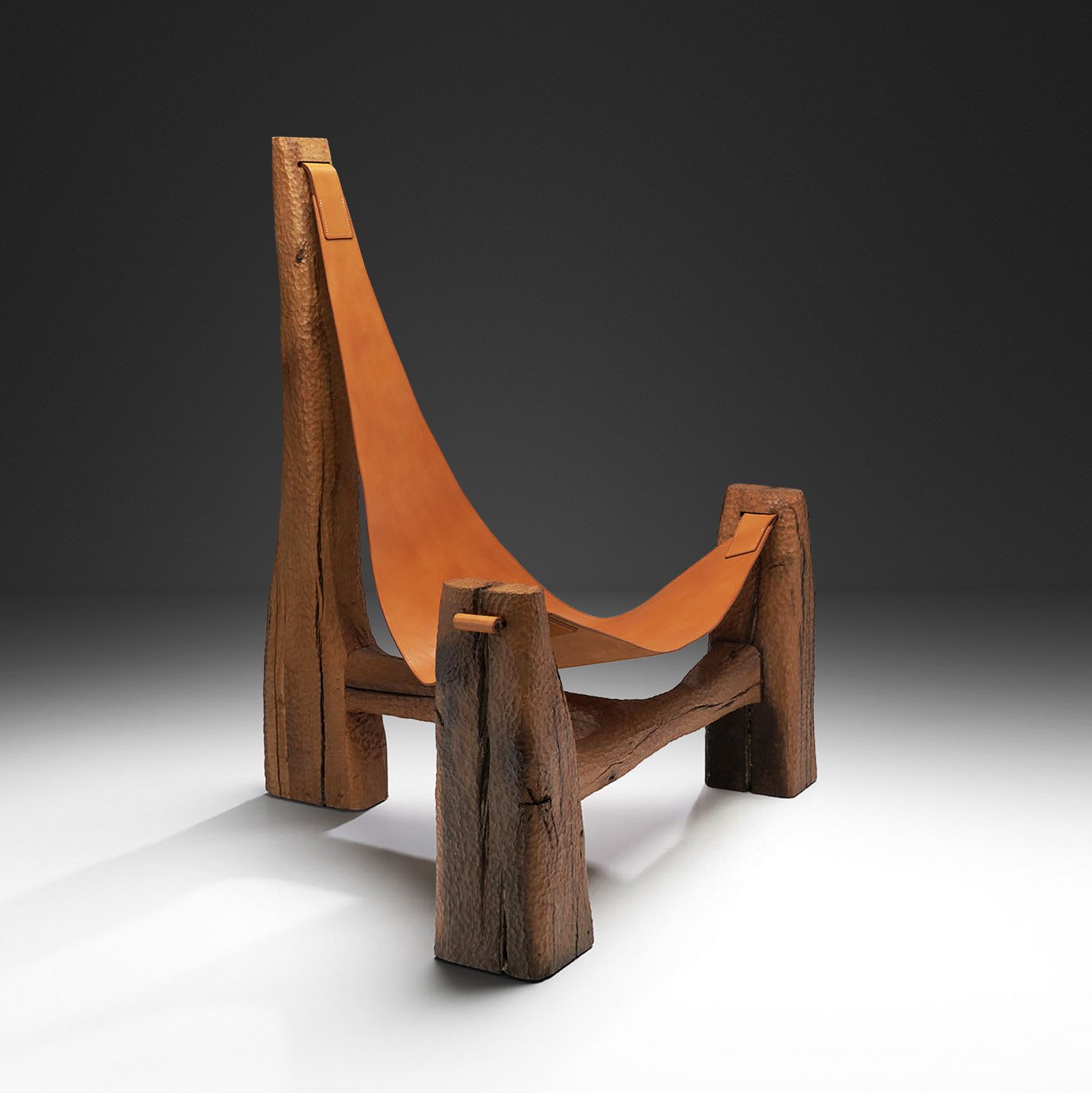
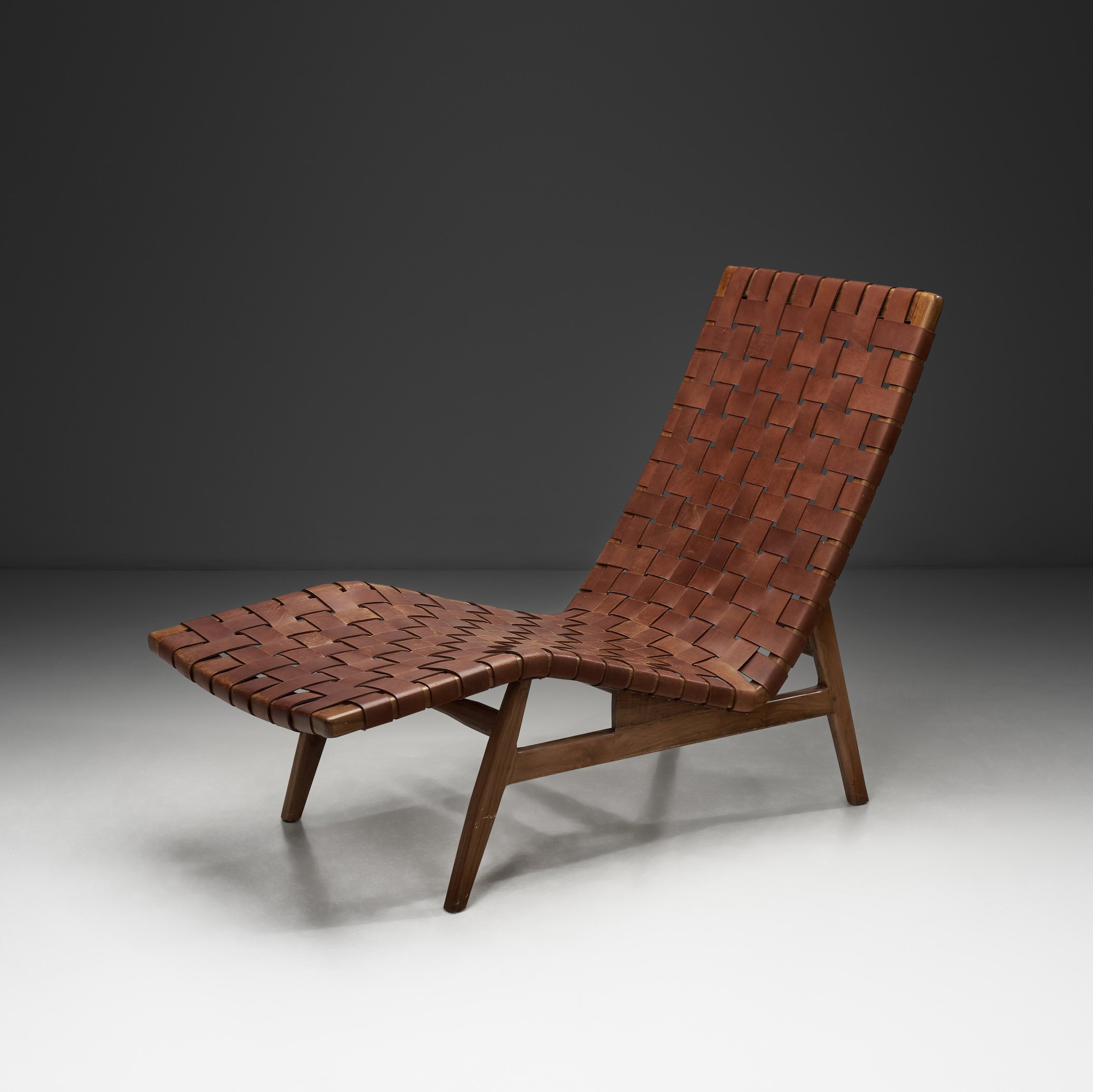
This beloved José Zanine Caldas lounge chair from the “Linha Z” or “Z Line” is an exceptional example of Brazilian design of the 1950s. The design dates to 1949, The woven leather straps and the organic shape is unmatched.
This chair model is made of plywood and features a distinctive shape, distinguished by its legs. The legs and arms are connected and form one unit and their shape inspired the name of the line, “Linea Z”. The edges are softly rounded, which matches the versatile curvature of the body, which enhances the organic feel of the chair. Besides the plywood frame, the original leather upholstery is the stand-out element of this chair both in terms of visual and technical terms. The leather strap seat and back are tightly secured to the plywood, completing the great graphic expression this is widely known for. The bolts of the joinery are left visible, a detail that adds to the rawness of the design. The bent seat is perfectly angled for lounging, supporting the sitter’s whole body.
The pioneering Brazilian designer, José Zanine Caldas’s present design was created by Mòveis Artisticos Z, the factory Zanine Caldas founded in São José dos Campos in 1948. Most of Zanine Caldas’s designs - especially this armchair - tap into the modernist aesthetic while bearing exceptionally unique shapes: form and function revisited with a twist.
Condition:
In good vintage condition. Wear consistent with age and use. Some scratches and discoloration on the wood. This chair comes with its original leather or has been reupholstered by a previous owner.
Dimensions:
24.21 in W x 40.94 in D x 32.48 in H; Seat height 12.4 in
61.5 cm W x 104 cm D x 82.5 cm H; Seat height 31.5 cm
Literature:
Movel Moderno Brasileiro, published by Olhares editores, São Paulo 2017 by Alberto Vicente and Marcelo Vasconcellos
Aric Chen, Brazil Modern, Monaclli Press, New York City 2016
Ruy Teixeira e Jayme Vargas, Desenho da Utopia, Olhares, São Paulo 2016
About the designer:
José Zanine Caldas was born in Belmonte, at the southern coast of Bahia, in 1919. Son of a doctor, Zanine was an autodidact who, from a young age, was fascinated with his environment, especially with trees.
While most architects of his generation studied extensively, Zanine developed his own style through doing and making, and at the age of 20 decided to exchange Bahia for Rio de Janeiro. There he opened up a workshop for architectural scale-models and had the chance to work with pioneering modern architects like Lucio Costa and Oscar Niemeyer.
Large scale furniture with modern design and affordable prices. This was the great advantage of the joinery Móveis Artístico Z founded in 1948 by the architect Zanine Caldas, in partnership with Sebastião Pontes and Paulo Mello, was a great success at the time. Headquartered in São José dos Campos (SP), it maintained its production for almost two decades. The form of creation, idealized by Zanine, was opposed to the market of the time, which was either based on the production of handmade furniture, in solid wood, or in pieces produced in series with an unattractive design. Breaking these paradigms, Móveis Artísticas Z revolutionized manufacturing pieces with improved design and great popular appeal.
Inspired by the local craftsmen who carved boats and furniture from fallen trees, Zanine began experimenting with chiselling and carving large, sculptural works, which became the focus of his later career. Zanine became a big advocate for preservation and in the 1980s, he established the Foundation Center for the Development of the Application of Brazilian Woods (DAM), in an effort to educate and attempt to reverse the rampant destruction of Brazilian rainforests.
Up until his death in 2001, Zanine kept his natural visions alive, and would plant a new tree in place of any tree that was taken down for one of his projects. ~H.