
Set of Four Nordiska Kompaniet Dining Chairs in Pine, Sweden 1909


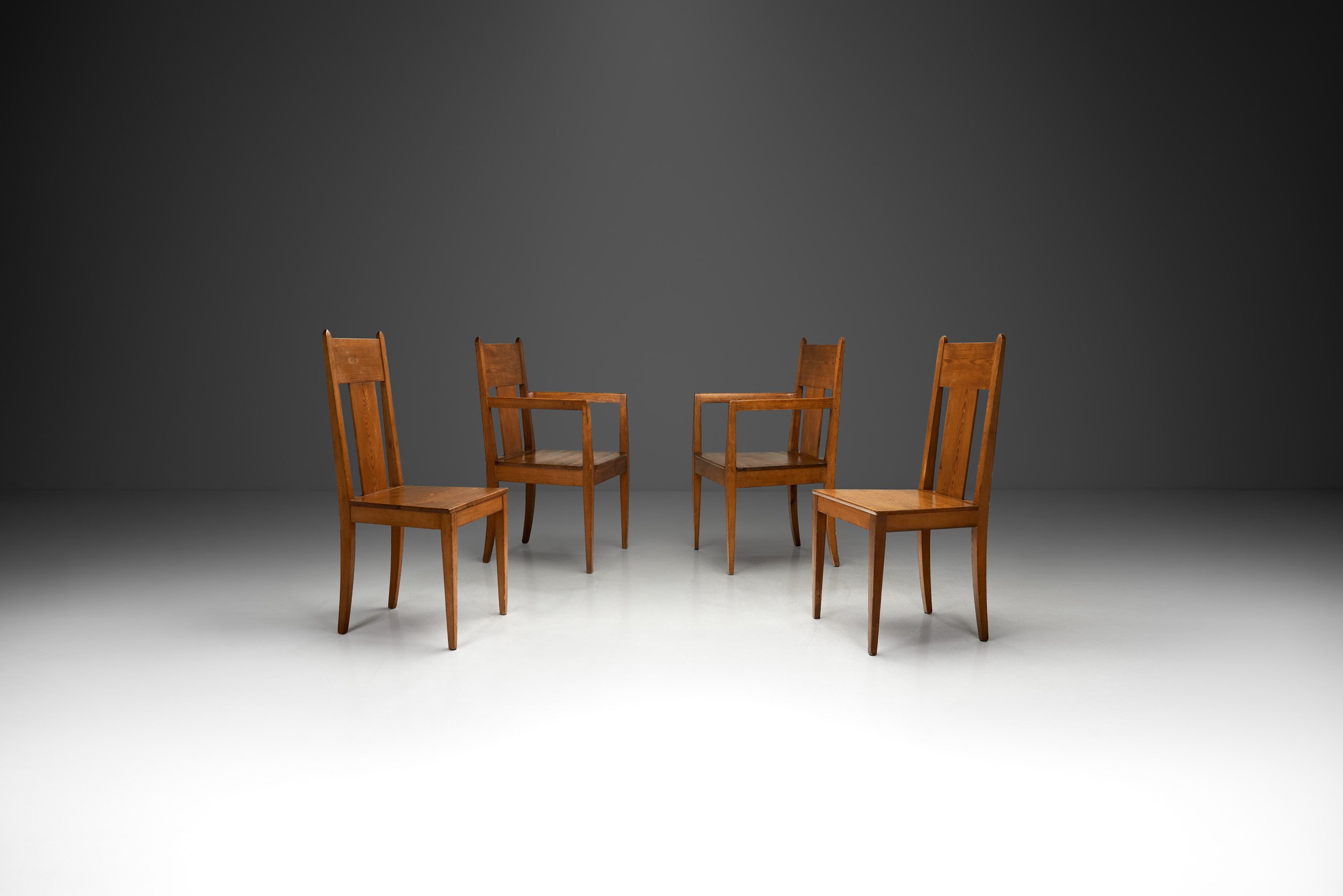


Set of Four Nordiska Kompaniet Dining Chairs in Pine, Sweden 1909
REQUEST PRICE HERE
Price category: 2,500 - 5,000 usd / eur
Featuring clean forms without exaggeration, this set highlights the quality of work produced at Nordiska Kompaniet in the early 20th century. They are crafted from pine - a valuable material used in furniture manufacturing thanks its natural grain that guarantees that each piece is unique. This characteristic is especially important in the case of this set of four, as each chair is unique, but together they still form a gorgeous set.
Humble in their material and design, the chairs draw attention thanks to their distinctive look and personality. The construction strips back the unnecessary, showcasing only essential elements. The pine wood is left in its natural form as much as possible, while also prioritising functionality and longevity. Pine furniture has been favoured in Scandinavia for centuries and we are witnessing a contemporary renewal of interest and appreciation for it as well. While they showcase deliberate plainness, these chairs still have a welcoming look. The sole form of ornamentation in the design is found in the backrests of each chair where two planks of wood are constructed into a ‘T’ shape, creating an airy look. The high backs and seats also provide plenty of surface to expose the beauty of the wood. Furthermore, the ingenious use of joinery in these chairs is noteworthy, highlighting the structural integrity of the pieces.
These chairs are in line with the Swedish ideals of functional furniture. However, they also portray a sense of tranquillity that is unique to Scandinavia. This set is sure to bring this sense to any space while providing stability, sitting comfort, and natural beauty via its material.
Condition:
In good vintage condition. Wear consistent with age and use. Some marks and cracks on the wood.
Dimensions:
Pair with arms:
19.48 in W x 20.07 in D x 36.02 in H; Seat height 16.73 in; Seat depth 17.51 in; Arm height 26.77 in
49.5 cm W x 51 cm D x 91.5 cm H; Seat height 42.5 cm; Seat depth 44.5 cm; Arm height 68 cm
Pair without arms:
16.73 in W x 16.92 in D x 36.02 in H; Seat height 16.73 in; Seat depth 14.56 in
42.5 cm W x 43 cm D x 91.5 cm H; Seat height 42.5 cm; Seat depth 37 cm


REQUEST PRICE HERE
Price category: 7,500 - 10,000 usd / eur
Axel Einar Hjorth’s designs are sharply distinctive in style, materials, and character. Unlike many of his contemporaries, Hjorth did not conform to the socially oriented ideas produced by Svensk Form (the Swedish Society of Crafts and Design). He often incorporated playful ornamentation from different historical periods by which he was inspired, such as the French Art Déco, using mixed exotic woods, bright colours, and textiles, as this pair or “Radio” chairs showcase.
Designed in the first half of the 20th century, these armchairs possess a refined and slender appearance with distinctive details. The sleek wooden frames offer a beautiful contrast to the neat upholstery of the seats, creating a visually captivating aesthetic. Together, they make for a harmonious balance between contemporary elegance and traditional style. Even though Swedish design is generally democratic and meant for the masses, pieces were not stripped of all beauty for the sake of functionality. The importance of this balance can be identified in the design and execution of these chairs as well. The craftsmanship displayed in this model is a testament to the high standards of Swedish design in the early 20th century, reflecting both the technical skill and artistic vision of both Hjorth and Nordiska Kompaniet. This pair not only serves as a timeless work of art, but also showcases the elegance and innovation of the era.
The Swedish company Nordiska Kompaniet manufactured this pair with utmost care for its quality and design. Axel Einar Hjorth worked as the lead designer for the department store from 1926 to 1938. The company was among the most renowned Swedish manufacturers during the mid-century era, and this "Radio" model is a prime example of the great success of their works.
Condition:
In good vintage condition. Wear consistent with age and use. The chairs have recently been reconditioned. Due to the age and nature of the wood, the items may have some marks, scratches, and discolouration. The chairs come with their original upholstery or have been reupholstered by a previous owner. We recommend reupholstery due to some signs of wear. Each of our items can be reupholstered by our in-house atelier in a fabric of choice. Please reach out for more information.
Dimensions:
19.29 in W x 19.29 in D x 37.20 in H; Seat height 17.12 in; Seat depth 15.55 in
49 cm W x 49 cm D x 94.5 cm H; Seat height 43.5 cm; Seat depth 39.5 cm