
Danish Cabinetmaker Lounge Chair with Sheepskin Upholstery, Denmark 1940s
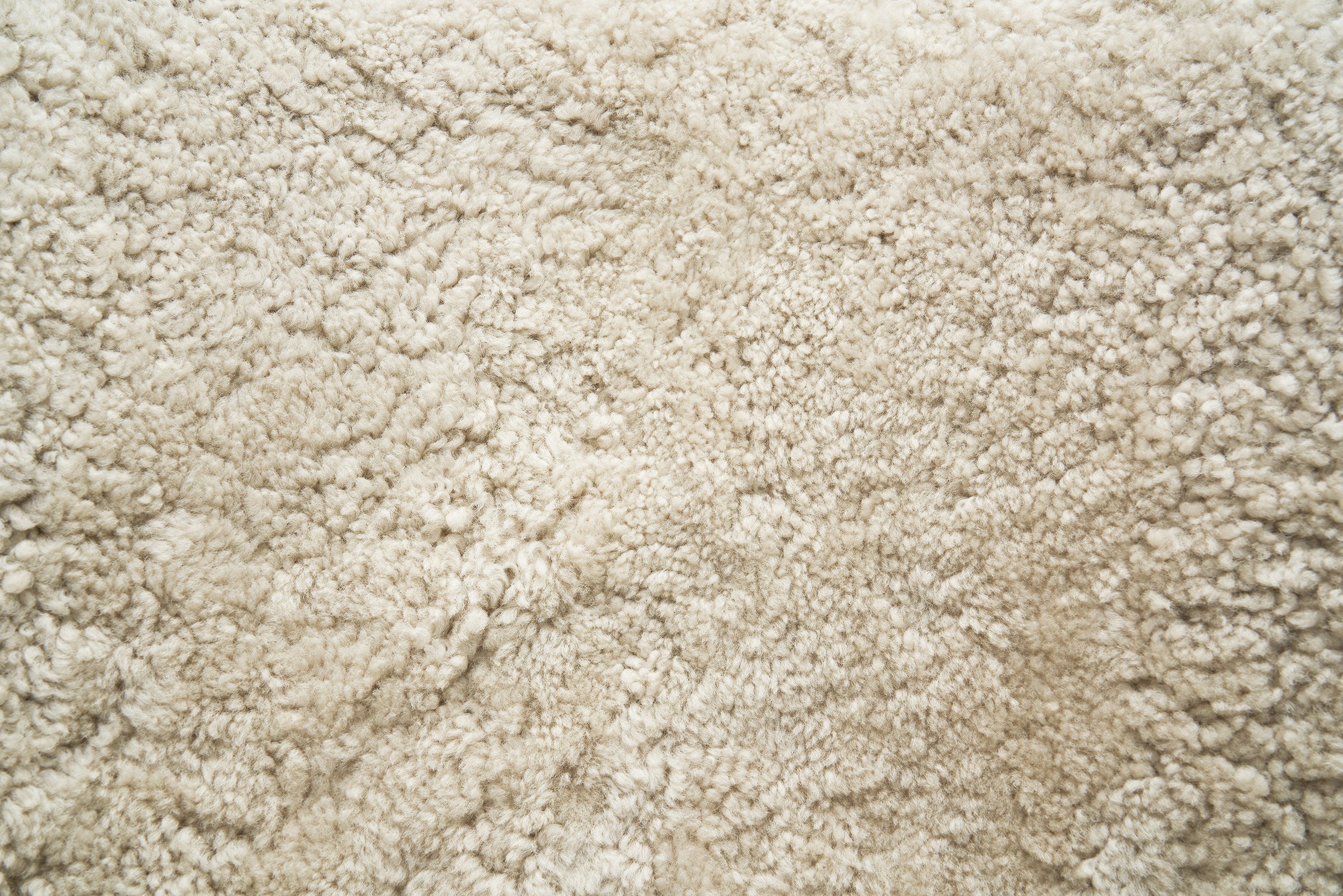
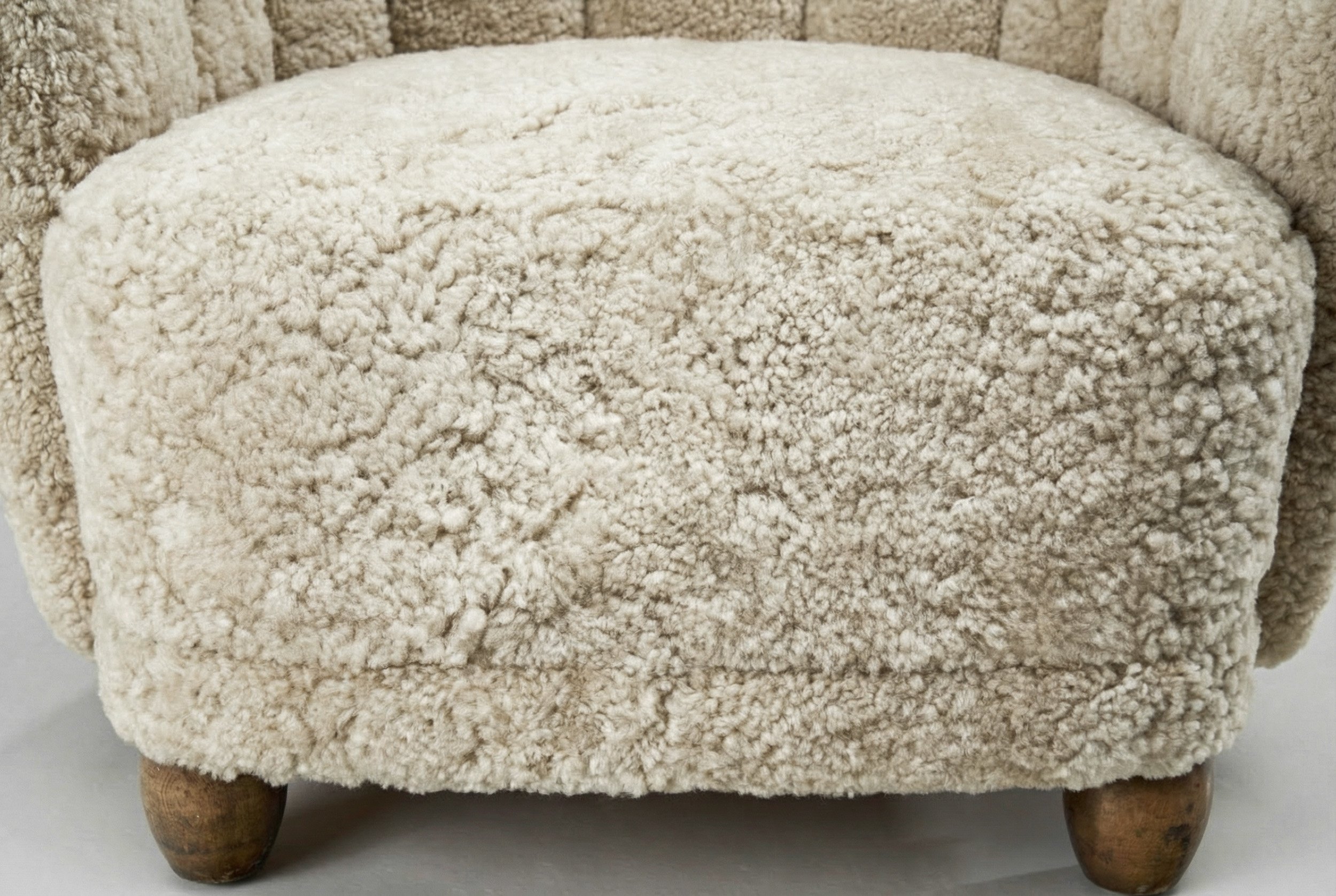
Danish Cabinetmaker Lounge Chair with Sheepskin Upholstery, Denmark 1940s
REQUEST PRICE HERE
Price category: 7,500 - 10,000 usd / eur
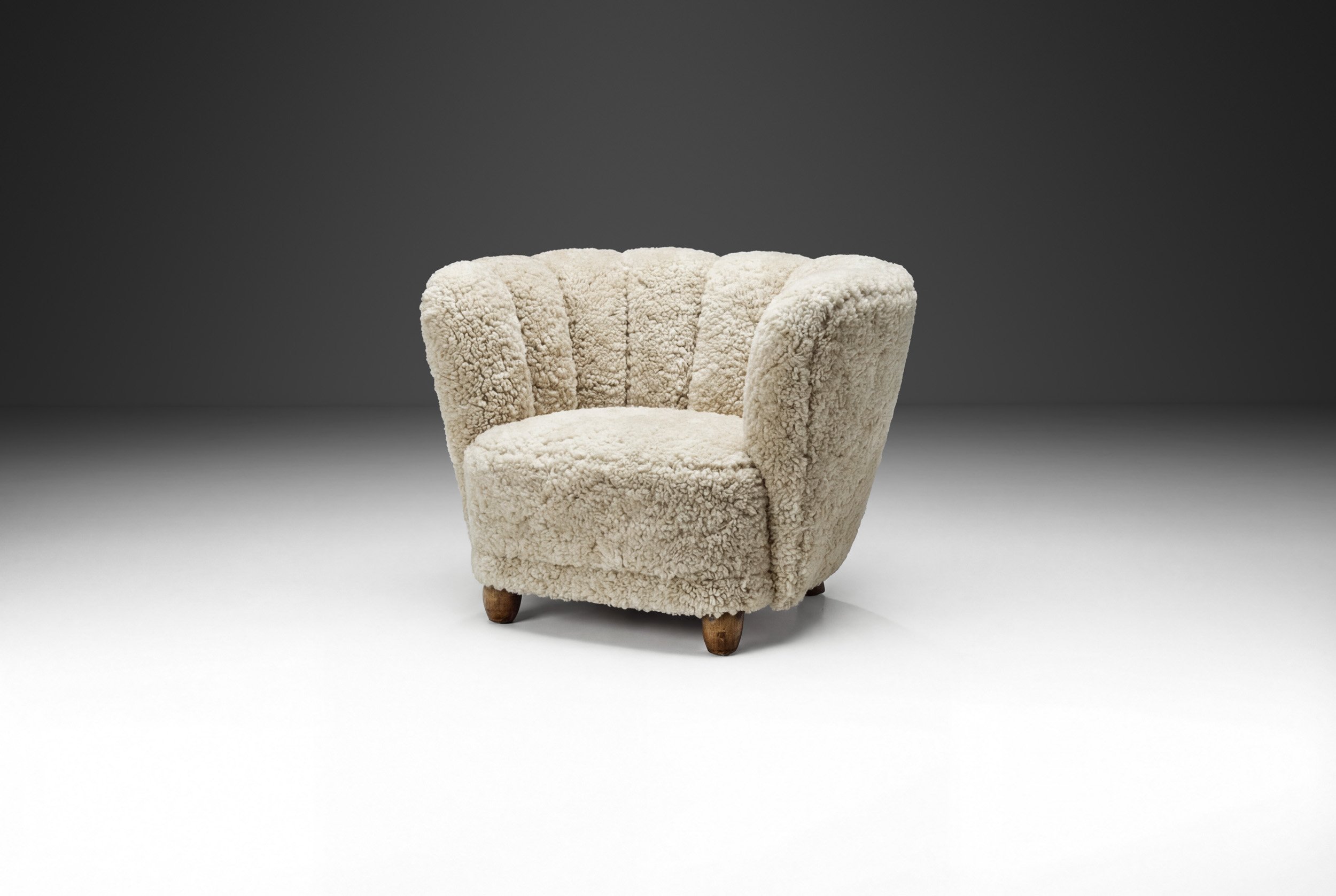
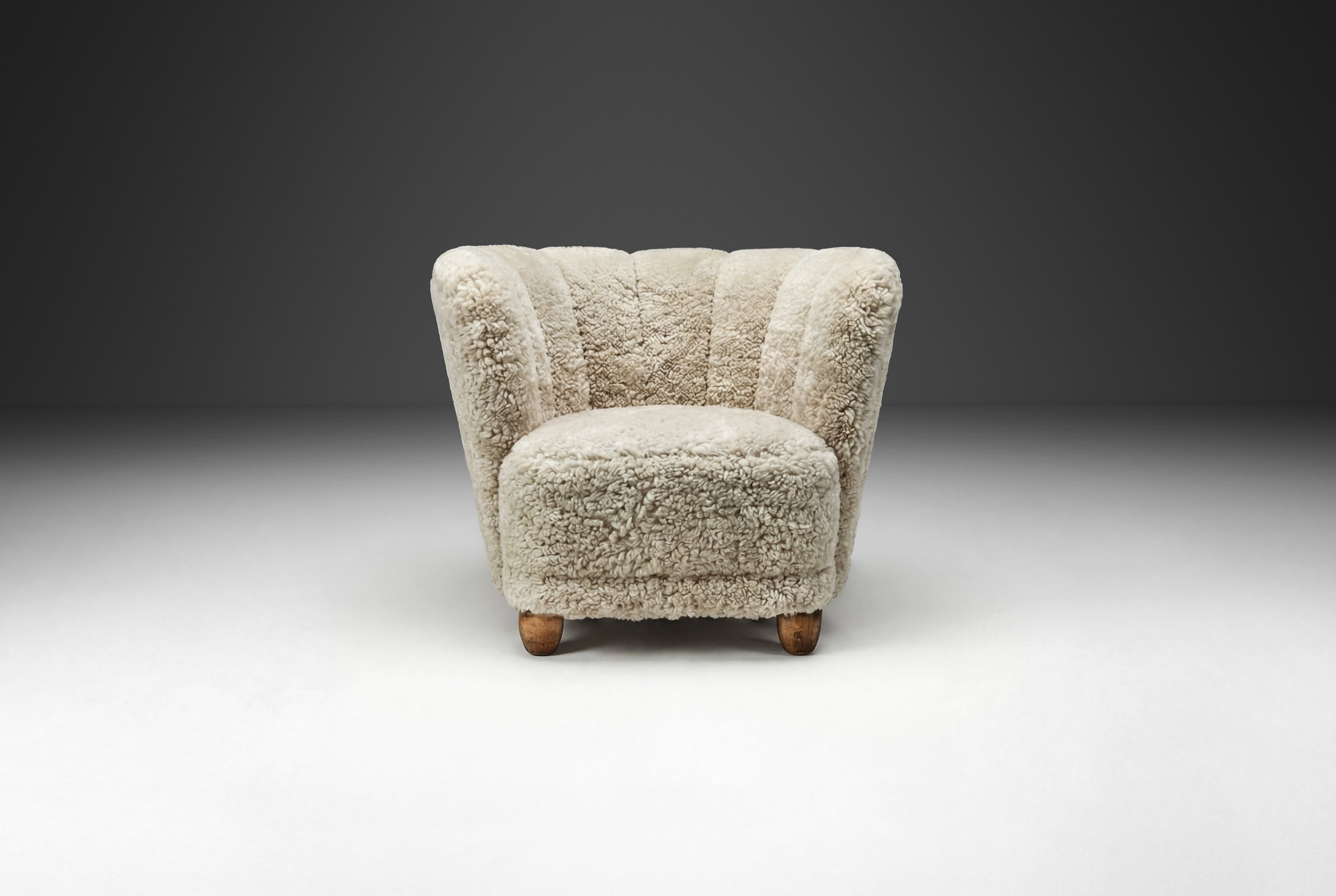
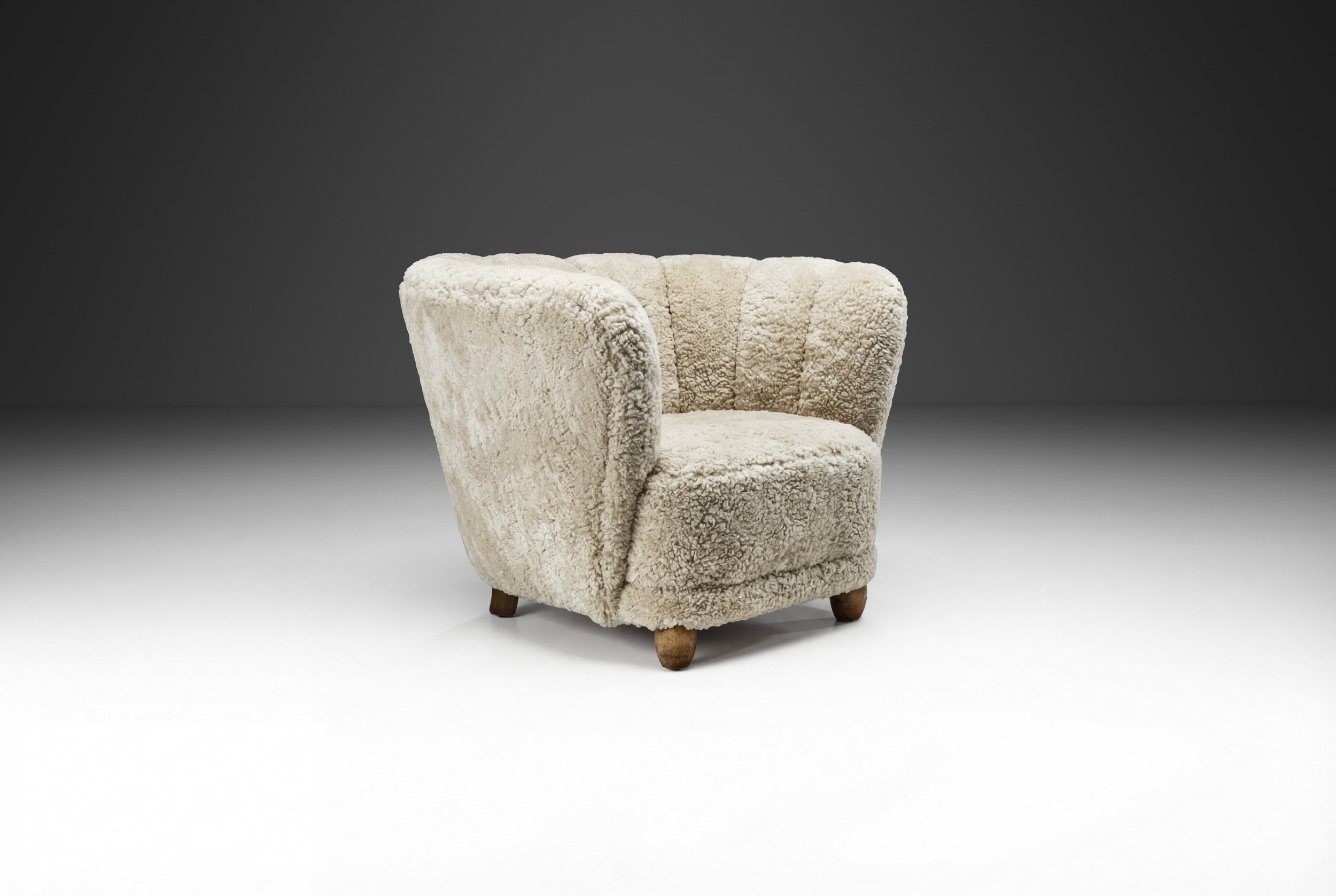
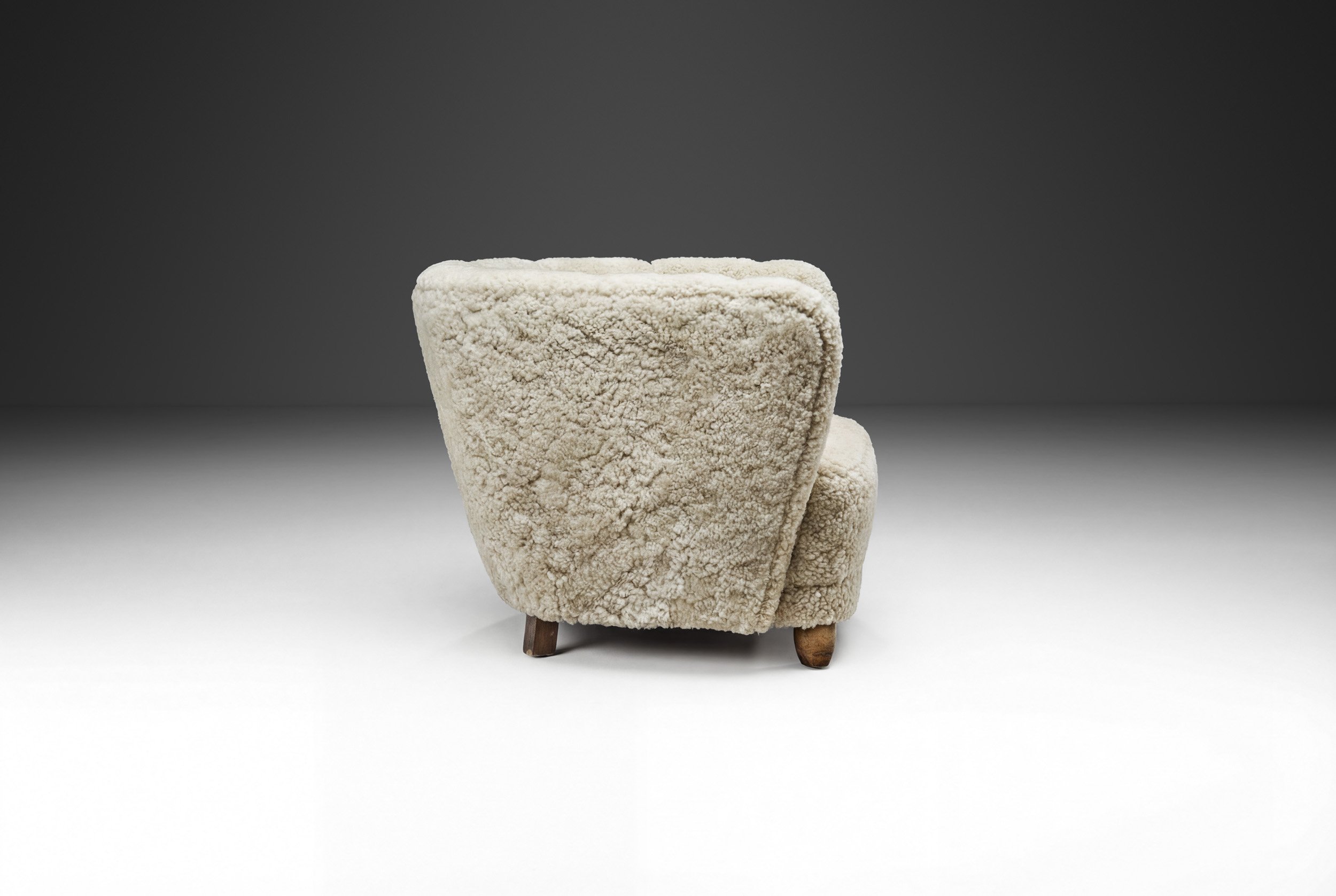
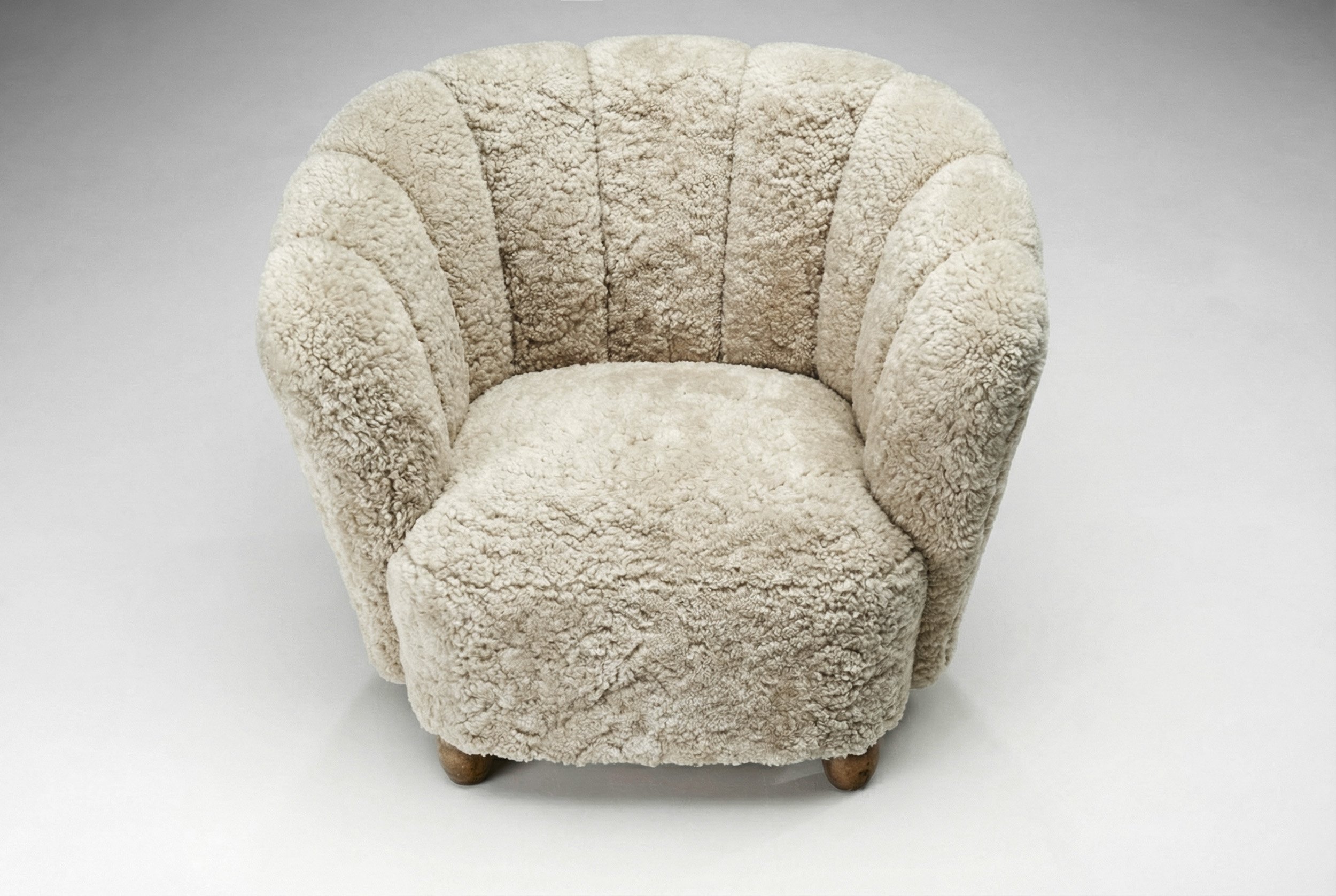
This beautiful Danish lounge chair is an early example of Scandinavian mid-century modern design as well as outstanding craftsmanship with a quality that honours the materials and users. The period from roughly the 1940s through the 1960s was a high point for Danish furniture makers, and this chair shows why.
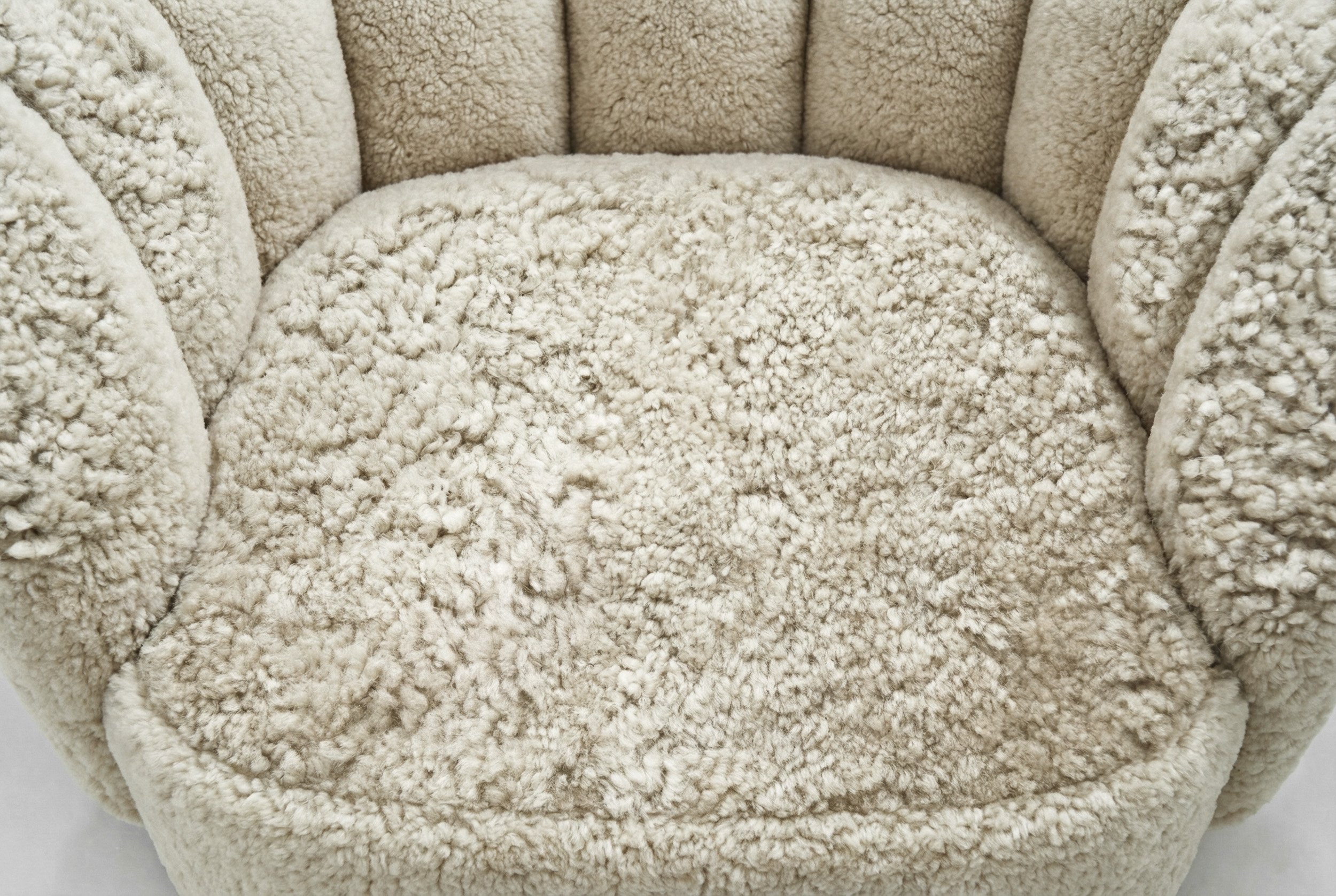
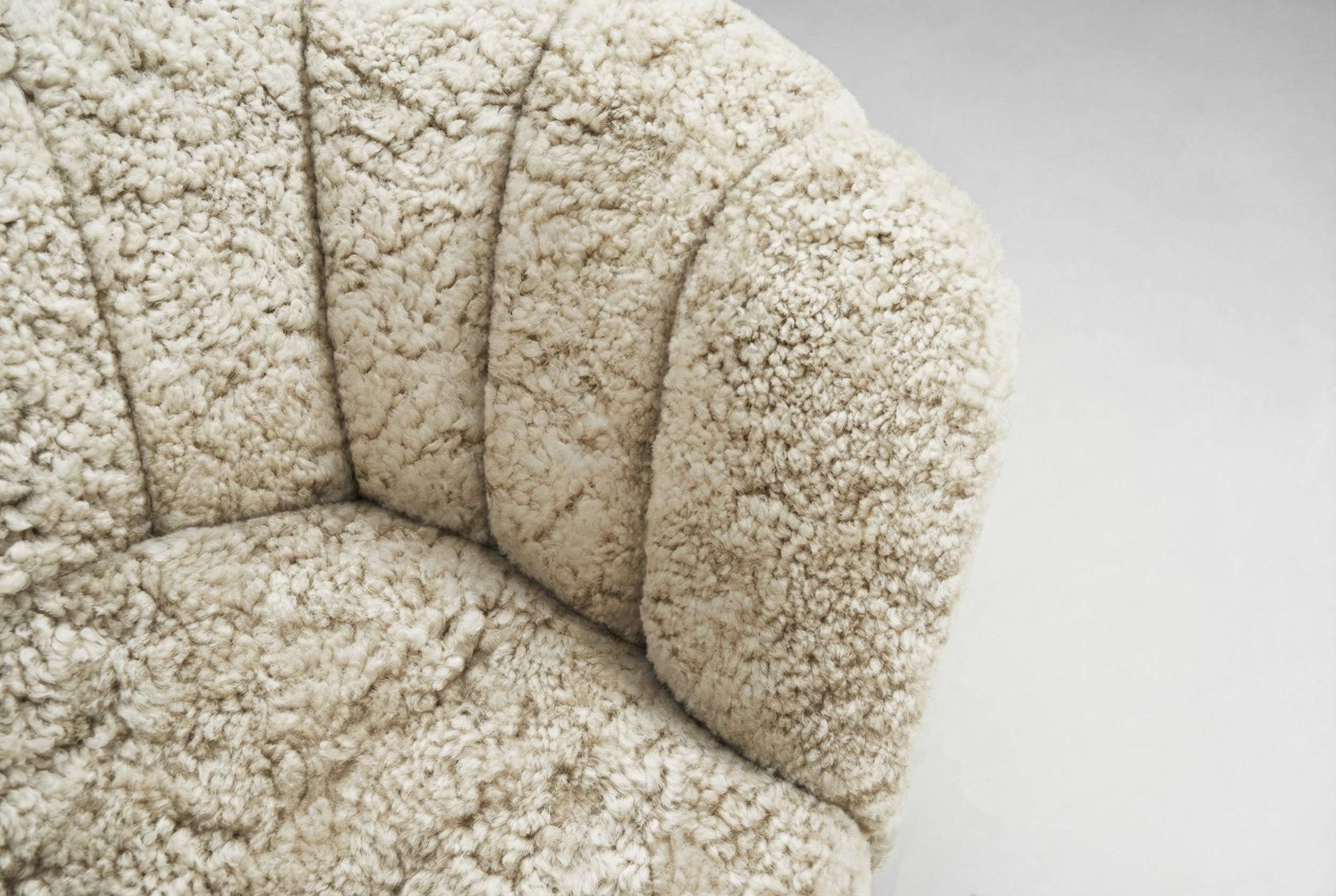
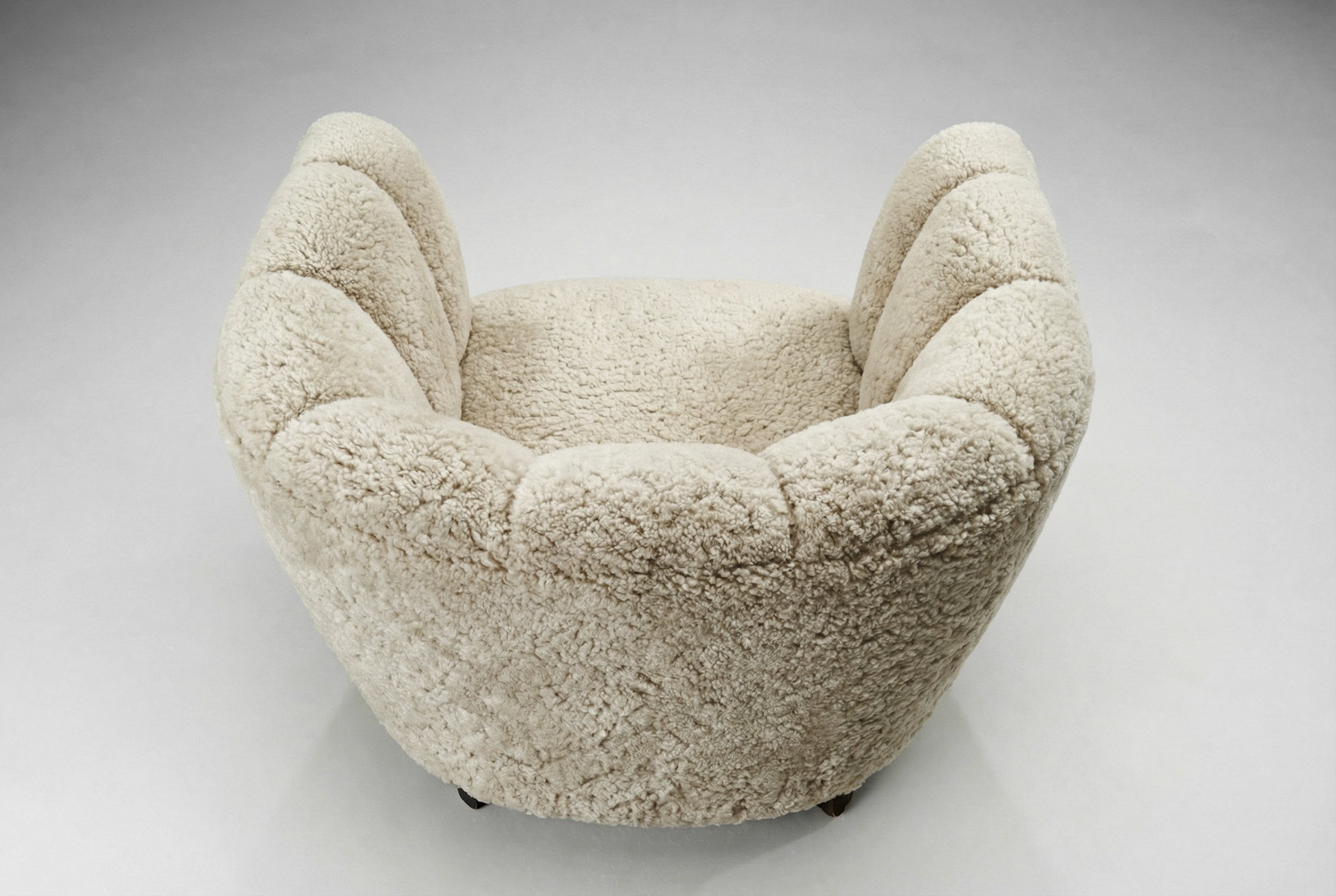
Designed in the early phase of what we know today as mid-century modern, this lounge chair is a Danish delicacy with a unique look. With its classic shape paired with modern design elements, it combines the best design characteristics of the 1940s. The large, enveloping backrest dictates the shape of this chair, as it forms most of the structure, including the armrests. The curvature creates an inviting and open look, enhanced by the soft sheepskin upholstery. The inside of the upholstered back is sectioned which creates a shell-like look. The thick, bun feet-like front legs are a pleasant touch. The warm brown colour of the stained wood nicely contrasts to the off-white sheepskin, not to mention the thick wooden feet make a long-lasting, rock solid foundation for any chair. The chair’s back legs differ, they are straight, which is an eccentric detail that adds visual interest. Master cabinetmakers were highly aware of body proportions, prioritising comfort just as much as the visual qualities, therefore this lounge chair provides support for the back and great sitting comfort.
Perfectly suited for a vintage or contemporary interior, this chair represents a marriage of artistry and comfort. Its upholstery captures attention, adding warmth and vibrancy to any space, while the wooden feet are grounding, together making this piece into an ideal statement piece.
Condition:
In good vintage condition. Wear consistent with age and use. The wood has some scratches and marks. Due to the nature and age of the materials, the chair may have additional discolouration. The chair has recently been reupholstered in premium sheepskin. Each of our items can be re-upholstered by our in-house atelier in a fabric of choice. Please reach out for more information.
Dimensions:
34.25 in W x 33.46 in D x 27.55 in H; Seat height 14.56 in
87 cm W x 85 cm D x 70 cm H; Seat height 37 cm

REQUEST PRICE HERE
Price category: 20,000 - 30,000 usd / eur
This “Clam” chair has a beloved design thanks to which it is considered by many as one of the most attractive chairs of Nordic Design. At the same time, this chair is arguably also the most mysterious piece on the Danish furniture market.
The model has a rather perplexing history, and has been attributed to several designers before, the latest being the Danish architect Phillip Arctander. However, recent research revealed that the “Clam” is the model that in fact started the story of Madsen & Schubell. Arnold Madsen designed this model in 1944 in his small basement workshop in Gothersgade, Copenhagen.
This chair has a characteristic organic shape with soft curves, perched on club-shaped beech legs. The name comes from the shape of the seat and back that together form the silhouette of an open clam. The round armrests compliment the overall round feel of the chair. The seat is slightly raised towards the front, while the back is tilted to provide great sitting comfort. The seat and back are covered in light sheepskin, adding to the soft and cosy feel of this “Clam”. Interestingly, Hans Schubell invented the special connecting piece of this chair, formed from only one piece of wood. The rest of the seat and backrest were glued to this single piece.
In 1944, the chair was already exhibited in conjunction with the presentation of the newly opened furniture store NY FORM A/S in Copenhagen, which sold the leading design of the day. In 1945, the Clam went into serial production as the first model of the new furniture company Madsen & Schubell and many well-known stores soon included Madsen & Schubell in their product range. Illums Bolighus was one of them, as were the Messen department store and the Copenhagen furniture store Nordisk Staal-og-Møbel Central. In 1953, Madsen & Schubell sold the licence of the chair to the Norwegian company Vik and Blindheim.
Condition:
In good vintage condition. Wear consistent with age and use. The chair has been reupholstered recently in light sheepskin. Each of our items can be re-upholstered by our in-house atelier in a fabric of choice. Please reach out for more information.
Dimensions:
26.38 in W x 33.27 in D x 32.28 in H; Seat height 14.96 in; Arm height 22.64 in
67 cm W x 84.5 cm D x 82 cm H; Seat height 38 cm; Arm height 57.5 cm
About the designer:
Henry Hans Schubell was born on February 23. 1906 in Elsinore, Denmark. After completing school, he became an apprentice cabinetmaker in Elsinore. After 5 years he finished his apprenticeship, and was awarded a medal for his work. When he turned 20, he moved to Copenhagen, where he worked for various cabinetmakers. In 1929, at the age of 23, he was employed as a foreman at the cabinetmakers Winter & Winding, where he supervised the production of furniture until 1945.
In 1944, the firm received a request from an upholsterer named Arnold Madsen, who had an idea for a chair. Madsen was having difficulties finding a cabinetmaker with the required skills to do the woodwork based on Madsen’s little plaster model. Henry Schubell succeeded in producing the wooden frame, making it possible for the chair to be put into production. Arnold Madsen was so impressed by his work that he suggested forming a partnership where Henry Schubell would design the furniture and produce the wooden frames, which Arnold Madsen would then upholster and market. The workshop was realized in the inner city of Copenhagen, and their joint venture was named “Madsen & Schubell”.
The cooperation between Henry Schubell and Arnold Madsen was so successful that they purchased a factory building on the outskirts of Copenhagen. Over the next 20 years, the company produced several successful models, most of which were designed by Henry Schubell. Some of these chairs were licensed to the Norwegian company Vik & Blindheim and to the Dutch company Bovenkamp.
The cooperation between the two ended in 1963, and by mutual agreement, Arnold Madsen established his new upholstery firm under the name “Madsen og Schubell”, in cooperation with his son, Ib Madsen. In the 1970s, Ib took over the company which still ran under the name Madsen & Schubell causing some confusion about the attribution of Madsen & Schubell models. ~H.
REQUEST PRICE HERE
Price category: 12,500 - 15,000 usd / eur
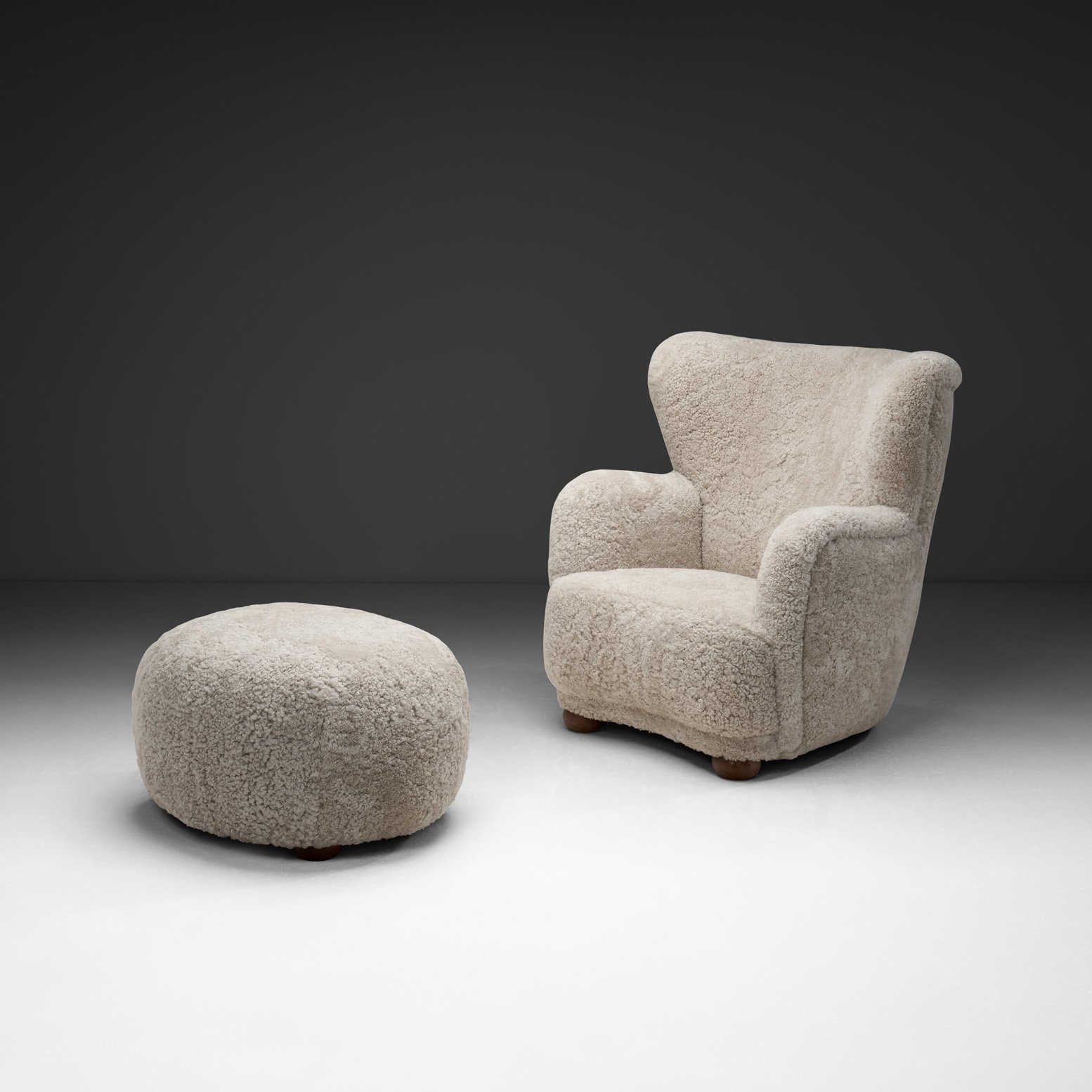
This armchair and footstool exudes quality and personality from all angles. The basic Danish design principles are all present - the pair is functional, simple at its core, well-crafted, and free of unnecessary ornamentation. During the 1950s, Danish makers led the way in furniture design, with seating pieces to this day being some of the most iconic of their time, and this model is no exception.
The generous seat and back of the armchair are welcoming, with the latter curving in such an angle that the sitter is gently “hugged”. This type of backrest style is called a wingback, originally, it was created as a way to help shield a person from drafts of cold air, and to trap the heat from a fireplace. That is why wingback chairs are sometimes called fireside chairs, as it was a popular style of chair to have pulled up in front of or flanking a fireplace. The embracing back and the curved arms create a welcoming impression, while the back’s elongated corners create visual interest. The generous padded armrests add another layer of relaxation for the sitter, and the luxurious, soft sheepskin upholstery provides great comfort in the name of functionality, while also transforming the chair into a beautiful addition to any interior space. Sheepskin is the ultimate material for comfort, warm in the winter and cool in the summer. The production quality is evident throughout this pair and takes the mid-century idea of “furniture that last for generations” seriously.
The design of this armchair and footstool promotes relaxation and contentment, inviting one to sit back and enjoy a moment of peace. The understated elegance and natural tones create an alluring atmosphere, making it perfect for the purpose of evoking a hyggelig (cosy) environment in any home.
Condition:
In good vintage condition. Wear consistent with age and use. The items have recently been reconditioned. The chair has been reupholstered recently in a premium sheepskin; the footstool is a later addition, upholstered in the same fabric as the chair. Each of our items can be reupholstered by our in-house atelier in a fabric of choice. Please reach out for more information.
Dimensions:
Chair:
34.64 in W x 35.03 in D x 38.77 in H
88 cm W x 89 cm D x 98.5 cm H
Footstool:
24.40 in W x 21.26 in D x 15.16 in H
62 cm W x 54 cm D x 38.5 cm H
REQUEST PRICE HERE
Price category: 9,000 - 12,500 usd / eur
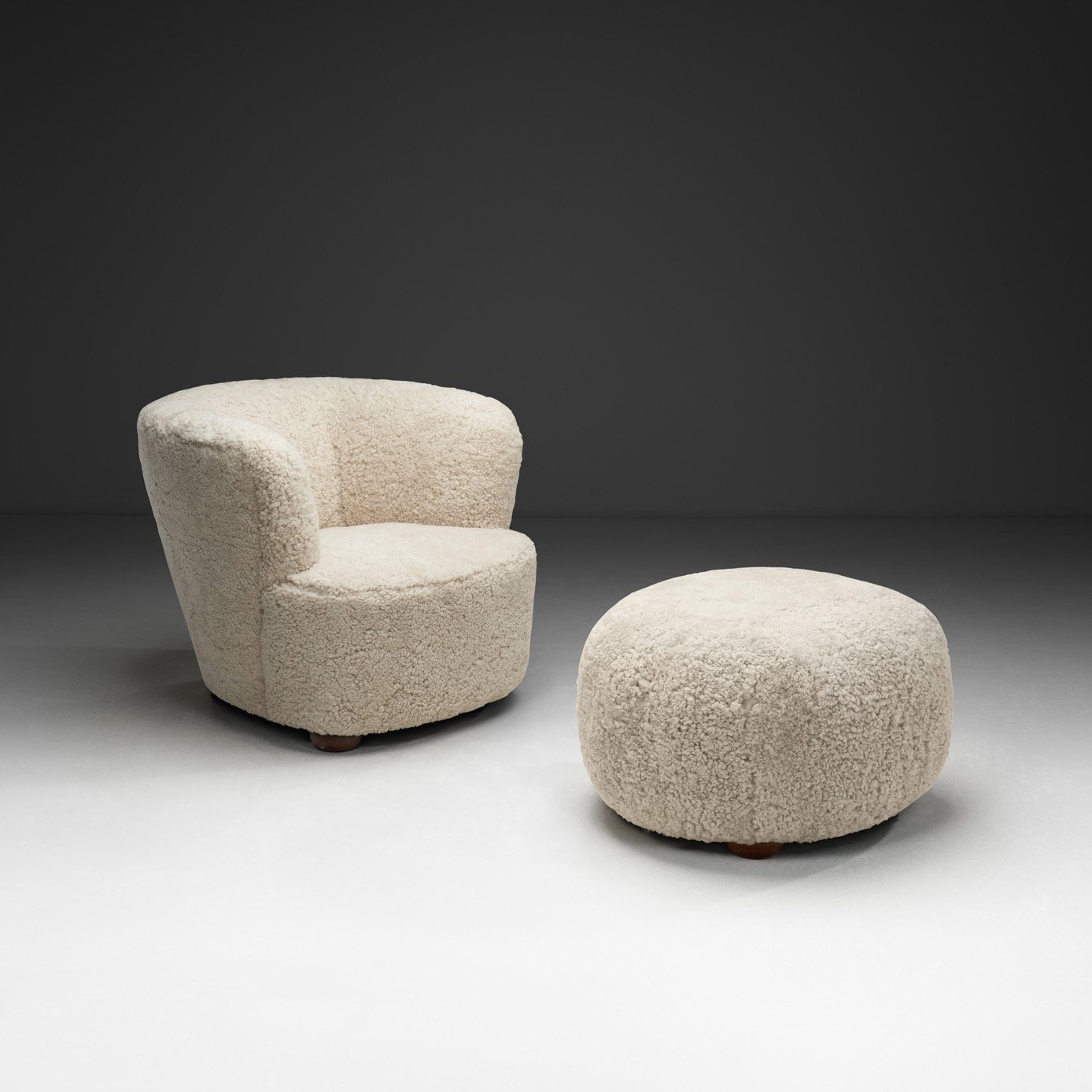
Around the middle of the 20th century Danish furniture design began blending the streamlined elegance of modernism with the inviting charm of skilled craftsmanship. This period celebrated functionality, comfort, and organic forms by creating pieces that were as practical as they were beautiful.
This chair and ottoman pair showcases an organic look which is grounded and cosy. To keep the pair from being overcrowded visually, the design is kept simple with gently rounded lines and no other form of decoration. An impressive aspect of this chair and ottoman is that the craftsmanship expected from Danish cabinetmakers is still visible despite the full coverage of the fabric. The shape of the chair resembles that of a club chair with a wide and open profile where the arms and back are on the same level. Thanks to this, the sheepskin upholstery truly stands out; the colour and texture pairs very well with the smooth outlines of both pieces. This effect is further enhanced when the chair and ottoman are placed together as a set. The overall design values simplicity in both form and function, leaving the emphasis on the upholstery.
The most traditional use for this type of pair is in the living room, but they work especially well in an open floor plan. The early mid-century modern aesthetic lends itself well to most styles as it is timelessly elegant and high-quality in terms of materials and execution. In the case of this chair and ottoman, they are guaranteed to stand out no matter their placement or surroundings.
Condition:
In good vintage condition. Wear consistent with age and use. Due to the nature and age of the materials, items may have marks, scratches, and discolouration. The ottoman is a later addition. The items have been reupholstered recently in premium sheepskin. Each of our items can be reupholstered by our in-house atelier in a fabric of choice. Please reach out for more information.
Dimensions:
Chair:
31.10 in W x 31.49 in D x 28.34 in H; Seat height 15.35 in; Seat depth 21.65 in
87 cm W x 86 cm D x 69 cm H; Seat height 38 cm; Seat depth 55 cm
Footstool:
24.40 in W x 21.26 in D x 15.16 in H
62 cm W x 54 cm D x 38.5 cm H
REQUEST PRICE HERE
Price category: 2,500 - 5,000 usd / eur
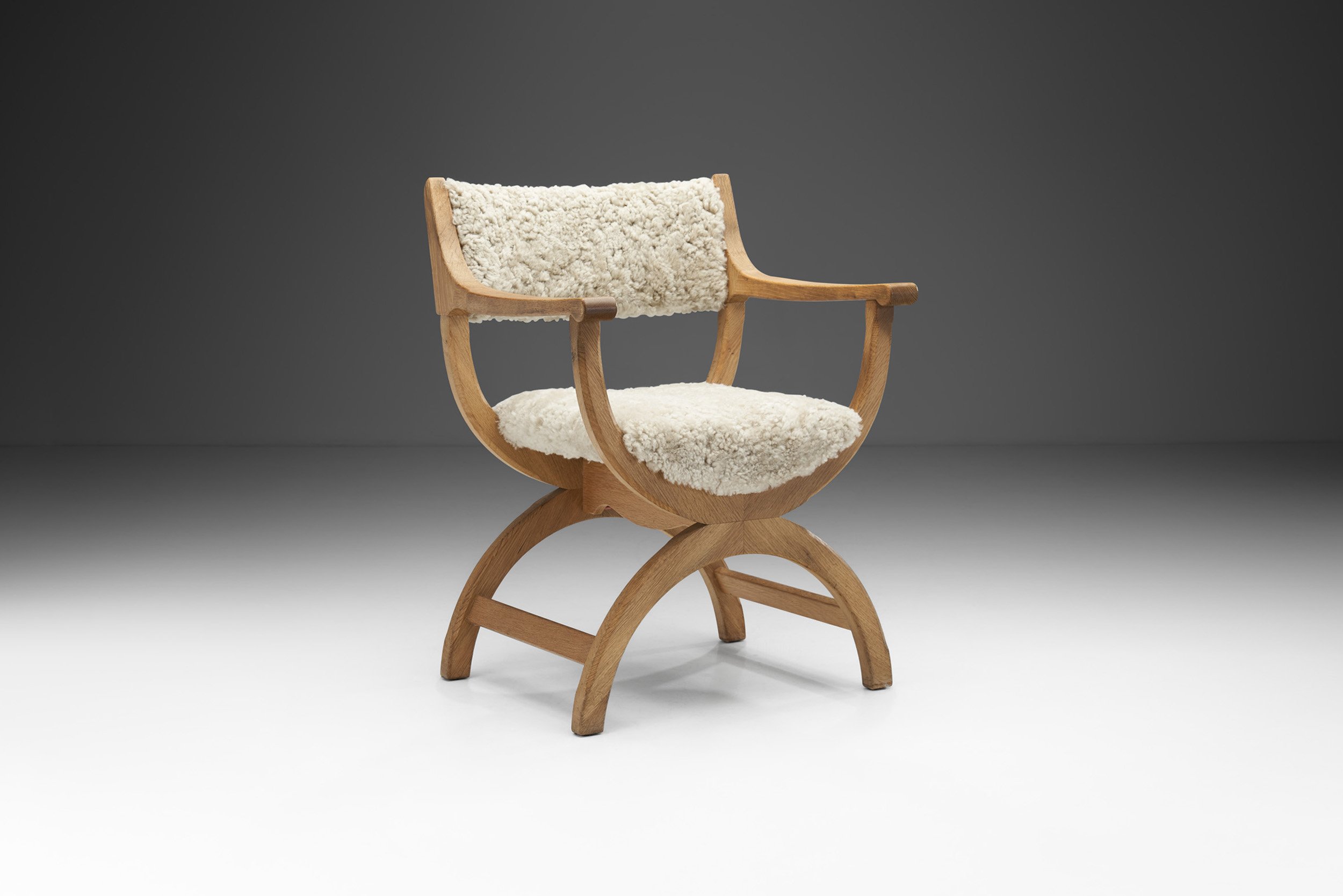
Designed by Henning Kjaernulf, this so-called “kurulstol” or kurul chair, is an iconic model by Danish designer, Henning Kjærnulf. The Kurul chair is an ancient folding chair, originally a folding stool with straight or curved legs. Among the Romans, in addition to being an ordinary utility chair, it was symbolically linked to officials, often within the judiciary.
This armchair combines the traditional kurul structure with a rounded and curved appearance with an upholstered seat and backrest that gives the historic look a modern edge. The oak frame is carved and sculpted in an unmistakeable way, showing the skills of both the designer and the manufacturer. The body is composed of two slats of wood of equal length in the front and back, fastened together in a saltire formation (resembling the letter X) which are extended up at the top and back to form the armrests and the backs as well. The seat, upholstered in soft sheepskin, is stretched between the front and back slats connecting the two. Kjærnulf removed the folding function of the historic design, giving his model a more stable, organic look. This impression is further enhanced by the solid oak, which is carved with great precision into straight and curving lines. The rich sheepskin melts these carved and straight lines together, contrasting to the oak’s smoothness. While the historic kurul chair was often decorated with intarsia, this model only showcases subtle decor elements such as the scalloped bridge under the seat, and the curving armrests.
While the kurulstol is a Renaissance classic originating from ancient Rome, thanks to Kjaernulf, Scandinavian modernism remains at the core of the design. Kjærnulf’s designs are easy to spot in a crowd thanks to his originality, making his pieces like the razorblade chair and this model eternally unique. This chair was manufactured by EG Kvalitetsmobel in Denmark during the 1960s.
Condition:
In good vintage condition. Wear consistent with age and use. Some minor scratches and marks on the wood. The chair has been reupholstered recently in premium sheepskin.
Dimensions:
24.8 in W x 26.77 in D x 31.29 in H; Seat height 17.32 in; Arm height 26.18 in
63 cm W x 68 cm D x 79.5 cm H; Seat height 44 cm; Arm height 66.5 cm
About the designer:
Danish mid-century designer and architect, Henning Kjaernulf is somewhat of a mystery. A lot more is known about his designs than Kjaernulf himself. His wooden designs, crafted to perfection, speak for themselves. Kjaernulf mainly designed for the Danish manufacturers EG Kvalitetsmøbel, Nyrup Møbelfabrik, and Vejle Stole Møbelfabrik. The latter produced the designer’s well-known teak extending dining table design. The historic archives of the Danish municipality, Stenlille, reveal the history of Nyrup Møbelfabrik, mentioning Kjaernulf’s architectural designs for the company’s factory, referring to him as an architect based in Odense, Denmark.
Kjaernulf’s works reveal quality craftsmanship throughout, featuring clean Danish modern era lines with sculpted edges and shapes. The unique shapes, like his razorblade chair backrests, distinguish the designer from other Danish mid-century designers.
In light of how sought after his dining sets and lounge chairs are, it remains a mystery why so little is known about the designer. The curious background of Kjaernulf if anything, adds more charm to his pieces. ~H.

REQUEST PRICE HERE
Price category: 7,500 - 10,000 usd / eur
It is known that Jindřich Halabala firmly believed that the furniture he created was to be functional, modular, and flawlessly-crafted, and this rare armchair stands as evidence of that. This model exemplifies why Halabala's work is considered to be a connection between innovative Czech cubism from the 1910s, Art Deco from the early 1920s and European modern art post WWII.
Halabala was a key figure in the interwar functionalist movement, and sought to bring high-quality, affordable modern furniture to a wider audience. The designer’s chairs such as this one carriey elements from art deco as well as early mid-century design, resulting in a unique and immediately recognisable aesthetic that’s based on daring shapes and forms. This model features a sensual curved wooden frame that contrasts beautifully with the angular, fully upholstered seat and back. The dynamic form is both sculptural and ergonomic, offering visual interest and inviting comfort. The longhair sheepskin is a visual treat that adds a luxurious, tactile presence to the chair. The material is attention-grabbing as it envelops the entire piece which enhances the form and adds warmth and softness to the overall design.
The outstanding visual characteristic of this armchair is both traditional and modern, making it simply timeless. This is precisely the charm of Jindřich Halabala pieces, the effortless style paired with the highest quality of materials and craftsmanship.
Condition:
In good vintage condition. Wear consistent with age and use. The chair has been recently reupholstered in premium longhair sheepskin. Each of our items can be reupholstered by our in-house atelier in a fabric of choice. Please reach out for more information.
Dimensions:
27.75 in W x 33.85 in D x 34.64 in H; Seat height 17.71 in
70.5 cm W x 86 cm D x 88 cm H; Seat height 45 cm
About the designer:
Jindřich Halabala (May 24, 1903 Koryčany - November 18, 1978 Brno) was a Czech furniture designer, theorist, publicist and pedagogue. He was especially famous for his designs of stylish furniture for the Brno UP plants from 1925 to 1955, where he worked as a chief designer. Thanks to this position, he fundamentally influenced the appearance of interwar and post-war Czech households.
Jindřich Halabala was born on May 24, 1903 in Koryčany to the family of carpenter Štěpán Halabala, whose craft he learned in a family business between 1918 and 1920. He then joined the State Czechoslovak Vocational School for Wood Processing in Valašské Meziříčí, which he graduated from two years later. After school, he started practicing at the United UP races, where he met their founder Jan Vaňek. In 1922 he also began to study architecture at the School of Applied Arts in Prague, specializing in furniture and interiors with prof. Pavel Janák. He completed his studies in 1926. In the same year, he created the first designs for furniture and carpets. In 1927, he was briefly employed in Bohumil Hübschmann's studio in Prague, and in 1928 he finally joined the United UP plant as the head of the Prague store in the Lucerna Palace. In 1927, Jindřich Halabala married Pavla Sekerková, with whom he had two sons; in 1929 son Jindra and in 1935 son Ivan. In 1930, he was transferred to the Brno headquarters of the United UP plant as head of the studio, where he worked in various positions (procurator, director) until 1946, and thus fundamentally contributed to a comprehensive concept of production, promotion, and sales. Later, he became interested in passing on his knowledge to future generations and between 1951 and 1954 he lectured externally at the Faculty of Forestry and Wood Engineering at the VŠPDI in Košice. In 1954, he was appointed an extraordinary (and a year later also a full) professor and began his long-term work at the Faculty of Wood Science of the University of Forestry and Wood Technology in Zvolen, where he founded and headed the Research Institute. He worked here until 1970, when he retired.
Halabala's work is considered to be a connection between innovative Czech cubism from 1910, art deco from the early 1920s and European modern art after the Second World War. His commercially successful designs were strongly based on the design of the Bauhaus. Halabala designed a variety of furniture, including chairs, tables, sideboards, chests of drawers, flower stands, coffee tables and lamps. Especially his legendary chair H-79 with frames made of bent steel tubes and his armchair type H-269 enjoyed great popularity.

REQUEST PRICE HERE
Price category: 7,500 - 10,000 usd / eur
This lounge chair exudes quality and personality from all angles. The basic Scandinavian furniture design principles are all present - as this model is functional, simple at its core, well-crafted, and free of unnecessary ornamentation. After all, the upholstered body in soft and stylish sheepskin provides plenty of visual pleasure.
With organic forms and harmonious proportions, this model is an excellent example of great Scandinavian design from the era. Designed in the phase of what we know today as mid-century modern, this lounge chair has a classic shape paired with a modern form. The generous seat and back are welcoming, with the latter curving in such an angle that the sitter is “hugged”. The large, curved backrest features tufted buttons and follows the curve of the equally generous seat, creating a harmonious look. The backside of this chair is quite striking, as it is created from a single piece stemming from the base. The sheepskin used for the upholstery is the ultimate material for comfort, warm in the winter and cool in the summer. It elevates the sheer size and shape of the chair, especially its back. At the same time, the wood also remains an important visual feature, as it is the most important material in Scandinavian mid-century design. The solid wood legs are tapered to lighten the look, but are thick enough at the top to provide adequate joinery strength.
The artisanal production quality shows throughout this chair and takes the Scandinavian idea of furniture that lasts for generations seriously. The harmony of craftsmanship, the materials and the design makes this lounge chair ideal for any interior and style.
Condition:
In good vintage condition. Wear consistent with age and use. The chair has been reupholstered recently in premium dark sheepskin.
Dimensions:
30.7 in W x 31.88 in D x 29.52 in H; Seat height 17.32 in
78 cm W x 81 cm D x 75 cm H; Seat height 44 cm
REQUEST PRICE HERE
Price category: 5,000 - 7,500 usd / eur
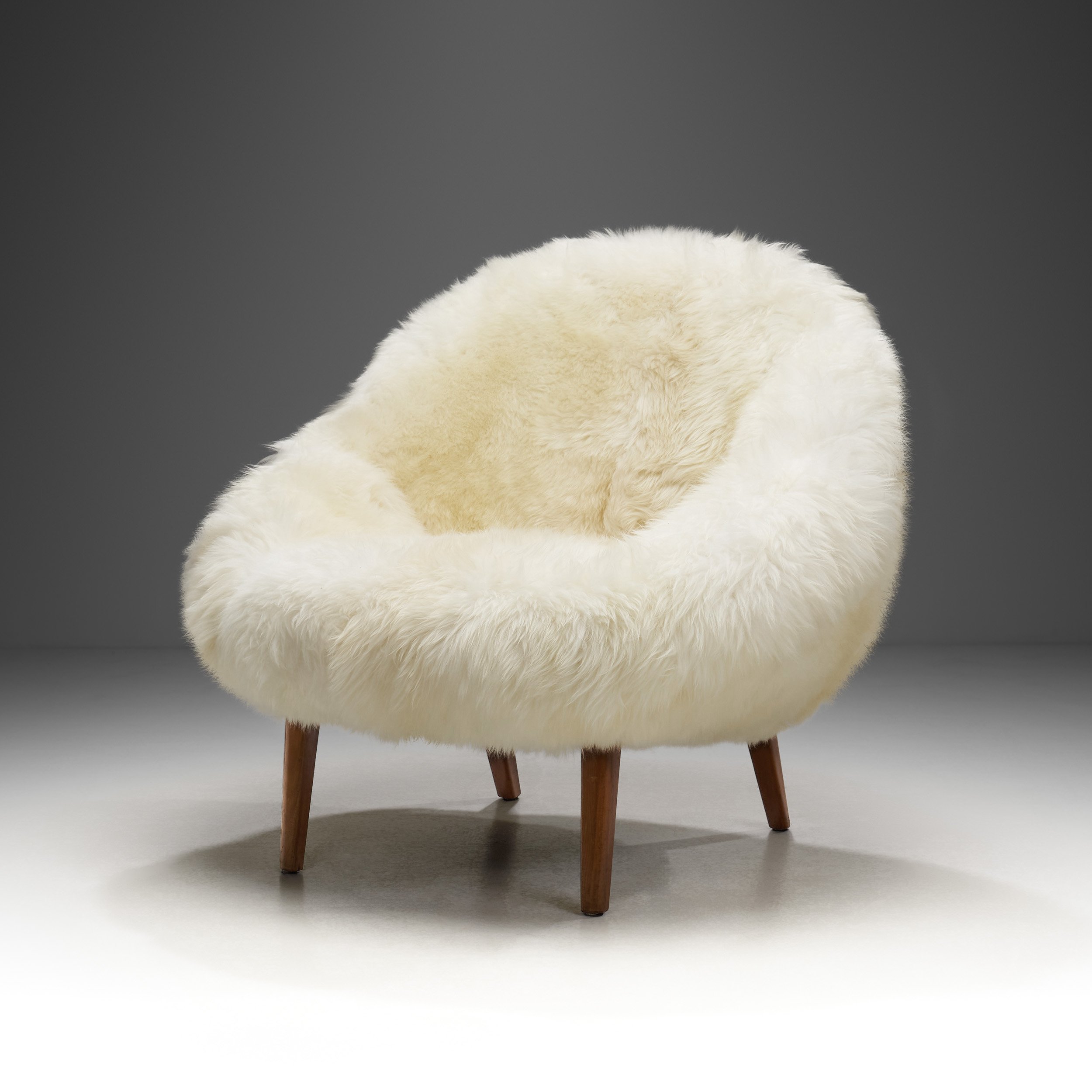
The rise of Danish furniture is deeply rooted in the transformative shift in design philosophy during and post-World War II. Danish designers turned limitations into creative opportunities, creating lightweight, robust, and aesthetically pleasing furnishings. The construction of this mid-century lounge chair revolves around the use of high-quality materials, comfort, and the mastery of the era’s Danish cabinetmakers. The design is focused on the aesthetics of modernism whilst employing the exquisite technique and material familiarity of the highly skilled craftsmen. This chair in many ways transcends the word ‘modern’, thanks to its unique look.
The organically-shaped seat gives this chair a sculptural and striking appearance. The body is formed like a nest that hugs the sitter. The wide seat and low armrests are not separated, rather, they are united and create an open and welcoming look. The legs are quite simplistic, which is a great design choice that contrast with the voluptuousness of the upholstery, letting it stand out. One of the features that is echoed throughout the majority of Scandinavian furniture designs is stark contrast. Designers often choose to emphasize this by featuring bold colors alongside natural materials, which is highlighted in the material choice of this chair. The material choice of wood for the legs is very characteristic of the era. Thanks to its well-thought-out construction and proportions, the sitting comfort is also outstanding.
This lounge chair is the perfect illustration of how the mixture of Danish craftsmanship, high-quality materials, and luxurious upholstery create exceptional pieces.
Condition:
In good vintage condition. Wear consistent with age and use. This chair has been reupholstered recently in a premium sheepskin. Each of our items can be re-upholstered by our in-house atelier in a fabric of choice. Please reach out for more information.
Dimensions:
35.43 in W x 35.43 in D x 33.07 in H; Seat height 17.72 in; Seat depth 25.20 in
90 cm W x 90 cm D x 84 cm H; Seat height 45 cm; Seat depth 64 cm
REQUEST PRICE HERE
Price category: 7,500 - 10,000 usd / eur
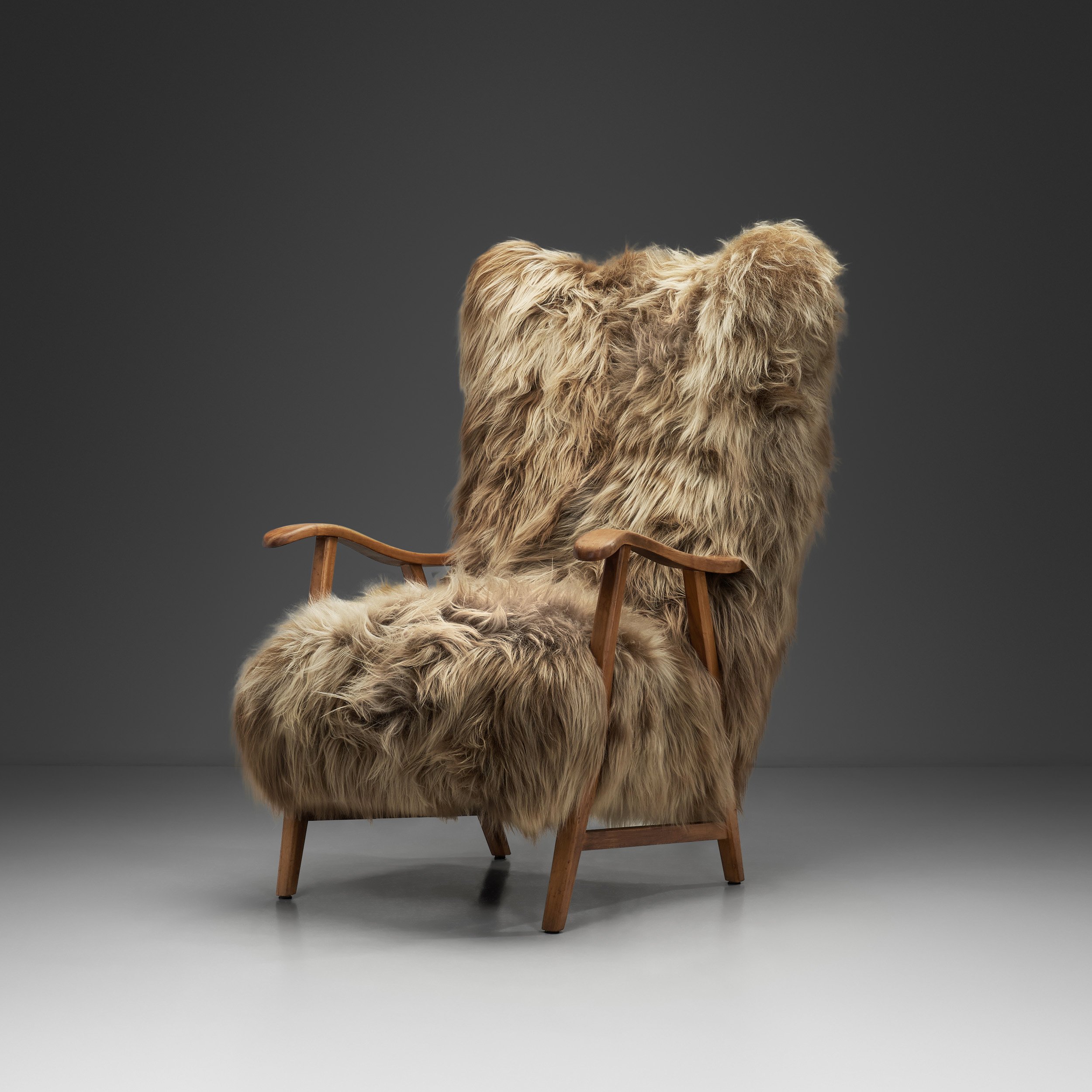
This beautiful Danish armchair recalls the peak of Danish mid-century modern design. Thanks to its curved shape and luxurious materials, this model is exceptionally cosy and elegant. Armchairs like this are statement pieces in any space, but they can also adapt to a variety of styles thanks to their universal appeal.
The distinct look of this chair is the result of the brilliant pairing of materials. The wooden structure’s smooth lines stand out against the textural sheepskin, while also accentuating the unique look of the upholstery. The soft fibres of the lightweight, feathery sheepskin drape beautifully over this chair, while the warm brown colour of the wood adds depth. The desire to keep functionality and comfort at the core of the design is also visible, especially in the gently angled back legs that connect with the arms. The armrests have a peculiar shape, with perfectly sculpted curves to accommodate the sitter. Their smooth surface is greatly elevated next to the sheepskin, complementing each other’s unique qualities. Serving the level of comfort even further is the elongated seat that is perfect for lounging. The classic mid-century design principles are all present in this model, as it is functional, well-crafted, and free of unnecessary ornamentation. In contrast to the streamlined form, the sheepskin upholstery provides great visual interest and transforms this armchair into a beautiful accent element in any space.
The rise of Danish furniture is deeply rooted in the transformative shift in design philosophy during and post-World War II. Danish designers turned limitations into creative opportunities, creating lightweight, robust, and aesthetically pleasing furnishings, like this armchair. Chairs like this always seem to come back in style due to their versatility; they can easily be dressed up with statement cushions for formal occasions, or make a subtle statement in any day-to-day living space.
Condition:
In good vintage condition. Wear consistent with age and use. The chair has recently been reupholstered in a premium sheepskin. Each of our items can be reupholstered by our in-house atelier in a fabric of choice. Please reach our for more information.
Dimensions:
27.95 in W x 35.43 in D x 43.70 in H; Seat height 19.68 in; Seat depth 20.47 in; Arm height 24.80 in
71 cm W x 90 cm D x 111 cm H; Seat height 50 cm; Seat depth 52 cm; Arm height 63 cm
REQUEST PRICE HERE
Price category: 7,500 - 10,000 usd / eur
Danish Modernism can be visually described by this beautiful wing-back chair: sleek, organic and timeless. These attributes are met with high quality materials and the famous craftsmanship of the country’s cabinetmakers. This chair is a testament to the quality and craftsmanship of Villy Sørensen.
From the welcoming winged body and the solid wood frame to the cosy sheepskin upholstery, this chair expresses a quality of hygge and a feeling of contentment. The distinctive shape is a result of the two “ears” that encompass the sitter. One of the most notable chair styles that embodies Scandinavian modern design is the wing-back chair. The history of this type of chair can be traced back to the 17th century when they were originally designed to provide protection from drafts in grandiose, often chilly, European homes. With high backs and "wings" on each side to shield the sitter from cold air, these chairs were originally a symbol of prestige and comfort. To balance the sculptural, upholstered body is the beautiful solid wood frame that is left exposed on the sides as it also functions as a decorative element with its geometric angles and curves. The arms and tapered legs are formed from the same piece of wood resulting in a sleek impression. The wood’s colour and smooth surface contrast brilliantly with the sheepskin’s light colour and texture. Thanks to the properties of the sheepskin, this chair provides great, soft comfort as well.
Villy Sørensen had a unique design idiom, which is clearly visible in this model: function, durability, timeless design, and perhaps above all, comfort. This traditional yet playful chair combines all of these attributes, which makes it ideal to be the stylish focal point of any space.
Condition:
In good vintage condition. Wear consistent with age and use. Due to the nature of the wood, the item may have some marks, scratches, and discolouration. The chair has recently been reconditioned and has recently been reupholstered in premium sheepskin. Each of our items can be reupholstered by our in-house atelier in a fabric of choice. Please reach out for more information.
Dimensions:
29.92 in W x 32.28 in D x 38.98 in H; Seat height 14.96 in; Seat depth 22.83 in
76 cm W x 82 cm D x 99 cm H; Seat height 38 cm; Seat depth 58 cm