Mid-Century Modern Armchair Upholstered in Bouclé Fabric, Europe 20th century


Mid-Century Modern Armchair Upholstered in Bouclé Fabric, Europe 20th century
REQUEST PRICE HERE
Price category: 5,000 - 7,500 usd / eur
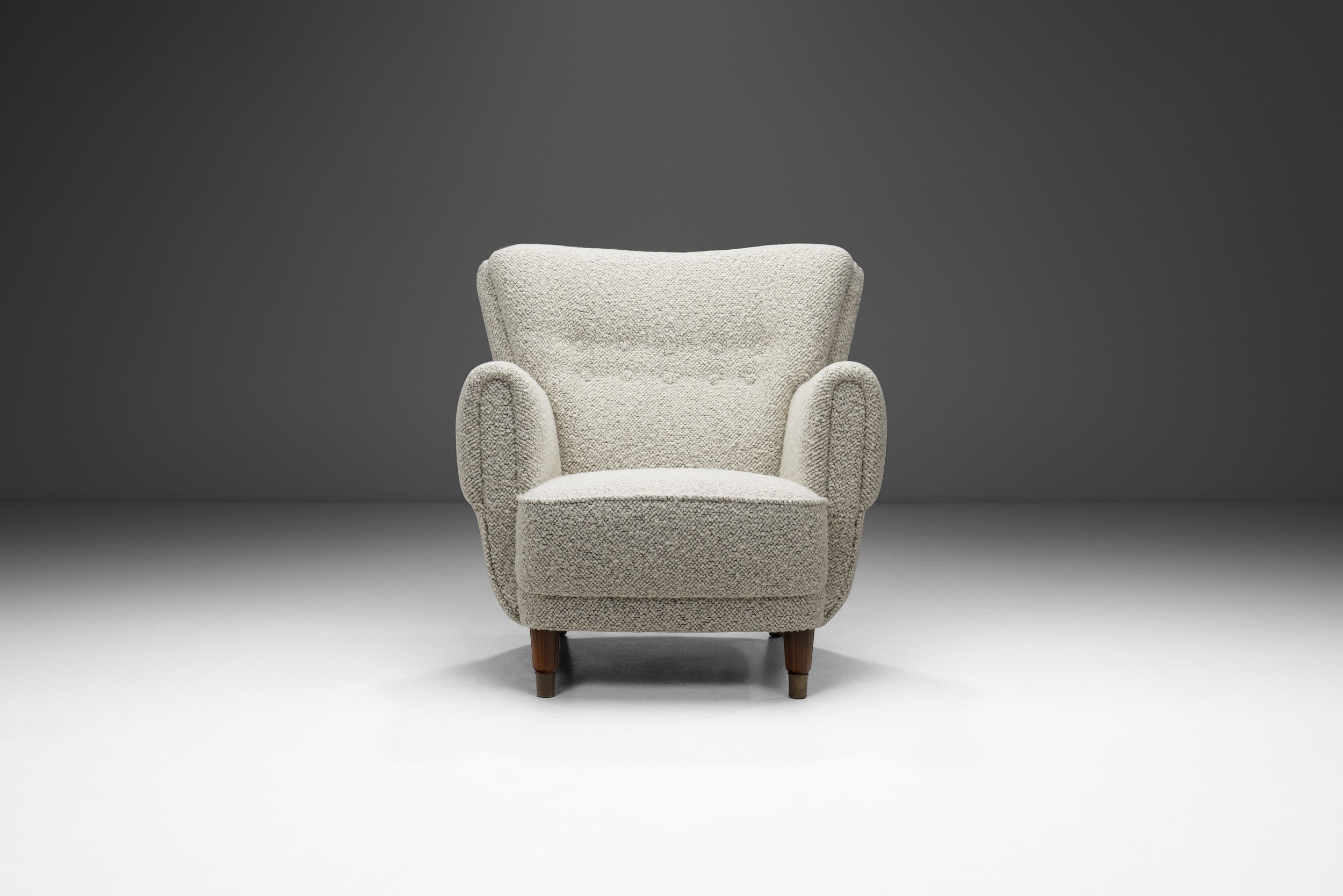
This armchair is elegant and comfortable evidence of the mastery and artistry of the European cabinetmakers who defined mid-20th century modern seating. This chair is of the highest quality, both in terms of visual appeal, materials, and craftsmanship. Mid-century modern is notable for its blending of classic modern design with a slightly more updated feel. This armchair has a clean, comfortable style that is a prime example of the best qualities of mid-century modernism.
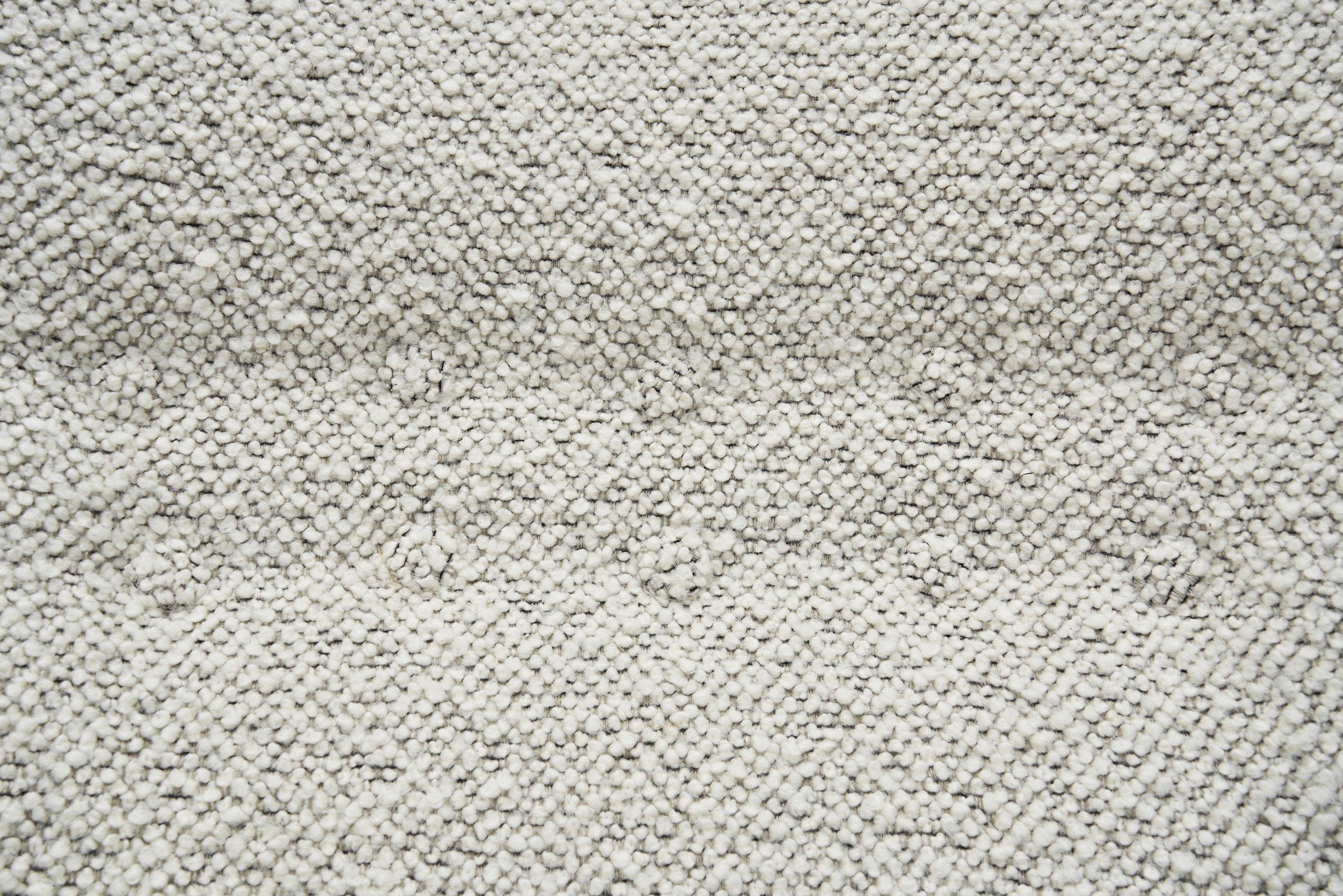
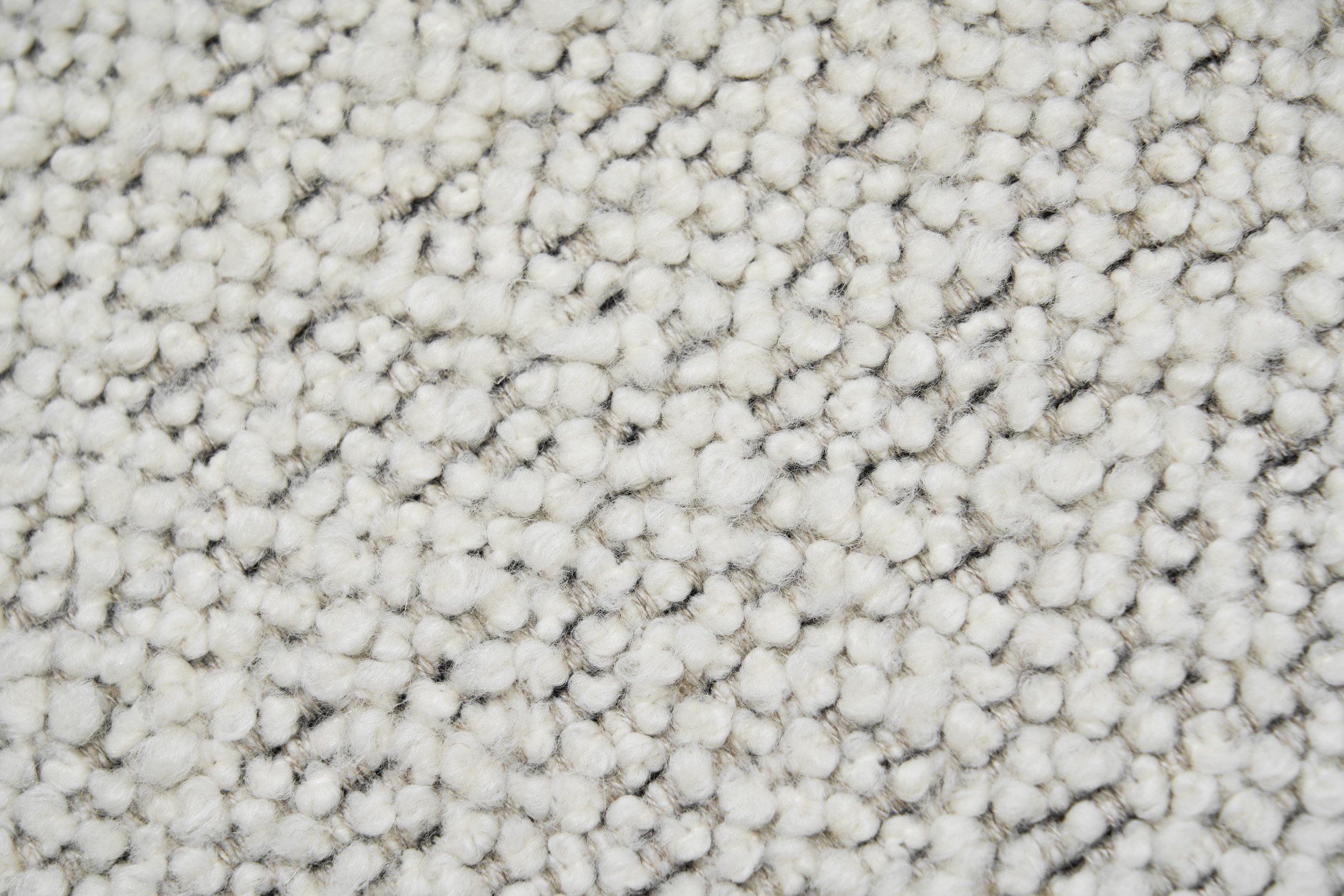
European furniture from the mid-20th century revolutionised the history of what we consider modern design today. Armchairs in particular have become unrivalled reference points in mid-century modern design. Cabinetmaker armchairs may seem similar at first sight, however, each model’s individuality becomes evident upon closer inspection. In this chair’s case, its sheer volume and welcoming shape stand out immediately. The synthesis that this chair has achieved between form and function is outstanding, aesthetics and utility coming together in a uniquely mid-century manner. The fully-upholstered wooden frame rests on dark wood legs, with brass caps on the front legs. Tapered, slightly splayed back legs support the chair, and provide visual contrast to the light upholstery. The focus is on the round, flowing lines of the body and its premium upholstery. The exceptionally textured bouclé fabric highlights the frame’s rounded edges, especially its voluminous arm- and backrest.
From every single angle, this armchair offers a stunning silhouette and rich texture. Above all, European designers believed that design could certainly be used to improve people's lives. This sentiment can be traced in the exquisite materials, the impeccable craftsmanship, and in the elegantly curved and rounded edges.
Condition:
In good vintage condition. Wear consistent with age and use. Some minor scratches and marks on the wood. The chair has been reupholstered recently in a premium bouclé fabric. Each of our items can be re-upholstered by our in-house atelier in a fabric of choice. Please reach out for more information.
Dimensions:
31.50 in W x 35.04 in D x 32.28 in H; Seat height 16.54 in; Arm height 23.62 in
80 cm W x 89 cm D x 82 cm H; Seat height 42 cm; Arm height 60 cm
REQUEST PRICE HERE
Price category: 2,500 - 5,000 usd / eur
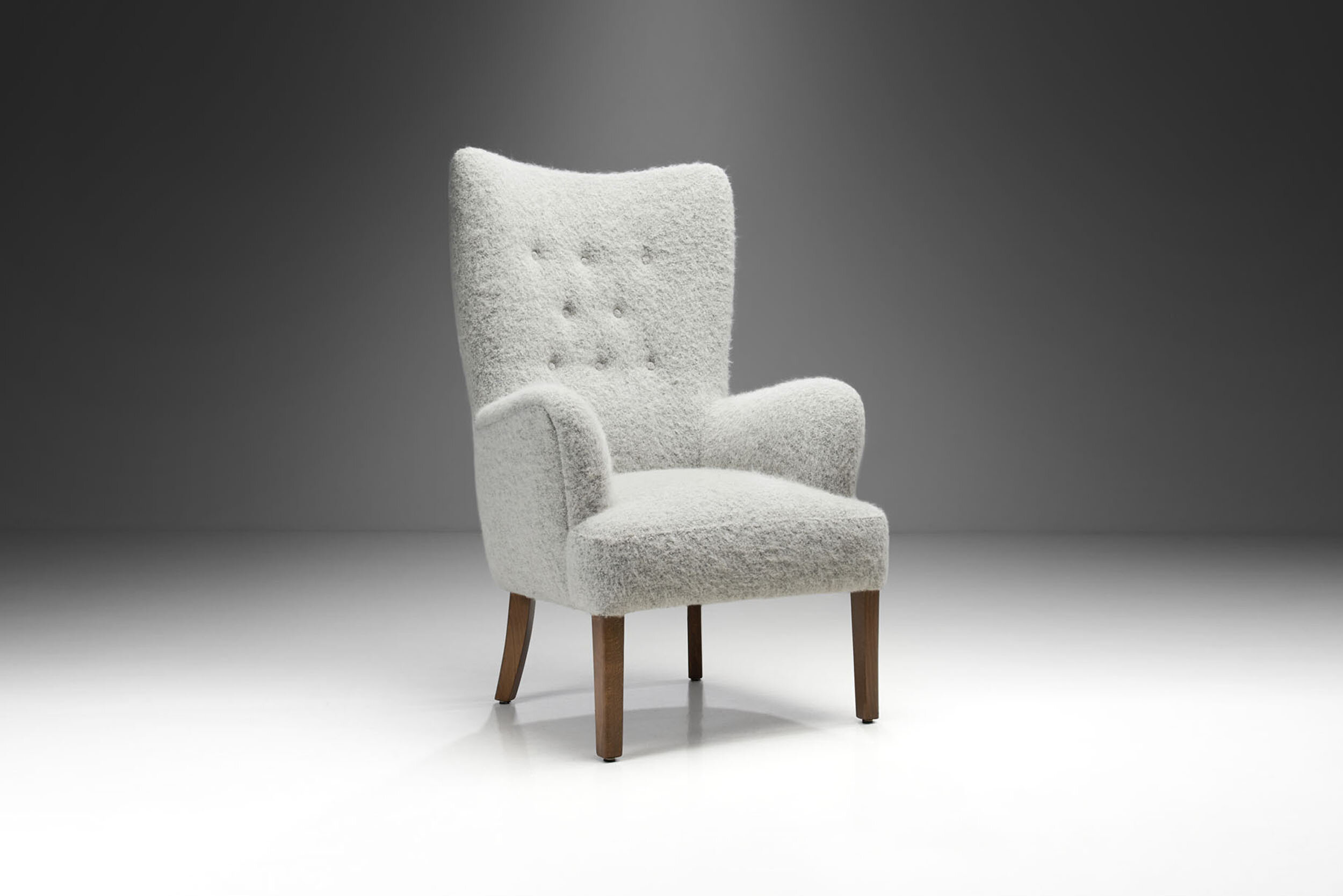
Peter Hvidt and Orla Mølgaard-Nielsen’s design language operates as a set of relations linking the everyday world - composed of objects, spaces, people - to the cultural ideologies that motivate the persistence of a social democratically infused “way of life.” The design duo’s company was a pioneering force in Danish furniture design thanks to this sentiment.
While the duo solidified their careers with industrial production, more specifically the “AX chair” in the 1950s, this earlier model is perhaps even more stunning in many aspects. “Model 1748” is their most well-known fully upholstered chair, with a design that builds on the traditions of Danish cabinetmaking. The subtle decorative qualities and the simple lines deriving from the early 20th century design movements give this chair its elegance. This armchair shows the homely curviness that defined the design of the mid-century throughout Scandinavia. The back is lightly bent for ergonomic comfort, and have stylish button tufting. The tapered, stained beech legs complement both the shape of the armchair, and the bouclé upholstery.
Quality craftsmanship was of optimum importance for Hvidt and Mølgaard-Nielsen, therefore they collaborated with the best cabinetmakers of the era. This chair was manufactured by Fritz Hansen, Denmark’s most famous company of the time. Founded in Denmark in 1872, and proceeded to manufacture many of the classic icons of Danish Design in the following decades. With a classic look, storied design and solid quality, these chairs are truly soulful and timeless.
Condition:
In good vintage condition. Wear consistent with age and use. The chair has been reupholstered recently in a premium bouclé fabric. Each of our items can be re-upholstered by our in-house atelier in a fabric of choice. Please reach out for more information.
Dimensions:
27.55 in W x 31.88 in D x 33.07 in H; Seat height 16.53 in
70 cm W x 81 cm D x 84 cm H; Seat height 42 cm
About the designer:
Hvidt & Mølgaard was a Copenhagen-based, Danish design and architectural firm which existed from 1944 until 2009. Founded by Peter Hvidt (1916-1986) and Orla Mølgaard-Nielsen (1907-1993), the company was a pioneering force in Danish furniture design and industrialized production in the 1950s, creating furniture that was easy to mass-produce and economic to transport.
Danish architect-designer Orla Mølgaard-Nielsen was born in 1907. His formative years were spent in Copenhagen, studying at the Aalborg Technical School and at the Art and Crafts School of the Design Museum (graduating in 1928). From 1931 until 1934, he continued his studies in furniture design at the Royal Danish Academy of Fine Arts under the instruction of Danish master Kaare Klint (1888-1954). Peter Hvidt was born in Copenhagen in 1916. He studied architecture and cabinetry at the School of Arts and Crafts in Copenhagen. Subsequently, he worked at various design firms before establishing his own studio in 1942.
In 1944, Hvidt designed the Portex Chair, which was one of Denmark’s first stacking chairs. Hvidt, whose design aesthetic was characterized as traditional throughout the 1940s, exhibited frequently at the Cabinetmaker's Guild exhibitions, as both a designer and architect.
In 1944, the pair co-established Hvidt & Mølgaard Studio, which they ran together until 1975. During this time, the pair created designs for Fritz Hansen, France & Søn, and Søborg Møbelfabrik. In 1950, the pair designed the AX Chair, which solidified both of their careers as industrial designers and became an icon of Danish mid-century design. It was the first Danish chair that was crafted with both a seat and back made of curved laminated wood.
From the 1970s, Hvidt & Mølgaard focused on architectural projects, which spanned office buildings and factories, as well as collective housing projects. They were known for their light, simple, and clear designs, which were carried out with precision. Both Hvidt and Mølgaard-Nielsen retired in 1975, designing over 256 pieces of furniture together over the course of their careers. Their work can be found at New York’s MoMA, the National Gallery in Melbourne, and the Danish Museum of Art & Design in Copenhagen. ~H.
REQUEST PRICE HERE
Price category: 5,000 - 7,500 usd / eur
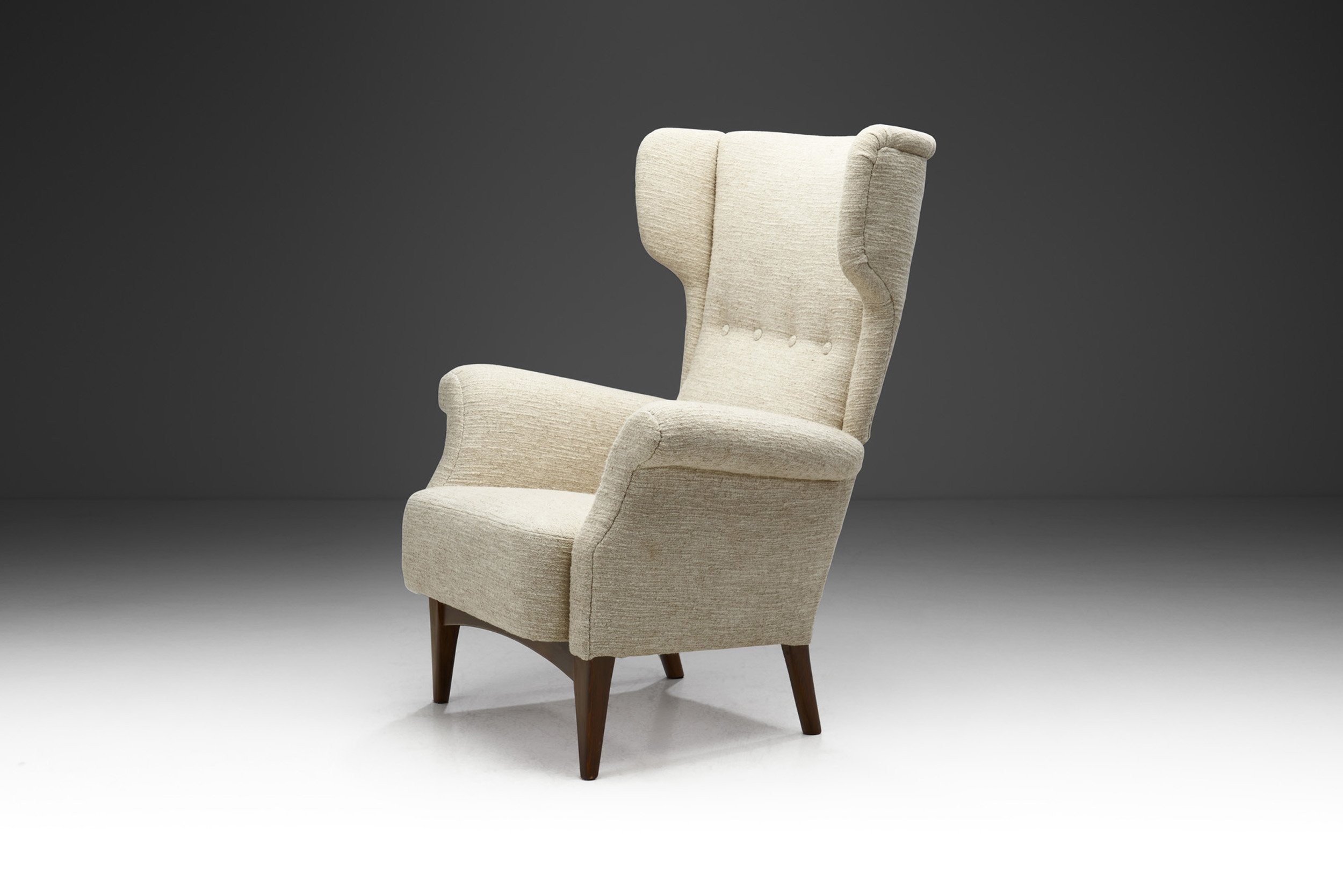
When Eva and Nils Koppel met, she was studying mathematics, and he was studying engineering. Together they studied architecture and worked in Alvar Aalto’s office. Their furniture pieces - such as this lovely wingback chair - with their organic shapes, architectural structure, and cosy upholstery, are very representative of Scandinavian design.
This rare model has the best characteristics of Danish mid-century modern design. Its comfort and stylish design elements make this chair an especially distinctive work of Eva and Nils Koppel. The design revolves around the tiered profile, starting from the “wings” on the top, followed by the arms and sides of the seat in a stair-like gradation, creating a continuous and flowing line. The round edges contribute to the soft and cosy impression of the design, which is complimented by the unique legs that appear to gently clasp the body. The back legs are slightly tilted to support the lightly elevated seat. The dark stained, slightly tapered wooden legs pair beautifully with the light coloured fabric of the upholstery. The tufted buttons arranged in three lines enhance the wingback shape of the back, while the pairing of materials and colours gives an elegant, yet understated look to this Koppel model.
The Danish design idiom was centred on warm woods, quality fabrics and gentle yet robust support for the spine - qualities that engender contentment and well-being, a defining characteristic of Danish culture. The Koppels’ exceptional architectural talent is evident even in this model 781 easy chair, which is outstanding not only in the couple’s repertoire, but also among mid-century Danish easy chairs.
Condition:
In good vintage condition. The chair has been reupholstered recently in a premium fabric. Each of our items can be re-upholstered by our in-house atelier in a fabric of choice. Please reach out for more information.
Dimensions:
28.34 in W x 30.9 in D x 39.17 in H; Seat height 17.91 in; Arm height 23.22 in
72 cm W x 78.5 cm D x 99.5 cm H; Seat height 45.5 cm; Arm height 59 cm
About the designer:
Eva Koppel, born Eva Ditlevsen (1916-2006) and Nils Adolf Koppel (1914-2009) were a Danish functionalist architect couple who characterized the post-war era and the public building of the welfare society.
Nils and Eva Koppel met during their shared lectures at the Danish Polytechnic Teaching Institute in 1935, where Eva studied mathematics and Nils studied engineering. The same year, they applied to the Academy of the Arts' School of Architecture, where they were both admitted. The year after, in 1936, they got married.
During their studies between 1938 and 1939, they worked together in Finland at Alvar Aalto's design studio. In 1940, they had their first child and the following year they both graduated from the School of Architecture. Since Nils Koppel's father was Jewish, in 1943 they had to flee because of the Jewish persecution. They fled to Finland and resumed working at Aalto's design studio. In the years following the war, the couple designed a number of single-family homes, and set up a home of their own in 1946. Initially, they erected houses for family and friends, designed wallpaper, chairs, watches, light fixtures, and other art-industrial objects.
In 1954, their joint studio won the architectural competition for the Langelinie Pavilion, which was erected in 1958 and has been preserved. The pavilion's rigorous shape, slim profiles and its design as a 'floating' box are indebted to Ludwig Mies van der Rohe's school and the international style. The couple got their first big task in 1954 via family relations: The settlement Søllerød Park. Their house design managed to preserve the scenic parkland, and is now one of the great architectural classics for this time period.
The Koppel couple has received numerous awards and honours, including: The Wood Prize 1960, the Natural Stone Prize 1966 and the Eckersberg Medal 1955. Nils Koppel was also awarded the Knud V. Engelhardt Scholarship in 1951. ~H.
REQUEST PRICE HERE
Price category: 5,000 - 7,500 usd / eur
Throughout Scandinavia, there's a long history of pride in craftsmanship which is especially true of Denmark and one of its most reputable furniture makers Fritz Hansen. This beautiful wingback chair is an exceptional flagbearer of Danish Mid-Century Modernism with an immediately recognizable look.
When the Copenhagen-based furniture maker Fritz Hansen opened for business more than 140 years ago, the company adhered to the traditional, time-honoured Danish values of craftsmanship in woodworking and joinery. Yet thanks to the postwar innovations of Arne Jacobsen and others, Fritz Hansen would become the country’s leader in Scandinavian modern design using new, forward-looking materials and methods. This model 8023 wingback chair is a great representation of this sentiment. It has a distinctive design that is sometimes referred to as a “hammer” style. The curving wings on the back and on the armrests define the look. As the wings on the back curve inwards, while the ones on the arms curve outwards, there is a great balance that makes the chair look open and cosy. The bouclé upholstery elevates these curves even further, while the elaborate front legs and simpler, tapered back legs made of solid wood add traditional organicity to the design. Danish modernist furniture designs, such as this wingback chair, became known for their sober character and undecorated elegance. Accordingly, the main decorative element is the design itself, aided by quality materials and craftsmanship.
This model was first seen in Fritz Hansen's 1951 catalogue. Fritz Hansen started his company in 1872, and have become the manufacturer of some of the most emblematic chairs of the mid-20th-century. Like this model, beautifully crafted, functional designs characterize their work that are both timeless and timely.
Condition:
In good vintage condition. Wear consistent with age and use. The chair has been reupholstered recently in a premium bouclé fabric. Each of our items can be re-upholstered by our in-house atelier in a fabric of choice. Please reach out for more information.
Dimensions:
28.15 in W x 36.42 in D x 42.91 in H; Seat height 17.72 in; Arm height 24.41 in
71.5 W x 92.5 cm D x 109 cm H; Seat height 45 cm; Arm height 62 cm
About the designer:
Fritz Hansen started his company in 1872, specializing in the manufacture of small furniture parts. In 1915, the firm became the first in Denmark to make chairs using steam-bent wood (a technique most familiar from birch used in the ubiquitous café chairs by Austrian maker Thonet). At the time, Fritz Hansen was best known for seating that featured curved legs and curlicue splats and referenced 18th-century Chippendale designs.
In the next few decades, the company promoted simple, plain chairs with slatted backs and cane or rush seats designed by such proto-modernist masters as Kaare Klint and Søren Hansen. Still, the most aesthetically striking piece Fritz Hansen produced in the first half of the 20th century was arguably the China chair of 1944 by Hans Wegner. Everything changed in 1952 with Arne Jacobsen’s Ant chair which was the breakthrough. Its silhouette suggests the shape of the insect’s body, and the lightweight, stackable chair and its biomorphic form became an international hit.
The Egg and Swan chair models led Fritz Hansen to fully embrace new man-made materials, like foam, plastic and steel wire used to realize the avant-garde creations of later generations of designers with whom the firm collaborated, such as Piet Hein, Jørn Utzon (the architect of the Sydney Opera House) and Verner Panton. If the Fritz Hansen of 1872 would not now recognize his company, today’s connoisseurs certainly do.
REQUEST PRICE HERE
Pricecategory: 5,000 - 7,500 usd / eur
The simple and refined aesthetic of this chair stems from Ole Wanscher’s reinvention of classic forms, for which he became a key-player of the Danish mid-century movement.
In this model, Wanscher combined fully and equally his design talents with that of a master craftsman (Fritz Hansen). In particular, his sensitivity to the delicacy of wood enabled him to bring organic life and a rich sense of the past to the indelibly modern spareness of Mid-Century Modernism. The handcrafted solid wood frame is reupholstered in a premium wool blend fabric. The stained beech legs follow the curves of the chair, which is especially visible in the gently curved back legs. The high back is flared, giving the chair an elegant, slender look.
This Danish modern chair – despite its name – in many ways transcends the word ‘modern’. It has a style that can be incorporated successfully into contemporary and traditional interiors, urban and country alike, lending itself to a timeless and universal appeal.
Condition:
In good vintage condition. The chair has been recently reupholstered in a premium fabric. Each of our items can be re-upholstered by our in-house atelier in a fabric of choice. Please reach out for more information.
Dimensions:
27.56 in W x 31.5 in D x 44.49 in H; Seat height 19.29 in
70 cm W x 80 cm D x 113 cm H; Seat height 49 cm
About the designer:
Ole Wanscher (1903-1985) was an architect-designer and professor, and is known today as one of the leading figures in the Scandinavian Design movement.
Wanscher studied at the Danish School of Art and Design, and was highly influenced by his professor, Kaare Klint. After graduation, Wanscher worked with Klint between 1924 and 1927, then set up his first own office, specialising in furniture design. By the end of the 1940s, Wanscher made a name for himself for his quality designs. As the Danish newspaper Politiken put it: “'Owning a Wanscher-chair is an adventure every day, and will be so even several hundred years from now, for this is how long it lasts”.
In the 1950s, Wanscher left his private firm to begin an association with P. Jeppesens Mobelfabrik A/S that would last for the rest of his professional life. Ole Wanscher's work has remained sought after by furniture collectors thanks to his designs that are most-often described as "delicate", "elegant", and "orderly". Today, Wanscher’s pieces are considered to be modern classics and are still adored for their detail and the designer’s deep respect for materials. ~H.
REQUEST PRICE HERE
Price category: 2,500 - 5,000 usd / eur
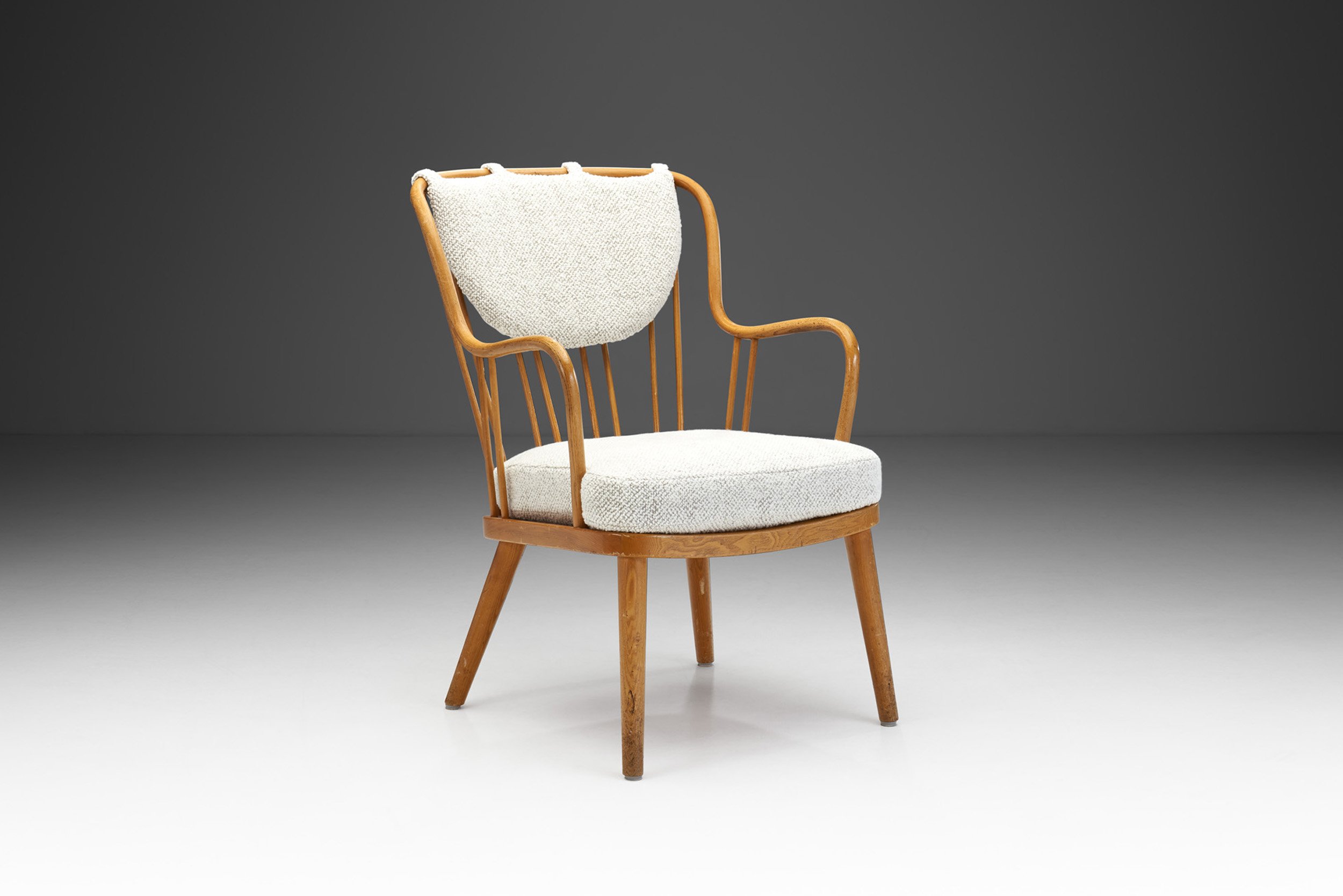
Known as “the Lounge Chair” or as model 1774, this armchair was originally designed by Aage Herman Olsen in 1945 and is the Danish designer’s most well-known creation.
The model’s nickname might be misleading, as this nowadays chairs like this are hardly referred to as “lounge chairs”. The name may imply that this model was considered so comfortable, that the name simply stuck with it. Lounge chairs are used for lounging and leisure, not for work or productivity. This chair was certainly designed and created with comfort in mind; the splayed legs, tilted back and round, curved armrests all an in favour of the sitter’s comfort. At the same time, the functional elements are also visually appealing as it can be expected from mid-century design. The back is composed of thin spindles and attached to the top rail is the back cushion that covers the upper half of the back. It is a small, but important detail that the spindles in the lower part are left uncovered, as they keep the design airy and light by balancing out the tapered legs’ thickness. The ash wood’s beautiful colour is complemented by the light bouclé upholstery the seat and back cushions are covered in.
This chair was manufactured by Fritz Hansen, however it is commonly misattributed to the Swedish company, Kocks Snickerifabrik in Trelleborg. This “Model 1774” is featured in ‘300 danske designmøbler’ or “300 Danish Design Furniture” by Per H. Hansen, Klaus Petersen. Fritz Hansen, established in 1872, is perhaps still the most well-known Danish manufacturer to date, and for a good reason. The cabinetmaker company produced many of the most famous chairs of Scandinavian design history
Condition:
In good vintage condition. Wear consistent with age and use. Some minor scratches and marks on the wood. The chair has been reupholstered recently in premium bouclé fabric.
Dimensions:
18.3 in W x 26.37 in D x 34.25 in H; Seat height 16.92 in
46.5 cm W x 67 cm D x 87 cm H; Seat height 43 cm
REQUEST PRICE HERE
Price category: 5,000 - 7,500 usd / eur
Ole Wanscher was one of the leading figures of 20th century Danish design. Trained as an architect and later a professor at the Royal Danish Academy of Fine Arts, Wanscher’s work is characterised by restraint, clarity, and a deep respect for craftsmanship. Makers like him believed that good furniture should feel appropriate in its proportions, neither excessive nor incomplete, and that belief is evident throughout his designs.
Model “1755” exemplifies this disciplined yet elegant approach. The chair’s back is composed of three gently undulating horizontal slats that introduce movement without disrupting the overall symmetry of the frame. These shaped rails provide ergonomic support while creating a subtle decorative rhythm across the backrest. The uprights are slightly tapered, lending lightness to the silhouette and preventing the form from feeling heavy. The arms extend from the back, curving forward in a subtle arc that supports the sitter while maintaining visual continuity with the backrest. Transitions and joinery are seamless and organic, demonstrating careful attention to structural flow. The legs are slender and proportioned with precision, connected by thin stretchers that reinforce stability without drawing attention away from the main lines. Every element feels considered, from the thickness of the rails to the spacing between slats, resulting in a chair that is visually calm yet structurally assured. The upholstered seat introduces a measured softness that balances the architectural clarity of the wooden frame. Its tailored form provides comfort while maintaining the light, refined character of the design.
Suitable for use at a dining table, desk, or as an occasional armchair, model “1755” reflects Wanscher’s enduring commitment to proportion, craftsmanship, and the thoughtful reinterpretation of historical furniture making within a modern context.
Condition:
In good vintage condition. Wear consistent with age and use. The chair has recently been reconditioned. Due to the nature and age of the wood, the chair may have some marks, scratches, and discolouration. The seat cushion was newly produced and upholstered in a premium fabric. Each of our items can be reupholstered by our in-house atelier in a fabric of choice. Please reach out for more information.
Dimensions:
24.60 in W x 26.37 in D x 33.85 in H; Seat height 17.12 in; Seat depth 19.68 in; Arm height 25.19 in
62.5 cm W x 67 cm D x 86 cm H; Seat height 43.5 cm; Seat depth 50 cm; Arm height 64 cm