
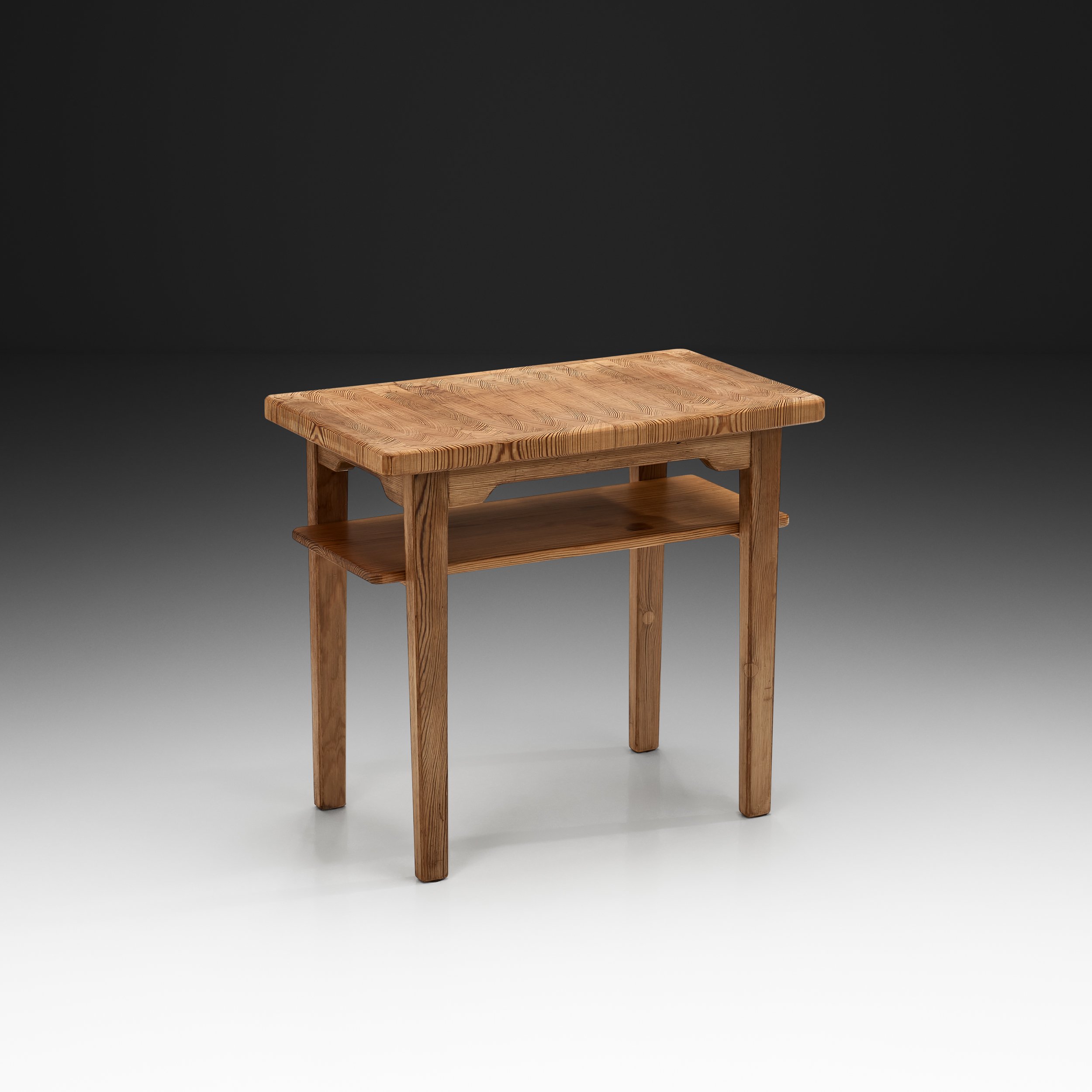
David Rosén "Berga" Pine Table for Nordiska Kompaniet, Sweden 1938


David Rosén "Berga" Pine Table for Nordiska Kompaniet, Sweden 1938
REQUEST PRICE HERE
Price category: 7,500 - 10,000 usd / eur
Swedish architect David Rosén worked alongside renowned designers such as Axel Einar Hjorth and Josef Frank at Nordiska Kompaniet (NK), one of Sweden’s most respected design houses. Rosén crafted this beautiful table for NK in 1938.
Made from pine, this table exudes a lovely charm and robust aesthetic that is characteristic of the era. In early 20th century design, the use of wood held a special significance; it was not merely a material choice, but a philosophy that emphasized the natural and organic over the ornate and extravagant. Moreover, in a rather distinctive way, softness and tradition merge in this coffee table. While it is elemental thanks to the solid pine and interesting construction, the roundness of its top and its elegantly sculpted base still provide a sense of gentleness. It is this well measured tension between the shapes that make the design eye-catching and infinitely interesting. Organic and natural materials often take pride of place in Swedish design, reflecting the Scandinavian and Nordic countries’ relationship to nature. The solid pine wood of this table is not overworked, its natural grain stands out and serves as ornamentation in itself. With minimalism comes timelessness, a guarantee that this coffee table will never go out of style.
With its strong and distinctive details, this table model is a perfect accent table, while also being capable to complement its surroundings. This piece could fit well in a modern interior, as well as in a minimalist or rustic space.
Condition:
In good vintage condition. Wear consistent with age and use.
Dimensions:
28.74 in W x 21.65 in D x 23.62 in H
73 cm W x 55 cm D x 60 cm H
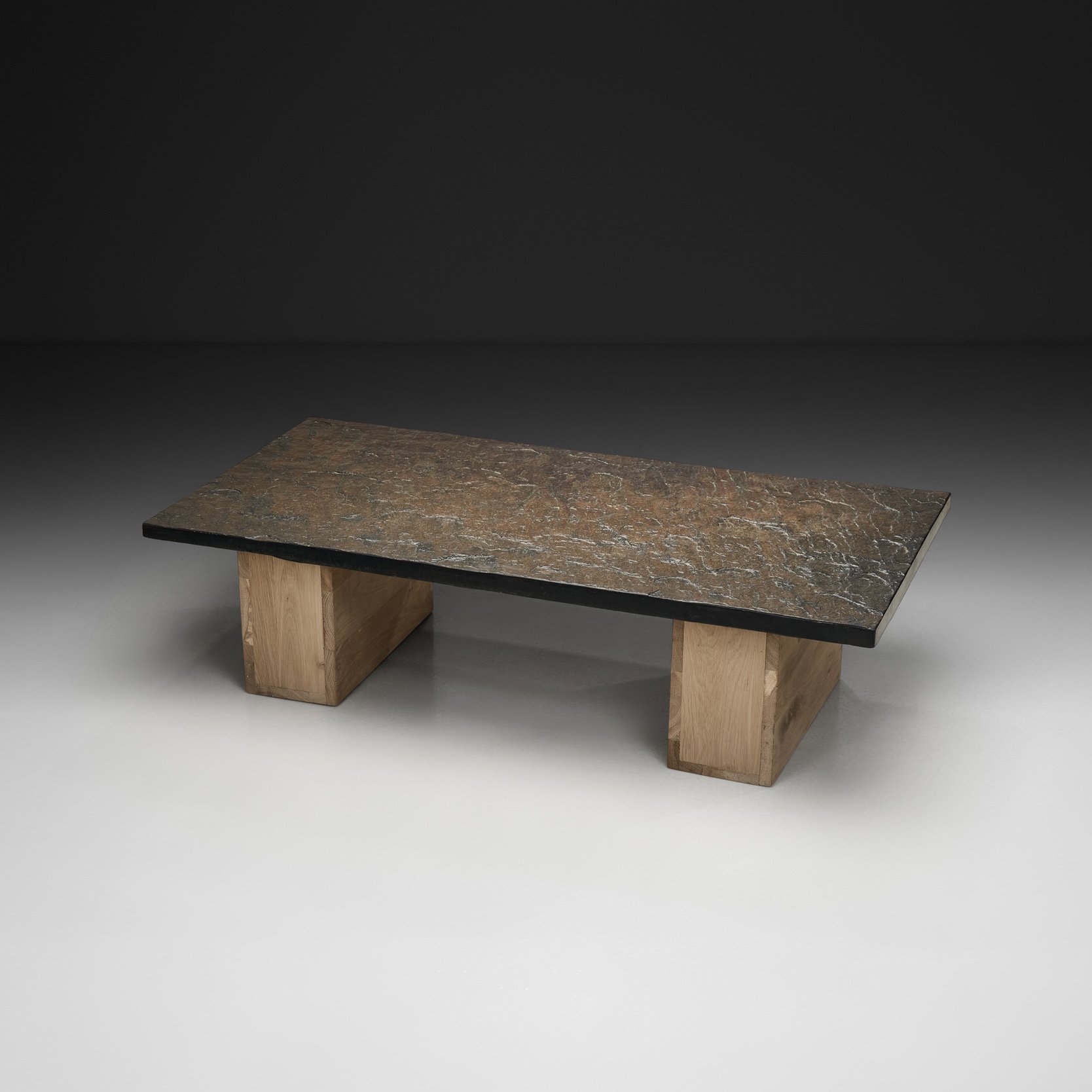
REQUEST PRICE HERE
Price category: 20,000 - 30,000 usd / eur
Adrien Audoux and Frida Minet were a French design duo who worked together during the 20th century. They were known for their innovative use of natural, sustainable materials, including rope, wicker, and bamboo. The duo’s work was heavily influenced by the Modernist movement, which sought to create functional and streamlined designs that were accessible to a wider audience.
Audoux & Minet’s pieces are characterised by a strong sense of craftsmanship, with each piece being handmade by the designers themselves or by skilled artisans. This dining table showcases a long rectangular top finished in warm wood veneer, its broad uninterrupted surface displays the grain. The top sits above thick base covered in a tightly woven natural fibre that introduces an immediate depth of tone and texture. The fibre flows across the supports in beautiful braided patterns, emphasising the bold and solid look. The rope is made into a geometric pattern which breaks up the woven surface to create a beautiful rhythm within the structure. The contrast of materials is central to the table’s character: the smooth, richly grained wooden top stands out against the coarse, rough and natural fibre below, allowing two very different surfaces to define the piece.
Today, Audoux and Minet's designs are highly sought after by collectors and are considered important examples of mid-century modern design. Furniture pieces like this table stand out through their unique textures, and their materials, as well as their classic charm.
Condition:
In good vintage condition. Wear consistent with age and use. The table has recently been reconditioned. Due to the nature and age of the material, the item has some marks and scratches on the tabletop. Additional imperfections like chips, dents or discolouration may be present.
Dimensions:
67.12 in W x 33.46 in D x 29.13 in H
170.5 cm W x 85 cm D x 74 cm H