
Asanao Uematsu Gemma Boutique Edition Bamboo and Wicker Chair, Japan 1960s (sold)


Asanao Uematsu Gemma Boutique Edition Bamboo and Wicker Chair, Japan 1960s (sold)
This very rare chair model was created around 1961 by Asanao Uematsu. The level of artistry of this chair might explain its rarity, as it is a design that was impossible to mass produce or even reproduce.
The quality of the handwoven wicker and bamboo makes this chair an outstanding example of woven furniture from the 1960s. This chair features a design that is without a pair. With its rounded edges and an airy feel, it has a gentle appearance that is as much a sculpture as it is a functional chair. The effortlessly flowing lines of the frame are visually striking, and paired with the organic materials, create understated elegance. From the masterful use of natural fibres, to the visible joinery techniques, the expert craftsmanship is very visible, especially in the elaborate weaving of the seat and the joinery techniques. The low, open design is very grounded, but the thin strips and legs keep it light. The cross stretchers connecting the legs add diagonal lines to the vertical and horizontal ones that dictate the top, which is a visually interesting and smart feature.
The ideals of Japanese culture are evident in the design, it is well-balanced, organic, and doesn’t aim for perfection. Instead, the natural qualities of the materials stand out along with the mastery of the craftsman. Metal screws are only used where strictly necessary, therefore the chair appears to be held together solely by its main materials. This is a truly one-of-a-kind piece, not just because of its rarity, but also because of its visual, material and technical qualities.
SOLD
Condition:
In good vintage condition. Wear consistent with age and use. Some minor scratches on the back and legs.
Dimensions:
43.5 in W x 33.46 in D x 23,81 in H; Seat height 16.14 in
110.5 cm W x 85 cm D x 60.5 cm H; Seat height 41 cm

REQUEST PRICE HERE
Price category: 2,500 - 5,000 usd / eur
In 1920, the term "Nieuwe Haagse School" was first mentioned by the architect C.J. Blaauw. And not in a positive way. Blaauw thought nothing of the latest developments in modern architecture. "Typical of The Hague" - that was how the designer spoke of the style. The movement blossomed between 1925 and 1940 and brought uniformity to the cityscape. The Hague School style is closely related to the Amsterdam School and the Bauhaus movement, but has more-so been influenced by Art Deco, and it drew a great deal of inspiration from Berlage's rationalism, the Arts and Crafts movement, and De Stijl.
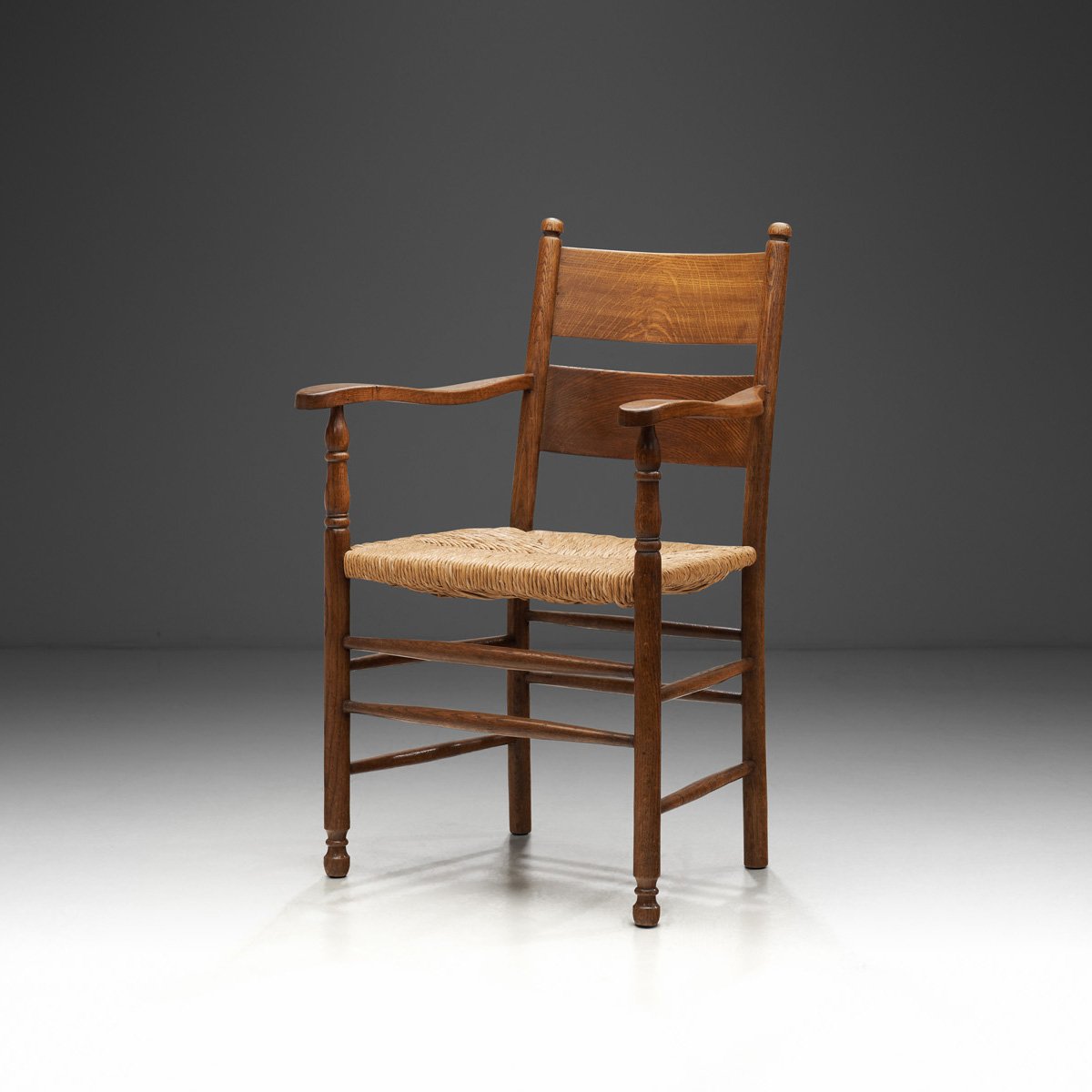
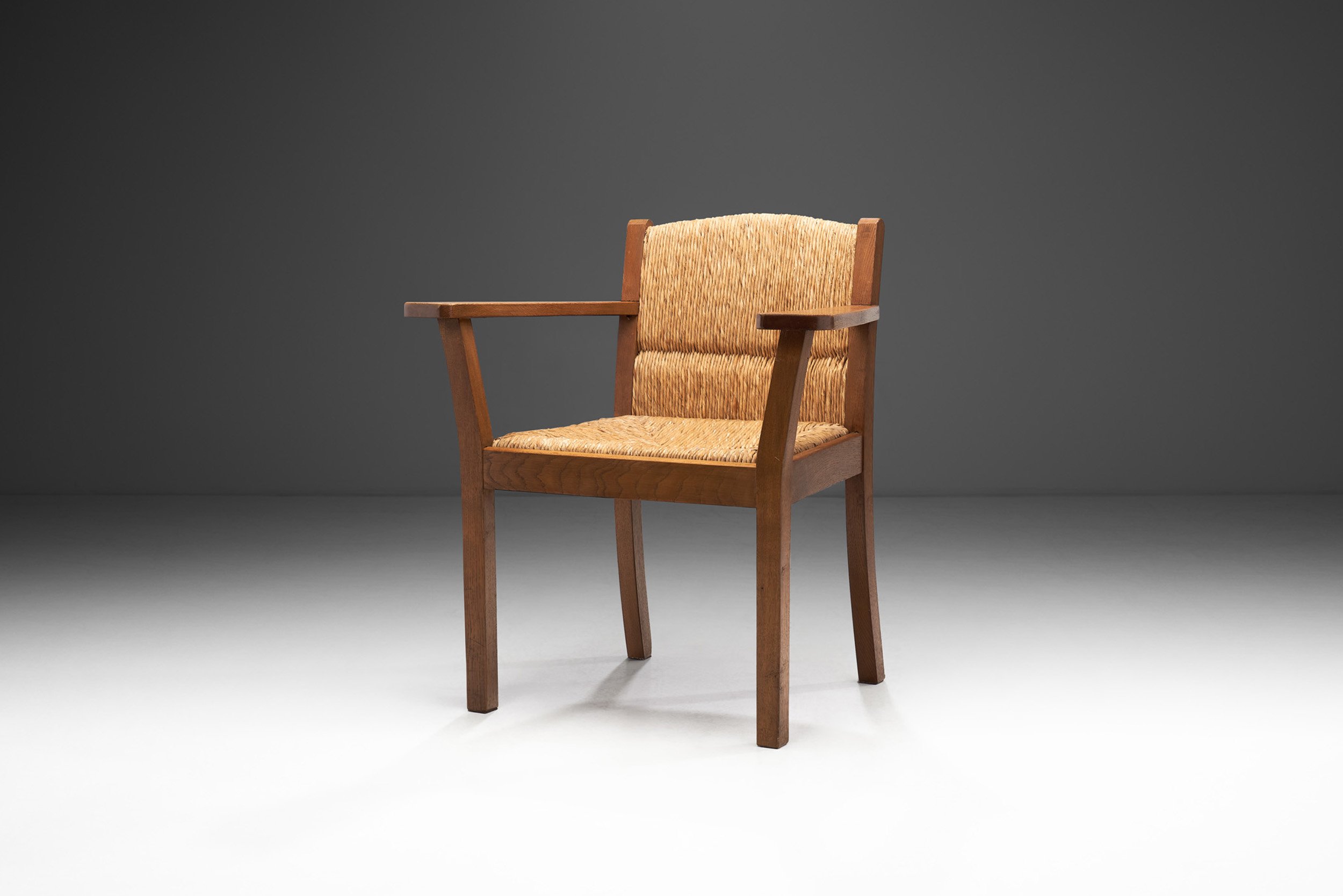
Standing as evidence of the reason many Dutch architects succeeded at the craft of furniture design; the precision of the structure is evident at first glance, showing great geometric order. Driven by function, the maker’s focus was evidently on practicality, structural stability, and a design in favour of these principles. The construction of this chair is traditional and robust - it features a solid yet graceful frame, crafted from a warm, rich wood, which highlights the natural grain of the material. The arms and backrests showcase a sense of airiness. This neat detail accentuates the high level of woodworking and creates an effortless look. The arms’ angles are aligned with the seats and backs’ angles, resulting in a harmonious look while also being ergonomic, with solid support for the spine. The sitting comfort is pleasant, further aided by the stability the sturdy wooden legs provide. The frame is complemented by the elegant rope seat woven tightly in the wood, with the material of the seat giving the piece a warm and cosy feel all while staying very functional. The chair’s simplicity and honest elegance makes it an exceptional piece of furniture.
Haagse School furniture wasn’t flashy but instead focused on being well-made and to fit a warm, comfortable and welcoming home. As this chair exemplifies, blending functionality, good quality natural materials and organic colours with excellent craftsmanship is the key to the success of this design period.
Condition:
In good vintage condition. Wear consistent with age and use. Item may have some marks, scratches, and discolouration.
Dimensions:
22.04 in W x 21.85 in D x 33.66 in H; Seat height 17.12 in; Seat depth 19.48 in; Arm height 26.57 in
56 cm W x 55.5 cm D x 85.5 cm H; Seat height 43.5 cm; Seat depth 49.5 cm; Arm height 67.5 cm