
Bas van Pelt (attr.) Armchair with Woven Rush Seat and Back for My Home, The Netherlands 1940s (sold)





Bas van Pelt (attr.) Armchair with Woven Rush Seat and Back for My Home, The Netherlands 1940s (sold)
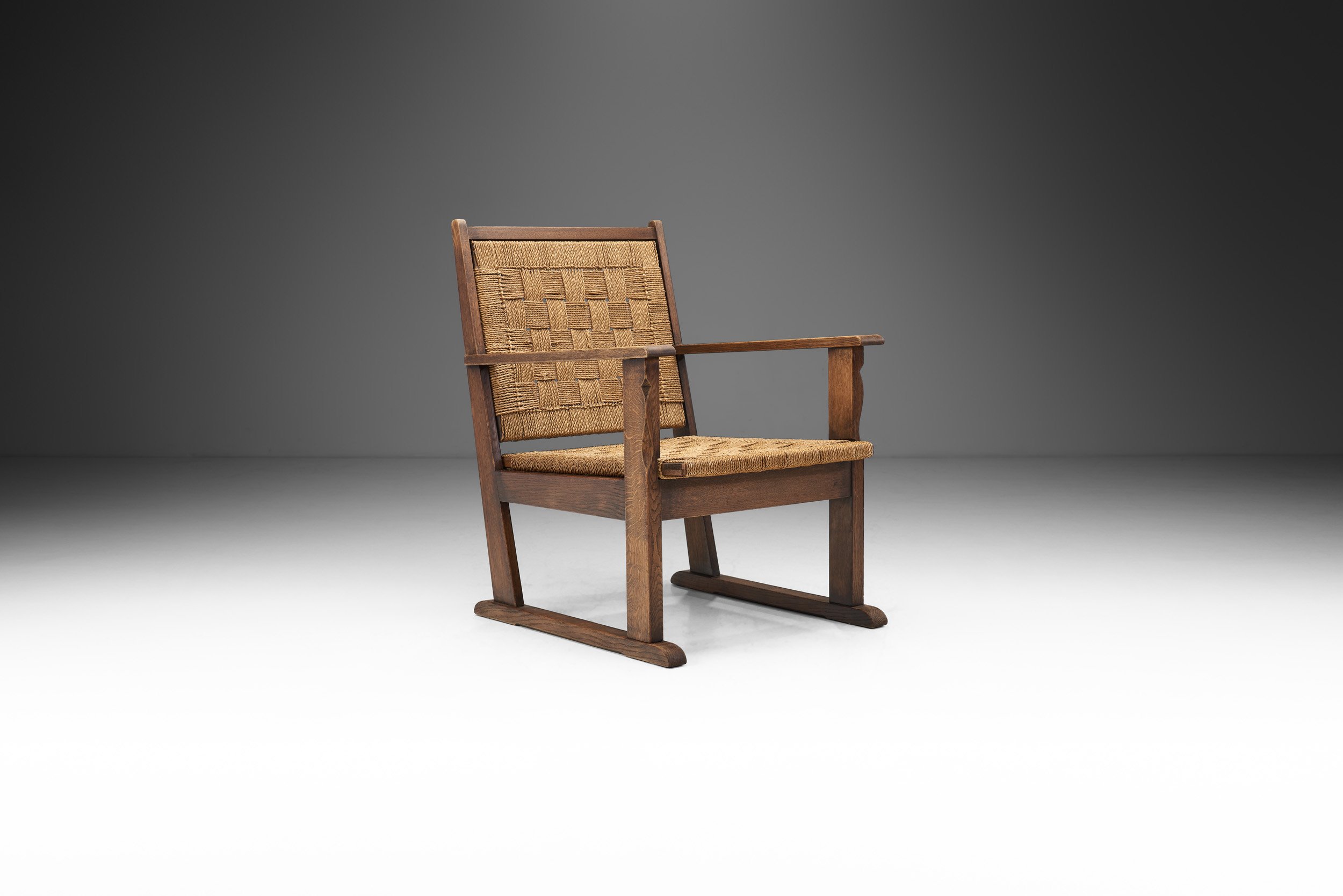
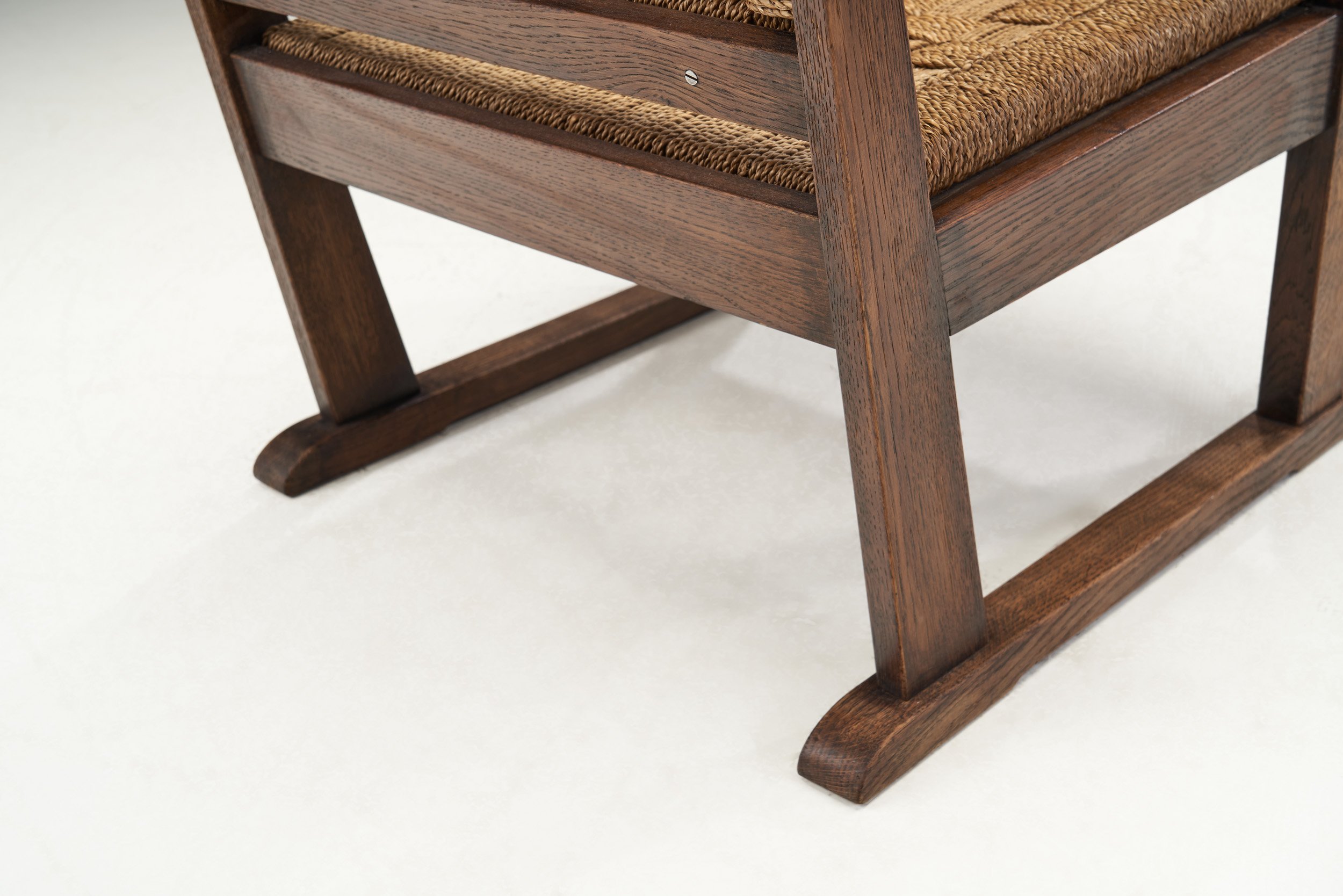
Bas van Pelt’s designs were only produced when an order was placed, which is still a tradition at “My Home Foundation” and explains the limited numbers of surviving models. This unique sled base armchair is one of these models, showing Bas van Pelt’s organic and modernist approach to design.
Chairs with such distinctive sled-shaped constructions immediately draw the eye to the distinctive base. This model however, relies not only on this design element, but also on the precisely sculpted arms and woven rush panels on the seat and backrest. While this armchair is from van Pelt’s more mature period, the design clearly shows the influence of preceding style eras including Art Deco and the Haagse School of design. The unique mix of the straight lines characterizing the latter movement and the more playful aesthetic of the former creates the overall impression of organic modernism. While made of solid wood, this armchair has an open feel to it thanks to the sleek lines. The subtle carvings on the front arms nicely contrast with the straight lines of the frame, and highlight the wonderful craftsmanship. The rush weaving on the back and seat creates textural interest, adding the appealing organic nature of the design. Thanks to the well-chosen proportions and the expert weaving technique, this armchair provides great, durable comfort.
Bas van Pelt’s progressive designs were, in many ways, ahead of his era. The Dordrecht-born designer’s furniture models, such as this sled chair, are quite rare, a few are preserved in the Stedelijk Museum Amsterdam for Modern Art, Contemporary Art, and Design.
SOLD
Condition:
In good vintage condition. Wear consistent with age and use. The wood has some minor marks and scratches.
Dimensions:
24.4 in W x 28.54 in D x 32.48 in H
62 cm W x 72.5 cm D x 82.5 cm H
About the Designer:
Bas Van Pelt (1900 Dordrecht (NL) - 1945 Sandbostel (DE)) was a well-known Dutch interior and furniture designer, known for the clarity and quality of his designs. His works created in the 1930s and 1940s are regarded for their progressive design and quality.
While he is most well-known for his chair designs, van Pelt was also active as an interior designer. He also designed fabrics for window coverings, rugs and carpets, seating and tables, as well as lighting crafted by the best craftsmen in the Netherlands. He worked with multiple manufacturers, including his own firm, Bas van Pelt / My Home and Verto Verenigde Touwfabrikien, where his tubular metal designs were produced. He opened ‘My Home’ in 1931, just before the onset of the great crisis in the midst of major changes in the last century. In the façade of the shop, in the lively centre of The Hague, there was one large window placed so that everyone could look inside and see how things were made, and could be done differently; in his view, modern furniture at the time was light and airy, transparent, made of tubular steel frame, combined with wood. This view was very progressive for the 1930s, when the influence of The Hague School was still dominating most designers.
Unfortunately, in 1940 WWII changed the life of Bas van Pelt as well, who was on the board of the Haagse Kunstkring, where discussions about reconstruction after the war took place. Sadly, Bas van Pelt did not live to see it. He was deported because he gave people in hiding a safe place, saving many lives. While there is very limited information about his life and work, his furniture designs have become collectibles in the past decades that are also found in Dutch museums. Bas van Pelt is remembered as a progressive designer and as a man who saved lives. ~H.


REQUEST PRICE HERE
Price category: 2,500 - 5,000 usd / eur
In 1920, the term "Nieuwe Haagse School" was first mentioned by the architect C.J. Blaauw. And not in a positive way. Blaauw thought nothing of the latest developments in modern architecture. "Typical of The Hague" - that was how the designer spoke of the style. The movement blossomed between 1925 and 1940 and brought uniformity to the cityscape. The Hague School style is closely related to the Amsterdam School and the Bauhaus movement, but has more-so been influenced by Art Deco, and it drew a great deal of inspiration from Berlage's rationalism, the Arts and Crafts movement, and De Stijl.
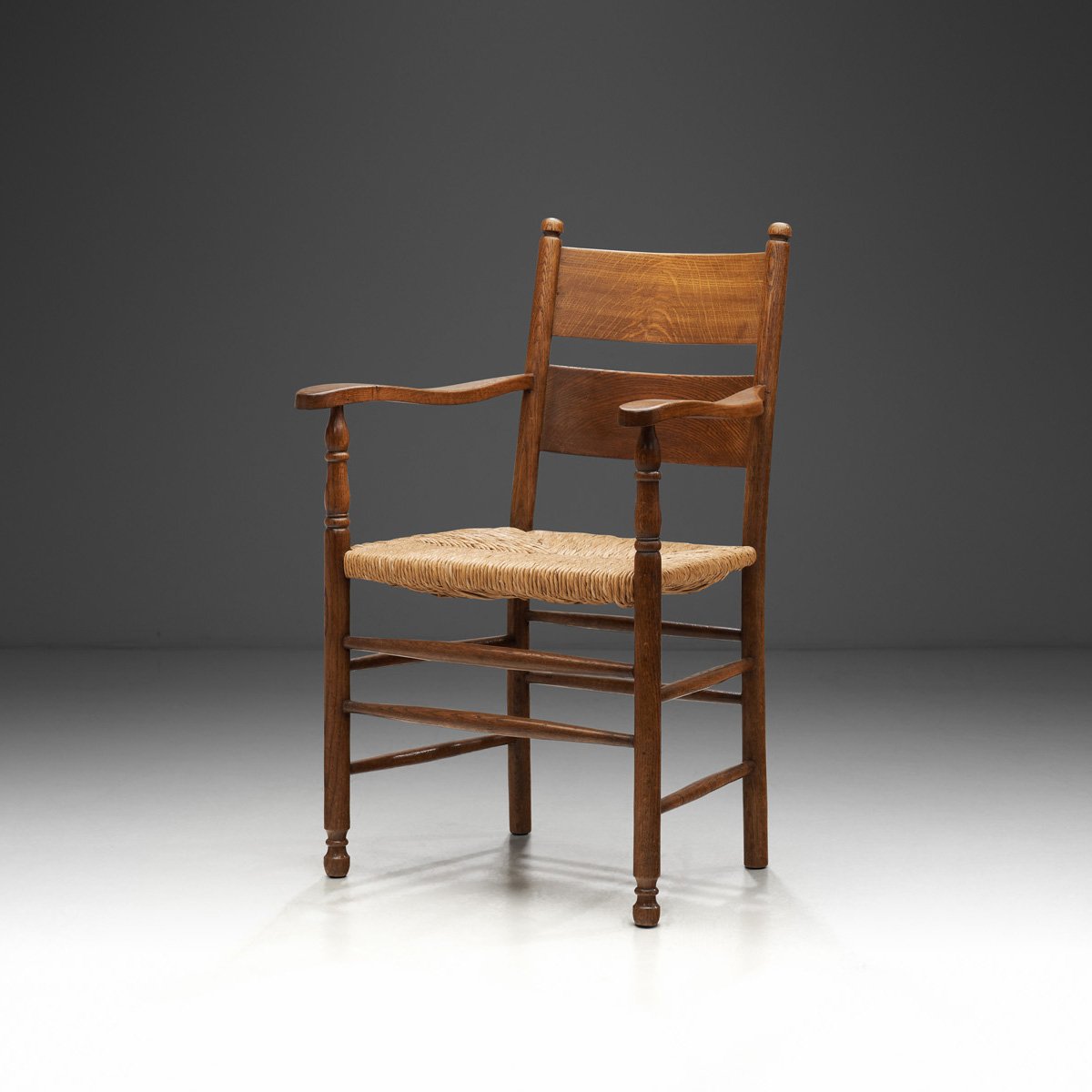
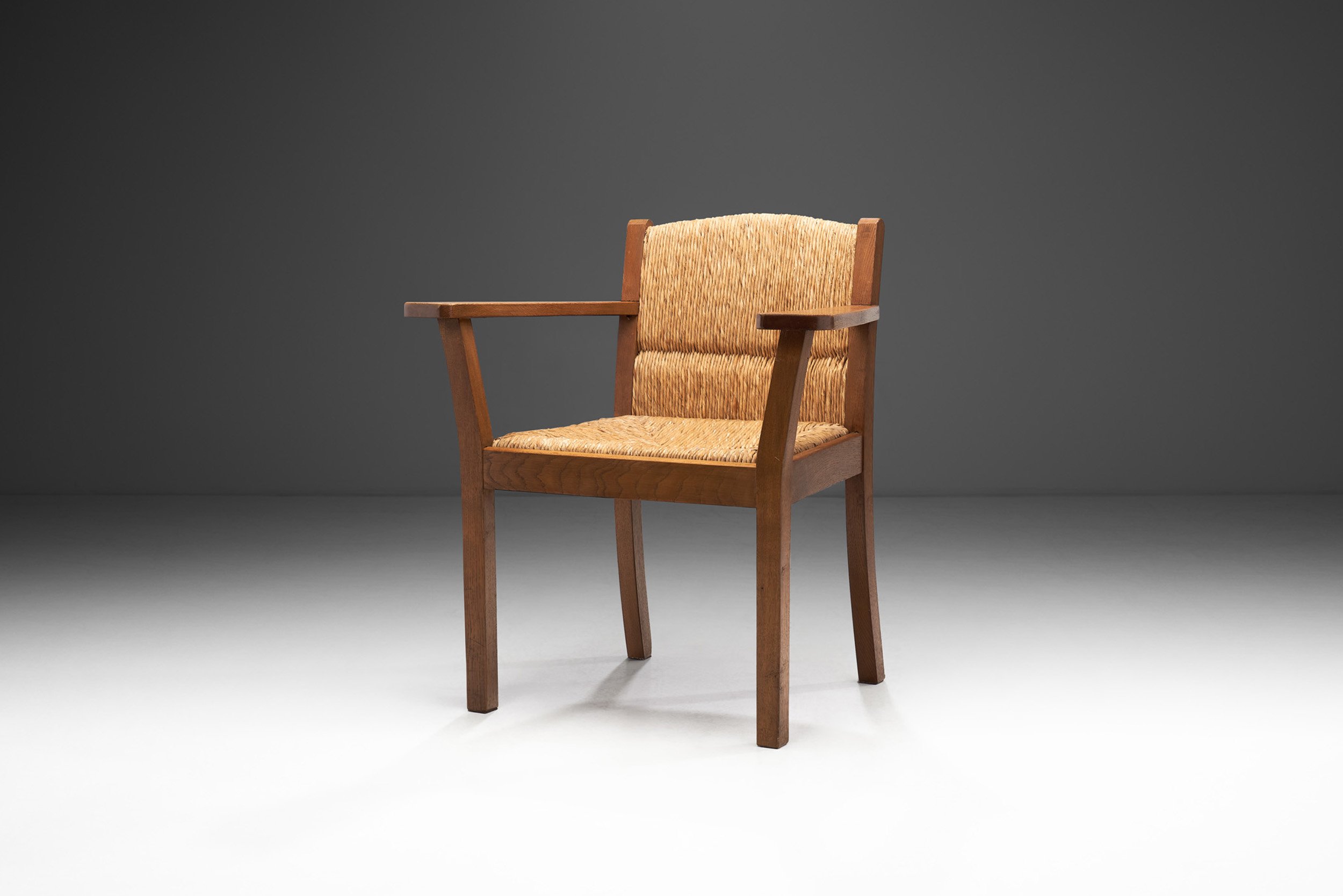
Standing as evidence of the reason many Dutch architects succeeded at the craft of furniture design; the precision of the structure is evident at first glance, showing great geometric order. Driven by function, the maker’s focus was evidently on practicality, structural stability, and a design in favour of these principles. The construction of this chair is traditional and robust - it features a solid yet graceful frame, crafted from a warm, rich wood, which highlights the natural grain of the material. The arms and backrests showcase a sense of airiness. This neat detail accentuates the high level of woodworking and creates an effortless look. The arms’ angles are aligned with the seats and backs’ angles, resulting in a harmonious look while also being ergonomic, with solid support for the spine. The sitting comfort is pleasant, further aided by the stability the sturdy wooden legs provide. The frame is complemented by the elegant rope seat woven tightly in the wood, with the material of the seat giving the piece a warm and cosy feel all while staying very functional. The chair’s simplicity and honest elegance makes it an exceptional piece of furniture.
Haagse School furniture wasn’t flashy but instead focused on being well-made and to fit a warm, comfortable and welcoming home. As this chair exemplifies, blending functionality, good quality natural materials and organic colours with excellent craftsmanship is the key to the success of this design period.
Condition:
In good vintage condition. Wear consistent with age and use. Item may have some marks, scratches, and discolouration.
Dimensions:
22.04 in W x 21.85 in D x 33.66 in H; Seat height 17.12 in; Seat depth 19.48 in; Arm height 26.57 in
56 cm W x 55.5 cm D x 85.5 cm H; Seat height 43.5 cm; Seat depth 49.5 cm; Arm height 67.5 cm