
European Solid Wood Oval Coffee Table, Europe ca 1950s (sold)






European Solid Wood Oval Coffee Table, Europe ca 1950s (sold)
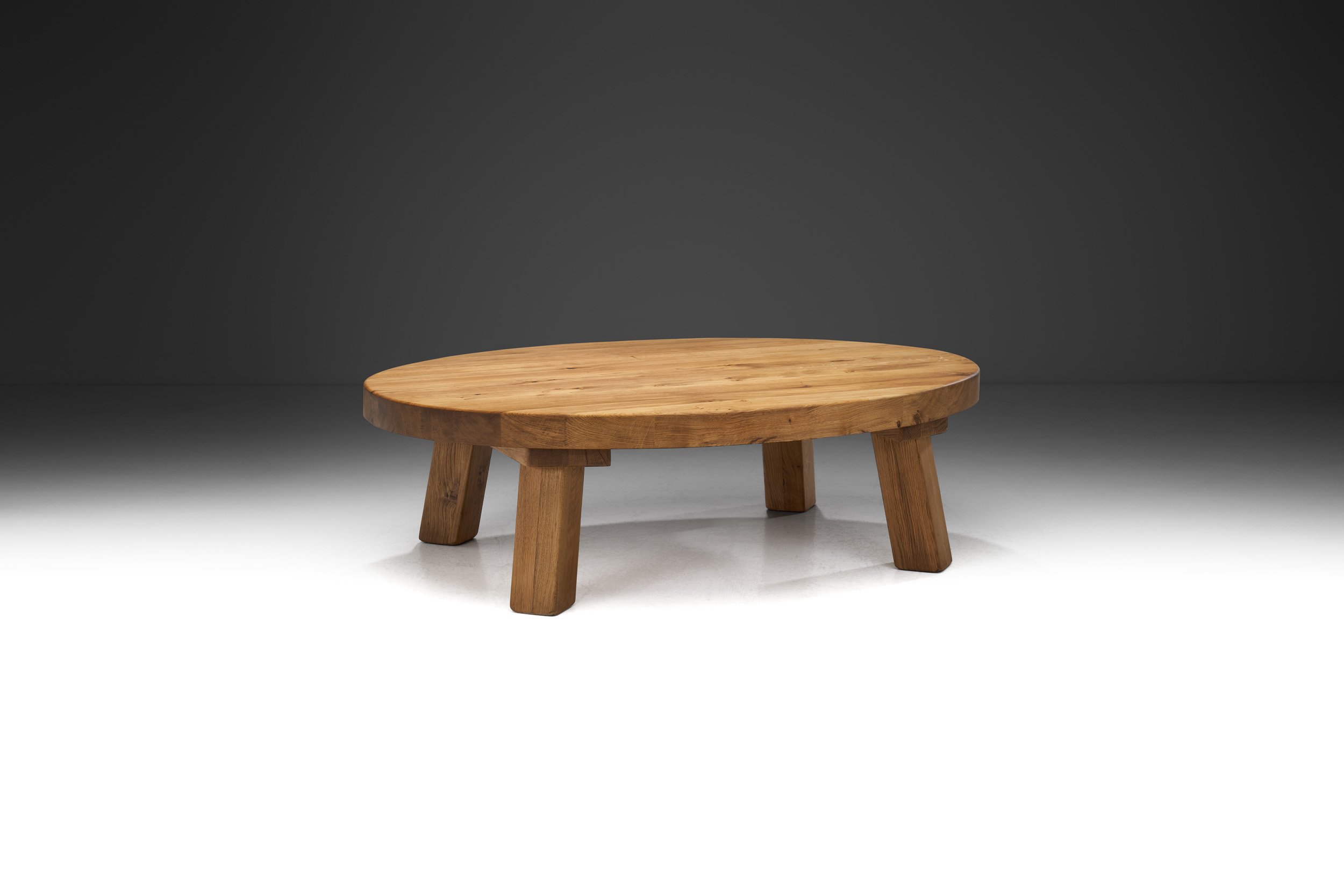
Like in Scandinavia, there was an early emphasis on wood in most European mid-century design as it connected everyday objects, such as furniture to nature. This robust, solid wood coffee table is a perfect example of this sentiment, and the visual benefits of an understated, organic design.
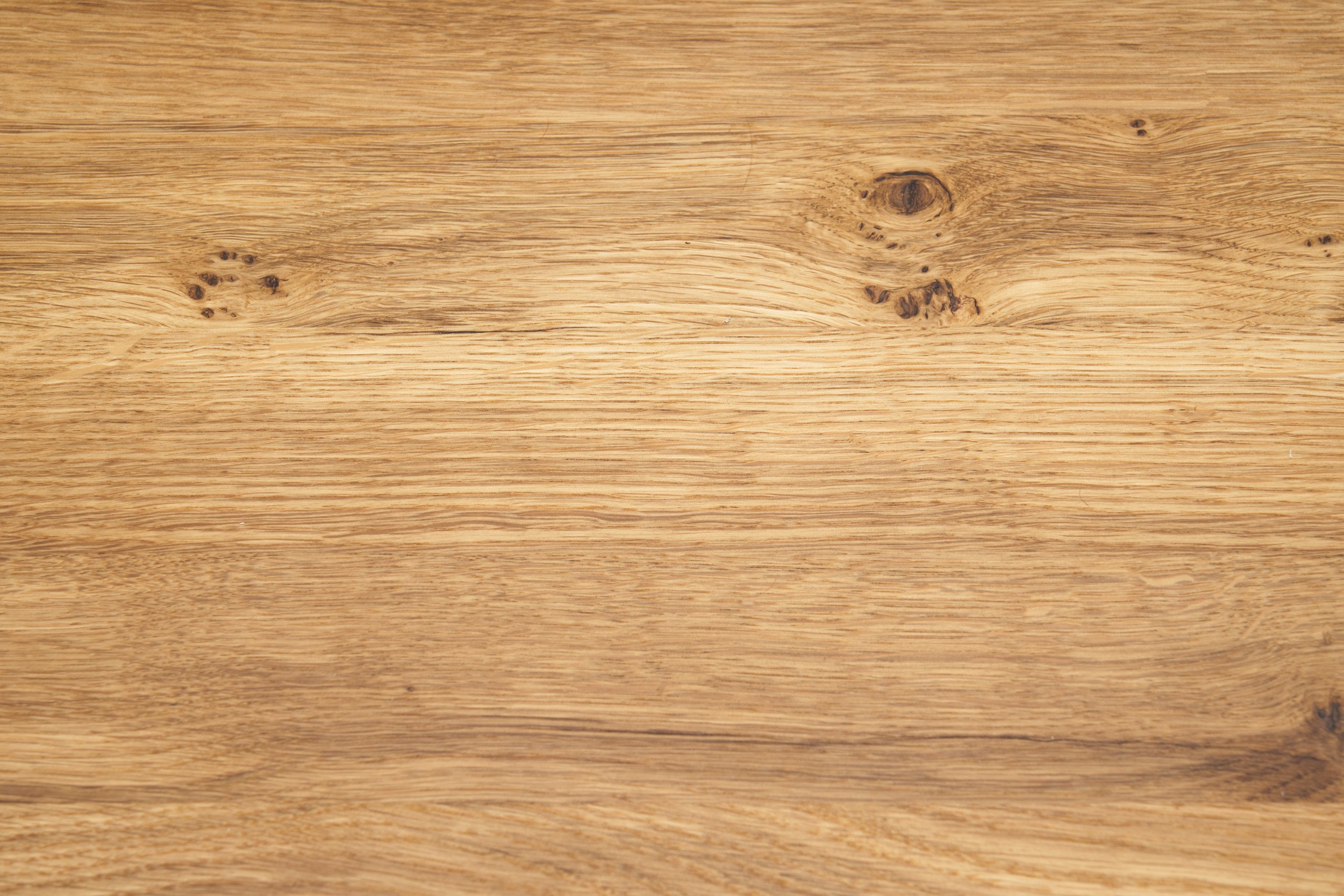
This coffee table follows the fundamental mid-century design principles both aesthetically and technically; the simple design serves the purpose of showing the understated beauty of natural materials and their endless possibilities under the hands of an expert craftsman. The design is pared-down and uncluttered with unnecessary ornament. Instead, this table has a strong elemental feel to it, which is a result of its thick oval top and sturdy block legs. The focus is entirely on the material, letting the beautiful qualities of the wood stand out. Because of this, it is not overworked, its raw surface and joinery technique are kept simple to show off the beautiful grain and diverse patterns. Furthermore, the naturally occurring marks and cracks elevate the rustic look, while the height perfectly balances out the thickness of the legs.
The imperfections of the wood and the simple, organic design makes this table stand out with an elemental edge. Its light colour makes it easy to adapt to almost any interior to either complement a space, or to stand as an accent piece.
SOLD
Condition:
The table is in restored condition.
Dimensions:
52.36 in W x 38.58 in D x 15.74 in H
133 cm W x 98 cm D x 40 cm H

REQUEST PRICE HERE
Price category: 40,000 - 50,000 usd / eur
This peculiar “T22” table model is also referred to as the “Eye”. While the name needs no further explanation, the ingenious design certainly does. Pierre Chapo always paired his creative and elegant designs with impeccable craftsmanship that gained him worldwide fame and love.
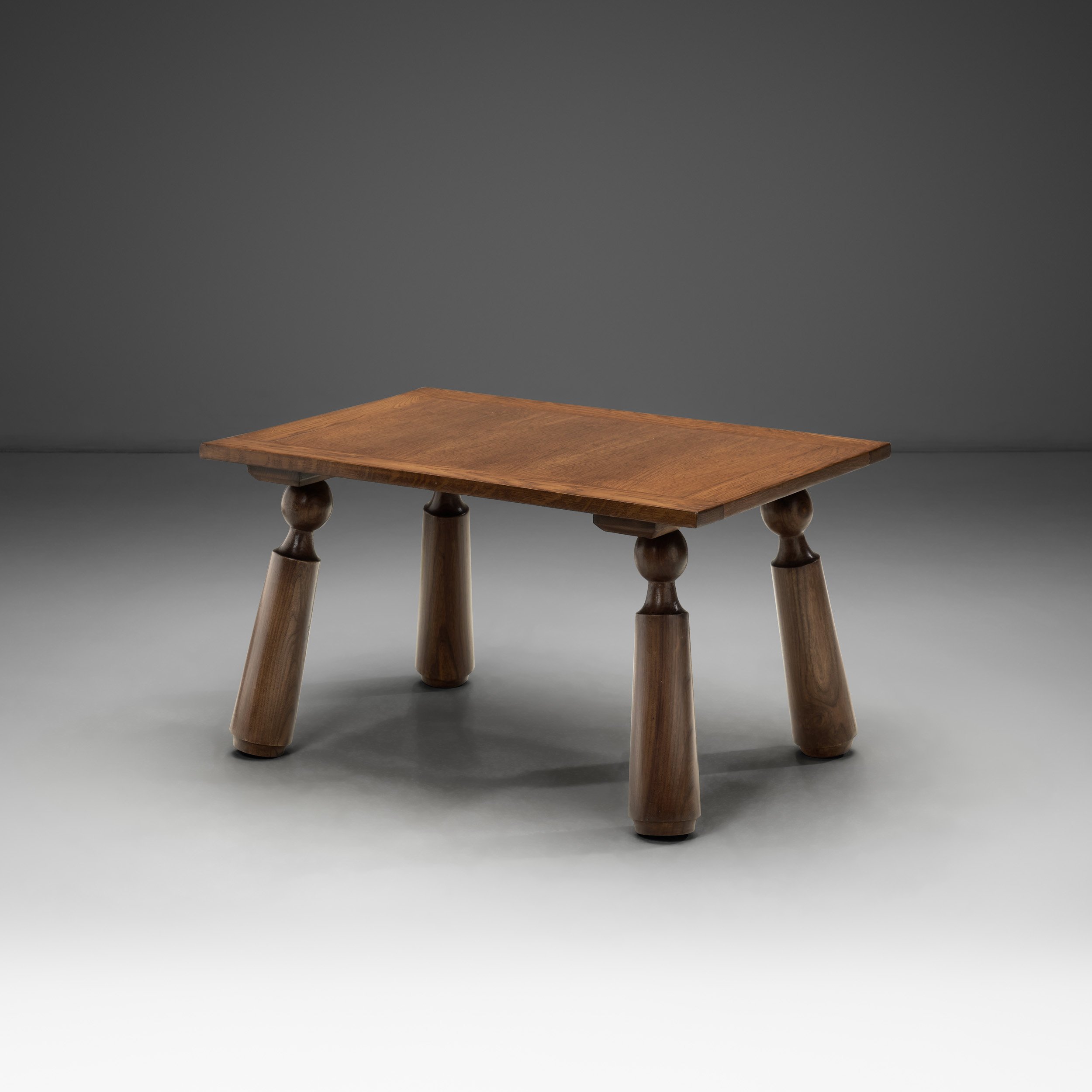
The “T22” is formed by two arcs, each resting on three cylindrical leg and a central oval module attached to one of the arcs by a sliding system. Placed together, the design forms an “eye”. Not a lot of designs receive a nickname by which they are immediately recognised, but this table is one of those. With its distinctive structure, it epitomises Chapo's research for new systems of joinery, in which the material and the design would be the lead factors in achieving stability, durability, and of course, an aesthetically pleasing outcome. Here, the smaller middle module can be adjusted or removed freely, allowing the table’s modules to be arranged in a variety of ways, for example, it can also be arranged to form a long undulating console. The immense functionality is accompanied by Chapo’s precise joinery techniques and woodworking. Pierre Chapo worked largely in elm wood and has a couple of signature design elements like the visible spline joint and the cylindrical legs as seen here as well. The solid elm has a stunning grain and various patterns that especially stand out on the curvatures of the table.
Chapo’s organic approach to arts and crafts and both designers resisted the stark industrial look that was dominant in the post-war period under the influence of socialism. This coffee table is undoubtedly an emblematic model of post-war French decorative arts and design.
Condition:
In good vintage condition. Wear consistent with age and use. Some small marks. The elm wood has a beautiful patina. Due to the nature and age of the material, the item may have some additional scratches, and discolouration.
Dimensions:
69.48 in W x 51.18 in D x 12.99 in H
176.5 cm W x 130 cm D x 33 cm H
About the designer:
Pierre Chapo, born in Paris in July 1927, was initially interested in becoming a professional painter. However, after a chance meeting with a shipbuilder who introduced him to wood and wood crafts, Chapo changed his focus and decided to study architectural studies at the prestigious École Nationale Supérieure des Beaux-Arts in Paris.
After graduation, Chapo and his wife, the sculptor, and painter Nicole Lormier, started to travel extensively through Scandinavia and Central America. Among the many places the couple visited was the home and studio of Frank Lloyd Wright in Taliesin West. A visit that had a lasting influence on Chapo’s future work and designs. Read more about Pierre Chapo. ~H.