
Rustic Solid Wood Naga Coffee Table, India early 20th century (sold)





Rustic Solid Wood Naga Coffee Table, India early 20th century (sold)
Naga coffee tables are a fusion of artistry and functionality. Handcrafted with utmost care, these unique pieces become a captivating centrepiece that adds a touch of cultural richness to any living space. The aesthetic is a harmonious blend of tradition and modernity with a rich history and plenty of beauty.
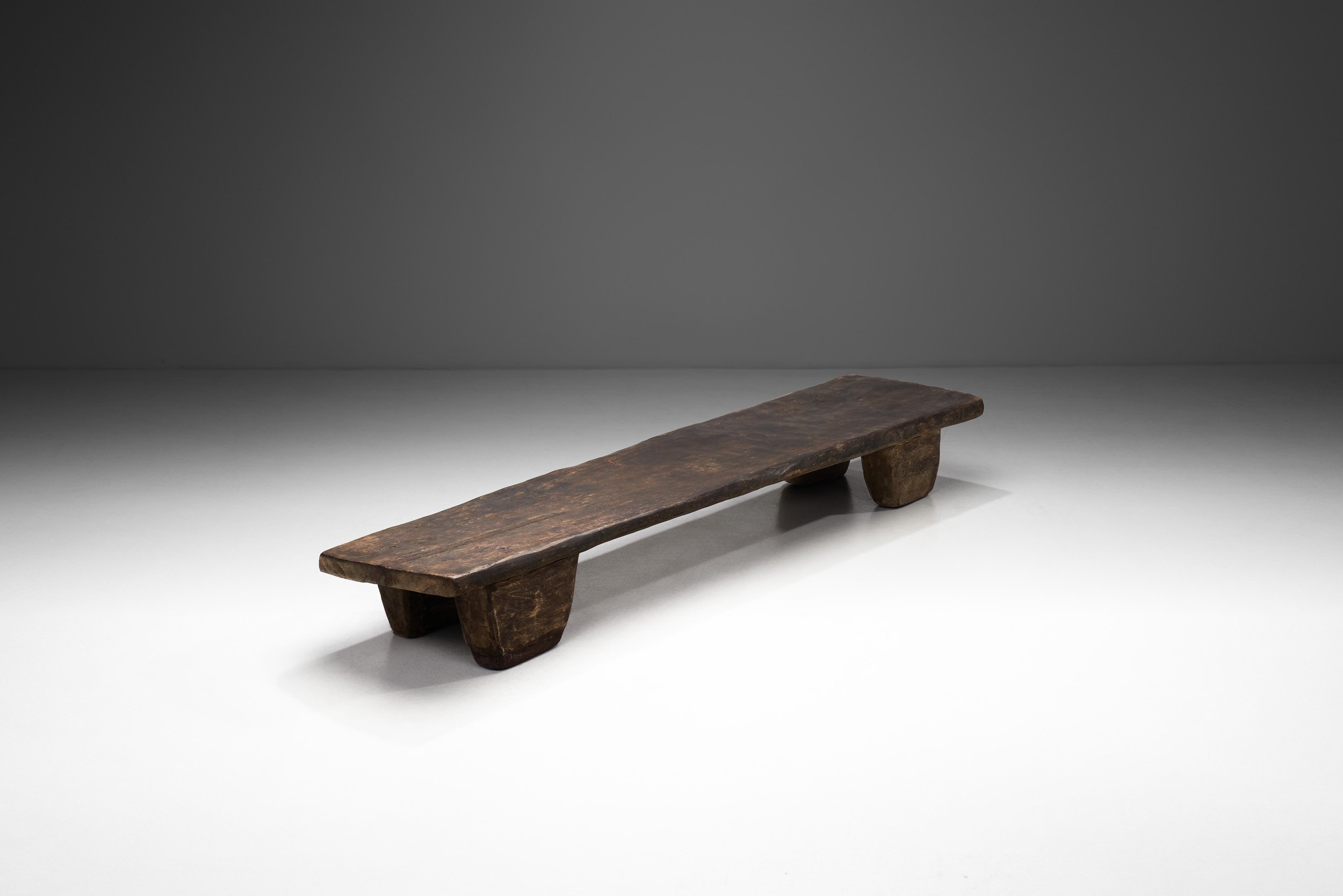
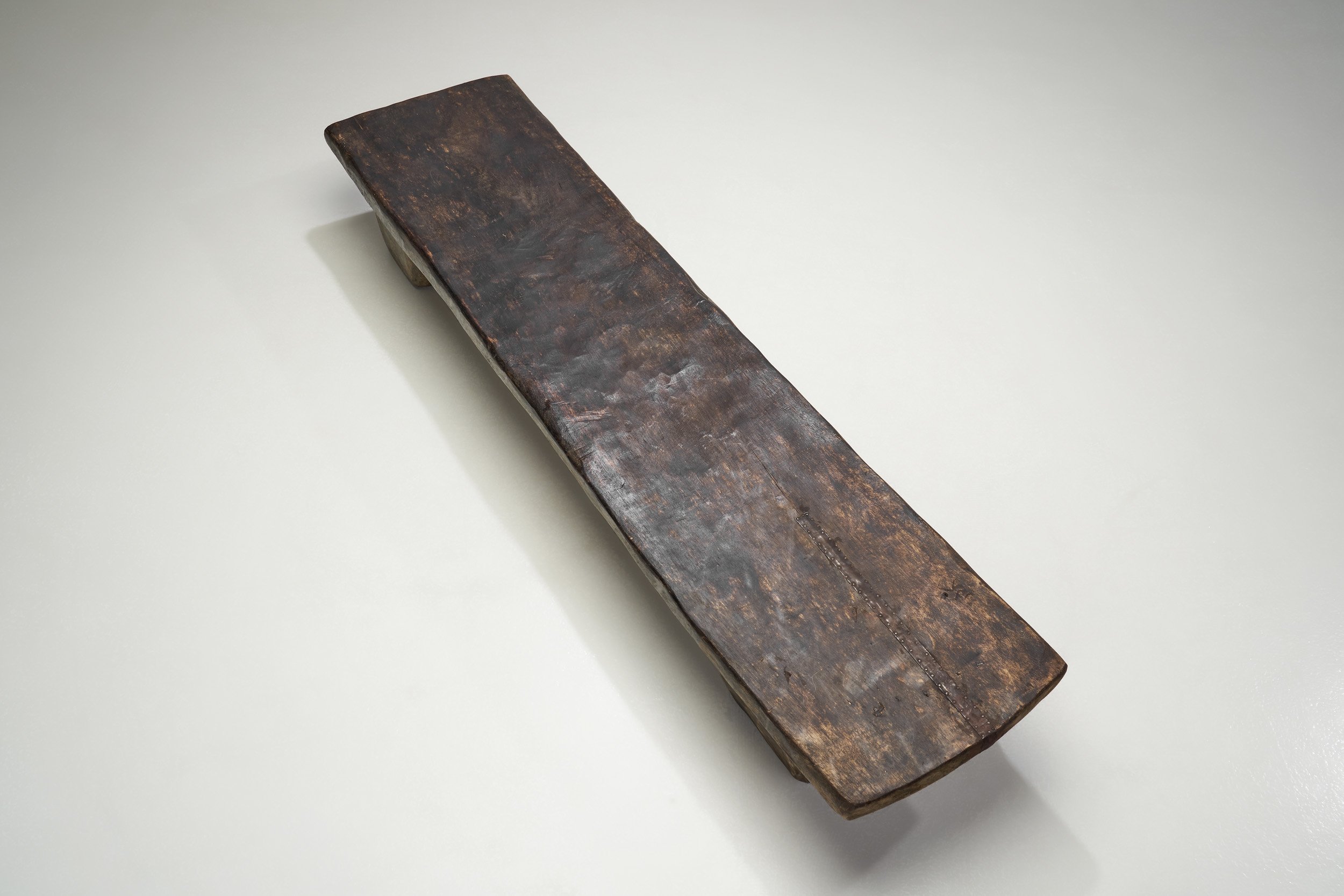
Traditionally used as a raised bed built to withstand the harsh monsoon seasons and strong winds that blew across the hills of Nagaland, this table has as much charm as history. With its original patina, irregular shapes and lines with impacts left by the tools used to carve the wood, the history of this table is stamped in its texture. Traditional tables like this remarkable piece come from Nagaland, an Indian state located in the extreme northeast of India and are hand-carved from a single piece of wood, making each piece unique. The simple design of this table is based on the contemplation of nature and the acceptance of its imperfections. The geometric lines are not precise, and the edges are not defined, instead, imperfect materiality is the ideal of beauty. The large surface of the top showcases the natural qualities of the wood beautifully, as well as the gouged marks made by the creator. Part of the tabletop features a riveted metal bar that was presumably added to repair a crack in the wood or to simply strengthen the structure. The same riveted bar can be found on one of the legs as well. The wide, rounded legs in combination with the large surfaced top create a grounded look that still remains airy.
The natural roughness of the material is what gives this table its authenticity. It is a stunning piece rich in texture and history, and may serve a wide variety of roles in its future setting, such as a coffee table, a low bench or even as a bed. The design is a minimalist, but with all the warmth provided by the textures of the material coming from nature.
SOLD
Condition:
In good vintage condition. Wear consistent with age and use. The wood has some cracks and marks.
Dimensions:
73.62 in W x 19.29 in D x 8.85 in H
187 cm W x 49 cm D x 22.5 cm H


REQUEST PRICE HERE
Price category: 2,500 - 5,000 usd / eur
During the 1950s, Danish Modern furniture placed equal emphasis on structural clarity and refined craftsmanship. Rather than treating tables as purely functional objects, designers created furniture that integrated beauty into day-to-day life. Thanks in great part to an early emphasis on wood and a resistance to certain modernist currents by influential designers, Danish Modern has avoided associations with cold industrialisation and machine aesthetics.
The movement's preference for fine cabinetmaking and expressive timber is evident in this coffee table, whose elegant silhouette is achieved through a restrained combination of curves and expressive wood. The long, rectangular top displays a dramatic grain pattern, with tonal variations across the surface. Supporting it is an elegant, trestle-like base. The designer strayed away from the bulky, robust versions of this iconic base style, opting instead for two sweeping curved side supports connected by a single stretcher, creating an open architectural framework beneath the tabletop. The contrast between the crisp horizontal plane of the top and the flowing curves of the base creates a dynamic, yet balanced, composition. Danish modern designs are, at their core, utilitarian objects; as a result, this table’s form follows function, offering both a generous surface area and great stability. The absence of unnecessary detailing directs attention to the quality of the timber, the precision of the joinery, and the graceful geometry of the structure.
Elegant from every angle, the table demonstrates why Danish Cabinetmakers and their designs are some of the most thoughtful pieces of furniture. Its understated design and versatile character allow it to complement a wide range of interiors while showcasing the enduring appeal of the Danish modern period.
Condition:
In good vintage condition. Wear consistent with age and use. The table has recently been reconditioned. Due to the nature and age of the material, the item has some marks and scratches on the tabletop.
Dimensions:
59.25 in W x 25.59 in D x 21.65 in H
150.5 cm W x 65 cm D x 55 cm H