
Cast Iron Sculptural Firescreen by Olle Hermansson, Sweden Mid-20th Century (sold)
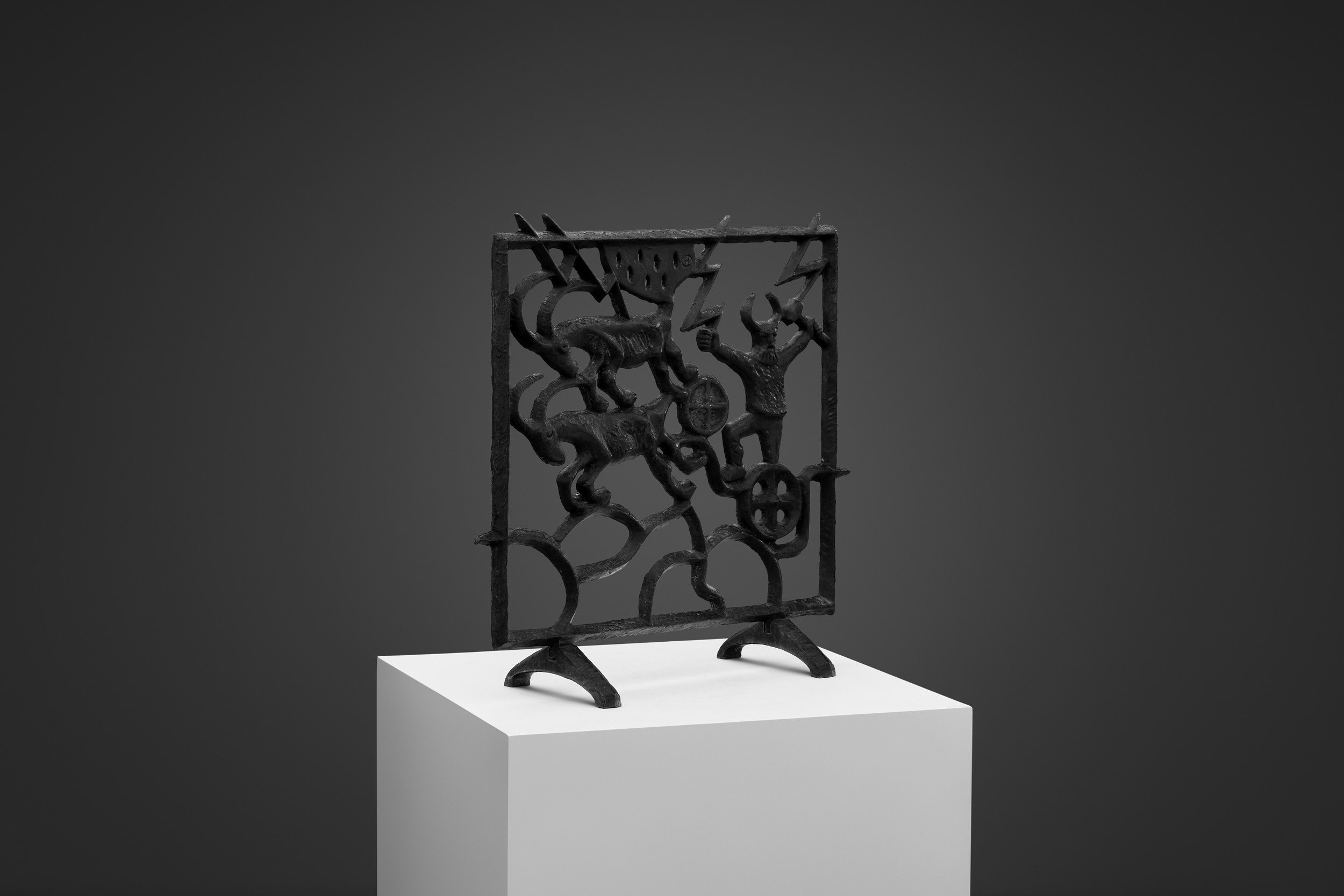
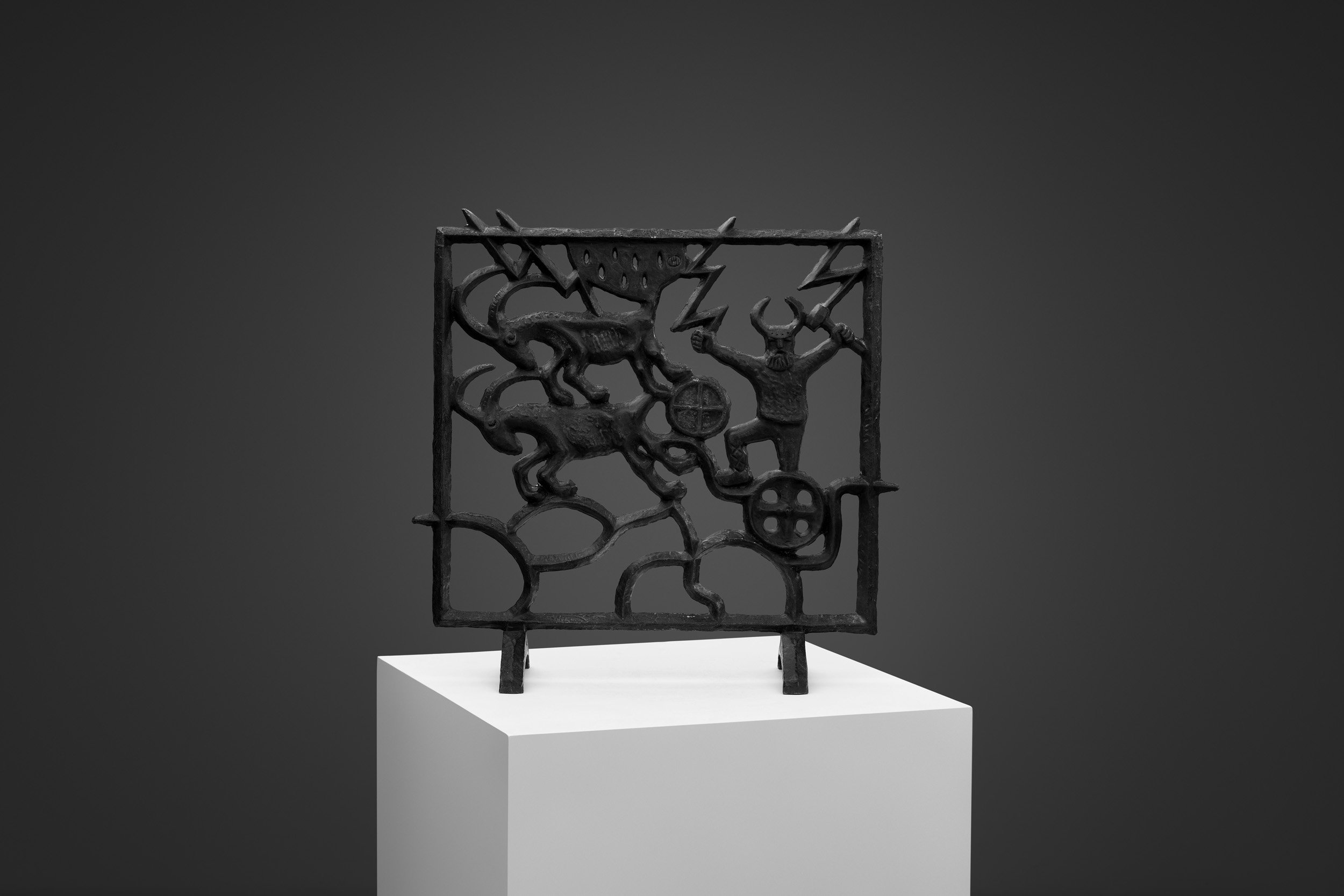
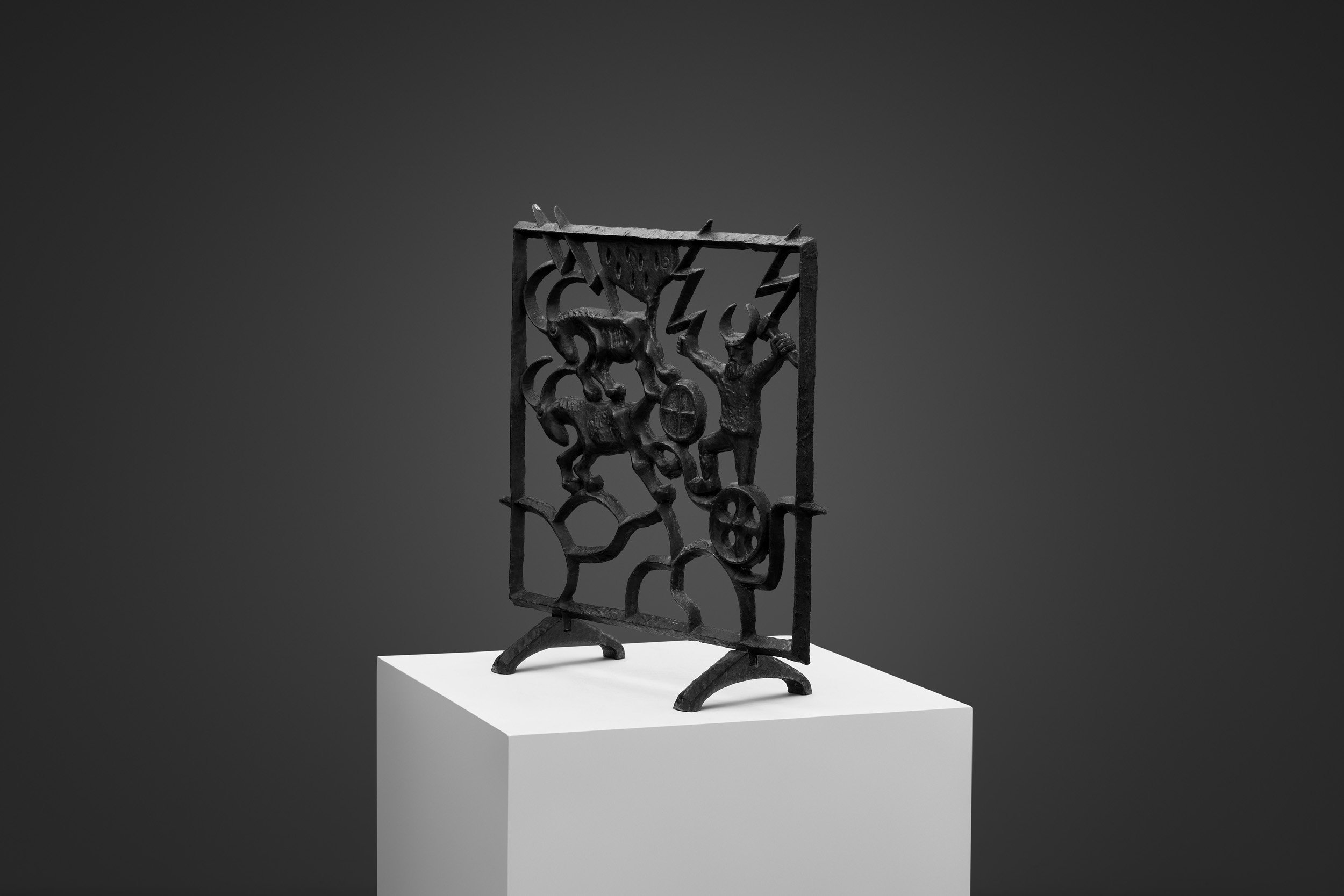
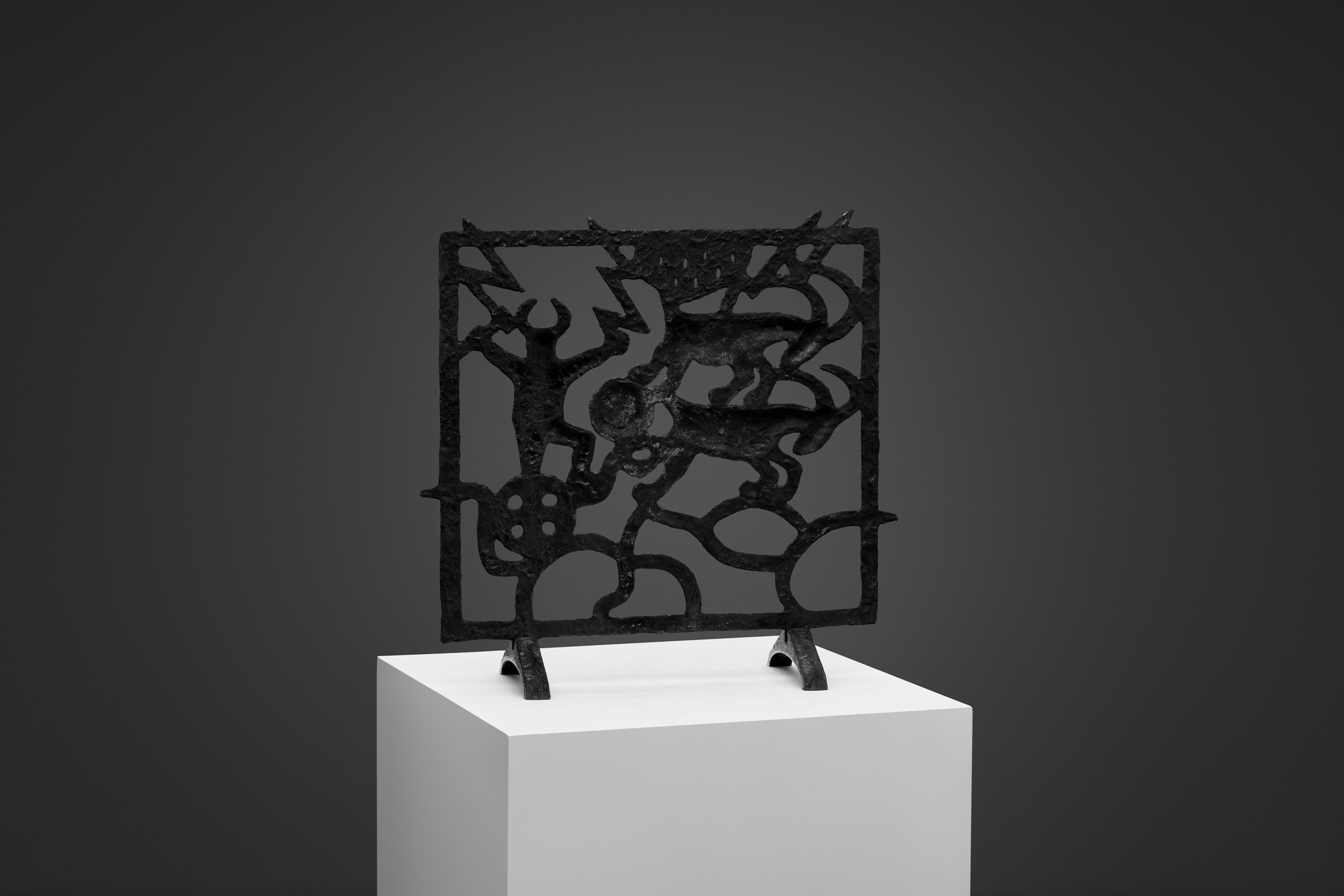
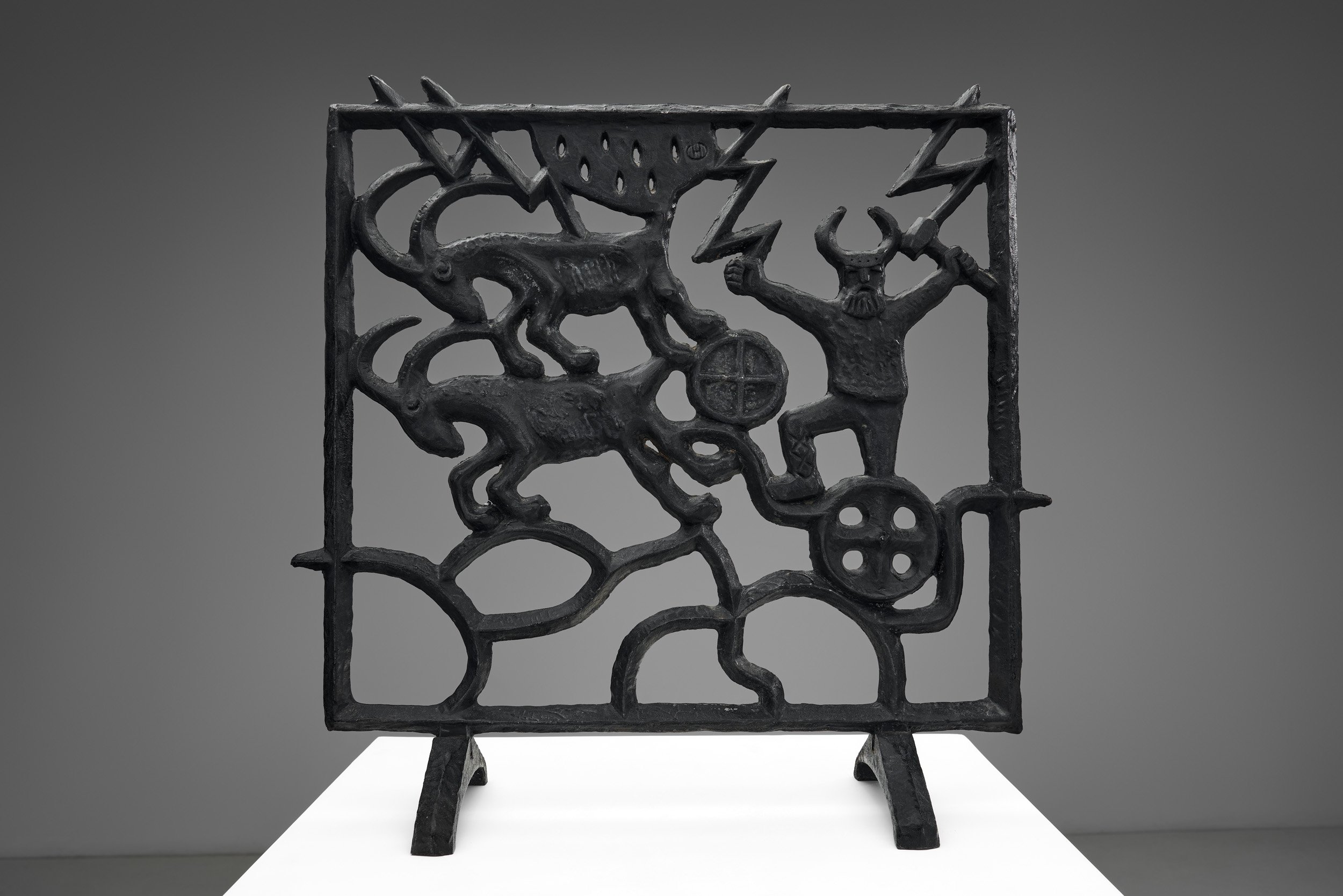
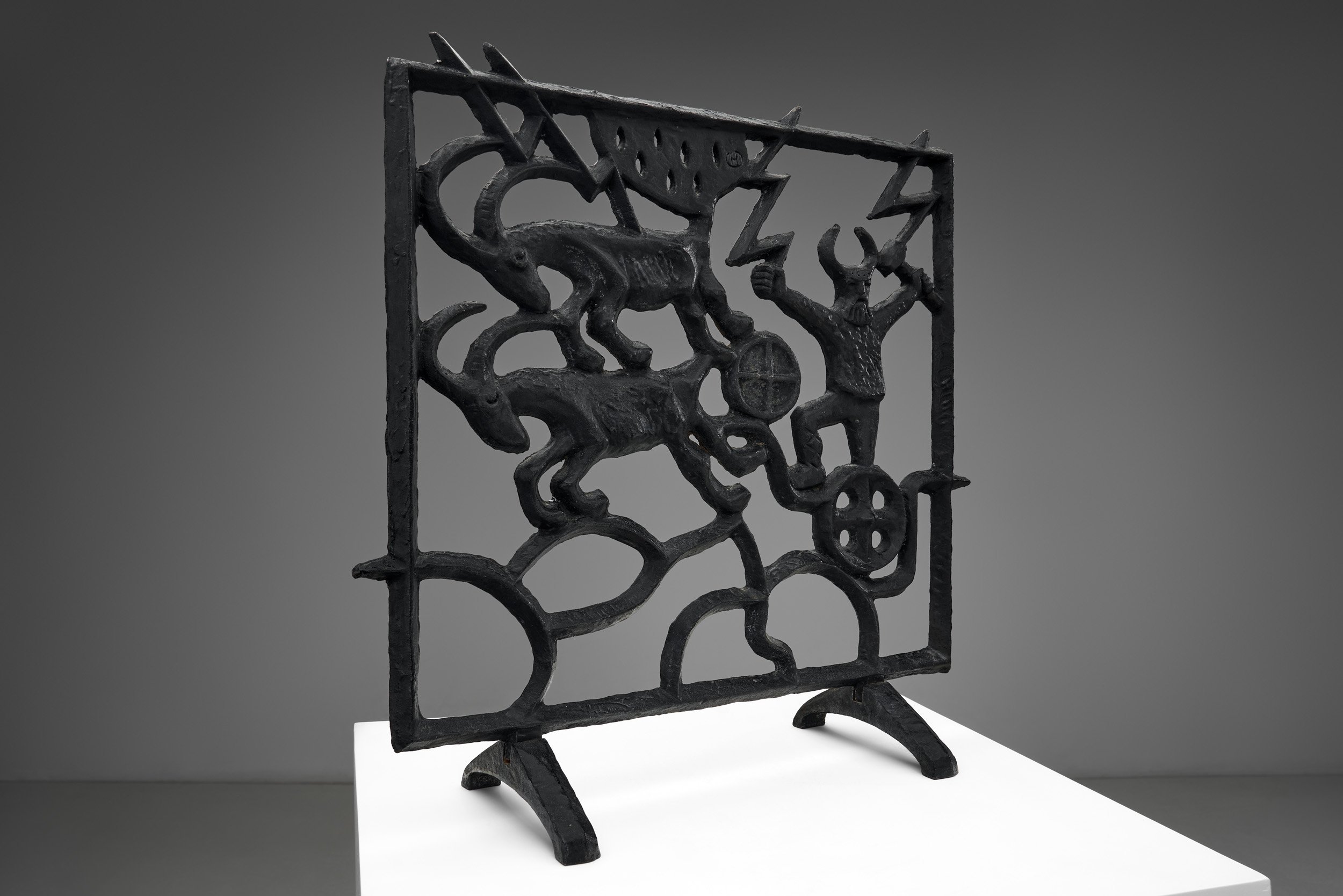
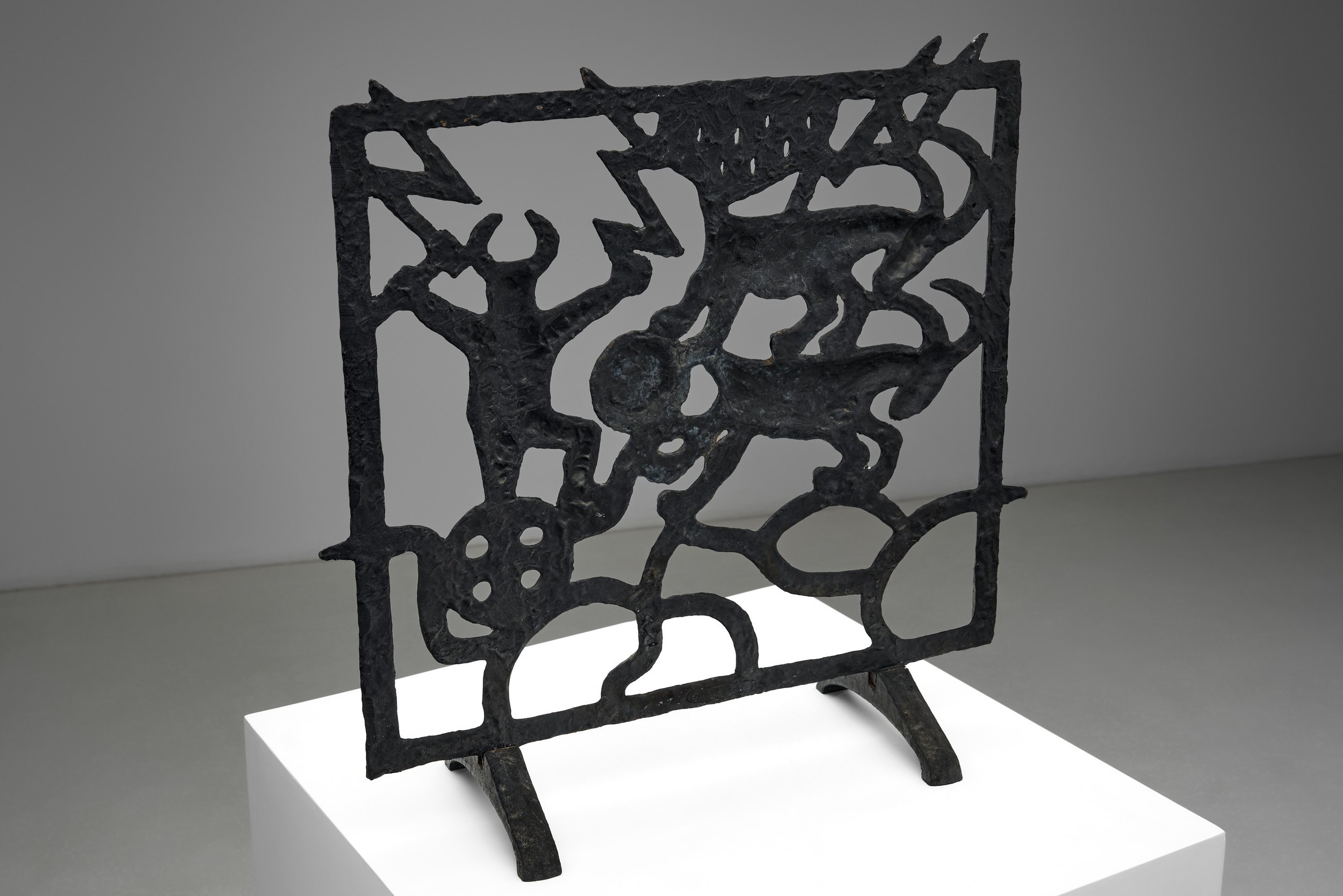

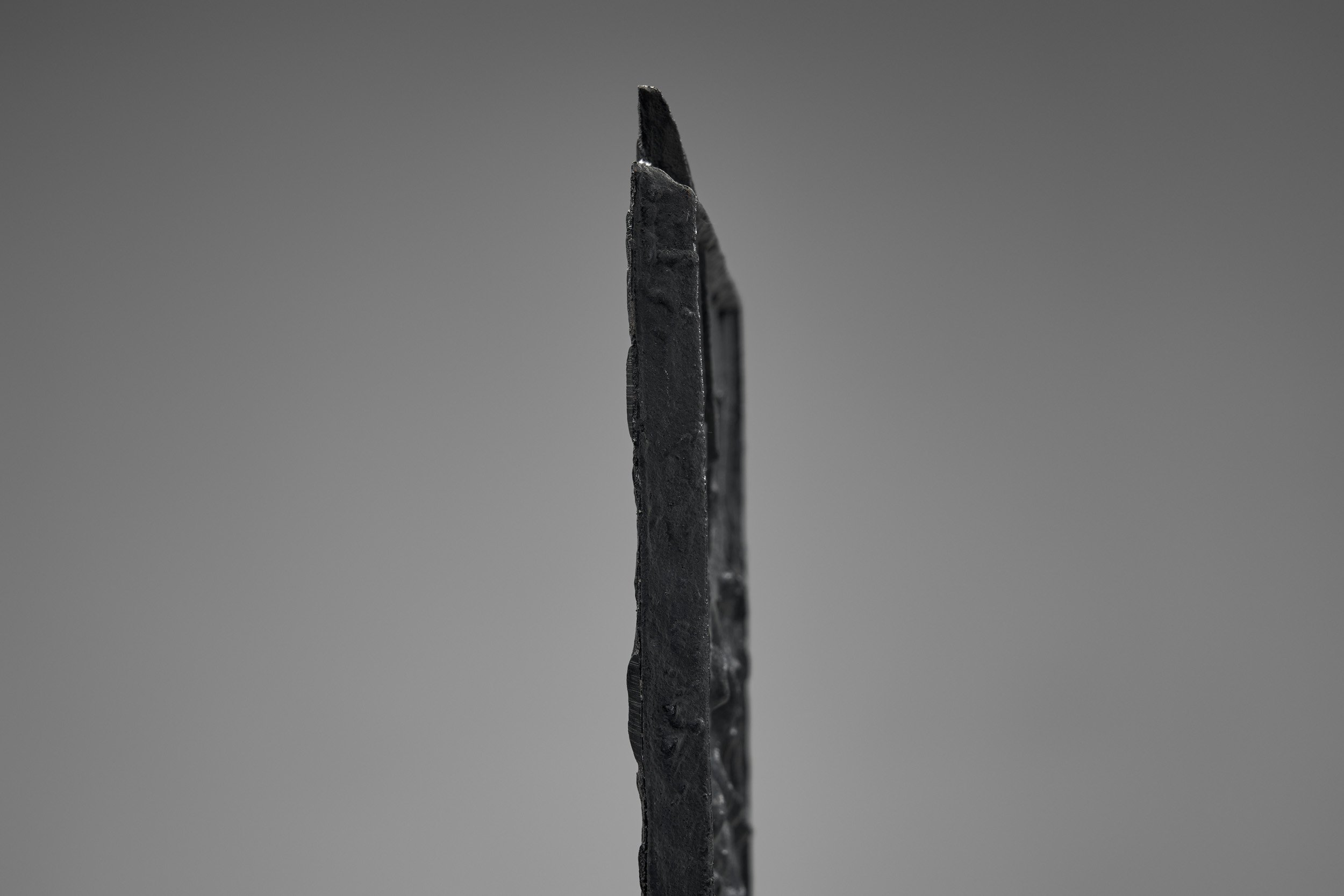
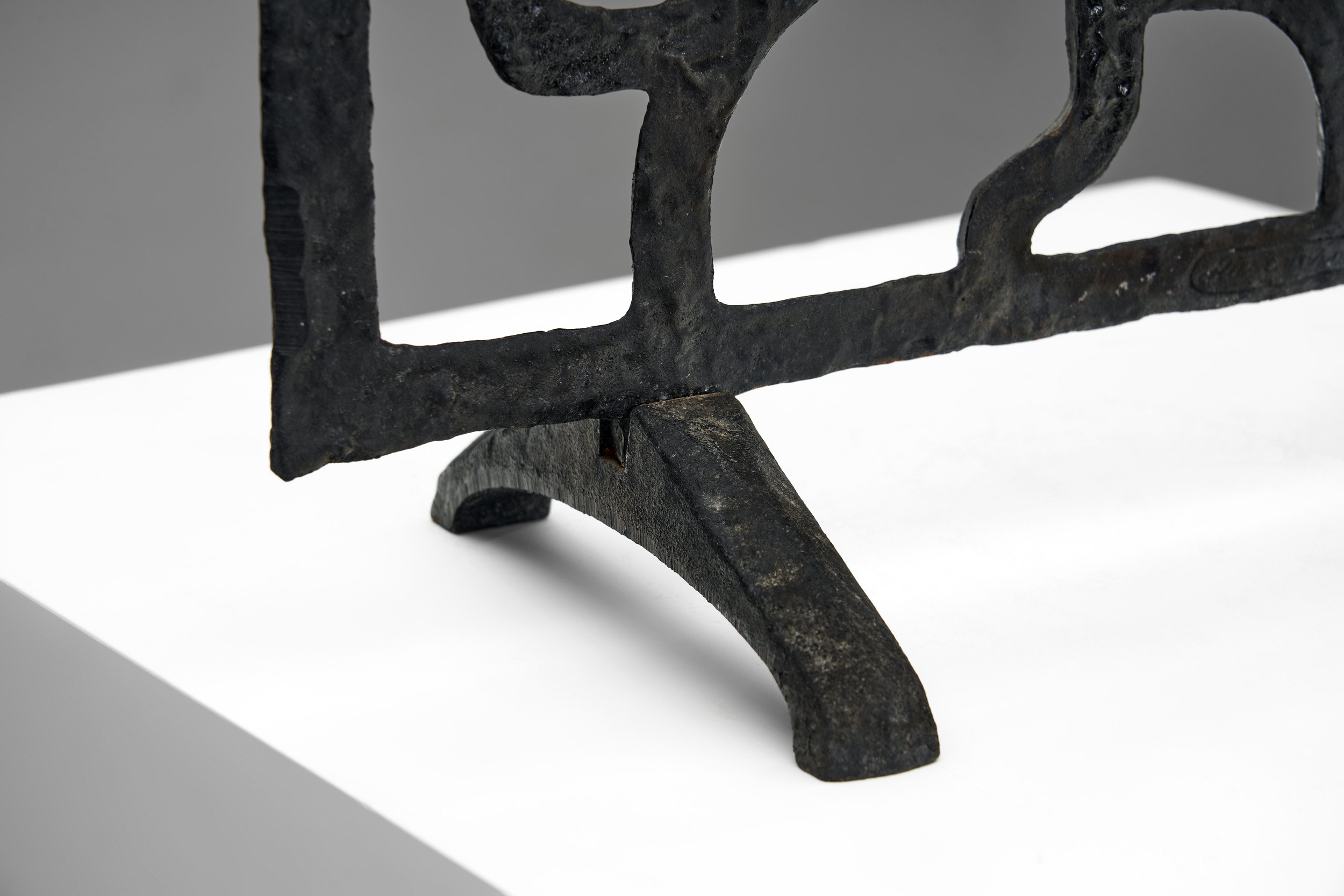
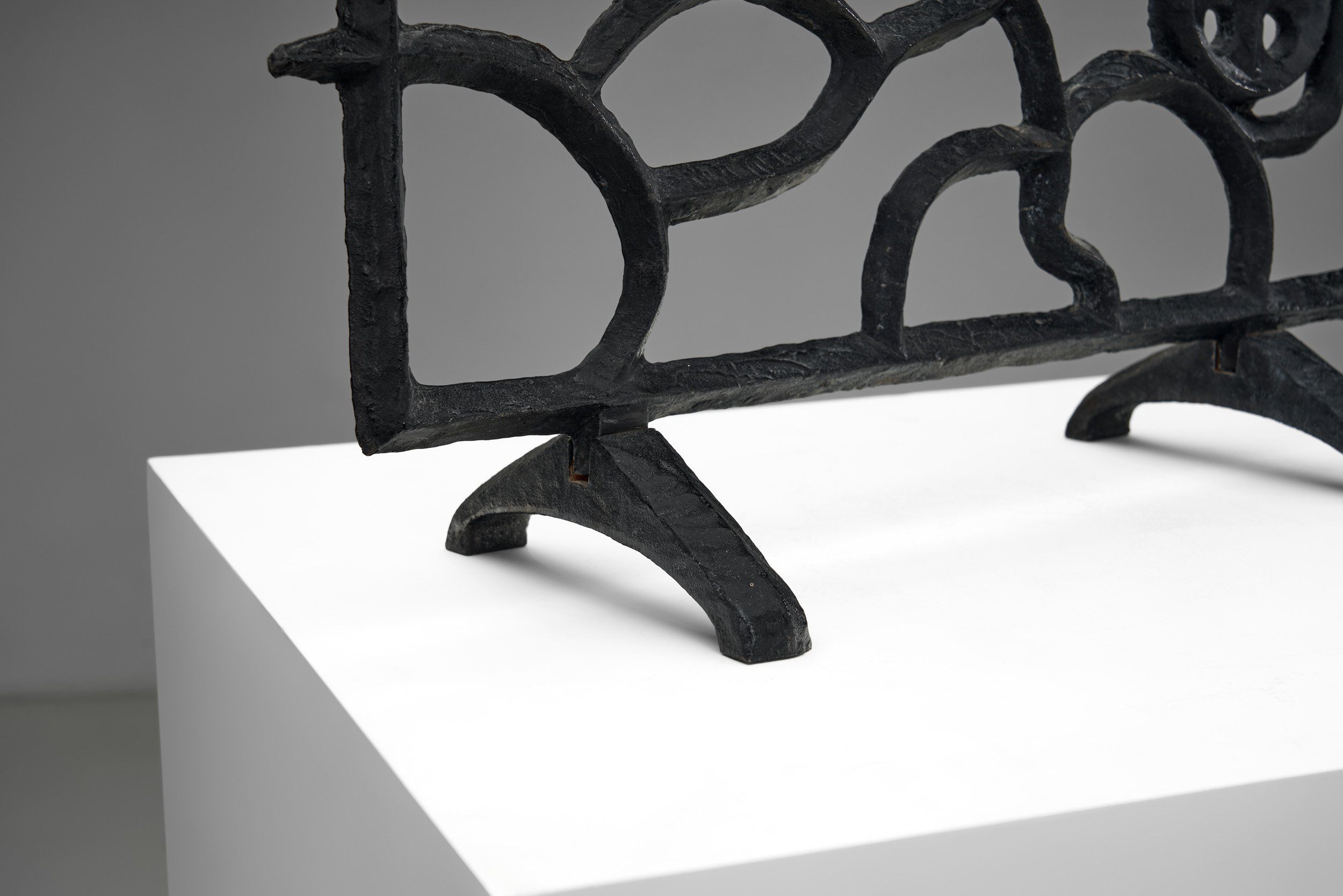
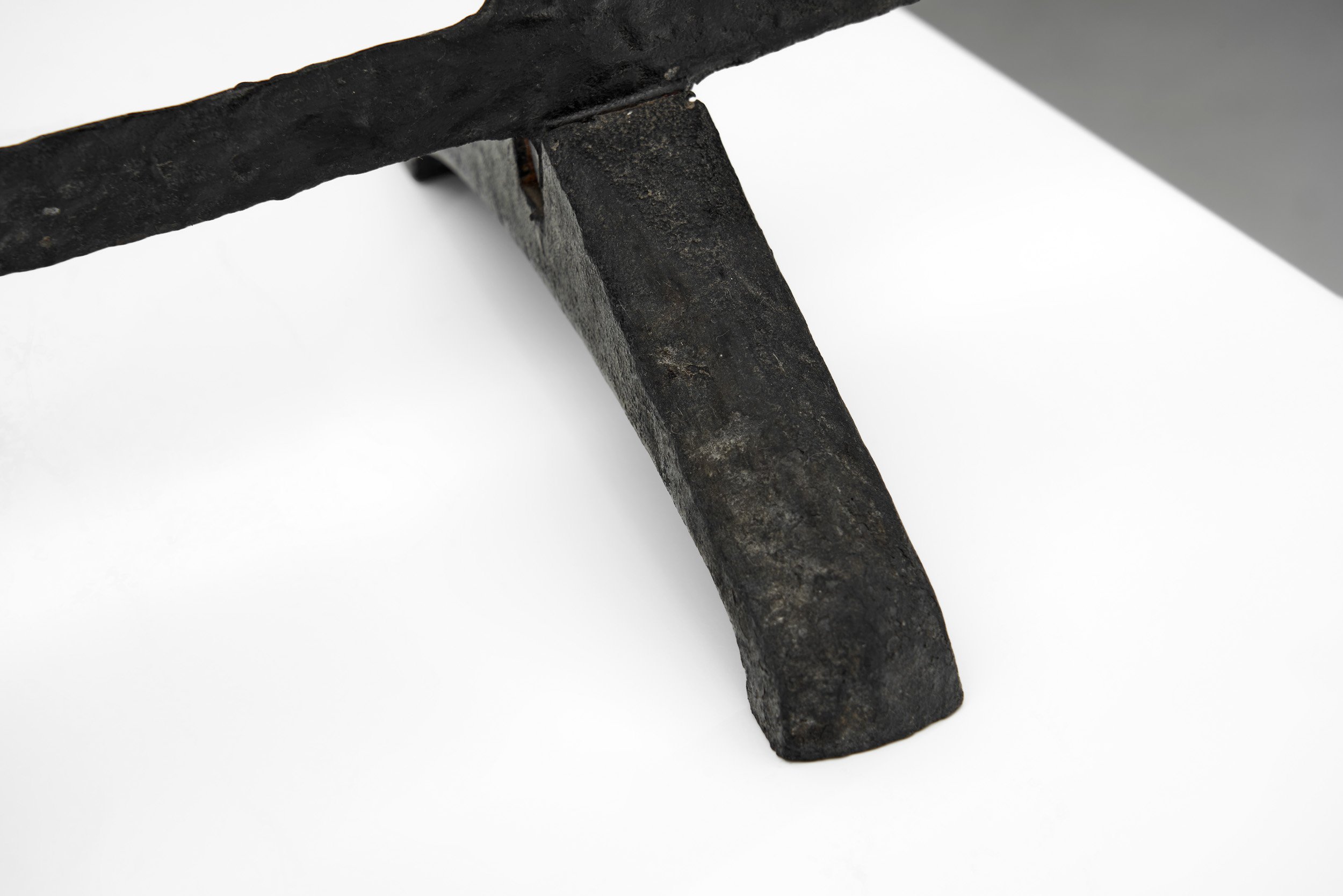
Cast Iron Sculptural Firescreen by Olle Hermansson, Sweden Mid-20th Century (sold)
Olle Hermansson was a Swedish artist and metalworker active during the mid-20th century, expanding the typical Scandinavian design beyond simple, functional and clean and into expressive decorative arts. Working within the context of Nordic modernism, Hermansson’s practice diverged from strict functionalism, to embrace a more poetic and sculptural approach. His work reflects a time when traditional craft techniques, particularly iron casting, were reinterpreted through modern artistic language.
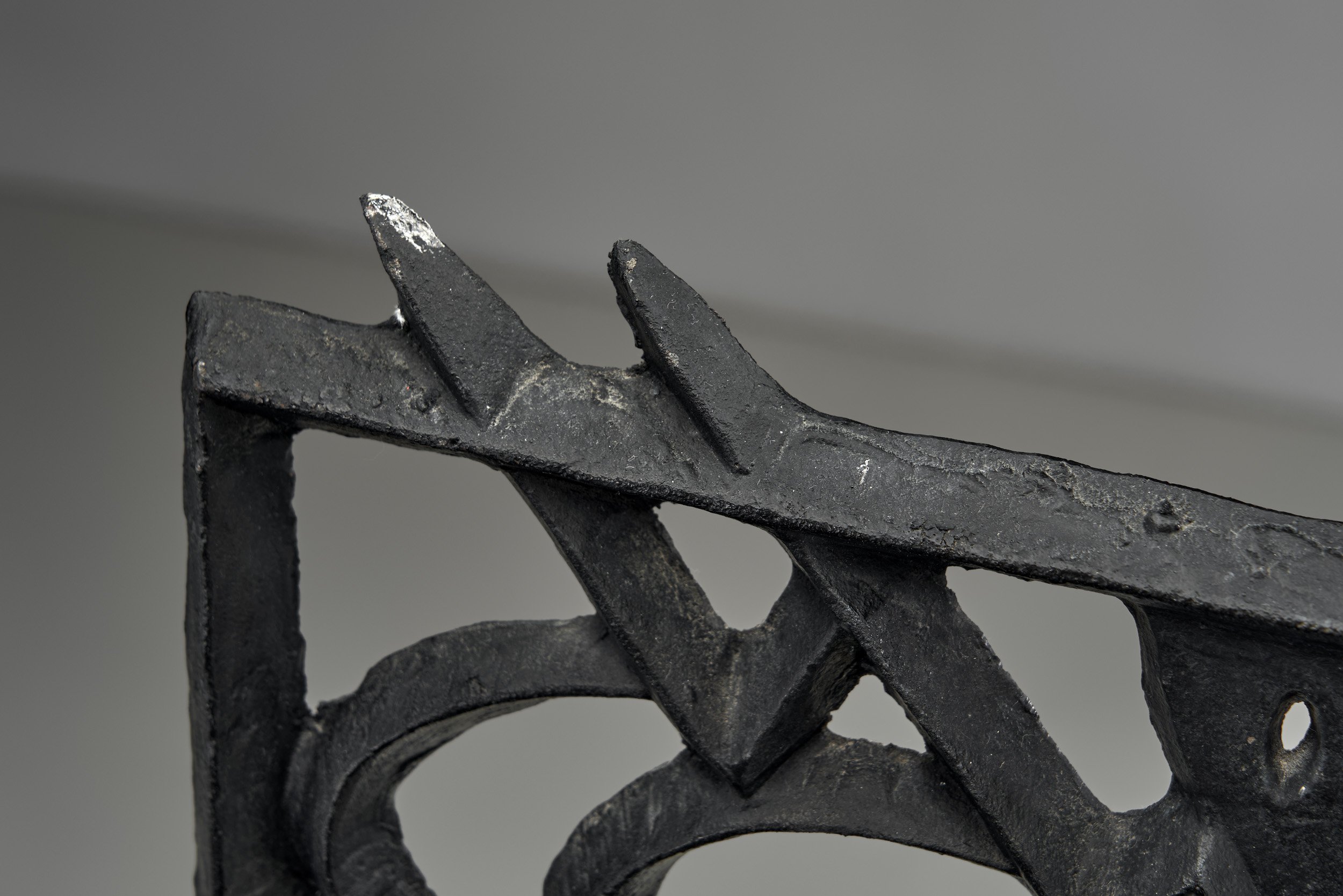
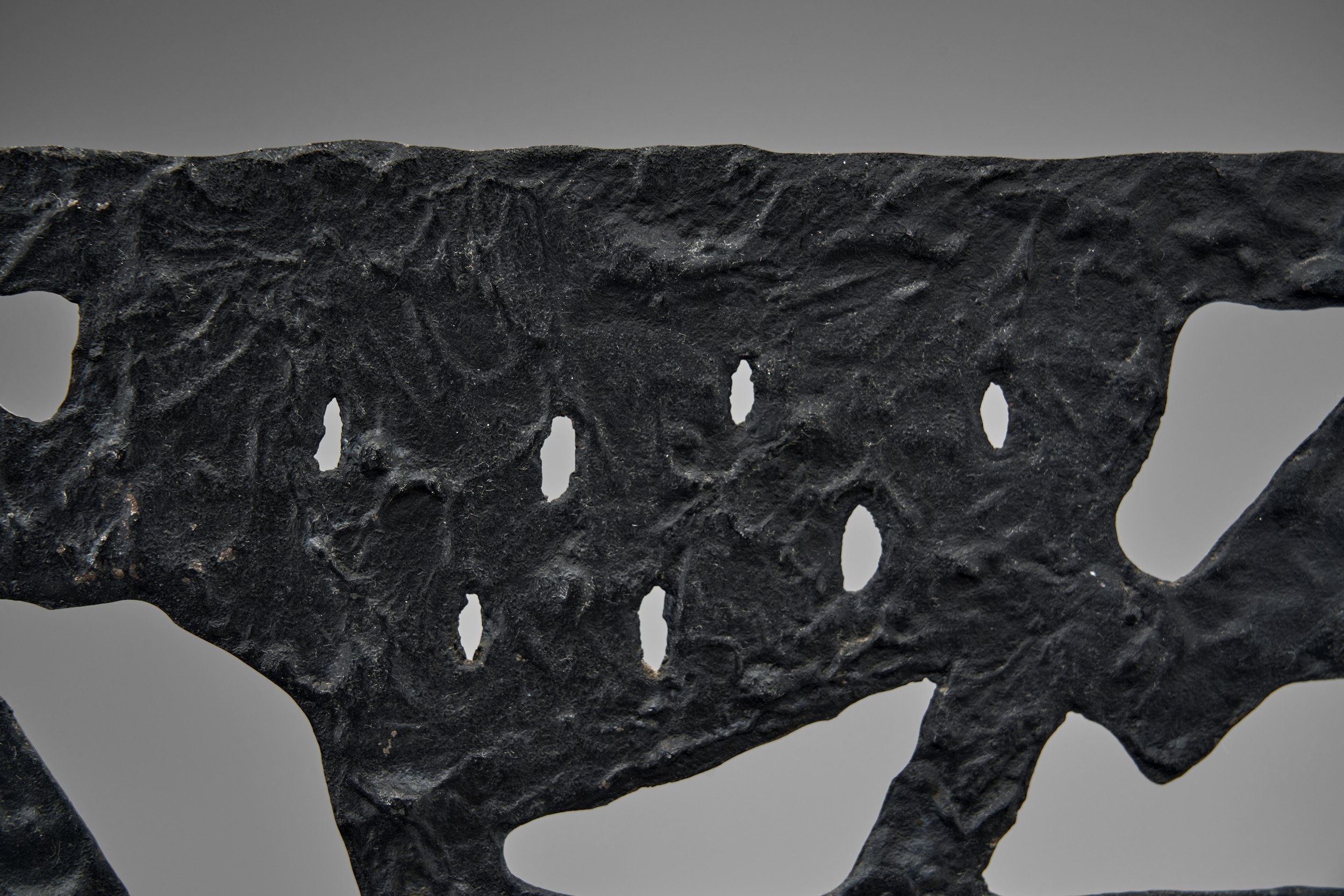
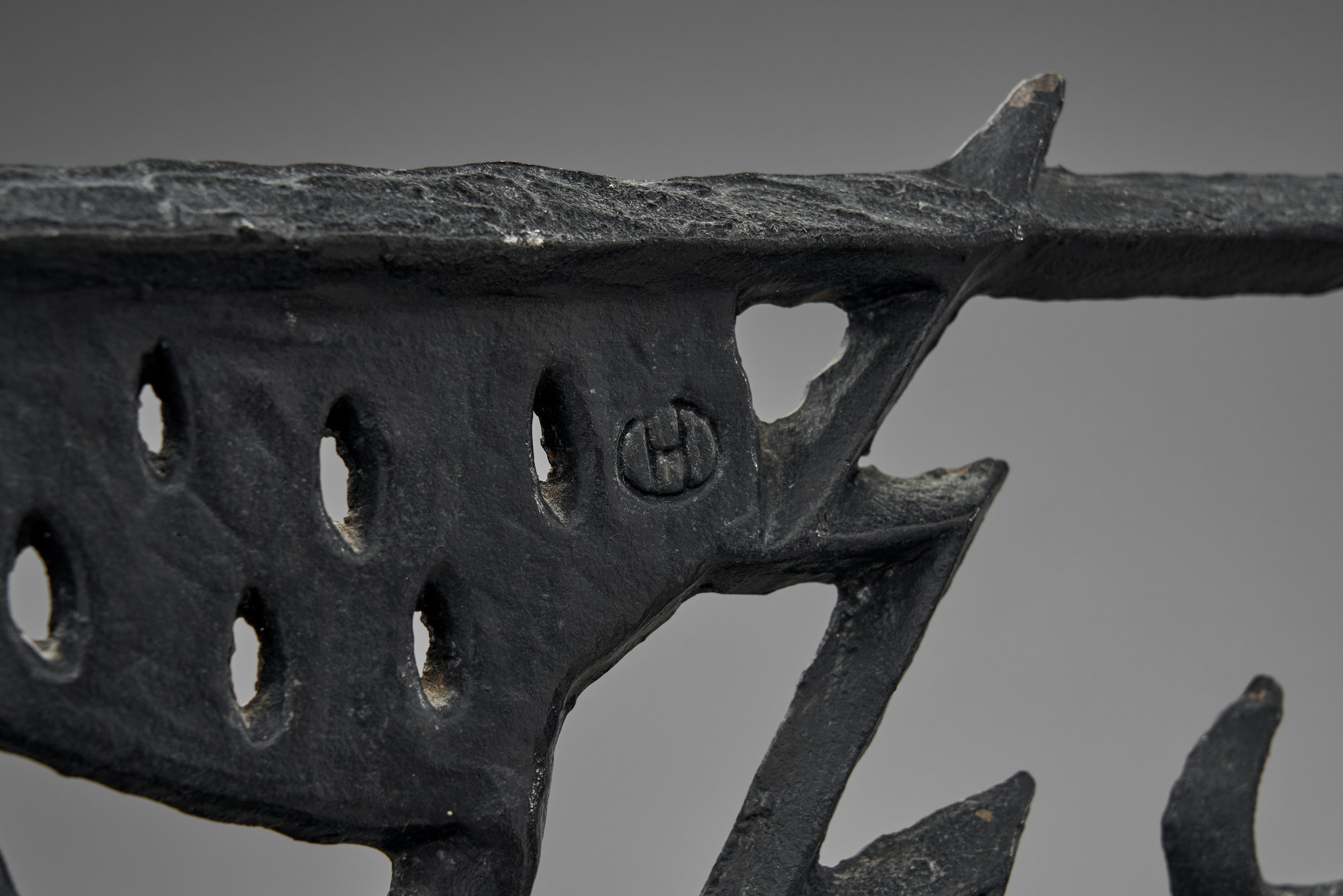
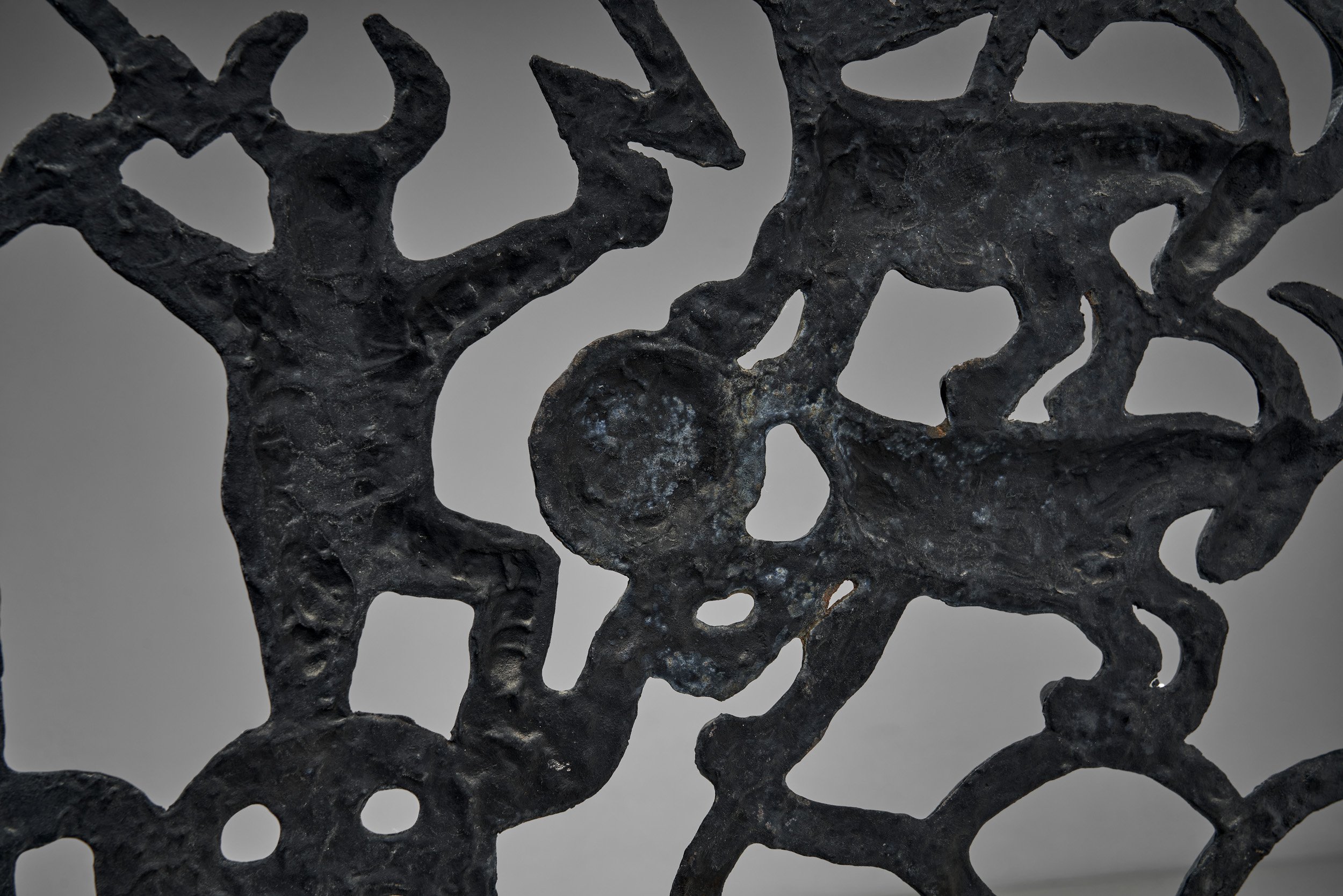
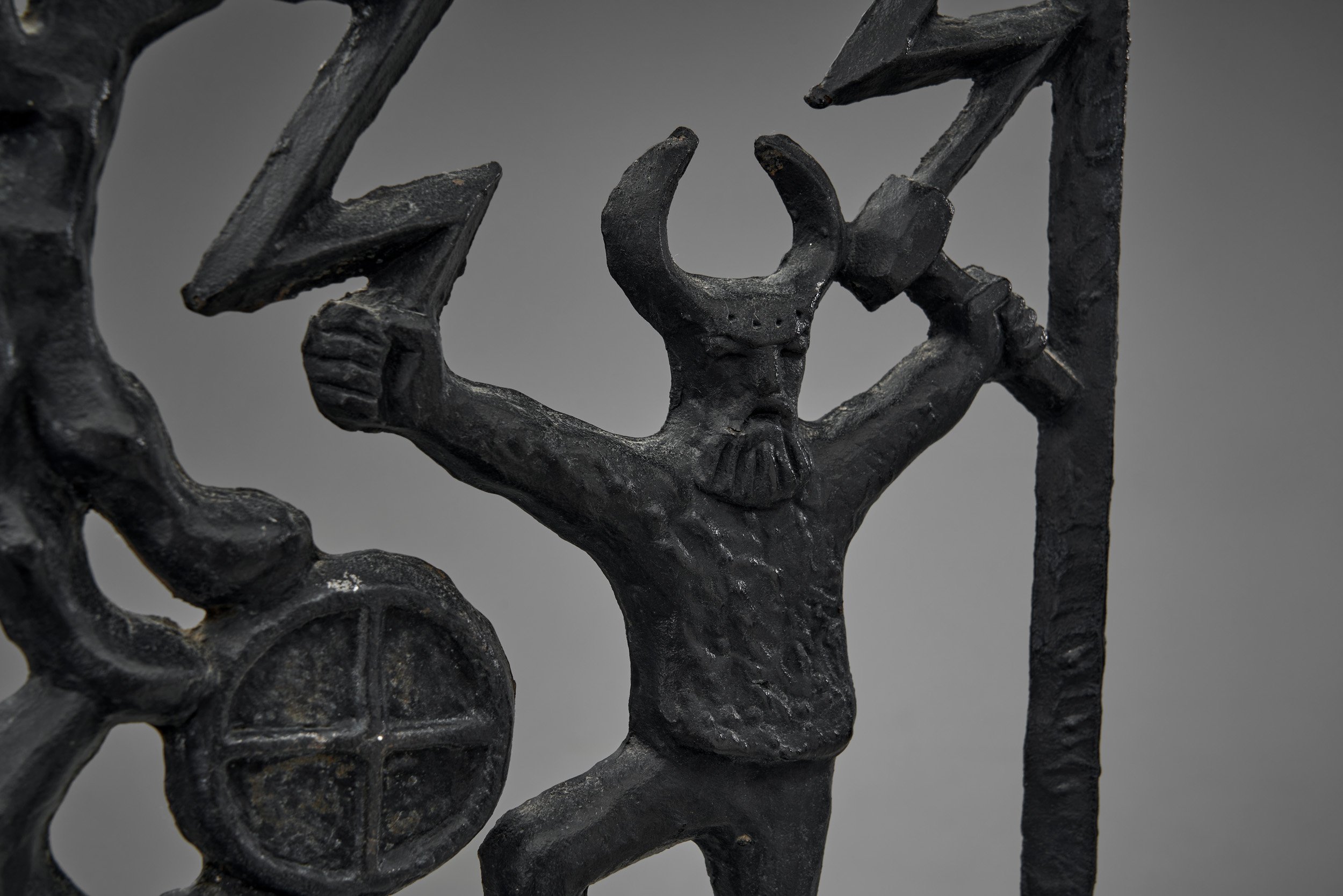
Rather than prioritizing minimalism alone, Hermansson drew upon folklore, symbolism, and expressive form, qualities clearly visible in this cast iron firescreen. This piece is a striking example of Hermansson’s sculptural sensibility and mastery of material. Composed almost as a framed picture, the surface is animated by a dynamic scene featuring stylized figures, animals, and symbolic motifs rendered in bold relief. The figures appear in motion, interacting through the rhythmic curves of the metal, giving the piece a strong sense of dynamism. The rough, characteristic texture of the cast iron enhances the expressive quality of the work, allowing light and shadow to emphasize depth and movement across the surface. Despite the solidity of the material, the design feels lively. Raised elements, intersecting curves, and repeated shapes contribute to a visual rhythm that draws the eye across the screen. Supported by two feet, the firescreen functions both as a functional object and as a piece of artwork in its own right. The combination of use and artistic storytelling reflects Hermansson’s ability to transform utilitarian ironwork into a visually engaging sculptural statement.
This firescreen represents a compelling fusion of Scandinavian craftsmanship and mid-century artistic expression. Its bold look and tactile surface make it an exceptional focal point within an interior, whether placed before a fireplace or displayed as a sculptural object. The piece stands as a testament to the era’s belief that everyday objects could carry emotion and artistic depth.
SOLD
Condition:
In good vintage condition. Wear consistent with age and use. The item has recently been reconditioned. Due to the nature and age of the material the item may have some marks, scratches, and imperfections.
Dimensions:
19.68 in W x 6.69 in D x 19.09 in H
50.5 cm W x 17 cm D x 48.5 cm H
REQUEST PRICE HERE
Price category: 2,500 - 5,000 usd / eur
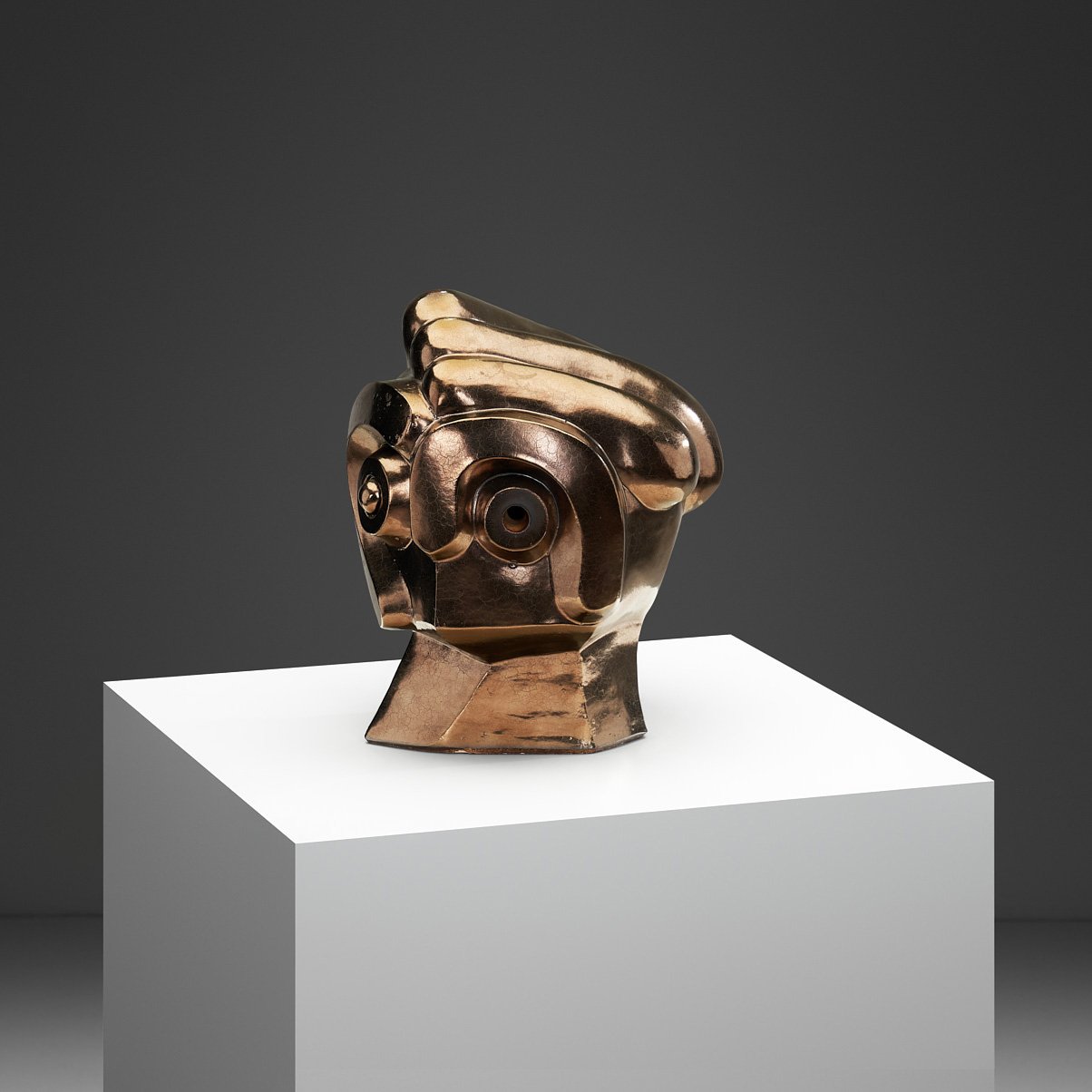
This ceramic sculpture presents an abstract human head formation, made by Roy Terbeek in 1994 in the Netherlands. The piece features a modeling of facial features. There is a sense of harmony in the proportions: the neck strong yet graceful, and the overall shape flows naturally from crown to neckline. With vibrant detail, the shape itself speaks of an artist well aware of the interplay between light and form.
Created in the early 1990s, it reflects a period in which many artists were exploring personal identity and quiet presence rather than overt statement. This unique sculpture is intriguing and exudes an air of antiquity and natural physicality. Its form commands attention with its abstract and textured surface. At first glance, the shape of the sculpture draw the viewer in, with its irregularities. The glazing is a central expressive element, with its earthy-bronze tone. It offers a glass-like surface that catches light across its curvature, increasing the visual depth. Instead of creating tension, the shape and material bring the piece into perfect balance thanks to the unique design. This sculpture is undoubtedly as captivating from afar as it is up close. This work invites viewers to engage with the interplay of tradition and innovation, celebrating the enduring appeal of glazed ceramic as a medium for artistic expression.
Beyond its technical and aesthetic qualities, the sculpture evokes a contemplative mood. It is a work that rewards close viewing. This piece is also a rare representation of Dutch Post-Modernist design, an interesting phase of cultural, social impacts with artists and designers trying to figure out their way towards leaving their marks.
Condition:
In good vintage condition. Wear consistent with age and use. Due to the nature of the material, item may have some marks, scratches, and discolouration.
Dimensions:
9.25 in W x 11.61 in D x 12.20 in H
23.5 cm W x 29.5 cm D x 31 cm H
REQUEST PRICE HERE
Price category: 5,000 - 7,500 usd / eur
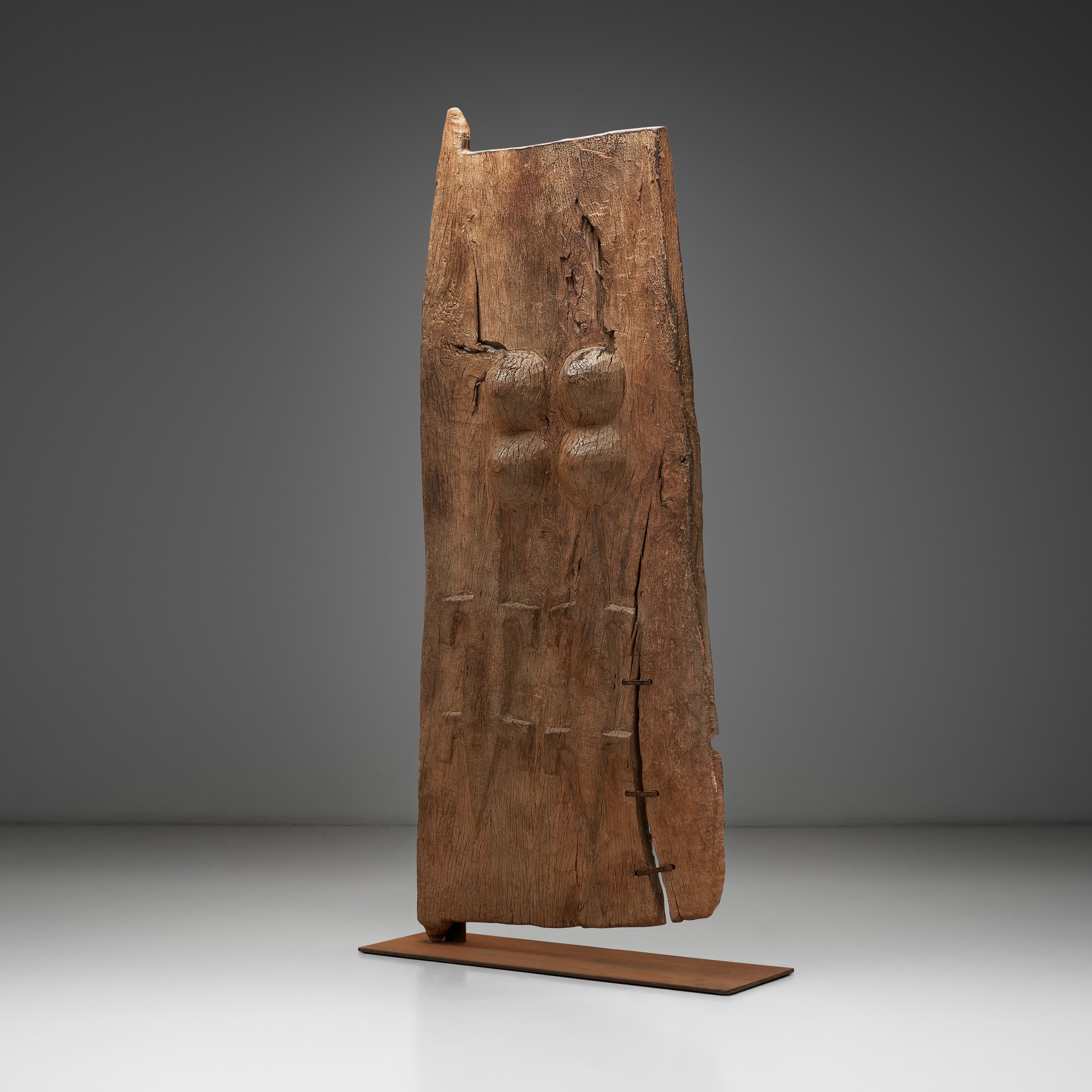
Nature has been a source of inspiration for artists, craftsmen, and to people of all trades since the dawn of time. This traditional Dogon door from Mali is ideal to bring a piece of history into any space to marvel at the art of nature.
Dogon doors are carved wooden panels that have been used in Mali, West Africa by the Dogon people. The purpose of these doors was two-fold; to provide physical security for stored goods and to offer spiritual protection by warding off evil spirits. Many of these doors featured beautiful relief carvings, like the carvings present on this piece. This type of door was often crafted by a high-ranking blacksmith, since the Dogon door was considered more than just functional objects, but rather sacred. The motifs found on this piece symbolise fertility and life, as well as spirituality, wisdom and protection. Moreover, in the absence of modern polished surfaces, this door has textural, rough edges and surfaces, the wood takes pride in its qualities. The construction strips back the unnecessary, showcasing only its essential elements. The wood is left in its natural form as much as possible, while also prioritising functionality and longevity. In contemporary spaces, this door or room divider is the perfect furniture type to introduce organicity to an interior. This piece is sure to stand out for all the right reasons and spark interesting conversations.
As nature does not mass produce identically, this piece is truly one of a kind, with intense visual qualities, therefore it cannot be reproduced. This Dogon door can be a unique decoration for modern interiors, and here, the quality of timelessness isn’t even a question.
Condition:
In good vintage condition. Wear consistent with age and use. Item may have some marks, scratches, and discolouration.
Dimensions:
29.92 in W x 9.84 in D x 61.02 in H
76 cm W x 25 cm D x 155 cm H
REQUEST PRICE HERE
Price category: 1,000 - 2,500 usd / eur
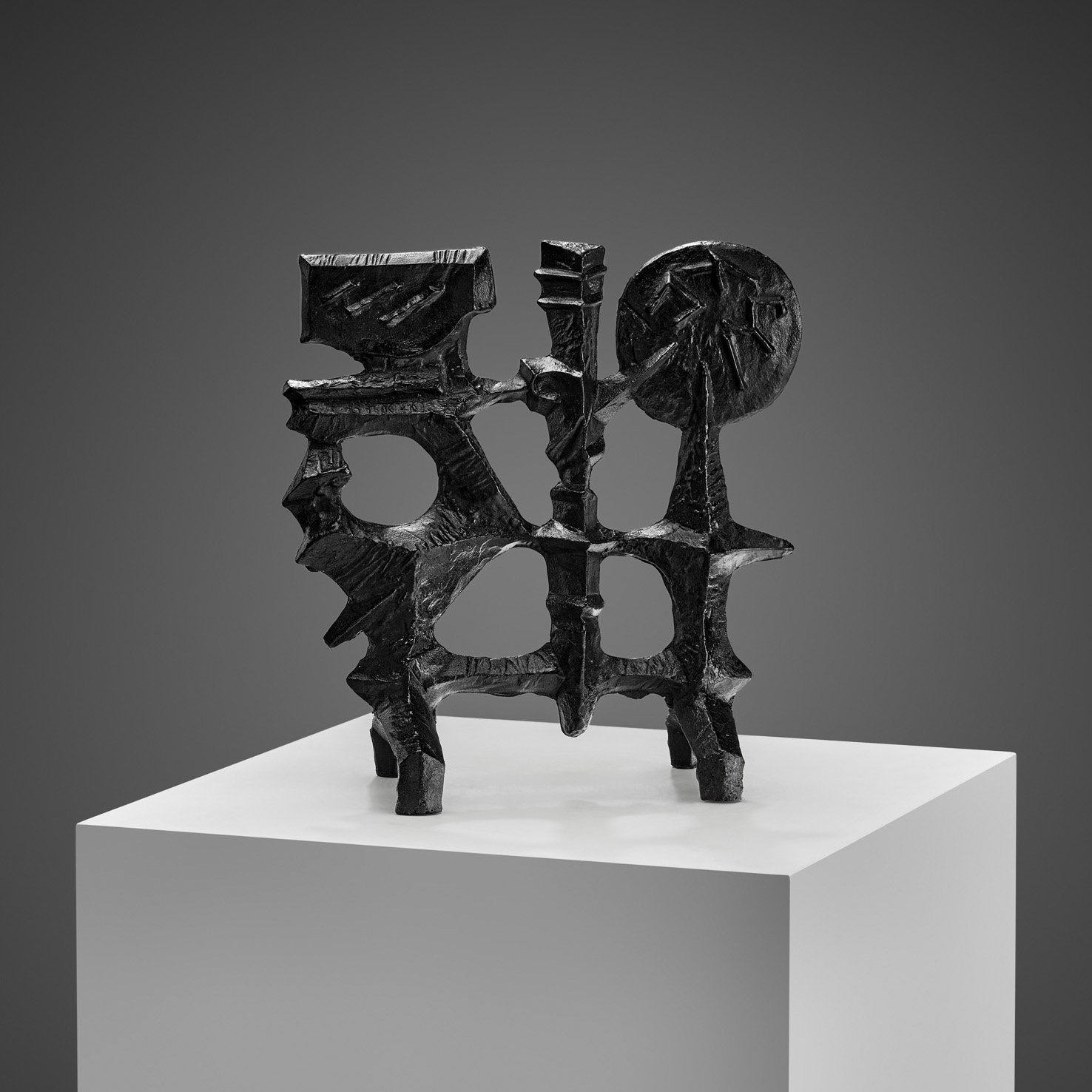
Swedish sculptor, Olle Hermansson is primarily known for his cast iron sculptures and fire screens in his signature Brutalist style. The characters and shapes appearing in his works are often inspired by Nordic mythology.
In this piece, Hermansson uses the robust and weighty medium of cast iron to create a dynamic form that stands as both a piece of art and a reflection of Sweden’s industrial heritage. The sculpture is characterised by bold geometric shapes and textured surface, which provide both visual interest and tactile appeal. Hermansson’s mastery of form is evident in the way the sculpture plays with negative space, light, and shadow, creating an ever-changing visual experience which changes depending on the viewer's perspective. The design reflects the Brutalist ethos of the 1960s, emphasising ruggedness, and the exploration of materials. At the same time, it speaks to the organic qualities of nature, with curves and contours that soften the otherwise rigid structure of the cast iron. As a unique intersection of art and functionality, this sculpture stands as a testament to the collaborative spirit between artists and industry. The integration of modern design with industrial materials like cast iron not only celebrates the aesthetic possibilities of the material but also speaks to the cultural and economic climate of Sweden in the 1960s. Whether displayed indoors or outdoors, this work encapsulates the innovative energy of the era.
This Brutalist sculpture, with its distinctive design and robust materials, becomes a statement, a conversation starter, and a timeless addition that will elevate the aesthetics of any space it occupies.
Condition:
In good vintage condition. Wear consistent with age and use.
Dimensions:
13.38 in W x 6.49 in D x 14.37 in H
34 cm W x 16.5 cm D x 36.5 cm H
REQUEST PRICE HERE
Price category: 1,000 - 2,500 usd / eur
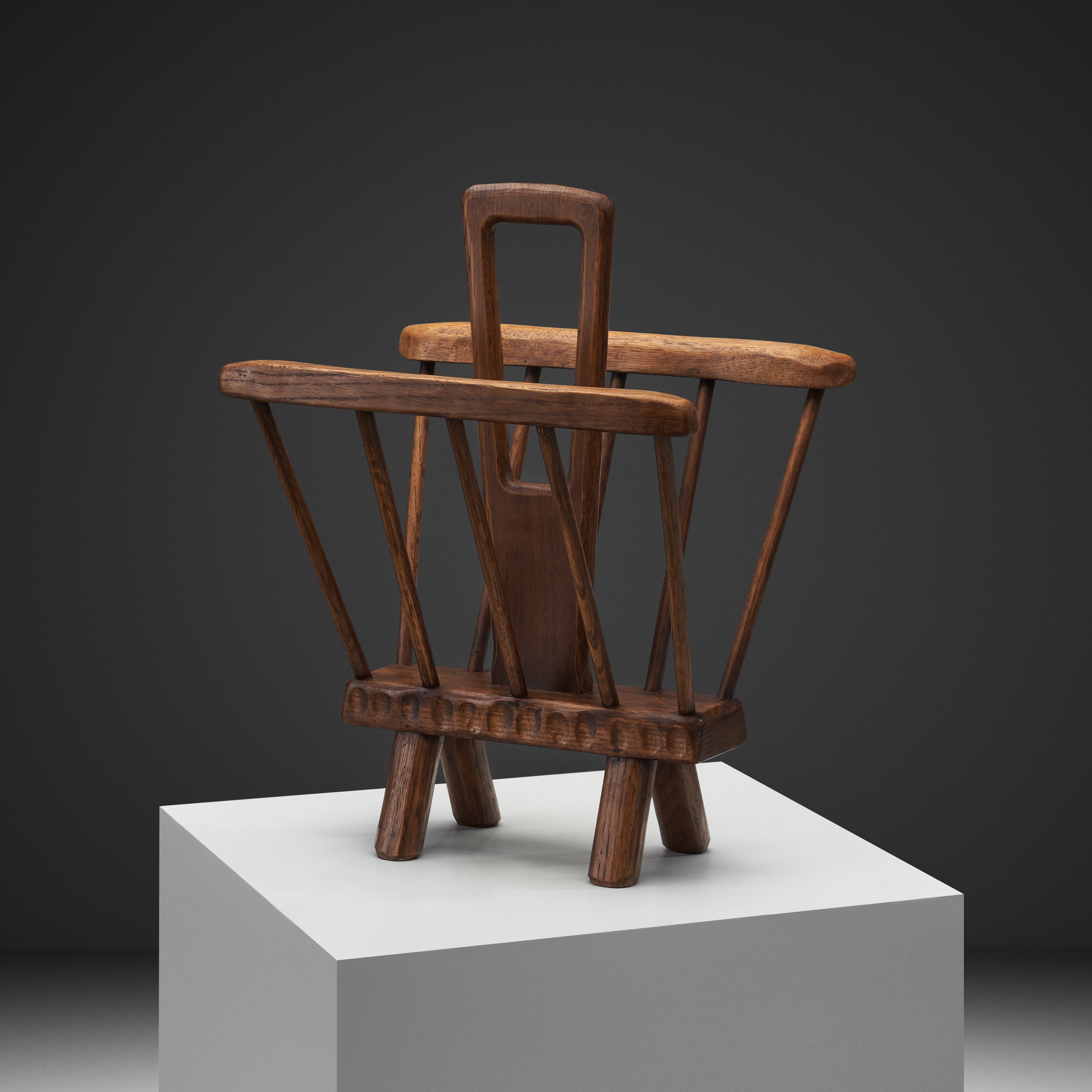
Magazine racks have been around since the middle ages, but as literacy rates increased around the world, and printed media became more accessible, they rose in popularity. By the mid-20th century, they represented an iconic piece of design that adapted to the style of the time. Pieces like this wooden rack reflect the Brutalist movement of the time, while still serving a functional purpose in an era before the widespread adoption of computers.
This wooden rack shows how designers paid great attention to small domestic items that served everyday life, while still contributing to a visually appealing interior. The piece has a highly architectural construction and hand-worked surface. The rack is built entirely from solid wood and composed through an arrangement of intersecting vertical and diagonal supports. The central handle rises upward in a tapering rectangular form, anchoring the composition visually while also functioning as a practical grip for moving the piece. Thin supports extend outward to hold the printed material. Along the lower section, the horizontal base introduces a strong Brutalist character through its organic look and visibly worked surface. The wood retains a rich natural grain throughout, while the slight natural variation of the structural elements prevent the composition from feeling rigid despite its geometric construction.
Rather than treating storage as purely functional, many designers of the mid-century managed to create pieces like magazine stands, newspaper holders, and side tables that additions to a room while maintaining their use. Even when empty, this magazine rack catches the eye, not through excess but through its masterful use of wood and unique form.
Condition:
In good vintage condition. Wear consistent with age and use. The magazine rack has recently been reconditioned. Due to the nature and age of the materials, the item may have some marks, scratches, and discolouration.
Dimensions:
16.54 in W x 12.01 in D x 20.87 in H
42 cm W x 30.5 cm D x 53 cm H
REQUEST PRICE HERE
Price category: 2,500 - 5,000 usd / eur
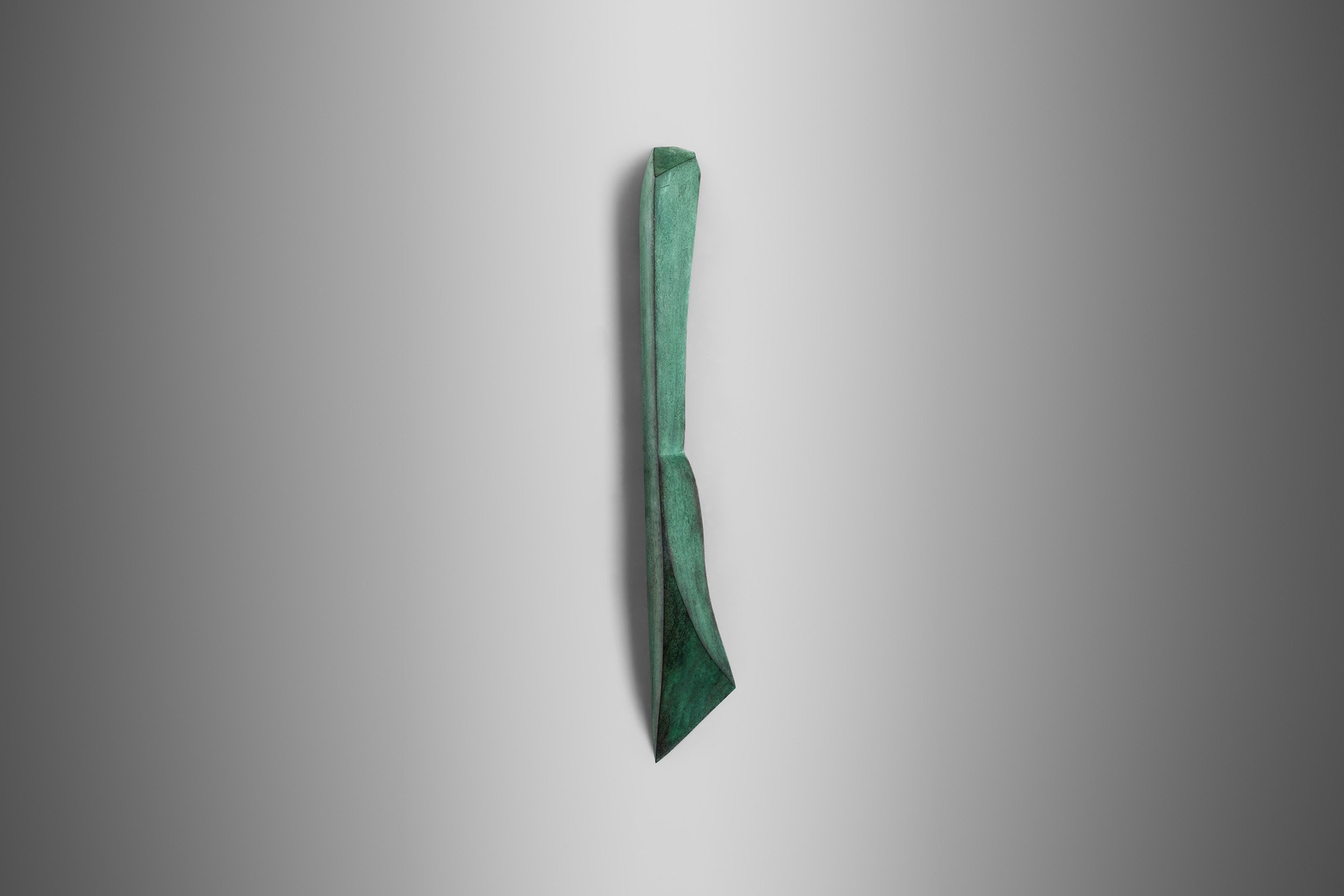
Characteristic for Swedish artist, Björn Selder, are powerful, expressive sculptures, such as this piece, in heavy materials like bronze, iron, and stone. This unique abstract wall sculpture shows that Selder was active as a sculptor and also as a graphic artist. He is represented with numerous monumental sculptures in public environments in Sweden.
Swedish sculptor Björn Selder is renowned for his distinctive style that seamlessly merges modern sensibilities with classical influences. His works are characterized by a harmonious blend of fluidity and precision, breathing life into static forms. Selder's sculptures - like this one - often depict organic and abstract forms, capturing the essence of movement, emotion, and introspection. One of the defining aspects of Selder's artistic expression is his preference for bronze as a sculpting material. Bronze offers him a unique combination of durability and malleability. Its enduring nature ensures that his creations stand the test of time, while its pliability allows him to mould intricate details and convey subtle nuances of form and expression. This versatile material accommodates the interesting flow and shapes of Selder's style, enhancing the tactile and visual experience of his sculptures, enhanced by the green patina that naturally develops with time. Bronze holds a timeless allure due to its inherent strength, ability to retain intricate details, and the captivating patina that develops over time. This piece takes advantage of its material fully, with the different hues and the surface of the bronze highlighting the versatile lines that define the surface and conjure images of the flora and of the fauna that surrounds us.
Selder's present wall sculpture not only pays homage to the bronze sculpture tradition but also elevates it with a contemporary twist infusing it with his unique blend of abstraction and an unmistakeable contemporary flair. This work invites viewers to engage with the interplay of tradition and innovation, celebrating the enduring appeal of bronze as a medium for artistic expression.
Condition:
In good vintage condition. Wear consistent with age and use. The bronze has a green patina with some marks and scratches.
Dimensions:
2.55 in W x 2.75 in D x 18.3 in H
6.5 cm W x 7 cm D x 46.5 cm H
About the designer:
Björn Selder (March 7, 1940, Stockholm - 1999) was a Swedish graphic designer and sculptor. Selder was married to the textile artist Margaretha Selder. He made several study trips to Paris where, among other things, he studied with the American graphic artist W Wellington as well as graphic colour and printing with Theo Mortensen.
He also conducted self-study during trips to the Netherlands, Belgium, Austria, Spain, and North Africa. Furthermore, he worked as director of Grödingesgruppen's graphics workshop in Stockholm 1963–1964. Separately, he debuted with an exhibition at Galerie Catharina in Stockholm in 1961 and together with Ove Dahlstrand he exhibited at Lorensberg's art salon in Gothenburg and together with Bertil Sagnér at Galleri Brinken in Stockholm. He participated in the Grödinge group's exhibitions and various group exhibitions at Liljevalch's art gallery. In addition to graphics, his art consists of polychrome wood reliefs. He made numerous fountains in public settings since 1989. He was a professor at the Central Academy of Fine Arts in Beijing, China, and made relief decorations on the Great Wall of China on behalf of the Chinese state.
Selder is represented at the Modern Museum, Kalmar Art Museum and Gothenburg's school administration. He is chairman emeritus of the Sculptors' Association and professor at the Central Academy of Fine Arts, Beijing. Björn Selder was also the initiator of the Sculptors' House in Vinterviken, Stockholm.
REQUEST PRICE HERE
Price category: 7,500 - 10,000 usd / eur
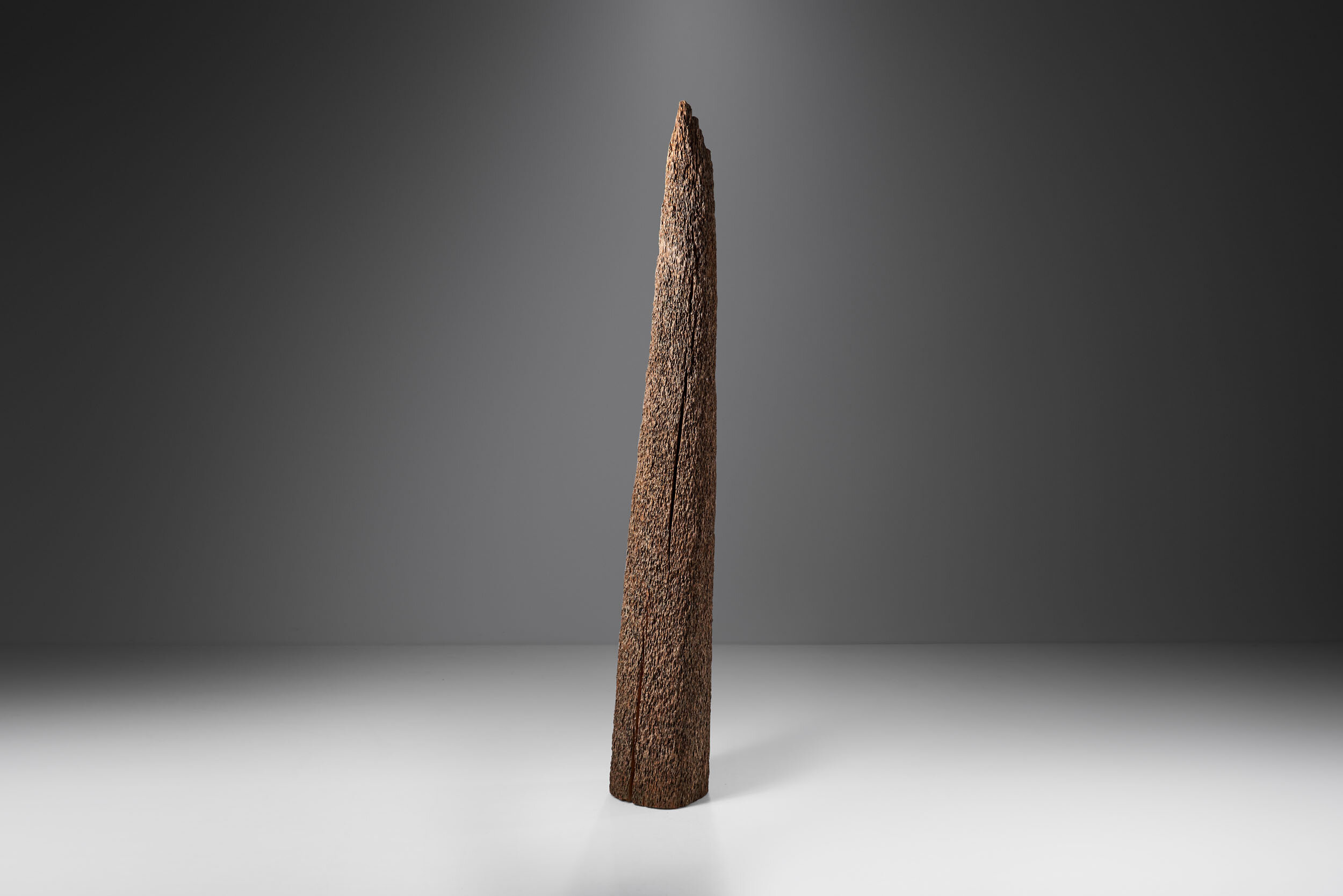
Nature has been a source of inspiration for artists, craftsmen, and to people of all trades since the dawn of time. This spike-shaped sculptural creation is ideal to bring a piece of ‘naturalia’ into any space to marvel at the “art” of nature.
This almost three-meter-high natural sculpture came to be from one tree trunk, most likely teak. The hollowed surface is the result of serving as the home for termites. Large termite mounds have become popular in the past years thanks to their elaborate structure. In the case of tree trunks, the patterns are visible on the outside, making them visually mesmerizing. Termites tend to take over mature trees, which here, is indicated by the sheer size of this tree trunk. This sculptural tree trunk has become preserved as a fossil; therefore, it is no longer deteriorating. Nonetheless, its natural characteristic stays intact with uneven edges and beautiful texture. The spike-shape resembles termite mounds found in West and Central Africa.
Sculptures that blend in perfectly with nature have been popular in the past decades, but as this colossal piece shows, natural sculptures also have a place inside. Instead of blending in, this piece can be the focal point of any space.
Condition:
In vintage condition. Wear consistent with age and use. Marks due to age and external agents.
Dimensions:
15.74 in W x 12.99 in D x 104.33 in H
40 cm W x 33 cm D x 265 cm H
REQUEST PRICE HERE
Price category: 12,500 - 15,000 usd / eur
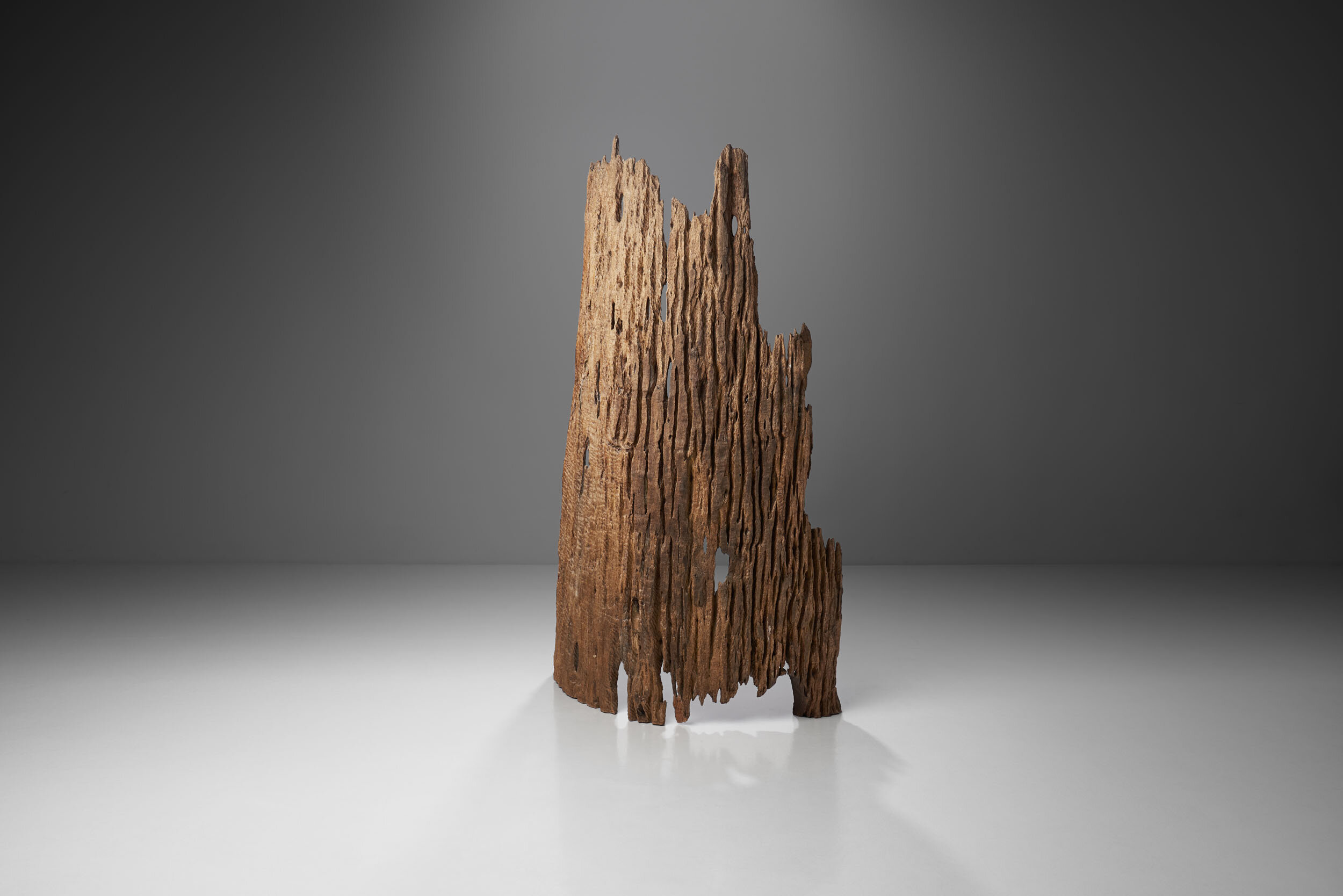
This tree bark room divider from Tibet is quite the literal and visual manifestation of the expression ‘historical furniture’. With nature as its designer and manufacturer, this piece is exceptional in every single way.
With today’s standards, this room divider would be called brutalist in style thanks to its rough, heavily textured look. A better fitting word might be ‘elemental’, as this semi-fossilized tree bark is simply stunning in its natural form. The bark is the outermost layer of a tree and has the most intense surface that can tell tales about history. This huge piece of Tibetan tree bark was designated to be a room divider, and as such it creates a natural effect in any interior, bringing a piece of nature inside. As it has numerous sculptural looking holes and uneven edges, this divider doesn’t appear heavy despite its material. Traditionally, room dividers were quite heavy and ornate, and mainly used by royalty. The main function hasn’t changed much, which is to visually separate spaces in a room for different purposes. This Tibetan divider can also serve as an accent piece to add character to a space. The colour of the wood differs on the two sides of this divider, which is most likely due to time and external agents, such as being exposed to sunshine.
As nature does not mass produce identically, this piece is truly one of a kind, with intense visual qualities, therefore it cannot be reproduced. This tree bark room divider can be a unique decoration for modern interiors, and here, the quality of timelessness isn’t even a question.
Condition:
In vintage condition. Wear consistent with age and use. Marks due to age and external agents.
Dimensions:
38.98 in W x 17.72 in D x 65.35 in H
99 cm W x 45 cm D x 166 cm H
REQUEST PRICE HERE
Price category: 1,000 - 2,500 usd / eur
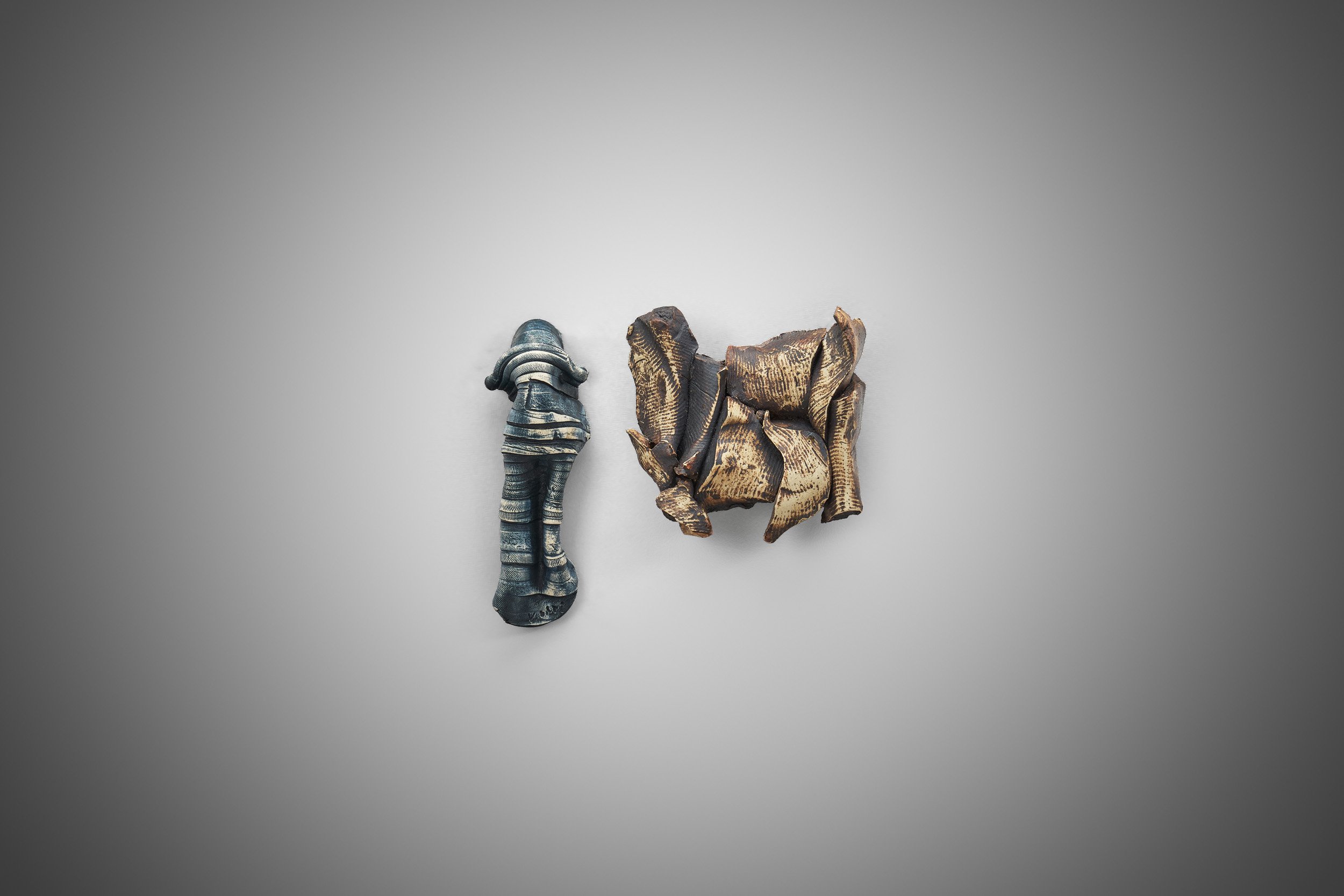
Born in Eskilstuna, Sweden, Ulla Viotti is an internationally renowned Swedish artist whose creations are delightfully original. Her work, as showcased by these stoneware pieces, consists of large sculptures and architectural ceramics employing a range of techniques.
Viotti’s style is an interesting mixture of different impressions, affected by her study of Etruscan pottery in Italy, which influenced the formal aspect of her work developing a figurative element. Also by a visit to Israel during the 1960s where she first experienced the combination of sculpture and architectural ceramics and met ceramic artists who used materials in a more free way. These stoneware pieces however, reflect her work in a stoneware factory in Jaffa when her aesthetic changed dramatically, and started recalling the structures of the landscape that manifested the feeling of 'forsakenness', a theme that often recurs in her later work. These pieces, while visually quite different, form a pair in an unexpected way. Stoneware fires darker colours, is less dense (higher porosity) and less vitreous, finally the fired surface is less homogeneous. As a result of these qualities, these mural pieces appear rough, almost abstract. At the same time, it is evident that the colours, every line and shape is the result of a well though-out process of sculpting. Works which appear to be non-figurative often do recall the visible world and so is the case here as well. It is hard to gaze away in the presence of these Viotti works. Both pieces are signed by the artist.
The blues and browns of the uneven layered forms convey a strong feeling of organic surfaces given further resonance with the diverse curved shapes and forms. Ulla Viotti’s small scale mural works are very rare and never repeated, making this pair even more special.
Condition:
In good vintage condition. Wear consistent with age and use.
Dimensions:
Brown piece
6.88 in W x 2.55 in D x 2.75 in H
17.5 cm W x 6.5 cm D x 7 cm H
Blue piece
2.95 in W x 2.16 in D x 8.46 in H
7.5 cm W x 5.5 cm D x 21.5 cm H
About the designer
Ulla Lilli Marianne Viotti was born on the 20th of November in 1933 in Eskilstuna, Sweden. She studied at the School of Art in Blackpool in Great Britain between 1950-1951 and at Konstfack in Stockholm 1952-1956, for the first two years at the ceramics department and then at the school's higher art-industrial department.
She was awarded a scholarship from the Swedish Crafts Association and a scholarship from the King's Fund in 1961, as well as a travel scholarship from Värmland's museum friends. Furthermore, she has exhibited in, among other places, Karlskoga and at Konsthantverkarna in Stockholm. Since 1958 she has participated in several exhibitions in Sweden but also outside of her home country. Internationally, she has been represented at exhibitions in Viterbo, Haifa and Tel-Aviv.
Since 2005, she has been living and working in Brantevik in Österlen. Her art consists of rustic utilitarian earthenware, ceramic sculptures and earthenware reliefs as well as paintings and drawings. Viotti is represented at, among others, the National Museum in Stockholm, the Värmland Museum, the Jönköping County Museum and the collections of the Israeli state.
Her work is represented in museums and collections throughout the UK and Sweden, including the collection in Aberystwyth. She participated in the first International Potters Festival, Aberystwyth in 1987. ~H.
REQUEST PRICE HERE
Price category: 1,000 - 2,500 usd / eur
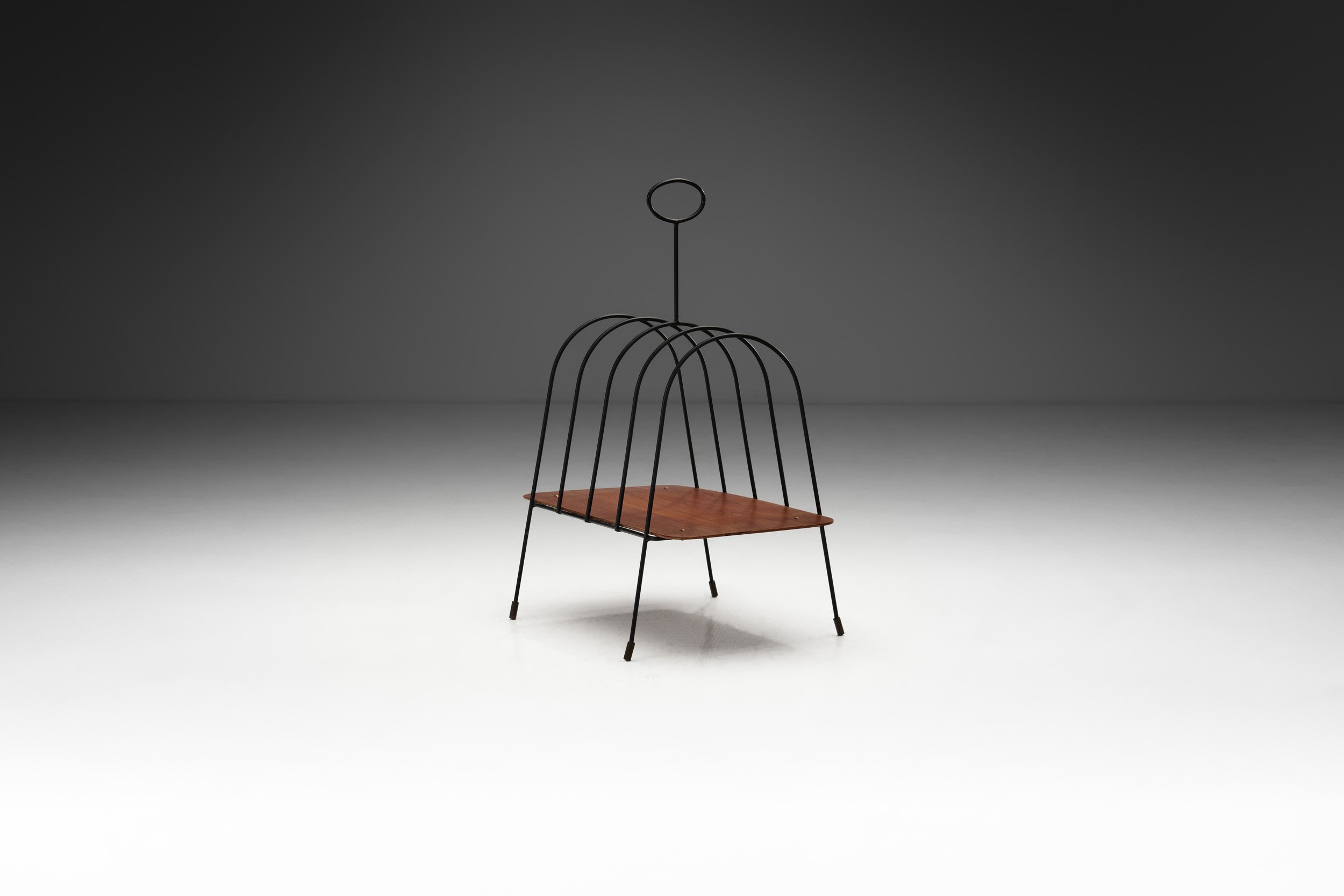
Bas van Pelt may be the most well-known for his seating designs, but this rare magazine rack shows the designer’s less known side. The design of this model feels contemporary and shows off the creativity of van Pelt.
This type of storage is often referred to as a display rack, which is especially apt for this model. The black lacquered wired metal body is arranged in an airy design that allows the display of magazines and books. The curving shape of the five arches create a modern, artistic look crowned - quite literally - by the single pole in the middle with a ring at the end. This feature gives the design that extra element that distinguishes it from other models, while also serving a functional role. The entire rack can be picked up easily thanks to the ring, further, it still manages to stand out and grab the eye despite its small size. The wooden bottom adds an organic touch that is a beloved feature of mid-century modern design and of Dutch designer, Bas van Pelt as well. It pairs very well with the black metal frame and both materials get visually enhanced as a consequence. The rack stands on four brass leg ends showing how attention was given to the smallest detail.
Whether used to hold magazines, newspapers or any other periodicals, this magazine display is sure to stand out. While serving a primarily functional role, this model is sure to stand out for its aesthetic qualities as well, reminding why mid-century modernism was one of the most creative design eras of all time.
Condition:
In good vintage condition. Wear consistent with age and use. Some small marks on the wood.
Dimensions:
17.71 in W x 13.38 in D x 24.8 in H
45 cm W x 34 cm D x 63 cm H
About the designer:
Bas Van Pelt (1900 Dordrecht (NL) - 1945 Sandbostel (DE)) was a well-known Dutch interior and furniture designer, known for the clarity and quality of his designs. His works created in the 1930s and 1940s are regarded for their progressive design and quality.
While he is most well-known for his chair designs, van Pelt was also active as an interior designer. He also designed fabrics for window coverings, rugs and carpets, seating and tables, as well as lighting crafted by the best craftsmen in the Netherlands. He worked with multiple manufacturers, including his own firm, Bas van Pelt / My Home and Verto Verenigde Touwfabrikien, where his tubular metal designs were produced.He opened ‘My Home’ in 1931, just before the onset of the great crisis in the midst of major changes in the last century. In the façade of the shop, in the lively centre of The Hague, there was one large window placed so that everyone could look inside and see how things were made, and could be done differently; in his view, modern furniture at the time was light and airy, transparent, made of tubular steel frame, combined with wood. This view was very progressive for the 1930s, when the influence of The Hague School was still dominating most designers.
Unfortunately, in 1940 WWII changed the life of Bas van Pelt as well, who was on the board of the Haagse Kunstkring, where discussions about reconstruction after the war took place. Sadly, Bas van Pelt did not live to see it. He was deported because he gave people in hiding a safe place, saving many lives. While there is very limited information about his life and work, his furniture designs have become collectibles in the past decades that are also found in Dutch museums. Bas van Pelt is remembered as a progressive designer and as a man who saved lives. ~H.
REQUEST PRICE HERE
Price category: 500 - 1,000 usd / eur
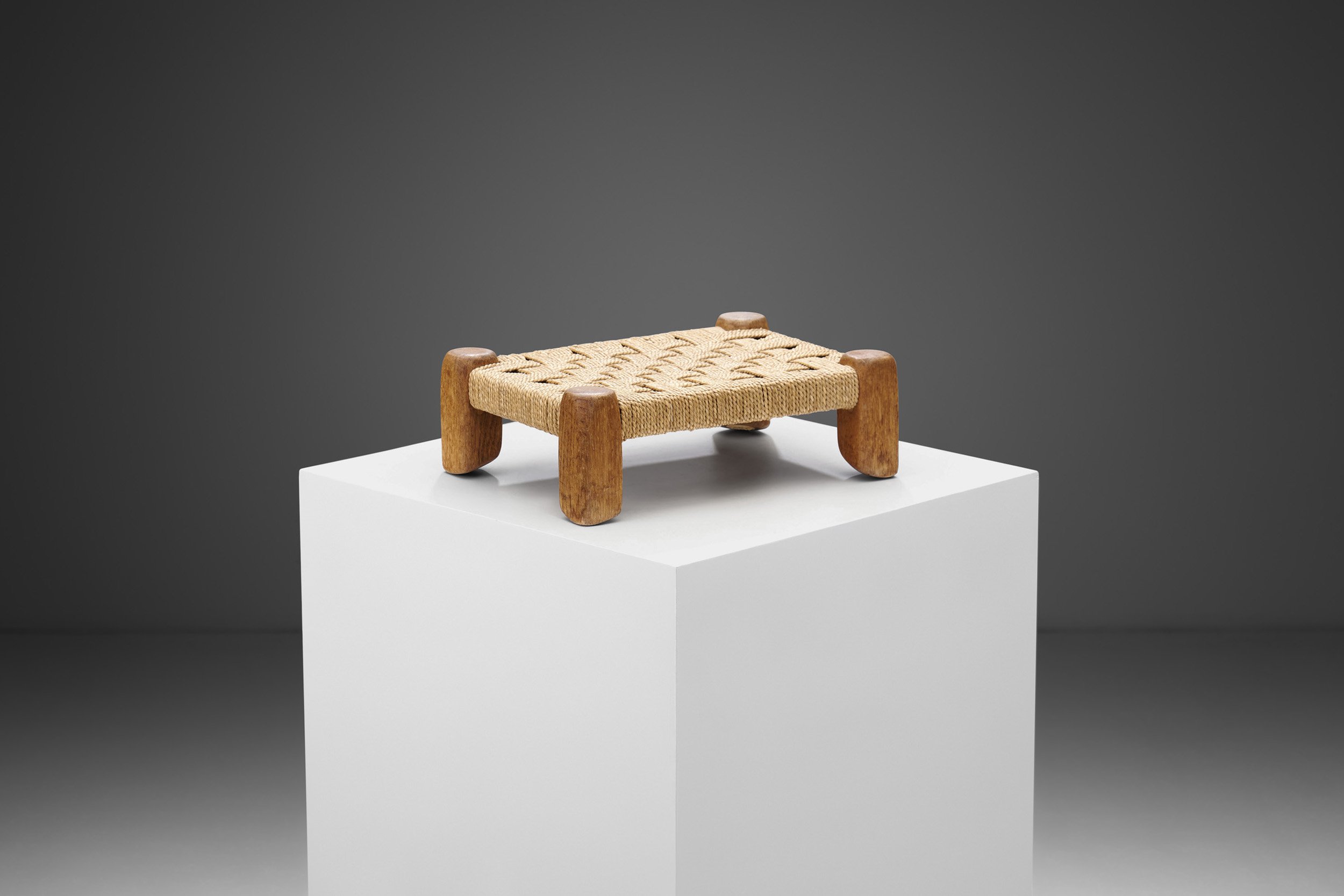
From Charlotte Perriand to Axel Einar Hjorth, stools have been staples in European design history. Modernist stools, like this organic model, stem from one of the earliest forms of seating, the milking stool. With a highly functional history and modernist look, this stool is a rare and stylish piece.
The design is characteristically simple in its form with clean lines, organic materials, and robust legs. Like many of its Scandinavian contemporaries, this stool maker favoured the use of high-quality, beautifully grained wood and rush. This solid wood and rope stool stands out thanks to its seat, made of expertly woven rush. Stretched between the wooden frame, the seat’s texture and colour pairs beautifully with the wood. The rush weaving is exceptionally crisp, showcasing the layered pattern and the weaver’s skill equally. Furthermore, the seat has a subtle ergonomic shape thanks to the rush’s natural qualities to accommodate the sitter. The four, robust wooden legs are hand carved into their peculiar shape where only the outer side touches the floor, lifting the design up to create a light, effortless impression. Every functional part, including the thick legs, serve an aesthetic purpose as well. The lines are rounded out and complement the visually arresting pattern of the wood and the woven seat. The core principle of modernist design emphasizes that one should be in harmony with his or her environment, which therefore needs to be free of anything unnecessary. In line with this sentiment, this stool entirely focuses on its solid wood and rush material and well-crafted, hand woven seat.
Characterized by functionality, simplicity and clean lines, the design of this stool is all about harmony. Its organic charm is palpable and exudes a lot of charm. This model is the perfect piece to add some modern organic charm to any interior. The expertly woven rush seat and overall quality and craftsmanship guarantee longevity to this heirloom piece.
Condition:
In good vintage condition. Wear consistent with age and use. Some small scratches and marks on the patinated wood.
Dimensions:
13.58 in W x 9.64 in D x 4.52 in H
34.5 cm W x 24.5 cm D x 11.5 cm H
REQUEST PRICE HERE
Price category: 1,000 - 2,500 usd / eur
This carved birch ladle originates from Sweden in the early 19th century, a period when everyday domestic objects were shaped by strong folk traditions and regional craftsmanship. In rural Scandinavian culture, utilitarian items were often carved by hand and given expressive forms that reflected both practicality and artistry. Birch, widely available and valued for its durability and fine grain, was a preferred material for household items, allowing makers to combine function with subtle decorative character.
This ladle is carved from a single piece of birch wood, its bowl smoothly hollowed and gently rounded to create a balanced, organic form. The handle extends fluidly from the body, curving upward into a sculptural hook-like shape that allows it to be hung if needed. Tool marks and natural variations in the wood grain remain visible, giving the surface warmth and authenticity while highlighting the hand-carved process. The proportions are carefully considered, with the broad bowl contrasting with the slender handle in a harmonious way. The soft patina suggests long use, adding depth and character without obscuring the clarity of the original carving. Subtle asymmetries further reinforce its handmade nature, making each angle slightly different and visually engaging.
Today, this early 19th century Swedish ladle stands as both a functional and a sculptural object. Whether displayed as part of a folk art collection, styled in a contemporary interior, or appreciated for its material honesty, it offers a connection to traditional Scandinavian craftsmanship. Its restrained elegance, tactile surface, and expressive silhouette make it a compelling example of how simple tools were elevated through skill and intention.
Condition:
In good vintage condition. Wear consistent with age and use. The sculpture has recently been reconditioned. Due to the nature of the material, the item may have some marks, scratches, and discolouration.
Dimensions:
7.87 in W x 10.62 in D x 5.90 in H
20 cm W x 27 cm D x 15 cm H