
Long Spanish Brutalist Panel Cabinet in Oak, Spain 1960s (sold)


Long Spanish Brutalist Panel Cabinet in Oak, Spain 1960s (sold)
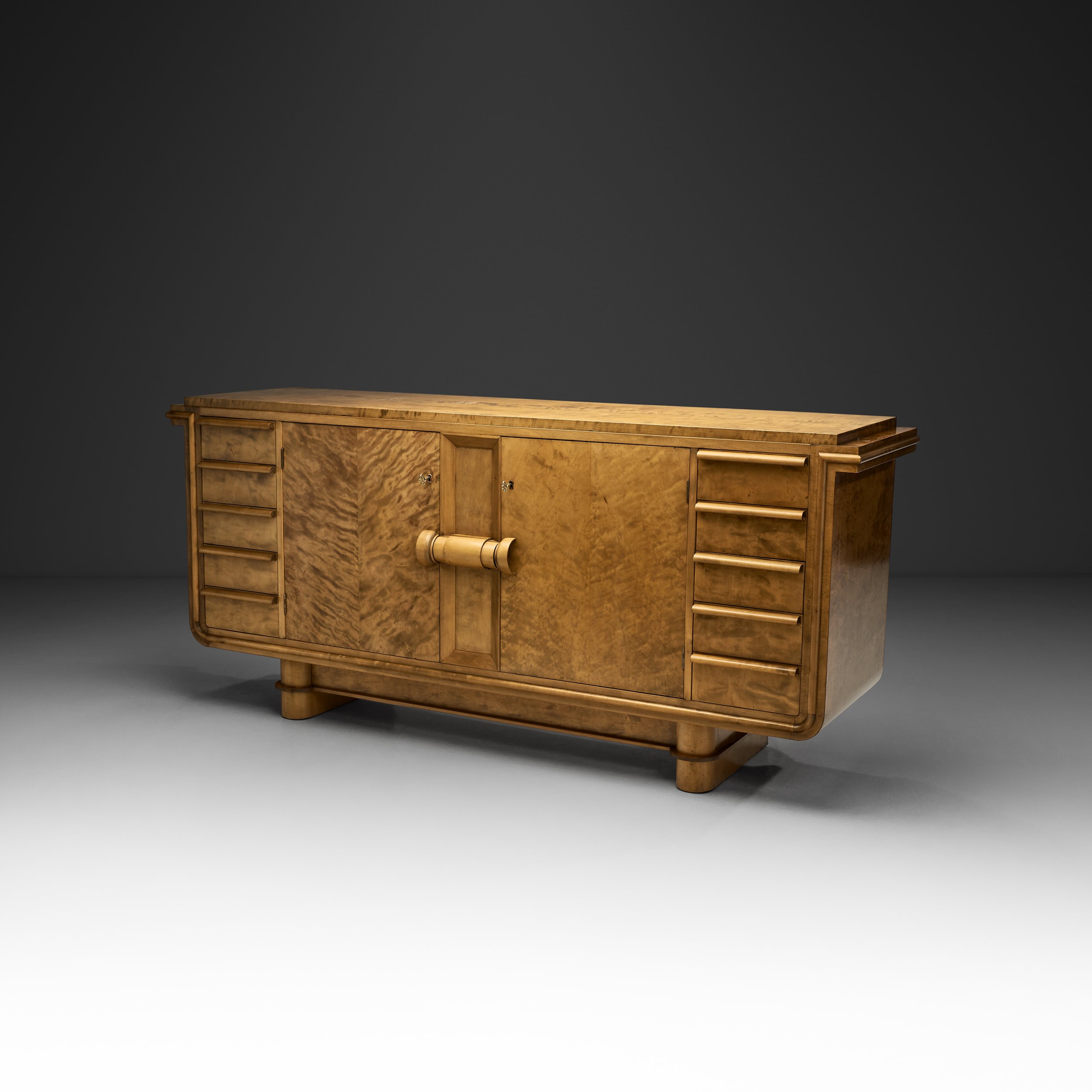
Brutalist architecture and design was born from post-World War II necessity and followed the aesthetic of the new era, offering minimalist pieces that forwent excess adornments in exchange for functionality. In most mid-century European design, there was an early emphasis on wood as it connected everyday objects to nature. This solid oak cabinet is a perfect example of this sentiment.
In furniture design, the Brutalist movement inspired designers to create models with a look meant to project an air of strength and solidity, evidenced by this cabinet. The solid oak gives it its defining, striking look. The geometric panelling on the cabinet doors accentuates the design, with this subtle decorative element adding depth and visual interest. The craftsmanship is evident in the precision of the woodwork, reflecting the standards of furniture making at the time. Inside, the sideboard offers ample storage space and shelves. Its wide surfaces and the straight lines are also perfect to showcase the workmanship. Overall the design of this cabinet isn’t loud, it leaves the focus on the oak and the carvings, yet, it has a stately appearance. As a fundamentally functional type of furniture, this cabinet does more than serving its utilitarian purpose. Even though the design primarily aims to serve as storage space, this cabinet can meld seamlessly with any style due to its elegant sense of whimsy. The doors on the front can be opened with the help of keys, a small and charming feature. The visible screws and the not too overworked oak reinforce the Brutalist look letting the material stay in focus.
The simple design serves the purpose of showing the understated beauty of natural material and its endless possibilities under the hands of an expert craftsman. Organic and brutalist pieces like this can be incorporated successfully into contemporary and traditional interiors alike thanks to the timelessness of wood and the sheer quality.
SOLD
Condition:
In good vintage condition. Wear consistent with age and use.
Dimensions:
93.70 in W x 16.14 in D x 32.67 in H
238 cm W x 41 cm D x 83 cm H
REQUEST PRICE HERE
Price category: 5,000 - 7,500 usd / eur
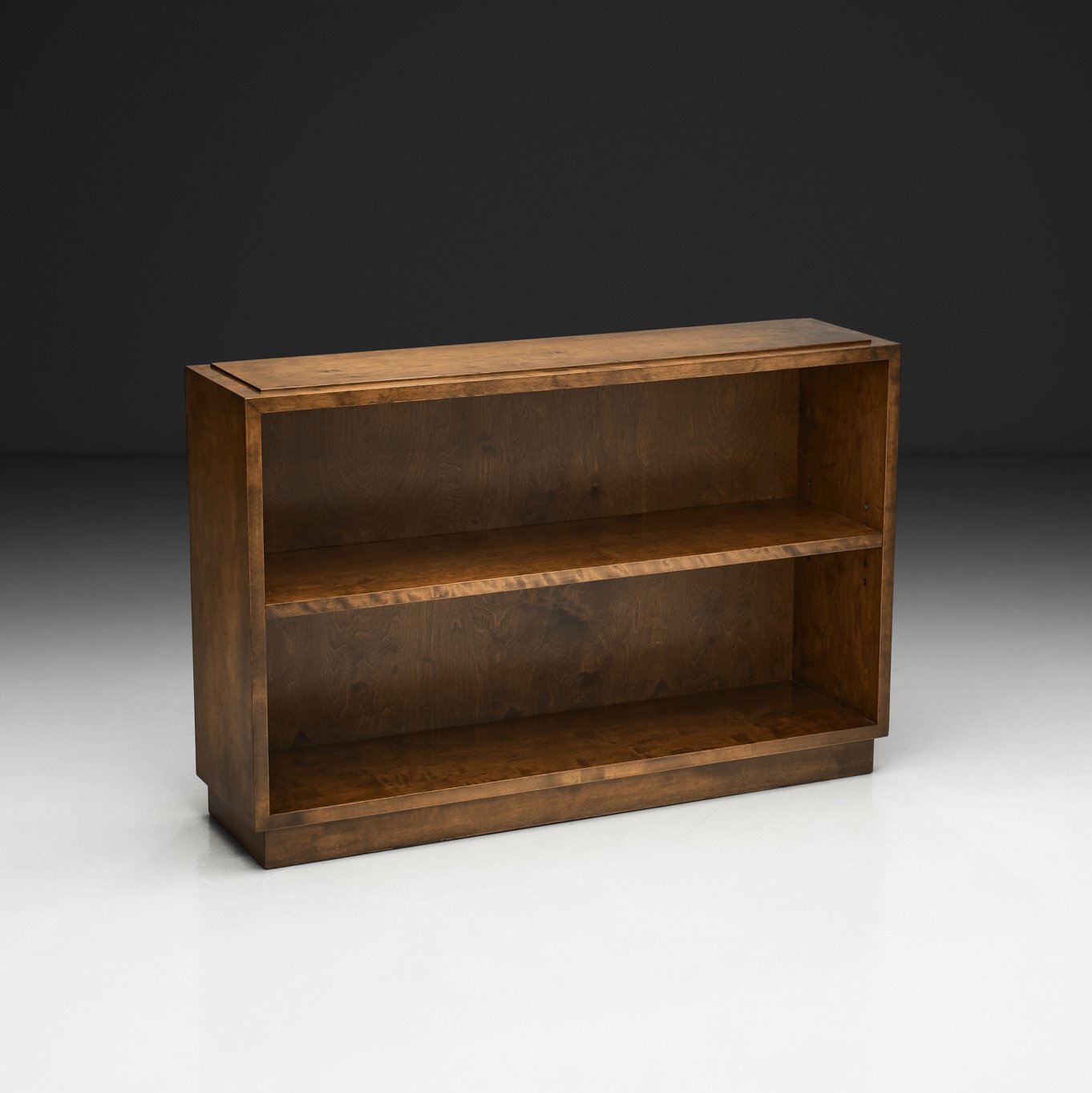
Swedish architect and furniture designer Axel Einar Hjorth served as the lead designer for Sweden’s Nordiska Kompaniet department store from 1926 to 1938. During this time, Hjorth designed many collections from the “Sportstugemöbler” series to this "Typenko" model.
Elegant in its simplicity, this "Typenko" bookcase puts the emphasis on showcasing the material through a simple, uncluttered design. It deserts any unnecessary ornamentation in favour of the traditional mid-century design philosophy, which centres around craftsmanship and functionality. This piece features exposed shelves, which are an honest and functional design element. The open form makes it perfect to display anything, from books to design objects as there is generous storage space. Thanks to the airy arrangement of the shelves, the model allows the veneered wood’s varied colour and rich grain to shine beautifully. The pattern is so arresting that it can serve as a decorative element in a space on its own.
The Swedish company Nordiska Kompaniet manufactured this model with utmost care for its quality and design. The company was among the most renowned Swedish manufacturers during the mid-century era, working with some of the most well-known Scandinavian designers - and this "Typenko" model is a prime example of the great success these collaborations resulted in.
Condition:
In good vintage condition. Wear consistent with age and use. The bookcase has recently been reconditioned. Due to the nature and age of the material the item has marks, scratches, chips, and dents. Minor discolouration may also be present.
Dimensions:
39.56 in W x 10.23 in D x 25.98 in H
100.5 cm W x 26 cm D x 66 cm H
REQUEST PRICE HERE
Price category: 20,000 - 30,000 usd / eur
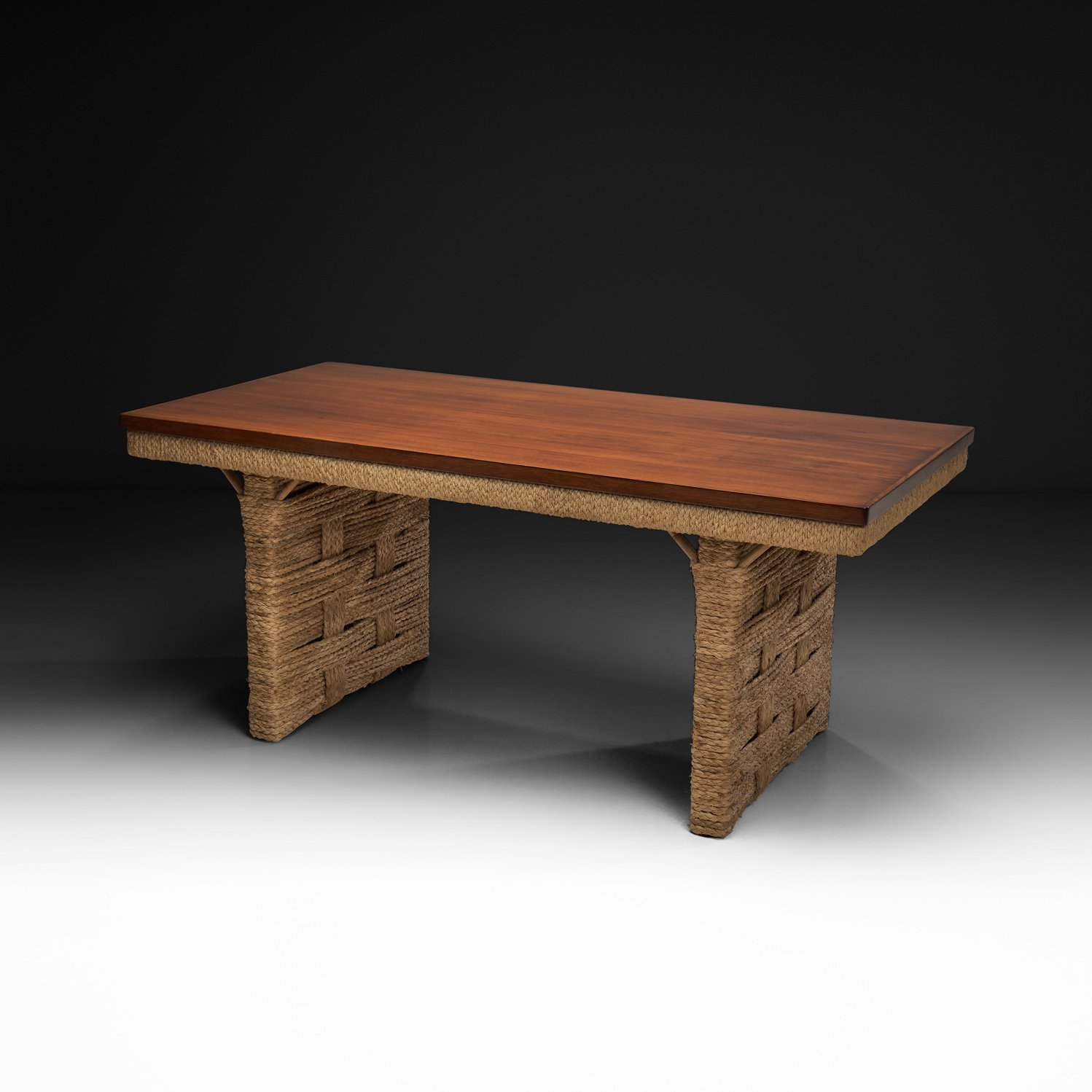
Adrien Audoux and Frida Minet were a French design duo who worked together during the 20th century. They were known for their innovative use of natural, sustainable materials, including rope, wicker, and bamboo. The duo’s work was heavily influenced by the Modernist movement, which sought to create functional and streamlined designs that were accessible to a wider audience.
Audoux & Minet’s pieces are characterised by a strong sense of craftsmanship, with each piece being handmade by the designers themselves or by skilled artisans. This dining table showcases a long rectangular top finished in warm wood veneer, its broad uninterrupted surface displays the grain. The top sits above thick base covered in a tightly woven natural fibre that introduces an immediate depth of tone and texture. The fibre flows across the supports in beautiful braided patterns, emphasising the bold and solid look. The rope is made into a geometric pattern which breaks up the woven surface to create a beautiful rhythm within the structure. The contrast of materials is central to the table’s character: the smooth, richly grained wooden top stands out against the coarse, rough and natural fibre below, allowing two very different surfaces to define the piece.
Today, Audoux and Minet's designs are highly sought after by collectors and are considered important examples of mid-century modern design. Furniture pieces like this table stand out through their unique textures, and their materials, as well as their classic charm.
Condition:
In good vintage condition. Wear consistent with age and use. The table has recently been reconditioned. Due to the nature and age of the material, the item has some marks and scratches on the tabletop. Additional imperfections like chips, dents or discolouration may be present.
Dimensions:
67.12 in W x 33.46 in D x 29.13 in H
170.5 cm W x 85 cm D x 74 cm H
REQUEST PRICE HERE
Price category: 2,500 - 5,000 usd / eur
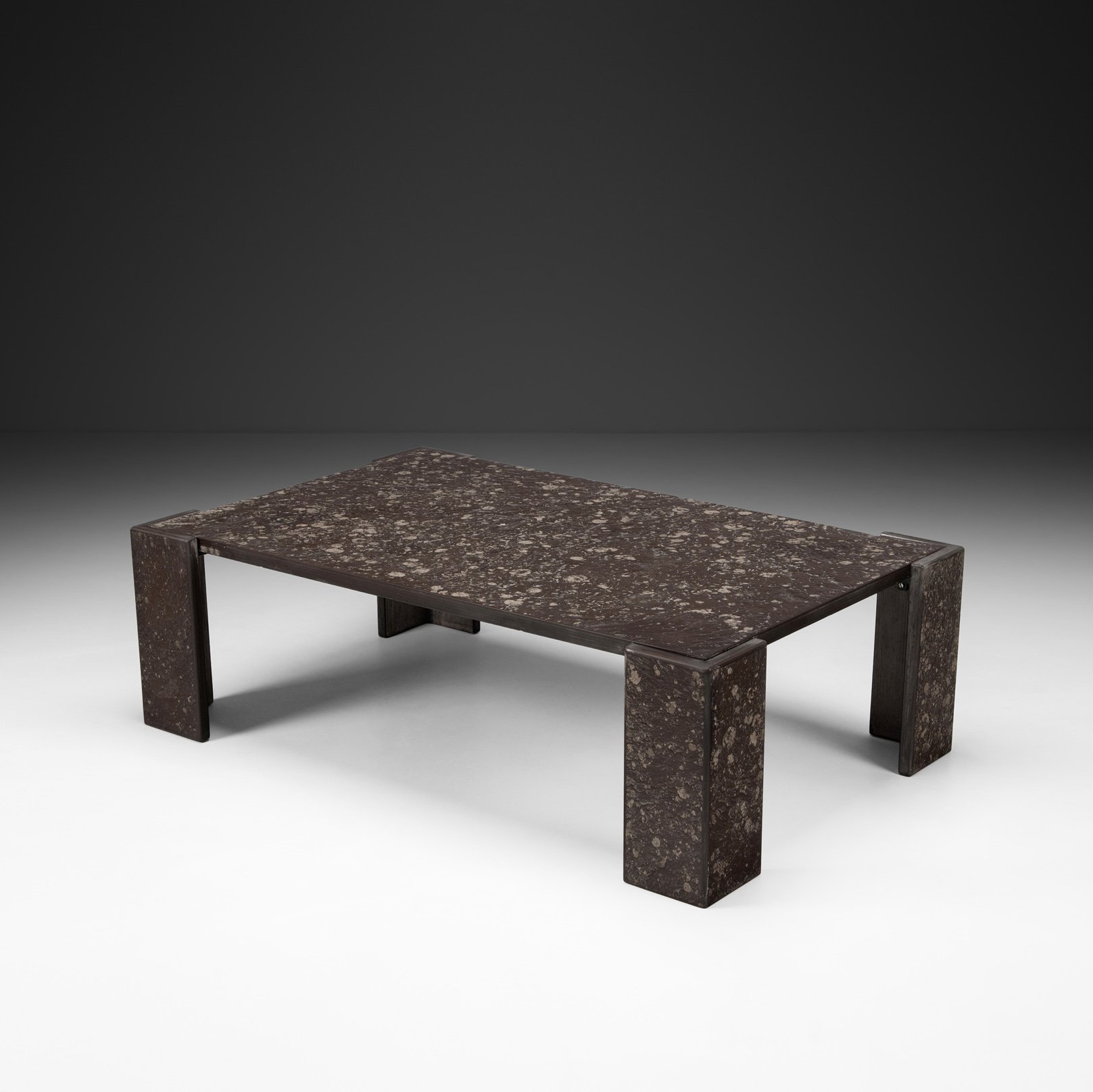
Brutalist furniture of the second half of the 20th century often gave materials a dominant role, using simple, bold forms to emphasise their natural colour and texture. Stone was particularly effective within this approach, as its irregular surface could provide visual richness without additional decoration. This Posidonia slate coffee table follows that principle closely, with a low architectural form built almost entirely around the distinctive character of the stone.
The coffee table has a broad rectangular top supported by four rectangular legs positioned at its corners. Its construction is extremely clear, with the horizontal tabletop and vertical supports creating a simple geometric structure. Posidonia slate makes up the entire surface, giving the table a consistent material character. The stone has a deep dark tone with lighter areas scattered irregularly across the surface. These natural variations break up the large flat plane and ensures that no area of the table appears completely uniform. The top is particularly effective in constituting a focal point, as its generous uninterrupted surface provides a clear view of the slate's complex pattern. The low height further emphasises the horizontal shape, allowing the long stone top to remain the main focus from every angle. Coffee tables, in general, serve as design staples in living spaces for a multitude of reasons: beyond their utilitarian function of providing a surface for drinks and books, they anchor a room, creating a point around which furniture and conversation revolve.
The strength of this coffee table comes from the direct relationship between its simple construction and expressive stone. This piece represents a particularly striking example of the material-focused furniture associated with the era.
Condition:
In good vintage condition. Wear consistent with age and use. The table has recently been reconditioned. Due to the nature of material, the item has some marks, scratches, and discolouration.
Dimensions:
53.35 in W x 33.66 in D x 16.14 in H
135.5 cm W x 85.5 cm D x 41 cm H

REQUEST PRICE HERE
Price category: 5,000 - 7,500 usd / eur
Nordiska Kompaniet was founded in Stockholm in 1902, and to this day, it is regarded as one of the most renowned Swedish furniture manufacturers. The department store reflected modern society in different ways; it was a palace where much was possible and here, consumption became not just a necessary everyday routine, but a lifestyle and a pleasure.
This piece of furniture carries the Swedish mid-century design history that defined not only the era’s aesthetic, but still influences contemporary design. Functionality plays an important role in this model; with its sheer size, it offers a lot of shelving space. The doors cover space for several shelves. The veneer has a beautiful grain and pattern that stands out on the large surfaces on all sides. The slender legs balance the design perfectly both visually and physically. With its subtle decorative element, the panelling on the doors accentuates the design, adding depth and visual interest. The design of this sideboard isn’t loud, it leaves the focus on the wood and the details, yet, it has a stately appearance. The execution and high attention to detail showcases the uncompromising craftsmanship and high-quality approach to furniture design in Sweden in the mid-to-late 20th century.
With the major rise in popularity that mid-century modern experienced, it’s easy to see touches of 20th century Scandinavian style in contemporary homes. The natural and unfading beauty of wood, and the simple, modern and elegant design is timeless of the era. This piece is sure to add style to any interior.
Condition:
In good vintage condition. Wear consistent with age and use. The sideboard has recently been reconditioned. Due to the age and nature of the material, the item has minor scratches and dents, and may have additional marks or discolouration.
Dimensions:
70.87 in W × 19.69 in D × 28.74 in H
180 cm W x 50 cm D x 73 cm H
REQUEST PRICE HERE
Price category: 2,500 - 5,000 usd / eur
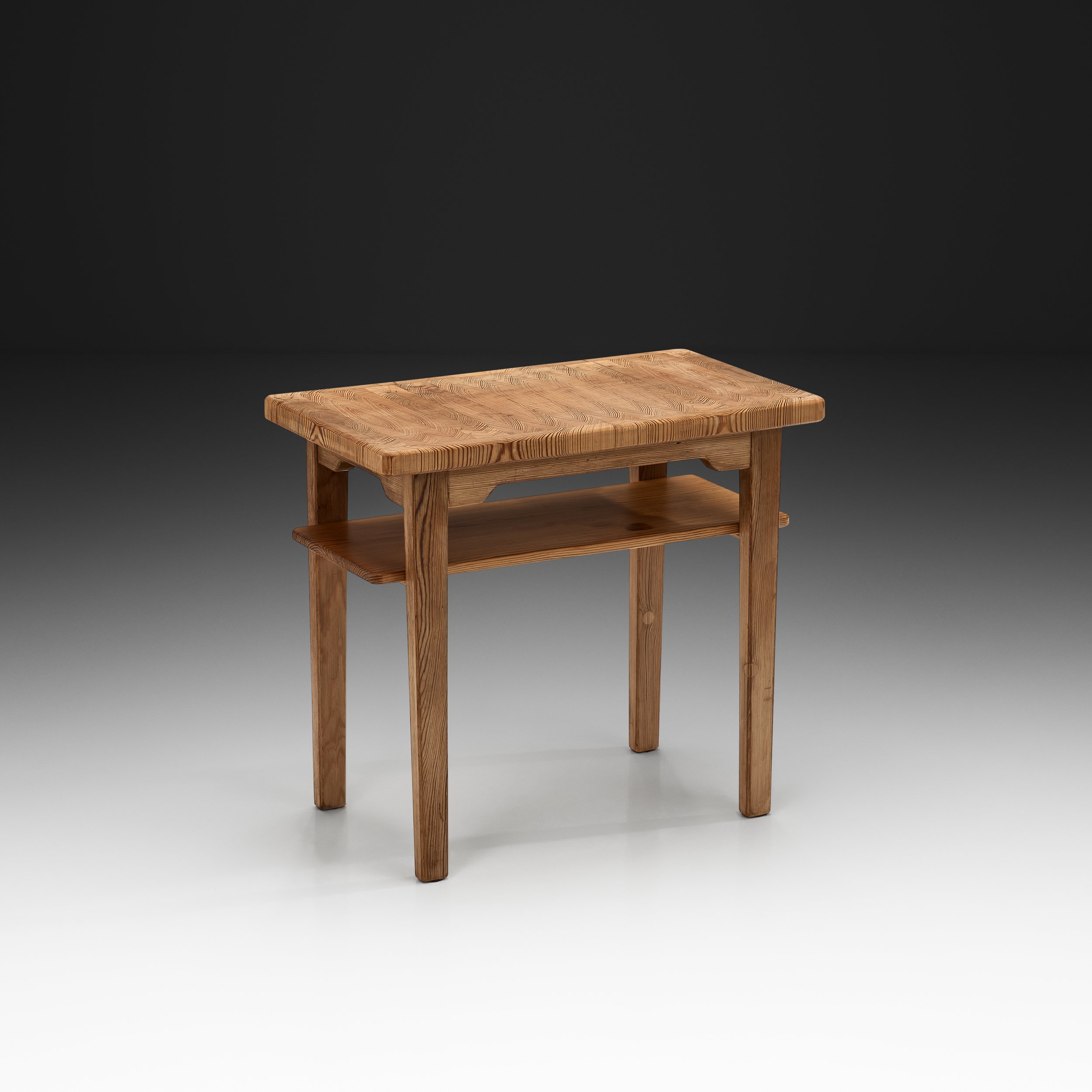
The 1960s in Sweden were defined by a quiet but deliberate design philosophy rooted in function, clarity, and craftsmanship. Designers and cabinetmakers turned toward a more humanist modernism that emphasised warmth over severity. This approach is exemplified by Swedish Modern design movement, which focused on creating durable, accessible, and elegant furniture for the masses.
Rather than treating tables as purely functional objects, designers like Hilding Nilsson created furniture that integrated beauty into day-to-day life. Thanks in great part to an early emphasis on wood Swedish furniture design from the mid-20th century era avoided associations with cold industrialisation and machine aesthetics. This table is crafted from pine and because of its universally appealing form and impeccable craftsmanship, it fits almost any design style. It is apparent that equal attention was paid to the aesthetic quality, which is visible in the carefully crafted construction. The minimalist design allows the beautiful grain of the wood to stand out throughout the table. Moreover, the geometric grain pattern and warm patina of the pine speak to decades of gentle use, enhancing the appeal with a sense of history and authenticity.
Like most mid-century pieces, this side table is sure to enhance the daily lives of its users through its visually pleasing and functional design that is timeless in every sense of the word.
Condition:
In good vintage condition. Wear consistent with age and use. The side table has recently been reconditioned. Due to the nature and age of the material, the item has marks, scratches, and discolouration.
Dimensions:
22.64 in W x 12.60 in D x 20.08 in H
57.5 cm W x 32 cm D x 51 cm H
REQUEST PRICE HERE
Price category: 7,500 - 10,000 usd / eur
This sideboard was created for Asko, the Finnish furniture manufacturing company founded in 1918 by Aukusti Asko Avonius, known for the production of high-quality furniture. By 1930 the company had developed into the largest furniture chain in Finland and the largest supplier of furniture in the Nordic countries.
The design features a symmetrical shape and offers an uncomplicated silhouette, which serves a clear purpose, yet beautiful detail; a quality that is quintessentially modern. Combining tradition and modernity, Asko created pieces with a great consideration for functionality. This sideboard is evidence of this pursuit, thanks to its streamlined aesthetic and impressive storage volume. The use of wood gives the sideboard a very calm, natural feeling. The veneer has a beautiful grain and pattern that stands out on the large surfaces that make up the sides. The front features a series of drawers, creating a powerful sense of rhythm across the surface. Each plane adds depth and shadow, allowing light to interact dynamically with the veneer.
Today, this sideboard stands as a statement piece that bridges function and design history. Its bold geometry and refined craftsmanship allow it to anchor both contemporary and eclectic interiors with ease. Whether placed in a dining room, living space, or even bedroom, it offers strong visual identity without sacrificing usability.
Condition:
In good vintage condition. Wear consistent with age and use. The sideboard has recently been reconditioned. Due to the nature and age of the materials, the sideboard has some marks, scratches, and discolouration.
Dimensions:
79.53 in W × 21.46 in D × 35.43 in H
202 cm W x 54.5 cm D x 90 cm H

REQUEST PRICE HERE
Price category: 5,000 - 7,500 usd / eur
Designed in the manner of Henning Kjærnulf, this cabinet features a strong angular structure that gives a feeling of strength and durability. The wood construction is carved and sculpted in an unmistakable way, showcasing the skills of both the designer and the manufacturer. If there is a single common denominator for Danish Modern design, it is the quality of the woodwork, and this piece is evidence of that.
Many associate Danish furniture with the country's golden age, the mid-20th century. This model shows why: its design follows in the vein of Scandinavian functionality, timelessness and quality. Combining tradition and modernity, Kjærnulf created his pieces with a great consideration for functionality, while not shying away from decorative flair. His wood of choice was oak, a durable, long-lasting material that is the perfect canvas for the intricately carved shapes and details to take form. The functional and decorative elements of this design are treated equally, resulting in a stunning but balanced look. The cabinet features a versatile shelving and storage system. The bottom drawers also feature metal ring pulls. These small functional elements also serve an aesthetic function alongside the carved front. The mixture of round and straight shapes is used masterfully, giving depth to the oak.
The only thing that is hard to decide in the case of this piece is where to look first, as there is no doubt about its aesthetic or material quality. This cabinet is a beautiful example of Danish modernism, complete with influences from previous art and design movements. It is sure to stand out as an accent piece, or complement its surroundings thanks to its natural colour and warm tones.
Condition:
In good vintage condition. Wear consistent with age and use. The cabinet has recently been reconditioned. Due to the nature and age of the oak, the item has minor marks, scratches, and discolouration.
Dimensions:
65.75 in W x 18.50 in D x 52.95 in H
167 cm W x 47 cm D x 134.5 cm H

REQUEST PRICE HERE
Price category: 5,000 - 7,500 usd / eur
Among furniture design ideas, the 1950s and 60s were pivotal for the emergence of the Brutalist movement. Irregular edges, visible joinery, and expressive grain patterns were embraced, creating pieces that balanced traditional craftsmanship with a sculptural modern sensibility.
This sideboard puts the emphasis on showcasing the material through a robust design. As is the case with its European contemporaries, this model also deserts any unnecessary ornamentation in favour of the Brutalist design philosophy, which centres around craftsmanship and functionality. The wide surfaces and the carved lines are perfect to showcase the artistry and workmanship. The design of this piece isn’t loud, it leaves the focus on the wood and the details, yet, it has a stately appearance that is exemplary of the works created by Aranjou. French furniture pieces generally show great balance between decorative and functional elements which is the case here as well. The design still primarily aims to serve as storage space. As a result, the three cupboards and drawers open to reveal ample space that makes the sideboard ideal for daily use. The maker of this table clearly focused on the material, letting the beautiful qualities of the wood stand out. The craftsman’s handiwork is clearly visible throughout, highlighting its organic allure.
The design generation active during the mid-20th century created some of the most iconic wooden furniture designs of the whole century. This Aranjou edition sideboard is a beautiful example of how successfully they managed to merge traditional craftsmanship and materials with an essentially modern approach to design.
Condition:
In good vintage condition. Wear consistent with age and use. The sideboard has recently been reconditioned. Due to the age and nature of the material, the item has minor scratches and dents, and may have additional marks or discolouration.
Dimensions:
78.74 in W × 20.08 in D × 42.91 in H
200 cm W x 51 cm D x 109 cm H
REQUEST PRICE HERE
Price category: 5,000 - 7,500 usd / eur
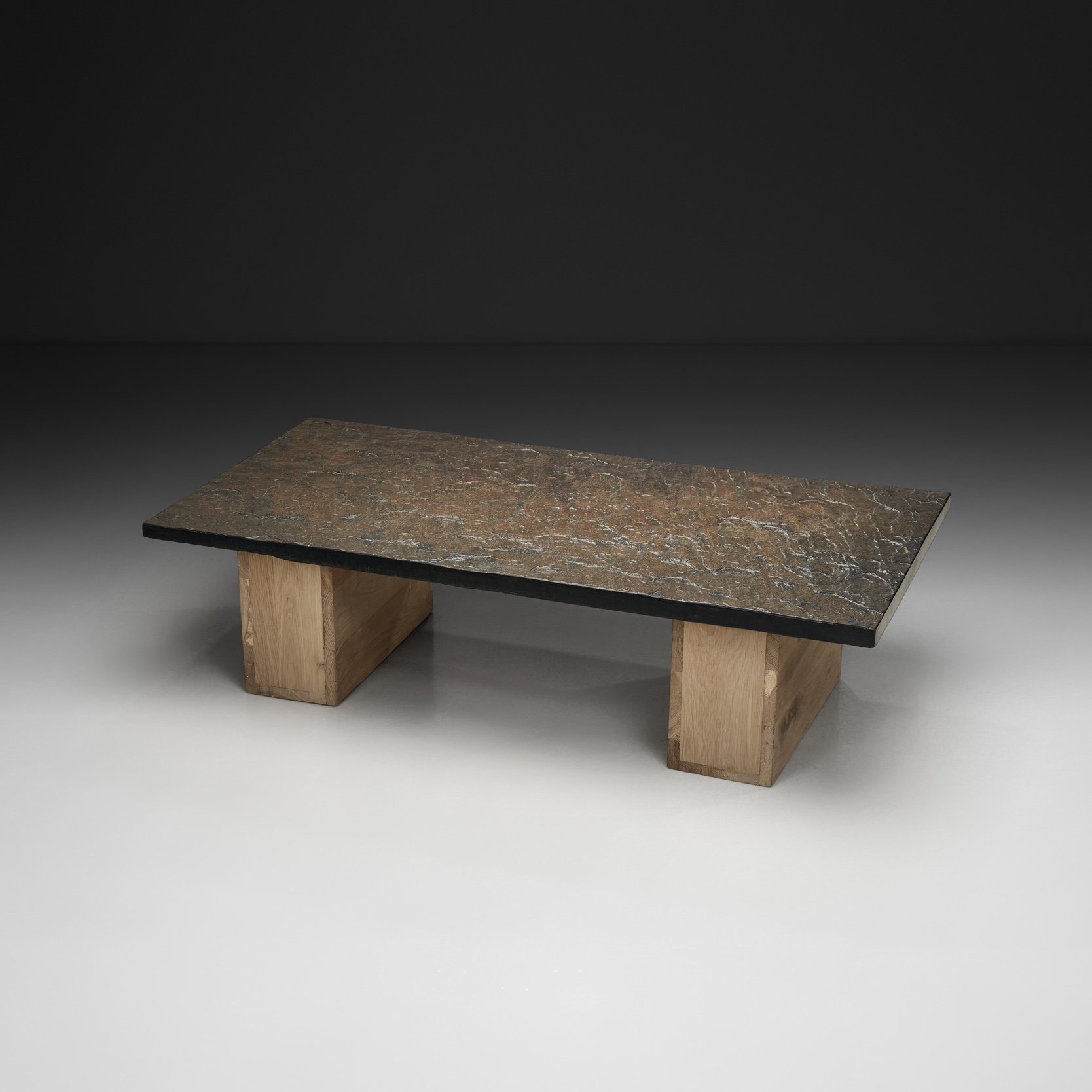
In the European design landscape of the mid-20th century, Brutalism emerged as a distinct architectural and artistic movement, influencing not only buildings but also furniture design. The 1950s and 1960s witnessed the rise of Brutalist furniture pieces, often showcasing the marriage of raw, unfinished materials and sculptural forms. Today, this style has made a remarkable comeback, capturing the essence of a bygone era while still resonating with contemporary sensibilities.
This table boasts a robust, almost industrial aesthetic, marrying form and function with an unapologetic rawness. Its bold, unapologetic aesthetic resonates with those seeking a departure from the sleek minimalism of recent years. Its design showcases a rectangular stone top and wooden block base. This combination of materials makes it a stylish example of the period’s design versatility. The unique colour variation of the stone top greatly adds to the visual interest of this piece. Stone nowadays is an indispensable element of interior design. Not only is it durable, but it has the power to arrest visual interest through its versatility. Brutalist furniture from Europe in many ways transcends the word ‘modern’, and so does this coffee table.
Coffee tables, in general, serve as design staples in living spaces for a multitude of reasons: beyond their utilitarian function of providing a surface for drinks or books, they anchor a room, creating a focal point around which furniture and conversation revolve. Overall, this table equally emphasises function and visual interest, creating an instantly arresting aesthetic.
Condition:
In good vintage condition. Wear consistent with age and use. The table has recently been reconditioned. Due to the nature and age of the materials, the item has some marks, scratches, and discolouration.
Dimensions:
55.11 in W x 27.55 in D x 14.37 in H
140 cm W x 70 cm D x 36.5 cm H
REQUEST PRICE HERE
Price category: 1,000 - 2,500 usd / eur
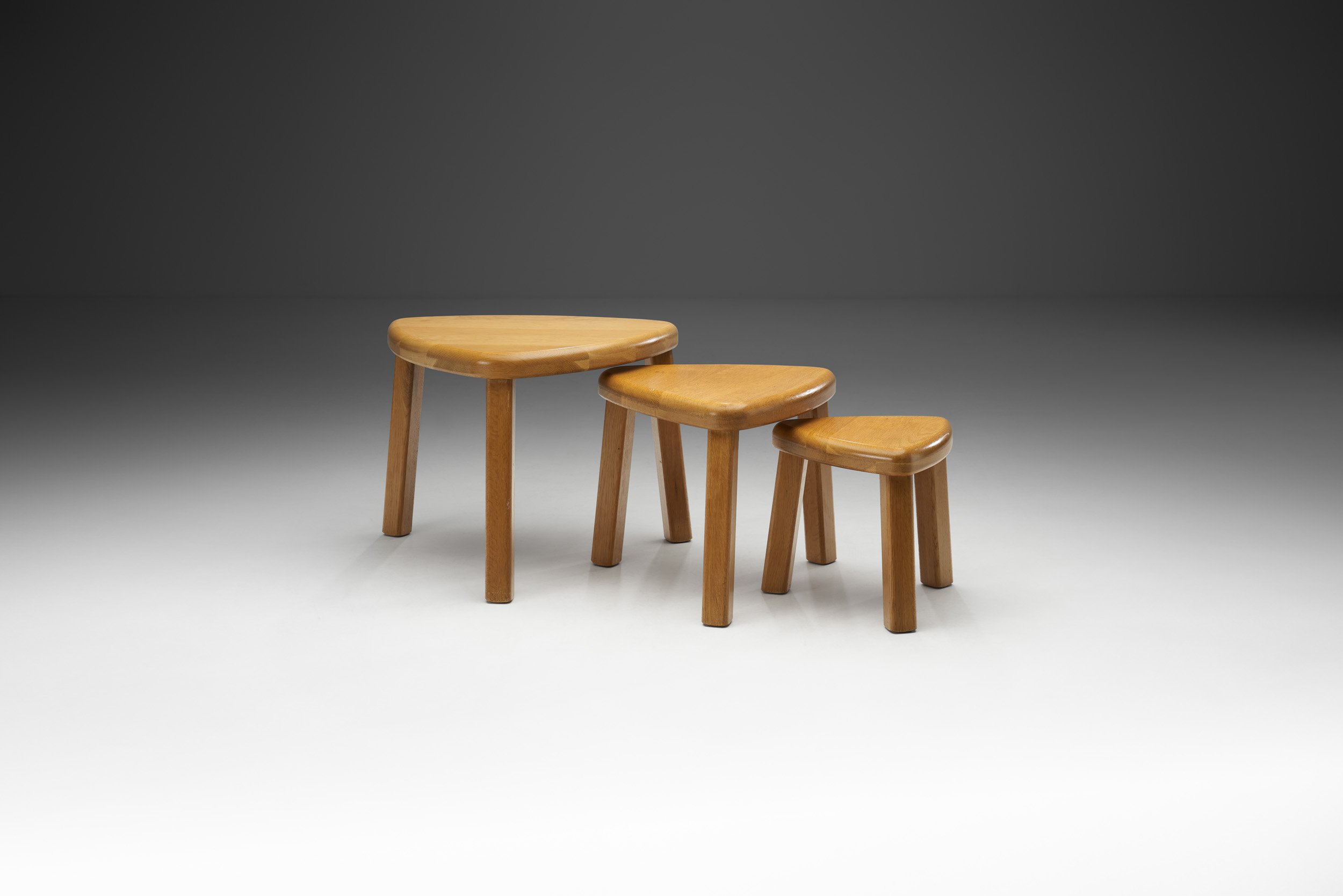
Created with mobility and flexibility in mind, nesting tables can be organized in an unlimited variety of stylish and functional configurations. Scandinavian models of the mid-century era – as these tables showcase – combined their functionality with the unmistakeable touch of Nordic design.
The triangular shape of the tabletops immediately stands out. This silhouette, resembling a guitar pick, was particularly favoured by Danish designers, such as Poul Thorsbjerg Jensen. The pieces of this unique set of tables contain three individual tables that are graduated in size so that they may be stacked on top of one another. Each piece is made of solid wood with beautiful grain and pattern that is even more noticeable when the individual tables are next to each other. The different sizes of these nesting tables serve both functional and visual goals; they can conveniently be used individually or nested together to form a coffee table, or they can be separated and laid around the room to form a cohesive interior style. Additionally, a trio of nesting tables bring added depth and cosiness, and it also follows the revered rule of three – a Feng Shui principle that encourages 'groups of three' to open and relax a space. The versatility and functionality of this set is completed by the Scandinavian design: soft, rounded edges and craftsmanship characterize the tables, supported by the sturdy legs.
The versatility of nesting tables makes them incredibly practical and functional. They are a perfect choice for small spaces as they allow maintaining a clean and open interior design without giving up comfort. Whether nested together or placed next to each other, this set is sure to bring functional style and quality to any space.
Condition:
In good vintage condition. Wear consistent with age and use. The tables have recently been reconditioned. Due to the nature and age of the material, minor marks and scratches are present.
Dimensions:
Largest: 47 cm W x 46.5 cm D x 40 cm H
Middle: 39 cm W x 40 cm D x 34 cm H
Smallest: 29 cm W x 29 cm D x 28 cm H

REQUEST PRICE HERE
Price category: 500 - 1,000 usd / eur
This rattan and steel basket is attributed to Dutch designer, Dirk van Sliedregt, and was manufactured by Gebr. Jonkers in the 1960s. Van Sliedregt was known for his minimalist yet functional approach to design, worked extensively with natural materials, often incorporating them into elegant, understated forms that reflected the modernist ideals of the post-war period.
De Gebroeders Jonkers (translated as The Jonkers Brothers) was a furniture manufacturing company based in Noordwolde, a town in the Netherlands historically known as the center of wicker and rattan production. During the mid-20th century, the company gained prominence for its high-quality woven furniture and collaborations with forward-thinking designers like Dirk van Sliedregt. Their work contributed to the growing international reputation of Dutch design during the 1950s and 60s, particularly within the context of modernist and Scandinavian-inspired interiors. This basket has a metal structure covered in wicker. The organic material is carefully woven around the steel frame, which is painted black, creating a sleek, interesting effect. The combination of metal and wicker gives a modern look to this basket. With functionality at the design’s core, this model is a decorative piece that can be used in versatile ways. The size is perfect to store magazines, books, or even blankets, allowing these items to still be visible even while stored away. Dutch mid-century rattan pieces like this have a well-established history and have been highly sought after. This is mainly because of the craftsmanship and modern design that The Netherlands has been known for for over a century.
Whether used for storage or as a sculptural accent piece, it stands as a testament to the enduring appeal of mid-century Dutch design. The combination of natural material, thoughtful form, and historical significance makes this a coveted item for collectors and admirers of European design heritage.
Condition:
In good vintage condition. Wear consistent with age and use. Some minor splits in the rattan.
Dimensions:
12.9 in W x 12.4 in D x 12.8 in H
33 cm W x 31.5 cm D x 32.5 cm H
About the designer:
Dirk van Sliedregt (1920 – 2010) designed many particularly beautiful rattan furniture pieces. He combined his work as a furniture designer with that of a teacher at Dutch art schools, including the Academy of Enschede and the Rietveld Academy.
After the Second World War, Dirk van Sliedregt started experimenting with rattan. He created a couple of furniture designs, many of which were soon picked up by the furniture factory in Noordwolde. First the chairs were made entirely of rattan, and from 1952 usually a combination of rattan with a metal tubular frame. The pieces by Van Sliedregt stand out for their design, visually simple at first glance, but quite intricate on closer inspection. Van Sliedregt's designs are often a combination of rattan with a metal tube frame. He disliked sought-after shapes and what we would now call 'statements', and put emphasis on functionality.
Van Sliedregt was a self-made man, who made it from furniture maker, through furniture designer, interior designer and teacher to academy director. As much as he broadened his theoretical and cultural horizons, the carpenter in him continued to insist on the importance of good craftsmanship and practical experience. ~H.
REQUEST PRICE HERE
Price category: 5,000 - 7,500 usd / eur
The Brutalist movement of the mid-20th century was known for its use of bold forms and imperfect organic materials, and gave rise to balanced, straightforward designs both in architecture and interiors. The skilled craftsmanship behind the construction of Brutalist furniture resulted in beautiful statement pieces, which celebrated and showcased the striking features of raw materials like stone.
The main design element of this model is the table's base, forming a stable and visually intriguing triangle. The choice of stone as the primary material for this coffee table adds a layer of sophistication and timelessness. The grain of the stone is not merely a surface detail; it becomes an integral part of the design, contributing to the overall aesthetic of the piece, making it entirely unique. While it is elemental thanks to the stone and interesting construction, the roundness of its top and its sculpted base still provide a sense of gentleness. It is this well measured tension between the shapes that make the design eye-catching and infinitely interesting. With its strong and distinctive details, this table model is a perfect accent table, while also being capable to complement its surroundings. This piece could fit well in a modern interior, as well as in a minimalist space.
Coffee tables, in general, serve as design staples in living spaces for a multitude of reasons: beyond their utilitarian function of providing a surface for drinks and books, they anchor a room, creating a focal point around which furniture and conversation revolve. This coffee table, with its distinctive design and robust material, becomes more than just a functional piece; it becomes a statement, a conversation starter, and a timeless addition that will elevate the aesthetics of any space it occupies.
Condition:
In good vintage condition. Wear consistent with age and use. The table has recently been reconditioned. Due to the nature and age of the materials, the item has have some marks, scratches, and dents.
Dimensions:
39.37 in ø × 18.3 in H
100 cm ø x 46.5 cm H