
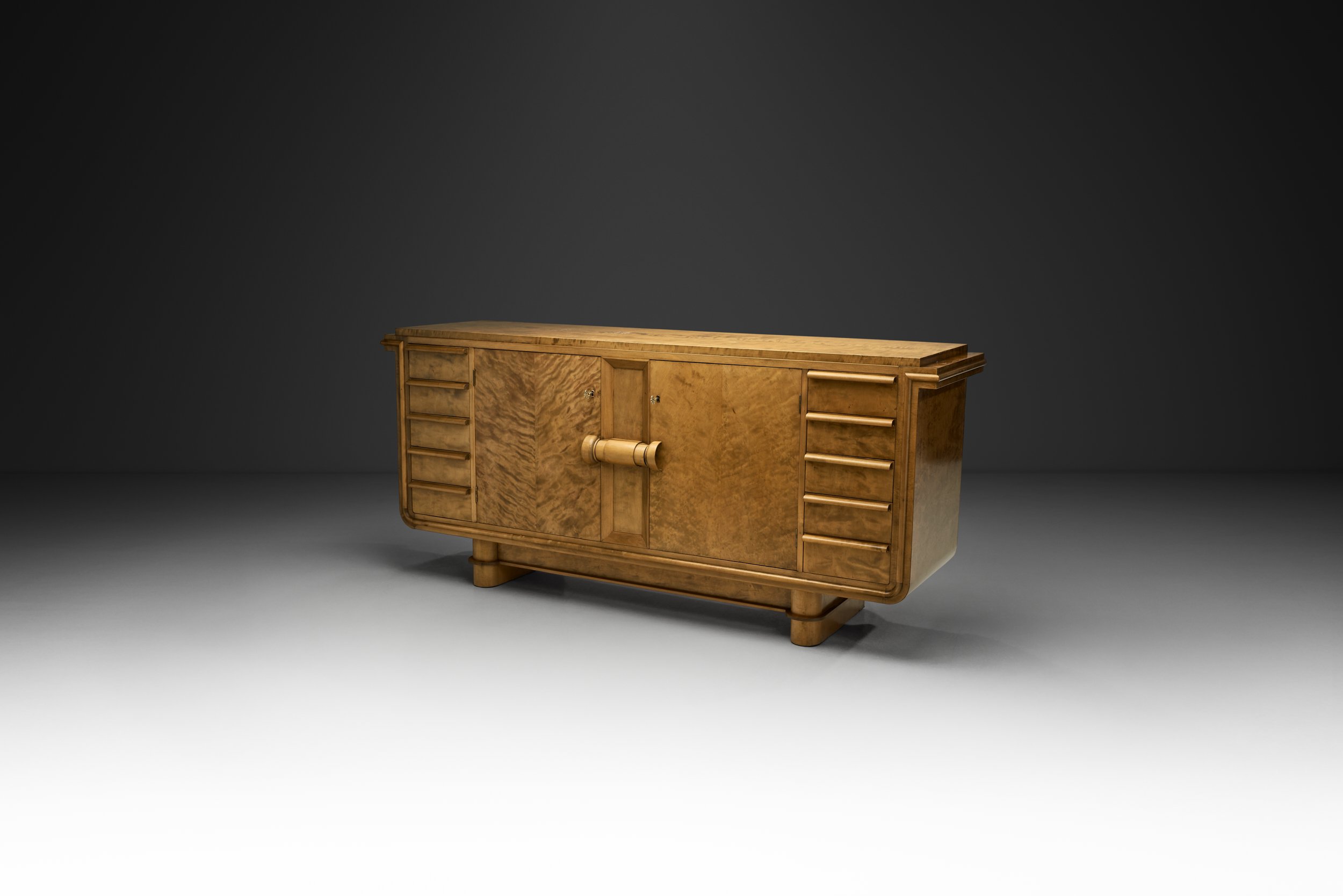
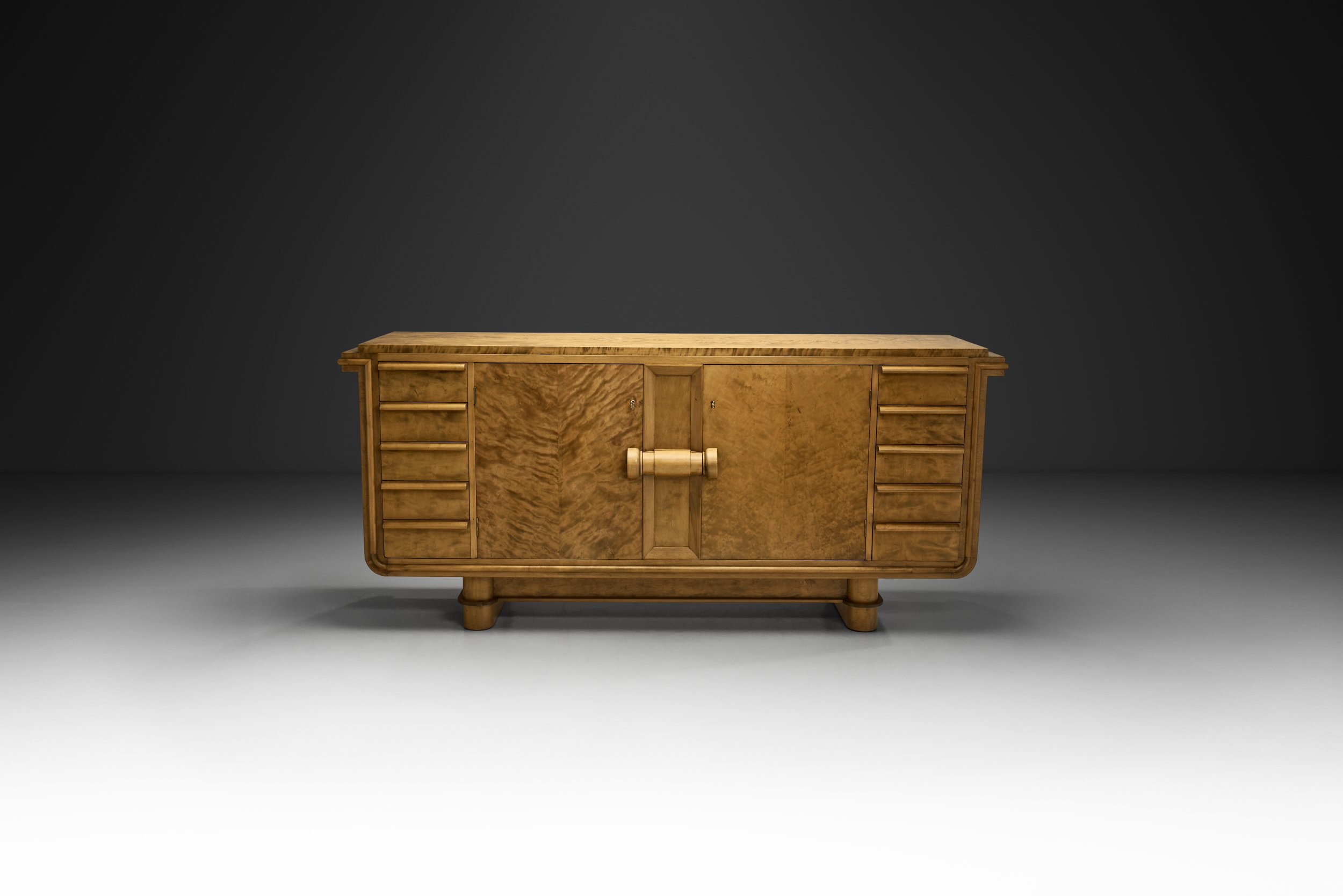
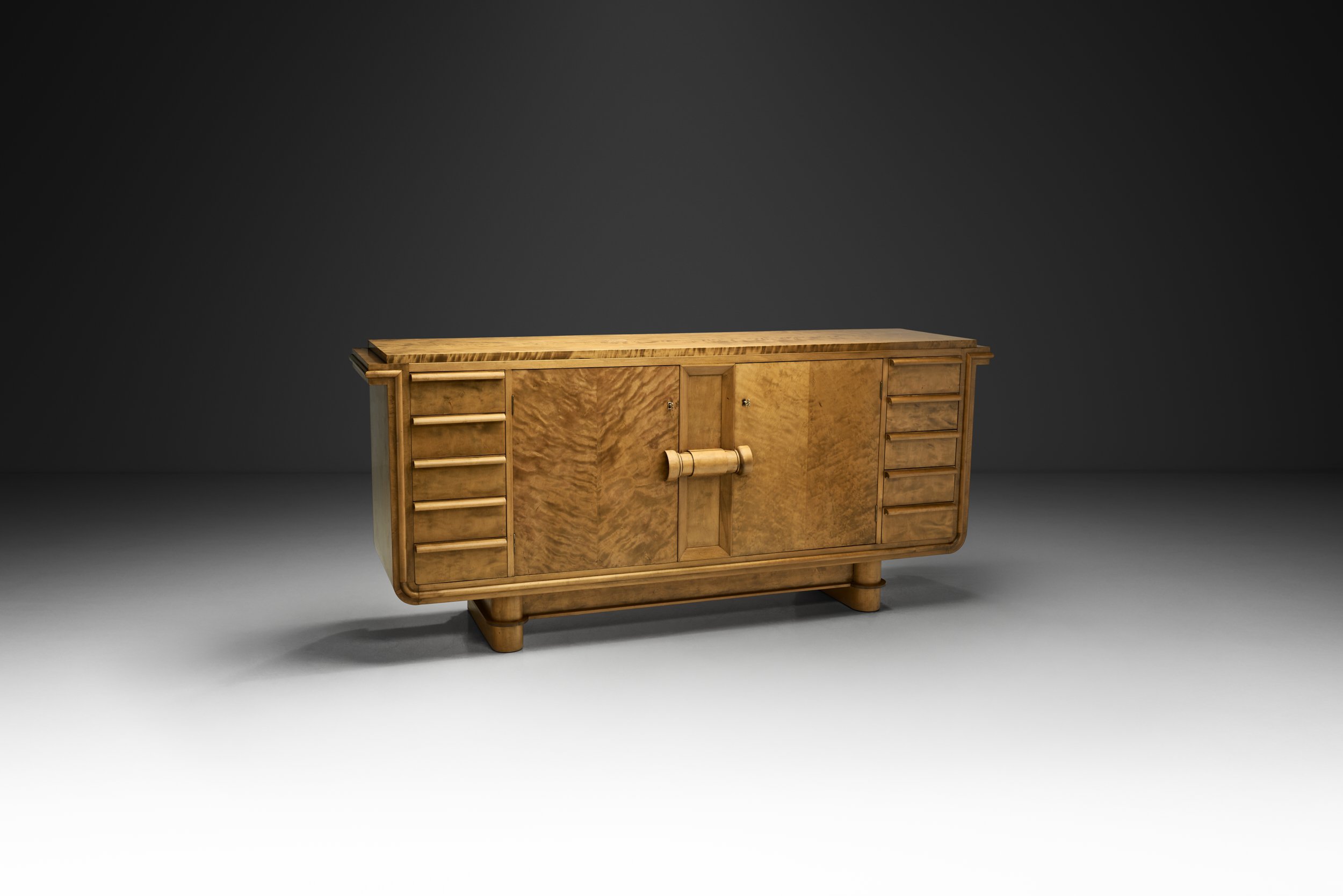
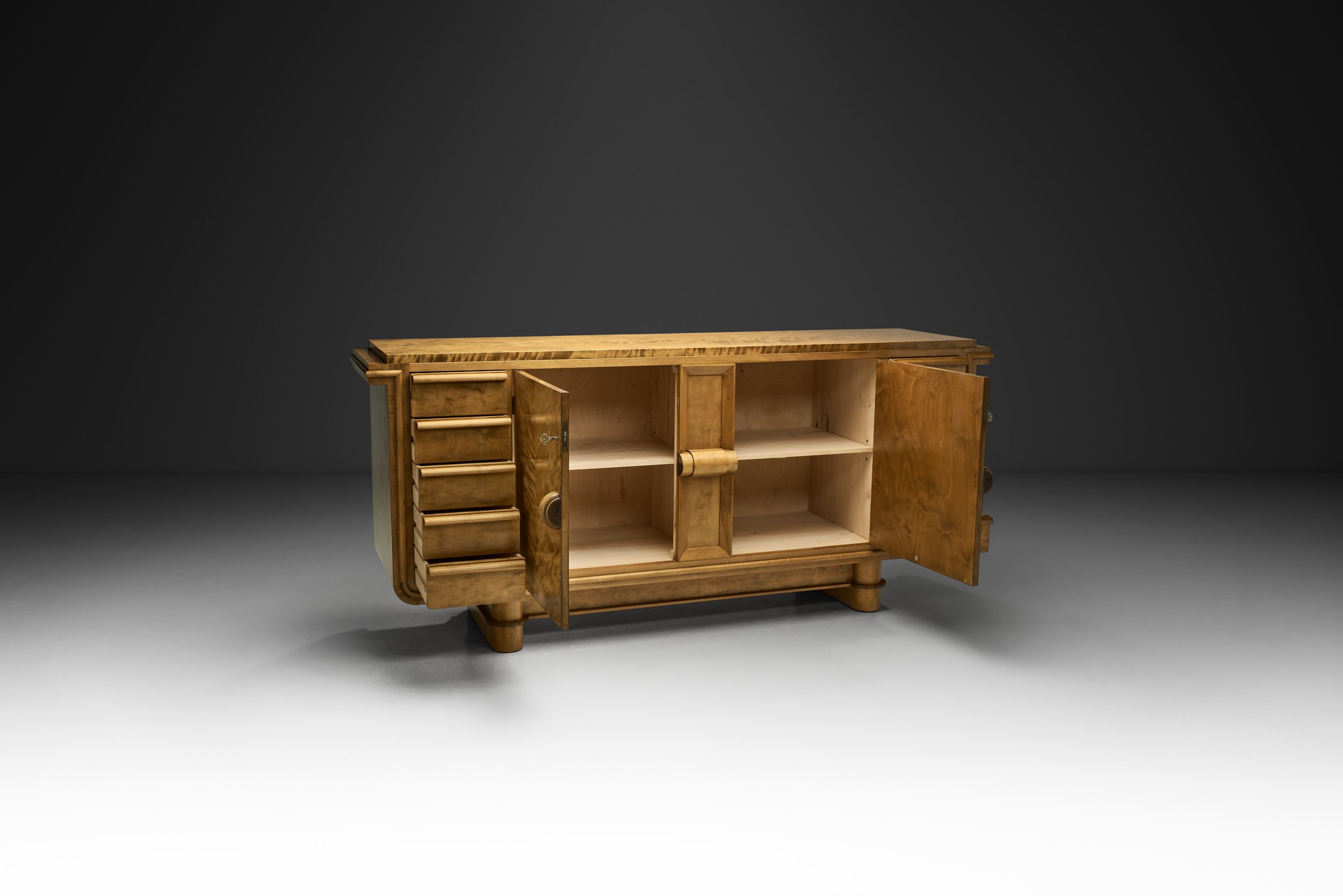
Model "290" Wooden Sideboard for Asko, Finland 1930s
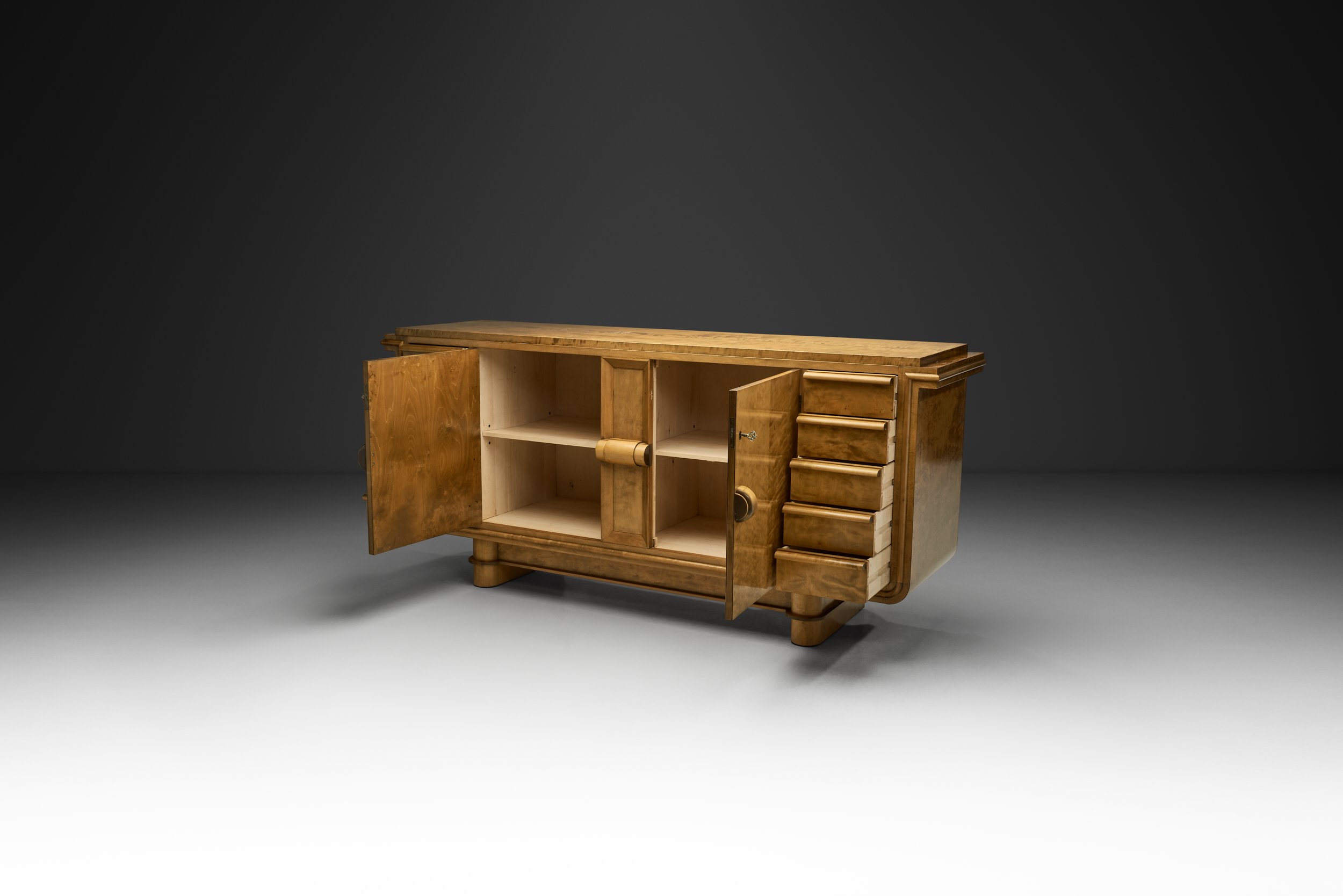
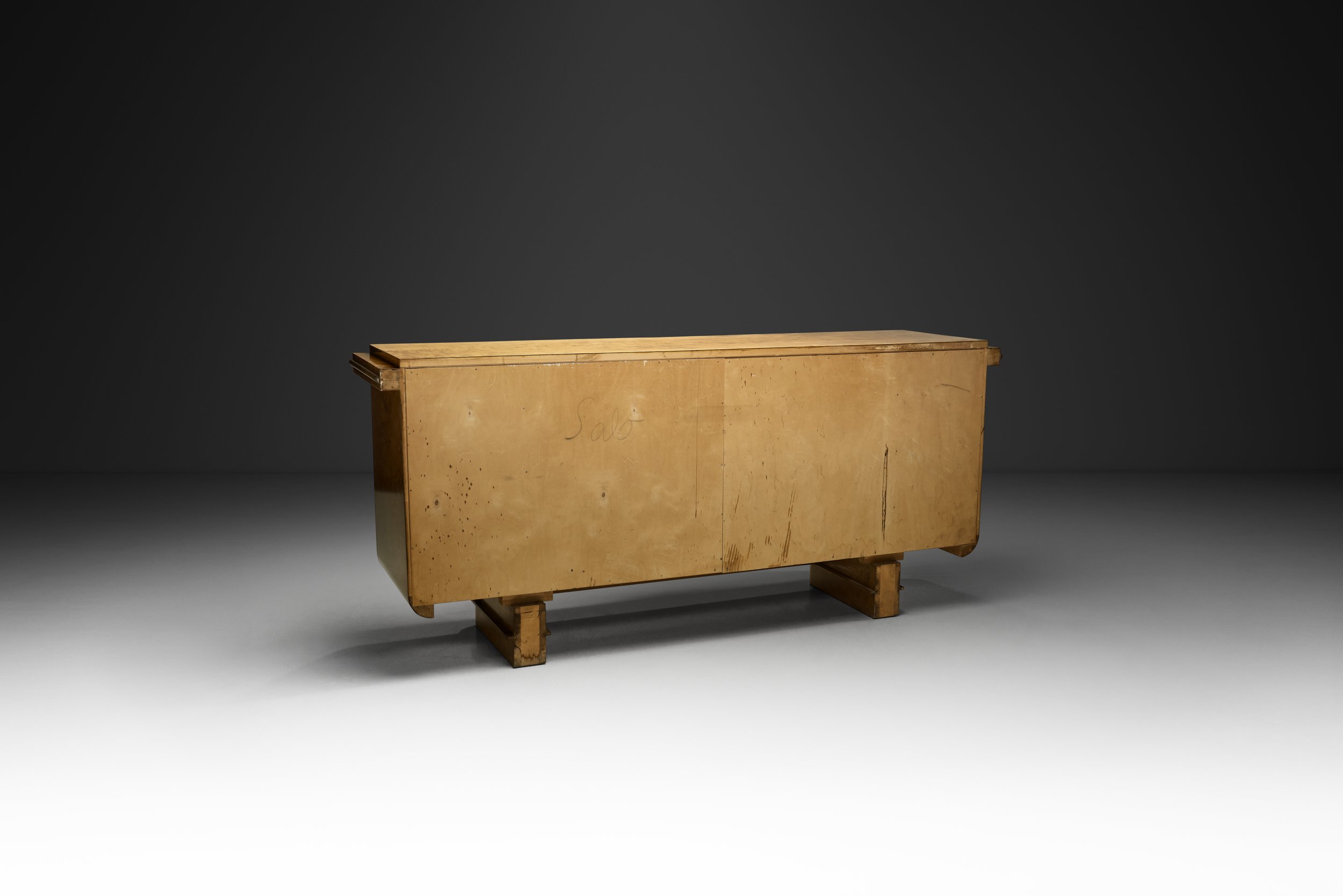
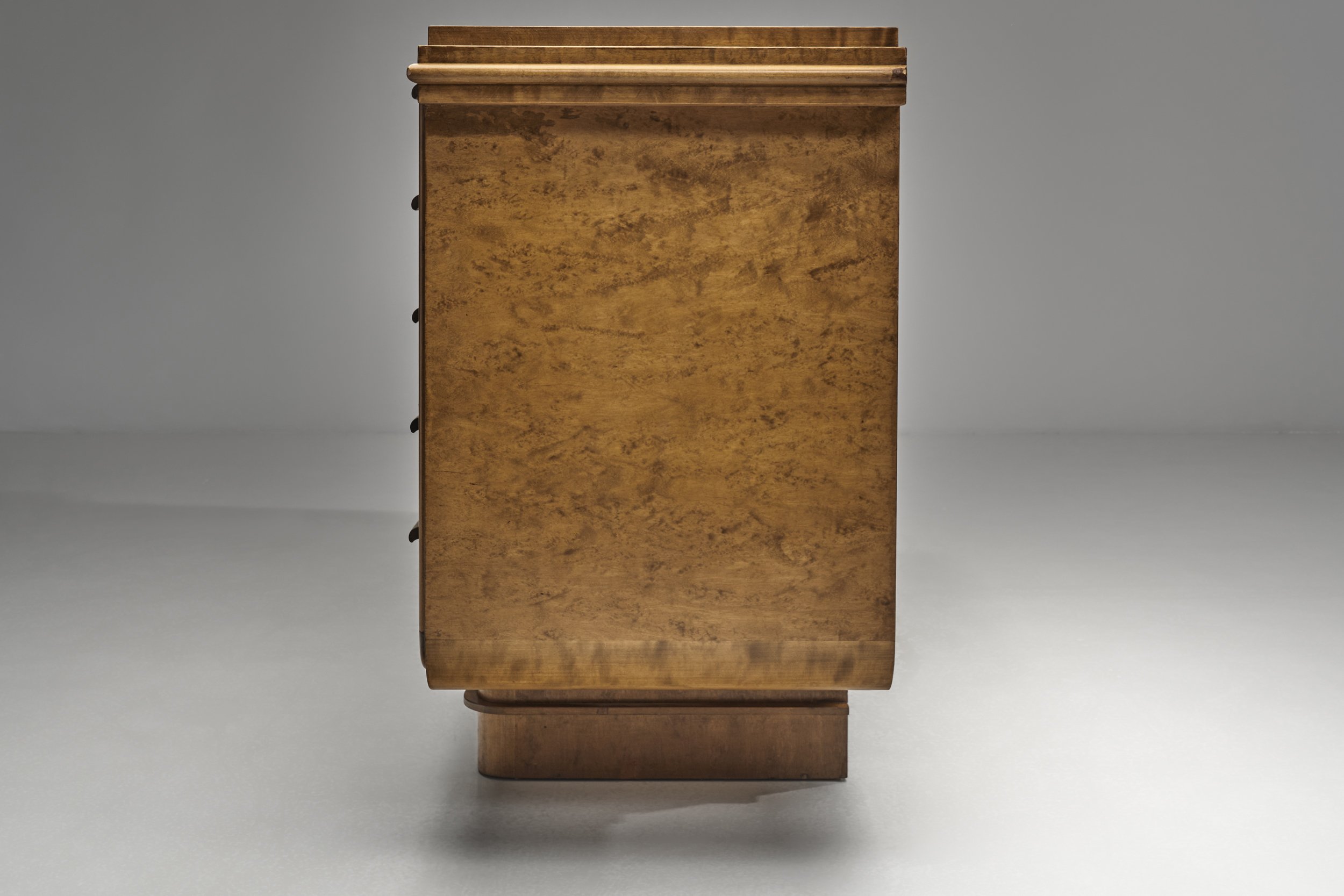
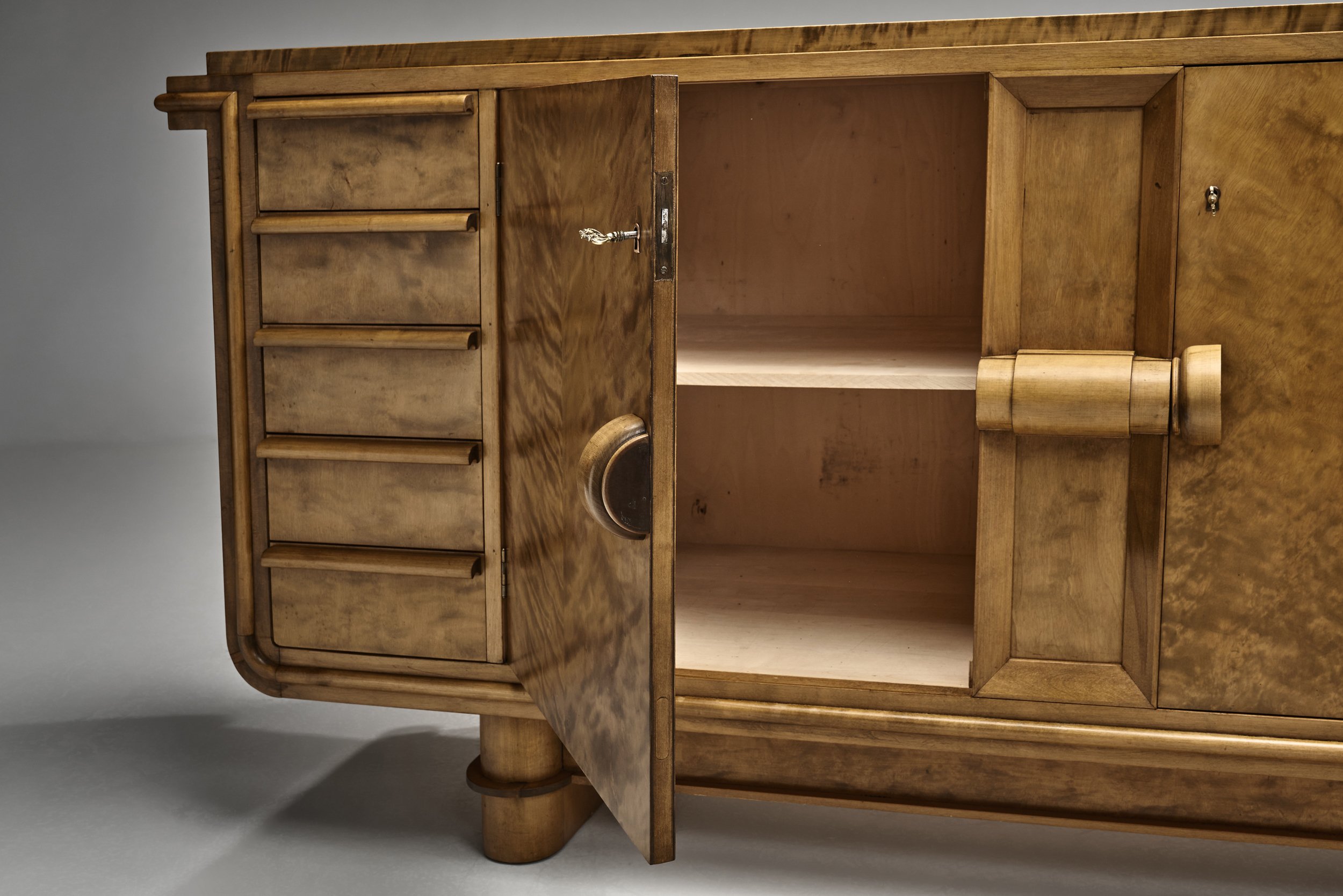
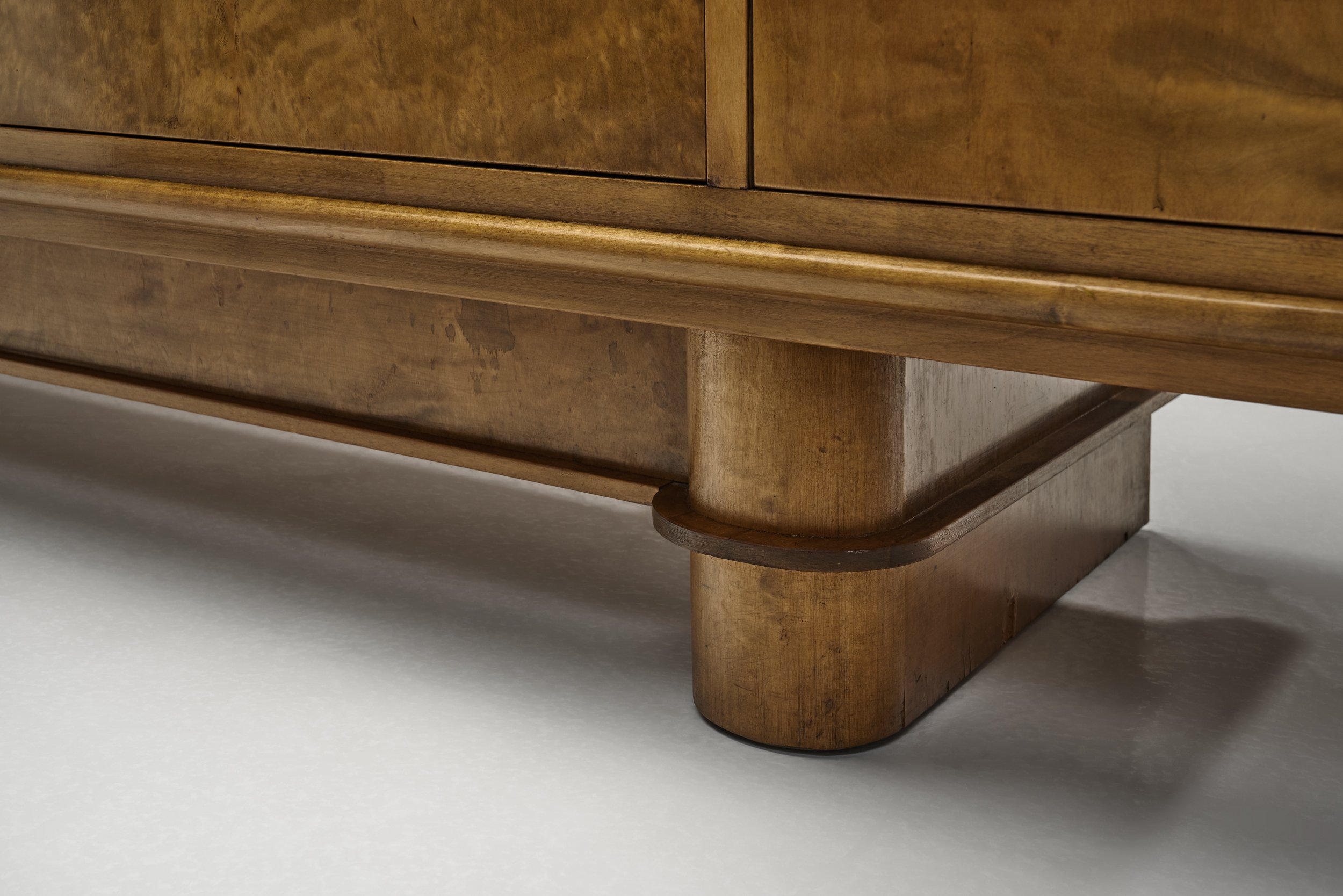
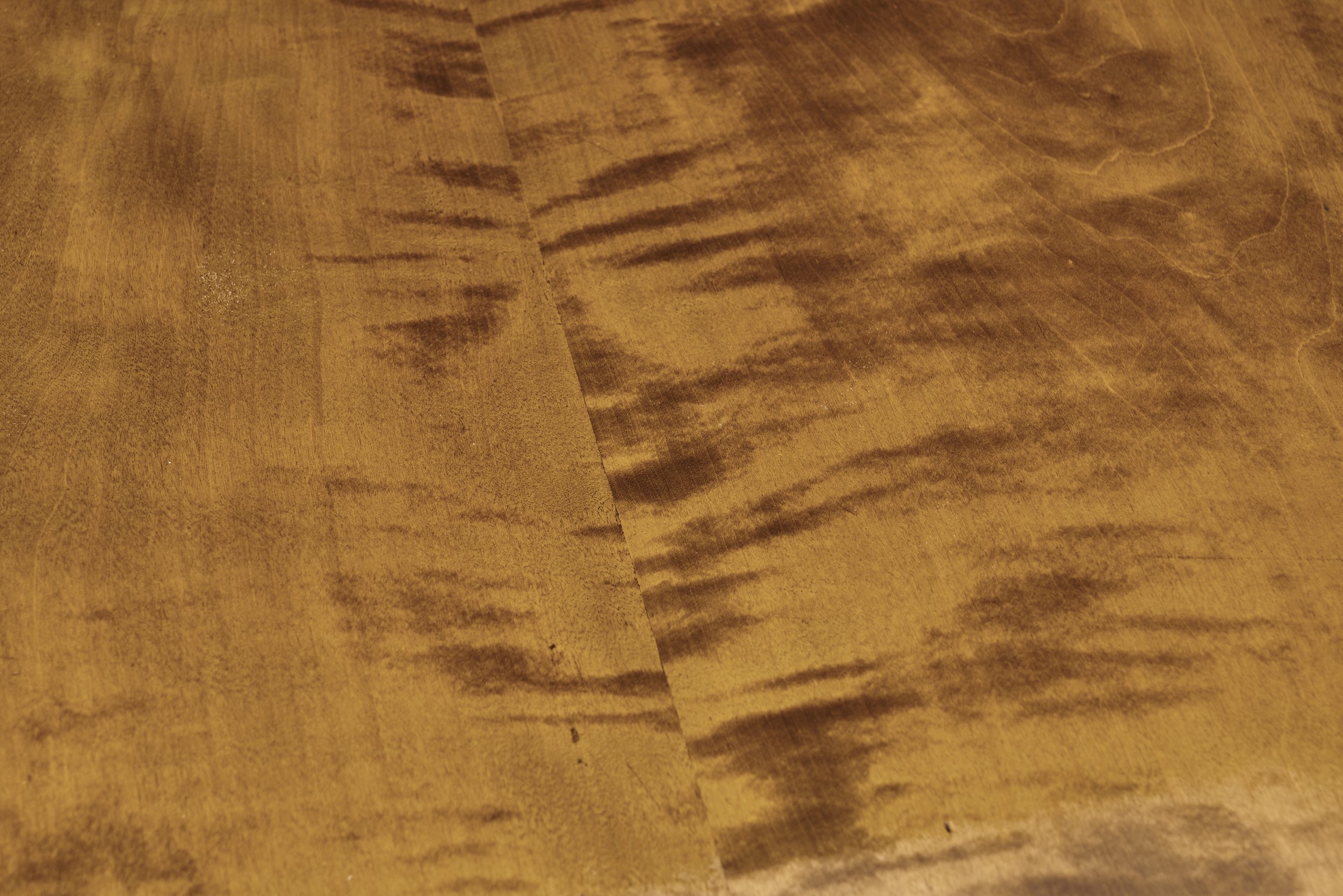
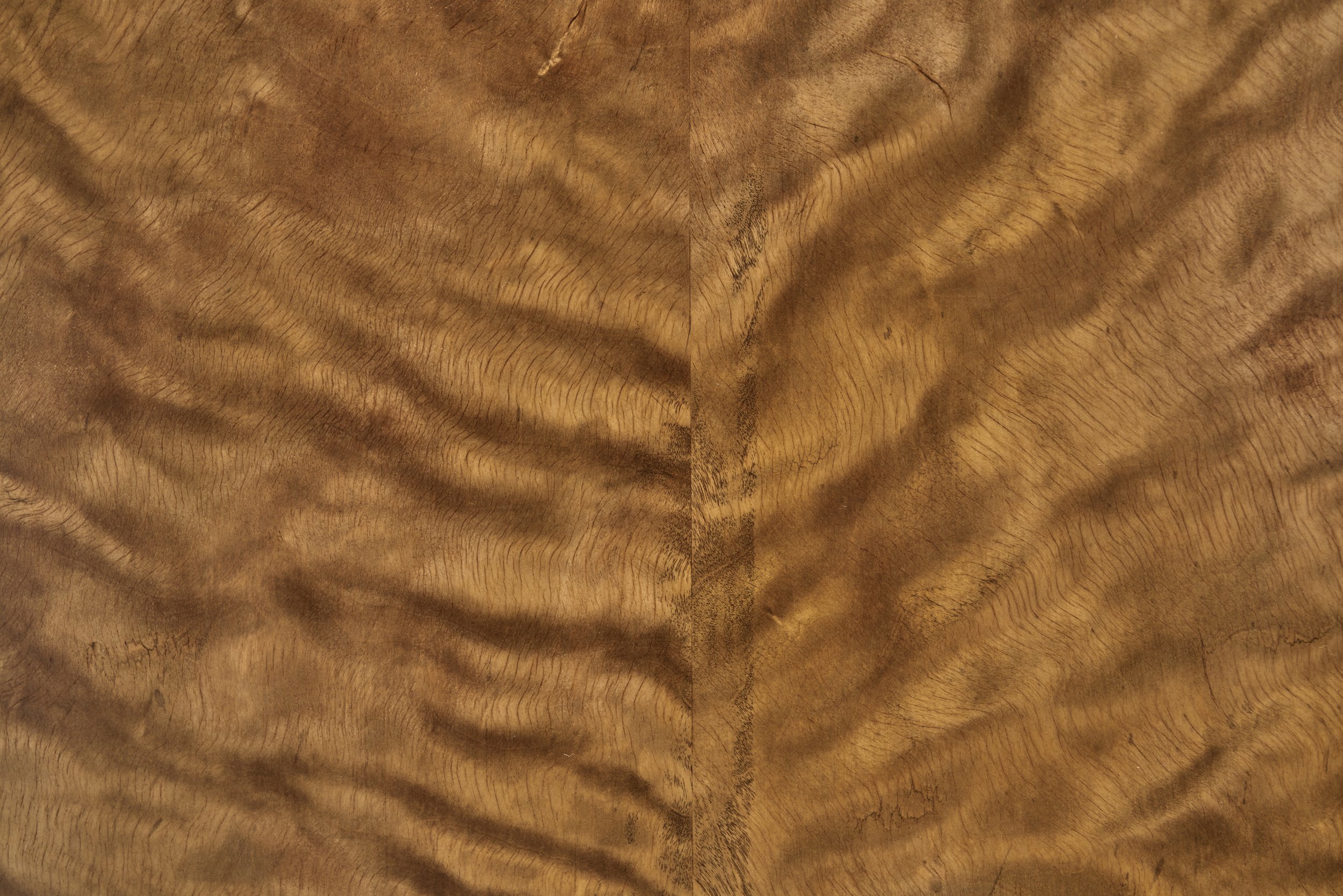
Model "290" Wooden Sideboard for Asko, Finland 1930s
REQUEST PRICE HERE
Price category: 7,500 - 10,000 usd / eur
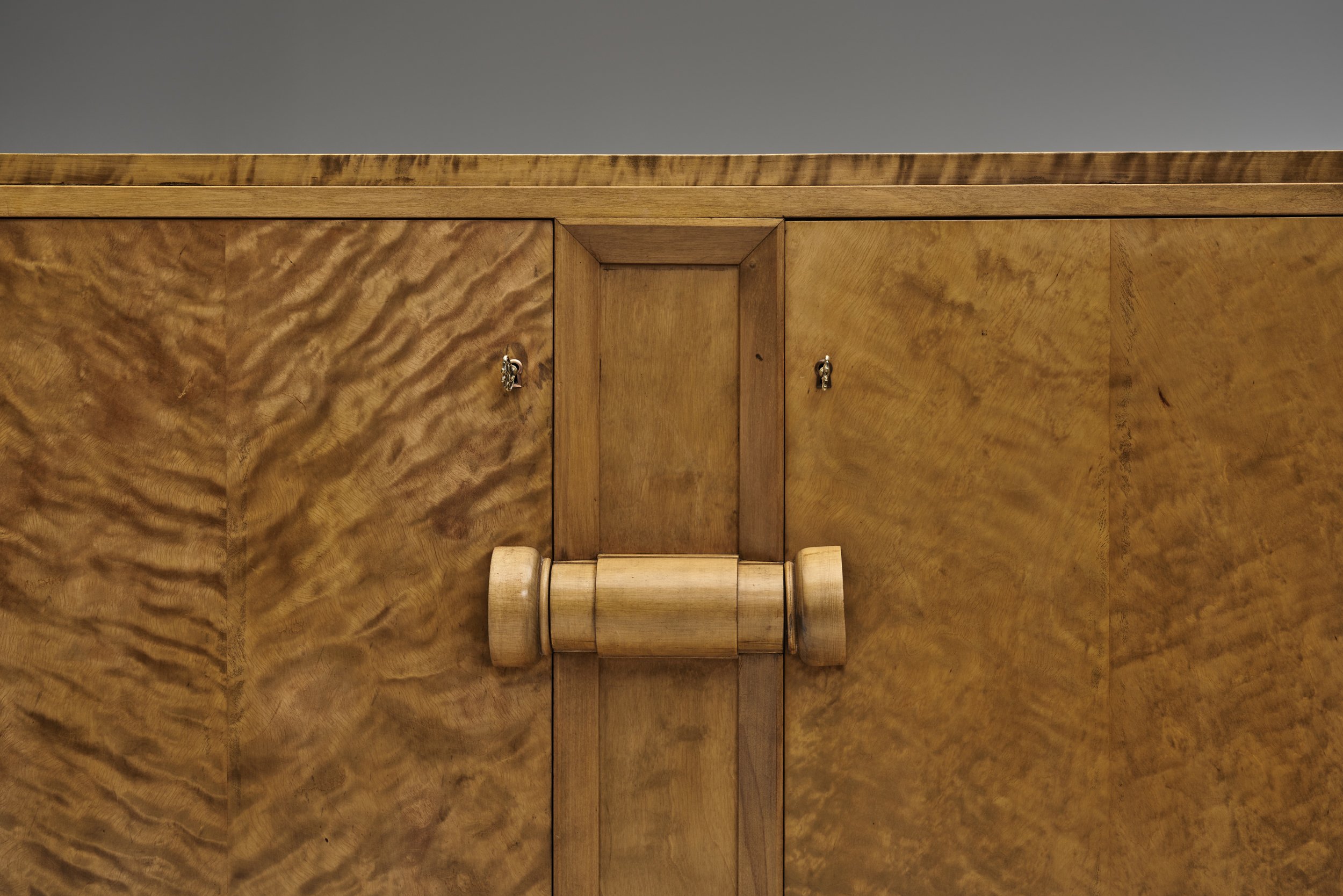
This sideboard was created for Asko, the Finnish furniture manufacturing company founded in 1918 by Aukusti Asko Avonius, known for the production of high-quality furniture. By 1930 the company had developed into the largest furniture chain in Finland and the largest supplier of furniture in the Nordic countries.
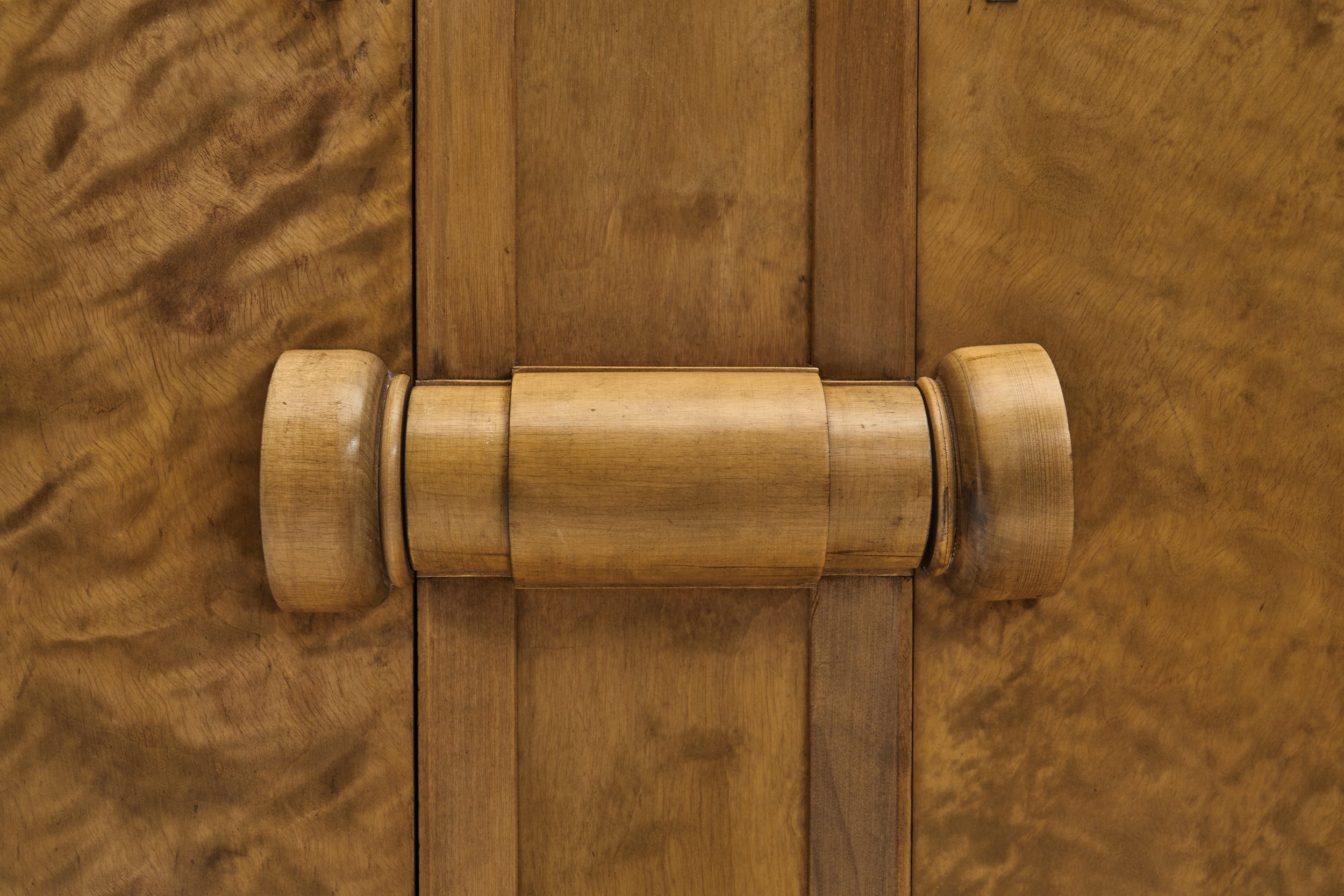
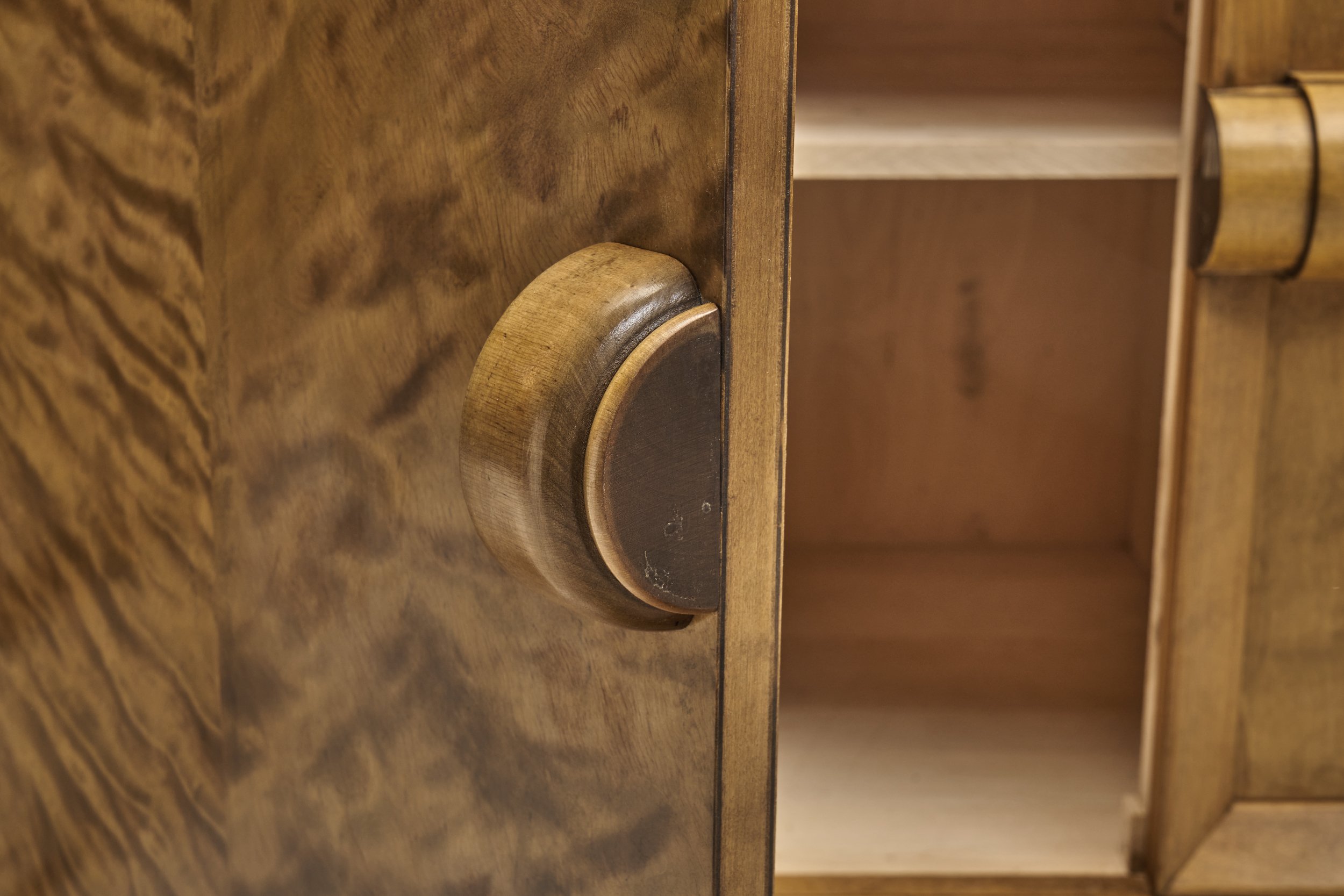
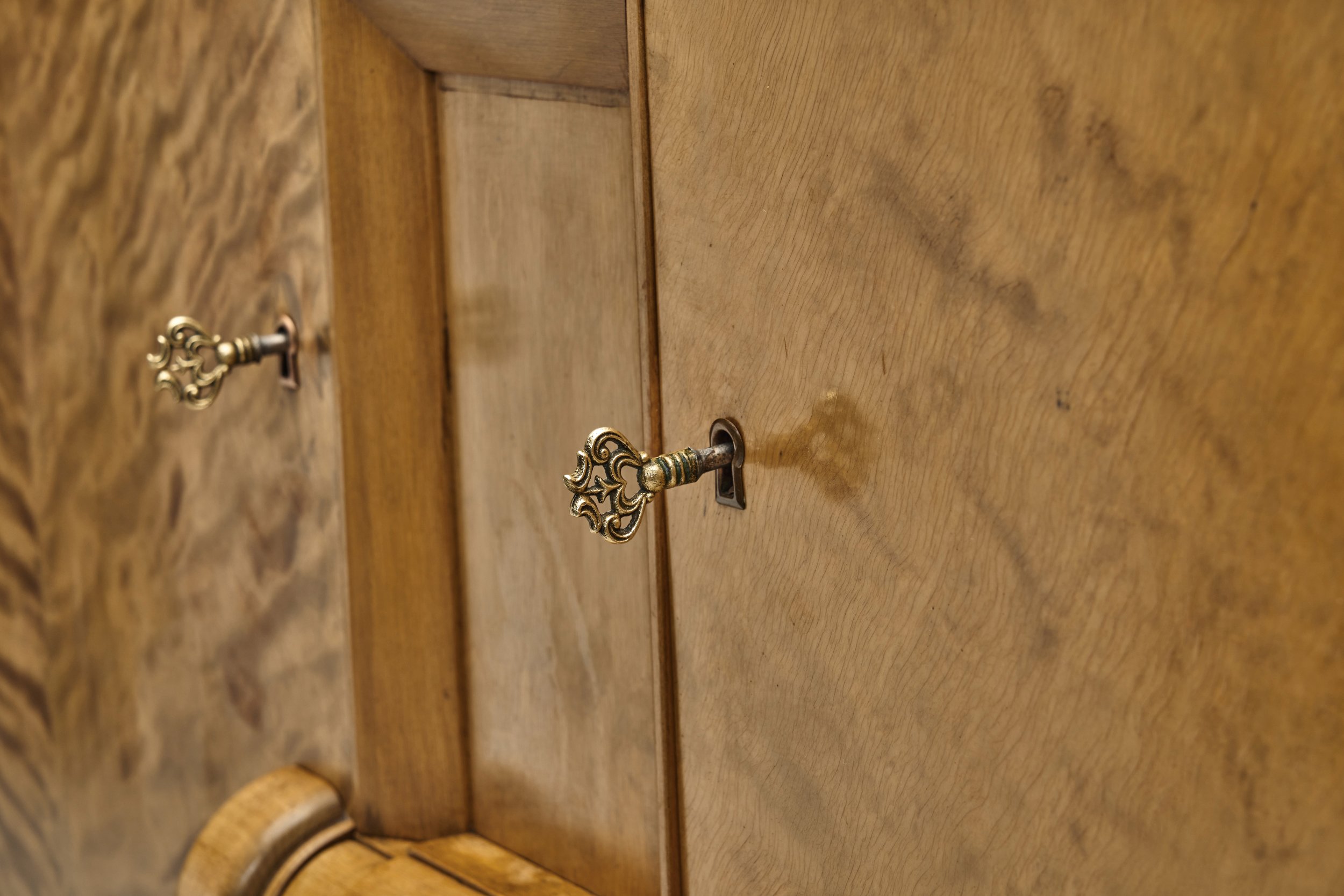
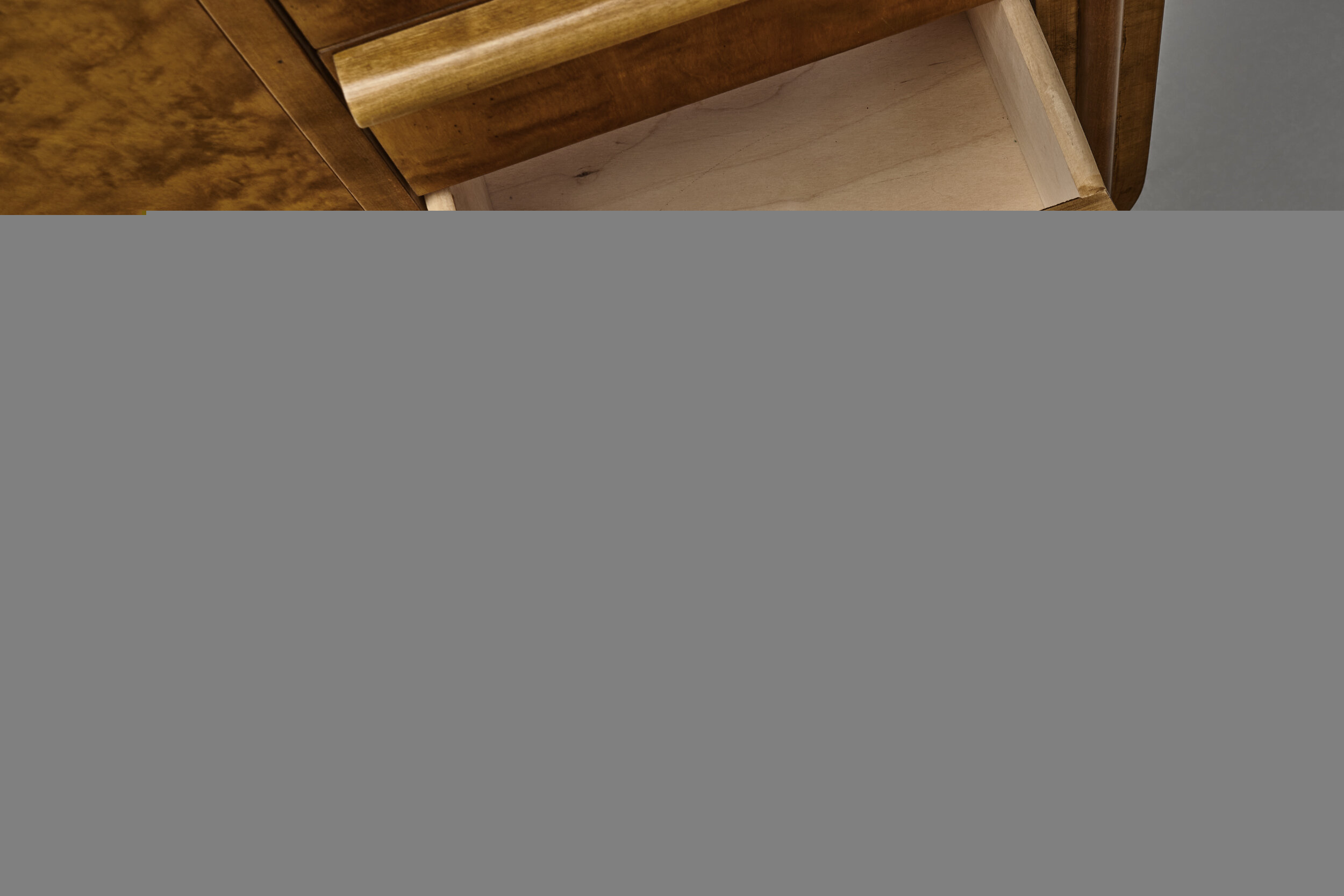
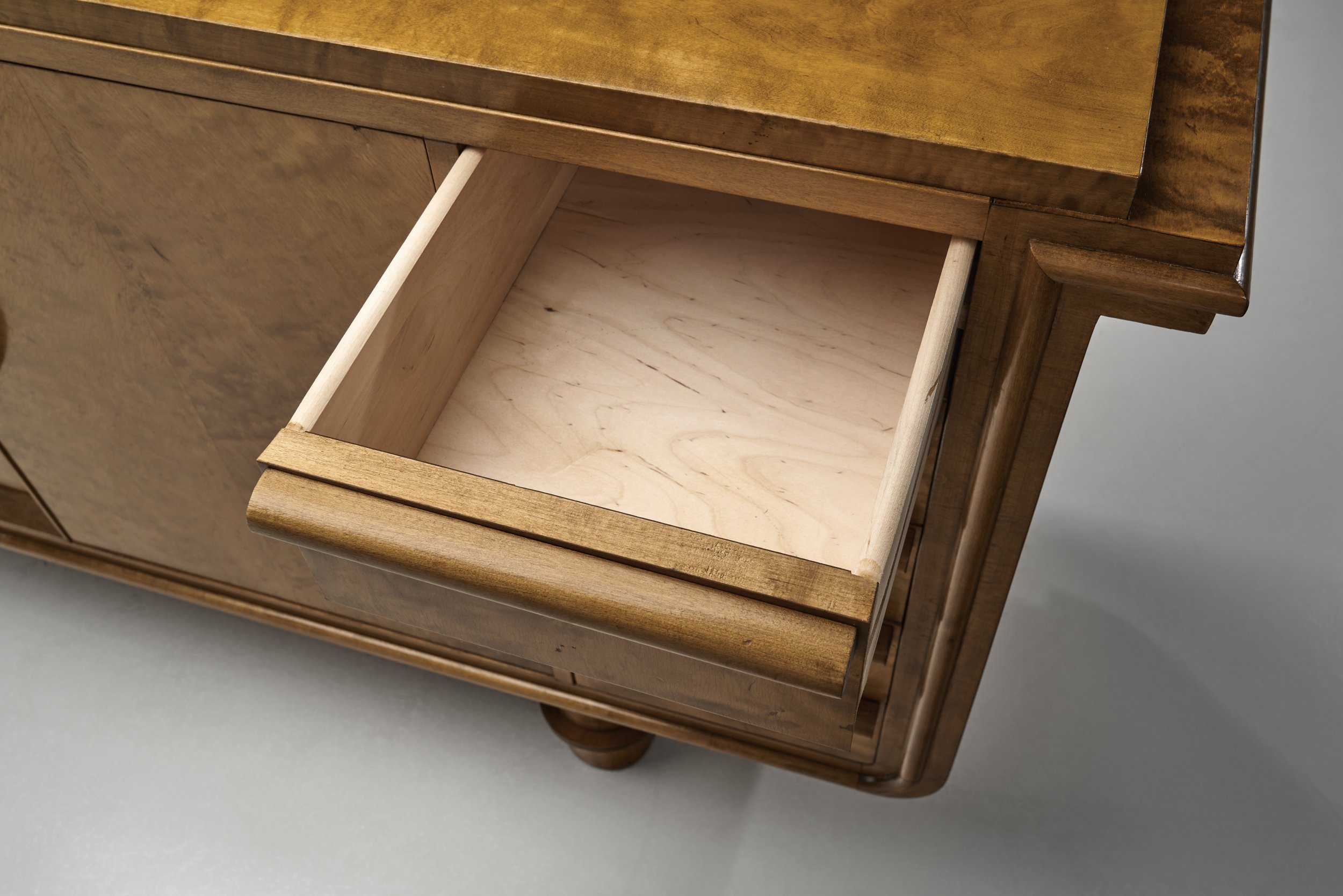
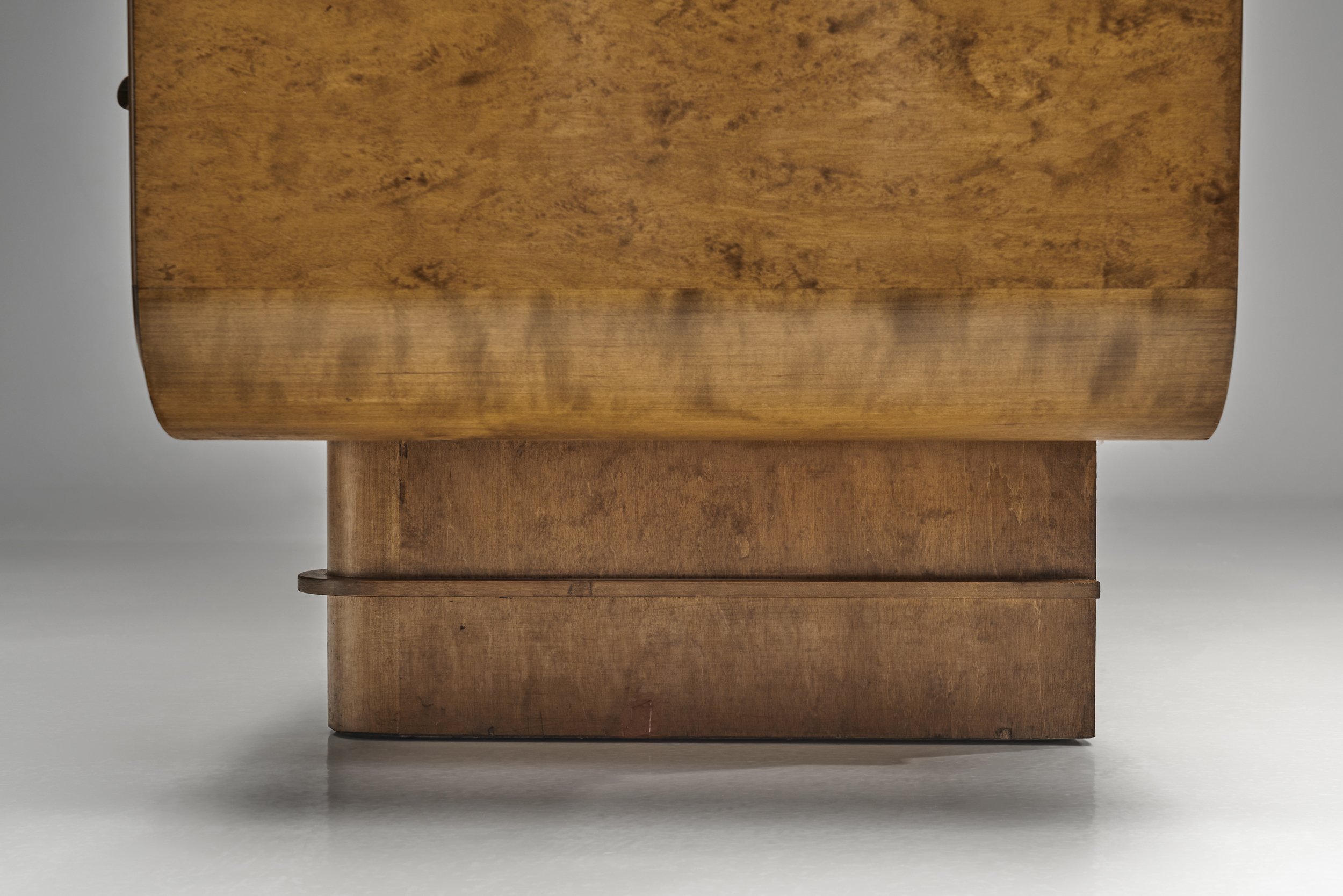
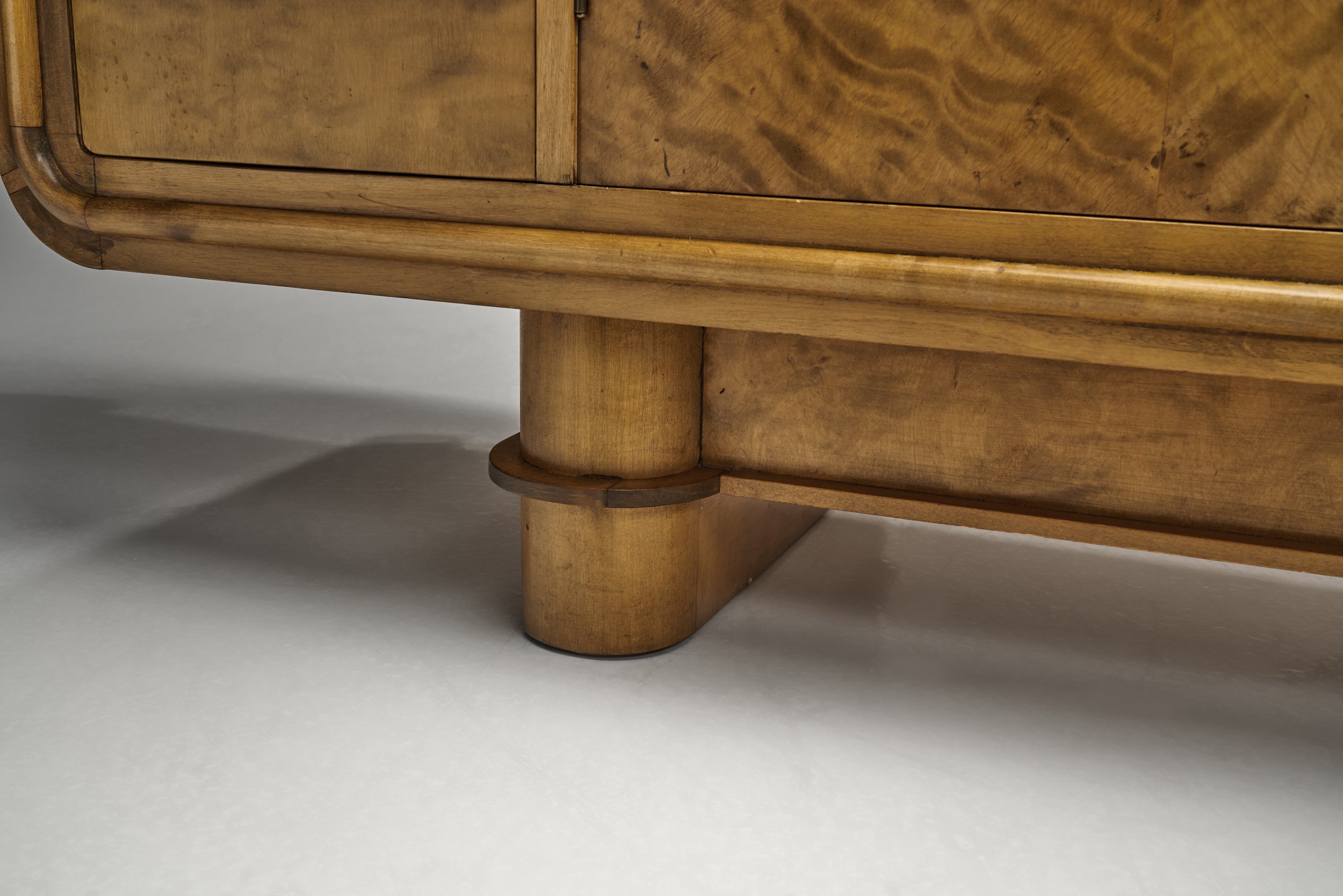
The design features a symmetrical shape and offers an uncomplicated silhouette, which serves a clear purpose, yet beautiful detail; a quality that is quintessentially modern. Combining tradition and modernity, Asko created pieces with a great consideration for functionality. This sideboard is evidence of this pursuit, thanks to its streamlined aesthetic and impressive storage volume. The use of wood gives the sideboard a very calm, natural feeling. The veneer has a beautiful grain and pattern that stands out on the large surfaces that make up the sides. The front features a series of drawers, creating a powerful sense of rhythm across the surface. Each plane adds depth and shadow, allowing light to interact dynamically with the veneer.
Today, this sideboard stands as a statement piece that bridges function and design history. Its bold geometry and refined craftsmanship allow it to anchor both contemporary and eclectic interiors with ease. Whether placed in a dining room, living space, or even bedroom, it offers strong visual identity without sacrificing usability.
Condition:
In good vintage condition. Wear consistent with age and use. The sideboard has recently been reconditioned. Due to the nature and age of the materials, the sideboard has some marks, scratches, and discolouration.
Dimensions:
79.53 in W × 21.46 in D × 35.43 in H
202 cm W x 54.5 cm D x 90 cm H
REQUEST PRICE HERE
Price category: 7,500 - 10,000 usd / eur
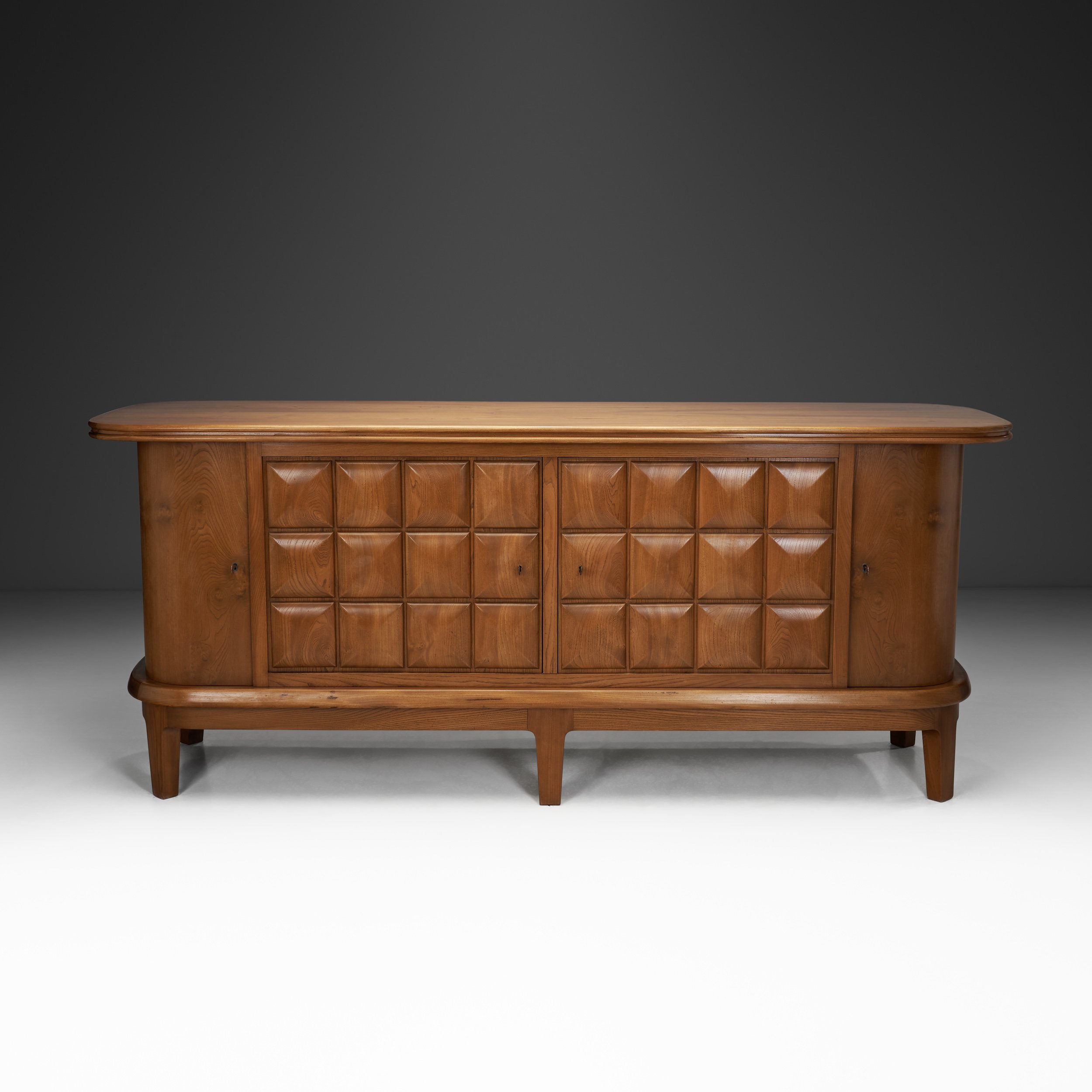
Danish modern, the popular movement that took over the design world, is characterised by clean lines, organic forms, and emphasis on functionality over unnecessary ornamentation. This sideboard beautifully showcases the era’s interest in functional beauty.
The design features simple, geometrical shapes and offers an uncomplicated silhouette, which serves a clear purpose; a quality that is quintessentially mid-century modern. Combining tradition and modernity, Frederik Stærmose Møbelfabrik created pieces with a great consideration for functionality. This sideboard is evidence of this pursuit, thanks to its streamlined aesthetic and impressive storage volume. The use of elm gives the sideboard a very calm, natural feeling. The veneer has a beautiful grain and pattern that stands out on the large surfaces on all sides. The slender legs balance the design perfectly both visually and physically. With its subtle decorative element, the geometric panelling on the doors accentuates the design, adding depth and visual interest. The craftsmanship is even further highlighted in the rounded sides and the precision of the woodwork, reflecting the high standards of cabinet making at the time.
This piece of furniture carries the Danish mid-century design history that defined not only the era’s aesthetic, but still influences contemporary design. It sets itself apart thanks to the beautiful shape making it the perfect addition to any interior space.
Condition:
In good vintage condition. Wear consistent with age and use. The item has recently been reconditioned. Due to the nature of the material, item may some marks, scratches and discolouration.
Dimensions:
85.82 in W x 24.60 in D x 35.43 in H
218 cm W x 62.5 cm D x 90 cm H

REQUEST PRICE HERE
Price category: 5,000 - 7,500 usd / eur
Swedish modern design remains popular today due to its clean lines, functionalism, and timeless aesthetic. Ultimately, it offers a combination of beauty and practicality that remains highly sought after, even for contemporary interiors.
With its distinctive structure, this cabinet attributed to Ulf Ekdahl epitomises the mid-20th century era, when material and design would become the lead factors in achieving stability, durability, and of course, an aesthetically pleasing outcome. Therefore, the proportions of this piece are finely tuned to successfully achieve something timeless. The design holds a natural expression with its airy and organic design, which is dominated by the natural look of the wood. The geometric panelling on the cabinet doors accentuates the design further, with this subtle decorative element adding depth and visual interest. The craftsmanship is evident in the precision of the woodwork, reflecting the standards of furniture making at the time. The doors and drawers on the front can be opened with lovely wooden doorknobs. Inside, the cabinet offers storage space and a shelf. Overall the form of this cabinet is not loud, it leaves the focus on the wood and the carvings, yet, it has a stately appearance. As a fundamentally functional type of furniture, this model does more than serve its utilitarian purpose.
Swedish modern – despite its name – in many ways transcends the word “modern”, pieces like this can be incorporated successfully into contemporary and traditional interiors alike, lending themselves to a timeless and universal appeal.
Condition:
In good condition. Wear consistent with age and use.
Dimensions:
21.06 in W x 12.60 in D x 54.72 in H
53.5 cm W x 32 cm D x 139 cm H

REQUEST PRICE HERE
Price category: 30,000 - 40,000 usd / eur
Ib Kofod-Larsen was one of the pioneers of the Danish modern in the 1950s. Rather than a regional phenomenon, Kofod-Larsen saw Scandinavian design as part of international modernism, and he became one of the best-selling Danish architects in the United States in the 1950s. This rare palisander sideboard was produced by Swedish manufacturer Säffle Möbelfabrik in cooperation with the Danish designer in 1958.
This very sought after model features distinctive V-shaped legs that complement the otherwise strict lines. The veneer has a grain that has come out beautifully over time, and gives the sideboard a striking look. This means that each model is different and unique, the pattern always varying. It praises the designer that the body is in an understated, rectangular shape that lets the wood and the legs stand out. Functionality also plays an important role in this model; with its sheer size and four doors, this piece offers a lot of shelving space. The first three doors cover space for height adjustable shelves, while the fourth covers four white, unevenly sized drawers. Each door has a small oval notch on the top, enabling easy opening while maintaining a clean and uncluttered front. Presumably only 40 or 50 of these models have been made when the Säffle factory bought a leftover stack of veneer from another factory. This sideboard is made with outstanding production quality and attention to detail.
Ib Kofod-Larsen's work became increasingly sought-after during the 1950s and 1960s, typically featuring organic and minimal pieces made specifically for the Scandinavian market. This “Trol” sideboard is a beautiful and elegant evidence of Kofod-Larsen’s graphic purity and artistic expression. He was a purist. A man of detail. At first glance, his furniture may seem simple, but at closer inspection it is full of detail.
Condition:
In good condition. Wear consistent with age and use. The veneer has some minor marks.
Dimensions:
95.86 in W x 18.51 in D x 28.3 in H
243.5 cm W x 47 cm D x 72 cm H
Literature:
Mobilia Magazine n°106, May 1964
About the designer:
Ib Kofod-Larsen was born in 1921 in Denmark. Kofod-Larsen was trained as a cabinetmaker with the highest honours in 1944, and later completed his education as an architect from the Royal Danish Academy of Fine Arts in 1948.
His first recognition as a designer came when he won the Holmegaard Glass Competition and received the Danish Cabinetmakers Guild’s annual award. These awards attracted the attention of the Danish furniture manufacturer Faarup Møbelfabrik.
During his time at Faarup, he created some of his most beautiful works, like the rosewood Model 66 sideboard, and established himself as a furniture designer. Learn more about Ib Kofod-Larsen. ~H.
REQUEST PRICE HERE
Price category: 5,000 - 7,500 usd / eur
Designed by Henning Kjærnulf, this cabinet features a strong angular structure that gives a feeling of strength and durability. The wood construction is carved and sculpted in an unmistakable way, showing the skills of both the designer and the manufacturer. If there is a single common denominator for Danish Modern design, it is the quality of the woodwork and this piece is evidence of that.
Many associate Danish furniture with the country's golden age, the mid-20th century. This model shows why: its design follows in the vein of Scandinavian functionality, timelessness and quality. Combining tradition and modernity, Kjærnulf created his pieces with a great consideration for functionality while not shying away from decorative flair. His wood of choice was oak, a durable long-lasting material that is the perfect canvas for the intricate carved shapes and details to take form. The functional and decorative elements of this design are treated equally, resulting in a stunning but balanced look. The cabinet features a versatile shelving and storage system; three small drawers on the right side, with green fabric lining. The middle compartment is the largest, with two levels divided by one shelf. Finally, at the bottom there are three more larger drawers. The bottom drawers also feature metal ring pulls. These small functional elements also serve an aesthetic function alongside the carved front. The mixture of round and straight shapes is used masterfully, giving depth to the oak. The only thing that is hard to decide in the case of this piece is where to look first, as there is no doubt about its aesthetic or material quality.
This well-constructed piece is truly a beautiful example of Danish modernism, complete with a form that still retains some influence from previous art and design movements. It is sure to stand out as an accent piece, or complement its surroundings thanks to its natural colour and warm tones.
Condition:
In good vintage condition. Wear consistent with age and use.
Dimensions:
74.80 in W x 19.88 in D x 47.24 in H
190 cm W x 50.5 cm D x 120 cm H
About the designer:
Danish mid-century designer and architect, Henning Kjærnulf is somewhat of a mystery. A lot more is known about his designs than Kjærnulf himself. His wooden designs, crafted to perfection, speak for themselves. Kjærnulf mainly designed for the Danish manufacturers EG Kvalitetsmobel, Nyrup Møbelfabrik, and Vejle Stole Møbelfabrik. The latter produced the designer’s well-known teak extending dining table model. The historic archives of the Danish municipality, Stenlille, reveal the history of Nyrup Møbelfabrik, mentioning Kjærnulf’s architectural designs for the company’s factory, referring to him as an architect based in Odense, Denmark.
Kjærnulf’s works reveal quality craftsmanship throughout, featuring clean Danish modern era lines with sculpted edges and shapes. The unique shapes, like his razorblade chair backrests, distinguish him from other Danish mid-century designers.
In light of how sought after his dining sets and lounge chairs are, it remains a mystery why so little is known about the designer. The curious background of Kjærnulf if anything, adds more charm to his pieces.

REQUEST PRICE HERE
Price category: 2,500 - 5,000 usd / eur
Many associate the designs of French design duo, Guillerme and Chambron with the most recognizable French furniture pieces of the second half of the 20th century. Most often executed in blonde oak, their designs are elemental with subtle but immediately recognizable details and the highest level of craftsmanship.
Whether we look at the hand carved handles of the drawers or the flag-shaped legs, this cabinet has plenty to offer both visually and in terms of craftsmanship. As with every piece of furniture from Votre Maison, the solid oak gives this cabinet its defining, striking look. The wide surfaces and the straight lines are perfect to showcase the artistry and workmanship. The design of this cabinet isn’t loud, it leaves the focus on the wood and the details, yet, it has a stately appearance that is exemplary of the works created by Guillerme and Chambron. The designer duo’s sincere approach is evident in the material - solid light oak - and in the functional arrangement of the storage spaces. The storage areas utilize the full width and depth of the cabinet, offering plenty of space. Below the door are three wide drawers with round, carved handles on both sides, a detail that also serves as a decorative element. Guillerme et Chambron also made sure that their design is appealing from all angles, which is apparent on the sides and in the shape of the legs.
As with every piece of furniture from Votre Maison, the solid oak gives this cabinet its defining, striking look. Its natural qualities were only elevated under the hands of the French duo, creating a timelessly elegant design that is sure to stand out in any space.
Condition:
In good vintage condition. Wear consistent with age and use. Some minor scratches and marks on the wood.
Dimensions:
42.12 in W x 20.07 in D x 42.51 in H
107 cm W x 51 cm D x 108 cm H
About the designers:
Robert Guillerme graduated in 1934 from the École Boulle where he excelled in architecture and furniture design. After the Second World War he moved to Lille, in the north of France, where he decorated homes and designed furniture for the well regarded Rogier workshops.
In 1948, Guillerme was joined by his long-time friend, decorator Jacques Chambron in Lille. The following year Guillerme and Chambron met master cabinetmaker Émile Dariosecq, owner of a woodworking shop and the company Votre Maison was born. Together, they defined and imposed a new furniture concept. Thanks to their distinctive creativity, originality, and quality, the Votre Maison quickly became well-known.
The Votre Maison marked the history of French design. Guillerme drew the furniture designs while Chambron played the part of salesman, welcoming and advising clients. The power duo was complemented by Dariosecq, whose workshop took charge of the manufacturing. Together, they defined new furnishings concepts. Well-crafted chair back, polished wood and thick cushions make the reputation of their armchairs and sofas. Votre Maison continued to produce furniture right into the 20th century, with Jacques’s son Hervé Chambron, a designer and graduate of the École Boulle, having taken the over in 1983. ~H.

REQUEST PRICE HERE
Price category: 5,000 - 7,500 usd / eur
Classic design with expert craftsmanship. This how this cabinet and the Danish master cabinetmaker, Frits Henningsen could be best described. Unlike most cabinetmakers, Henningsen always designed his own furniture pieces, creating exclusively handmade pieces, like this cabinet.
This elegant deep cabinet is made of luxurious book mirrored wood. It has seven narrow drawers with small knobs, and a tambour door that covers the drawers when pulled up. The drawers are deep and narrow and provide more than a sufficient amount of storage space. The tapered legs are positioned on the edges of the cabinet, enhancing its refined look.
The execution and high attention to detail of this cabinet showcases Frits Henningsen's uncompromising craftsmanship and high-quality approach to furniture design. Henningsen's more functional design style developed from historically inspired, to simpler, timeless work that remains relevant to this day.
Condition:
In good vintage condition. Wear consistent with age and use. Item has some discolouration, small marks and scratches. One of the handles has a small chip.
Dimensions:
16.54 in W x 26.58 in D x 30.71 in H
42 cm W x 67.5 cm D x 78 cm H
About the designer:
Frits Henningsen (1889–1965) was a Danish furniture designer and master cabinetmaker (a term he preferred himself), who led a team of cabinetmakers in central Copenhagen. As an active member of the Cabinetmakers Guild from 1927, Henningsen became a major driver of the furniture exhibitions of the period, gaining recognition for the high-quality of his craftsmanship and his vibrant personality.
Many of Henningsen’s pieces were crafted in exotic woods such as palisander and mahogany. All his furniture was handmade in line with traditional, labour-intensive methods from the 19th century. His pieces are noted for their elegance, above all, for the soft curves in the arms of his chairs and sofas, demonstrating his traditional approach, aiming to combine style and comfort.
In 1942, Henningsen started distancing himself from the younger designers of the day who increasingly used straight lines in their work, believing furniture design needed to maintain curvature which contributed to a homely look. Unlike many other designers, Henningsen didn’t experiment with a wide range of different styles, instead went with his own distinctive style, creating a body of work that is instantly recognizable and much-loved. ~H.

This stunning bleached oak cabinet attributed to French designer Charles Dudouyt is a historic piece showing the enduring influence of Art Deco on early mid-century pieces. This cabinet was most likely produced in Paris at La Gentilhommière, the manufacturing company Dudouyt established in 1933.
A favourite among Art Deco furniture collectors and enthusiasts, the work of Dudouyt is known for their rustic and modernist aesthetic. Accordingly, this cabinet has these sensibilities rather than the classicist design associated with French pieces of the early 20th century. Dudouyt is known for his way of embellishing chunky proportions with elegant carvings as seen on the sides of this cabinet as well. These signature carvings and the four wood panels on the door fronts stand out especially thanks to the sheer size of the oak surfaces. The French designer’s pieces generally show great balance between decorative and functional elements which is the case here as well. The design still primarily aims to serve as storage space. The doors on the front can be opened with the help of the two keys, a small and charming feature. The visible screws and the not too overworked oaken parts reinforce the rustic look letting the material stay in focus.
Dudouyt’s signature geometric inlays, pronounced shapes and raised carved motifs define this grand cabinet that makes an elemental impression. Today, the French designer’s pieces continue to be highly sought for their distinctive but timeless look.
SOLD
Condition:
In good vintage condition. Wear consistent with age and use. Some marks and scratches on the wood.
Dimensions:
84.25 in W x 19.48 in D x 35.03 in H
214 cm W x 49.5 cm D x 89 cm H
About the designer:
Born in 1885, Charles Dudouyt began his artistic career after studying at the Germain Pilon school. He paints, draws and earns his living by illustrating publications, notably for Calmann-Levy and the Assiette au Beurre.
In 1918, on his return from the war, he designed and had lampposts, lampshades and various decorative objects made with his wife. This led him to create in 1920, in Pontoise, a rustic style furniture factory in fashion at the time: L’Abeillée.
In 1933, he moved to Paris and, opting for a contemporary style, he founded the Gentilhommière, which included a workshop and a shop. After his death, his son Jacques Dudouyt continued the activity of the Gentilhommière until 1960.

Pierre Chapo designed his modular “R” series with practicality in mind. The individual pieces were constructed of French Elm, and are classics in all possible ways. Chapo’s designs are the result of reflection and elaborate work on achievements that strive to combine material, form, and function by favouring wood.
Combining tradition and modernity, Chapo created his pieces with a great consideration for functionality. Therefore, this elm sideboard is characterized by its streamlined aesthetic and impressive storage volume. By combining two modules on three pairs of legs, the chiselled edges and clean look of the “R40” model is further enhanced. With two doors and three drawers on each side, the storage space is indeed plentiful, and well divided. Behind each door are two shelves that allow items of different heights to be placed inside. Similarly, the drawers are different sizes, showing the consideration of the model’s functionality. The handles have a minimalistic shape, complementing the overall look and letting the material stay in focus. The use of the large pieces of solid elm give this sideboard a very calm, natural feeling. The wood has beautiful grain and patterns that stand out on the large surfaces on all sides. The slender, wide legs are unusual in their shape, but balance the design perfectly both visually and physically.
After travelling through Scandinavia, Central America and working for a year in the United States, Chapo returned to Paris and pursued his interest in wood, crafting furniture with a double concern for contemporary design and the traditional know-how. The “R40” is a model that showcases his skills in design and craftsmanship spectacularly.
SOLD
Condition:
In good vintage condition. Wear consistent with age and use.
Dimensions:
98.81 in W x 22.44 in D x 29.72 in H
251 cm W x 57 cm D x 75.5 cm H
About the designer:
Pierre Chapo, born in Paris in July 1927, was initially interested in becoming a professional painter. However, after a chance meeting with a shipbuilder who introduced him to wood and wood crafts, Chapo changed his focus and decided to study architectural studies at the prestigious École Nationale Supérieure des Beaux-Arts in Paris.
After graduation, Chapo and his wife, the sculptor, and painter Nicole Lormier, started to travel extensively through Scandinavia and Central America. Among the many places the couple visited was the home and studio of Frank Lloyd Wright in Taliesin West. A visit that had a lasting influence on Chapo’s future work and designs. Read more about Pierre Chapo. ~H.
REQUEST PRICE HERE
Price category: 7,500 - 10,000 usd / eur
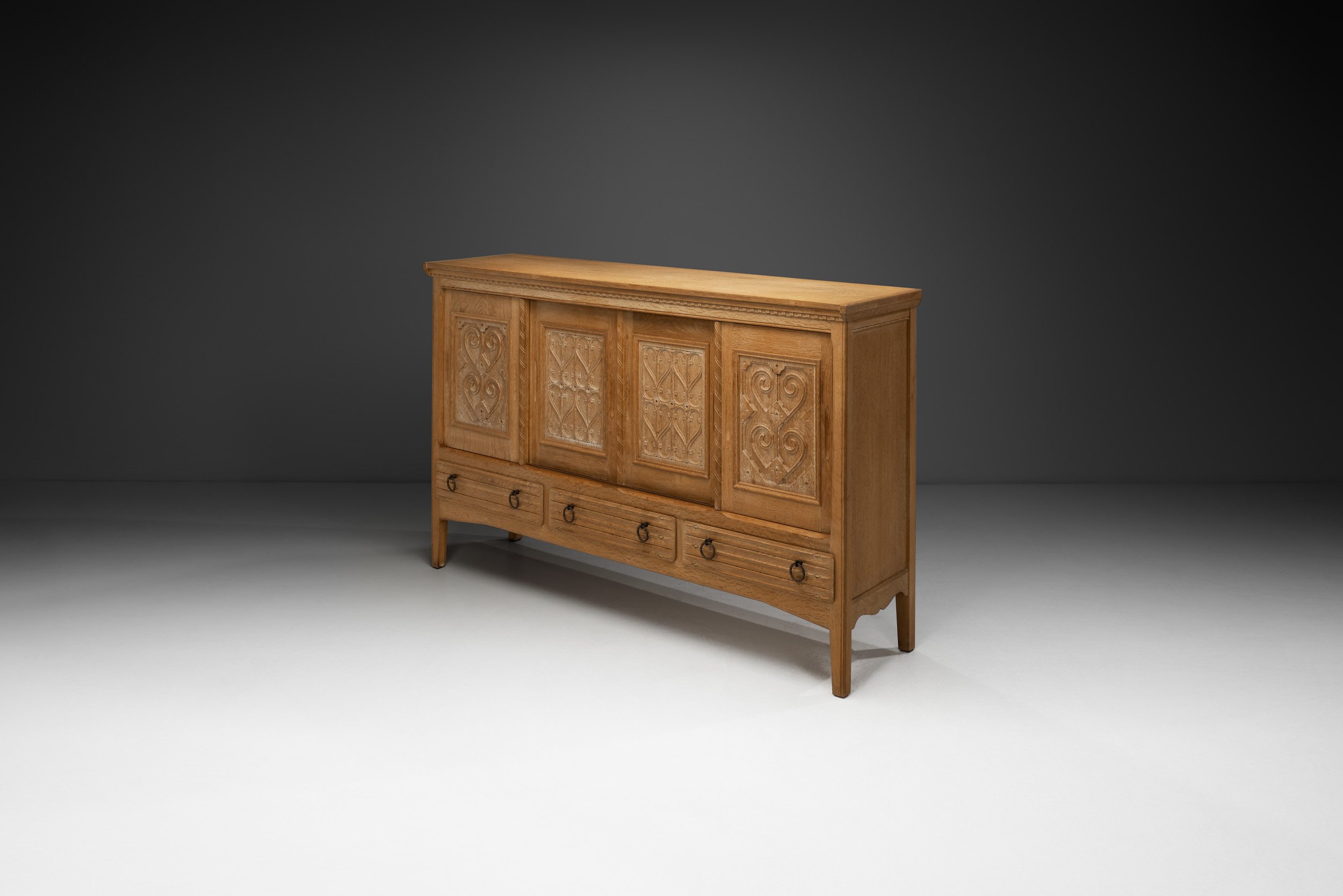
“Danish Modern” is a recognised term around the world, standing for the characteristic style of Danish design created during the mid-20th century. The design of this sideboard is focused on the aesthetics of modernism whilst employing the exquisite technique and material familiarity of a highly skilled craftsman - Henning Kjaernulf.
This sideboard is defined by its long silhouette and commanding proportions. The front features a series of panelled doors arranged in a strict geometric grid, creating a powerful sense of rhythm across the surface. Each panel adds depth and shadow, allowing light to interact dynamically with the carved wood. Raised on sturdy carved legs, the sideboard maintains a grounded presence while avoiding visual heaviness. The warm-toned wood softens the severity of the geometry, revealing subtle grain patterns and tonal variation throughout. Hinges and hardware are understated, allowing the structure itself to remain the focal point. The interior offers generous storage, making the piece as practical as it is visually impactful.
Today, this sideboard stands as a sculptural statement piece that bridges function and design history. Its bold geometry and refined craftsmanship allow it to anchor both contemporary and eclectic interiors with ease. Whether placed in a dining room, living space, or even bedroom, it offers strong visual identity without sacrificing usability.
Condition:
In good vintage condition. Wear consistent with age and use. The sideboard has recently been reconditioned. The item has visible marks and scratches. Due to the nature and age of the wood, the item may show discolouration, especially on the top.
Dimensions:
92.91 in W × 20.86 in D × 35.62 in H
236 cm W x 53 cm D x 90.5 cm H