
Scandinavian Nesting Tables made of Solid Wood, Scandinavia ca 1970s (sold)







Scandinavian Nesting Tables made of Solid Wood, Scandinavia ca 1970s (sold)
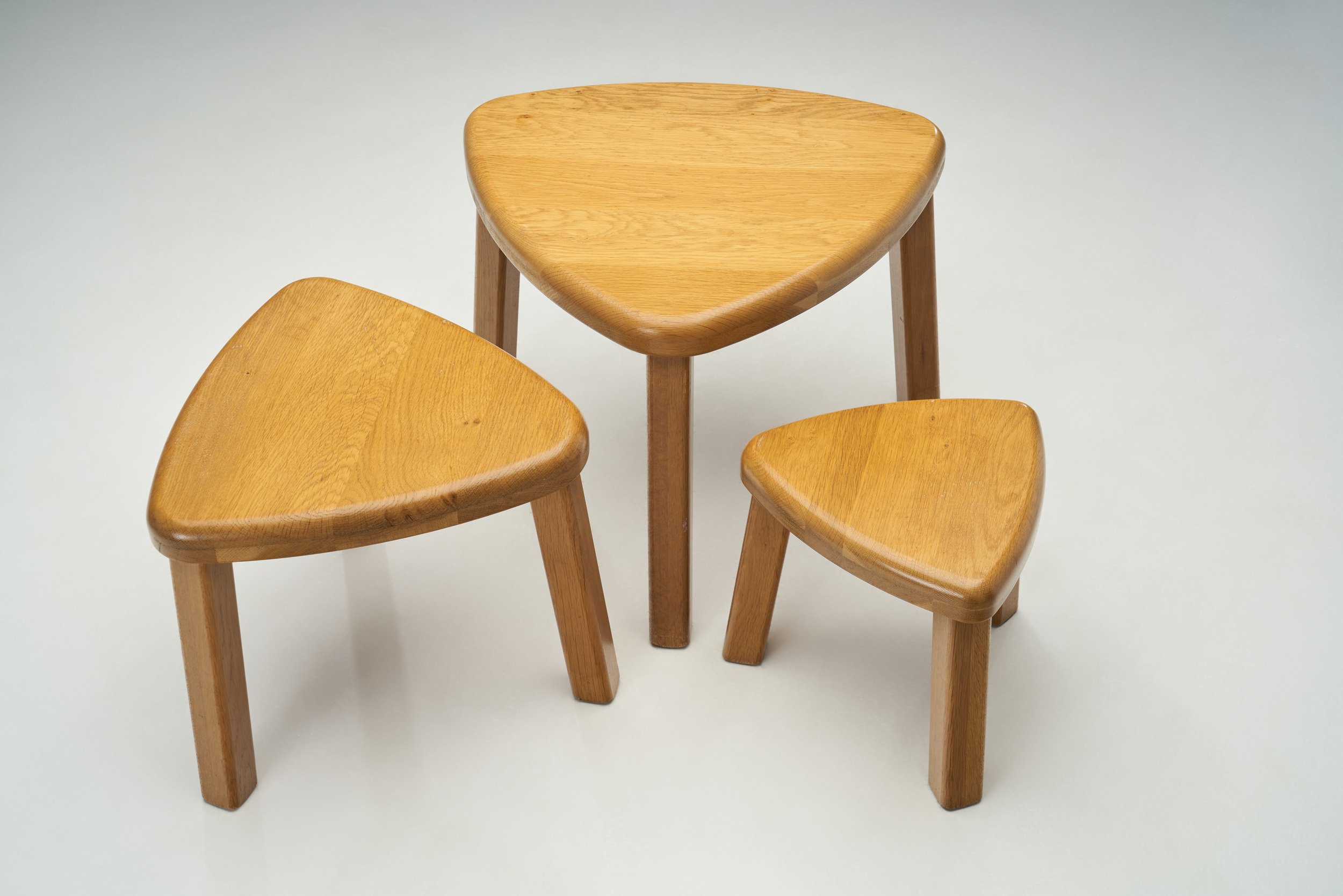
Created with mobility and flexibility in mind, nesting tables can be organized in an unlimited variety of stylish and functional configurations. Scandinavian models of the mid-century era – as these tables showcase – combined their functionality with the unmistakeable touch of Nordic design.
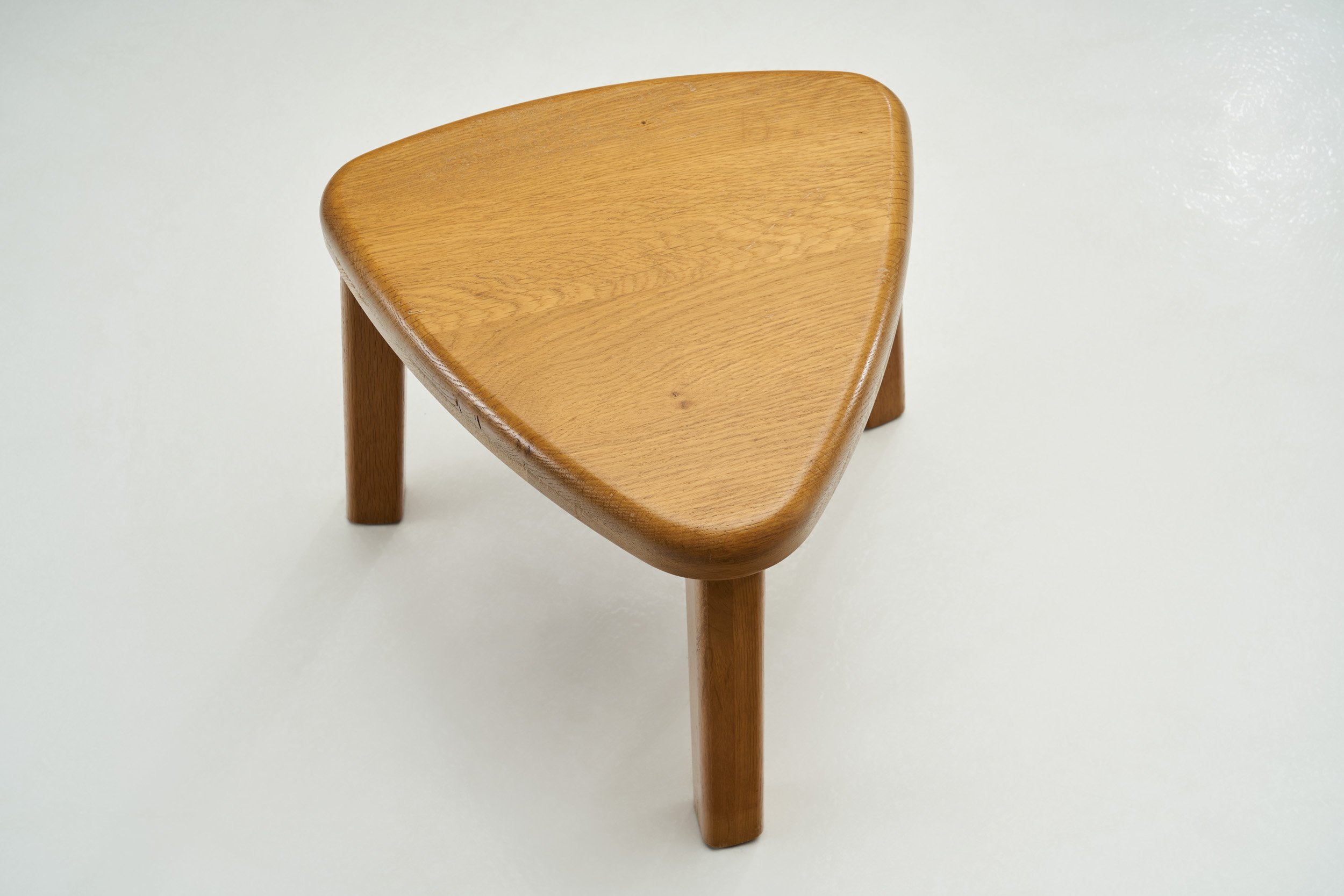
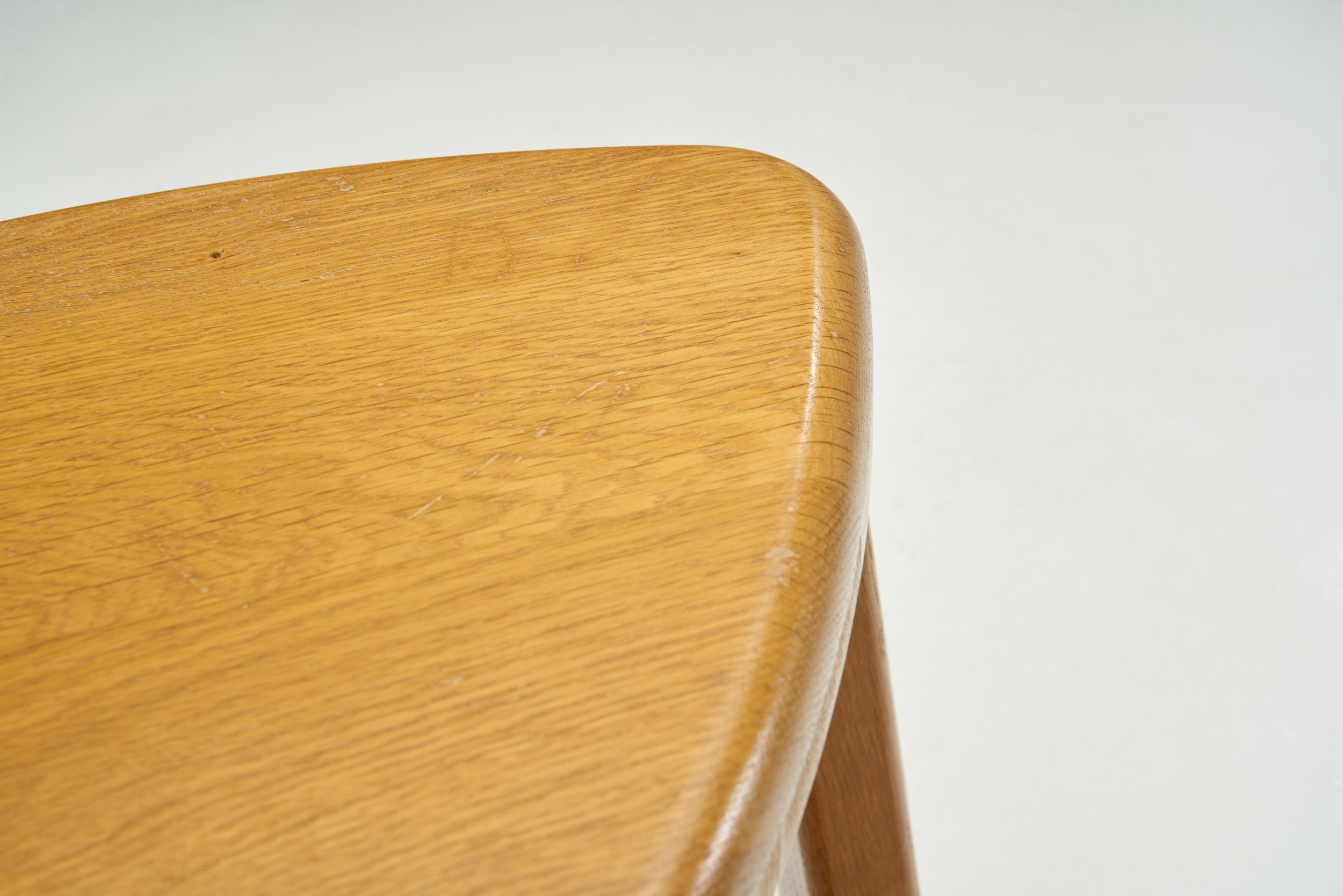
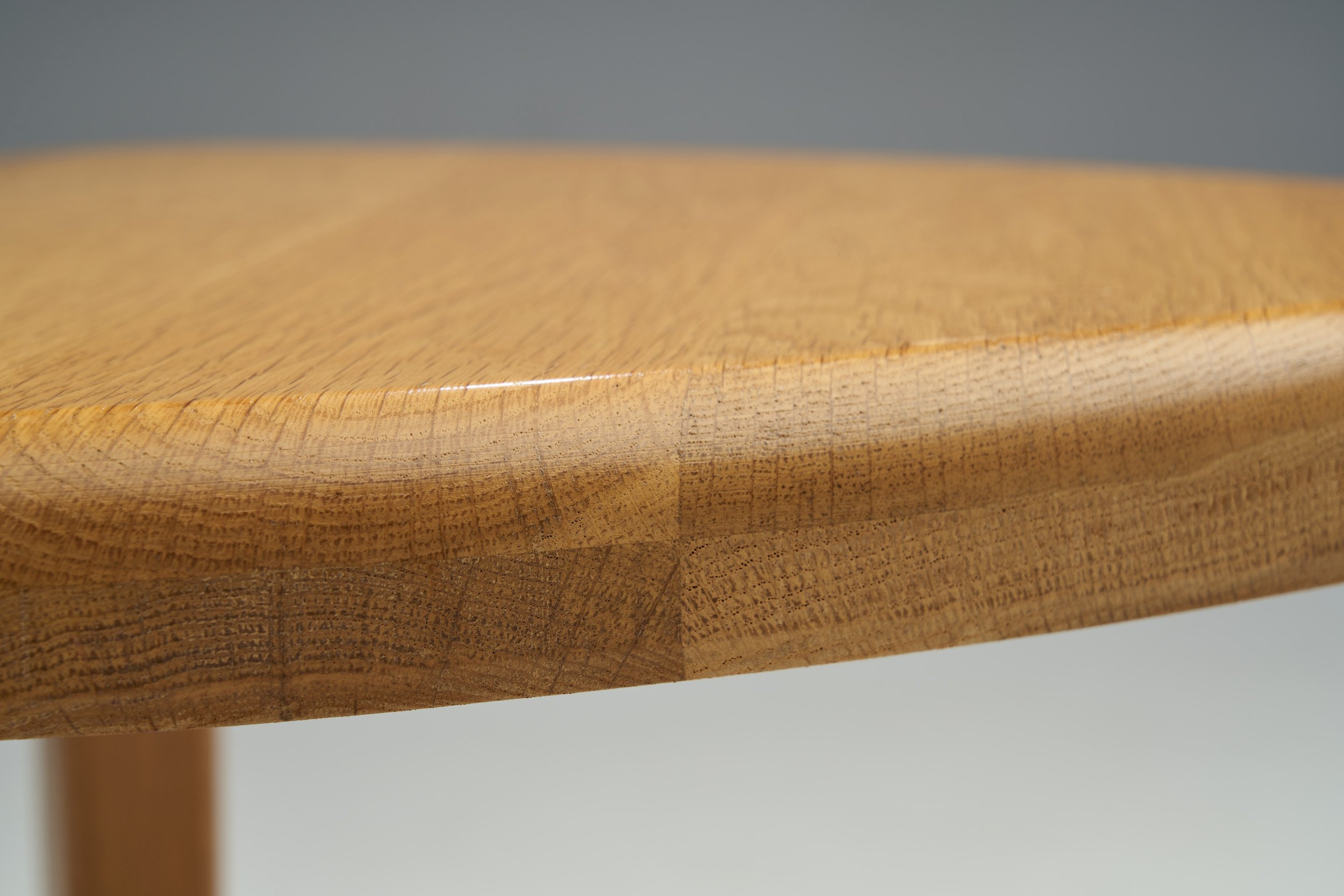
The triangular shape of the tabletops immediately stands out. This silhouette, resembling a guitar pick, was particularly favoured by Danish designers, such as Poul Thorsbjerg Jensen. The pieces of this unique set of tables contain three individual tables that are graduated in size so that they may be stacked on top of one another. Each piece is made of solid wood with beautiful grain and pattern that is even more noticeable when the individual tables are next to each other. The different sizes of these nesting tables serve both functional and visual goals; they can conveniently be used individually or nested together to form a coffee table, or they can be separated and laid around the room to form a cohesive interior style. Additionally, a trio of nesting tables bring added depth and cosiness, and it also follows the revered rule of three – a Feng Shui principle that encourages 'groups of three' to open and relax a space. The versatility and functionality of this set is completed by the Scandinavian design: soft, rounded edges and craftsmanship characterize the tables, supported by the sturdy legs.
The versatility of nesting tables makes them incredibly practical and functional. They are a perfect choice for small spaces as they allow maintaining a clean and open interior design without giving up comfort. Whether nested together or placed next to each other, this set is sure to bring functional style and quality to any space.
SOLD
Condition:
In good vintage condition. Wear consistent with age and use. Minor scratches and marks on the wood.
Dimensions:
Largest: 47 cm W x 46.5 cm D x 40 cm H
Middle: 39 cm W x 40 cm D x 34 cm H
Smallest: 29 cm W x 29 cm D x 28 cm H

REQUEST PRICE HERE
Price category: 2,500 - 5,000 usd / eur
This lovely bookcase designed by Grete Jalk for P. Jeppesen reflects the Danish designer’s aesthetic—clean and highly functional, yet creative.
Danish mid-century pieces were often created with a functional purpose in mind, rather than decorative, as this bookcase exemplifies. Elegant in its simplicity, it puts the emphasis on showcasing the material through a simple, uncluttered design. This model deserts any unnecessary ornamentation in favour of the traditional Danish design philosophy, which centres around craftsmanship and practicality. A “bogkasse”, or bookcase is an essential and timeless piece of furniture in Scandinavian homes, where it serves both a practical and an aesthetic role. This piece features exposed shelves and thanks to their arrangement and the large surfaces, the beautiful grain of the wood is highlighted. The wood grain is warm and expressive, enhanced by a natural finish that highlights the material’s inherent richness. The bookshelf’s open and airy design offers a sense of visual lightness, making it equally suited to display treasured books or decorative objects. The shelves are gracefully integrated, offering both structural integrity and stylistic coherence.
A timeless piece, this bookshelf embodies the era’s philosophy of democratic design—functional, beautiful, and enduring. It serves not only as a practical storage solution but also as a quiet statement of mid-century Danish elegance. Ideal for modern interiors, it remains a collectible example of postwar Scandinavian design at its finest.
Condition:
In good vintage condition. Wear consistent with age and use. The vertical shelves are adjustable. Minor marks and scratches.
Dimensions:
42.51 in W x 11.61 in D x 46.65 in H
108 cm W x 29.5 cm D x 118.5 cm H
REQUEST PRICE HERE
Price category: 30,000 - 40,000 usd / eur
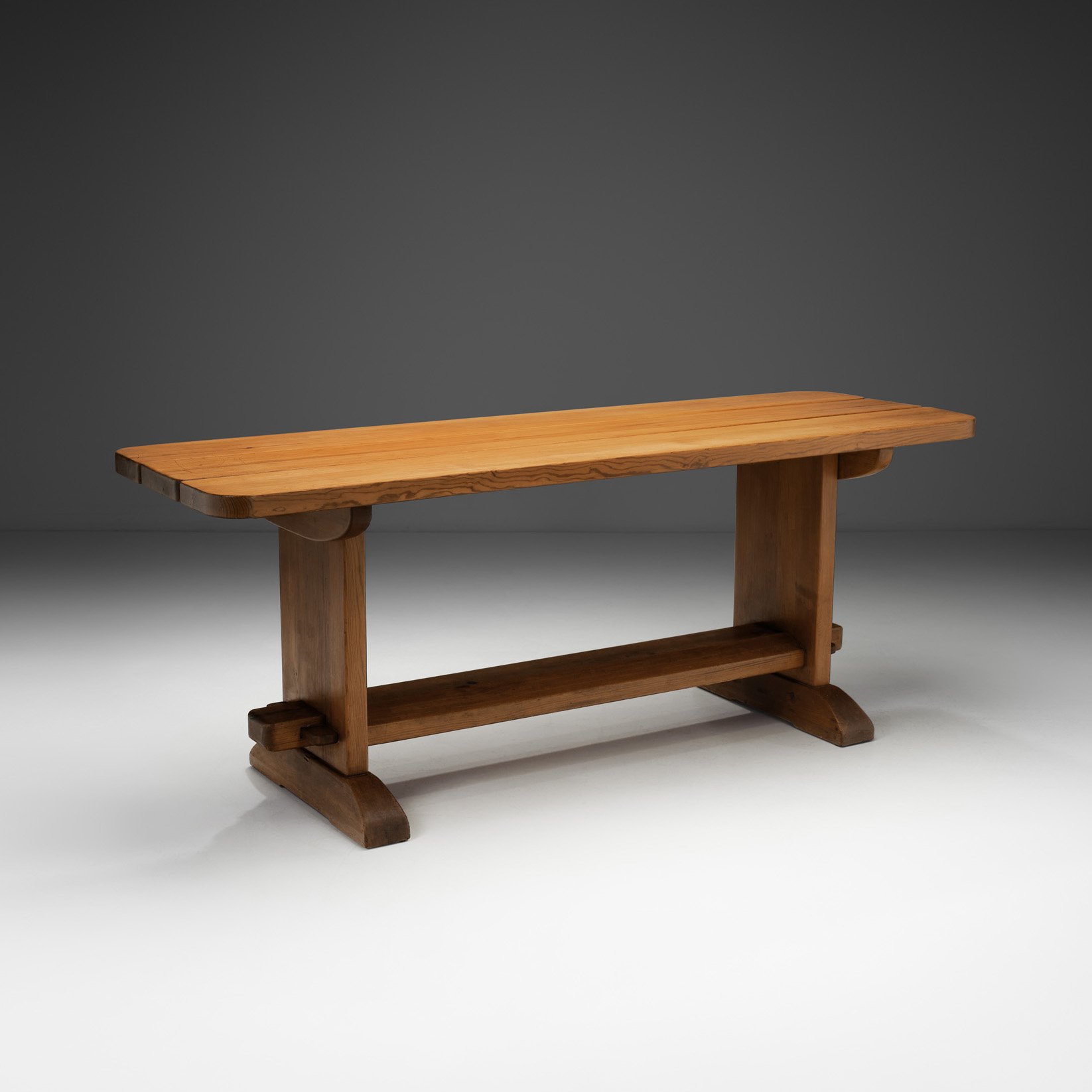
Swedish architect and furniture designer Axel Einar Hjorth served as the lead designer for Nordiska Kompaniet from 1926 to 1938. During this time, Hjorth designed the “Skoga” series in the early 1930s.
The “Skoga” series was crafted as part of a broader collection of summer-house furniture, intended to be both practical and aesthetically harmonious with the rugged beauty of the Swedish landscape. Despite its utilitarian roots, the series, as well as this table, exudes quiet sophistication and a timeless appeal focusing on simple lines and the material itself. Made of pine wood, this table is strong, reflecting Hjorth’s principles according to which he mixed the ideals of the modernist movement with provincial Swedish traditions, producing a unique and primitive modernism. It is quite robust without being intrusive, naturally standing to be the centre of the room. The legs and stretch-bar base emphasize structural clarity and durability, while the rounded corners and visible joinery express a handcrafted, almost sculptural quality. The rectangular tabletop is comprised of three planks of wood, yet it has a light impression. The large surface shows off the pattern of the wood and colour variation. The absence of heavy ornamentation is also in service of enhancing the organic, simple look that defined Swedish design of the era. Each element, joint and line is well crafted and solid, the attention given to every construction and finishing detail is obvious.
This table doesn’t depend on its details, rather, it is just as arresting from afar as from a proximity. The joinery and woodworking reveal the quality craftsmanship of the experts at Nordiska Kompaniet. The most charming thing about this table however, is that it showcases classic elements and so much history, but it lends itself easily to a modern interior.
Condition:
In good vintage condition. Wear consistent with age and use. Some marks and scratches on the wood.
Dimensions:
70.86 in W x 23.62 in D x 27.55 in H
180 cm W x 60 cm D x 70 cm H

REQUEST PRICE HERE
Price category: 5,000 - 7,500 usd / eur
Swedish modern design remains popular today due to its clean lines, functionalism, and timeless aesthetic. Ultimately, it offers a combination of beauty and practicality that remains highly sought after, even for contemporary interiors.
With its distinctive structure, this cabinet attributed to Ulf Ekdahl epitomises the mid-20th century era, when material and design would become the lead factors in achieving stability, durability, and of course, an aesthetically pleasing outcome. Therefore, the proportions of this piece are finely tuned to successfully achieve something timeless. The design holds a natural expression with its airy and organic design, which is dominated by the natural look of the wood. The geometric panelling on the cabinet doors accentuates the design further, with this subtle decorative element adding depth and visual interest. The craftsmanship is evident in the precision of the woodwork, reflecting the standards of furniture making at the time. The doors and drawers on the front can be opened with lovely wooden doorknobs. Inside, the cabinet offers storage space and a shelf. Overall the form of this cabinet is not loud, it leaves the focus on the wood and the carvings, yet, it has a stately appearance. As a fundamentally functional type of furniture, this model does more than serve its utilitarian purpose.
Swedish modern – despite its name – in many ways transcends the word “modern”, pieces like this can be incorporated successfully into contemporary and traditional interiors alike, lending themselves to a timeless and universal appeal.
Condition:
In good condition. Wear consistent with age and use.
Dimensions:
21.06 in W x 12.60 in D x 54.72 in H
53.5 cm W x 32 cm D x 139 cm H
REQUEST PRICE HERE
Price category: 2,500 - 5,000 usd / eur
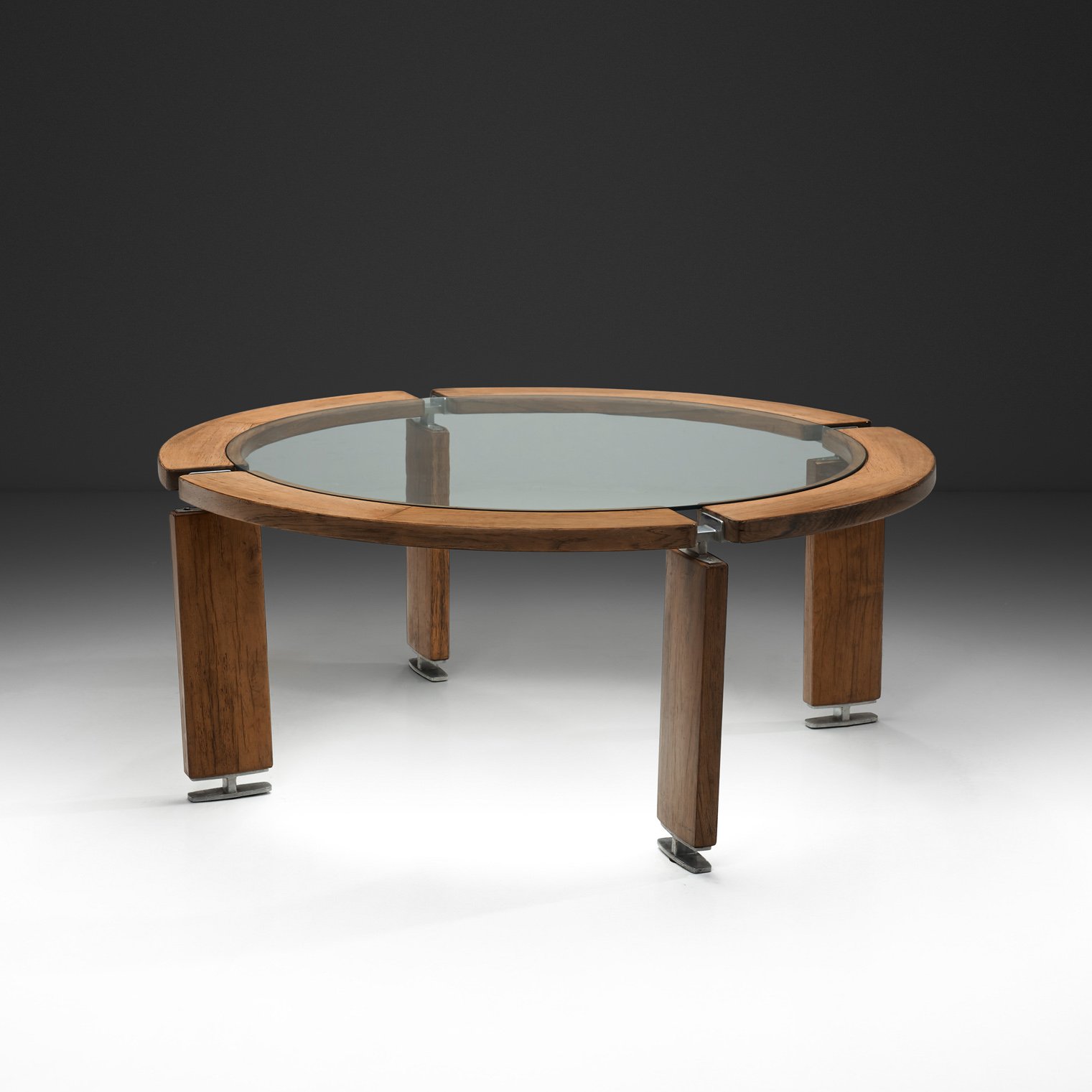
In Finland, the second half of the 20th century saw the use of new materials like plastic, synthetics, and fibreglass being combined with advances in manufacturing technologies, allowing designers in Finland to expand their range of colours and forms in mass production. However, this coffee table model still gives preference to natural materials, primarily to its wooden frame.
Utilising and highlighting the qualities of the materials used, combined with the expertise of Esko Pajamies, this coffee table is a beautiful piece that can both define and complement a modern space. The coffee table's round glass top showcases an appealing look. The dark colour of the solid wood that forms the structure of the table contrasts beautifully with the top, as its robustness grounds the design. The combination of materials make this table a stylish example of the period’s design versatility. Coffee tables, in general, serve as design staples in living spaces for a multitude of reasons: beyond their utilitarian function of providing a surface for drinks and books, they anchor a room, creating a focal point around which furniture and conversation revolve. Overall, this table equally emphasises function and visual interest, creating an instantly arresting aesthetic.
The overall form of the table has a light and airy feel, enhancing the 20th century aesthetic which it represents. With its elegant shape and careful design, this piece rises above the endless passing of trends, establishing itself as a modern classic in the realm of interior design.
Condition:
In good vintage condition. Wear consistent with age and use. The item has recently been reconditioned. Due to the age and nature of the wood, the coffee table may have minor marks, scratches, and discolouration.
Dimensions:
47.24 in ø x 19.68 in H
120 cm ø x 50 cm H
REQUEST PRICE HERE
Price category: 5,000 - 7,500 usd / eur
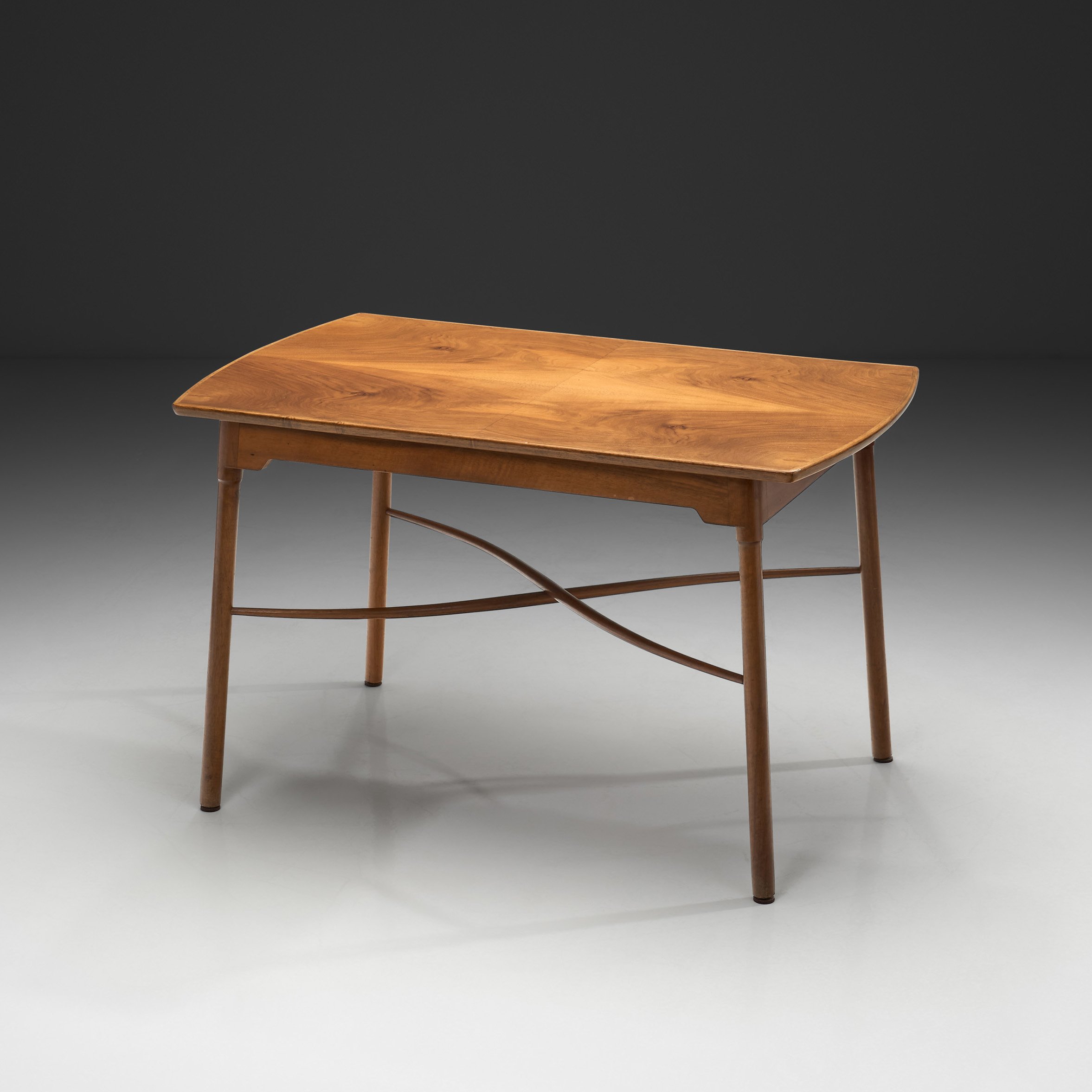
Ole Wanscher was a leading figure in Danish and Scandinavian design, as was his mentor, the legendary Kaare Klint, renowned to be the “father” of modern Danish furniture design. Together, they made significant achievements in redefining classic forms. Drawing inspiration from human anatomy, his developments influenced the concept of Scandinavian modernism as we know it today. Wanscher’s contribution to the field is widely acknowledged as he acquired his skills at the esteemed Det Kongelige Danske Kunstakademi - Billedkunst Skolerne in Copenhagen.
The post-war era, especially the period spanning from 1940 to 1960 resembled the golden age of Danish furniture, and was when Wanscher created his most well known works. This model "1762" coffee table retains the cherished Danish modernist traits, such as simplicity and functionality, while also reflecting an ongoing precise focus on quality materials. This minimalist approach combined with solid wood creates a timeless appearance that resonates with any design style. The stunning grain pattern of the table top enhances the visual appeal, yet the most eye-catching design (and functional) element remains the curving cross stretchers connecting the legs. Albeit simple, its uncommon overlap - as opposed to bisecting - design catches the eye, and contrasts effectively with the top.
The design of this table encapsulates a rich moment in furniture design history. It is a tangible embodiment of the mid-20th century era’s focus on materiality and craftsmanship, while also reflecting the innovative spirit of Danish designers like Ole Wanscher.
Condition:
In good vintage condition. Wear consistent with age and use. The table has recently been reconditioned. Due to the nature and age of the wood, the item has visible marks and scratches, and may show slight discolouration.
Dimensions:
35.44 in W × 21.66 in D × 21.66 in H
90 cm W x 55 cm D x 55 cm H

REQUEST PRICE HERE
Price category: 30,000 - 40,000 usd / eur
Ib Kofod-Larsen was one of the pioneers of the Danish modern in the 1950s. Rather than a regional phenomenon, Kofod-Larsen saw Scandinavian design as part of international modernism, and he became one of the best-selling Danish architects in the United States in the 1950s. This rare palisander sideboard was produced by Swedish manufacturer Säffle Möbelfabrik in cooperation with the Danish designer in 1958.
This very sought after model features distinctive V-shaped legs that complement the otherwise strict lines. The veneer has a grain that has come out beautifully over time, and gives the sideboard a striking look. This means that each model is different and unique, the pattern always varying. It praises the designer that the body is in an understated, rectangular shape that lets the wood and the legs stand out. Functionality also plays an important role in this model; with its sheer size and four doors, this piece offers a lot of shelving space. The first three doors cover space for height adjustable shelves, while the fourth covers four white, unevenly sized drawers. Each door has a small oval notch on the top, enabling easy opening while maintaining a clean and uncluttered front. Presumably only 40 or 50 of these models have been made when the Säffle factory bought a leftover stack of veneer from another factory. This sideboard is made with outstanding production quality and attention to detail.
Ib Kofod-Larsen's work became increasingly sought-after during the 1950s and 1960s, typically featuring organic and minimal pieces made specifically for the Scandinavian market. This “Trol” sideboard is a beautiful and elegant evidence of Kofod-Larsen’s graphic purity and artistic expression. He was a purist. A man of detail. At first glance, his furniture may seem simple, but at closer inspection it is full of detail.
Condition:
In good condition. Wear consistent with age and use. The veneer has some minor marks.
Dimensions:
95.86 in W x 18.51 in D x 28.3 in H
243.5 cm W x 47 cm D x 72 cm H
Literature:
Mobilia Magazine n°106, May 1964
About the designer:
Ib Kofod-Larsen was born in 1921 in Denmark. Kofod-Larsen was trained as a cabinetmaker with the highest honours in 1944, and later completed his education as an architect from the Royal Danish Academy of Fine Arts in 1948.
His first recognition as a designer came when he won the Holmegaard Glass Competition and received the Danish Cabinetmakers Guild’s annual award. These awards attracted the attention of the Danish furniture manufacturer Faarup Møbelfabrik.
During his time at Faarup, he created some of his most beautiful works, like the rosewood Model 66 sideboard, and established himself as a furniture designer. Learn more about Ib Kofod-Larsen. ~H.
REQUEST PRICE HERE
Price category: 5,000 - 7,500 usd / eur
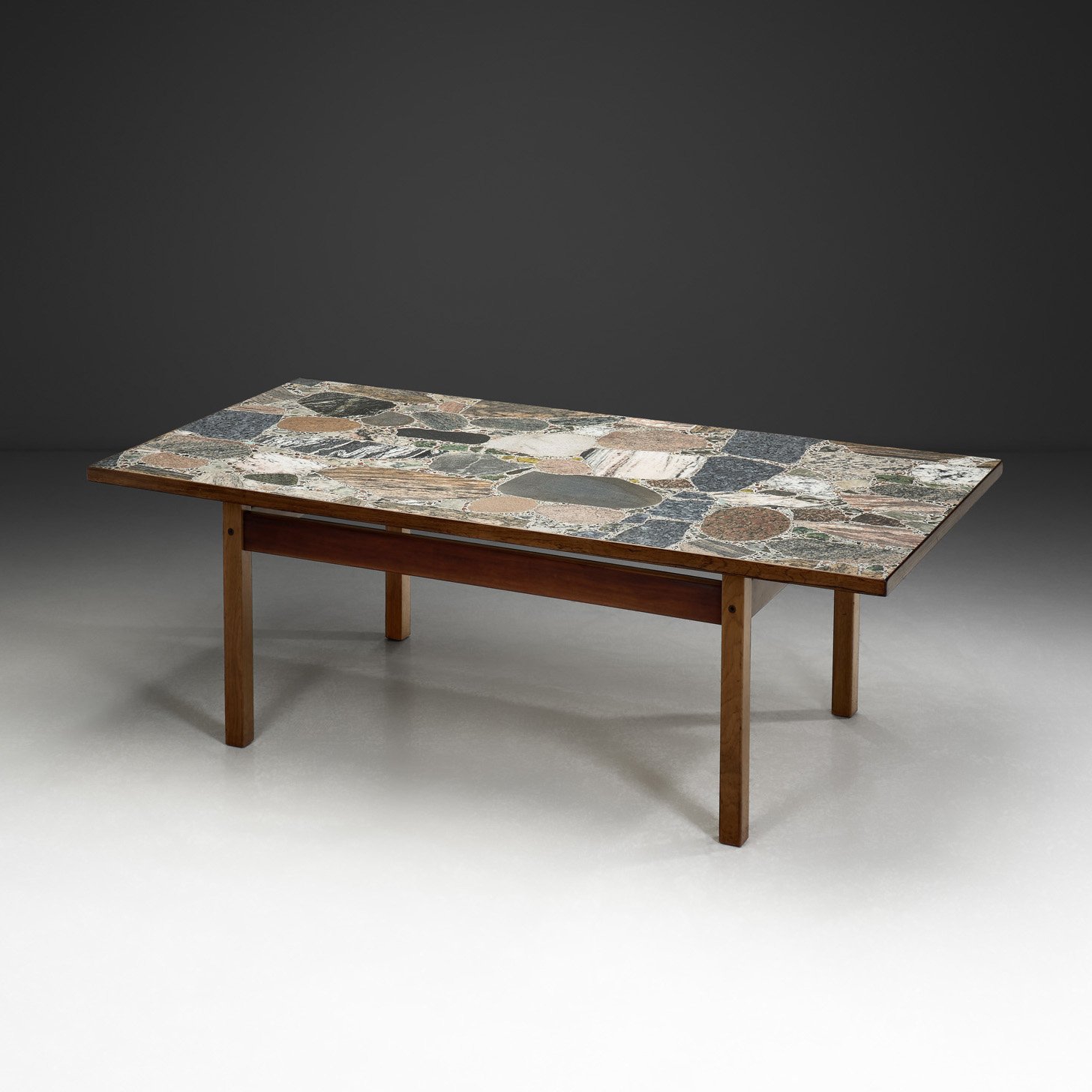
This impressive Norwegian table is defined by its materials, seamless joinery and distinctive, but soft ornamentation of the tabletop. Designed by Erling Viksjø, one of Norway’s most influential architects from the mid-20th century, this table is characteristic of the postwar exploration with both natural and man-made materials.
Utilising and highlighting the qualities of the materials used, combined with the expertise of Erling Viksjø, this coffee table is a beautiful piece that can both dominate and complement a modern space. The table's rectangular top showcases an appealing textural and colourful look. As a result, the impression is quite elemental and striking. Viksjø often worked with concrete that had interesting rock patterns, which soon became his trademark. He also created new materials and ways of building, resulting in concrete types he named Naturbetong (natural concrete), conglo concrete, and metal concrete. This type of material creates a stunning contrast which is what makes this table stand out. The warm tone of the wooden base also creates a sense of elegance and sophistication, while the modern stone top is smooth to the touch, adding a sense of solidity and durability to the overall design. Norwegian designers of this era aimed to create furniture and home decor that was both aesthetically pleasing and practical. This style has become synonymous with Scandinavian and Nordic design and is still sought after today for its timeless appeal and quality.
This coffee table follows the fundamental Scandinavian design principles both aesthetically and technically. The simple design serves the purpose of showing the understated beauty of the materials and their endless possibilities under the hands of an expert craftsman.
Condition:
In good vintage condition. Wear consistent with age and use. The table has recently been reconditioned. Due to the nature of the materials, the item may have some marks, scratches, and discolouration.
Dimensions:
59.05 in W x 29.72 in D x 19.88 in H
150 cm W x 75.5 cm D x 50.5 cm H
REQUEST PRICE HERE
Price category: 12,500 - 15,000 usd / eur
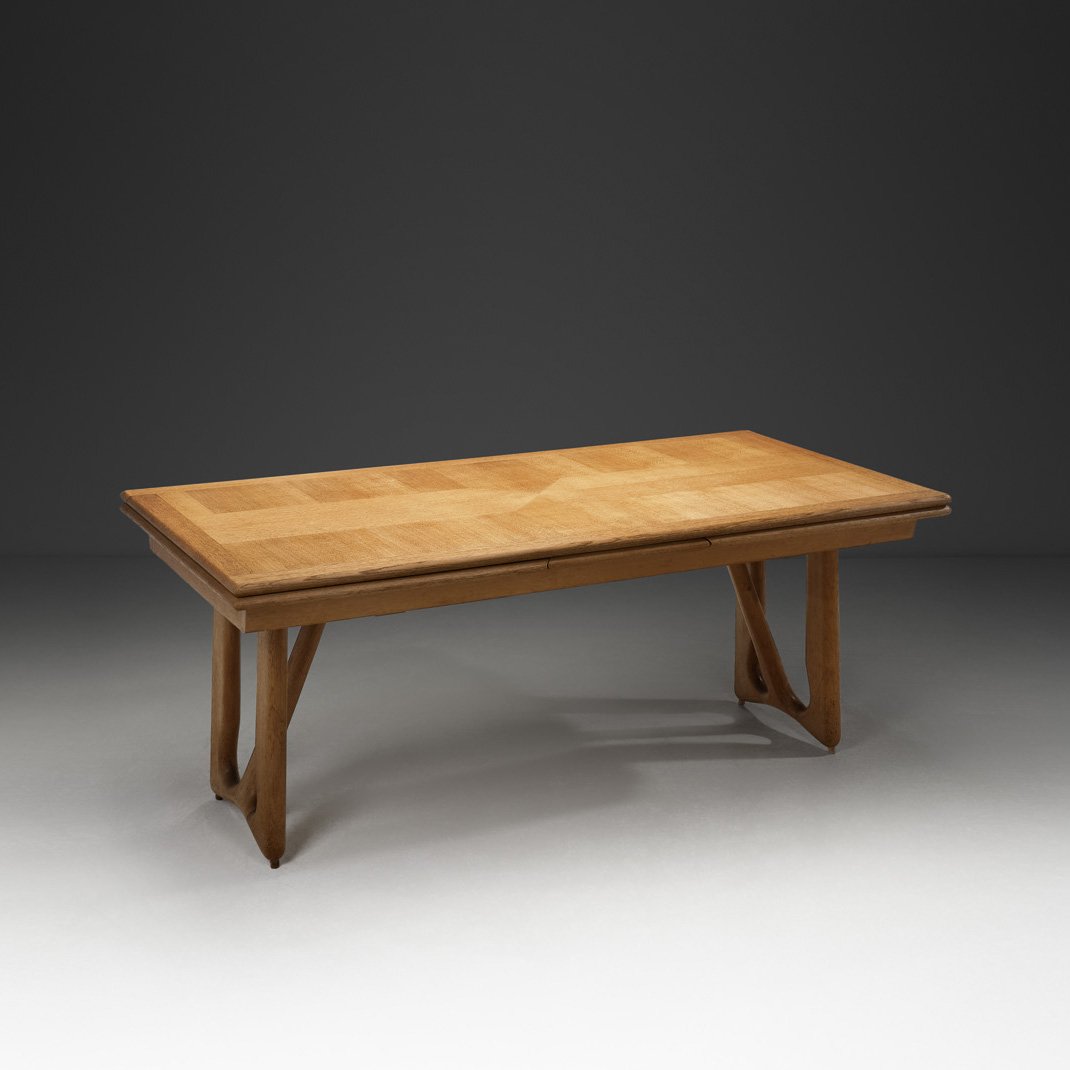
This stunning "L'Italienne" dining table, designed by the renowned French duo Guillerme et Chambron, showcases an exquisite blend of elegant aesthetics and rustic design elements. Crafted in the 1960s by Votre Maison, the table reminds us how form and elegance blend together in the duo's exceptional distinctive craftsmanship style.
At the heart of the construction of this model is the use of oak, a material renowned for its durability and timeless aesthetic qualities. Oak was the preferred material for Guillerme et Chambron, and this piece expertly showcases its rich and robust character, resulting in a solid, functional, and visually captivating work of art. Compared to the duo’s other models, this table is more pared down, relying mostly on the natural appeal of the oak, and its decorative legs. Unlike in most mid-century models, ornamentation was an important part of the duo’s creations, and while apparent, they were never overwhelming. This balance kept the pieces’ elegance, like in the case of this dining table. Furthermore, this piece is full of character and offers expressive and sculptural functionalism. Guillerme et Chambron’s table designs are well-known for their distinctive appearance and multi-functionality; this model is extendable and shows how decorative design and functionality were equally important for the designers, being as sensitive to the use of furniture in everyday life as to the creation of innovative design.
The table's form is clean, geometric, and is a testament to Guillerme et Chambron's dedication to modernism, while staying rooted in traditional craftsmanship and joinery techniques. Their work not only represents the fusion of function and form, but also exemplifies the mid-century modern aesthetic, which they played a pivotal role in actively shaping. Their emphasis on quality craftsmanship and the use of noble materials - like oak - has undeniably left a lasting imprint in the world of furniture making, solidifying their legacy in the French design landscape during the mid-century era.
Condition:
In good vintage condition. Wear consistent with age and use. The item has recently been reconditioned. Due to the nature and age of the wood, the item may have some marks, scratches, and discolouration.
Dimensions:
70.87 in W x 34.45 in D x 28.54 in H
180 cm W x 87.5 cm D x 72.5 cm H

REQUEST PRICE HERE
Price category: 7,500 - 10,000 usd / eur
Swedish architect David Rosén worked alongside renowned designers such as Axel Einar Hjorth and Josef Frank at Nordiska Kompaniet (NK), one of Sweden’s most respected design houses. Rosén crafted this beautiful table for NK in 1938.
Made from pine, this table exudes a lovely charm and robust aesthetic that is characteristic of the era. In early 20th century design, the use of wood held a special significance; it was not merely a material choice, but a philosophy that emphasized the natural and organic over the ornate and extravagant. Moreover, in a rather distinctive way, softness and tradition merge in this coffee table. While it is elemental thanks to the solid pine and interesting construction, the roundness of its top and its elegantly sculpted base still provide a sense of gentleness. It is this well measured tension between the shapes that make the design eye-catching and infinitely interesting. Organic and natural materials often take pride of place in Swedish design, reflecting the Scandinavian and Nordic countries’ relationship to nature. The solid pine wood of this table is not overworked, its natural grain stands out and serves as ornamentation in itself. With minimalism comes timelessness, a guarantee that this coffee table will never go out of style.
With its strong and distinctive details, this table model is a perfect accent table, while also being capable to complement its surroundings. This piece could fit well in a modern interior, as well as in a minimalist or rustic space.
Condition:
In good vintage condition. Wear consistent with age and use.
Dimensions:
28.74 in W x 21.65 in D x 23.62 in H
73 cm W x 55 cm D x 60 cm H

REQUEST PRICE HERE
Price category: 2,500 - 5,000 usd / eur
This coffee table is a stunning example of Modernism in design: clear forms without exaggeration with the high-quality work of a Danish cabinetmaker. Humble in its material and size, this table still draws attention thanks to its distinctive look and personality.
Early on, many of the Danish cabinetmakers’ workshops had been producing historical furniture; master cabinetmakers had been renowned for their solid wooden furniture rendered in various styles of the past. This coffee table, while not specifically historical in style, shows some restrained decorative elements that are generally rather sparse in Scandinavian mid-century furniture. However, accordingly to the design ideals of Danish designers, the scalloping pattern is not overwhelming the table, nor does it demand attention, rather, it is an understated but clever addition to the design. The scalloped patterns on the tabletop and legs differ slightly; the scallops on the legs are more pronounced with straight lines between each scallop, while under the tabletop, it is in a more traditional, round shape.
The wavy effect is even more pronounced thanks to the beautiful grain and colour of the solid oak that is most apparent on the wide, circular top. As it can be expected from Danish design and craftsmanship, visually appealing elements usually serve a functional role as well. In this case, the wooden elements under the table reinforce the stability of the structure in this ingenious manner.
Condition:
In good vintage condition. Wear consistent with age and use. Due to the nature and age of the material, the item may have some marks, scratches, and discolouration.
Dimensions:
35.03 in W x 35.03 in D x 22.04 in H
89 cm W x 89 cm D x 56 cm H
About the Designer:
The practical and comfortable designs of Danish cabinetmakers defined mid-20th century modern seating. The Danish Cabinetmakers focused on minimalist design executed by expertly skilled craftsmen.
Works from the Danish Cabinetmakers' Guild is a concept of its own in collectible design. The Cabinet-Makers' Guild began annual exhibitions in 1927 in Copenhagen. The group formed an exhibit showing each year in October the quality furniture made to drawings by gifted architects. The exhibition took place each year, without interruption, for forty years. A number of successful Danish Design collaborations were formed during this time between cabinetmakers and architects.
Danish Modernism has influenced Scandinavian furniture to a great degree, defined by minimalism, simplicity, and functionality. The muted colours and gentle designs make Danish mid-century furniture an ideal addition to contemporary living spaces. Additionally, master cabinetmakers were highly aware of body proportions, prioritizing comfort just as much as the visual qualities.
The works of master cabinetmakers – such as this chair – are of the highest quality, both in terms of materials and craftsmanship. Cabinetmakers take the art of working with wood one step further, and focus on the finer details of what can be created with the material. Therefore, it comes as no surprise that numerous master cabinetmakers are part of the renowned Danish Culture Canon (Danish: Kulturkanonen). The canon contains no more than 108 works of cultural excellence, based on works with a useful function and that are still recognisable today. These lounge chairs are the perfect illustrations of Danish design, and the work of a true cabinetmaker. ~H.
REQUEST PRICE HERE
Price category: 2,500 - 5,000 usd / eur
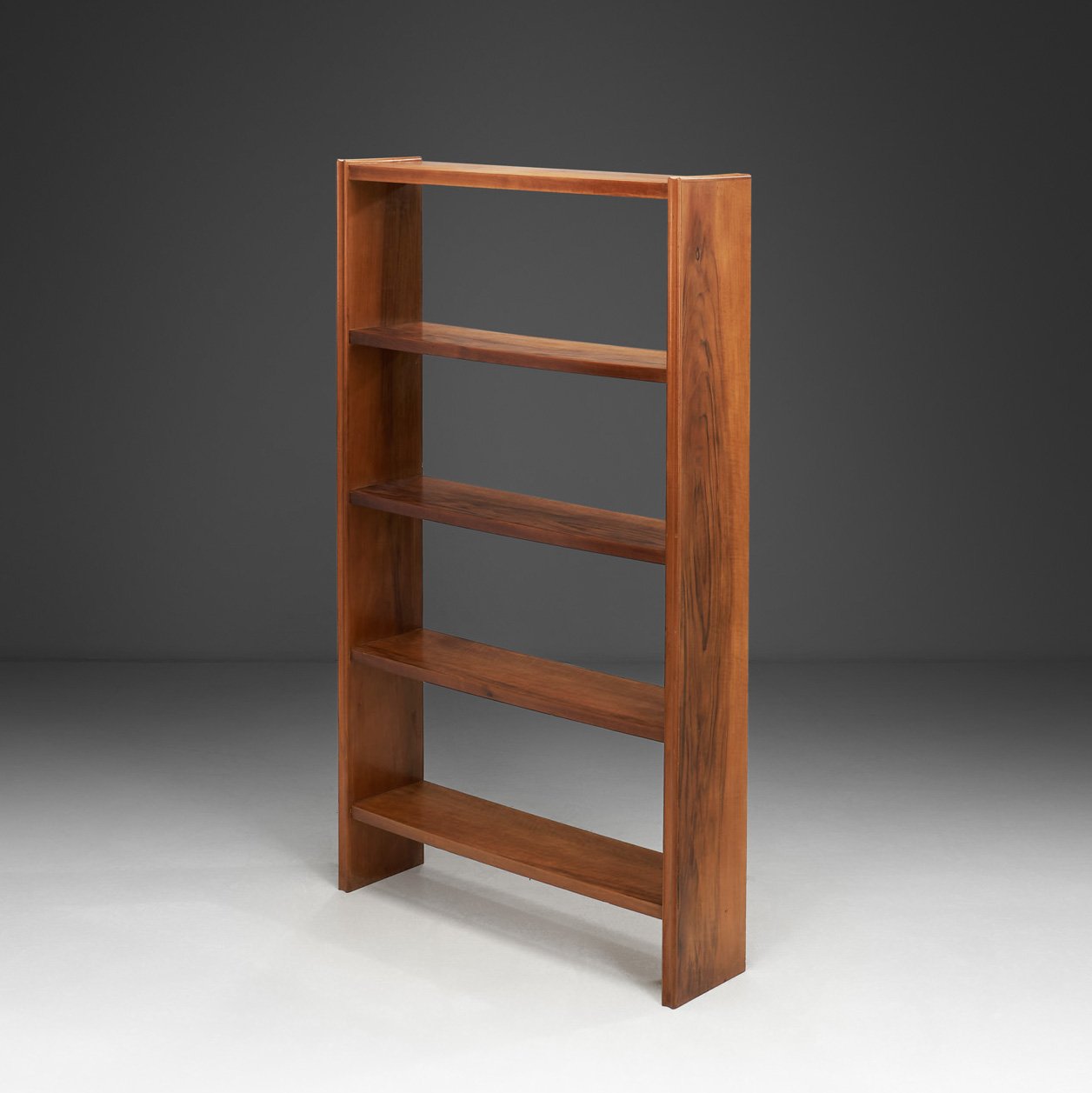
This bookcase is a lovely example of mid-century design, blending form and function. The Italian design language of the 1970s looks just as attractive and fresh today as it did decades ago. Elegance and strength are cleverly combined in this minimalist piece.
Elegant in its simplicity, this bookcase places the emphasis on showcasing the material through a simple, uncluttered design. This model deserts any unnecessary ornamentation in favour of traditional form with the structure being both practical and aesthetically balanced. The proportions are carefully considered, offering a sense of harmony that aligns with the craftsmanship typical of Italian furniture design from the second half of the 20th century. This piece features open shelves and thanks to their arrangement and the large surfaces, the beautiful grain of the wood veneer is highlighted. The material is warm and expressive, enhanced by a natural finish that highlights it’s inherent richness. The bookshelf’s open and airy design offers a sense of visual lightness, making it equally suited to display treasured books or decorative objects.
A timeless piece, this bookshelf embodies the era’s philosophy of democratic design; functional, beautiful, and enduring. It serves not only as a practical storage solution but also as a quiet statement of mid-century elegance.
Condition:
In good vintage condition. Wear consistent with age and use. Some minor chips and scratches.
Dimensions:
33.46 in W x 8.66 in D x 58.66 in H
85 cm W x 22 cm D x 149 cm H
REQUEST PRICE HERE
Price category: 7,500 - 10,000 usd / eur
The 1960s saw furniture makers apply the principles of modern design to increasingly versatile pieces. As homes became increasingly modern, desks were no longer treated as purely utilitarian objects but as pieces of furniture expected to integrate naturally within a living space. Designers responded by refining forms, adding sleek storage, and placing greater emphasis on the visual lightness of their creations. The result was furniture that remained highly functional while maintaining a distinctly architectural character.
At first glance, this 1960s desk appears simple. The rectangular top rests within a clean, open framework, creating a silhouette that feels balanced and remarkably precise. Closer inspection reveals its most distinctive feature: three integrated drawers concealed behind a series of horizontal fronts. This detail looks like a simple aesthetic detail, while it showcases the designer’s concern with practicality. The stacked drawer fronts create a subtle rhythm across the front without disturbing the calm geometry of the piece. When opened this detail creates a layered effect that captivates the eye and emphasizes the horizontal construction. The warm tone of the wood further enhances the design. The open sides prevent the desk from appearing heavy, while the strong stretcher below reinforces the structure and contributes to its clear architectural presence.
What makes this desk particularly successful is the way storage is incorporated into the overall composition. Rather than reading as separate functional elements, the drawers become part of the design itself. The piece carries the quiet confidence associated with the best Italian modern furniture, where proportion, practicality, and visual clarity work together effortlessly.
Condition:
In good vintage condition. Wear consistent with age and use. The desk has recently been reconditioned. Due to the age and nature of the material, the item has minor scratches and dents, and may have additional marks or discolouration.
Dimensions:
59 in W x 30.3 in D x 31.6 in H
150 cm W x 77 cm D x 80.5 cm H