
Danish Modern Wooden Coffee Table, Denmark Second Half of the 20th Century
Danish Modern Wooden Coffee Table, Denmark Second Half of the 20th Century
REQUEST PRICE HERE
Price category: 2,500 - 5,000 usd / eur
During the 1950s, Danish Modern furniture placed equal emphasis on structural clarity and refined craftsmanship. Rather than treating tables as purely functional objects, designers created furniture that integrated beauty into day-to-day life. Thanks in great part to an early emphasis on wood and a resistance to certain modernist currents by influential designers, Danish Modern has avoided associations with cold industrialisation and machine aesthetics.
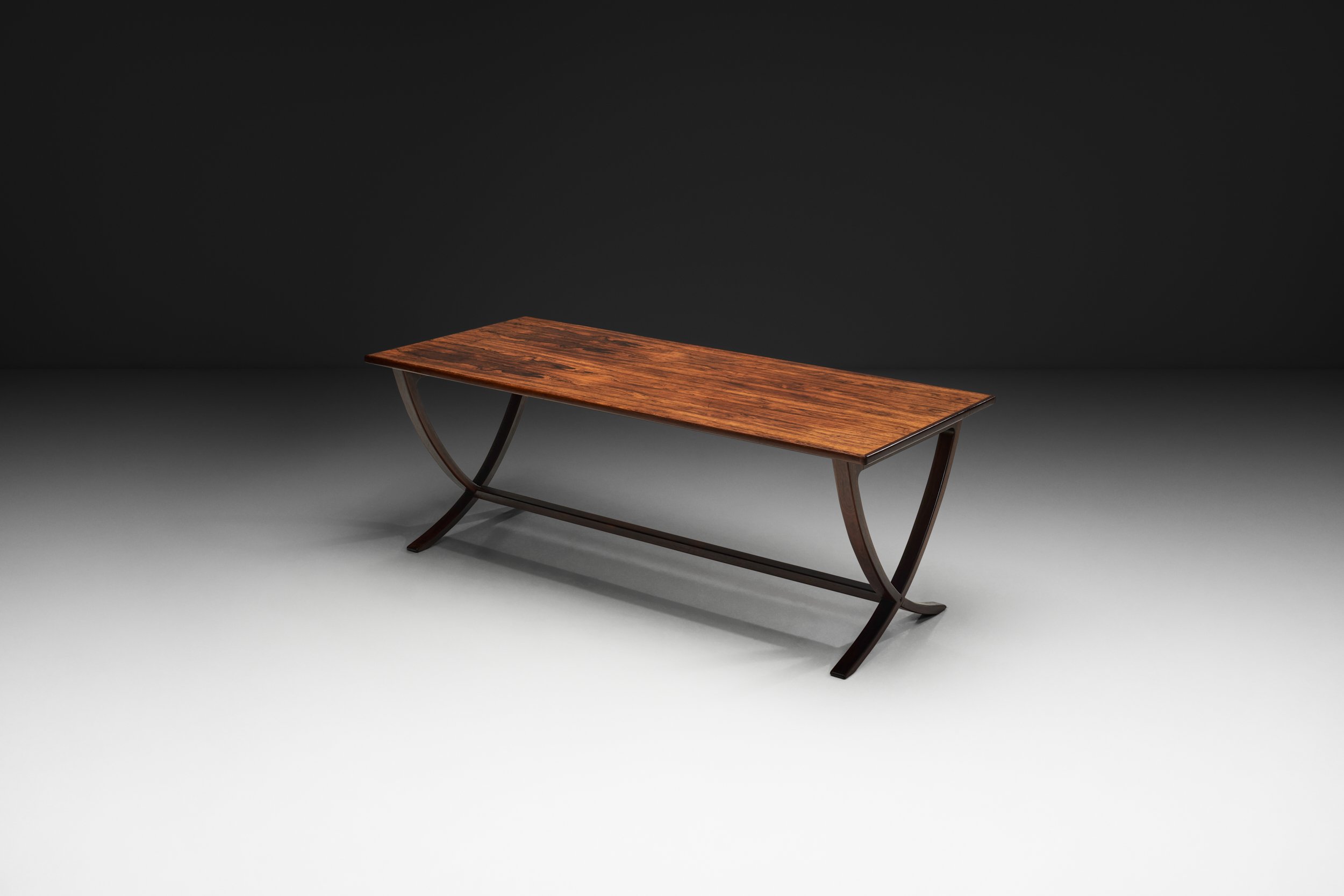
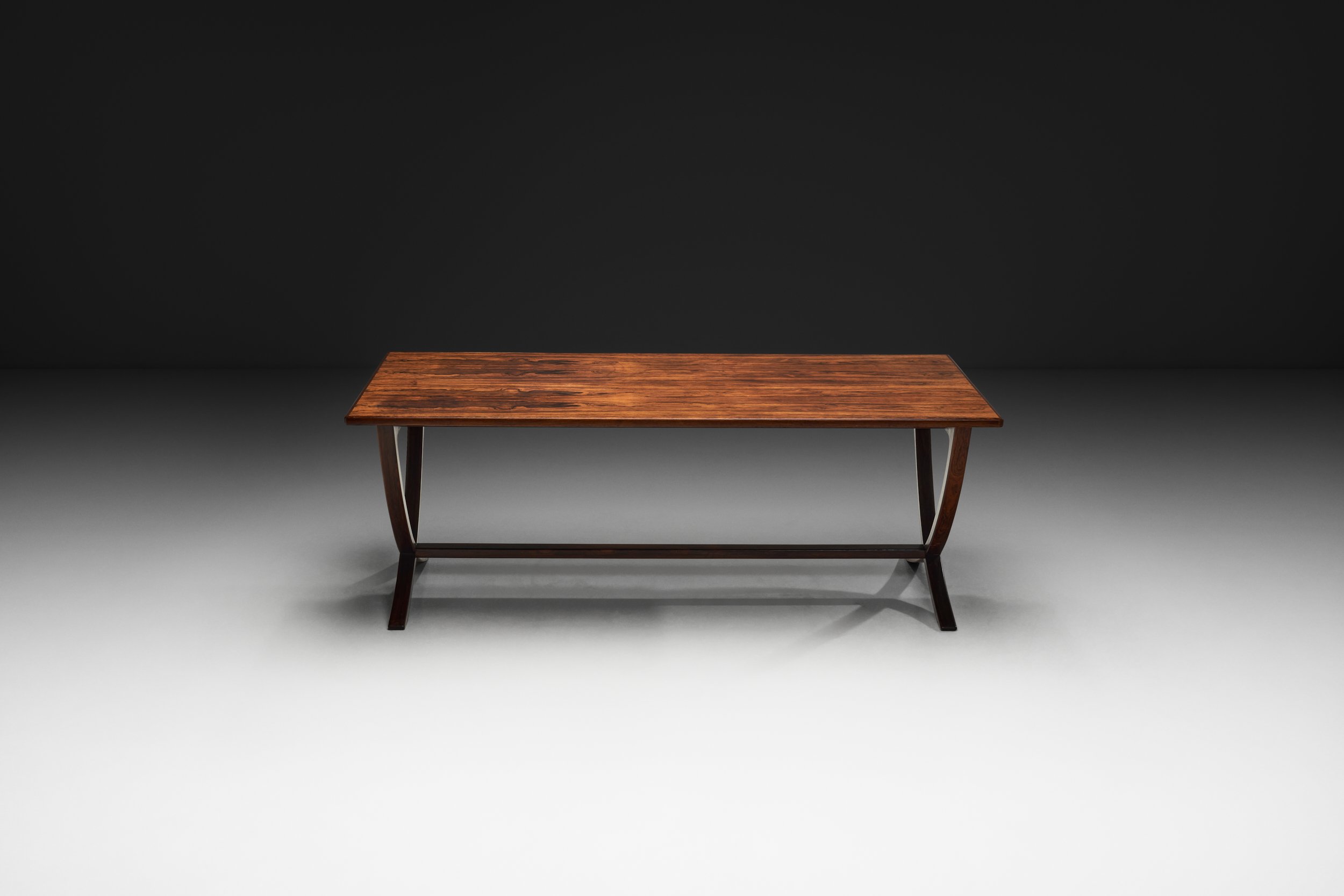
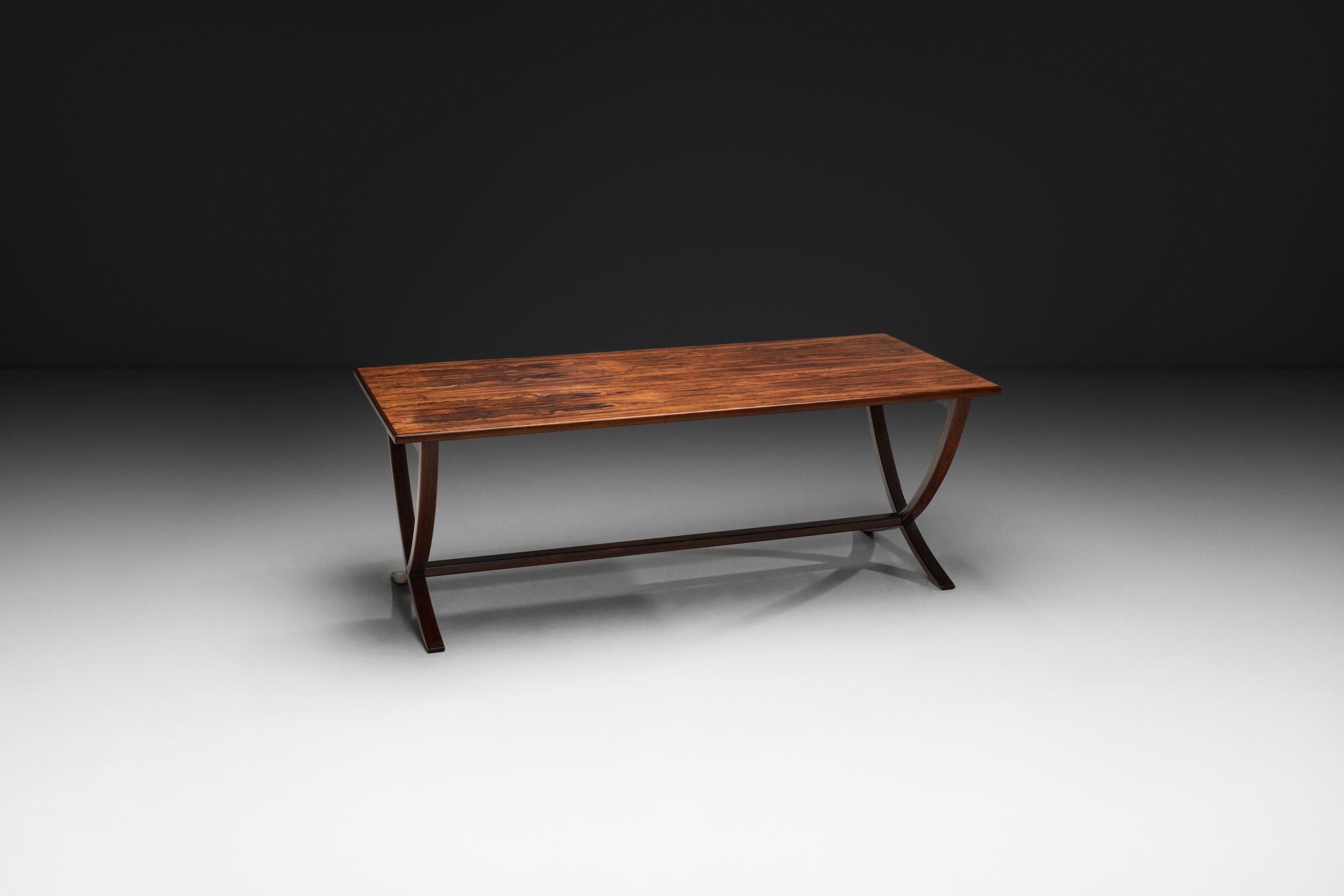
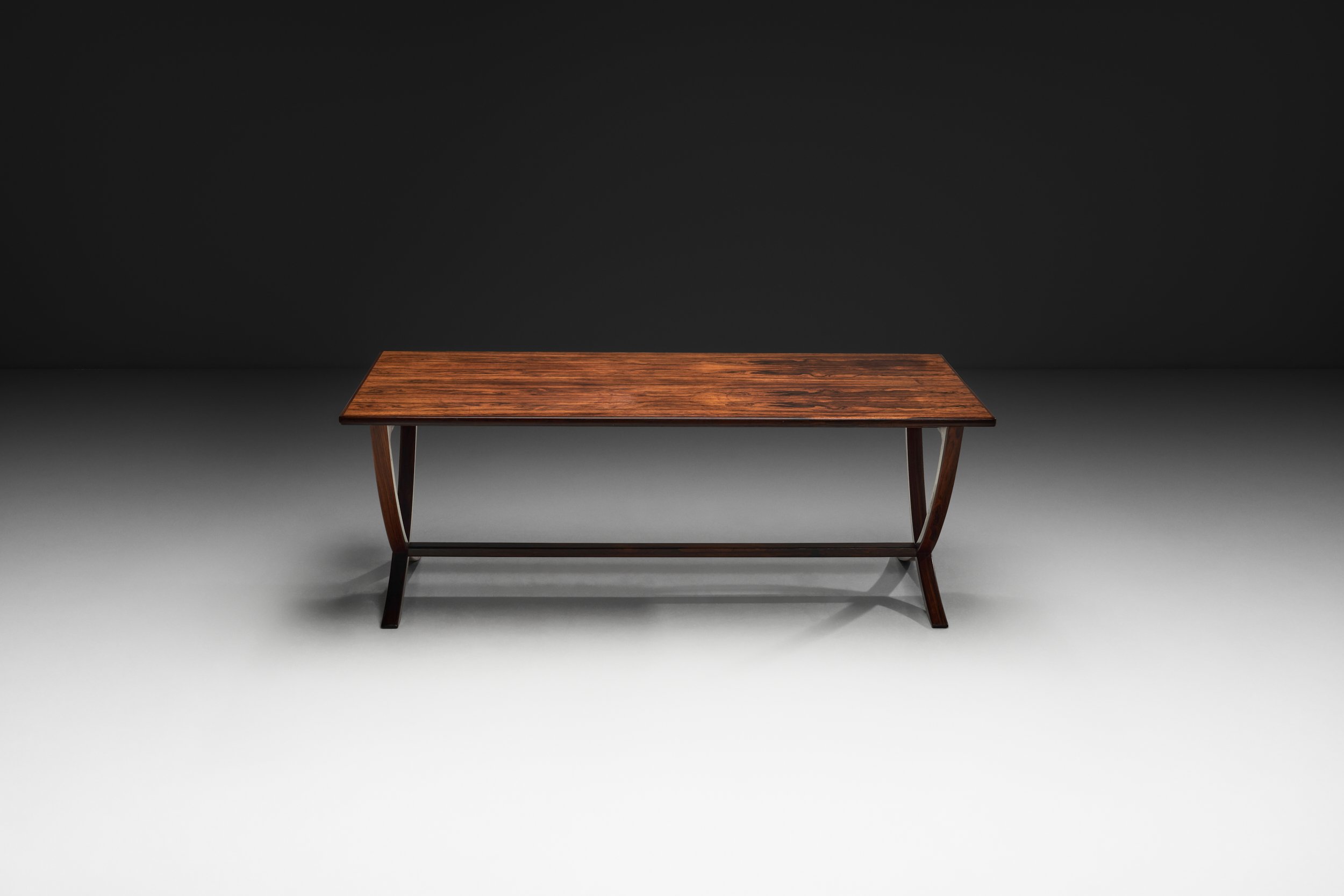
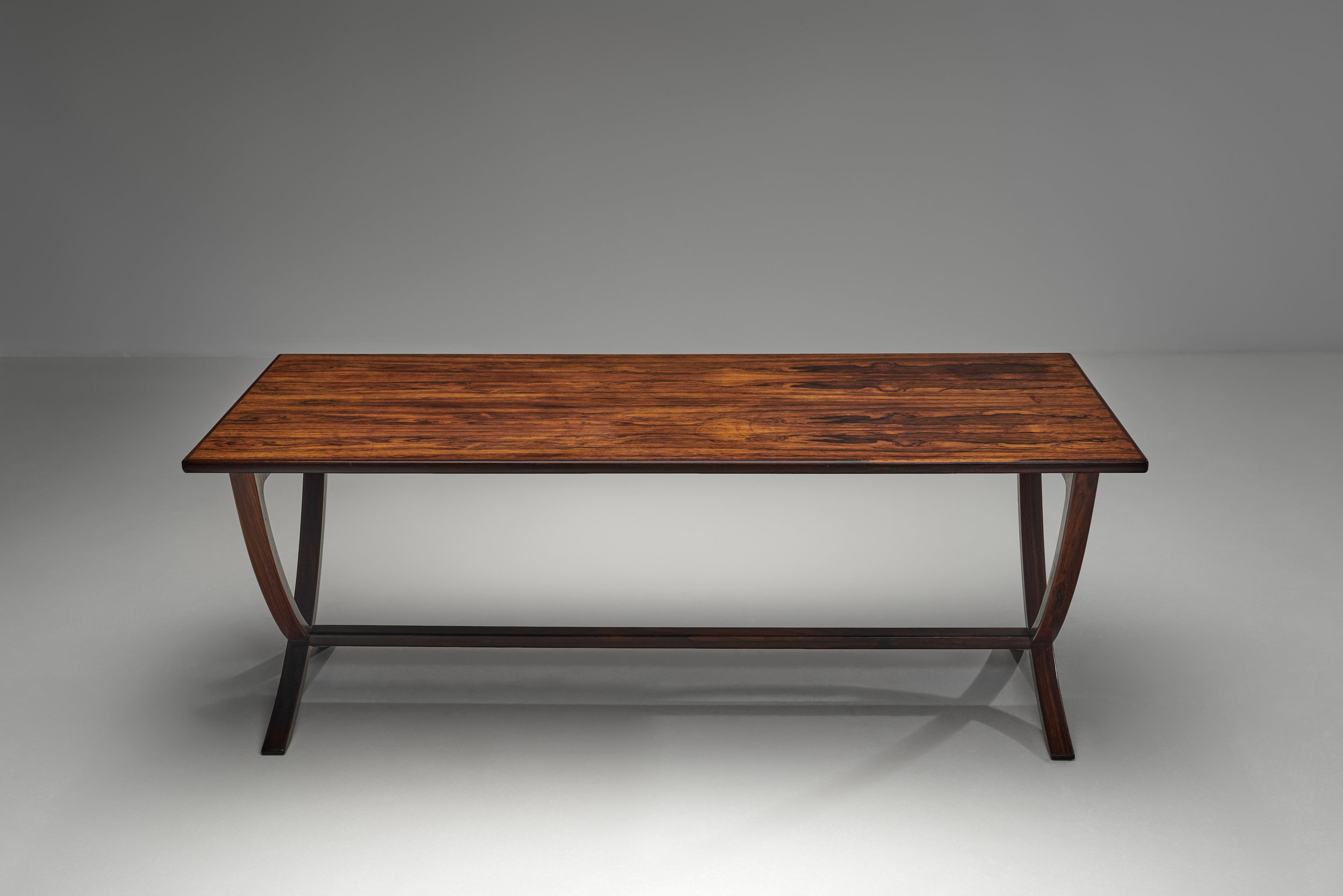
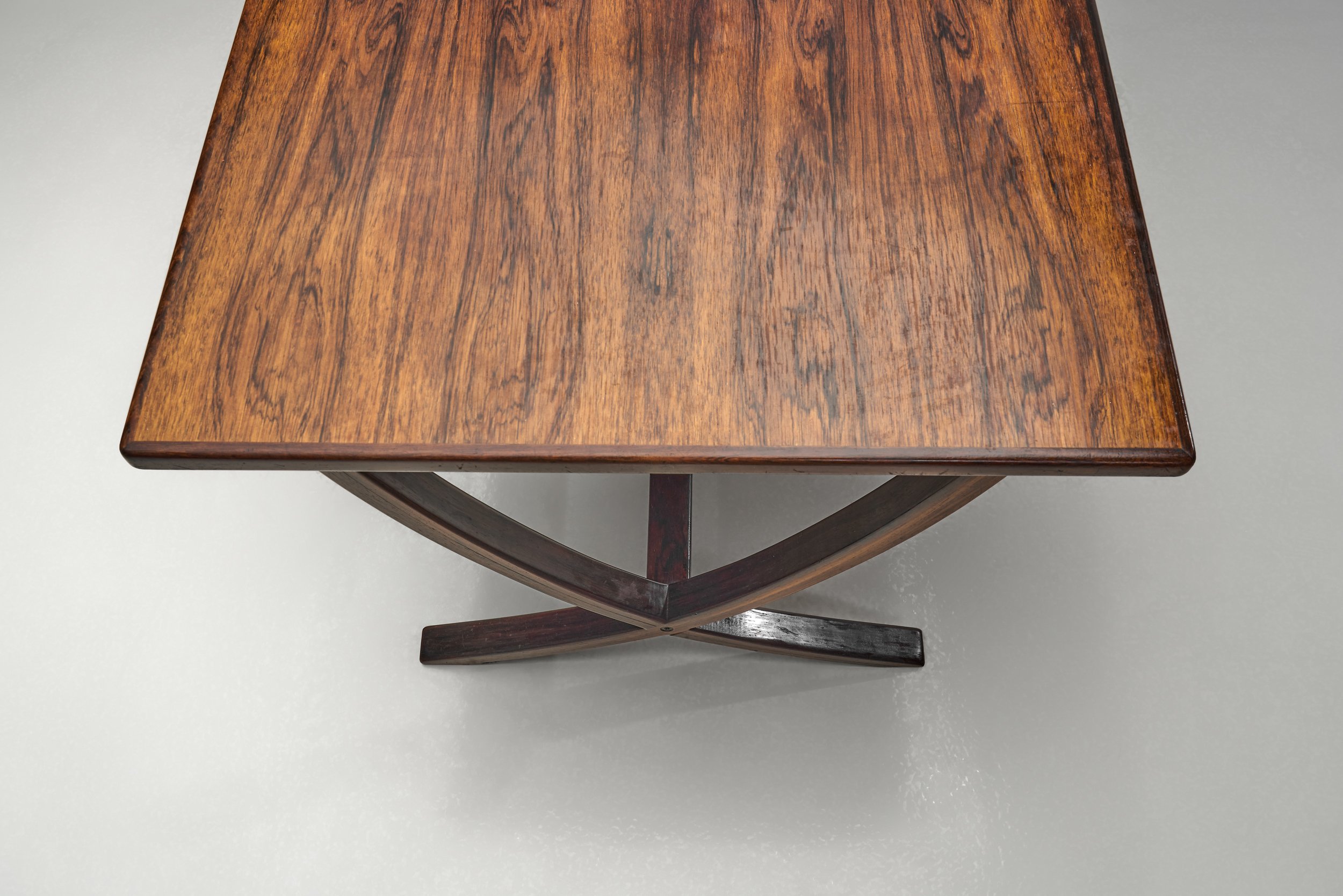
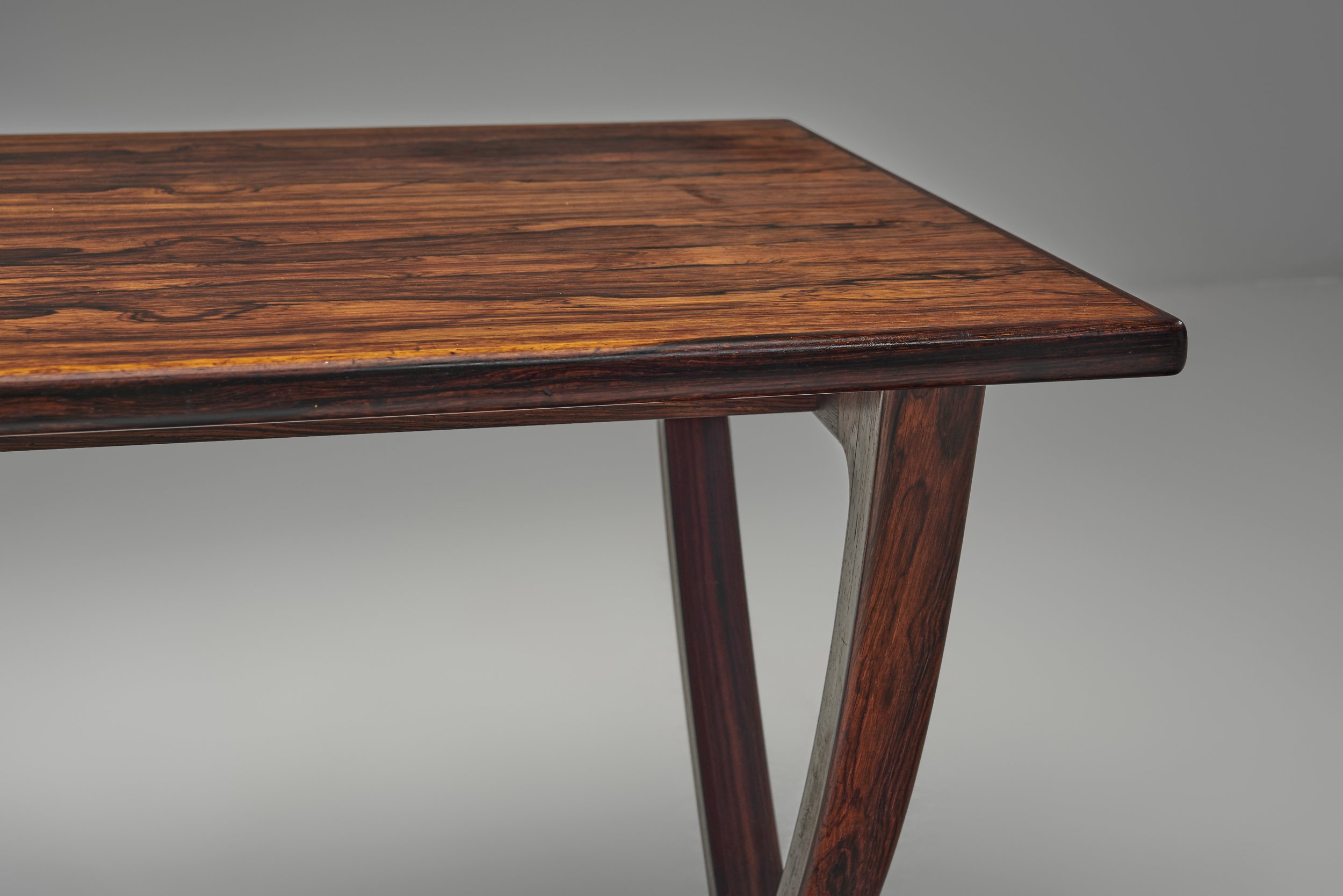
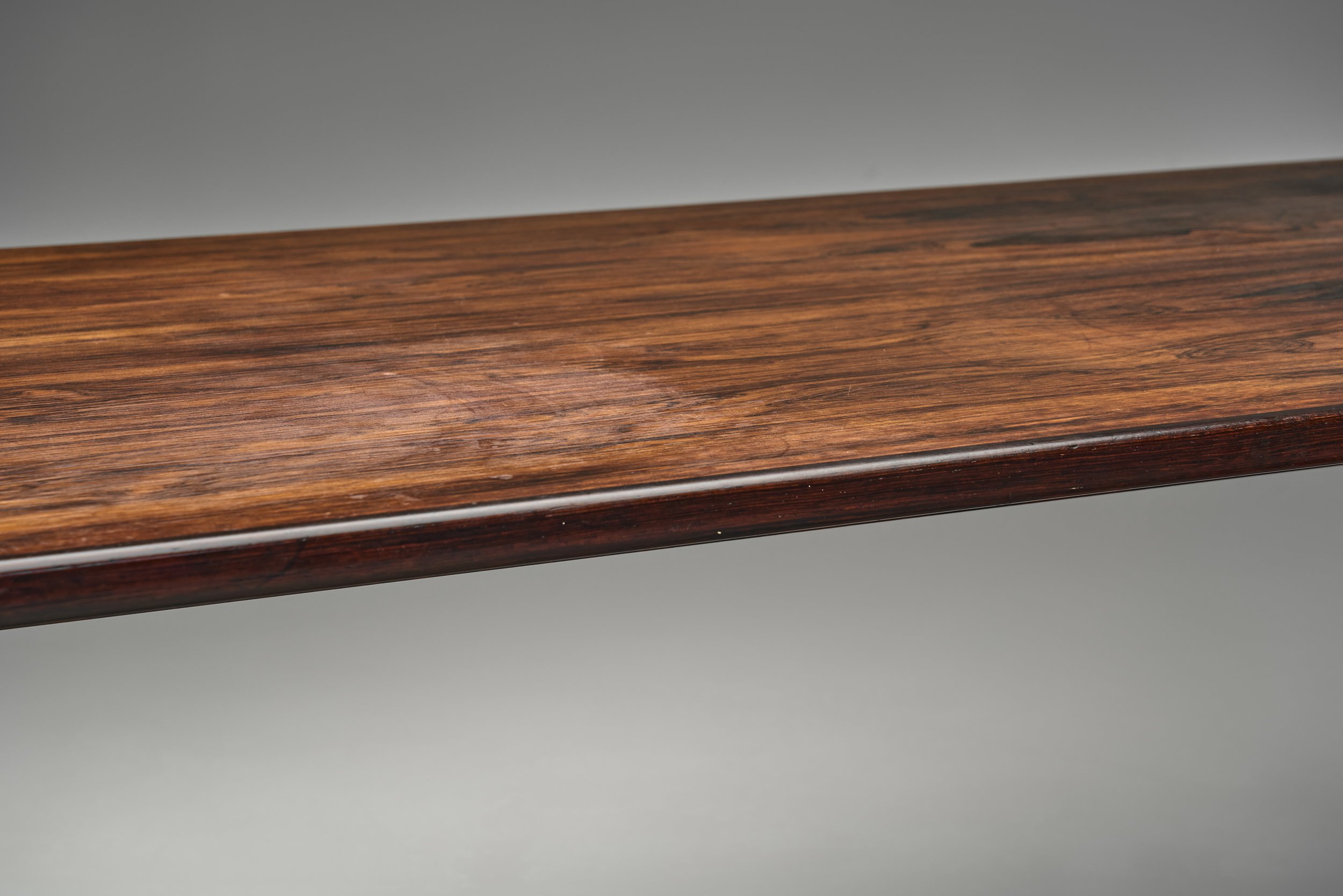
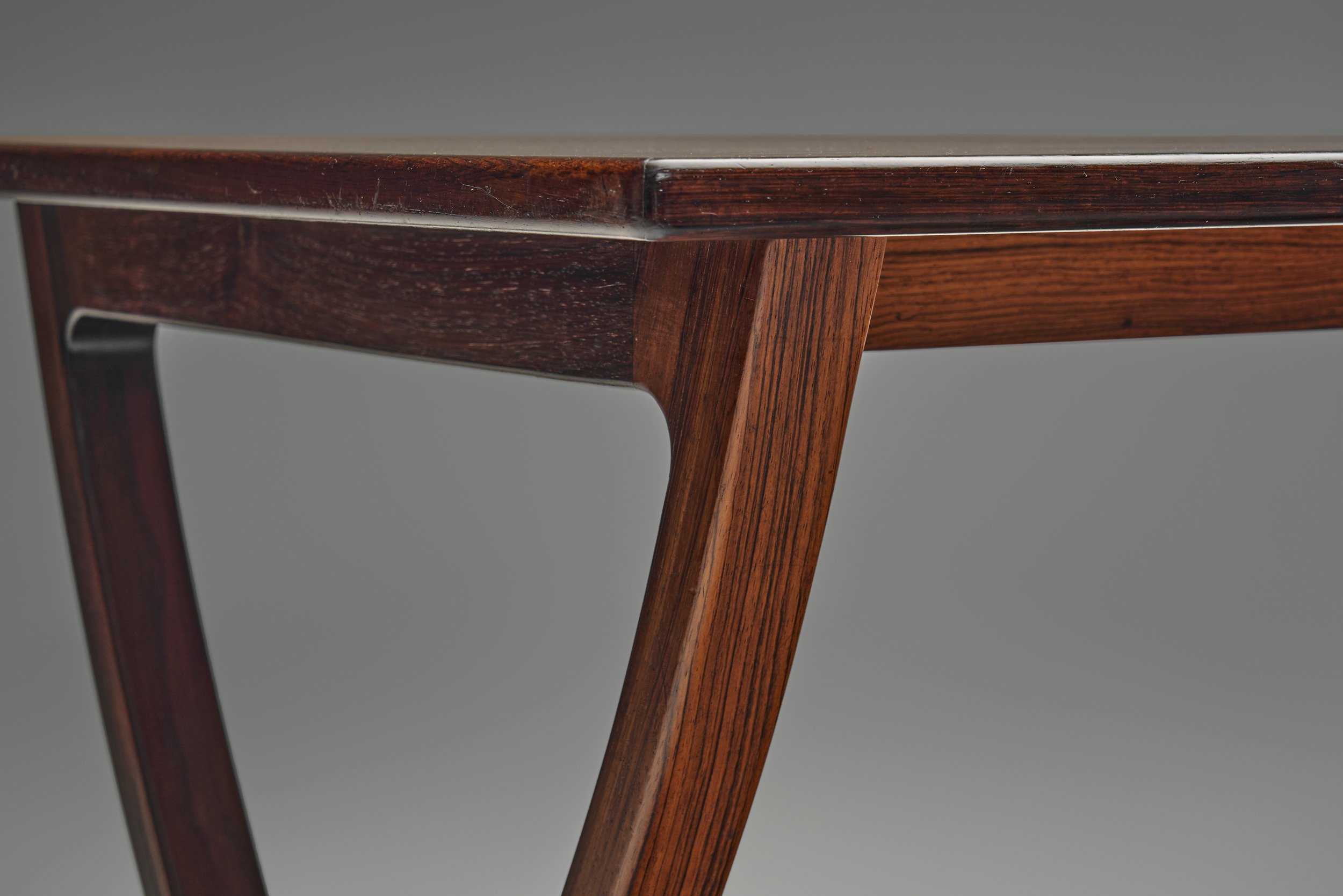
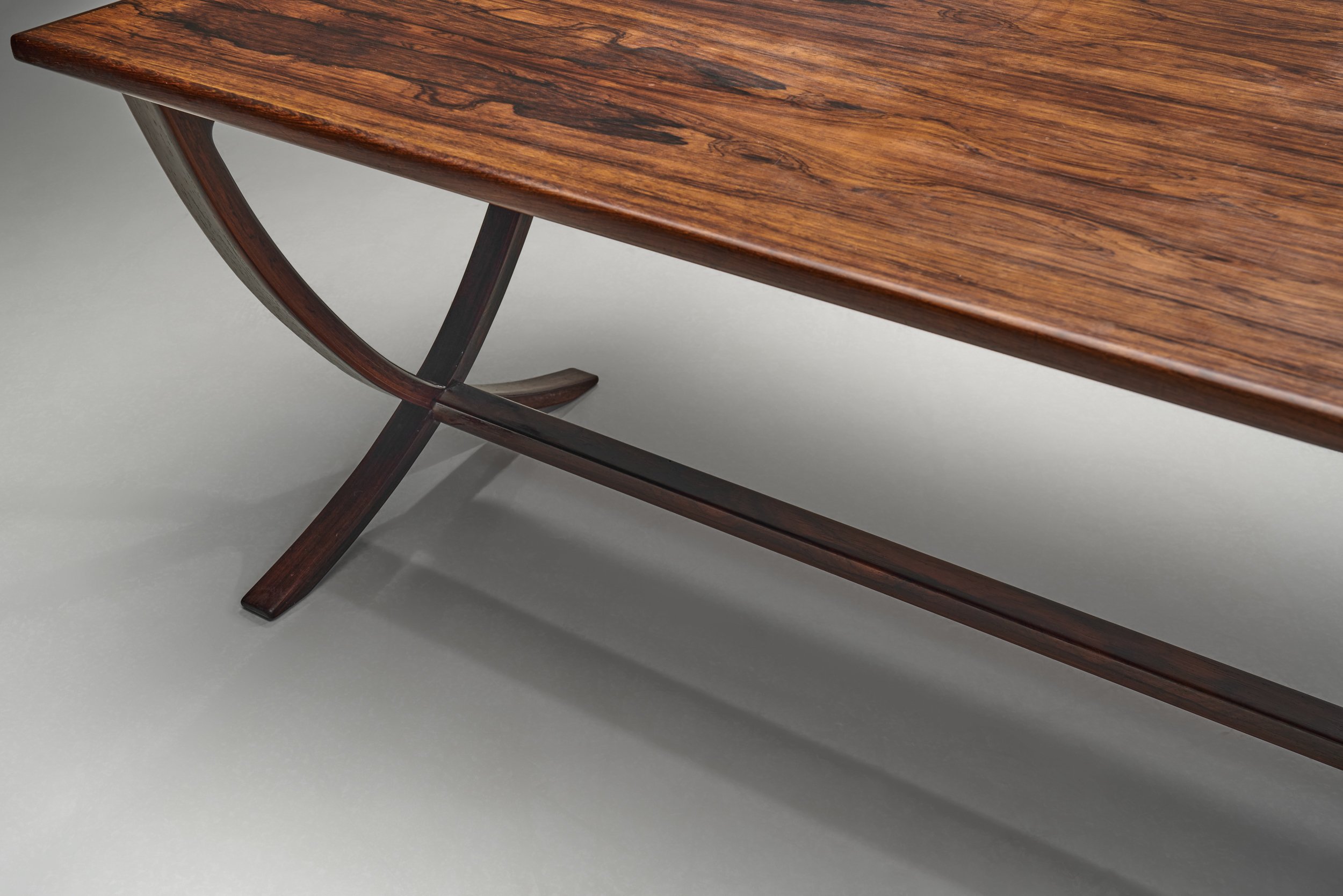
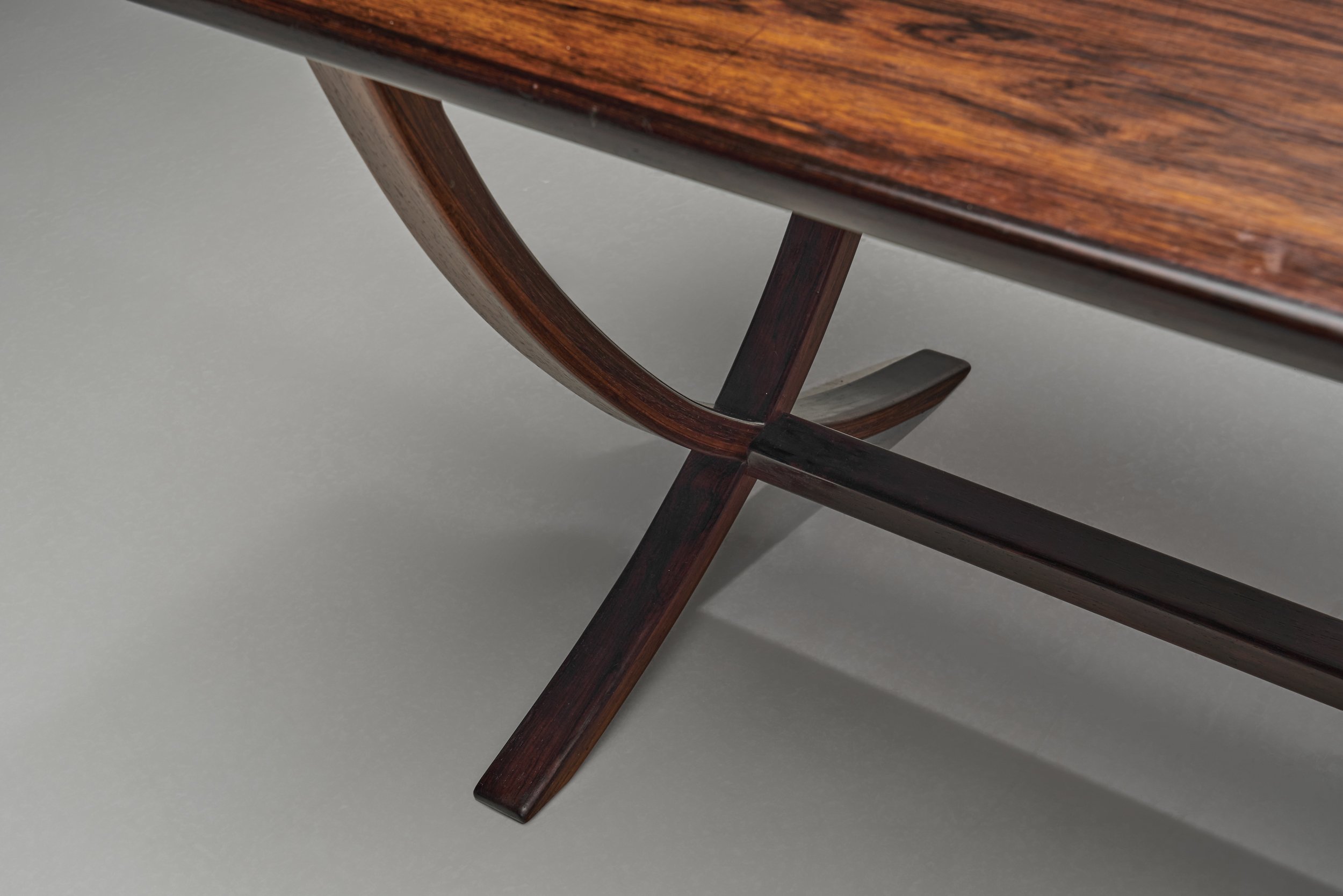
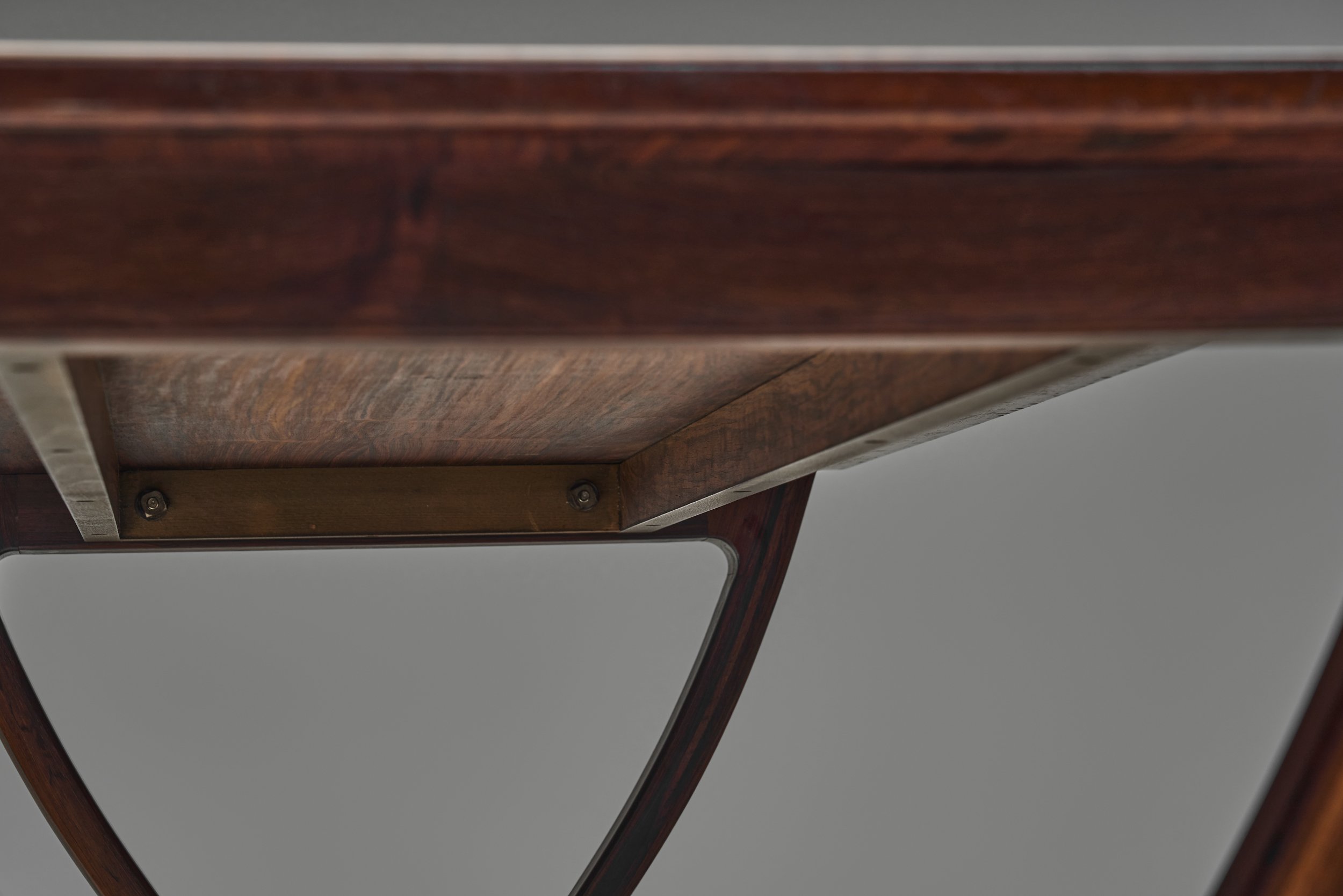
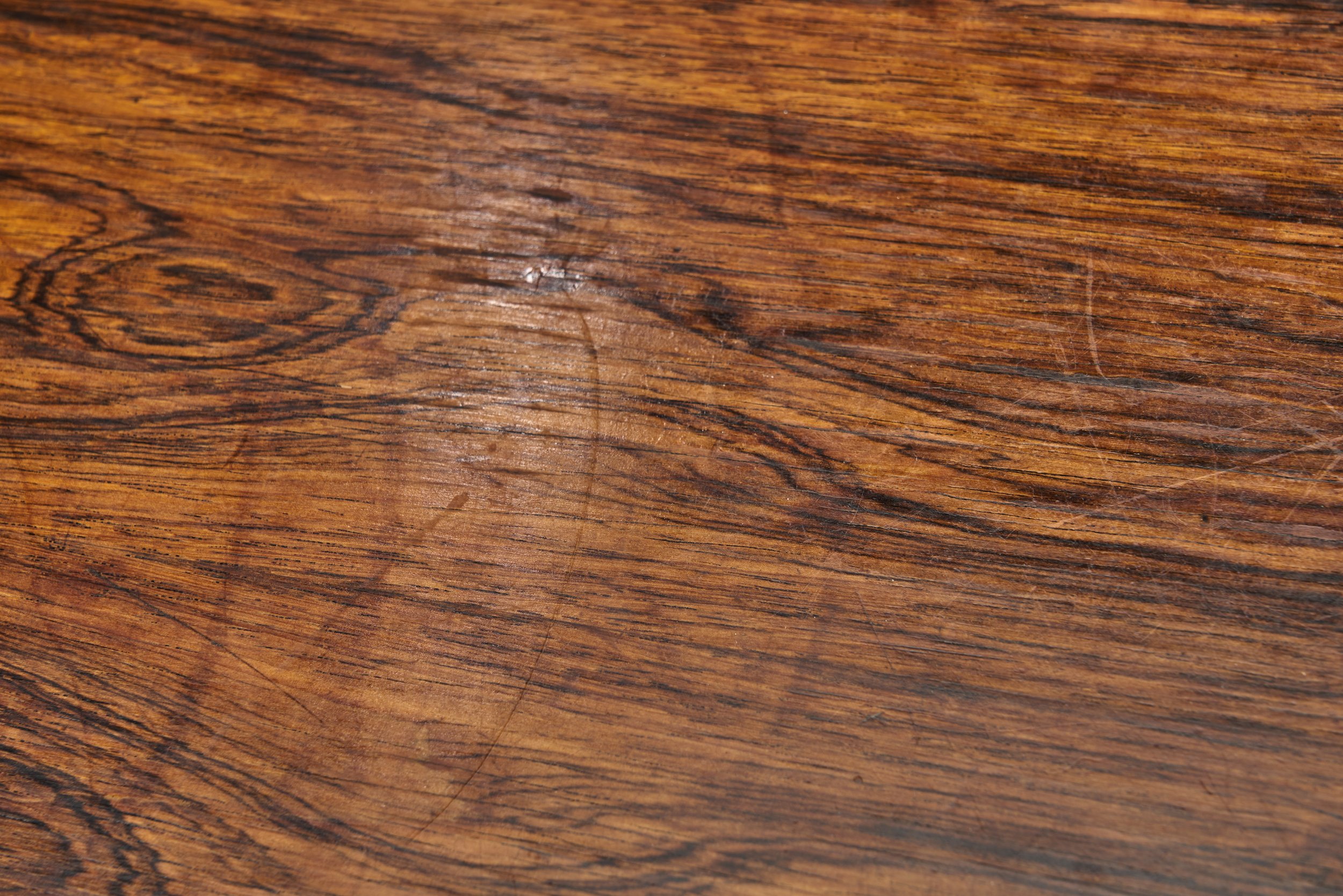
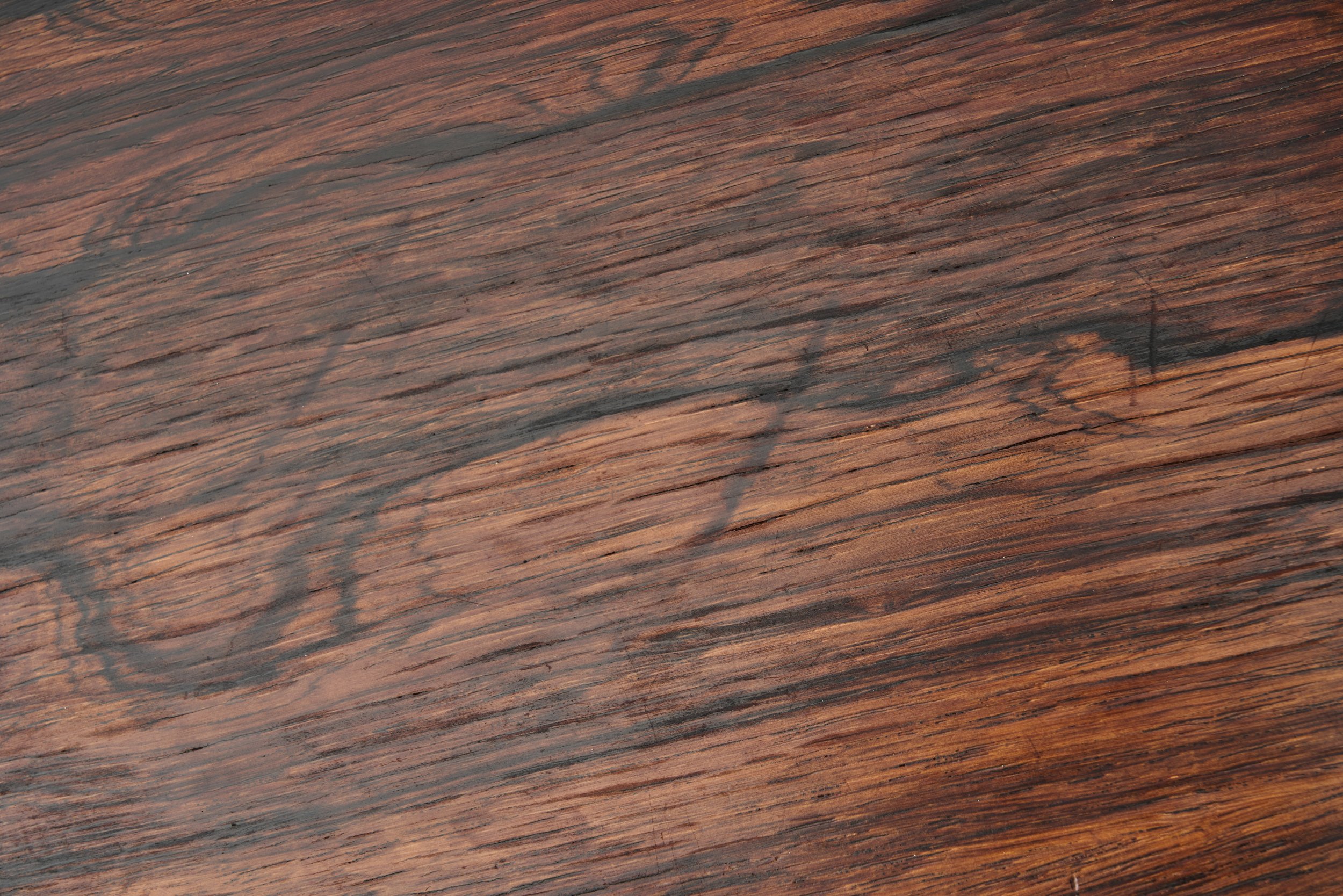
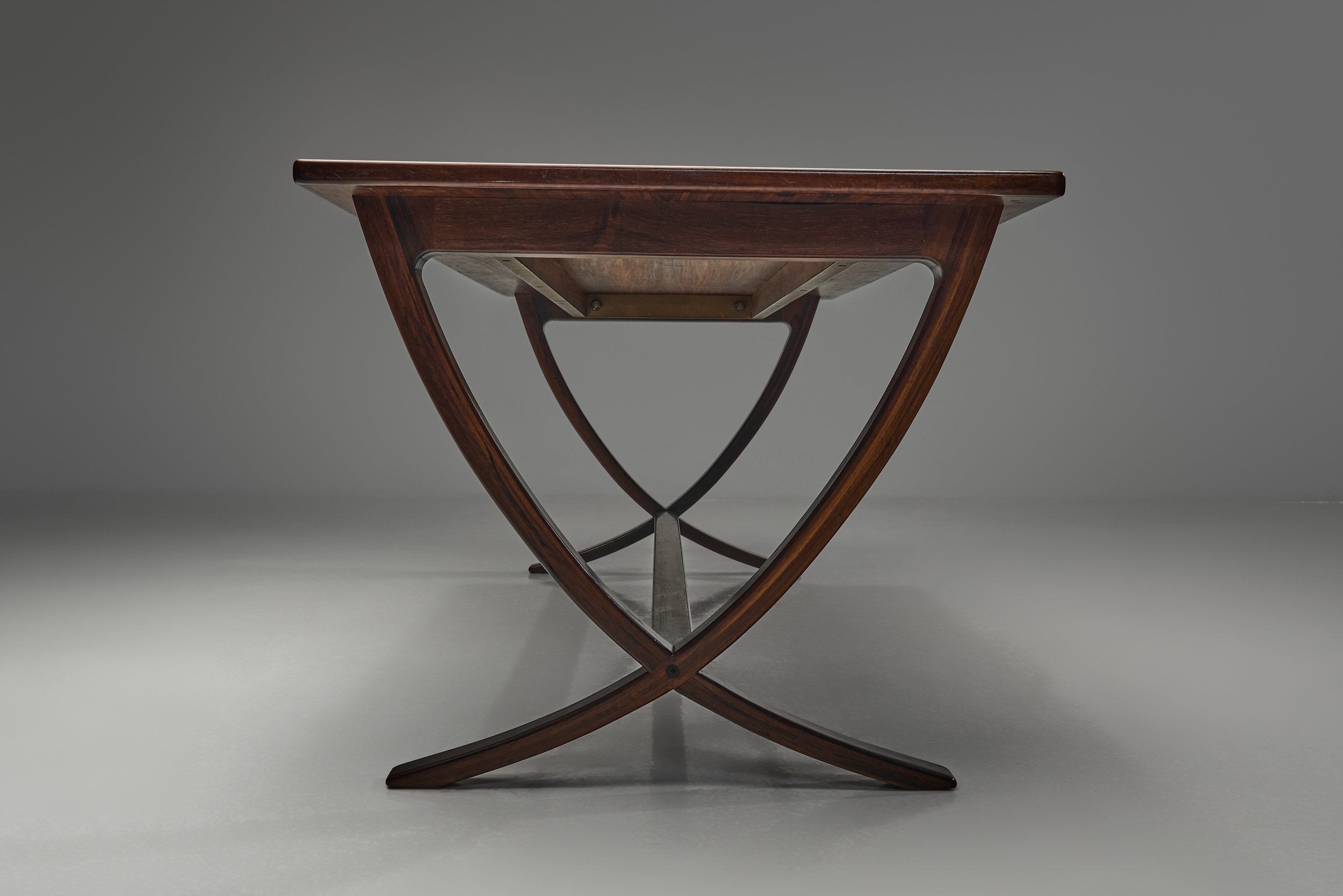
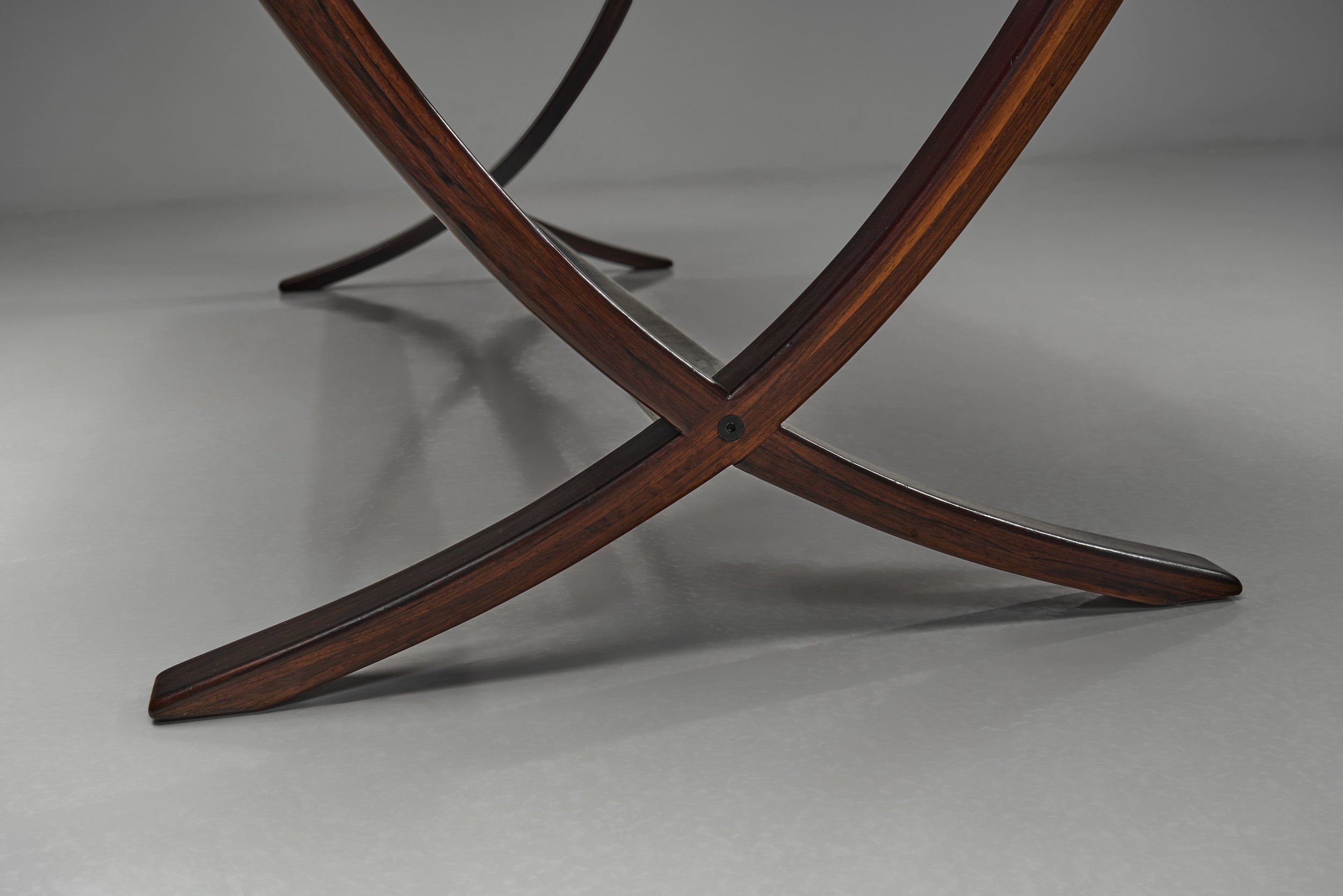
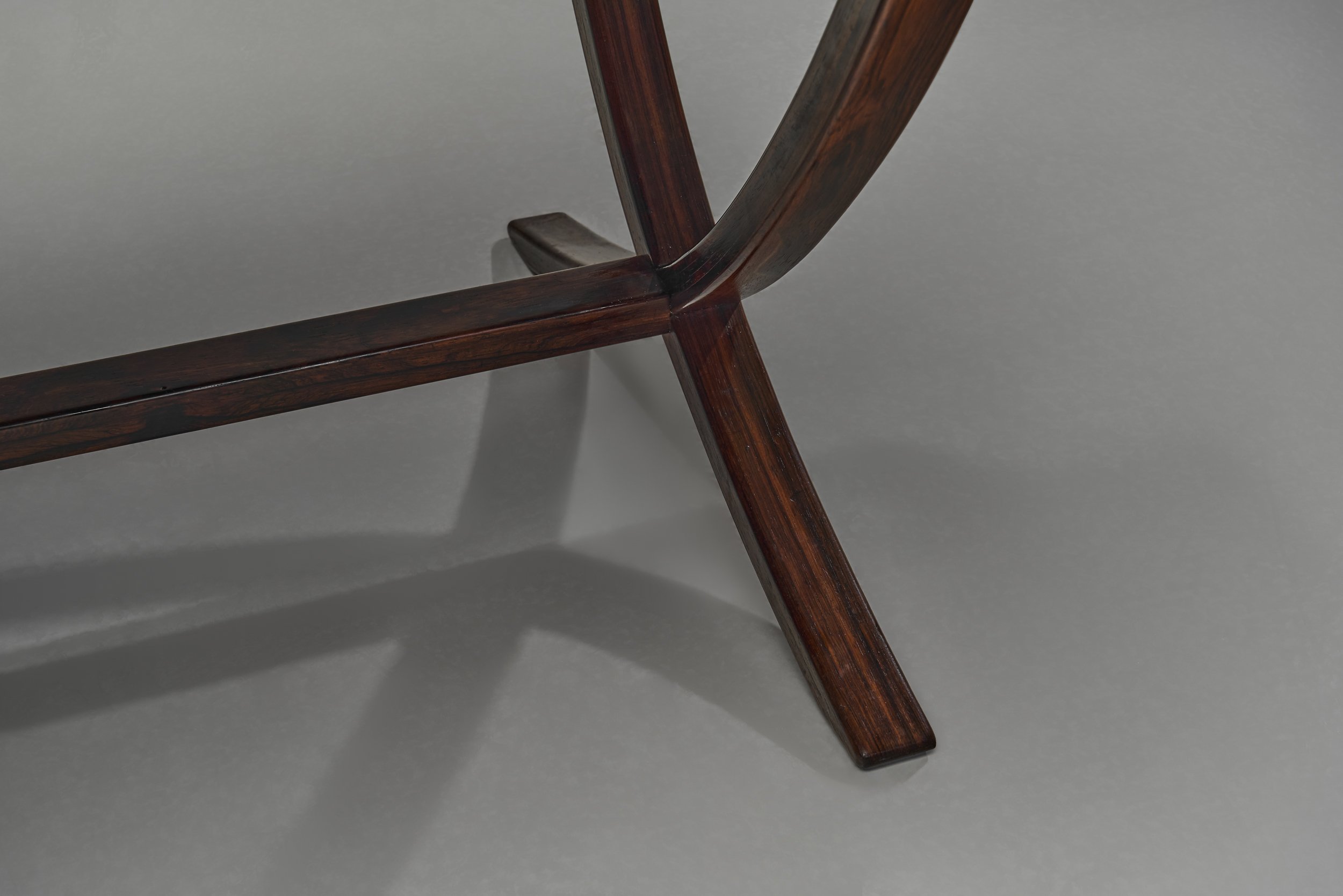
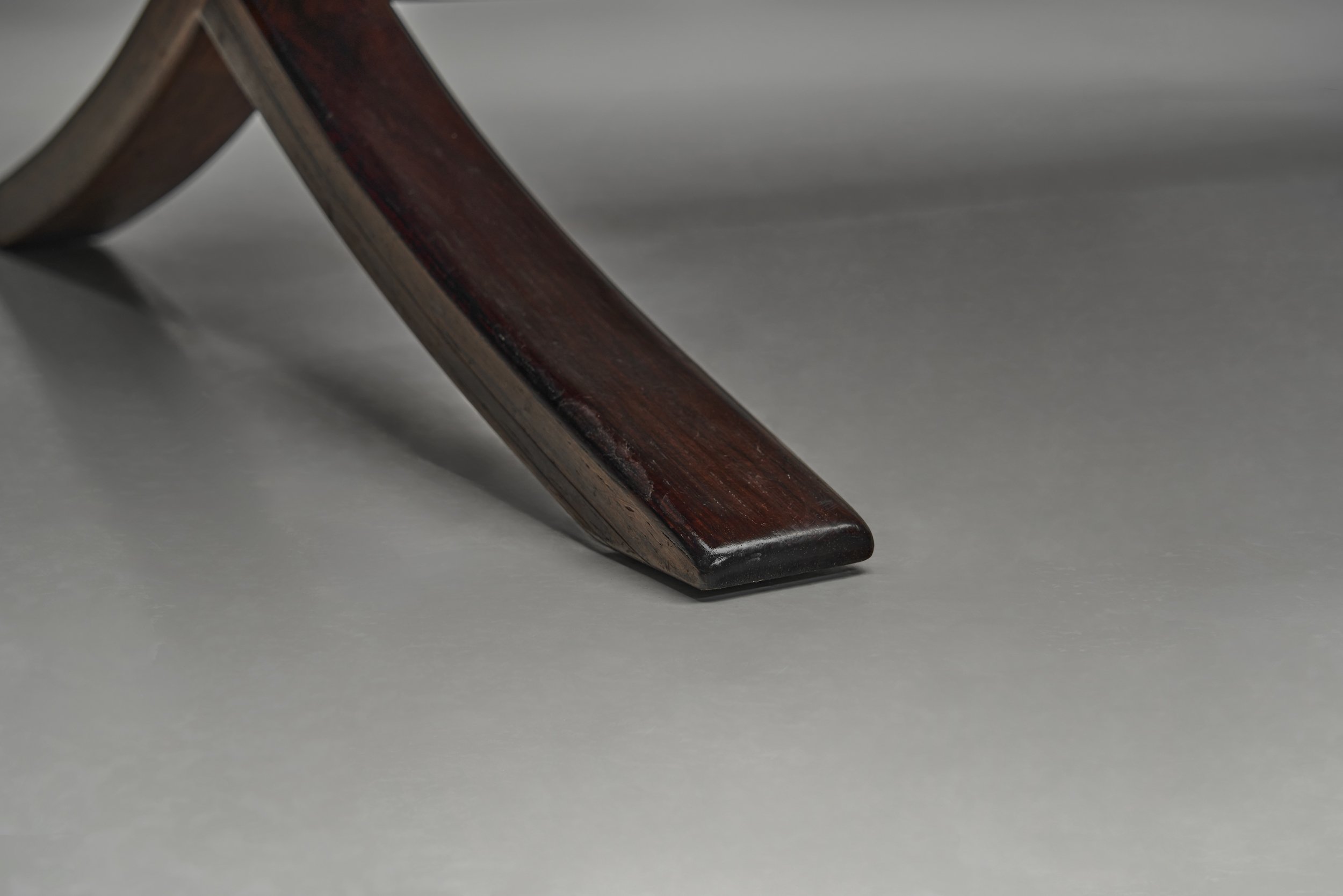
The movement's preference for fine cabinetmaking and expressive timber is evident in this coffee table, whose elegant silhouette is achieved through a restrained combination of curves and expressive wood. The long, rectangular top displays a dramatic grain pattern, with tonal variations across the surface. Supporting it is an elegant, trestle-like base. The designer strayed away from the bulky, robust versions of this iconic base style, opting instead for two sweeping curved side supports connected by a single stretcher, creating an open architectural framework beneath the tabletop. The contrast between the crisp horizontal plane of the top and the flowing curves of the base creates a dynamic, yet balanced, composition. Danish modern designs are, at their core, utilitarian objects; as a result, this table’s form follows function, offering both a generous surface area and great stability. The absence of unnecessary detailing directs attention to the quality of the timber, the precision of the joinery, and the graceful geometry of the structure.
Elegant from every angle, the table demonstrates why Danish Cabinetmakers and their designs are some of the most thoughtful pieces of furniture. Its understated design and versatile character allow it to complement a wide range of interiors while showcasing the enduring appeal of the Danish modern period.
Condition:
In good vintage condition. Wear consistent with age and use. The table has recently been reconditioned. Due to the nature and age of the material, the item has some marks and scratches on the tabletop.
Dimensions:
59.25 in W x 25.59 in D x 21.65 in H
150.5 cm W x 65 cm D x 55 cm H
REQUEST PRICE HERE
Price category: 2,500 - 5,000 usd / eur
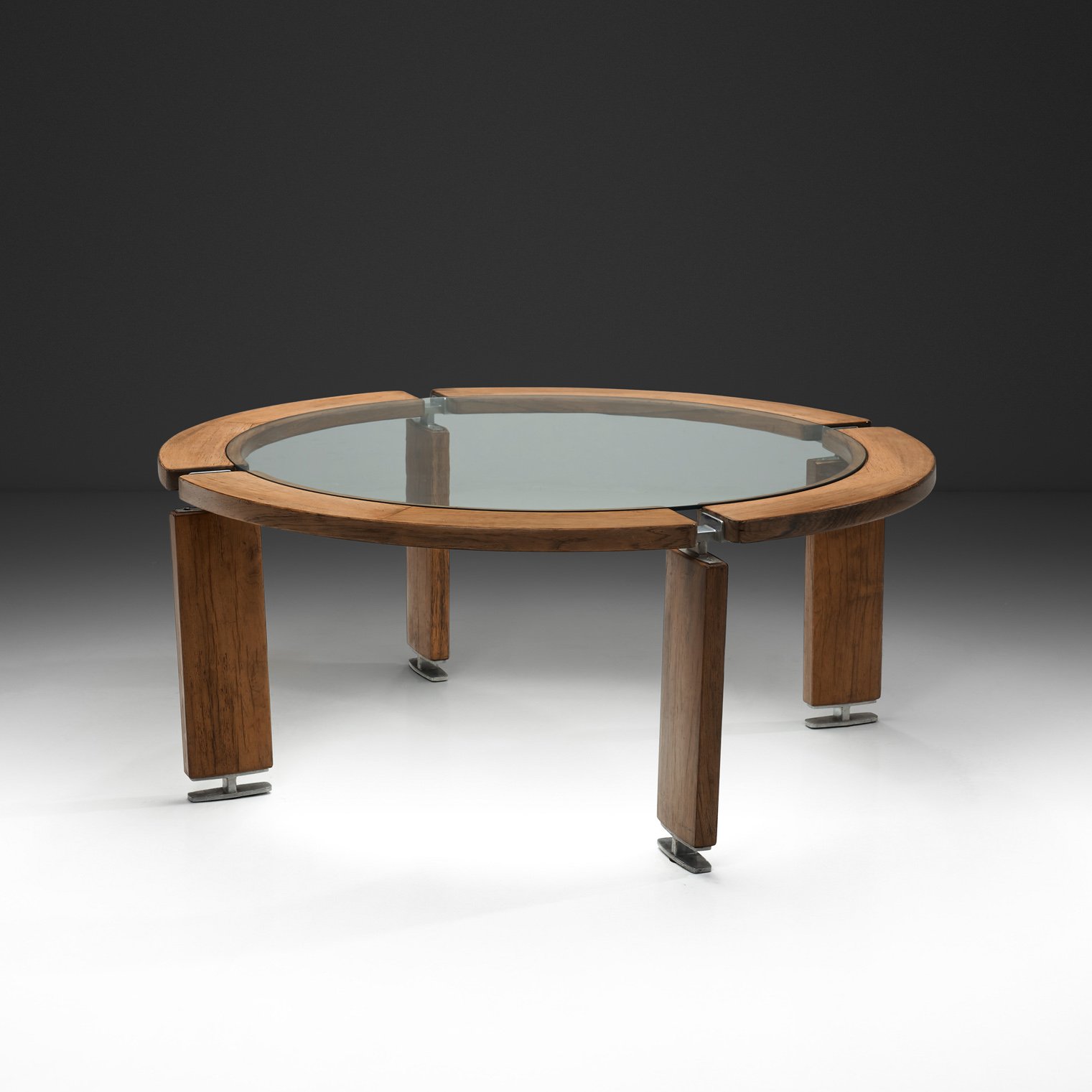
In Finland, the second half of the 20th century saw the use of new materials like plastic, synthetics, and fibreglass being combined with advances in manufacturing technologies, allowing designers in Finland to expand their range of colours and forms in mass production. However, this coffee table model still gives preference to natural materials, primarily to its wooden frame.
Utilising and highlighting the qualities of the materials used, combined with the expertise of Esko Pajamies, this coffee table is a beautiful piece that can both define and complement a modern space. The coffee table's round glass top showcases an appealing look. The dark colour of the solid wood that forms the structure of the table contrasts beautifully with the top, as its robustness grounds the design. The combination of materials make this table a stylish example of the period’s design versatility. Coffee tables, in general, serve as design staples in living spaces for a multitude of reasons: beyond their utilitarian function of providing a surface for drinks and books, they anchor a room, creating a focal point around which furniture and conversation revolve. Overall, this table equally emphasises function and visual interest, creating an instantly arresting aesthetic.
The overall form of the table has a light and airy feel, enhancing the 20th century aesthetic which it represents. With its elegant shape and careful design, this piece rises above the endless passing of trends, establishing itself as a modern classic in the realm of interior design.
Condition:
In good vintage condition. Wear consistent with age and use. The item has recently been reconditioned. Due to the age and nature of the wood, the coffee table may have minor marks, scratches, and discolouration.
Dimensions:
47.24 in ø x 19.68 in H
120 cm ø x 50 cm H
REQUEST PRICE HERE
Price category: 5,000 - 7,500 usd / eur
Ole Wanscher was a leading figure in Danish and Scandinavian design, as was his mentor, the legendary Kaare Klint, renowned to be the “father” of modern Danish furniture design. Together, they made significant achievements in redefining classic forms. Drawing inspiration from human anatomy, his developments influenced the concept of Scandinavian modernism as we know it today. Wanscher’s contribution to the field is widely acknowledged as he acquired his skills at the esteemed Det Kongelige Danske Kunstakademi - Billedkunst Skolerne in Copenhagen.
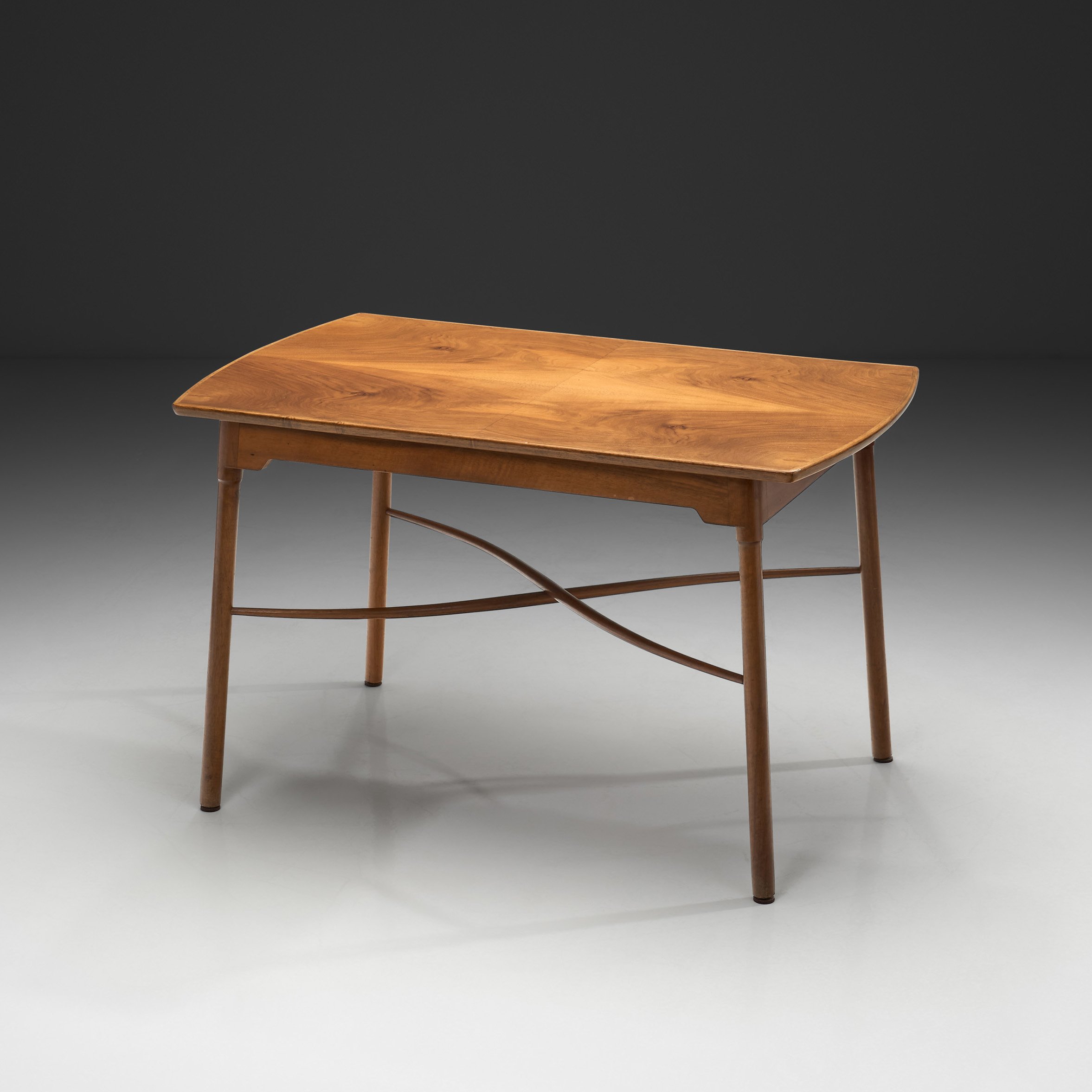
The post-war era, especially the period spanning from 1940 to 1960 resembled the golden age of Danish furniture, and was when Wanscher created his most well known works. This model "1762" coffee table retains the cherished Danish modernist traits, such as simplicity and functionality, while also reflecting an ongoing precise focus on quality materials. This minimalist approach combined with solid wood creates a timeless appearance that resonates with any design style. The stunning grain pattern of the table top enhances the visual appeal, yet the most eye-catching design (and functional) element remains the curving cross stretchers connecting the legs. Albeit simple, its uncommon overlap - as opposed to bisecting - design catches the eye, and contrasts effectively with the top.
The design of this table encapsulates a rich moment in furniture design history. It is a tangible embodiment of the mid-20th century era’s focus on materiality and craftsmanship, while also reflecting the innovative spirit of Danish designers like Ole Wanscher.
Condition:
In good vintage condition. Wear consistent with age and use. The table has recently been reconditioned. Due to the nature and age of the wood, the item has visible marks and scratches, and may show slight discolouration.
Dimensions:
35.44 in W × 21.66 in D × 21.66 in H
90 cm W x 55 cm D x 55 cm H

REQUEST PRICE HERE
Price category: 2,500 - 5,000 usd / eur
This coffee table is a stunning example of Modernism in design: clear forms without exaggeration with the high-quality work of a Danish cabinetmaker. Humble in its material and size, this table still draws attention thanks to its distinctive look and personality.
Early on, many of the Danish cabinetmakers’ workshops had been producing historical furniture; master cabinetmakers had been renowned for their solid wooden furniture rendered in various styles of the past. This coffee table, while not specifically historical in style, shows some restrained decorative elements that are generally rather sparse in Scandinavian mid-century furniture. However, accordingly to the design ideals of Danish designers, the scalloping pattern is not overwhelming the table, nor does it demand attention, rather, it is an understated but clever addition to the design. The scalloped patterns on the tabletop and legs differ slightly; the scallops on the legs are more pronounced with straight lines between each scallop, while under the tabletop, it is in a more traditional, round shape.
The wavy effect is even more pronounced thanks to the beautiful grain and colour of the solid oak that is most apparent on the wide, circular top. As it can be expected from Danish design and craftsmanship, visually appealing elements usually serve a functional role as well. In this case, the wooden elements under the table reinforce the stability of the structure in this ingenious manner.
Condition:
In good vintage condition. Wear consistent with age and use. Due to the nature and age of the material, the item may have some marks, scratches, and discolouration.
Dimensions:
35.03 in W x 35.03 in D x 22.04 in H
89 cm W x 89 cm D x 56 cm H
About the Designer:
The practical and comfortable designs of Danish cabinetmakers defined mid-20th century modern seating. The Danish Cabinetmakers focused on minimalist design executed by expertly skilled craftsmen.
Works from the Danish Cabinetmakers' Guild is a concept of its own in collectible design. The Cabinet-Makers' Guild began annual exhibitions in 1927 in Copenhagen. The group formed an exhibit showing each year in October the quality furniture made to drawings by gifted architects. The exhibition took place each year, without interruption, for forty years. A number of successful Danish Design collaborations were formed during this time between cabinetmakers and architects.
Danish Modernism has influenced Scandinavian furniture to a great degree, defined by minimalism, simplicity, and functionality. The muted colours and gentle designs make Danish mid-century furniture an ideal addition to contemporary living spaces. Additionally, master cabinetmakers were highly aware of body proportions, prioritizing comfort just as much as the visual qualities.
The works of master cabinetmakers – such as this chair – are of the highest quality, both in terms of materials and craftsmanship. Cabinetmakers take the art of working with wood one step further, and focus on the finer details of what can be created with the material. Therefore, it comes as no surprise that numerous master cabinetmakers are part of the renowned Danish Culture Canon (Danish: Kulturkanonen). The canon contains no more than 108 works of cultural excellence, based on works with a useful function and that are still recognisable today. These lounge chairs are the perfect illustrations of Danish design, and the work of a true cabinetmaker. ~H.
REQUEST PRICE HERE
Price category: 2,500 - 5,000 usd / eur
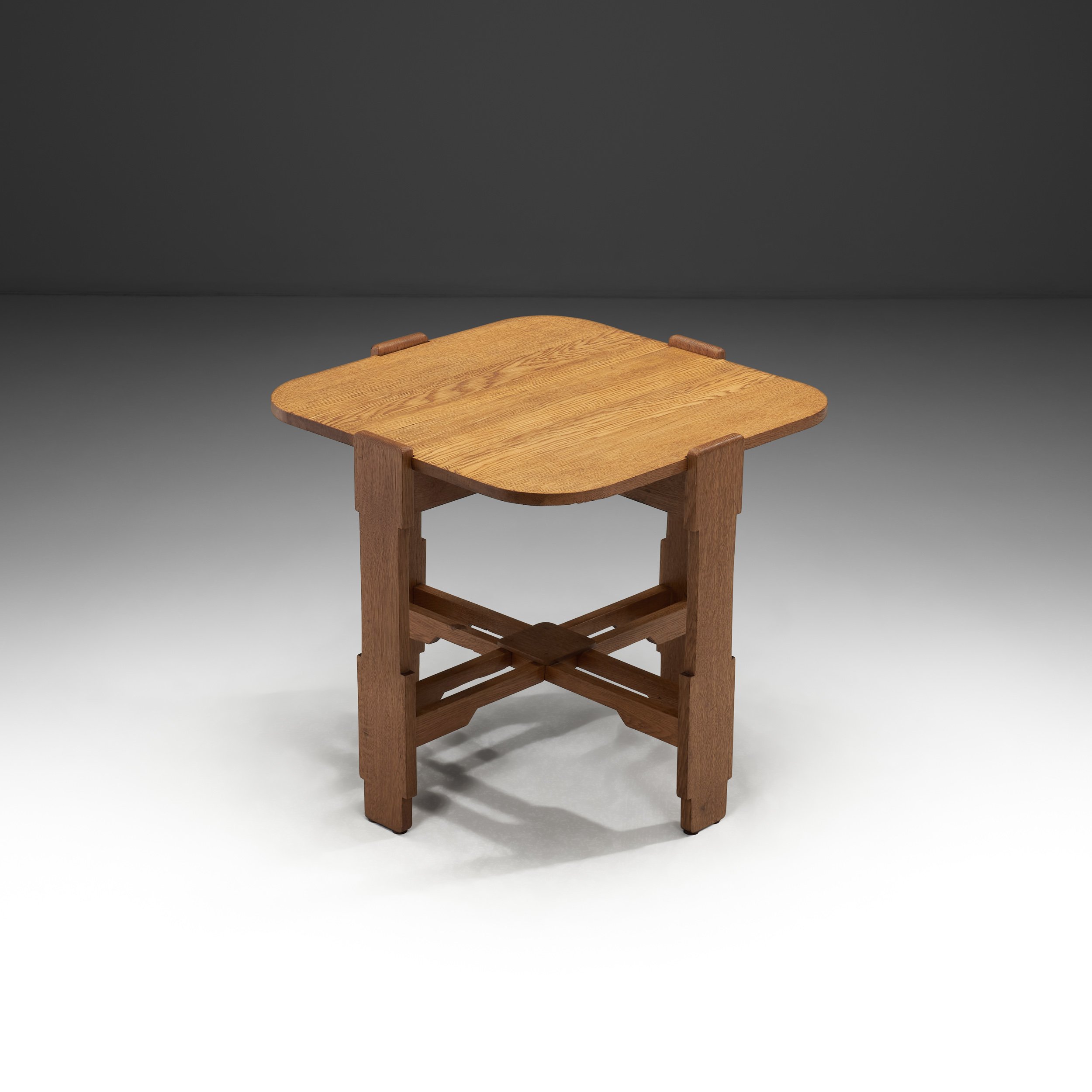
Originating in the late 19th and early 20th centuries, the Arts and Crafts movement rejected industrial excess in favour of craftsmanship and functional clarity. By the 1930s, these principles had spread across Europe, inspiring makers in the Netherlands to reinterpret these ideals with local traditions and materials.
This wooden coffee table reflects the influence of the Arts and Crafts movement as interpreted by artists such as the Stickley brothers, whose designs emphasized honesty in construction, visible joinery, and the natural beauty of solid wood. The table is constructed from solid wood with a compact, well-balanced silhouette that highlights its structural logic. The softly squared top features rounded corners that subtly lighten the form while maintaining a grounded presence. Beneath, four sturdy legs are connected by a distinctive cross-stretcher, creating both visual rhythm and structural stability. The exposed joinery and straightforward geometry highlight the table’s functional intent, allowing its construction to become central to the piece. The warm tone of the wood and visible grain add depth and character, while slight variations in surface texture speak to careful hand-finishing rather than mass production. The proportions are modest and practical, making the piece equally suited to intimate living spaces and interiors where craftsmanship takes precedence over decoration.
Today, this table stands as a thoughtful example of early 20th century design ideals. Its restrained form, durable construction, and timeless aesthetic allow it to integrate seamlessly into both traditional and contemporary settings, offering enduring appeal. Rooted in Arts and Crafts philosophy and shaped by European influences, this piece embodies a quiet confidence that resonates to this day.
Condition:
In good vintage condition. Wear consistent with age and use. Due to the nature and age of the wood, the item may have some marks, scratches, and discolouration.
Dimensions:
24.80 in W x 24.80 in D x 22.24 in H
63 cm W x 63 cm D x 56.5 cm H
REQUEST PRICE HERE
Price category: 1,000 - 2,500 usd / eur
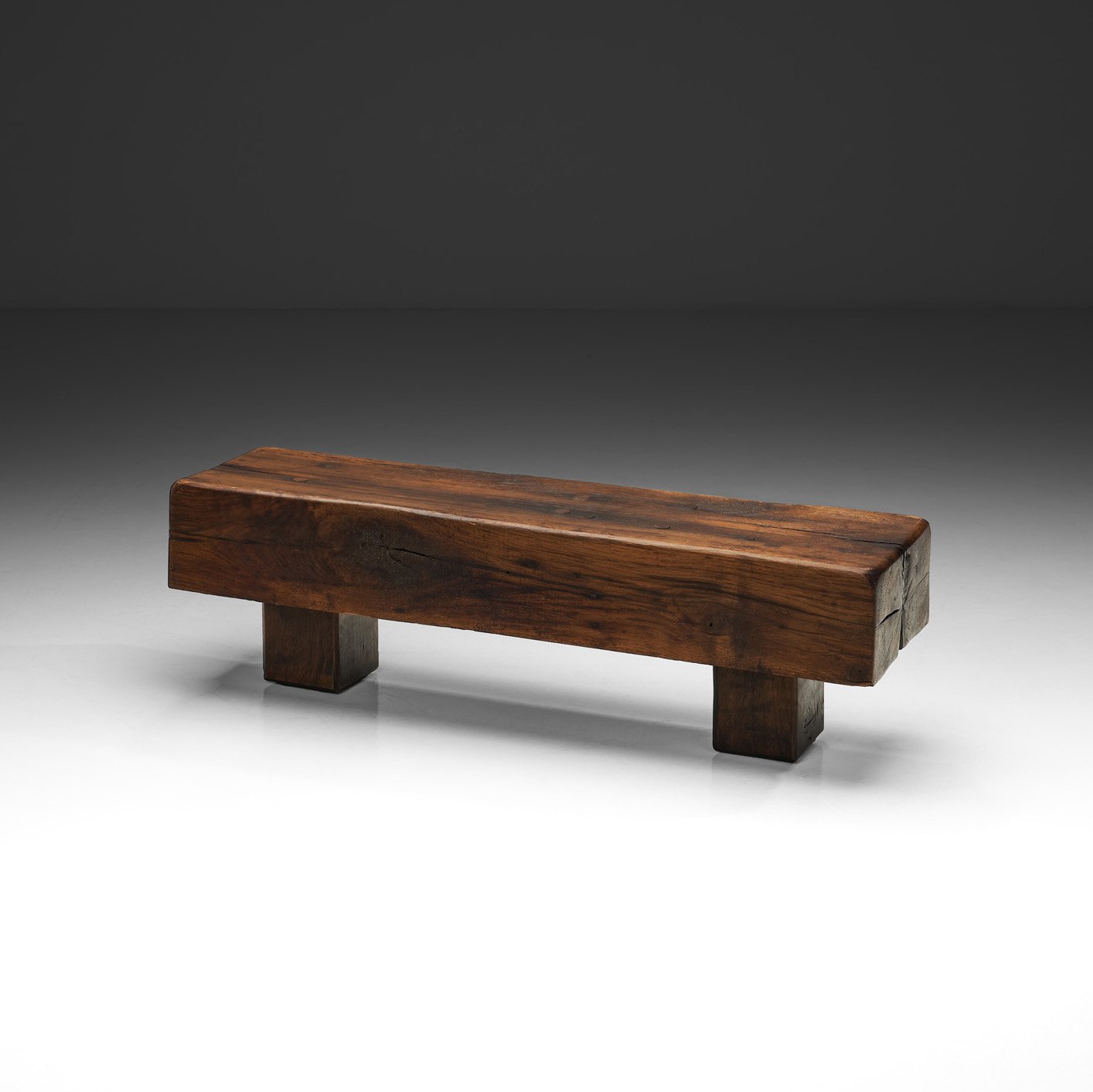
Brutalist furniture emerged in the post-war decades as a direct response to both architectural developments and shifting social ideals. Rooted in the principles of Brutalist architecture, this coffee table emphasizes raw materials, structural honesty, and an absence of ornamentation.
Many Dutch Brutalist furniture pieces function not only as practical objects but also as sculptural elements within a space. This coffee table is exemplary of this thanks to its solid oak construction and striking form. The design is composed of a thick, rectangular top supported by two block legs, creating a low, elongated silhouette that emphasizes weight. The proportions are deliberately heavy, reinforcing a sense of stability and permanence which defines Brutalist design. Oak was a preferred material, valued for its strength and expressive grain, allowing makers to highlight the natural character of the wood rather than conceal it. The surface of the wood is left largely untreated to showcase the material’s inherent texture and tonal variation. Rather than relying on decorative features, the table derives its character from this raw materiality and its geometry. Despite its apparent simplicity, the table carries a strong visual presence and sense of intention.
The emphasis on material and form allows this table to age gracefully, developing character over time, while anchoring every space it finds itself in. The piece reflects the enduring appeal of Brutalist furniture: objects that prioritise substance over decoration, offering both functional utility and a lasting architectural presence.
Condition:
In good vintage condition. Wear consistent with age and use. The table has recently been reconditioned. Due to the nature and age of the wood, the item has some marks, scratches, and discolouration.
Dimensions:
35.24 in W x 9.45 in D x 11.23 in H
89.5 cm W x 24 cm D x 28.5 cm H
REQUEST PRICE HERE
Price category: 2,500 - 5,000 usd / eur
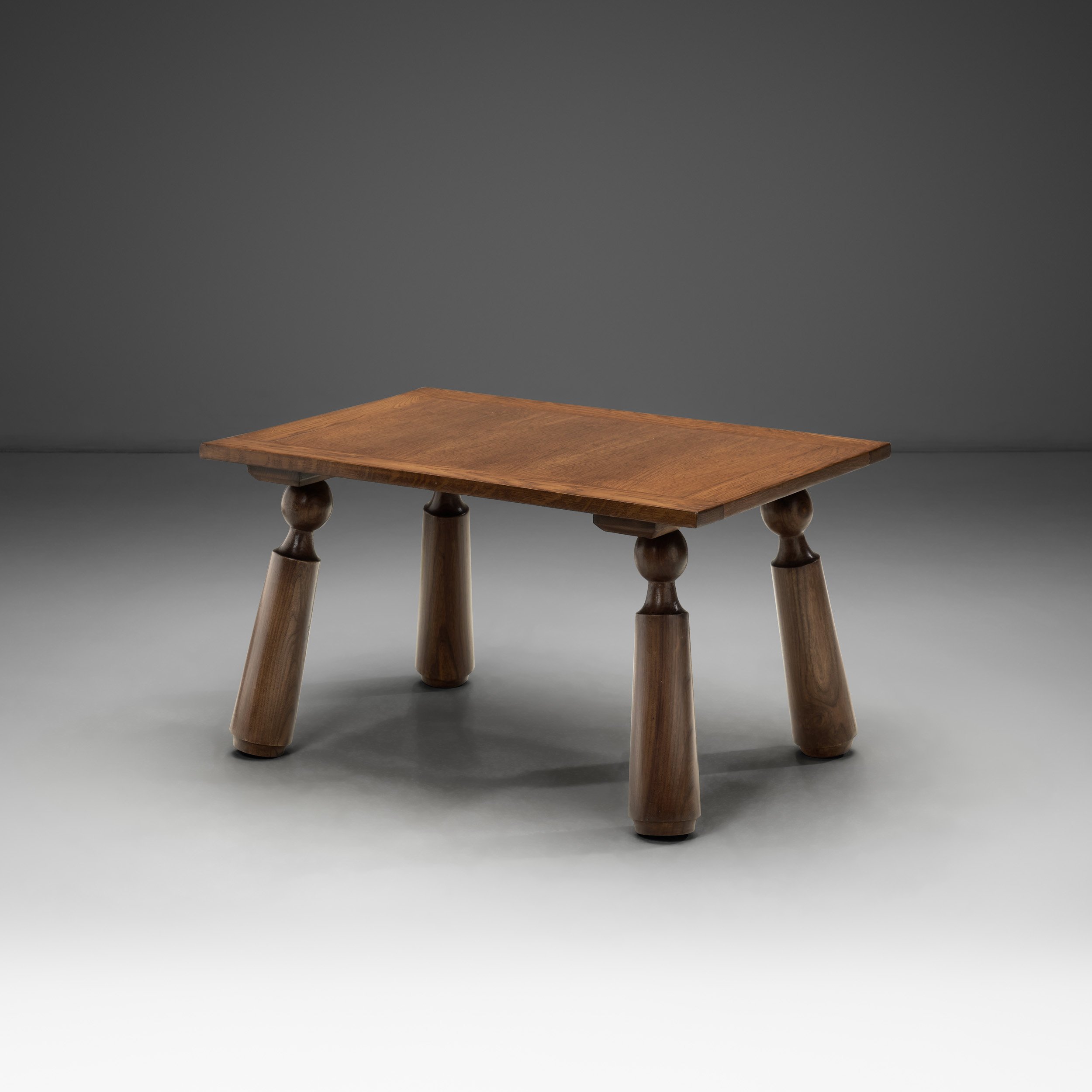
This wooden coffee table, crafted in France in the first half of the 20th century, is designed in the manner of Charles Dudouyt, one of the most distinctive figures in French decorative arts of the interwar period. Dudouyt’s work is often celebrated for its rustic charm, and masterful handling of wood, bridging tradition with the evolving aesthetics of Art Deco and modern design.
This table embodies those qualities through its sculptural presence and confident use of material. The piece is defined by its sturdy rectangular top and striking turned legs, which taper outward with bold, geometric proportions. Each leg features carved and rounded detailing, lending rhythm and visual weight to the structure. This play between solidity and ornamentation is characteristic of French designs of the era, where pieces were not only functional but also a statement of craftsmanship and artistic individuality. The warm stain of the wood enhances the visual richness of the table, highlighting its grain and natural imperfections. Its compact scale makes it ideal for daily use, while not overpowering a room. At the same time, the architectural quality of the legs gives it a charmingly unique character that anchors a space.
The essence of early 20th century French design is beautifully captured by this table. Functional yet sculptural, rustic yet refined, this piece stands as an enduring testament of the striking balance only master woodworkers are able to create.
Condition:
In good vintage condition. Wear consistent with age and use. The surface of the wood has been refurbished. Item may have some marks, scratches, and discolouration.
Dimensions:
31.29 in W x 21.45 in D x 17.71 in H
79.5 cm W x 54.5 cm D x 45 cm H

REQUEST PRICE HERE
Price category: 2,500 - 5,000 usd / eur
This coffee table embodies the essence of European mid-century design, with its distinctive features that recall a time when form and function were paramount. Crafted from solid wood, this table exudes a rustic charm and robust aesthetic that is characteristic of the era in which it was made.
In mid-century modern design, the use of wood held a special significance: it was not merely a material choice, but a philosophy that emphasized the natural and organic over the ornate and extravagant. The design is inspired by the mid-century penchant for elemental shapes, featuring a simple circular tabletop, supported by four slightly angled legs. The tabletop has an almost brutalist feel to it, thanks to its rugged, unpolished look. The warm tone of the oak wood creates a sense of lightness, while also projecting an air of strength and solidity. Oak has been the defining material for European brutalist pieces for centuries partly for this exact reason; additionally, oak’s pattern is beloved for its versatility. The large tabletop showcases the unique qualities of the wood, while also providing functional space.
This solid wood table, with its natural finish, exemplifies the enduring charm and warmth that mid-century design continues to bring to contemporary interiors, underscoring the timeless appeal of this iconic design era.
Condition:
In good vintage condition. Wear consistent with age and use.
Dimensions:
46.85 in W x 45.08 in D x 19.49 in H
119 cm W x 114.5 cm D x 49.5 cm H

REQUEST PRICE HERE
Price category: 2,500 - 5,000 usd / eur
In rustic pieces like this table, the wood is not overworked, its raw surface and edges are kept to show off the beautiful grain and texture, serving the purpose of highlighting the understated beauty of natural materials and their endless possibilities.
Crafted in the 19th century, this table has aged beautifully and displays its charming material. It has a startling rawness, but with its warm-toned, carved body, it is a greatly-balanced piece. The cross-leg design is both visually striking and structurally purposeful. Known for stability, the intersecting legs are joined with traditional mortise-and-tenon joints, reinforced with wooden pegs. This architectural form, common in French furniture, allows the table to support significant weight and endure everyday use without compromising its integrity. The exposed joinery and honest construction techniques speak to a time when furniture was built to last generations, not seasons. The sculptural quality of the X-shaped legs also provides a sense of symmetry and grounding to the otherwise simple design. This coffee table can bring a touch of old-world charm into any contemporary or traditional setting. Whether placed in a farmhouse or a modern loft with eclectic decor, it anchors the space with its organic textures and timeless form.
The maker of this table clearly focused on the material, letting the beautiful qualities of the wood stand out. The craftsman’s handiwork is clearly visible throughout, highlighting its organic allure.
Condition:
In good vintage condition. Wear consistent with age and use.
Dimensions:
49.21 in W x 18.89 in D x 19.68 in H
125 cm W x 48 cm D x 50 cm H

REQUEST PRICE HERE
Price category: 2,500 - 5,000 usd / eur
Swedish architect David Rosén worked alongside renowned designers such as Axel Einar Hjorth and Josef Frank at Nordiska Kompaniet, one of Sweden’s most respected design houses. Rosén crafted this beautiful table for NK with enamel artist, Algot Törneman in the 1960s.
This table is part of the "Triva Dura" series by Rosén and Törneman. The design equally emphasizes function and visual interest, creating an instantly recognisable and arresting aesthetic. Crafted from solid wood, this table exudes a lovely charm and robust aesthetic that is characteristic of the era. In mid-century modern design, the use of wood held a special significance; it was not merely a material choice, but a philosophy that emphasized the natural and organic over the ornate and extravagant. The wood’s dark tone creates a sense of elegance and sophistication, while the modern top is smooth to the touch, adding a sense of solidity and durability to the overall design. The table is dominated by the expertly crafted blue and black tile tabletop showcasing a beautiful decorative pattern. These decorative tiles are the most recognisable characteristic of the “Triva Dura” series which sets it apart from the designers’ portfolio. From the use of wood to the unique table top, the piece shows intention and proves experienced decision making.
Swedish designers of this era aimed to create furniture and home decor that was both aesthetically pleasing and practical, with a strong emphasis on the user experience. This style has become synonymous with Scandinavian design and is still sought after today for its timeless appeal and quality.
Condition:
In good vintage condition. Wear consistent with age and use. Minor marks and scratches.
Dimensions:
35.43 in W x 35.43 in D x 20.67 H
90 cm W x 90 cm D x 52.5 cm H
REQUEST PRICE HERE
Price category: 2,500 - 5,000 usd / eur
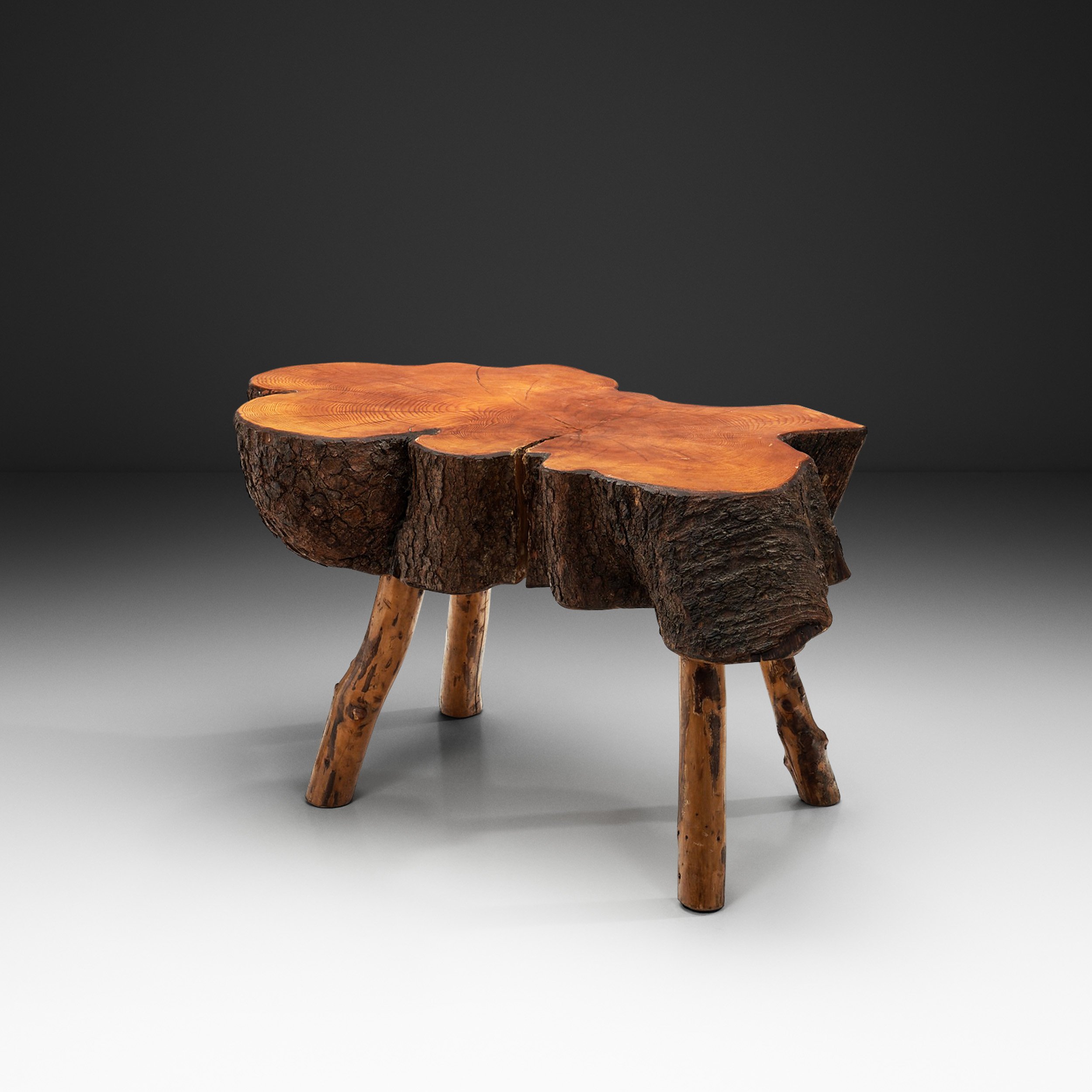
In most European mid-century designs, there was an early emphasis on wood as it connected everyday objects, such as furniture to nature. This spectacular solid wood coffee table is a perfect example of this sentiment, and the visual benefits of an understated, organic design.
This coffee table reflects a Brutalist ethos through its bold presence and sculptural look. The piece features a free-form top made from solid wood, its organic shape and swirling grain patterns showcase the wood’s natural drama. The grain is not merely a surface detail; it becomes an integral part of the design, contributing to the overall aesthetic of the table, making it entirely unique. The interplay of the asymmetrical and sculptural top with the grounding presence of the legs result in a piece that is both rugged and refined. As there are strong and distinctive details, this model is a perfect accent table, while also being capable to complement its surroundings. It could fit well in a modern interior, as well as in a minimalist space.
This solid wood table, with its natural finish, exemplifies the enduring charm and warmth that 20th century design continues to bring to contemporary interiors, underscoring the timeless appeal of this iconic design era.
Condition:
In good vintage condition. Wear consistent with age and use. The table has recently been reconditioned. Some minor chips in the wood. Due to the nature and age of the wood, the item may have some marks, scratches, and discolouration.
Dimensions:
24.41 in W x 44.48 in D x 23.62 in H
62 cm W x 113 cm D x 60 cm H

REQUEST PRICE HERE
Price category: 2,500 - 5,000 usd / eur
Danish design is known for its meticulous balance of classic and timeless appearance. This coffee table showcases exactly that - the top with a beautiful design reflecting an enduring appeal, together with the combination of the traditional arrangement of the legs. The work of Søren Jean Larsen displays excellent craftsmanship, with his ability to balance out heavy materials that in the end display a serene and light vision.
Hemmed around by a beautiful oak border, at the heart of the piece lies its true charismatic point: a circular stoneware inlay, composed of glazed ceramic tiles. Contributing to its organic look, the unique tabletop features abstract forms shimmering in earthy tones of deep olive green, amber, and hazelnut colours, all adding to the warm, autumnal atmosphere of the table. The asymmetry of the forms becomes apparent in the varying shades and textures of the inlay, the contrast of materials creating visual interest and a striking, unique character. While somewhat abstract, the conscious placement of the ceramic pieces is palpable in the composition of the colours and forms. The swirls of the glazed ceramic are especially visible with the amber colours emerging from the centre outwards. Underneath the top, the weight of the table is balanced out in four, slightly inward-tilted legs that end in a stable and distinctive X-shape. The construction of the frame, made of solid oak, demonstrates a lovely grain within the wood that has aged beautifully.
This table by Søren Jean Larsen is a distinguished example of Scandinavian design, perfect for both modern and eclectic interiors with a strong emphasis on practicality as well as exceptional craftsmanship. Its durable stoneware top ensures longevity as does its solid wood structure, making sure to lighten spaces and cater to heartwarming times over coffee and tea in the early afternoons for years to come.
Condition:
In good vintage condition. Wear consistent with age and use.
Dimensions:
50.98 in ⌀ x 20.27 in H
129.5 cm ⌀ x 51.5 cm H
REQUEST PRICE HERE
Price category: 2,500 - 5,000 usd / eur
With its distinctive structure, this table epitomizes the search for new systems of joinery during the mid-century era, when material and design became the lead factors in achieving stability, durability, and of course, an aesthetically pleasing outcome.
Without heavy ornamentation, the viewer's eyes fall on the beautiful silhouette and quality materials. From the use of wood to the Formica top, the piece shows intention and proves experienced cabinetmaking. The use of Formica, a hard plastic laminate, gained popularity in the mid-20th century and continues to capture the attention of interior designers and design enthusiasts today. Moreover, the wood base is sculpted to perfection, the level of woodwork and precise joinery technique greatly shows off the skills of the craftsman, as the separated wooden parts appear to flow into each other effortlessly. The overall form of the table has a light and airy feel, enhancing the mid-century modern aesthetic. With its elegant shape and careful design, this piece rises above the endless passing of trends, establishing itself as a modern classic in the realm of interior design.
Like most mid-century pieces, this table is sure to enhance the daily lives of its users through its visually pleasing and functional design that is timeless in every sense of the word.
Condition:
In good vintage condition. Wear consistent with age and use.
Dimensions:
37.99 in W x 22.44 in D x 17.32 in H
96.5 cm W x 57 cm D x 44 cm H